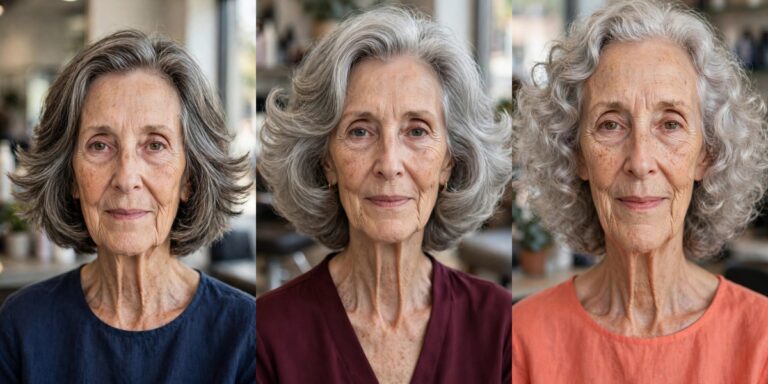
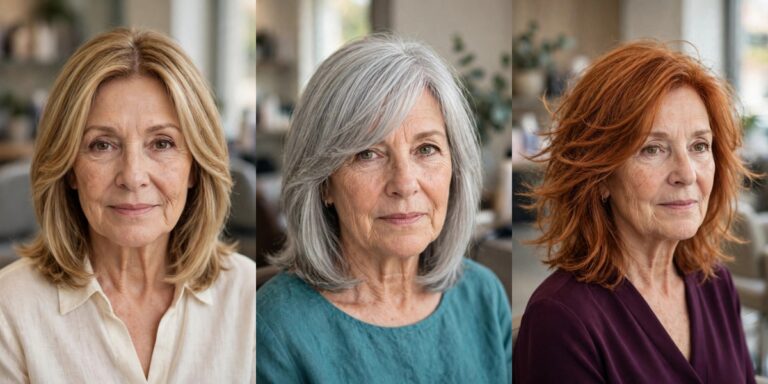
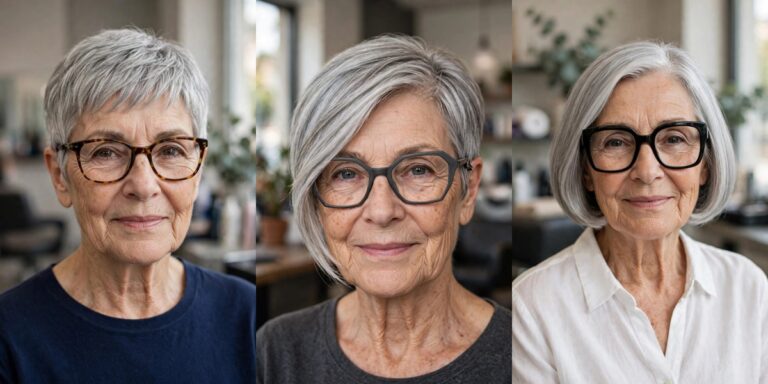
Curtain Bangs for Women Over 50: Flattering Cuts to Try
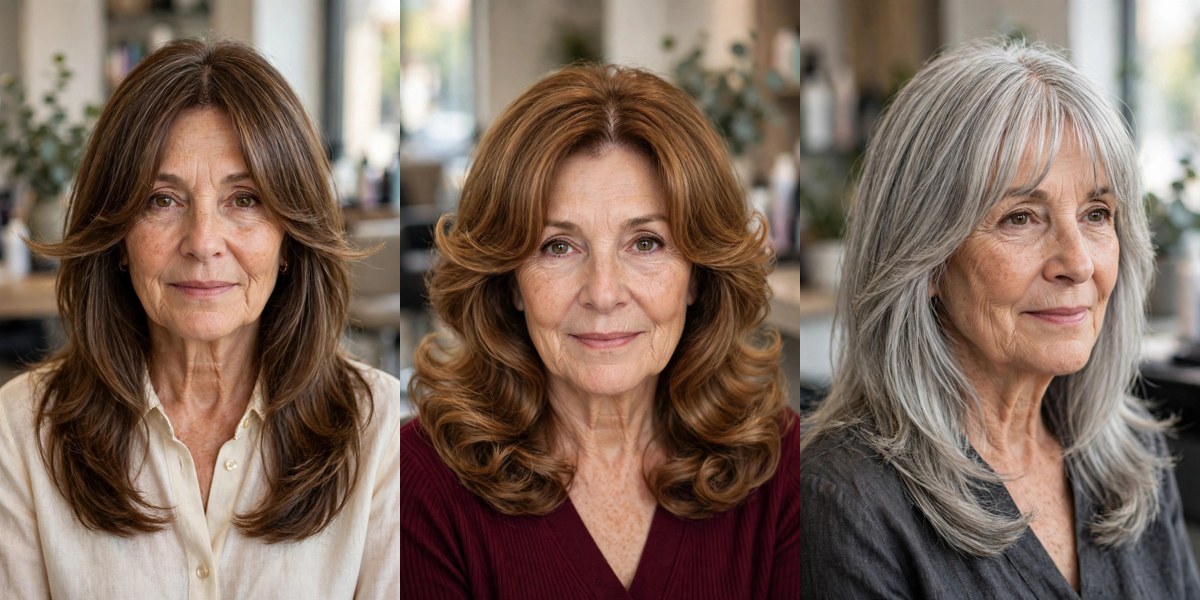
This post contains affiliate links. As an Amazon associate, I earn from qualifying purchases. I only recommend products that are of high quality and that I would use myself.
Of all the fringe styles a woman can try after 50, curtain bangs are the one stylists recommend again and again — and for good reason. Parted in the middle and swept to both sides, they frame the face instead of covering it, soften forehead lines without a heavy fringe, and grow out so gracefully that a slightly overdue trim never looks like a mistake.
They are also remarkably democratic. Curtain bangs work on long layers and short crops, on straight, wavy, and curly hair, and on silver hair as happily as on colored hair. The trick is pairing them with the right base cut for your texture and face shape — so below are 20 combinations worth taking to your stylist, from a classic bob haircut for women over 50 to long, gray-blended layers.
One honest note before you book: curtain bangs do ask for a few minutes of styling most days. The good news is that the routine is simple — dry them forward, sweep them back — and every idea below includes exactly how to keep them looking their best.
Table of Contents
- 1. Classic Curtain Bangs with Long Layers
- 2. Curtain Bangs with a Shoulder-Length Lob
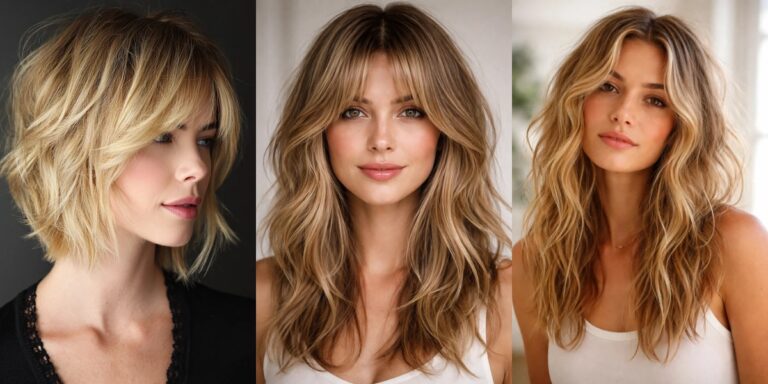
- 3. Curtain Bangs with a Modern Shag
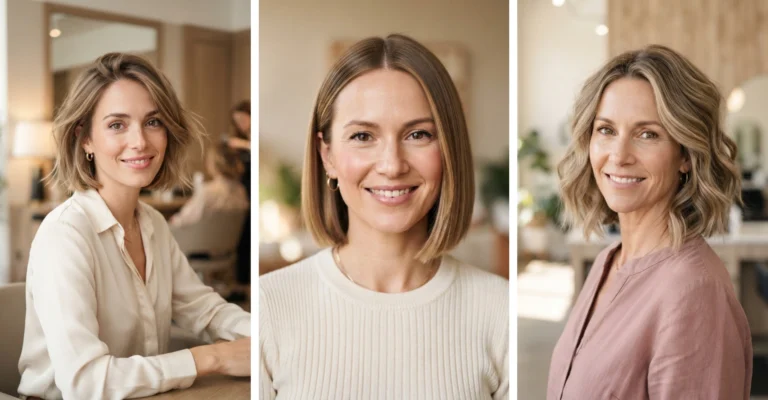
- 4. Curtain Bangs with a Classic Bob
- 5. Curtain Bangs with Wavy Midi Hair
- 6. Curtain Bangs with Natural Curls
- 7. Gray-Blended Curtain Bangs with Long Hair
- 8. Curtain Bangs with a Blunt Lob
- 9. Wispy Curtain Bangs for Fine Hair
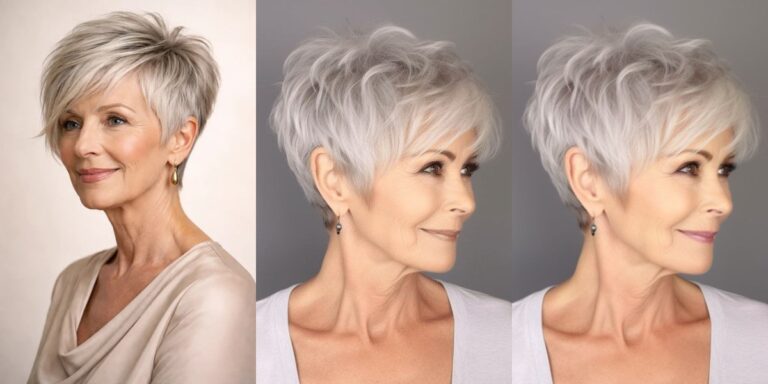
- 10. Curtain Bangs with a Layered Pixie-Bob
- 11. Curtain Bangs with a French Bob
- 12. Curtain Bangs with Feathered Layers
- 13. Curtain Bangs with a Voluminous Blowout
- 14. Curtain Bangs with a Silver Midi Cut
- 15. Curtain Bangs with a Textured Crop Bob
- 16. Curtain Bangs with Long Wavy Hair
- 17. Curtain Bangs with a Sleek Straight Midi
- 18. Curtain Bangs with Balayage Layers
- 19. Curtain Bangs with a Soft Updo
- 20. Short Curtain Bangs with a Collarbone Cut
- Recommended Products
- FAQs
1. Classic Curtain Bangs with Long Layers
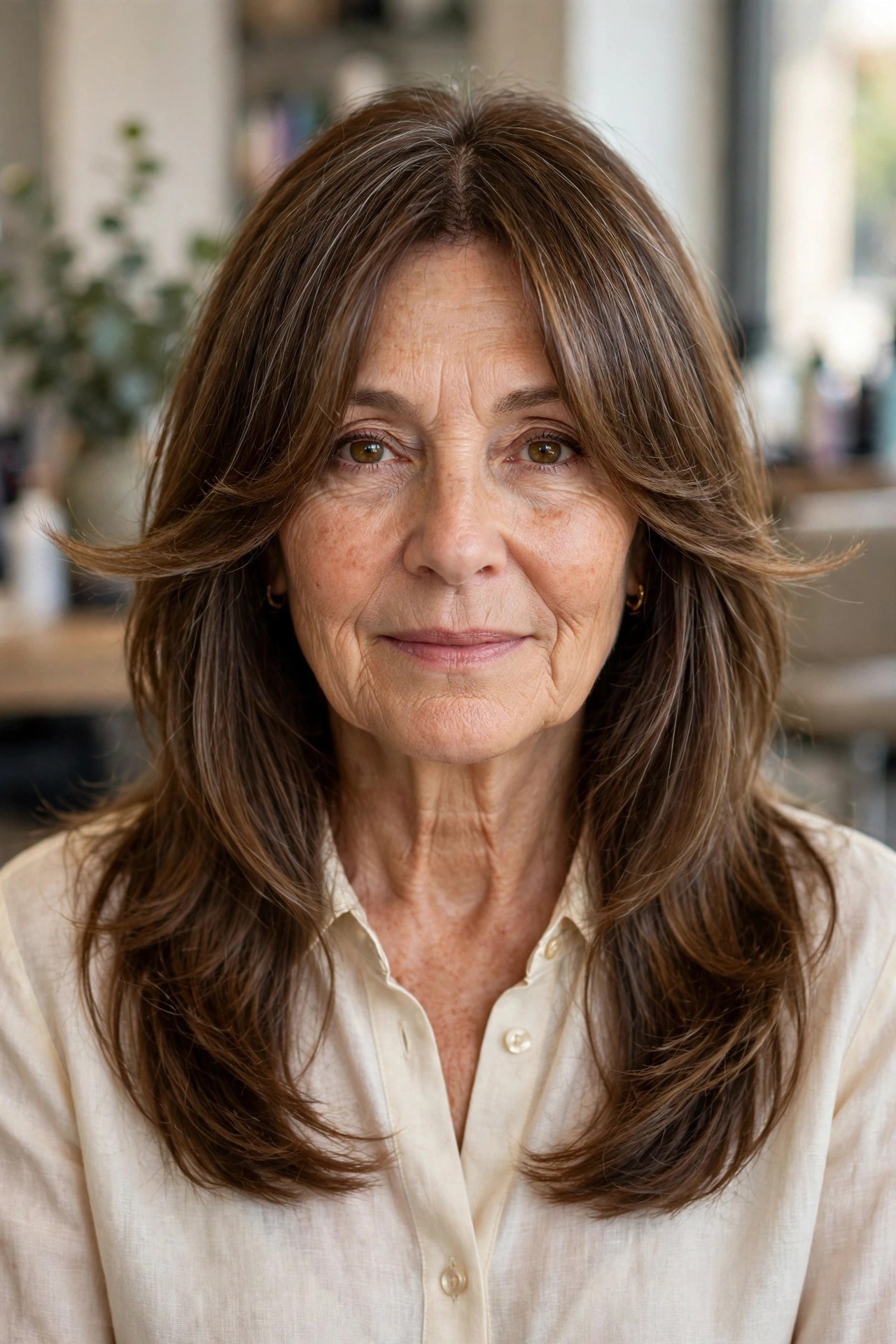
If you love your length and just want a refresh, this is the safest first step into bangs. The front sections are cut to open at the cheekbones and melt straight into long, soft layers, so nothing about the overall silhouette changes — the face simply looks lifted and more defined. It is especially kind to forehead lines, because the eye reads the sweeping diagonal instead of a bare brow.
Ask your stylist to start the shortest point at the cheekbone, never higher, so the bangs can also be tucked behind your ears on off days. Blow-dry the front pieces forward first, then roll them away from the face with a round brush; that little flip is what creates the curtain shape. A dryer brush makes the whole routine take about ten minutes.


2. Curtain Bangs with a Shoulder-Length Lob
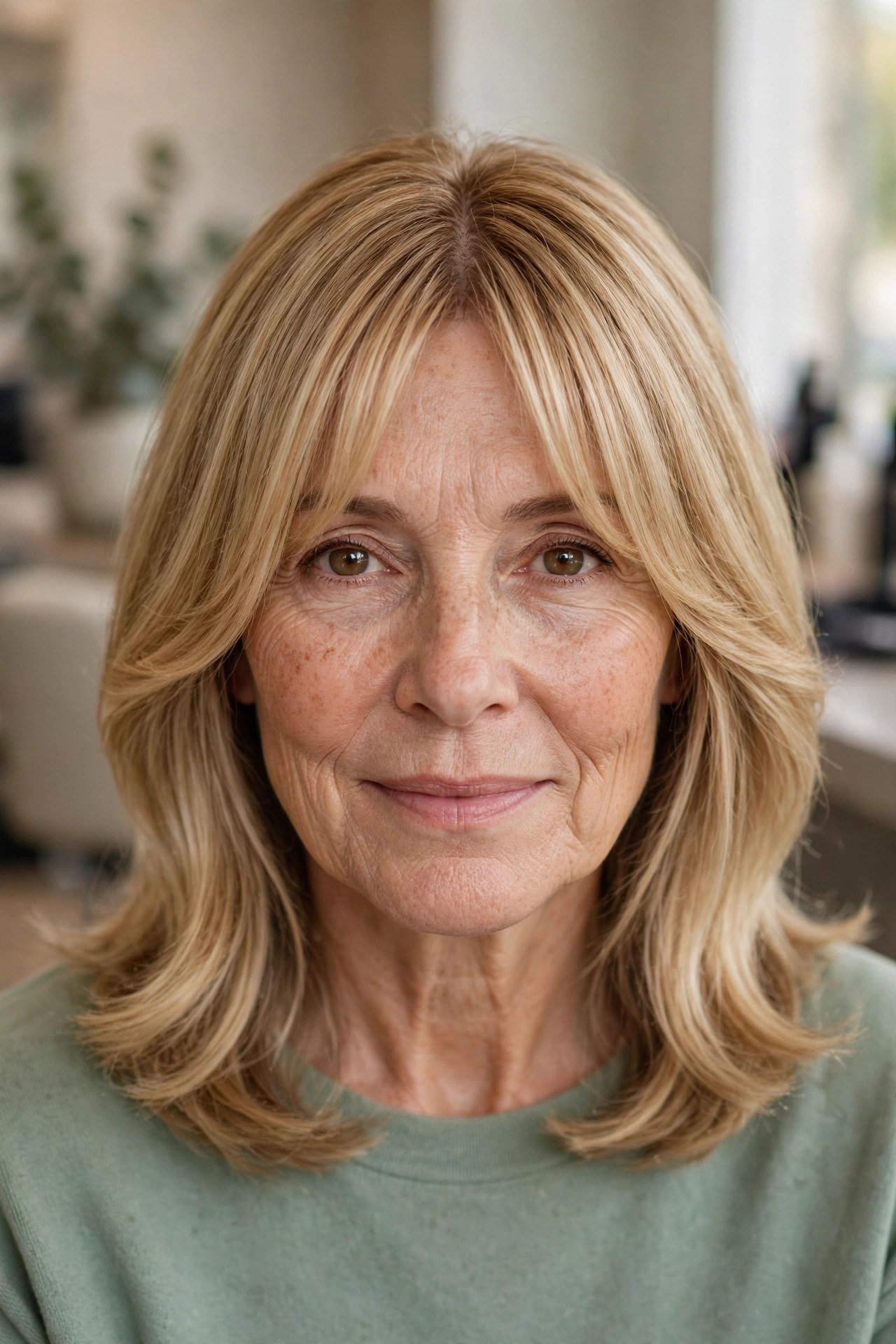
The lob is the cut so many women over 50 land on for good reason: long enough to feel feminine, short enough to stay light. Curtain bangs stop it from looking plain. The parted fringe adds softness around the eyes while the blunt-ish perimeter keeps fine ends looking thicker and healthier than they really are.
This pairing flatters round and heart-shaped faces particularly well, because the open center part lengthens the face while the bangs skim the cheekbones. Style it with a gentle bend through the mid-lengths rather than full curls, and lift the roots with a light mousse so the top does not fall flat by midday.


3. Curtain Bangs with a Modern Shag
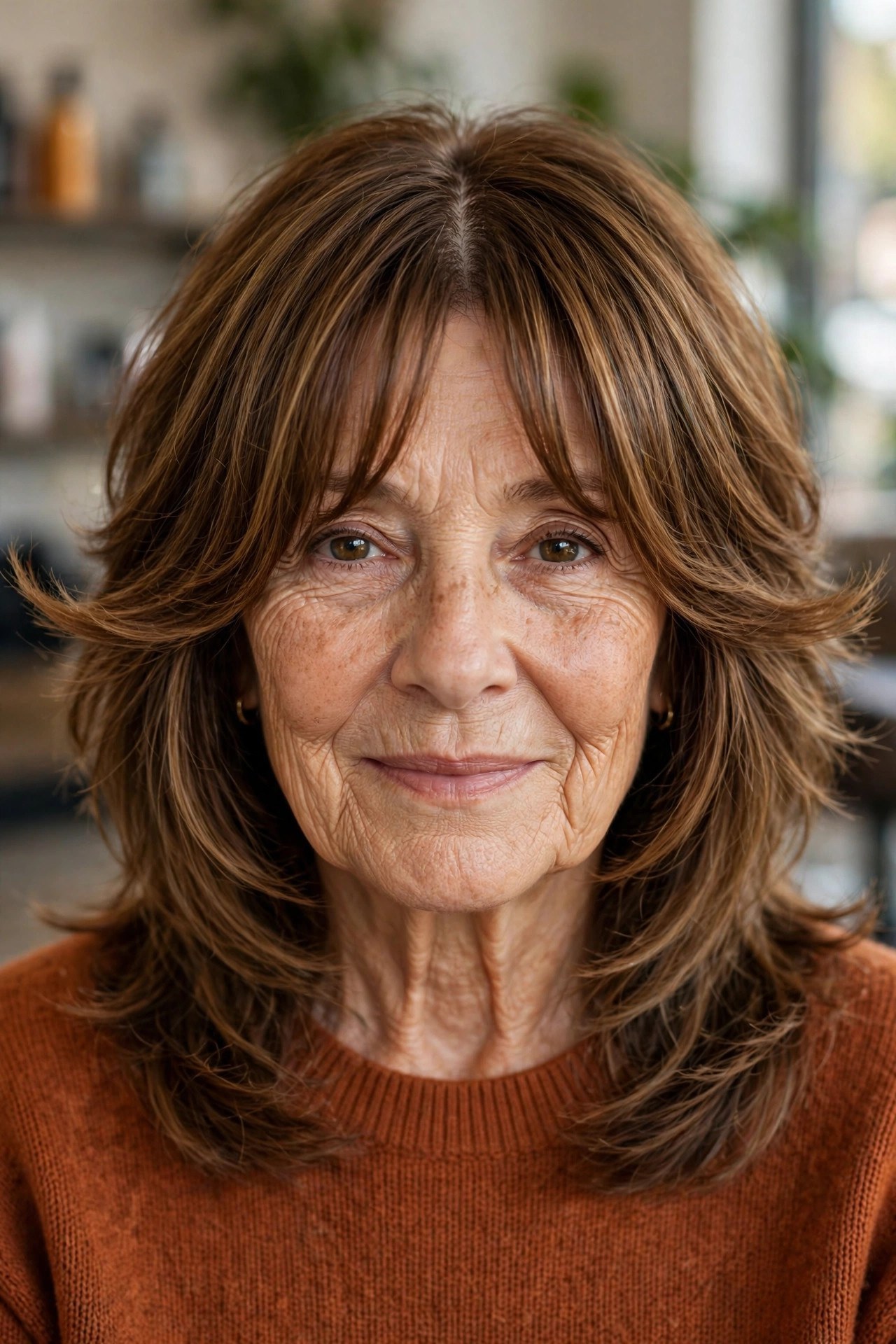
The modern shag was practically designed around curtain bangs. Choppy, graduated layers through the crown build volume where hair tends to collapse, and the parted fringe flows straight into the layers so the whole cut moves as one piece. It has an easy, undone energy that reads youthful without trying too hard.
This is a brilliant option if your hair has a natural bend — the texture does most of the styling for you. Work a pea-sized amount of texturizing putty through the ends, scrunch, and let it air-dry, or rough-dry with your fingers. Avoid heavy oils, which weigh the layers down and make a shag look stringy.


4. Curtain Bangs with a Classic Bob
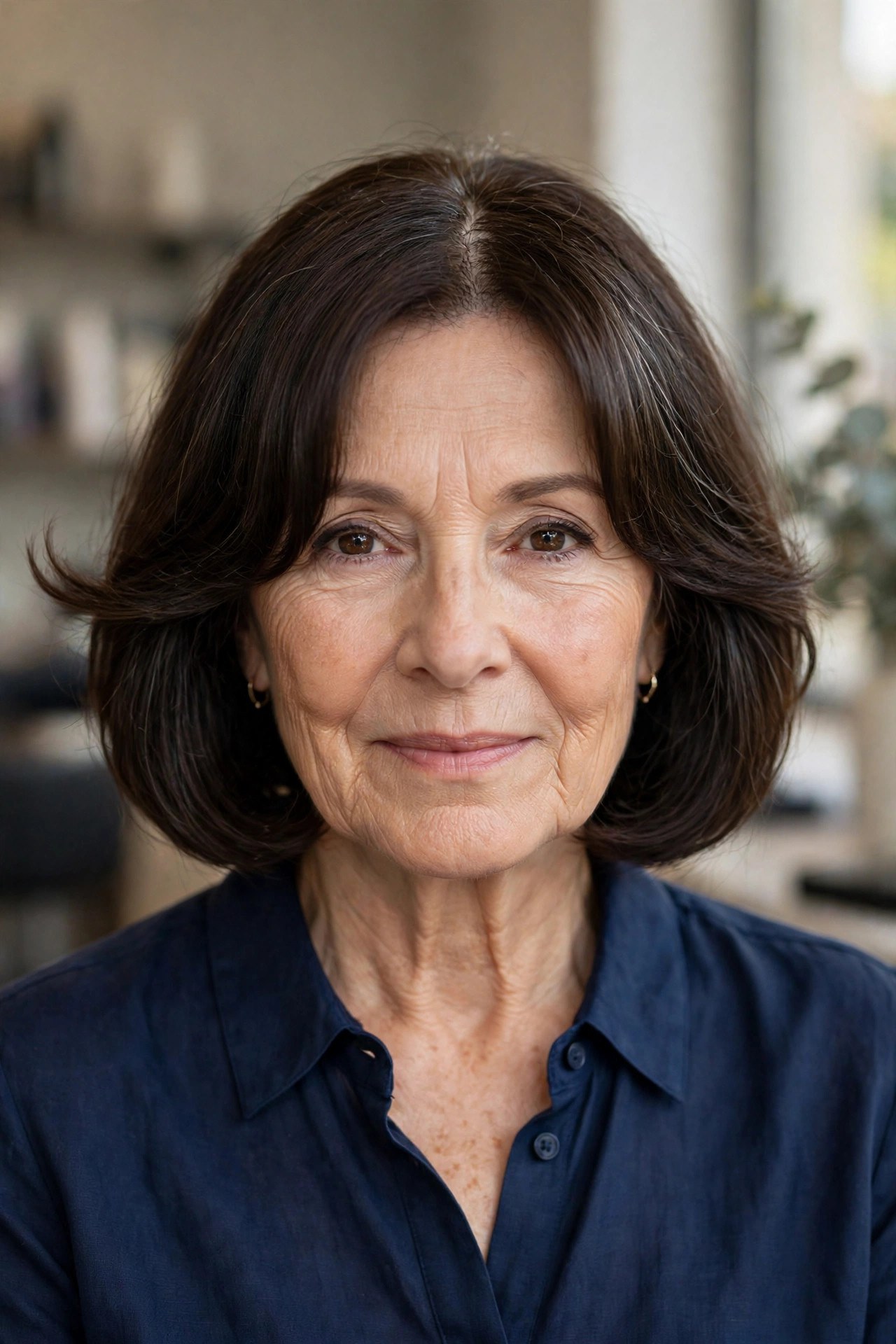
A chin-length bob can sometimes feel severe after 50, and curtain bangs are the fix. Instead of a hard line across the forehead, the parted fringe opens the face, softens the jaw, and gives the bob a relaxed, Parisian feel. The clean perimeter still delivers that polished, intentional shape bobs are loved for.
Keep the bangs a touch longer than you think you need — they spring up shorter once dried, and the extra length is what lets them sweep rather than stick straight down. A quick pass with a flat iron, bending the front pieces slightly away from the face, keeps everything sleek in under five minutes.


5. Curtain Bangs with Wavy Midi Hair
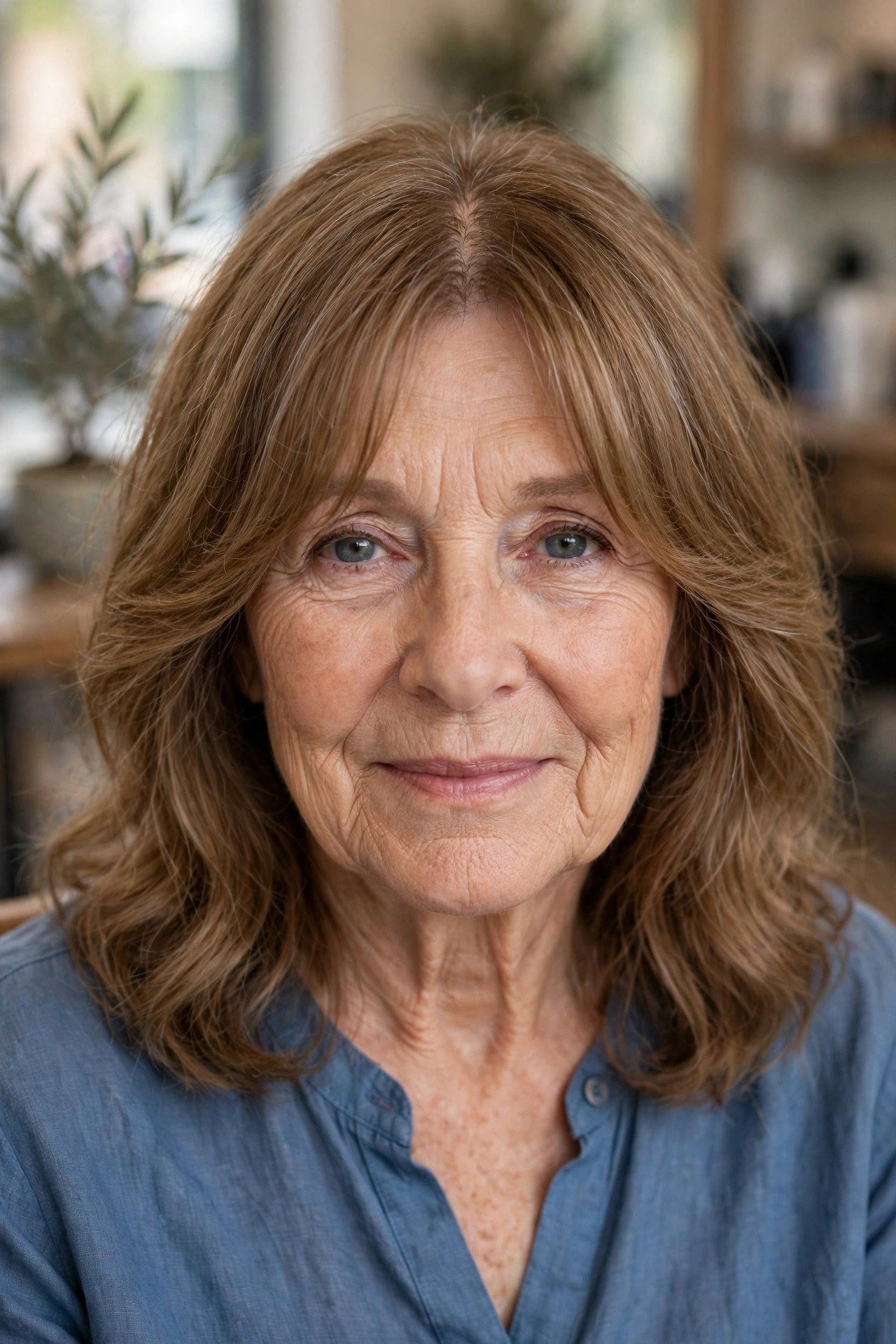
Midi hair — that in-between length just past the shoulders — pairs beautifully with curtain bangs when it is worn in loose waves. The waves echo the curve of the bangs, so the fringe never looks like a separate piece, and the movement around the face softens lines and brightens the whole look.
If your hair waves naturally, enhance rather than fight it: mist a sea salt spray through damp lengths, twist a few sections away from the face, and air-dry. If you are adding waves with a tool, always protect first and leave the very ends out for a modern, lived-in finish.


Try our free Face Shape Finder to discover your face shape in under a minute — then pick the curtain bang length that flatters it most.
6. Curtain Bangs with Natural Curls
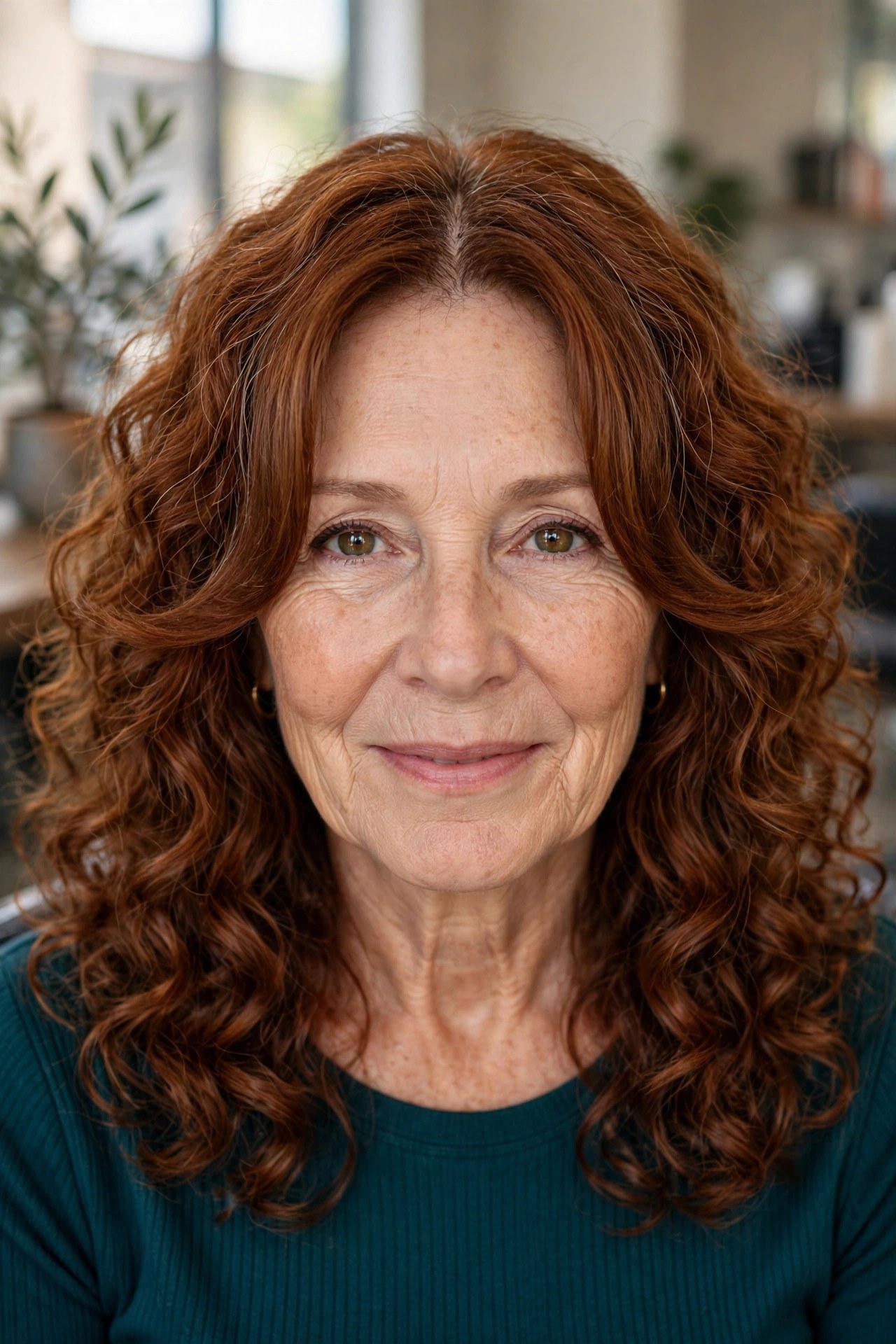
Yes, curly hair can absolutely wear curtain bangs — the secret is cutting them dry, curl by curl, and leaving them longer than a straight-hair version. A center-parted curly fringe opens up the face, stops curls from forming a solid helmet shape, and spotlights your eyes and cheekbones instead.
Ask for the shortest point to sit at the cheekbone when the curl is dry and shrunken, not stretched. Refresh on non-wash days with water and a touch of foam scrunched upward, and sleep on a satin pillowcase so the front curls do not frizz flat against your forehead overnight.

7. Gray-Blended Curtain Bangs with Long Hair
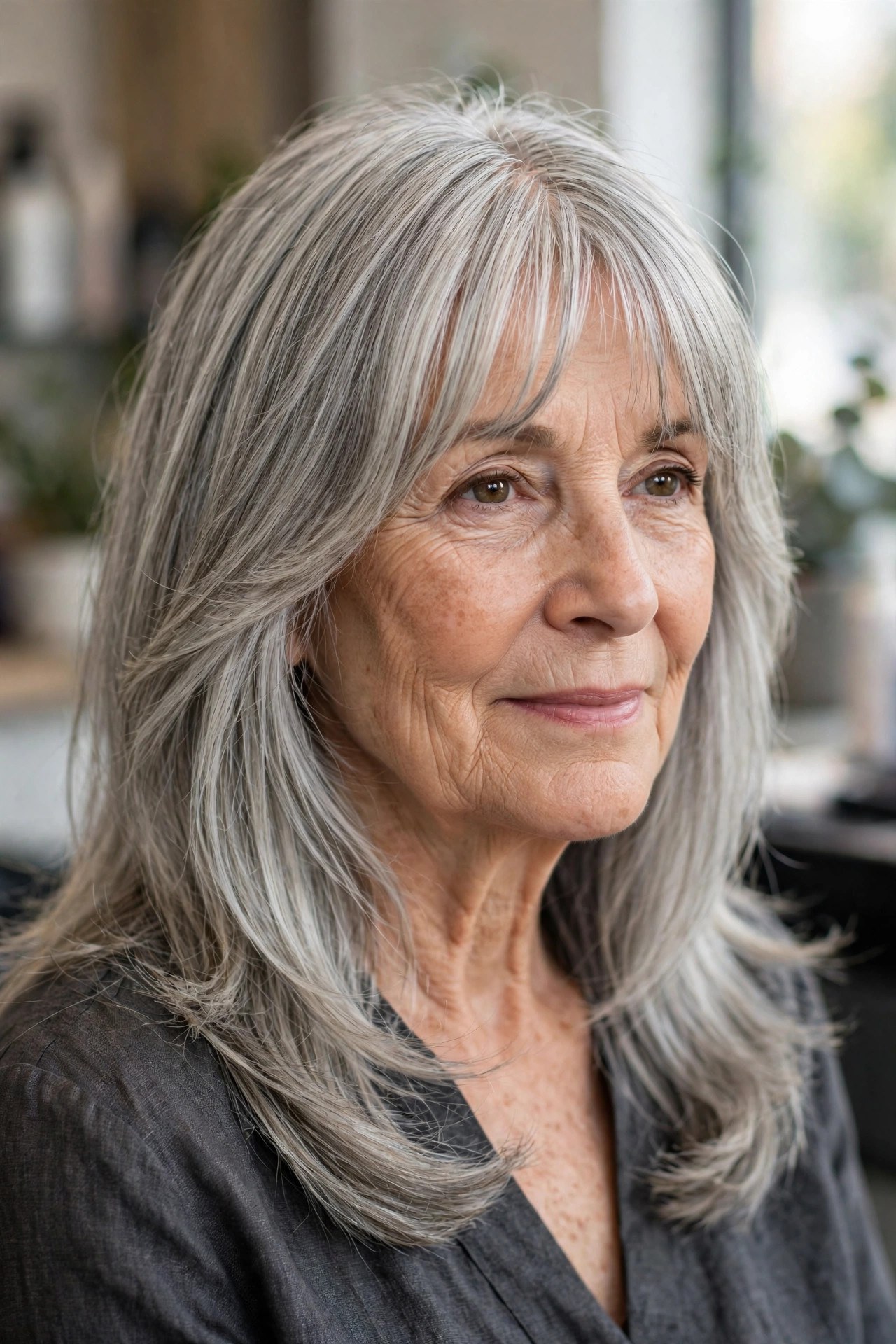
Growing out your color is so much easier with curtain bangs. Because the fringe is blended through the front with longer, graduated pieces, silver strands weave into the lengths instead of forming a harsh line at the part. The result looks deliberate and elegant — a blend, not a grow-out.
Long gray hair needs brightness to avoid looking dull, so a purple shampoo once a week keeps yellow tones away and lets the silver shine. Keep the layers long and sparse at the ends; gray hair is often coarser and drier, and too much layering can make it look wispy.

8. Curtain Bangs with a Blunt Lob
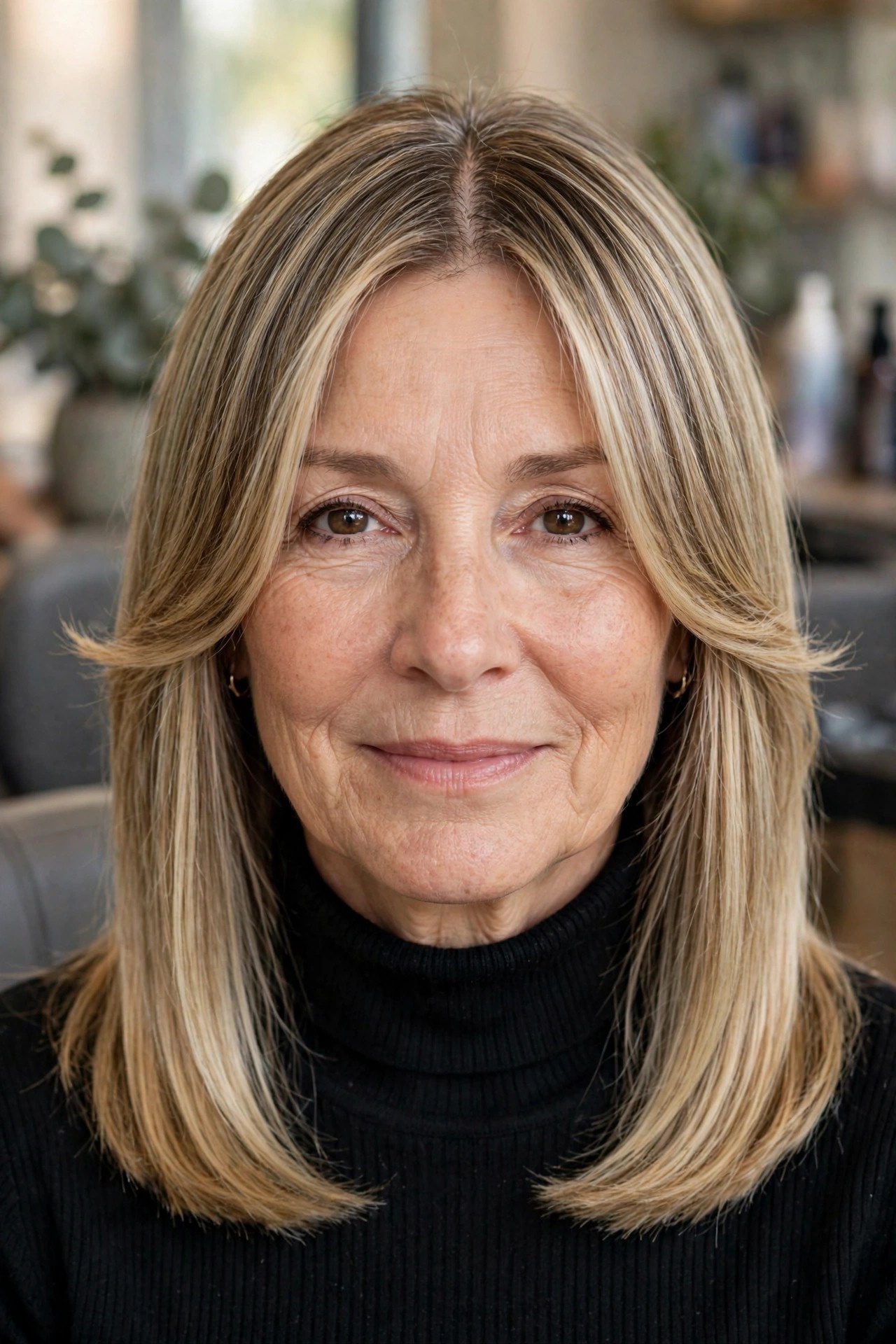
For women who like a sharper, more fashion-forward edge, the blunt lob delivers: one clean length, zero layers through the ends, and a soft curtain fringe to balance the precision. The contrast works — the bangs bring the softness, the blunt ends bring the structure — and the solid perimeter makes hair look noticeably thicker.
This cut suits straight and slightly wavy hair best. Because the ends are the whole point, protect them every time you heat-style and book dusting trims every six to eight weeks. The bangs themselves can grow a little longer between appointments without spoiling the look, which keeps maintenance reasonable.
9. Wispy Curtain Bangs for Fine Hair
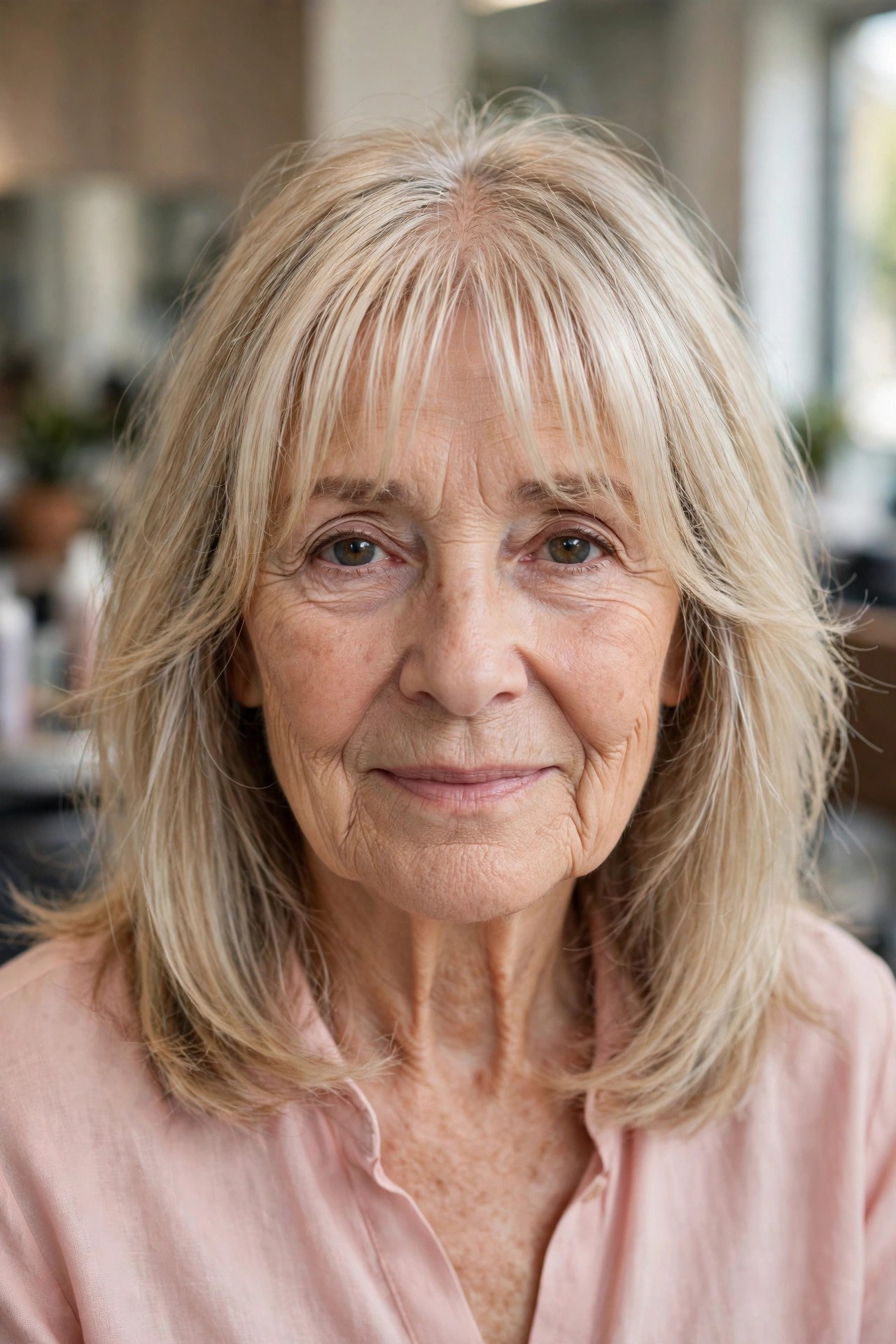
Fine hair and bangs sound risky, but the wispy curtain version is actually made for you. Only a small, feathered section is taken from the front, parted in the middle and cut light and airy, so you get the face-framing effect without sacrificing the little density you have through the top.
The one rule with fine bangs is keeping them clean — they sit against the forehead and pick up oil faster than the rest of your hair. A quick fringe-only wash at the sink, or a puff of dry shampoo before bed, keeps them swinging instead of stringy. If thinning is a concern generally, our guide to haircuts for women over 50 with thin hair has more density-friendly ideas.
10. Curtain Bangs with a Layered Pixie-Bob
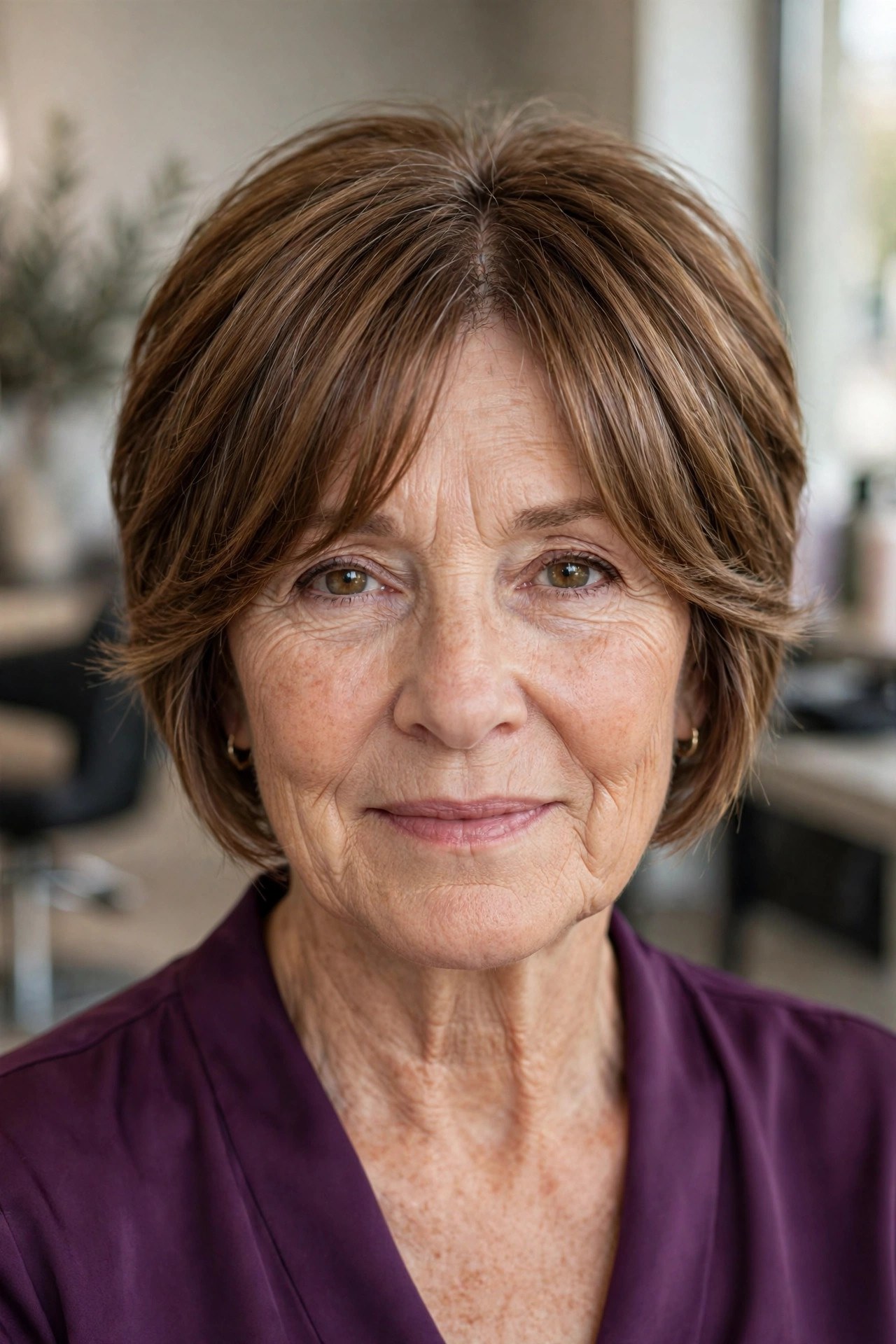
Can curtain bangs work on short hair? With a pixie-bob, beautifully. The top is left long enough to part in the center and sweep back into the cropped sides, giving you all the lift and easy care of a short cut with a soft, feminine frame still intact around the face.
This is a strong choice if your hair is thinning at the temples, because the sweeping front sections draw the eye diagonally rather than to the hairline. Compare it with the softer shapes in our long pixie haircuts for women over 50 roundup if you are deciding how short to go. Style with putty on the ends only, keeping the fringe light.
11. Curtain Bangs with a French Bob
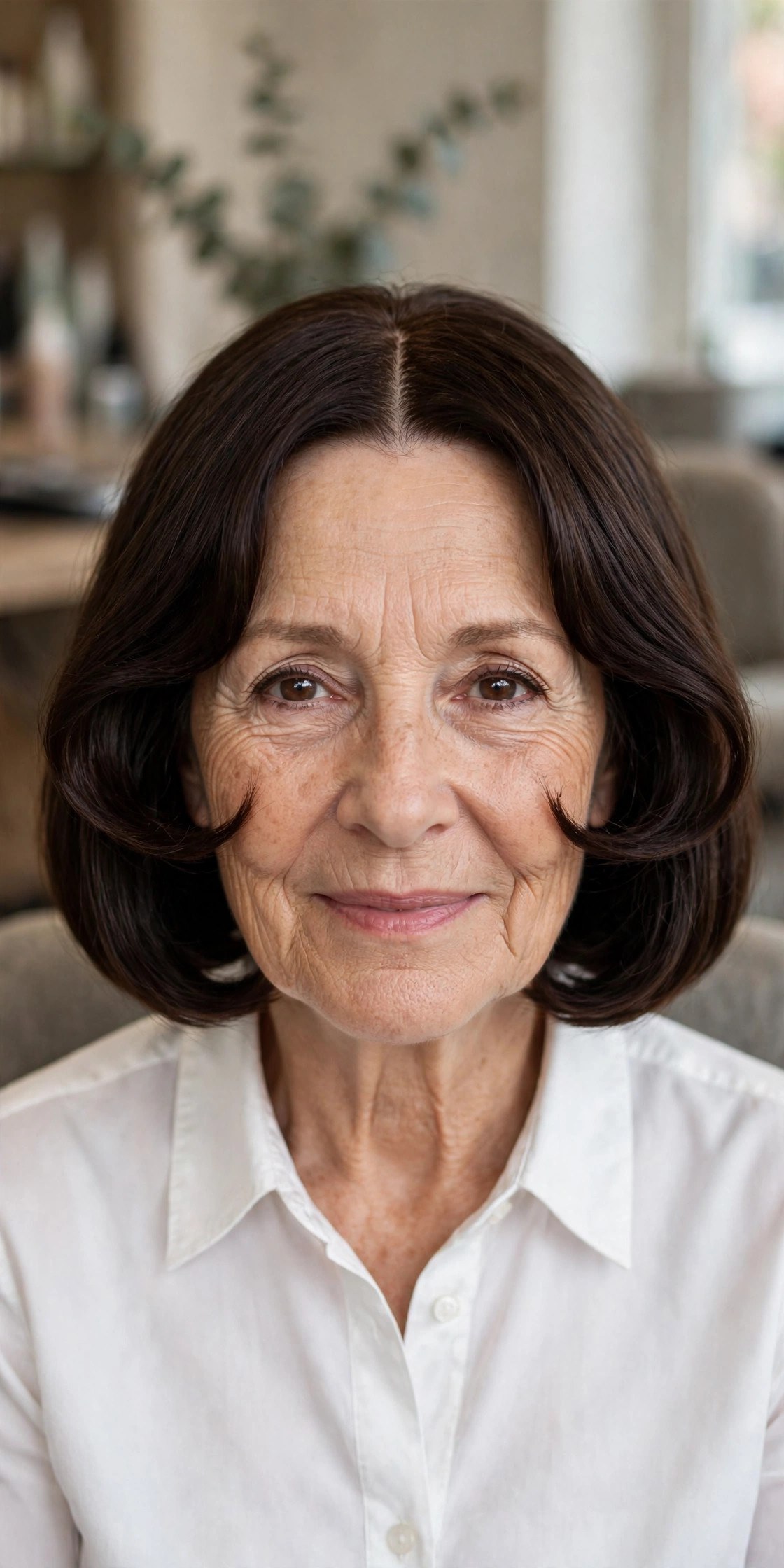
The French bob sits right at the jaw with a gentle curve under, and adding curtain bangs gives it that effortless, just-left-the-salon charm. The parted fringe stops the cut from reading too round and adds a flattering vertical line down the center of the face.
It is surprisingly low maintenance: the shape is in the cut itself, so a rough blow-dry and a small iron to tuck the ends under is all it asks for. This one flatters oval and longer face shapes best, and it makes a fine, elegant statement with silver or deep brunette color.

12. Curtain Bangs with Feathered Layers
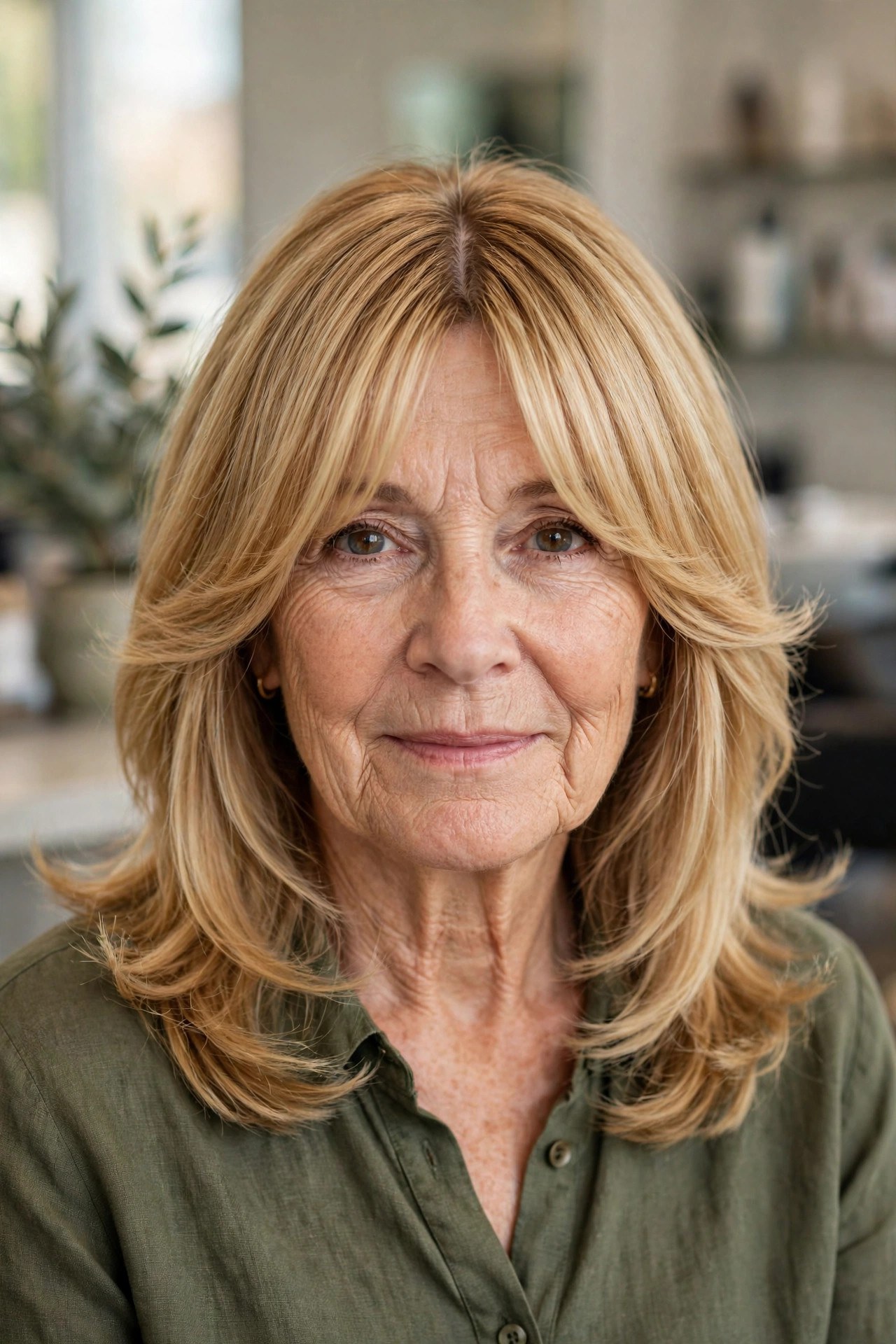
Feathered layers sweep away from the face in soft flicks, and curtain bangs are their natural starting point — the fringe simply continues the movement. It is a forgiving, glamorous style that adds width around the cheekbones and keeps longer hair from dragging the face down.
Blow-dry in sections rolling away from the face with a medium round brush, and let each section cool before dropping it; that cooling step is what sets the feathered flick for the day. A sculpting foam through the roots first gives the style its airy lift without stiffness.

13. Curtain Bangs with a Voluminous Blowout
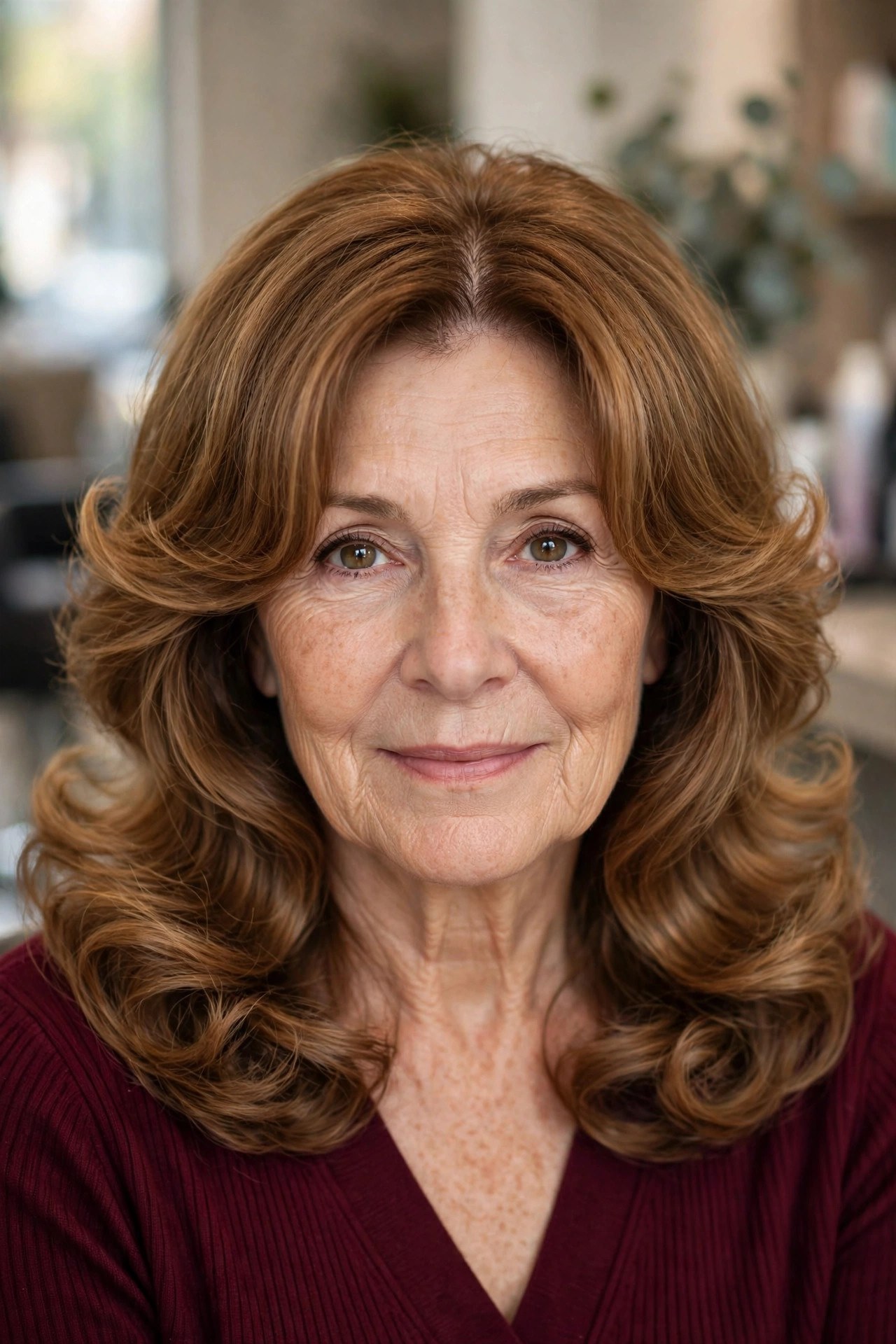
If you love a polished, bouncy finish, build your blowout around curtain bangs. Dried properly — forward, then swept back — they form that wide, glamorous arc at the front that makes the whole blowout look expensive, and the shape holds the style together even as it softens over a few days.
A hot-air brush is the easiest route: dry the bangs first while the hairline is still damp, rolling them away from the face, then work through the lengths in large sections. Finish with the cool shot. Root-lifting at the crown keeps the volume balanced so the bangs do not look flat by comparison.

14. Curtain Bangs with a Silver Midi Cut
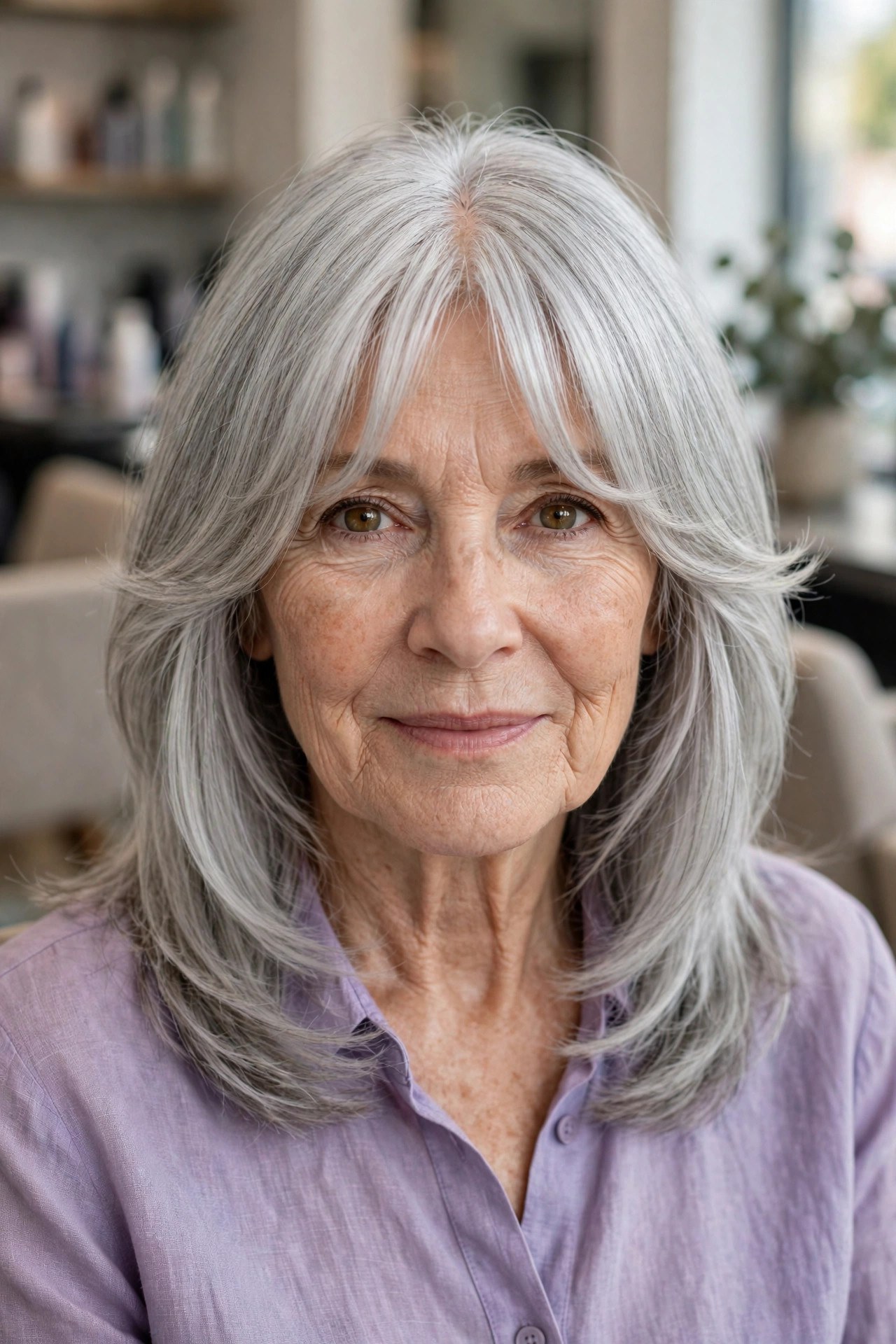
Natural silver hair looks striking in a midi cut with curtain bangs. The parted fringe shows off the dimension in gray hair — those ribbons of white, pewter, and charcoal — right where the light hits your face, and the mid-length keeps everything modern rather than matronly.
Silver hair can turn yellow from heat and minerals, so keep hot tools moderate, always use protection, and clarify or use a purple shampoo weekly. Soft layers through the front stop the length from looking heavy, and the bangs grow out so gracefully that trims can stretch to every eight weeks.
15. Curtain Bangs with a Textured Crop Bob
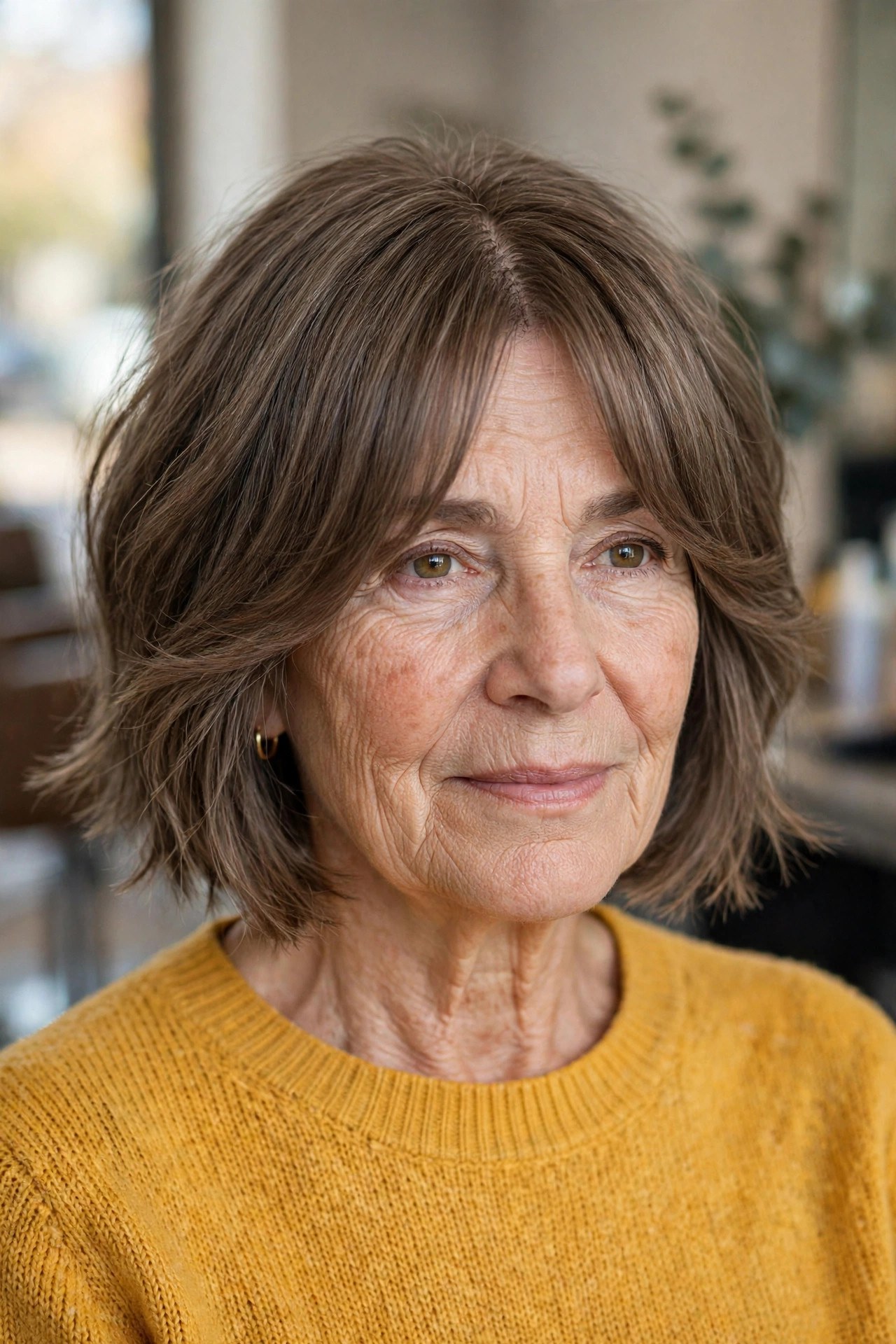
Part bob, part crop, this choppy chin-length cut uses texture to fake fullness. The ends are point-cut so they piece apart, the crown keeps a little length for lift, and the curtain bangs tie it together with softness at the front. It is a great reset cut if your longer hair has gone thin and tired at the ends.
Styling is deliberately messy: emulsify a dab of putty, twist random pieces, and let the fringe fall where it parts. Because the shape is relaxed, it grows out kindly — you will not hit that awkward in-between stage at week four.
16. Curtain Bangs with Long Wavy Hair
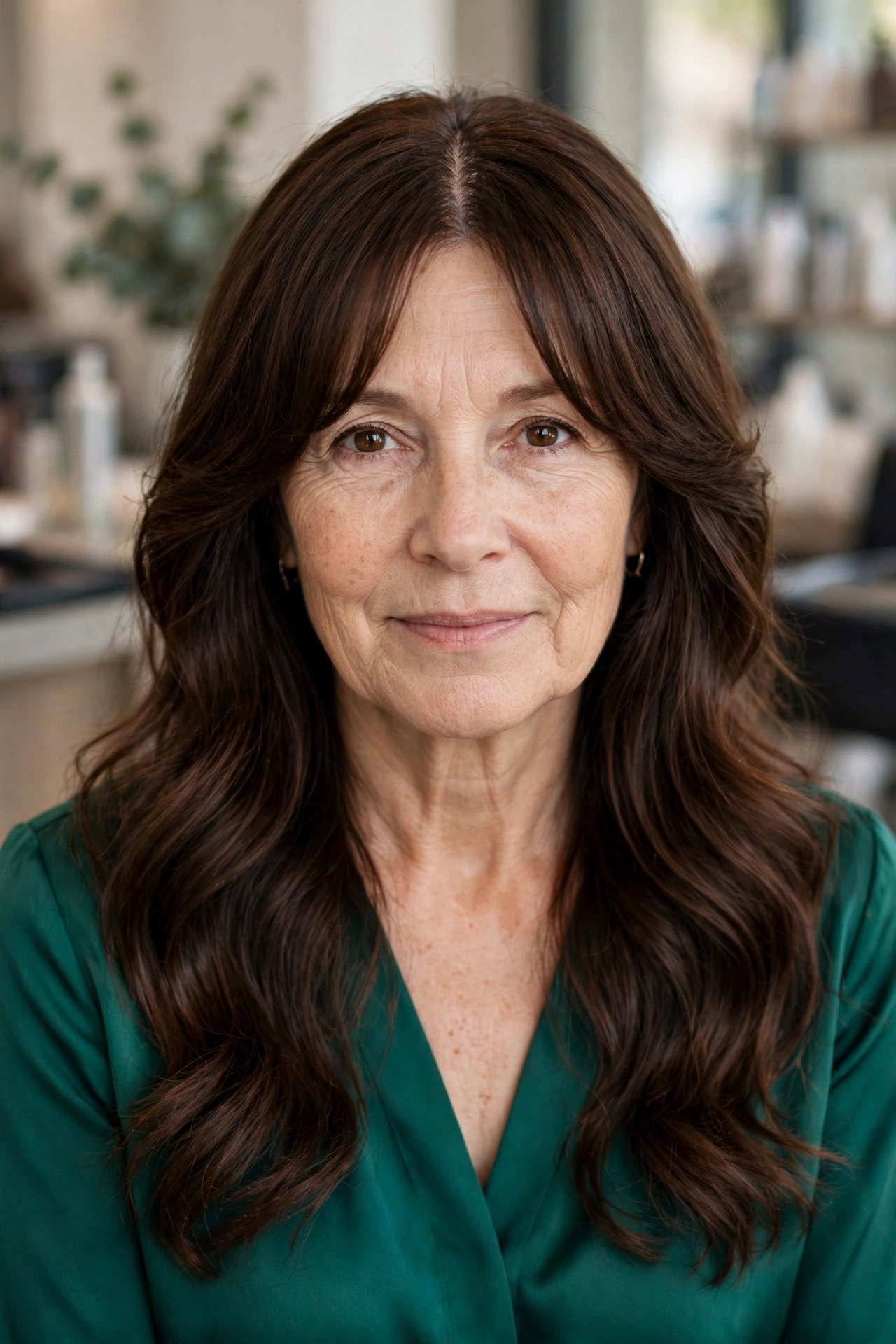
Long hair after 50 sometimes needs a focal point, and curtain bangs provide it. With loose waves through the lengths, the bangs stop the style from looking like a plain curtain of hair and instead create a deliberate frame: eyes, cheekbones, and smile become the center of attention.
Keep waves loose and large — tight curls can age long hair — and create them by twisting sections around a wide barrel or braiding damp hair overnight. A texture spray through the mid-lengths keeps the waves separated and touchable rather than crunchy.

17. Curtain Bangs with a Sleek Straight Midi
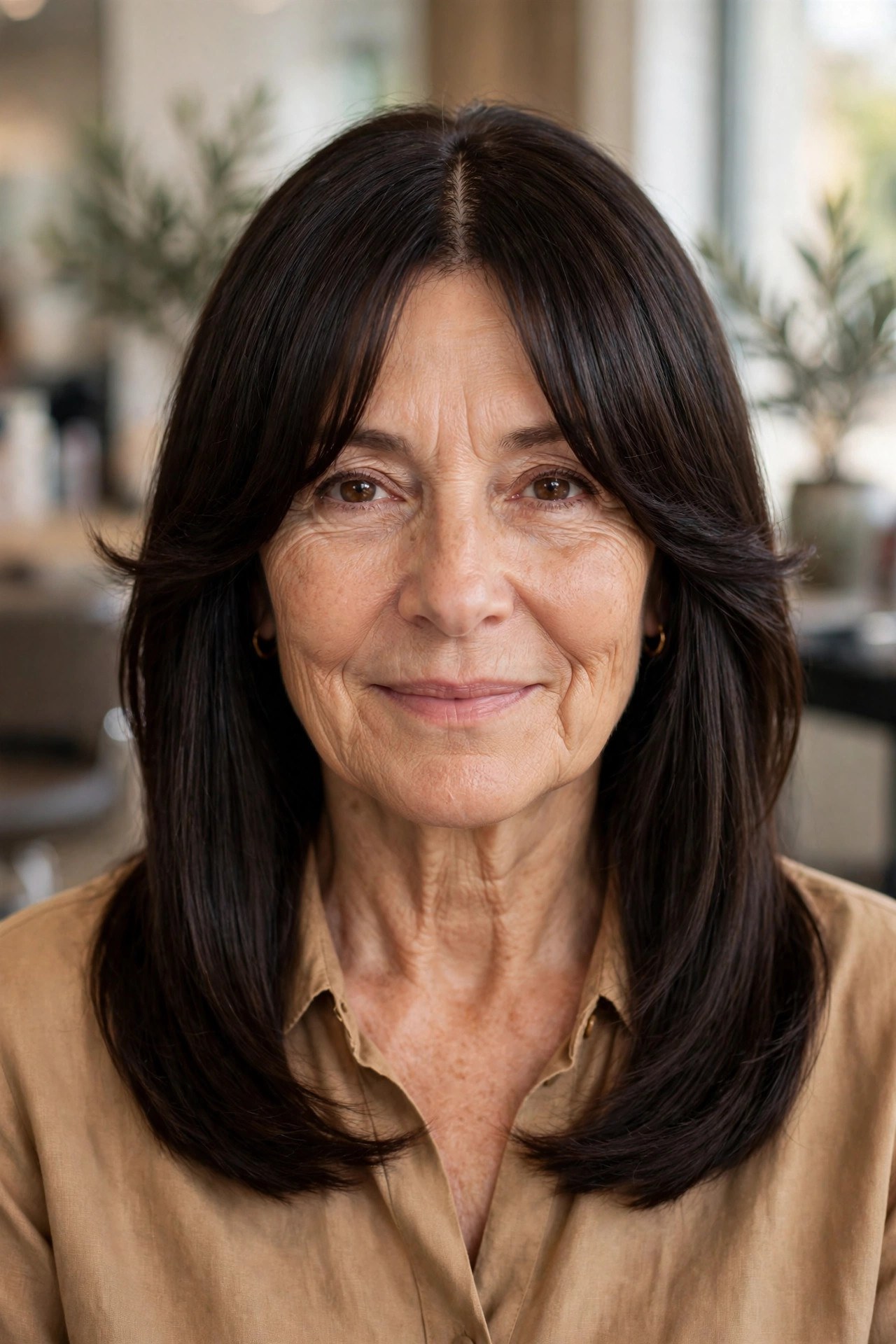
Worn glass-smooth and straight, a midi cut with curtain bangs is minimal, modern, and quietly striking. The straight lengths emphasize shine, while the curved fringe prevents the look from feeling stark. It works particularly well on naturally straight hair that resists holding a curl anyway.
Shine is the whole effect here, so guard it: heat protectant before the iron, one slow pass per section rather than several fast ones, and a drop of serum smoothed over the surface — never on the bangs themselves, or they will separate and look greasy by noon.
18. Curtain Bangs with Balayage Layers
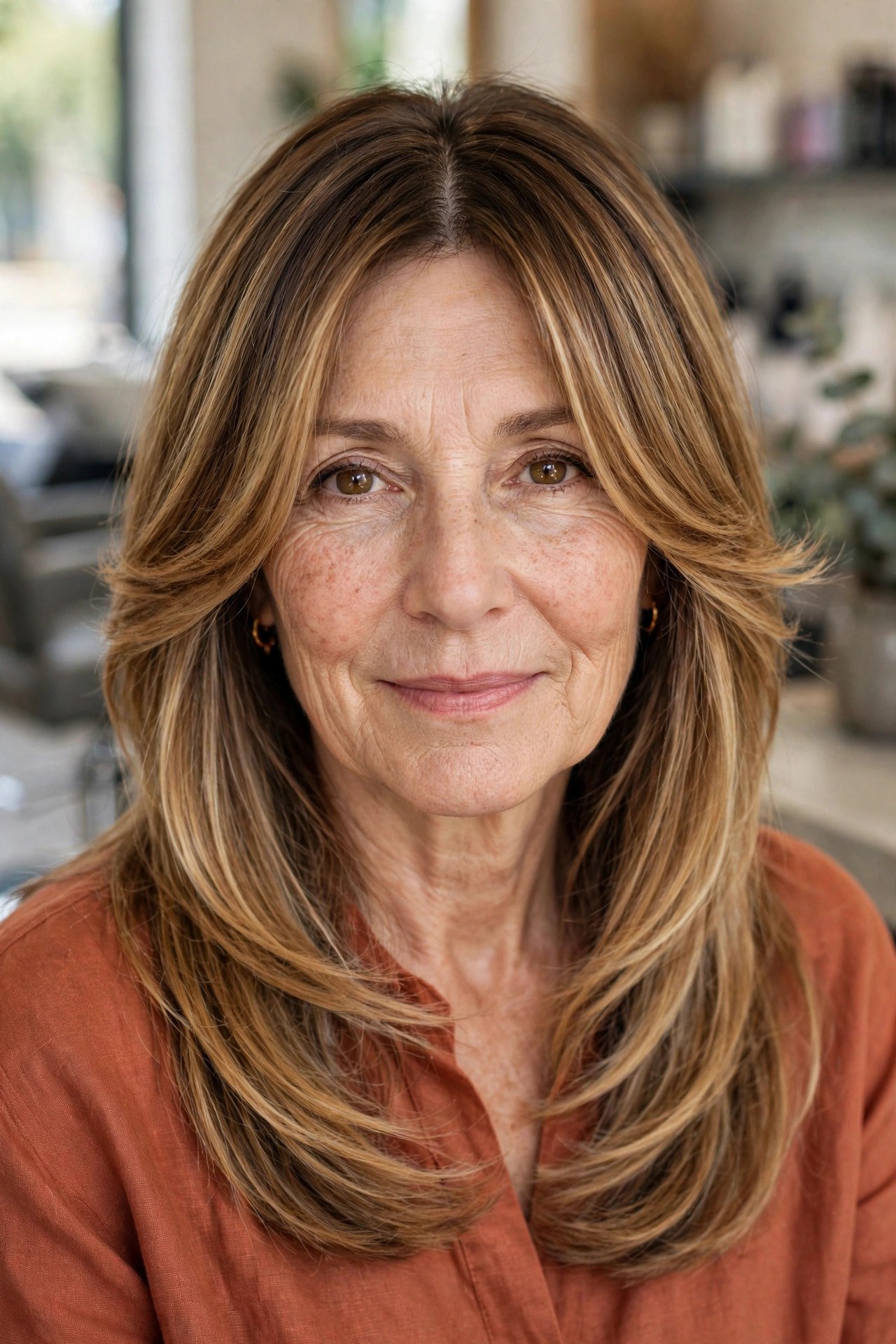
Balayage and curtain bangs were made for each other. The hand-painted lighter pieces start right in the fringe, so the brightness frames your face exactly where you want light, and because balayage grows out softly, the bangs never develop a hard regrowth line between salon visits.
Ask your colorist to keep the brightest pieces at the front and around the face, melting into subtler dimension through the back. At home, protect the lightened front pieces from heat, since they are the most fragile, and use a foam or light mousse rather than heavy creams near the fringe.
19. Curtain Bangs with a Soft Updo
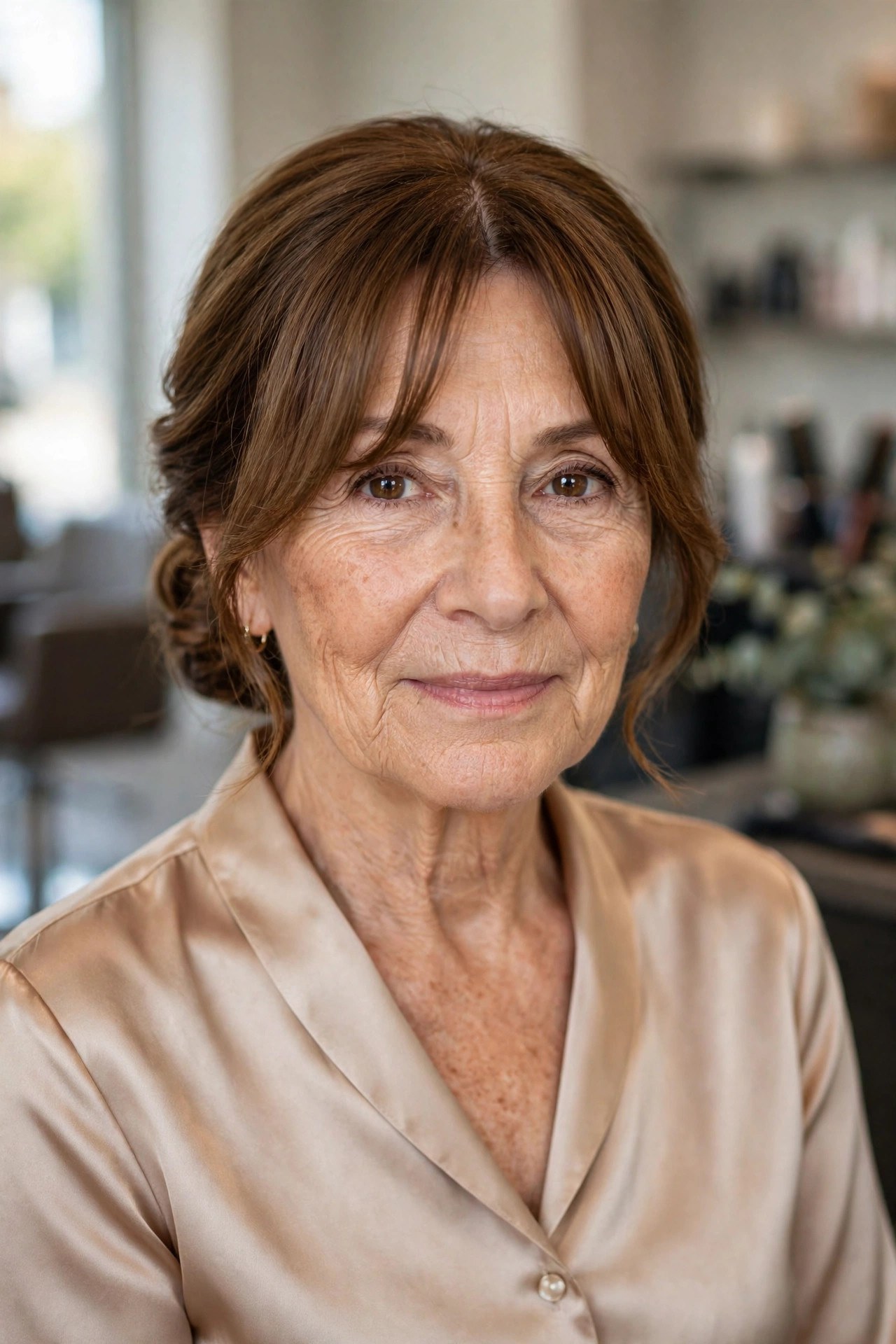
Here is the hidden superpower of curtain bangs: they make updos look finished. Pull the lengths into a low bun or soft twist, leave the parted fringe out, and you instantly have a styled, face-framed look instead of hair scraped back — softer on the hairline and far more flattering in photos.
For fine hair, add a little dry shampoo at the roots before pinning for grip, and secure the bun with claw clips or pins at the sides so nothing pulls. Let the bangs fall to cheekbone length; if they are longer, a gentle curve with a warm brush keeps them sitting like a frame, not a curtain across your eyes.

20. Short Curtain Bangs with a Collarbone Cut
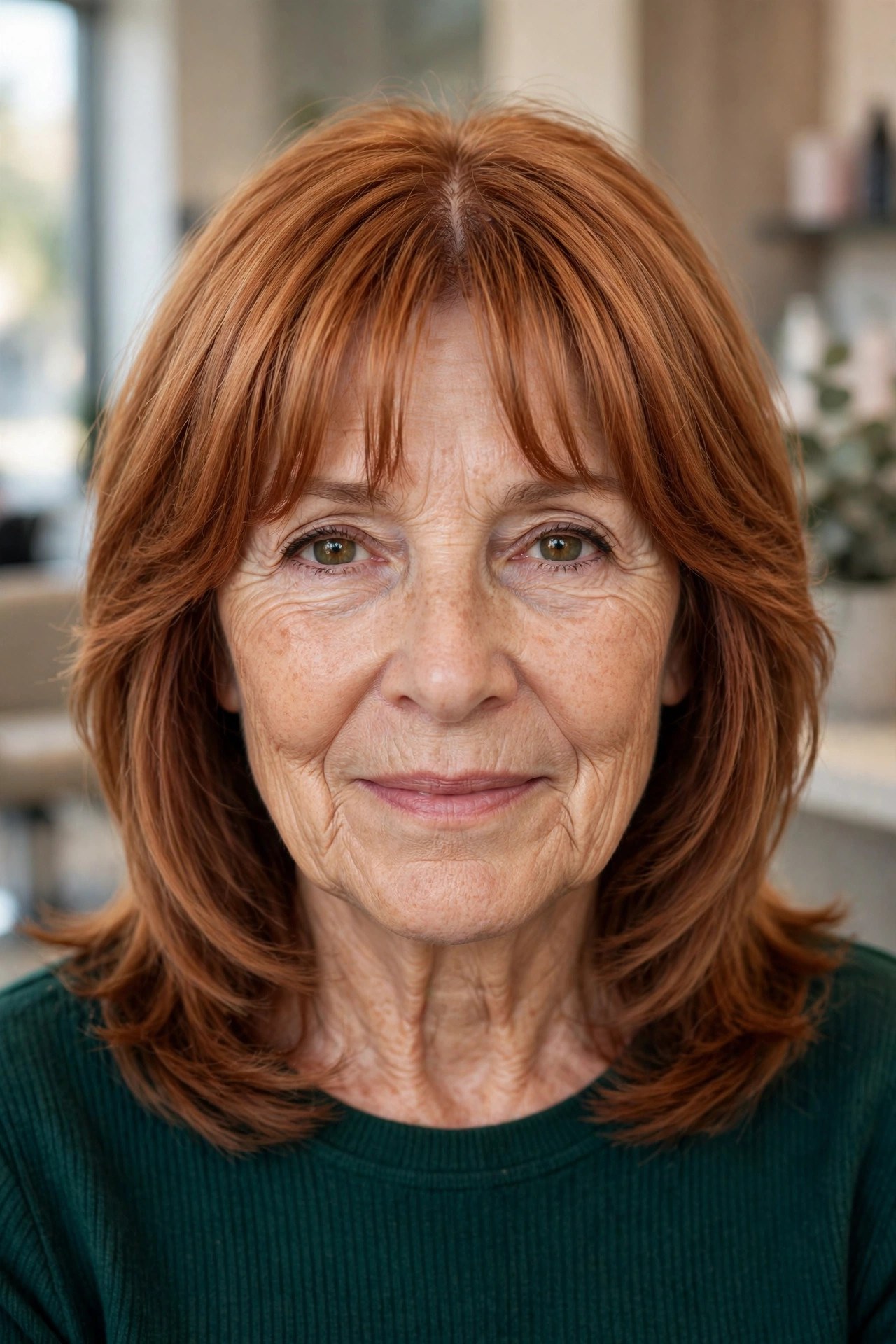
If full-length curtain bangs feel like too much fabric around your face, try the shorter version: the fringe opens at brow level and sweeps to the temples rather than the cheekbones. Paired with a collarbone-length cut, it gives a brighter, more open look and is a gentle first fringe for the truly bang-shy.
Because they are shorter, these bangs grow into the longer curtain shape within a few weeks, so you can test the waters without commitment. A light volumizing mousse at the roots stops the shorter fringe from plastering itself to the forehead on humid days.

Recommended Products
These are the six tools and products that came up again and again across the styles above — the ones that make curtain bangs quick to style and easy to keep fresh between salon visits.
How to Style and Care for Curtain Bangs
- Dry them first. Bangs set in whatever direction they dry, so style the fringe before the rest of your hair, while it is still damp.
- Forward, then back. Blow-dry the bangs forward toward your nose, then roll them away from the face with a round brush — that two-step is the whole curtain secret.
- Keep products off the fringe. Oils and serums belong on the mid-lengths and ends only; bangs sit on skin and pick up enough oil on their own.
- Refresh, do not rewash. A fringe-only sink wash or a little dry shampoo revives day-two bangs in a minute.
- Trim every 3–4 weeks. Curtain bangs grow out kindly, but a quick fringe trim keeps the shortest point at cheekbone level where it belongs. Many salons do bang trims free between cuts — ask.
- Protect before heat. The front pieces get styled most often, so they need heat protection every single time.
Frequently Asked Questions
Do curtain bangs make you look younger after 50?
They often do, because the soft, parted sweep draws attention to the eyes and cheekbones and breaks up the forehead without the hard line of a straight fringe. The effect is more “lifted and fresh” than obviously youthful, which is exactly why they suit this age group so well.
Will curtain bangs work on fine or thinning hair?
Yes, as long as they are cut wispy and feathered rather than thick. A smaller, lighter section is taken from the front, so you keep your density on top. Keep them clean with dry shampoo, since fine bangs show oil quickly.
How often do curtain bangs need trimming?
Every three to four weeks keeps the shape ideal, but they are the most forgiving fringe to grow out — a week or two overdue still looks intentional. Many stylists offer quick, free bang trims between full appointments.
Can I wear curtain bangs with glasses?
Absolutely. Ask for the shortest point at the cheekbone and slightly longer sides so the bangs sweep above and around your frames rather than resting on them. Bring your glasses to the appointment so your stylist can cut around them.
Do curtain bangs work on curly hair?
Yes — they just need to be cut dry, curl by curl, and left longer than a straight version to allow for shrinkage. A center-parted curly fringe opens the face beautifully and refreshes with a spritz of water and a scrunch.
What face shapes suit curtain bangs best?
Almost all of them. The center part lengthens round faces, the sweep softens square jaws, and longer versions balance heart-shaped faces. Oval faces can wear any length. Adjusting the shortest point — brow, cheekbone, or jaw — is how your stylist tailors them to you.
Final Thoughts
Curtain bangs are a small change with an outsized effect: a softer frame, a lifted look, and a fringe that never punishes you for skipping a trim. Pick the pairing above that matches your current length and texture, take the photo to your stylist, and start with the bangs a little longer than you think — you can always take more off, and that extra length is what makes the sweep so flattering. If you are still deciding on the base cut itself, browse our short hairstyles for women over 50 for more inspiration.