Long Layered Hair for Women Over 60 With Face-Framing Pieces
This post contains affiliate links. As an Amazon associate, I earn from qualifying purchases. I only recommend products that are of high quality and that I would use myself.
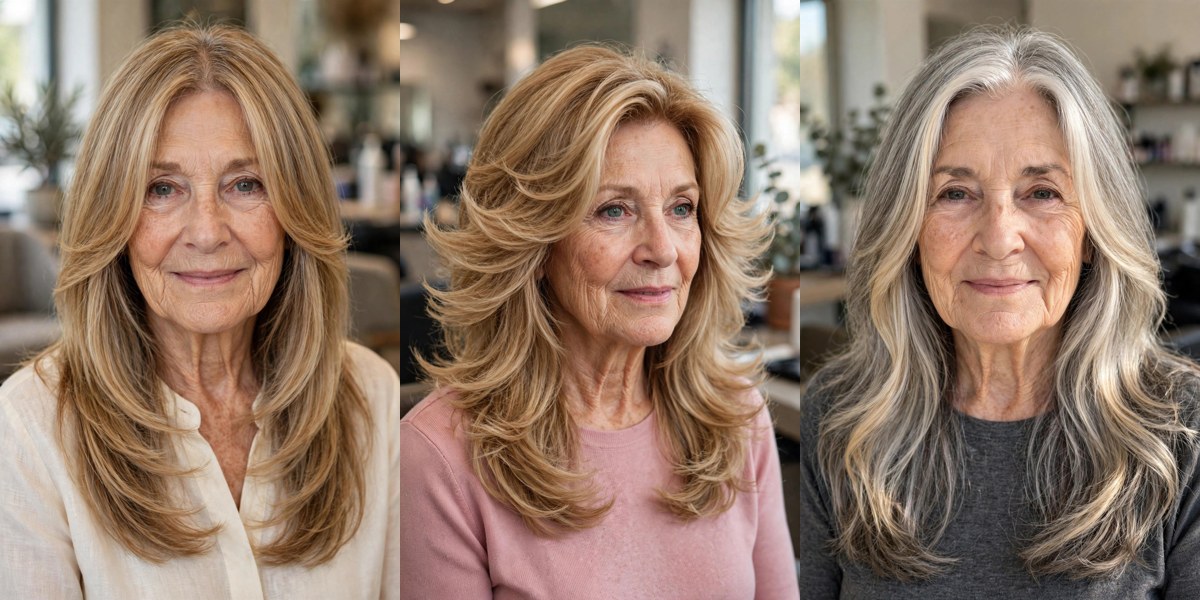
Long hair after 60 has one unfair problem: the length itself is lovely, but when it hangs in one unbroken sheet, it pulls the eye — and seemingly the whole face — downward. The fix is not a shorter cut. It is a few carefully placed shorter pieces at the front. Face-framing layers are the detail that decides whether long hair flatters you or simply hangs there, and once you know where those pieces should start for your face shape, you can keep every inch of your length and still get the lift.
In this guide you will find 20 long layered styles built around face-framing pieces — cheekbone curves, curtain pieces, jaw highlights and soft tendrils — with honest notes on who each one suits and how to keep it looking right between salon visits. If you are still deciding between keeping your length or going shorter, our roundup of long hairstyles that look elegant, not dated is a helpful companion read.
One rule runs through all 20 ideas: the framing must be visible. If the front pieces are cut so long or so blended that nobody can see them, they cannot do their job. Ask for a starting point, not a suggestion of one.
Table of Contents
- 1. Classic Cheekbone-Framing Layers
- 2. Curtain Face-Framing Pieces
- 3. Feathered Layers with a Side-Swept Fringe
- 4. Jawline-Skimming Front Layers
- 5. Soft Waves with Long Front Layers
- 6. Layered Blowout with Curtain Pieces
- 7. Wispy Bangs with Face-Framing Layers
- 8. Face-Framing Highlights on Long Gray Layers
- 9. Long Shag Layers with Choppy Framing
- 10. Sleek Straight Layers with Chin-Length Front Pieces
- 11. Voluminous Curls with Face-Framing Layers
- 12. Side Part with a Sweeping Fringe
- 13. Butterfly Layers with Winged Framing
- 14. Featherlight Framing for Fine Long Hair
- 15. Tapered Front Layers for Square Faces
- 16. Balayage Money-Piece Face Frame
- 17. Grown-Out Curtain Bangs with Long Layers
- 18. Flipped-Out Ends with Face-Framing Pieces
- 19. Beachy Textured Layers with Framing
- 20. Half-Up Layers with Loose Framing Tendrils
- Recommended Products
- FAQs
Quick pick: where should your framing start?
- Round or full face: start the shortest piece at the lips or jawline to lengthen.
- Long or oval face: start at the cheekbones, or add curtain pieces, to add width.
- Square face: tapered pieces that sweep past the jaw soften strong angles.
- Heart-shaped face: cheekbone-to-chin pieces balance a narrower jaw.
- Fine hair: whatever the starting point, keep the pieces featherlight.
1. Classic Cheekbone-Framing Layers
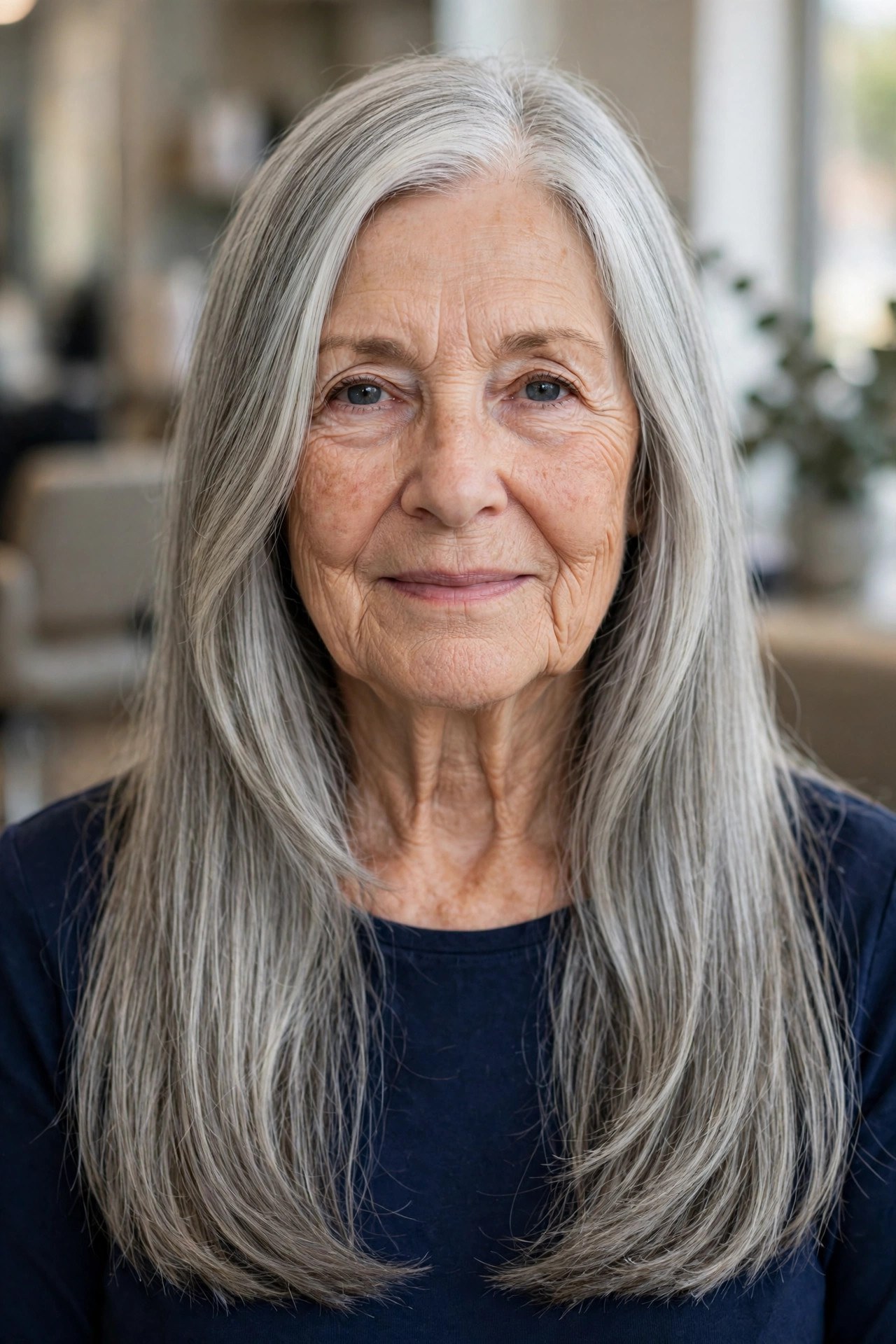
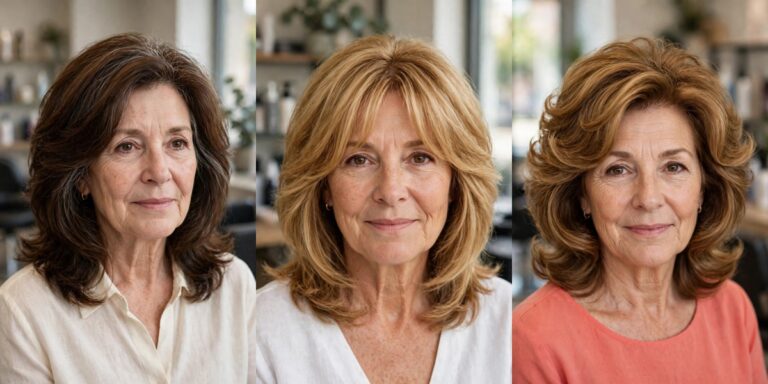
This is the version to ask for if you want one change that quietly transforms long hair: keep your length, but have the shortest front layers begin right at the cheekbones. That starting point matters, because a curved piece at cheekbone height draws the eye upward and outward, putting the focus on your eyes and cheekbones instead of letting long hair drag attention down toward the jaw.
It suits almost every face shape, but it is especially kind to oval and long faces, where the cheek-level curve adds welcome width. Ask your stylist to connect the front pieces into long, blended layers through the back so there is no shelf or step. A round-brush blow-dry, curling the front pieces slightly toward the face, keeps the frame soft rather than curtain-like.


2. Curtain Face-Framing Pieces
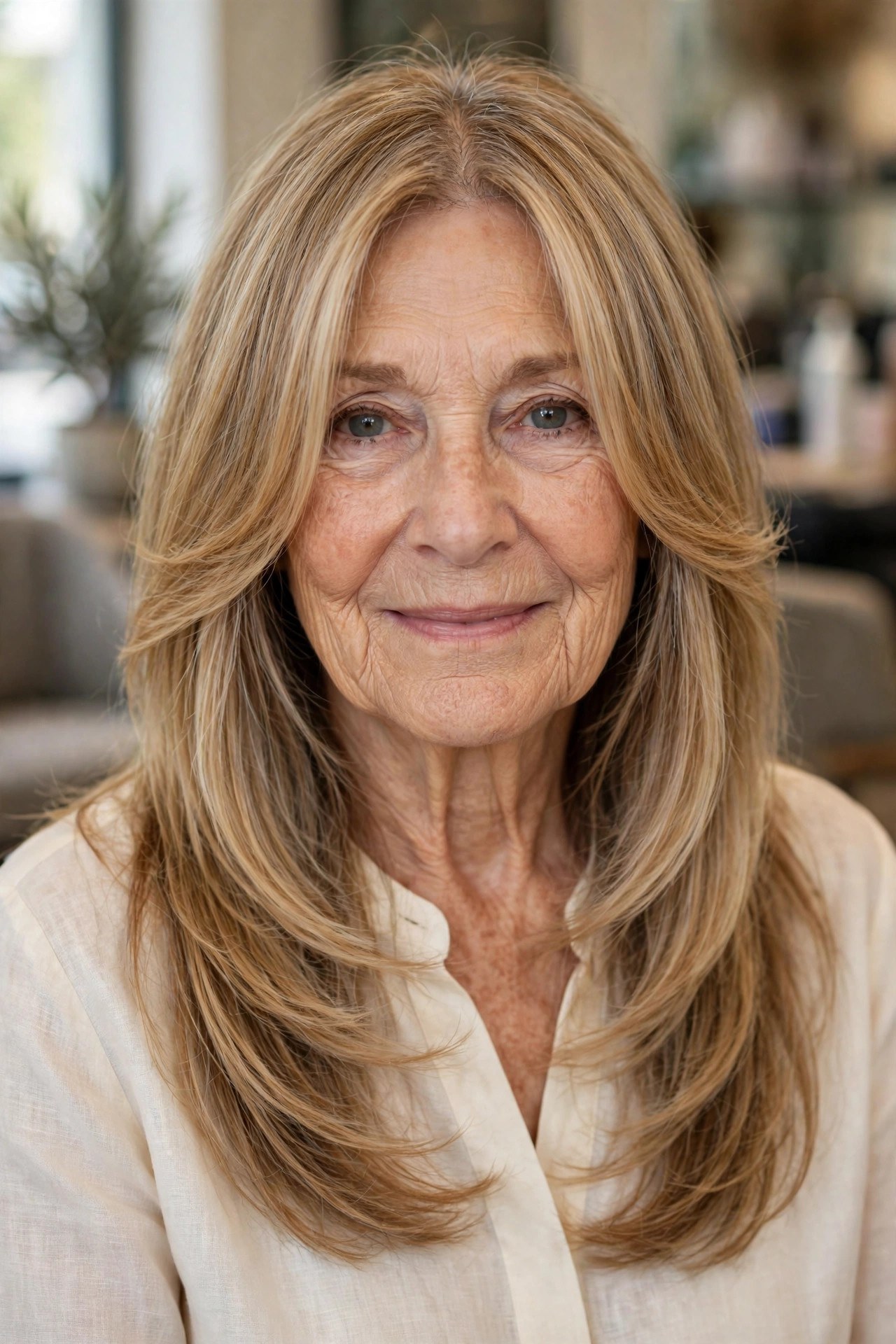
Curtain pieces are the friendliest fringe for women over 60: a center part, with the front sections cut to open away from the face like drapes, usually grazing the cheekbones on each side. There is no blunt line across the forehead, nothing to grow out awkwardly, and the sweeping shape softens forehead lines while spotlighting your eyes.
They work beautifully on round and heart-shaped faces, because the open center creates length while the sides add gentle width at the cheeks. If your hair is fine, keep the curtain pieces light and wispy so they do not separate into strings. Style by blow-drying the front sections up and away from the face with a round brush, then letting them fall into that relaxed, face-opening sweep.


3. Feathered Layers with a Side-Swept Fringe
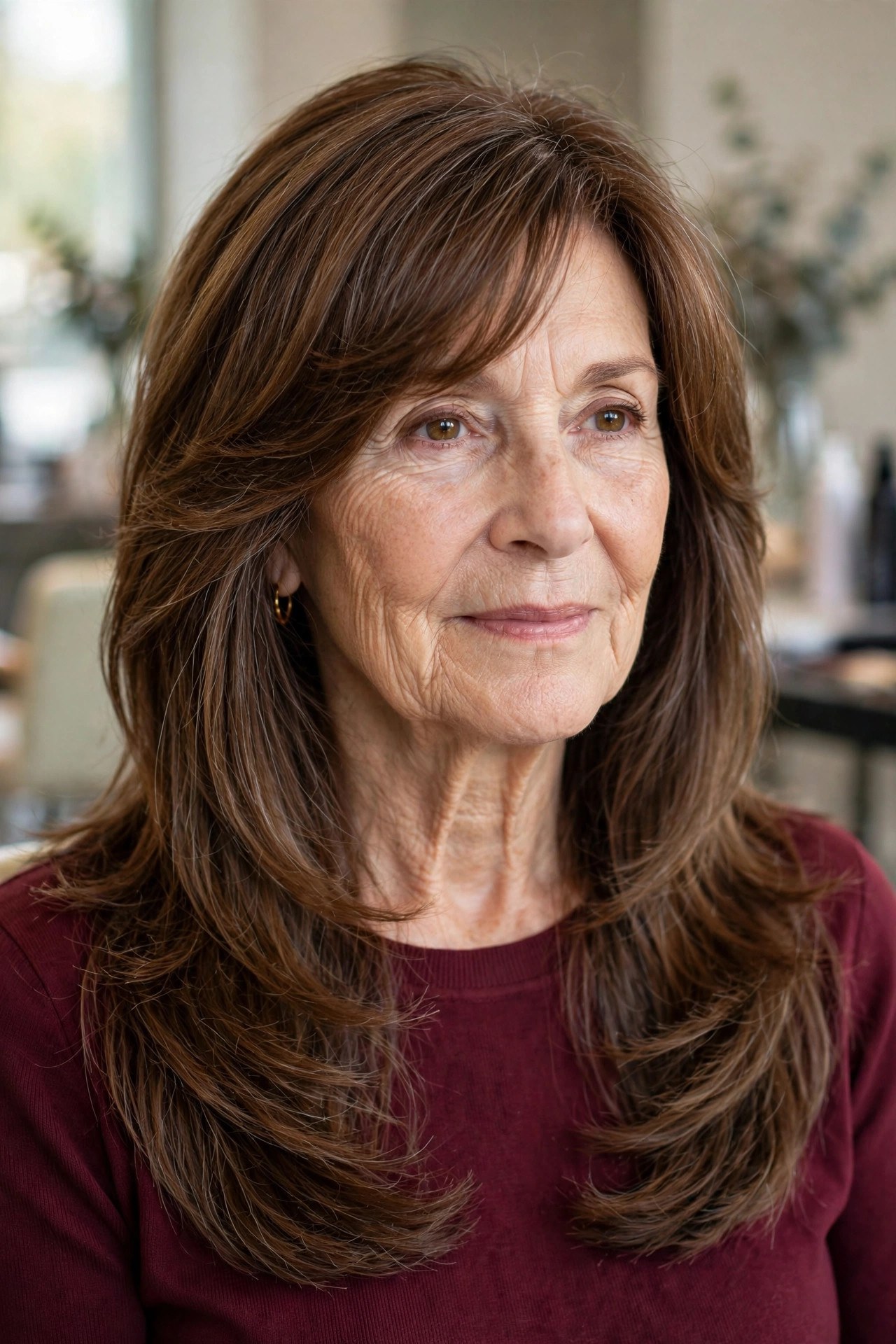
Feathering is the modern heir to the soft, flicked layers many of us loved decades ago — but today’s version is lighter, longer and far more blended. Fine, textured ends curve away from the face, and a long side-swept fringe melts into cheekbone-length framing pieces, so nothing sits heavily on the face.
This is a lovely choice if your hair has lost some density, because feathered ends make the whole shape look airier and fuller than blunt-cut hair of the same length. It flatters square faces particularly well, softening a strong jaw. Keep the feathering concentrated around the face and through the ends, and refresh the shape every eight to ten weeks so the flick stays intentional, not straggly.


4. Jawline-Skimming Front Layers
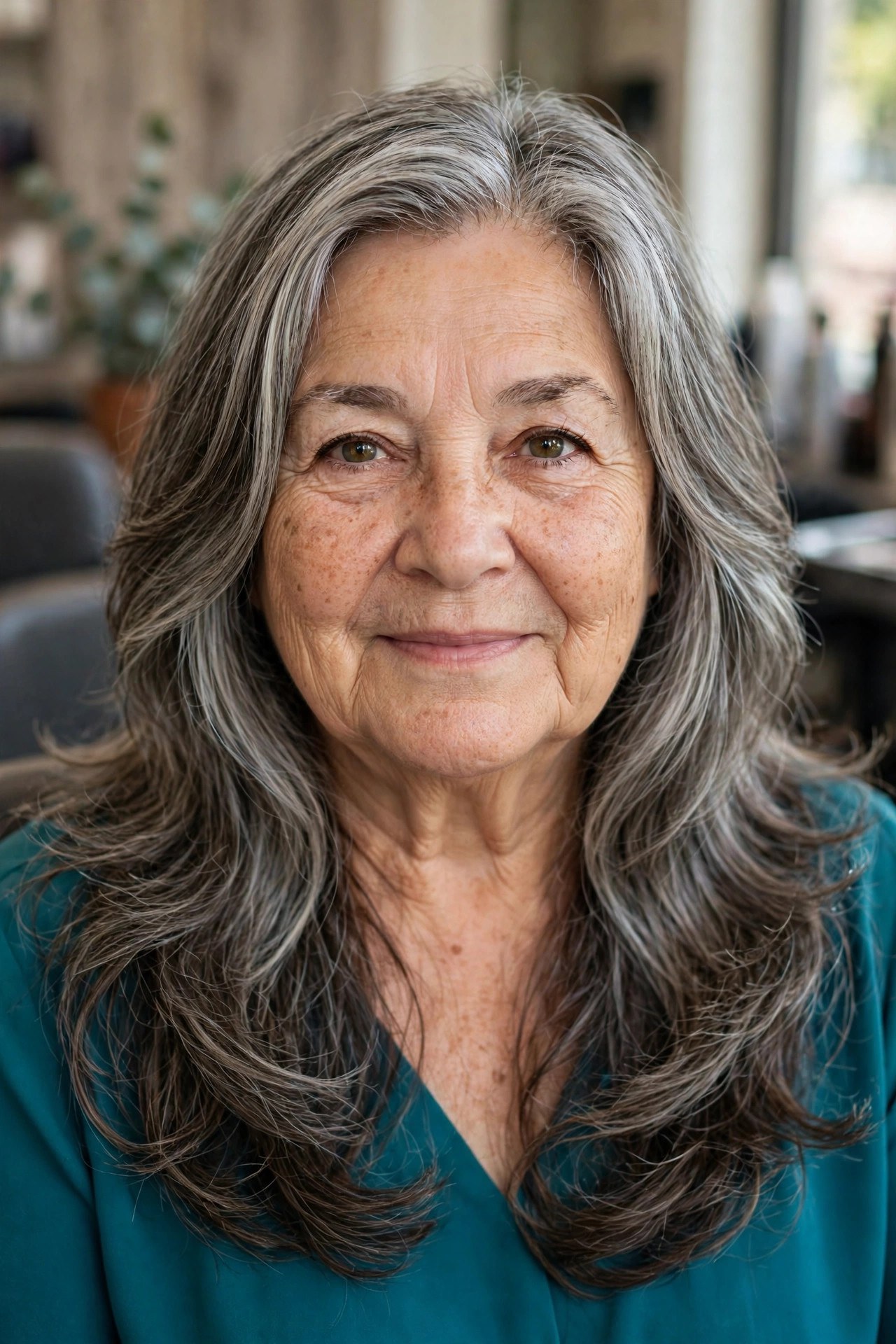
If your face has become rounder or fuller with time, where the front layers end is everything. Pieces that skim precisely along the jawline act like gentle contouring: they trace the edge of the face, suggest definition, and stop the cheeks from looking wider than they are. The length behind stays long and flowing, so you lose none of the softness of long hair.
Ask for the shortest front point to land at or just below the jaw — never mid-cheek, which can widen a round face. Wear the pieces tucked slightly inward with a round brush, or let them fall straight for a sleeker frame. This is also a forgiving option if you wear glasses, since the jaw-level pieces sit clear of your frames instead of tangling with them.
5. Soft Waves with Long Front Layers
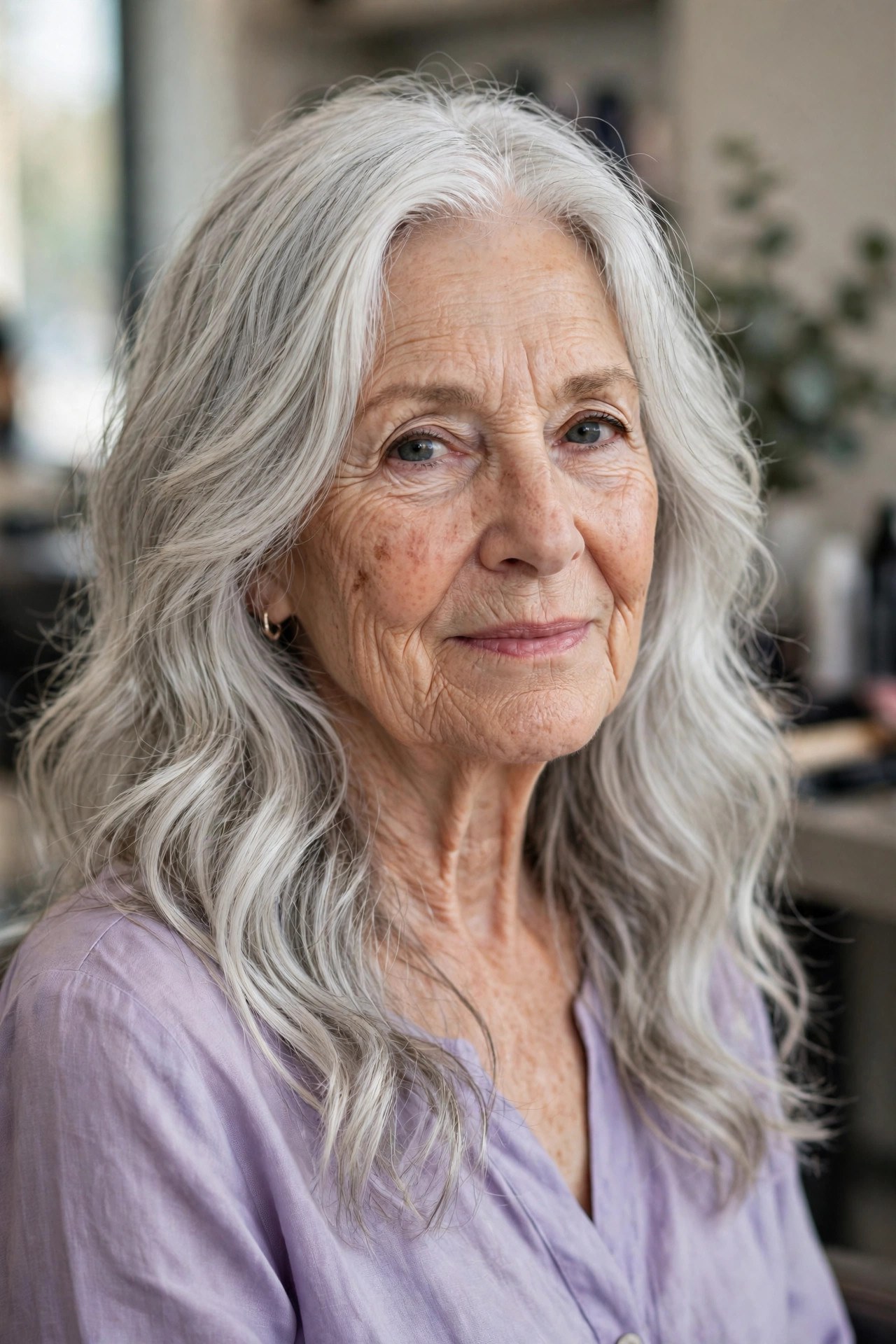
Long, loose waves are the most forgiving texture for mature hair, and they come alive when the front is layered. Graduated pieces around the face mean the waves start higher and curve in stages — a soft bend at the cheekbone, another at the jaw — so the whole front looks lifted instead of hanging in one heavy sheet.
Waves also disguise thinning better than straight styles, because the bends create shadow and the illusion of density. This shape flatters long and oval faces especially well. To style, twist damp hair into two loose ropes and let it air-dry, or use a large-barrel iron on the mid-lengths only, always leaving the face-framing pieces for last so they curve exactly where you want them.

Not sure of your face shape? The starting point for your framing pieces depends on it. Try our free Face Shape Finder to identify your shape in under a minute, then come back and jump straight to the ideas marked for you.
6. Layered Blowout with Curtain Pieces
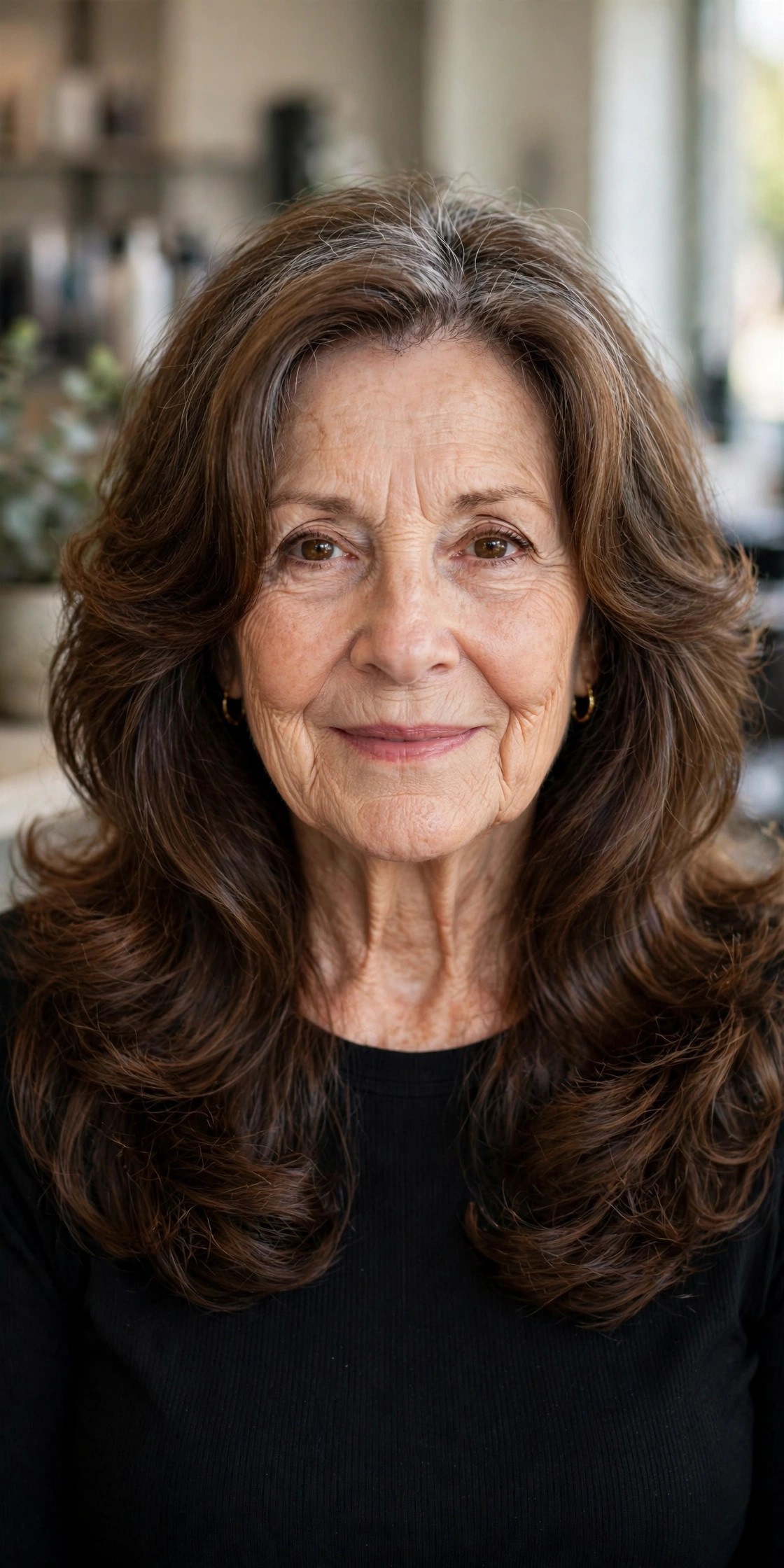
The bouncy salon blowout is not reserved for women half our age. Long layers cut through the back give the hair somewhere to move, while curtain-style front pieces are blow-dried to curve away from the cheeks — the result is volume at the sides of the face, which reads as lift, energy and youthfulness without a single short cut.
This is the style to choose for photographs, family events and any day you want polish. It suits oval, round and heart-shaped faces. At home, work mousse through damp hair, blow-dry in sections with a large round brush, and roll the front pieces away from your face. A cool-shot finish and one light mist of flexible hairspray keep the bounce without stiffness or stickiness.
7. Wispy Bangs with Face-Framing Layers
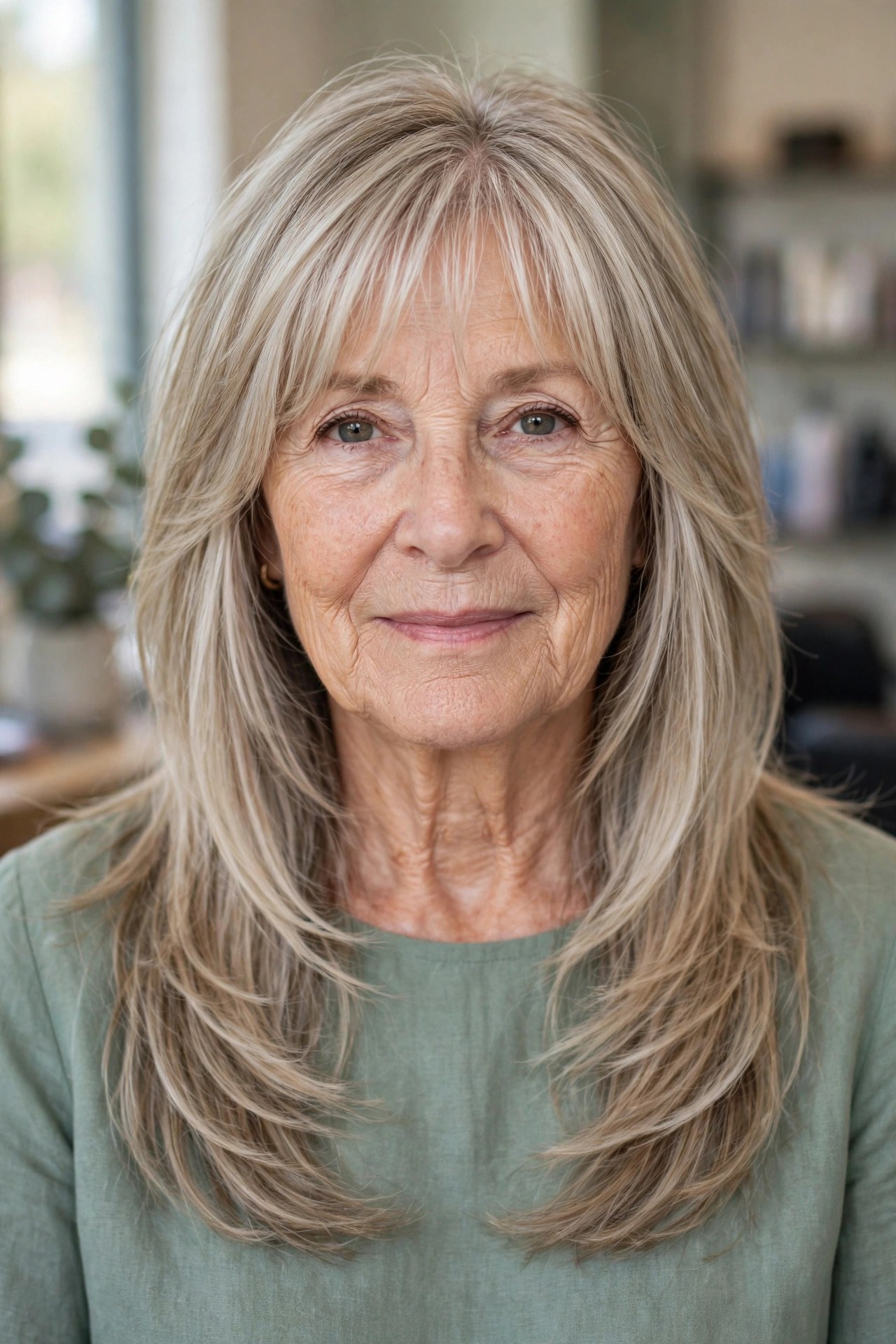
A full blunt fringe can feel heavy after 60, but a wispy, see-through bang is a different story. Feather-light strands across the forehead soften lines beautifully, and because they are sparse, they blend straight into longer face-framing pieces at the sides — no hard edges, no awkward grow-out phase, and no curtain of hair stuck to your forehead by noon.
This option is ideal for taller foreheads and long or oval faces, where a light bang restores proportion. The secret is restraint: the bang should be cut dry, strand by strand, so it never ends up thicker than planned. Style it with a quick pass of a round brush, and keep the side pieces at cheekbone length so the whole front reads as one soft, connected frame.
8. Face-Framing Highlights on Long Gray Layers
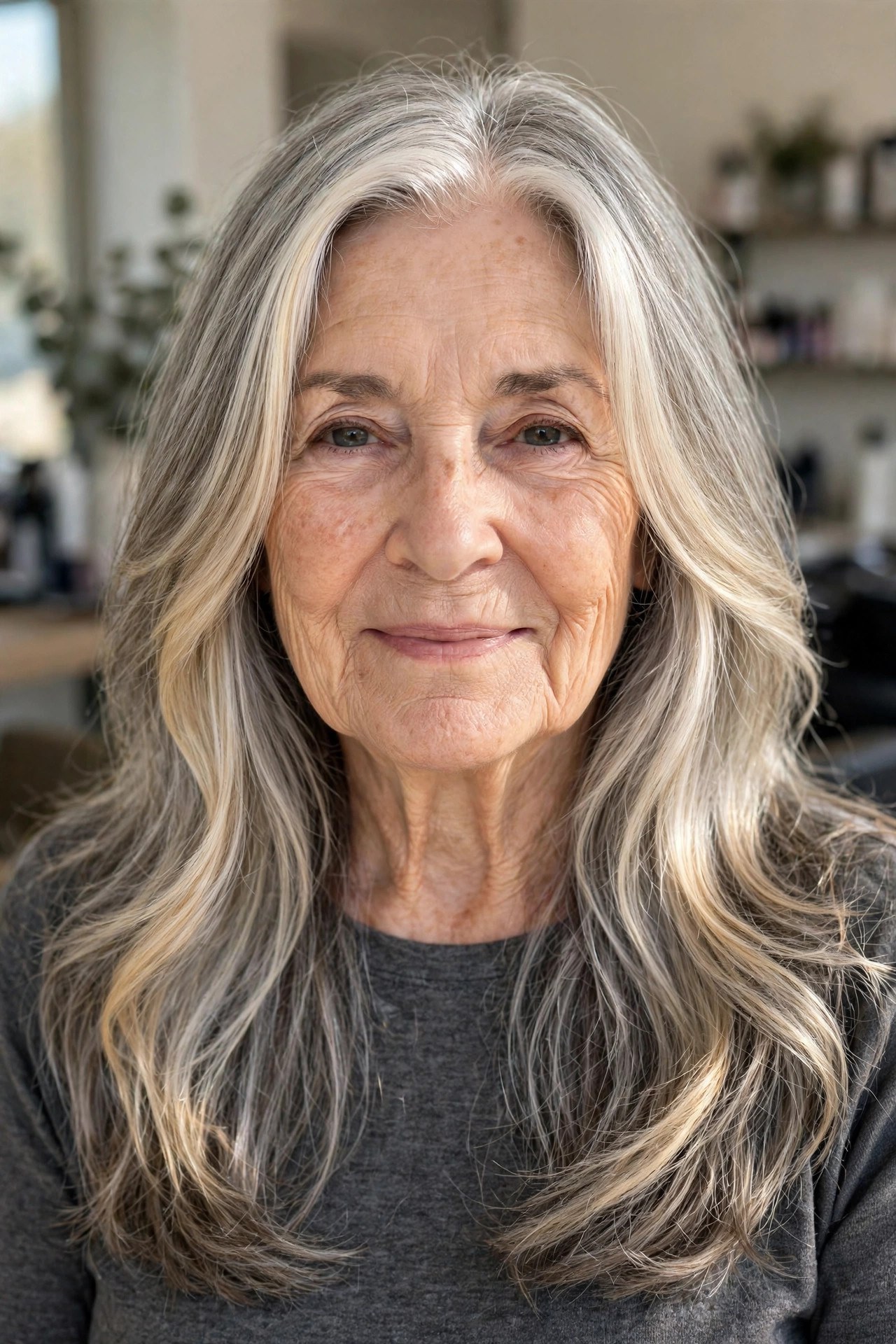
If you have embraced your silver, here is the color trick that makes long gray hair look intentional and luminous: keep the layers, but brighten just the pieces that frame your face. Slightly lighter, icy strands at the front catch the light every time you move, lift a tired complexion and make the whole style look like a choice rather than an oversight.
Because only the front sections are lightened, upkeep is minimal and regrowth is gentle — a gloss refresh every few months is usually enough. A purple shampoo used once a week keeps those bright pieces from yellowing. This is a wonderful bridge style, too: if you are still blending out old color, bright framing pieces help the transition look deliberate. Our guide to long layered cuts with movement shows how well light and layers work together.


9. Long Shag Layers with Choppy Framing
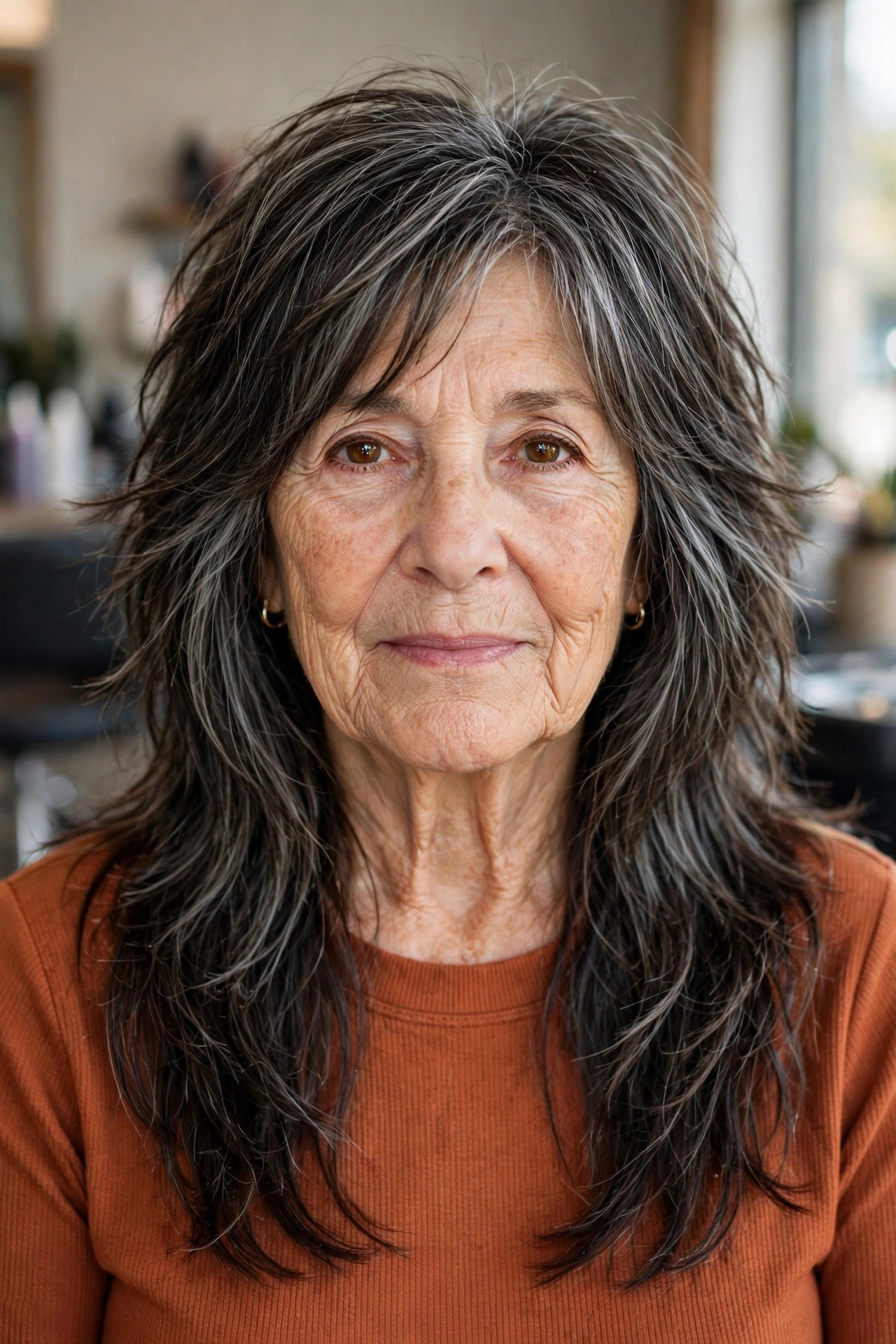
Want your long hair to feel modern rather than matronly? Borrow the shag’s best ideas: choppy, textured layers through the crown and around the face, with the front pieces cut in uneven, piecey steps from cheekbone to collarbone. The texture breaks up any heaviness and gives straight or slightly wavy hair built-in attitude.
The choppy front is surprisingly flattering after 60, because the irregular edges draw attention to the eyes and cheekbones and away from fine lines. It suits oval and long faces best. Ask your stylist to point-cut rather than razor if your hair is fine or fragile, and style with a pea-sized amount of texturizing putty worked through the front pieces only — the rest can stay soft and natural.

10. Sleek Straight Layers with Chin-Length Front Pieces
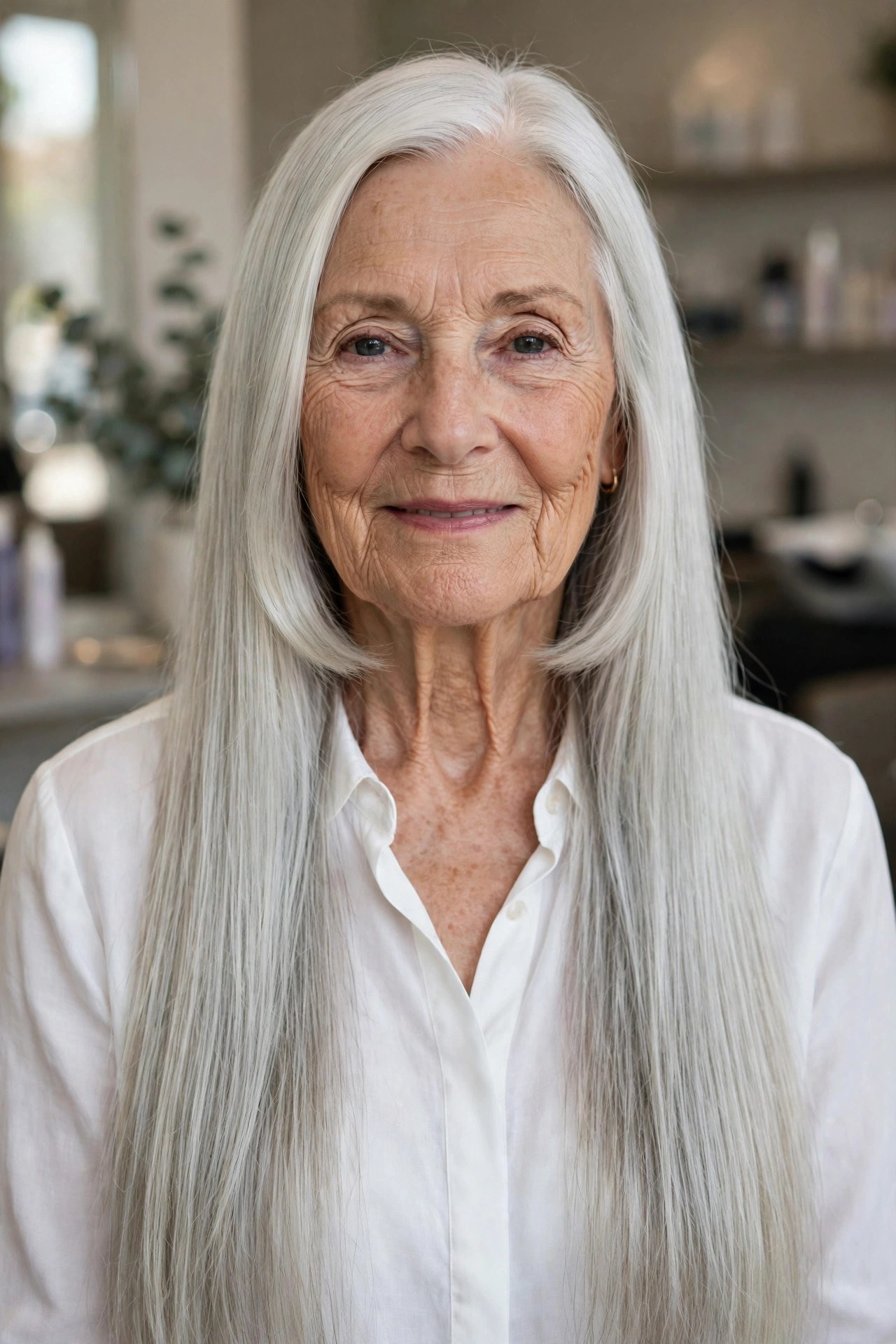
Straight, glossy and long is a powerfully elegant look at any age, and it works because of one detail: the front pieces are cut to chin length, creating a clean, deliberate step that frames the jaw while the rest of the hair falls in one sleek sheet below the shoulders. That short-long contrast is what keeps straight hair from looking flat or severe.
It is a strong choice for oval and heart-shaped faces, and for women whose hair is naturally straight and reasonably thick. Silver and platinum hair looks especially striking worn this way. Use a heat protectant every single time you flat-iron — mature hair is more fragile — and finish with the tiniest drop of serum on the ends only, so the front pieces stay light enough to move.

11. Voluminous Curls with Face-Framing Layers
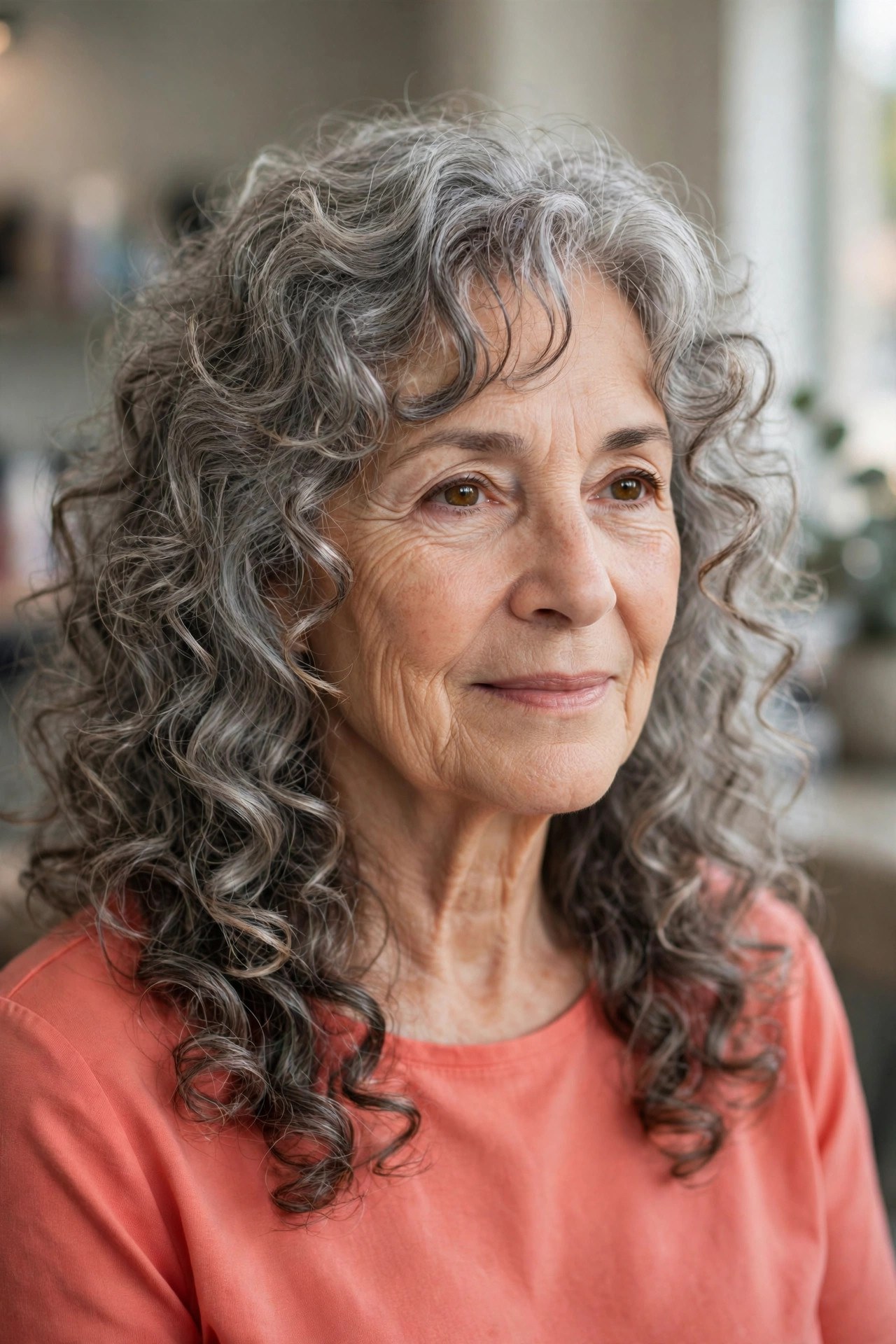
Natural curls worn long are glorious after 60, but only if the front is shaped. Unlayered curls tend to form a triangle — flat at the crown, wide at the bottom — while face-framing layers cut into the front lift shorter curls around the forehead and cheeks, rounding the silhouette and showing off your features instead of hiding them behind hair.
Ask for a dry cut, curl by curl, so each front curl is placed where it actually falls. Round and square faces both benefit, because the lifted front curls add height and softness at once. Keep curls hydrated with a leave-in cream, define the framing curls with a little gel on wet hair, and refresh on day two with a water spritz rather than a full wash.


12. Side Part with a Sweeping Fringe
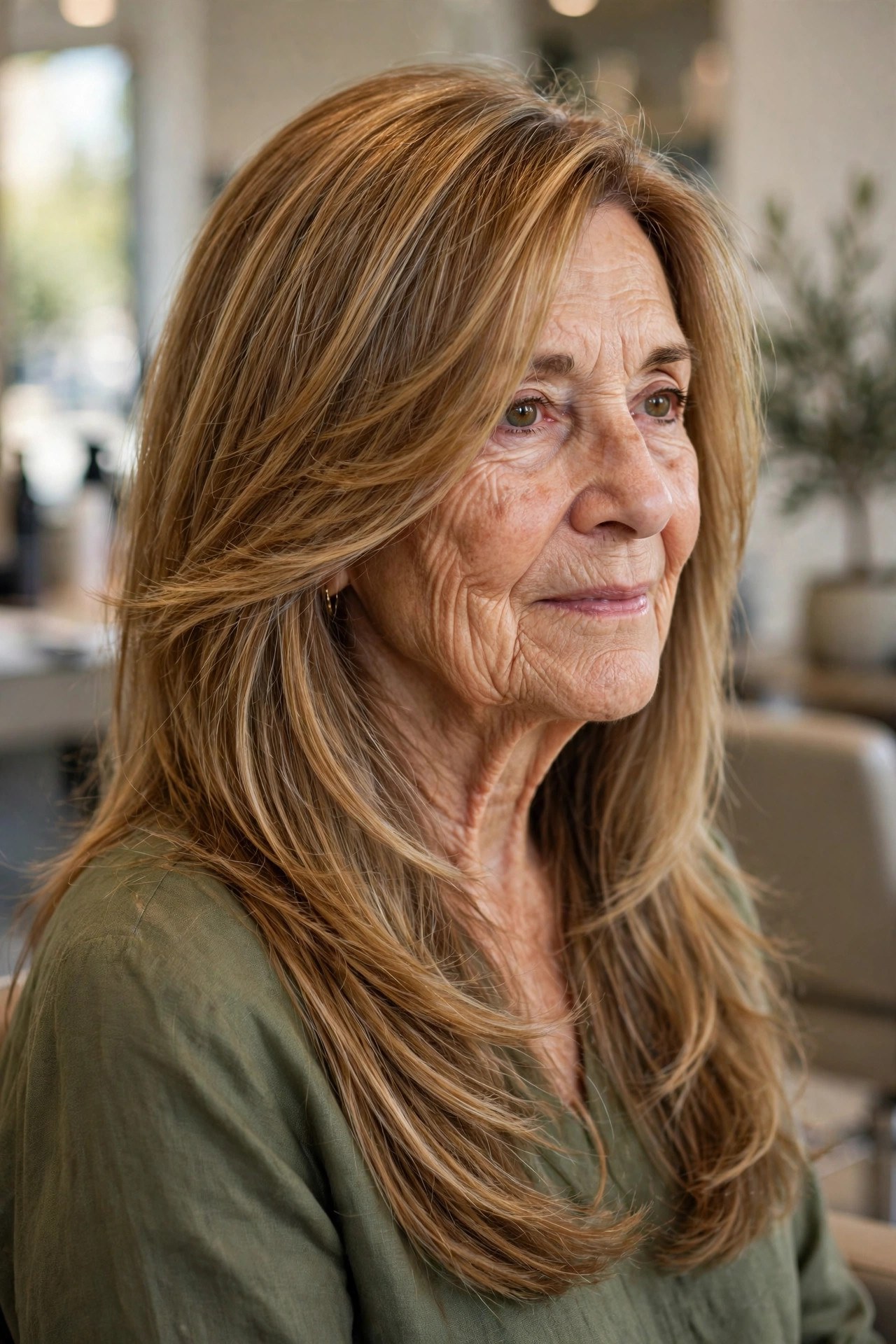
Changing your part is the fastest free makeover there is, and a deep side part paired with long layers is especially kind after 60. The diagonal sweep of hair across the forehead softens lines, the asymmetry lifts a drooping side of the face, and the long front piece falls past the cheekbone in one elegant curve.
This works on nearly every face shape, and it is a gift for fine hair: a side part instantly creates the illusion of more crown volume. If your hair has trained itself into a center part, blow-dry it in the new direction while damp for a week or two. Flip your part to the opposite side in the evening and you will wake up with extra root lift built in.
13. Butterfly Layers with Winged Framing
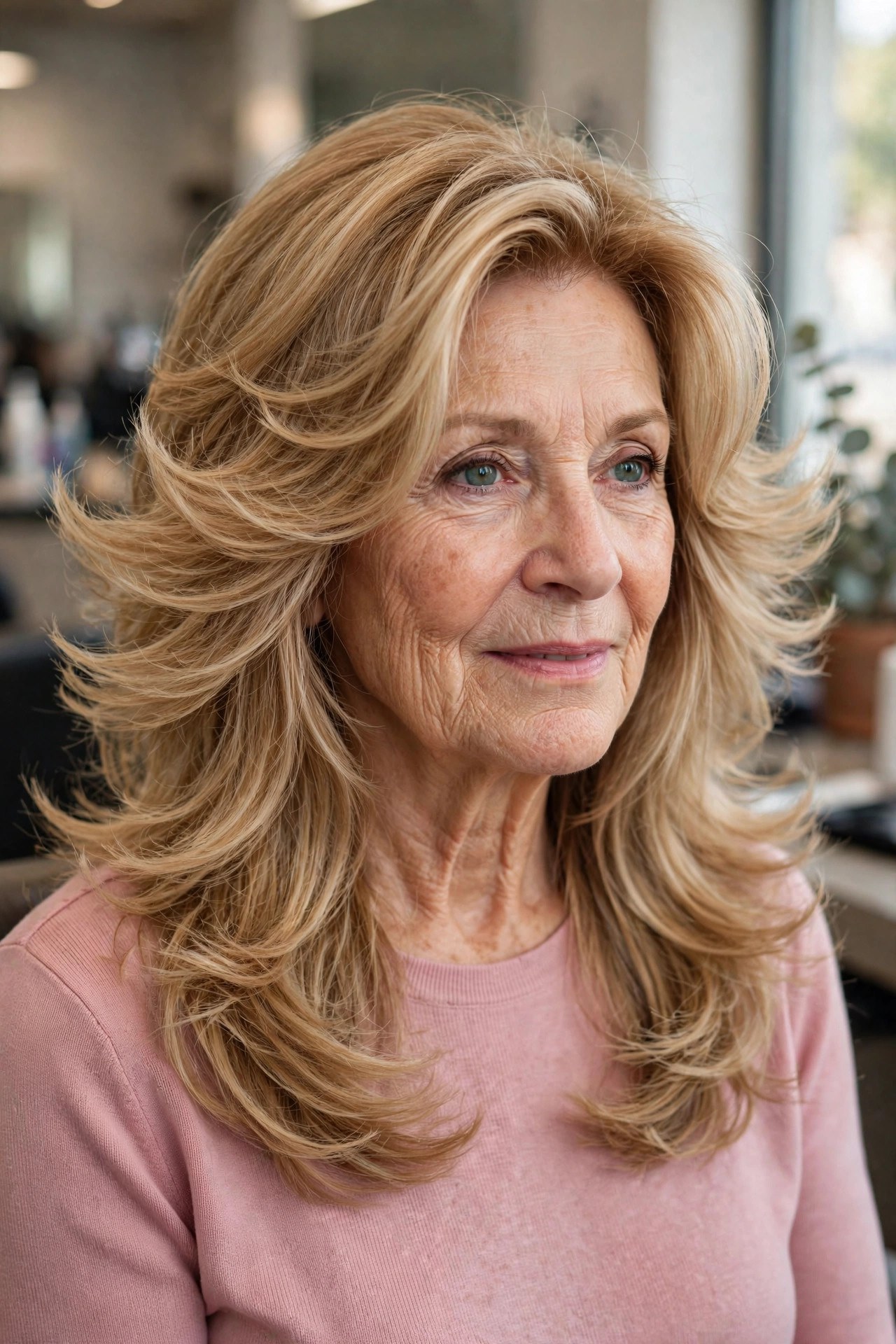
The butterfly cut earned its name honestly: short, wing-like layers around the face fan outward from the cheekbones, while the lengths underneath stay long and full. For women over 60 who want the freshness of a shorter style without surrendering length, those winged front pieces deliver lift, movement and a genuine face-lift effect.
It flatters round and heart-shaped faces most, because the outward flick at cheekbone height balances a narrower jaw. The style does ask for five minutes with a round brush or a dryer brush — the wings need to be curled away from the face to read properly — but the rest of the hair can simply air-dry. Book trims every eight weeks; the wing shape is the first thing to soften as it grows.

14. Featherlight Framing for Fine Long Hair
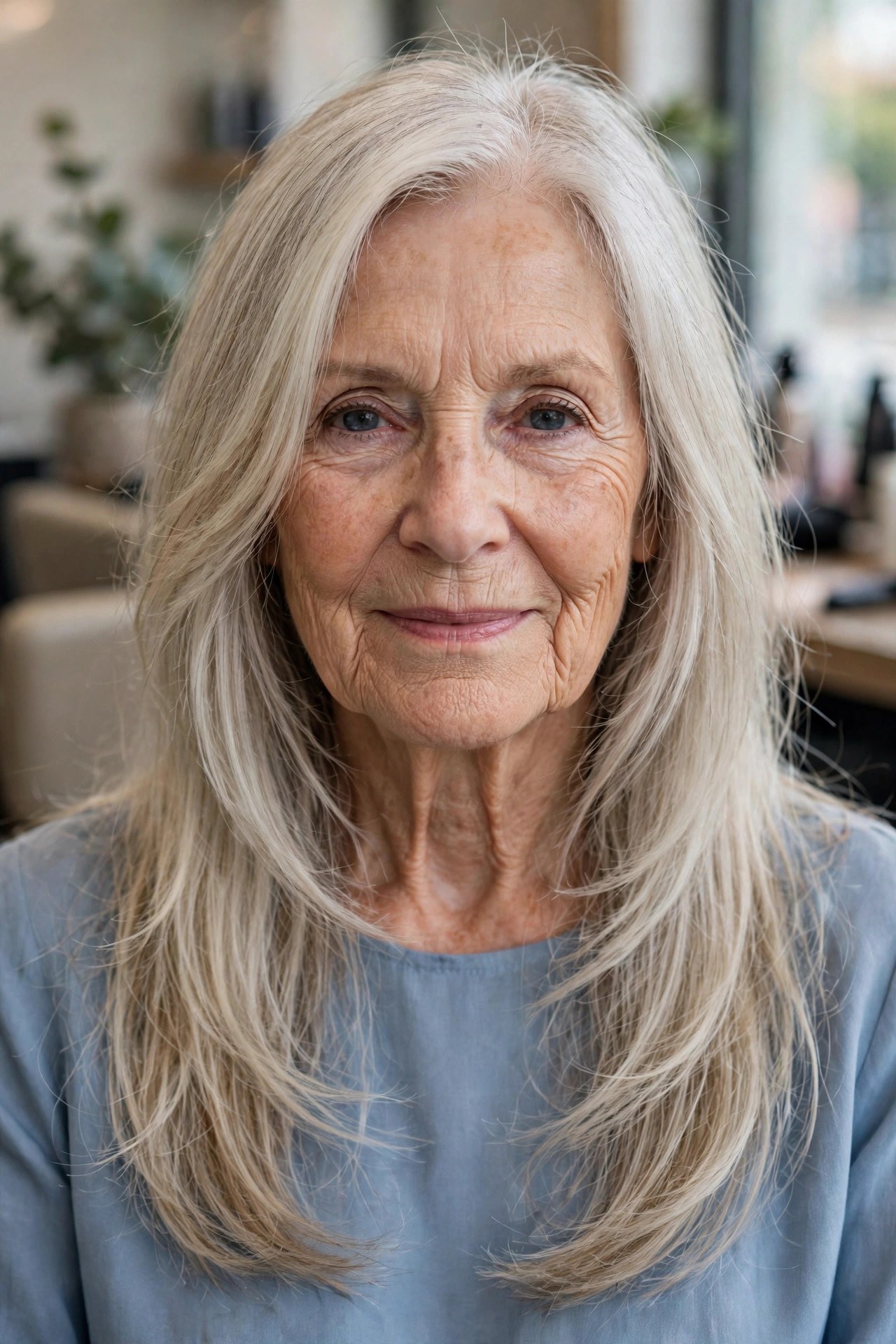
Fine hair can absolutely be worn long after 60 — the trick is that the framing must be featherlight. Instead of chunky front layers, ask for a whisper of shorter pieces at the cheekbones, cut with the tips of the scissors so they hold almost no weight. Heavy framing on fine hair separates and looks stringy; this gossamer version just softens the edge of the face.
Keep the back layers minimal too — too much layering steals the little density fine hair has. A blunt-ish perimeter with soft front pieces will always look fuller. Volumizing mousse at the roots, a gentle blow-dry lifting away from the face, and silk or satin against your pillow at night will protect those delicate front pieces from breakage. If your hair is also thinning, our stylist-approved tips for fine, thin hair pair well with this approach.
15. Tapered Front Layers for Square Faces
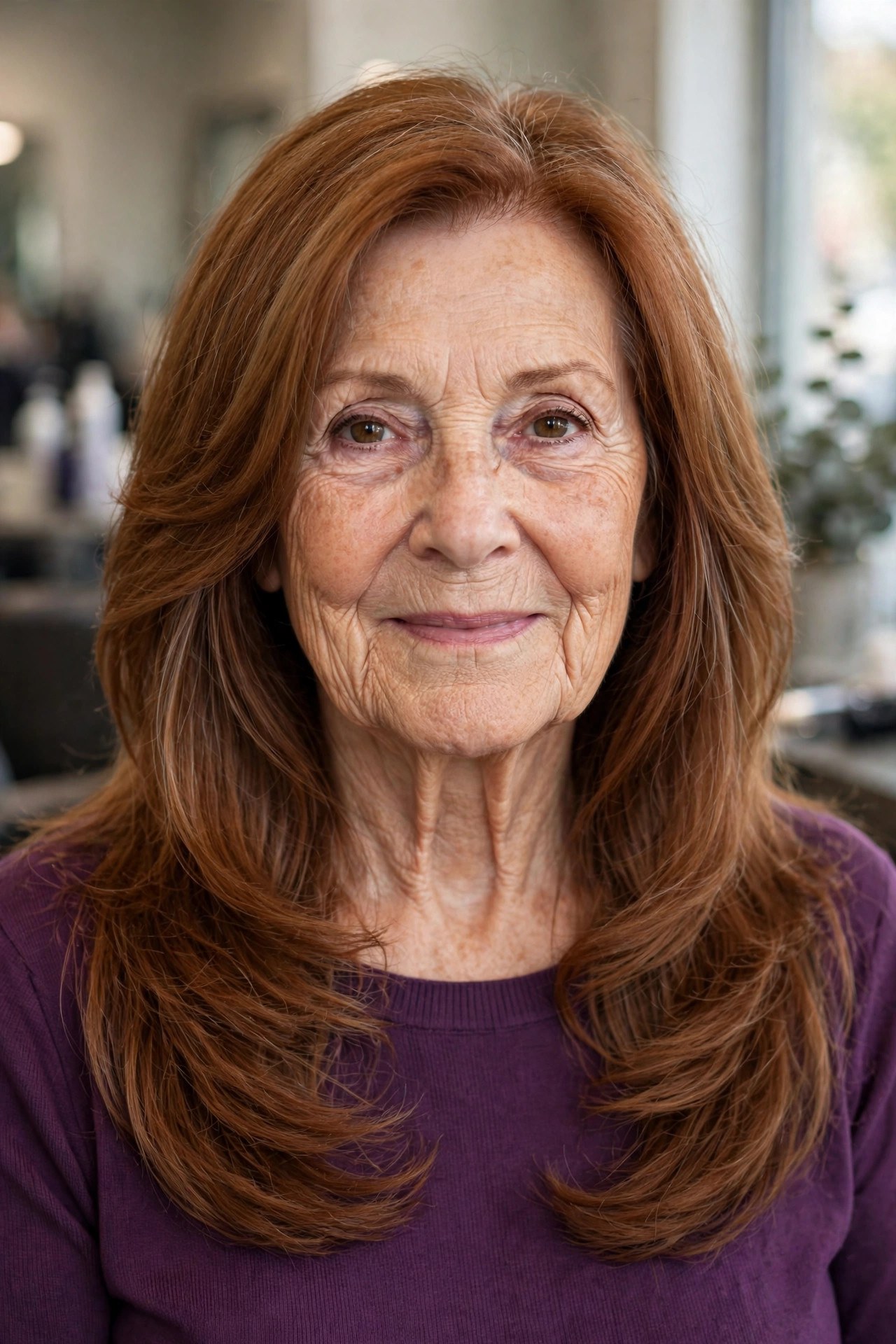
A strong, square jaw is a beautiful feature — it just asks for softness around it. Tapered face-framing layers, cut to curve in graduated steps from the cheekbones down past the jaw, blur the hard corners of the face and let the cheekbones take the spotlight instead. The length behind stays long, which lengthens the whole silhouette.
Ask your stylist to avoid any layer ending exactly at jaw level, which can underline squareness; the pieces should sweep past it. Soft waves help even more, so consider a large round brush or loose tonged bends through the front. Warm tones like soft auburn or honey also add glow that cool, ashy shades sometimes take away from mature skin.
16. Balayage Money-Piece Face Frame
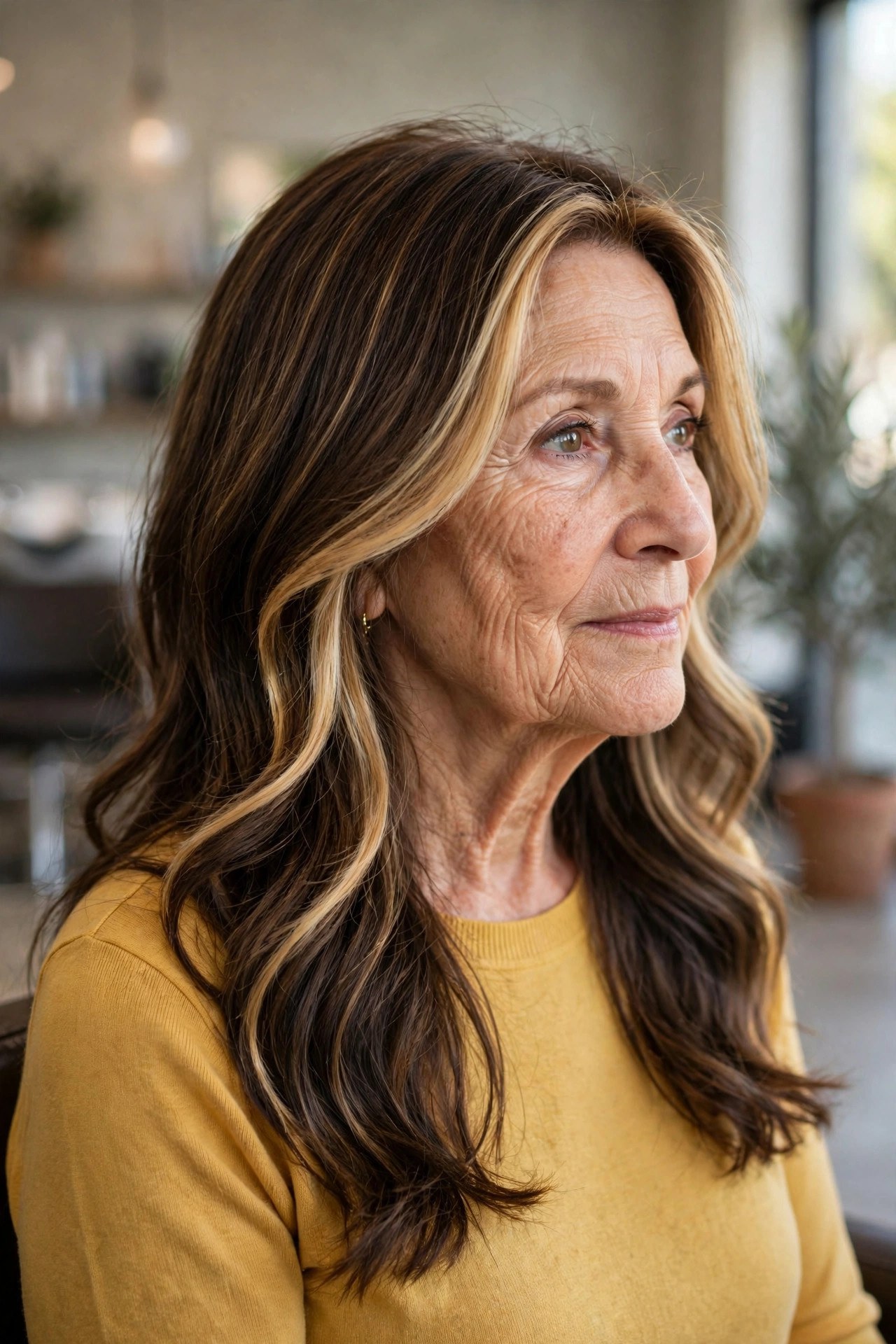
The money piece — two brighter ribbons of color placed exactly at the front hairline — is the hardest-working color placement for long layers. On a layered cut, those light front strands trace the face-framing pieces, so cut and color work together: the eye follows the brightness upward, skin looks more awake, and gray roots blend into the brightness far more gracefully.
Keep the contrast soft — one to two shades lighter than your base reads elegant rather than stripy, and ask for the brightness to start slightly below the root for the gentlest grow-out. A color-safe, bond-repair shampoo protects the lightened pieces, which are the oldest and most fragile hair on your head. Refresh the gloss, not the full color, between appointments to save time and money.


17. Grown-Out Curtain Bangs with Long Layers
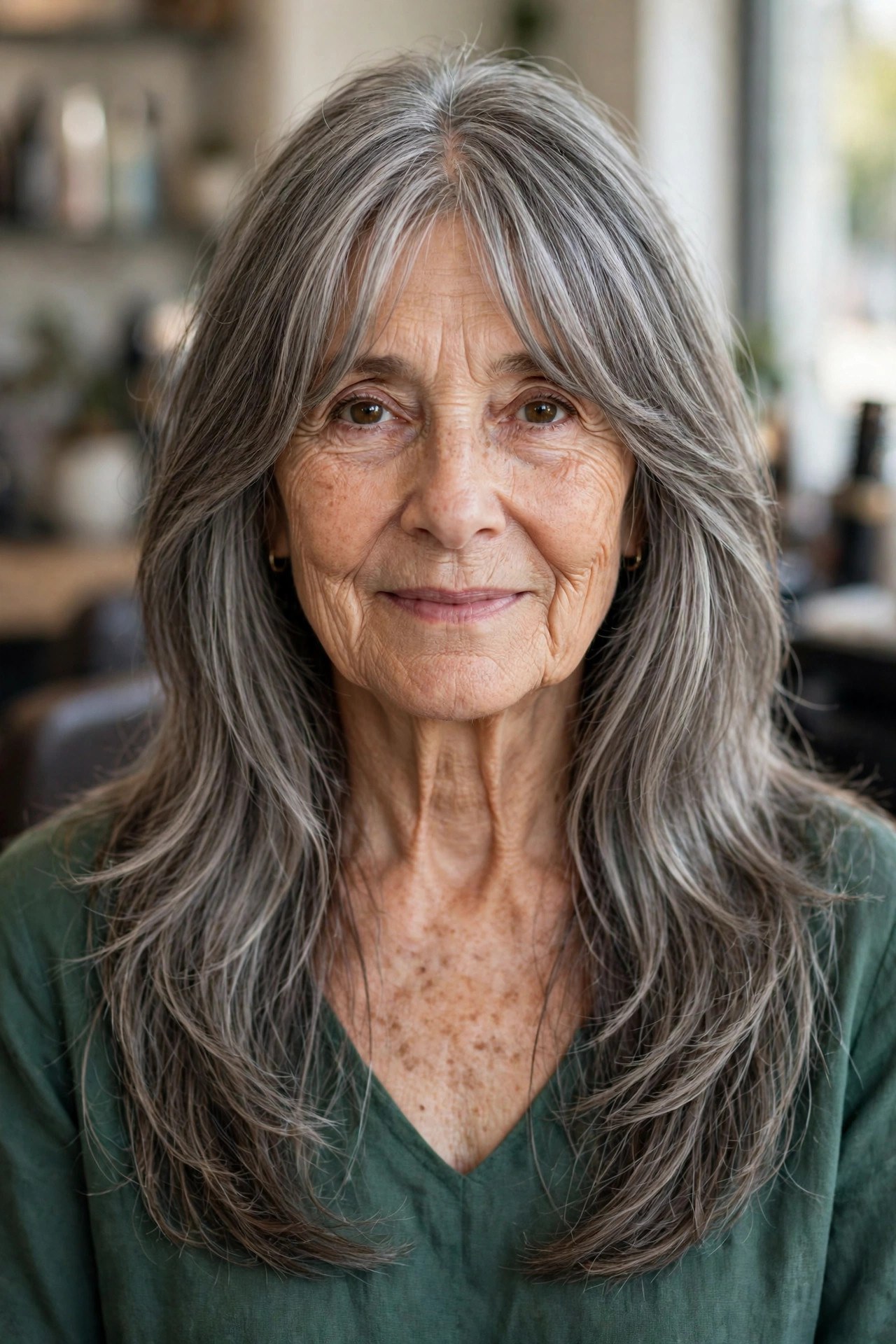
If you tried curtain bangs a few seasons ago and let them grow, congratulations — you have accidentally grown into one of the most flattering long styles for over 60. Those grown-out pieces now land somewhere between cheekbone and collarbone, blending into long layers in one unbroken, face-framing cascade that asks for almost nothing in return.
There is no fringe to trim every fortnight and no line to soften; the whole front just melts. It suits every face shape, and it is the lowest-maintenance idea in this entire list. To keep it looking deliberate rather than forgotten, ask your stylist to tidy the blend twice a year and to keep the very front pieces a shade lighter with a clear or silver gloss if your hair is gray.

18. Flipped-Out Ends with Face-Framing Pieces
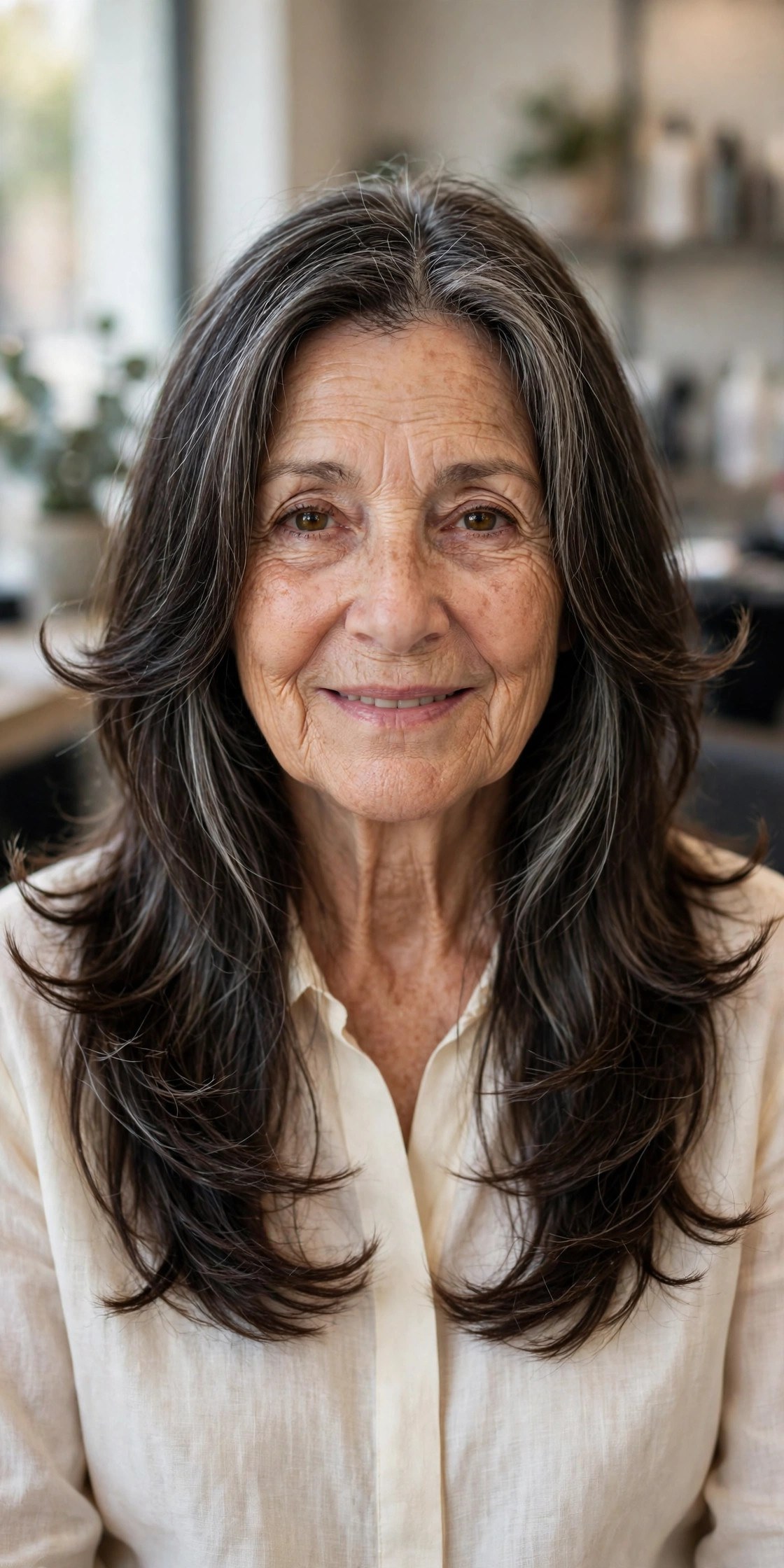
A little retro flick is having a well-earned comeback. Long layers blow-dried so the ends flip outward — with the face-framing pieces curling away from the cheeks — create movement at exactly the points where the eye lands. The outward flick at the front opens the face up, making this a cheerful, energizing shape for everyday wear.
It is particularly good for long and narrow faces, where the outward movement adds width. Dark hair with natural silver streaks looks wonderful styled this way, since the flick shows off the contrast. Use a medium round brush and roll the front pieces up and away as you dry; a light texturizing cream through the ends keeps the flips separated instead of helmet-like.
19. Beachy Textured Layers with Framing
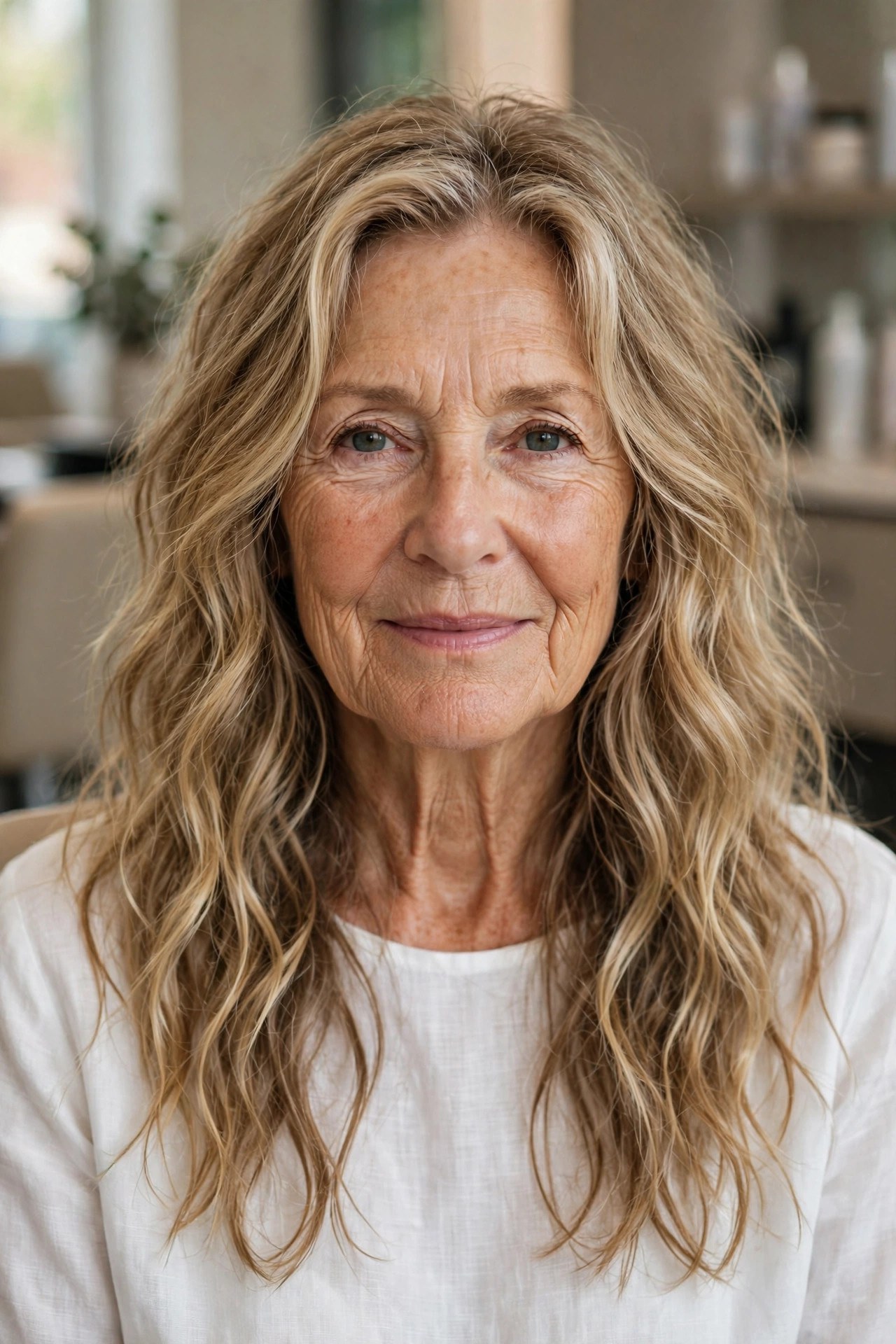
Relaxed, tousled waves are proof that long hair over 60 does not have to look ‘done’ to look beautiful. Layers through the front stop beachy texture from overwhelming the face: the pieces around the cheeks are kept slightly shorter and lighter, so the waves frame your features instead of swallowing them.
This is the most forgiving wash-and-go option here — sea-salt spray scrunched into damp hair, air-dried, and finished by twisting the two front pieces away from the face as they dry. It suits oval and square faces especially well. Because salt sprays can dry mature hair, alternate with a leave-in conditioner day and never skip a weekly deep-conditioning mask on the lengths.
20. Half-Up Layers with Loose Framing Tendrils
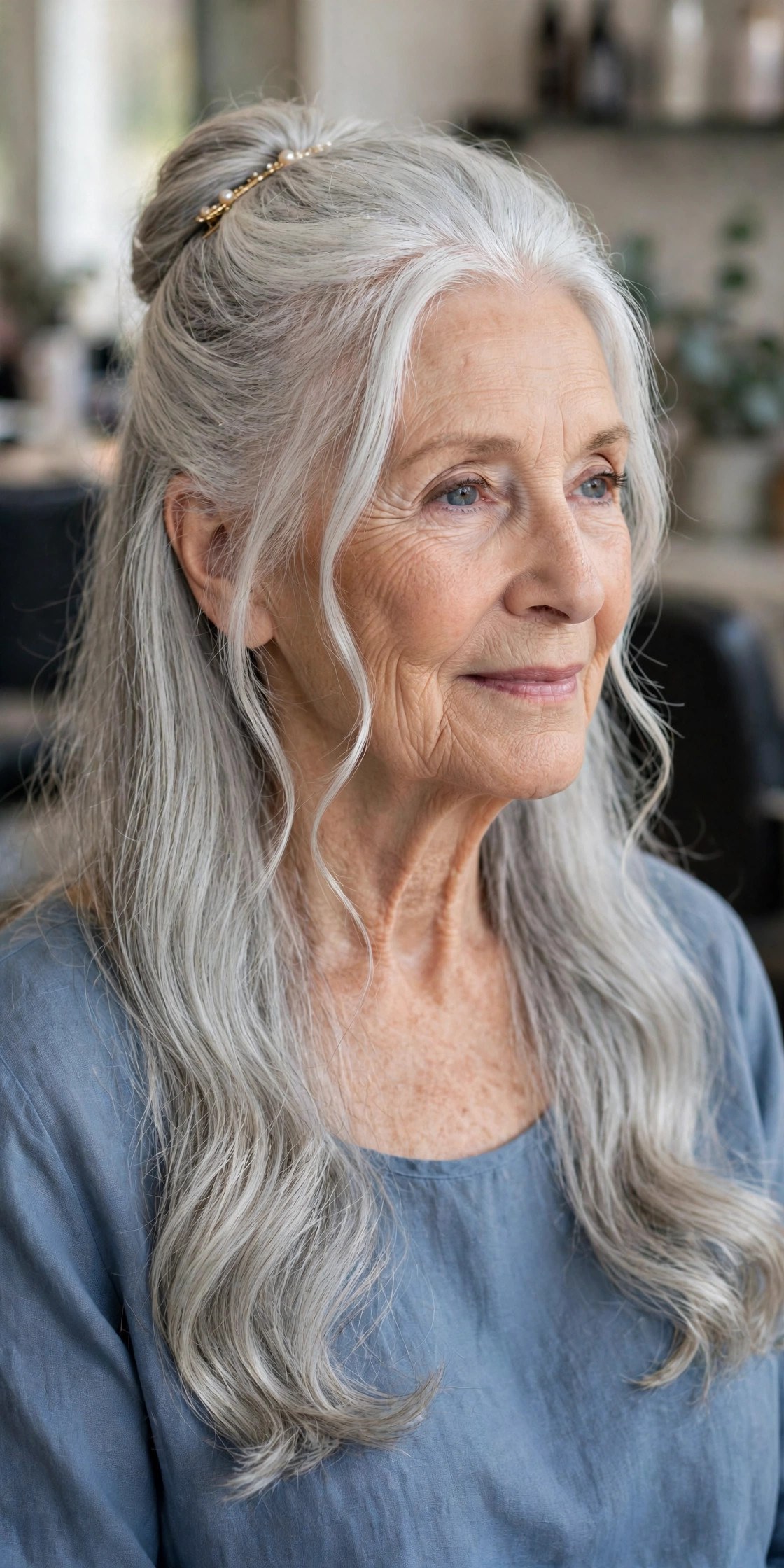
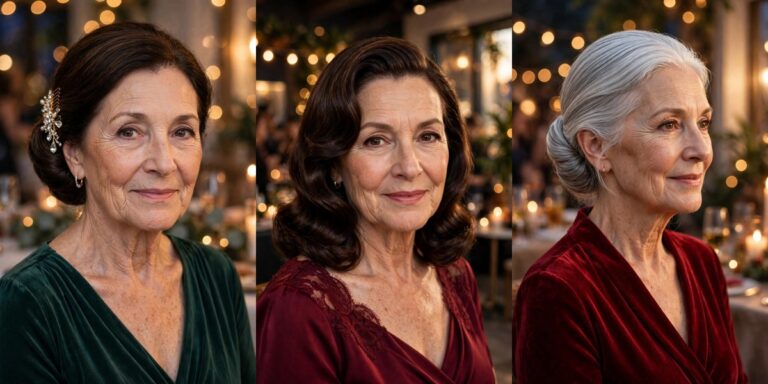
For weddings, dinners and days when you want to feel dressed up, the half-up style is long layered hair’s secret weapon — but only if you leave the framing pieces out. Pinning back the crown while two soft tendrils stay loose around the face gives you the polish of an updo with none of the severity that pulling everything back can create after 60.
Take the top section from temple to temple, twist or clip it at the back of the crown, and let your pre-cut face-framing pieces do their job at the front. It works on every face shape and is especially lovely on silver hair, which shows every twist and curve. Loose pins and a flat claw clip hold fine hair more gently than tight elastics, and a final mist of flexible spray keeps tendrils in place without crunch.


Recommended Products
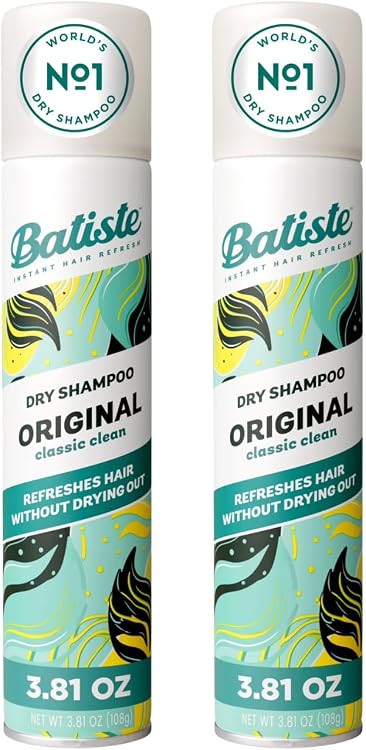
These are the five products our stylists reach for most often with long, face-framed layers on women over 60 — volume that does not weigh fine lengths down, heat protection for fragile hair, brightness for silver framing pieces, a brush that builds the cheekbone curve, and a pillowcase that protects it all overnight. For more length-friendly inspiration, see our favorite long layered haircuts with movement.
Care checklist for long layers after 60
- Trim every 8–10 weeks, even if it is only the framing pieces.
- Use heat protectant before every blow-dry, curl or flat-iron pass.
- Condition the lengths every wash; deep-condition once a week.
- Keep heavy oils and serums on the ends only — never on the framing pieces.
- Sleep on satin or silk to stop front pieces breaking and frizzing.
- Use purple shampoo once a week if your framing pieces are silver or highlighted.
- Refresh day-two hair with dry shampoo at the roots, not more heat.
Frequently Asked Questions
Where should face-framing layers start on women over 60?
For most women, cheekbone height is the sweet spot: pieces starting there lift the eye line and highlight the cheekbones. If your face is round or full, start the shortest piece a little lower, around the lips or jaw, so the frame lengthens rather than widens. Long or oval faces can start higher, near the cheekbones or even with a wispy curtain piece, to add width.
Will face-framing layers make my fine hair look thinner?
Only if they are cut too heavily. On fine hair, framing should be featherlight — a small amount of hair, point-cut at the cheekbones, with the back kept mostly one length. Done that way, the soft front edge actually makes fine hair look more deliberate and polished, not thinner.
How often do long layers with framing need trimming?
Every eight to ten weeks keeps the front pieces landing where they were designed to. The back length can go longer between cuts, but the framing is the first thing to grow past its flattering point, so many women book a quick front-only tidy at the halfway mark.
Can face-framing layers work with gray or silver hair?
Beautifully. Layers give silver hair movement so it reads as luminous rather than flat, and the front pieces are the perfect place for a slightly brighter gloss or face-framing highlights, which lift the complexion. A purple shampoo once a week keeps the framing pieces bright and free of yellow tones.
What is the difference between curtain pieces and regular face-framing layers?
Curtain pieces are face-framing layers worn with a center part and cut to sweep open away from the face, usually starting around the cheekbones. Regular face-framing layers can be cut for any part and any starting point. Curtain pieces are simply the softest, lowest-maintenance version of the same idea.
How do I ask my stylist for face-framing pieces?
Name the starting point (‘start my shortest layer at my cheekbones’), the finish (‘blended, no steps or shelves’) and what to avoid (‘keep the back length, and keep the front light if my hair is fine’). Bringing two or three photos of women close to your own age helps your stylist match the weight and length to your hair type.
Long hair at 60-plus was never the problem — unframed long hair was. Choose your starting point by face shape, keep the front pieces light and visible, and your length becomes the most flattering thing about your look instead of something you hide behind. Take two or three of these photos to your next appointment, name the starting point out loud, and let the framing do the lifting.