25 Pixie Cuts for Women Over 50 That Look Fresh and Youthful
This post contains affiliate links. As an Amazon associate, I earn from qualifying purchases. I only recommend products that are of high quality and that I would use myself.
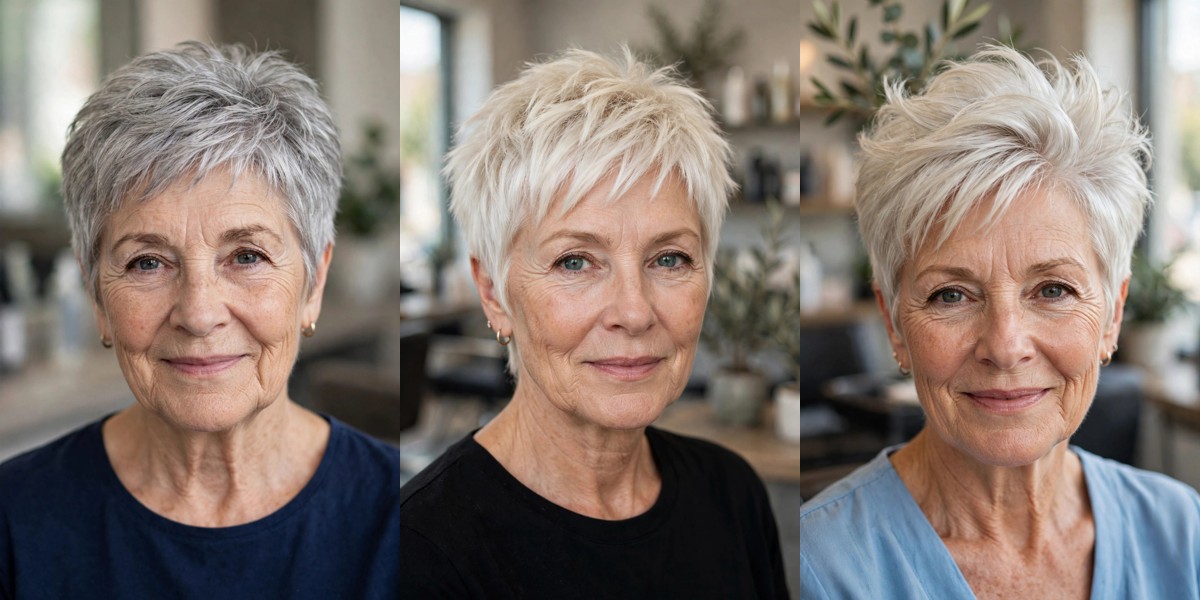
A great pixie does something no cream or filter can: it lifts the whole face. Hair comes off the cheeks and neck, the eyes and cheekbones take center stage, and suddenly the woman in the mirror looks like herself again — just fresher. If longer hair has started to feel heavy, stringy or quietly aging, these 25 pixie cuts for women over 50 are where to look for your next chapter.
Every style here was chosen for real life after 50: fine or thinning hair, silver you may want to flaunt or blend, glasses, busy mornings, and a firm refusal to spend 40 minutes with a dryer. If you are still weighing up lengths, start with our roundup of short hairstyles for women over 50, or browse these easy short pixie cut ideas for the lowest-effort options. Then come back here and pick your favorite.
One honest note before the list: a pixie is a partnership with your stylist. The cuts below grow out gracefully, but the shape depends on regular trims — budget for a tidy-up every four to six weeks, and every one of these styles will keep repaying you in five-minute mornings.
Table of Contents
- 1. Classic Textured Silver Pixie
- 2. Choppy Pixie with Side-Swept Fringe
- 3. Pixie Bob with Long Top
- 4. Feathered Pixie with Soft Layers
- 5. Tapered Pixie with Crown Volume
- 6. Asymmetrical Pixie with a Modern Edge
- 7. Long Pixie with Side-Swept Bangs
- 8. Spiky Textured Pixie for Fine Hair
- 9. Soft Curly Pixie
- 10. Pixie with Wispy Baby Bangs
- 11. Platinum Blonde Choppy Pixie
- 12. Warm Brunette Pixie with Golden Highlights
- 13. Salt-and-Pepper Layered Pixie
- 14. Pixie with a Long Front and Tucked Sides
- 15. Tousled Messy Pixie
- 16. Sleek Polished Pixie for Glasses
- 17. Wavy Pixie Bob
- 18. Pixie with a Soft Curtain Fringe
- 19. Copper Feathered Pixie
- 20. Gray Pixie with a Tapered Nape
- 21. Piecey Pixie with Defined Texture
- 22. Pixie Shag with a Choppy Crown
- 23. Blonde Balayage Long Pixie
- 24. Low-Maintenance Wash-and-Go Pixie
- 25. Lifted-Fringe Pixie with Airy Volume
- Recommended Products
- FAQs
- Fine or thinning hair? Go textured, choppy or spiky (ideas 1, 8, 21) — broken ends read as thickness.
- Embracing silver? Ideas 1, 13, 20 and 24 make gray the feature, not the problem.
- Nervous about going short? Start with a pixie bob or long pixie (ideas 3, 7, 17, 23).
- Wear glasses daily? Idea 16 was chosen with frames in mind.
- Zero styling patience? Idea 24 is a true wash-and-go.
1. Classic Textured Silver Pixie
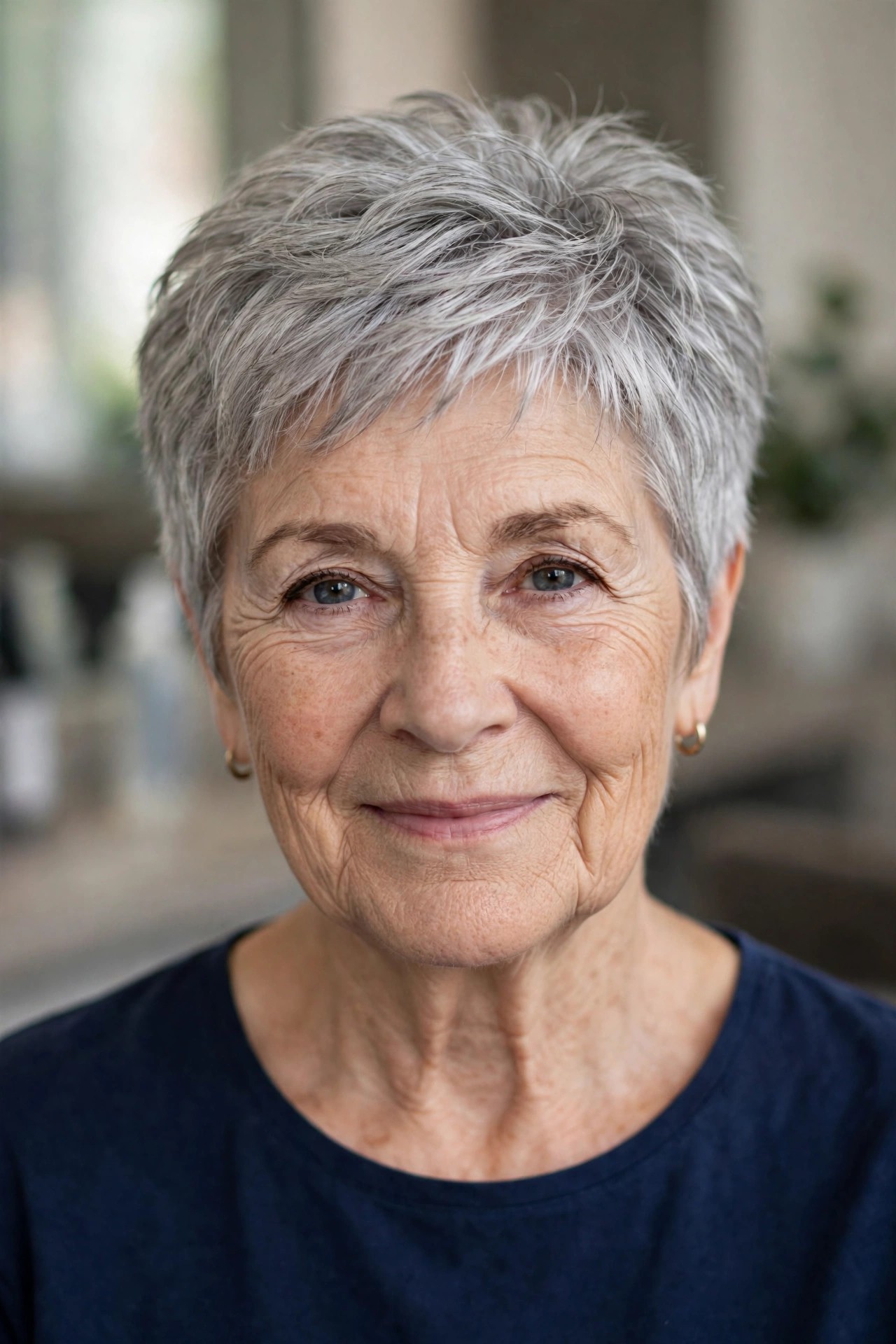
This is the pixie that proves silver is a style choice, not a compromise. Short, softly textured layers keep the shape light around the face, while a little height through the crown stops fine silver hair from sitting flat. Because the color grows out as one tone, there is no harsh regrowth line to chase every few weeks.
Ask for texture through the ends rather than blunt edges — that broken finish is what makes it feel current instead of severe. On damp hair, work in a fingertip of texturizing putty, pinch the crown pieces upward, and let it air-dry. A purple shampoo once a week keeps the silver bright and clear, never yellow.


2. Choppy Pixie with Side-Swept Fringe
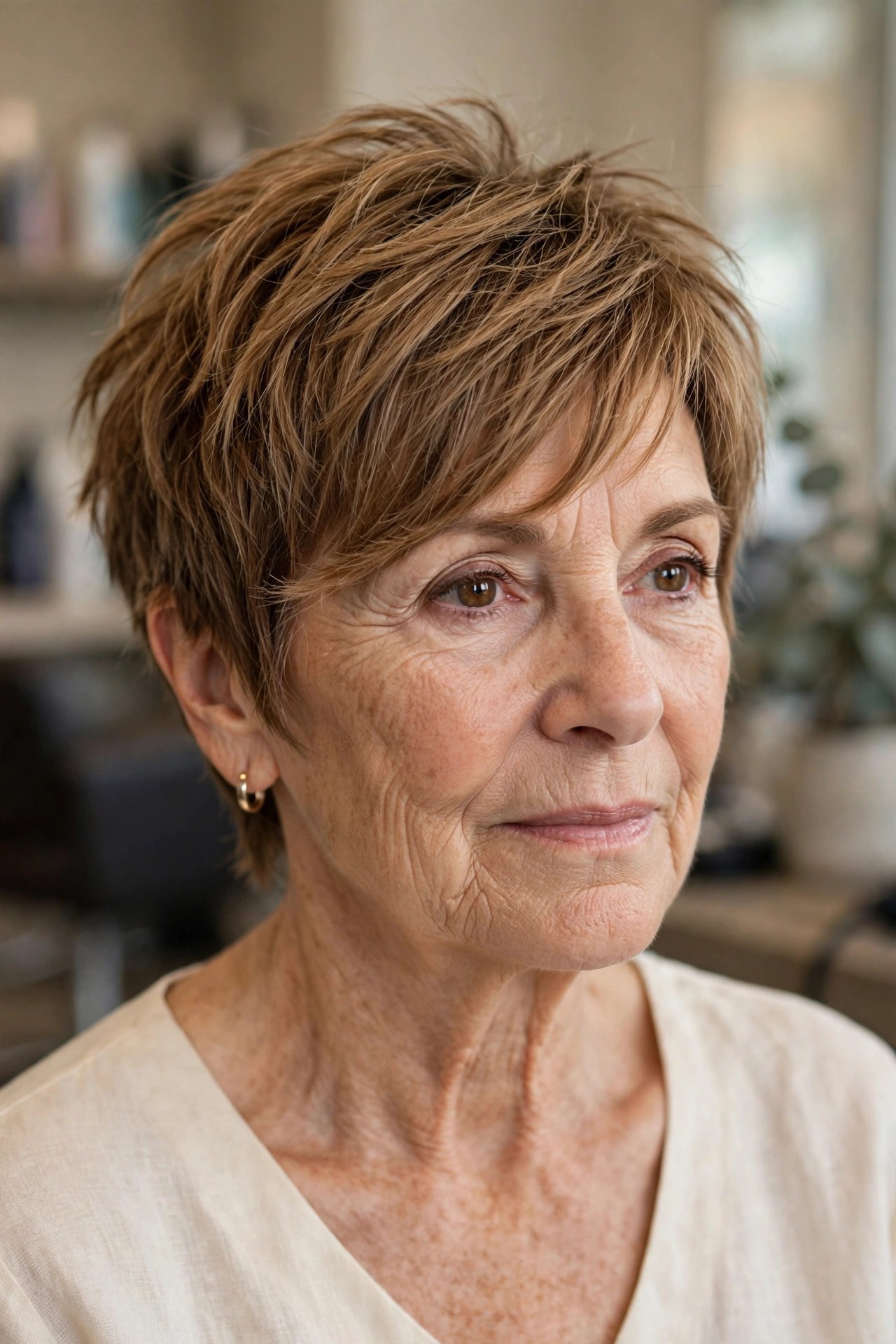
Choppy layers plus a long, side-swept fringe is one of the most forgiving combinations after 50. The diagonal fringe softens forehead lines, draws the eye across rather than down, and makes a round or fuller face look instantly slimmer. It is also a natural partner to the short choppy haircuts for women over 50 readers love for fine hair.
The secret is keeping the chop uneven on purpose: point-cut ends, never a straight shelf. Blow-dry the fringe forward first, then sweep it to your better side, and mist the roots with volumizing mousse before drying so the sweep holds its lift all day instead of collapsing by lunch.

3. Pixie Bob with Long Top
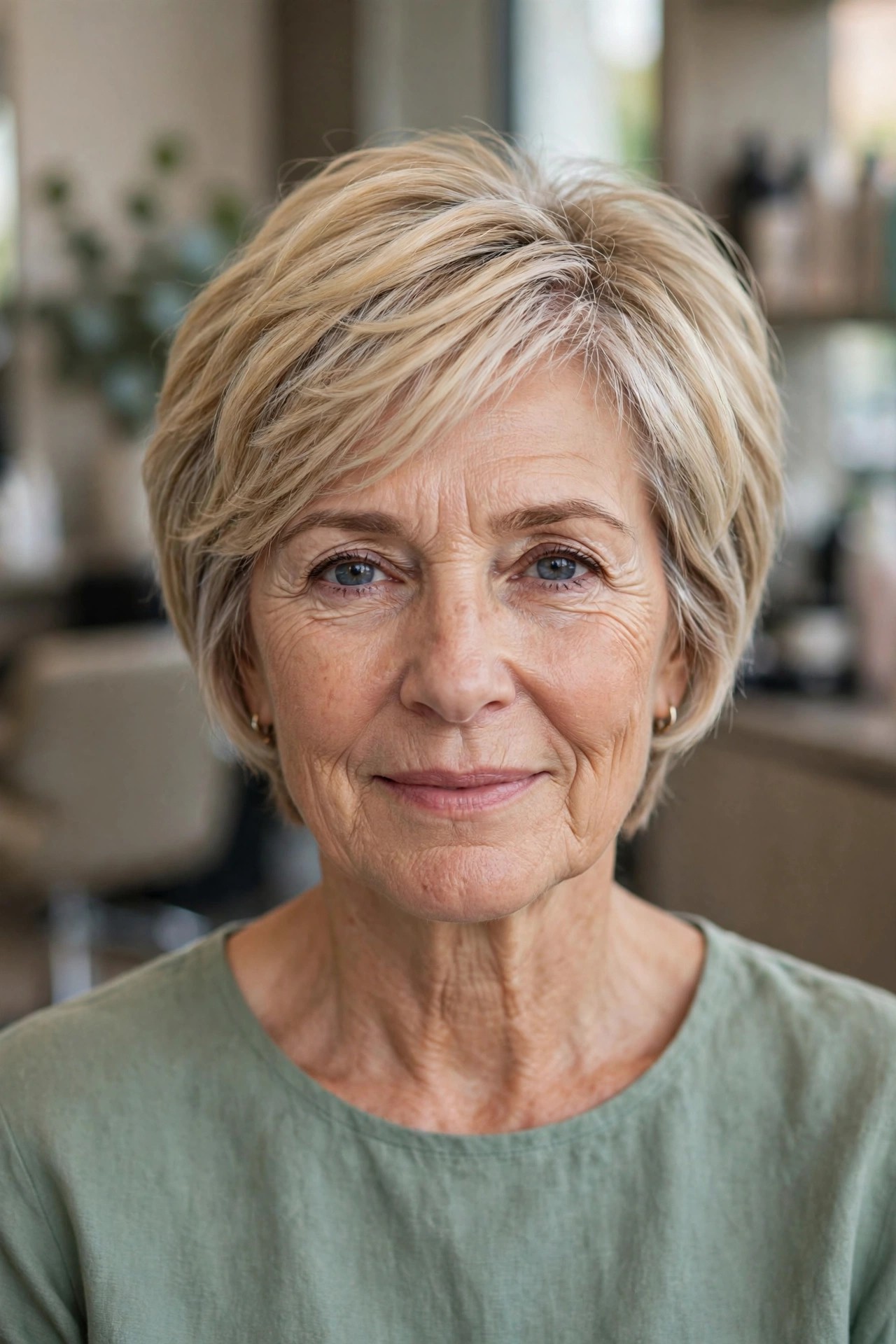
If a full pixie feels like too big a leap, the pixie bob is your bridge cut. The top and front keep bob-like length you can tuck, part and restyle, while the back and sides are cropped clean so it never hangs heavy or drags the face down. Browse more pixie bob haircut ideas if you want to compare lengths before you commit.
Style it two ways: smooth and tucked behind the ears for a polished day look, or rough-dried with your fingers for a softer weekend finish. A small round brush at the front sections adds that gentle bend that makes the longer top look intentional rather than grown out.

4. Feathered Pixie with Soft Layers
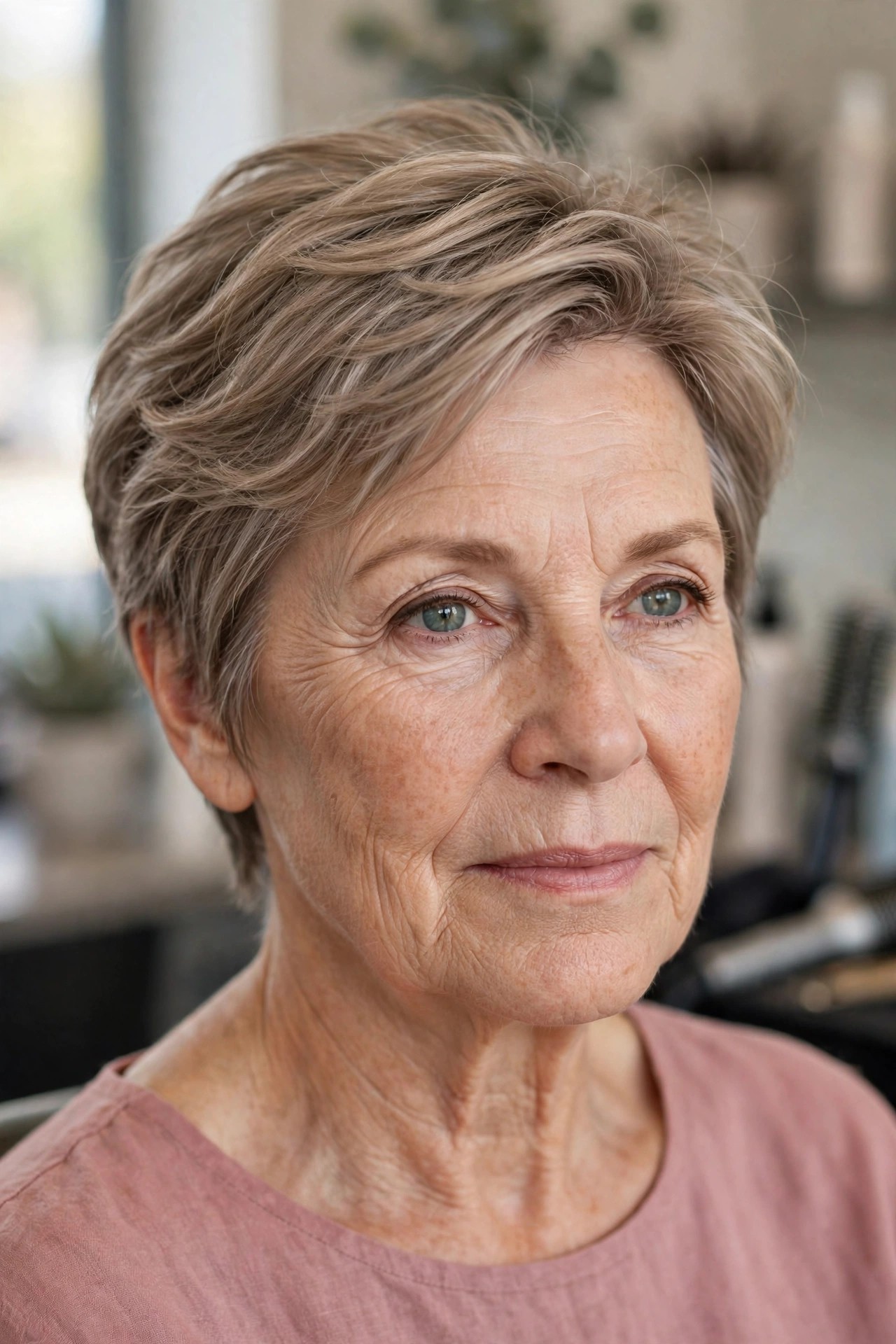
Feathering is the old-school technique that still works beautifully — layers are brushed back and away from the face, so the whole cut opens up your features instead of closing them in. It is especially kind if your hair has thinned at the temples, because the feathered sides sweep over those areas with light, airy coverage.
Keep the feathers soft, not stiff: dry with a brush lifting up and back, then finish with the tiniest amount of shine serum through the ends only. Too much product separates feathered layers into strings, so think ‘polish the tips, leave the roots alone.’

5. Tapered Pixie with Crown Volume
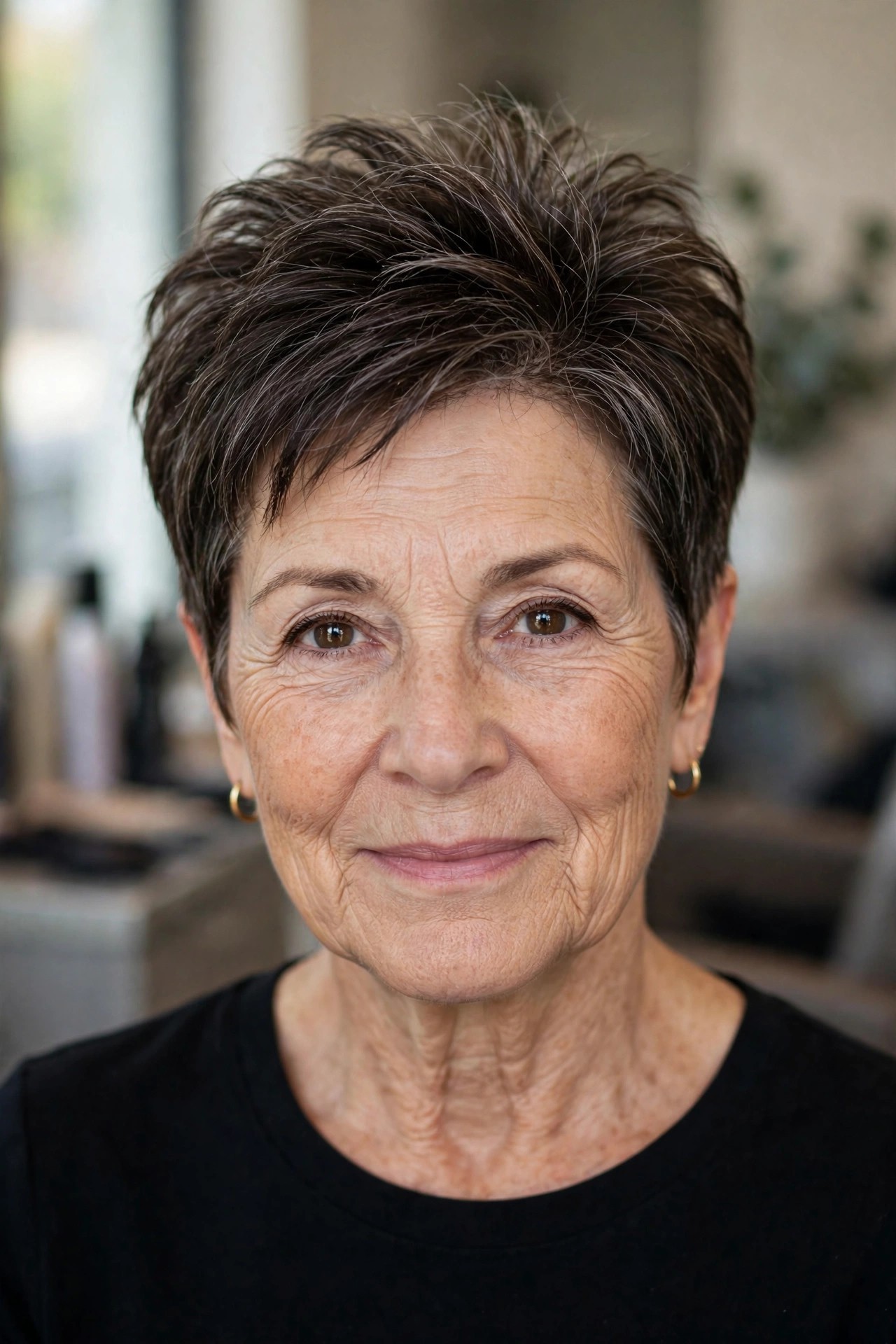
A tapered pixie puts the fullness exactly where women over 50 want it — high on the crown — and takes the bulk away from the sides and nape where it only widens the face. That lifted silhouette is quietly face-lifting: the eye travels up, cheekbones look higher, and the jawline reads firmer.
This shape lives or dies by the crown, so start styling there. Apply volumizing mousse at the roots of the top section only, blow-dry lifting straight up with your fingers, and let the tapered sides simply follow the head shape. It takes three minutes, and the lift lasts.


6. Asymmetrical Pixie with a Modern Edge
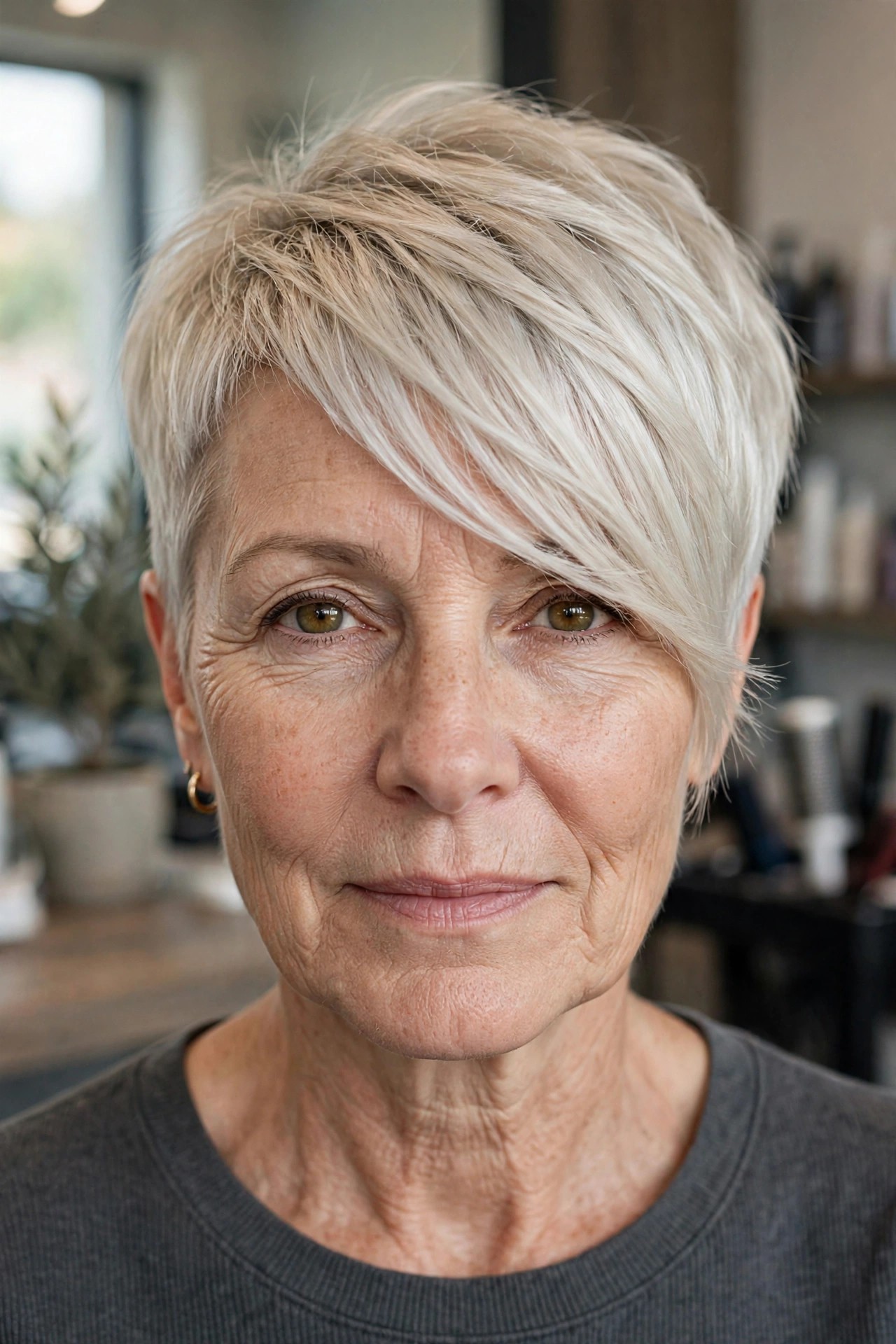
One long side, one cropped side — asymmetry adds instant fashion energy without needing bold color or complicated styling. The longer sweep acts like built-in contouring across the forehead, while the shorter side shows off earrings and a clean jawline. It is the cut to choose when you want people to notice the haircut, in a good way.
Wear the long side forward and smooth for daytime, then push it back off the face in the evening for a completely different mood. A pea-size amount of putty through the longer section keeps the sweep defined and stops flyaway ends from fuzzing the line.
7. Long Pixie with Side-Swept Bangs
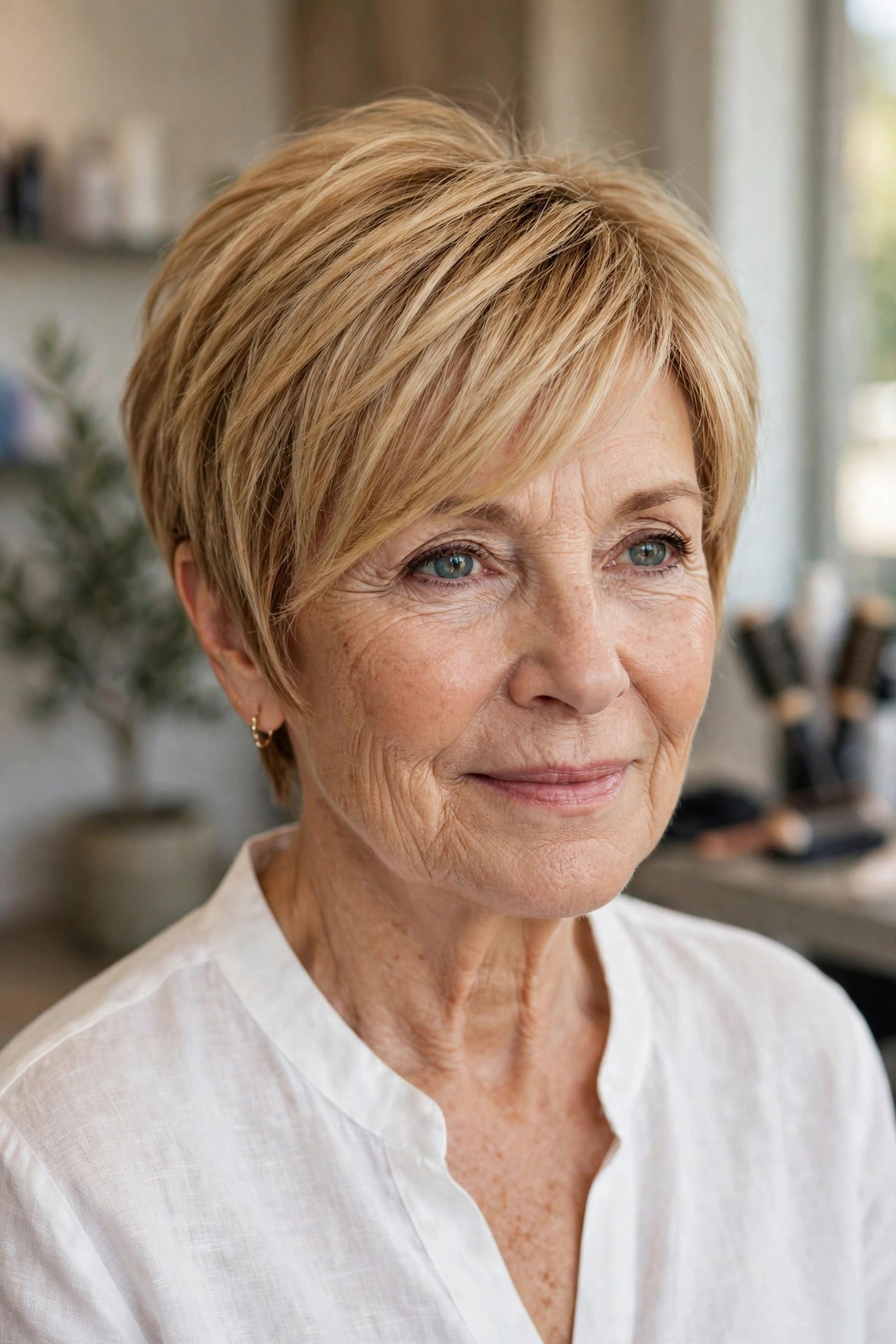
The long pixie keeps enough length on top to play with — part it deep on the side, sweep the bangs across, and you have softness around the eyes that shorter crops cannot offer. It suits almost every face shape, and it is forgiving while you are growing out a shorter style, too.
Not sure how to describe it at the salon? Our guide on what to tell your stylist for a pixie cut walks you through the exact words and photos to bring. At home, dry the bangs first — once the fringe sets in the wrong direction, no amount of restyling fully fixes it.

8. Spiky Textured Pixie for Fine Hair
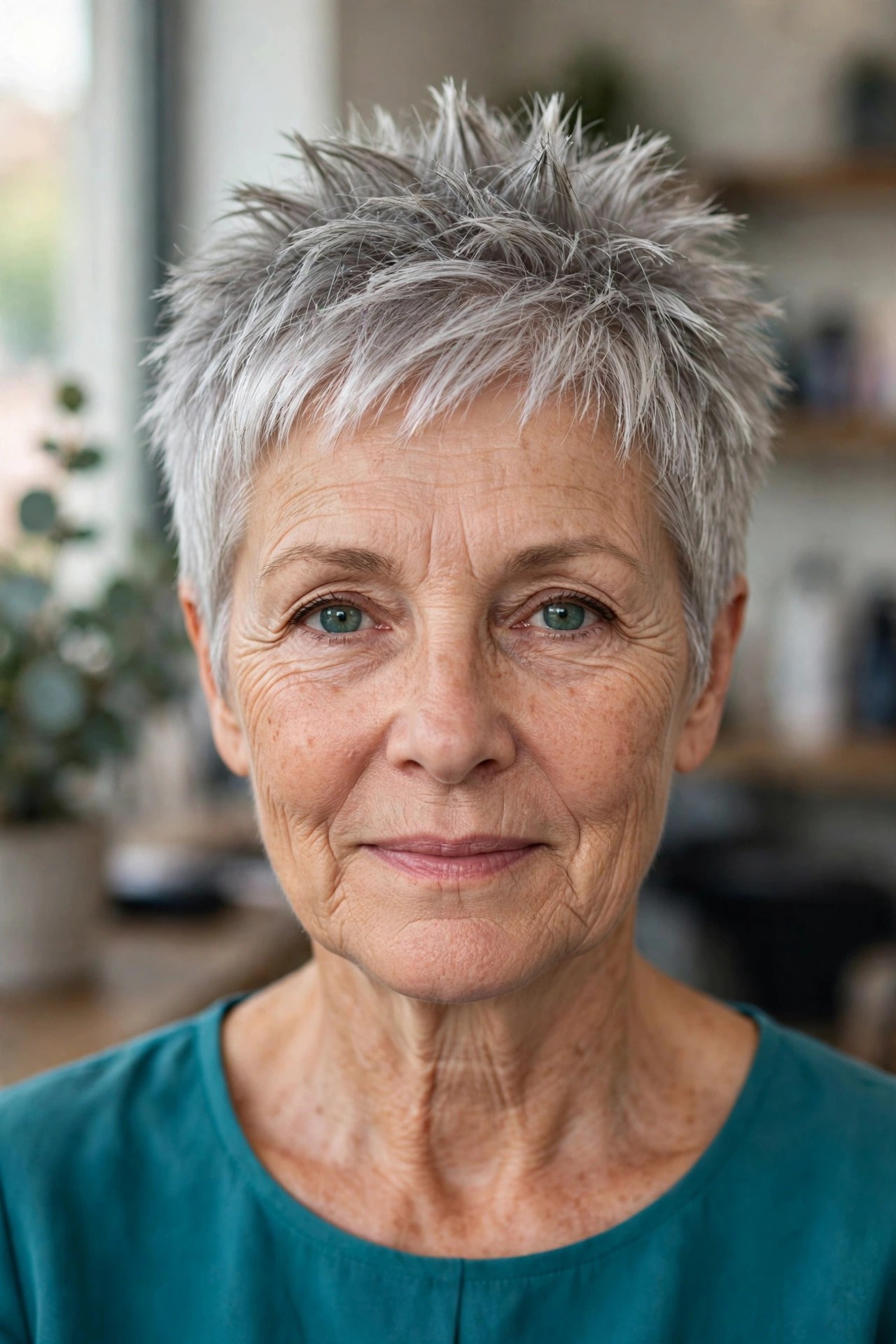
Fine hair often looks thinnest when it lies flat and sleek — which is why a short, spiky texture can be a revelation. Separating the top into piecey spikes creates shadow and movement, and the eye reads that as density. It is playful, confident, and genuinely one of the fastest styles in this entire list.
Mousse first, always: spikes built on bare fine hair fall by mid-morning. Work mousse through damp hair, dry while pinching sections upward, then define just the tips with putty. Finish with a light mist of flexible hairspray held well away from the head so the texture stays touchable, not helmet-hard.

9. Soft Curly Pixie
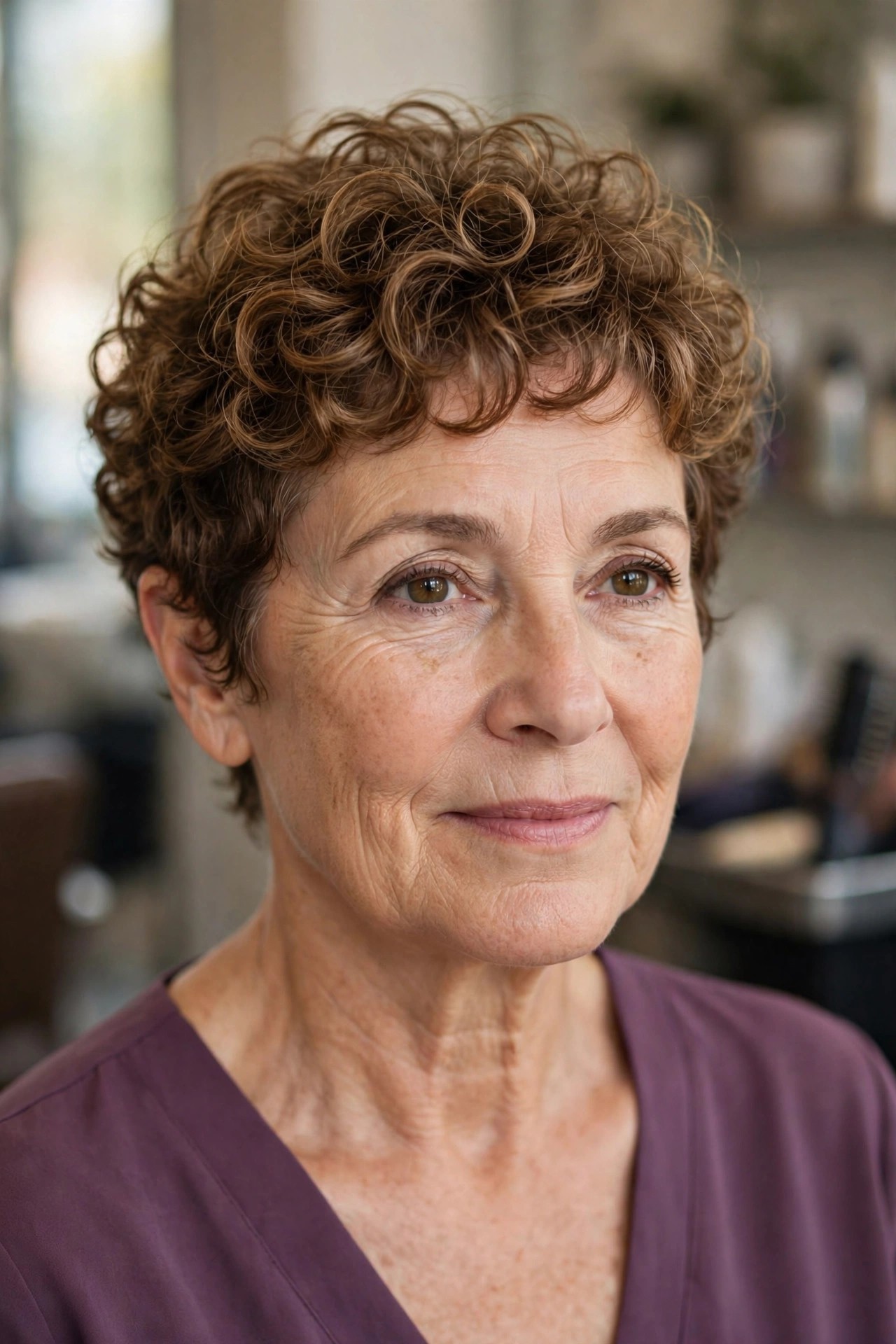
If you have natural curl, a pixie should work with it, not fight it. Keeping curl fuller on top and tidier at the sides gives you bounce and shape without the triangle silhouette that puts many women off going short. Curls also bring their own volume, which is a gift if your hair is thinning elsewhere.
Define curls while hair is still damp and then hands off — touching drying curls is what creates frizz. A sea-salt or texture mist scrunched through the top encourages separation and that modern, piecey curl finish. Sleep is the enemy of a curly pixie, so a quick morning mist-and-scrunch refresh is your routine.

10. Pixie with Wispy Baby Bangs
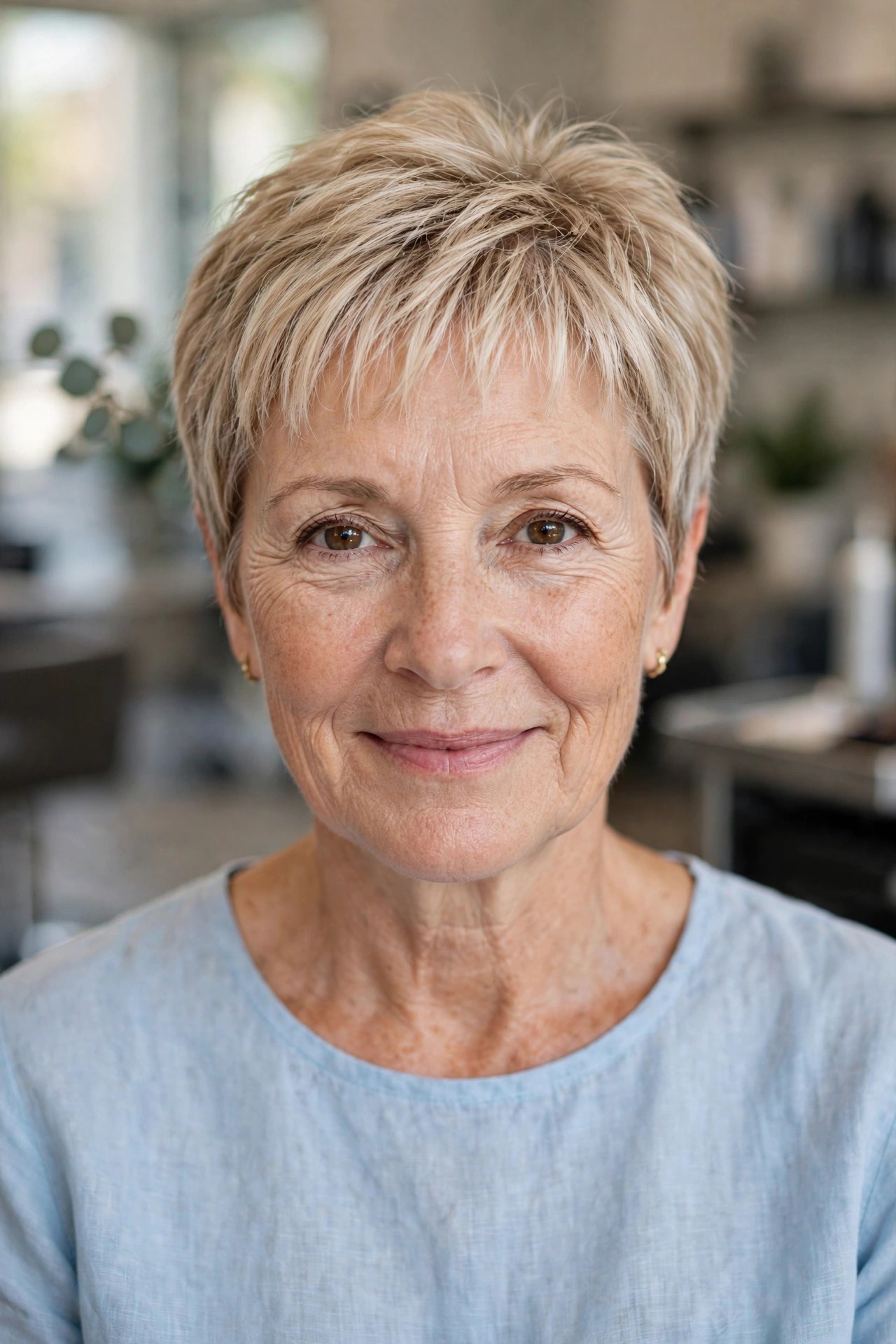
A short, wispy fringe is the gentlest way to wear bangs after 50. Unlike a heavy blunt fringe, these feather-light pieces skim the forehead, soften lines, and never look like you are trying to hide behind your hair. Paired with a neat pixie, the whole look feels fresh, bright and a little bit French.
Wispy bangs only stay wispy if they are cut that way — ask for them point-cut and thinned at the very ends. Style by drying them first with a small brush side to side, which stops them splitting in the middle, and keep forehead oils off them with a tiny morning refresh if needed.

11. Platinum Blonde Choppy Pixie
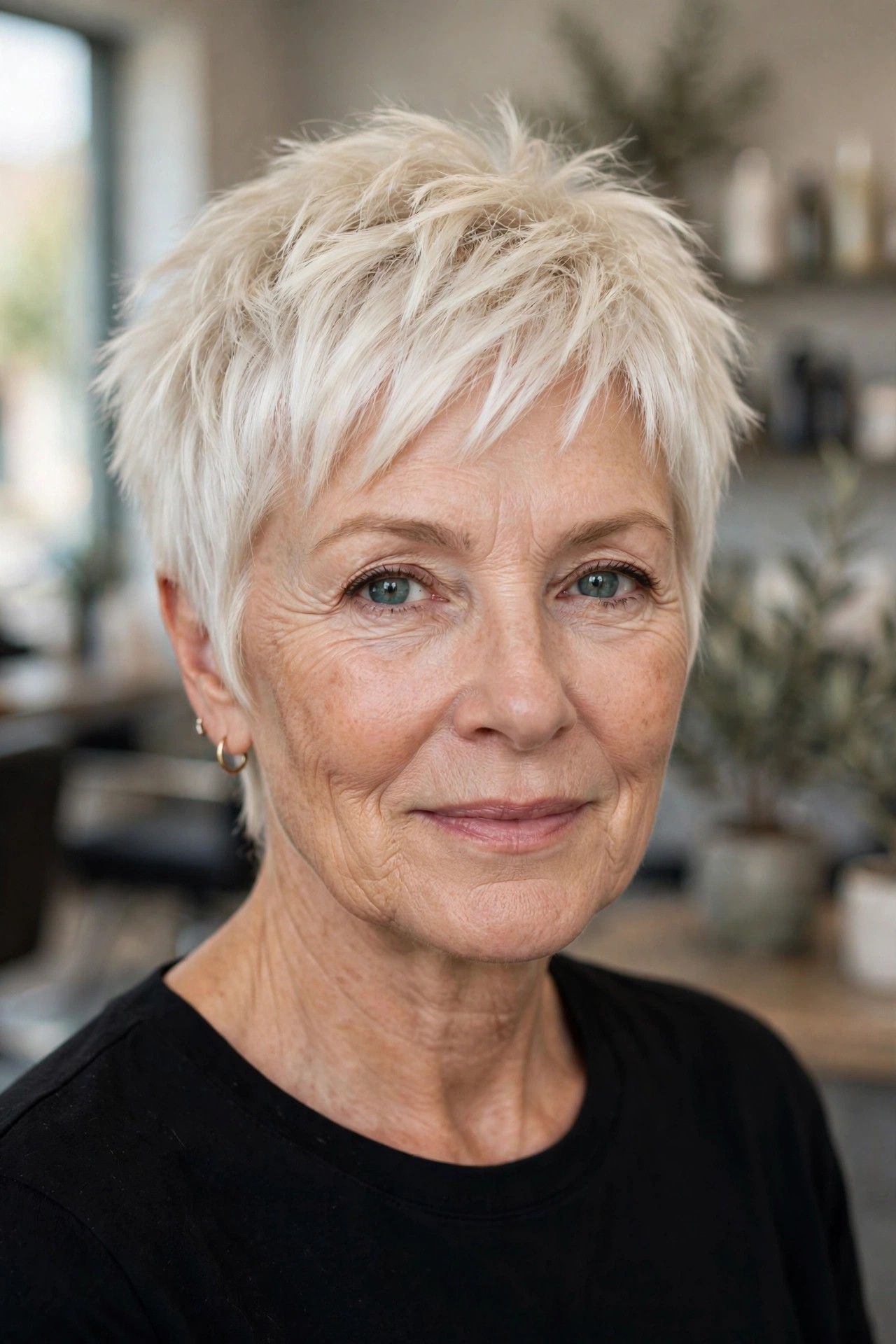
Platinum is the boldest grow-out strategy there is: when your roots are silver-white anyway, an icy all-over blonde makes regrowth almost invisible. The choppy cut stops the color looking flat or wig-like, because broken layers catch the light differently on every piece. It is high-impact, but surprisingly practical.
This color needs tone maintenance, full stop. A purple shampoo every week to ten days keeps brassiness away, and always use a heat protectant before any hot tool — lightened hair plus heat is where breakage starts. The cut itself, though, is pure wash, pinch and go.
12. Warm Brunette Pixie with Golden Highlights
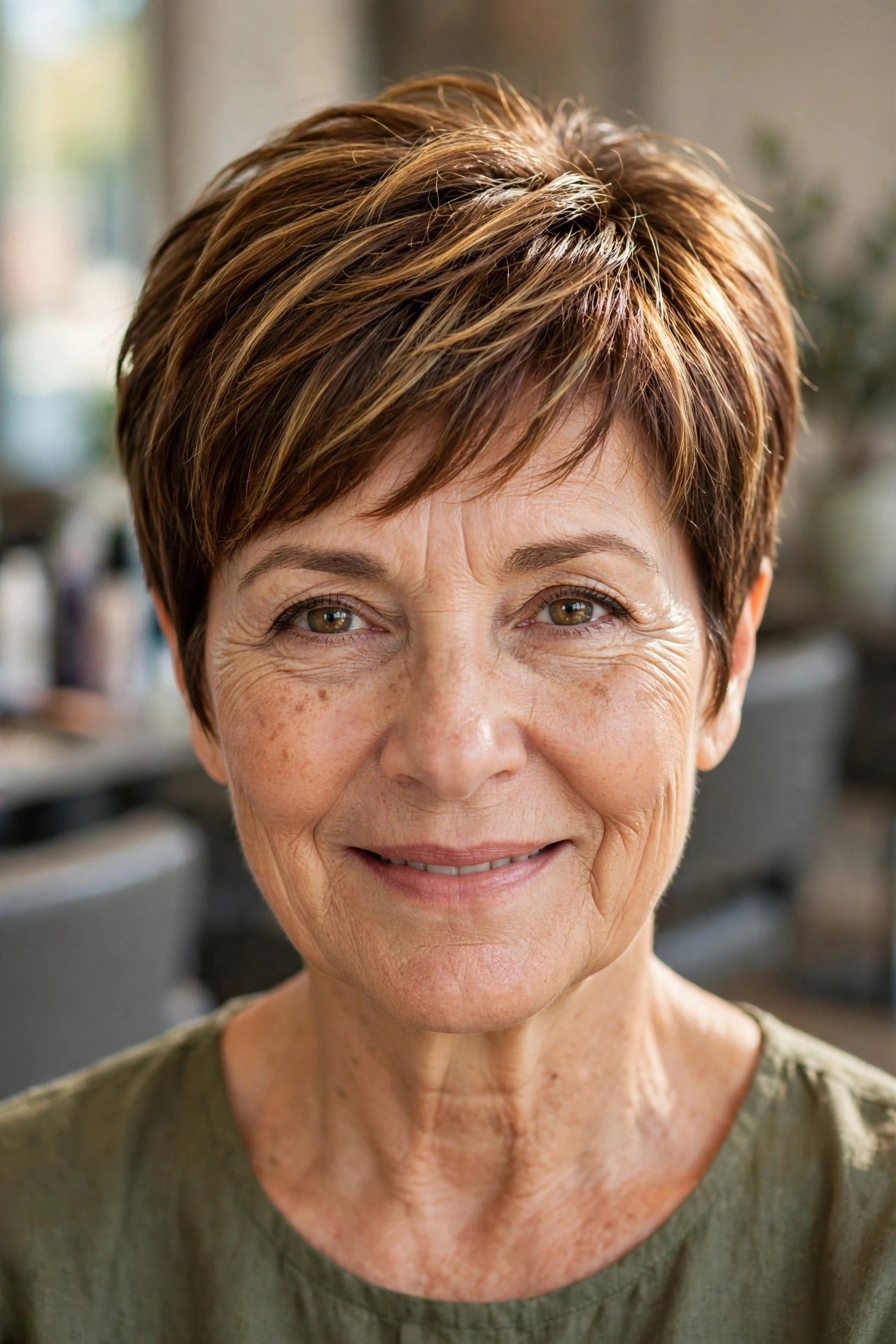
Not ready to go silver? A warm brunette pixie with fine golden highlights placed around the face gives you brightness exactly where skin needs it. The darker base keeps depth and makes fine hair look thicker, while the lighter pieces stop short dark hair from reading severe against mature skin.
Ask for highlights painted on, not foiled in stripes — on a pixie, chunky stripes look dated fast. At home, a drop of argan shine serum warmed between your palms and pressed over the surface brings out the dimension you paid for and calms the wirier gray strands that love to stick up.
13. Salt-and-Pepper Layered Pixie
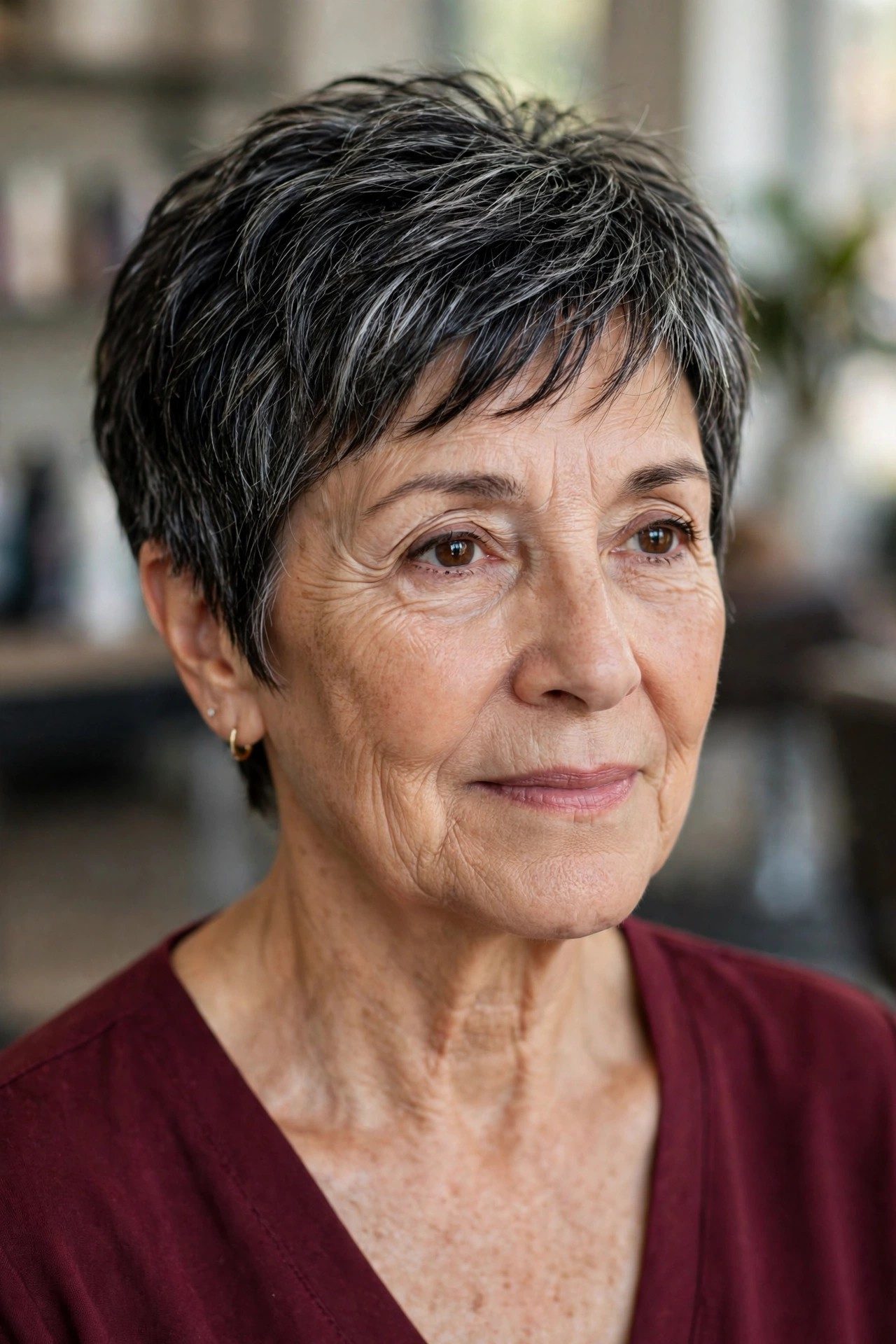
Salt-and-pepper hair has natural dimension most women pay a salon to imitate — this layered pixie simply gives it a shape worthy of the color. Soft layers stop the mix of dark and silver from looking patchy, evening out the contrast so it reads as deliberate and polished.
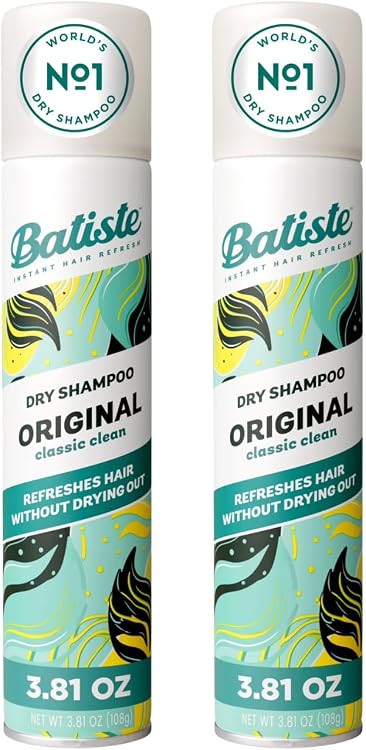
The styling is refreshingly honest: this cut looks best slightly undone. Between washes, a dry shampoo at the roots absorbs oil and adds the grit that makes layered ends separate nicely. If individual silver strands look dull, a clarifying wash once a month removes the product build-up that grays collect.
14. Pixie with a Long Front and Tucked Sides
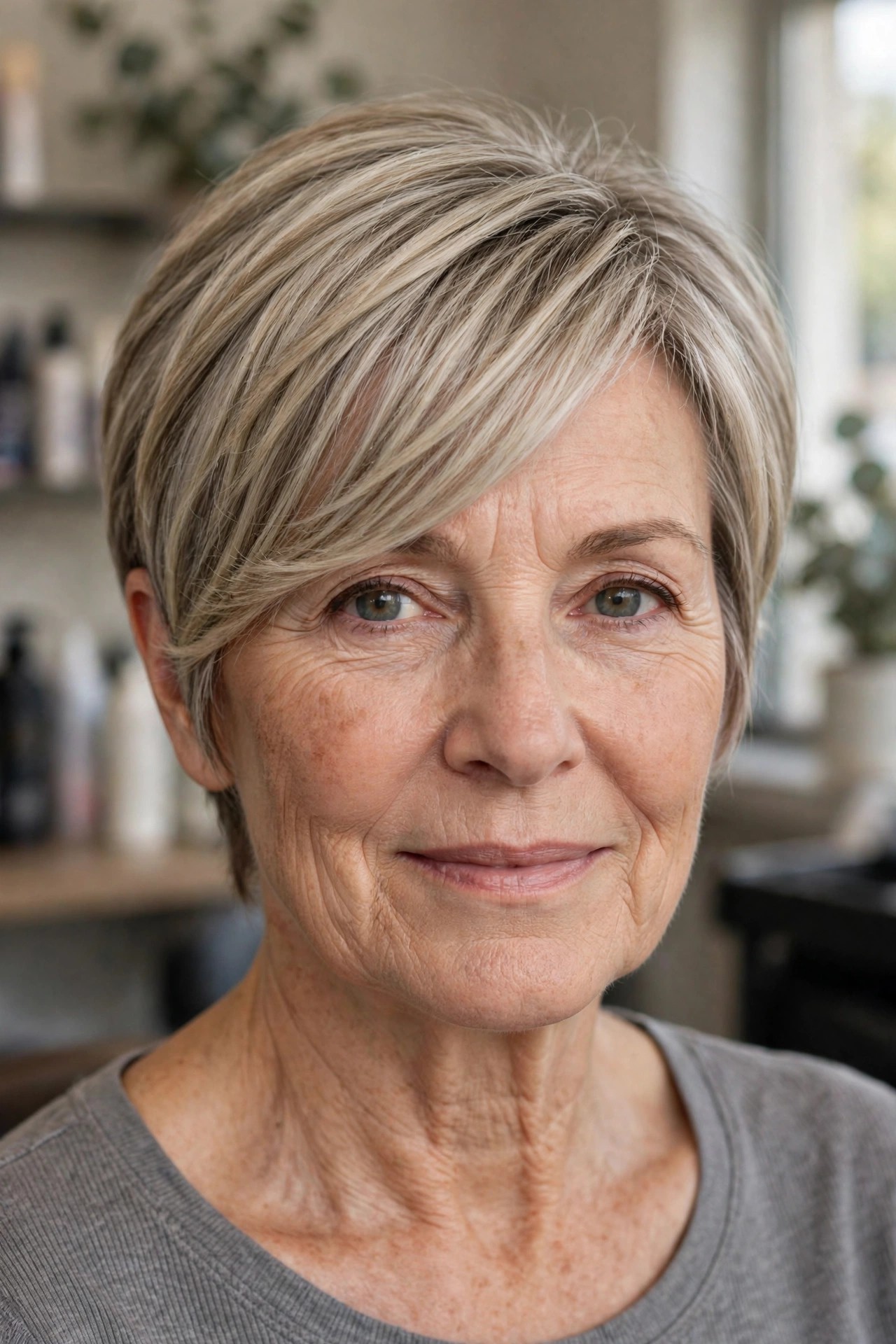
Keeping the front long while the sides tuck neatly behind the ears gives you two haircuts in one: face-framing softness from the front, clean practicality from the side. It is a lovely choice if you love your earrings, wear hearing aids, or simply hate hair touching your cheeks all day.
The long front is where a mini flat iron earns its keep — one slow pass bends the ends under or flicks them slightly forward, and the style looks salon-finished. Always glide, never clamp and hold, and keep the iron on its lowest effective heat for fine hair.

15. Tousled Messy Pixie
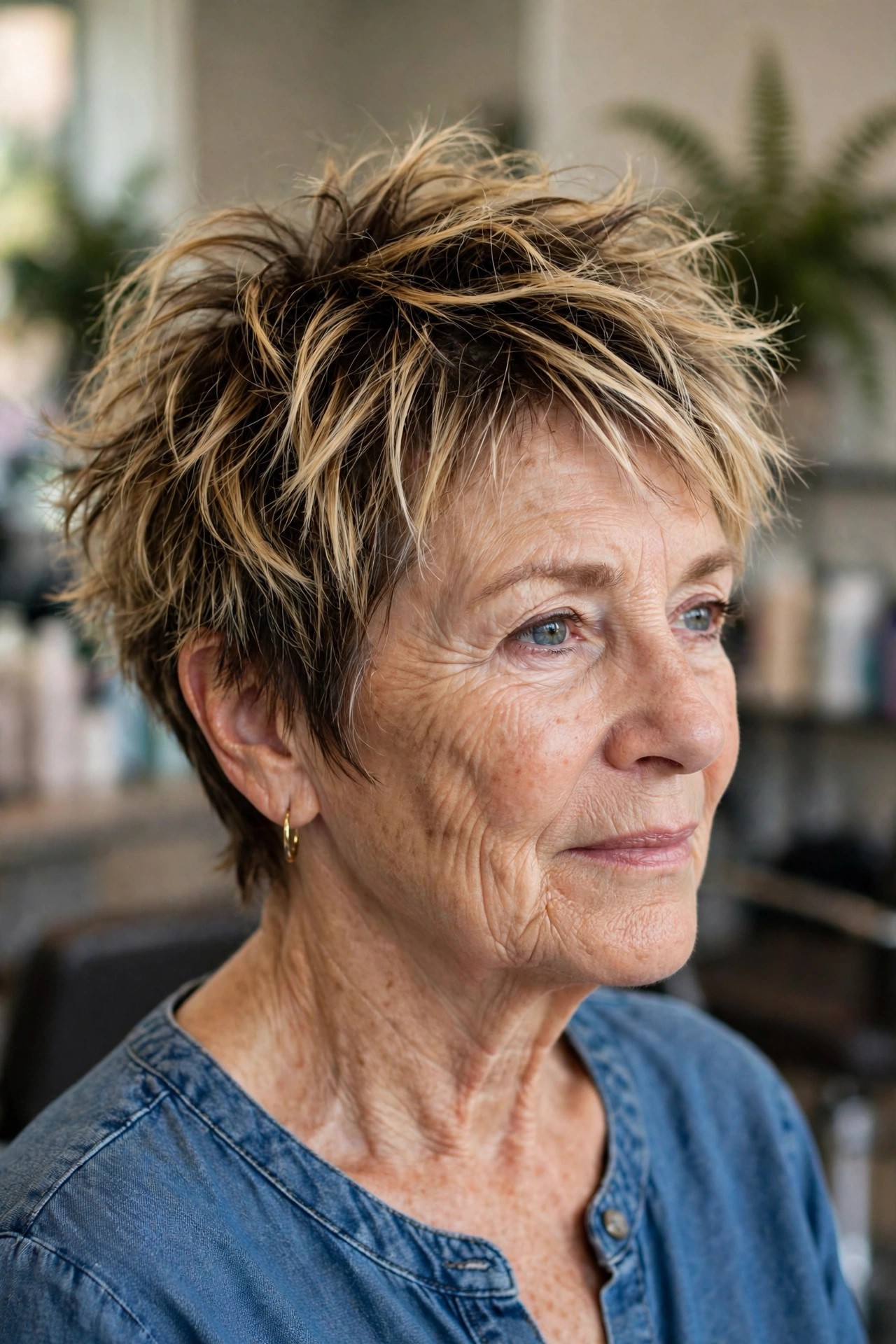
The messy pixie is the youthful one — because nothing ages a haircut faster than looking too ‘done.’ Tousled, separated texture signals ease and confidence, and it hides a multitude of sins: uneven growth, a stubborn cowlick, hair that is fine in one place and coarse in another. If you like this energy, our short textured haircuts for women over 50 go even deeper on texture-first styling.
Build mess on purpose: texture spray through dry hair, then pinch and twist random sections in different directions with putty on your fingertips. If every piece points the same way, it reads as styled; the youthful finish comes from that deliberate irregularity.

16. Sleek Polished Pixie for Glasses
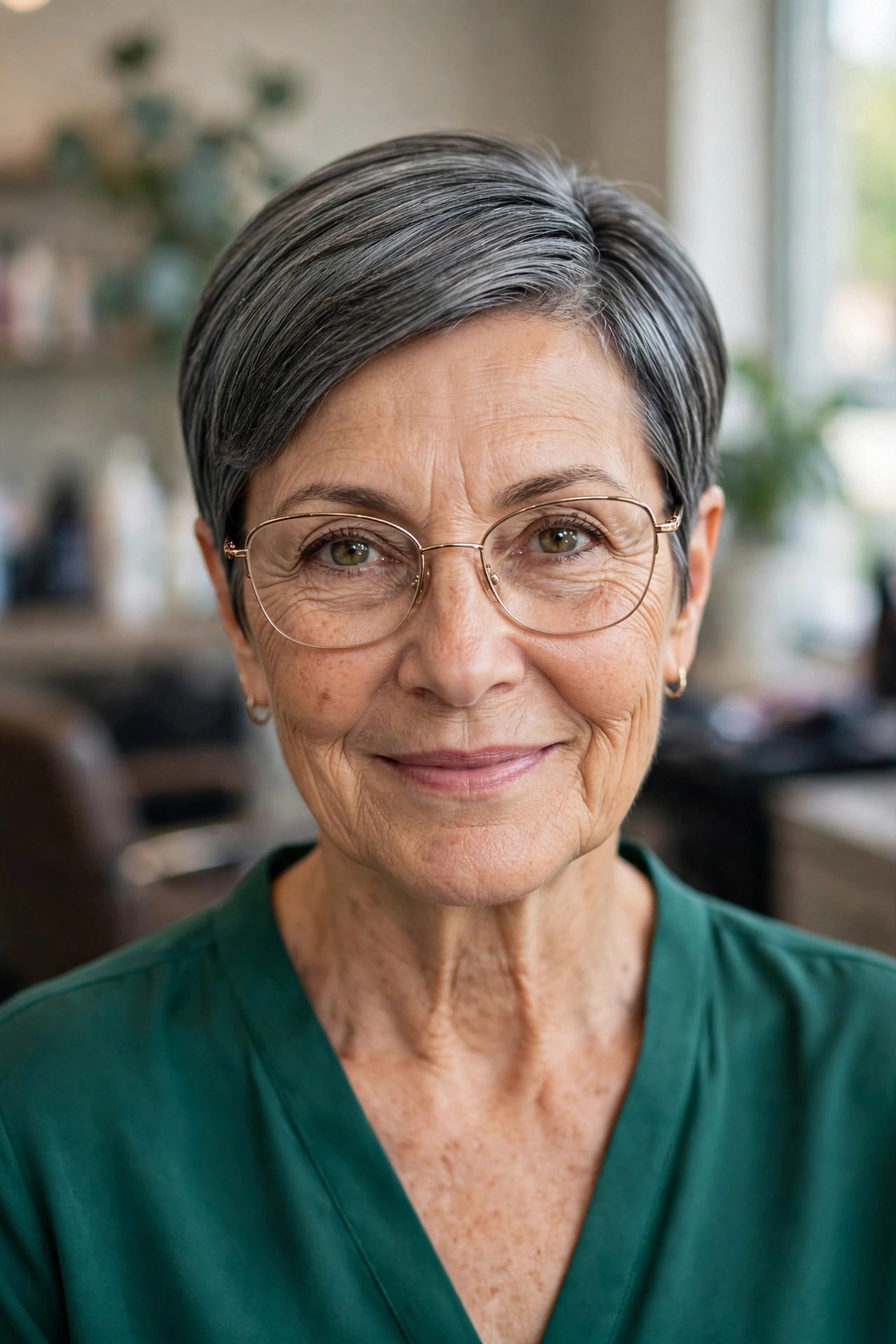
Glasses and pixies are natural partners — the short sides never tangle in hinges, and a sleek finish keeps the whole look sharp and intentional. This polished version lies close and smooth with a defined side part, so your frames become the statement accessory instead of competing with fluffy hair.
Smooth does not mean flat: lift the roots briefly with a dryer first, then press the lengths down with a mini iron for that glass-like surface. Choose a fringe length with your frames in the chair — your stylist should check where the hair falls with glasses on, not off.

17. Wavy Pixie Bob
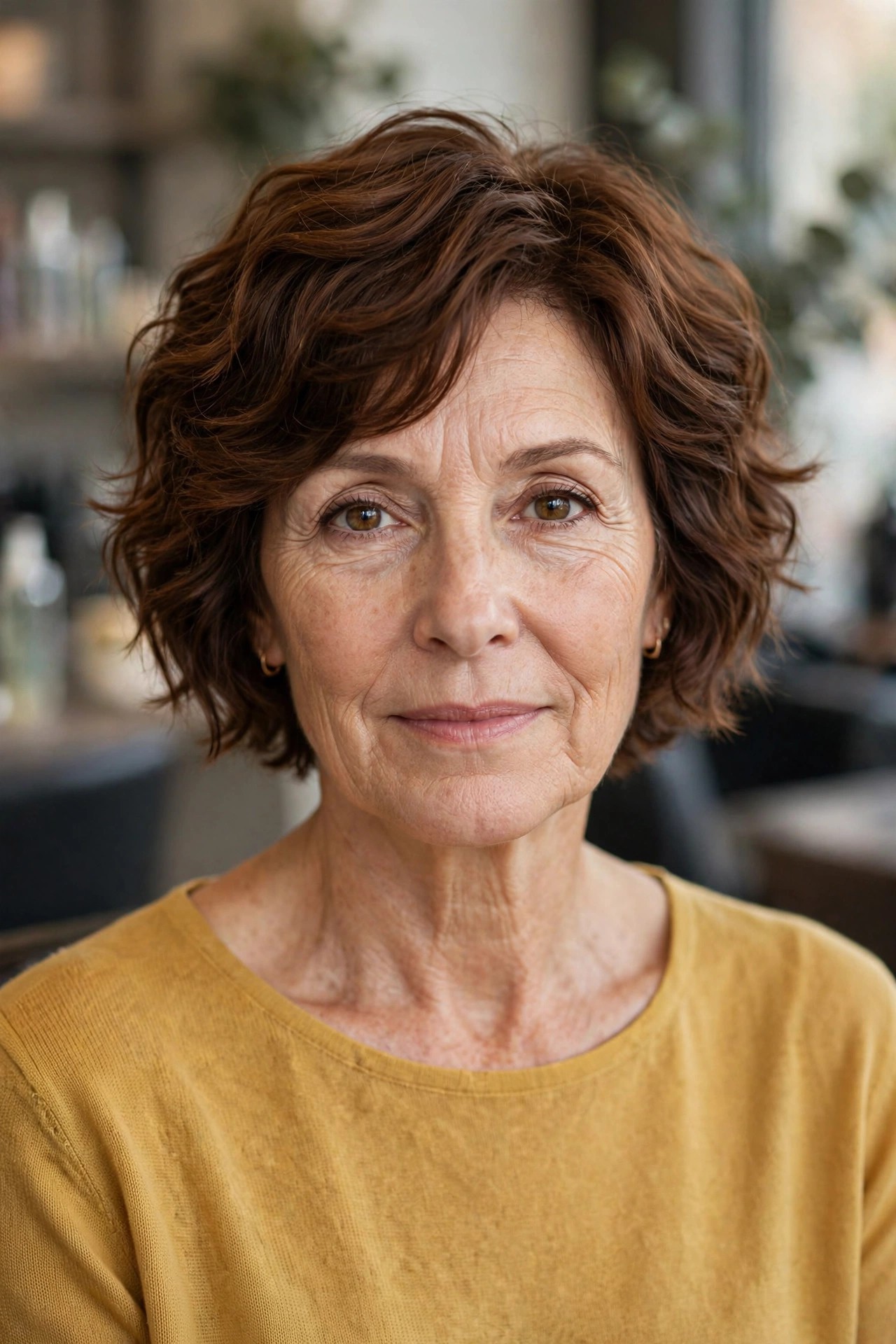
Soft waves give a pixie bob movement that straight versions cannot match, and waves are brilliant camouflage for thinning areas because the bends create overlapping coverage. This in-between length also suits women who found a true pixie too exposed but a bob too high-maintenance.
You do not need natural waves to wear it. A hot-air styler brush through the top sections creates the bend in minutes, and the wave holds better on day-two hair than freshly washed hair. Scrunch, do not brush, once it is dry — brushing waves out is how this cut turns to frizz.

18. Pixie with a Soft Curtain Fringe
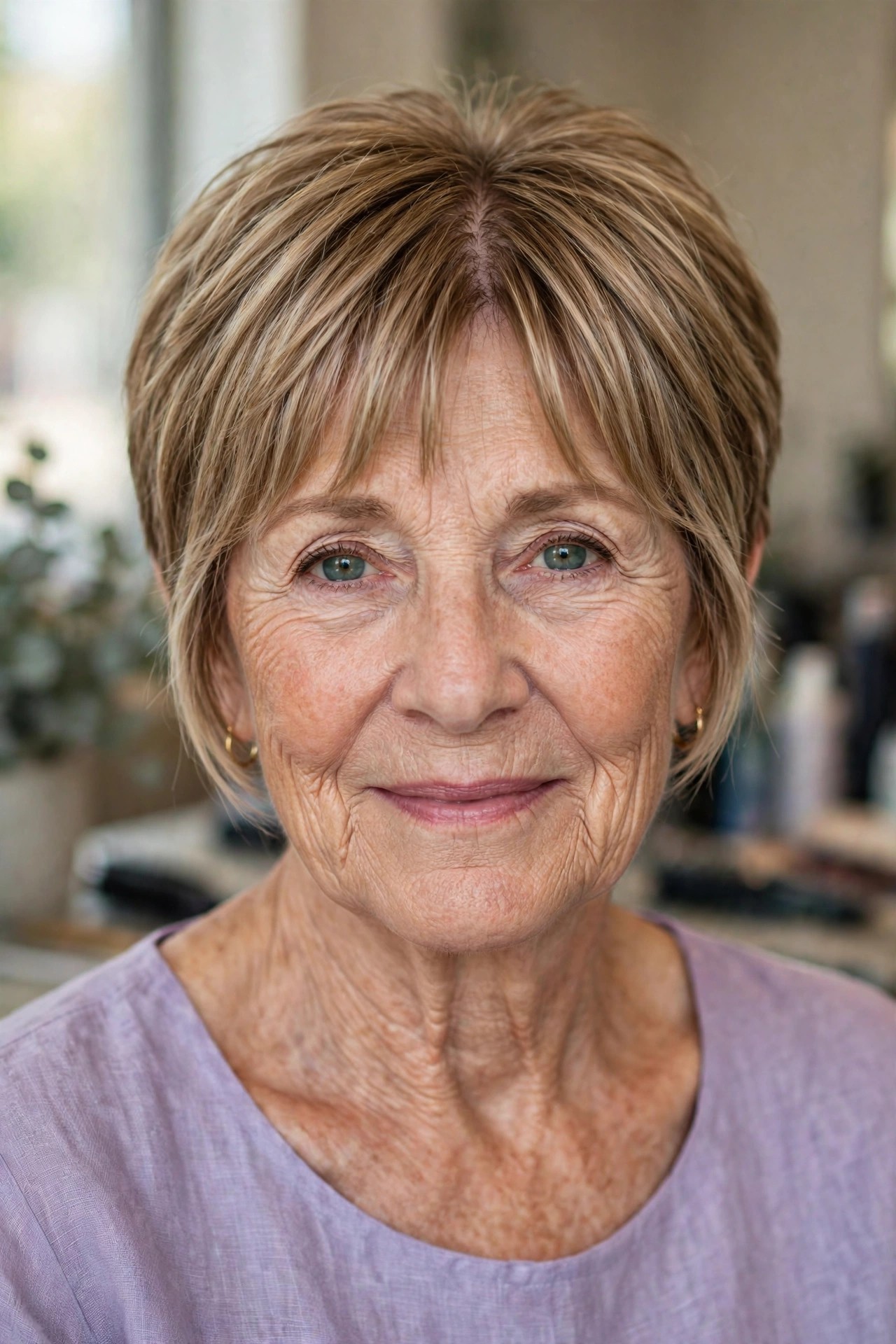
A curtain fringe parts in the middle and sweeps to both sides, framing the eyes and cheekbones like a soft pair of brackets. For women over 50 it has a special benefit: it covers the outer forehead and temple areas where hair often thins first, while still keeping the face open and bright.
Dry the fringe away from the face on both sides — forward drying makes curtain bangs collapse into the eyes. A light foam through the front gives the sweep memory without weight. Between cuts, this fringe grows out gracefully into side layers, which makes it one of the lowest-pressure bang choices here.
19. Copper Feathered Pixie
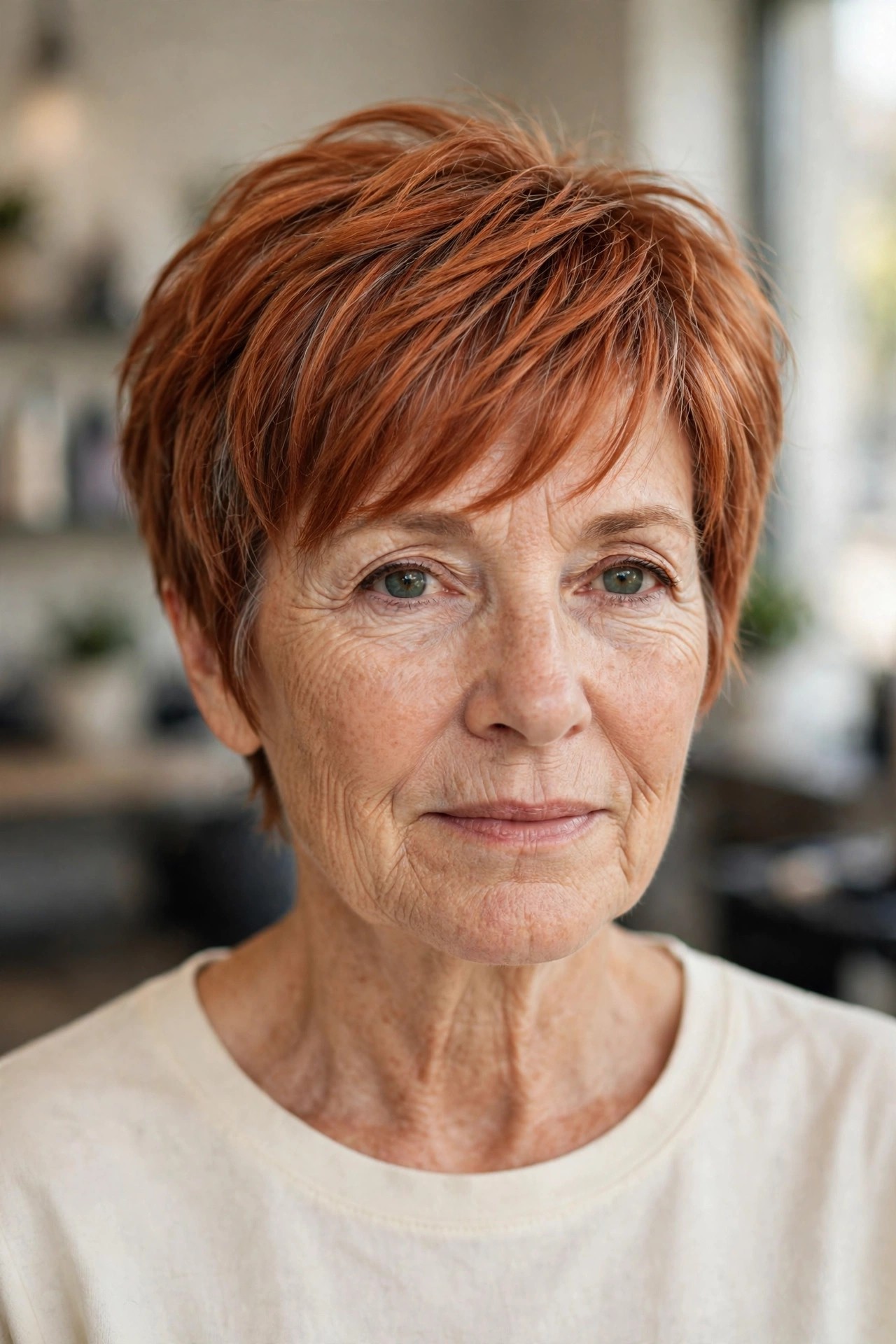
Copper is the color that lights up mature skin — its warmth reflects back onto the face, making everything look a little more rested. In a feathered pixie, the color moves with every layer, so it never sits as one flat block of red. It is a particularly kind choice if your natural color was warm brown or auburn.
Red tones fade fastest of all, so wash in cool water, stretch wash days where you can, and always shield the color with heat protectant before styling. The feathered shape itself needs only a brush and two minutes — the color care is the real commitment here, and it is worth it.

20. Gray Pixie with a Tapered Nape
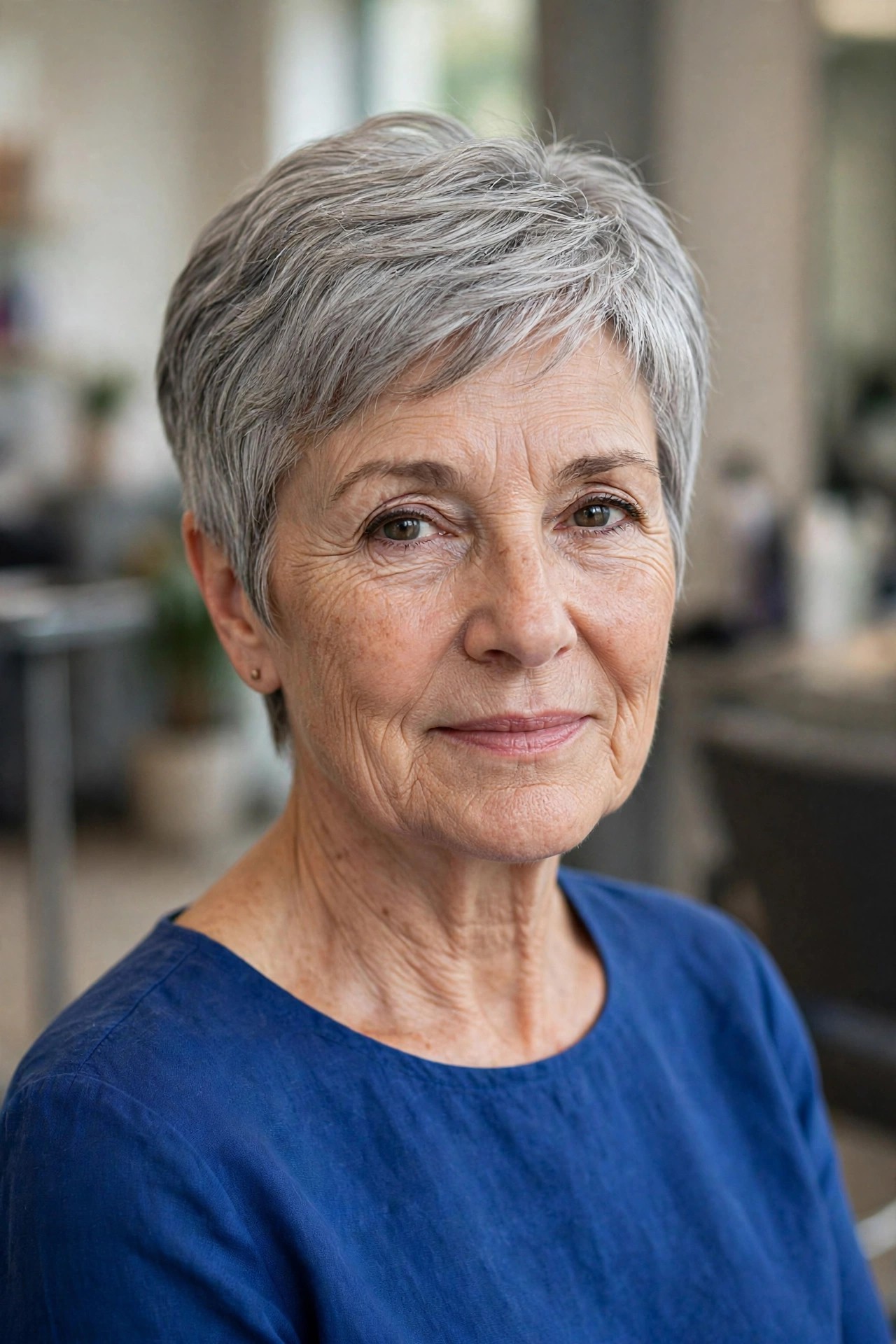
A clean tapered nape is the detail that makes a gray pixie look expensive. The top keeps soft, touchable length, while the neckline is graduated close and tidy, so the silhouette stays sharp for weeks instead of going fuzzy and grown-out at the back — the place you cannot see, but everyone else can.
Ask your stylist to taper with scissors rather than clippers if your gray hair is coarse; scissor tapering lies softer and grows out kinder. At home there is almost nothing to do — which is exactly the point. Protect the style while you sleep and it will greet you ready-made in the morning.

21. Piecey Pixie with Defined Texture
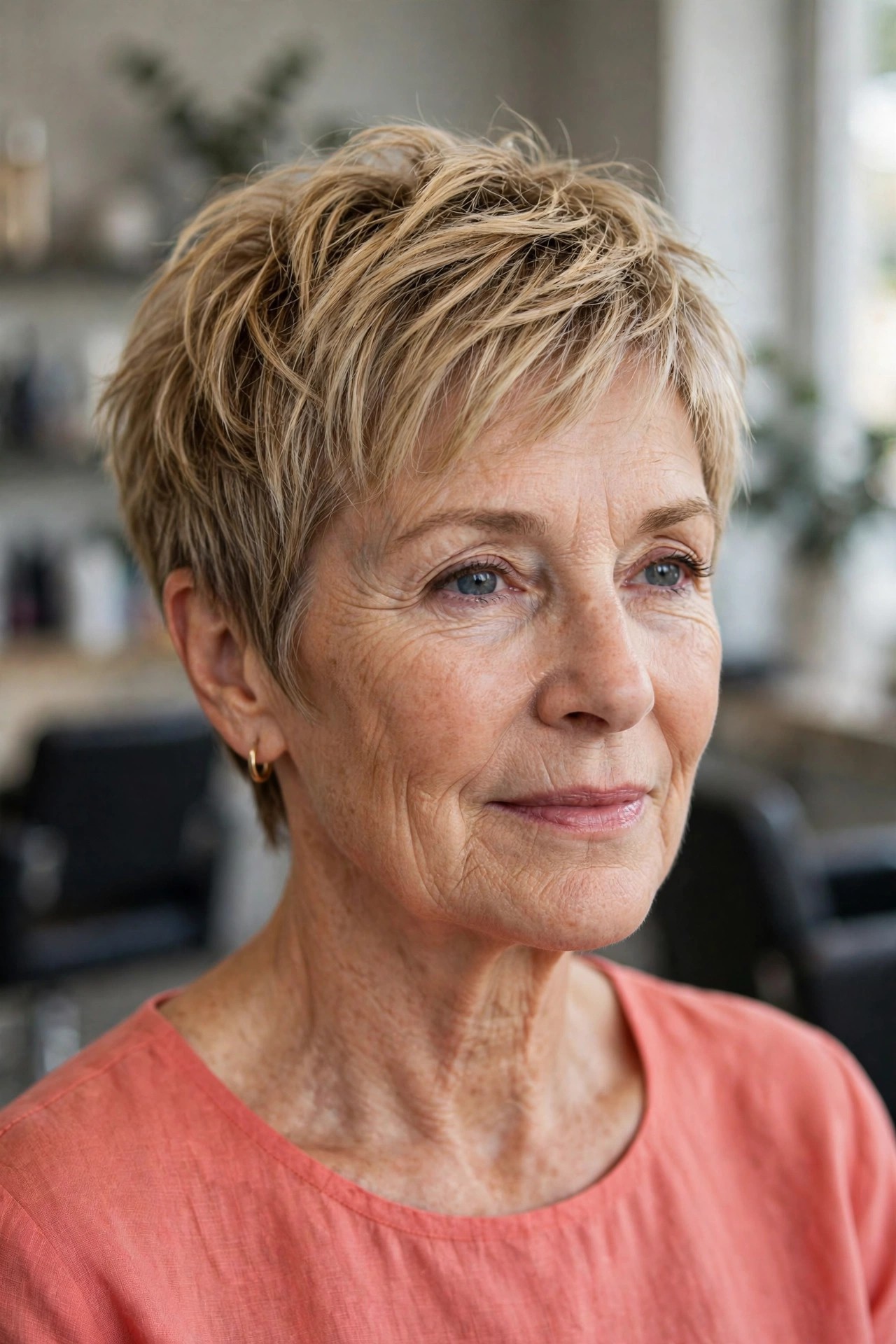
Where the choppy pixie is soft, the piecey pixie is deliberate: ends are separated into clear, defined sections you can actually see. That definition is what makes fine hair photograph thicker, and it gives the whole cut a modern, editorial feel that reads youthful at any age.
Putty is non-negotiable here, and the technique matters: warm it until invisible on your fingers, then twist small sections at the ends only. Product at the roots will collapse a piecey pixie by noon. Less than you think, exactly where the pieces are — that is the whole skill.
22. Pixie Shag with a Choppy Crown
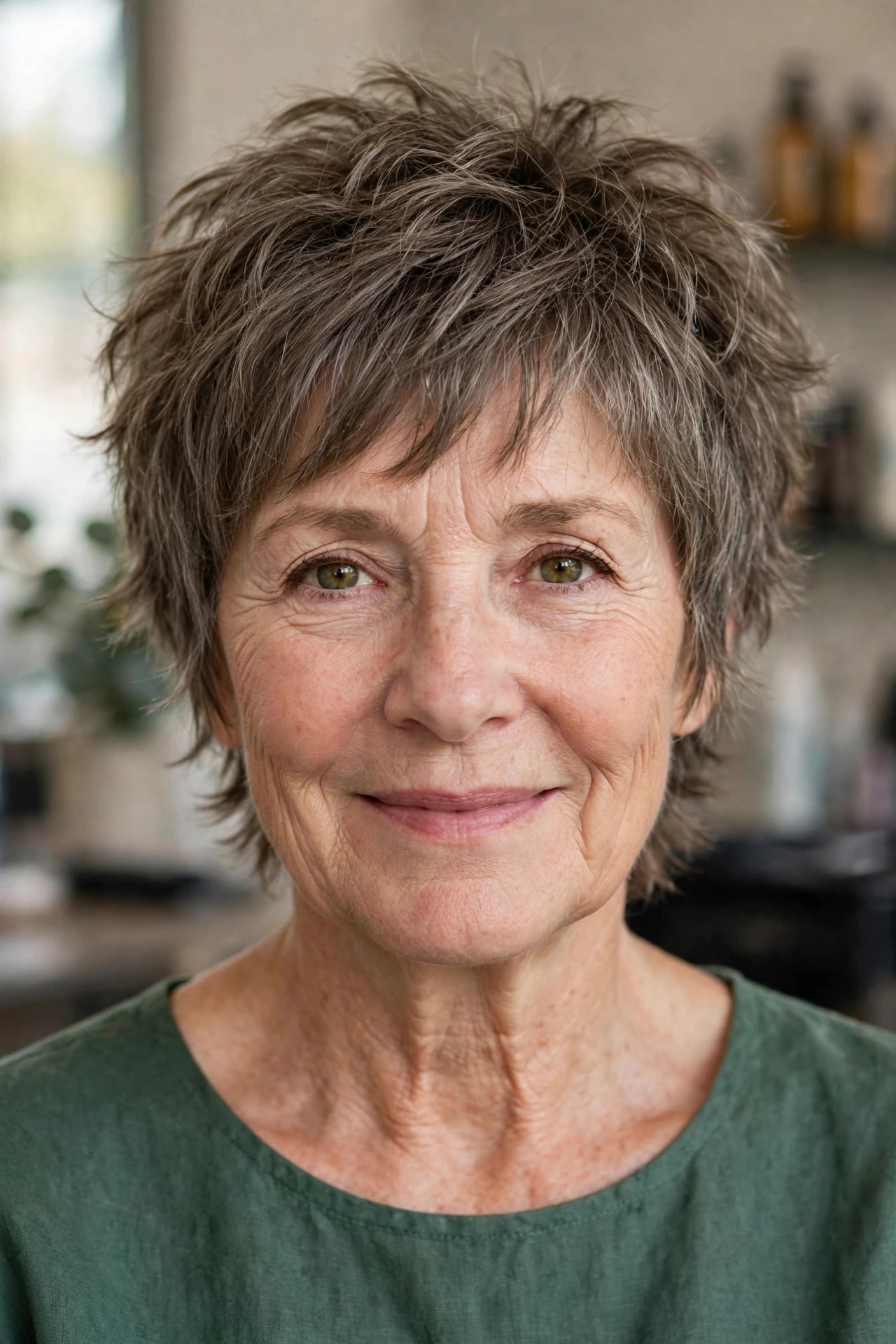
Borrow the shag’s choppy crown and wispy edges, shrink it to pixie length, and you get volume, movement and a slightly rock-and-roll spirit in a cut that still takes five minutes. The disconnection between the fuller crown and tidier sides is what keeps it fresh rather than frumpy.
This one thrives on texture products and rough drying — a dryer brush will actually fight the look you want. Finger-dry, scrunch in texture spray, and let the crown stay a little wild. Book trims by the crown, not the calendar: once the top gets too long, the shag energy flattens out.
23. Blonde Balayage Long Pixie
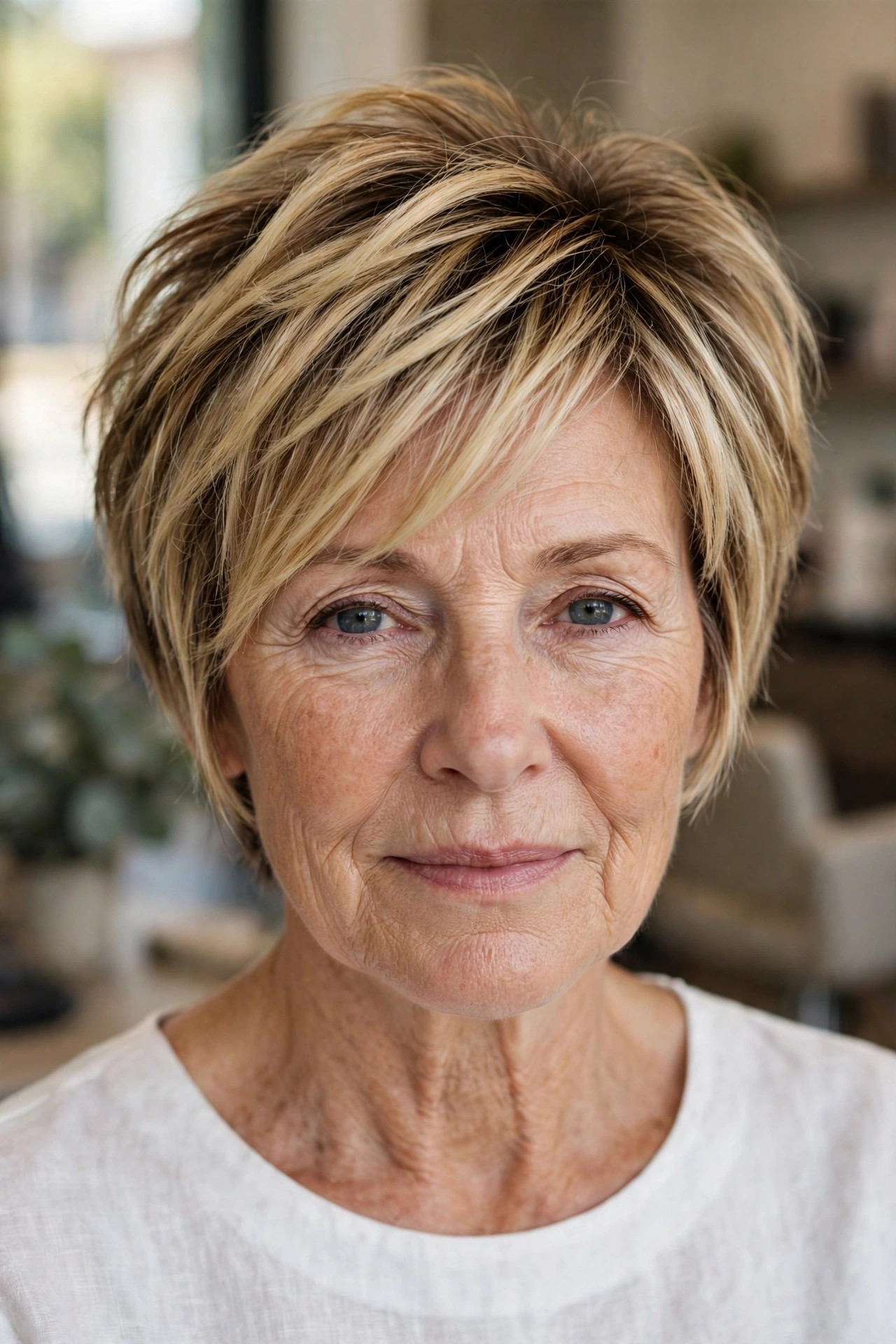
Balayage on a long pixie places brightness hand-painted around the face and through the longer top, with a softer, darker root that grows out without a line. For women transitioning away from solid color, it is the lowest-maintenance blonde there is — appointments can stretch months apart.
Because the lightness sits on the surface layers, protect it like the investment it is: heat protectant before any hot tool, and a round-brush blowout when you want the painted pieces to really show. On lazy days, the longer top also pins back neatly with a small flat clip.
24. Low-Maintenance Wash-and-Go Pixie
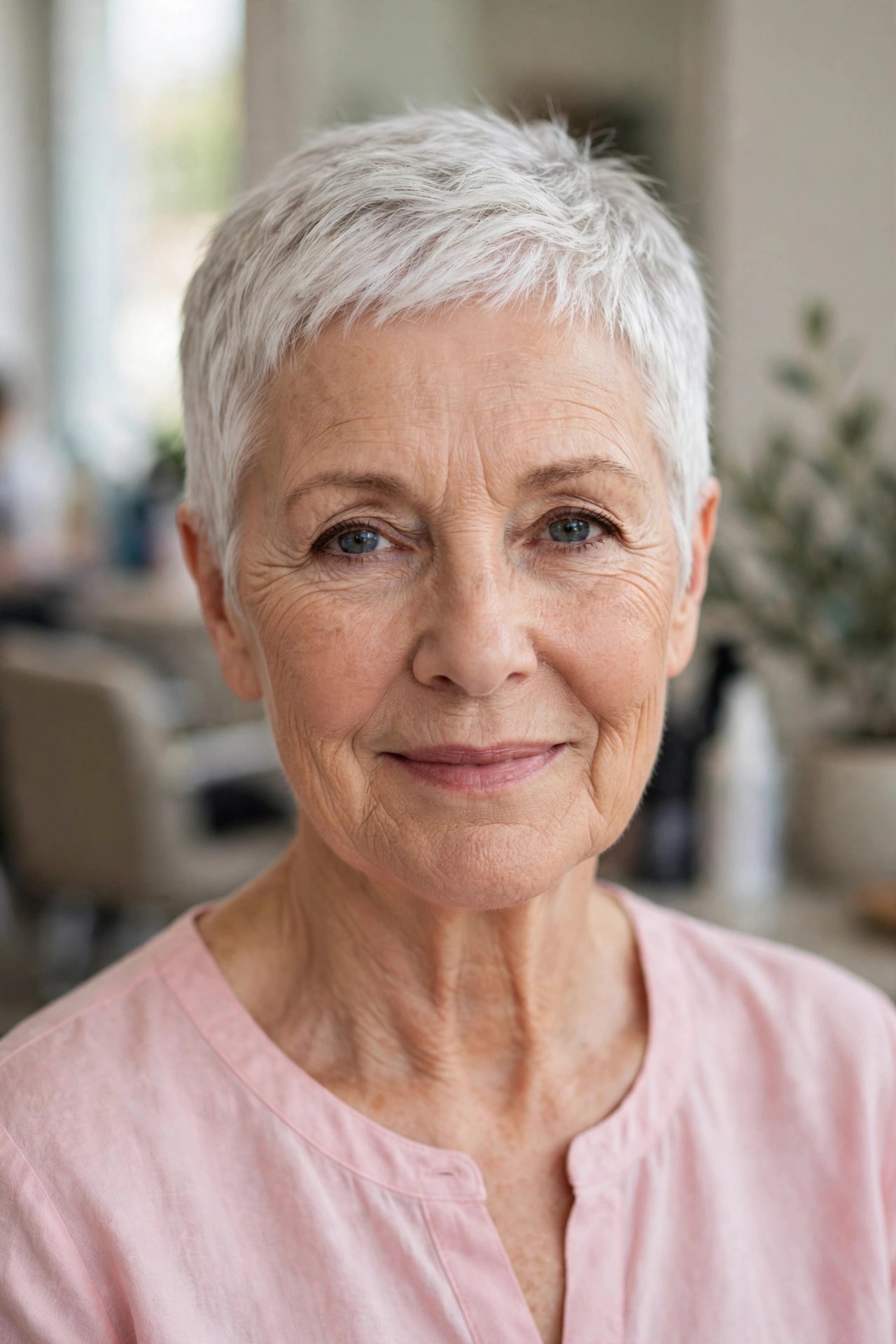
This is the honest haircut: short all over, shaped to your head and your growth patterns, needing nothing but washing and a towel. For women who have retired the dryer, travel often, swim, garden, or simply refuse to spend mornings on hair, a well-cut wash-and-go pixie is freedom — and it looks neat, not neglected, when the cut itself is precise.
The trade-off is the trim schedule: very short shapes show growth sooner, so plan on a tidy-up every four to five weeks. Between washes, dry shampoo keeps the roots fresh and stops fine short hair from lying too flat against the scalp.
25. Lifted-Fringe Pixie with Airy Volume
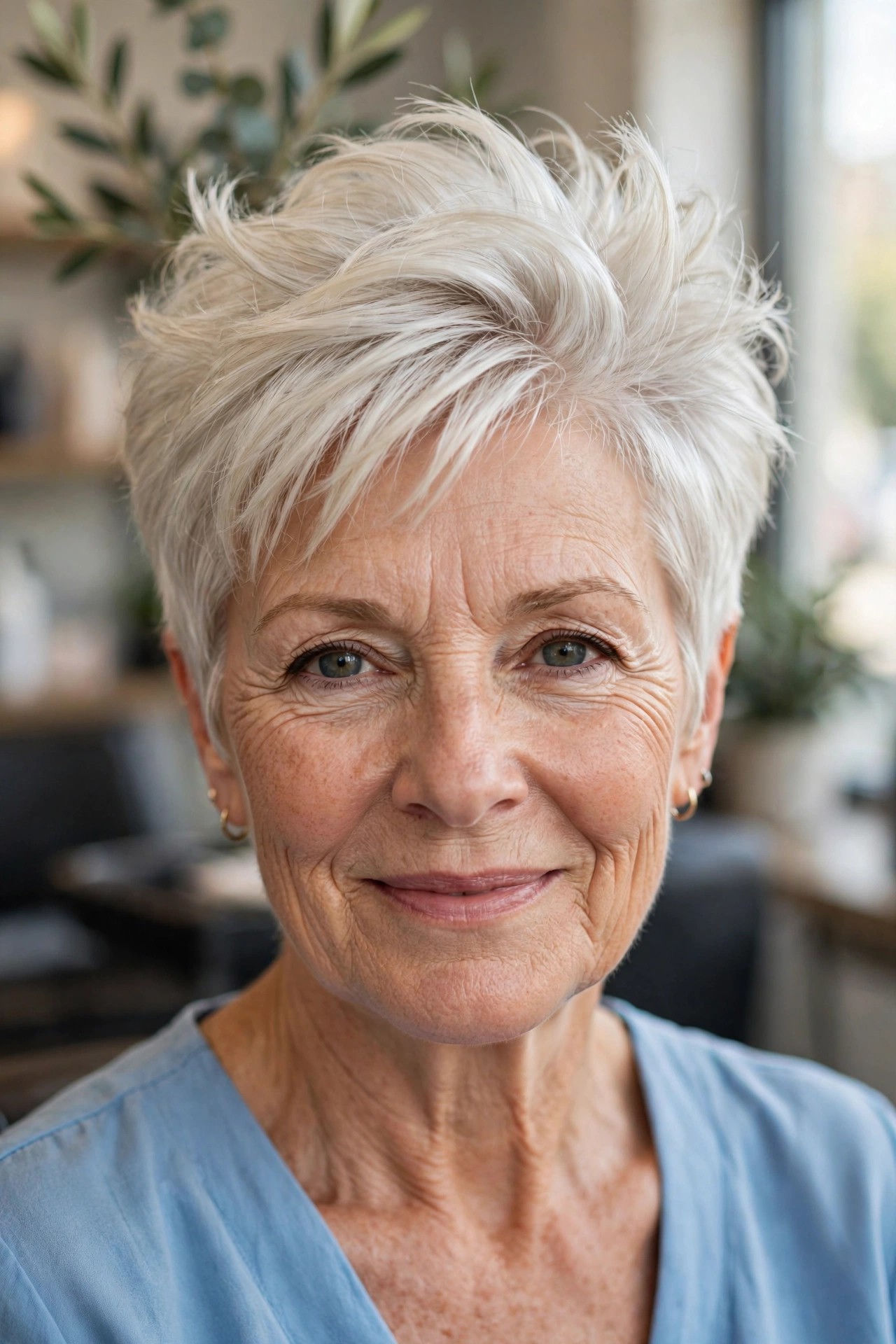
Finish the list with the most face-lifting trick in the book: a fringe brushed up and back, with airy volume through the front. Lifting hair off the forehead opens the whole face, shows your eyes, and creates that bright, awake look everyone describes as youthful — it is geometry, not magic.
Blow-dry the fringe forward first, then back — that double direction is what builds lasting lift at the root. Set it with a flexible hairspray while the hair is still warm from the dryer, and resist touching it for two minutes. Once it cools in place, this fringe holds its height remarkably well.
Recommended Products
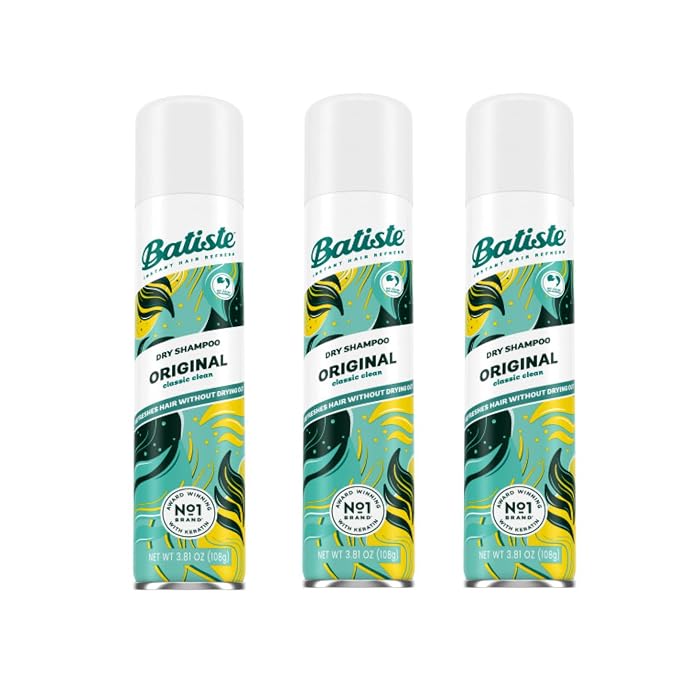
These are the five products that cover almost every pixie in this list: one great putty for definition, two mousses for lift, a purple shampoo to keep silver and platinum bright, and a flexible hairspray to hold it all without stiffness.
Pixie Care Tips That Make the Biggest Difference
- Trim on schedule: every 4–6 weeks keeps the shape — pixies show growth faster than any other cut.
- Product goes on fingers first: warm putty or cream until invisible, then touch the hair; this prevents white clumps in short hair.
- Roots get the mousse, ends get the putty: mixing up the order is why most pixies fall flat.
- Dry the fringe first: bangs set within the first minute of drying — style them before anything else.
- Refresh, don’t rewash: a mist of water plus a pinch of product revives day-two texture and saves fragile hair from overwashing.
- Protect silver and color: purple shampoo weekly for brightness, heat protectant before every hot tool.
Frequently Asked Questions
Will a pixie cut make me look older or younger?
A well-shaped pixie usually reads younger, because it lifts the visual weight of the face upward and shows the eyes and cheekbones. What can age a pixie is a flat, helmet-like finish — which is why almost every cut in this list uses texture, lift at the crown, or a swept fringe to keep movement in the style.
How often does a pixie need trimming?
Plan on every four to six weeks. Very short and tapered styles sit at the four-week end; pixie bobs and long pixies can stretch to six or even seven weeks because the extra length hides growth. Regular small trims are cheaper and easier than rescuing a fully grown-out shape.
What is the best pixie for fine or thinning hair over 50?
Textured, choppy and piecey pixies (ideas 1, 8, 21 and 22 in this list) work best, because broken, separated ends create the illusion of density. Keep the sides tidy, build volume only at the crown with mousse, and avoid heavy oils or creams that weigh fine hair down.
Can I wear a pixie if I wear glasses?
Absolutely — pixies and glasses suit each other, because short sides never catch in the hinges. Choose a sleek or side-swept style (idea 16 is made for frames), and bring your glasses to the appointment so your stylist can set the fringe and side length around them.
How do I style a pixie in five minutes?
On damp hair, work mousse through the roots, blow-dry while lifting with your fingers (fringe first), then pinch the ends with a fingertip of texturizing putty. That is the entire routine for most cuts here. Day two needs only a water mist, a re-pinch, and dry shampoo at the roots if hair looks flat.
Shorter hair is not about giving up on style — it is about choosing a cut that gives more than it takes. Pick the pixie above that made you pause, save the photo, and take it to a stylist who cuts a lot of short hair. Five-minute mornings and a fresher face are closer than you think.