18 Hairstyles for Women Over 70 With Thin Hair That Add Fullness
If your hair has grown finer over the years, you are not imagining it — after 70, strands often become thinner, softer, and slower to hold any style. The frustrating part is that the cuts you loved at 50 can suddenly make fine hair look flat and sparse.
The good news is that fullness is mostly a matter of shape, not quantity. The 18 hairstyles below use blunt ends, smart layering, and crown lift to make thin hair look noticeably fuller — while staying gentle on a tender scalp and easy on tired arms.
Table of Contents
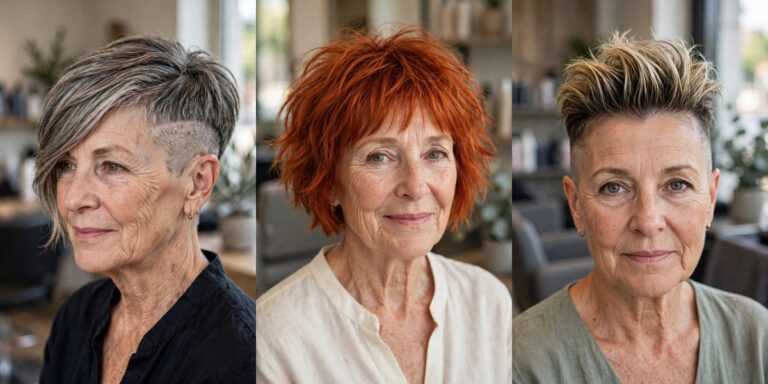
- Soft Tapered Pixie With a Full Crown
- Blunt Chin-Length Bob With Solid Ends
- Layered Pixie With a Lifted Crown
- Wispy Side-Swept Bangs With a Short Crop
- Textured Crop With Piecey Ends
- Ear-Length Pixie Bob (Bixie) With Volume on Top
- Stacked Bob With a Rounded Back
- Side-Parted Layered Bob With Root Lift
- Wispy Bangs Bob With Feathered Sides
- Rounded Bob With Full, Curved Ends
- Short Shag With Choppy Layers
- Feathered Shag With a Soft Fringe
- Asymmetrical Bob With a Longer Front
- Voluminous Blowout Bob With Bent Ends
- Short Layered Crop With a Fringe for Glasses
- Curly Pixie for Naturally Wavy Fine Hair
- Classic Pageboy-Inspired Bob With a Smooth Finish
- Long Pixie With a Sweeping Top
Why These Styles Work After 70
- Blunt, solid ends stop fine hair from looking wispy and see-through at the edges.
- Short layers through the crown stack together, creating height where thin hair usually collapses.
- Every style here can be styled in five minutes or less, with no heavy products or hard brushing.
💡 Not sure which of these cuts will suit your face? Try our free Face Shape Finder — answer a few quick questions and get hairstyles matched to your face shape.
1. Soft Tapered Pixie With a Full Crown
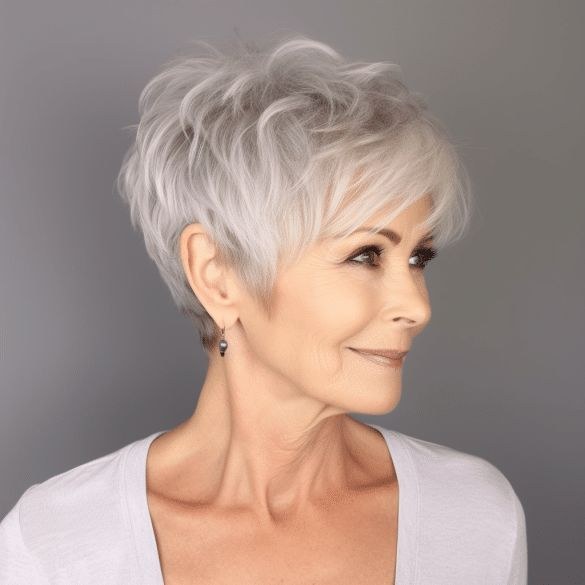
Image credit: Hairstyle (UNAT Amazonas)
This short pixie keeps the sides neat and tapered while leaving a little extra length through the top. On thin hair, that contrast is everything: the eye reads the fuller crown, not the finer sides.
After 70, a tapered shape also grows out gracefully, so you are not living at the salon. It frames the face softly and never drags fine strands down.
Styling tip: Dry the top forward with your fingers, then sweep it back — that double direction is a quiet volume trick.
2. Blunt Chin-Length Bob With Solid Ends
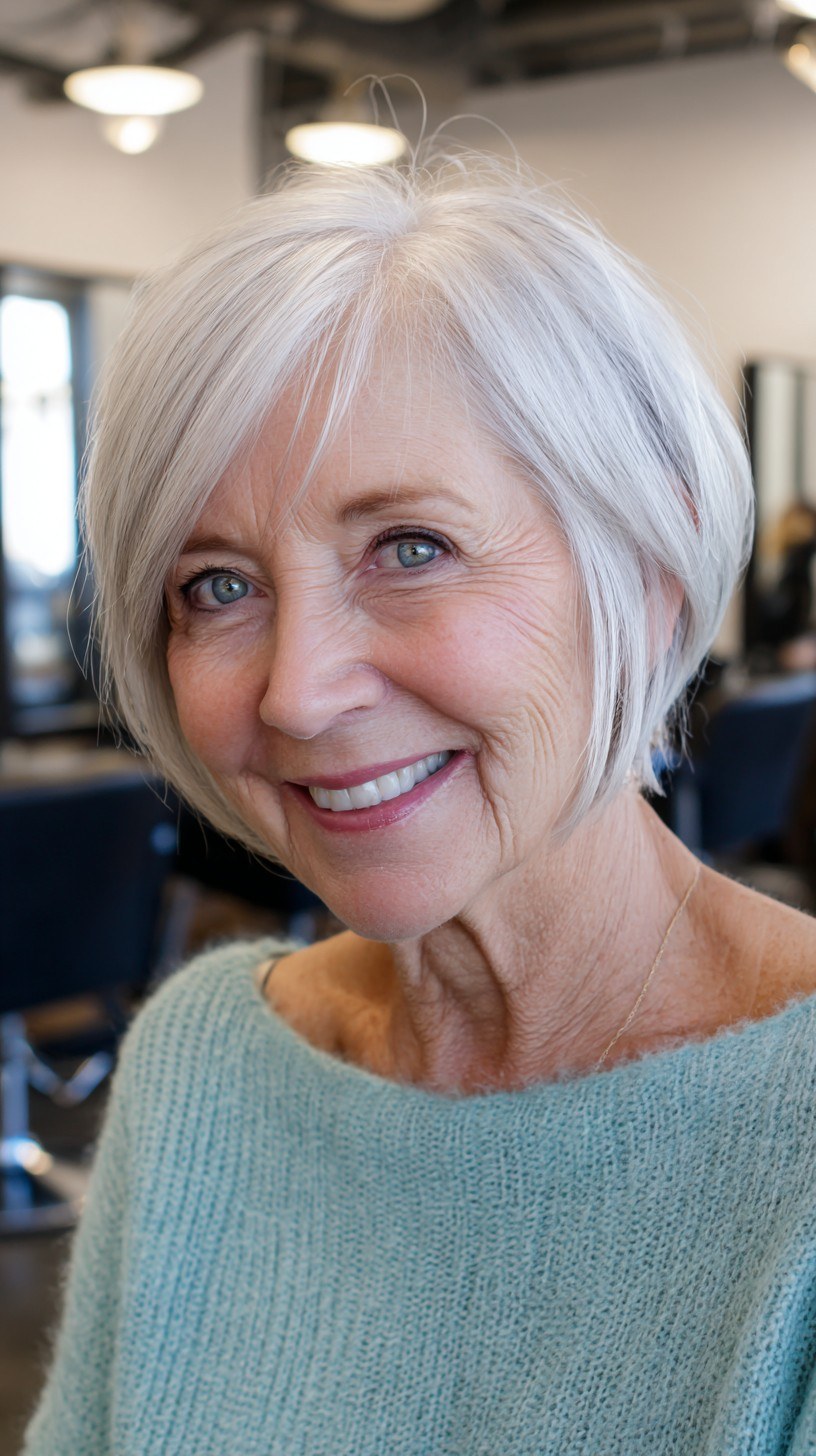
Image credit: Latest Hairstyles
A blunt bob cuts every strand to one strong line at the chin, and that solid edge instantly makes thin hair look denser. There are no wispy, see-through ends to give the game away.
At chin length the hair is still light enough to lift at the roots, which matters when strands are fine. It is a classic shape that suits nearly every face after 70.
Ask your stylist: Keep the perimeter blunt and skip heavy layering — even ends are the whole point here.
3. Layered Pixie With a Lifted Crown
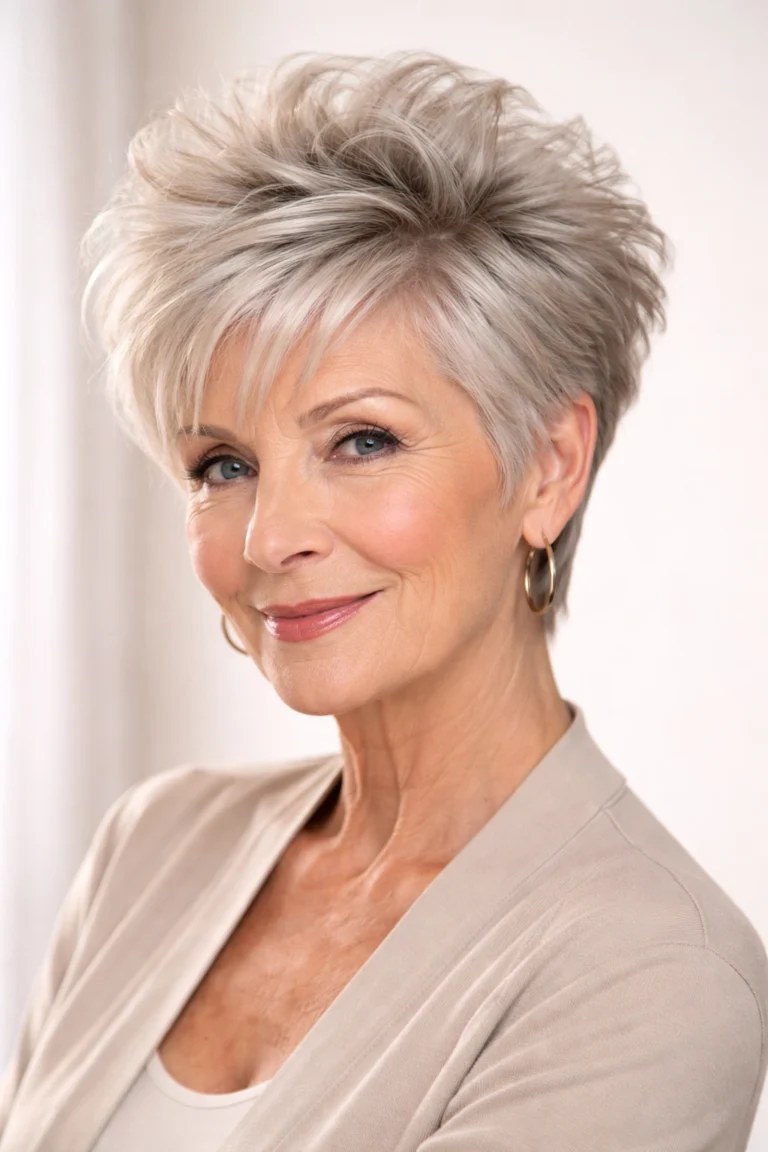
Image credit: Hairtical
Short, choppy layers through the crown stack on top of each other and create real height where thin hair usually collapses. The back sits close, so all the fullness lands up top.
This is a wonderful choice if your crown is your thinnest area. The layers also disguise scalp show-through far better than one flat length.
Best for: A thinning crown and anyone who wants height without teasing or backcombing.
4. Wispy Side-Swept Bangs With a Short Crop
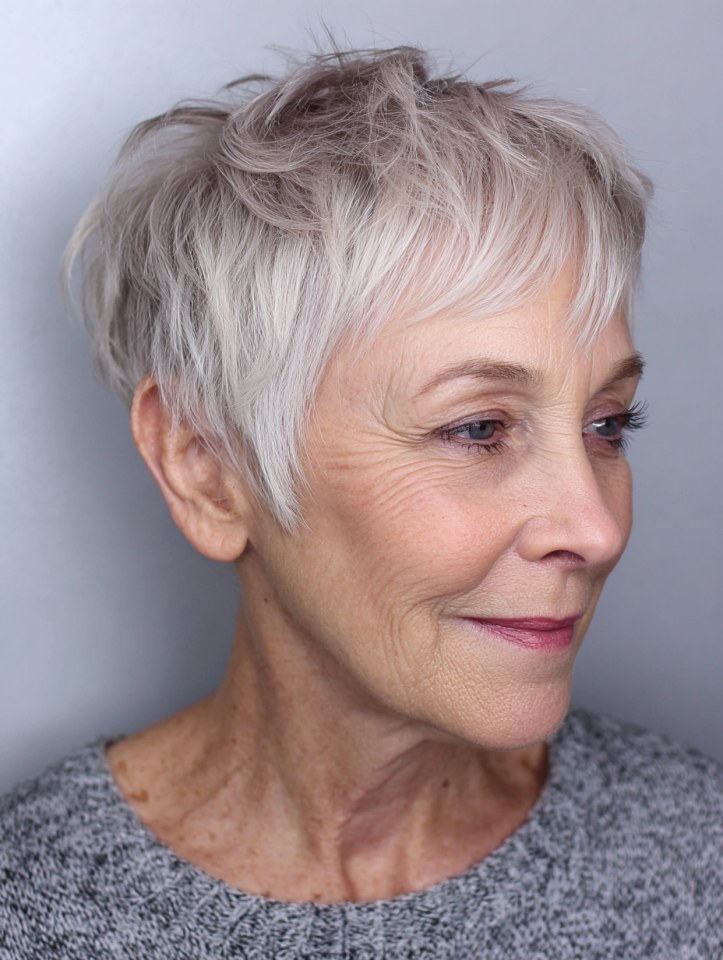
Image credit: Styles Crave
A soft, side-swept fringe drawn from a deep part brings extra hair across the forehead, which covers a sparse hairline beautifully. Paired with a short crop, the whole style reads light and fresh.
Side-swept bangs are kind to glasses wearers too, because they can be cut to sit just above the frames. They soften facial lines rather than highlighting them.
Keep it easy: A quick finger-comb and a dab of light cream are all this fringe needs in the morning.
5. Textured Crop With Piecey Ends
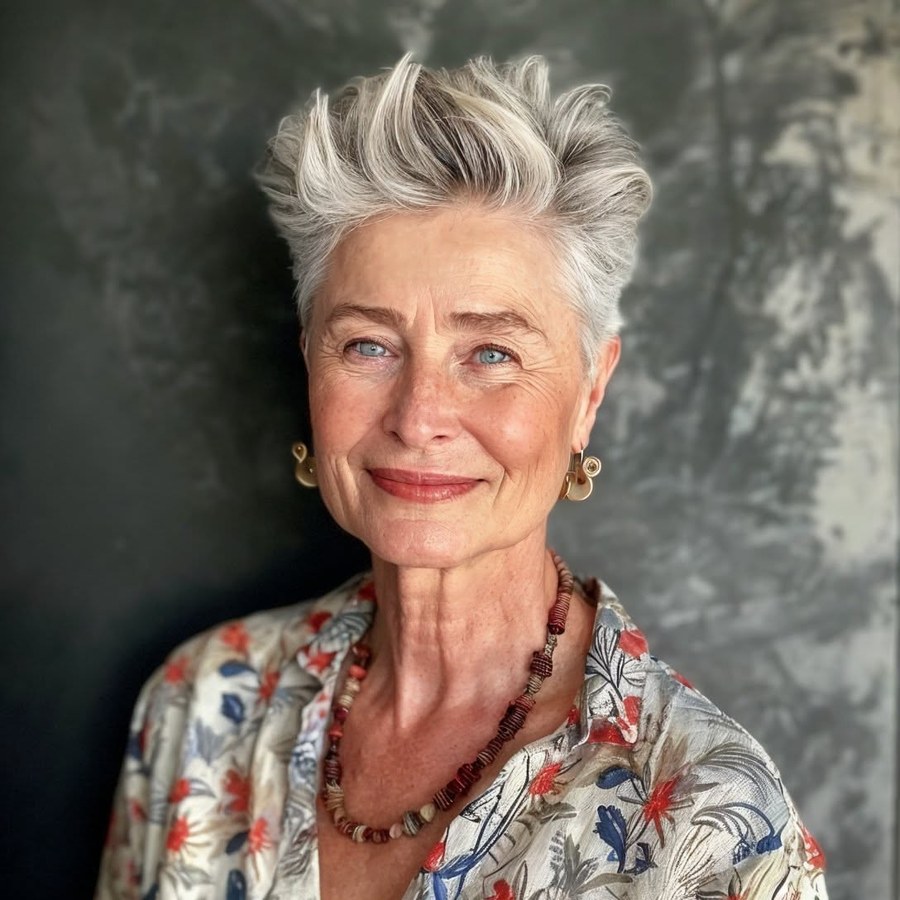
Image credit: Mavink
Point-cut, piecey ends break up the surface of thin hair so light catches it from many angles. That broken texture is what makes fine hair look like there is simply more of it.
The crop itself is cropped close at the nape, which keeps a tender neck comfortable and cool. It is modern without trying too hard — perfect for a confident over-70 look.
Styling tip: Rub a pea-size amount of matte paste between your palms and pinch the ends, never the roots.
6. Ear-Length Pixie Bob (Bixie) With Volume on Top
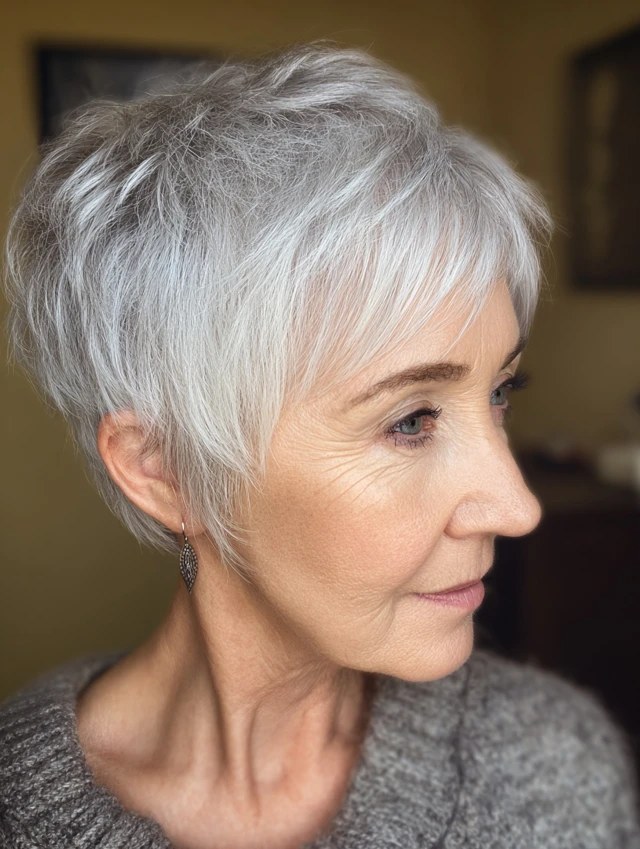
Image credit: Jawdrop Ink
Half pixie, half bob, the bixie keeps a little length around the ears while the top stays full and movable. That extra coverage around the sides is flattering when hair is finer at the temples.
Because the shape is soft rather than severe, it grows out kindly between appointments. It also tucks neatly behind the ears and sits well with hearing aids.
Ask your stylist: Leave the top layers long enough to sweep — movement is what sells the fullness.
7. Stacked Bob With a Rounded Back
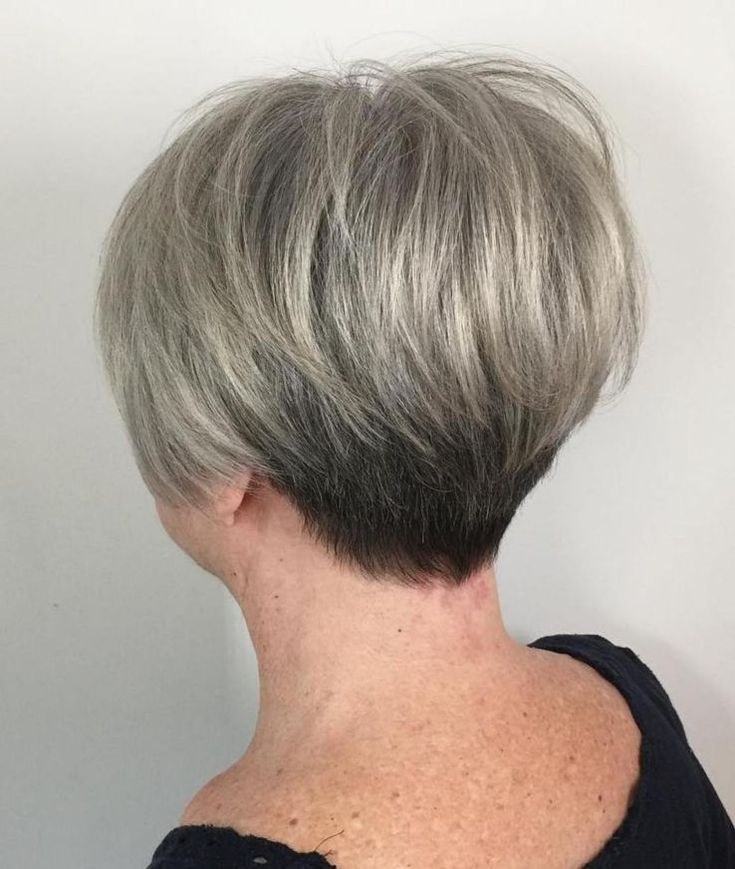
Image credit: Hairstyle (UNAT Amazonas)
Stacking builds graduated layers into the back of a bob, pushing the shape outward so hair looks rounded and abundant. From the front it stays sleek and simple.
For women whose hair is thinnest at the back and crown, this architecture does the heavy lifting for you. The front can stay one length for that dense, blunt finish.
Best for: Flat hair at the back of the head that refuses to hold any shape on its own.
8. Side-Parted Layered Bob With Root Lift
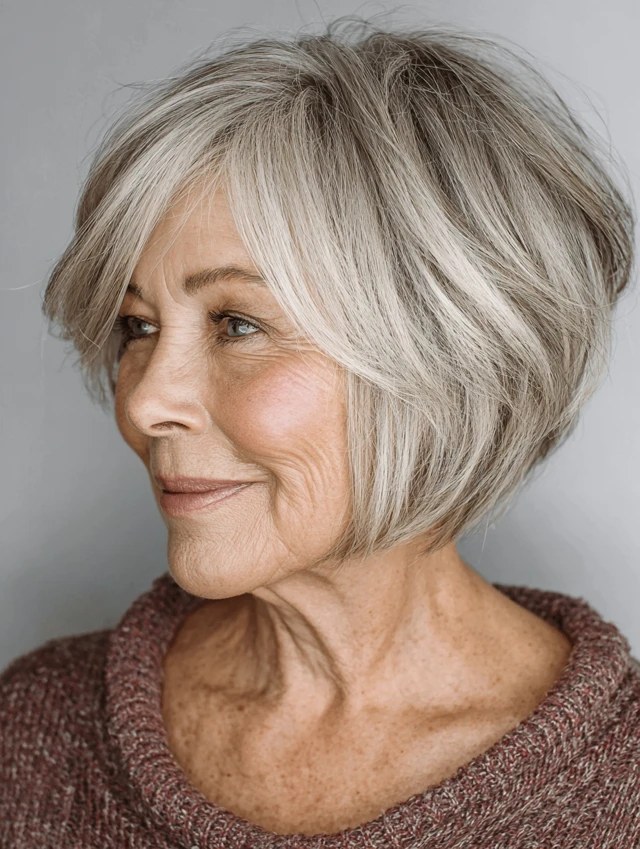
Image credit: Cleodiva
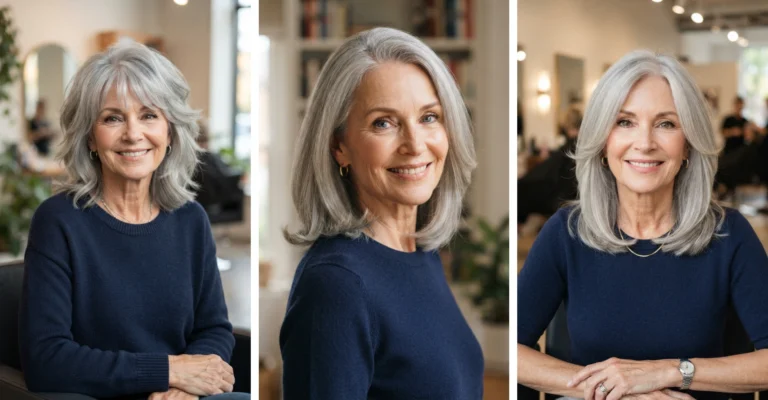
Moving your part to the side instantly lifts the roots on the fuller side and drapes hair across a thinning top. Gentle layers through the ends stop a fine bob from looking stringy.
This is one of the easiest fullness illusions there is — no new cut required if you already wear a bob. A deep side part also adds a touch of glamour to everyday hair.
Styling tip: Dry hair in the opposite direction to your part, then flip it over at the end for maximum lift.
9. Wispy Bangs Bob With Feathered Sides
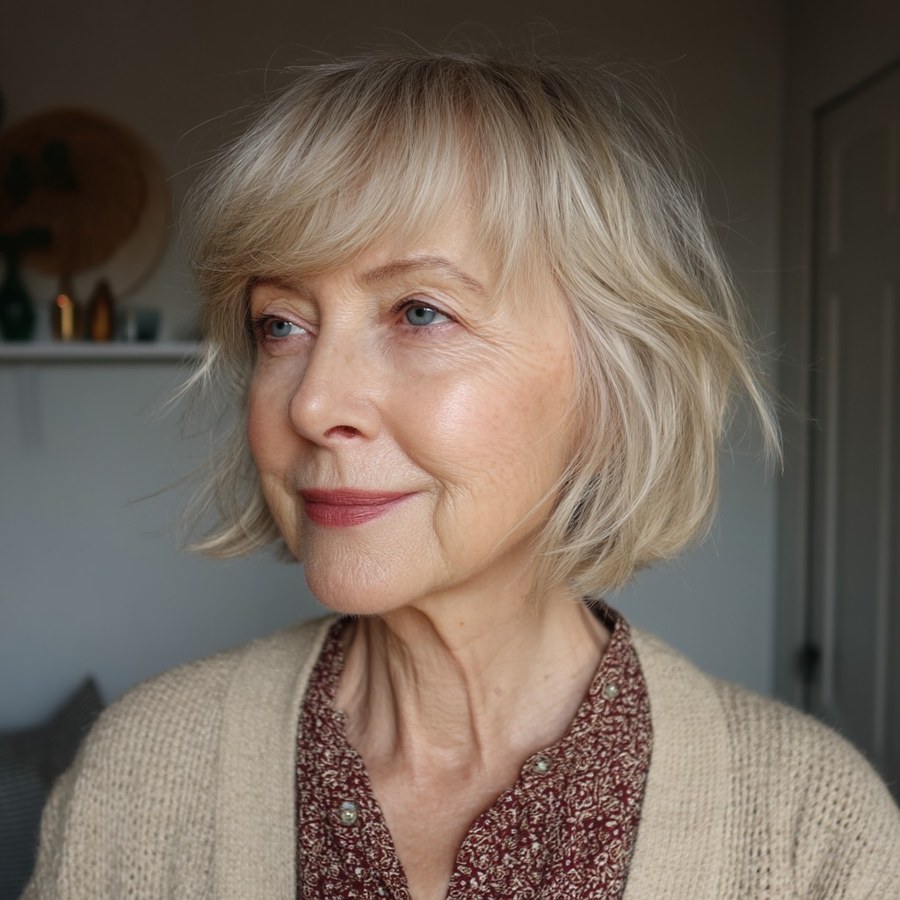
Image credit: Latest Hairstyles
Feathered sides curve gently toward the cheeks while a wispy fringe covers the hairline, and together they make fine hair look soft rather than sparse. Nothing is heavy or blunt, so strands are never weighed down.
This style is especially kind if your hairline has receded a little at the temples. The feathering draws the eye to your cheekbones instead.
Keep it easy: Feathered layers air-dry well — just smooth the fringe with a small brush while it is damp.
Fullness Checklist: 5 Habits That Make Thin Hair Look Thicker
- Keep ends blunt — ask for trims every 5–6 weeks so the outline stays solid.
- Dry the crown first and let it cool before touching it; cooled roots hold lift.
- Use mousse only at the roots, in a pea-size amount — more product means flatter hair.
- Change your part regularly so hair never learns to lie flat in one direction.
- Choose multi-tone color or bright silver — flat, single-tone shades show thinning more.
10. Rounded Bob With Full, Curved Ends
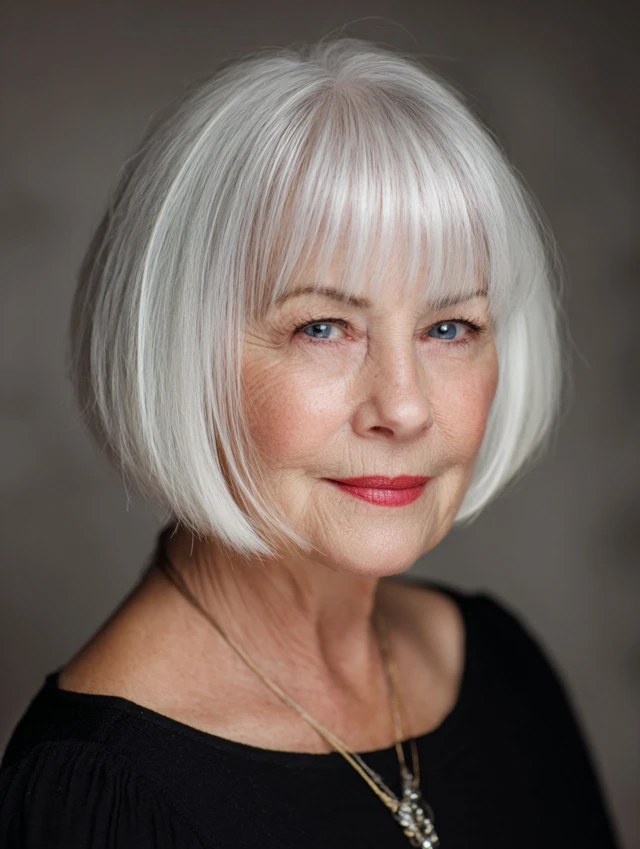
Image credit: Facialtasks
A rounded bob curves under at the ends, and that inward curve makes the bottom edge look thick and healthy. It is a polished, graceful shape that never goes out of style.
The curved silhouette also hides uneven density, because the eye follows the smooth outline. It works beautifully in silver and white, where shine makes the curve glow.
Ask your stylist: Ask for the ends to be undercut very slightly so they turn in without thinning them out.
11. Short Shag With Choppy Layers
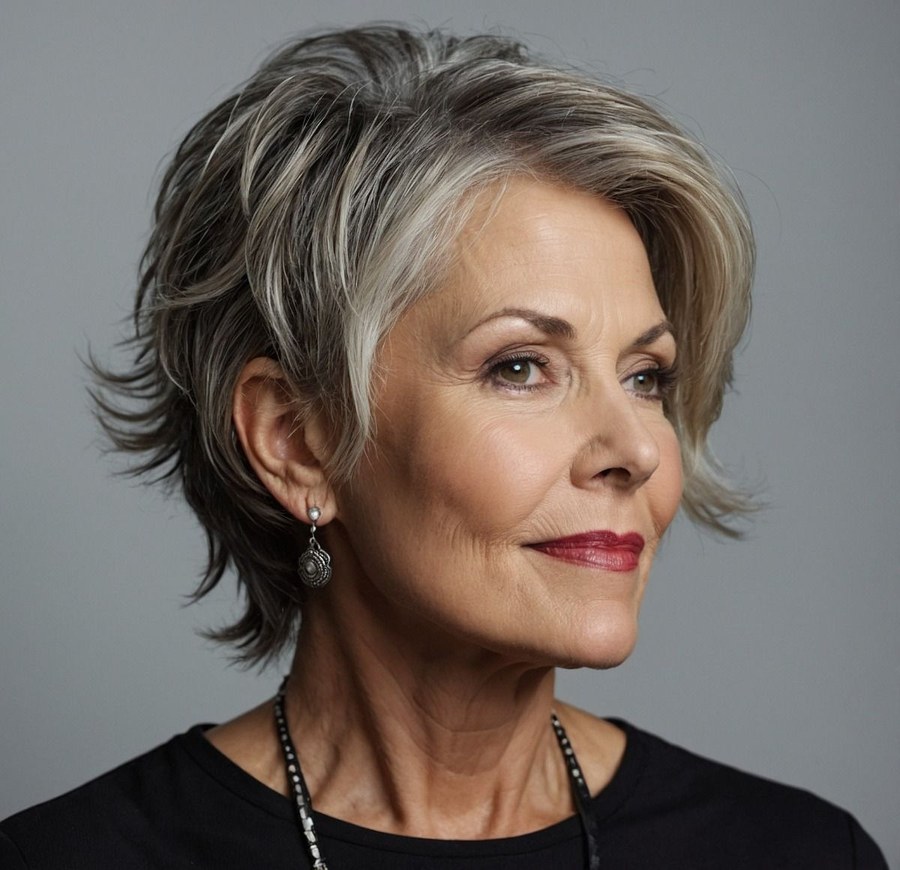
Image credit: Artofit
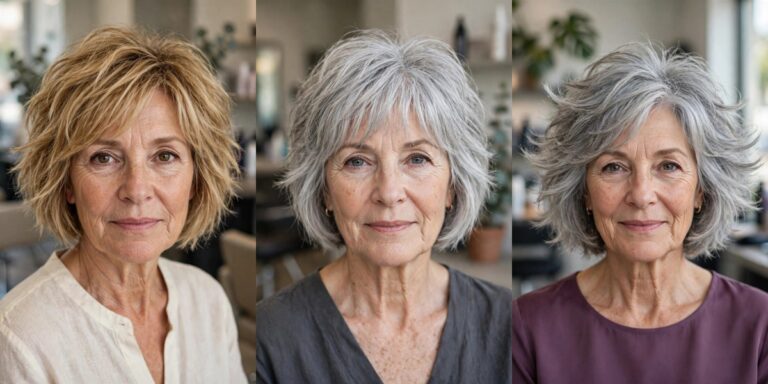
A modern short shag layers the crown and sides in choppy pieces, and all that movement is a gift for thin hair. Flat, separated strands are replaced by texture that looks intentionally full.
The shag is famously forgiving as it grows, which suits anyone stretching salon visits a little longer. It also has a youthful energy that feels fresh, never costume-like.
Styling tip: Scrunch damp hair with a little mousse and let it air-dry — the shag loves to be left alone.
12. Feathered Shag With a Soft Fringe
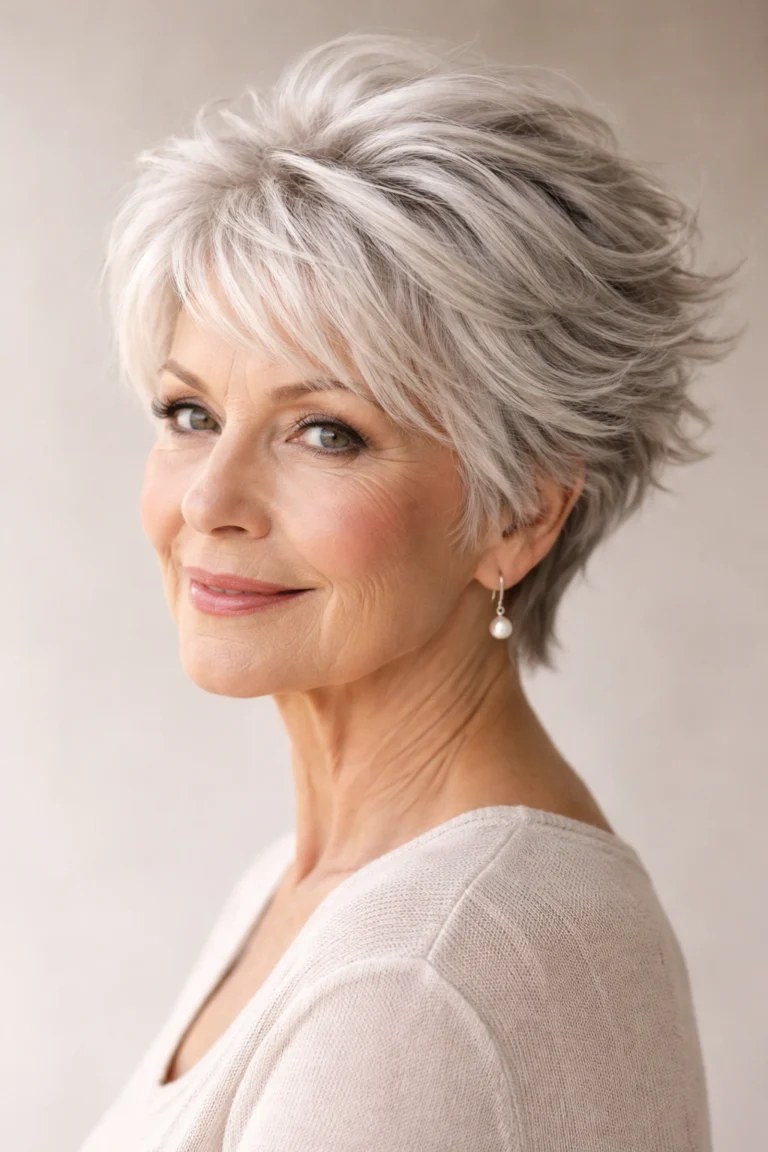
Image credit: Hairtical
Feathering flicks layers away from the face, lifting fine hair off the cheeks and creating a halo of movement. With a soft fringe on top, coverage at the hairline is built right in.
This is a lovely option if your hair has a slight natural wave, because feathers follow that bend. On straight fine hair, a large roller for ten minutes gives the same flick.
Best for: Fine hair with a little natural wave, and faces that suit softness around the edges.
13. Asymmetrical Bob With a Longer Front
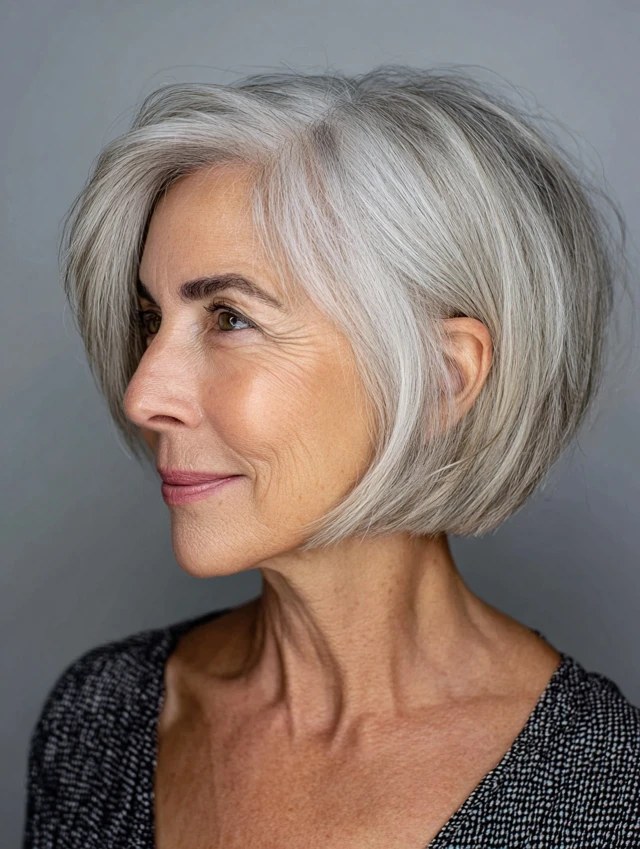
Image credit: For Hairstyles Inspo
One side worn a touch longer than the other gives a fine bob instant interest and the impression of weight where the longer pieces fall. Asymmetry also lets you keep your fuller side working harder.
If one side of your hair is thinner — very common after 70 — your stylist can balance the cut to suit. The diagonal line across the face is slimming and modern.
Ask your stylist: Keep the shorter side above the jaw so glasses arms and earrings stay comfortable.
14. Voluminous Blowout Bob With Bent Ends
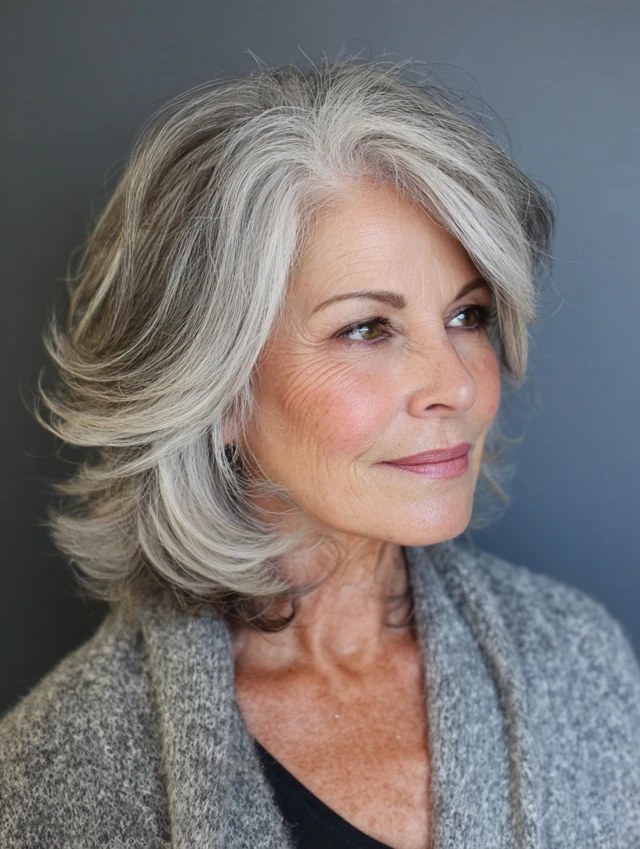
Image credit: For Hairstyles Inspo
A chin-length bob dried with a round brush and bent softly at the ends looks dramatically fuller than the same hair dried flat. The bend traps air between strands, which is real, visible volume.
You do not need strong arms for this: a lightweight hot-air brush does the lifting and turning in one tool. The finish lasts two or three days on fine hair with a little dry shampoo at the roots.
Styling tip: Let each section cool on the brush for a few seconds — cooled hair holds its bend far longer.
15. Short Layered Crop With a Fringe for Glasses
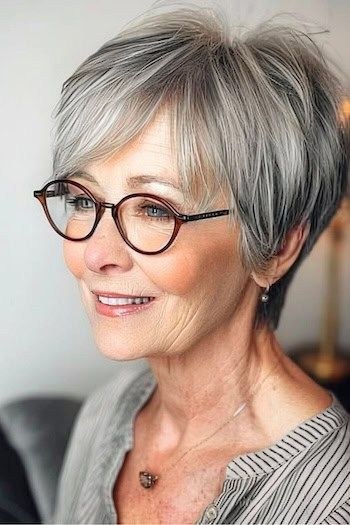
Image credit: Shapes
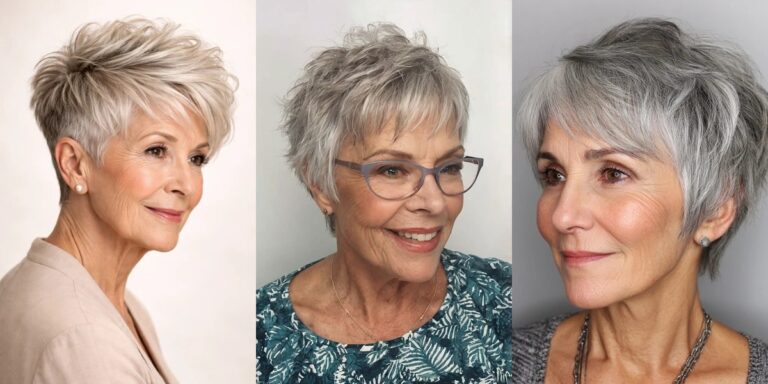
Cut to sit cleanly above the ears and frames, this layered crop keeps bulk away from glasses arms while a short fringe adds coverage at the front. The crown layers keep the top from lying flat.
Anyone who wears glasses all day knows the annoyance of hair caught under frames — this cut ends that. It is tidy, bright, and very easy to wash and wear.
Keep it easy: Tell your stylist you wear glasses daily, and bring them to the appointment so the sides are cut around them.
16. Curly Pixie for Naturally Wavy Fine Hair
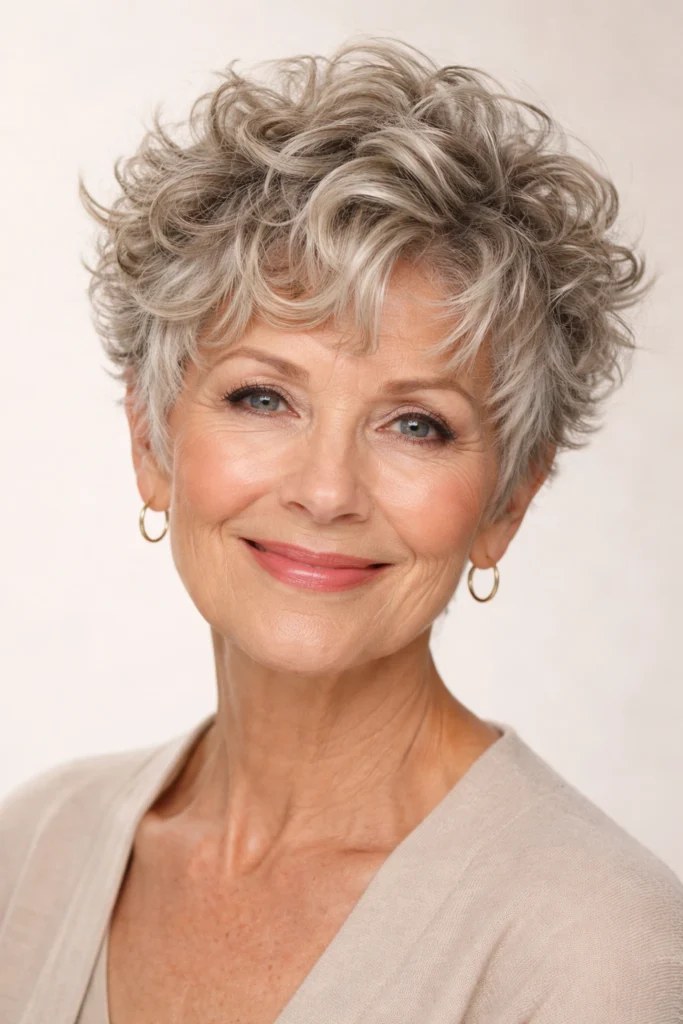
Image credit: Hairtical
If your fine hair has any curl left in it, a short curly pixie lets each curl spring up and take up space — and curls always look fuller than straight strands of the same thickness.
Keeping the sides shorter while the top curls stay longer stops fine curls from going wispy at the edges. A little curl cream scrunched in while damp is the entire routine.
Best for: Fine hair with natural wave or curl that goes flat when it grows past the ears.
17. Classic Pageboy-Inspired Bob With a Smooth Finish
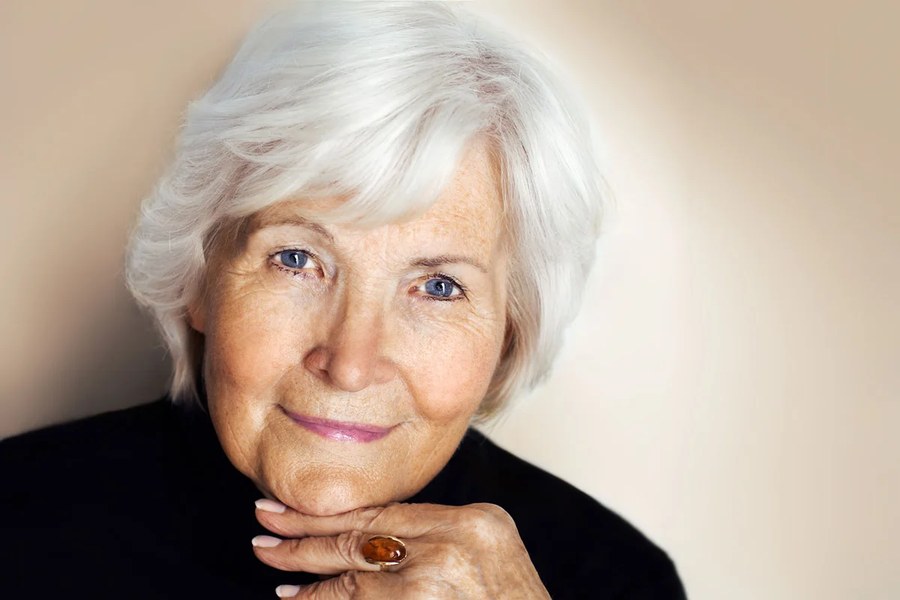
Image credit: Lovetoknow
The pageboy’s smooth, curved-under shape and full fringe create a solid curtain of hair that reads thick from every angle. Modern versions are softer and lighter than the retro original.
Because the fringe is cut across, it is brilliant coverage for a high or thinning forehead. The smooth finish also shows off silver tones beautifully.
Ask your stylist: Keep the fringe textured at the very ends so it looks soft, not helmet-like, on fine hair.
18. Long Pixie With a Sweeping Top
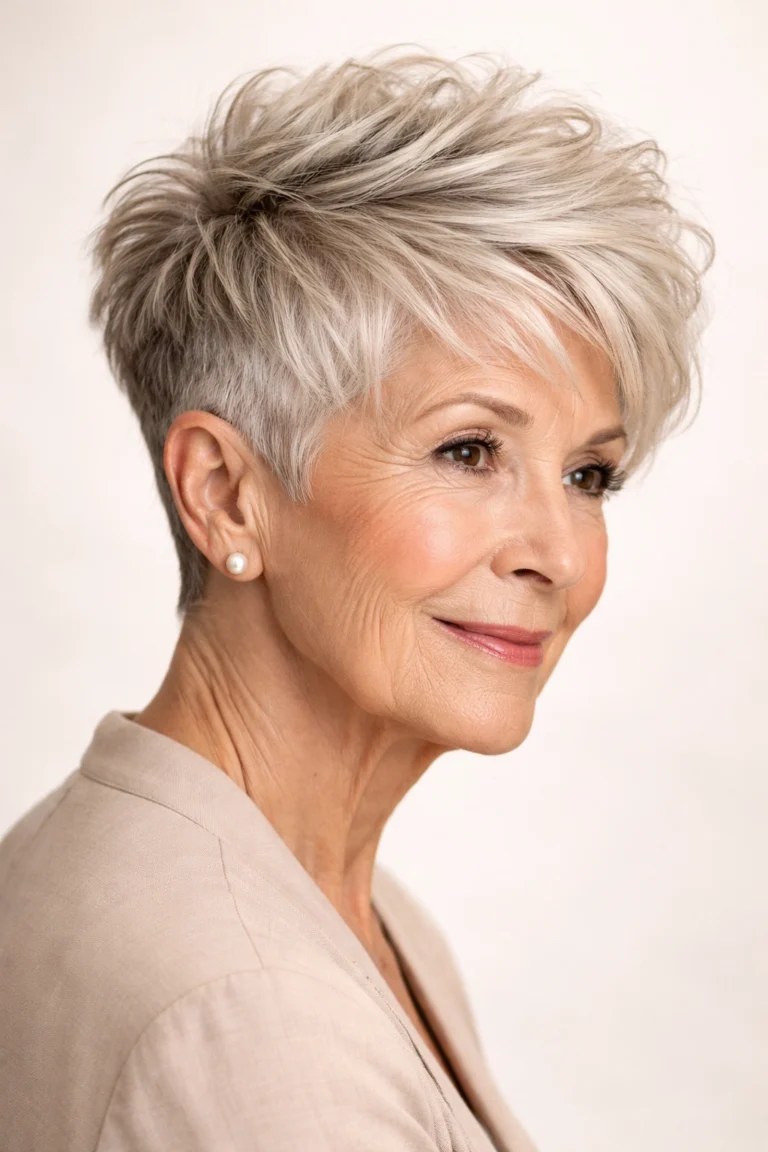
Image credit: Hairtical
A long pixie leaves three to four inches on top that can be swept to whichever side is fuller, giving you daily control over coverage. The tapered sides keep it neat and lift the whole profile.
This is the most versatile cut on this list: sweep it smooth for lunch out, or tousle it for a softer everyday look. It also bridges the gap if you are growing out a shorter pixie.
Styling tip: Change your part every few days — hair trained in one direction lies flatter and shows more scalp.
Keeping Thin Hair Healthy After 70
Thin hair at 70-plus is often drier as well as finer, so wash gently two or three times a week and always use a light conditioner on the ends only — never at the roots, where it weighs fine hair down. A wide-tooth comb on wet hair and a soft brush on dry hair will protect fragile strands far better than fine combs or hard bristles.
If scalp coverage is your main worry, read our guide to haircuts for very fine hair that hide scalp show-through, and if the crown is the problem area, see these volumizing hairstyles for a thinning crown. For more inspiration at a slightly younger angle, our readers also love these hairstyles for women over 60 with thin fine hair. You can also explore all of our free beauty tools on the tools page, including the hair growth calculator.
Frequently Asked Questions
What is the best haircut for thin hair over 70?
Short, layered pixies and blunt chin-length bobs are usually the most flattering. Short layers build crown height, while blunt ends make the outline look dense. Avoid long one-length styles, which pull fine hair down and expose thinning.
Does shorter hair really make thin hair look fuller?
Yes, in most cases. Shorter hair weighs less, so the roots can lift, and the ends stay thick enough to look solid. Once fine hair passes the shoulders, the ends often become wispy and see-through.
How can I add volume to thin hair without heavy products?
Dry the crown first while lifting with your fingers, let it cool completely, and flip your part to the opposite side. Two large velcro rollers at the crown for 15 minutes add lift with no product at all.
How often should women over 70 with thin hair get a trim?
Every five to six weeks is ideal. Fine hair shows straggly ends quickly, and a small trim keeps the blunt, full-looking outline that makes thin hair appear thicker.
Can I still wear bangs with thin hair after 70?
Absolutely — a wispy or side-swept fringe is one of the best tricks for covering a sparse hairline. Keep the fringe textured rather than heavy, and sweep it toward your thinner side.