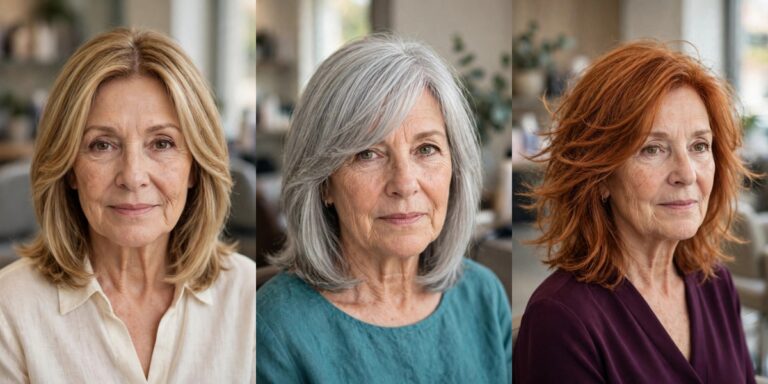
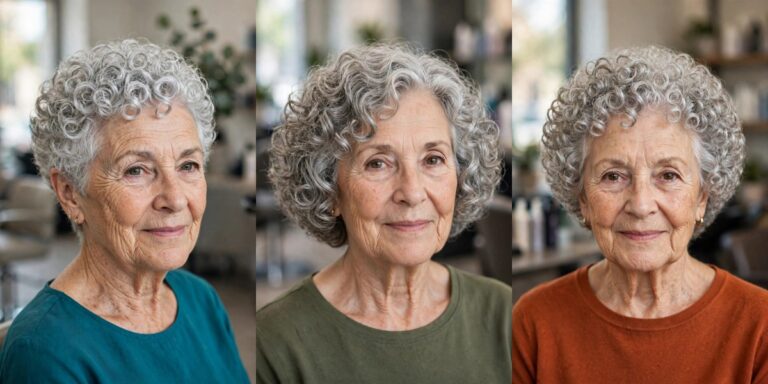
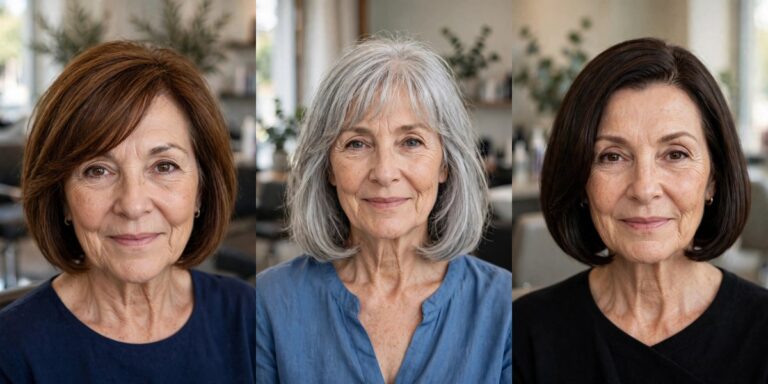
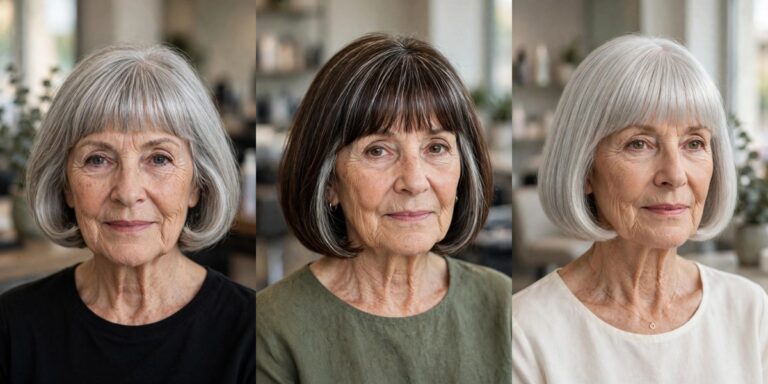
27 Should Women Over 70 Go Gray? Color vs Silver Ideas
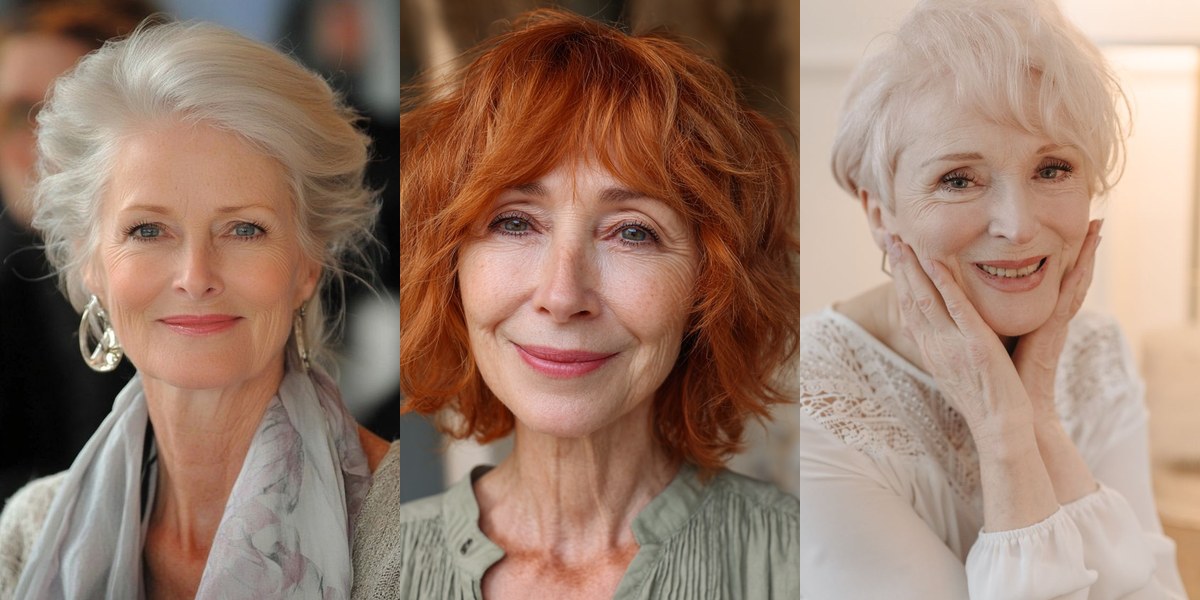
It is the question almost every woman over 70 asks her mirror eventually: should I stop colouring and let the silver come through — or is my colour still one of the pleasures that makes me feel like me? There is no correct answer. There is only your answer.
So this gallery refuses to take sides. Silver looks and coloured looks alternate below, each labelled honestly, so you can compare them with fresh eyes. If the silver side wins you over but you want depth, see our lowlights for gray hair; if colour still calls, our best hair colors for women over 70 will help you choose well.
Table of Contents
- Going Gray: A Sculpted White Updo Full of Grace
- Keeping Colour: Vibrant Copper Waves With Shine
- Going Gray: A Soft White Pixie That Needs Nothing
- Keeping Colour: A Pearl Blonde Bob, Polished and Bright
- Going Gray: White Curls and Glasses, Beautifully Easy
- Keeping Colour: Joyful Red Curls With Real Bounce
- Going Gray: A Platinum Pageboy Worn With a Smile
- Keeping Colour: A Fiery Red Afro Full of Personality
- Going Gray: A Snow-White Bob, Simple and Serene
- Keeping Colour: An Apricot Updo for Special Days
- Going Gray: A Cloud-Soft White Bob
- Keeping Colour: A Golden Pixie in Profile
- Going Gray: A Pure White Bob With a Gentle Fringe
- Keeping Colour: Golden Waves With Sunlit Ends
- Going Gray: Silver Swept Back, Calm and Confident
- Keeping Colour: Champagne Waves With a Deep Side Part
- Going Gray: A White Pixie in Profile, Neat as a Pin
- Keeping Colour: A Sandy Pixie With Lift at the Crown
- Going Gray: A Bright White Bob That Glows
- Keeping Colour: Strawberry Blonde Waves With Glasses
- Going Gray: A Snowy Pixie and a Cashmere Scarf
- Keeping Colour: Creamy Curls With Honey Lights
- Going Gray: Long Silver Hair, Proud and Free
- Keeping Colour: Ash Blonde Layers That Frame the Face
- Going Gray: Wild White Waves, Completely Yourself
- Keeping Colour: A Cream Blonde Crop That Smiles Back
- Going Gray: Long Silver Waves and a Great Laugh
How to Think About the Decision After 70
- Time and comfort: colour means appointments every few weeks; silver means freedom from the chair — but a transition period of patience.
- Hair condition: fragile, thinning hair often thrives when dye stops; strong hair may carry colour happily for years.
- Identity matters most: the right choice is the one where the woman in the mirror still feels like you.
Still torn? Take this honest five-question decision quiz before the gallery — then browse both sides and notice which photos make you smile. Our face shape finder can help with the cut, whichever colour path you choose.
💡 The shades that glow on you depend on your undertone. Our Undertone Finder works yours out and matches colours to it.
1. Going Gray: A Sculpted White Updo Full of Grace
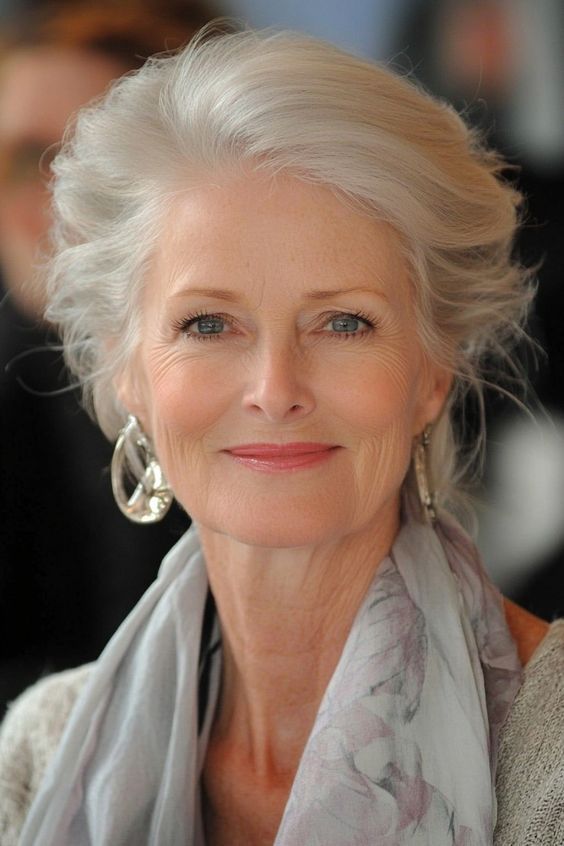
This is the silver path, worn with complete confidence: natural white and gray hair, beautifully cut and conditioned, with natural dimension in the gray itself placed where light naturally falls. No appointments, no roots, no apology.
Why it works after 70: it brightens the skin the way good lighting does — gently, without a flat block of dye. Freed from dye, hair often feels thicker and grows in with a texture that suits this chapter of life.
Keep it easy: Ask for demi-permanent colour if your scalp is sensitive — it fades softly and is kinder to fine hair.
2. Keeping Colour: Vibrant Copper Waves With Shine

Image credit: Latest Hairstyles
This is the colour path, done well: softer tones around the face with depth kept behind, chosen to suit the woman wearing it now — not a shade she wore at forty, but its wiser, softer sister.
Why it works after 70: the face gets the glow while the depth keeps the colour looking natural, never painted on. If colour still makes you feel like yourself, that feeling is reason enough to keep it.
Styling tip: Take this photo to your appointment and point to the tones you love, not just the cut.
3. Going Gray: A Soft White Pixie That Needs Nothing
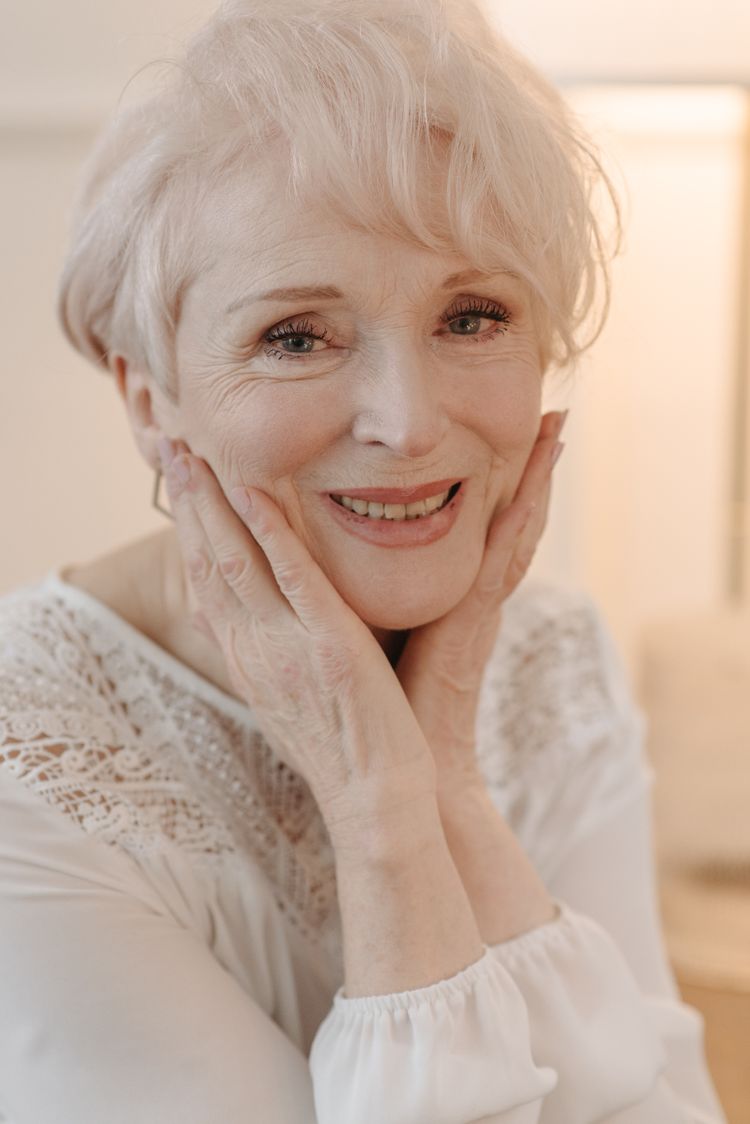
Image credit: Favipic
This is the silver path, worn with complete confidence: natural white and gray hair, beautifully cut and conditioned, with a shade only one or two levels from your own. No appointments, no roots, no apology.
Why it works after 70: regrowth stays forgiving, which matters when salon trips need to stretch a little longer. Freed from dye, hair often feels thicker and grows in with a texture that suits this chapter of life.
Ask your stylist: Book a gloss refresh between full colour visits; it takes twenty minutes and revives the shine.
4. Keeping Colour: A Pearl Blonde Bob, Polished and Bright
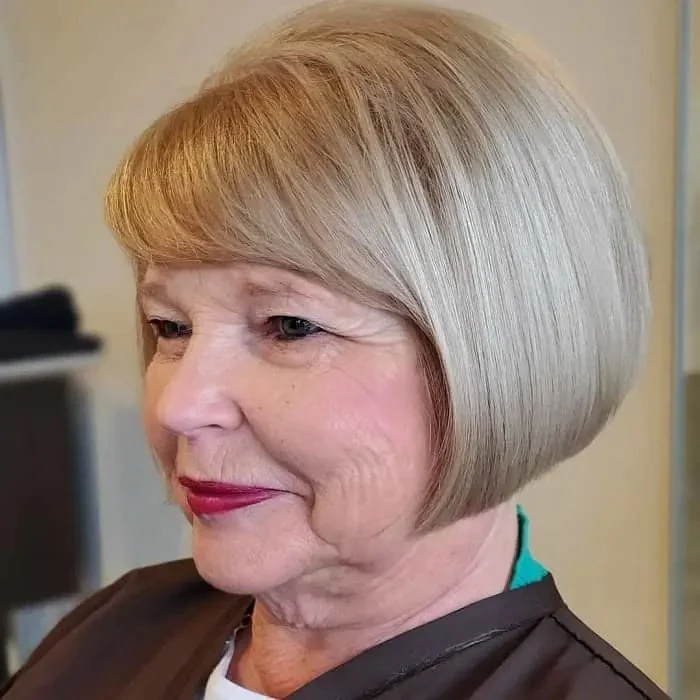
Image credit: Fabbon
This is the colour path, done well: shine built into the colour, not added afterwards, chosen to suit the woman wearing it now — not a shade she wore at forty, but its wiser, softer sister.
Why it works after 70: mature hair can look matte; dimensional colour brings back the light that makes hair look healthy. If colour still makes you feel like yourself, that feeling is reason enough to keep it.
Best for: If your arms tire at home, salon colour is worth it — box dye on a tender scalp rarely ends well.
5. Going Gray: White Curls and Glasses, Beautifully Easy
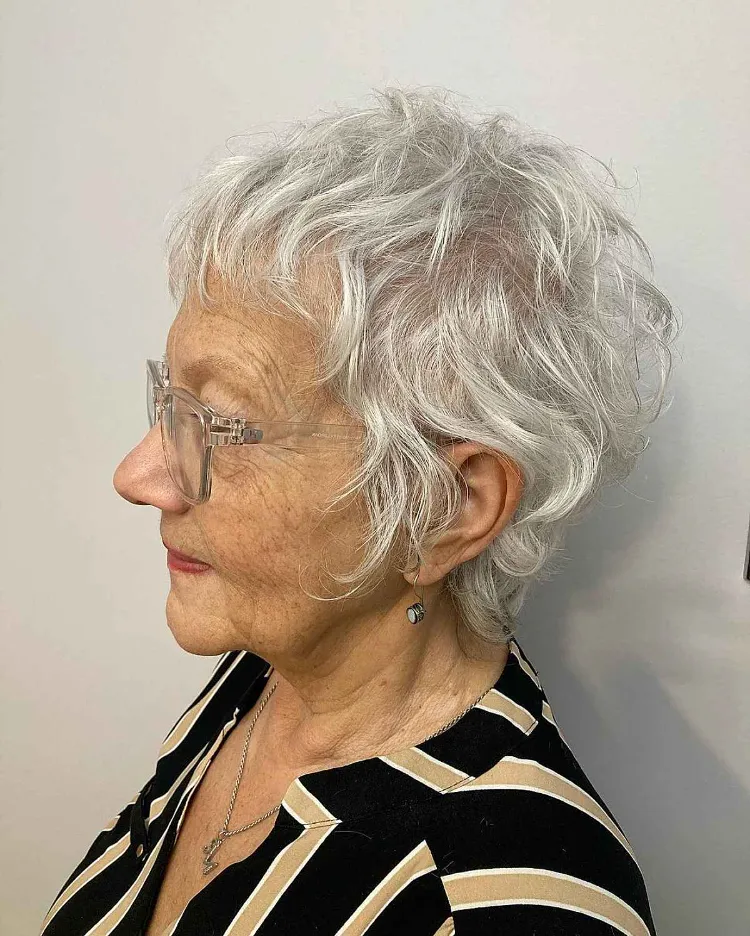
Image credit: Deavita
This is the silver path, worn with complete confidence: natural white and gray hair, beautifully cut and conditioned, with warmth balanced against your skin, never against a trend. No appointments, no roots, no apology.
Why it works after 70: it flatters the complexion you have now, at seventy-plus, rather than the one in an old photograph. Freed from dye, hair often feels thicker and grows in with a texture that suits this chapter of life.
Keep it easy: A colour-safe, sulfate-free shampoo twice a week keeps rich tones from fading brassy.
6. Keeping Colour: Joyful Red Curls With Real Bounce
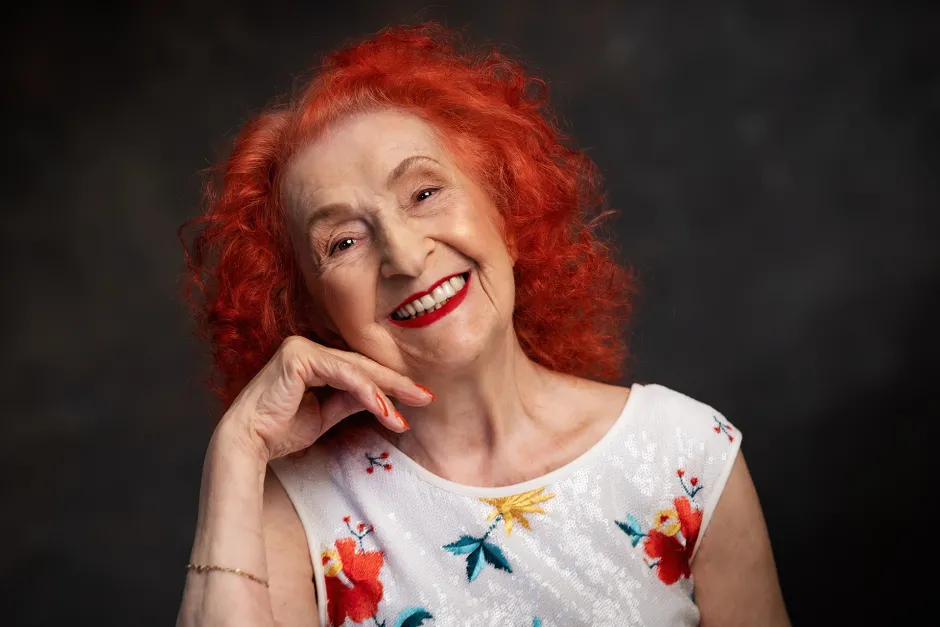
Image credit: Bweb
This is the colour path, done well: colour that respects finer, drier texture, chosen to suit the woman wearing it now — not a shade she wore at forty, but its wiser, softer sister.
Why it works after 70: gentle formulas and shorter processing keep fragile strands glossy instead of frazzled. If colour still makes you feel like yourself, that feeling is reason enough to keep it.
Styling tip: Ask your stylist to keep the front pieces a touch lighter — it lifts the whole face.
7. Going Gray: A Platinum Pageboy Worn With a Smile
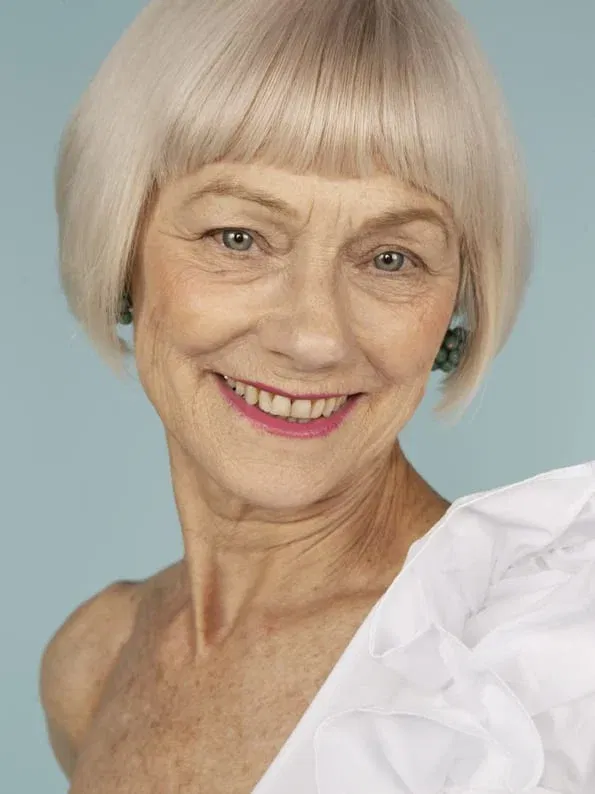
Image credit: Andbloom
This is the silver path, worn with complete confidence: natural white and gray hair, beautifully cut and conditioned, with natural dimension in the gray itself placed where light naturally falls. No appointments, no roots, no apology.
Why it works after 70: it brightens the skin the way good lighting does — gently, without a flat block of dye. Freed from dye, hair often feels thicker and grows in with a texture that suits this chapter of life.
Ask your stylist: Ask for demi-permanent colour if your scalp is sensitive — it fades softly and is kinder to fine hair.
8. Keeping Colour: A Fiery Red Afro Full of Personality
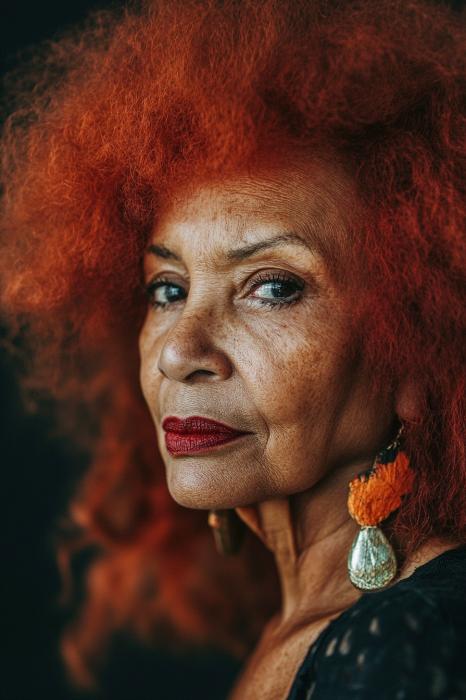
Image credit: Projecthairstyles
This is the colour path, done well: softer tones around the face with depth kept behind, chosen to suit the woman wearing it now — not a shade she wore at forty, but its wiser, softer sister.
Why it works after 70: the face gets the glow while the depth keeps the colour looking natural, never painted on. If colour still makes you feel like yourself, that feeling is reason enough to keep it.
Best for: Take this photo to your appointment and point to the tones you love, not just the cut.
9. Going Gray: A Snow-White Bob, Simple and Serene
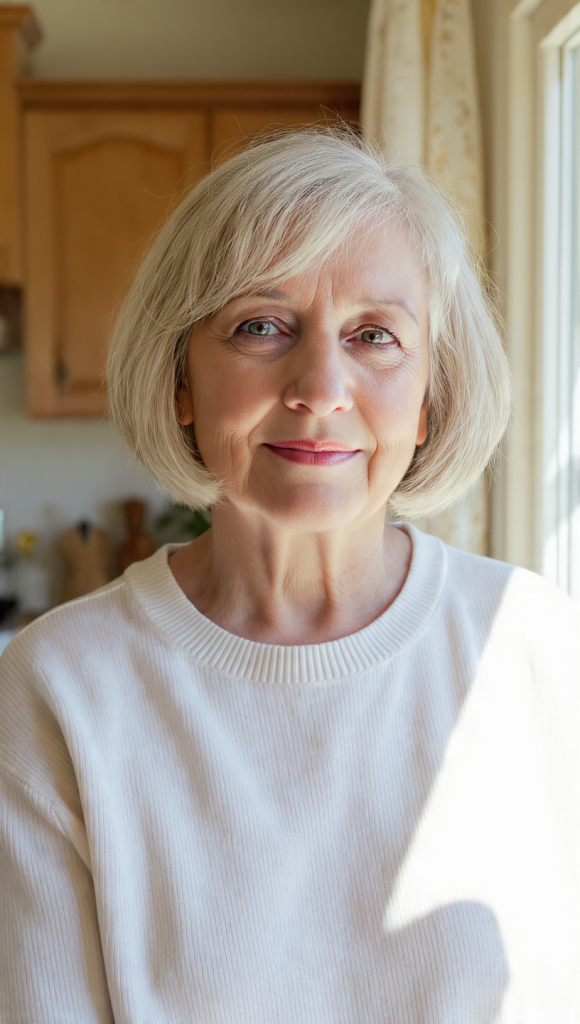
Image credit: Hairdo Lab
This is the silver path, worn with complete confidence: natural white and gray hair, beautifully cut and conditioned, with a shade only one or two levels from your own. No appointments, no roots, no apology.
Why it works after 70: regrowth stays forgiving, which matters when salon trips need to stretch a little longer. Freed from dye, hair often feels thicker and grows in with a texture that suits this chapter of life.
Keep it easy: Book a gloss refresh between full colour visits; it takes twenty minutes and revives the shine.
10. Keeping Colour: An Apricot Updo for Special Days
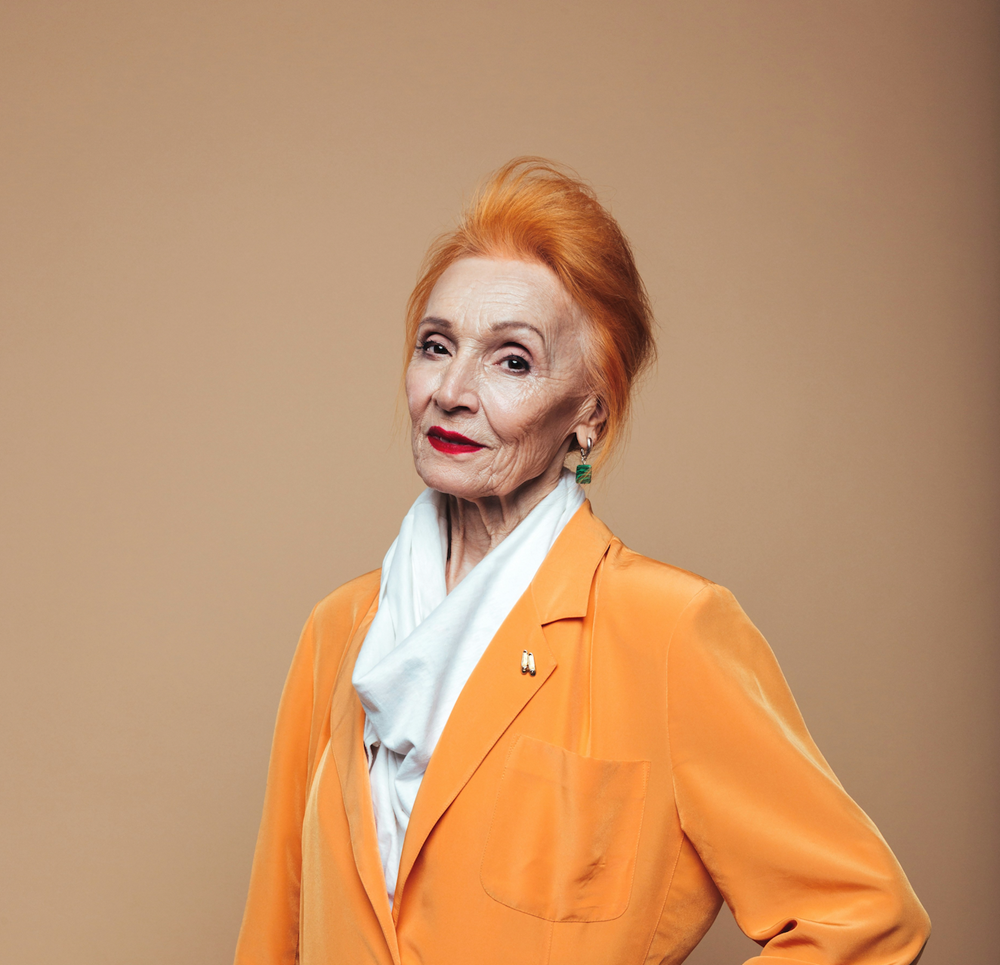
Image credit: Chzbgr
This is the colour path, done well: shine built into the colour, not added afterwards, chosen to suit the woman wearing it now — not a shade she wore at forty, but its wiser, softer sister.
Why it works after 70: mature hair can look matte; dimensional colour brings back the light that makes hair look healthy. If colour still makes you feel like yourself, that feeling is reason enough to keep it.
Styling tip: If your arms tire at home, salon colour is worth it — box dye on a tender scalp rarely ends well.
11. Going Gray: A Cloud-Soft White Bob
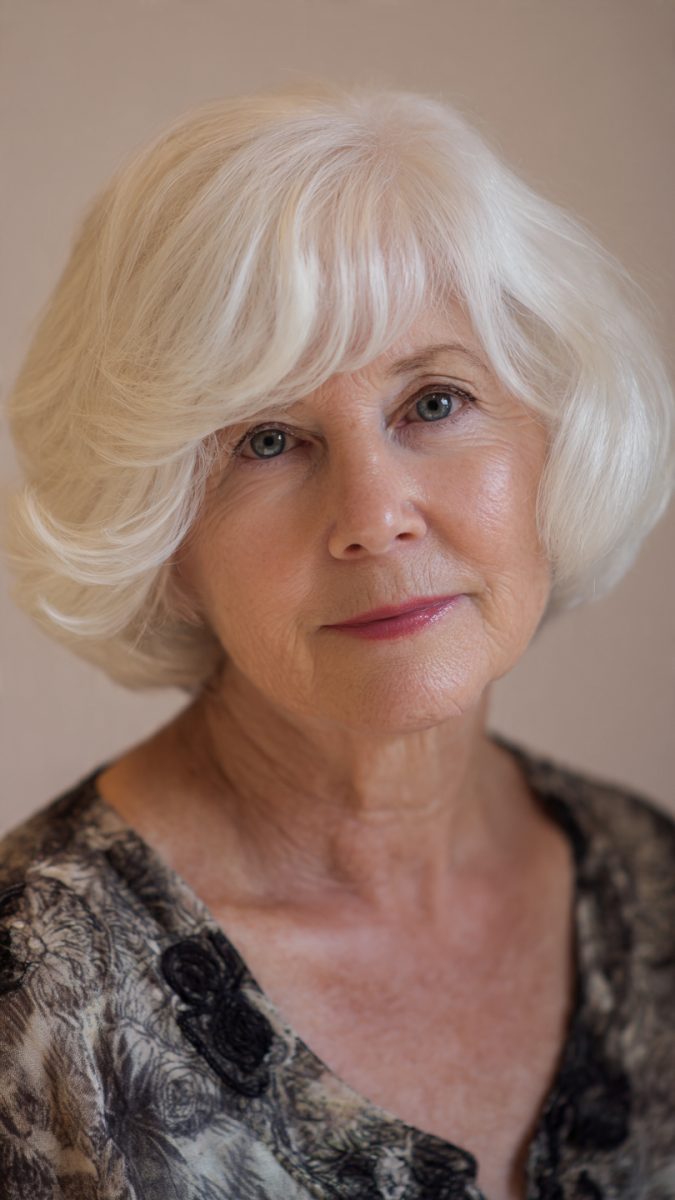
Image credit: Hairdo Lab
This is the silver path, worn with complete confidence: natural white and gray hair, beautifully cut and conditioned, with warmth balanced against your skin, never against a trend. No appointments, no roots, no apology.
Why it works after 70: it flatters the complexion you have now, at seventy-plus, rather than the one in an old photograph. Freed from dye, hair often feels thicker and grows in with a texture that suits this chapter of life.
Ask your stylist: A colour-safe, sulfate-free shampoo twice a week keeps rich tones from fading brassy.
12. Keeping Colour: A Golden Pixie in Profile
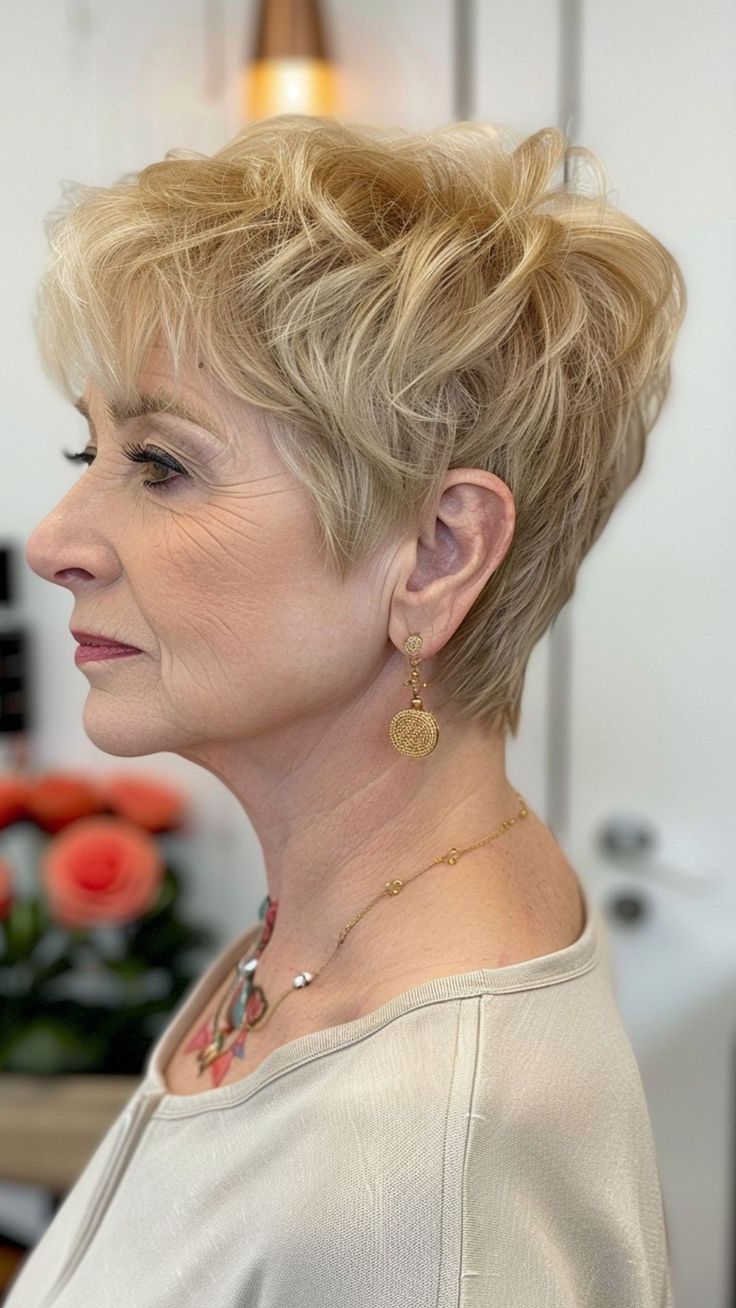
Image credit: Mavink
This is the colour path, done well: colour that respects finer, drier texture, chosen to suit the woman wearing it now — not a shade she wore at forty, but its wiser, softer sister.
Why it works after 70: gentle formulas and shorter processing keep fragile strands glossy instead of frazzled. If colour still makes you feel like yourself, that feeling is reason enough to keep it.
Best for: Ask your stylist to keep the front pieces a touch lighter — it lifts the whole face.
13. Going Gray: A Pure White Bob With a Gentle Fringe
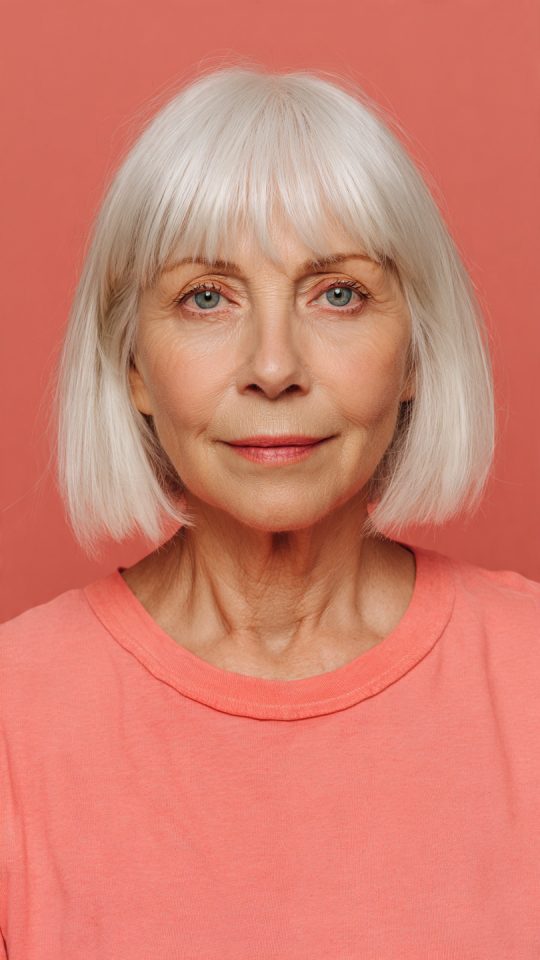
Image credit: Hairdo Lab
This is the silver path, worn with complete confidence: natural white and gray hair, beautifully cut and conditioned, with natural dimension in the gray itself placed where light naturally falls. No appointments, no roots, no apology.
Why it works after 70: it brightens the skin the way good lighting does — gently, without a flat block of dye. Freed from dye, hair often feels thicker and grows in with a texture that suits this chapter of life.
Keep it easy: Ask for demi-permanent colour if your scalp is sensitive — it fades softly and is kinder to fine hair.
The Gentle Middle Path: Gray Blending
- Highlights and lowlights woven through your colour let silver grow in gracefully over 6–12 months.
- A shorter transition cut speeds everything up and looks intentional, not in-between.
- Toning glosses keep growing-out hair silvery rather than yellow during the change.
- You can stop — or restart colour — at any point. Nothing about blending is a one-way door.
14. Keeping Colour: Golden Waves With Sunlit Ends
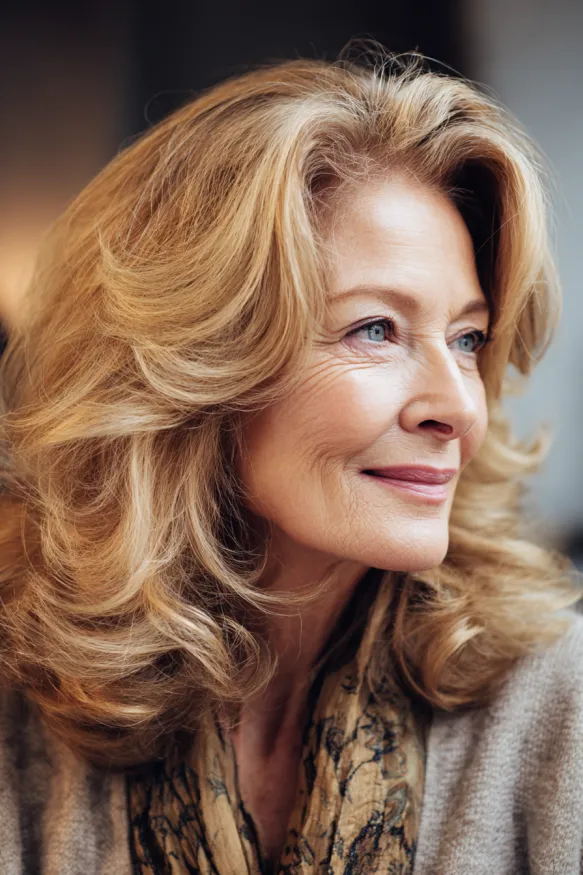
Image credit: Walking Towards Love
This is the colour path, done well: softer tones around the face with depth kept behind, chosen to suit the woman wearing it now — not a shade she wore at forty, but its wiser, softer sister.
Why it works after 70: the face gets the glow while the depth keeps the colour looking natural, never painted on. If colour still makes you feel like yourself, that feeling is reason enough to keep it.
Styling tip: Take this photo to your appointment and point to the tones you love, not just the cut.
15. Going Gray: Silver Swept Back, Calm and Confident
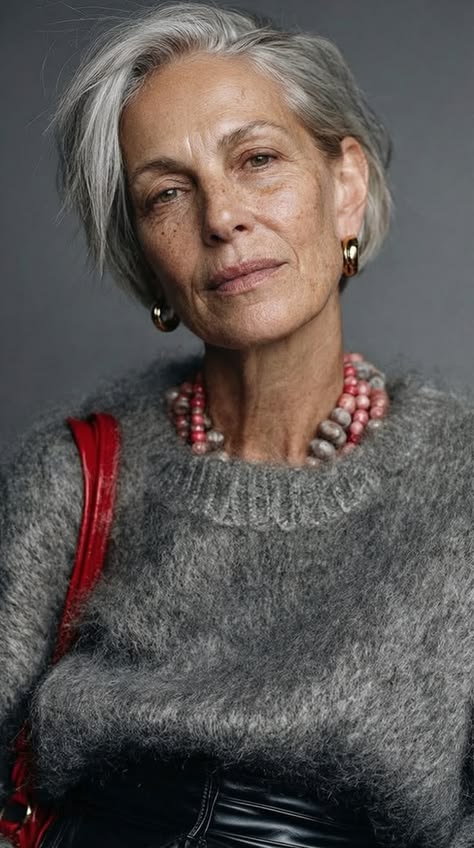
Image credit: Pinterest
This is the silver path, worn with complete confidence: natural white and gray hair, beautifully cut and conditioned, with a shade only one or two levels from your own. No appointments, no roots, no apology.
Why it works after 70: regrowth stays forgiving, which matters when salon trips need to stretch a little longer. Freed from dye, hair often feels thicker and grows in with a texture that suits this chapter of life.
Ask your stylist: Book a gloss refresh between full colour visits; it takes twenty minutes and revives the shine.
16. Keeping Colour: Champagne Waves With a Deep Side Part
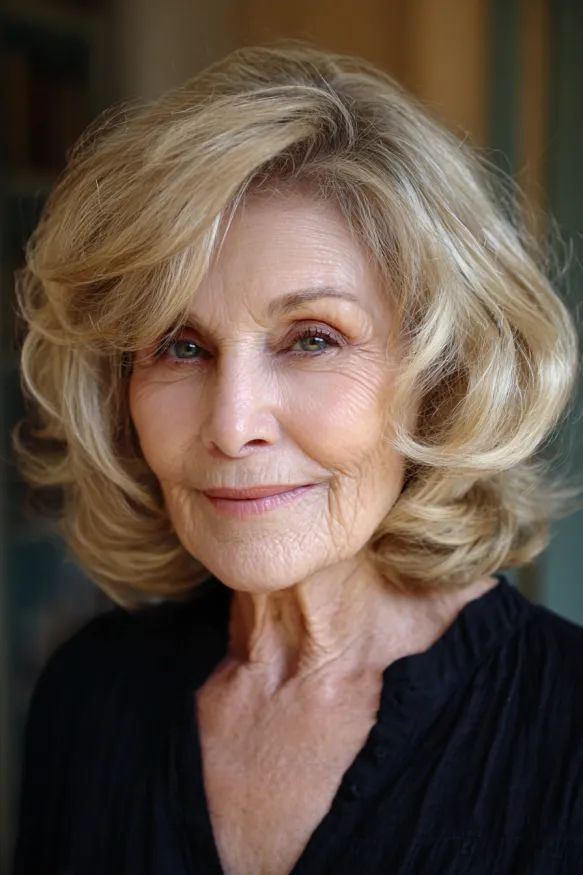
Image credit: Templatefre
This is the colour path, done well: shine built into the colour, not added afterwards, chosen to suit the woman wearing it now — not a shade she wore at forty, but its wiser, softer sister.
Why it works after 70: mature hair can look matte; dimensional colour brings back the light that makes hair look healthy. If colour still makes you feel like yourself, that feeling is reason enough to keep it.
Best for: If your arms tire at home, salon colour is worth it — box dye on a tender scalp rarely ends well.
17. Going Gray: A White Pixie in Profile, Neat as a Pin
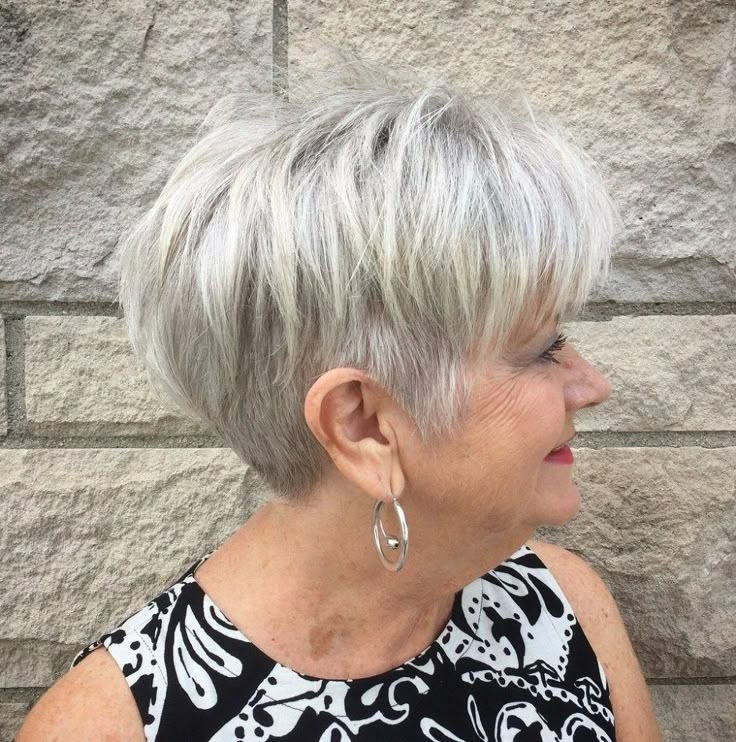
Image credit: Cocoaindochine
This is the silver path, worn with complete confidence: natural white and gray hair, beautifully cut and conditioned, with warmth balanced against your skin, never against a trend. No appointments, no roots, no apology.
Why it works after 70: it flatters the complexion you have now, at seventy-plus, rather than the one in an old photograph. Freed from dye, hair often feels thicker and grows in with a texture that suits this chapter of life.
Keep it easy: A colour-safe, sulfate-free shampoo twice a week keeps rich tones from fading brassy.
18. Keeping Colour: A Sandy Pixie With Lift at the Crown
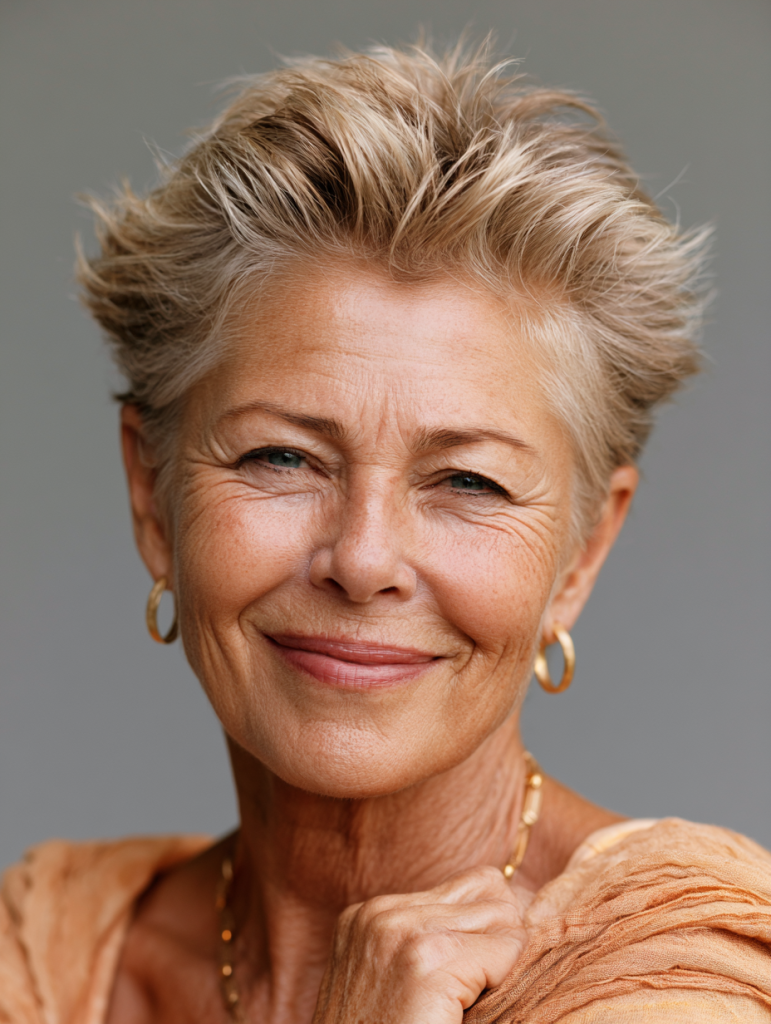
Image credit: Styles Crave
This is the colour path, done well: colour that respects finer, drier texture, chosen to suit the woman wearing it now — not a shade she wore at forty, but its wiser, softer sister.
Why it works after 70: gentle formulas and shorter processing keep fragile strands glossy instead of frazzled. If colour still makes you feel like yourself, that feeling is reason enough to keep it.
Styling tip: Ask your stylist to keep the front pieces a touch lighter — it lifts the whole face.
19. Going Gray: A Bright White Bob That Glows
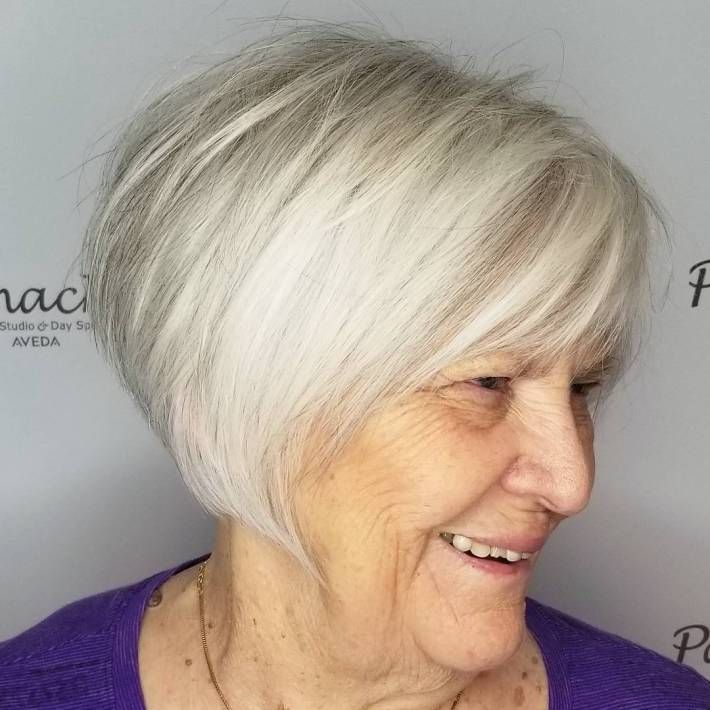
Image credit: Hairstyle (UNAT Amazonas)
This is the silver path, worn with complete confidence: natural white and gray hair, beautifully cut and conditioned, with natural dimension in the gray itself placed where light naturally falls. No appointments, no roots, no apology.
Why it works after 70: it brightens the skin the way good lighting does — gently, without a flat block of dye. Freed from dye, hair often feels thicker and grows in with a texture that suits this chapter of life.
Ask your stylist: Ask for demi-permanent colour if your scalp is sensitive — it fades softly and is kinder to fine hair.
20. Keeping Colour: Strawberry Blonde Waves With Glasses
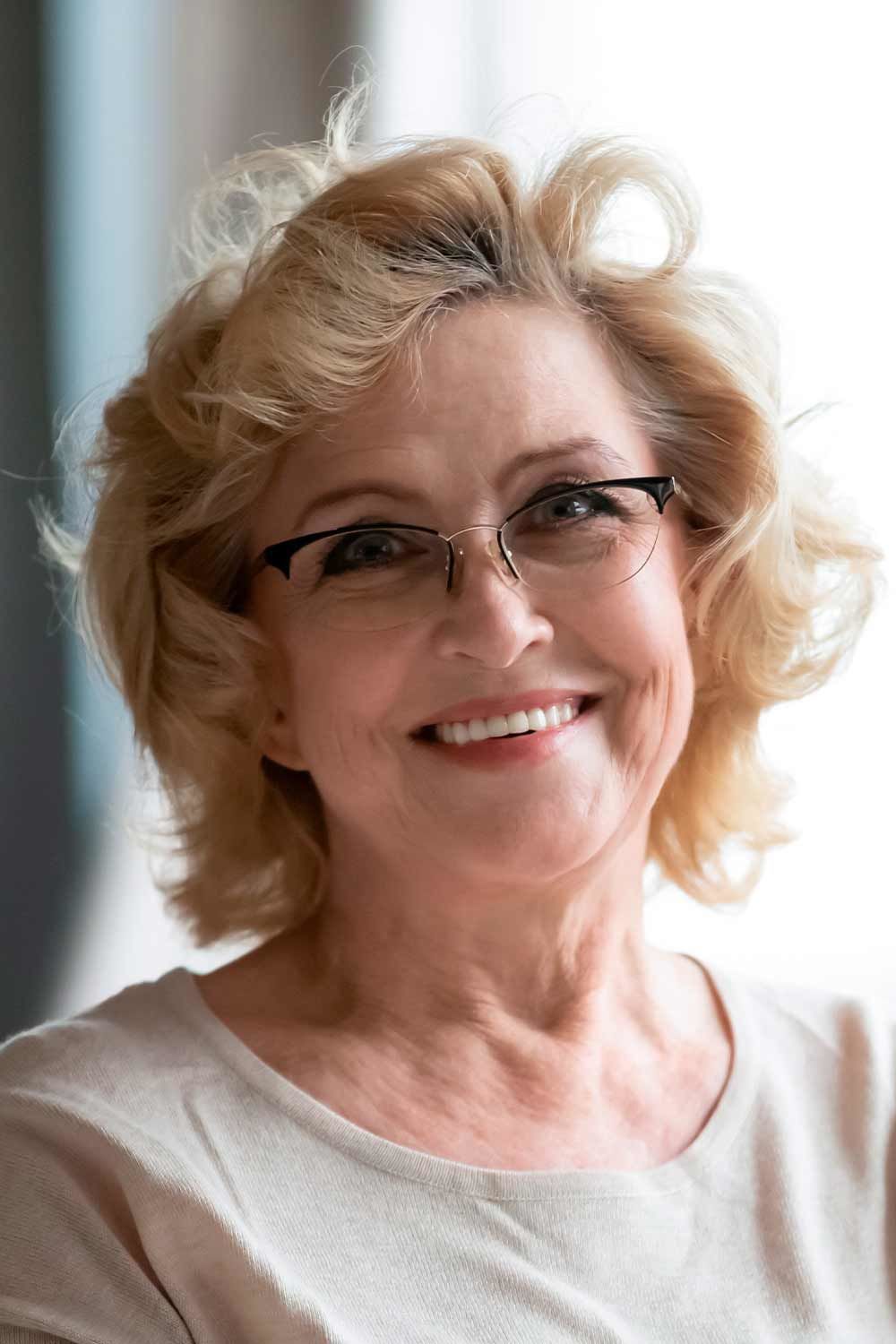
Image credit: Pinterest
This is the colour path, done well: softer tones around the face with depth kept behind, chosen to suit the woman wearing it now — not a shade she wore at forty, but its wiser, softer sister.
Why it works after 70: the face gets the glow while the depth keeps the colour looking natural, never painted on. If colour still makes you feel like yourself, that feeling is reason enough to keep it.
Best for: Take this photo to your appointment and point to the tones you love, not just the cut.
21. Going Gray: A Snowy Pixie and a Cashmere Scarf
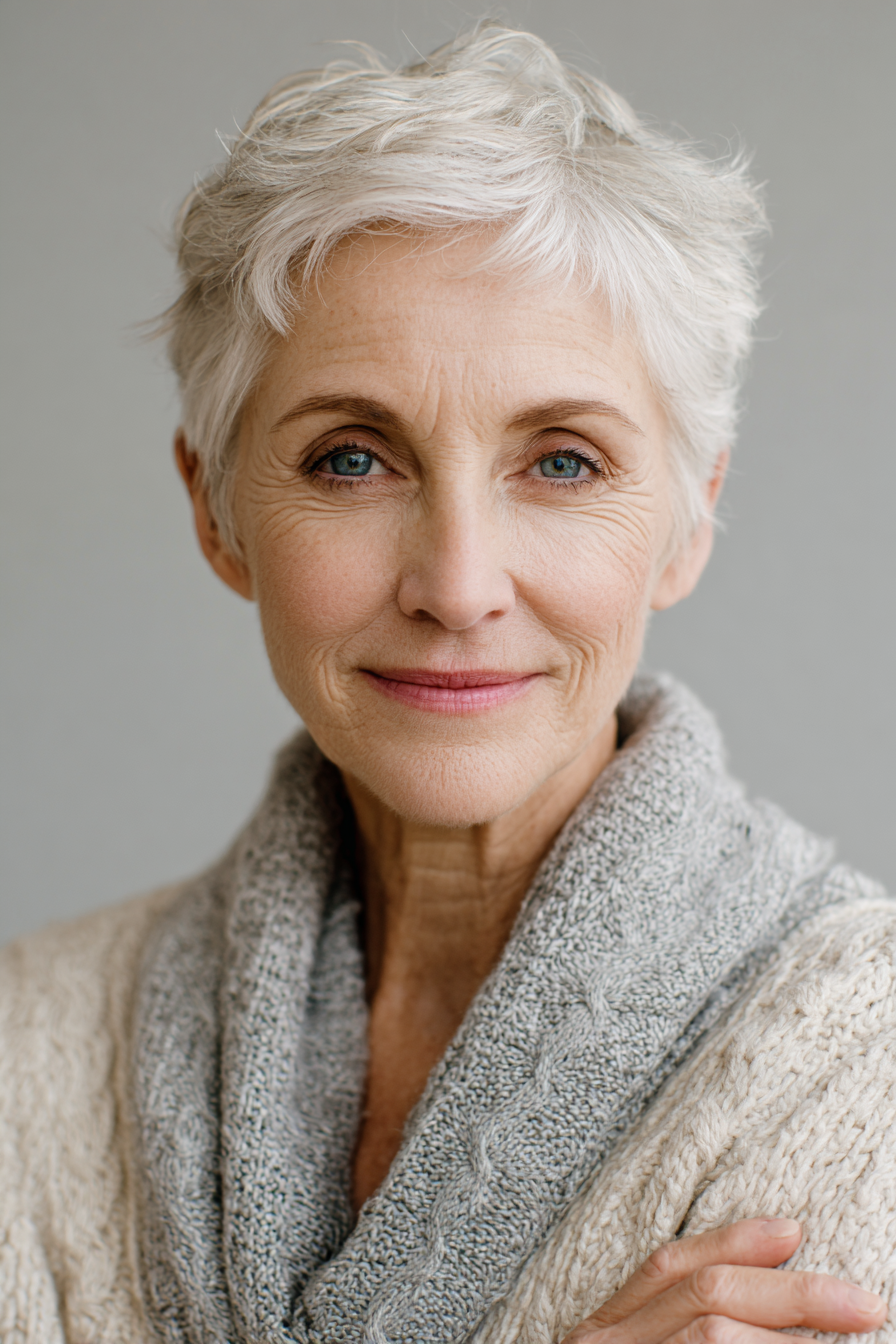
Image credit: Fabbon
This is the silver path, worn with complete confidence: natural white and gray hair, beautifully cut and conditioned, with a shade only one or two levels from your own. No appointments, no roots, no apology.
Why it works after 70: regrowth stays forgiving, which matters when salon trips need to stretch a little longer. Freed from dye, hair often feels thicker and grows in with a texture that suits this chapter of life.
Keep it easy: Book a gloss refresh between full colour visits; it takes twenty minutes and revives the shine.
22. Keeping Colour: Creamy Curls With Honey Lights
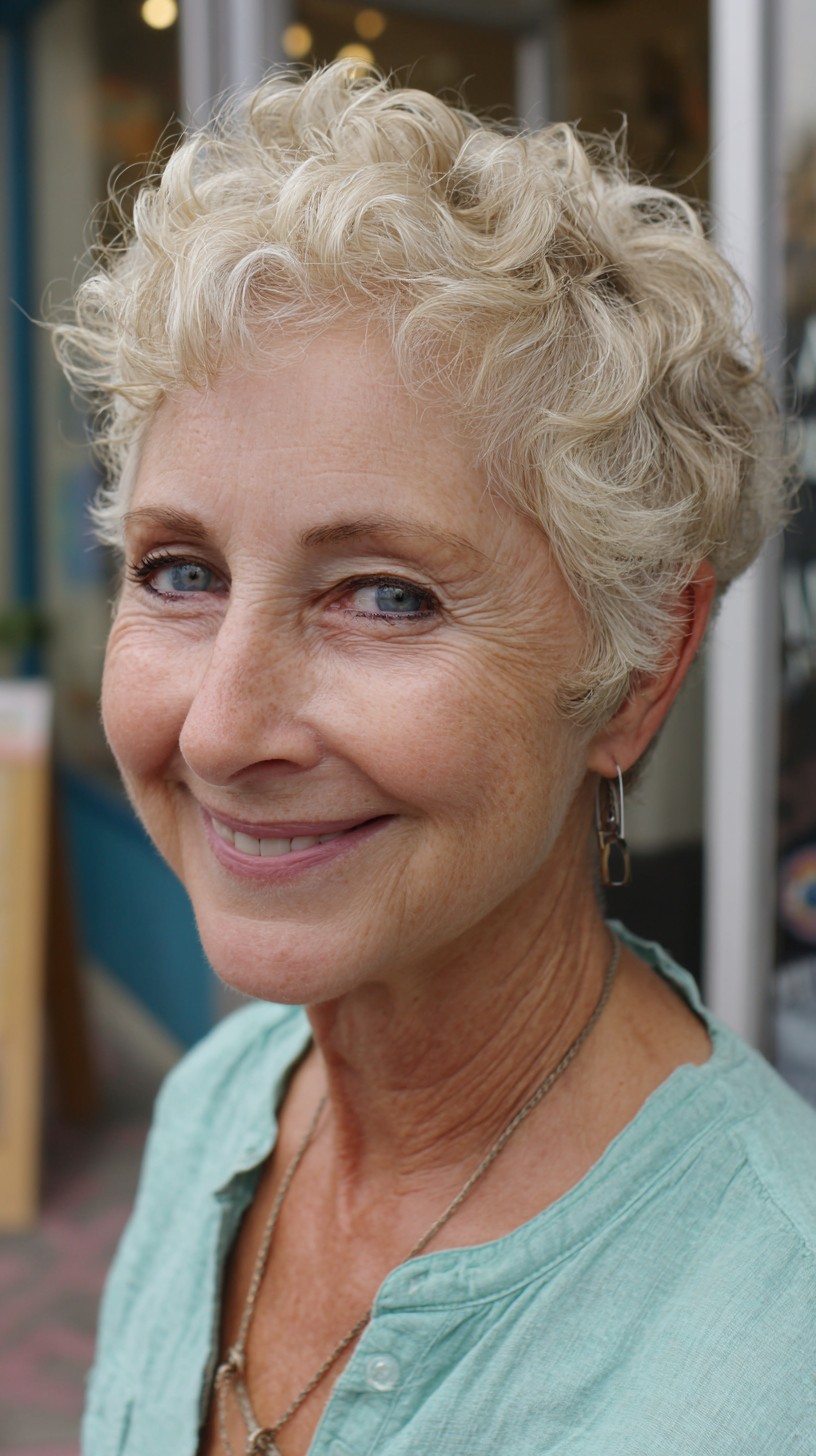
Image credit: Latest Hairstyles
This is the colour path, done well: shine built into the colour, not added afterwards, chosen to suit the woman wearing it now — not a shade she wore at forty, but its wiser, softer sister.
Why it works after 70: mature hair can look matte; dimensional colour brings back the light that makes hair look healthy. If colour still makes you feel like yourself, that feeling is reason enough to keep it.
Styling tip: If your arms tire at home, salon colour is worth it — box dye on a tender scalp rarely ends well.
23. Going Gray: Long Silver Hair, Proud and Free
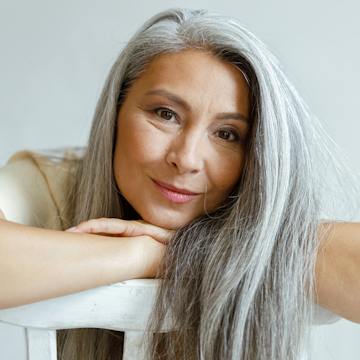
Image credit: Esalon
This is the silver path, worn with complete confidence: natural white and gray hair, beautifully cut and conditioned, with warmth balanced against your skin, never against a trend. No appointments, no roots, no apology.
Why it works after 70: it flatters the complexion you have now, at seventy-plus, rather than the one in an old photograph. Freed from dye, hair often feels thicker and grows in with a texture that suits this chapter of life.
Ask your stylist: A colour-safe, sulfate-free shampoo twice a week keeps rich tones from fading brassy.
24. Keeping Colour: Ash Blonde Layers That Frame the Face
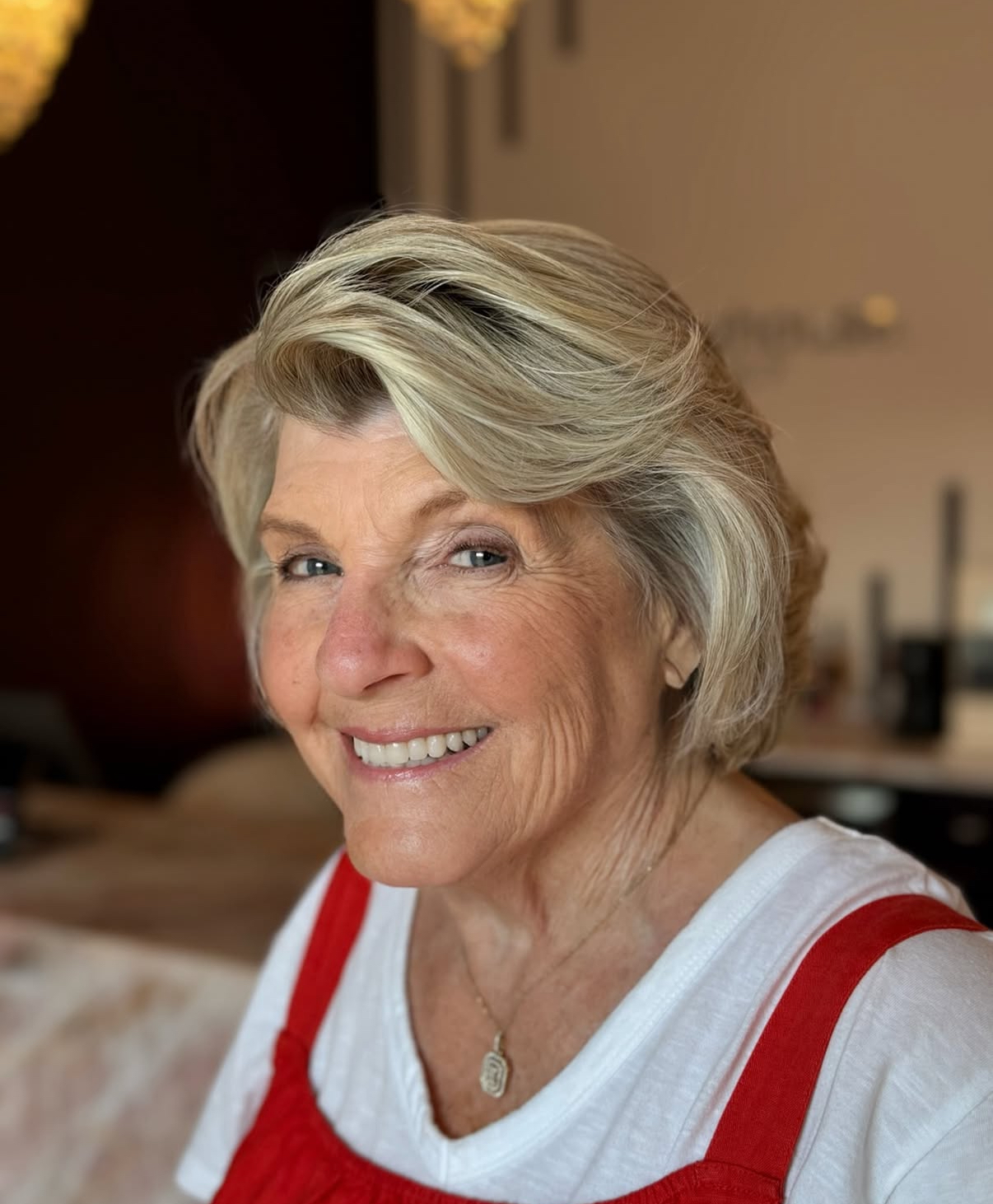
Image credit: Dreamhousenwa
This is the colour path, done well: colour that respects finer, drier texture, chosen to suit the woman wearing it now — not a shade she wore at forty, but its wiser, softer sister.
Why it works after 70: gentle formulas and shorter processing keep fragile strands glossy instead of frazzled. If colour still makes you feel like yourself, that feeling is reason enough to keep it.
Best for: Ask your stylist to keep the front pieces a touch lighter — it lifts the whole face.
25. Going Gray: Wild White Waves, Completely Yourself
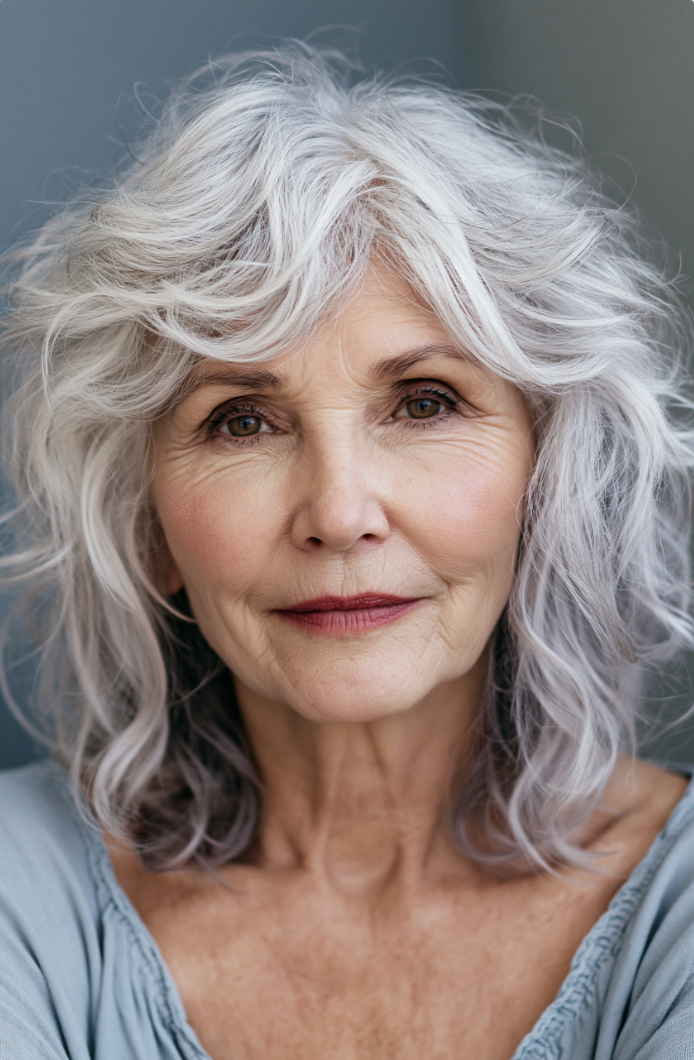
Image credit: Fabbon
This is the silver path, worn with complete confidence: natural white and gray hair, beautifully cut and conditioned, with natural dimension in the gray itself placed where light naturally falls. No appointments, no roots, no apology.
Why it works after 70: it brightens the skin the way good lighting does — gently, without a flat block of dye. Freed from dye, hair often feels thicker and grows in with a texture that suits this chapter of life.
Keep it easy: Ask for demi-permanent colour if your scalp is sensitive — it fades softly and is kinder to fine hair.
26. Keeping Colour: A Cream Blonde Crop That Smiles Back
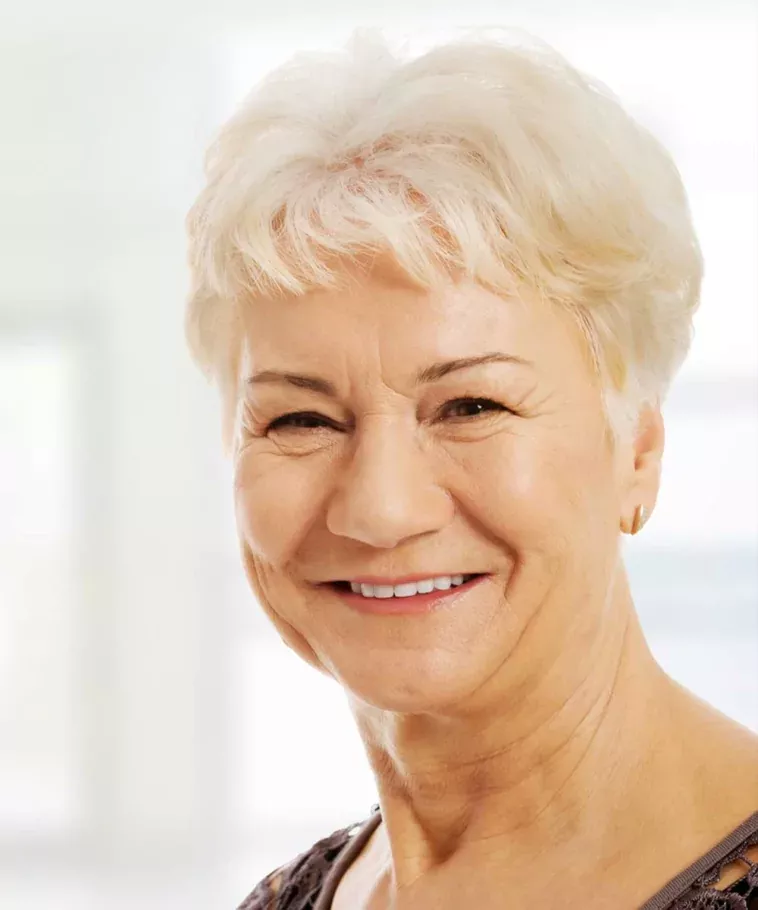
Image credit: Artofit
This is the colour path, done well: softer tones around the face with depth kept behind, chosen to suit the woman wearing it now — not a shade she wore at forty, but its wiser, softer sister.
Why it works after 70: the face gets the glow while the depth keeps the colour looking natural, never painted on. If colour still makes you feel like yourself, that feeling is reason enough to keep it.
Styling tip: Take this photo to your appointment and point to the tones you love, not just the cut.
27. Going Gray: Long Silver Waves and a Great Laugh
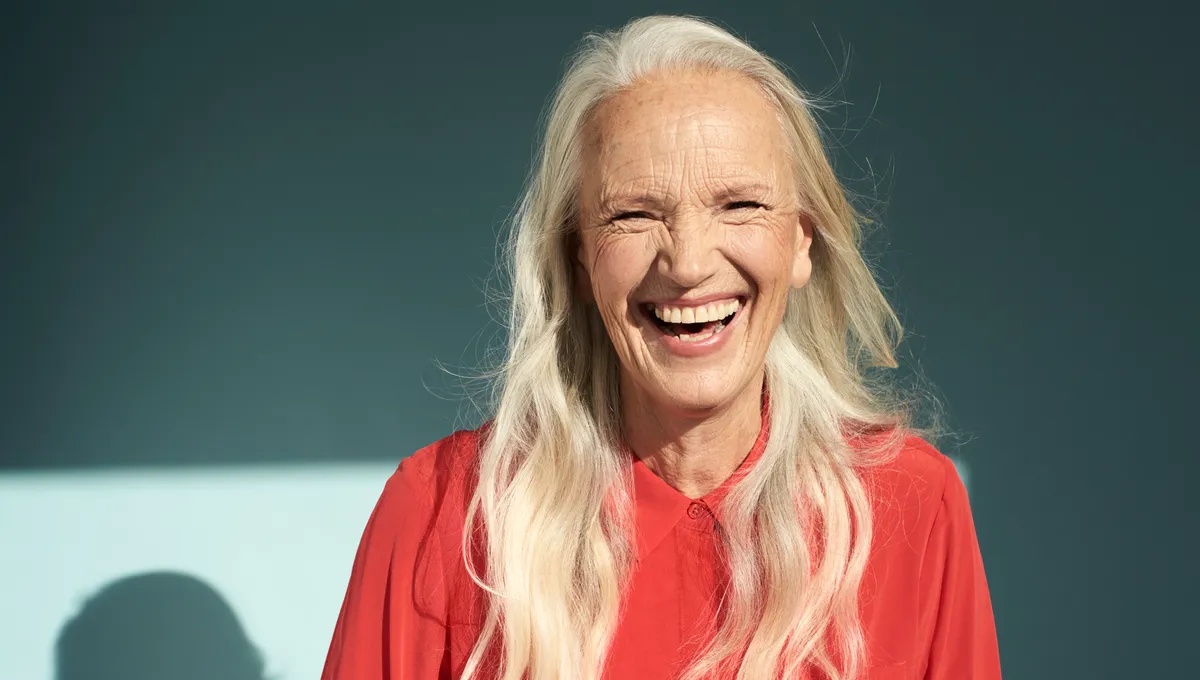
This is the silver path, worn with complete confidence: natural white and gray hair, beautifully cut and conditioned, with a shade only one or two levels from your own. No appointments, no roots, no apology.
Why it works after 70: regrowth stays forgiving, which matters when salon trips need to stretch a little longer. Freed from dye, hair often feels thicker and grows in with a texture that suits this chapter of life.
Ask your stylist: Book a gloss refresh between full colour visits; it takes twenty minutes and revives the shine.
Whichever You Choose, Care for It Well
Silver hair loves moisture and a weekly purple rinse to stay bright; coloured hair loves gentle shampoo and glosses to stay shiny. Both love regular trims, a soft brush, and kindness to a tender scalp.
And both look best on a woman who has chosen them on purpose. Whichever side of this gallery felt like home, trust that feeling — then explore more ideas in our brightening hair colors guide.
Frequently Asked Questions
At what age should a woman stop coloring her hair?
There is no set age. Women stop when the appointments, cost or hair damage outweigh the pleasure — some at 55, some never. It is a lifestyle and identity choice, not a rule.
Does going gray make you look older after 70?
Well-cut, well-conditioned silver hair does not read as 'older' — it reads as confident. Neglected hair of any colour ages a look far more than gray does.
How long does it take to go fully gray?
Growing out colour typically takes 12–24 months depending on length. Gray blending with highlights and lowlights, or a shorter transition cut, makes the in-between stage look deliberate and pretty.
Can I go back to coloring after going gray?
Yes, at any time. Virgin gray hair actually takes colour evenly and well. Many women try silver for a year and return to colour simply because they miss it.
What if my gray grows in patchy?
A stylist can even out a patchy pattern with lowlights or a silver toner during the transition, and a good cut redistributes where the eye lands. Patchiness is a solvable problem, not a verdict.