Chic French Bob Ideas for Women Over 60
This post contains affiliate links. As an Amazon associate, I earn from qualifying purchases. I only recommend products that are of high quality and that I would use myself.
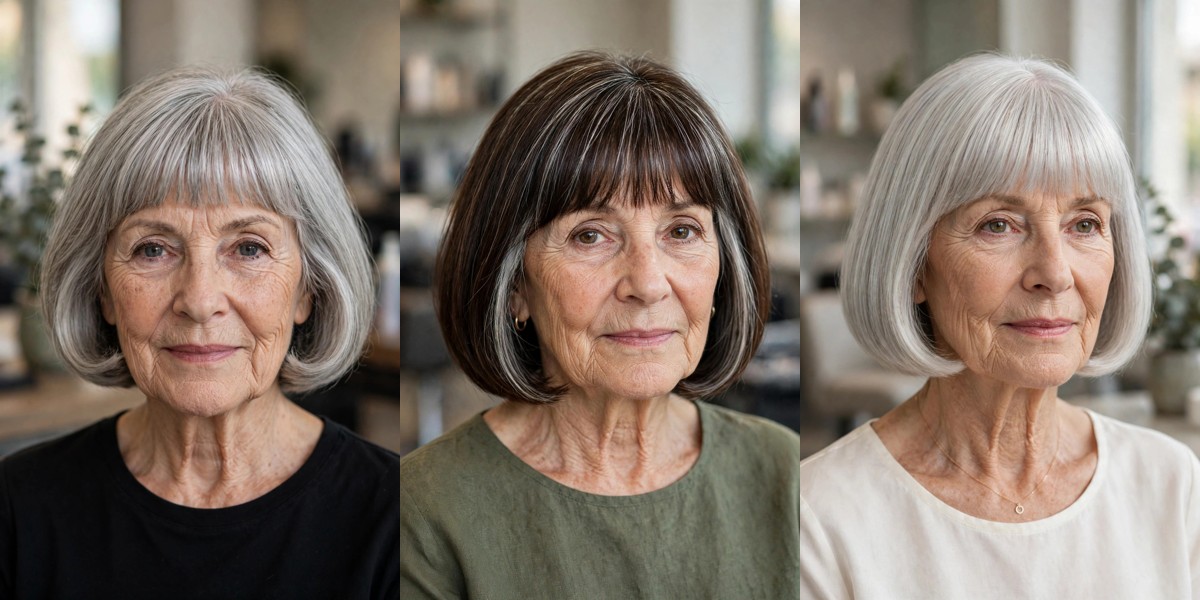
The French bob is the most imitated haircut in the world — and the most often imitated badly. What arrives in the salon is usually a lob that grew too long, an angled bob with a stacked back, or a sleek pageboy with no life in it. A true French bob is more specific than that: chin-to-jaw length, a blunt-ish perimeter whose ends curve slightly under, an effortless undone finish, and — in its classic form — a short fringe. Get those four things right and the cut does something remarkable after 60: it frames the face at exactly the points where framing helps most, the eyes at the fringe and the jaw at the ends.
Below are 20 chic French bob ideas for women over 60, each adapted for the hair we actually have now — finer strands, silver and salt-and-pepper color, texture that has changed its mind over the years. You will find the fine-hair version with its blunt base protected, the air-dry version that needs no heat at all, and fringe options from a bold baby fringe to no fringe at all. If you are still comparing bob families, start with our chin length bob haircuts for women over 60 — the French bob is the chin-length bob’s chicest cousin, and seeing them side by side makes the differences obvious.
One adaptation runs through the whole guide, so it is worth saying once, plainly: after 60, the ends of a French bob should be softened, not thinned. A blunt base kept intact is what stops finer hair from going stringy at the perimeter, while a light softening of the surface is what stops the cut looking like a helmet. Every idea below keeps that bargain.
Table of Contents
- 1. Classic French Bob with a Straight-Across Fringe
- 2. French Bob with a Short Baby Fringe
- 3. Silver French Bob with Blunt, Curved-Under Ends
- 4. Wavy French Bob with a Soft Full Fringe
- 5. Fringe-Free French Bob with a Deep Side Part
- 6. French Bob for Fine Hair, with the Blunt Base Kept
- 7. Tousled, Undone French Bob
- 8. French Bob with a Wispy, Piecey Fringe
- 9. French Bob Tucked Behind One Ear
- 10. Salt-and-Pepper French Bob with a Center Part
- 11. Wavy French Bob with No Fringe
- 12. Glossy Brunette French Bob with Silver Face-Framing Strands
- 13. French Bob with a Long Side-Swept Fringe
- 14. Air-Dried French Bob for Natural Texture
- 15. French Bob with Feathered Ends for Thicker Hair
- 16. Short French Bob with a Mini Fringe
- 17. French Bob with Glasses and a Soft Fringe
- 18. Rounded French Bob with Crown Volume
- 19. French Bob with a Soft Curtain Fringe
- 20. Polished French Bob with a Blowout Finish
- Recommended Products
- FAQs
- The classic? Idea 1 — straight-across fringe, chin length, the reference cut.
- Fine or thinning hair? Idea 6 (blunt base kept) or idea 16 (short, so fine ends never spread thin).
- Silver or salt-and-pepper? Ideas 3 and 10 place the clean perimeter where your color catches the most light.
- No fringe, thanks? Idea 5 (deep side part), 10 (center part) or 11 (wavy and open-faced).
- Natural waves? Ideas 4 and 11 — cut for your wave, styled by scrunching.
- No heat, ever? Idea 14 is designed to air-dry; idea 7 styles with putty on dry hair.
- Wear glasses? Idea 17 — the fringe is cut to sit above the frames.
- Thick, heavy hair? Idea 15 — feathered ends take the shelf out of the bottom.
1. Classic French Bob with a Straight-Across Fringe
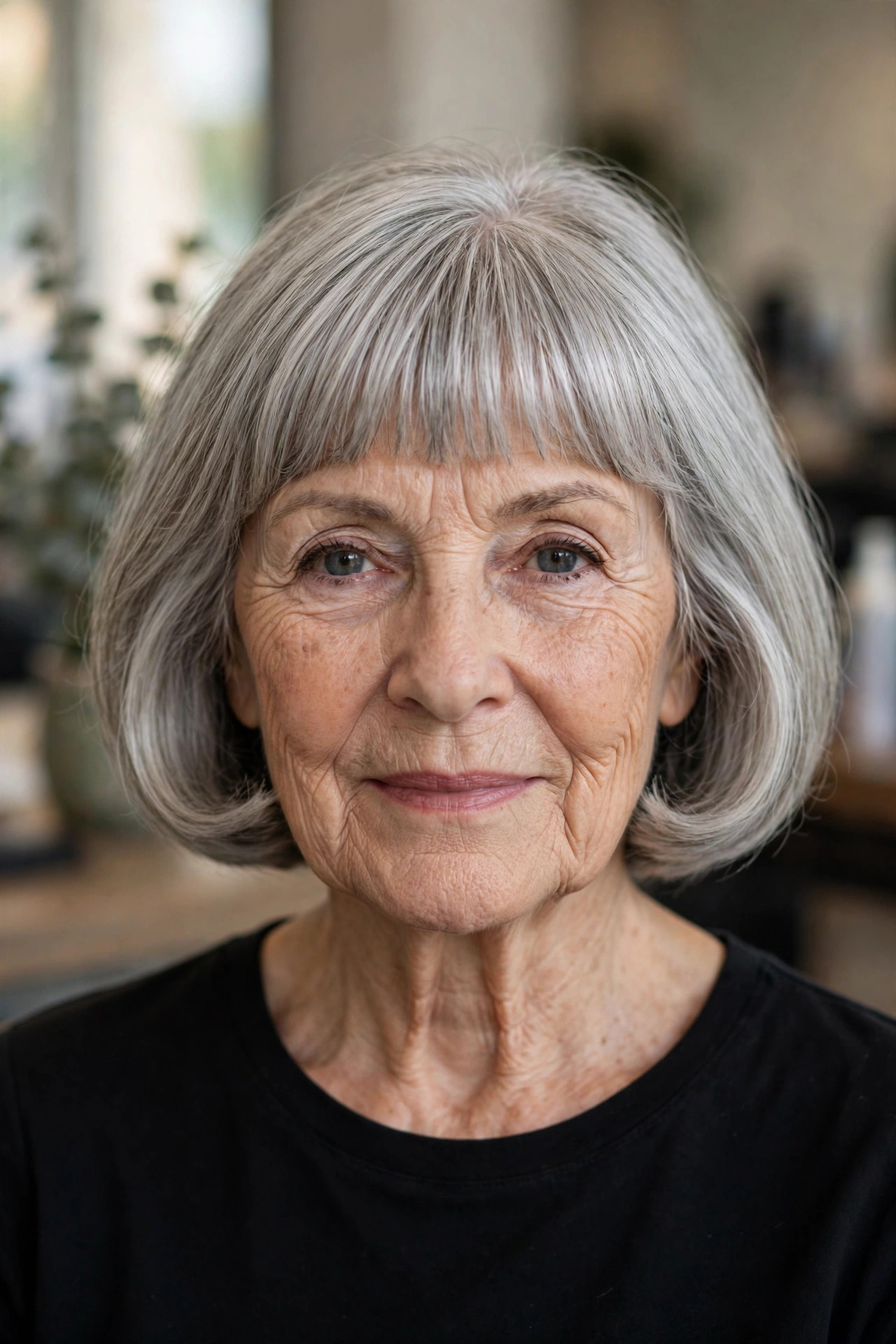
This is the reference cut — the one every other idea in this guide is a variation of. The length sits between the chin and the jaw, the ends are blunt with just enough softening that they curve slightly under instead of sticking straight, and the fringe is cut straight across, finishing right at the eyebrows. That fringe-to-chin proportion is the whole secret: the fringe draws the eye up to the eyes, while the jaw-level ends underline the cheekbones, so the face is framed from both directions at once.
Ask your stylist for the ends to be point-cut very lightly — cleaned up, not layered away — because a French bob lives on its perimeter. If the base is thinned out, the shape collapses into an ordinary bob within a fortnight. At home it is an air-dry-friendly cut: smooth the fringe down while damp, let the lengths dry with a slight tuck behind the ears, and only reach for the round brush when you want the polished version.


2. French Bob with a Short Baby Fringe
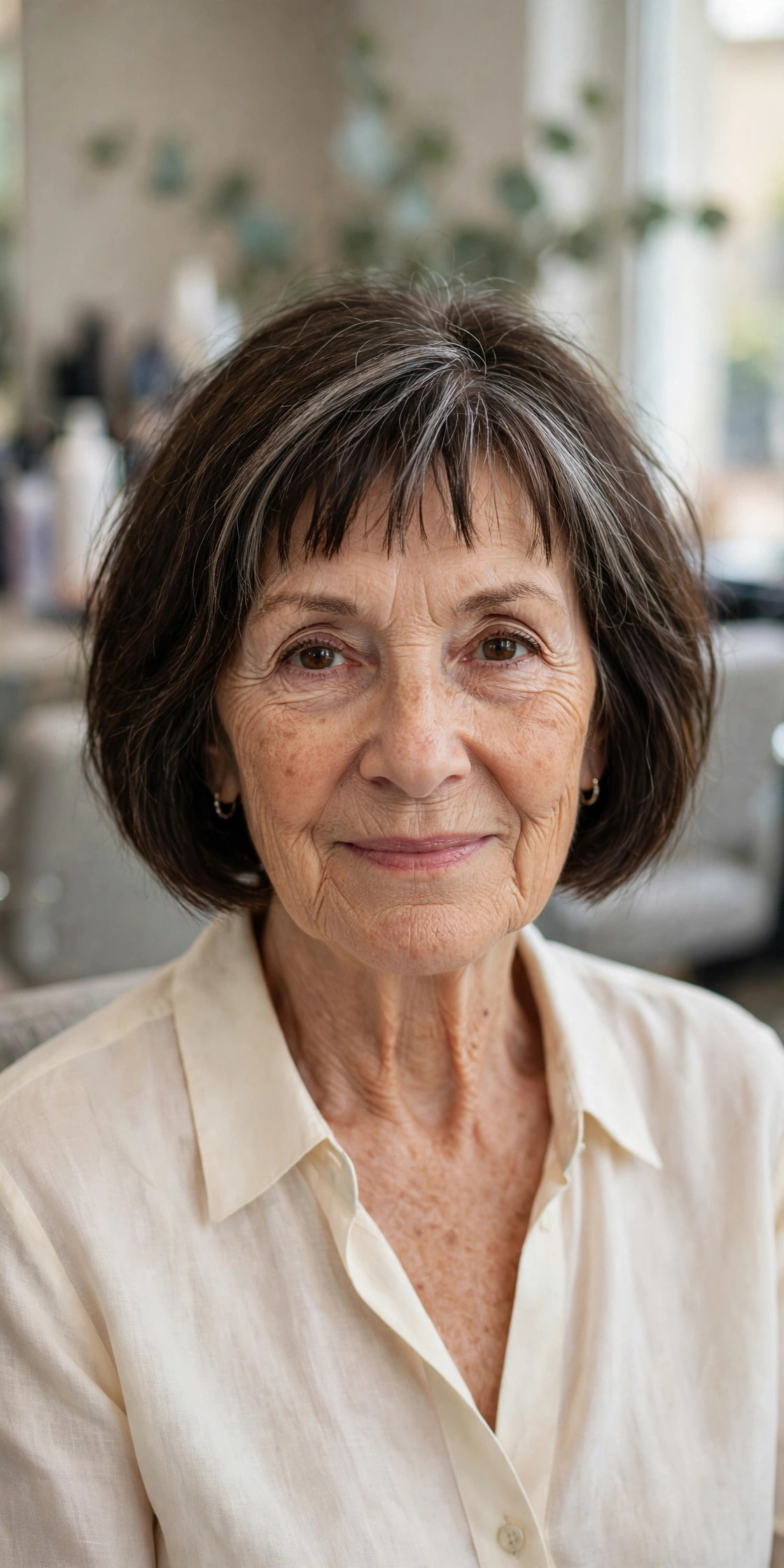
The baby fringe is the boldest small change in this guide: a fringe cut short, sitting well above the eyebrows instead of grazing them. On a chin-length French bob it opens up the whole forehead, shows off the brows, and gives the classic shape a playful, unmistakably Parisian edge. It also grows out kindly — a short fringe passes through the awkward stage faster than a long one, because there is less of it.
This is the fringe to choose if your forehead is on the shorter side, or if a full fringe has always felt like a curtain closing over your face. Keep the rest of the cut disciplined — blunt-ish ends, minimal layering — so the short fringe reads as a deliberate design detail rather than an accident. A pea-sized amount of texturizing putty pinched through the fringe keeps the little pieces separated instead of clumping.

3. Silver French Bob with Blunt, Curved-Under Ends
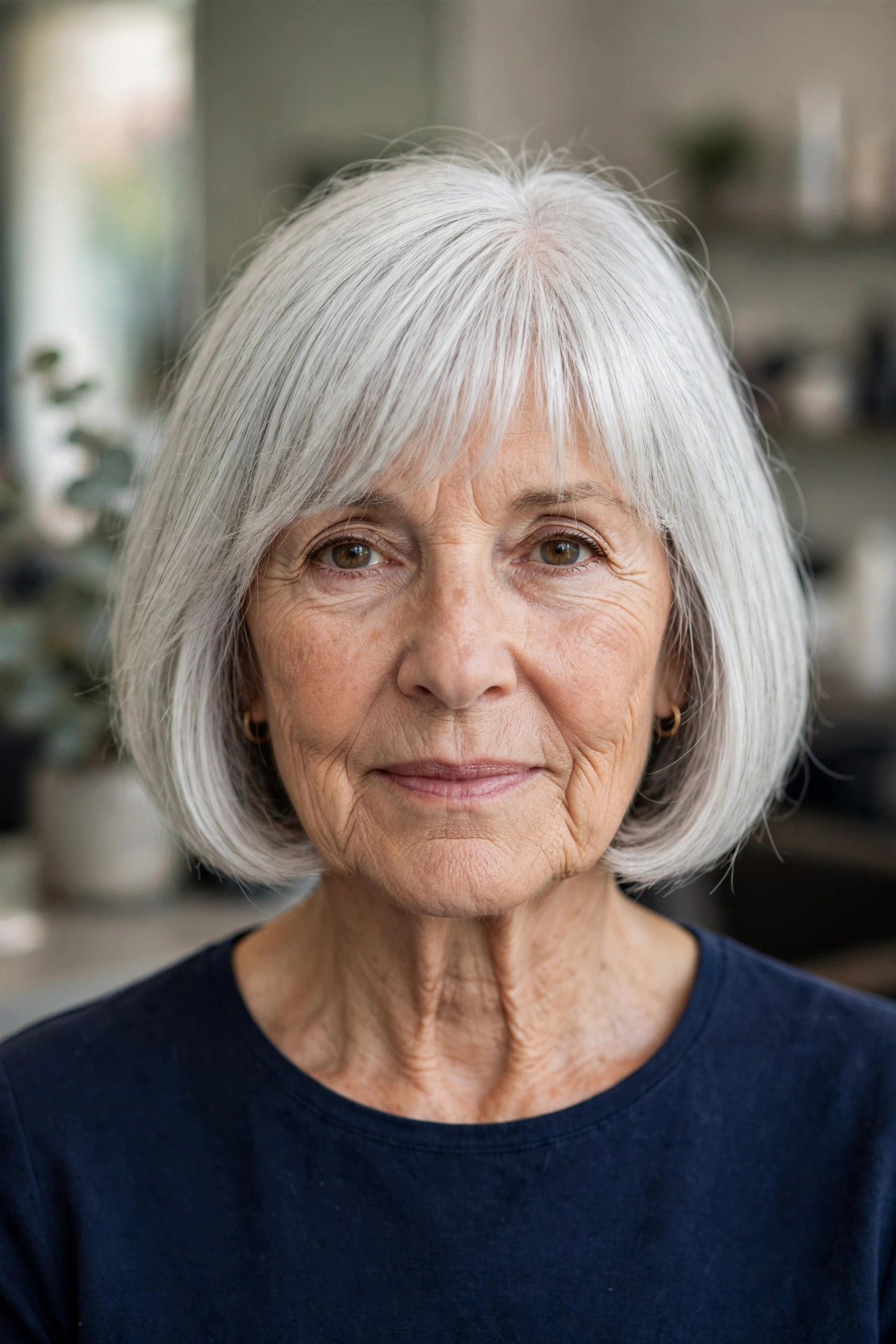
Silver hair and the French bob were made for each other, and this is the purest version: bright silver-white hair, a genuinely blunt base line, and ends that roll gently under at the jaw. Silver reflects light along a clean perimeter like a ribbon, which is why this cut looks so striking in photographs — the shape is simple, and the color does all the talking. A soft straight fringe completes the frame.
The maintenance is color, not cutting. Silver and white hair picks up yellow and brassy tones from minerals, heat, and the sun, so a purple shampoo once a week is part of this cut’s routine, and an in-shower silver gloss every few weeks restores the brightness between salon visits. Keep heat moderate: silver strands are more porous and scorch — and yellow — faster than pigmented hair.


4. Wavy French Bob with a Soft Full Fringe

If your hair has a natural wave, the French bob does not ask you to flatten it — the wave is the styling. Here the chin-length cut is left to dry into loose, relaxed waves, and the full fringe is cut slightly longer and softer so it can bend with the texture instead of fighting it. The result is the undone finish French women are famous for: nothing looks ironed, curled, or even particularly deliberate.
The cutting rule for wavy hair is length honesty: waves spring up as they dry, so the bob should be cut a fraction longer than the finished length you want, and the fringe should be checked dry before any final snip. At home, scrunch a sea-salt or texture spray into damp hair, twist a few sections with your fingers, and then leave it completely alone until dry — touching wavy hair mid-dry is how frizz starts.


5. Fringe-Free French Bob with a Deep Side Part
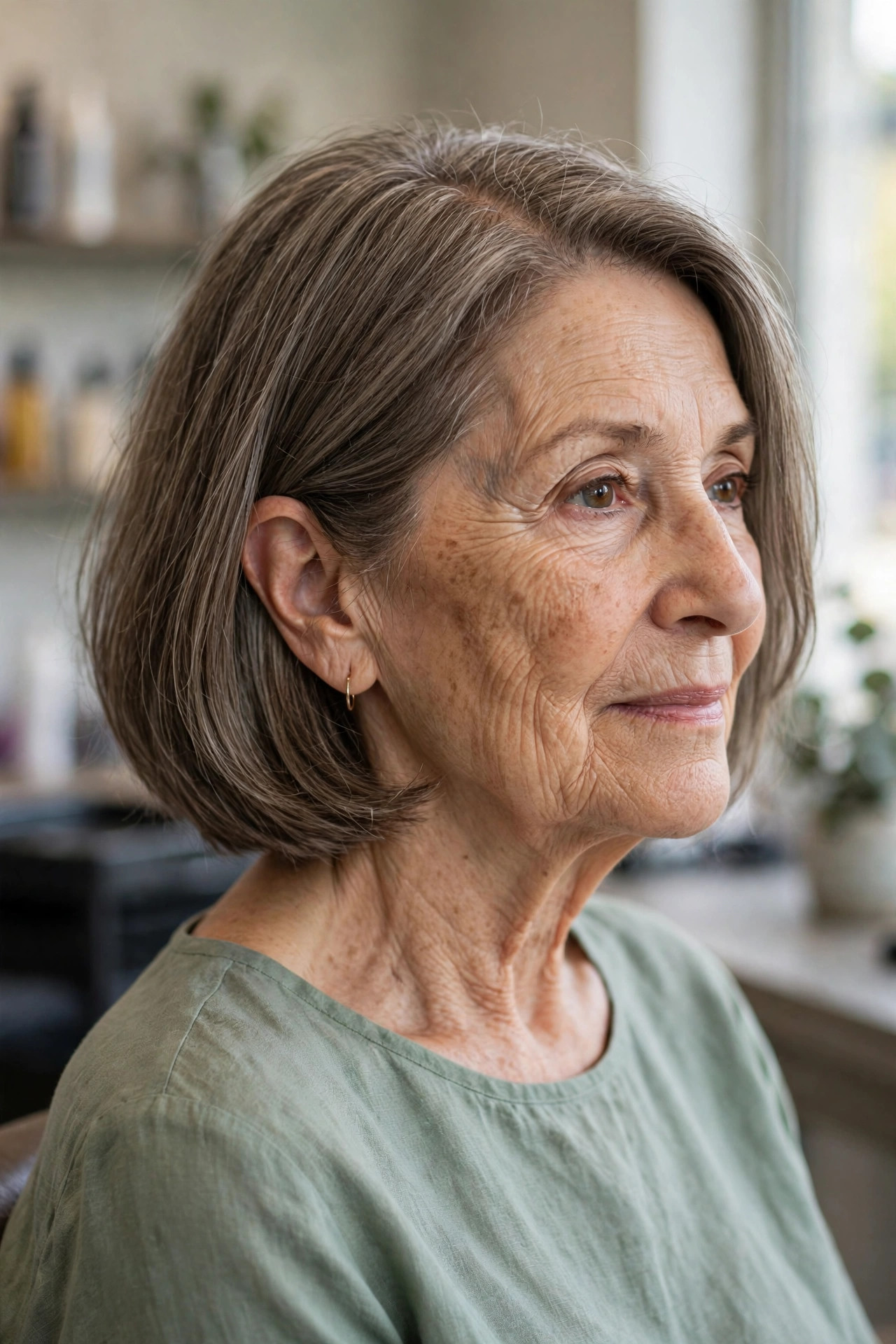
Not everyone wants a fringe, and the French bob does not require one. This version keeps the chin length, the blunt-ish curved-under ends, and the undone texture, then replaces the fringe with a deep side part. Sweeping the hair across the forehead builds height on the heavy side, creates a long diagonal that softens the hairline, and leaves one side free to tuck behind the ear — the profile view of this cut is especially elegant.
A side part is also the kindest option for a thinning front hairline, because the sweep covers more territory than a center part and the diagonal disguises a sparse patch better than a straight line does. Set the part while the hair is damp; mature hair tends to dry where it is placed and resist being moved later. A drop of anti-frizz serum through the lengths keeps the sweep smooth without weighing the crown down.


The fringe decision and the exact length — lip, chin, or jaw — depend on your face shape as much as your hair type: a jaw-length bob loves a long face, while a round face wants the ends right at the chin. Try our free Face Shape Finder to discover your face shape in under a minute, then match it to the ideas above.
6. French Bob for Fine Hair, with the Blunt Base Kept
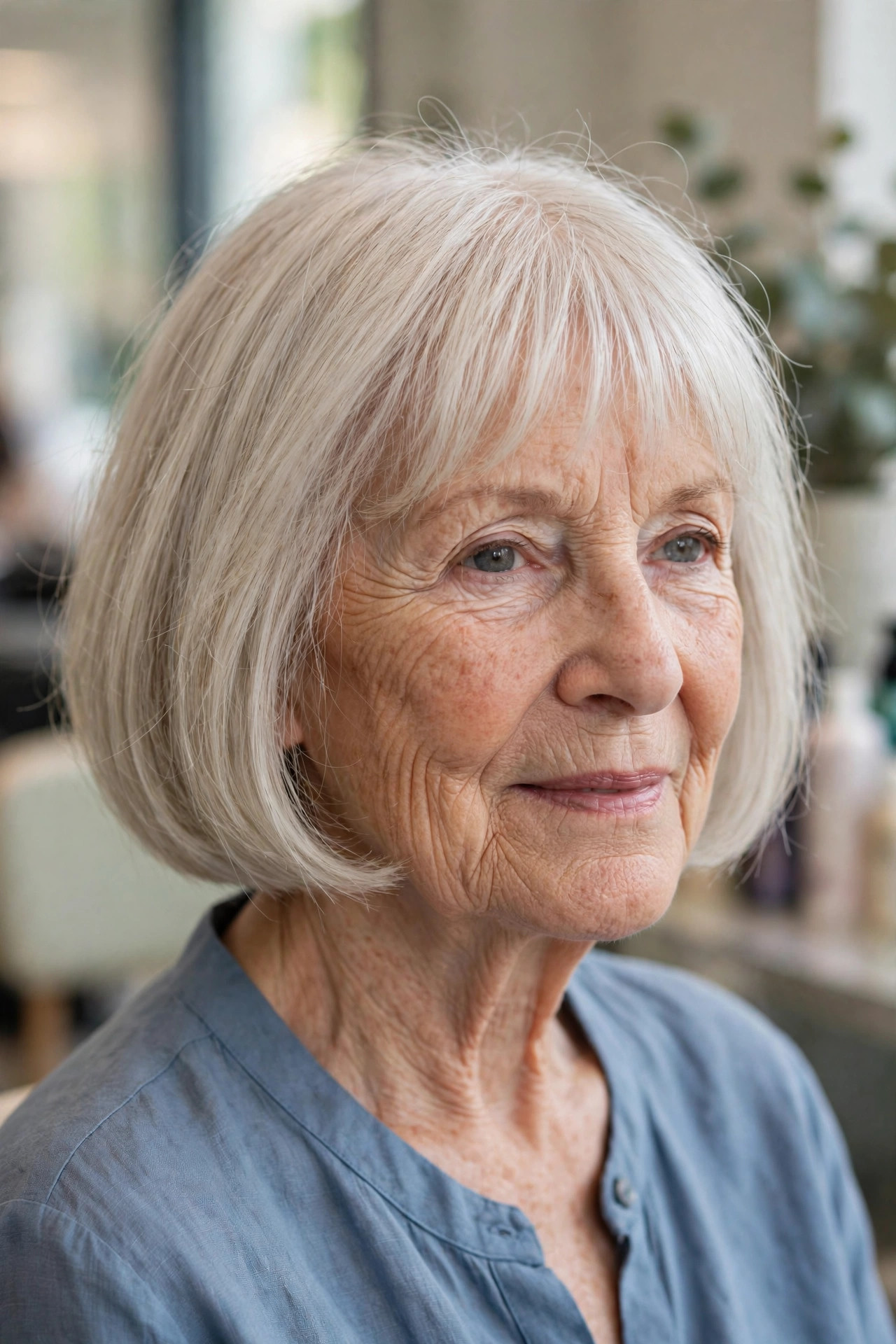
Fine hair after 60 needs the French bob adapted, not abandoned — and the adaptation is precise. The base line stays genuinely blunt, because that uncut-looking perimeter is what makes fine hair read thick at the ends. The softening that other versions get is moved up and kept minimal: a whisper of texture through the last centimetre only, so the ends curve under without ever going wispy or see-through. The fringe is kept light for the same reason.
What to say in the chair: ‘blunt base, softened surface, no thinning shears.’ Thinning shears and heavy razoring are the two tools that turn a fine-haired French bob stringy within weeks. Styling follows the same lightness discipline — volumizing mousse at the roots only, conditioner kept off the crown, and heavy oils avoided. Our guide to chin length bob haircuts for women over 60 shows how the same blunt-base logic works across the whole chin-length family.


7. Tousled, Undone French Bob
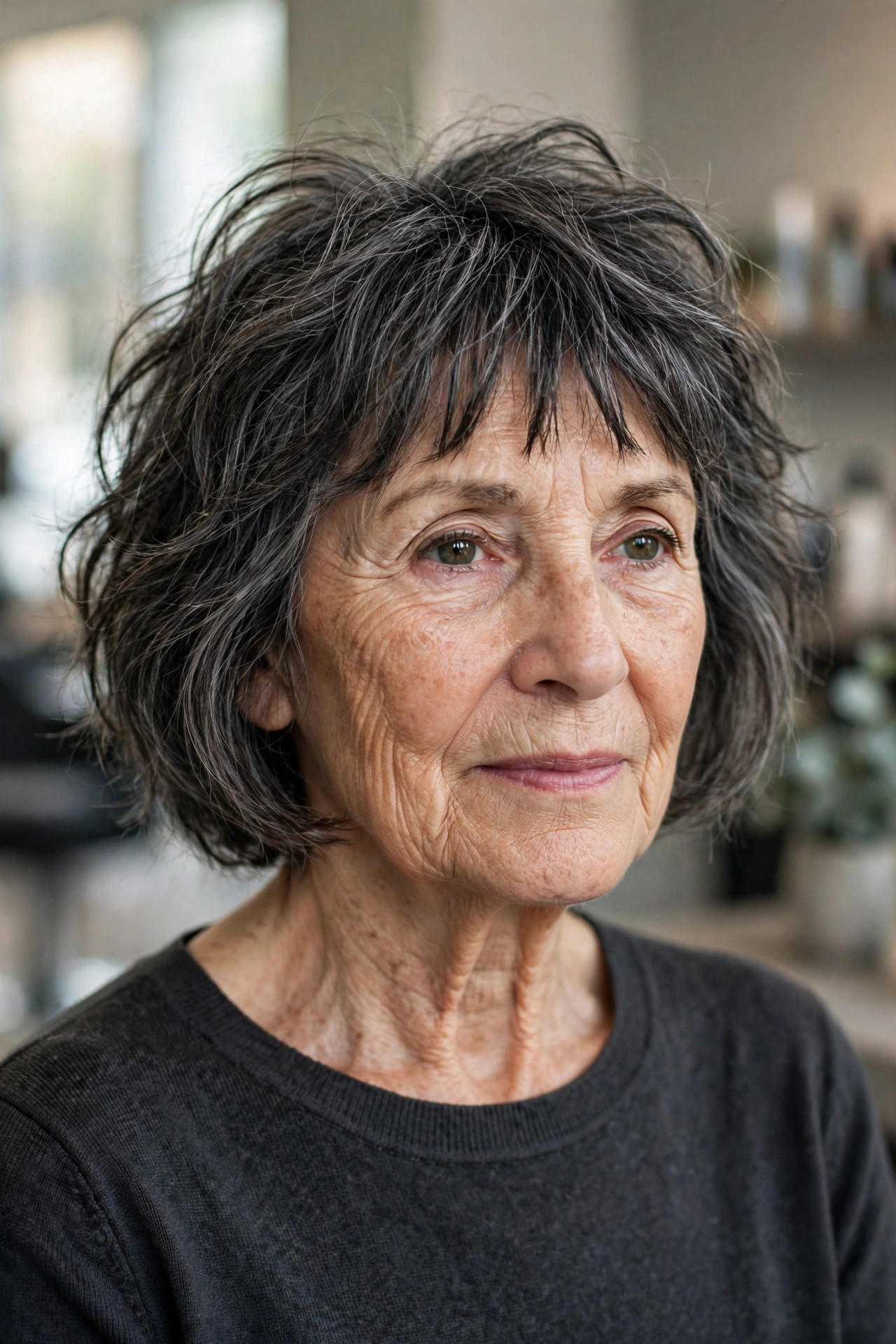
This is the French bob at its most French: chin length, a choppy fringe, and texture that looks like it happened by itself on a walk home. The ends are point-cut into separated pieces rather than one clean line, so the silhouette has movement in every direction. It is a forgiving cut for wiry gray strands, too — in a tousled finish, the odd coarse hair blends into the texture instead of sticking out of a smooth surface.
Tousled is a product technique more than a heat technique, which makes this one of the lowest-heat cuts in the guide. Work texturizing putty through dry hair, pinch the ends into pieces, and shake the roots with your fingertips. On day two, a sea spray refreshes the separation without another wash. The one discipline it does need is a trim on schedule — once the pieces grow past the chin, tousled turns into untidy.

8. French Bob with a Wispy, Piecey Fringe
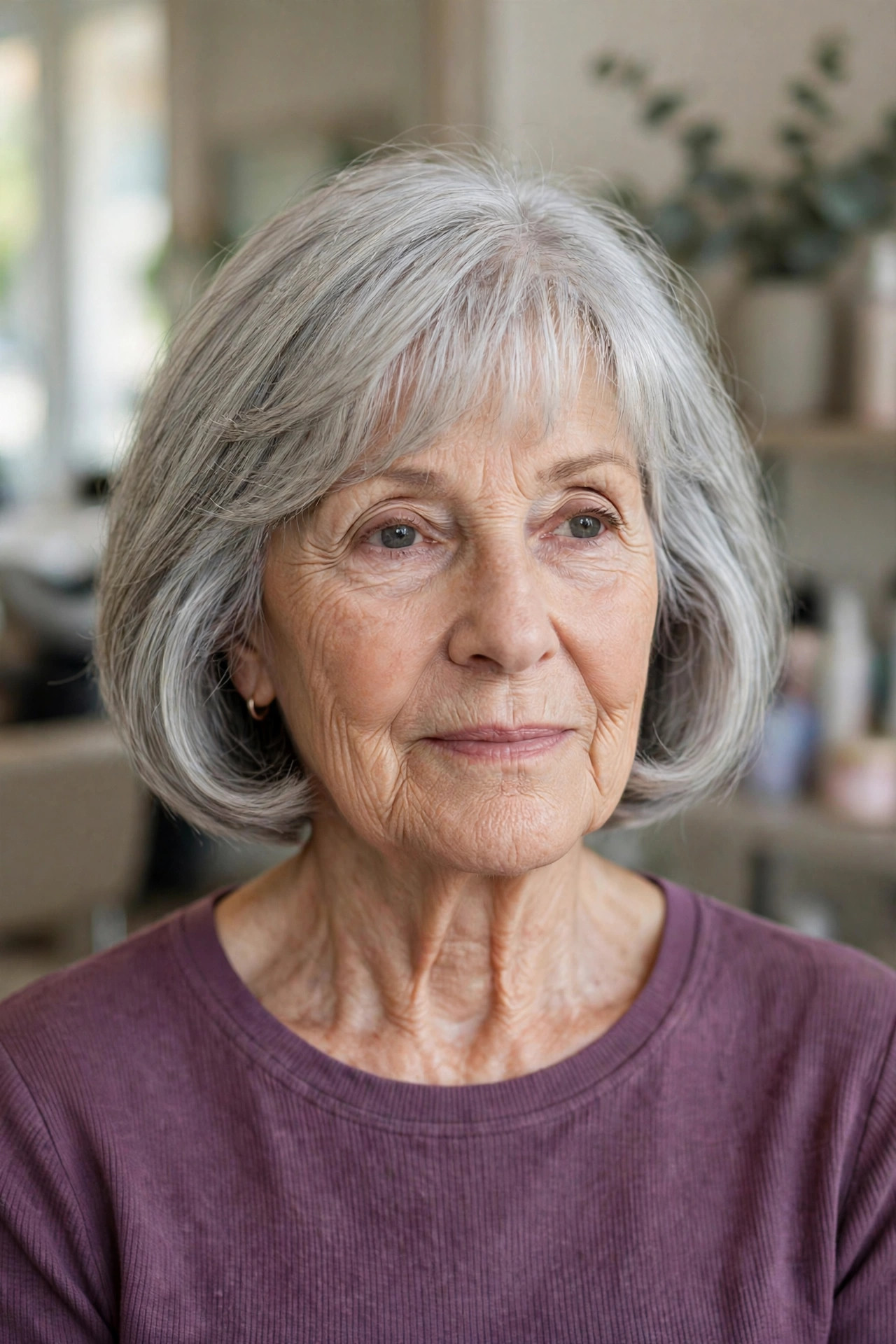
The wispy fringe is the gentlest way into fringe life. It is point-cut sheer — you can almost see through it — so it softens the forehead and brow line without the commitment, weight, or grow-out of a blunt fringe, and it melts straight into the sides of the bob. On a jaw-length French bob it keeps the whole look light, which suits faces that a heavy fringe would overwhelm. More fringe variations live in our bob with bangs for women over 60 guide.
Two habits keep wispy bangs wispy rather than stringy. Dry them first, before the rest of the hair, sweeping them side to side with the dryer so they fall in pieces instead of a sheet. And expect the fringe to pick up skin oil faster than the lengths — a light dusting of dry shampoo at the fringe roots on day two separates the pieces again in seconds.

9. French Bob Tucked Behind One Ear
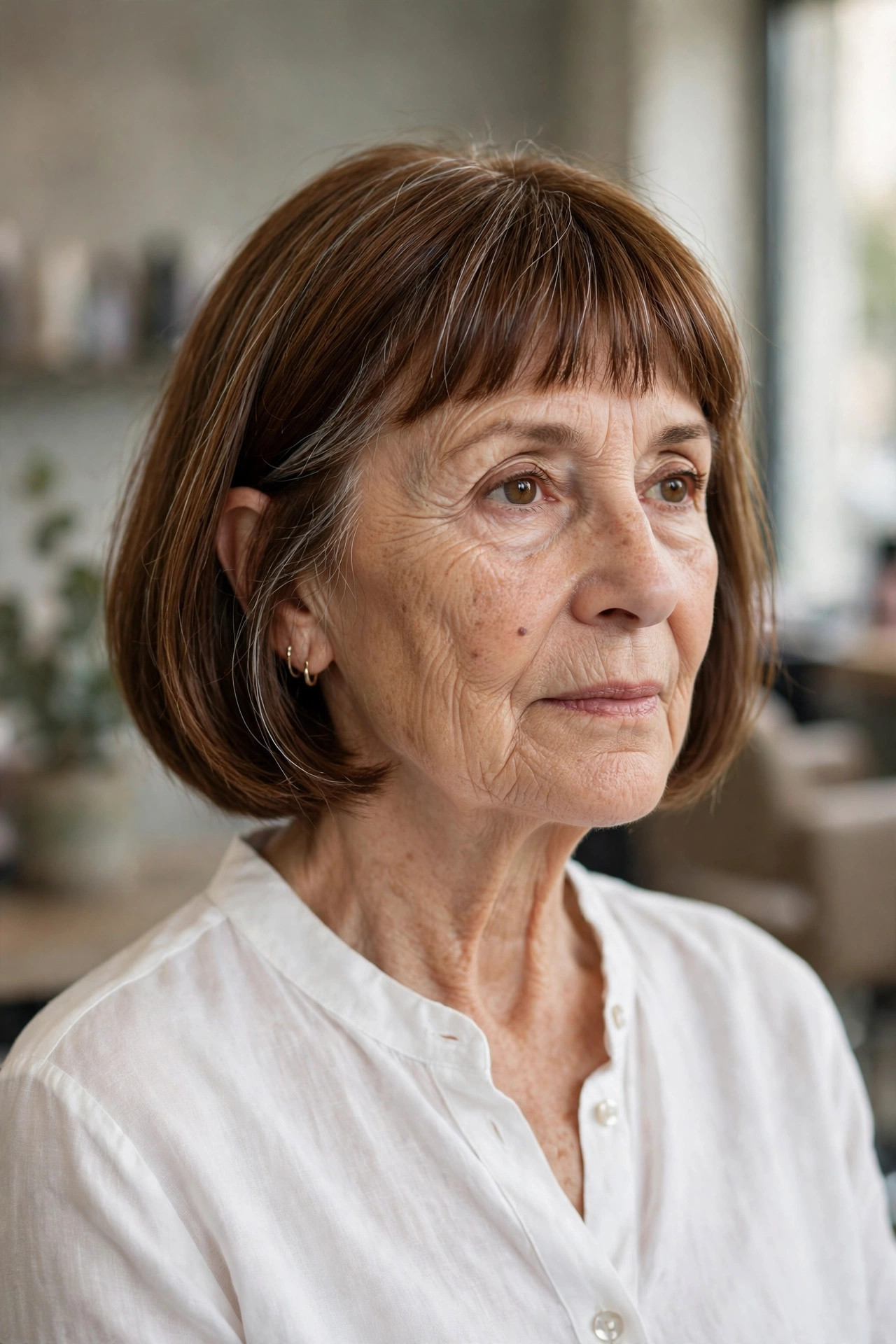
A small styling gesture changes the whole architecture here: one side of the chin-length bob is tucked behind the ear, showing the earring and opening up that side of the face, while the other side falls forward in the classic curved-under line. The asymmetry is subtle but it does real work — it lengthens the look of the neck, shows off the jaw on the tucked side, and keeps the softness on the open side.
For the tuck to hold on fine or slippery hair, give it something to grip: a flat claw clip hidden just behind the ear, or a mist of texture spray before tucking. This is also the friendliest version for glasses wearers who find a full curtain of hair fights with their frames. Keep the fringe short and straight so the front stays tidy while the sides do two different things.

10. Salt-and-Pepper French Bob with a Center Part

Salt-and-pepper hair — dark and silver genuinely mixed — has a dimension no single color can imitate, and the center-parted French bob shows it off symmetrically. The two curtains fall evenly from a precise middle part to the chin, the blunt-ish ends curve under, and the silver strands sit exactly where the light lands: along the part, the surface, and the front edges. No fringe, no sweep — the color pattern is the design.
A center part is the most honest style there is, so the cut underneath has to be precise: ask for an evenness check with the hair dry, because a quarter-inch difference shows. The payoff is versatility — this version parts on the side just as happily on days you want a change. Salt-and-pepper hair can look dull if it dries out, so weekly purple shampoo to keep the silver bright and the dark from looking muddy is worth the habit.

11. Wavy French Bob with No Fringe
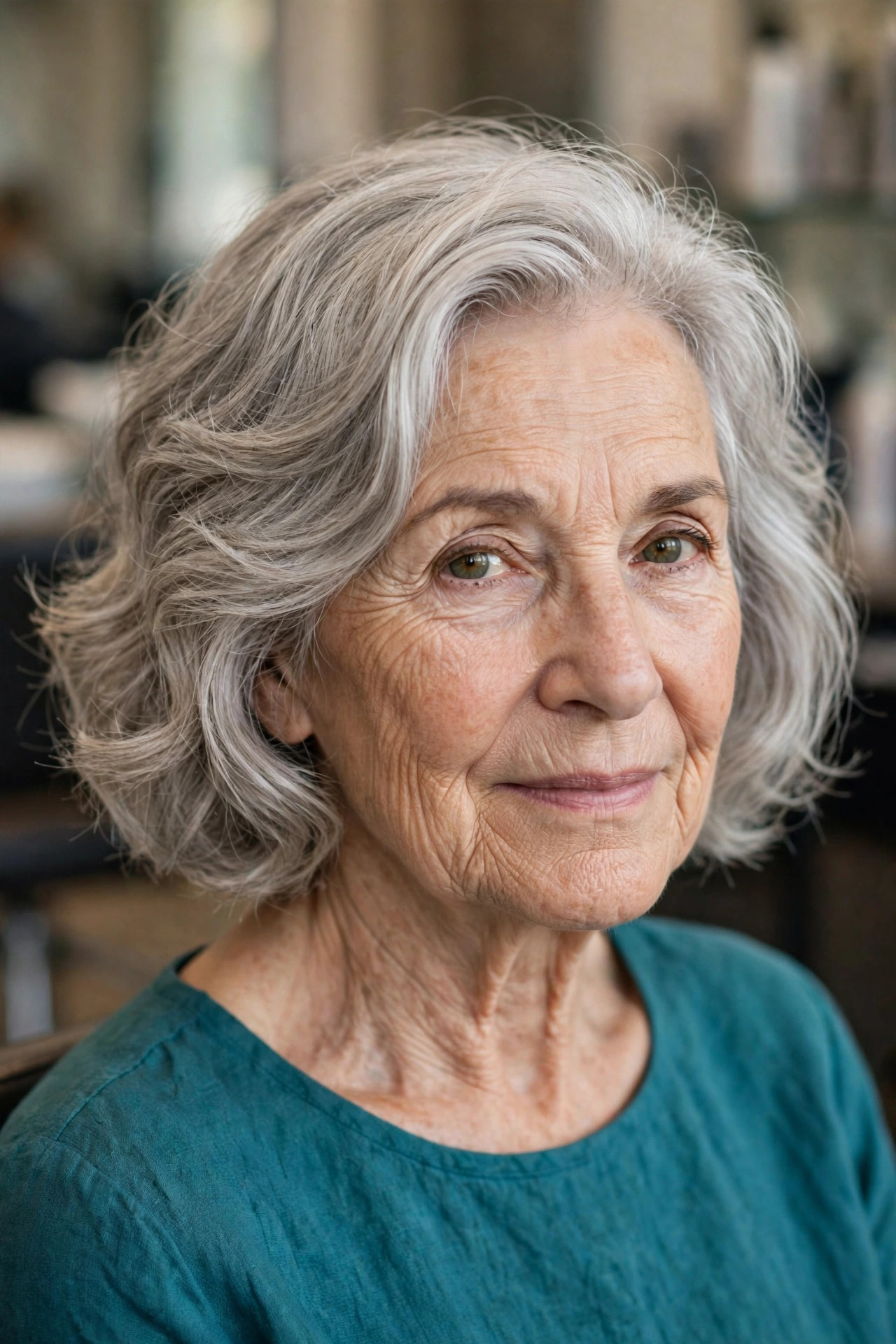
This is the wavy French bob stripped back to its essentials: chin length, loose natural waves, ends curving slightly under, and a completely open face. Without a fringe, the waves frame the cheeks directly, which softens the jaw and puts the attention on the eyes. It is the version to choose if you have tried fringes and always end up pinning them back by lunchtime.
Because there is no fringe to hide behind, the part does the framing work — a soft off-center part suits most faces, and drying the front sections away from the face keeps the wave from falling forward. Texture spray scrunched into damp hair is genuinely the whole styling routine on most days. If you love this undone wave finish at slightly different lengths, our tousled wavy bob ideas are the natural next read.
12. Glossy Brunette French Bob with Silver Face-Framing Strands
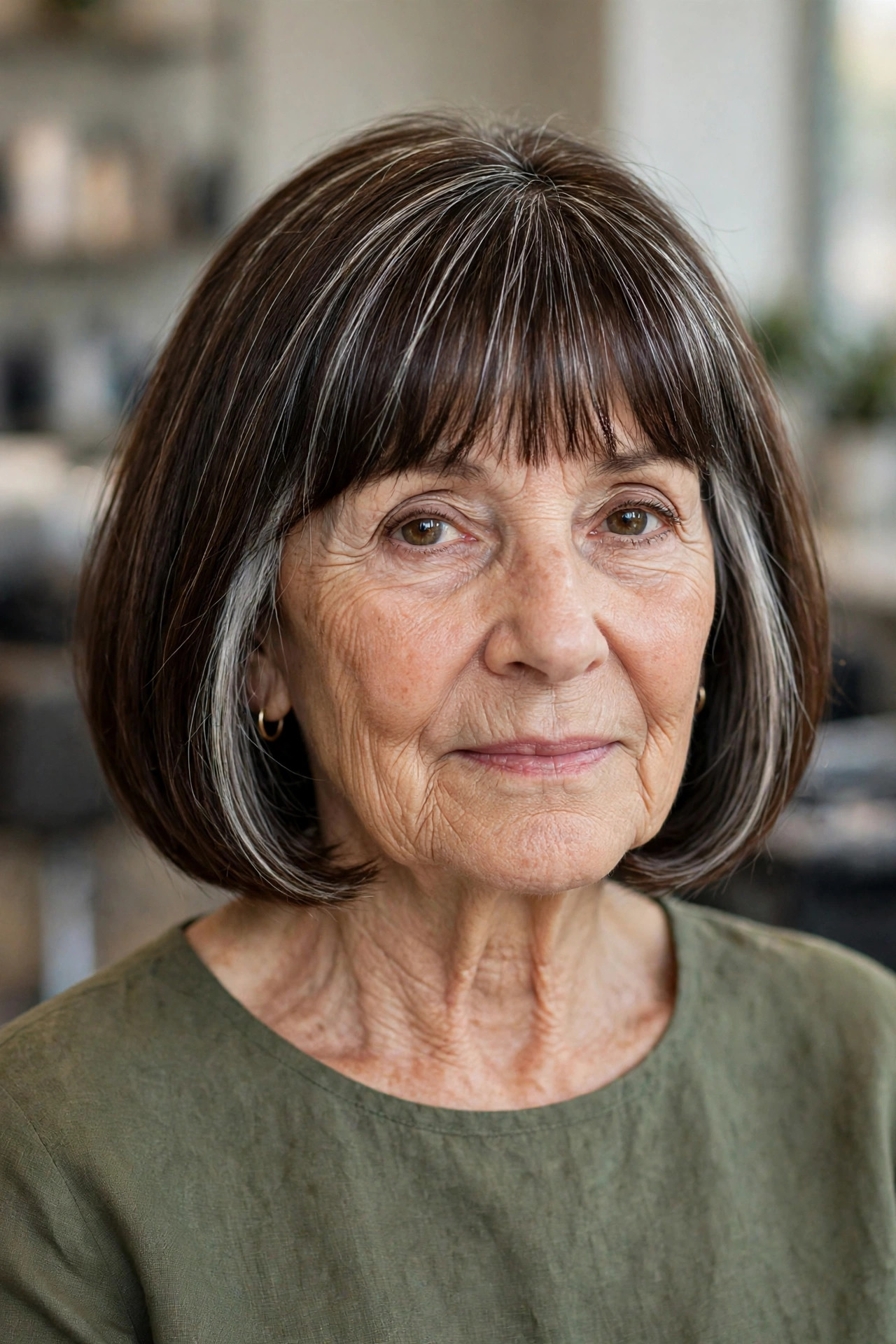
Keeping your brunette color after 60 does not mean fighting the gray — this version hires it. The bob itself is a rich, glossy dark brown cut to the chin with a soft full fringe, and the silver is left to grow in exactly where it arrives first: in bright strands framing the face. Those pale front pieces do what expensive highlighting used to do — they lift the complexion and light up the eyes — and the regrowth line disappears because the silver is the design.
Ask your colorist to gloss the brown rather than permanently re-dye the whole head, and to leave the front silver untouched. A chocolate-toned gloss at home refreshes the brunette depth between appointments without touching the silver frame. Gloss is also this cut’s shine secret: the French bob’s clean perimeter shows dullness quickly, and a glossing routine keeps the surface reflective.

13. French Bob with a Long Side-Swept Fringe

Where the baby fringe is bold, the long side-swept fringe is diplomatic. Cut long — brushing the cheekbone — it sweeps diagonally across the forehead and melts into the longer side of the bob, so the whole front of the cut moves in one fluid direction. It softens a high forehead, covers a hairline you would rather style around than expose, and grows out into ordinary face-framing pieces with no awkward in-between stage.
Train it while damp: dry the fringe in the direction of the sweep first, because mature hair sets where it dries and a fringe dried forward will keep falling forward all day. A root-boosting styler at the front gives the sweep its lift without a full blowout. This is also the most glasses-compatible fringe in the guide, since it sits to one side rather than resting on the frames.
14. Air-Dried French Bob for Natural Texture

Every cut so far can be air-dried, but this one is designed for it. The length is cut to the chin with the natural bend of the hair in mind — your stylist should cut it dry, or at least finish it dry, watching where your own texture wants to curve. The light fringe is kept slightly longer so it settles rather than springs. The result is a bob that falls into place out of the shower with nothing but a scrunch.
The honest trade: air-dry cuts put the maintenance in the trim instead of the styling. Book every six to seven weeks, because the shape is the styling, and once the ends pass the chin the whole thing loses its line. Wash-day routine is one product — texture or sea spray in damp hair — and hands off while it dries. Sleeping on satin keeps the dried shape smooth for a second day.
15. French Bob with Feathered Ends for Thicker Hair
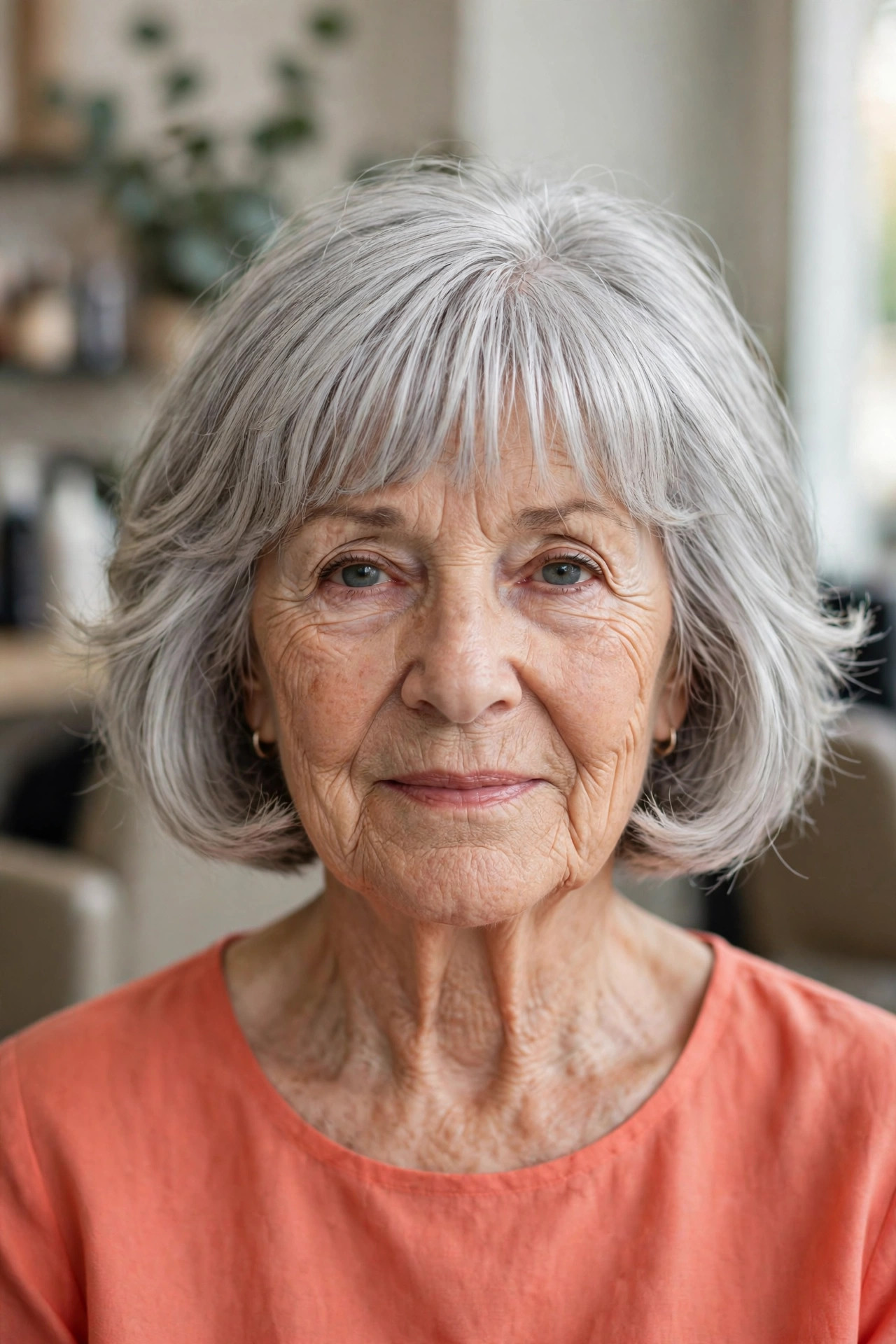
Thick hair worn at chin length has one classic problem: it builds a heavy, triangular shelf at the bottom. Feathering is the structural fix — the ends are softened and lightly flicked so the weight lifts off the perimeter, while the base stays blunt enough to keep the French bob’s clean outline. With a straight full fringe up top, the silhouette goes from heavy block to balanced shape.
Ask for the weight to come out of the ends and interior, never off the surface, where thinning thick mature hair invites frizz. This is one of the few versions that genuinely benefits from a hot-air styler: it smooths the thicker lengths and sets the little flick at the ends in one pass. Between washes, the feathered ends are the first place to look dry, so keep oils and heavy creams there and off the roots.

16. Short French Bob with a Mini Fringe
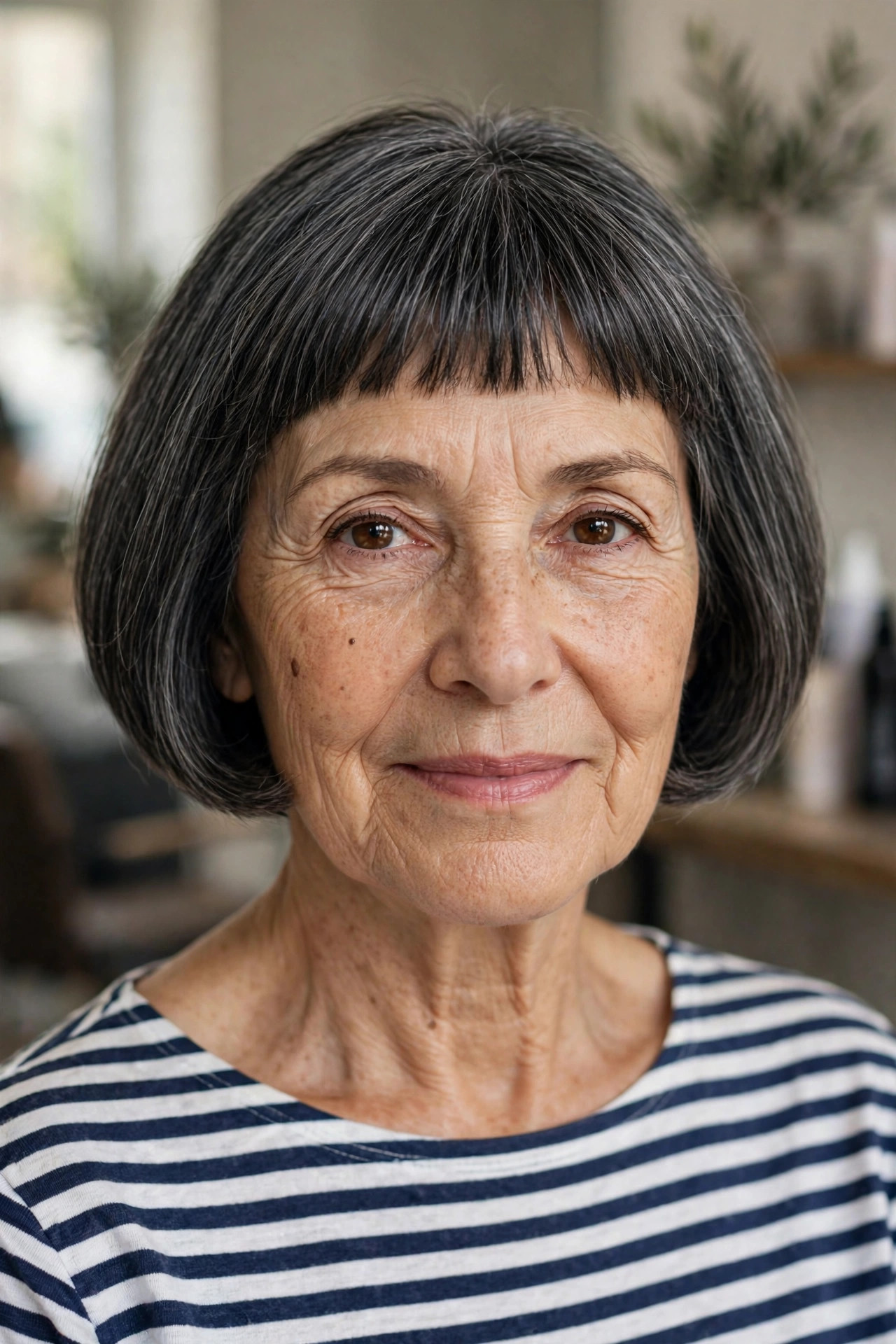
The shortest true French bob in this guide: the perimeter sits high, between the lips and the chin, and the fringe is a mini — short, straight, and neat. It is still unmistakably a bob, with a full blunt perimeter curving under, not a pixie: the sides keep their length and the back is not tapered. What the extra shortness buys is definition — the jaw, the neck, and the cheekbones all get underlined at once.
This length is a commitment to trims: at four to five weeks the line is perfect, and by seven it is a different haircut. It suits finer hair beautifully, because there is so little length for fine ends to thin out across, and it is the fastest wash-and-dry in the guide. A mini flat iron is the right-sized tool for the fringe and the front edges — one slow pass, always over heat protection.

17. French Bob with Glasses and a Soft Fringe

Glasses and a fringe can be best friends if the lengths are negotiated properly. Here the soft fringe is cut to rest just above the top of the frames, so it never gets trapped behind the lenses or pushed sideways by them, and the chin-length sides curve under clear of the arms of the glasses. The frames become part of the frame of the face — the fringe underlines the brows, the glasses underline the eyes, and the bob underlines the jaw.
Bring your glasses to the appointment and have the fringe cut with them on; a fringe trimmed without frames is a guess. Tortoiseshell and other warm-toned frames are especially kind to silver hair, adding the warmth the color itself does not. If your frames are bold, keep the fringe soft like this one — a blunt heavy fringe plus bold frames is a lot of horizontal lines in one face.
18. Rounded French Bob with Crown Volume
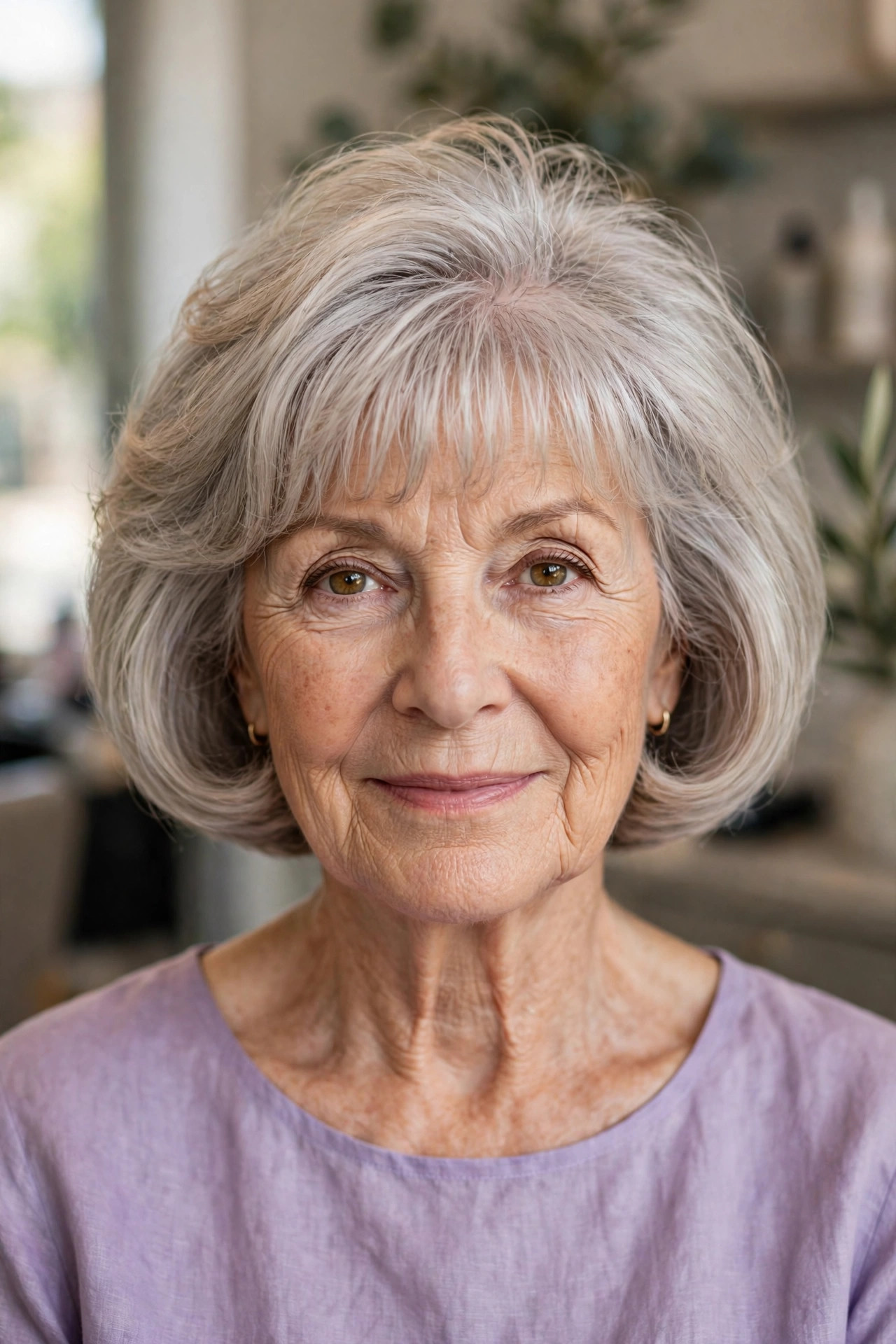
Most French bobs are described from the front; this one is engineered from the top. The silhouette is rounded — the crown is lifted and the sides curve in a smooth arc down to the jaw — which counteracts the flattening that happens at the back and top of the head with age. The fringe is soft and full, and because the volume is built into the shape rather than teased in, it survives a day out of the house.
The styling is one move: dry the crown sections up and forward, the opposite of their natural fall, then let them settle back. A volumizing mousse at the roots makes that lift last. When the crown stops holding its curve by midday, that is your trim signal — rounded shapes lose their architecture first at the top. The classic foundations behind this shape are covered in our timeless bob hairstyles for women over 60.
19. French Bob with a Soft Curtain Fringe
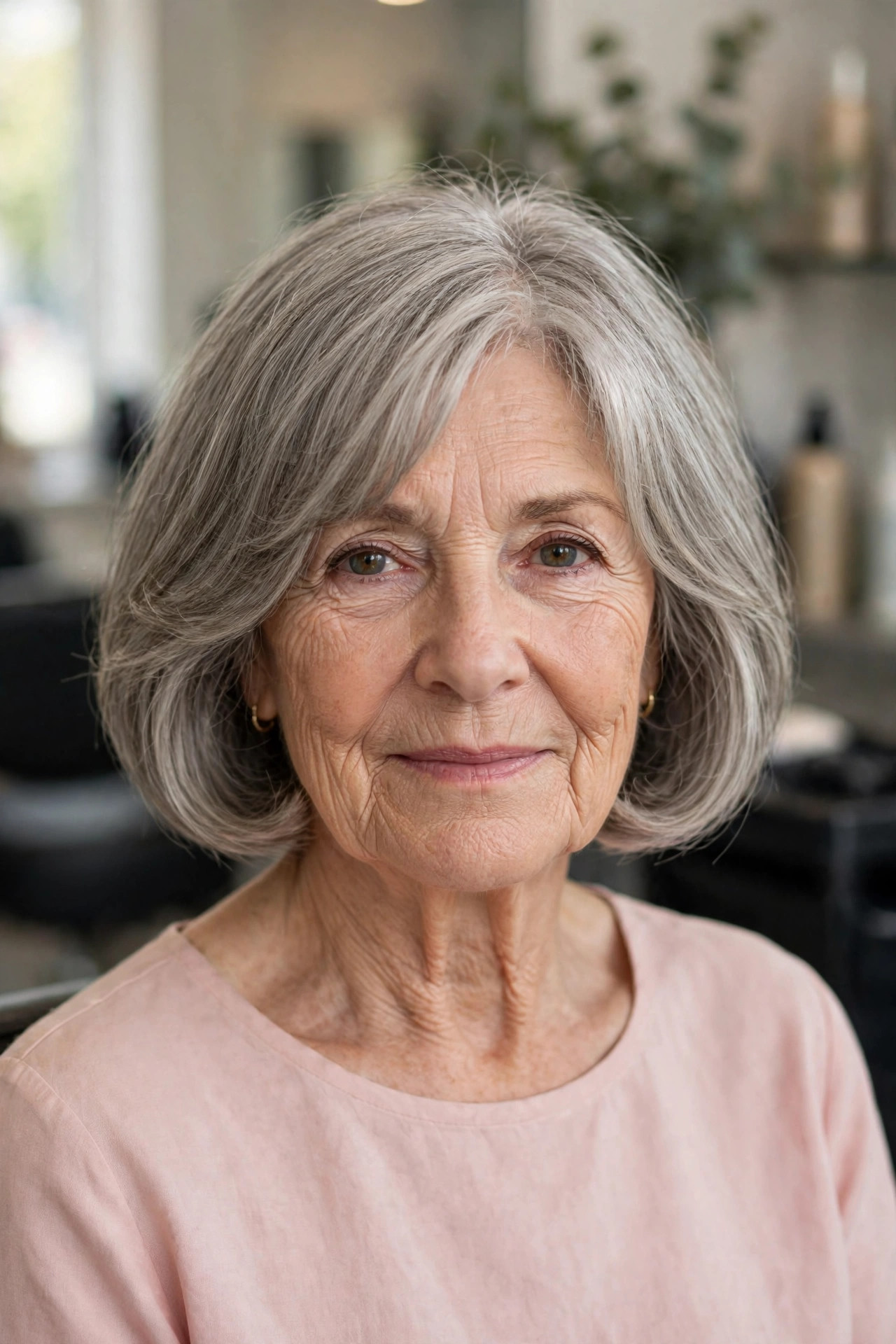
The curtain fringe is the French bob’s most forgiving fringe: parted in the middle, longer at the sides, and cut to sweep open to the cheekbones like curtains being drawn. It gives you the softness and forehead coverage of a fringe with none of the upkeep of a straight-across one — it can be worn open, swept to one side, or tucked away entirely on days you want your face clear. The chin-length ends keep their gentle under-curve.
Curtain fringes live or die on the first two minutes of drying: dry them forward and flat against the forehead first, then split and sweep each side back — dried any other way, they separate in the wrong place all day. This is the fringe to choose if you are fringe-curious but commitment-shy, because growing it out is simply letting the sides become face-framing layers.
20. Polished French Bob with a Blowout Finish
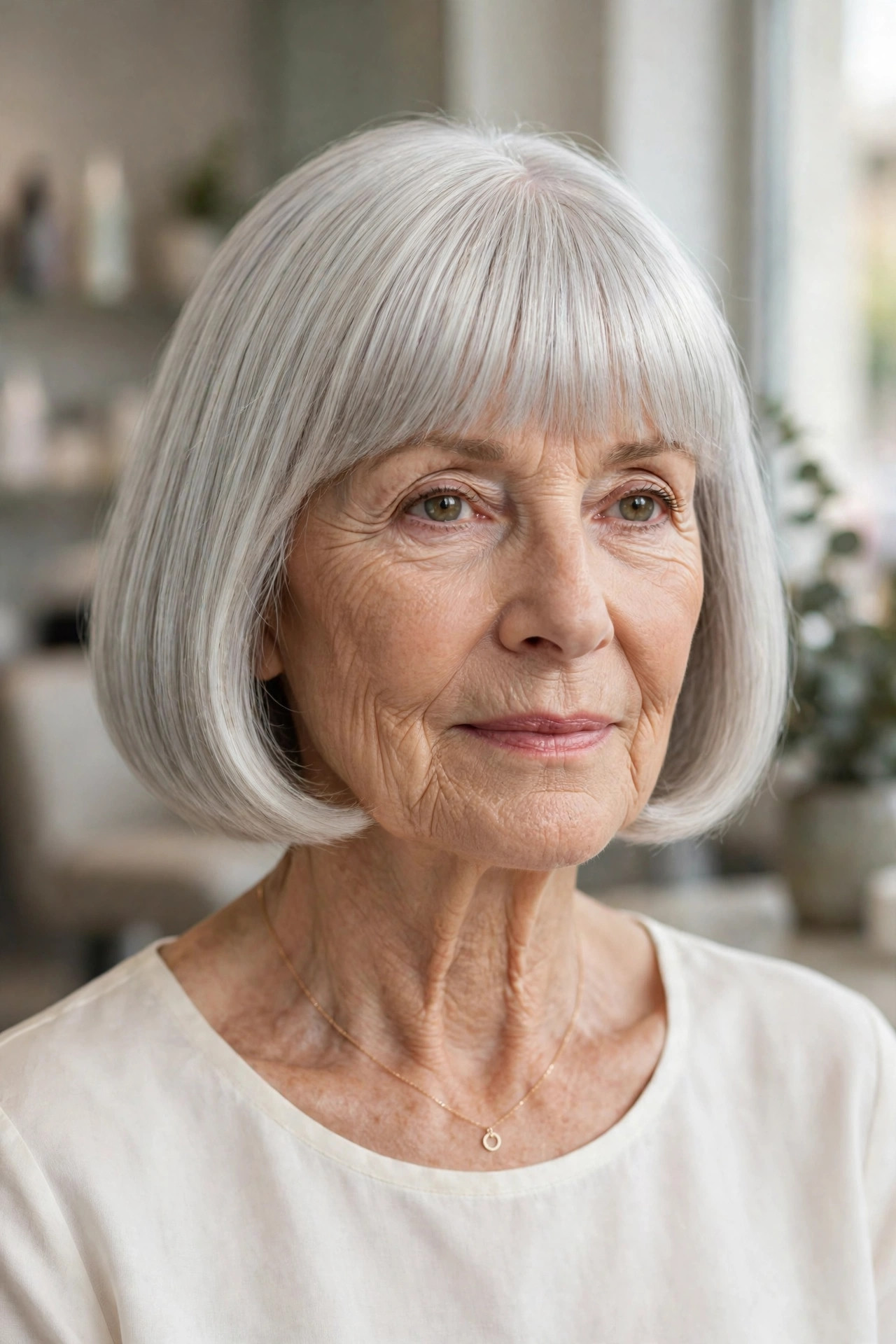
The finale is the French bob dressed up: the same chin length, blunt perimeter, and straight full fringe, but finished with a smooth blowout so the ends roll under in one glossy curve. On luminous silver hair the effect is almost graphic — clean lines, reflective surface, nothing out of place, yet still soft enough to move when you turn your head. This is the version for photographs, lunches, and days you want the full Parisian effect.
The blowout is a technique, not a product pile: heat protection first, then a round brush section by section, rolling the ends under and letting each section cool before you move on — the cooling is what sets the curve. Save it for when it counts; worn daily, high heat will dull silver hair, and this cut’s everyday air-dried version is ideas 1 and 14. A final cool shot and a light serum through the ends only keeps the polish without collapsing it.

Recommended Products
Five products cover almost every French bob in this guide: a volumizing mousse that keeps fine hair’s blunt base looking full, a purple shampoo to keep silver perimeters bright, a texturizing putty for the undone finish, the round brush behind every curved-under end, and a sea spray for the air-dried versions.
French Bob Care Tips for Women Over 60
- Trim every 5–7 weeks — the French bob is a precise length; once the ends pass the jaw, the whole proportion changes.
- Protect the blunt base — say no to thinning shears on the perimeter; softening belongs on the surface only.
- Air-dry first, heat second — most versions in this guide are designed to dry naturally; save the blowout for occasions.
- Dry the fringe first — whatever fringe you choose, it sets while damp; two minutes with the dryer before the rest.
- Keep silver bright — purple shampoo weekly and moderate heat; silver scorches and yellows faster than pigmented hair.
- Light products only — mousse at roots, putty or spray through ends; heavy oils collapse the shape and separate fine ends.
- Sleep on satin — a satin pillowcase preserves the curved-under ends and the fringe overnight.
- Refresh, don’t restyle — day-two French bobs revive with dry shampoo at the roots and a pinch of putty at the ends.
Frequently Asked Questions
What makes a bob a French bob?
Four things: the length sits between the chin and the jaw — never at the shoulders; the perimeter is blunt or only lightly softened, with the ends curving slightly under; the finish is undone rather than sleek or heavily styled; and the classic version carries a short fringe, straight-across or softly full. An angled or stacked back, collarbone length, or a polished helmet finish all belong to other bob families.
Is a French bob flattering after 60?
Very — it is one of the most face-framing cuts available at any age. The fringe draws attention up to the eyes and softens the forehead, while the chin-to-jaw ends underline the cheekbones and jaw instead of dragging the eye downward the way longer hair can. The adaptation that matters after 60 is keeping the base blunt for fullness while softening only the surface, so finer hair never goes stringy at the ends.
Does a French bob work on fine or thinning hair?
Yes, if it is cut for fine hair: a genuinely blunt base line, softening kept to the last centimetre, a light fringe rather than a heavy one, and no thinning shears anywhere near the perimeter. The shorter versions — ideas 6 and 16 in this guide — suit fine hair best, because there is less length for fine ends to spread thin across. Volumizing mousse at the roots, never the ends, completes the illusion of thickness.
Do I have to have a fringe with a French bob?
No. The fringe is the classic signature, but the cut keeps its identity without one as long as the length, blunt-ish perimeter, and undone finish stay. A deep side part (idea 5), a center part (idea 10), and the wavy open-faced version (idea 11) are all true French bobs. If you are fringe-curious but cautious, the curtain fringe (idea 19) and the wispy fringe (idea 8) are the lowest-commitment ways in.
How do I style a French bob without heat?
Start with the right cut — idea 14 is designed for air-drying, with the length set dry so your natural bend is accounted for. Then the routine is: texture or sea-salt spray scrunched into damp hair, the fringe dried or smoothed into place while damp (fringes are the one part worth two minutes of attention), and hands off until fully dry. On day two, revive with dry shampoo at the roots and a pinch of texturizing putty through the ends.
How often does a French bob need trimming?
Every five to seven weeks for most versions — the cut is a precise proportion, and once the ends grow past the jaw the fringe-to-length balance that makes it French is gone. The short version (idea 16) needs four to five weeks. The forgiving exceptions are the tousled and curtain-fringe versions, which still look intentional at week eight.
The French bob endures because it is not really a trend — it is a proportion. Chin to jaw, a base kept strong, ends that turn under, a finish that looks lived-in rather than labored over: get those right and the cut flatters silver, salt-and-pepper, brunette, fine, thick, wavy, and straight hair alike. Take your favorite idea from this list to your stylist, say the two sentences that matter — blunt base, softened surface — and let the most chic haircut in the world do the rest. For more of this season’s direction, our roundup of trendy haircuts for women over 60 shows where the French bob sits among the year’s other favorites.