How to Transition to Gray Hair Over 50 With Flattering Cuts
This post contains affiliate links. As an Amazon associate, I earn from qualifying purchases. I only recommend products that are of high quality and that I would use myself.
There comes a moment — usually in front of the bathroom mirror, three weeks after a root touch-up — when the math stops working. The appointments, the cost, the roots that seem to reappear overnight. If you have been wondering how to transition to gray hair over 50 without spending a year looking like you simply gave up, this guide is your map: there are far more routes than the two you have heard about, and most of them look good at every single stage.
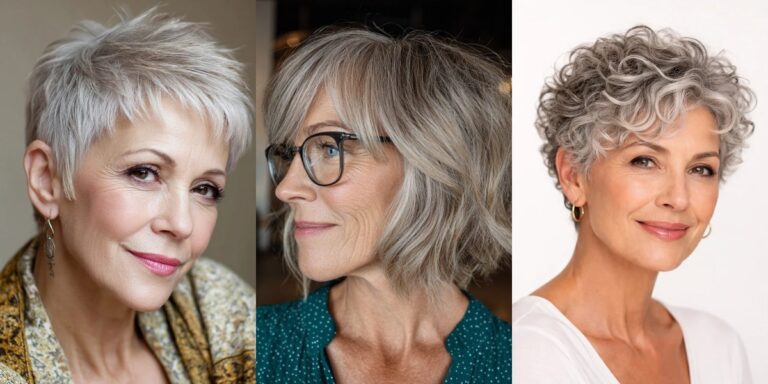
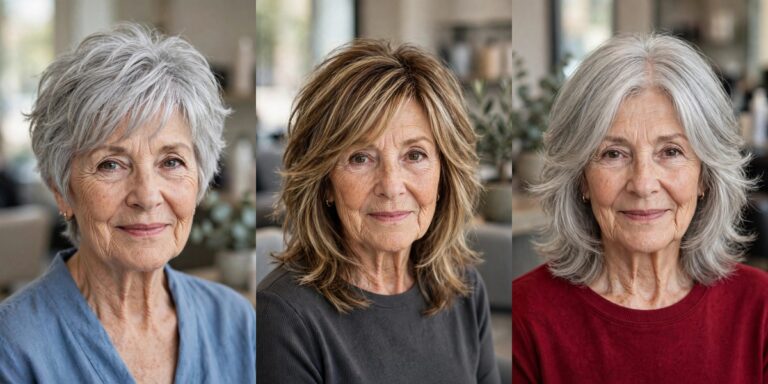
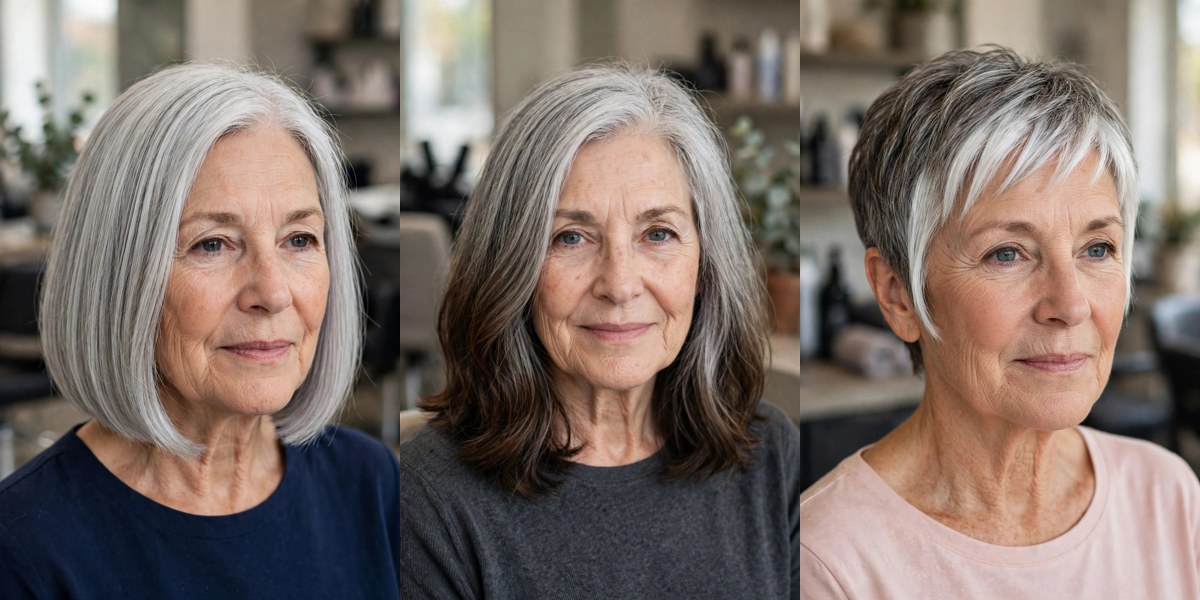
The secret is pairing each transition strategy with the right cut. Blending techniques like gray blending highlights, herringbone highlights and balayage erase the harsh demarcation line, while flattering cuts — a layered bob, a brave pixie chop, a forgiving shag — make every in-between stage look like a deliberate style. If you are still deciding on length, our roundup of short hairstyles for women over 50 and our guide to bob haircuts for women over 50 are good places to browse shapes first.
Below are 20 transition routes, from the gentlest blend to the boldest cold-turkey chop, each with an honest explanation of who it suits, how long it takes, and how to care for it. Pick the route that matches your patience, your budget, and your starting color — and bring the photo to your stylist.
Table of Contents
- 1. Gray Blending Highlights on a Layered Bob
- 2. The Pixie Shortcut — Chop Your Way to Gray
- 3. Herringbone Highlights on a Shoulder-Length Lob
- 4. The Cold-Turkey Bob Chop — Sleek and Fully Silver
- 5. Lowlights for Blending on Feathered Layers
- 6. Salt-and-Pepper Balayage on a Wavy Lob
- 7. Gloss Treatments on a Fully Transitioned Silver Bob
- 8. Root Smudge on a Textured Crop
- 9. Hairline Babylights on a Soft Bob
- 10. Grombre Grow-Out on a Long Bob
- 11. Charcoal Lowlights on a Choppy Pixie
- 12. Fully Transitioned White-Silver Stacked Bob
- 13. Silver Money Piece on a Pixie-Bob (Bixie)
- 14. Toner-Balanced Transition on a Curly Bob
- 15. The Graduated Bob for the Mid-Transition Months
- 16. Face-Framing Layers on Fully Gray Medium Hair
- 17. Blended Gray on a Wavy Shag
- 18. Silver Long-Top Pixie — the Grow-Out Friendly Finish
- 19. Ash Blonde Bridge Color on a Blunt Bob
- 20. The Final Reveal — Polished Silver Long Pixie with a Side Sweep
- Recommended Products
- FAQs
Quick pick — choose your route: Want it over fast? → The Pixie Shortcut (#2) or Cold-Turkey Bob (#4). Want it invisible? → Gray Blending (#1), Herringbone Highlights (#3) or a Root Smudge (#8). Dark hair you still love? → Lowlights (#5) or Charcoal Dimension (#11). Keeping your length? → Grombre Lob (#10) or Face-Framing Layers (#16). Curly? → Toner-Balanced Curly Bob (#14).
1. Gray Blending Highlights on a Layered Bob

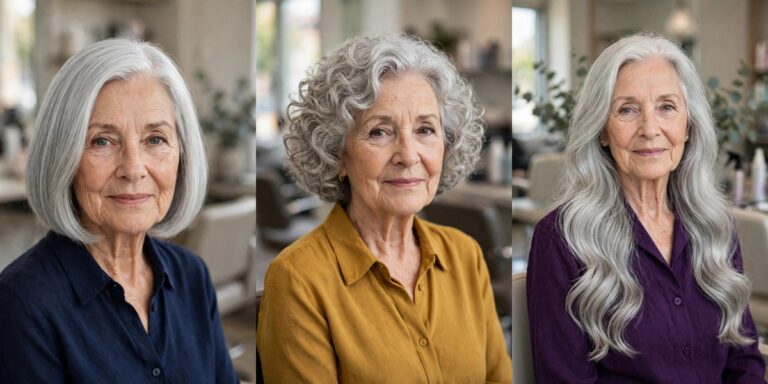
This is the gentlest route of all, and the one most colorists recommend first. Instead of covering your gray, your stylist weaves fine highlights in shades close to your natural silver through your dyed color, so the gray roots stop reading as a line and start reading as dimension. Paired with a layered bob, the blend looks deliberate from day one — the layers scatter light so no single band of regrowth can dominate.
Gray blending works best if your hair is already light to medium brown or dark blonde, and the layered bob flatters almost every face because the shortest layers can be placed at your cheekbones or jaw, wherever you want the eye to go. Expect a salon refresh every 10–12 weeks rather than every three, and keep the silver pieces bright with a purple shampoo once a week so they stay icy instead of drifting yellow.


2. The Pixie Shortcut — Chop Your Way to Gray
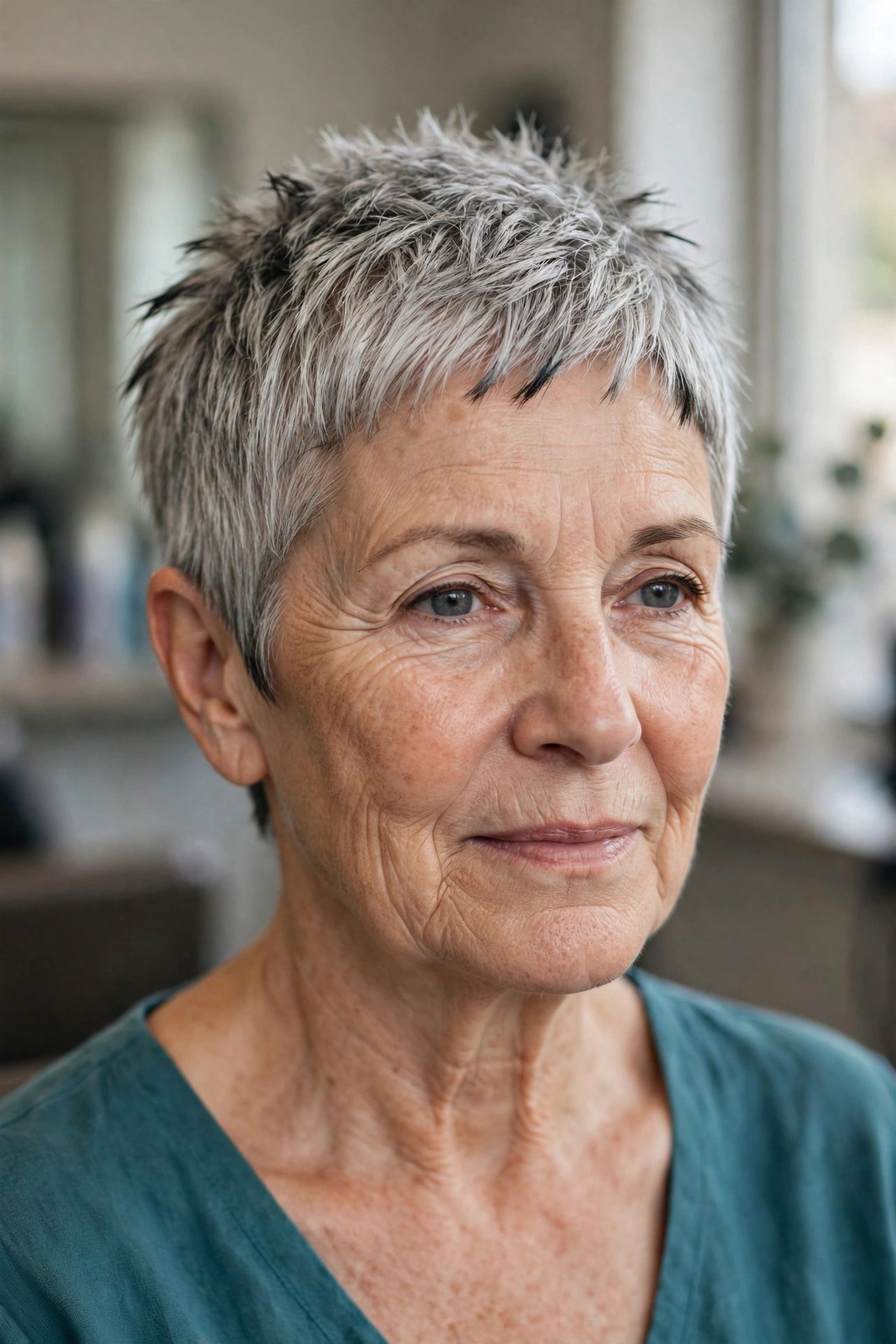
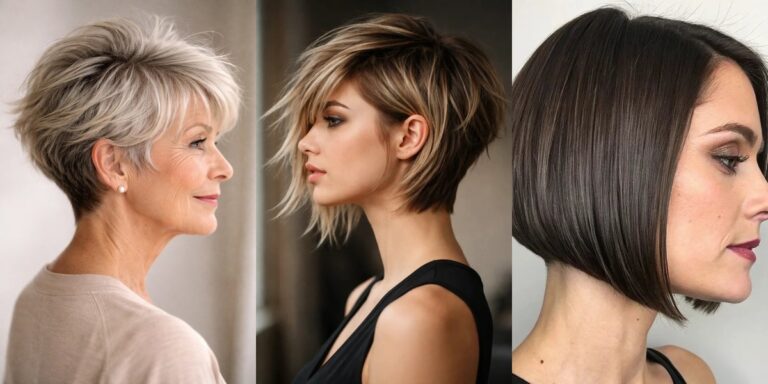
If the thought of a year of two-tone hair makes you want to hide under a hat, there is a faster door: cut it off. A textured pixie removes most of the old dyed length in one appointment, leaving only a whisper of color at the very tips — and within two or three trims, that is gone too. What surprises most women is how liberating it feels; the transition shrinks from a year-long project to a single bold afternoon.
The pixie shortcut suits women with defined cheekbones or a long neck, and it is a gift for fine hair, which looks twice as thick when it is not weighed down. If you are nervous, browse our pixie cuts for women over 50 first and bring two or three favorites to your stylist. Style with a pea-sized dab of texturizing putty raked through dry hair — thirty seconds, done.


3. Herringbone Highlights on a Shoulder-Length Lob
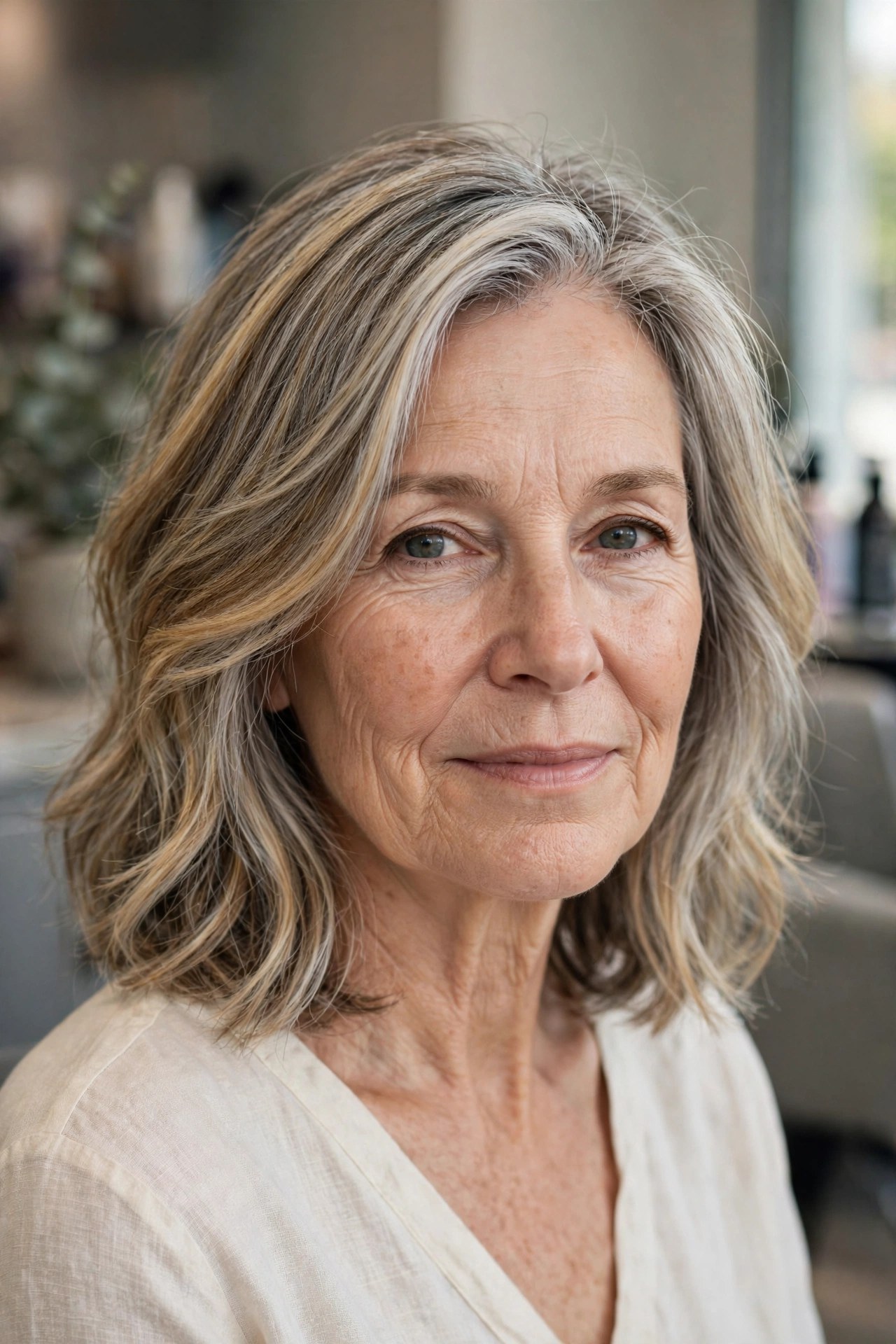
Herringbone highlights borrow their name from the angled pattern of herringbone floors: foils are placed on the diagonal in an irregular mix of warm and cool tones, deliberately mimicking the scattered, unpredictable way gray actually grows in. Because your own silvers become one of the ‘shades’ in the pattern, regrowth disappears into the design instead of fighting it. On a shoulder-length lob, the effect is soft, expensive-looking dimension.
This is the route to choose if your gray is coming through in patches — very white at the temples, still dark at the back — because the irregular placement evens out the contrast. The lob length keeps things forgiving while the pattern does the camouflage work. A shine serum through the ends keeps the mixed tones looking like one intentional color story, and touch-ups can stretch to three or four months.

4. The Cold-Turkey Bob Chop — Sleek and Fully Silver
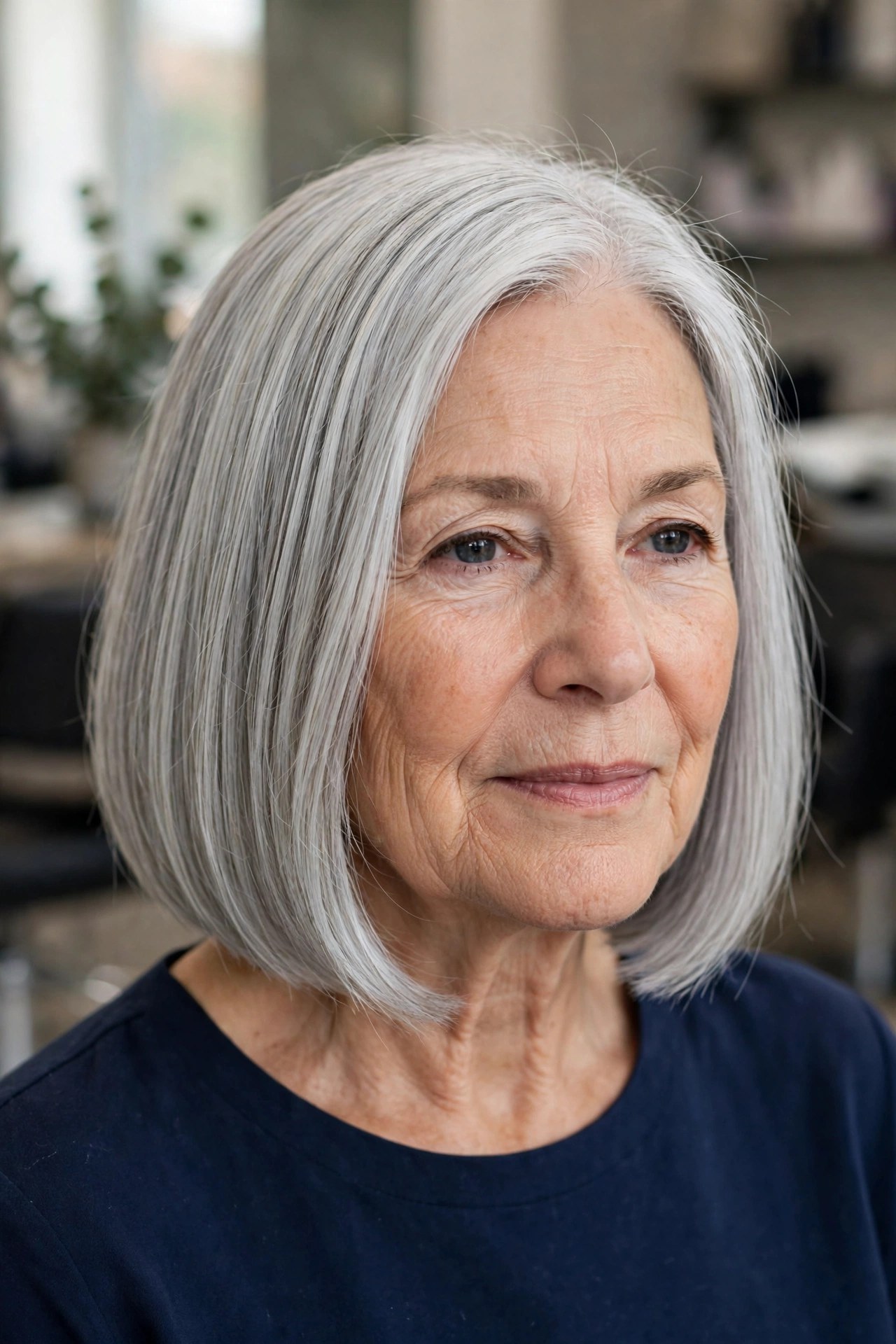
Cold turkey, but make it chic. This route skips blending altogether: you grow your roots for a few months, then cut a sleek chin-length bob that removes the last of the dye in one decisive appointment. The result — a clean, glassy, fully silver bob — reads as a style statement rather than a work in progress, which is exactly why so many women find this the most confidence-boosting route of all.
The blunt perimeter is doing quiet heavy lifting here: it makes fine or thinning ends look dramatically thicker, and the chin length frames the jaw beautifully. It does ask for sleek styling, so protect the hair with a heat protectant and pass a flat iron through once, bending the ends slightly under. Book trims every six weeks to keep that sharp line honest.


5. Lowlights for Blending on Feathered Layers

Highlights get all the attention, but for naturally dark hair, lowlights are the smarter blending tool. Your colorist weaves ribbons of your original dark shade down through the gray and the faded lengths, bridging the gap between silver roots and old color so nothing looks stark. Feathered layers are the perfect partner cut: their soft, flicked edges blur every color transition even further.
Choose this route if you love your dark hair and simply want the gray to arrive quietly rather than taking over all at once. It is also one of the most forgiving options for coarse, wiry grays, because the darker lowlights add visual weight and control. Feathered layers suit round and heart-shaped faces especially well, opening up the cheekbones. Refresh the lowlights every eight to ten weeks.

Which cut will flatter YOUR face during the grow-out? Transition cuts work hardest when they are chosen for your face shape — a bob that ends at the jaw loves an oval face, while a round face glows with length below the chin. Try our free Face Shape Finder tool to discover your face shape in under a minute, then match it to the routes above before you book your stylist.
6. Salt-and-Pepper Balayage on a Wavy Lob
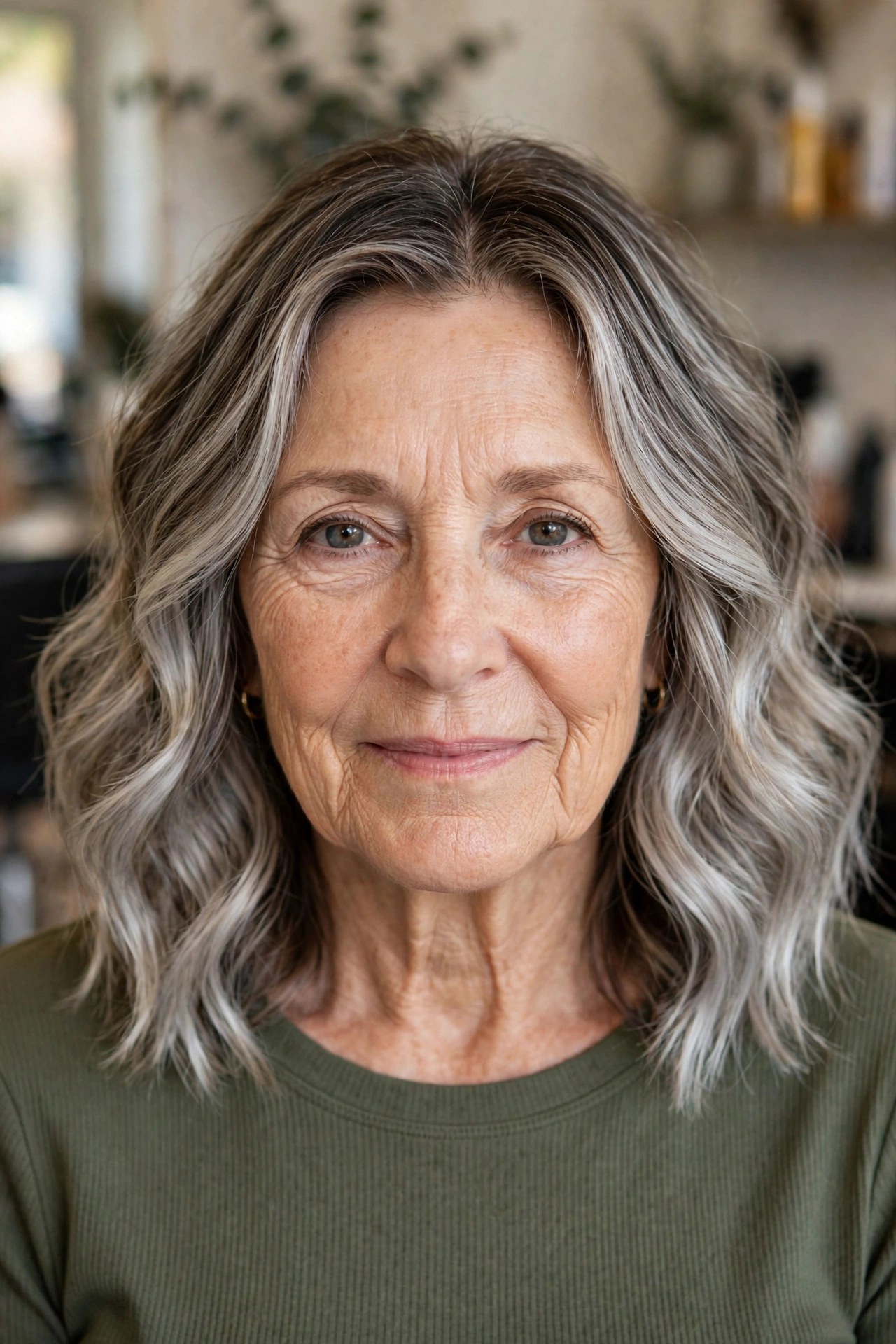
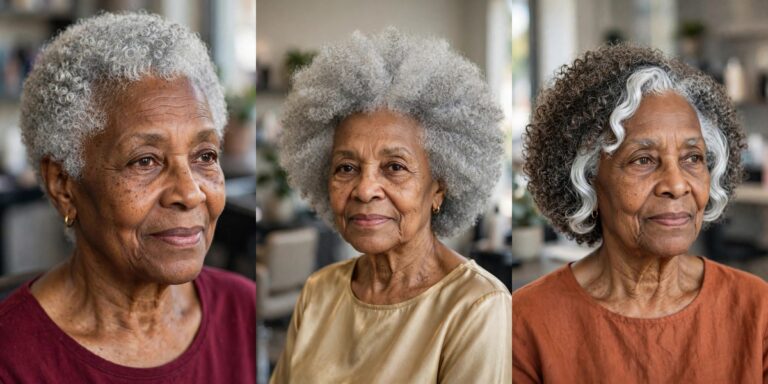
Balayage was practically invented for the gray transition. Your stylist hand-paints lighter, silvery pieces through the mid-lengths and ends while your natural root — gray and all — melts down into them with no hard line anywhere. On a wavy lob the painted pieces catch the light with every bend of the wave, and the whole thing looks sun-kissed rather than grown-out.
Because balayage lives away from the root, this is one of the lowest-maintenance routes on the list: many women go four to six months between appointments, with just a toner or gloss in between. It suits warm and cool skin tones alike, since your stylist can tilt the painted pieces ashier or more neutral to match your natural gray pattern. Scrunch a sea-salt spray into damp hair and let the waves do the rest.

7. Gloss Treatments on a Fully Transitioned Silver Bob
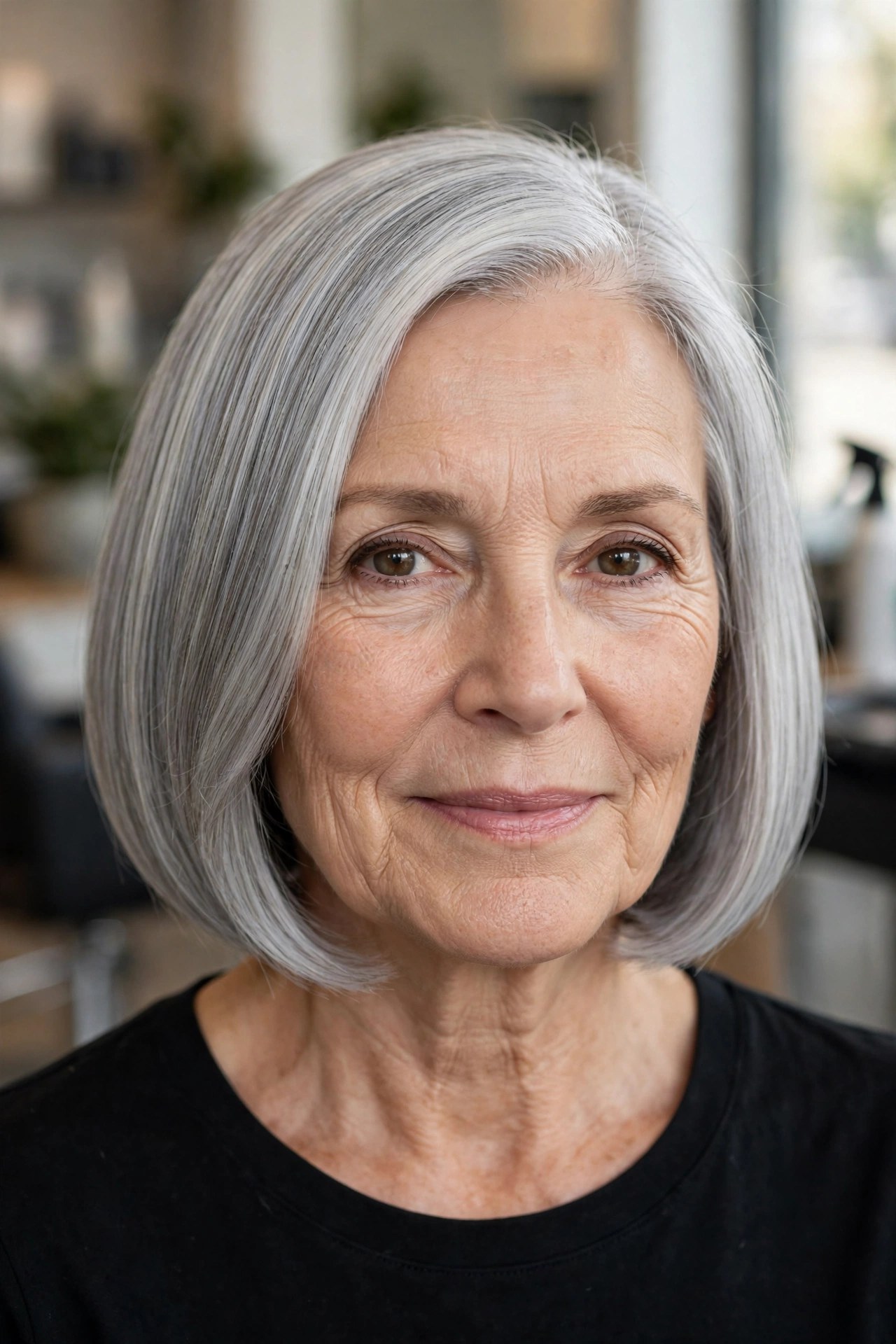
Once the last of the dye is gone, a clear or silver gloss treatment is the finishing touch that makes natural gray look luminous instead of dull. Gray hair has no pigment and a rougher surface, so it scatters light; a gloss smooths that surface down and adds the mirror-like shine you see here. On a polished jaw-length bob, the effect is pure elegance — this is the ‘after’ photo women screenshot for courage.
A salon gloss takes about twenty minutes at the basin and lasts four to six weeks, and there are gentler at-home versions for in between. Between glosses, a weekly purple shampoo keeps white and silver strands from picking up yellow tones from sun, water, and styling products. If you are still mid-transition, a gloss can also soften the contrast between your roots and ends — ask your stylist about a tinted version.
8. Root Smudge on a Textured Crop
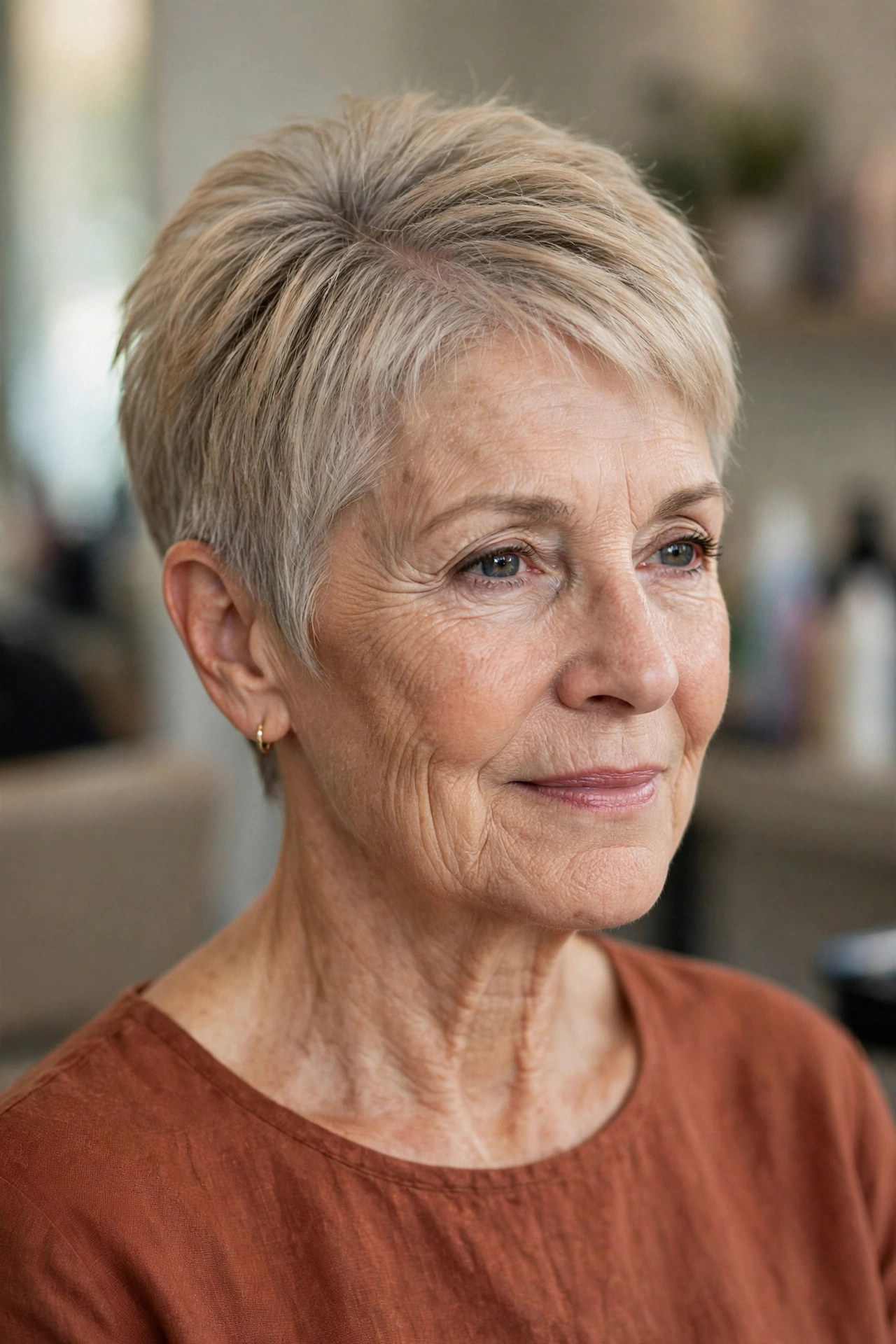
A root smudge (sometimes called a shadow root) uses a demi-permanent color close to your natural shade, blurred a few inches down from the scalp so the regrowth line dissolves into a soft gradient. There is no line to chase because the color was never applied in a straight edge. Paired with a short textured crop, it is the lowest-drama way to stop coloring ‘properly’ without announcing it.
Demi-permanent color fades gradually rather than growing out, which means no obvious band ever forms — the smudge simply gets softer until you are ready to let the gray take over completely. The textured crop keeps the whole look modern and takes minutes to style: work in a light foam for lift, tousle, and go. This route is ideal if your workplace or confidence needs the change to be nearly invisible.

9. Hairline Babylights on a Soft Bob

For many women, gray announces itself at the temples and hairline first — exactly where it is hardest to ignore. Babylights answer that precisely: ultra-fine, delicate highlights placed only around the face frame, in a pale silver-blonde that sits right next to your natural gray and makes it look like part of the plan. The soft bob keeps the overall impression gentle and pretty rather than high-contrast.
Because babylights are so fine, they grow out almost invisibly, and the appointment is quick and comparatively affordable since only the front sections are foiled. This is a wonderful first step if you are testing how you feel about visible silver before committing to a full blend. Blow-dry with a round brush to curve the front pieces inward — that movement is what makes the hairline blend sparkle.


10. Grombre Grow-Out on a Long Bob
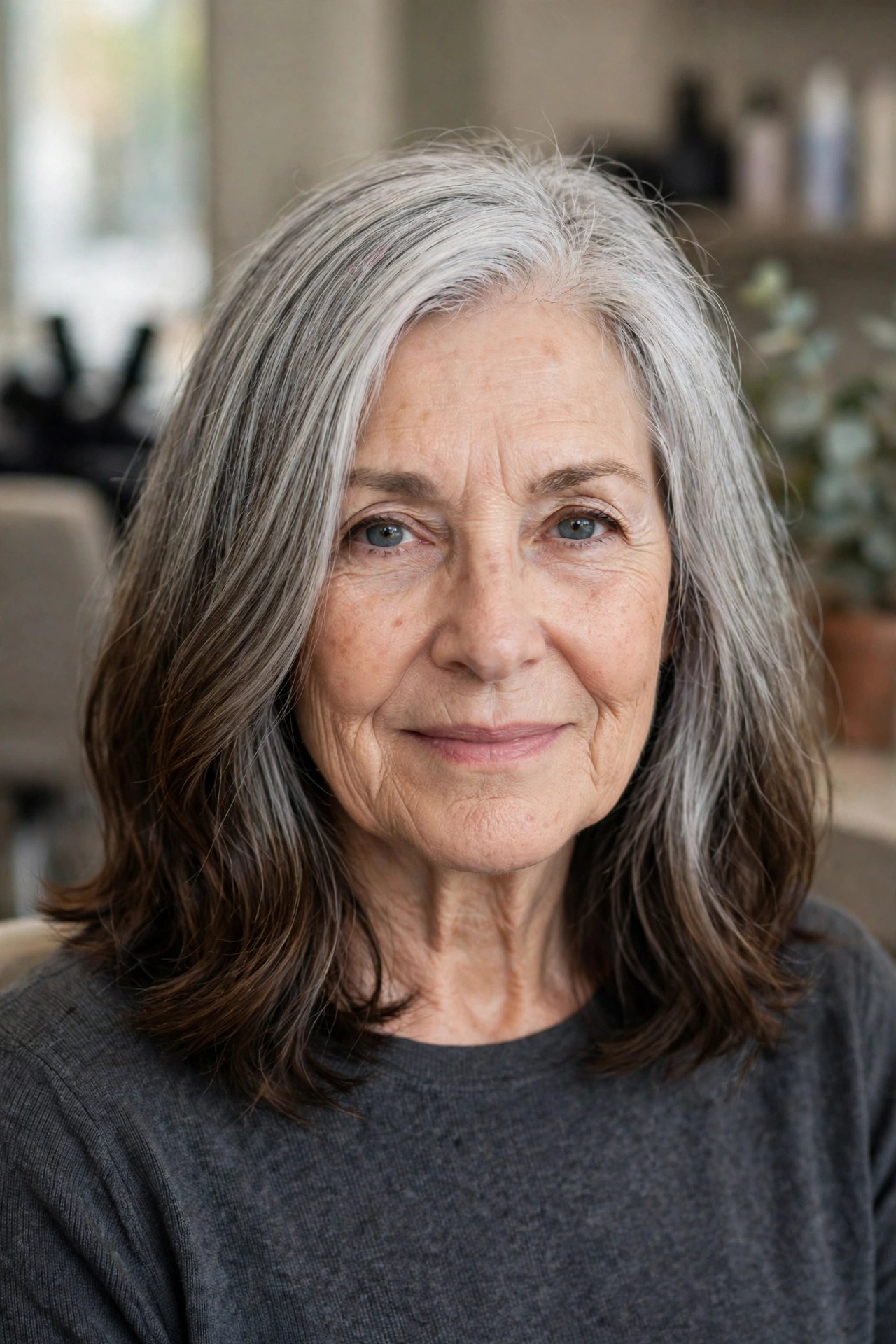
Grombre — gray ombre — is the honest route: no blending, no camouflage, just your natural silver melting down into the old color below it, worn as a deliberate gradient. It takes patience, but a long bob makes it genuinely flattering, because the length gives the two tones room to graduate instead of colliding, and the clean bob shape keeps the look polished while the color is mid-journey.
The trick to a happy grombre is the middle months, when the contrast is strongest. A blunt, healthy perimeter, regular trims, and a satin pillowcase to keep the more fragile gray top layer smooth will carry you through. Many women find the halfway stage becomes their favorite — it is striking, graphic, and entirely unique to their own gray pattern. Expect the full journey to take nine to eighteen months depending on your starting length.

11. Charcoal Lowlights on a Choppy Pixie
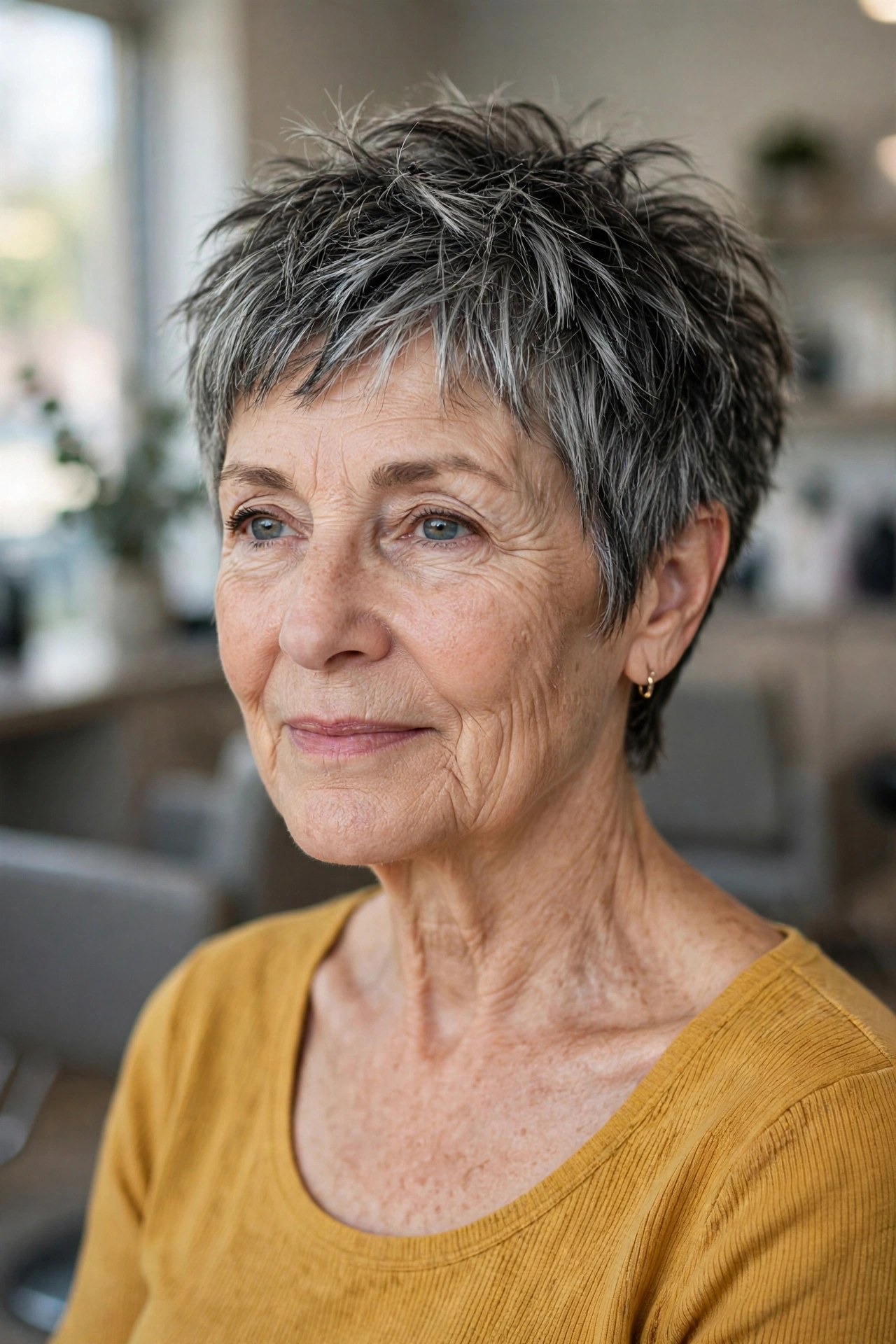
If your natural gray is coming through more white than silver and you miss the depth of your dark hair, charcoal lowlights restore it. Deep charcoal ribbons are woven through a choppy pixie so the finished color reads as rich salt-and-pepper rather than washed out. The choppy, piecey cut amplifies the dimension — every snipped end shows a different mix of dark and light.
This pairing is brilliant for women whose gray pattern feels ‘patchy white’ at the front and dark at the back, because the lowlights rebalance the whole head. The pixie length means the color work is quick, and the choppy texture hides regrowth superbly between appointments. Style by pinching a little texturizing putty through the ends to separate the pieces, and use dry shampoo at the roots on day two for extra lift.
12. Fully Transitioned White-Silver Stacked Bob
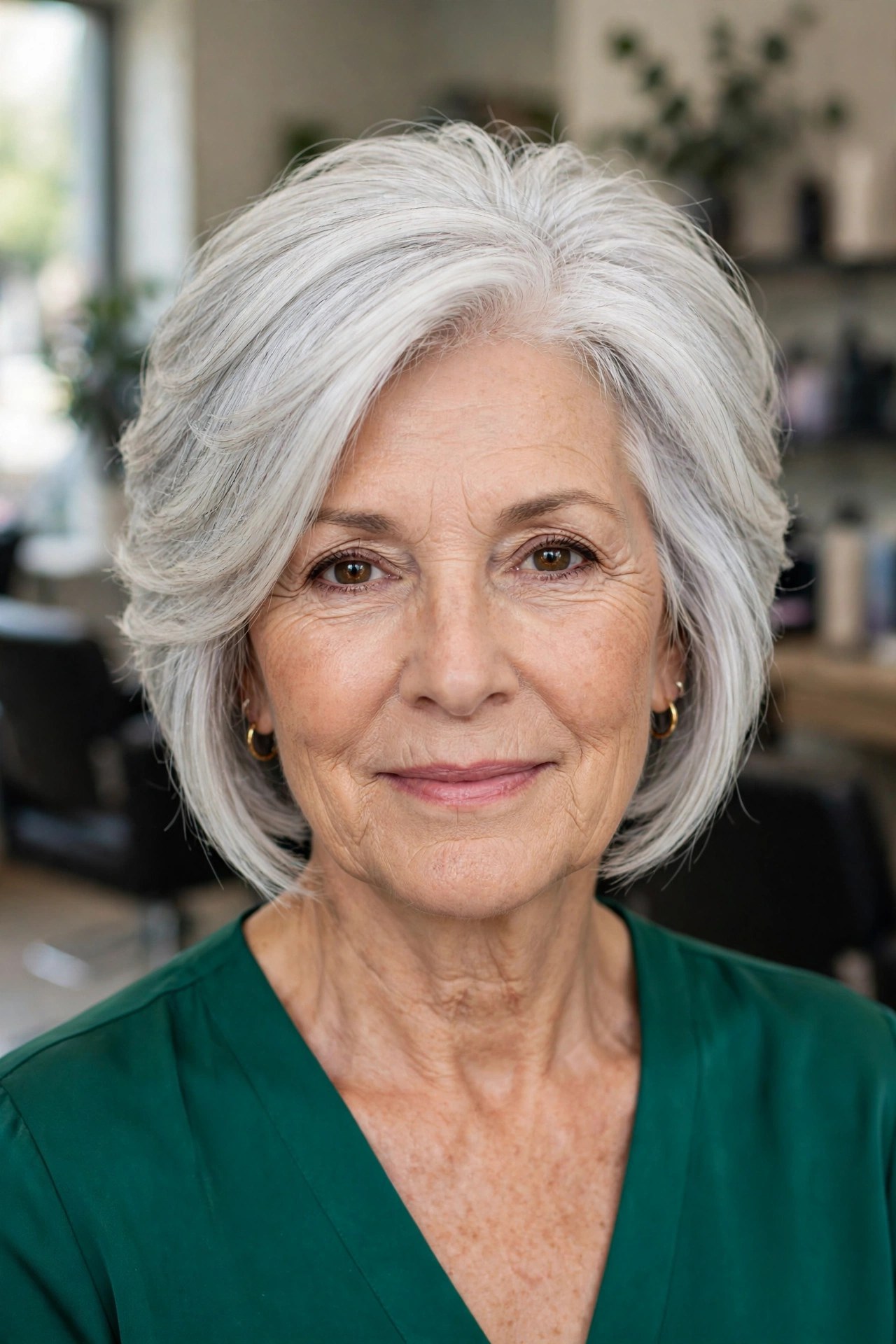
Here is the destination for many transitions: hair that has come through completely white-silver, cut into a stacked bob that lifts the back and lets longer front pieces frame the face. The stacking matters more than ever on fully gray hair, because gray’s coarser texture can sit heavy and flat; the graduated back builds in shape and bounce that styling alone cannot fake. Our stacked bob haircuts for women over 50 roundup shows more variations of this silhouette.
White hair’s great enemy is yellowing, so a purple shampoo once a week and a dryer brush for a smooth, sealed finish become your two best habits. The stacked shape suits oval, round, and square faces, and it grows out neatly for six to eight weeks. If your transition is complete but your cut still belongs to your dye days, this shape is the refresh that makes the silver look intentional.

13. Silver Money Piece on a Pixie-Bob (Bixie)
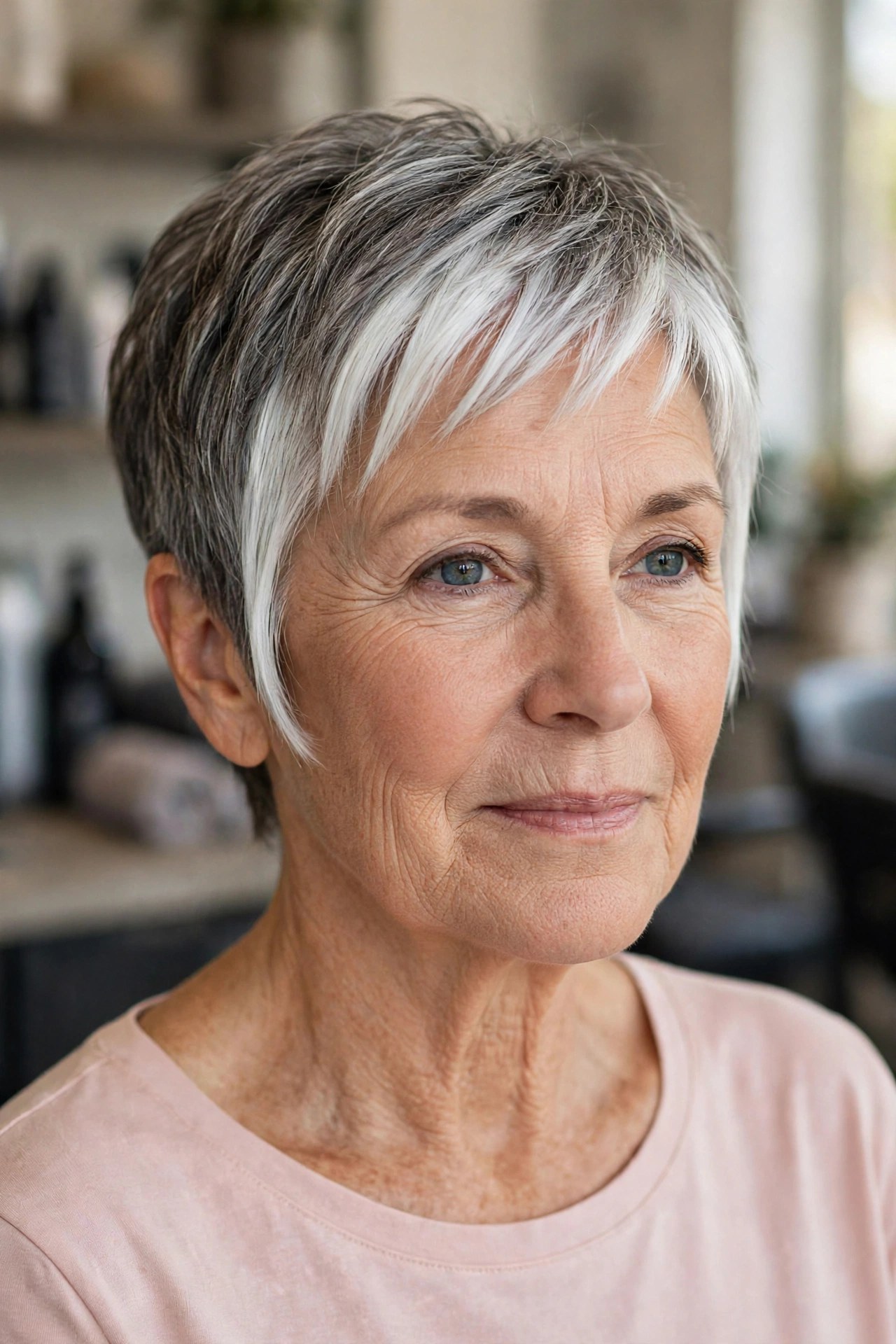
Sometimes your gray pattern hands you a gift: a naturally bright streak at the front. The money-piece bixie builds the whole style around it. The front panels are kept long and bright — enhanced with a few lightened pieces if needed — so your silver hairline becomes a face-illuminating frame, while the darker salt-and-pepper back keeps the depth. It is the fastest route on this list to looking ‘done’ while growing out.
The bixie (bob-meets-pixie) length is ideal mid-transition because it is short enough to shed dyed ends quickly but long enough at the front to feel soft and feminine. A mini flat iron keeps the bright front pieces sleek so the contrast stays crisp, and a dab of putty at the back adds separation. This look flatters every face shape because the bright frame does the flattery for you.

14. Toner-Balanced Transition on a Curly Bob
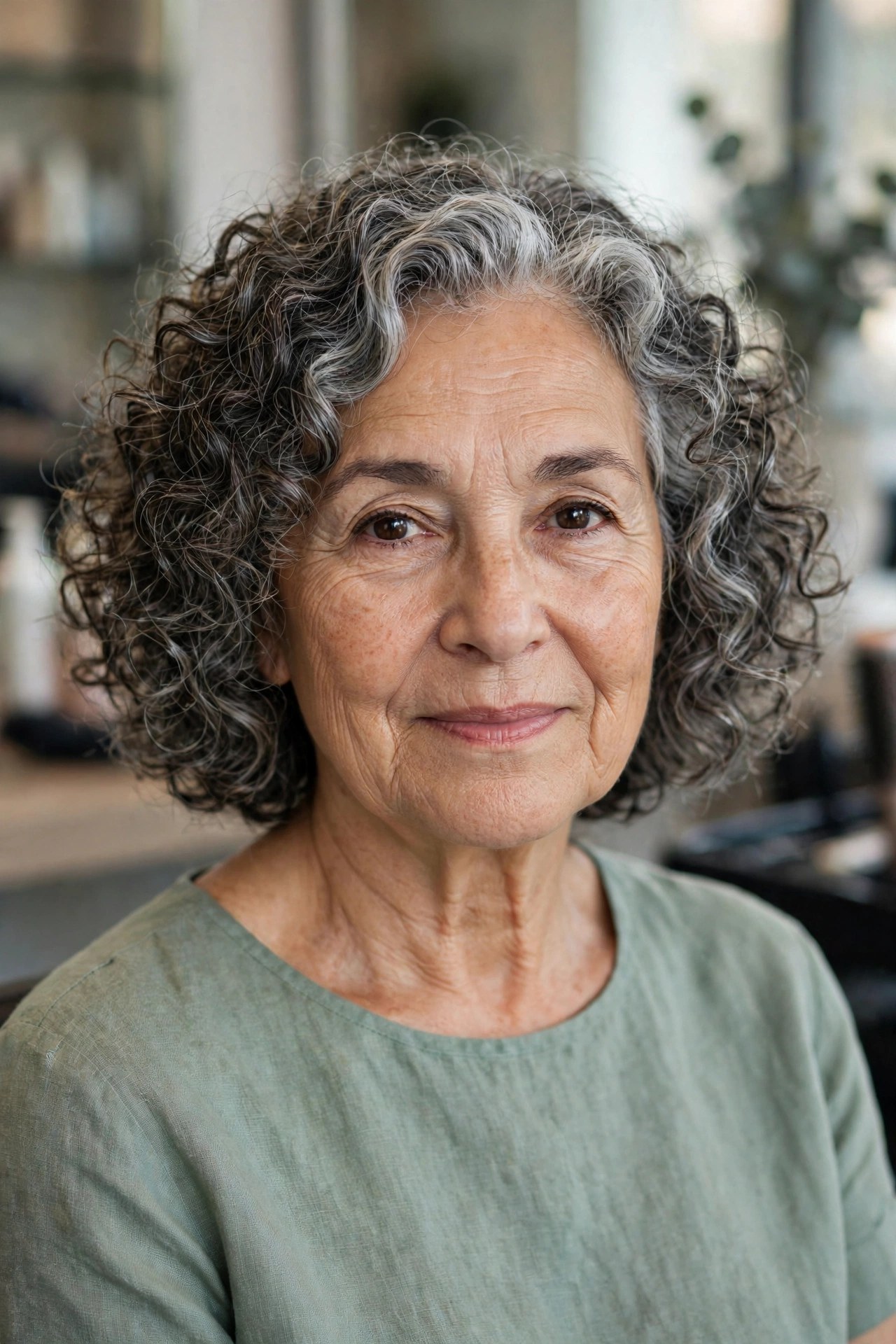
Curly hair transitions beautifully — curls naturally blur the root line that straight hair shows so starkly — but it has one enemy: brassiness. Old dyed curls fade warm and orange against cool new silver, and a toner is what fixes it, neutralizing the warmth so the whole head reads as one cool salt-and-pepper palette. On a curly bob cut dry, curl by curl, the blend looks completely seamless.
Ask for a gloss or toner every six to eight weeks during the grow-out; it is conditioning, quick, and far gentler than re-dyeing. Keep curls hydrated, since gray curls are drier than the hair you are used to, and refresh with a light sea-salt or curl spray rather than re-washing. If your curls are loosening with age, the bob length takes weight off and lets the pattern spring back.
15. The Graduated Bob for the Mid-Transition Months
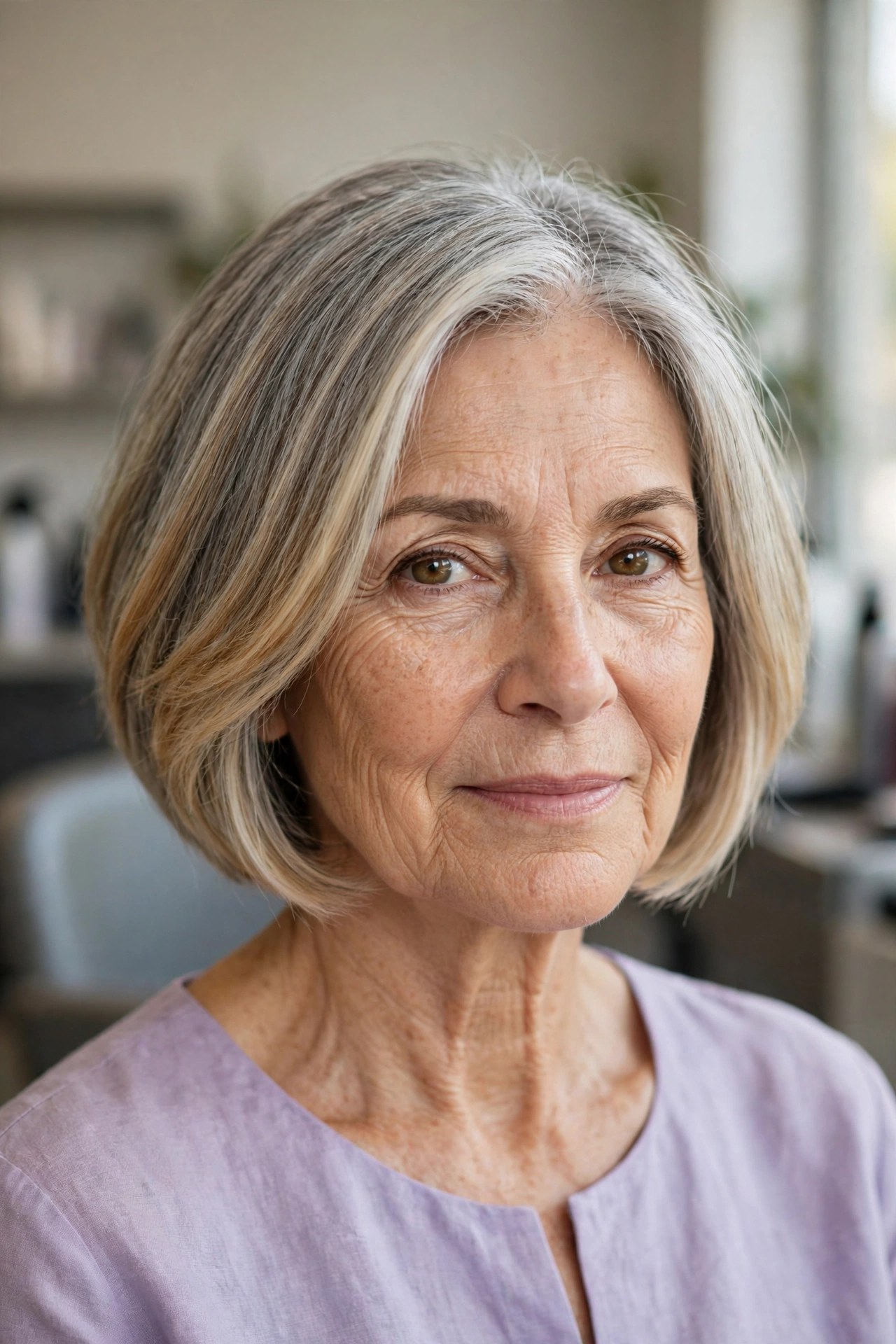
Every grow-out has an awkward middle — a few inches of silver up top, tired color below. The graduated bob is the cut that rescues it. By angling the shape higher at the back and keeping a clean, intentional line, the two-tone color stops looking like neglect and starts looking like a style choice. Trim a little more off the ends at each visit and the dyed portion quietly exits, appointment by appointment.
This is the perfect route if you are transitioning from blonde dye, because blonde ends sit closest to silver and the contrast is soft to begin with. The graduated shape also adds crown lift, which flatters fine hair enormously. A root-boosting dryer brush gives the back its swept-up finish in about five minutes. Plan on trims every six weeks, each one bringing the finish line closer.

16. Face-Framing Layers on Fully Gray Medium Hair

Not everyone wants to go short to go gray. If your transition is complete — or nearly — and you love your medium length, face-framing layers are what make fully gray hair look youthful and deliberate. Graduated strands curve around the cheekbones and jaw, breaking up the solid silver so it moves like fabric, and drawing attention to your features instead of your color.
Layers are also the practical answer to gray hair’s texture change: removing a little weight at the ends stops coarse strands from forming a stiff triangle and encourages swing instead. This cut suits long and oval faces particularly well, since the framing pieces add width at the cheekbones. Blow-dry the front sections forward with a round brush, then sweep them back for that soft, opened-up effect, and sleep on satin to keep the silver smooth.
17. Blended Gray on a Wavy Shag
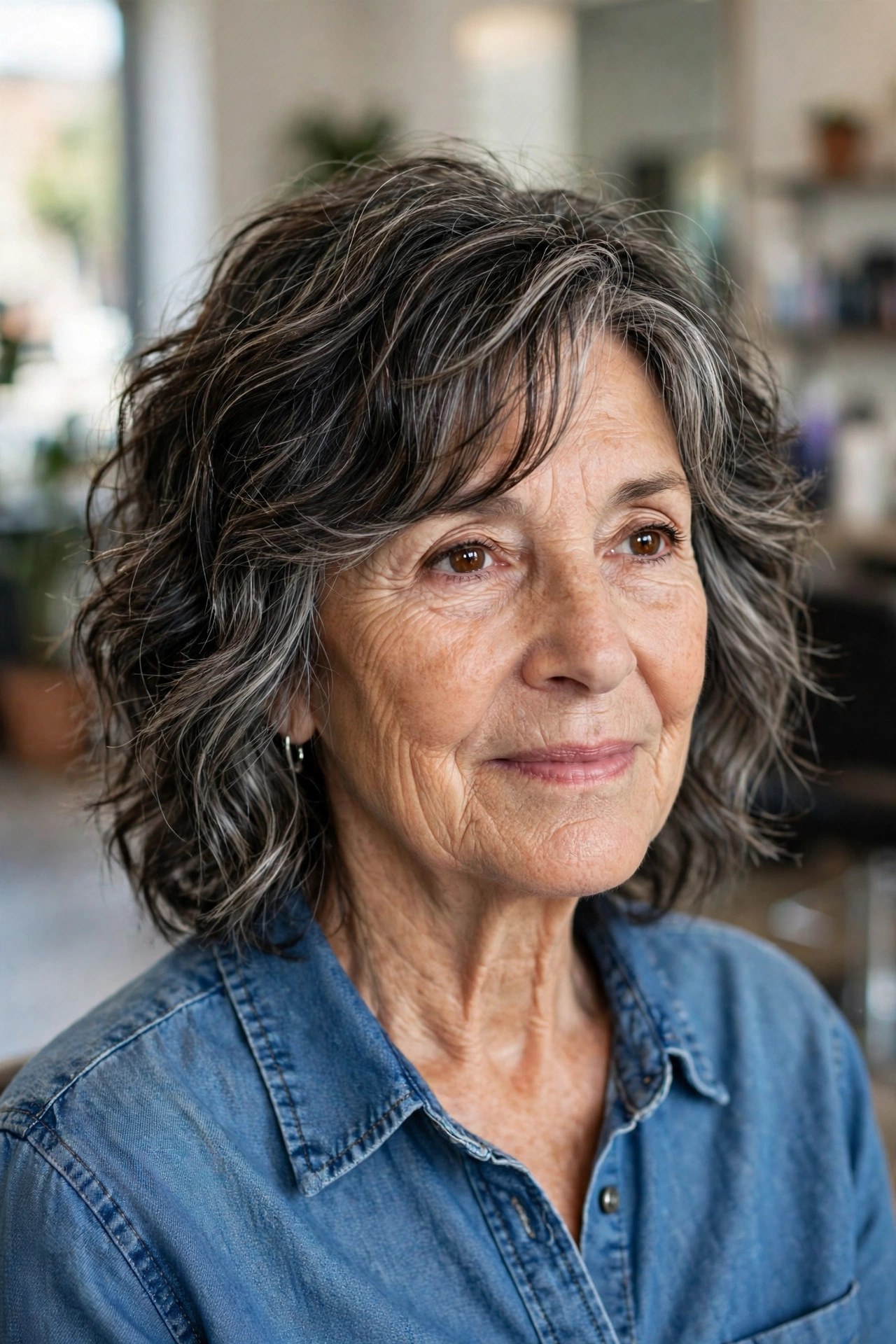
The modern shag might be the most forgiving transition cut of all. Its choppy layers, curtain fringe, and all-over movement scatter color transitions so thoroughly that roots simply vanish into the texture. Work a little gray blending through it — your stylist can add a handful of silver-matching pieces — and the overall salt-and-pepper shag looks relaxed, artistic, and completely intentional at every stage of growth.
Shags are famously low-maintenance, which pairs beautifully with a low-maintenance color philosophy: scrunch in texture spray, air-dry, and let the layers do the work. The fringe softens forehead lines and the movement around the face is deeply flattering after 50. Because the cut is so textured, you can stretch salon visits to eight or ten weeks and the grow-out of both cut and color still looks like the plan.
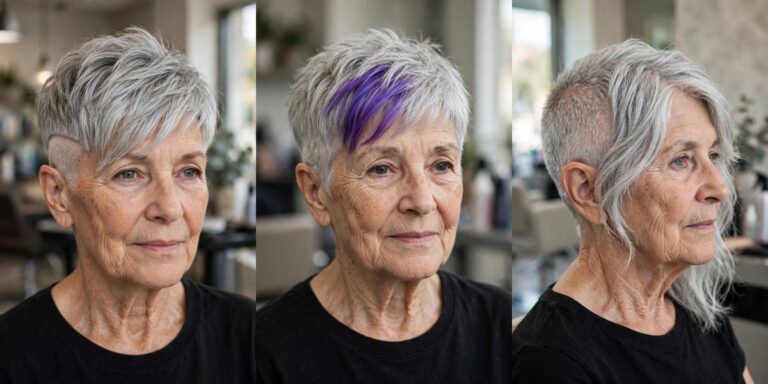
18. Silver Long-Top Pixie — the Grow-Out Friendly Finish
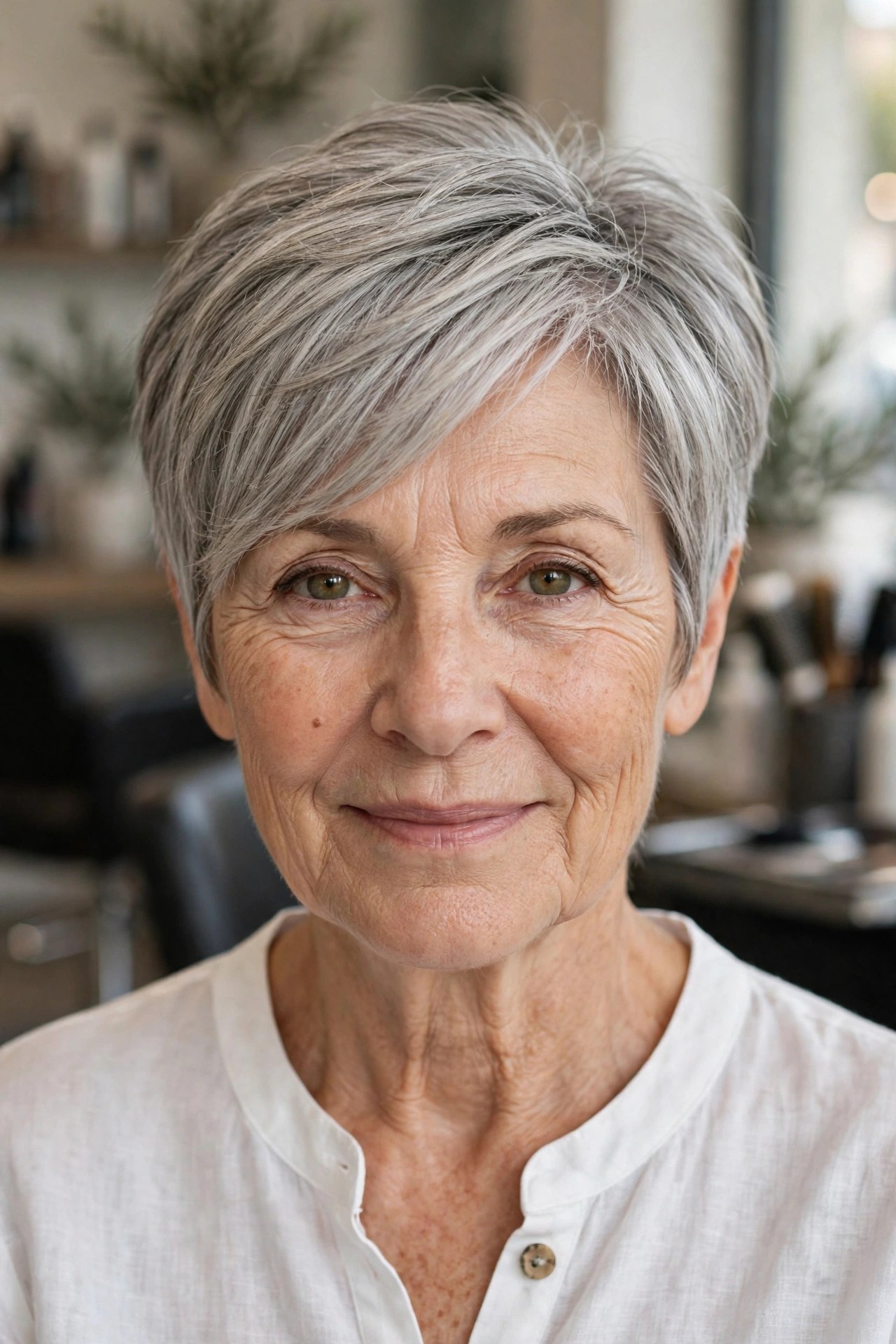
If you took the pixie shortcut, this is how it graduates. A long-top pixie keeps the sides tapered and tidy while the top grows into a sweeping, side-parted fringe — so every month of regrowth simply becomes more hair to play with, never an awkward stage. Fully blended silver on top reads polished and modern, and the longer fringe softens the whole look compared with a very short crop.
This style is a favorite for women with fine hair, because the side sweep creates the illusion of a thick, abundant top layer, and a touch of volumizing mousse at the roots keeps it lofty all day. Finish with a flexible hairspray so the sweep stays soft rather than helmet-like. It also transitions gracefully onward: keep growing the top and you are halfway to a bixie, then a bob.
19. Ash Blonde Bridge Color on a Blunt Bob

If going straight from dark dye to silver feels like too big a leap, build a bridge. Your colorist lifts your overall color once to a cool ash blonde — much closer to your gray — so from then on, silver roots melt into the blonde almost invisibly while you grow. The blunt bob is the ideal partner: its strong, healthy-looking perimeter keeps lightened hair looking thick and expensive rather than fragile.
The bridge route does involve one bigger lightening appointment, so go in with realistic expectations and a good heat protectant habit afterward for your flat iron work. After that single session, maintenance drops dramatically — most women only need a toner refresh every couple of months. This is the route to pick if your gray is still under about fifty percent and you want the next year to look seamless rather than two-toned.
20. The Final Reveal — Polished Silver Long Pixie with a Side Sweep
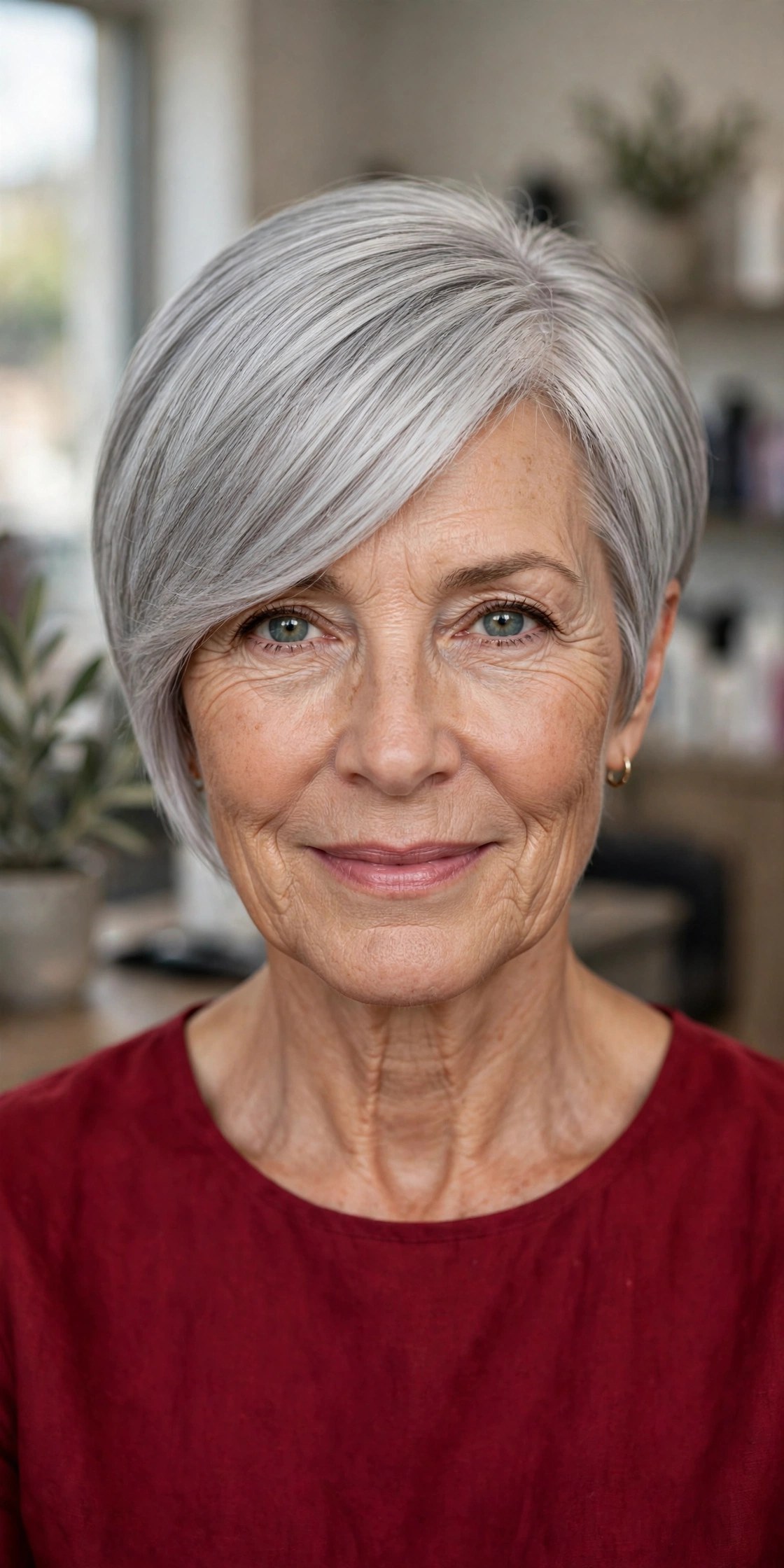
Every transition deserves a finish line, and this is ours: the last of the dye trimmed away, and your fully natural silver styled as a polished long pixie with an elegant side sweep. The deep side part gives instant root lift and glamour, the sweep softens the forehead, and the luminous silver — kept bright and glossy — becomes the most complimented thing about your look.
Celebrate the reveal properly: book the appointment as a restyle, not a trim, and ask your stylist to refine the shape around your face now that the color is final. At home, a heat protectant before any smoothing and a light flexible hairspray keep the sweep in place. If you are still at the start of your journey, save this photo — women who finish their transition almost always say they wish they had started sooner.
Recommended Products
These are the workhorses of a graceful gray transition: a purple shampoo to keep silver bright and brass-free, a shine serum for gray hair’s coarser texture, a good flat iron for sleek bob finishes, a satin pillowcase to cut frizz overnight, a volumizing mousse for fine transitioning hair, and a heat protectant you will use before every styling session.
Gray Transition Care Checklist
- Switch to a purple shampoo once a week to keep silver and white strands from yellowing.
- Add moisture: gray hair is naturally drier and coarser, so use a weekly hydrating mask or oil.
- Gloss every 4–8 weeks (salon or at home) to restore the shine gray hair scatters.
- Trim every 6 weeks during a chop-based transition — each trim removes more old color.
- Always use heat protection; gray hair yellows faster under high heat.
- Sleep on a satin pillowcase to reduce the frizz and breakage wiry grays are prone to.
- Be patient with texture: your new gray may be curlier or straighter than your dyed hair was.
Frequently Asked Questions
How long does it take to fully transition to gray hair?
It depends on the route and your starting length. A pixie shortcut can complete the transition in 2–4 months, a bob chop in about 4–6 months of root growth, and a full grow-out on medium or long hair typically takes 9–18 months. Blending routes like gray blending highlights and herringbone highlights do not have a hard finish line — they simply let you stop coloring whenever your blend looks fully natural.
What is gray blending, and how is it different from full coverage dye?
Full coverage dye hides every gray strand and grows out with a hard line that needs retouching every 3–4 weeks. Gray blending uses highlights, lowlights, babylights or a root smudge to weave shades similar to your natural gray through your color, so the gray becomes part of the design. There is no harsh regrowth line, appointments stretch to every 8–12 weeks or longer, and you can stop whenever you are ready to be fully natural.
Will purple shampoo turn my gray hair purple?
Used once a week and rinsed well, purple shampoo deposits just enough violet pigment to neutralize yellow and brassy tones — it will not turn your hair purple. If you leave it on for a very long time or use it daily, white hair can pick up a faint lilac tint, which washes out within a wash or two. Start with 2–3 minutes and adjust from there.
Which haircut makes the gray grow-out look least awkward?
Cuts with movement and texture hide transitions best: a layered bob, a wavy shag, a choppy pixie and a curly bob all blur the root line naturally. If you prefer sleek styles, a decisive chop — a pixie shortcut or a chin-length bob — removes the two-tone stage quickly instead of disguising it. The most awkward results come from keeping long, one-length hair with no blending at all.
Does gray hair need different products than dyed hair?
Yes, a little. Gray hair has no pigment and a rougher cuticle, so it tends to be drier, coarser and more prone to yellowing from sun, minerals and heat. Most women do best with a weekly purple shampoo, extra moisture from masks or oils, a gloss treatment for shine, and gentler heat with a protectant. The good news: you will spend far less than you did on root touch-ups.
What should I tell my stylist at my first transition appointment?
Bring photos of your target route from this list, say clearly that your goal is to stop full-coverage color (not just delay it), and ask for a realistic timeline for your starting color and length. A good colorist will map out the first two or three appointments — for example, blending now, a toner in eight weeks, a bigger trim in four months — so you always know what the next stage will look like.
Transitioning to gray is not about letting yourself go — it is about choosing, on purpose, the hair you actually have, and wearing it in a cut that flatters you. Whether you blend it slowly with herringbone highlights, balance it with lowlights, or chop it off in one brave, joyful appointment, the destination is the same: hair that looks like you, with a fraction of the upkeep. Pick your route, save your favorite photo, and book the first appointment. Future you — silver, glossy, and free of the three-week root panic — says thank you.