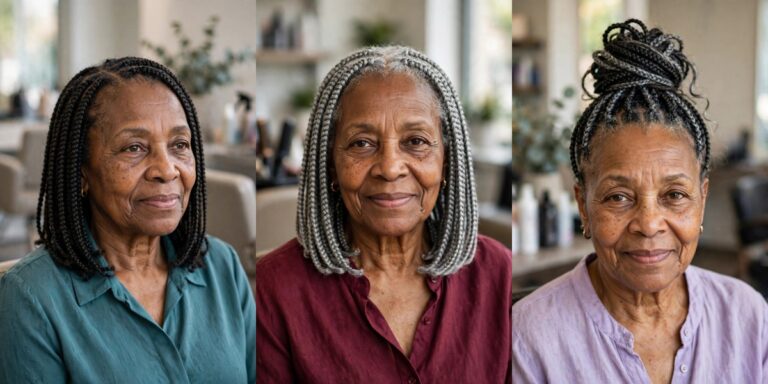
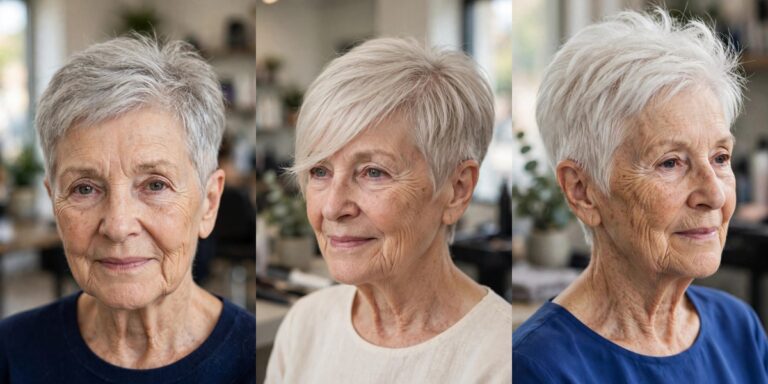
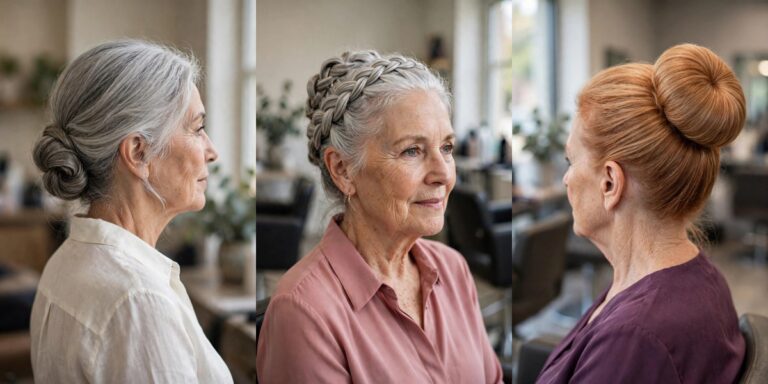
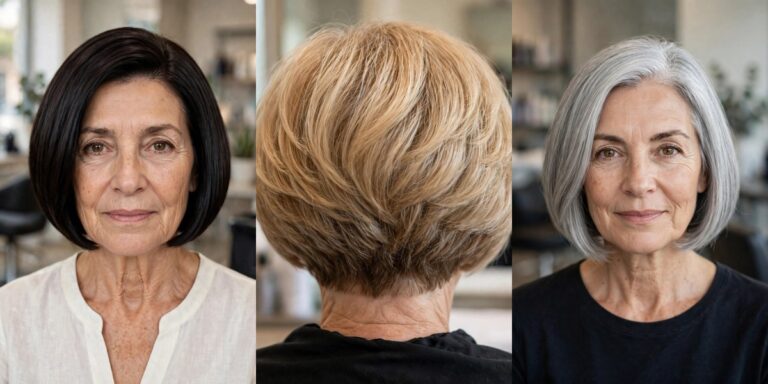
26 Short Layered Haircuts for Women Over 70 With Back Views
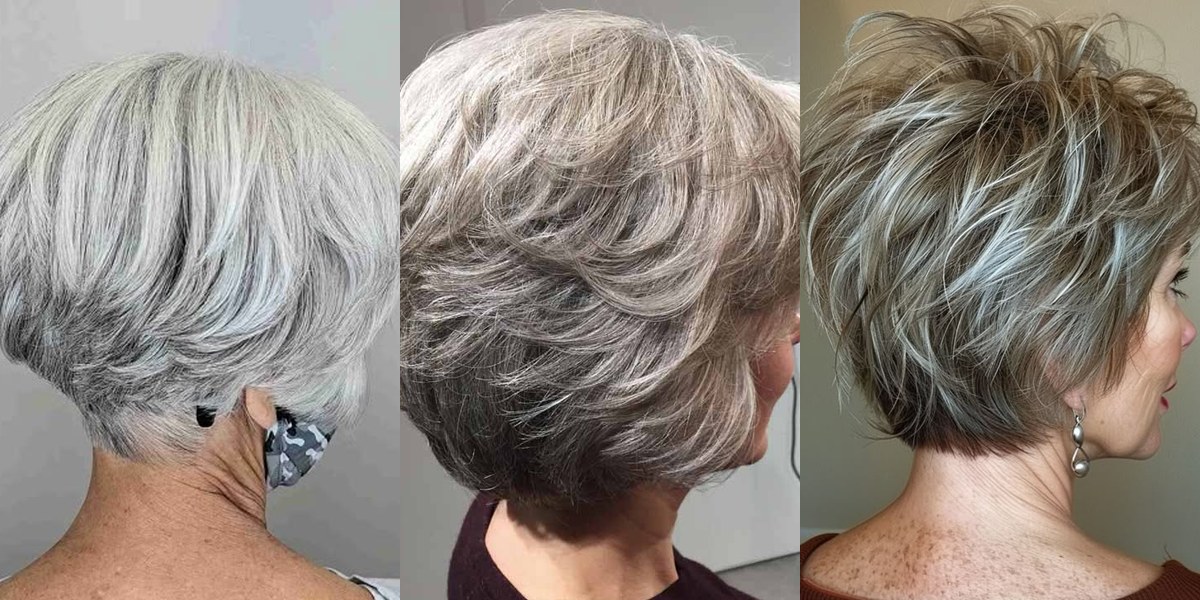
Here is the honest truth about short hair: the back is the part everyone else sees most — in queues, in church, across the table. Yet it is the view we check least, usually with a hurried glance in a hand mirror as we leave the salon.
So this collection shows every cut from behind. All 26 are short, layered, and worn by women over 70, with crowns, napes and graduations you can study properly before you commit. Pair them with the front views in our 35 short hairstyles for women over 70 and the low-effort options in our short easy haircuts guide.
Table of Contents
- Rounded Layered Bob — Back View
- Feathered Layers with Soft Waves — Back View
- Choppy Textured Crop — Back View
- Long Layered Pixie-Bob — Side and Back View
- Curly Tapered Crop — Back View
- Feathered Blonde Layers — Profile and Back
- Sweeping Layered Bob — Side and Back View
- Voluminous Feathered Bob — Profile and Back
- Choppy Silver Pixie — Back View
- Soft White Tapered Crop — Back View
- Smooth Layered Bob — Side and Back View
- Graduated Gray Pixie with Glasses — Back View
- Wispy Layered Crop — Back View
- Natural Gray Crop — Profile and Back
- Sleek Silver Bob with Glasses — Back View
- Graduated Silver Bob — Back View
- Spiky Textured Crop — Back View
- Rounded Blonde Bob in the Salon — Back View
- Curly Layered Bob — Profile and Back
- Snow-White Rounded Crop — Profile and Back
- Clean Salon Taper — Back View
- Chestnut Wedge Cut — Profile and Back
- Tapered Pixie Cut Clean Above the Ear — Back View
- Long White Shag Layers — Back View
- Bright White Pixie — Profile and Back
- Classic Silver Taper — Back View
Why Short Hair Works So Well After 70
- Layering at the crown is what stops the back of a short cut looking flat or helmet-like.
- A well-shaped nape grows out gracefully — crucial when you would rather not visit the salon every fortnight.
- Judging a cut from the back first means no surprises when you catch your reflection in a shop window.
Before the gallery, build your own back-view brief with this planner and take it to your appointment. If you love layered bobs in particular, our layered bob haircuts for women over 60 are worth a browse too.
💡 The right cut starts with your face shape. Use our Face Shape Finder to find yours in under a minute, then come back to the ideas above with fresh eyes.
1. Rounded Layered Bob — Back View
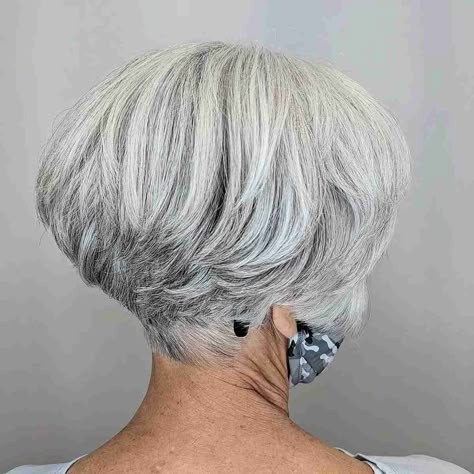
Image credit: Pinvibe
Seen from the back, this cut is built around soft layers through the top. It is a shape that respects how hair behaves after 70 — a little finer, a little drier, and often with a mind of its own at the crown.
Why it flatters now: the layers lift a flattening crown without any teasing, so fine hair looks fuller from every angle. It also keeps styling honest — a few minutes, low heat, and nothing that asks you to hold your arms overhead for long.
Keep it easy: Ask your stylist to cut it dry at the end, so the shape you see is the shape you take home.
2. Feathered Layers with Soft Waves — Back View
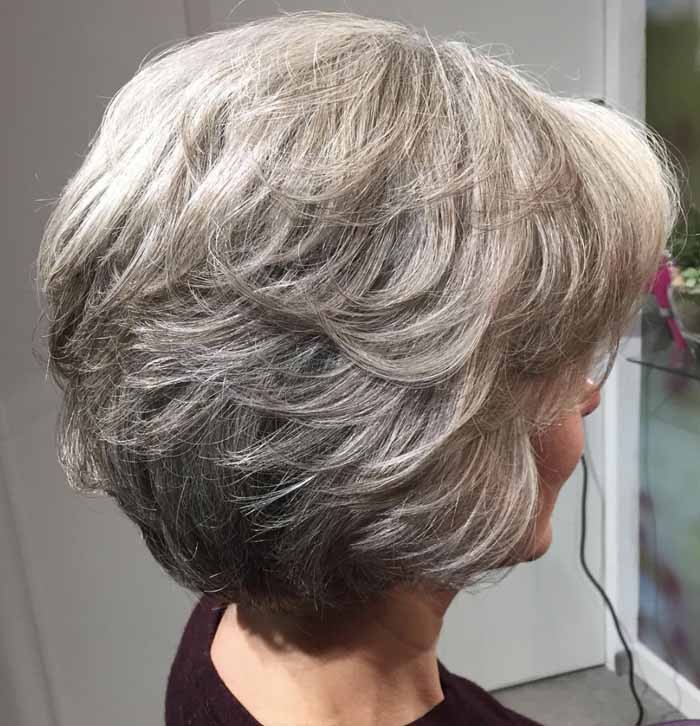
Image credit: Antoniettasp
Seen from the back, this cut is built around a neckline that is tidied, not chopped. It is a shape that respects how hair behaves after 70 — a little finer, a little drier, and often with a mind of its own at the crown.
Why it flatters now: it keeps the silhouette graceful and grows out softly between trims. It also keeps styling honest — a few minutes, low heat, and nothing that asks you to hold your arms overhead for long.
Styling tip: A pea-size amount of lightweight cream, warmed in your palms, is plenty — more only weighs fine hair down.
3. Choppy Textured Crop — Back View
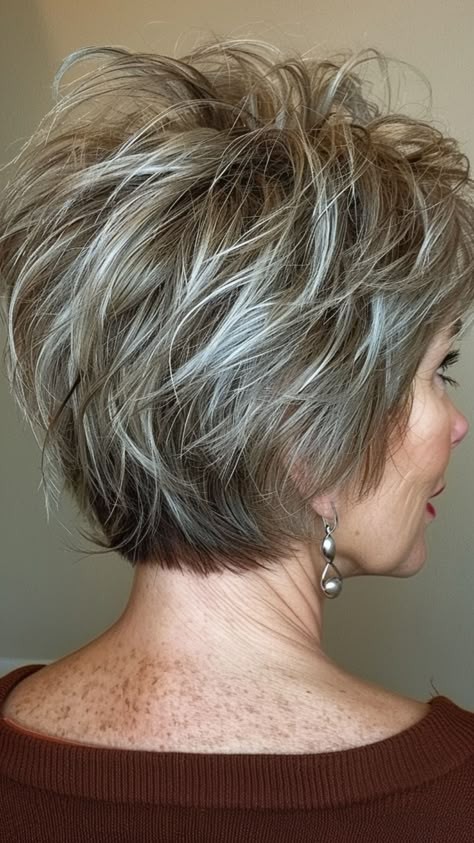
Image credit: Pinvibe
Seen from the back, this cut is built around framing that skims the cheekbones. It is a shape that respects how hair behaves after 70 — a little finer, a little drier, and often with a mind of its own at the crown.
Why it flatters now: it draws the eye upward and softens the jawline in the kindest way. It also keeps styling honest — a few minutes, low heat, and nothing that asks you to hold your arms overhead for long.
Ask your stylist: Book trims every five to six weeks; short cuts keep their grace when the neckline stays tidy.
4. Long Layered Pixie-Bob — Side and Back View
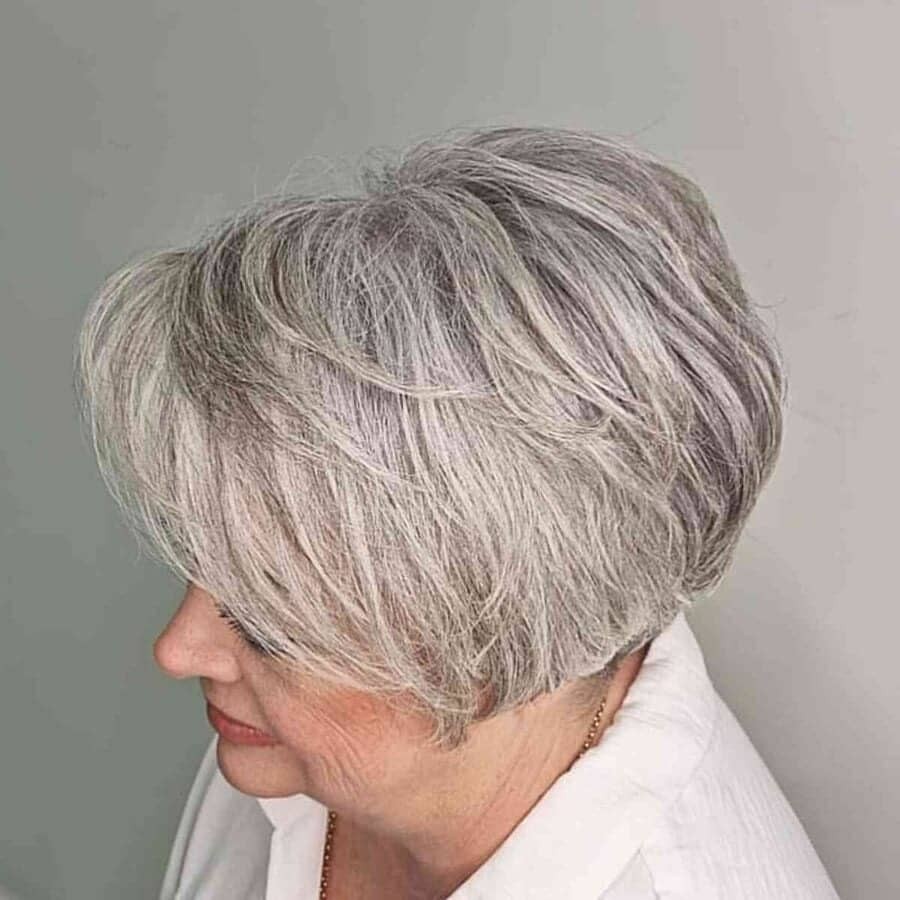
Image credit: Zohark
Seen from the back, this cut is built around texture worked into the ends. It is a shape that respects how hair behaves after 70 — a little finer, a little drier, and often with a mind of its own at the crown.
Why it flatters now: wispy ends stop gray hair looking wiry and make the whole cut feel lighter. It also keeps styling honest — a few minutes, low heat, and nothing that asks you to hold your arms overhead for long.
Best for: If your scalp is tender, ask for scissor-over-comb instead of clippers at the nape.
5. Curly Tapered Crop — Back View
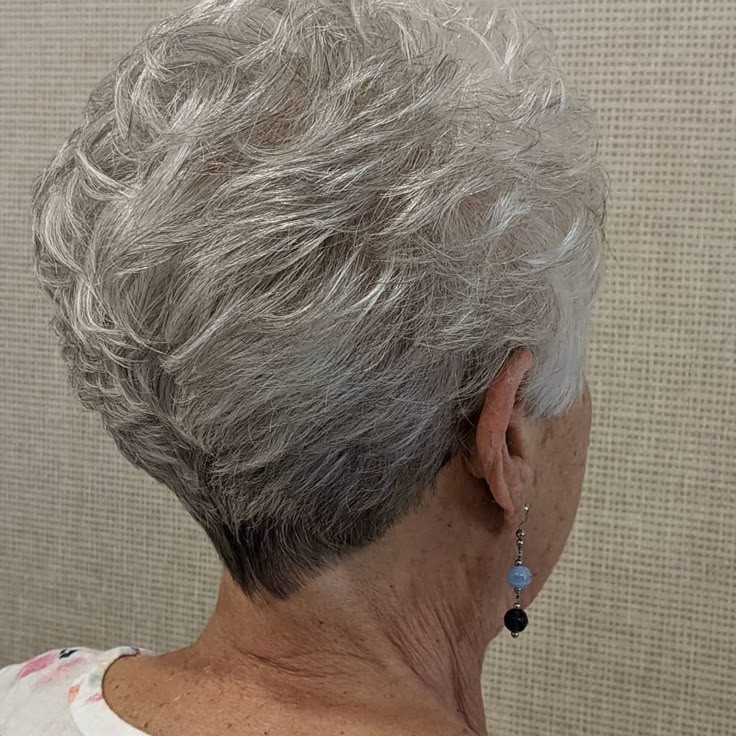
Image credit: Pinvibe
Seen from the back, this cut is built around a shape that follows your natural part. It is a shape that respects how hair behaves after 70 — a little finer, a little drier, and often with a mind of its own at the crown.
Why it flatters now: it falls back into place after washing, which matters on mornings when arms tire quickly. It also keeps styling honest — a few minutes, low heat, and nothing that asks you to hold your arms overhead for long.
Keep it easy: Finger-dry while lifting the roots with your fingertips — no brush wrestling required.
6. Feathered Blonde Layers — Profile and Back
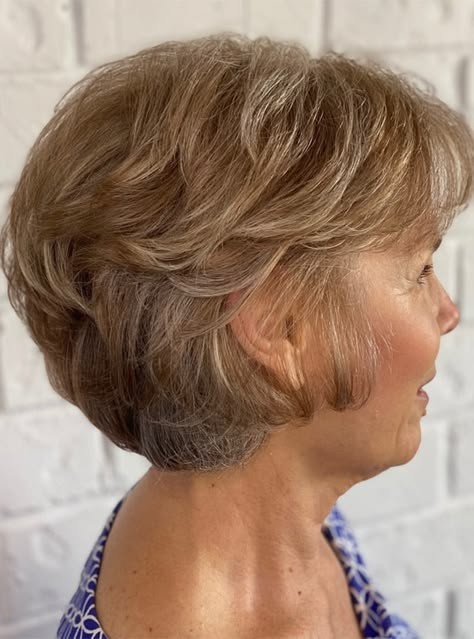
Image credit: Pinvibe
Seen from the back, this cut is built around gentle height at the front. It is a shape that respects how hair behaves after 70 — a little finer, a little drier, and often with a mind of its own at the crown.
Why it flatters now: a little lift at the front brightens the face and keeps glasses sitting clear of the fringe. It also keeps styling honest — a few minutes, low heat, and nothing that asks you to hold your arms overhead for long.
Styling tip: Sleep on a smooth pillowcase and the morning refresh takes under a minute.
7. Sweeping Layered Bob — Side and Back View
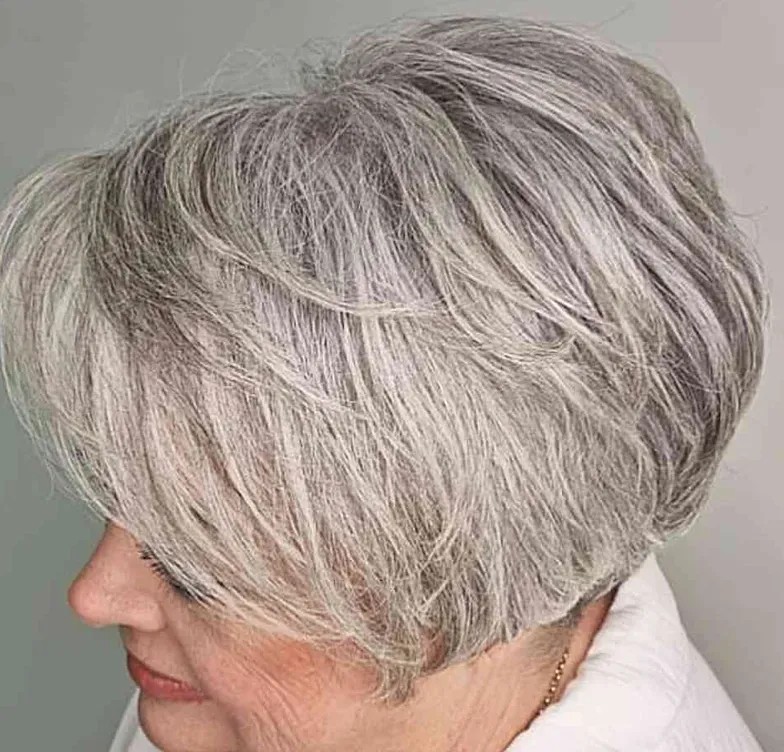
Image credit: Zohark
Seen from the back, this cut is built around clean lines around the ears. It is a shape that respects how hair behaves after 70 — a little finer, a little drier, and often with a mind of its own at the crown.
Why it flatters now: it sits comfortably with hearing aids and earring backs, with nothing to tuck or fight. It also keeps styling honest — a few minutes, low heat, and nothing that asks you to hold your arms overhead for long.
Ask your stylist: Take a photo of the finished cut from the side; it makes repeating it at your next visit simple.
8. Voluminous Feathered Bob — Profile and Back
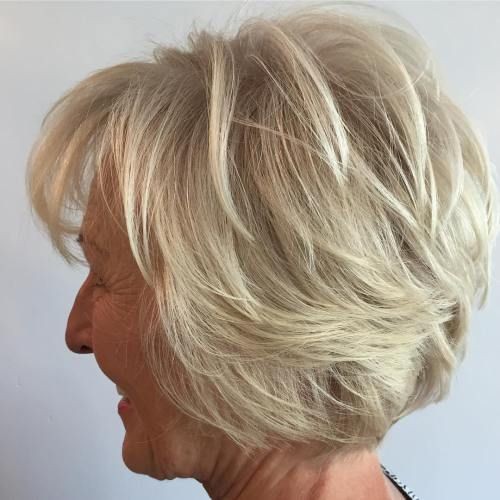
Image credit: Pinterest
Seen from the back, this cut is built around movement instead of bulk. It is a shape that respects how hair behaves after 70 — a little finer, a little drier, and often with a mind of its own at the crown.
Why it flatters now: the weight is placed where it flatters, so the cut looks fresh rather than heavy. It also keeps styling honest — a few minutes, low heat, and nothing that asks you to hold your arms overhead for long.
Best for: A soft side part usually flatters more than a centre part when hair is thinning at the front.
9. Choppy Silver Pixie — Back View
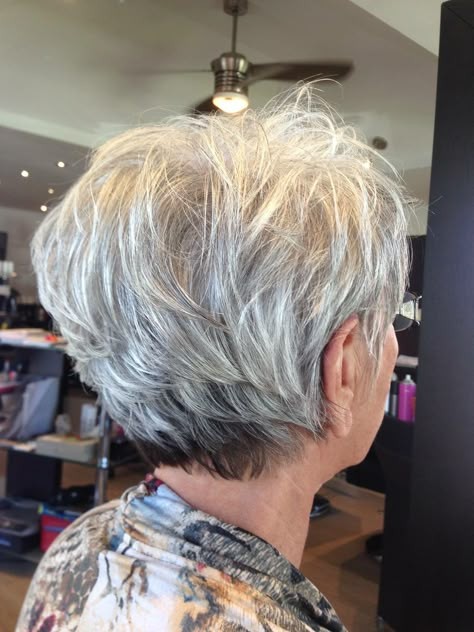
Image credit: Pinvibe
Seen from the back, this cut is built around soft layers through the top. It is a shape that respects how hair behaves after 70 — a little finer, a little drier, and often with a mind of its own at the crown.
Why it flatters now: the layers lift a flattening crown without any teasing, so fine hair looks fuller from every angle. It also keeps styling honest — a few minutes, low heat, and nothing that asks you to hold your arms overhead for long.
Keep it easy: Ask your stylist to cut it dry at the end, so the shape you see is the shape you take home.
10. Soft White Tapered Crop — Back View
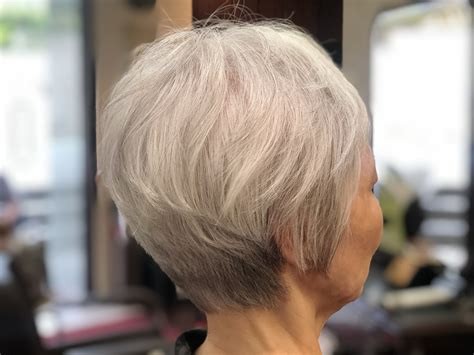
Image credit: Bing
Seen from the back, this cut is built around a neckline that is tidied, not chopped. It is a shape that respects how hair behaves after 70 — a little finer, a little drier, and often with a mind of its own at the crown.
Why it flatters now: it keeps the silhouette graceful and grows out softly between trims. It also keeps styling honest — a few minutes, low heat, and nothing that asks you to hold your arms overhead for long.
Styling tip: A pea-size amount of lightweight cream, warmed in your palms, is plenty — more only weighs fine hair down.
11. Smooth Layered Bob — Side and Back View
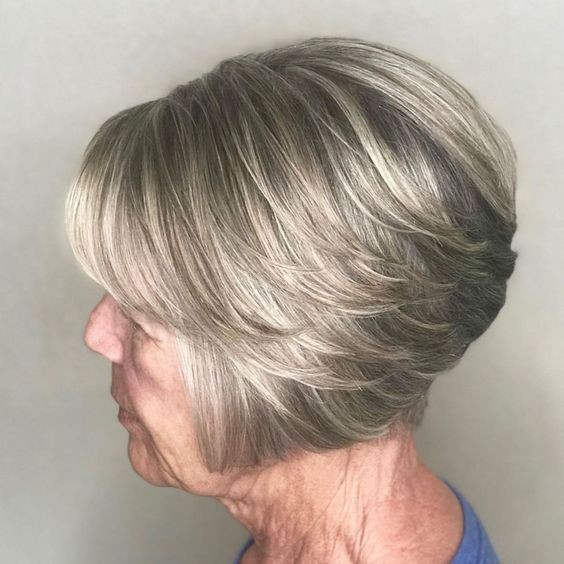
Image credit: Pinterest
Seen from the back, this cut is built around framing that skims the cheekbones. It is a shape that respects how hair behaves after 70 — a little finer, a little drier, and often with a mind of its own at the crown.
Why it flatters now: it draws the eye upward and softens the jawline in the kindest way. It also keeps styling honest — a few minutes, low heat, and nothing that asks you to hold your arms overhead for long.
Ask your stylist: Book trims every five to six weeks; short cuts keep their grace when the neckline stays tidy.
12. Graduated Gray Pixie with Glasses — Back View
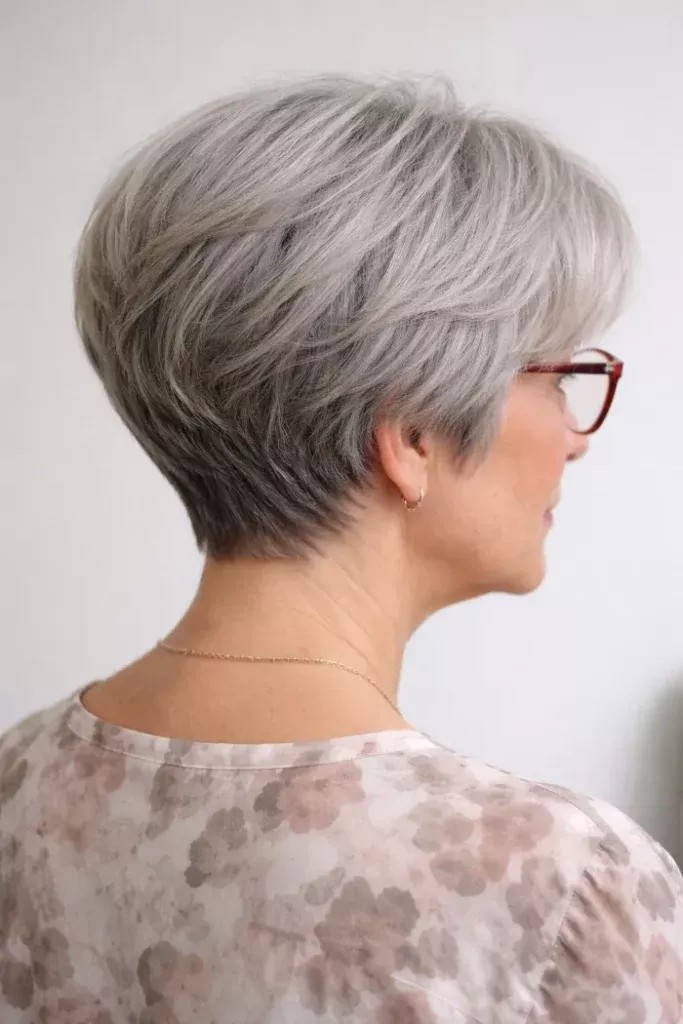
Image credit: Pinterest
Seen from the back, this cut is built around texture worked into the ends. It is a shape that respects how hair behaves after 70 — a little finer, a little drier, and often with a mind of its own at the crown.
Why it flatters now: wispy ends stop gray hair looking wiry and make the whole cut feel lighter. It also keeps styling honest — a few minutes, low heat, and nothing that asks you to hold your arms overhead for long.
Best for: If your scalp is tender, ask for scissor-over-comb instead of clippers at the nape.
13. Wispy Layered Crop — Back View
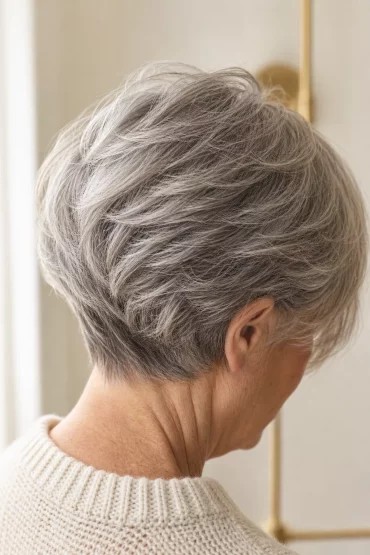
Image credit: Archzine
Seen from the back, this cut is built around a shape that follows your natural part. It is a shape that respects how hair behaves after 70 — a little finer, a little drier, and often with a mind of its own at the crown.
Why it flatters now: it falls back into place after washing, which matters on mornings when arms tire quickly. It also keeps styling honest — a few minutes, low heat, and nothing that asks you to hold your arms overhead for long.
Keep it easy: Finger-dry while lifting the roots with your fingertips — no brush wrestling required.
How to Read a Back View Like a Stylist
- Crown: look for lift without a visible ‘step’ — layers should melt into each other.
- Nape: a tapered finish looks neater for longer than a hard blunt line.
- Silhouette: the widest point should sit near the cheekbones or crown, never at the jaw.
- Ask for the hand mirror at every appointment and really look — a good stylist expects it.
14. Natural Gray Crop — Profile and Back
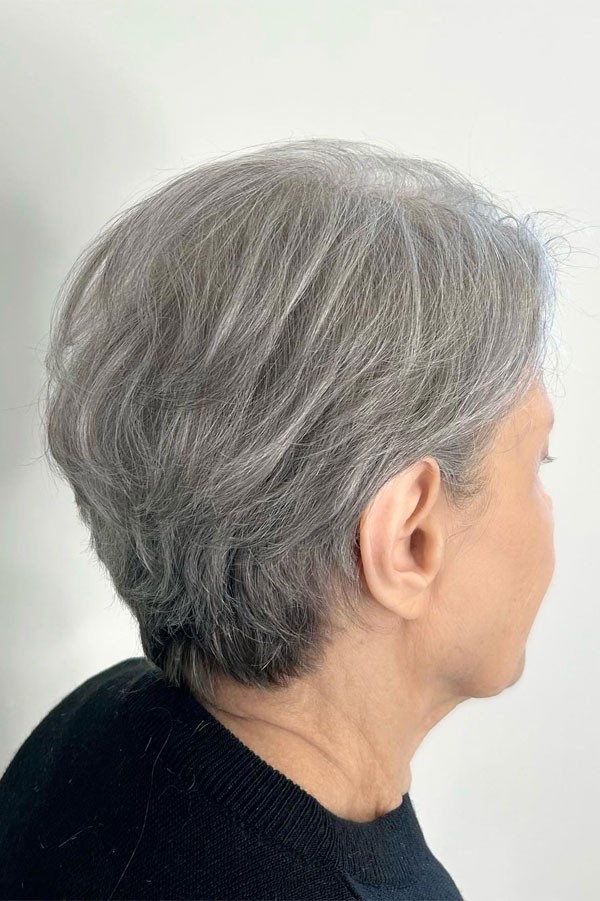
Image credit: I Take You
Seen from the back, this cut is built around gentle height at the front. It is a shape that respects how hair behaves after 70 — a little finer, a little drier, and often with a mind of its own at the crown.
Why it flatters now: a little lift at the front brightens the face and keeps glasses sitting clear of the fringe. It also keeps styling honest — a few minutes, low heat, and nothing that asks you to hold your arms overhead for long.
Styling tip: Sleep on a smooth pillowcase and the morning refresh takes under a minute.
15. Sleek Silver Bob with Glasses — Back View
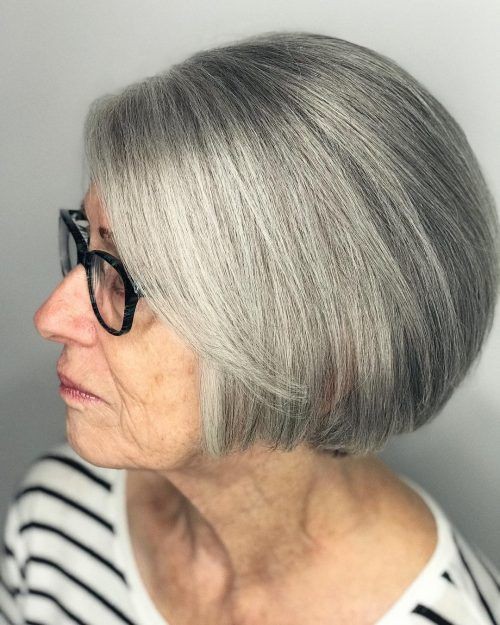
Seen from the back, this cut is built around clean lines around the ears. It is a shape that respects how hair behaves after 70 — a little finer, a little drier, and often with a mind of its own at the crown.
Why it flatters now: it sits comfortably with hearing aids and earring backs, with nothing to tuck or fight. It also keeps styling honest — a few minutes, low heat, and nothing that asks you to hold your arms overhead for long.
Ask your stylist: Take a photo of the finished cut from the side; it makes repeating it at your next visit simple.
16. Graduated Silver Bob — Back View
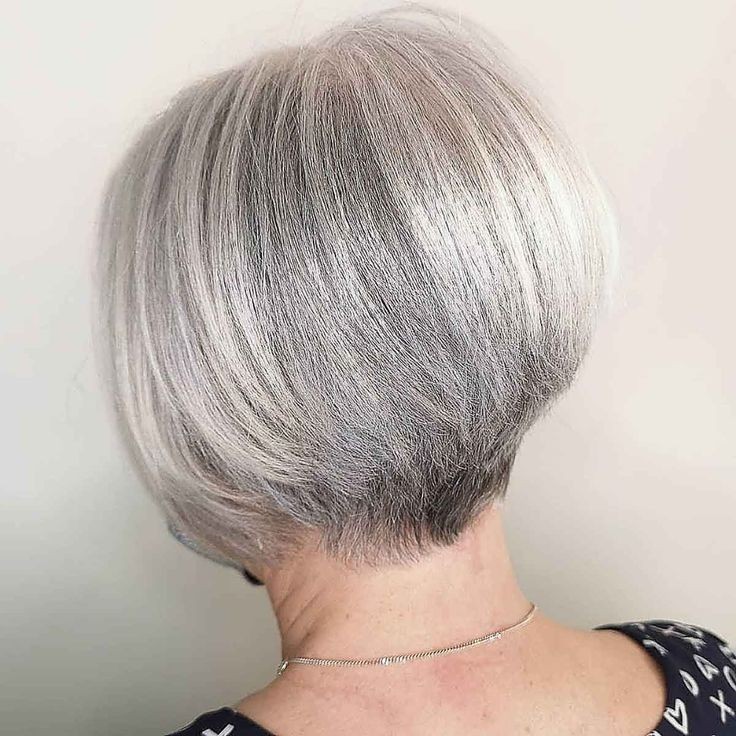
Image credit: Lokerroom
Seen from the back, this cut is built around movement instead of bulk. It is a shape that respects how hair behaves after 70 — a little finer, a little drier, and often with a mind of its own at the crown.
Why it flatters now: the weight is placed where it flatters, so the cut looks fresh rather than heavy. It also keeps styling honest — a few minutes, low heat, and nothing that asks you to hold your arms overhead for long.
Best for: A soft side part usually flatters more than a centre part when hair is thinning at the front.
17. Spiky Textured Crop — Back View
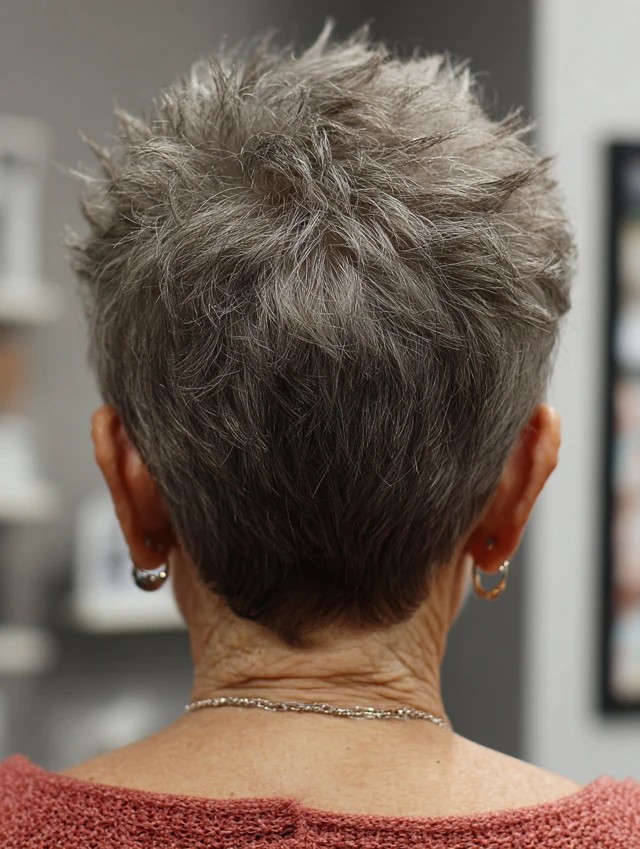
Image credit: Women Tattoo Ideas
Seen from the back, this cut is built around soft layers through the top. It is a shape that respects how hair behaves after 70 — a little finer, a little drier, and often with a mind of its own at the crown.
Why it flatters now: the layers lift a flattening crown without any teasing, so fine hair looks fuller from every angle. It also keeps styling honest — a few minutes, low heat, and nothing that asks you to hold your arms overhead for long.
Keep it easy: Ask your stylist to cut it dry at the end, so the shape you see is the shape you take home.
18. Rounded Blonde Bob in the Salon — Back View
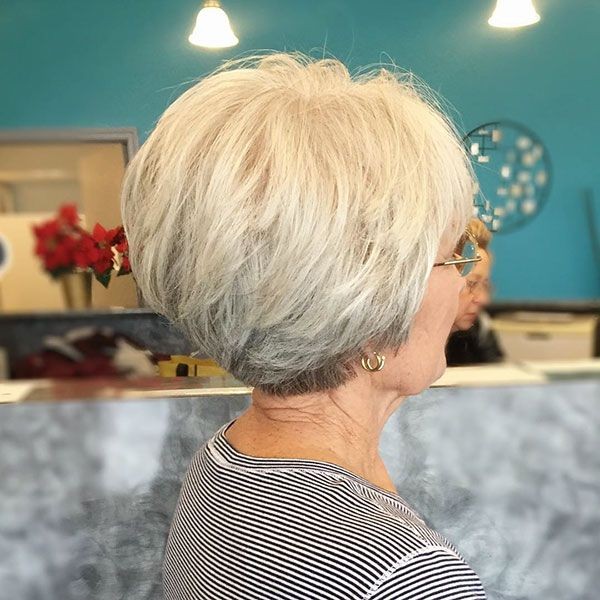
Image credit: Barber Hairstyles
Seen from the back, this cut is built around a neckline that is tidied, not chopped. It is a shape that respects how hair behaves after 70 — a little finer, a little drier, and often with a mind of its own at the crown.
Why it flatters now: it keeps the silhouette graceful and grows out softly between trims. It also keeps styling honest — a few minutes, low heat, and nothing that asks you to hold your arms overhead for long.
Styling tip: A pea-size amount of lightweight cream, warmed in your palms, is plenty — more only weighs fine hair down.
19. Curly Layered Bob — Profile and Back
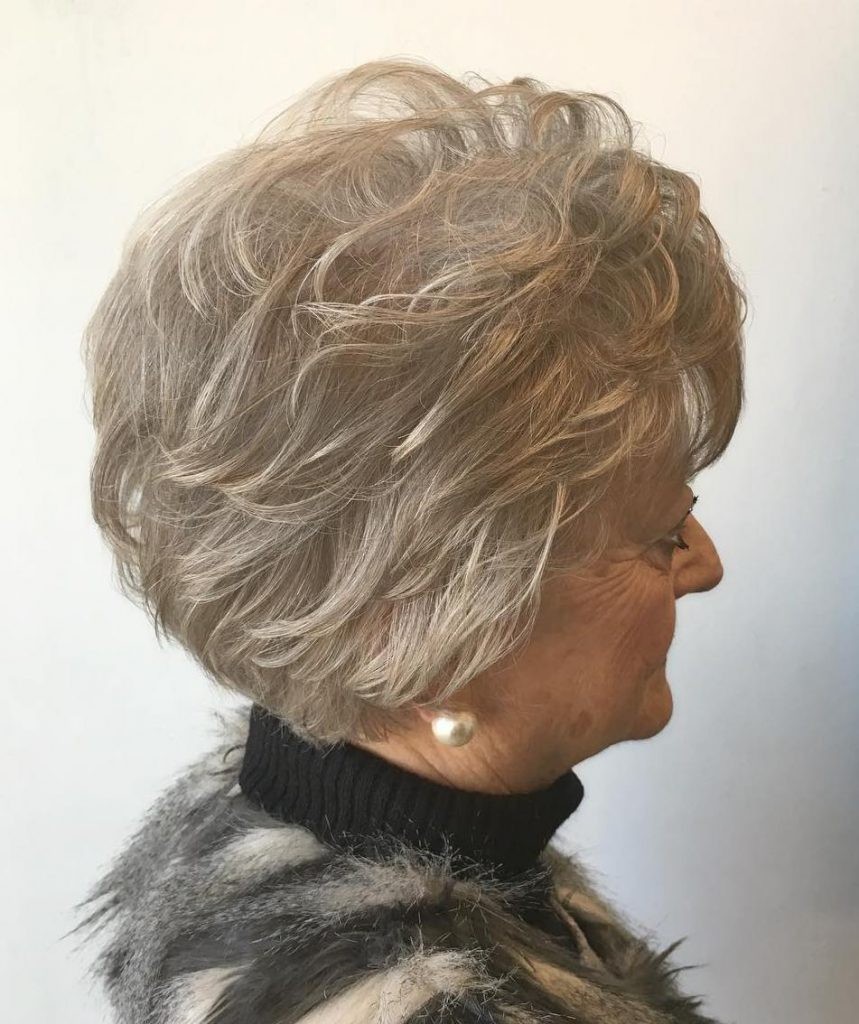
Image credit: Ssom
Seen from the back, this cut is built around framing that skims the cheekbones. It is a shape that respects how hair behaves after 70 — a little finer, a little drier, and often with a mind of its own at the crown.
Why it flatters now: it draws the eye upward and softens the jawline in the kindest way. It also keeps styling honest — a few minutes, low heat, and nothing that asks you to hold your arms overhead for long.
Ask your stylist: Book trims every five to six weeks; short cuts keep their grace when the neckline stays tidy.
20. Snow-White Rounded Crop — Profile and Back
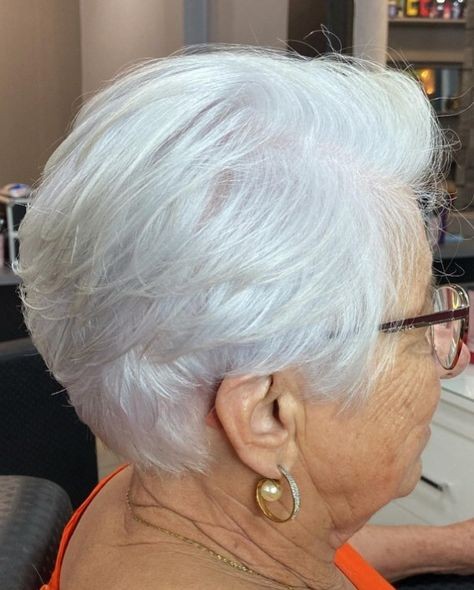
Image credit: Pinvibe
Seen from the back, this cut is built around texture worked into the ends. It is a shape that respects how hair behaves after 70 — a little finer, a little drier, and often with a mind of its own at the crown.
Why it flatters now: wispy ends stop gray hair looking wiry and make the whole cut feel lighter. It also keeps styling honest — a few minutes, low heat, and nothing that asks you to hold your arms overhead for long.
Best for: If your scalp is tender, ask for scissor-over-comb instead of clippers at the nape.
21. Clean Salon Taper — Back View
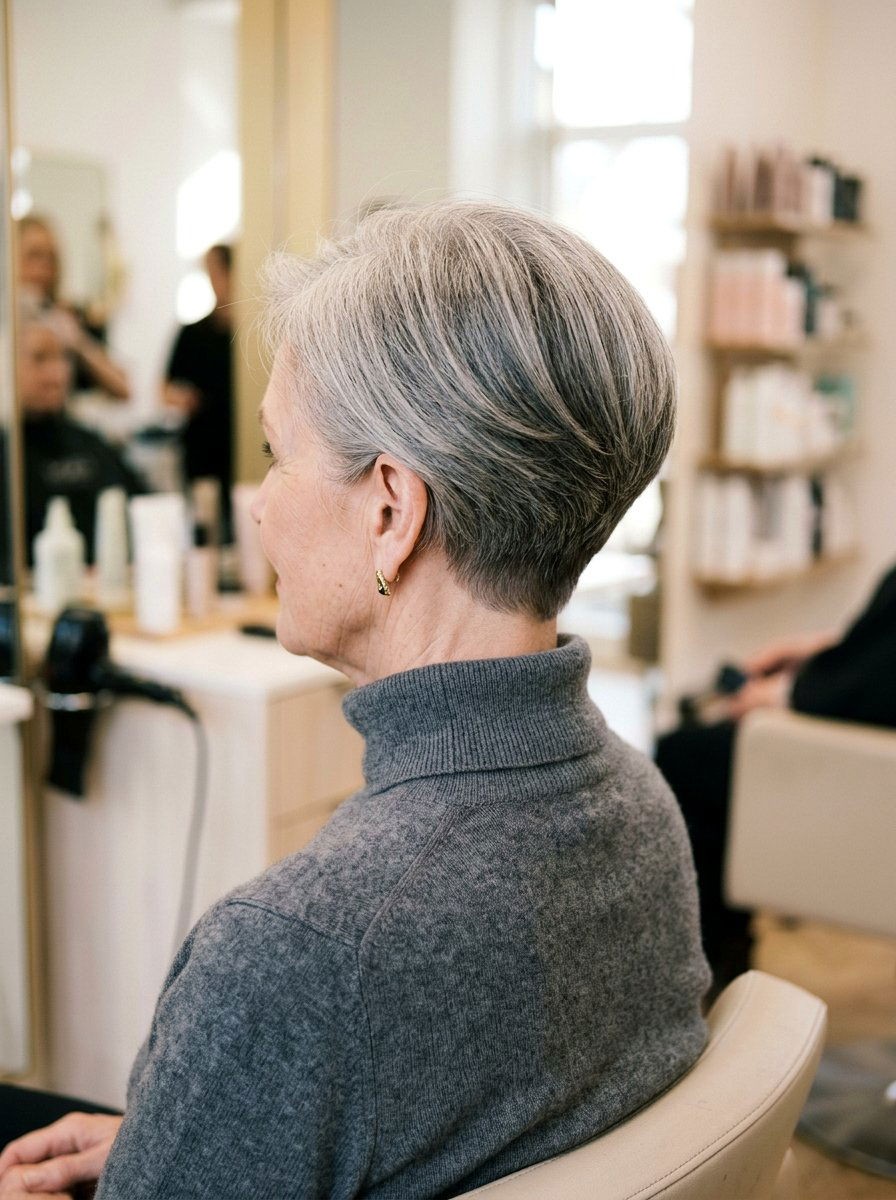
Image credit: Lovelyish
Seen from the back, this cut is built around a shape that follows your natural part. It is a shape that respects how hair behaves after 70 — a little finer, a little drier, and often with a mind of its own at the crown.
Why it flatters now: it falls back into place after washing, which matters on mornings when arms tire quickly. It also keeps styling honest — a few minutes, low heat, and nothing that asks you to hold your arms overhead for long.
Keep it easy: Finger-dry while lifting the roots with your fingertips — no brush wrestling required.
22. Chestnut Wedge Cut — Profile and Back
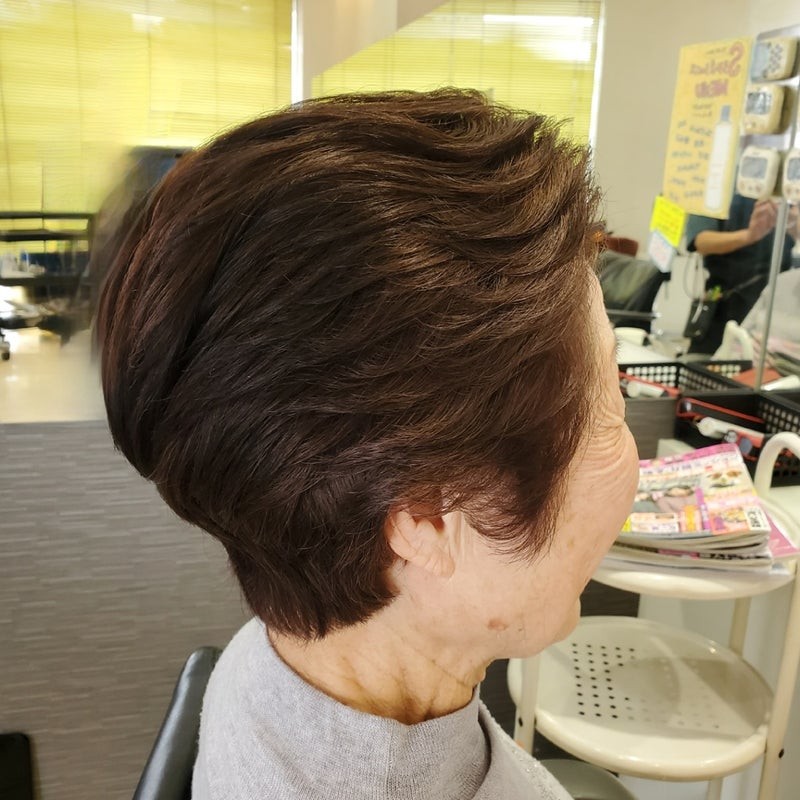
Image credit: Ameblo
Seen from the back, this cut is built around gentle height at the front. It is a shape that respects how hair behaves after 70 — a little finer, a little drier, and often with a mind of its own at the crown.
Why it flatters now: a little lift at the front brightens the face and keeps glasses sitting clear of the fringe. It also keeps styling honest — a few minutes, low heat, and nothing that asks you to hold your arms overhead for long.
Styling tip: Sleep on a smooth pillowcase and the morning refresh takes under a minute.
23. Tapered Pixie Cut Clean Above the Ear — Back View
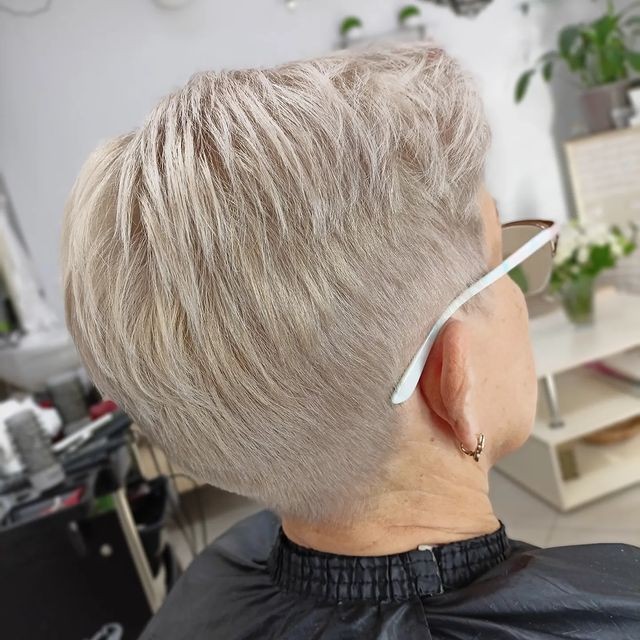
Image credit: Looky
Seen from the back, this cut is built around clean lines around the ears. It is a shape that respects how hair behaves after 70 — a little finer, a little drier, and often with a mind of its own at the crown.
Why it flatters now: it sits comfortably with hearing aids and earring backs, with nothing to tuck or fight. It also keeps styling honest — a few minutes, low heat, and nothing that asks you to hold your arms overhead for long.
Ask your stylist: Take a photo of the finished cut from the side; it makes repeating it at your next visit simple.
24. Long White Shag Layers — Back View
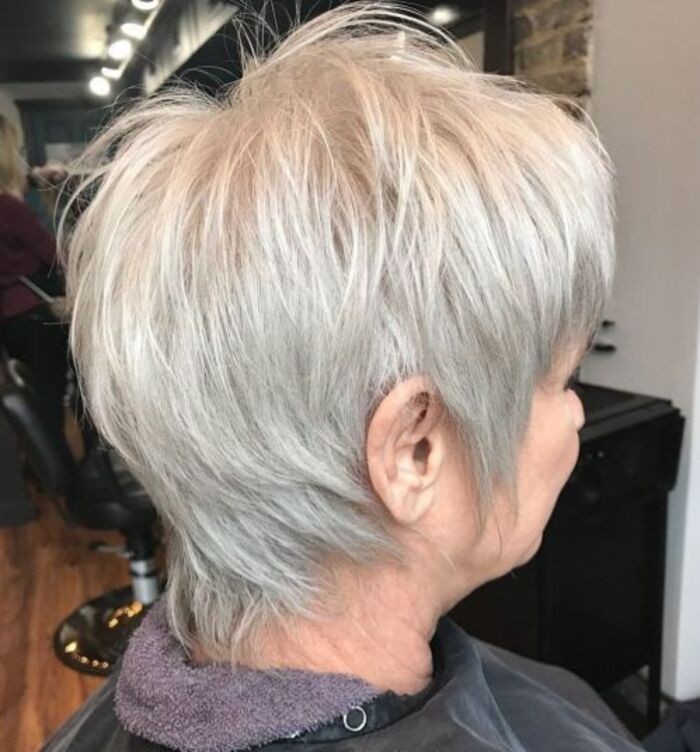
Image credit: FB.ru
Seen from the back, this cut is built around movement instead of bulk. It is a shape that respects how hair behaves after 70 — a little finer, a little drier, and often with a mind of its own at the crown.
Why it flatters now: the weight is placed where it flatters, so the cut looks fresh rather than heavy. It also keeps styling honest — a few minutes, low heat, and nothing that asks you to hold your arms overhead for long.
Best for: A soft side part usually flatters more than a centre part when hair is thinning at the front.
25. Bright White Pixie — Profile and Back
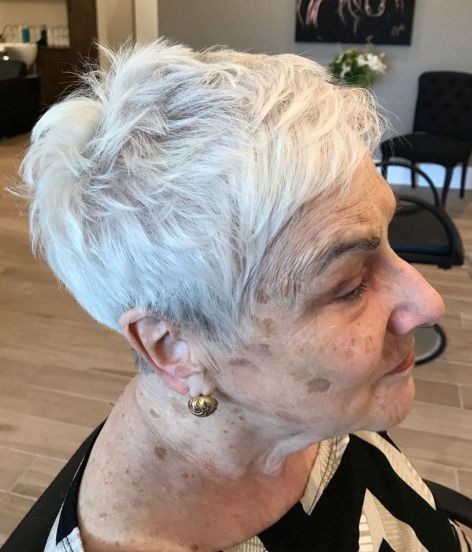
Image credit: Pinterest
Seen from the back, this cut is built around soft layers through the top. It is a shape that respects how hair behaves after 70 — a little finer, a little drier, and often with a mind of its own at the crown.
Why it flatters now: the layers lift a flattening crown without any teasing, so fine hair looks fuller from every angle. It also keeps styling honest — a few minutes, low heat, and nothing that asks you to hold your arms overhead for long.
Keep it easy: Ask your stylist to cut it dry at the end, so the shape you see is the shape you take home.
26. Classic Silver Taper — Back View
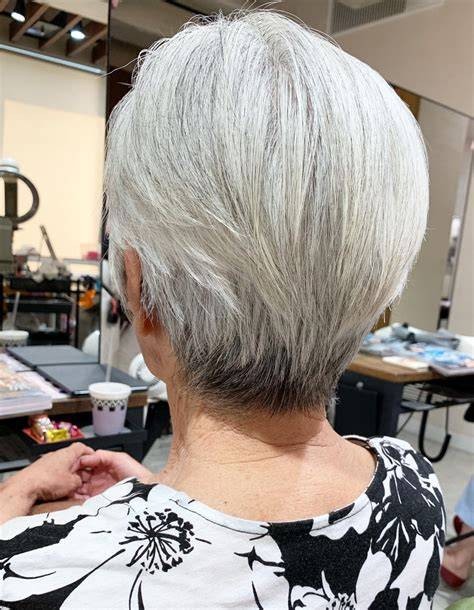
Seen from the back, this cut is built around a neckline that is tidied, not chopped. It is a shape that respects how hair behaves after 70 — a little finer, a little drier, and often with a mind of its own at the crown.
Why it flatters now: it keeps the silhouette graceful and grows out softly between trims. It also keeps styling honest — a few minutes, low heat, and nothing that asks you to hold your arms overhead for long.
Styling tip: A pea-size amount of lightweight cream, warmed in your palms, is plenty — more only weighs fine hair down.
Gentle Care for Short Hair After 70
To keep layered backs looking their best, brush or finger-style from the crown outward each morning so the layers sit in the direction they were cut. A light mist of water revives the shape on day two. Book tidy-up trims every five to six weeks — layered cuts lose their back-view magic when the nape starts to curl over a collar.
And one small habit worth starting: photograph the back of your new cut in daylight before you leave the salon. It is the easiest way to ask for exactly the same shape next time.
Frequently Asked Questions
Why do back views matter when choosing a short layered haircut?
Because the back is what most people see. Crown lift, nape shape and graduation decide whether a short cut looks graceful or flat from behind.
What nape shape grows out best after 70?
A soft taper usually grows out most gracefully, avoiding a harsh line. A wispy nape is a feminine alternative if you dislike a very short finish.
Can layered backs help a thinning crown?
Yes. Short, stacked or feathered layers at the crown create the look of fullness and stop hair separating over the crown.
How do I ask my stylist for one of these backs?
Show the photo, name the crown and nape you want, and ask to see the back with a hand mirror before the cape comes off.
How often does a layered short cut need trimming?
Every five to six weeks keeps the layers stacked correctly and the nape clean; the shape degrades fastest at the back.