19 Feathered Pixie Cuts for Women Over 70 With Thin Hair
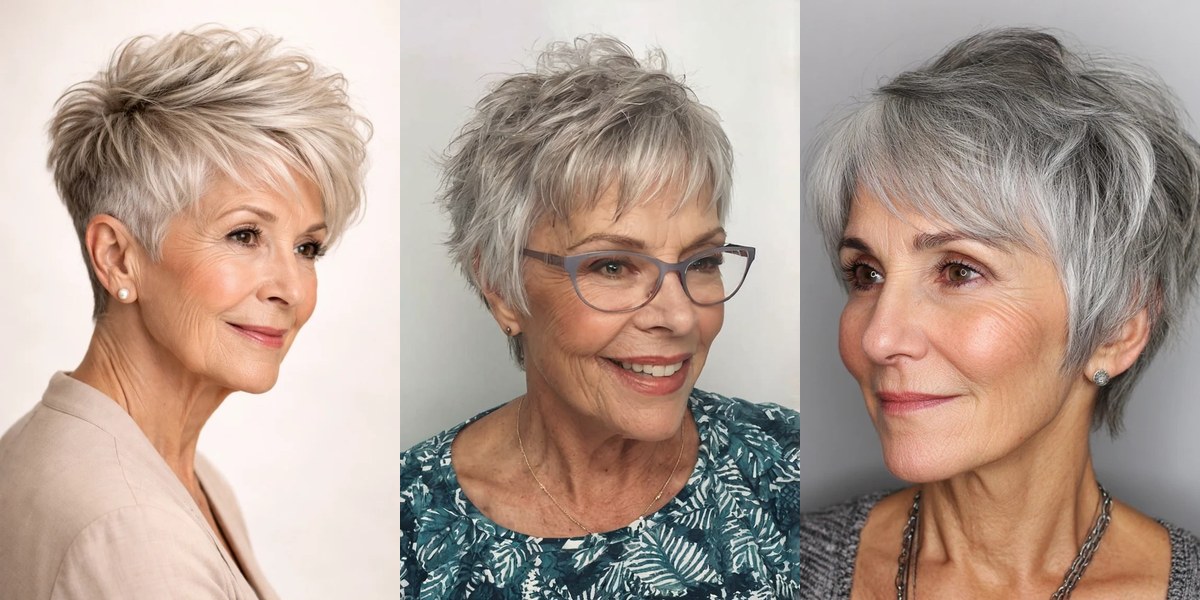
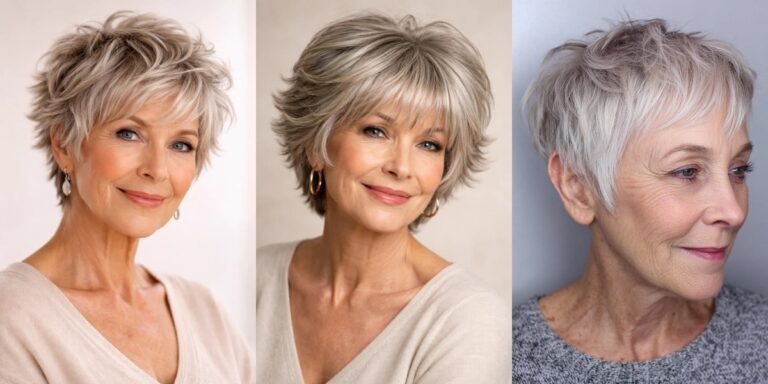
If your hair has become thinner — a wider parting, a flatter crown, a ponytail that feels like half of what it was — the instinct is often to grow it longer to ‘cover’ the problem. Stylists who work with women over 70 will tell you the opposite works: a feathered pixie, cut short and layered so the ends overlap like feathers, is the most convincing fullness you can wear.
These 19 feathered pixie cuts are chosen specifically for thin and fine hair after 70. Each one builds volume into the cut itself — no teasing, no stiff sprays, nothing that hurts a tender scalp or tires your arms. For more background, see our guide to low-maintenance haircuts for fine hair and the fuller collection of hairstyles for women over 60 with thin fine hair.
Table of Contents
- Feathered Voluminous Pixie
- Layered Feathered Pixie
- Soft Feathered White Pixie
- Fluffy Feathered Pixie
- Choppy Feathered Pixie for Fine Hair
- Wispy Feathered Pixie in Profile
- Feathered Pixie With a Soft Fringe
- Feathered Gray Pixie With Glasses
- Pale Wispy Feathered Pixie
- Feathered Shag Pixie
- Wispy White Feathered Pixie
- Silver Feathered Pixie
- Feathered Blonde Shag Pixie
- Wispy White Crop
- Feathered Shag in Profile
- Salon-Fresh Wispy Pixie
- Creamy Feathered Pixie in Profile
- Feathered Pixie With Glasses
- Wavy Feathered Pixie in Profile
Why It Works After 70
- Volume is cut in, not sprayed on: overlapping feathered layers perch on each other and hold height all day.
- Show-through disappears: a hundred tiny feathered ends break up the parting and crown so scalp simply stops showing.
- Gentle everything: no backcombing, no heavy wax, no long blow-drying — kind to tender scalps and tired shoulders.
💡 Before your next salon visit, check your face shape with our face shape quiz — it points you straight to the cuts that work hardest for you.
1. Feathered Voluminous Pixie
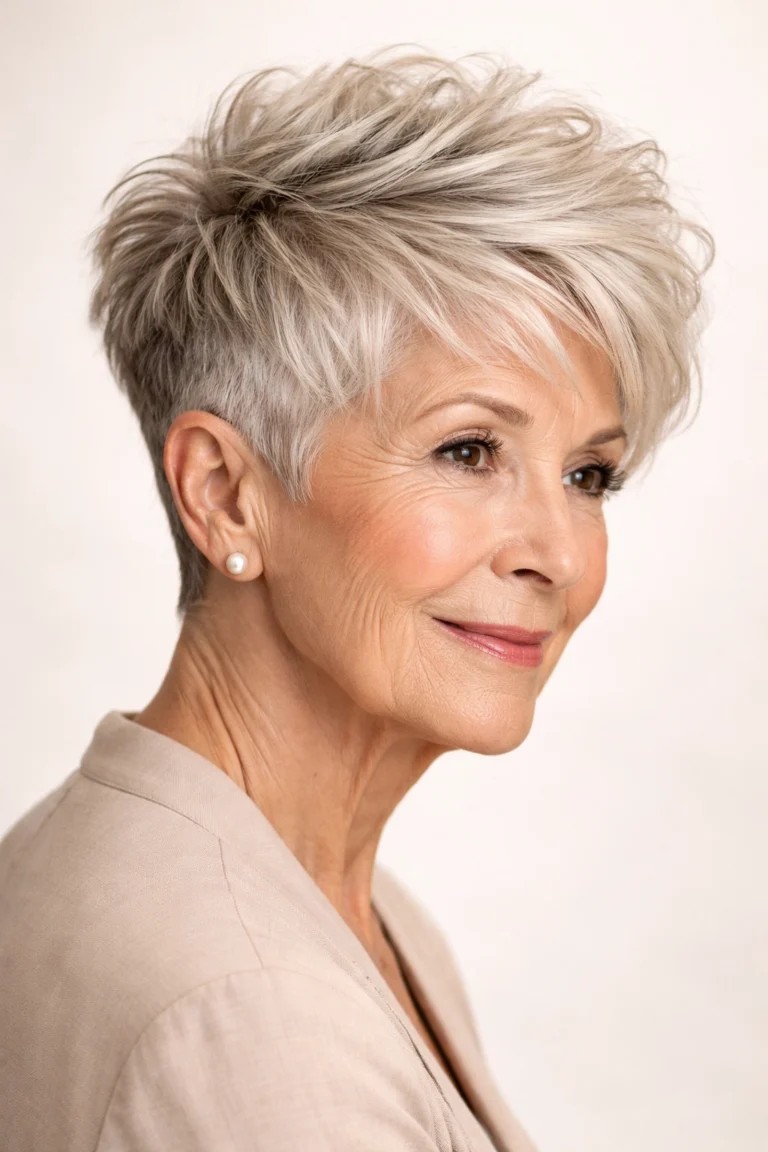
Image credit: Hairtical
Feathering is the fine-hair pixie’s oldest trick and still its best: layers are cut so the ends flick outward in soft feathers, and each feather rests on the layer below. The result is a crown that looks full and lifted even when the hair itself is fine.
For women over 70 with thinning on top, this is the cut to ask for by name. The volume is built into the architecture of the cut, not sprayed on in the morning, so it lasts all day and survives hats and naps.
Ask your stylist: for feathering concentrated at the crown, with the sides kept closer so all the fullness reads on top.
2. Layered Feathered Pixie
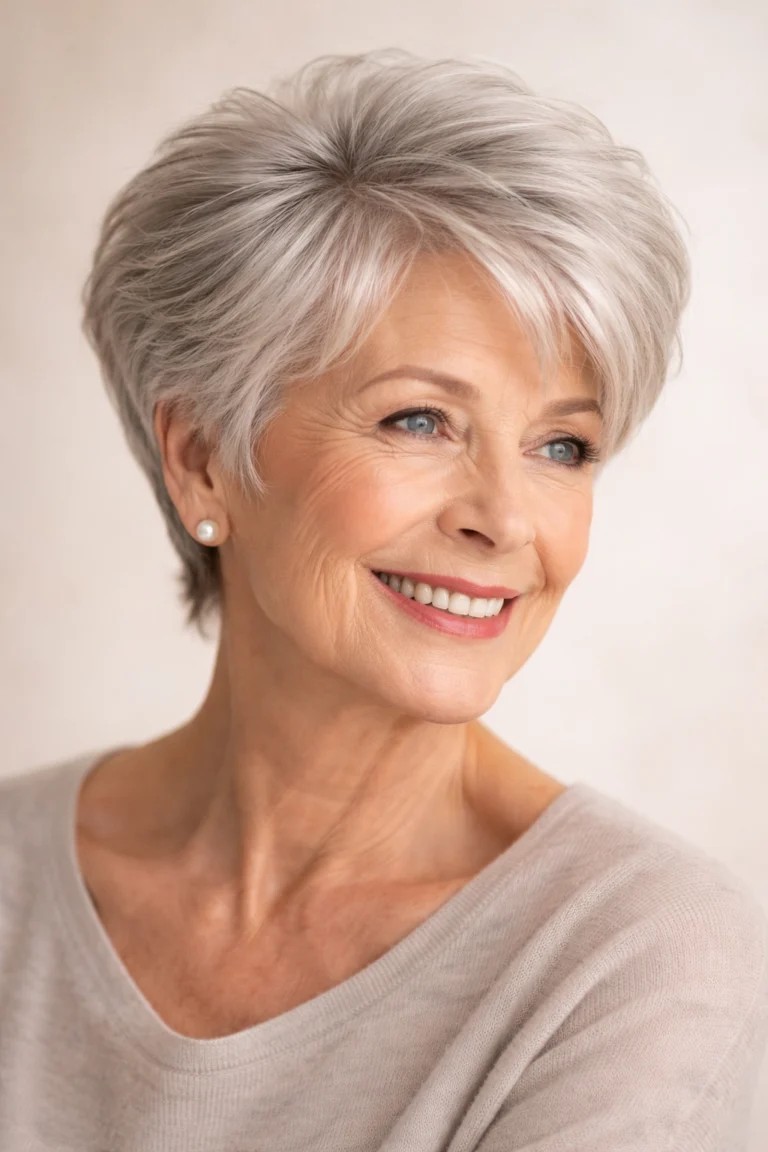
Image credit: Hairtical
A slightly longer feathered pixie, smiling and soft, with layers that blend the fringe into the sides. The length gives fine hair something to feather with, and the overall effect is gentle rather than cropped.
If your hair has thinned evenly all over rather than in one spot, even layering like this distributes the feathers where they are needed and keeps the shape balanced from every angle.
Styling tip: dry the top layers forward, then flick just the ends back with your fingers — that contrast is what reads as ‘feathered’.
3. Soft Feathered White Pixie
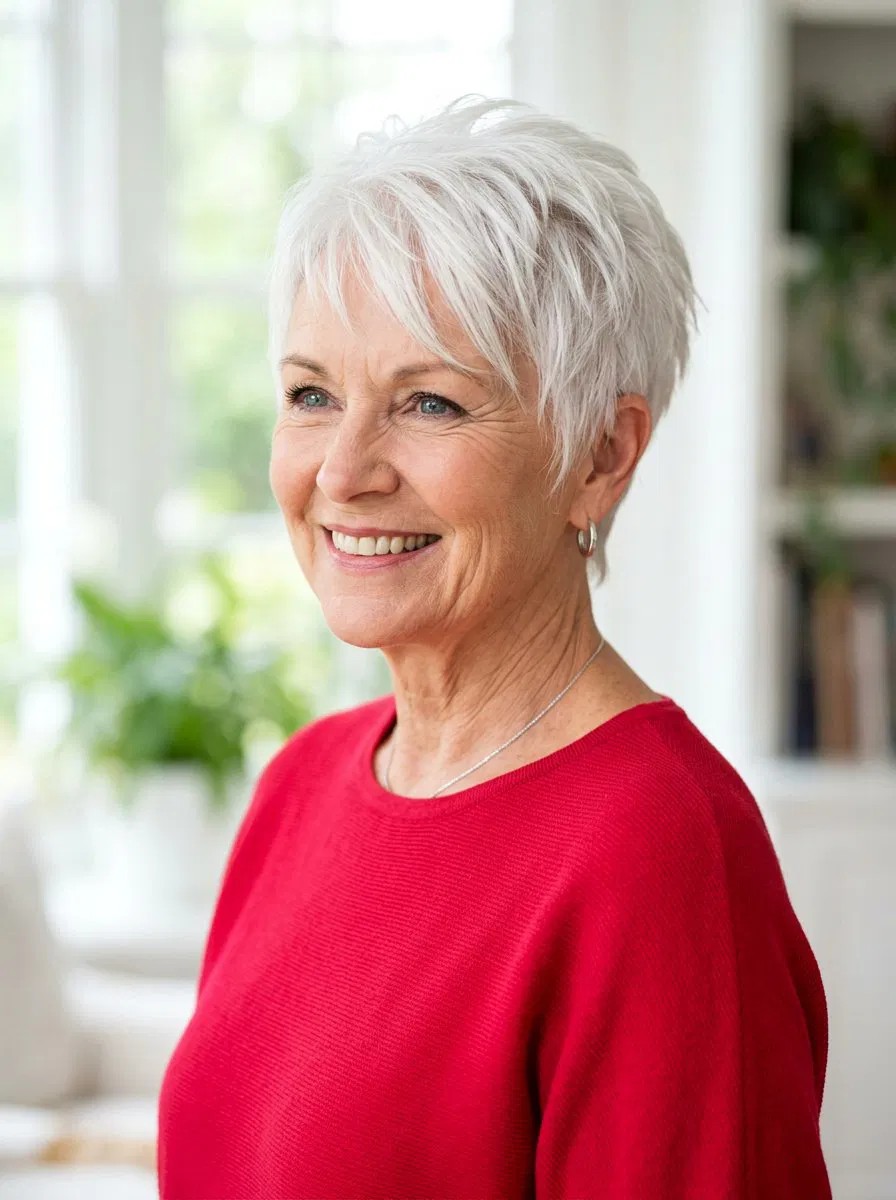
Image credit: Lovelyish
White hair, feathered softly and worn with an easy smile. White hair is often finer than the hair you had at 50, and feathering answers that directly: short, overlapping layers that make the most of every strand.
The red top in the photo makes another good point — white feathered hair is a beautiful canvas for color in your clothes. When your hair is soft and neutral, everything you wear looks more deliberate.
Keep it easy: this finish needs no product at all on fine hair; product is what makes feathers separate and look stringy.
4. Fluffy Feathered Pixie
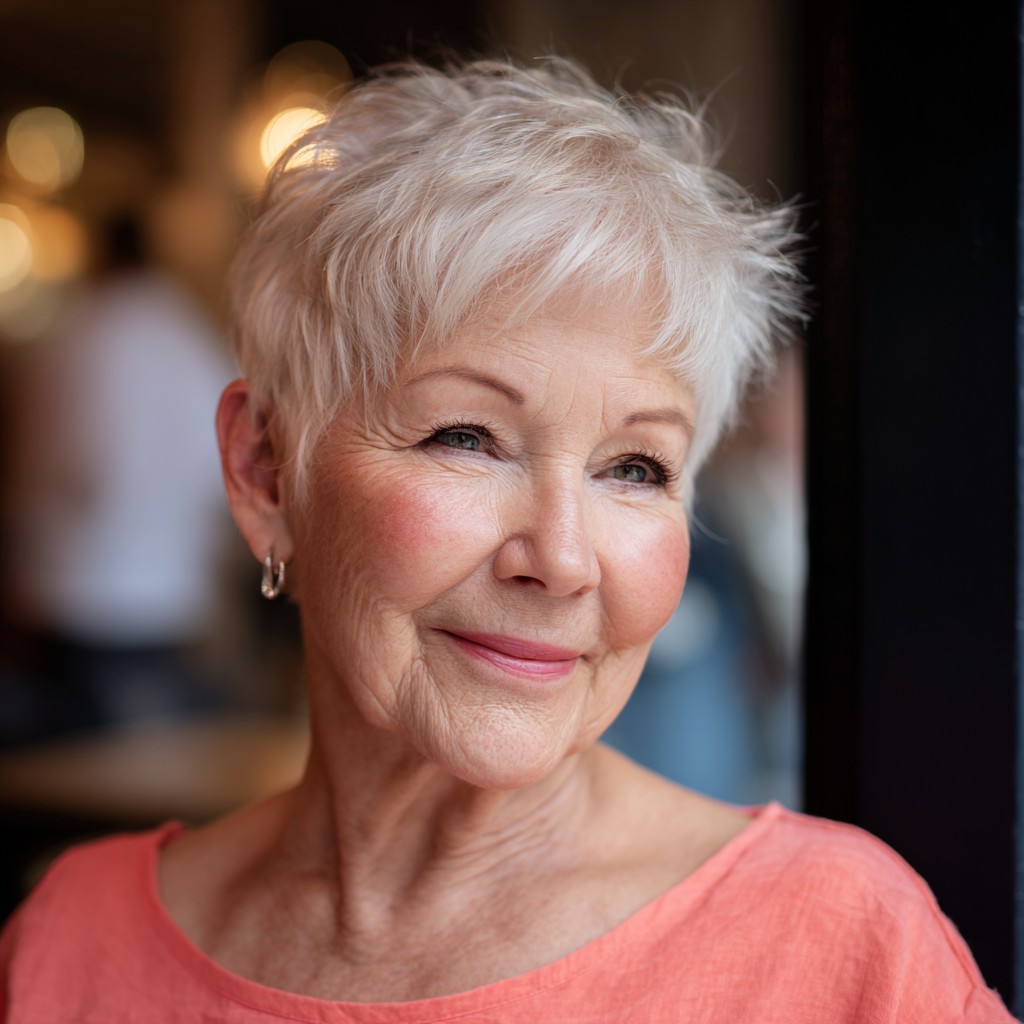
Image credit: Latest Hairstyles
Maximum fluff, minimum hair required. This feathered pixie is teased by the cut alone into a soft cloud, with the layers around the face curved gently inward to frame the eyes and cheekbones.
Fluffy feathering is especially kind if your scalp shows through at the parting: the feathers overlap the parting line from both sides, breaking it up so show-through all but disappears.
Best for: fine hair with a widening parting — ask for the parting area to be cut slightly shorter so the feathers spring up and cover.
5. Choppy Feathered Pixie for Fine Hair
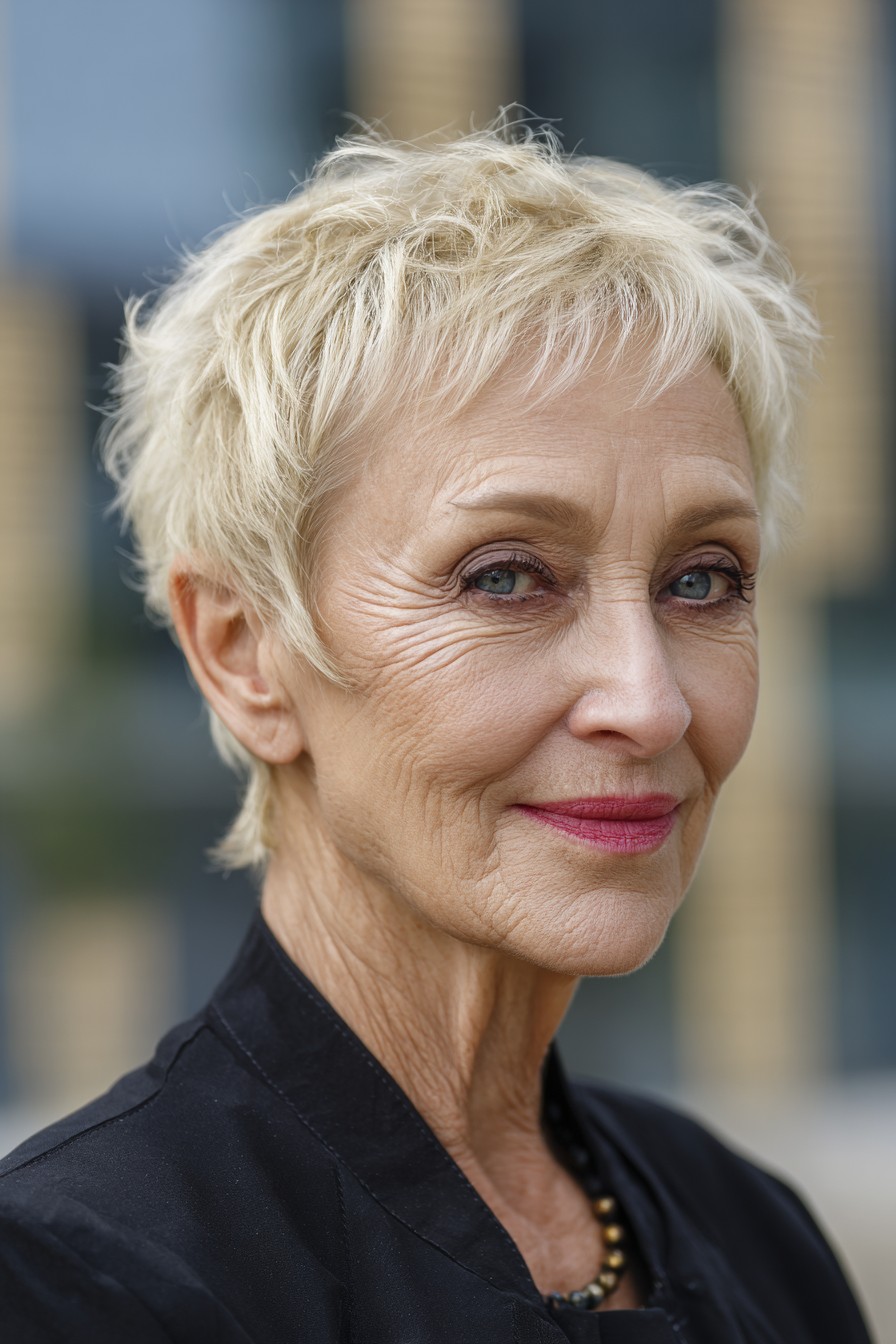
Image credit: Fabbon
Choppy and feathered at once: the ends are point-cut into little flicks that give fine blonde hair texture it never had on its own. The deep lines in this lovely face tell the truth — this is a cut for real women over 70, not models.
Point-cutting is the technique to request for fine hair. Blunt ends on fine hair lie flat and separate; pointed, feathered ends interlock and hold each other up.
Ask your stylist: for point-cut, feathered ends — and to show you the difference on one section before they continue.
6. Wispy Feathered Pixie in Profile
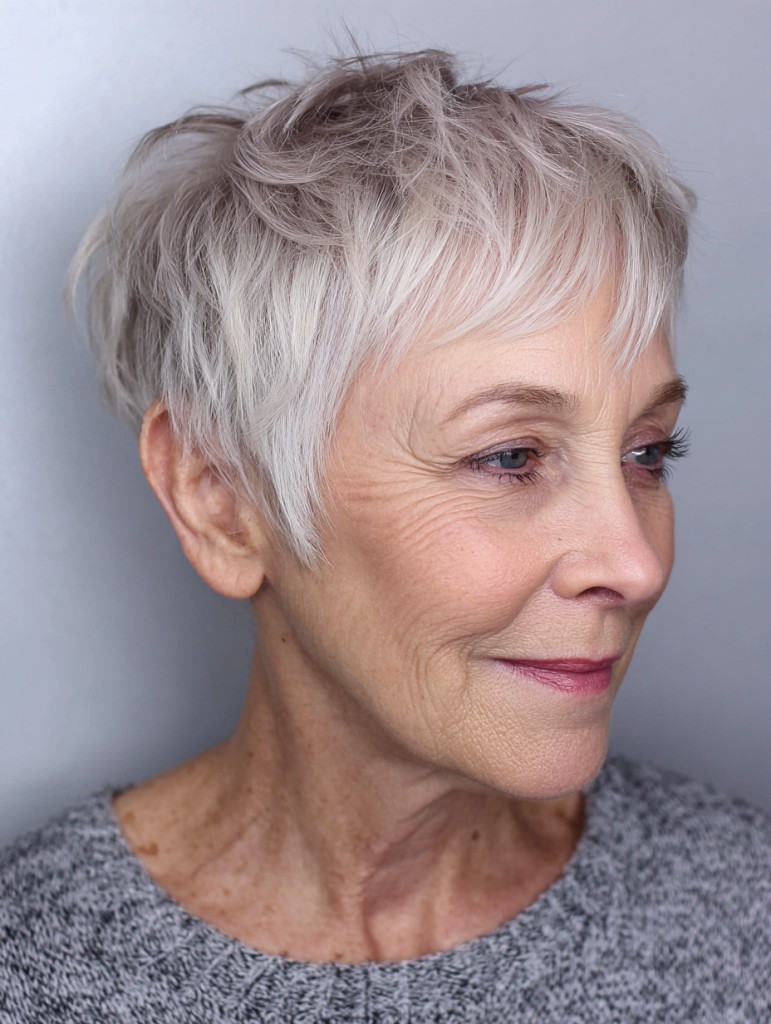
Image credit: Styles Crave
From the side, you can see the feathers clearly: fine layers laid over each other like roof shingles, each one adding a whisper of coverage. The profile stays soft and close, so the cut never looks bulky despite all that layering.
This shingling effect is exactly why feathering beats a blunt pixie for thin hair. Blunt cuts end in one visible line where thinness shows; feathered cuts end in a hundred tiny lines where it does not.
Styling tip: view your own profile with a hand mirror before leaving the salon — the side view is where feathering proves itself.
7. Feathered Pixie With a Soft Fringe
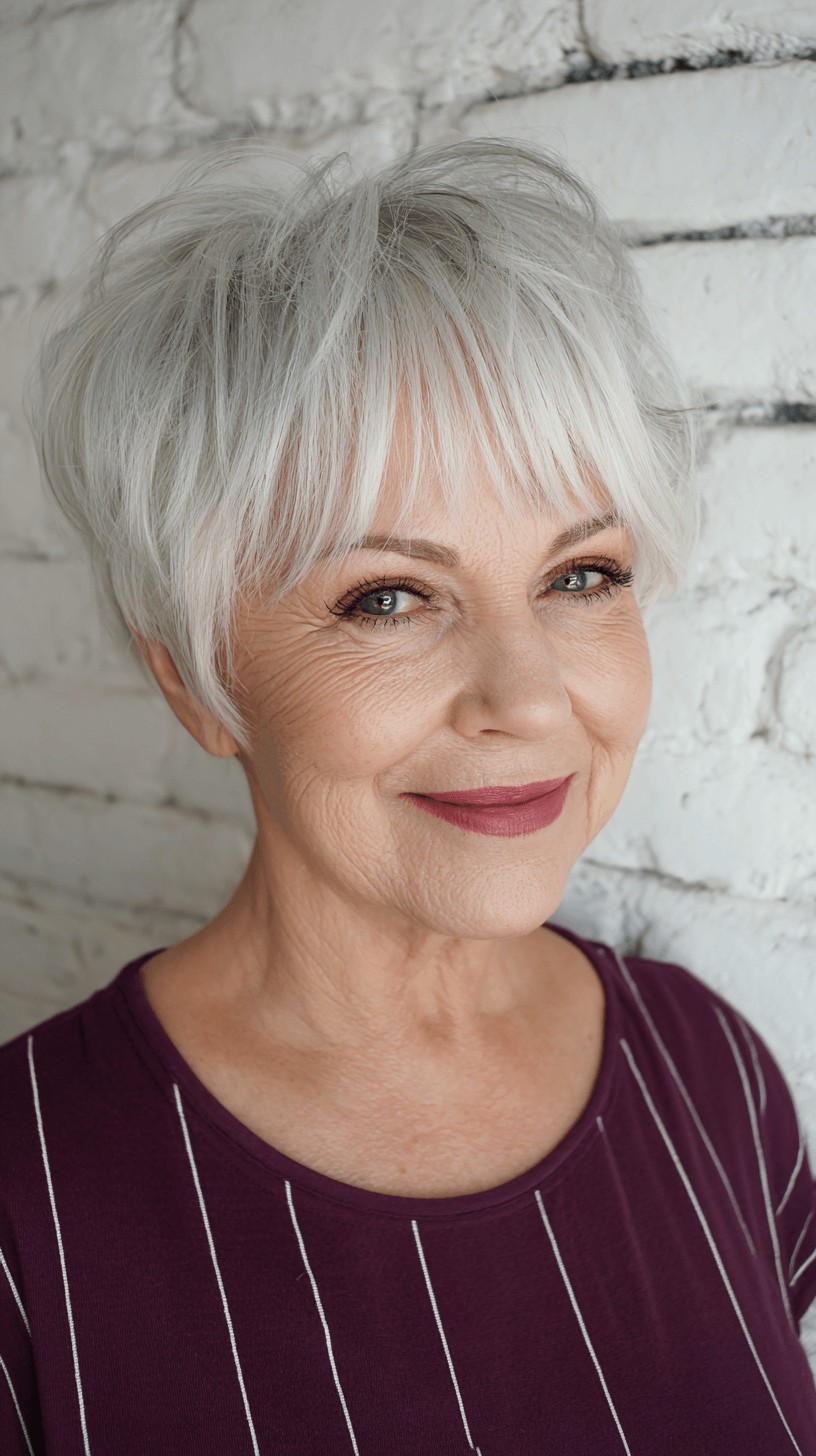
Image credit: Latest Hairstyles
A feathered pixie finished with a light, airy fringe that brushes the brows. The fringe is feathered too, so it never sits as a heavy shelf — it moves, separates slightly, and lets the forehead breathe.
A soft fringe is the thin-hair woman’s best friend at the hairline: where a swept-back style exposes a thinning front edge, a feathered fringe covers it with the lightest possible layer of hair.
Keep it easy: if the fringe ever grows long between appointments, it trims in minutes at home with proper hair scissors — snip upward in tiny points, never straight across.
8. Feathered Gray Pixie With Glasses
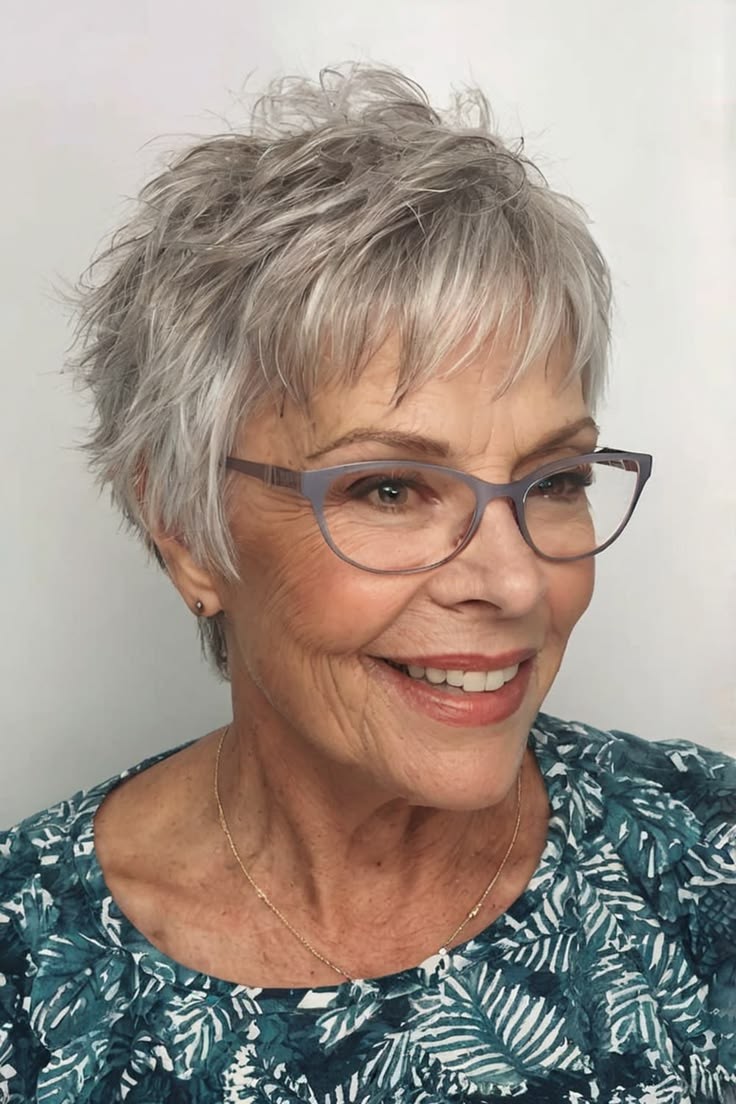
Image credit: Pinterest
Feathered gray layers, a big smile, and glasses that sit perfectly because the hair around the ears is feathered close. This is thin-hair styling and glasses-wearing solved in the same haircut.
Feathering near the ears matters more than people realize: bulk there pushes glasses arms outward and makes frames slip. Feathered-close sides keep frames — and hearing aids — exactly where they belong.
Best for: glasses wearers with fine gray hair who are tired of the hair-versus-frames battle every morning.
9. Pale Wispy Feathered Pixie
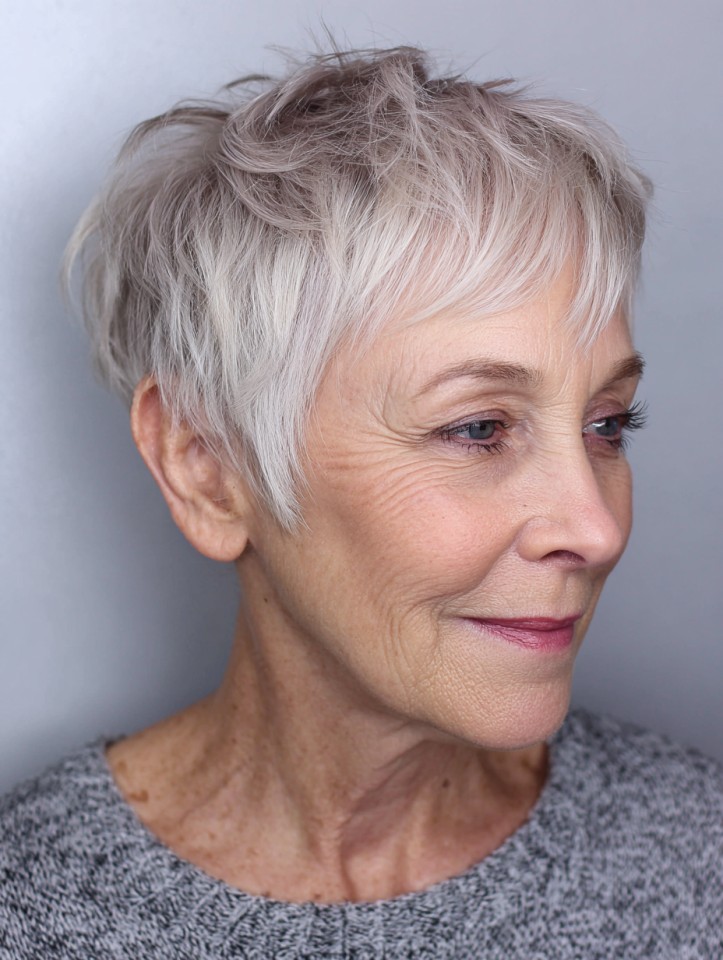
Image credit: Styles Crave
The palest, wispiest version of the feathered pixie — hair so fine it is almost translucent, yet the feathering makes it look like a soft cap of silver. If your hair is very fine, this photo is your proof that a pixie will not leave you looking ‘bald-short’.
The secret is that the layers are kept longer than you would expect. Very short cuts on very fine hair can look sparse; feathered length gives strands something to overlap with.
Ask your stylist: to resist going too short — for the finest hair, feathered and a little longer always looks fuller than cropped.
Thin-Hair Rules Every Feathered Pixie Follows
- Feather the ends, never thin them further — ask for point-cutting, and say no to thinning shears on fine hair.
- Keep crown layers the shortest and liveliest; that is where lift is won or lost.
- Break the parting: a side sweep or soft zig-zag hides show-through better than any center line.
- Products stay pea-sized and root-only — weight is the enemy of feathers.
- Dry by lifting with fingertips; a brush dragged through fine feathers flattens them instantly.
10. Feathered Shag Pixie
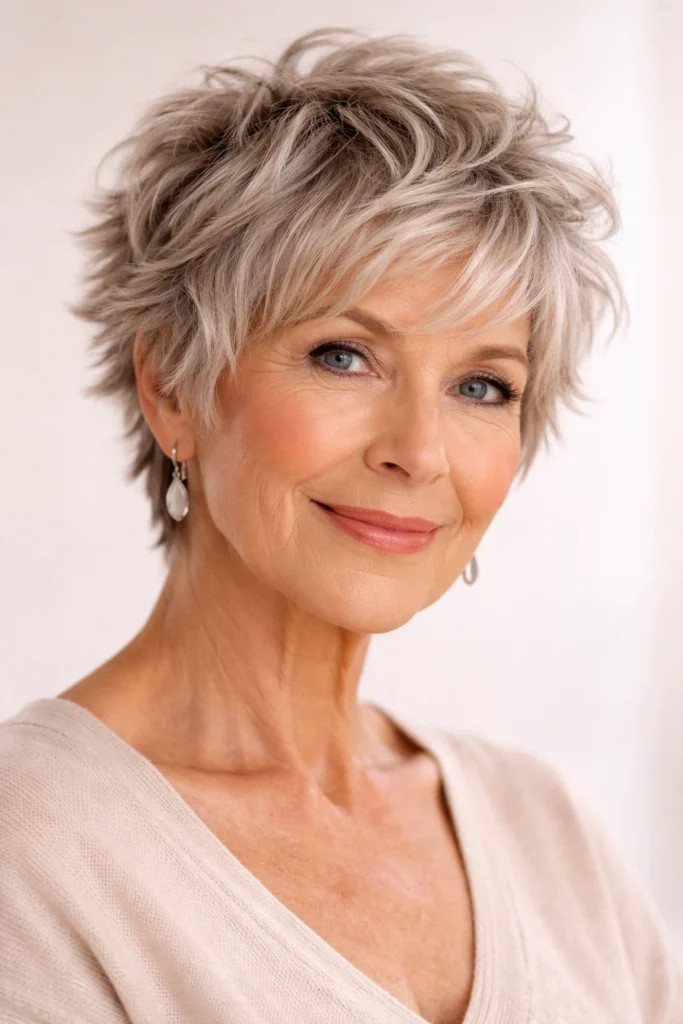
Image credit: Hairtical
A pixie with shag energy: feathered layers in every direction, a flicked-out nape, and movement everywhere. The shag influence makes it the most forgiving cut on this list for hair that grows unevenly or lies in cowlicks.
At 70-plus, hair often changes direction at the crown and nape. A feathered shag does not fight those growth patterns — it hires them. Where your hair wants to flick, the cut flicks.
Styling tip: this one styles itself as it dries; just twist a few front pieces between your fingers while damp to set the direction.
11. Wispy White Feathered Pixie
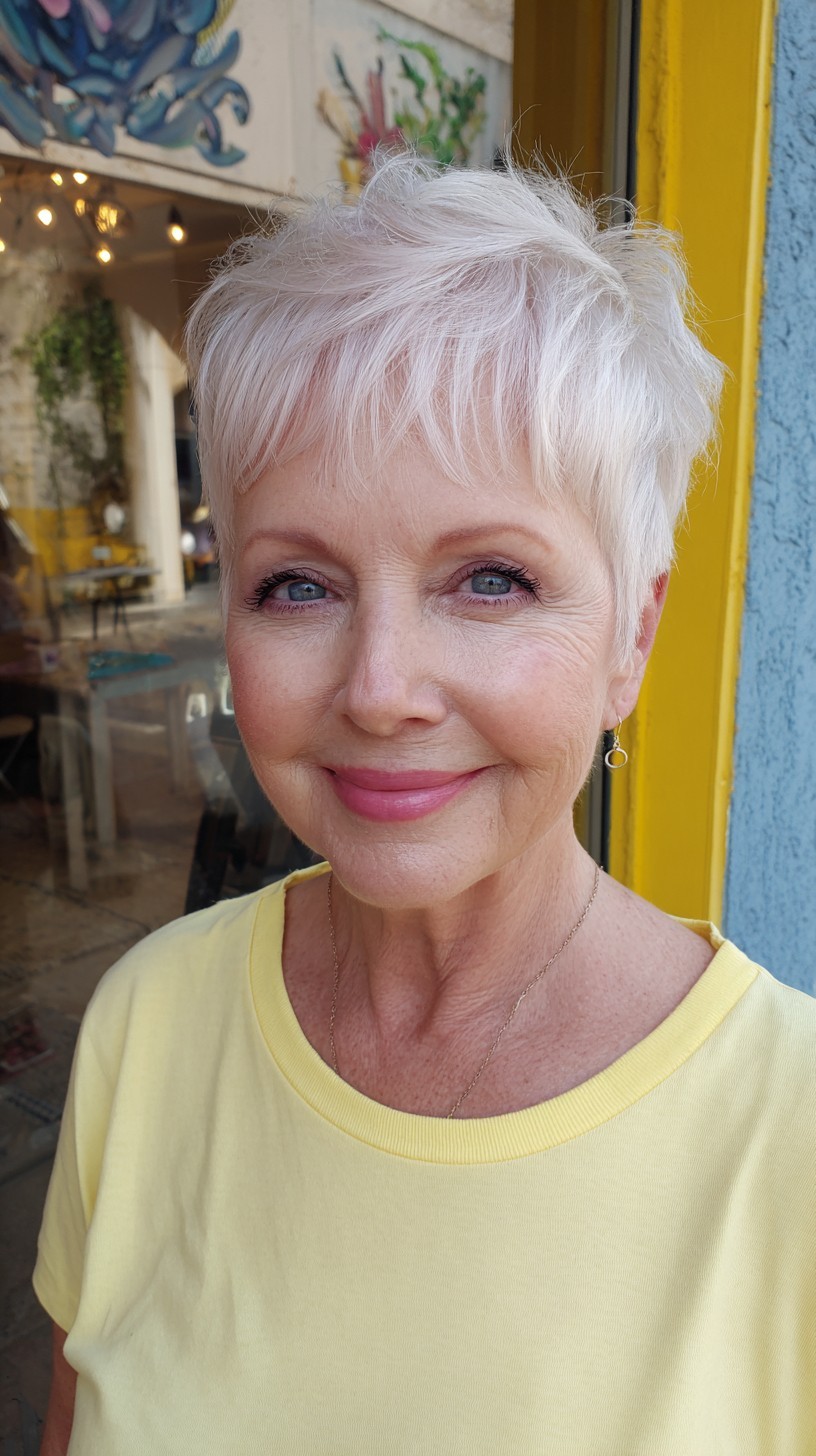
Image credit: Latest Hairstyles
Bright white hair in a wispy feathered pixie, photographed in a salon with the light catching every feather. The wispy texture keeps white hair from looking wiry — a common worry — because the ends are softened rather than left blunt.
Wiry white hair usually looks that way because of dryness, not texture alone. A weekly deep-conditioning treatment, easy at this length, makes feathered ends lie soft and shiny.
Keep it easy: at pixie length, a deep conditioner takes five minutes and a coin-size amount — the most affordable luxury in your routine.
12. Silver Feathered Pixie
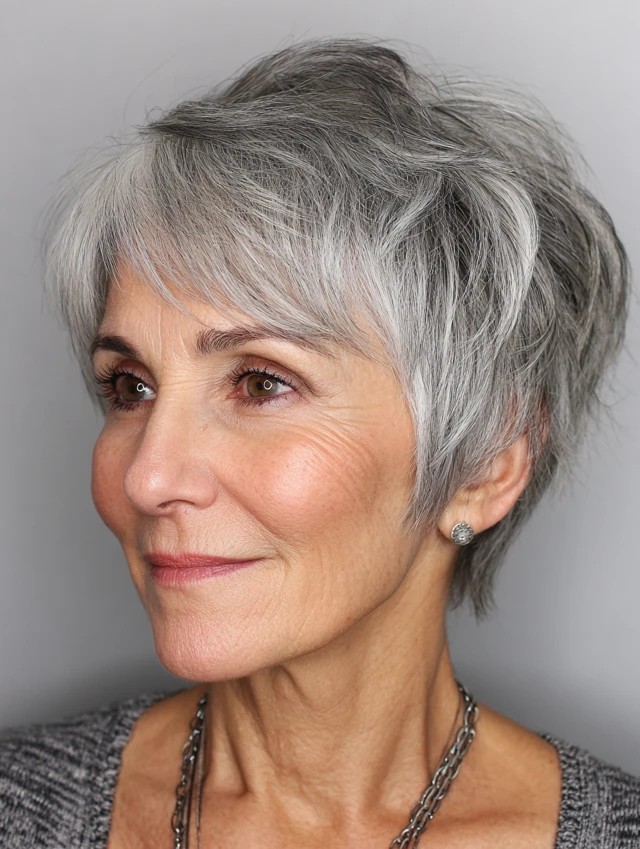
Image credit: For Hairstyles Inspo
Silver hair feathered through the top with the sides kept neat — the balanced, everyday version of the feathered pixie. It is smart enough for any occasion and soft enough for every day.
This balanced shape suits women whose thinning is mostly at the crown: the feathered top disguises it, while the neat sides stop the overall look becoming top-heavy or round.
Best for: crown thinning with still-decent sides — the most common pattern, and the one this cut was born for.
13. Feathered Blonde Shag Pixie
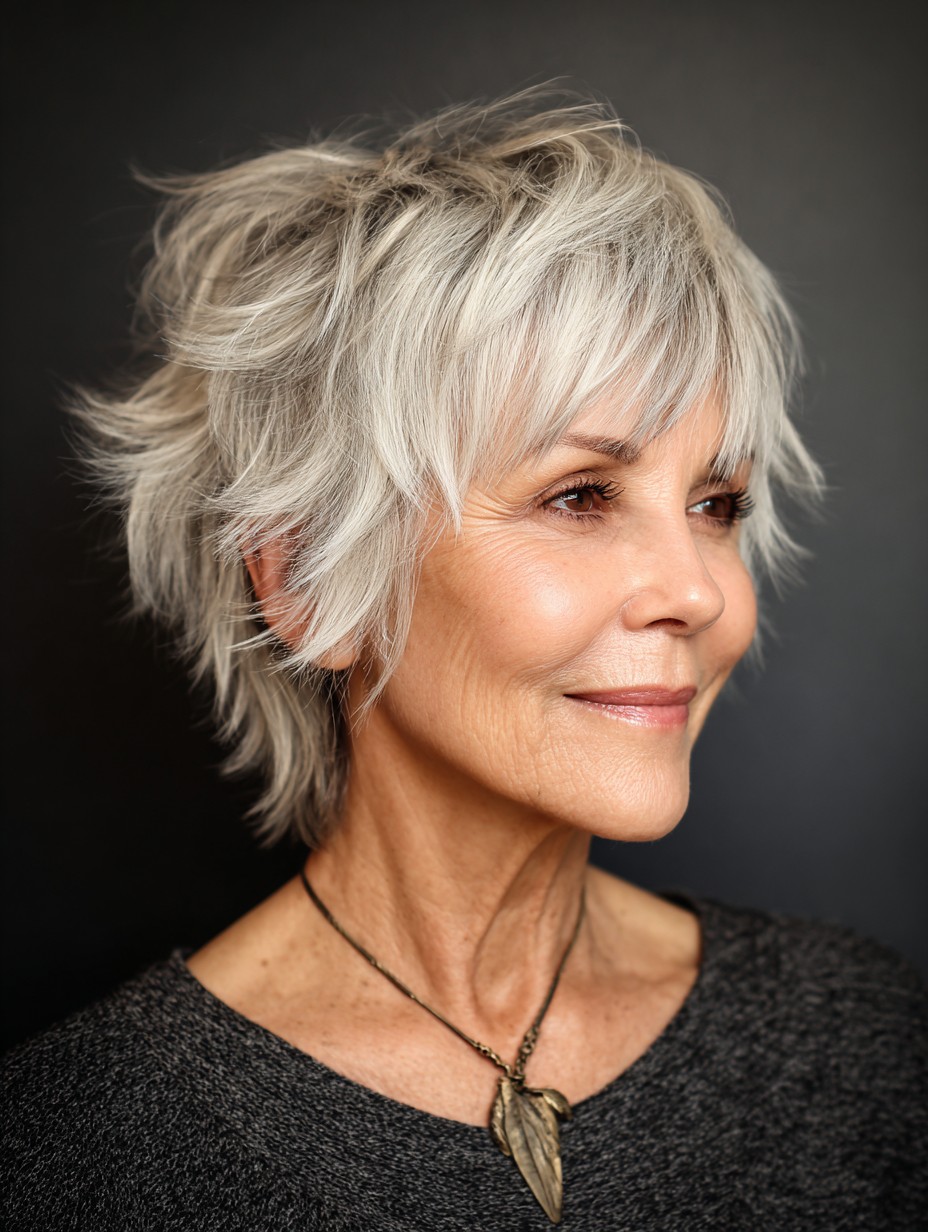
Image credit: Hair and Tattoo
A blonde feathered shag-pixie with layers flicking around the face. Blonde remains the most forgiving color for thin hair — light tones show less scalp contrast — and the shaggy feathering multiplies the effect.
If you color thinning hair, this combination is the professional recommendation: multi-tonal blonde plus feathered layering. The tones create depth, the feathers create volume, and together they convincingly double your apparent hair.
Ask your stylist: for highlights only through the top, where the feathering is — it halves the cost and the chemical load on fine hair.
14. Wispy White Crop
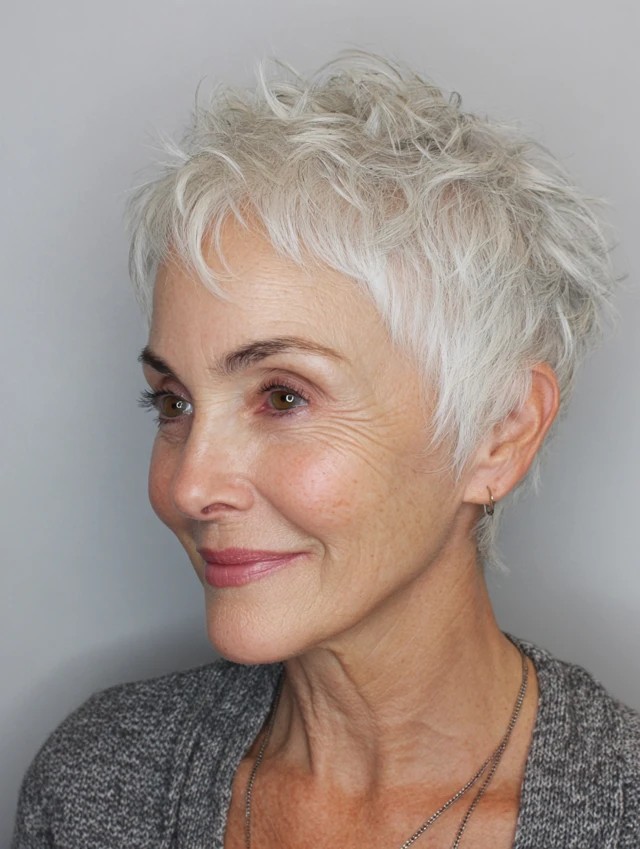
Image credit: For Hairstyles Inspo
A wispy white crop that sits close but never flat, thanks to feathering through the last centimeter of every layer. It is the gentlest-looking short cut imaginable — soft from every angle.
Close crops on thin hair succeed or fail on that last centimeter of feathering. Ask for it explicitly; without it, a crop on fine hair can look severe, and with it, it looks like this.
Styling tip: a light volumizing mousse at the roots before air-drying gives wispy crops their one allowed product — choose alcohol-free so fine hair does not dry out.
15. Feathered Shag in Profile
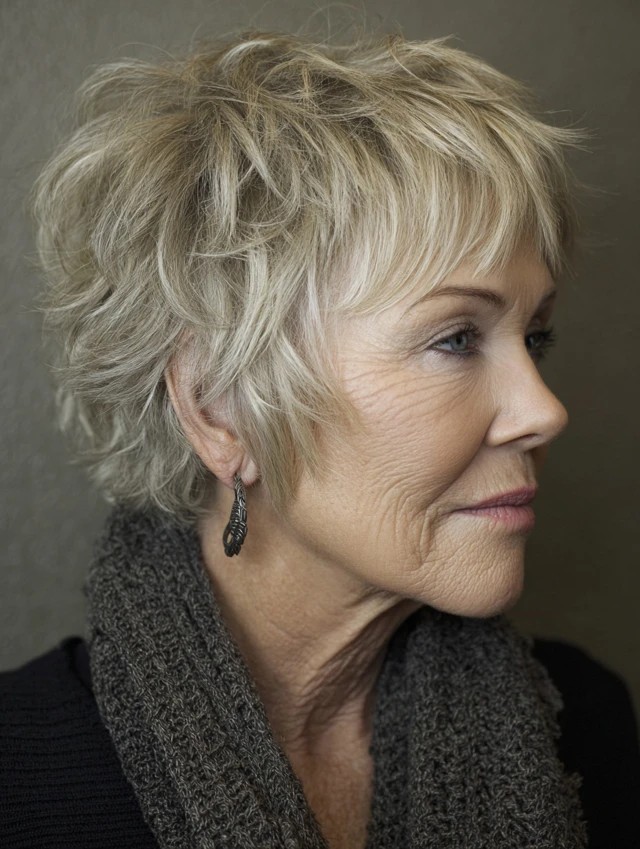
Image credit: Cleodiva
In profile, this blonde feathered shag shows its lovely flicked nape and face-framing layers. Deeply lined, smiling, and entirely unbothered — exactly the energy a great haircut should give you.
The flicked nape is worth copying if your neck hair grows downward in a fine veil: feathering it outward turns a wispy nuisance into a design detail.
Keep it easy: napes grow out fastest on feathered cuts; a quick nape tidy every three weeks keeps the profile flicked and fresh.
16. Salon-Fresh Wispy Pixie
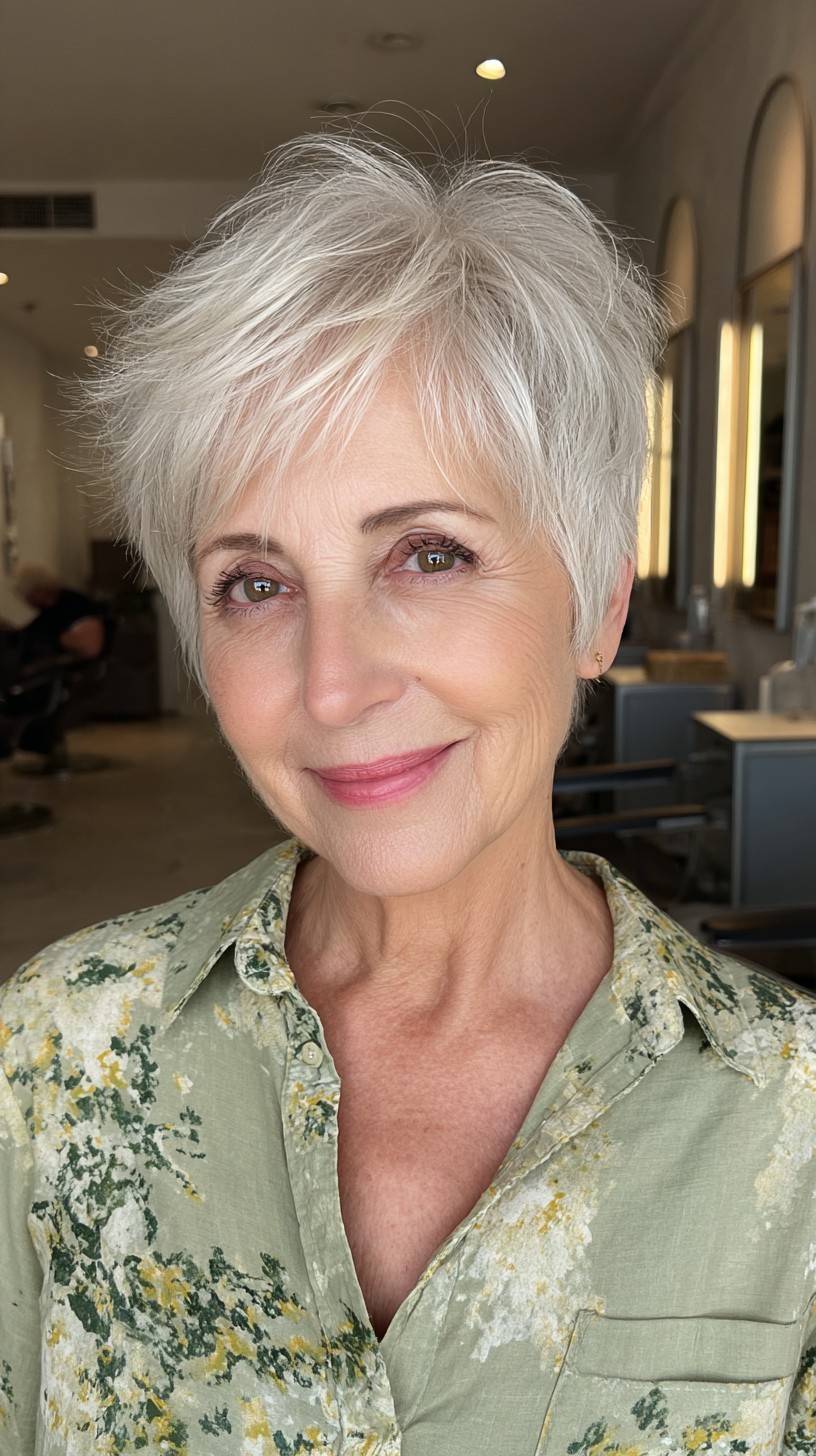
Image credit: Latest Hairstyles
That just-left-the-salon softness, captured in a wispy white pixie. The good news: on fine hair, this look is genuinely recreatable at home, because feathered cuts fall where they were cut — you are not fighting the shape, just refreshing it.
Ask your stylist to style it while you watch, naming each move. On fine hair there are usually only two: push the top forward while damp, then separate the fringe with fingers when dry.
Ask your stylist: to note your cut’s measurements on your record card, so any stylist can recreate it exactly.
17. Creamy Feathered Pixie in Profile
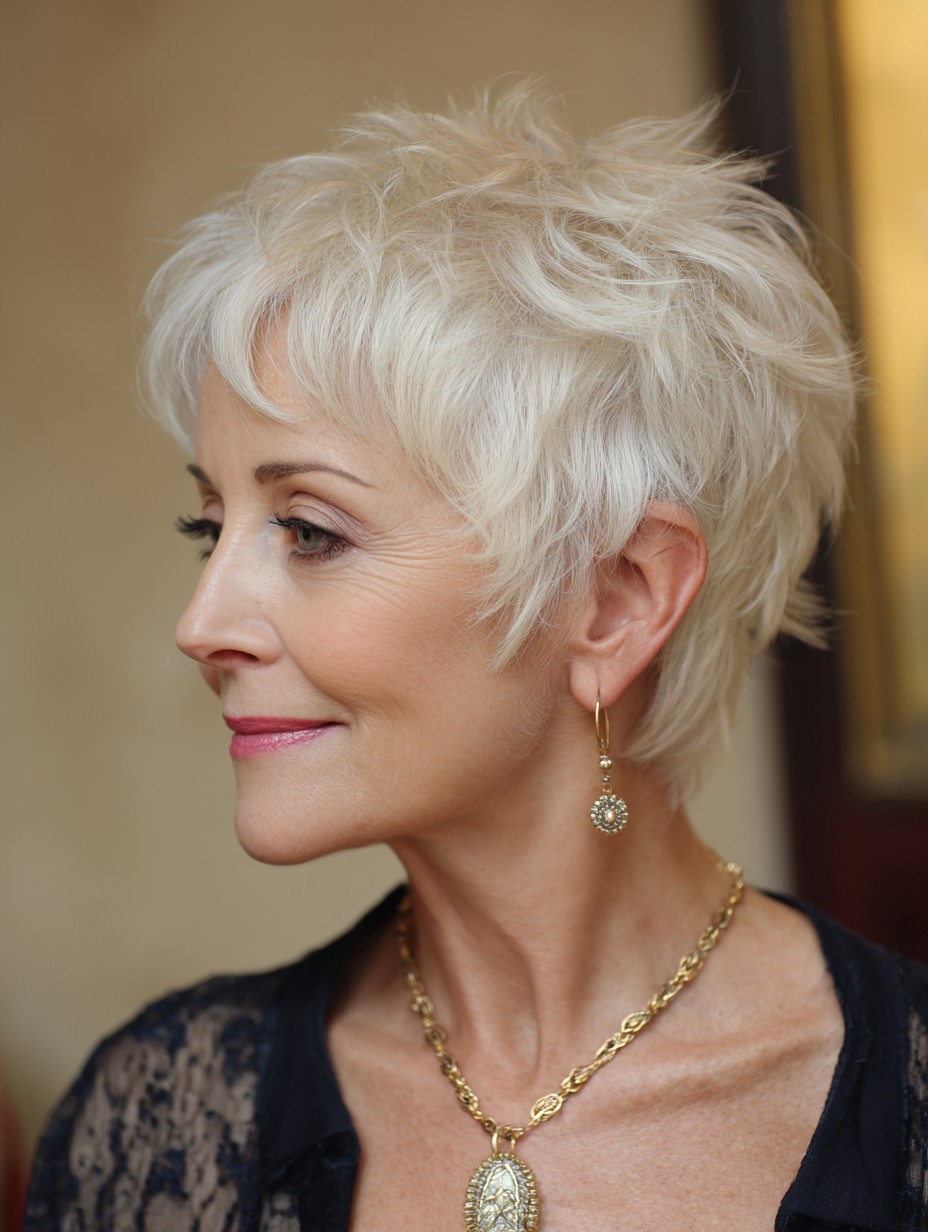
Image credit: Styles Crave
A creamy, pale feathered pixie in profile, the layers melting down from a fuller crown to a soft nape. The graduation is doing quiet, clever work: maximum feathering where hair is thinnest, tapering where it is not.
Graduated feathering like this also grows out beautifully, because there is no hard line to appear as lengths change. You can comfortably stretch appointments to six or seven weeks.
Best for: women who want one salon visit to carry them gracefully through a whole season.
18. Feathered Pixie With Glasses
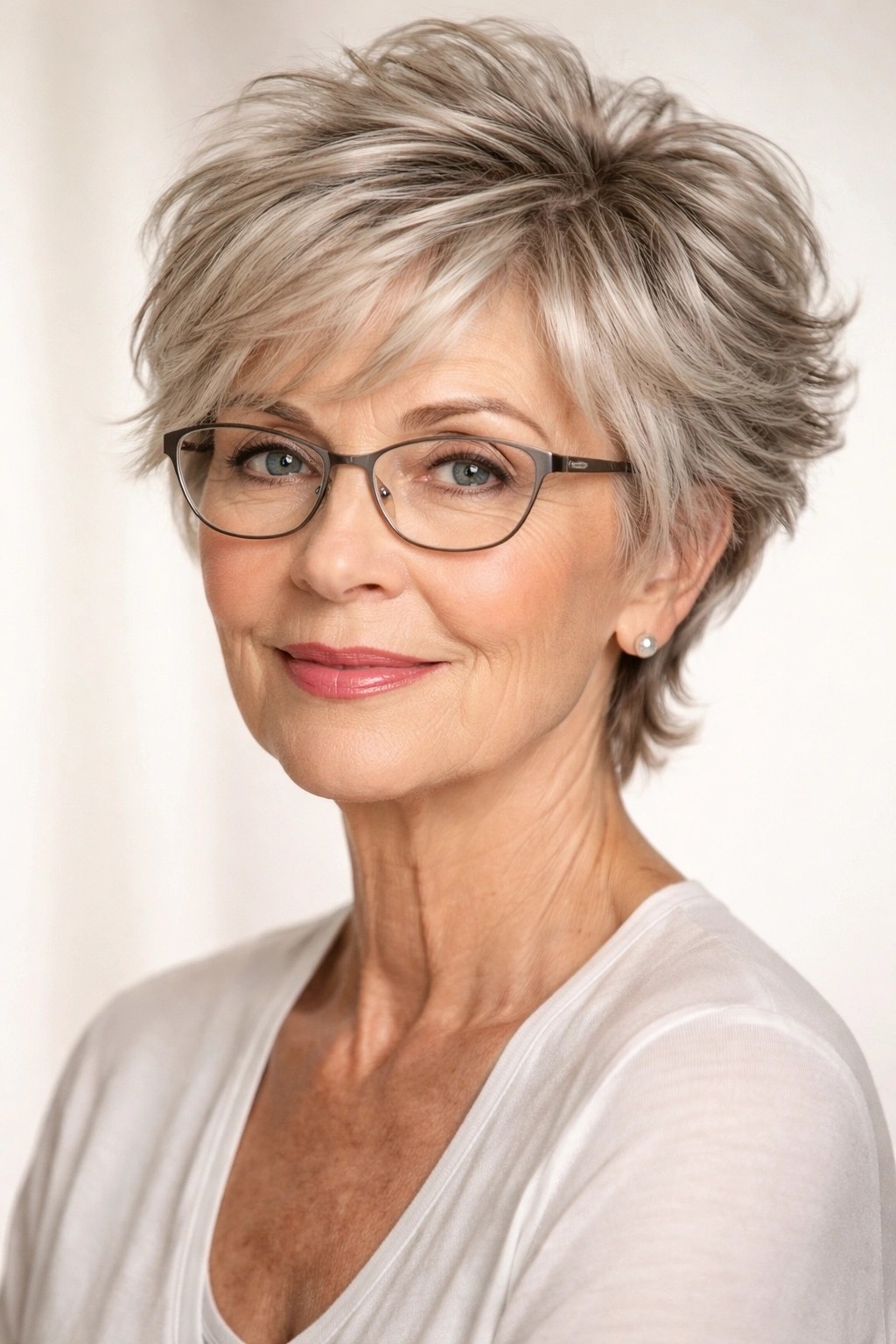
Image credit: Hairtical
Soft taupe-gray feathers with a neat shape around the glasses. The tones here — neither fully gray nor fully blonde — are what many women’s hair actually looks like at 70-plus, and feathering makes the blend look intentional.
Transitional color plus feathering is a forgiving partnership: as more silver arrives, the feathers keep the mix looking textured rather than patchy, buying you time between color decisions.
Styling tip: keep a small mirror by your glasses case — a two-second fringe check when you put your glasses on becomes a reassuring little ritual.
19. Wavy Feathered Pixie in Profile
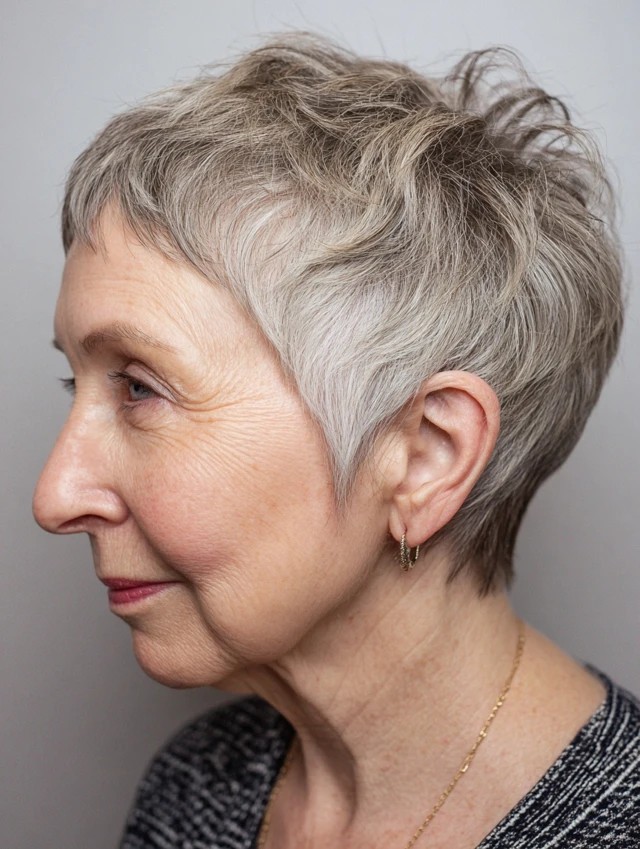
Image credit: Outfit Area
Fine hair with a natural wave, feathered in profile on a beautifully lined face. The wave plus feathering combination is volume squared: the feathers lift, the wave expands, and fine hair looks twice itself.
If your fine hair has any wave at all, do not let a stylist talk you into flat-ironing it smooth daily — heat on fine, mature hair is damage it cannot afford. Feather it, scrunch it, and let the wave earn its keep.
Keep it easy: scrunch with a gel-cream while damp, then leave it completely alone until dry. Fine wavy hair punishes fussing and rewards neglect.
Daily Care for a Feathered Pixie on Thin Hair
Thin hair after 70 is usually finer and more fragile, so treat it like silk. Wash with a gentle volumizing shampoo — heavy, creamy formulas coat fine strands and flatten your feathers by lunchtime. Condition the ends only, never the roots. If you use one styling product, make it a pea-size of alcohol-free mousse on damp roots; then dry by lifting with your fingertips or simply let the feathering air-dry into place.
When you are ready to choose, take your two favorite photos from this list to your stylist — and compare them with the broader effortless pixies and the gray pixie collection if your hair is silver too. Our tools page has more planners to help you prepare for the appointment.
Frequently Asked Questions
Do feathered pixie cuts really make thin hair look thicker?
Yes — feathering is one of the most effective techniques for thin hair. The layered, flicked ends overlap each other, creating coverage and lift that blunt cuts cannot. The fullness is built into the cut, so it lasts all day without products.
How short should a feathered pixie be on very fine hair?
Slightly longer than you might expect. Very short crops can look sparse on the finest hair, while feathered layers with a little length overlap and look fuller. Ask your stylist to keep the top layers long enough to feather properly.
What products are safe for thin hair and a tender scalp?
Keep it minimal: a gentle volumizing shampoo, conditioner on the ends only, and at most a pea-size of alcohol-free mousse at the roots. Avoid heavy waxes and oils at the scalp — they separate fine strands and reveal show-through.
How often does a feathered pixie need trimming?
Every five to seven weeks suits most women. Feathered cuts grow out softly because there are no hard lines, so they forgive a longer gap between appointments better than blunt styles do.
Can a feathered pixie hide a widening parting?
It is one of the best cuts for exactly that. Ask for a soft side-swept or zig-zag finish instead of a straight centre parting, and slightly shorter layers around the parting so the feathers spring up and cover the line.