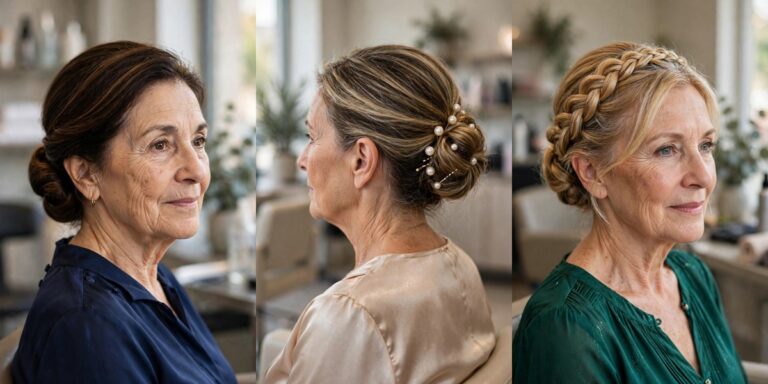
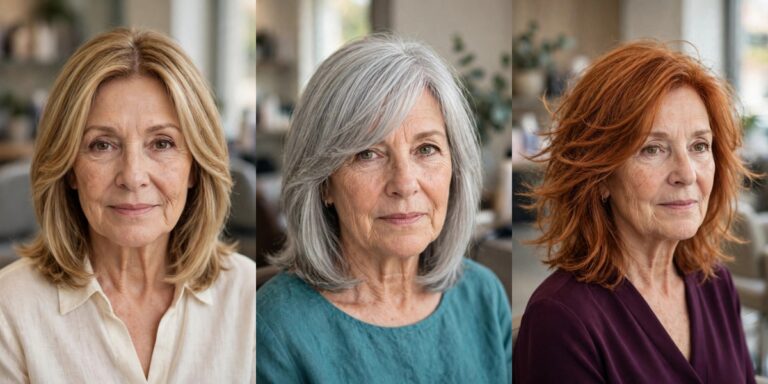
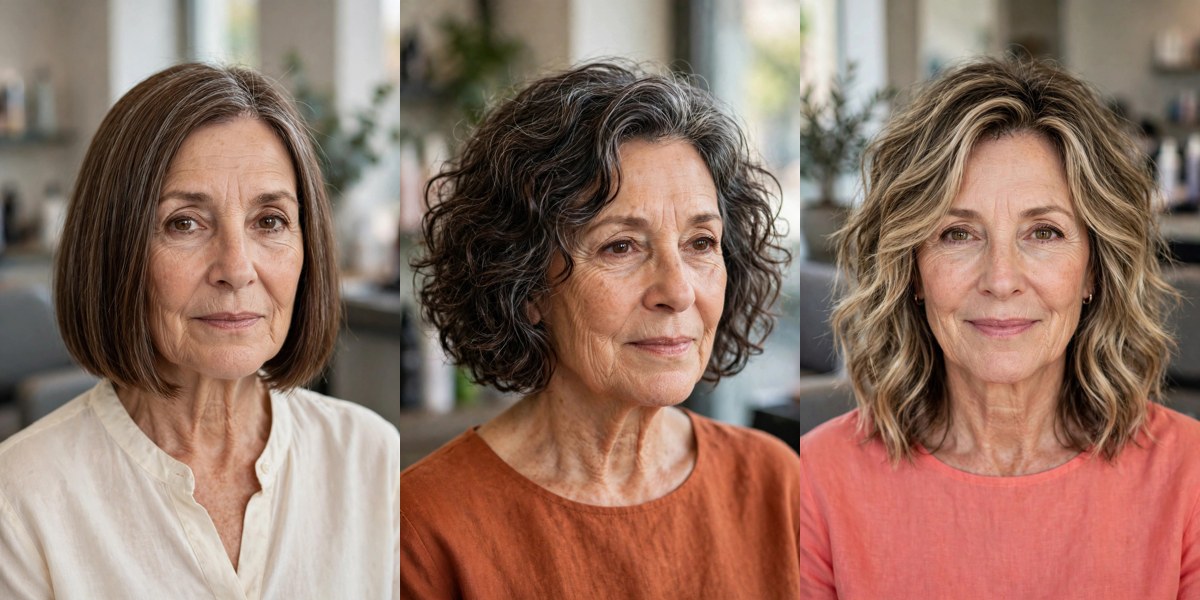
Wash and Wear Haircuts for Women Over 50 That Air Dry Well
This post contains affiliate links. As an Amazon associate, I earn from qualifying purchases. I only recommend products that are of high quality and that I would use myself.
There is a special kind of freedom in stepping out of the shower, running a comb through your hair, and being done. No dryer humming, no round brush wrestling, no flat iron heating up while you are already running late. After 50, many of us are simply finished with the daily styling shift — and the good news is that great hair does not require it. What it requires is the right cut.
A true wash-and-wear haircut is engineered, not accidental. The stylist builds the shape, volume and movement into the cut itself — through weight removal, smart layer placement and a shape that matches your natural texture — so your hair falls into place as it air-dries. Fight your texture and you will style forever; match it, and the cut does the work. If easy routines are your priority, you will also love our short hairstyles for women over 50 for more low-effort inspiration.
Below are 20 wash-and-wear haircuts for women over 50 that genuinely air-dry well, with the why explained for each one — because once you understand what makes a cut dry into shape, you will know exactly what to ask your stylist for.
Table of Contents
- 1. Blunt Bob That Dries Sleek and Straight
- 2. Textured Pixie With a Piecey Crown
- 3. Natural-Wave Lob With Feathered Ends
- 4. Curly Wash-and-Go Bob
- 5. One-Length Midi Cut With Hidden Layers
- 6. Feathered Crop With a Soft Fringe
- 7. Stacked Bob With a Built-In Lifted Back
- 8. French Bob With an Air-Dry Fringe
- 9. Modern Shag With Curtain Bangs
- 10. Long Pixie With a Sweeping Top
- 11. Silver Curly Pixie
- 12. Wavy Chin-Length Bob With Light Ends
- 13. Tapered Pixie With a Side-Swept Fringe
- 14. Beachy Layered Lob for Thick Hair
- 15. Soft A-Line Bob That Bevels Itself
- 16. Salt-and-Pepper Shaggy Crop
- 17. Blunt-Ended Bob for Fine Hair
- 18. Tousled Crop With Choppy Micro-Layers
- 19. Shoulder-Skimming Cut With Face-Framing Layers
- 20. Curly Shag With Defined Air-Dried Ringlets
- Recommended Products
- FAQs
How to Choose Your Air-Dry Cut
- Straight hair: one-length and blunt cuts (ideas 1, 5, 15, 17) — weight is your stylist; it pulls hair smooth as it dries.
- Wavy hair: layered lobs and bobs (ideas 3, 12, 14, 19) — layers must start where your wave starts, so the bend forms instead of being crushed.
- Curly hair: curl-specific shapes (ideas 4, 11, 20) — cut to the curl pattern, moisturize well, and keep your hands off while it dries.
- Fine or thinning hair: blunt ends and built-in architecture (ideas 2, 7, 13, 17) — volume comes from the cut’s structure, not from styling.
- Thick hair: weight removal is everything (ideas 9, 14) — internal layers stop the dreaded triangle before it starts.
1. Blunt Bob That Dries Sleek and Straight
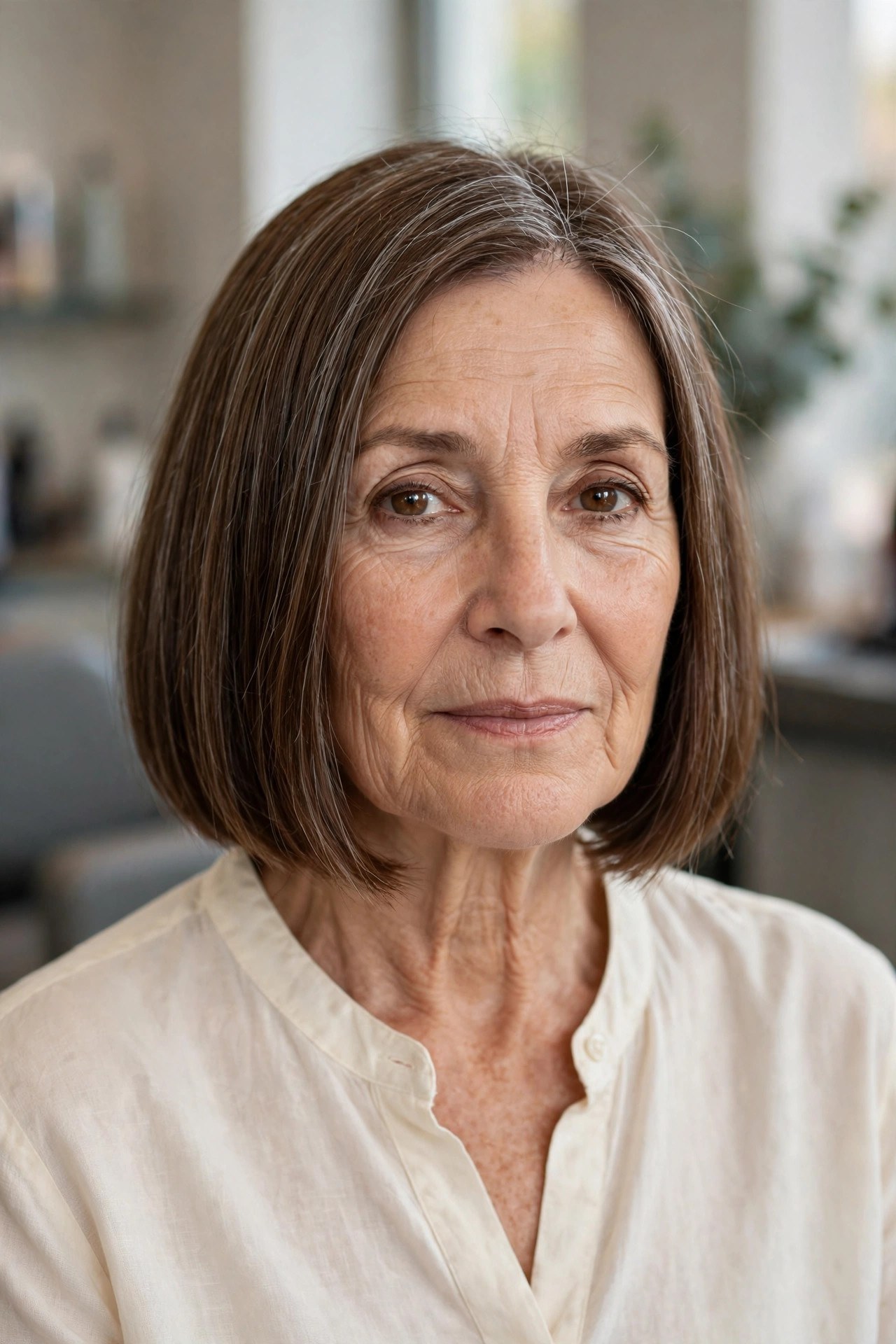
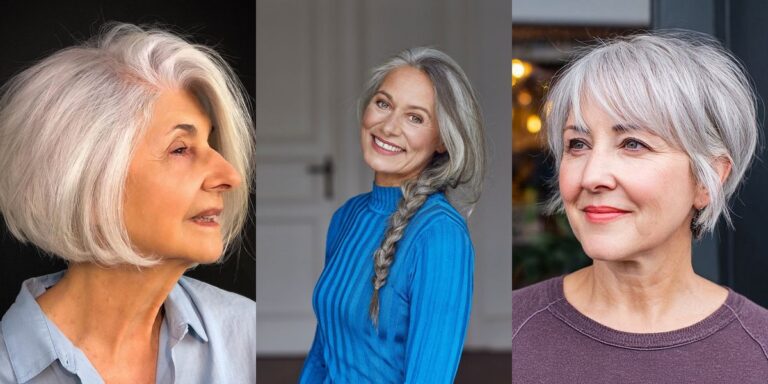
A one-length bob is the closest thing hairdressing has to a self-styling cut. Because every strand ends on the same clean line, the hair’s own weight pulls it down smooth as it dries — there are no short layers springing up at odd angles and no wispy ends demanding a round brush. Ask for a chin-to-jaw length with the tiniest internal texturizing hidden underneath, which stops the bottom edge from puffing into a triangle while keeping the surface looking sleek and deliberate.
This is the smartest pick if your hair is naturally straight or just slightly wavy, and it is quietly brilliant on fine hair too, because a blunt perimeter makes the ends look twice as thick. Out of the shower, comb it into your parting, tuck it behind your ears, and leave it completely alone — touching it while it dries is the only way to spoil it. If you love this polished family of cuts, our guide to bob haircuts for women over 50 has more lengths and shapes to compare.


2. Textured Pixie With a Piecey Crown
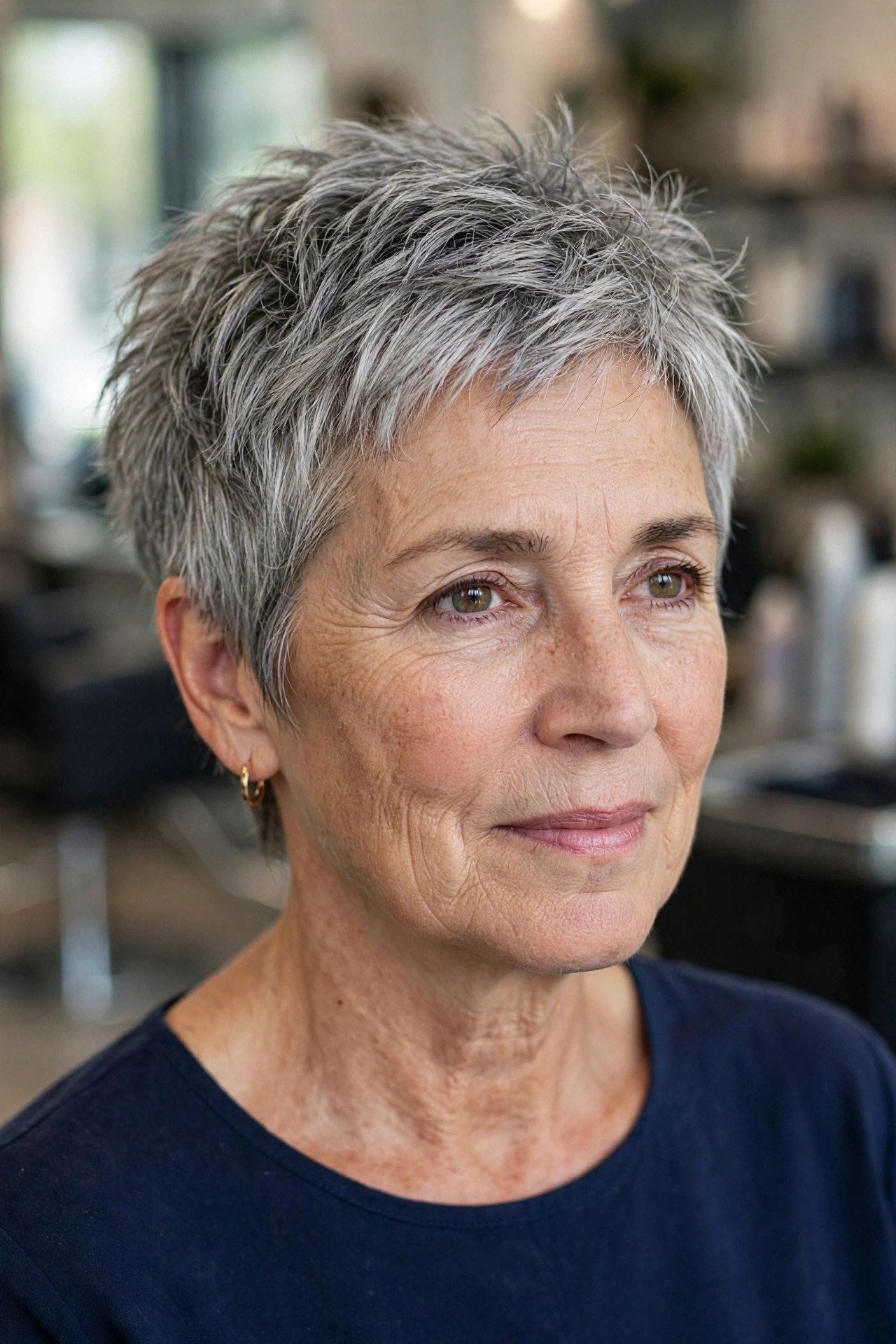
A pixie air-dries well when the texture is cut in, not styled in. Point-cutting and light razoring through the crown break the hair into small, separated pieces that fall into place on their own as the water evaporates, so the choppy, lifted finish you see in the salon is the same one you wake up with. The sides and back are kept close, which means there is simply less hair available to misbehave.
It is a gift for women whose hair has thinned at the crown, because the short layered top creates shadow and movement that reads as fullness. Your whole routine is a fingertip of texturizing putty pinched through the ends once it is dry — thirty seconds, no brush, no dryer. For more short inspiration, see our pixie cuts for women over 50.

3. Natural-Wave Lob With Feathered Ends

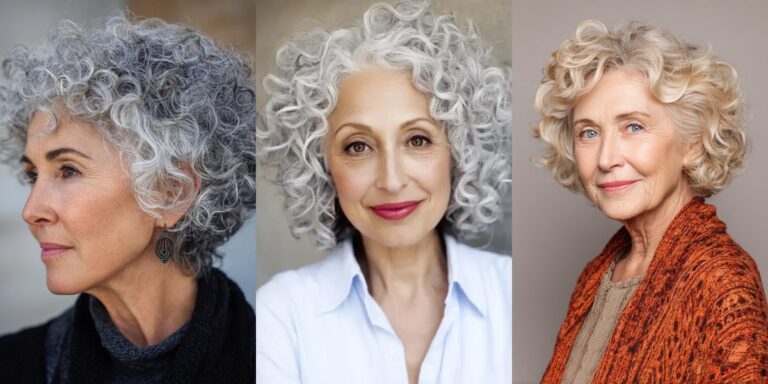
If your hair has a natural bend, this collarbone-length lob is cut to agree with it. Long, soft layers are placed through the lower third of the hair so the wave has room to form its S-shape instead of being weighed flat, and the feathered ends release weight exactly where a one-length cut would swing and frizz. The result dries into the kind of loose, beachy movement most women need a curling wand to fake.
Scrunch a little sea-salt spray or a light mousse into damp hair, twist a few sections away from your face, and walk away. The cut flatters almost every face shape because the length sits below the jaw, and it still ties back on hot days. It also grows out gracefully, so you can stretch salon visits to ten or twelve weeks.


4. Curly Wash-and-Go Bob
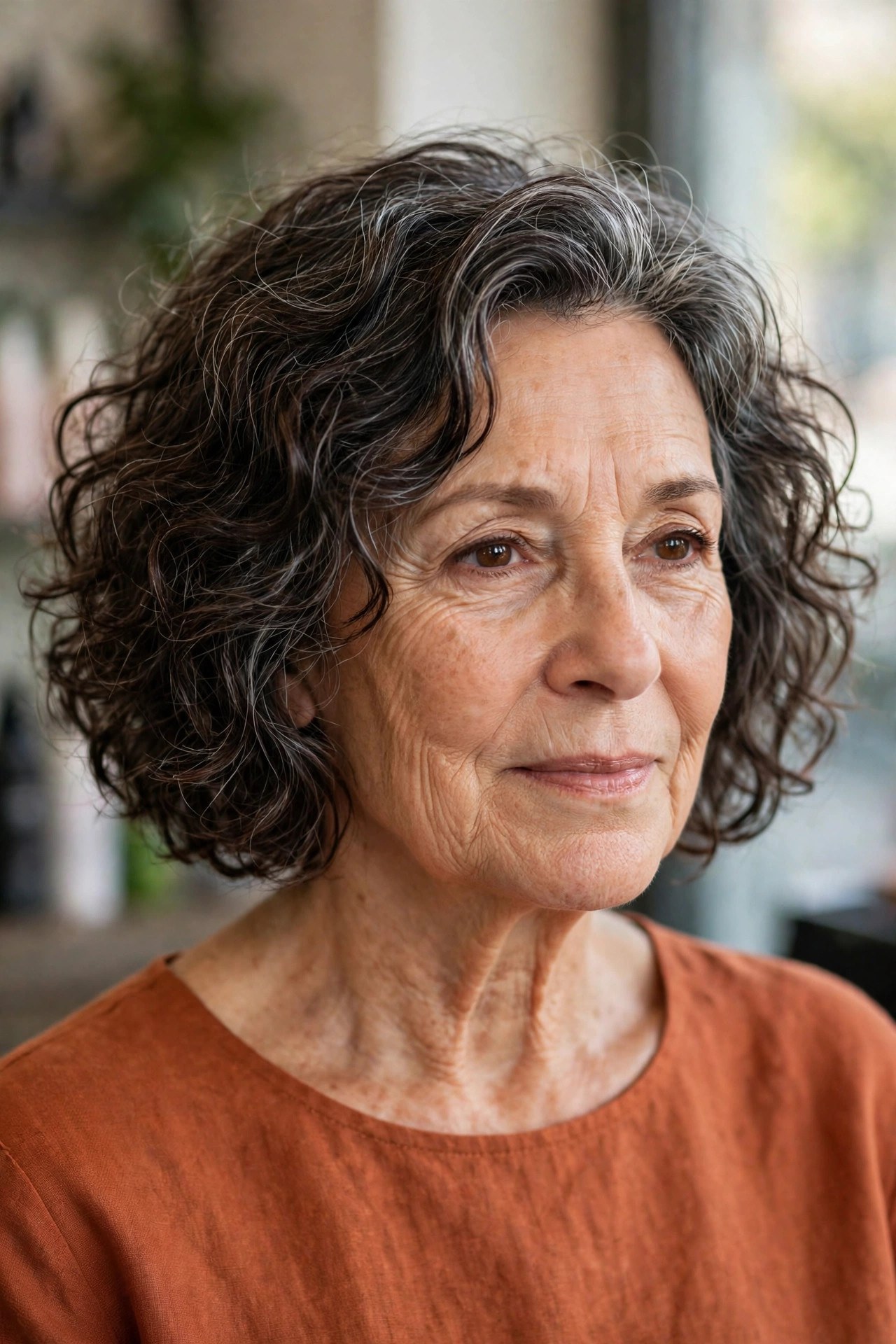
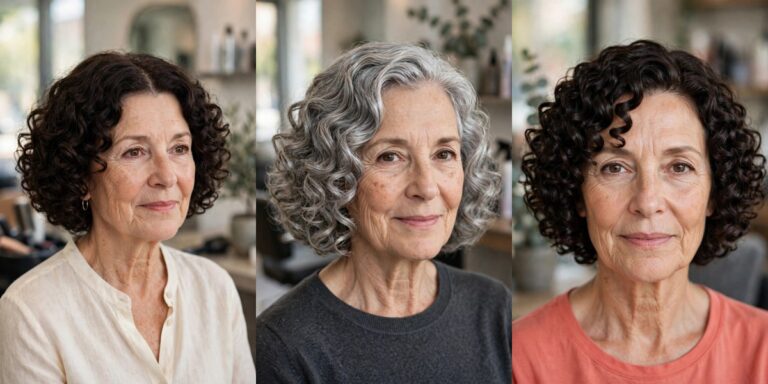
Curly hair air-dries beautifully when the cut respects the curl pattern instead of fighting it. This chin-to-jaw bob is cut dry or curl-by-curl so each ringlet is shortened where it actually lives, and the layers are stacked just enough at the back to stop the classic pyramid silhouette. Because the shape is built into the cut, your curls settle into it as they dry — no diffuser, no daily re-wetting battles.
The routine is the curly rule of three: leave-in or curl cream on soaking-wet hair, scrunch upward once, then hands off until it is fully dry. Breaking the light gel cast at the end with a gentle scrunch leaves soft, defined curls that hold for days. If you want to lean further into your natural texture, our curly hairstyles for women over 50 guide is full of ideas.


5. One-Length Midi Cut With Hidden Layers
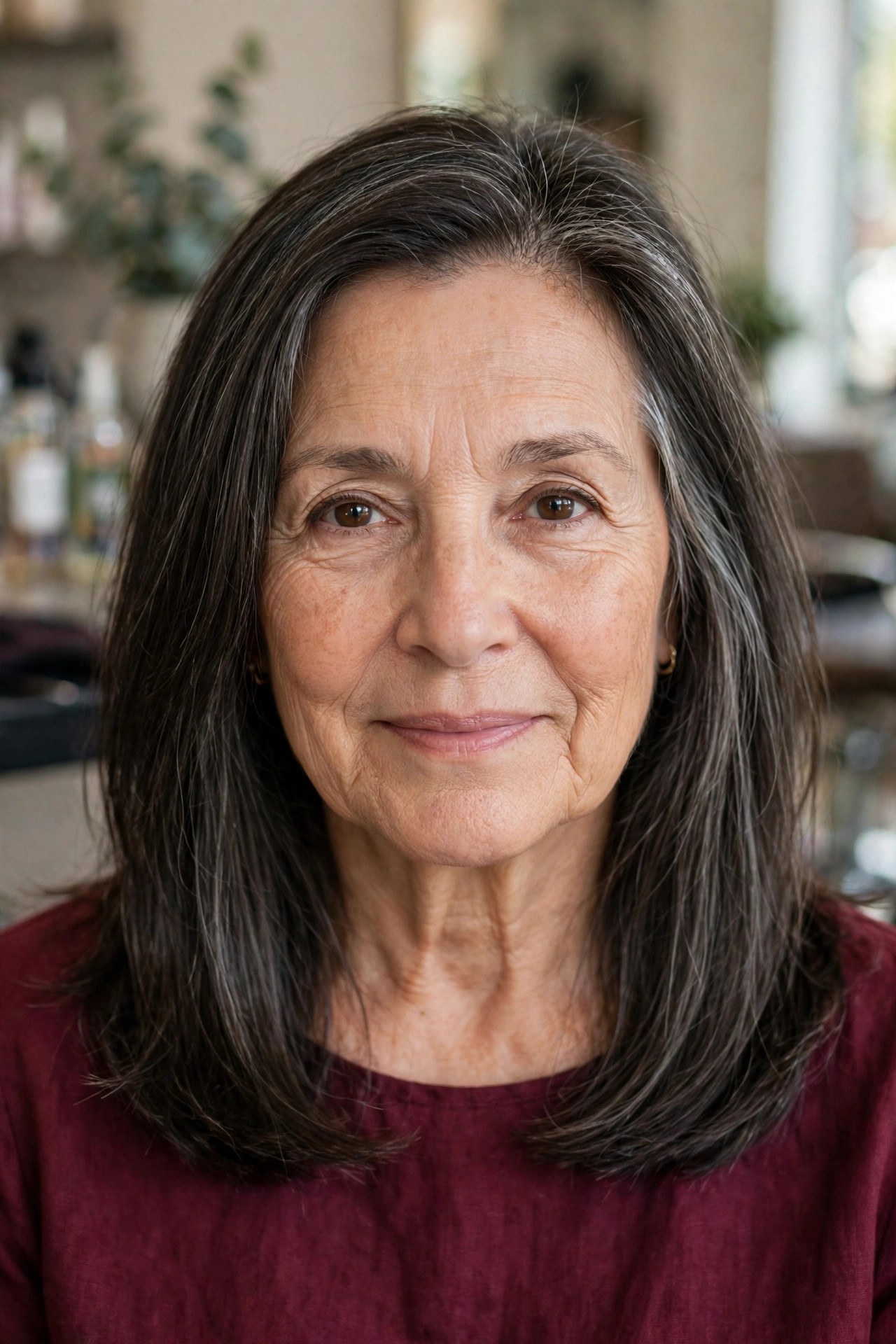
Longer hair can air-dry well too — the secret is where the layers hide. In this below-shoulder midi cut, all the layering is internal: shorter pieces are cut underneath the surface so the top layer stays long, smooth and heavy. That concealed weight removal stops the ends from dragging and tangling, while the unbroken surface layer dries flat and calm instead of fluffy.
It is ideal if you love the femininity of longer hair but your mornings have no room for a blowout. Comb through a pea-sized amount of smoothing serum, braid it loosely while it dries if you want extra wave, or simply let it fall. Sleeping on a satin pillowcase keeps the surface smooth overnight, so day two needs nothing more than a shake.

Not Sure Which Cut Suits Your Face?
The most flattering air-dry cut depends on your face shape — a blunt bob that loves an oval face can overwhelm a petite round one. Try our free Face Shape Finder to discover your shape in under a minute, then match it to the ideas above with confidence.
6. Feathered Crop With a Soft Fringe
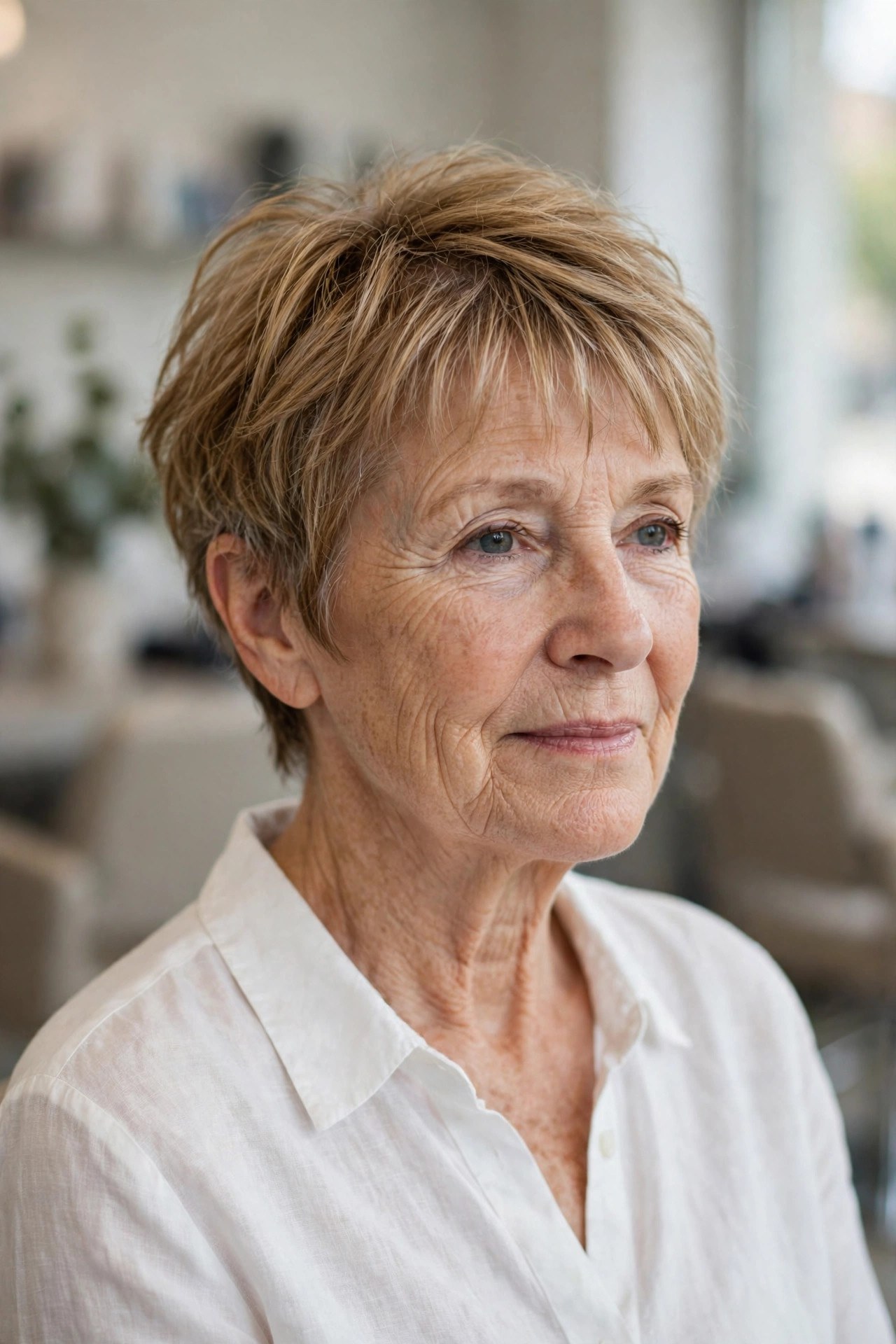
Feathering is an air-dry cheat code: the ends are cut into fine, tapered points that lay over each other like shingles, so the hair settles into soft layers of movement without a single pass of the brush. This short crop keeps the feathering through the top and sides, with a wispy fringe that sweeps or splits naturally as it dries — never a stiff, sprayed arc.
Finger-combing is genuinely the whole styling method here; a small amount of lightweight foam scrunched in while damp adds hold on humid days. The softness around the face is especially kind after 50, blurring forehead lines and keeping the focus on your eyes. Book a tidy-up every five to six weeks to keep the feathered edges fresh rather than fluffy.

7. Stacked Bob With a Built-In Lifted Back
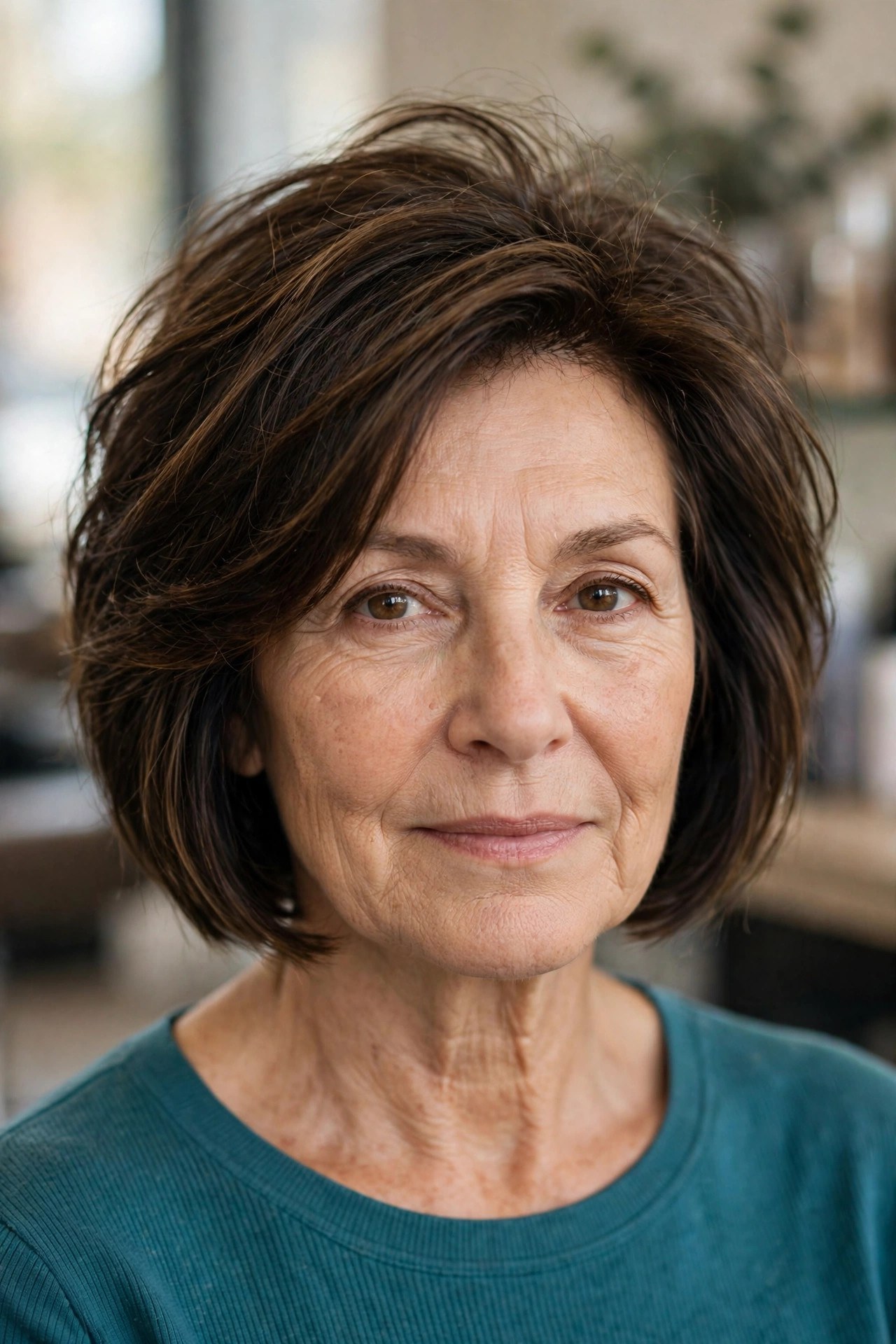
The stacked bob earns its wash-and-wear reputation through geometry. Short graduated layers piled at the back physically push the hair above them upward, so the crown and back dry with lift already installed — volume you normally have to blow-dry in is simply part of the architecture. The front stays longer and smoother, framing the jaw.
Because the shape does the work, air-drying is reliable even on fine or flat hair: add mousse at the roots while damp, comb the front into place, and let gravity-defying layers handle the rest. It is one of the most requested cuts in our stacked bob haircuts for women over 50 collection for exactly this reason. Keep the nape trimmed every six weeks so the stack stays crisp.

8. French Bob With an Air-Dry Fringe
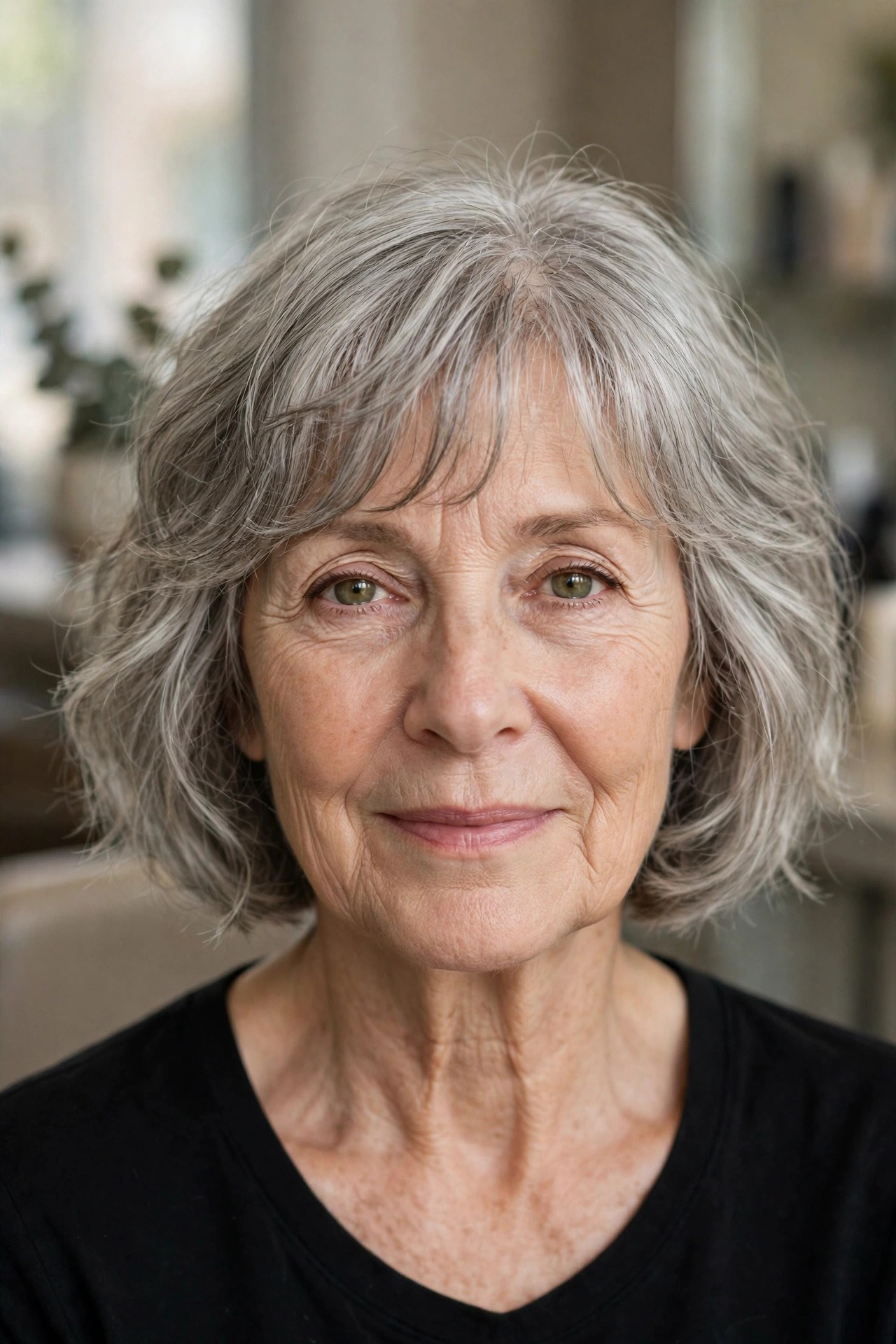
The French bob sits at the jaw with a soft, slightly curved-under line and a fringe that is deliberately cut a touch long at the outer corners. That fringe design is the trick: instead of a heavy straight bang that needs daily straightening, it parts, sweeps and settles on its own as it dries, adding width at the cheekbones where it flatters most.
The length works with natural wave rather than against it, so a slight bend reads as Parisian nonchalance instead of mess. It looks particularly striking in silver and gray, where the clean outline shows off the color’s shine. While damp, clip the fringe flat against your forehead for ten minutes if yours tends to spring up — that small habit trains it to dry obediently.
9. Modern Shag With Curtain Bangs
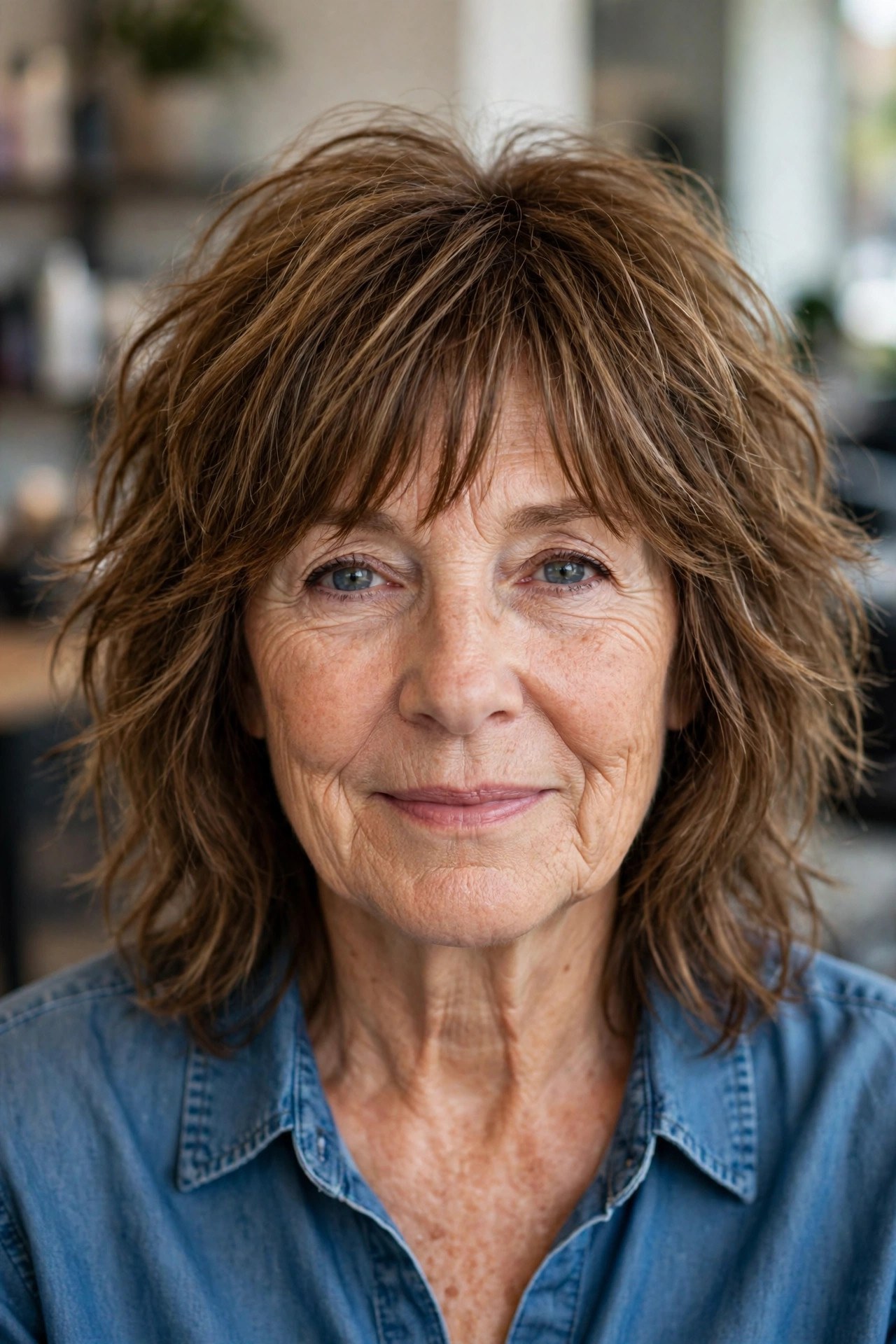
The modern shag is engineered messiness: choppy layers of different lengths are cut throughout, so wherever your hair decides to fall, it looks intentional. Because the silhouette is meant to be uneven, air-drying cannot ruin it — humidity and natural wave only add to the effect. Curtain bangs complete the design, splitting in the middle and sweeping back into the layers as they dry, with no styling required to hold the part.
This is the forgiving choice for thick hair that feels heavy, and for anyone growing out a shorter cut, since the layers disguise in-between lengths. Work a little sea-salt spray through damp ends, shake your head, and go. Trims are about refreshing the shortest layers every eight weeks so the shape stays shaggy rather than shaggy-dog.


10. Long Pixie With a Sweeping Top
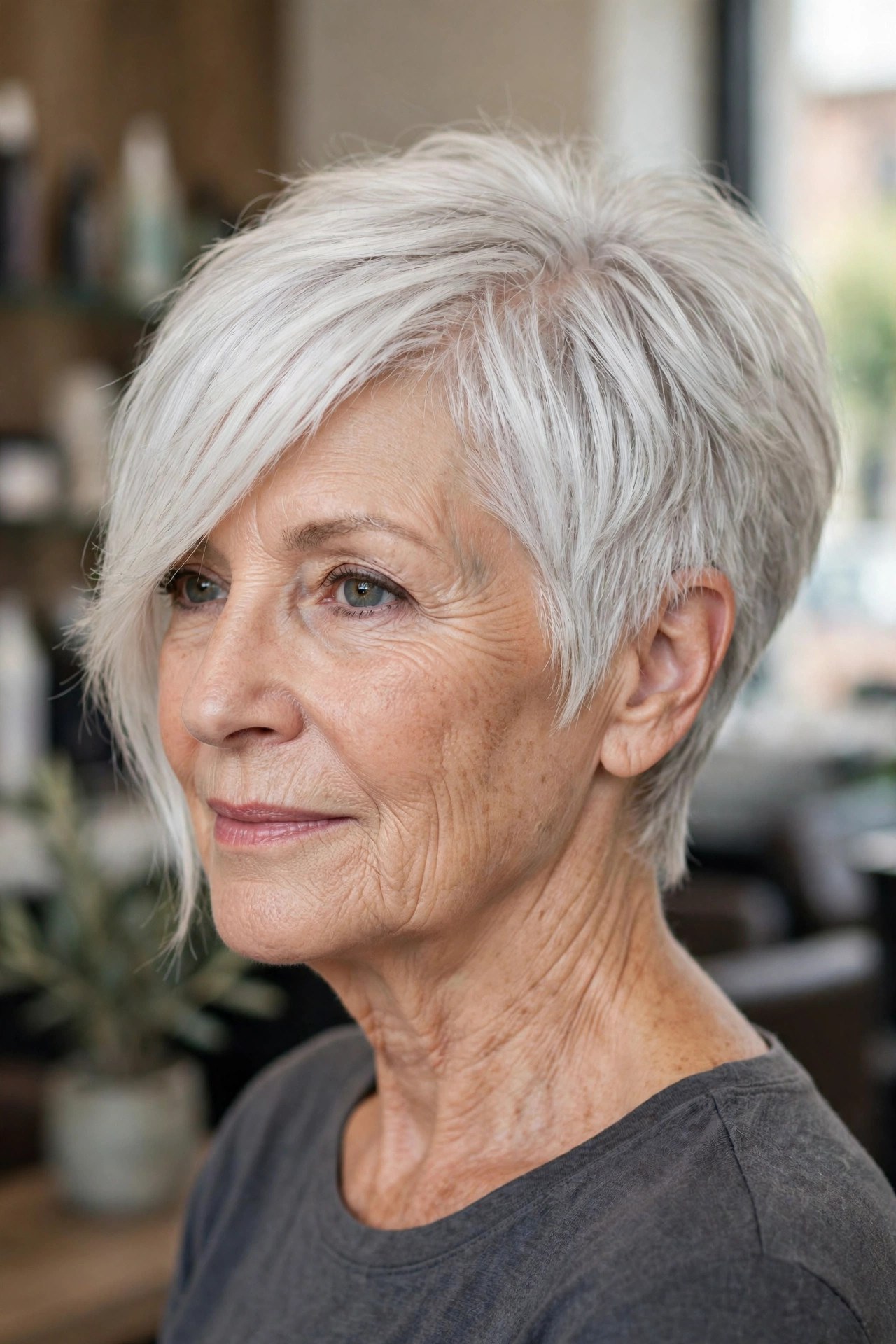
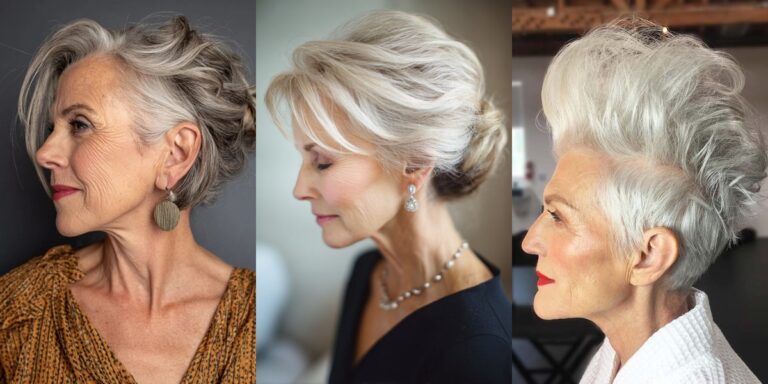
The long pixie keeps a pixie’s easy back and sides but leaves real length on top, and that longer top is what makes it so reliable without heat. Length has weight, and weight makes hair lie where it is combed — sweep it across while damp and it dries in that elegant diagonal, softening the forehead and cheekbones as it goes.
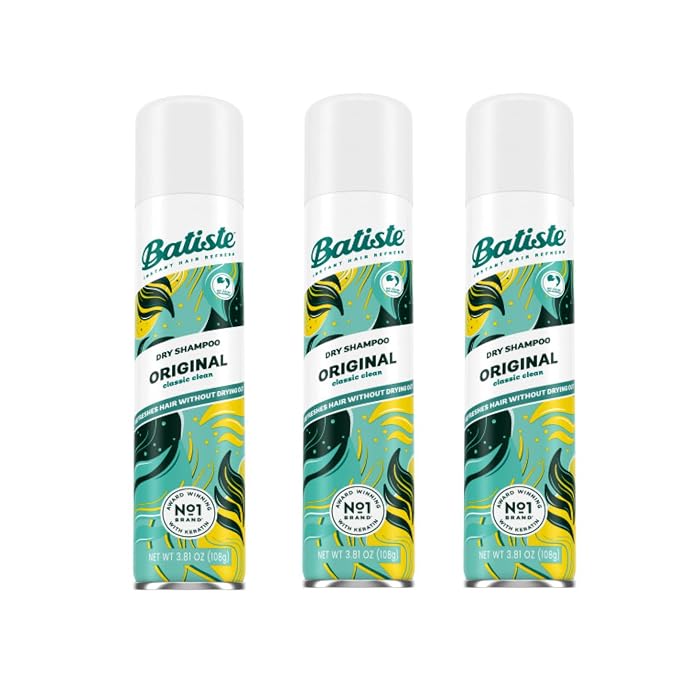
It is a wonderful halfway house if you are tempted by short hair but not ready to commit, and it suits fine hair beautifully because the close sides make the top look fuller by contrast. A dab of putty through the ends adds definition on day two, and a quick mist of dry shampoo at the roots revives the sweep in seconds. You will find more variations among our short hairstyles for women over 50.
11. Silver Curly Pixie
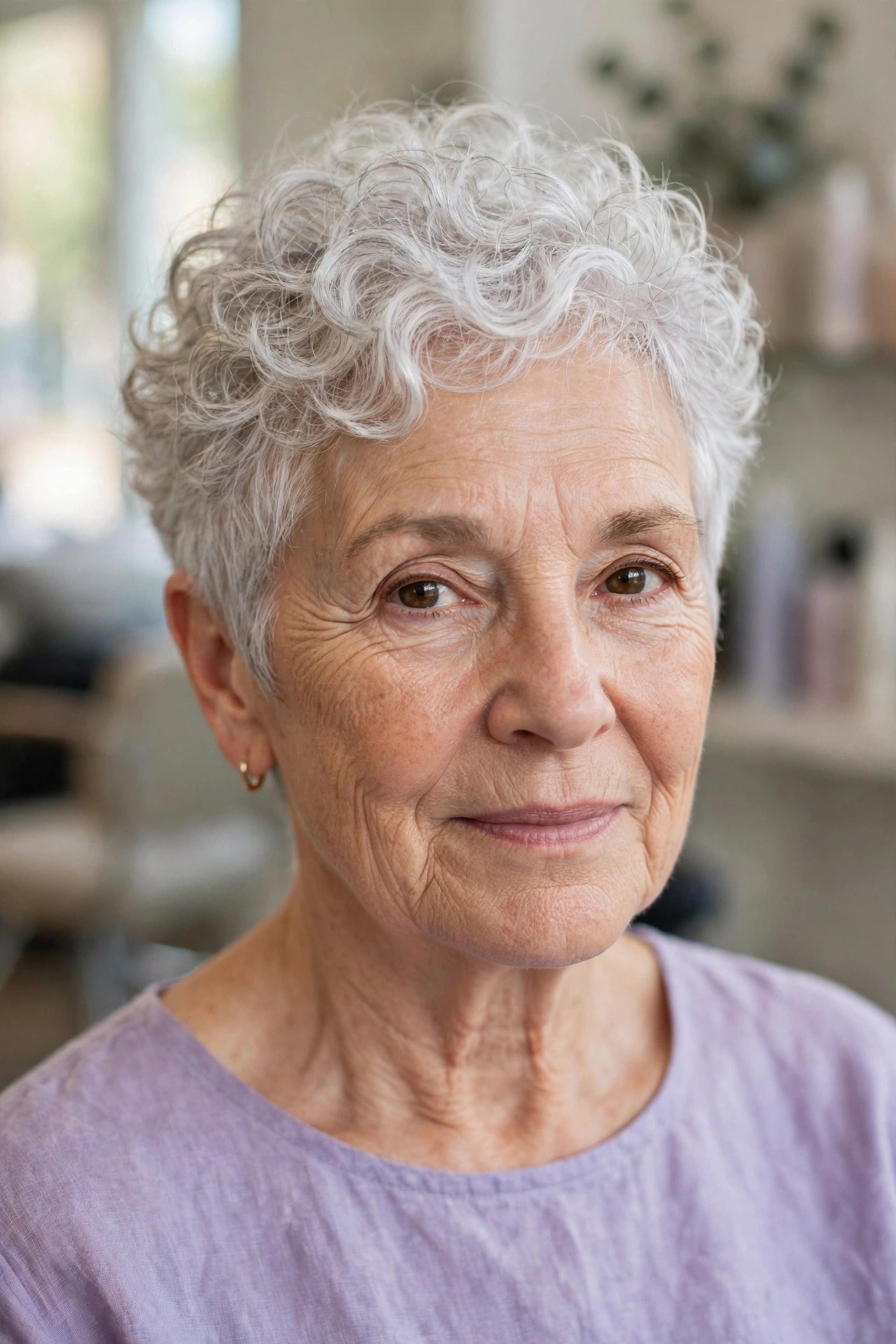
Short length is a curly girl’s shortcut to easy mornings: with the weight removed, silver curls spring up into lively ringlets instead of being dragged down and stretched out. This pixie keeps the top long enough for the curl to complete a full turn, while the tapered sides keep the silhouette neat and stop the sides from puffing out as they dry.
Gray and silver curls can run dry and wiry, so moisture is the whole routine — curl cream worked through wet hair, then let it dry untouched. A weekly purple shampoo keeps the silver bright and banishes yellow tones that make gray look dull. The result is bouncy, modern and takes under five minutes from shower to door.

12. Wavy Chin-Length Bob With Light Ends

A chin-length bob on wavy hair fails when the ends are heavy — the weight pulls the wave straight at the top and lets it kick out at the bottom. This version solves it with lightly razored or point-cut ends that remove bulk only in the last inch, so the wave pattern stays consistent from root to tip and dries into soft, even bends.
It is the bob to choose if your hair has frustrated you at other lengths, because chin length is where most natural waves look their strongest. Scrunch in mousse or sea-salt spray, let it dry, then break it up with your fingers. The auburn warmth in the photo also shows how a rich color makes air-dried texture look glossy rather than dull.
13. Tapered Pixie With a Side-Swept Fringe
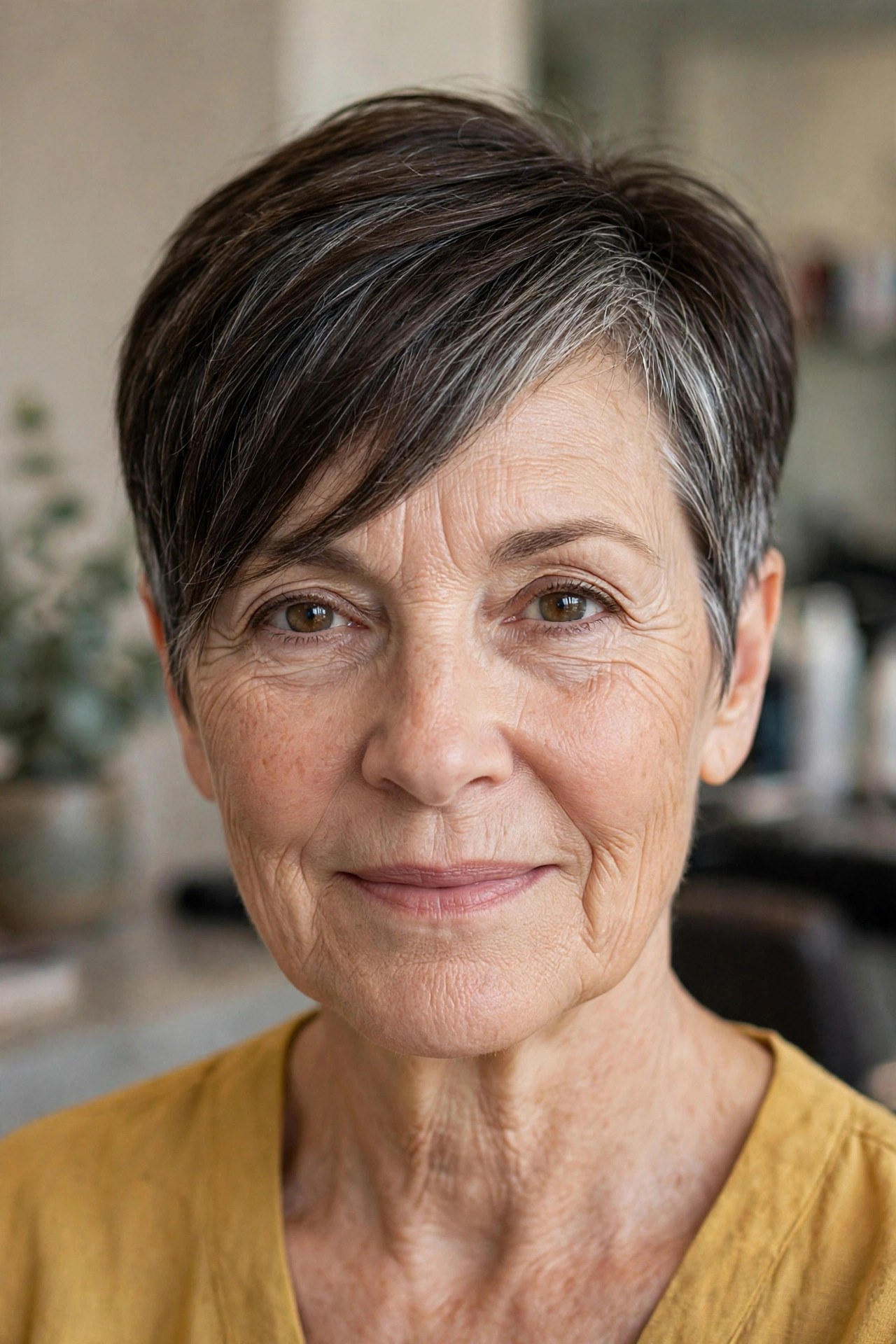
Tapering does the styling for you in this pixie: the back and sides graduate down to almost nothing at the hairline, so there is no bulk at the nape to flip or stick out as it dries. All the length is saved for the fringe, which is cut long and diagonal — combed across while wet, it dries into a smooth sweep that softens the whole face.
The contrast between the close sides and the flowing fringe creates the illusion of a thicker crown, a real bonus if your hair is thinning on top. It needs almost no product; if the fringe has a mind of its own, press it under a clip while it dries for the first week and it will learn the direction. A five-week trim keeps the taper sharp.
14. Beachy Layered Lob for Thick Hair
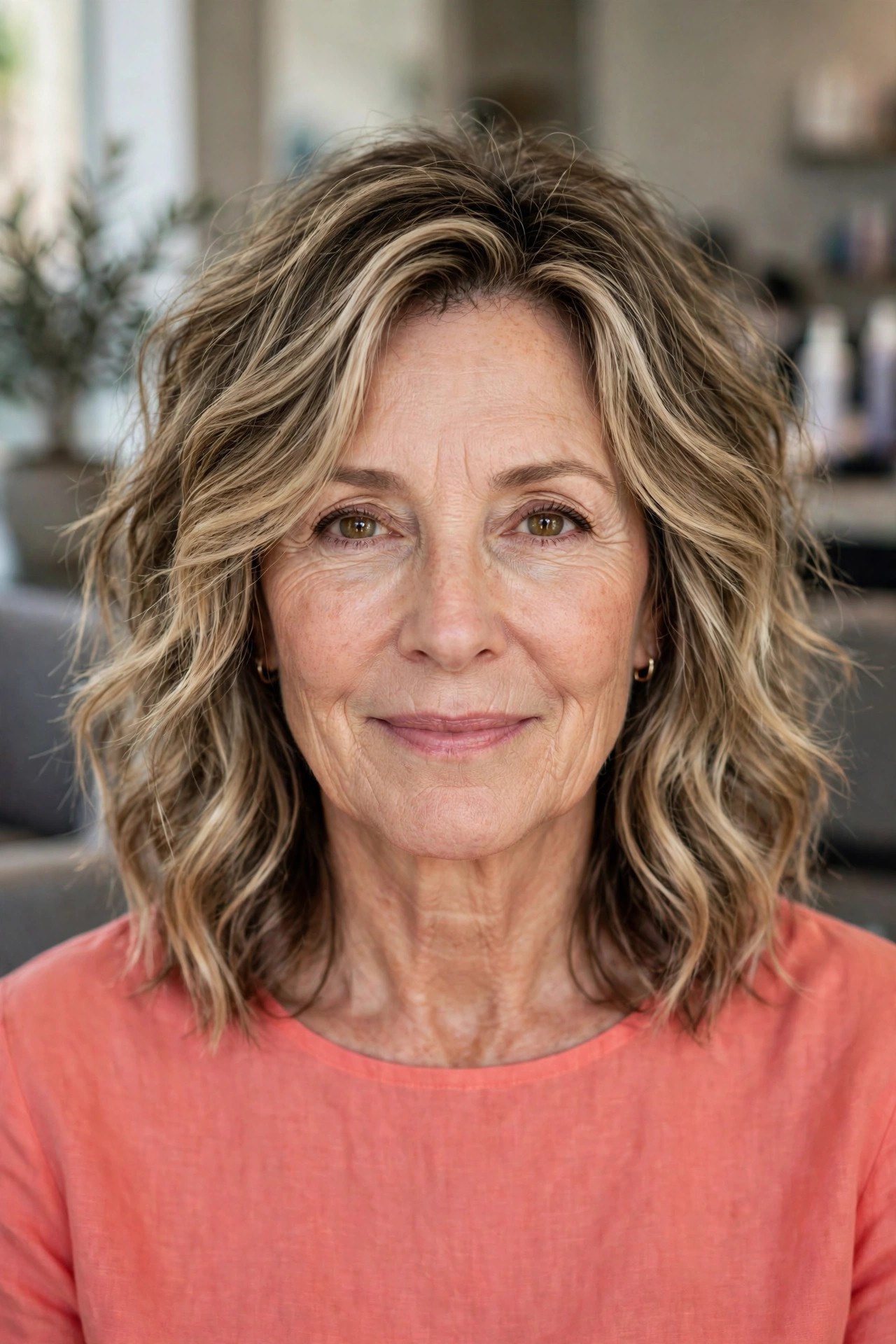
Thick, wavy hair air-dries into a triangle when it is all one length — wide at the bottom, flat at the roots. This lob breaks that up with layers that start around the cheekbones and continue through the ends, redistributing the weight so the hair dries into separated, beachy pieces instead of one solid mass. The collarbone length keeps it feeling light and current.
For thick curls and waves, apply product to soaking-wet hair and scrunch with a cotton T-shirt rather than a towel, which roughs up the cuticle and invites frizz. Then do nothing — thick hair rewards patience and punishes touching while it dries. The payoff is a style that genuinely looks better on day two, refreshed with a water mist and a quick scrunch.

15. Soft A-Line Bob That Bevels Itself
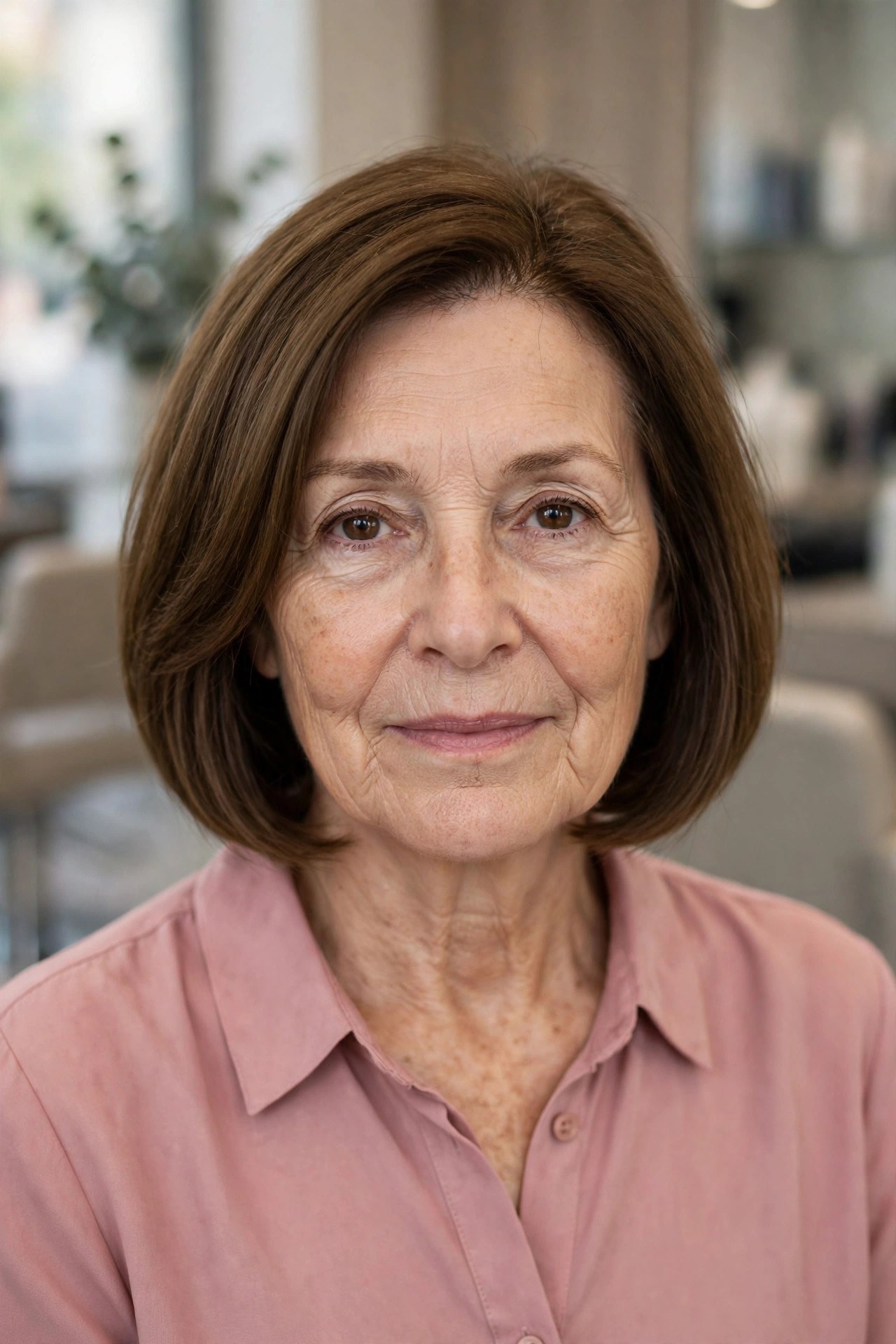
An A-line bob is cut shorter at the back and gradually longer toward the front, and that angle is exactly why it air-dries so neatly. The longer front pieces weigh the ends down and inward, so the hair naturally curves under into a soft bevel as it dries — the polished finish of a blowout, delivered by geometry instead of a brush.
Ask for a gentle angle rather than a dramatic one; a subtle slope keeps it modern and grows out kindly. It suits straight and slightly wavy hair best, and the face-framing length at the front is slimming for rounder faces. A drop of anti-frizz serum through the ends on wash day keeps the line looking expensive until the next wash.
16. Salt-and-Pepper Shaggy Crop
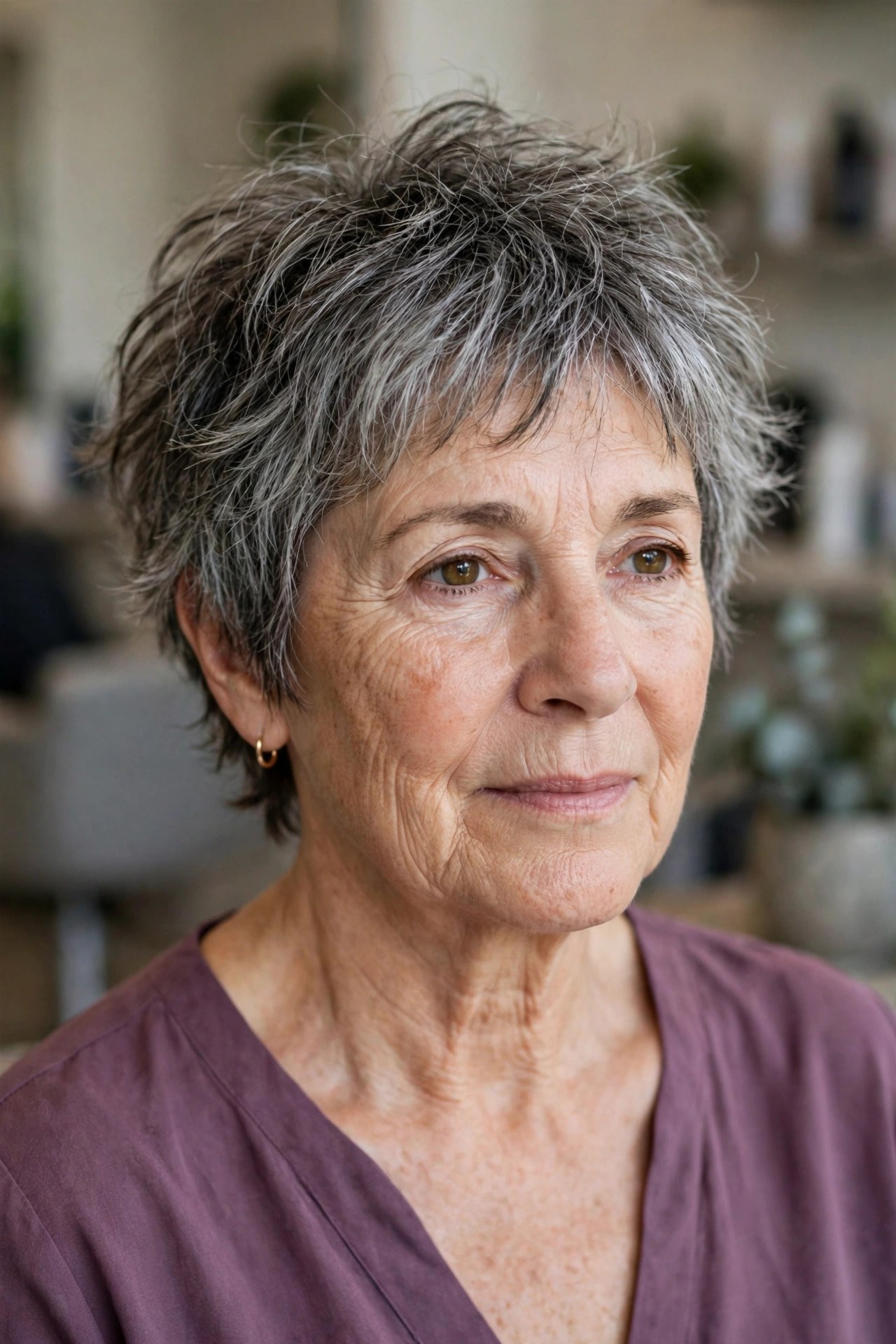
If you are embracing your natural gray, a shaggy crop shows it off at its best. Choppy, uneven layers are cut all over so the silver and darker strands mix and flicker as the hair moves — the variation that can look flat in a smooth style becomes dimension here. Because the finish is meant to be tousled, it dries into shape with zero technique.
Salt-and-pepper hair is often coarser and drier than pigmented hair, so keep products light and moisturizing rather than heavy and waxy. A purple shampoo every week or two keeps the silver strands sparkling instead of yellowing. This is true wash-and-wear: shake it out, pinch a few pieces into place, and the undone texture does the rest.
17. Blunt-Ended Bob for Fine Hair
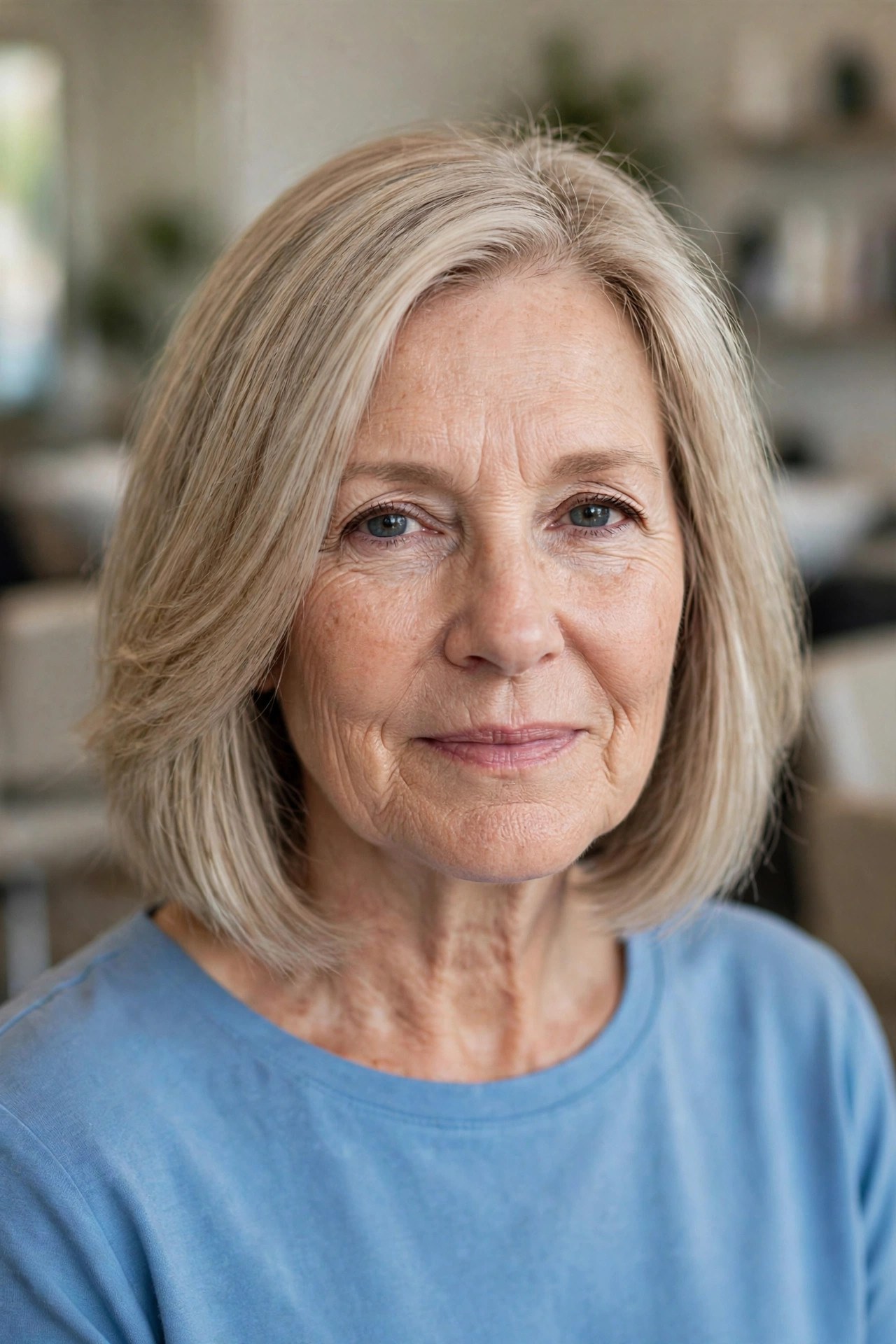
Fine hair’s biggest enemy is the layered cut that removes the very weight it cannot spare. This jaw-length bob does the opposite: the ends are cut blunt and full, so every strand you have shows up in the perimeter, making the whole cut look denser. With no short layers to separate and go stringy as they dry, fine hair settles into one smooth, swishy shape.
Keep products feather-light — a volumizing mousse at the roots is plenty, and skip heavy oils that collapse fine strands by midday. Our readers with similar hair swear by the principles in hairstyles for fine hair over 50. Trim every seven to eight weeks; the moment the ends start to thin out, the fullness illusion fades.
18. Tousled Crop With Choppy Micro-Layers
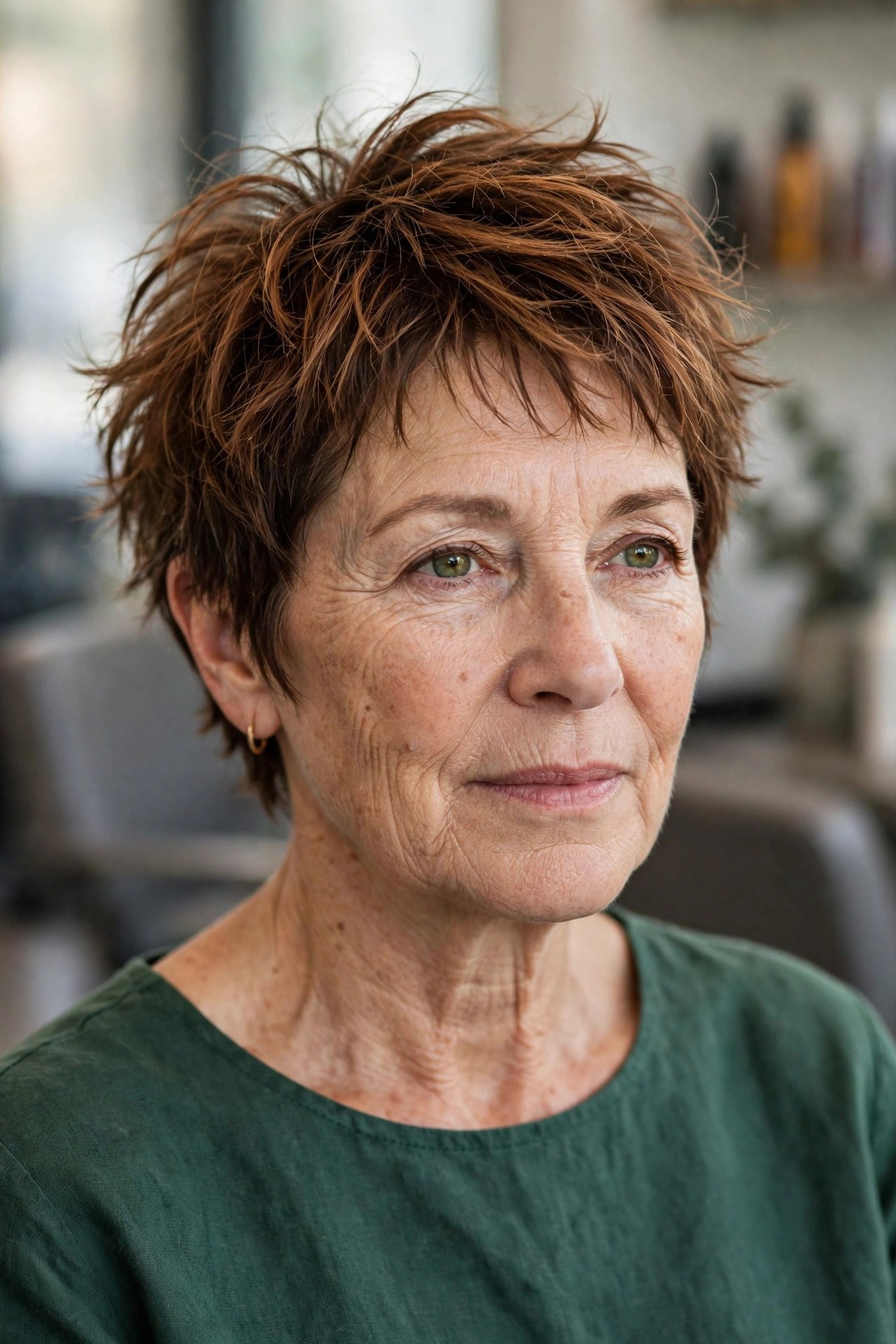
Micro-layers are the quiet engineering behind this crop: dozens of very short, choppy pieces are cut through the top so the hair separates into natural texture as the water leaves it. Instead of one flat helmet of hair, you get piecey, lifted movement that looks styled even though you have done nothing but towel off.
It is a brilliant option for straight hair that usually dries limp, because the varied lengths prop each other up. Warm a pea-sized amount of putty between your palms and pinch random pieces once dry — that is the entire routine, and it takes less than a minute. The copper tones here also prove air-dried hair does not have to mean dull hair.
19. Shoulder-Skimming Cut With Face-Framing Layers
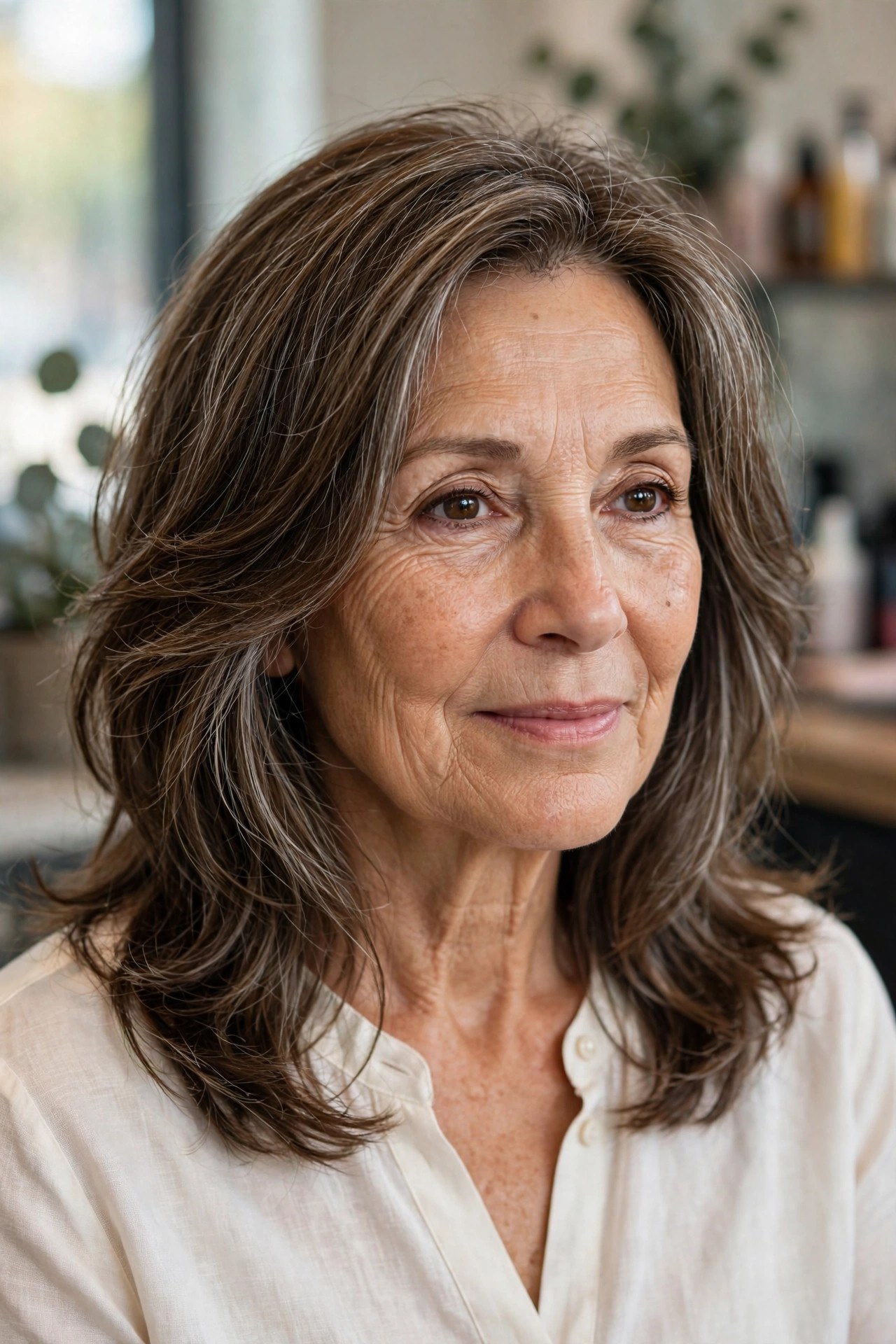
If you want to keep some length, let the layers do the drying work. This shoulder-skimming cut keeps the back mostly one length for fullness, while graduated layers around the face are cut to curl away from the cheeks as they dry — a natural flick that frames your features and lifts the eye upward, no curling iron involved.
The face-framing pieces are also a gentle way to disguise a softening jawline, drawing attention to the cheekbones instead. Twist the front sections once while damp to encourage the outward bend, then leave everything alone. A satin pillowcase preserves the shape overnight and cuts morning frizz, so most days start with nothing more than a brush-through.
20. Curly Shag With Defined Air-Dried Ringlets
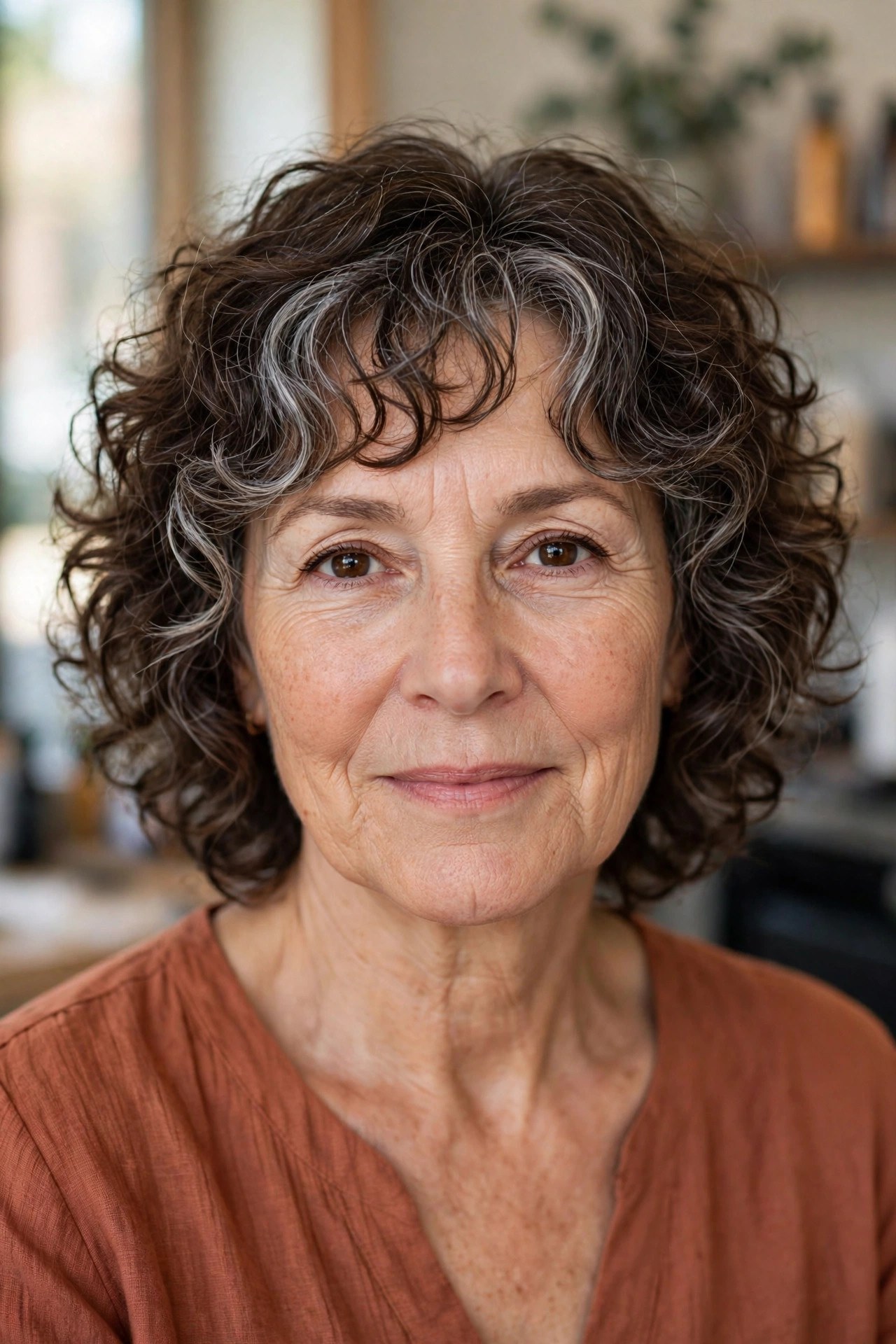
The curly shag proves that air-dried curls can look defined, not frizzy — the difference is layer placement. Shorter layers through the crown release the top curls to form full ringlets, while the longer layers underneath keep the length. A soft curly fringe finishes the shape and, because it is cut to sit where your curls naturally fall, it dries in place without any coaxing.
Use the gel-cast method: smooth curl cream and then a layer of gel over soaking-wet hair, scrunch, and let it dry completely — the crunchy cast is temporary and is what protects the curl from frizz while it sets. Scrunch the crunch out at the end for soft, glossy ringlets that last two or three days. It is the most joyful cut on this list if your curls have been flattened by heavy, layer-free styles for years.

Recommended Products
Air-dry hair needs very little — the right cut sees to that. These are the light, hard-working products that came up again and again in the ideas above: a mousse that adds body without stickiness, curl creams that define without crunch, a sea-salt spray for wave, a dry shampoo for day-two roots, and a purple shampoo to keep silver bright.
Air-Dry Like a Pro: The Checklist
- Comb your parting and shape into place while hair is wet — air-dried hair keeps the direction it dries in.
- Apply products to damp (or soaking-wet, for curls) hair, never to half-dry hair.
- Hands off while it dries. Touching creates frizz and breaks up waves and curls before they set.
- Use a microfiber towel or cotton T-shirt instead of a rough bath towel to cut frizz.
- Clip a stubborn fringe or cowlick flat while it dries — ten minutes of training beats daily heat.
- Refresh day two with a water mist and scrunch, or dry shampoo at the roots — never a full re-style.
- Keep trims on schedule (5–8 weeks for short cuts, 8–12 for lobs and midi cuts) — a wash-and-wear shape only works while the shape is fresh.
Frequently Asked Questions
What makes a haircut truly wash and wear?
Three things: the shape is built into the cut rather than styled in afterwards, the layers are placed where your natural texture needs support or weight removal, and the length suits how your hair actually behaves. When a cut matches your texture — straight hair cut blunt, waves cut with room to bend, curls cut to their pattern — it falls into place as it dries with little or no help from you.
Can fine or thinning hair air-dry without looking flat?
Yes, if the cut provides the architecture. Blunt ends keep fine hair looking dense, stacked or graduated backs build in lift, and short textured tops create movement that reads as fullness. The mistake is heavy layering, which removes the weight fine hair needs. A light mousse at the roots while damp is usually the only product required.
How do I stop air-dried hair from going frizzy?
Most frizz is created while the hair dries, not after. Apply your product evenly to wet hair, use a microfiber towel or cotton T-shirt instead of a rough towel, and then leave your hair completely alone until it is fully dry. For curls, the gel-cast method — cream, then gel, scrunch out the crunch when dry — is the most reliable frizz shield of all.
How often do wash-and-wear cuts need trimming?
Short cuts like pixies and crops hold their built-in shape for about five to six weeks; bobs need a tidy every six to eight weeks; lobs and midi cuts can stretch to ten or twelve weeks. The style does not suddenly stop working — it fades gradually as the layer placement grows out, so book the trim when you notice you are reaching for the dryer again.
Do I need any products at all if the cut is right?
Strictly, no — a well-matched cut will dry into a presentable shape with nothing in it. But one light product chosen for your texture (mousse for fine hair, sea-salt spray for waves, curl cream for curls) noticeably improves definition and how long the style lasts between washes. Think of product as polish, not scaffolding.
Will air-drying work for gray and silver hair?
Absolutely, and often better than heat styling, which can yellow silver hair over time. Gray strands are typically coarser and drier, so choose moisturizing, lightweight products and a purple shampoo once a week to keep the silver bright. Choppy, layered cuts show off the natural dimension of salt-and-pepper hair beautifully as they dry.
The real secret of wash-and-wear hair is that the appointment matters more than the morning routine. Choose a cut that is engineered around your texture — blunt weight for straight hair, placed layers for waves, curl-shaped cutting for curls, built-in architecture for fine hair — and air-drying stops being a compromise and becomes the easiest, healthiest way to wear your hair. Take two or three favorites from this list to your stylist, talk honestly about how your hair behaves at home, and enjoy your mornings back.