Angled Lob Hairstyles for Women Over 50 With Fine Hair
This post contains affiliate links. As an Amazon associate, I earn from qualifying purchases. I only recommend products that are of high quality and that I would use myself.
Fine hair has one frustrating habit: the longer it gets, the thinner it looks. Length weighs it down at the root, the ends separate into wisps, and a style that looked fine at breakfast has gone flat and stringy by lunch. The angled lob — longer in front, shorter in back — is engineered to solve exactly that problem, which is why stylists reach for it so often for women over 50.
The mechanics are simple and clever. Taking the back shorter removes the weight that drags fine hair down, so the crown can lift. Keeping the front longer preserves a flattering, face-framing length. And cutting that front edge blunt, all to one line, gathers every strand into a single solid-looking perimeter — the eye reads a clean, unbroken edge as thickness, even when the hair itself is fine. If you are comparing shapes first, start with our round-up of bob haircuts for women over 50 and hairstyles for fine hair over 50, then come back here for the angled versions.
Below are 20 angled lobs built specifically for fine hair — blunt, stacked, layered, wavy, silver, and low-maintenance options — with honest notes on who each one suits and how to style it without spending your morning on it.
Table of Contents
- 1. Classic Blunt Angled Lob
- 2. Stacked-Back Angled Lob
- 3. Angled Lob with Long Layers
- 4. Deep Side-Part Angled Lob
- 5. Soft Wavy Angled Lob
- 6. Angled Lob with Curtain Bangs
- 7. Silver-Gray Angled Lob
- 8. Angled Lob with Face-Framing Highlights
- 9. Textured Tousled Angled Lob
- 10. Dramatic Chin-to-Collarbone Angled Lob
- 11. Angled Lob with Side-Swept Bangs
- 12. Sleek Center-Part Angled Lob
- 13. Angled Lob with Beveled Ends
- 14. Balayage Angled Lob
- 15. Angled Lob for Natural Gray Blending
- 16. Feather-Light Layered Angled Lob
- 17. Angled Lob with Crown-Volume Blowout
- 18. Low-Maintenance Air-Dry Angled Lob
- 19. Angled Lob with Wispy Fringe
- 20. Glossy Polished Angled Lob with Undercurve
- Recommended Products
- FAQs
How to choose your angle: A gentle angle (front about an inch longer than the back) suits almost everyone and grows out kindly. A medium angle gives the clearest fullness effect for very fine hair. A dramatic angle is a statement — stunning, but it needs trims every six weeks to stay sharp. Whatever you choose, keep the front edge blunt: that solid perimeter, not layers, is what fakes the thickness.
Not sure which angle flatters your face? Try our free Face Shape Finder — it identifies your face shape in minutes and points you to the lengths and parts that suit it best, so you can walk into the salon with a plan.
1. Classic Blunt Angled Lob
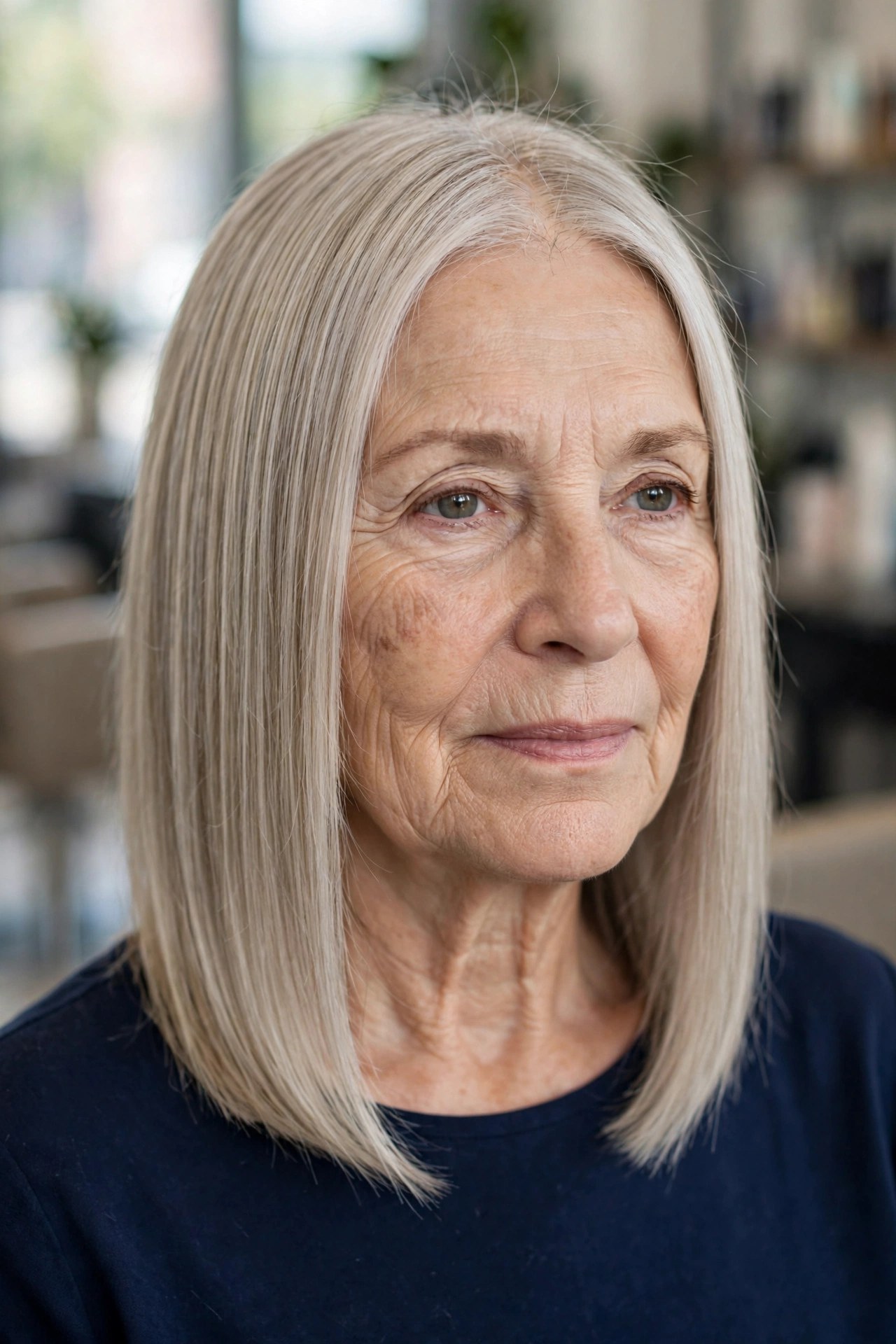
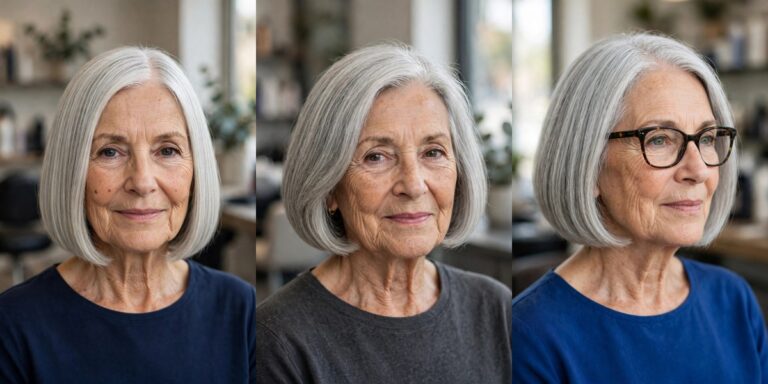
This is the blueprint every other version builds on: shorter at the nape, gradually longer toward the front, and finished with one solid blunt line at the ends. That unbroken perimeter is the whole trick for fine hair — when every strand ends at the same weight line, the ends read as a thick edge instead of a wispy taper.
Ask your stylist to keep the angle gentle rather than steep, so it looks polished rather than severe, and to avoid thinning shears at the ends. Blow-dry with mousse worked into the roots and a round brush pulling the front pieces forward; the forward fall is what frames the jaw and makes the shape look intentional.


2. Stacked-Back Angled Lob
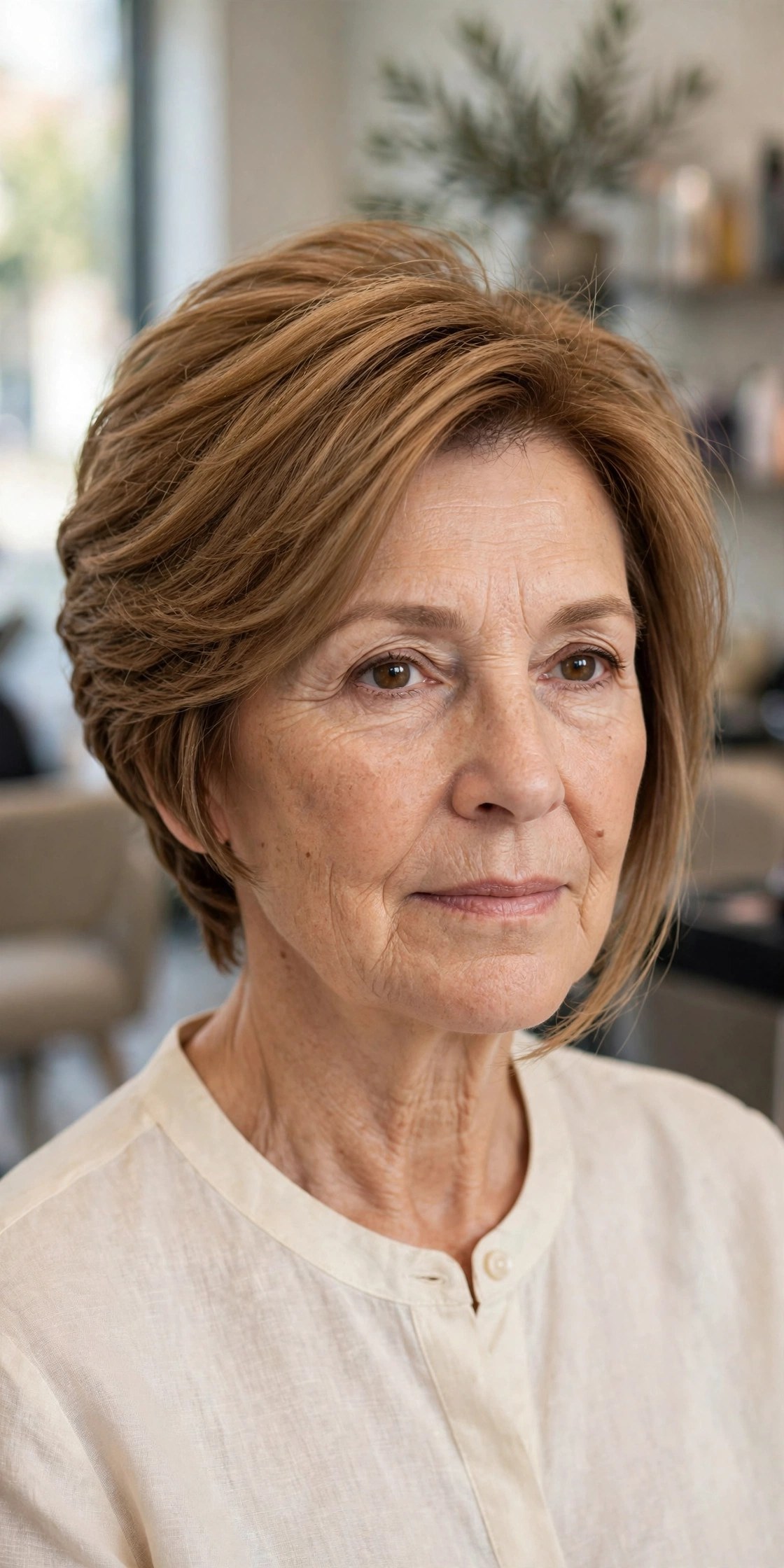
Here the back is built up with short, stacked graduation while the front stays long. The stacking does the lifting for you: those little shelves of hair at the crown prop each other up, so fine hair that normally collapses at the back holds a rounded, full silhouette all day.
It is an excellent choice if your thinning shows most at the crown, a concern we also tackle in haircuts for women over 50 with thin hair. Keep the stack soft, not stepped, and dry the back first, lifting straight up with a small brush before you smooth the longer front.


3. Angled Lob with Long Layers
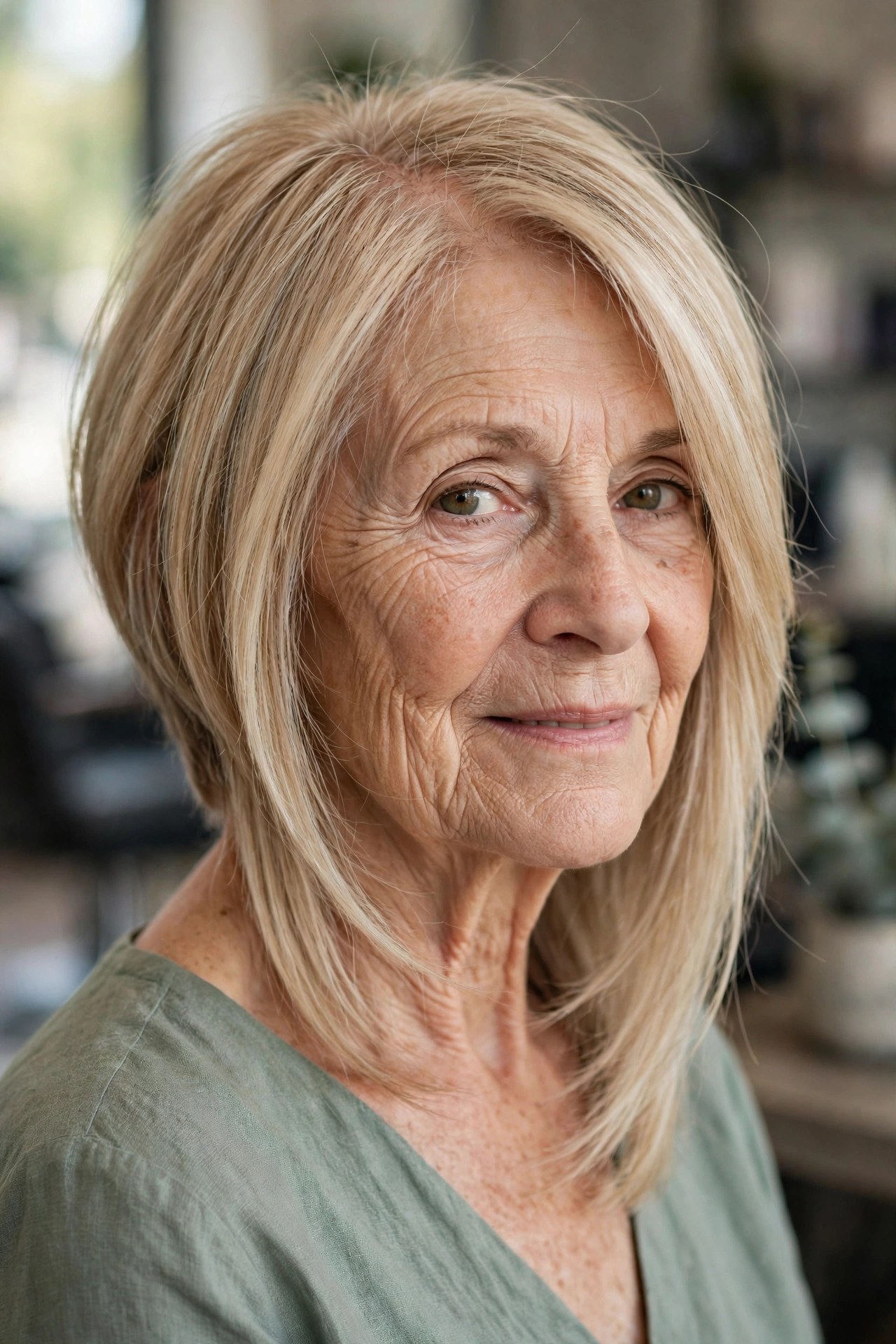
Long layers are the safe way to add movement without sacrificing thickness. The layers start low — below the chin — so the blunt perimeter stays intact at the bottom while the surface gets swing and separation. Fine hair moves instead of hanging, but the ends never look see-through.
This version suits women who found a one-length lob a little heavy or helmet-like. Tell your stylist the layers must be long and blended, never choppy at the ends. A dryer brush through the mid-lengths, rolling away from the face, shows off the layering in about eight minutes.


4. Deep Side-Part Angled Lob
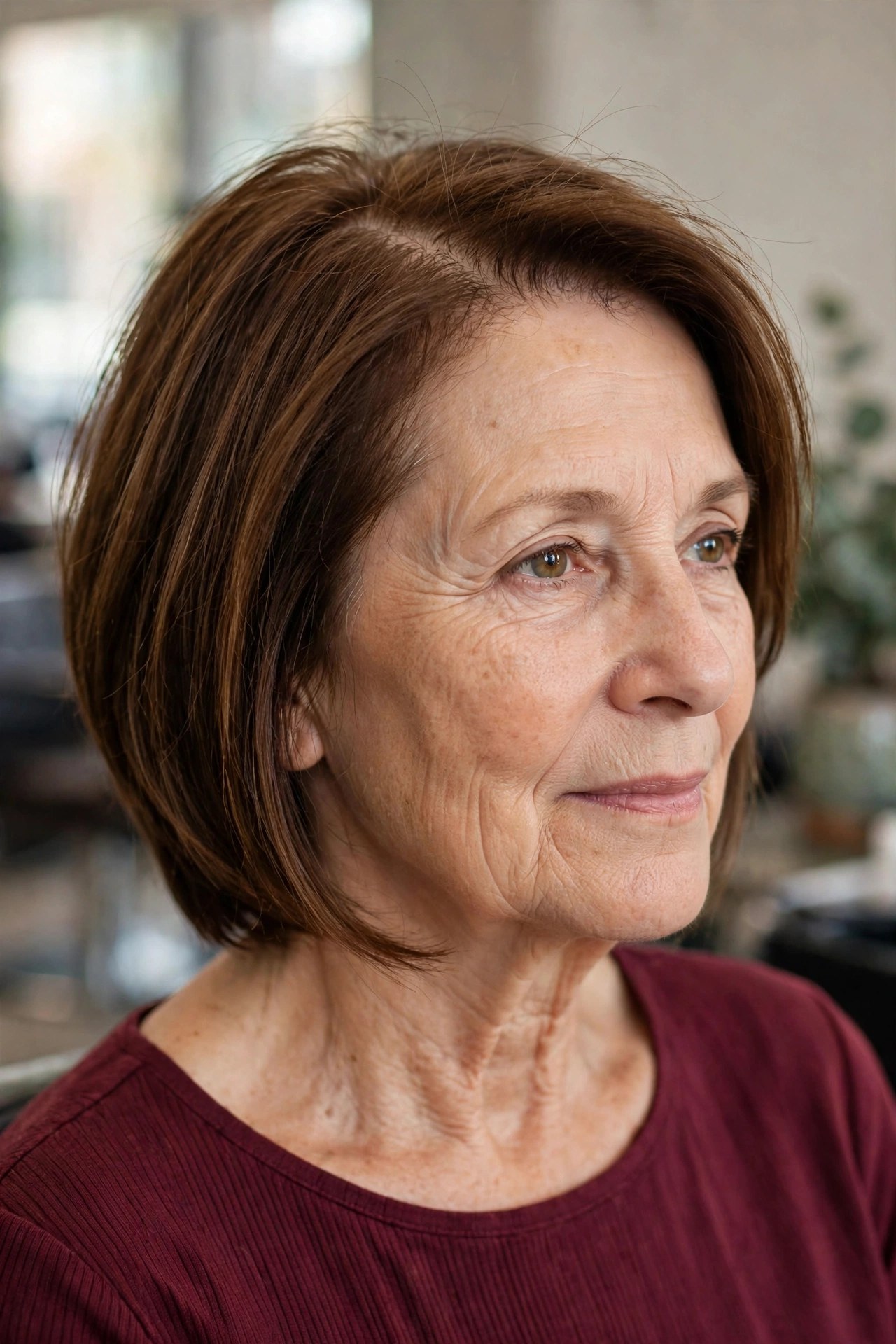
Moving your part changes everything on an angled lob. A deep side part throws more hair over the crown, which instantly disguises a sparse parting line and creates lift on the heavier side, while the longer front corner sweeps diagonally across the face and softens it.
It is one of the fastest fixes for a flat crown, and it costs nothing to try before you commit to a new cut. If you are also weighing up shape, our guide to stacked bob haircuts for fine hair shows how parting and stacking work together. Dry the roots in the opposite direction first, then flip into place for lasting volume.

5. Soft Wavy Angled Lob
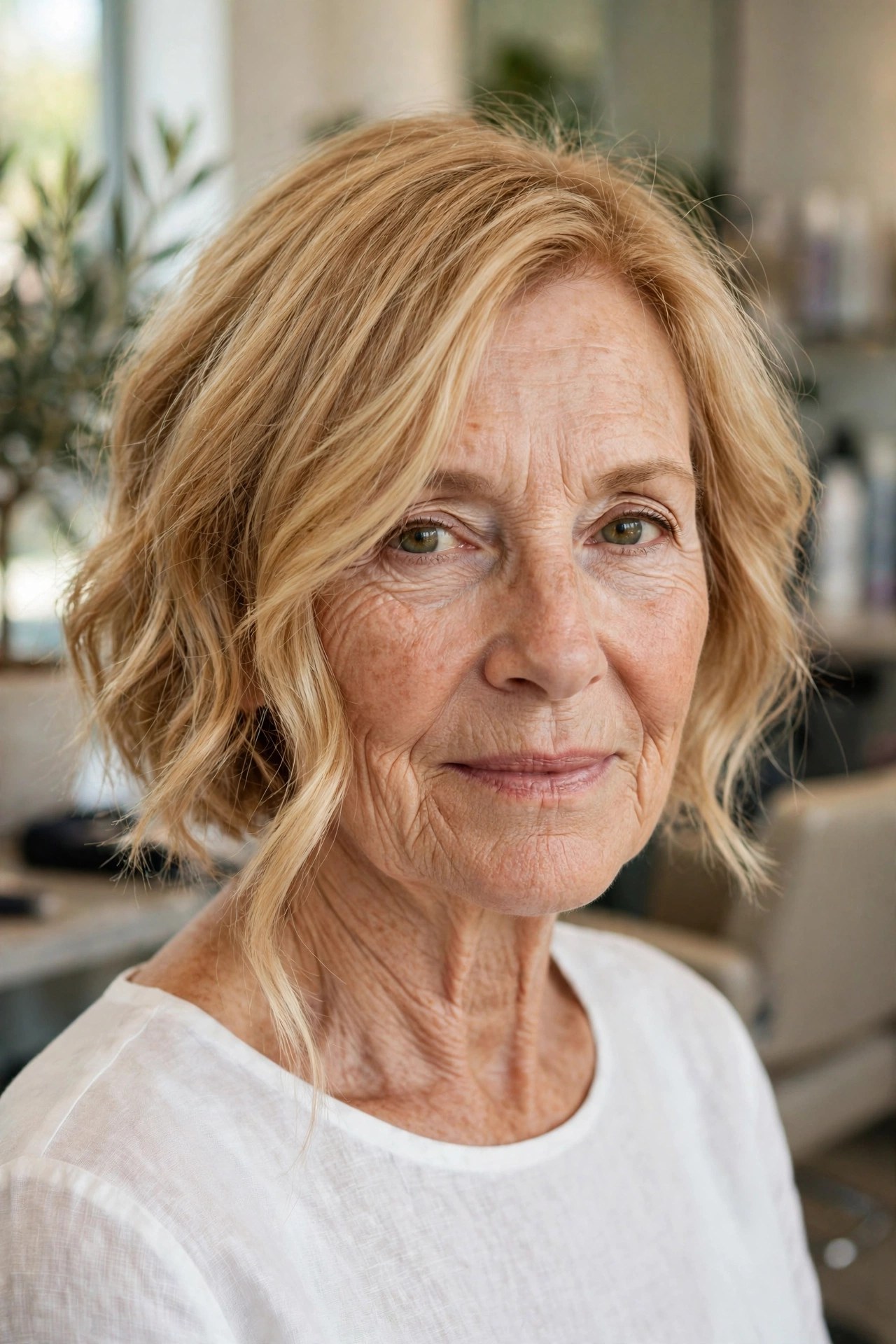
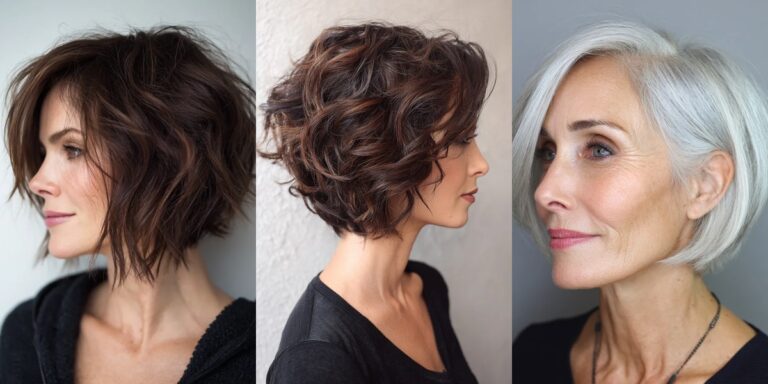
A gentle wave doubles the apparent width of every strand, which is why this is such a reliable volume trick for fine hair. The angle still does the structural work underneath — short back, long front — while loose, irregular bends through the front pieces add the body that straight styling cannot.
Keep the waves loose and leave the ends fairly straight for a modern finish; tight, uniform curls can look set and dated. Use a large-barrel iron on alternating sections, or scrunch in sea-salt spray and let it air-dry if your hair holds any natural bend. Finish by shaking the roots with your fingertips, not a brush.


6. Angled Lob with Curtain Bangs
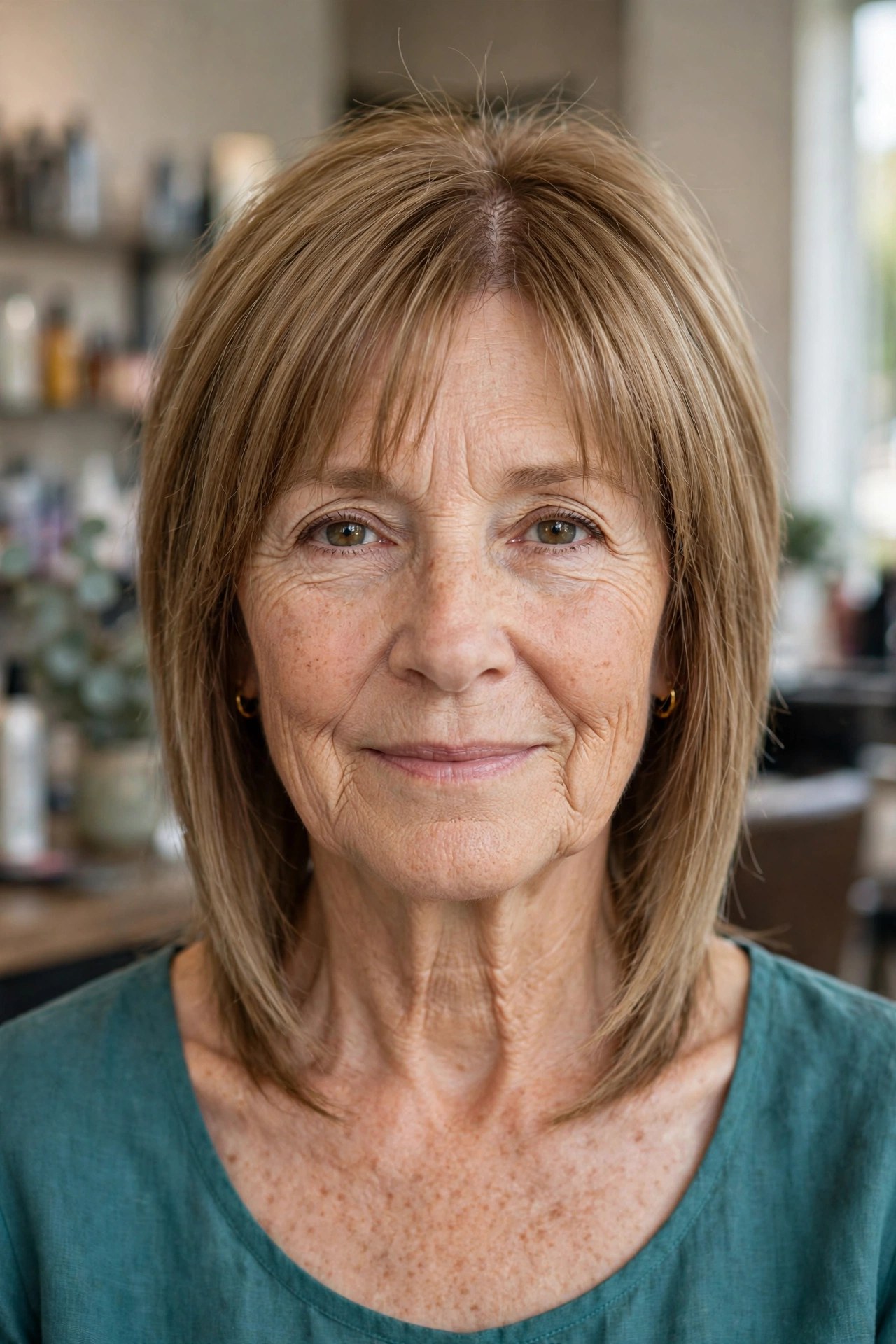
Curtain bangs part in the middle and sweep open toward the cheekbones, blending straight into the long front corners of the lob. For fine hair they are a kind fringe: they add softness around the eyes and forehead without taking much hair away from the rest of the cut, so density elsewhere is preserved.
They also grow out gracefully — in a few weeks they simply become face-framing layers. Blow-dry the fringe forward first, then sweep each side back with a round brush so it opens like curtains. A light mist of dry shampoo at the hairline keeps a fringe fresh on day two.
7. Silver-Gray Angled Lob
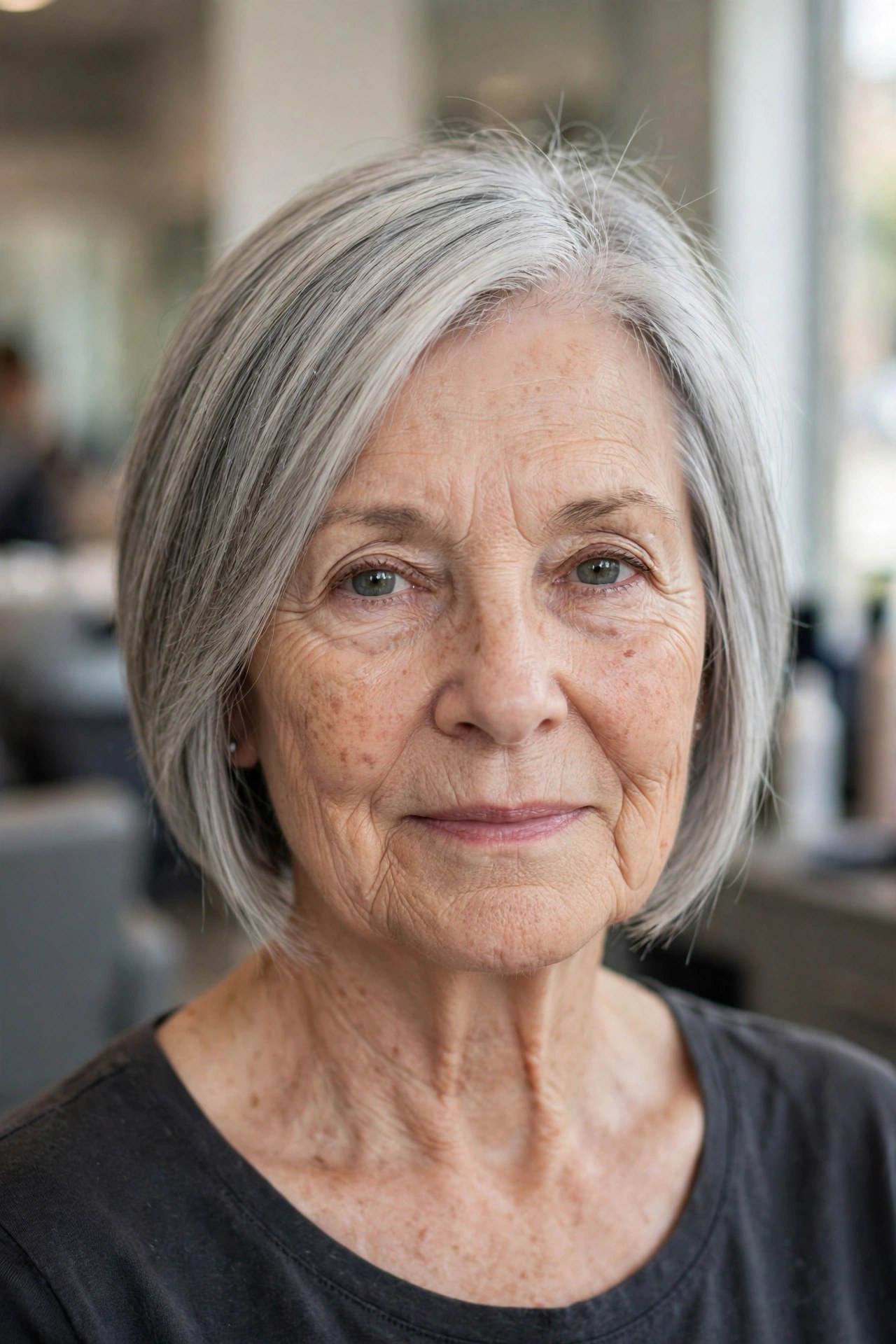
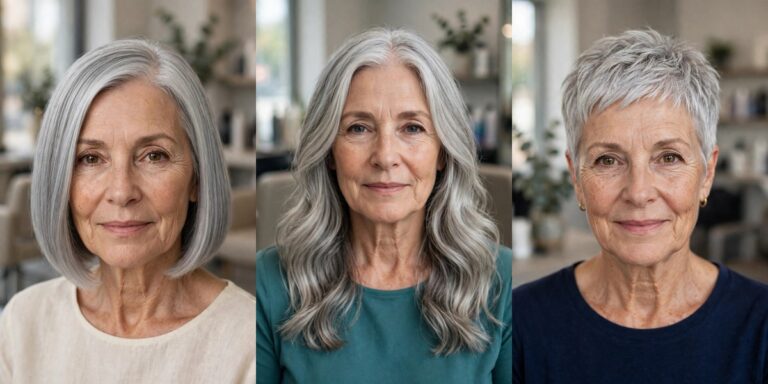
Natural silver looks its best on a shape with a clear point of view, and the angled lob gives grey fine hair exactly that. The sleek surface shows off the tonal variation in real silver — bright whites next to deeper pewter — while the blunt front edge keeps fine grey strands, which can look flyaway, appearing neat and deliberate.
Grey hair is often more wiry and yellow-prone than pigmented hair, so a purple shampoo once a week keeps it bright rather than brassy. Keep the finish glossy, not matte: a tiny amount of lightweight serum pressed into the ends makes silver catch the light instead of looking dry.


8. Angled Lob with Face-Framing Highlights
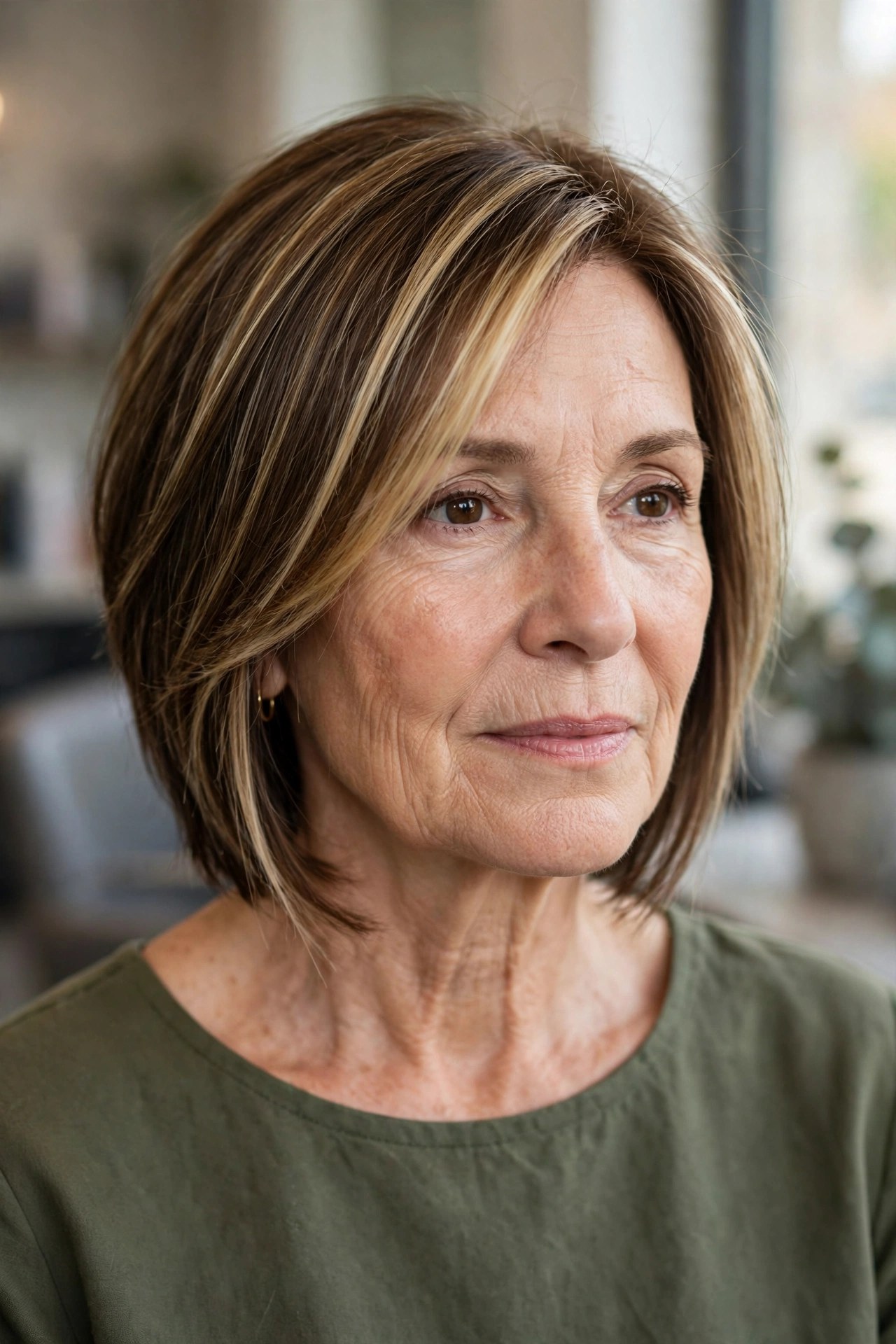
Two or three brighter pieces placed right around the face do disproportionate work on fine hair. The contrast between light and depth tricks the eye into seeing more hair than there is, and the brightness lifts the complexion in the way a good frame lifts a picture.
Ask for fine, woven highlights rather than chunky ribbons, concentrated at the front corners and the parting, with the back kept slightly deeper for dimension. Because the angled front is the longest part of the cut, those bright pieces get maximum visibility. A gloss treatment between color appointments keeps them luminous.

9. Textured Tousled Angled Lob
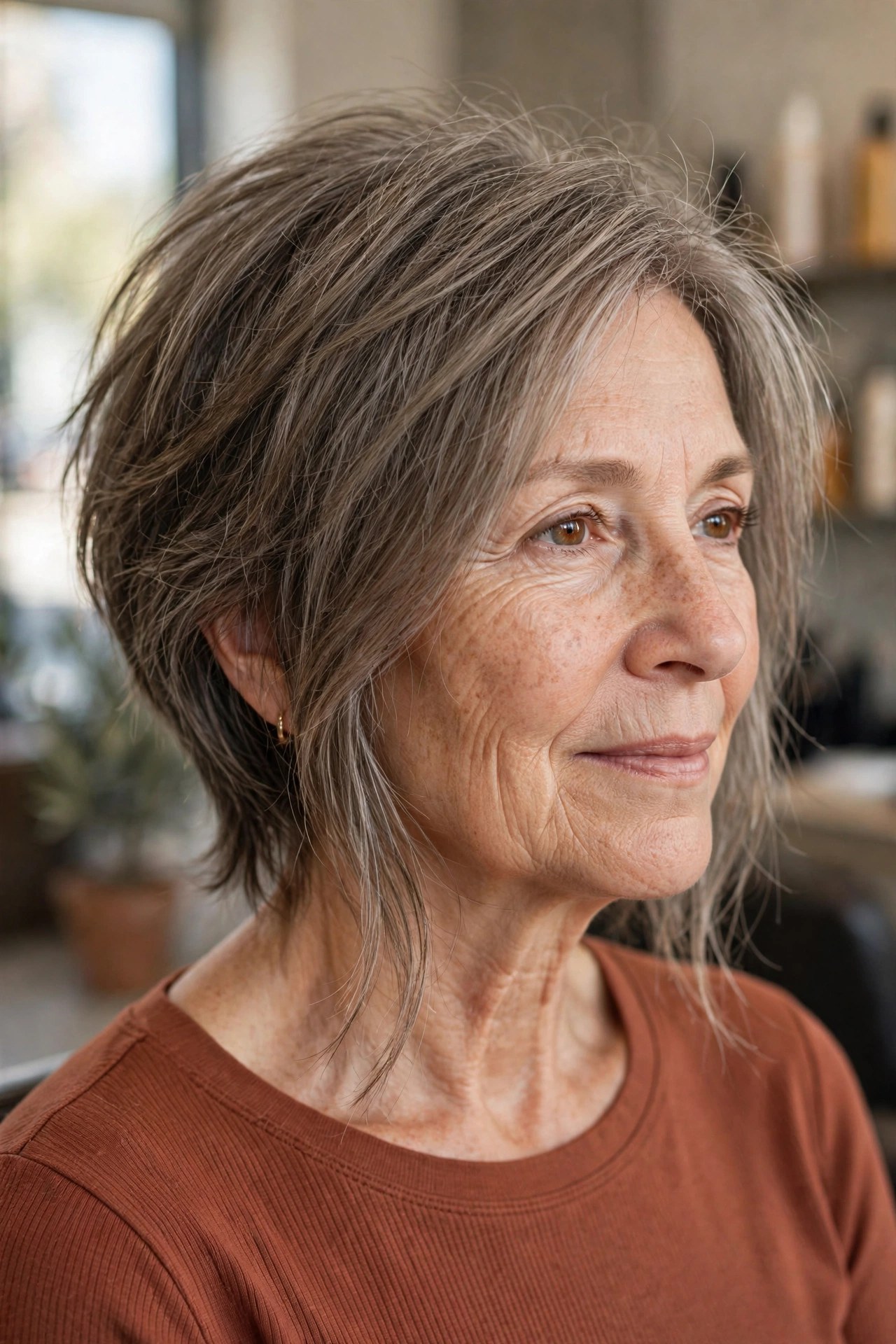
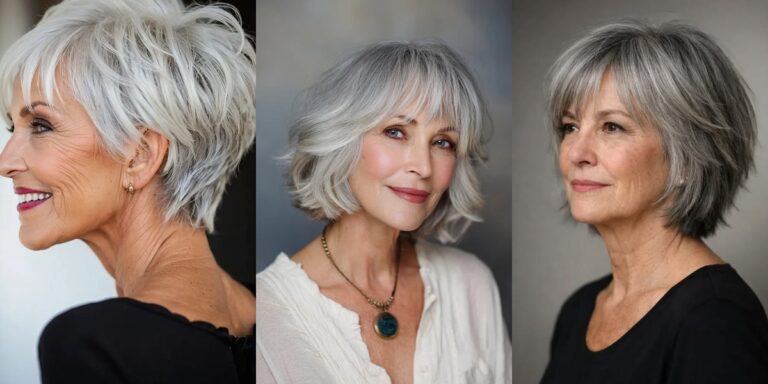
Tousling breaks up the surface so light hits fine hair at lots of different angles, and broken-up light reads as thickness. The underlying angle keeps the silhouette tidy — this is controlled mess, with a clean nape and longer front pieces that are simply roughed up at the ends.
Work a pea-size amount of texturizing putty through dry hair, pinching the front ends forward, and resist the urge to brush it smooth afterwards. It is a forgiving style for second-day hair and for cowlicks, because the texture hides both. Keep the product off the roots so the crown stays lifted.

10. Dramatic Chin-to-Collarbone Angled Lob
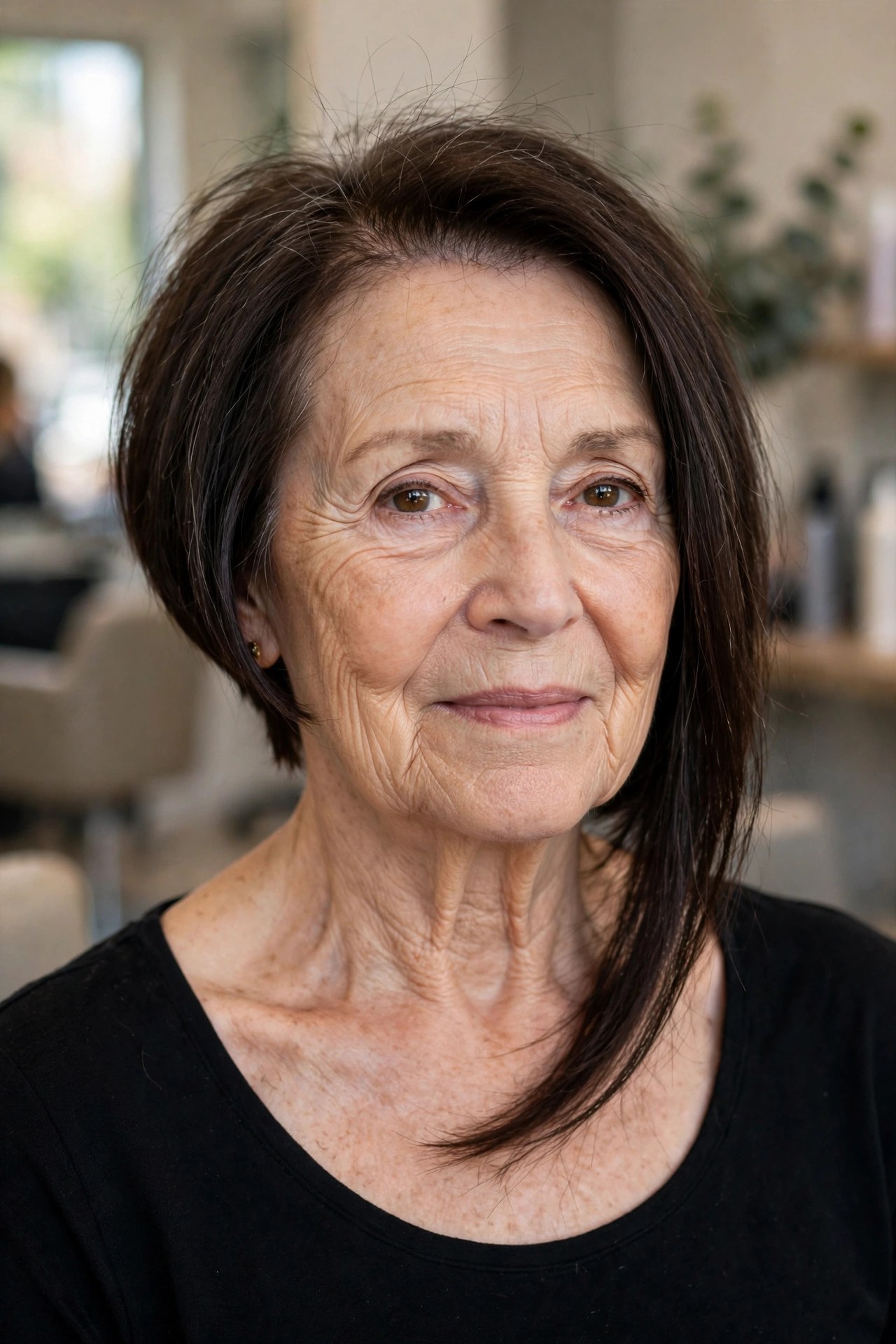
The boldest version on this list drops from chin length at the back to collarbone length at the front. That long diagonal creates a strong, elongating line that is especially flattering if you want to draw the eye down and away from a fuller jaw, and the long front gives fine hair a satisfying sense of length without the thin, straggly ends a full-length cut would have.
It needs commitment — the angle only reads when it is sharp, so plan trims every six weeks. It also rewards sleek styling: run a flat iron through the front sections only, keeping the roots lifted, and let that clean diagonal be the statement. Our bob haircuts for women over 50 guide has softer angles if this one feels like a big step.


11. Angled Lob with Side-Swept Bangs
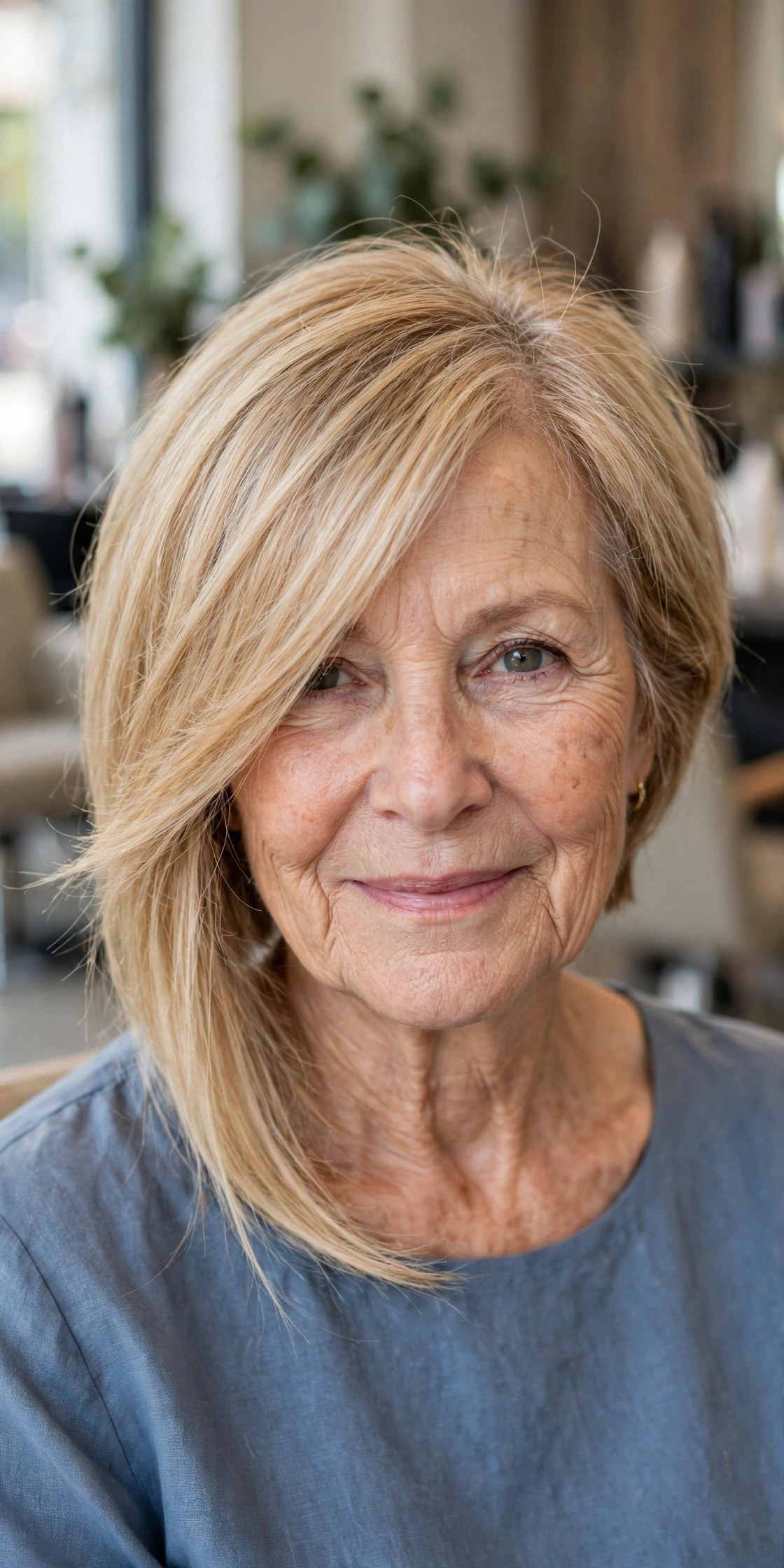
A long side-swept fringe adds a diagonal in the opposite direction to the lob’s own diagonal, and that crossing of lines is what makes the style look designed rather than simply grown. For fine hair, the sweep also covers a sparse temple or hairline corner beautifully, without the commitment of a full fringe.
Have the fringe cut long — grazing the cheekbone — so it tucks behind an ear on days you want it gone. Blow-dry it across your forehead with a round brush, then let it fall; drying it in the direction you want it to lie, while it is still warm, is what makes it stay put without heavy spray.

12. Sleek Center-Part Angled Lob
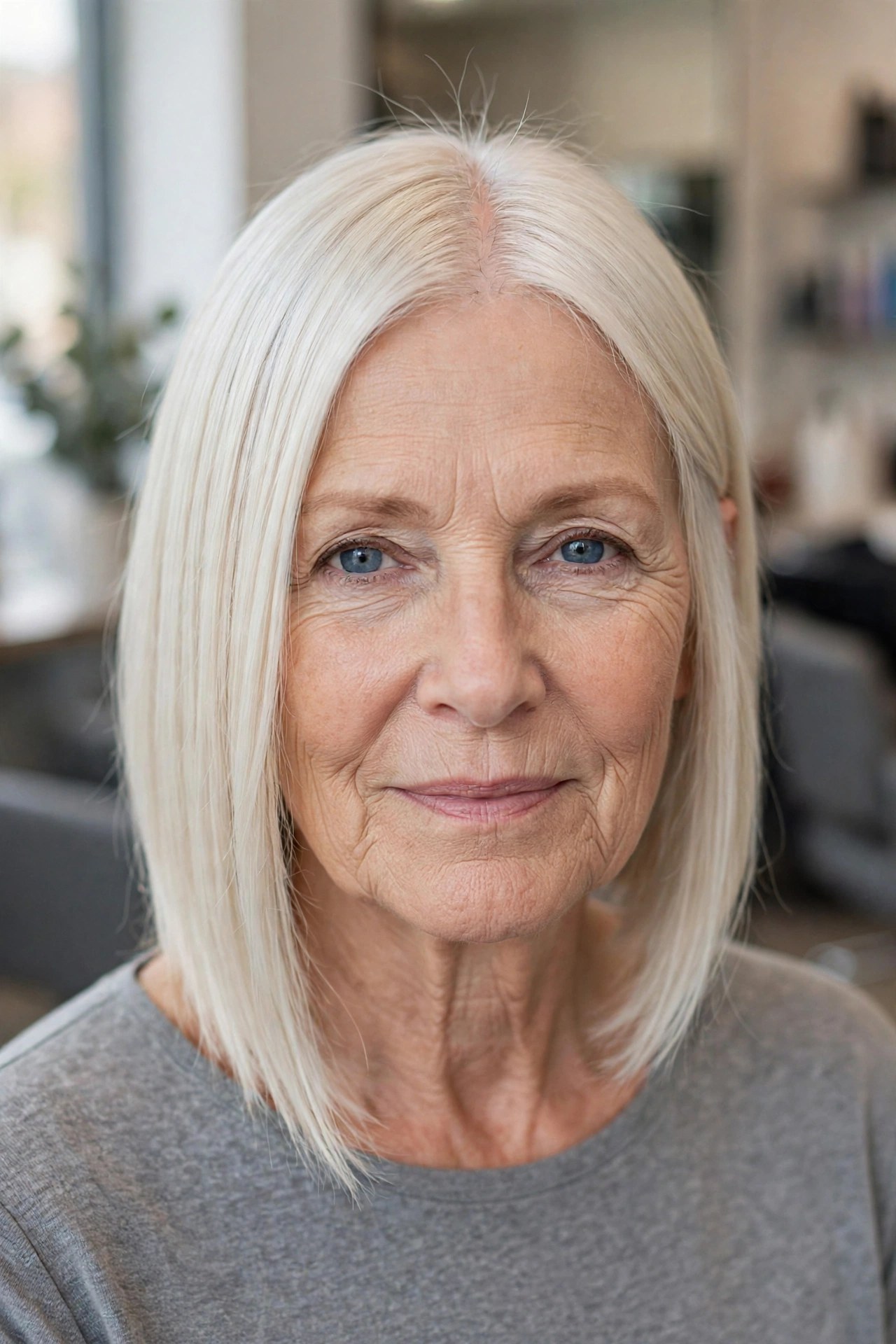
A center part on an angled lob is the most minimal, fashion-leaning option: symmetrical, glossy, and very deliberate. The key for fine hair is that both front corners are the same length, so the hair distributes evenly and neither side looks thinner than the other — a common worry with side parts on sparse hair.
This one lives or dies on condition, because a sleek finish shows every dry end. Use heat protectant before the flat iron, iron in slow single passes rather than repeated quick ones, and book a trim the moment the front corners start to feather. A satin pillowcase helps it survive the night intact.
13. Angled Lob with Beveled Ends
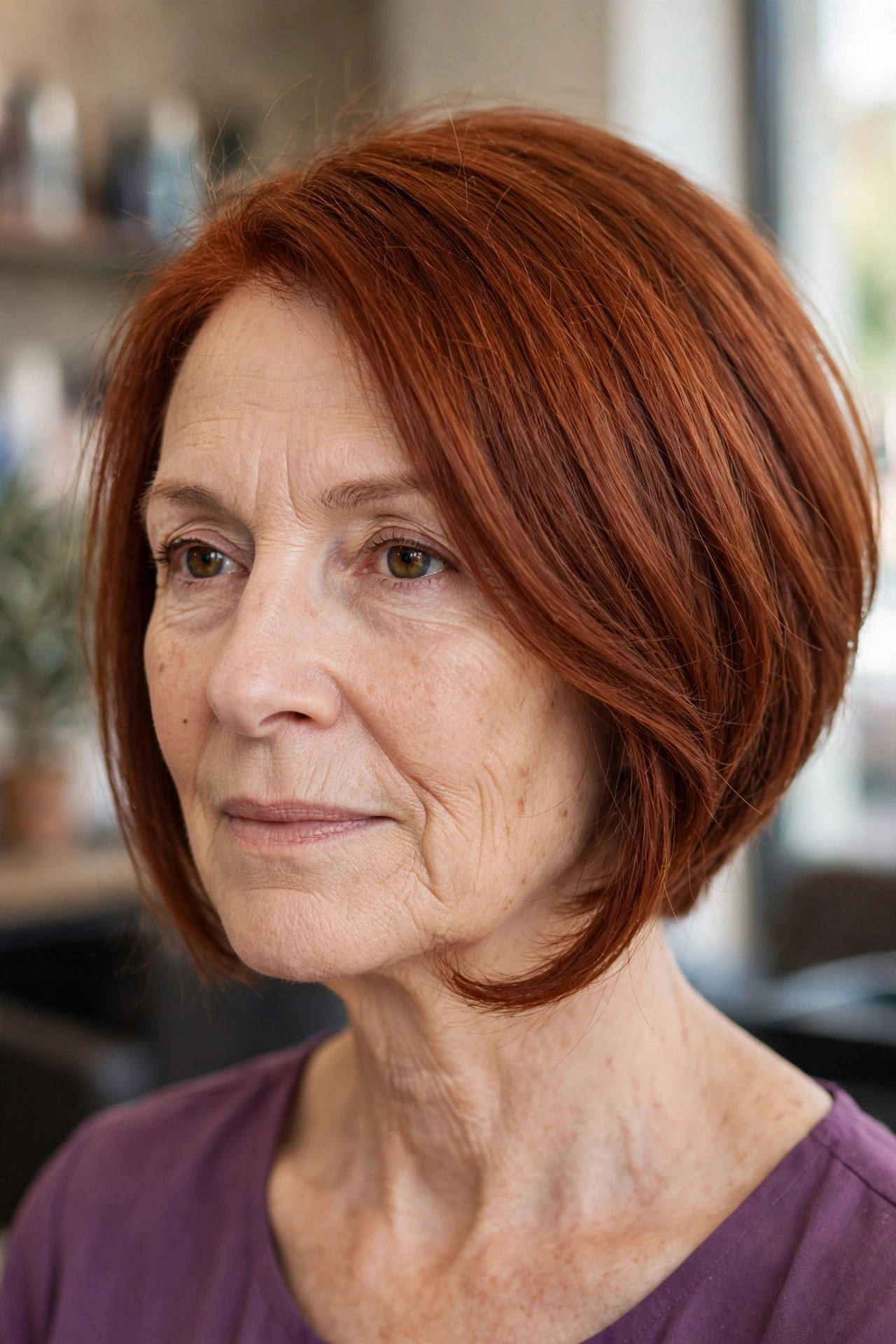
Beveling means the ends are dried — and subtly cut — to curve under, so the whole perimeter rolls inward instead of kicking out. On fine hair that inward roll creates a soft shadow of fullness at the outline, and it stops wispy ends from flicking in different directions and looking untidy by lunchtime.
It is a neat, professional finish that suits straight to slightly wavy hair and rounder faces, since the curved-under front lengthens the silhouette. Dry with a round brush, rolling the last two inches under and letting each section cool on the brush for a few seconds before you release it.
14. Balayage Angled Lob
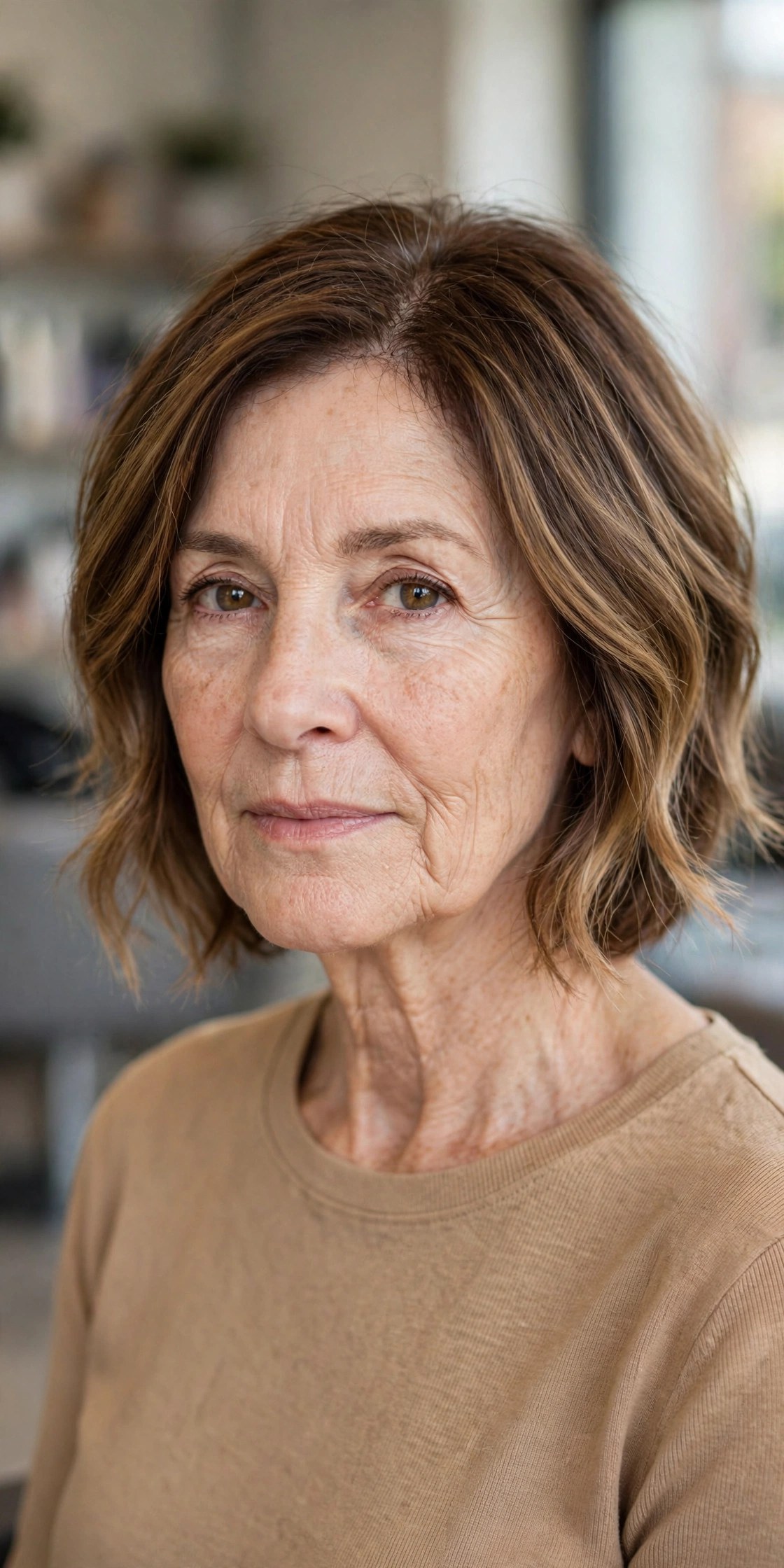
Balayage places lighter color through the mid-lengths and ends, leaving the roots deeper. On an angled lob that gradient follows the cut’s own direction — darker and shorter at the back, lighter and longer at the front — so color and shape reinforce each other and the front looks sunlit and full.
It is also the most forgiving color for fine hair, because there is no hard regrowth line and appointments can stretch to three or four months, which means less chemical stress on fragile strands. Ask for the lightest pieces to start a little lower than usual so the face-framing brightness sits at the jaw, not the roots.
15. Angled Lob for Natural Gray Blending
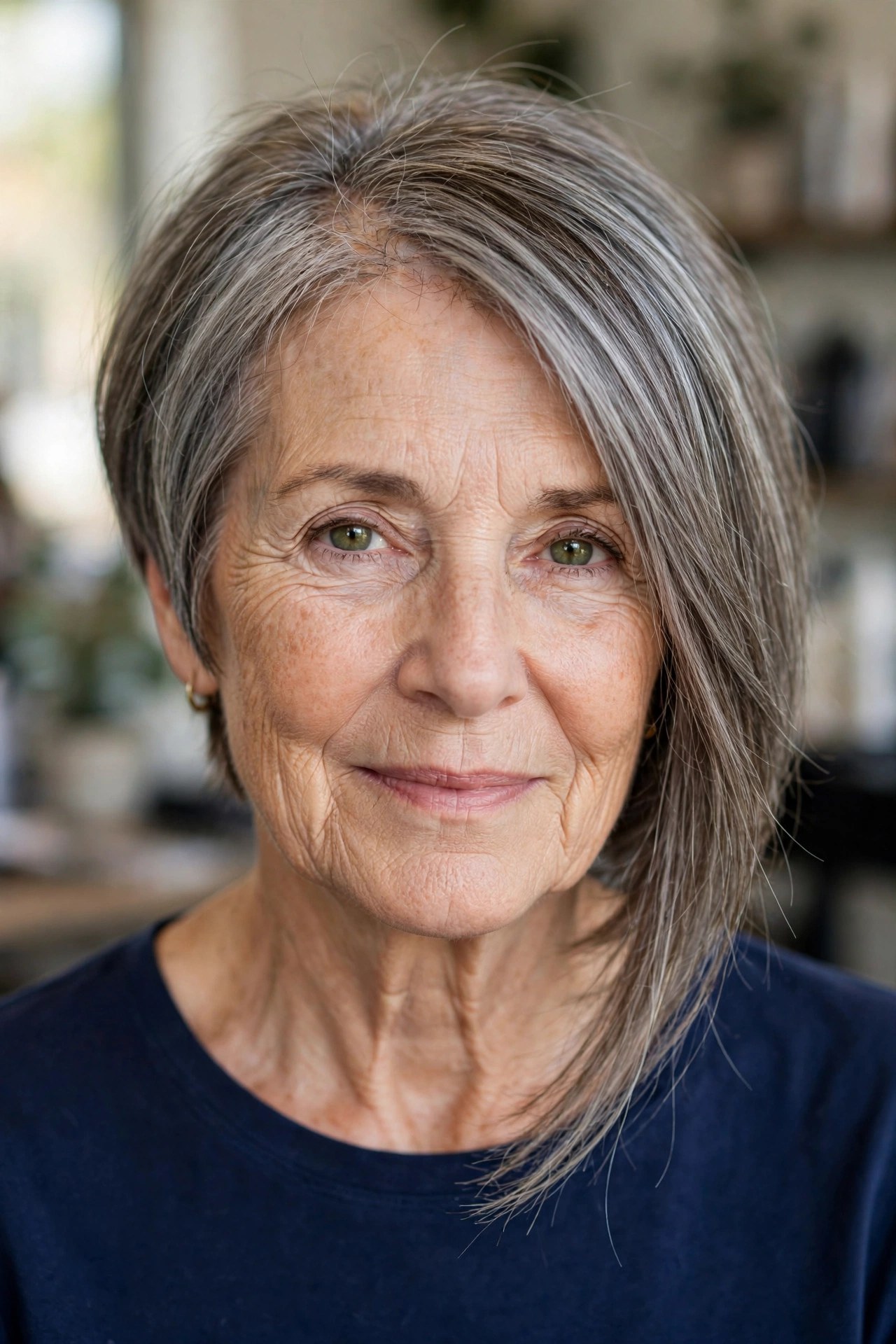
If you are part-way through growing out dye, this cut is a practical ally. The shorter back clears away old color fastest, while lowlights and the natural silver pattern through the longer front blur the demarcation line so the transition looks like a choice rather than a lapse.
Keep the shape crisp during the grow-out — a strong outline is what makes gray blending look intentional. A purple shampoo every week or two manages yellowing in the silver sections, and a clear gloss adds the shine that transitioning hair often lacks. Many readers pair this with the ideas in hairstyles for fine hair over 50 as their color evolves.
16. Feather-Light Layered Angled Lob
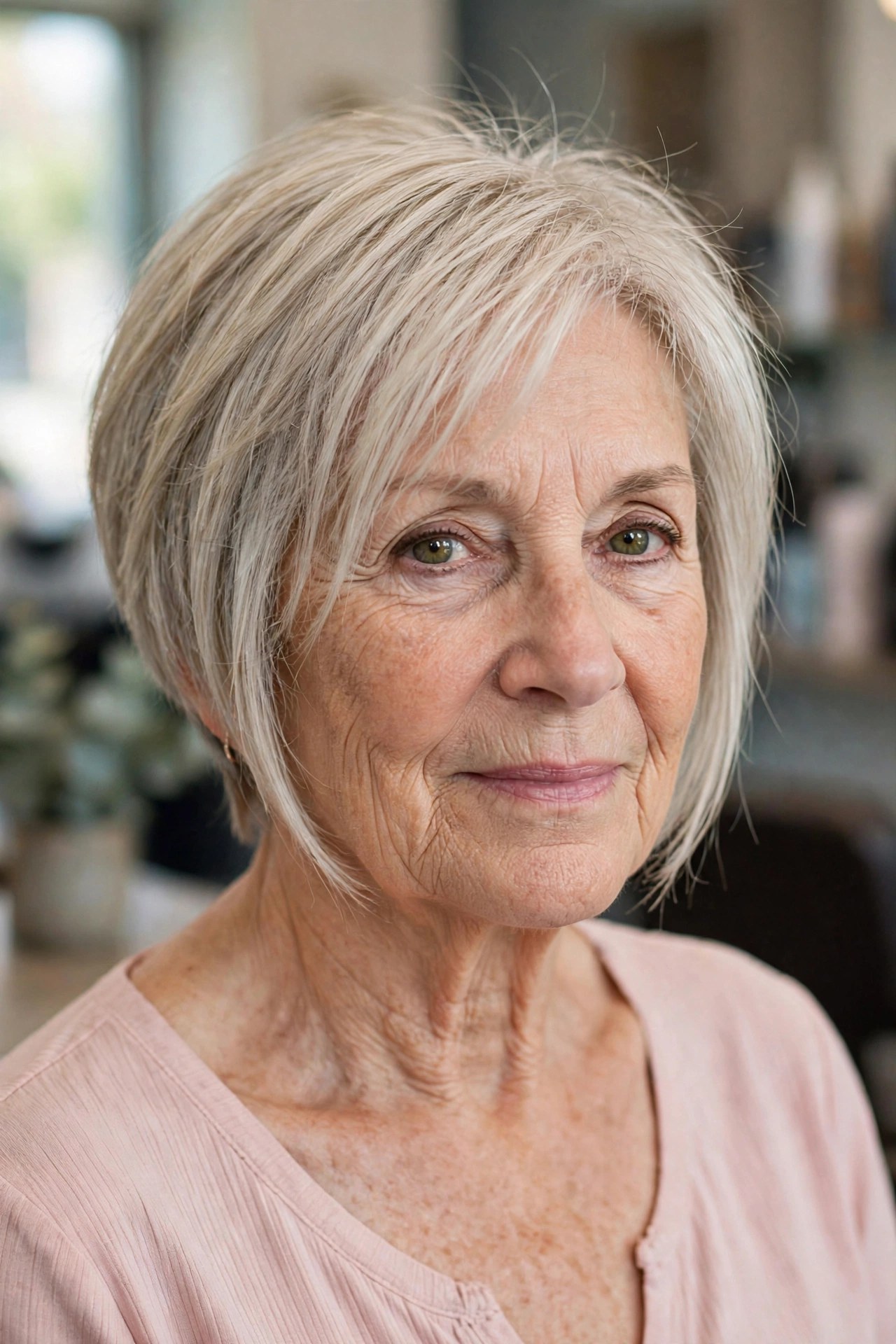
Feathering here means the layers are point-cut and whisper-thin, lifting the surface without removing bulk from underneath. It is the right layering for very fine hair that cannot afford the heavier, choppier layers that work on thick hair — you get movement and a soft edge, and the perimeter still looks full.
Be specific at the salon: feathered surface layers only, no razor thinning through the ends. This version air-dries surprisingly well if you twist the front pieces lightly while damp, and a volumizing foam at the roots stops the feathering from collapsing flat by afternoon.
17. Angled Lob with Crown-Volume Blowout
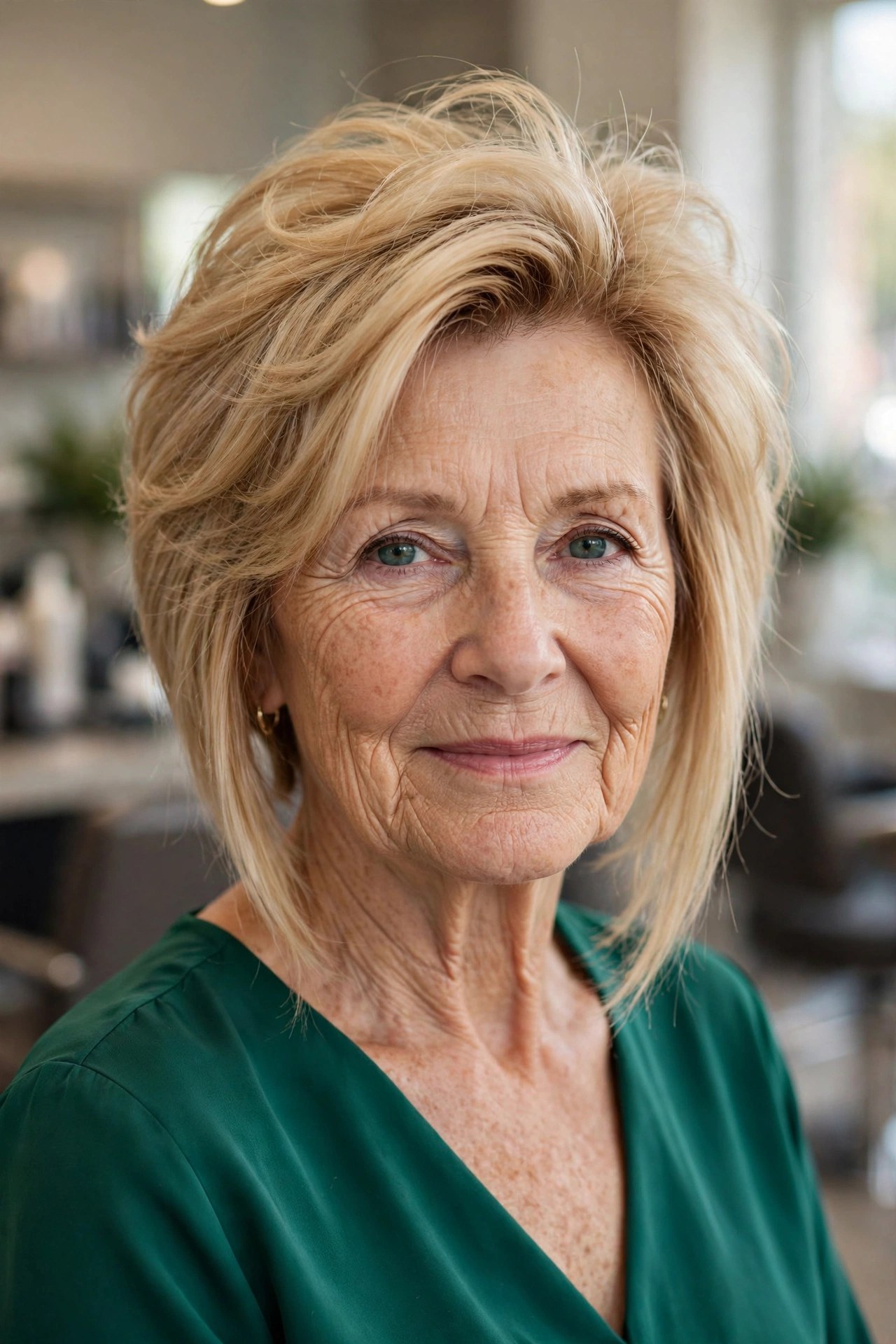
Same cut, maximum lift. The back and crown are blow-dried up and over with a round brush so the stacked angle underneath becomes a built-in platform, while the long front is smoothed forward for contrast — big at the back, sleek at the front, and full-looking everywhere.
This is the version to request before photos or events. Let each crown section cool on the brush before releasing it; that cooling step is what sets the lift. A dryer brush makes the whole routine manageable at home in about ten minutes, and a light spray underneath, never on top, holds it without a helmet finish.
18. Low-Maintenance Air-Dry Angled Lob
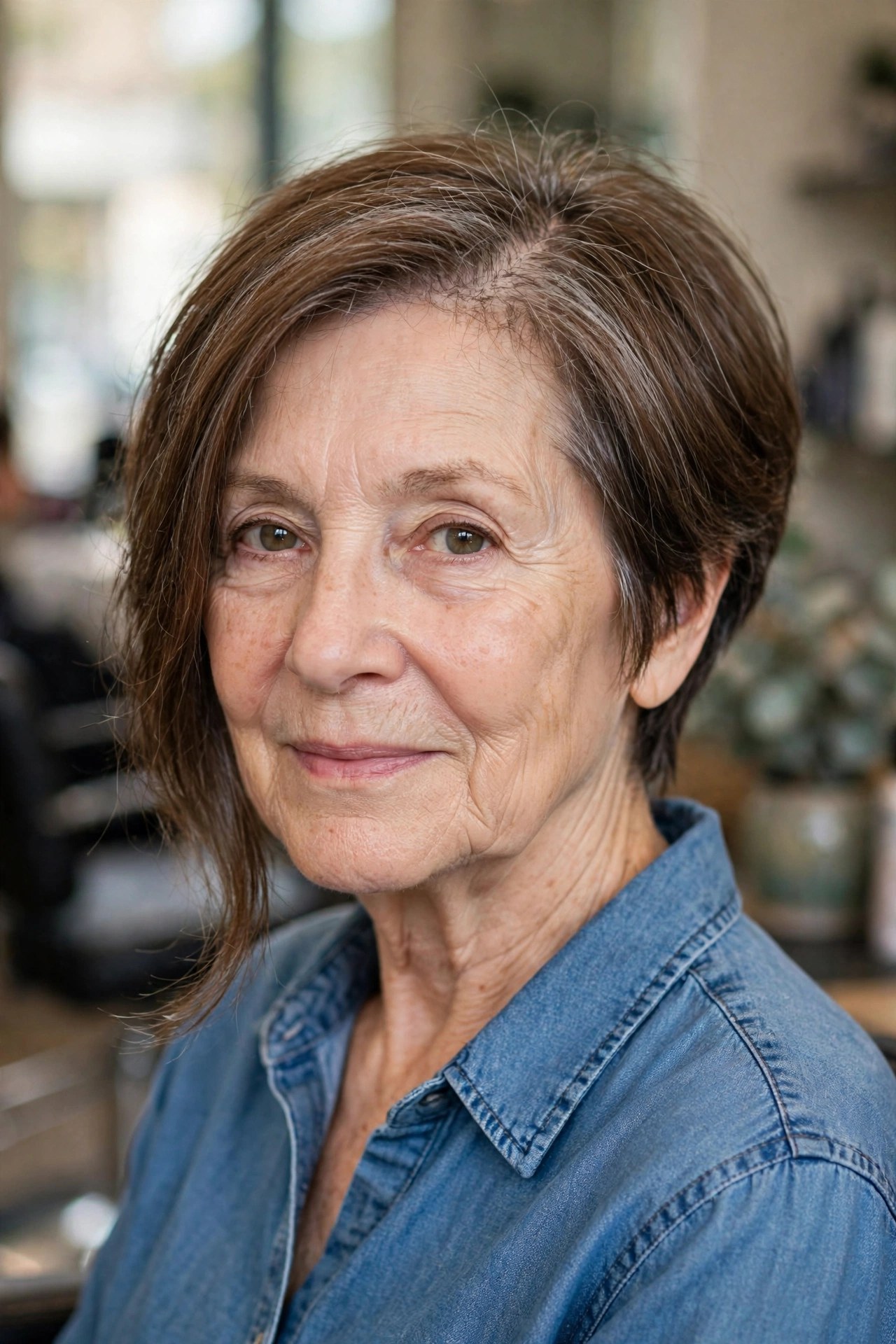
A well-cut angled lob does not actually need heat. Because the shape is built into the cut — the angle, the blunt edge, the shorter back — it falls into a flattering line as it dries, which makes it ideal if you are stepping away from daily blow-drying to protect fragile fine strands.
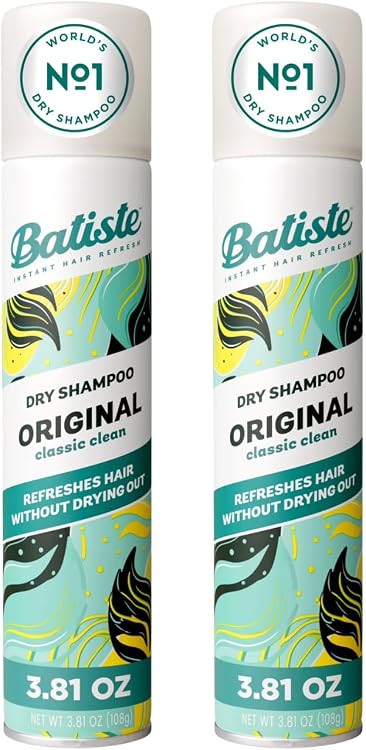
The routine is: volumizing foam scrunched into damp hair, front pieces tucked behind your ears while they dry to create a soft bend, then hands off until it is fully dry. Touching it while damp is what creates frizz. Refresh on day two with dry shampoo at the roots and a quick pinch of the front ends.
19. Angled Lob with Wispy Fringe
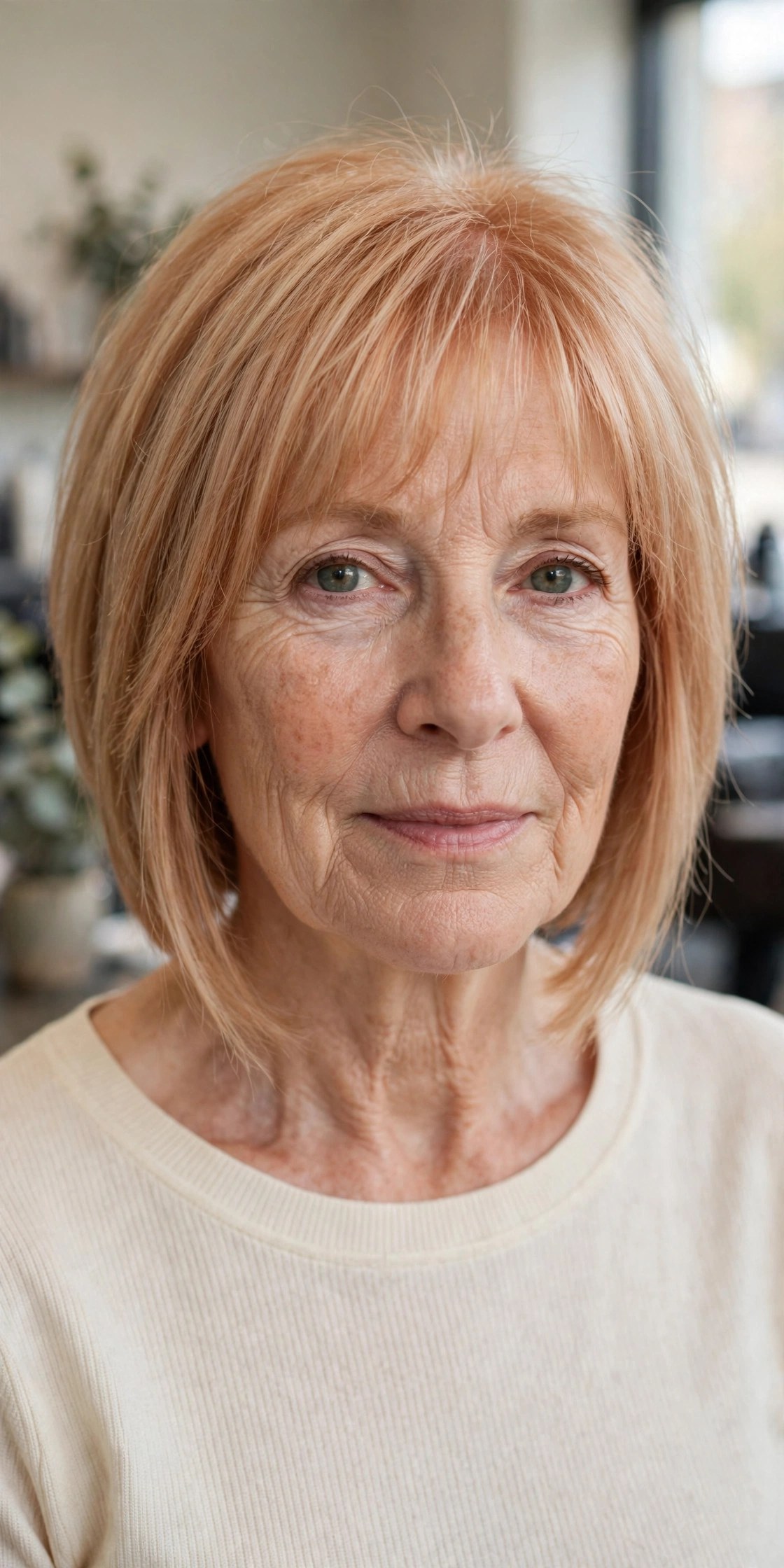
A wispy fringe is feathered and see-through rather than solid, so it softens the forehead without spending much of your fine hair on bangs. Paired with the long front corners of the lob, it gives you framing at both the brow and the jaw, which is a particularly kind combination for longer faces.
Ask for the fringe to be cut dry and a little longer than you think you want — fine hair springs up as it dries and a fringe that is too short is hard to rescue. Keep a small brush just for the fringe: thirty seconds of warm air swept side to side in the morning resets it completely.

20. Glossy Polished Angled Lob with Undercurve
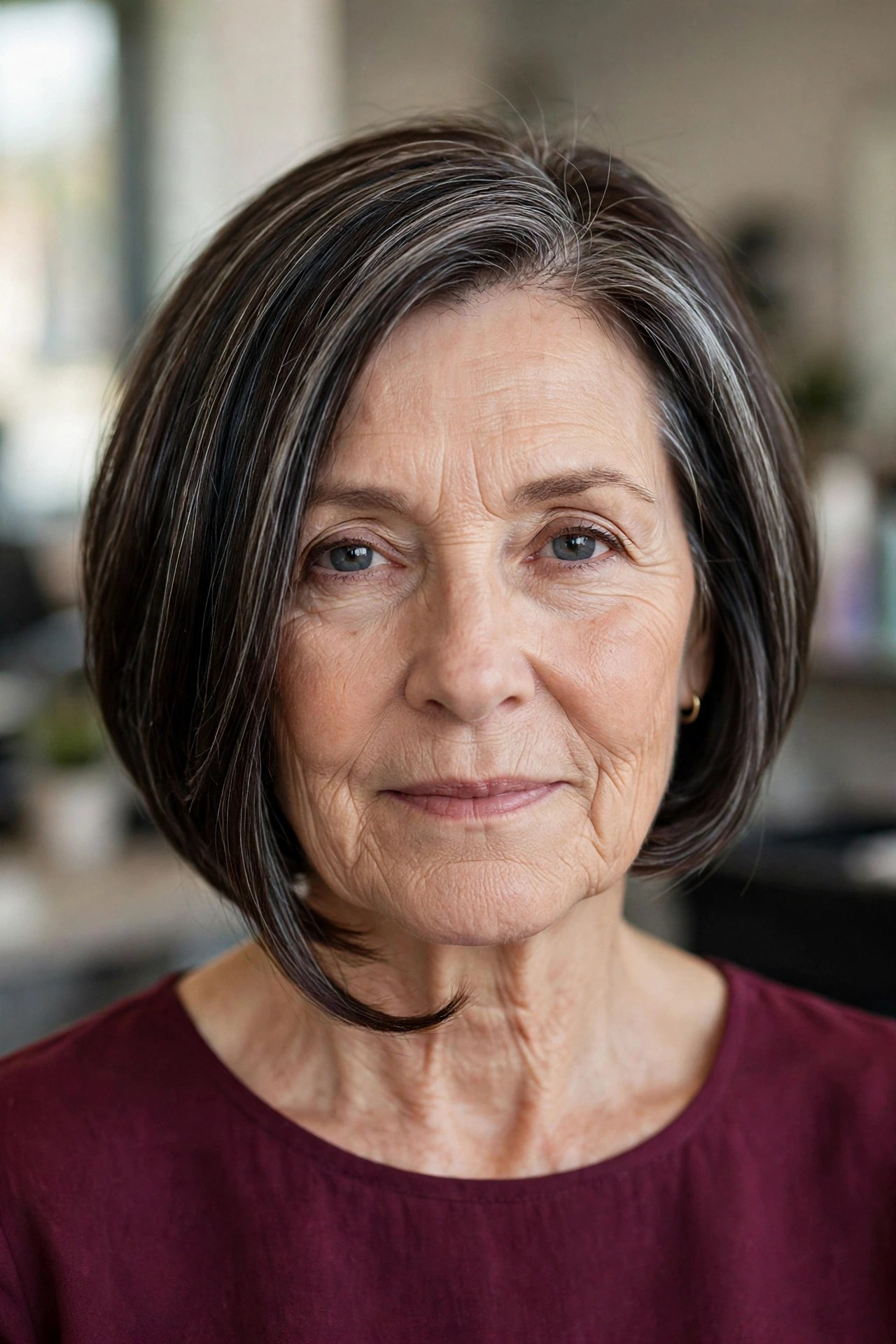
We finish with the most dressed-up take: glass-like shine, a soft undercurve at the ends, and that decisive long front corner. Shine matters doubly for fine hair, because light reflecting evenly off a smooth surface is read by the eye as health and density — dull, rough hair always looks thinner than it is.
Protect the finish at every step: heat protectant before styling, a serum only from mid-lengths down so the roots keep their lift, and a pillowcase that does not rough up the cuticle overnight. It is a beautiful choice for silver-streaked brunette hair, where the gloss shows every tonal shift.
Recommended Products
These are the products that came up again and again across the styles above — a volumizing mousse that does not weigh fine hair down, a good round brush and dryer brush for crown lift, and gentle finishing products that add shine without collapsing volume.
Care and Styling Checklist for Fine Angled Lobs
- Apply volumizing mousse to roots only, on damp hair, before any heat.
- Dry the back and crown first, lifting up and over — that is where the angle needs support.
- Let sections cool on the brush before releasing; cooled hair holds lift hours longer.
- Keep oils and serums from mid-lengths down, never at the roots.
- Use dry shampoo at night or first thing, before hair looks oily, to protect day-two volume.
- Trim every 6–8 weeks — the blunt perimeter is the fullness trick, and it dulls as it grows.
- Sleep on satin to stop fine ends snagging and splitting on cotton.
Frequently Asked Questions
Does an angled lob really make fine hair look thicker?
Yes — by structure, not illusion alone. Removing length at the back takes away weight so roots lift, and the blunt front edge concentrates every strand into one solid line at the perimeter. Ends that end together look substantially fuller than the same hair tapered or heavily layered.
How long should the front of an angled lob be for fine hair?
Between chin and collarbone works best. Shorter than chin and you lose the elongating diagonal; longer than collarbone and fine ends start to separate and look wispy again. Most stylists aim for the front corners to land just below the jaw for a first angled lob.
Are layers good or bad in an angled lob for fine hair?
Long, low layers are fine and add movement; short or choppy layers through the ends are not, because they remove hair from the perimeter that creates the thick-looking edge. If you want layers, ask for long surface layers only and no thinning shears at the ends.
How often does an angled lob need trimming?
Every 6–8 weeks for a gentle or medium angle. A dramatic angle needs attention closer to every 6 weeks, because the diagonal only reads as deliberate while the line is sharp. The blunt ends also stay healthier on that schedule, since fine hair splits easily.
Can I wear an angled lob if my hair is fine and wavy?
Absolutely — natural wave adds width and body that fine straight hair has to fake. Ask for the cut to be checked dry so the angle accounts for how your waves spring up, keep the waves loose, and style with a sea-salt or texture spray rather than heavy creams that pull the wave out.
What should I tell my stylist to get this cut right?
Say: angled lob, shorter at the nape and longer in front, blunt perimeter, long layers only if any, and no thinning shears on the ends. Bringing two or three photos from this list helps enormously, because words like ‘angled’ mean different steepness to different stylists.
An angled lob is not a compromise cut for fine hair — it is arguably the smartest shape you can choose for it. The angle builds in lift, the blunt front edge manufactures the appearance of density, and the length stays long enough to feel feminine and versatile. Pick the version above that matches your routine, take the photo to your stylist, and let the geometry do the work your hair texture will not.