Tapered Pixie Cuts for Women Over 60 With Fine Hair
This post contains affiliate links. As an Amazon associate, I earn from qualifying purchases. I only recommend products that are of high quality and that I would use myself.
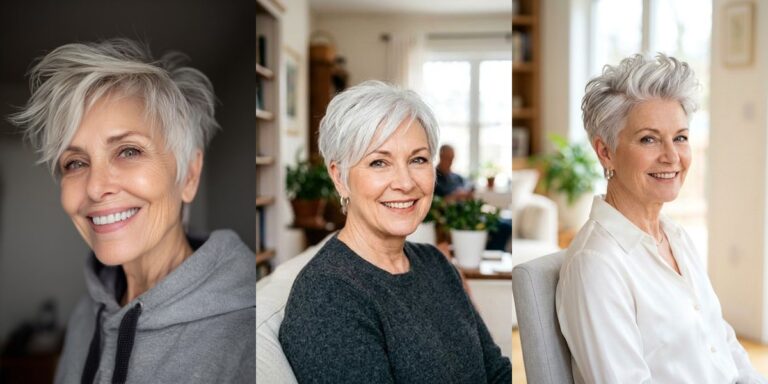
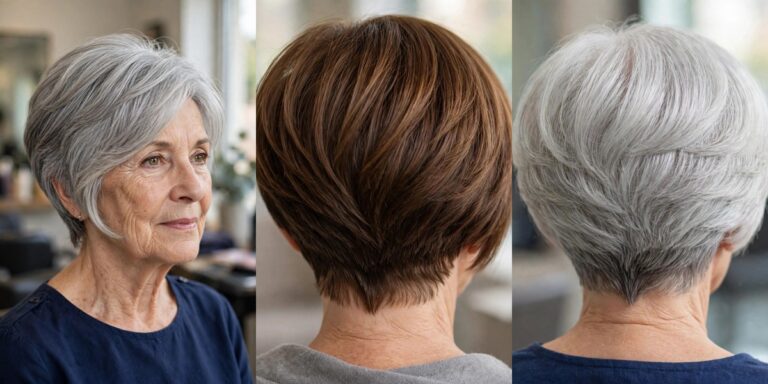
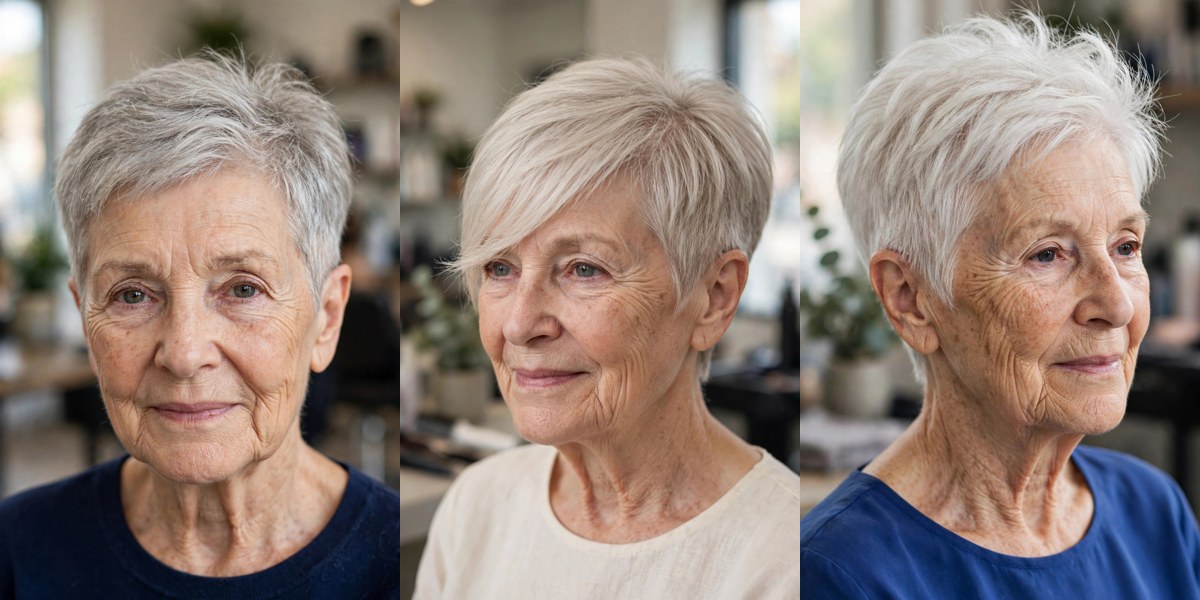
Fine hair after 60 has a frustrating habit: the longer it grows, the thinner it looks. Strands separate at the sides, the ends turn see-through, and the whole shape lies flat against the head no matter what you spray on it. The tapered pixie solves this at the level of the cut itself. By tapering the sides and nape close and clean, and keeping the top longer and textured, it removes the wispy bulk that gives fine hair away — and concentrates every strand you have where it creates lift, framing and the convincing illusion of thickness.
This guide walks through 20 tapered pixie variations designed specifically for fine hair on women over 60: silver and salt-and-pepper versions, crown-lifting shapes for a flat top, fringe options that cover a sparse hairline, a glasses-friendly cut, and softer or bolder finishes depending on your mood. If you are still comparing lengths, our pixie cuts for women over 50 roundup is a good companion read — then come back here for the fine-hair-specific details your stylist will thank you for knowing.
Table of Contents
- 1. Classic Tapered Pixie with a Textured Silver Top
- 2. Tapered Pixie with Long Side-Swept Bangs
- 3. Crown-Volume Tapered Pixie for a Flat Top
- 4. Choppy Tapered Pixie with Piecey Ends
- 5. Feathered Tapered Pixie Brushed Back
- 6. Tapered Pixie with a Wispy See-Through Fringe
- 7. Salt-and-Pepper Tapered Pixie
- 8. Soft Spiky Tapered Pixie for Crown Lift
- 9. Tapered Pixie Bob with a Longer Front
- 10. Brushed-Forward Tapered Pixie
- 11. Tapered Pixie with a Deep Side Part
- 12. Sleek Polished Tapered Pixie
- 13. Wavy Textured Tapered Pixie
- 14. Tapered Pixie Cut Cleanly for Glasses
- 15. Asymmetrical Tapered Pixie
- 16. Tapered Pixie with a Short Wispy Micro Fringe
- 17. Honey Blonde Tapered Pixie with Lowlights
- 18. Snow-Silver Tapered Pixie
- 19. Curly Tapered Pixie for Fine Curls
- 20. Tousled Messy Tapered Pixie
- Recommended Products
- FAQs
- Flat crown? Choose the crown-volume pixie (idea 3), the soft spiky lift (idea 8), or a deep side part (idea 11).
- Sparse hairline or wide part? Go brushed-forward (idea 10) or long side-swept bangs (idea 2) for quiet coverage.
- Proud of your gray? The silver (idea 1), salt-and-pepper (idea 7) and snow-silver (idea 18) versions make it the feature.
- Wear glasses daily? Idea 14 is tapered to sit flat under your frames.
- Zero-fuss mornings? The tousled messy pixie (idea 20) and the classic tapered pixie (idea 1) need the least styling of all.
1. Classic Tapered Pixie with a Textured Silver Top
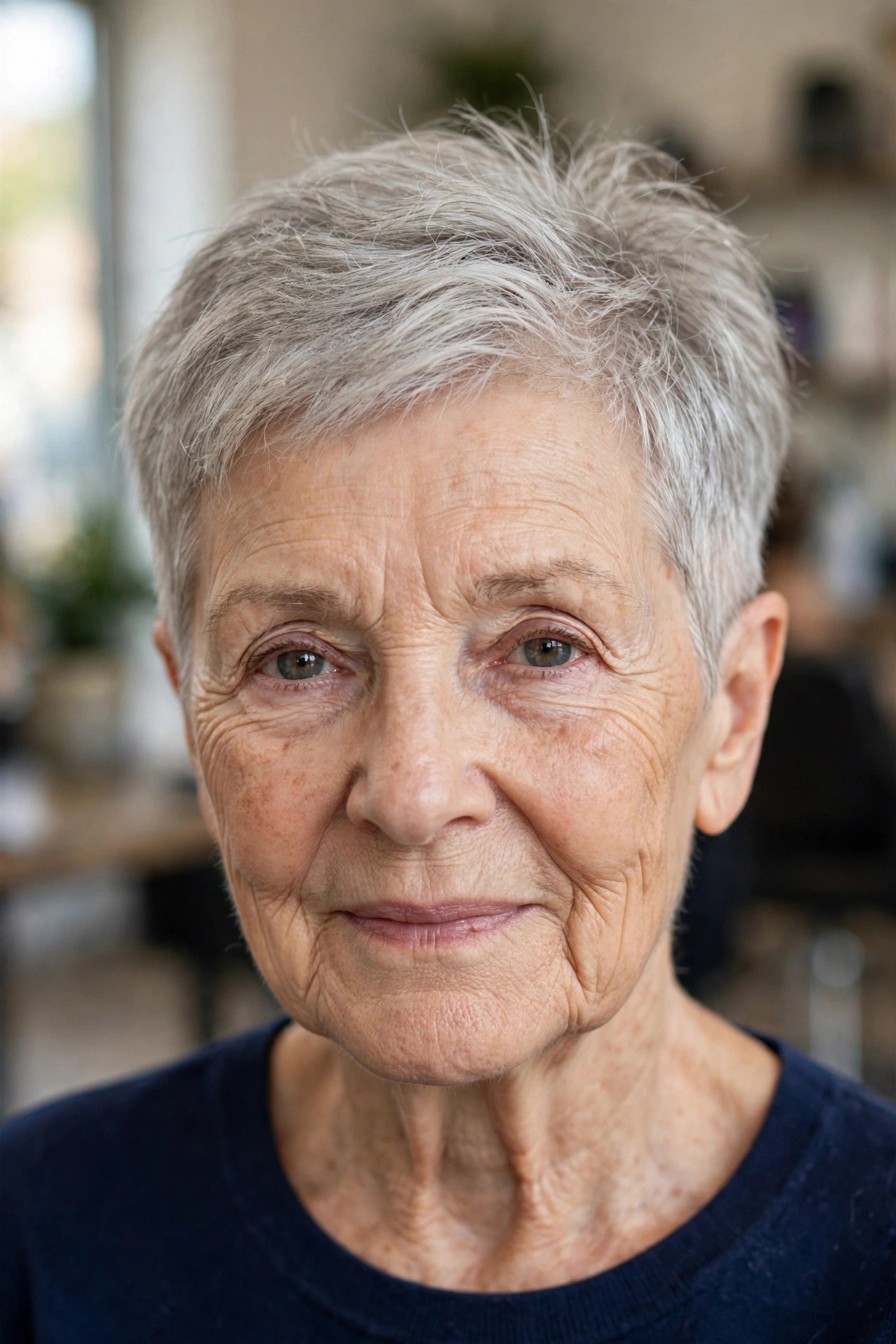
Start with the blueprint every other version builds on: sides and nape tapered close and clean, with a longer, lightly textured top you can lift, sweep or smooth. The taper is what makes fine hair look fuller — by removing the wispy, see-through bulk around the ears and neckline, all the visual weight moves upward, where the longer top reads as density. In natural silver, the effect is especially elegant, because the clean outline stops gray hair from ever looking untidy.
Ask for a scissor taper rather than a harsh clipper fade if you want it soft, and keep the top long enough to pinch between your fingers — that length is your styling playground. A pea-sized amount of volumizing mousse at the roots, dried upward with your fingers, is the whole morning routine. Our guide to pixie haircuts for thin, fine hair explains why this close-sides, fuller-top balance works so well.


2. Tapered Pixie with Long Side-Swept Bangs
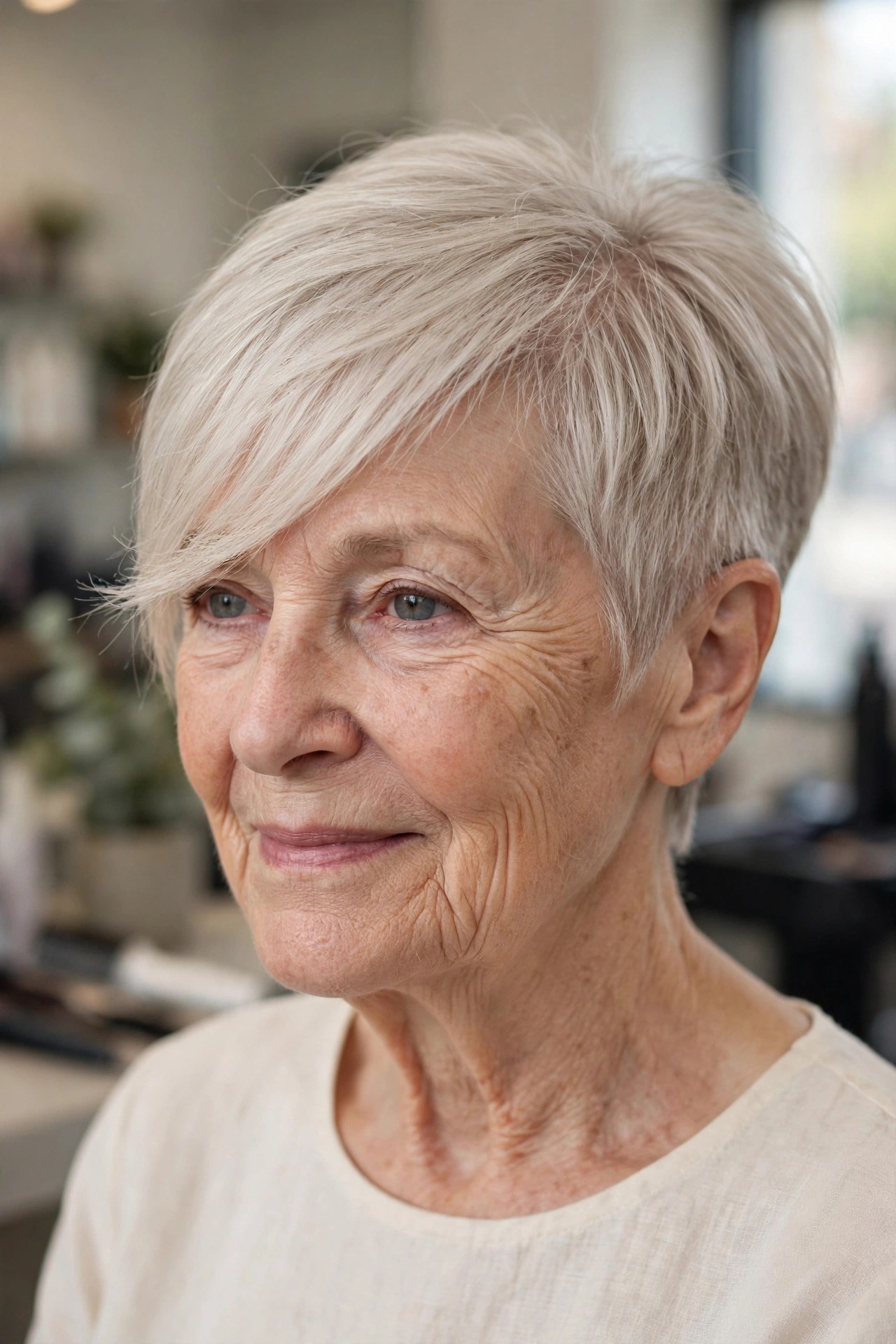
A long side-swept bang is the softest possible partner for a tapered pixie. The close sides keep the silhouette neat, while the diagonal sweep across the forehead adds front volume, softens expression lines and draws a flattering line toward the eyes. It also solves a very real fine-hair problem: a sparse or receding hairline at one temple is quietly covered by the sweep instead of exposed by it.
Dry the bang first, before it sets in the wrong direction, brushing it across with a small round brush for a hint of lift at the root. Keep the product feather-light — a heavy cream will separate fine bangs into strings. Because the fringe is long, you can also tuck it behind your ear on days you want a cleaner look.


3. Crown-Volume Tapered Pixie for a Flat Top
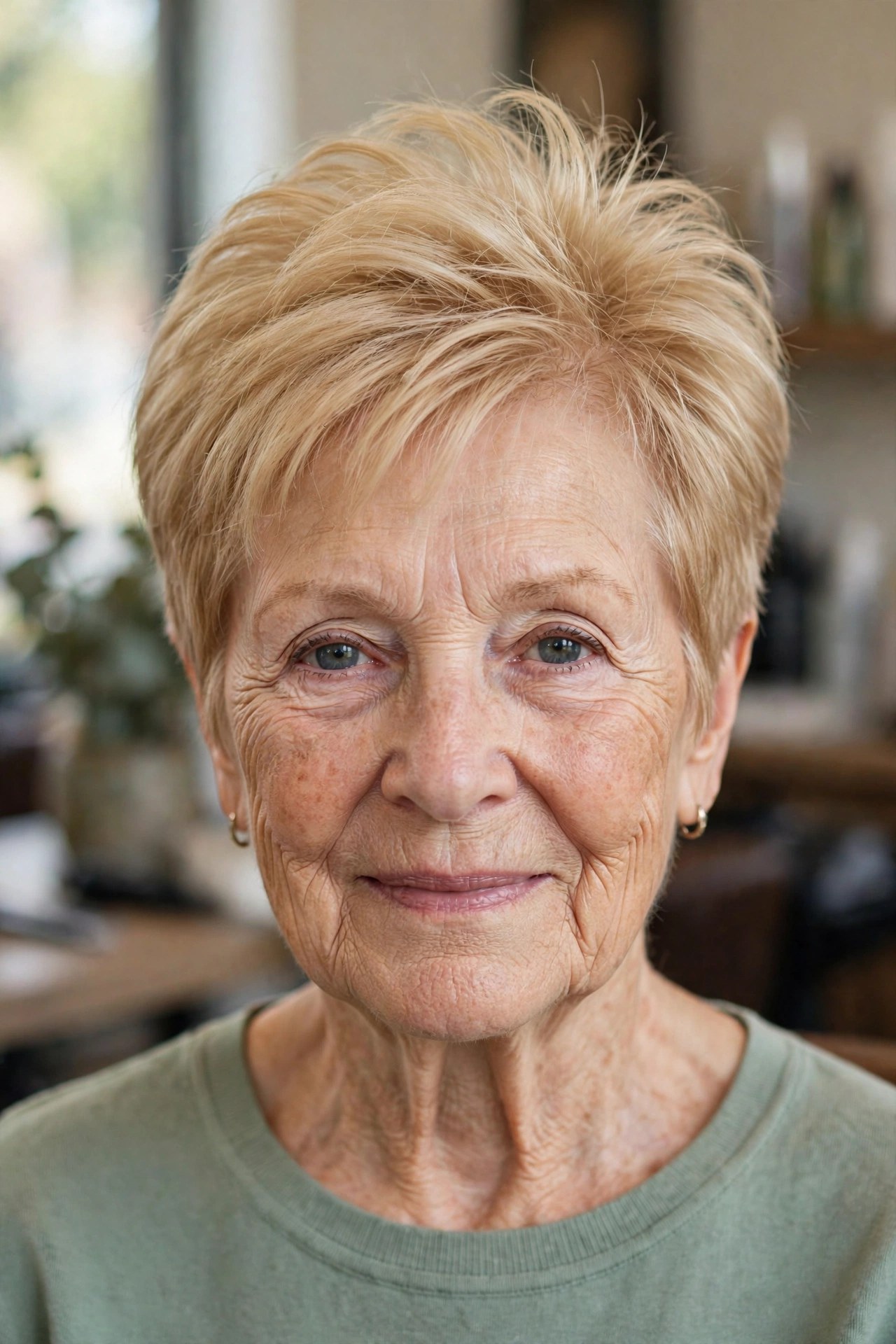
If your crown collapses by ten in the morning, this version is engineered for you. The taper keeps the sides tight so nothing competes, while the top is left longest exactly at the crown and cut with gentle internal layers that stack fine strands on top of each other for height. The eye reads that lifted silhouette as thicker hair all over — even though not a single extra strand exists.
The styling trick is direction: blow-dry the crown forward first, then back, so the roots stand up instead of lying in their usual flat pattern. A root-boosting hot brush makes this almost effortless. Finish by cooling each lifted section with a shot of cool air before you touch it — warm fine hair falls, cooled fine hair holds.


4. Choppy Tapered Pixie with Piecey Ends
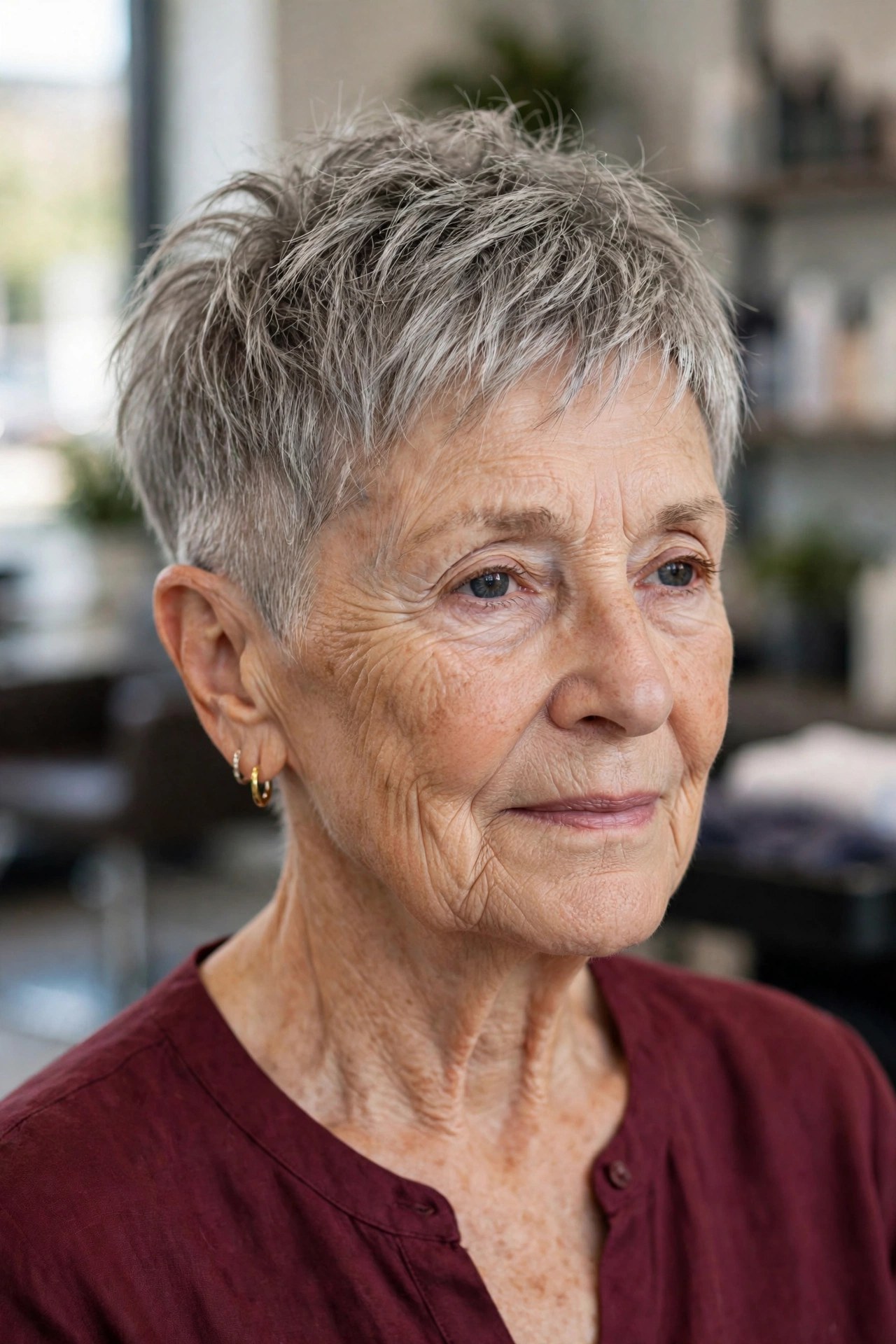
Choppiness is fine hair’s favorite disguise. Point-cut, separated pieces on top break up the surface so light catches a dozen tiny edges instead of one flat sheet — and flat is exactly what makes fine hair look thin. The tapered sides stay smooth and close, which makes the textured top look even fuller by contrast.
Ask your stylist for texture created with point cutting, never with thinning shears, which shred fine ends and make them look sparser. To style, warm a fingertip of texturizing putty between your hands and pinch it through the ends only, keeping the roots clean and lifted. This is the version that still looks intentional on a no-wash, no-fuss day.


5. Feathered Tapered Pixie Brushed Back
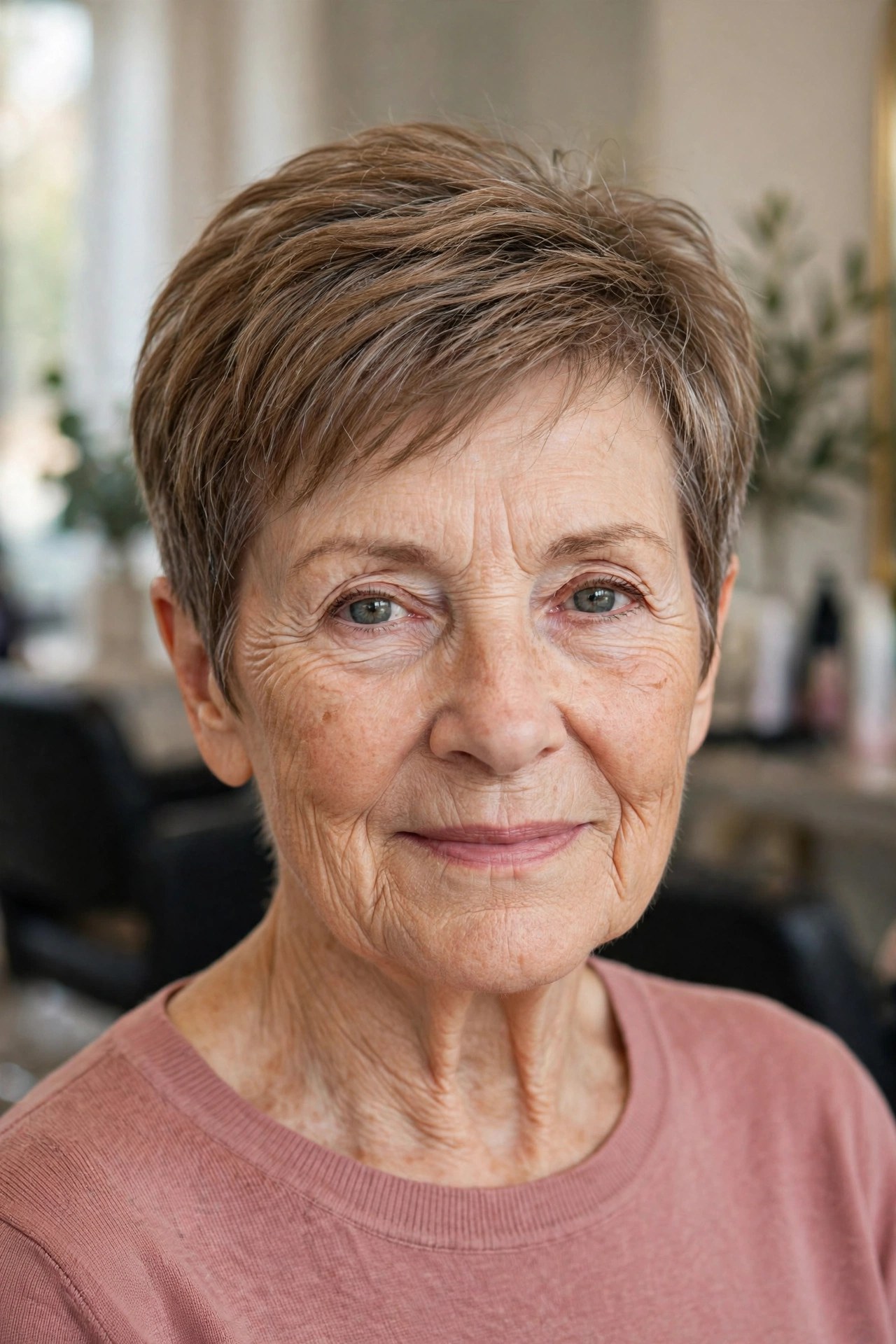
Feathering on a tapered pixie means soft layers brushed back and away from the face, flicking gently at the ends. It lifts the hair around the temples and cheekbones — the exact places where a little height makes a face look brighter — while the tapered nape keeps the back view neat and youthful. For fine hair, feathering adds movement without removing the fullness you need.
Keep the layers long and few; over-feathering fine hair turns wispy. Blow-dry sections back with a medium round brush, rolling away from the face, and let the ends flick naturally. A brushable, flexible spray holds the sweep without the stiff, lacquered finish that dates this style — the modern version moves when you do.

A longer top flatters some faces beautifully and overwhelms others — the difference is your face shape. Try our free Face Shape Finder to discover your shape in under a minute, then match it to the tapered ideas above with total confidence.
6. Tapered Pixie with a Wispy See-Through Fringe
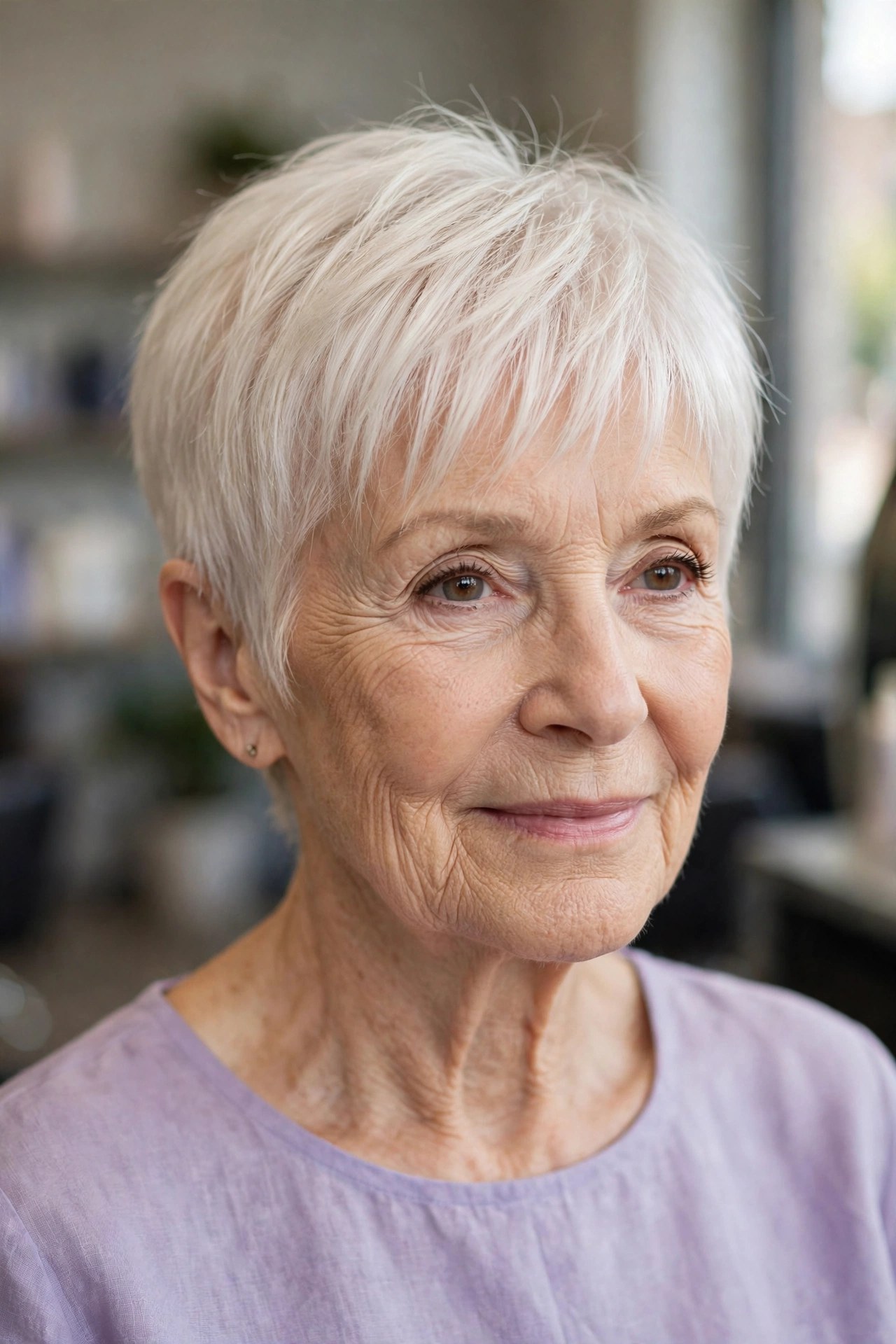
Not ready for a full fringe? The wispy, see-through version is the gentle introduction. Feather-light pieces skim the eyebrows and blend into the tapered sides, softening the forehead while your skin still shows through, so it never overwhelms mature features. On fine hair this matters doubly — a heavy blunt fringe would steal density from the top and expose the scalp at the part.
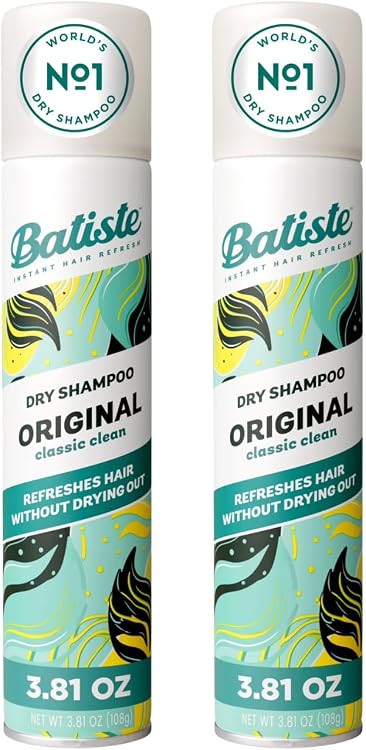
Wispy bangs are cut dry, a few strands at a time, so insist on that if your hairline is sparse. They take under a minute to dry with a small brush swept side to side. If your forehead gets shiny during the day, a quick press of dry shampoo at the fringe roots keeps the pieces separated and fresh.
7. Salt-and-Pepper Tapered Pixie
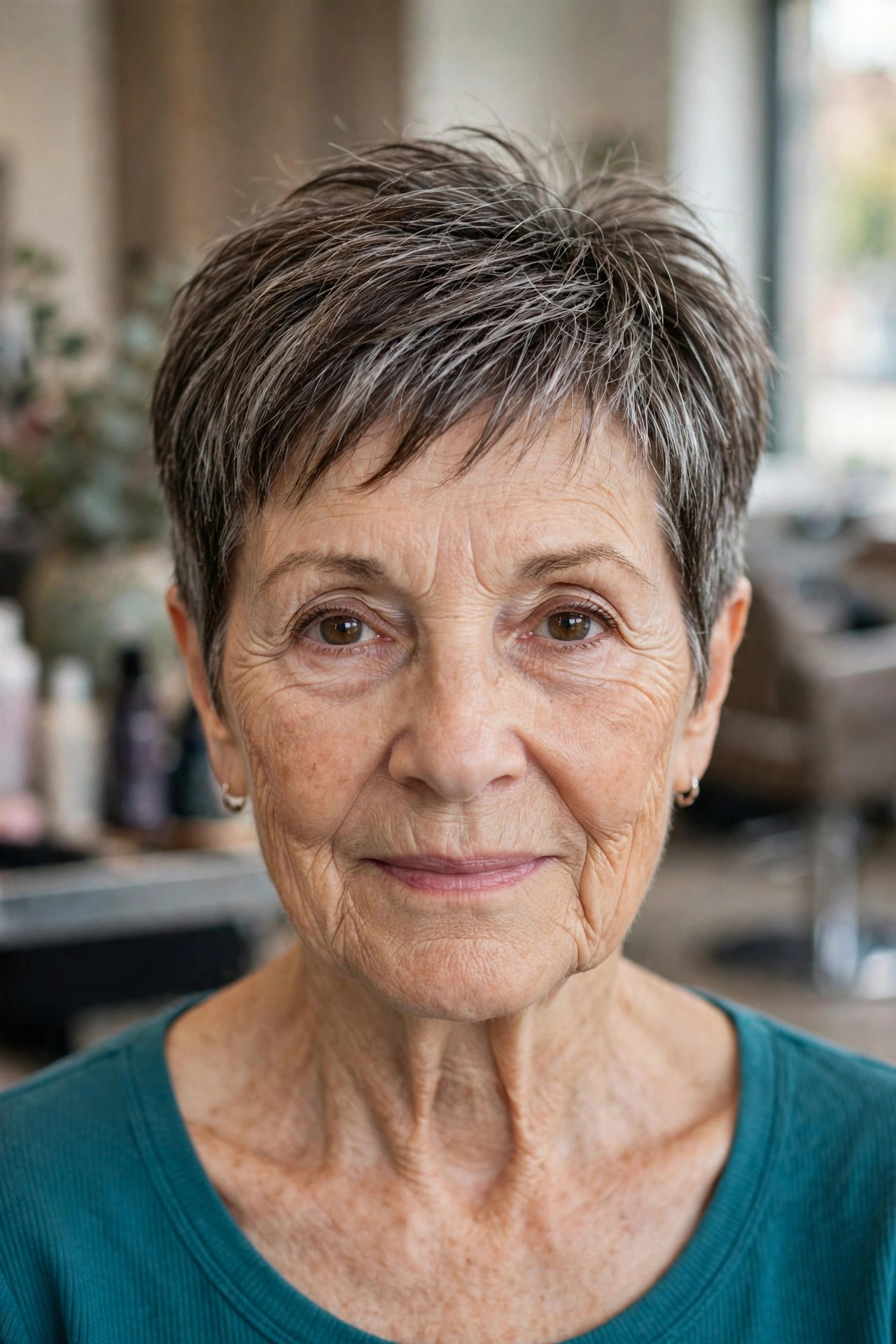
Salt-and-pepper hair has built-in dimension — dark strands give depth, silver strands give light — and a tapered pixie shows that mix off better than almost any cut. The close sides keep the contrast looking deliberate and polished, while the textured top lets the silver pieces sparkle on the surface where they catch the light.
The only real upkeep is tone and shape: a purple shampoo every second or third wash stops the silver from yellowing, which is what makes the mix look tired, and a trim every five weeks keeps the taper crisp. If you are still deciding whether to embrace the blend, our short hairstyles for fine, thin hair guide shows how well natural color works at short lengths.


8. Soft Spiky Tapered Pixie for Crown Lift
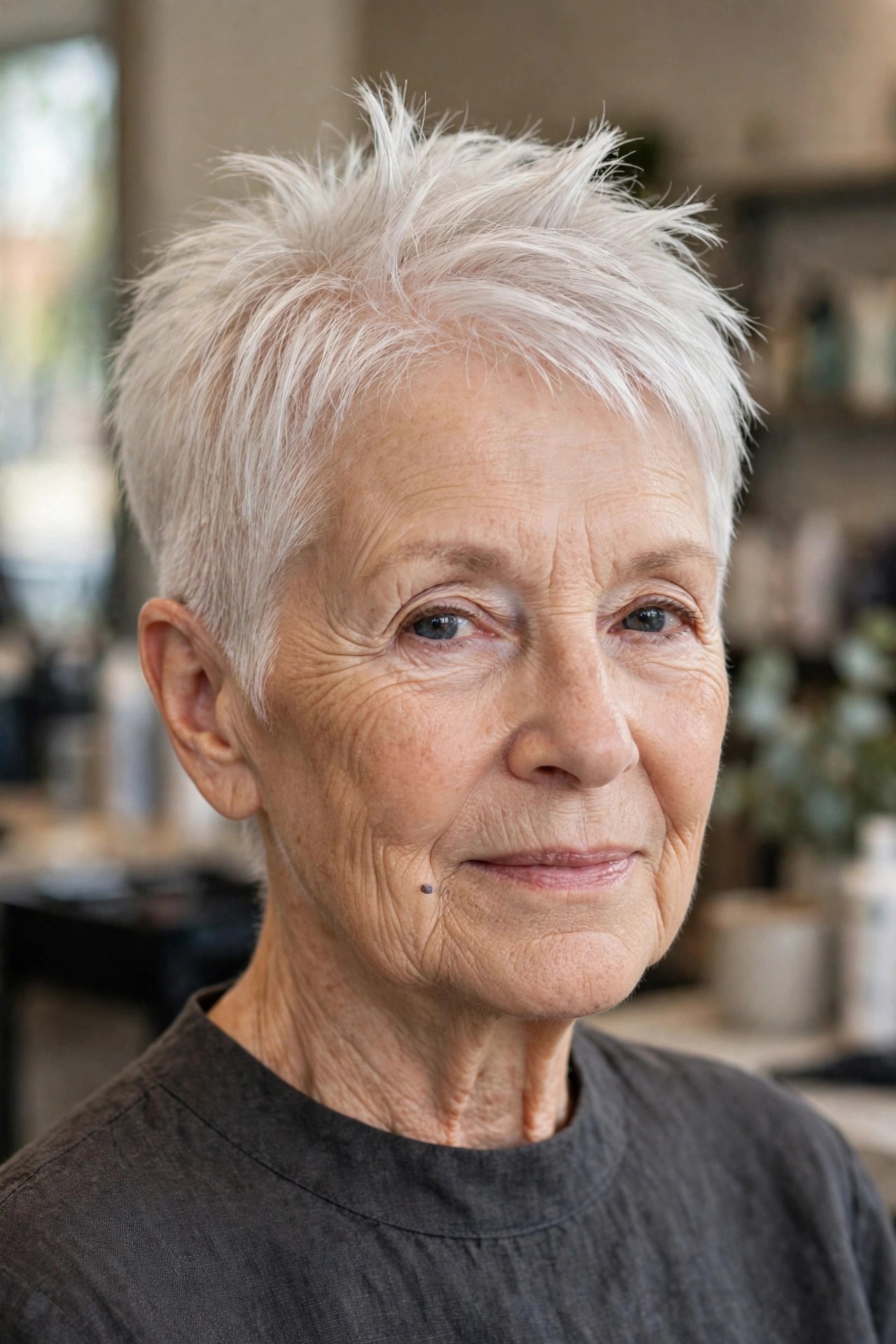
Lifting fine hair straight up is the fastest way to make it look abundant, and the soft spiky tapered pixie does exactly that. The top is textured and styled into gentle, separated points at the crown — never stiff or spiky in the punk sense — while the tapered sides hug close, so all the height reads as volume. It is a confident, playful shape that takes years off the overall silhouette.
Work a light mousse through damp hair, then pinch the crown upward with your fingers as it dries, or use a small brush and low heat. Keep the points irregular and soft; uniform spikes look severe. This cut is a gift for women whose hair grows flat against the scalp at the crown, because the texture gives it somewhere new to go.

9. Tapered Pixie Bob with a Longer Front
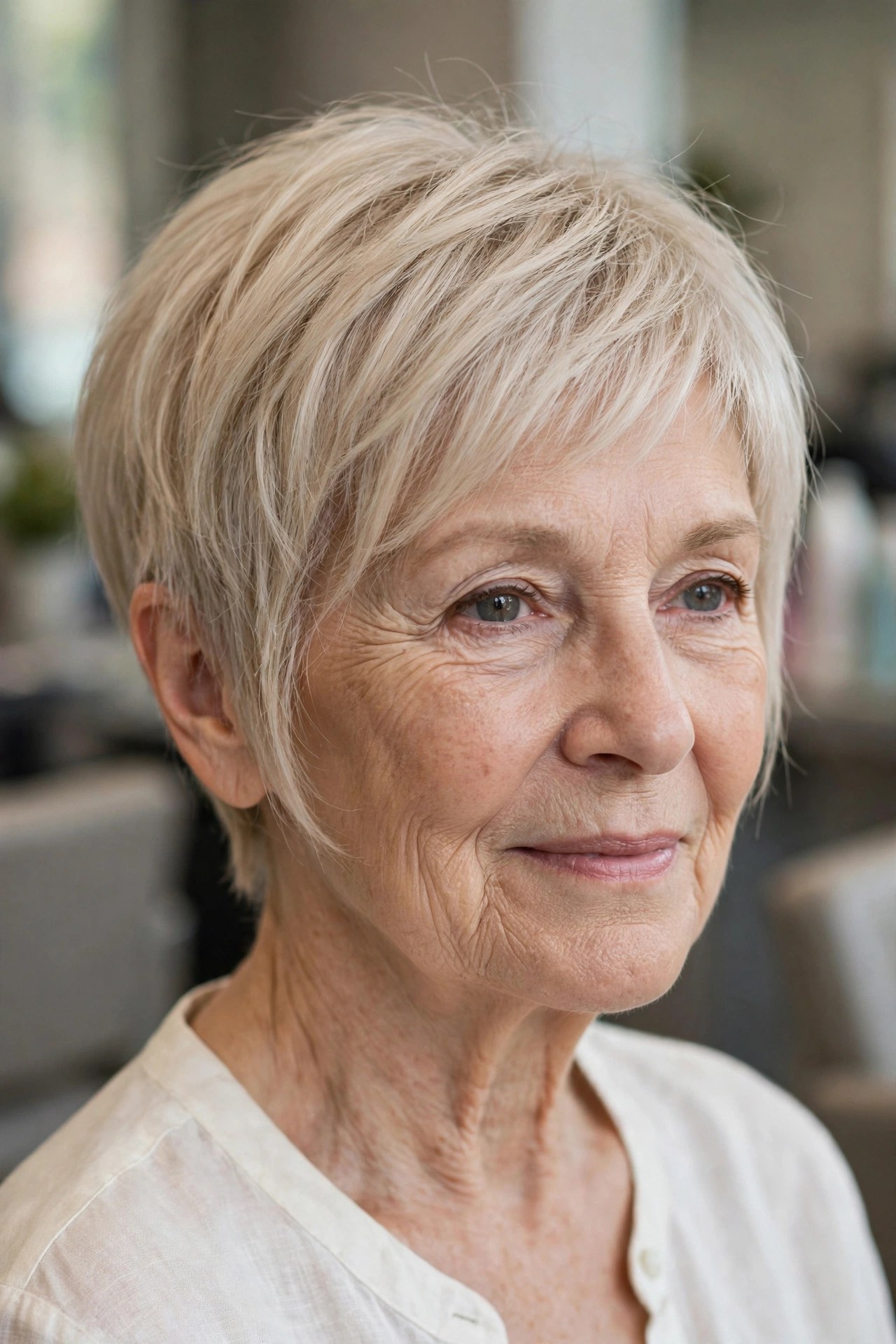
Can not quite commit to a full pixie? The tapered pixie bob keeps the nape and sides tapered short — so you get the neatness and the lift — but leaves the front longer, skimming the ears and softening around the jaw. That extra front length frames the face like a bob while the back stays airy and easy, a genuinely flattering compromise for fine hair.
Because the front is longer, it can be tucked behind the ears, swept forward, or smoothed down for different occasions. Ask for the taper to blend gradually into the front pieces so there is no shelf or step. A hot-air styler through the front sections gives that polished bob curve in about three minutes.

10. Brushed-Forward Tapered Pixie
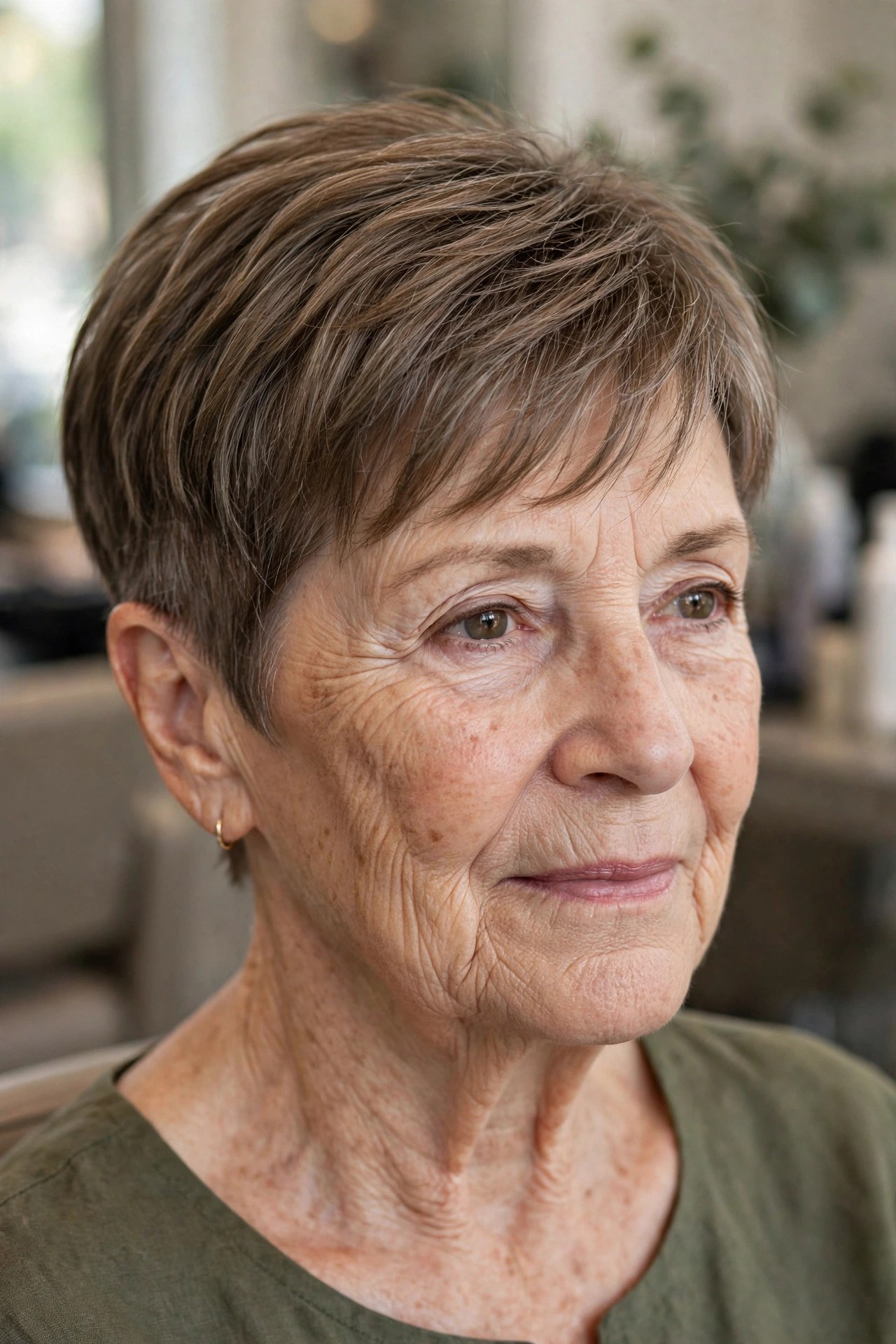
Brushing the top forward is a stylist’s quiet trick for fine hair: forward-swept layers overlap each other, so the crown and hairline both look fuller, and a thinning part line is disguised under the direction of the hair. With tapered sides keeping everything else close, the forward top creates a soft, face-framing cap of texture that suits almost every face shape.
This direction also helps if your crown has a strong growth pattern that splits open at the back — forward styling works with it instead of fighting it. Dry the top forward with a paddle brush in small sections, then soften the front edge with your fingers so it does not sit like a straight shelf. Minimal product is best; too much weight collapses the overlap.
11. Tapered Pixie with a Deep Side Part
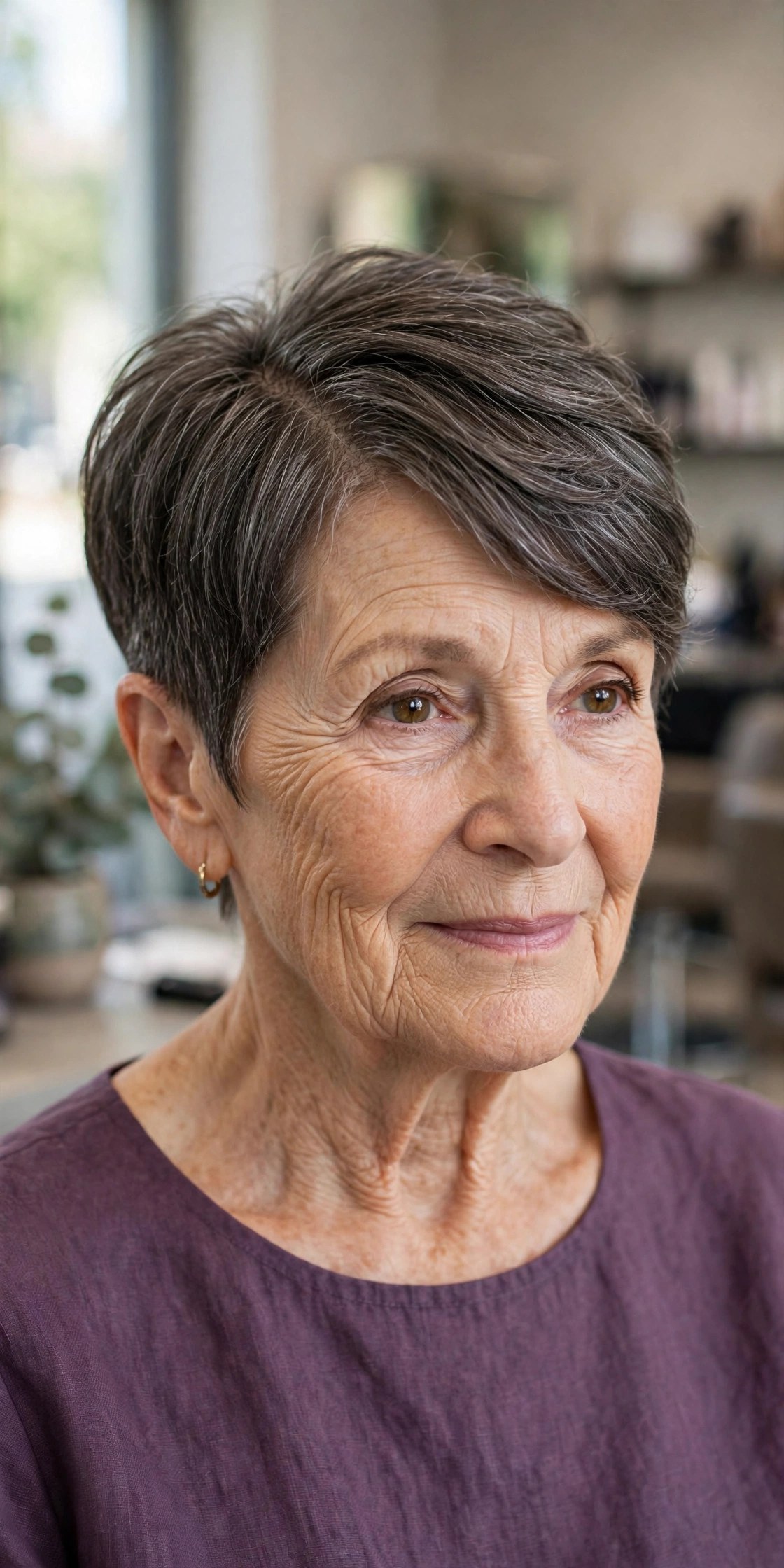
Moving your part dramatically to one side is free volume. The deep part piles the longer top over to one side, creating height and a sweeping diagonal that a center or natural part simply cannot match on fine hair — and it covers a widened part line completely. The tapered short side underneath stays sleek, so the fuller side looks fuller still by contrast.
Train it by drying the hair in the deep part while it is damp; after a week or two the roots learn the new direction. Flip the heavy side back and forth once while drying to build root lift, then let it settle. If you are wondering which side and shape suits you best, our ideas in pixie haircuts for thin, fine hair by face shape break it down by face type.
12. Sleek Polished Tapered Pixie
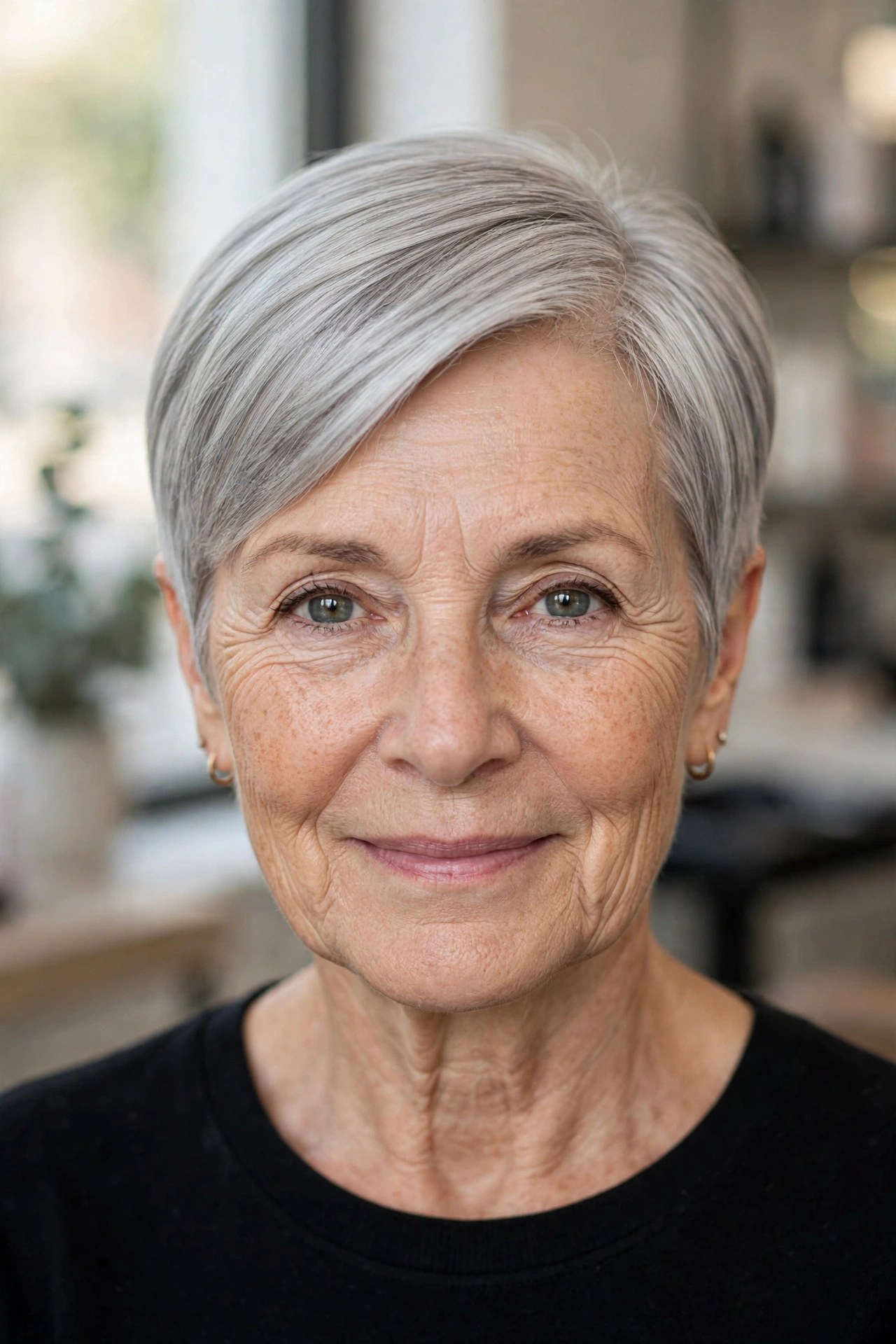
For women who prefer polish to fluff, the sleek tapered pixie smooths the longer top down into a glossy sweep while the sides and nape stay tapered and immaculate. Fine hair actually excels here: it lies flat without a fight, shines more easily than coarse hair, and the clean lines read expensive and intentional rather than thin.
Smooth a drop of lightweight shine serum through the top only — never the roots — and use a flat iron on a moderate setting just on the front sweep. Always use a heat protectant first; fine mature hair scorches quickly and does not bounce back. This is the version that pairs beautifully with statement earrings and a bold lip.


13. Wavy Textured Tapered Pixie
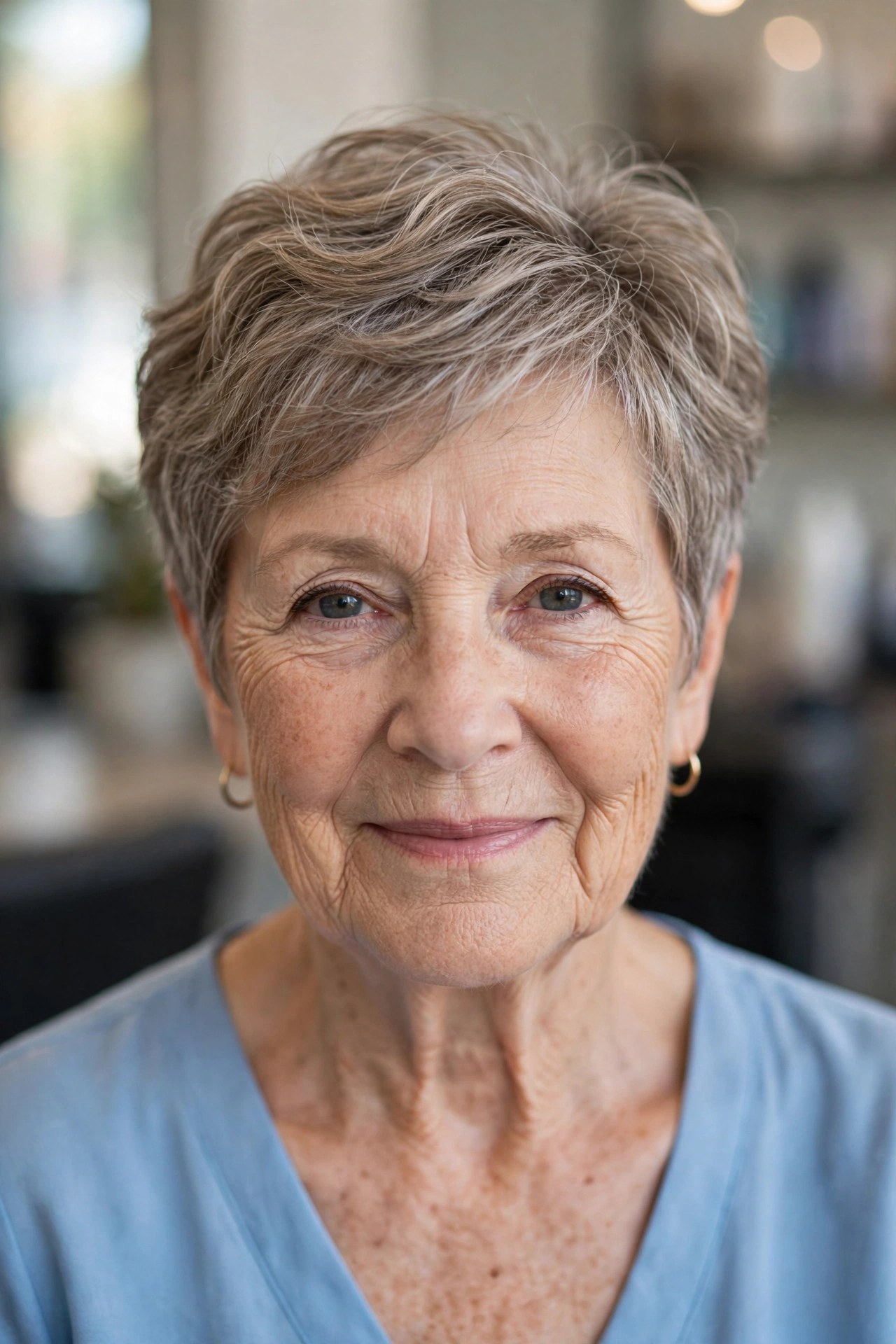
A natural wave is free texture, and the wavy tapered pixie spends it wisely. The sides are tapered close so the shape stays tidy, while the longer top keeps its gentle bends, which widen the silhouette and make fine hair look substantially thicker than it is. Fighting that wave straight every morning only thins the look further — this cut ends the fight.
Scrunch a light mousse or a mist of sea-salt spray into damp hair and air-dry or diffuse on the lowest setting, then leave it alone; touching wavy fine hair while it dries creates frizz. On day two, revive the waves with a spritz of water and a gentle scrunch rather than more product.
14. Tapered Pixie Cut Cleanly for Glasses
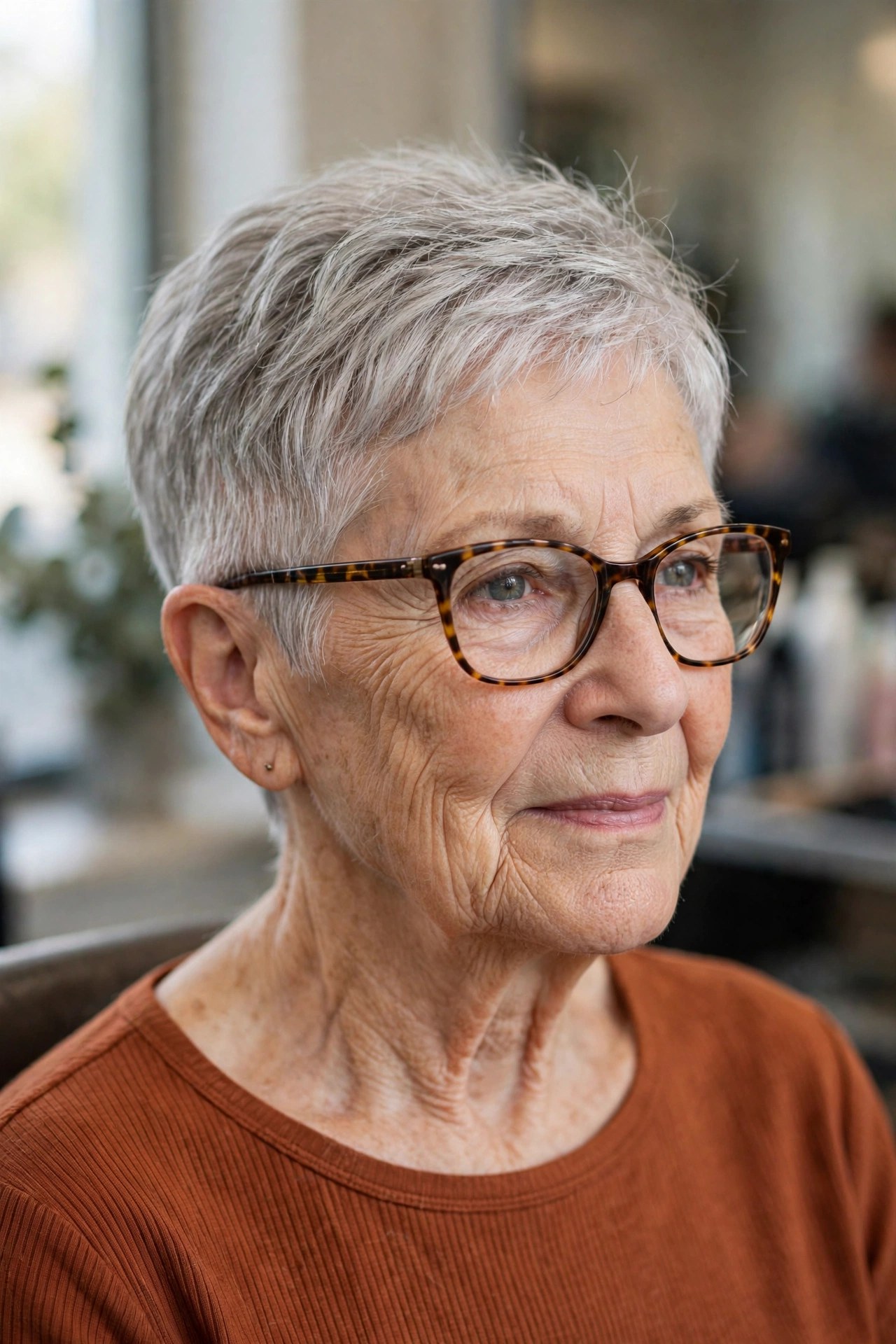
Daily glasses wearers need a cut that cooperates with frames, and the tapered pixie is the easiest partner of all: the sides are tapered to sit flat exactly where the arms of your glasses rest, so nothing poufs out over the hinges, and the longer top can be lifted or swept to balance bolder frames. Bring your glasses to the appointment and ask for the cut to be finished with them on.
Keep the hair above the ears slim rather than short-spiky, so frames sit comfortably all day. A deeper side part echoes the angles of rectangular frames especially well. This is also a hygienic, practical shape — nothing falls into your lenses, gets trapped in hinges, or steams up your view.

15. Asymmetrical Tapered Pixie
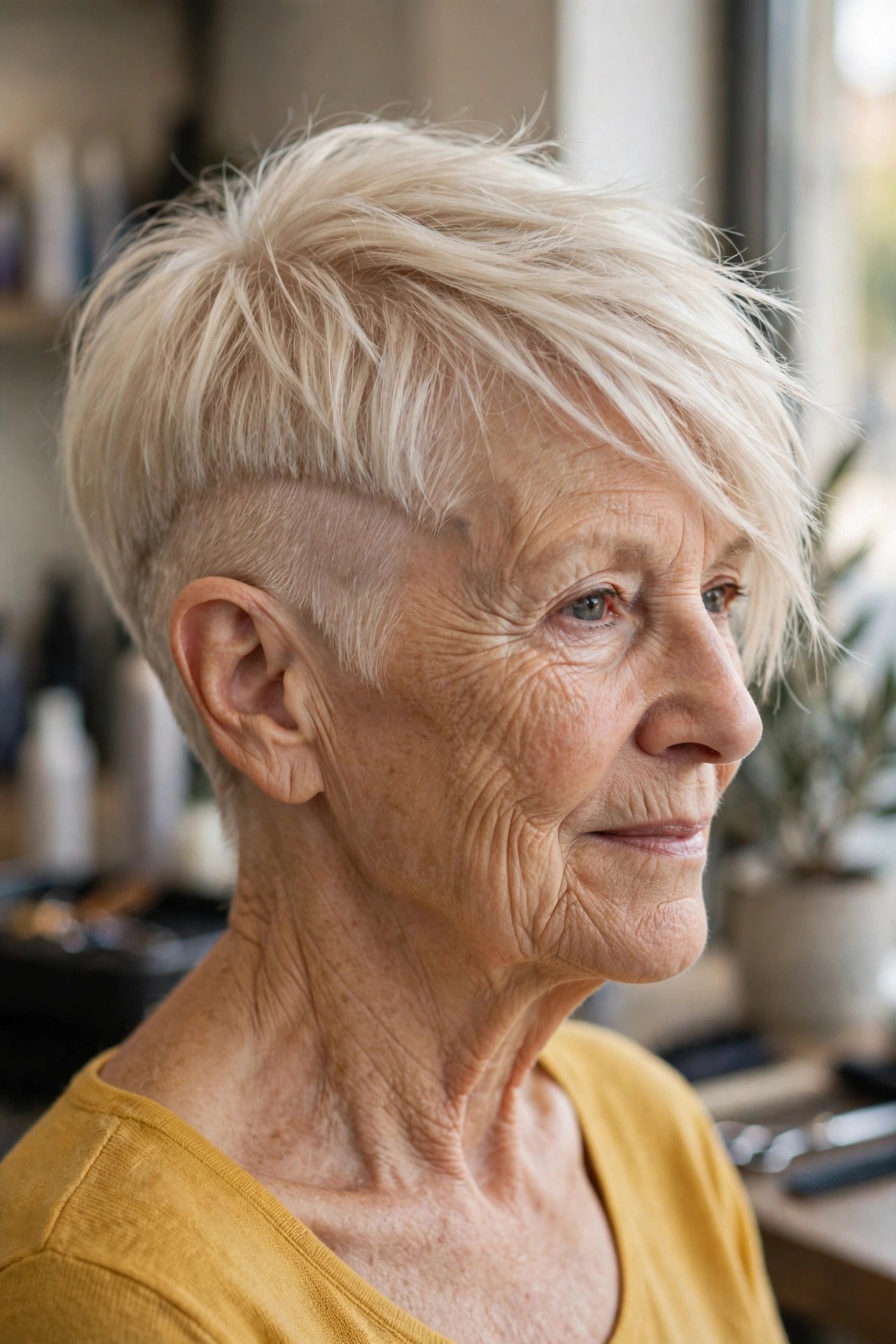
One side tapered extra close, the other left longer and sweeping — asymmetry gives fine hair a focal point, so the eye follows the dramatic diagonal instead of assessing density. It is the boldest option in this list, and it is surprisingly wearable after 60 because the longer side still frames the face softly while the short side keeps it sharp and modern.
Be honest about upkeep: the close side needs a tidy-up every four to five weeks to keep the contrast deliberate rather than grown-out. Style the long side with a light texturizer pinched through the ends, and let the short side be — it needs nothing. Statement earrings on the short side were made for this cut.
16. Tapered Pixie with a Short Wispy Micro Fringe
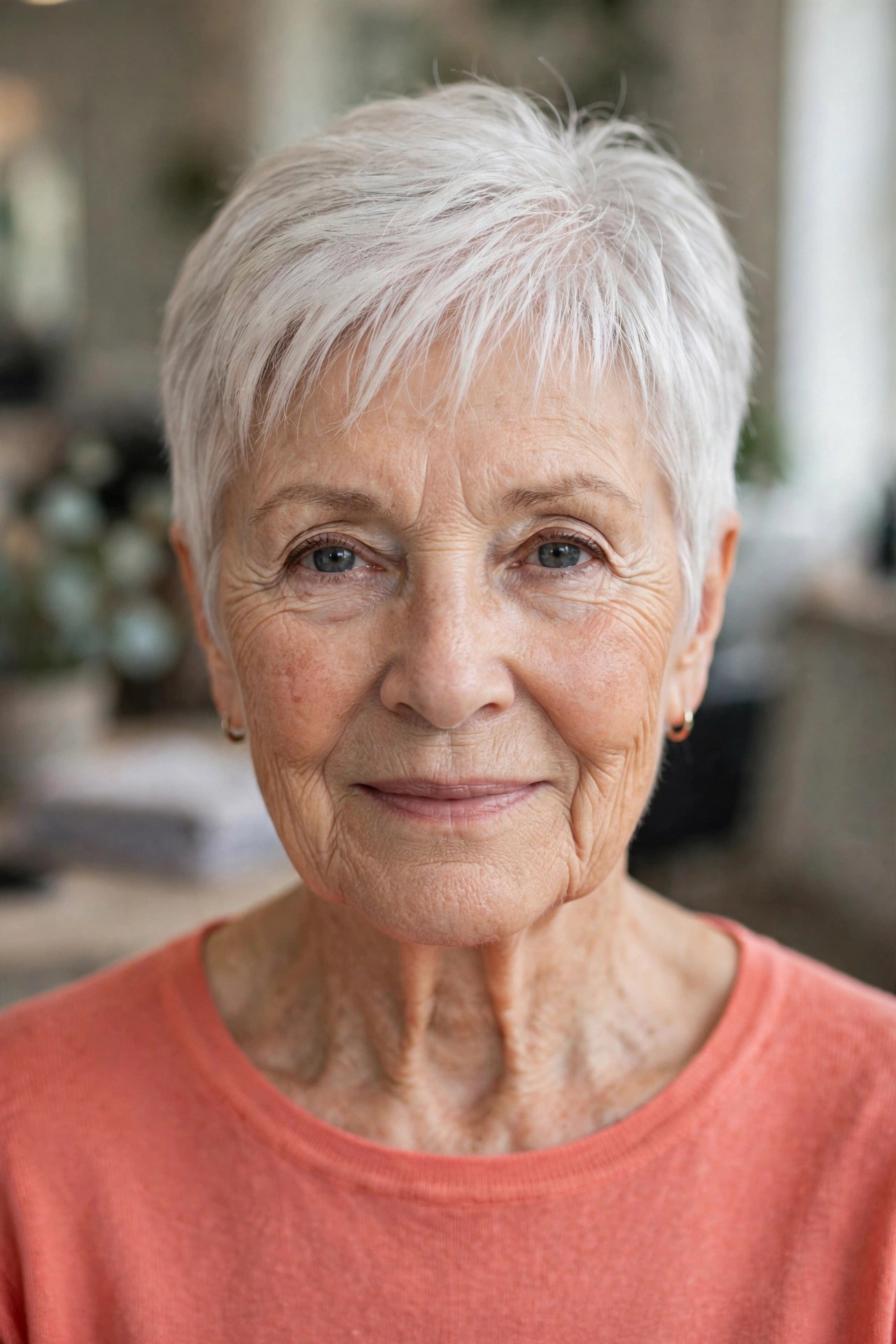
A short, feathered micro fringe sits above the eyebrows and opens up the whole face — eyes look brighter, and there is no heavy curtain of hair weighing down fine features. Paired with tapered sides and a textured top, it has a fresh, artistic energy that reads modern rather than severe, especially in white or silver.
The fringe must be point-cut and wispy, never blunt and solid, and it should be cut dry so the length lands exactly right on fine hair. It grows quickly, so plan a quick fringe trim between full appointments — many salons do them free or cheaply. Keep it piecey with the tiniest amount of product on your fingertips, or it can separate into gaps.
17. Honey Blonde Tapered Pixie with Lowlights
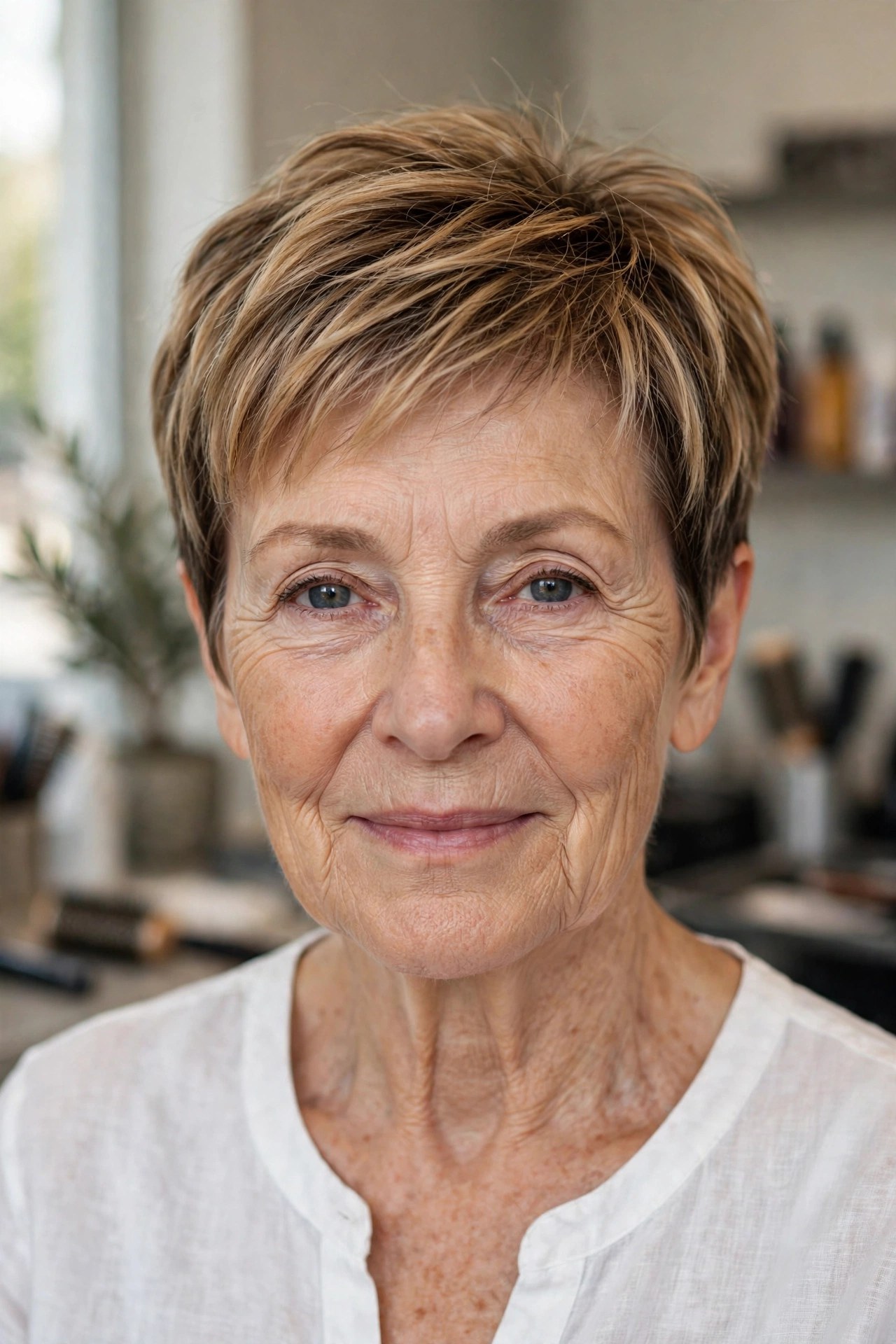
All-over pale blonde can make fine hair look even finer and wash out mature skin. Honey blonde threaded with slightly deeper lowlights does the opposite: the darker ribbons sit underneath and make the lighter top look thicker by contrast, while the warmth brings color back to the complexion. On a tapered pixie, the dimension follows the texture beautifully as the top moves.
Lowlights are also a gracious gray-blending strategy, softening the regrowth line so color appointments can stretch further apart. Keep the lightest pieces at the top and front, where they brighten the face. Protect the dimension with gentle, sulfate-free washing and do not over-wash — fine colored hair fades and flattens fastest when it is washed daily.
18. Snow-Silver Tapered Pixie
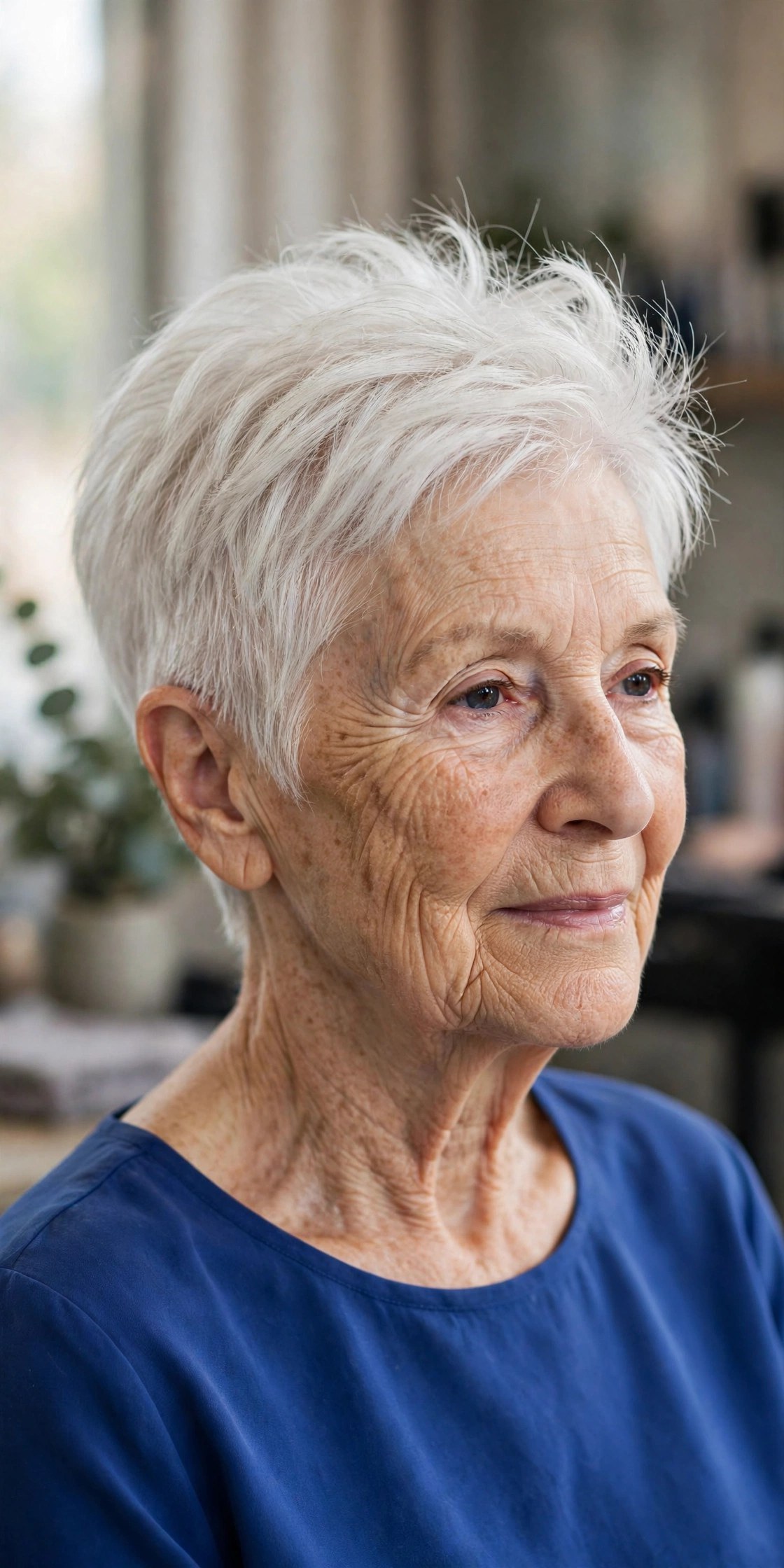
Pure snow-silver hair is a statement, and the tapered pixie is its cleanest canvas. The close sides remove any wiry, yellowed ends that dull white hair, while the longer textured top — lifted softly at the crown — shows off the bright, even tone. The result reads luminous and deliberate, the opposite of letting gray just happen.
White hair yellows from sun, minerals and heat, so a weekly purple shampoo and a clear gloss treatment are your maintenance duo. Keep hot tools on lower settings, since high heat can actually scorch white strands yellow. If you love this direction, our easy short pixie cut ideas include more silver-friendly shapes to compare.

19. Curly Tapered Pixie for Fine Curls
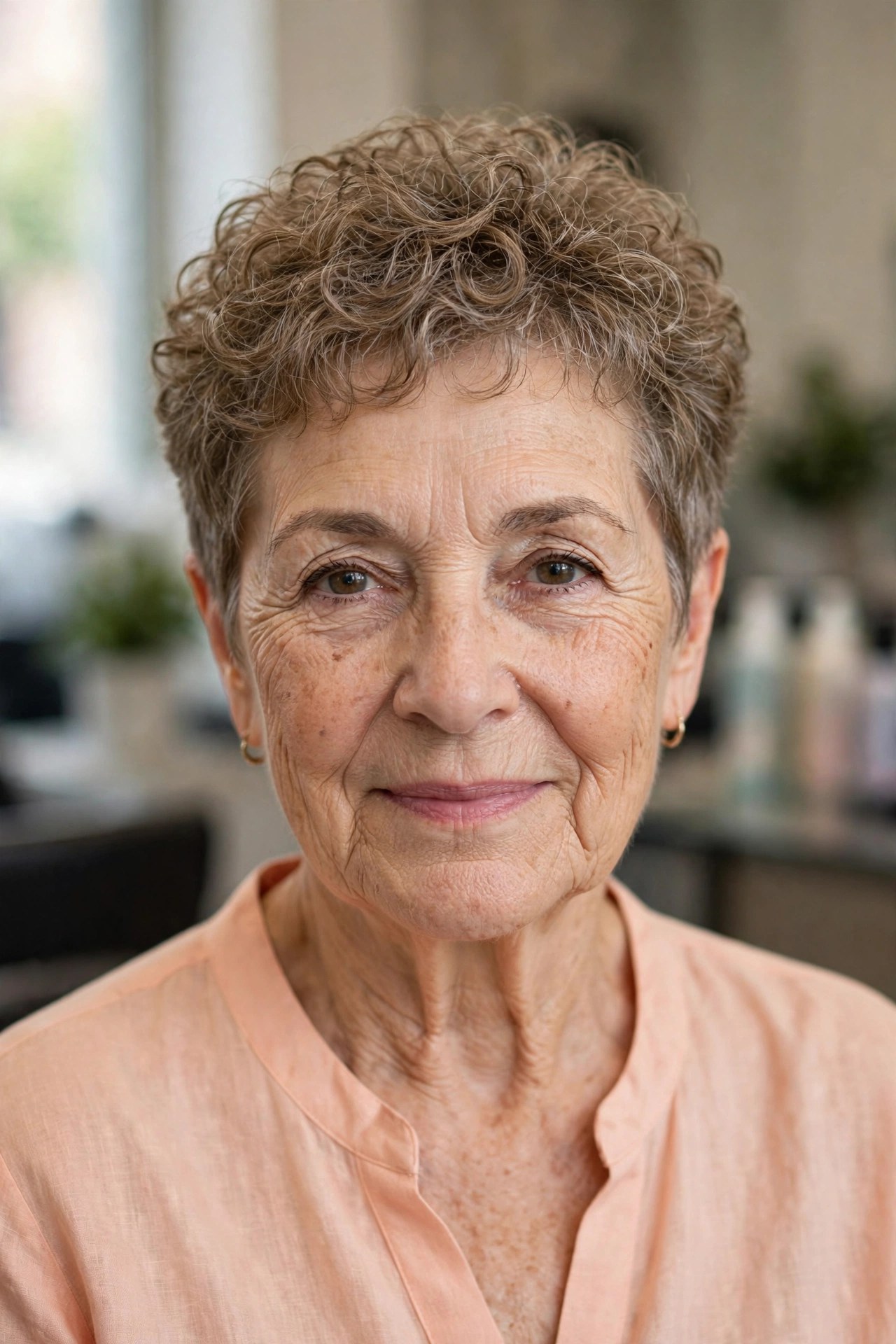
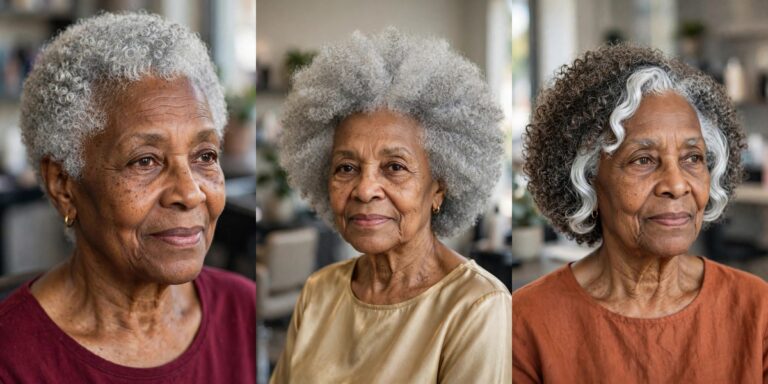
Fine curls need a completely different taper logic: the sides are tapered gently, never clipped too close, so the curl pattern is not shredded, while the top keeps enough length for the curls to form their natural spirals. Those stacked curls create width and bounce that make fine hair look gloriously full — texture does the volumizing work for you.
Insist on a dry, curl-by-curl cut; wet cutting fine curls almost always ends too short once the spring rebounds. Style with a light curl cream or mousse scrunched into soaking-wet hair, then hands completely off while it dries. Never let thinning shears near fine curls — they create frizz and destroy the very fullness you are growing.
20. Tousled Messy Tapered Pixie
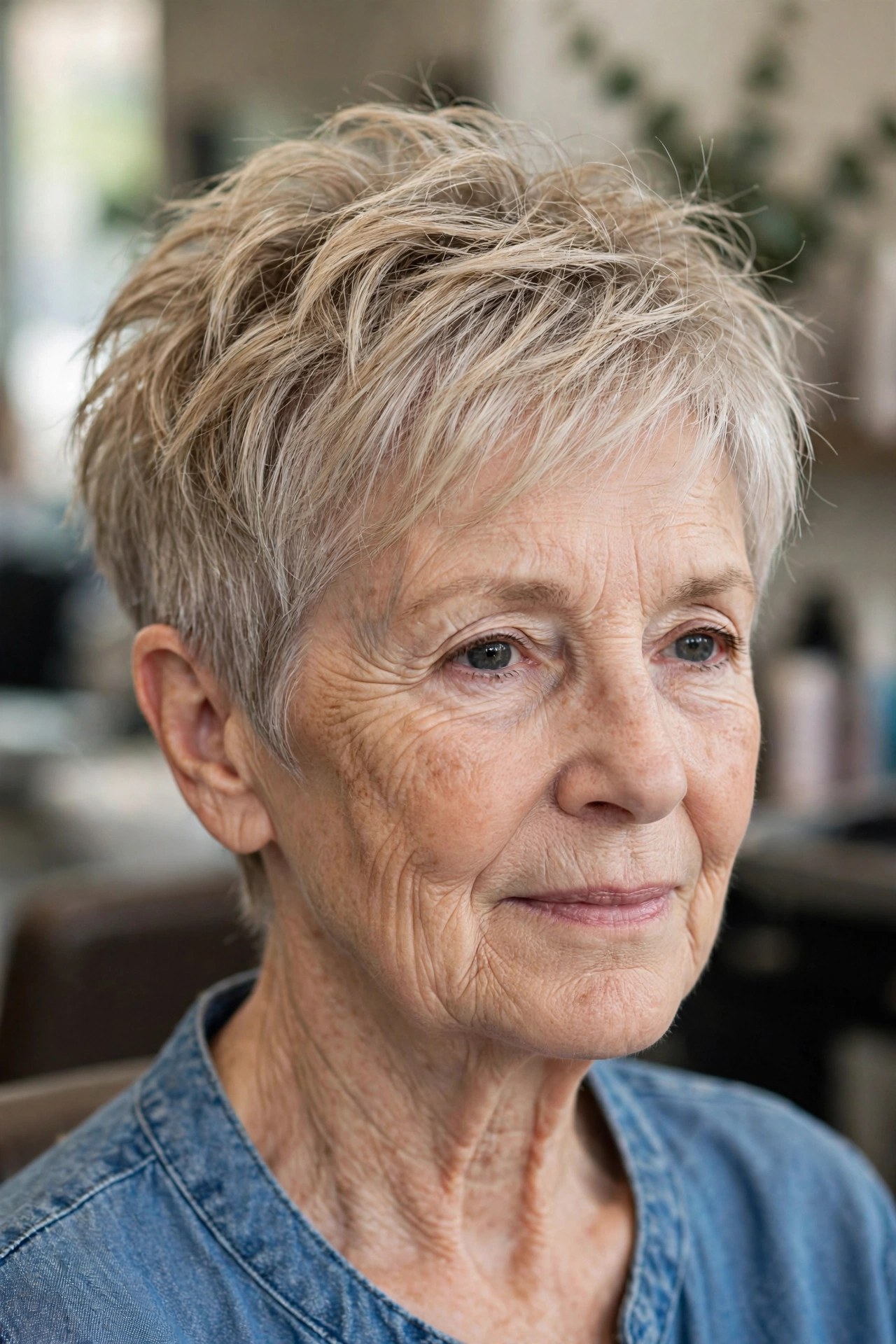
The tousled version proves a tapered pixie does not have to look done. The sides and nape stay tapered and tidy — that structure is what keeps messy from becoming scruffy — while the longer top is left piecey, rumpled and deliberately undone. For fine hair, that broken-up texture is flattering camouflage: no flat surface, no visible scalp lines, just movement.
This is a fingers-only style: work a little dry texture spray or a pinch of putty through dry hair, push the top around until it looks happily imperfect, and stop. It is the most forgiving cut in this entire list for busy mornings, travel, and hair that has never once behaved the same way two days in a row.
Recommended Products
These are the five products that earn their place with a tapered pixie on fine hair over 60 — all chosen to add lift, texture or brightness without any of the weight that collapses delicate strands.
Tapered Pixie Care Tips for Fine Hair Over 60
- ✅ Trim every 4–6 weeks. A taper loses its shape faster than any other cut — the close sides grow out first and the fullness illusion goes with them.
- ✅ Apply product to the top only. Mousse and texture belong where the length is; product on tapered sides just makes fine hair look greasy.
- ✅ Dry the roots in the opposite direction first, then flip into place — this is the single best lift trick for fine hair.
- ✅ Never let thinning shears touch fine hair. Ask for point cutting instead; shears shred the ends and make hair look sparser.
- ✅ Use dry shampoo before bed, not in the morning — it absorbs oil overnight and you wake up with root volume.
- ✅ Keep heat low and always use protection. Fine mature strands scorch faster and recover slower than they did at 40.
- ✅ Bring a photo to every appointment and say the words “tapered sides, longer textured top, no thinning shears” out loud.
Frequently Asked Questions
Why does a tapered pixie make fine hair look fuller?
Two reasons. First, tapering removes the wispy, see-through hair around the sides and neckline that visually signals thinness. Second, keeping the top longer concentrates your hair where it can be lifted and textured, and height and texture are what the eye reads as thickness. The contrast between close sides and a fuller top does most of the work before any product is involved.
How short are the sides in a tapered pixie?
That is entirely adjustable. A soft scissor taper leaves the sides short but still soft and feminine, roughly half an inch to an inch, while a closer taper takes them shorter for a sharper look. If it is your first pixie, start with the softer scissor taper — you can always go closer at the next appointment, but growing out takes longer than cutting.
How often does a tapered pixie need trimming?
Every four to six weeks. The tapered sides and nape grow out fastest, and once they lose their close shape the whole cut starts to look shaggy and the fuller-top effect fades. Many women book a quick, inexpensive nape-and-sides tidy at the three-week mark to stretch the full haircut to six or seven weeks.
Can I get a tapered pixie if my hair is thinning at the crown?
Yes — in many cases it is one of the best choices. The longer top can be styled forward or lifted to cover a thinning crown far better than longer hairstyles, which separate and expose the scalp. Ask your stylist to keep the crown layers a little longer and avoid any cutting technique that removes bulk from the top.
Will a tapered pixie work with glasses and hearing aids?
Very well. The tapered sides sit flat and close, so glasses arms rest comfortably without pushing hair outward, and there is no bulk around the ears to interfere with hearing aids. Take both to your appointment so your stylist can shape the sides around them precisely.
What styling products are best for a tapered pixie on fine hair?
Lightweight ones only: a volumizing mousse at the roots, a fingertip of texturizing putty through the top ends, and a flexible brushable hairspray if you need hold. Avoid heavy creams, waxes and oils on the top — they weigh fine strands down, separate them, and undo everything the taper was designed to achieve.
A tapered pixie is not a compromise for fine hair — it is the cut that finally works with it. Close, clean sides, a longer textured top, and two minutes of the right styling turn strands that used to lie flat and separate into a shape with lift, movement and presence. Pick the version above that solves your particular frustration, show your stylist the photo, and enjoy hair that looks fuller than it has in years.