Long Hairstyles for Women Over 60 Who Don’t Want to Go Short
This post contains affiliate links. As an Amazon associate, I earn from qualifying purchases. I only recommend products that are of high quality and that I would use myself.
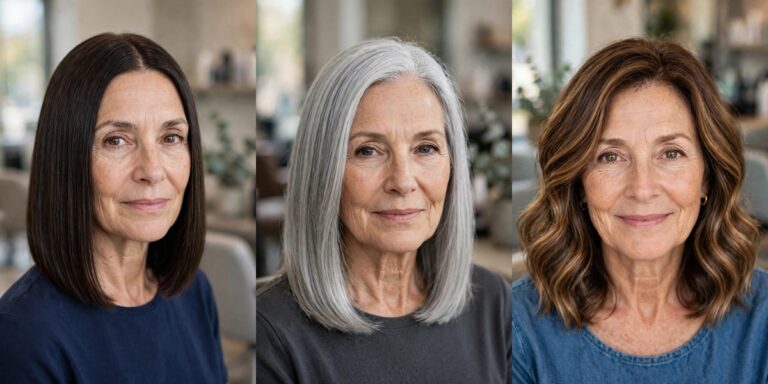
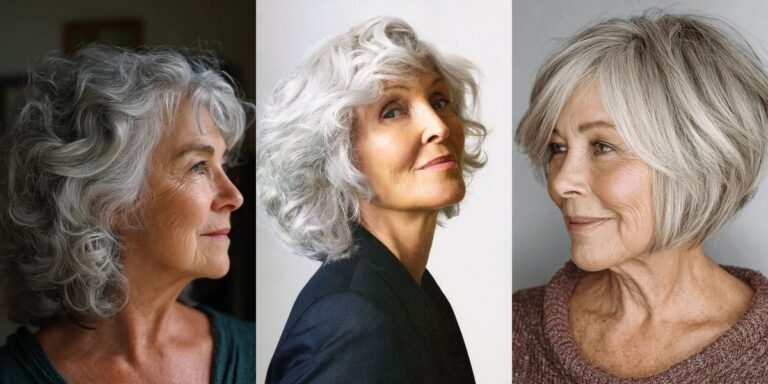
Somewhere around sixty, the advice arrives — from stylists, magazines, even well-meaning friends: it is time to cut it short. Here is the truth nobody puts on the magazine cover: there is no age rule for long hair. There is only a condition rule. Long hair looks aging when the ends are thin and split, when one flat length drags the face down, and when the color has gone dull. Fix those three things — a smarter cut shape, honest trims, and the right care — and long hair after 60 looks not just acceptable, but genuinely elegant.
This guide is for women who love their length and intend to keep it. Below are 20 long hairstyles that work at 60 and beyond — layered, waved, curled, braided and silver — each with what to ask your stylist for and how to maintain it at home. We will also be honest about the one situation where length stops working, at the end. If you are comparing across age groups, our companion roundup of long hairstyles that look elegant, not dated covers the same keep-your-length philosophy.
Table of Contents
- 1. Long Layers with Face-Framing Brightness
- 2. Soft Glamour Waves at Chest Length
- 3. Center-Part Long Silver, Sleek and Straight
- 4. Long Feathered Layers with Curtain Bangs
- 5. Voluminous Side-Part Blowout, Kept Long
- 6. Long Silver Curls, Defined and Joyful
- 7. Half-Up Waves That Show Off the Length
- 8. Polished Low Ponytail with a Long Tail
- 9. Loose Side Braid Over One Shoulder
- 10. Long Shag with Wispy Bangs
- 11. U-Shaped Long Cut with Blended Layers
- 12. Golden Balayage on Long Hair
- 13. Sleek Long Hair with a Glossy Finish
- 14. Deep Side-Part Waves in Silver White
- 15. Braided Crown Half-Up on Long Hair
- 16. Elegant Low Bun — the Long-Hair Occasion Style
- 17. Tousled Beach Waves, Grown-Up Edition
- 18. Long Layers with a Bright Money-Piece Frame
- 19. Long Straight Hair with Soft Wispy Bangs
- 20. The Silver Cascade — Long, Glossy and Unapologetic
- Recommended Products
- FAQs
- Ends look thin or stringy? The U-shaped cut (idea 11) and regular dusting trims — fullness at the ends is everything.
- Long hair dragging your face down? Face-framing layers (idea 1), curtain bangs (idea 4) or wispy bangs (idea 19).
- Naturally curly? Long defined silver curls (idea 6) — length helps curls hang beautifully.
- Gray or silver? The center-part sleek silver (idea 3), side-part silver waves (idea 14) or the silver cascade (idea 20).
- Need it off your face sometimes? Half-up waves (idea 7), the low ponytail (idea 8), side braid (idea 9) or low bun (idea 16).
- Color without the upkeep? Golden balayage (idea 12) or a money-piece frame (idea 18).
1. Long Layers with Face-Framing Brightness
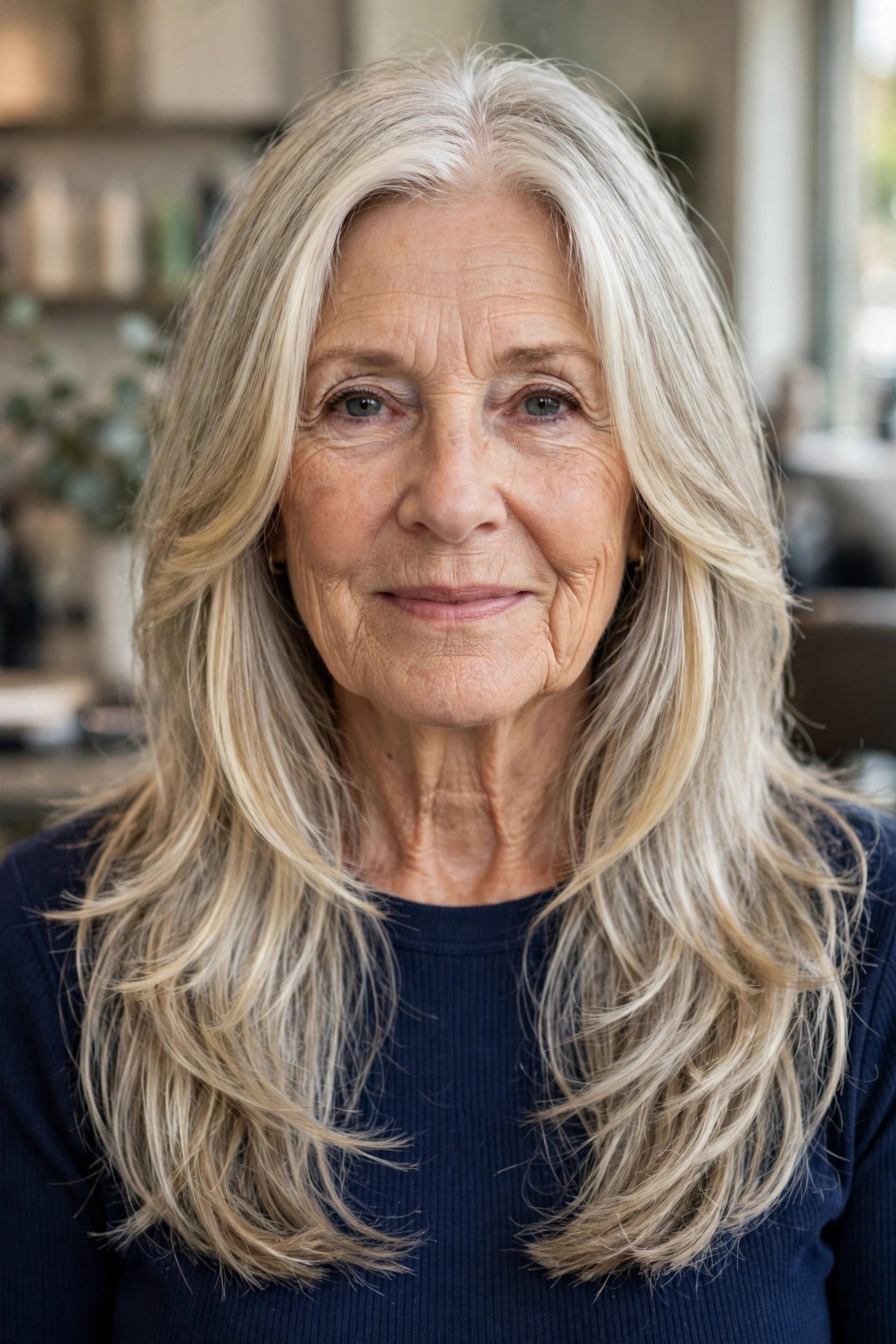
If you change only one thing about long hair after 60, make it this: layers that start around the cheekbones and bright pieces that sit right against the face. One-length long hair hangs in two straight curtains that pull the eye downward; face-framing layers break that drag, open up the cheek and jaw area, and put the lightest, freshest-looking hair exactly where people look first. It is the single most reliable way to keep length and lose the tired look.
Ask your stylist for long layers through the back but shorter, deliberate framing pieces at the front — and be specific that the ends stay full, not shredded. At home, a little volumizing mousse at the roots stops the framing pieces collapsing flat against the cheeks by midday. For more framing variations, our guide to long hair with face-framing layers shows the same principle at every length.


2. Soft Glamour Waves at Chest Length
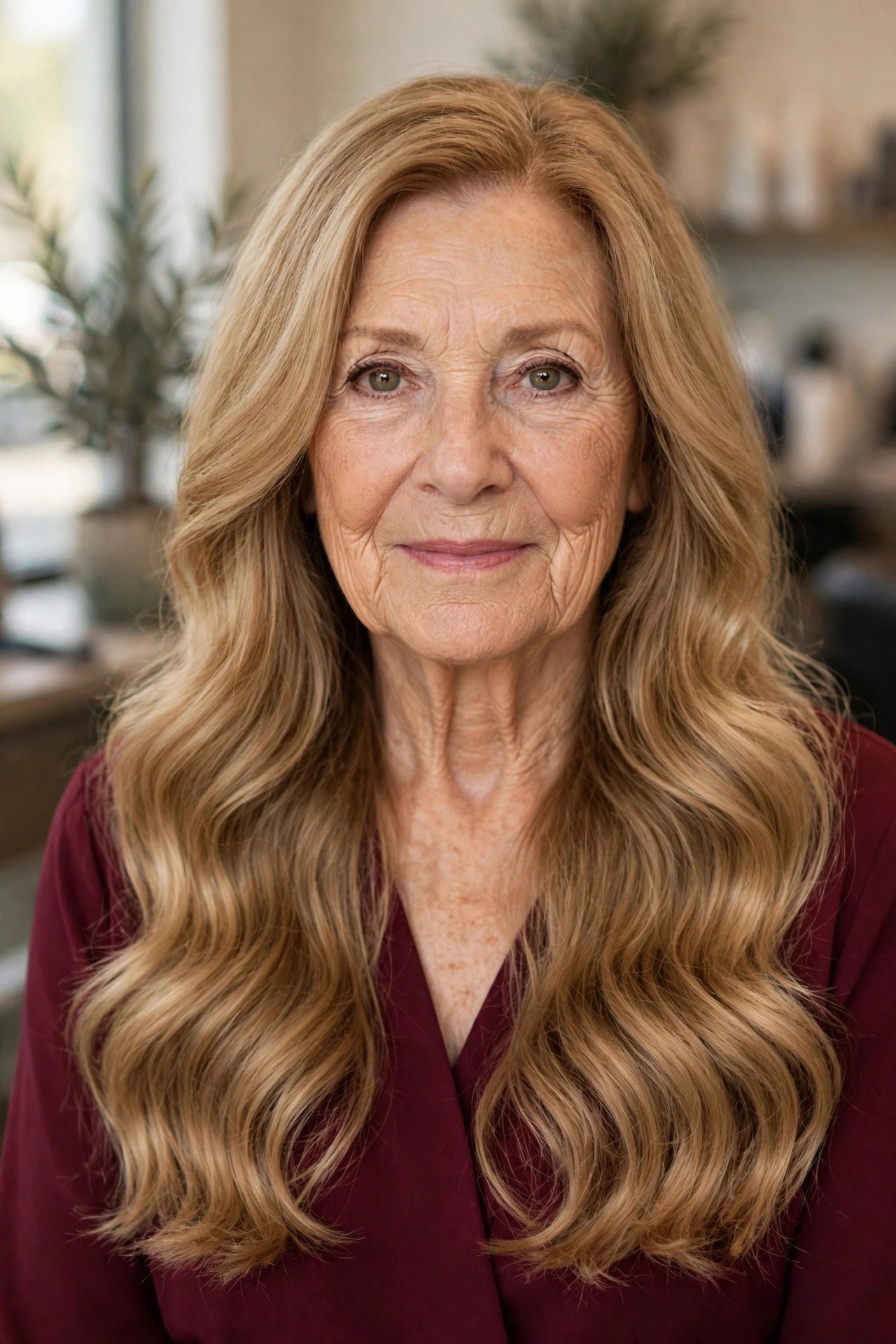
Loose, brushed-out waves are long hair’s best lighting. The bends catch light along their curves, so the hair looks thick and expensive even when it has thinned a little, and the movement keeps a longer length from reading severe. Worn at chest length with the waves starting around the ears, this is the red-carpet version of keeping your hair — polished, feminine, and nowhere near a compromise.
Create the waves with a hot-air styler or large-barrel iron, always over heat protection, then brush them through once so they merge into soft S-shapes instead of separate ringlets. A mist of brushable hairspray holds the sweep without freezing it. If the ends look dry by day two, a pea-size amount of shine serum pressed only into the last few inches restores the finish without flattening the waves.

3. Center-Part Long Silver, Sleek and Straight
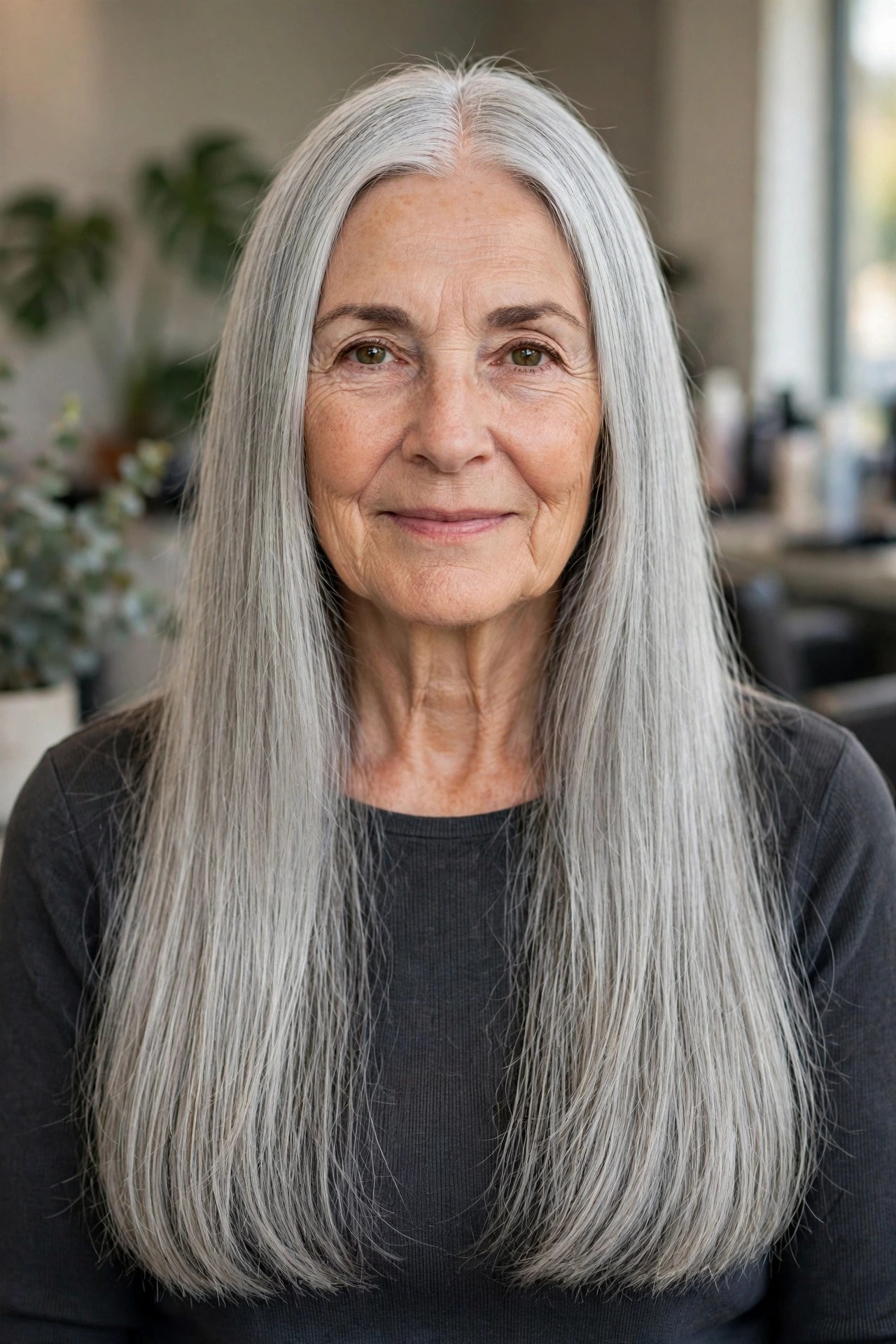
Worn sleek and straight with a center part, long silver stops looking like hair you forgot to cut and starts looking like a decision. The symmetry is what does it: identical panels of bright silver on both sides read intentional and modern, and a straight finish shows off silver’s natural shine better than any other texture. This style asks for healthy ends — which is precisely why it looks so striking when they are.
The non-negotiables are a blunt-ish bottom line trimmed every eight weeks and real anti-brass care: a purple shampoo once a week keeps the silver icy instead of creamy-yellow, and an occasional in-shower gloss restores the glassy surface. Silver this exposed also shows heat damage fast, so keep irons on moderate settings and never skip protection.


4. Long Feathered Layers with Curtain Bangs
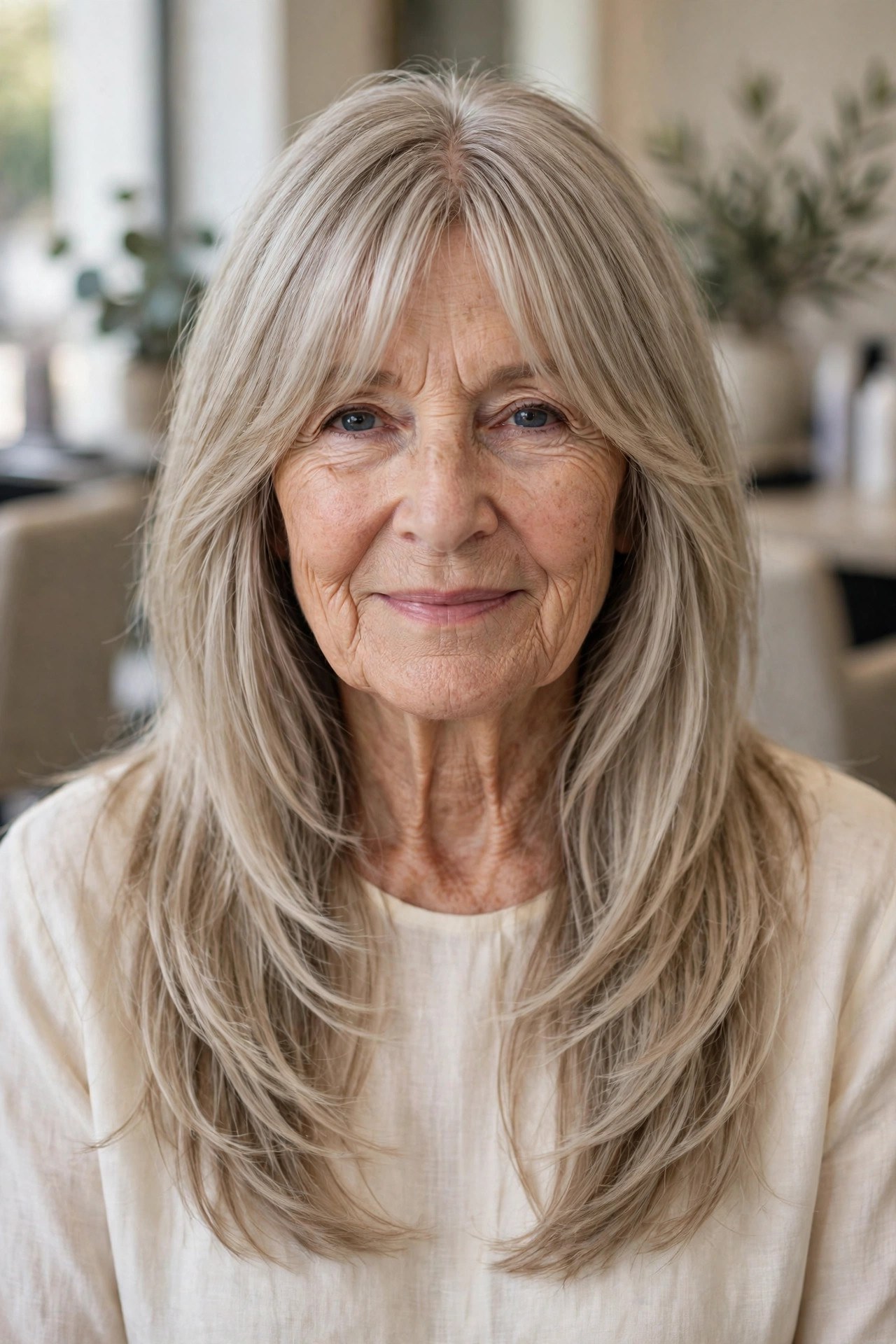
Feathering sweeps the front layers back and away from the face in soft overlapping strokes, and curtain bangs complete the effect by splitting gently at the center and melting into those layers. Together they give long hair lift at the front — where flatness ages us most — while the back keeps its full, flowing length. It is a forgiving shape for a higher forehead and for hair that wants to lie flat.
Dry the fringe and front sections first, brushing them forward then sweeping each side back with a round brush; the rest can mostly air-dry. Feathered layers forgive an extra week between appointments better than almost any cut here, but keep the ends dusted — feathering turns wispy the moment the tips split.


5. Voluminous Side-Part Blowout, Kept Long
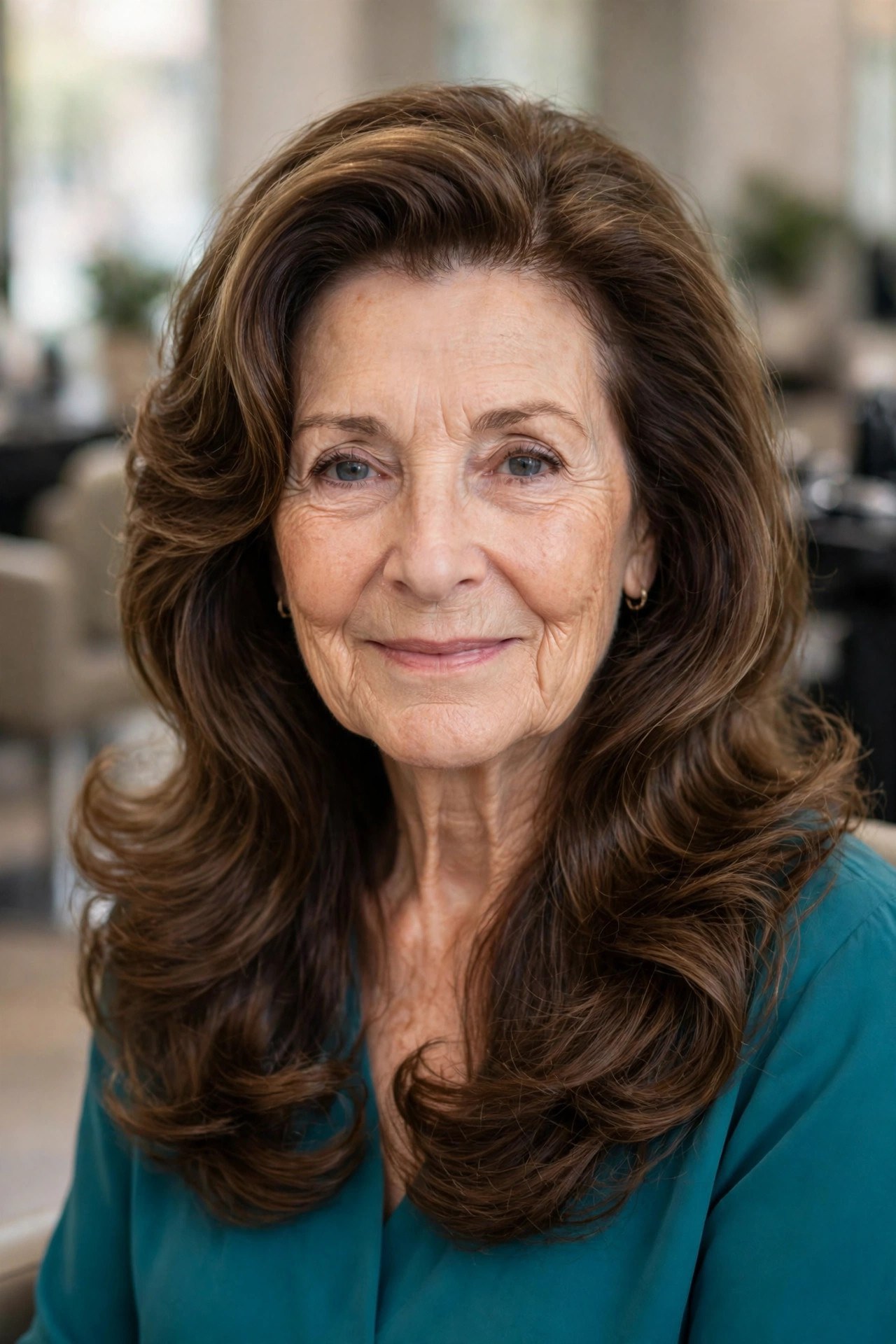
A deep side part plus a bouncy blowout is the fastest transformation long hair can have without losing an inch. The part creates height and a flattering diagonal across the face, and blowout volume through the mid-lengths makes the hair look twice as thick as a straight hang does. This is the style to book before photographs, reunions, and any day you want your length to look deliberate.
Work a root-lifting styler or mousse through damp hair, then dry in sections lifting at the roots and rolling the ends. Set the part while the hair is warm — mature hair keeps the shape it cools in. Between blowouts, dry shampoo at the part line revives the lift for a second day without another wash.

6. Long Silver Curls, Defined and Joyful
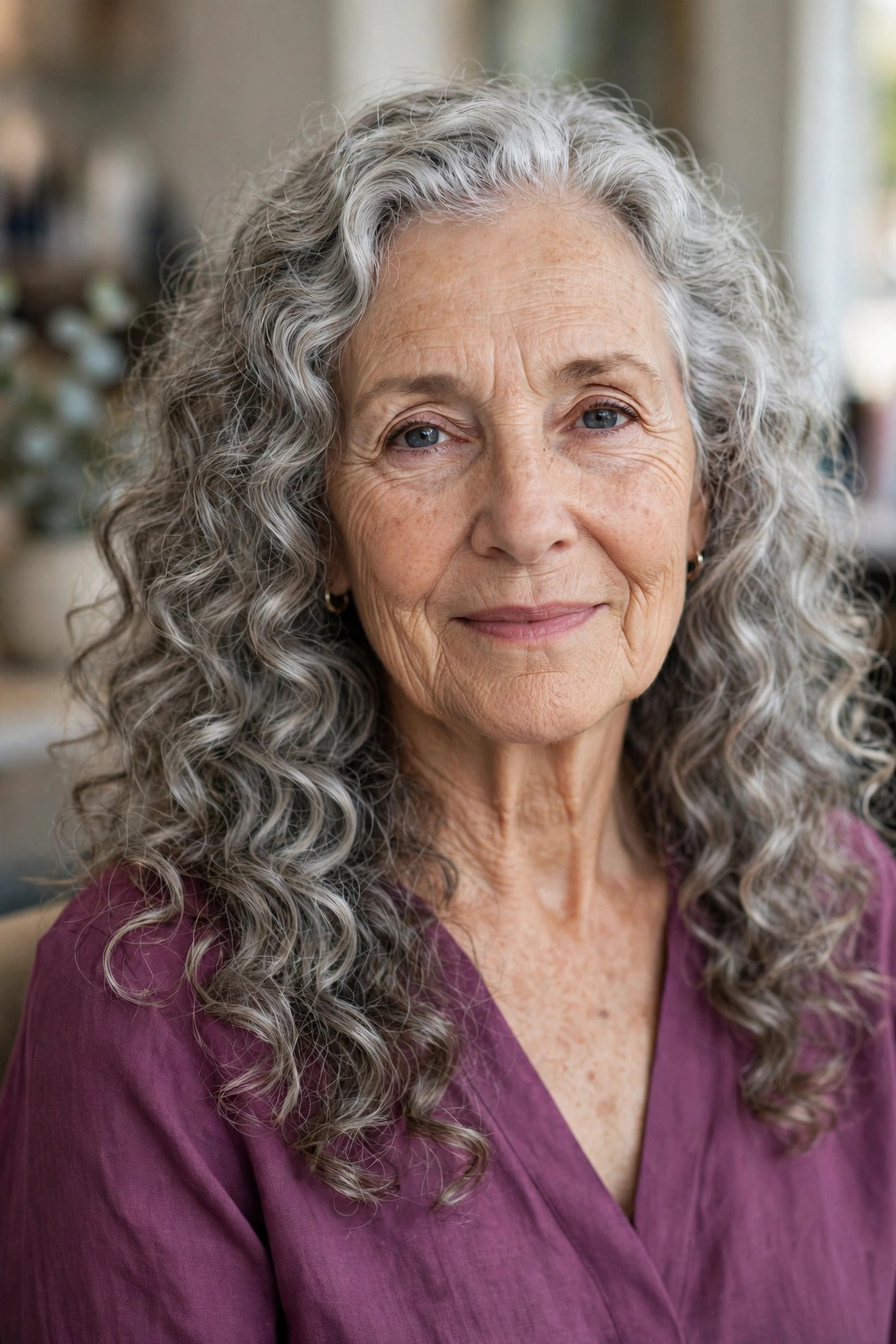
If your hair curls, length is your friend: curls need weight to hang in beautiful elongated spirals instead of puffing out at the sides. Long silver curls, kept moisturized and defined, are joyful in a way no short cut can imitate — the silver runs through every coil like ribbon. The whole secret is moisture and definition, because dry silver curls scatter light and read frizzy even when they are healthy.
Have curls cut dry, in their natural state, and style on soaking-wet hair with a leave-in and curl cream, then hands off until fully dry. Sleeping on satin is a genuine tool here, not a luxury — cotton friction is what roughens silver coils overnight and steals their shine by morning.


7. Half-Up Waves That Show Off the Length
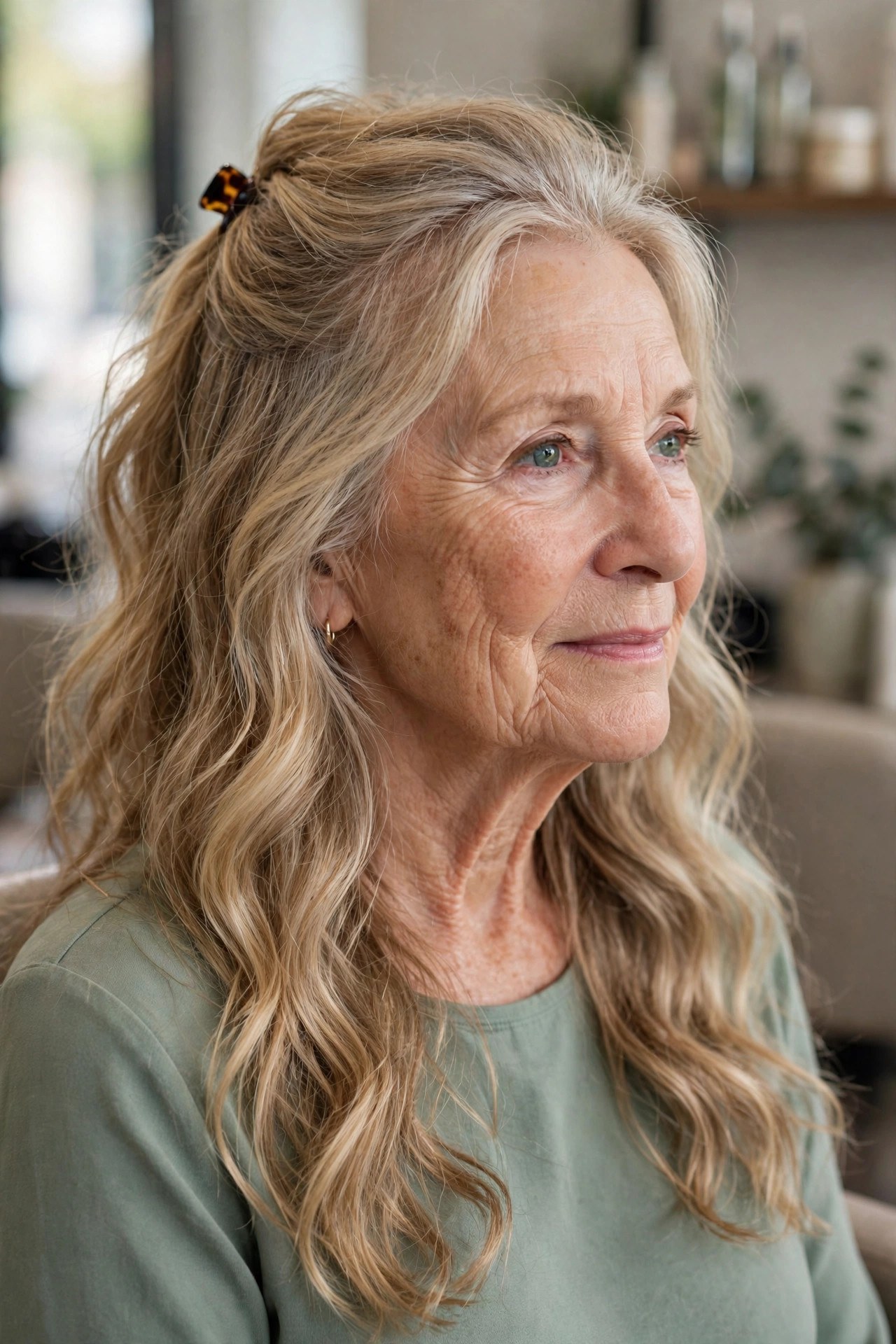
The half-up style solves the two complaints of long hair in one move: hair falling into the face, and looking like you did nothing with it. Pulling just the top section back — with a clip, a small twist, or a gentle gather — opens the whole face while the full length still pours down the back and over the shoulders. It reads styled in under two minutes, which is why it earns its place as a weekly default.
Keep the gather loose and slightly lifted at the crown; a tight pull flattens the crown and exposes a thinning hairline. Flat claw clips are the comfortable modern fastener — they hold long hair without the headache a tight elastic can cause, and they look like jewelry rather than hardware.

8. Polished Low Ponytail with a Long Tail
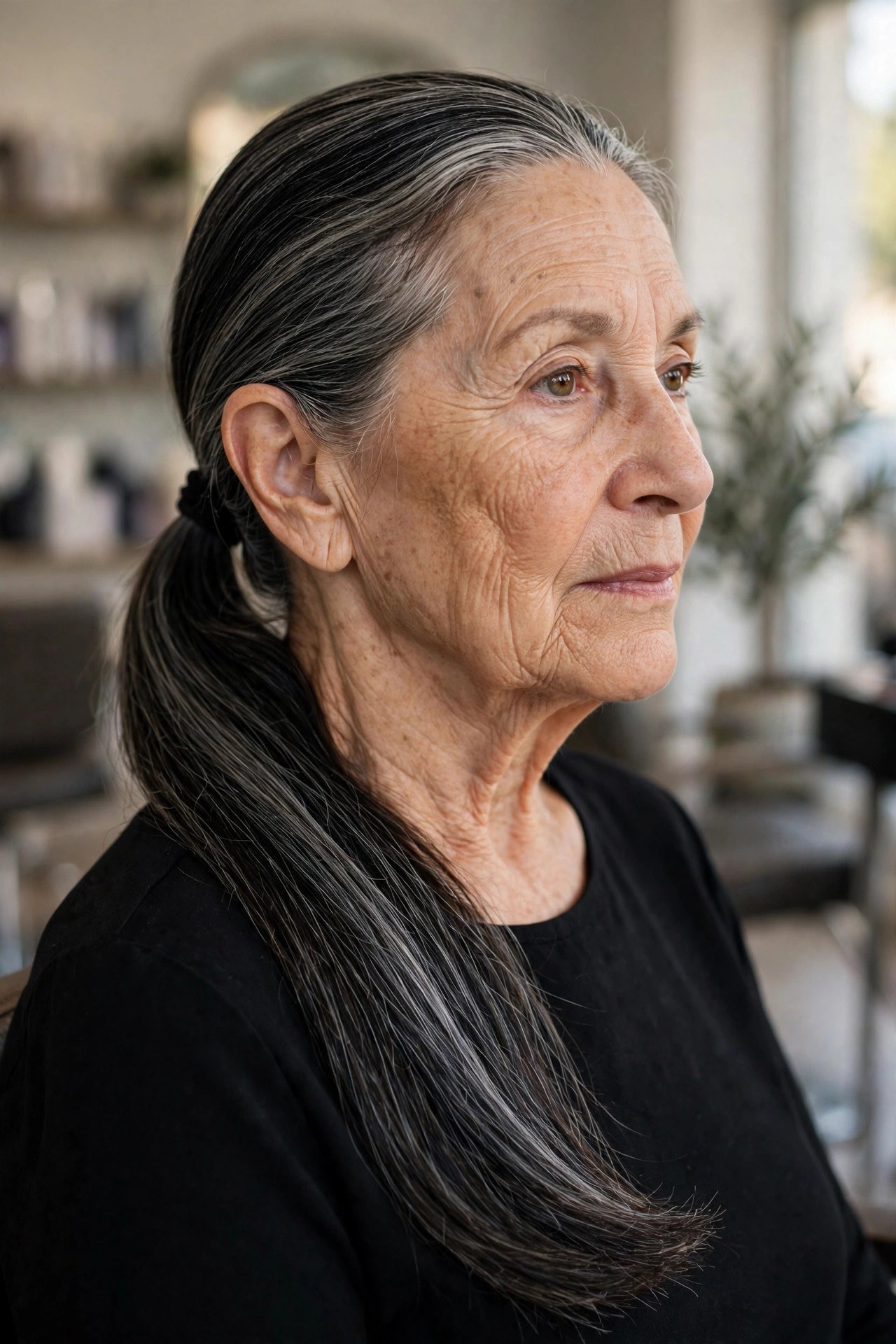
A low ponytail done properly is not a surrender — it is one of the most elegant ways to wear very long hair after 60. Smoothed at the crown, secured at the nape, and draped forward over one shoulder so the full length shows, it looks composed for everything from lunch to an evening event. The trick is the finish: brushed smooth, no stray halo, and the tail itself conditioned and glossy.
Smooth a drop of anti-frizz serum through the tail before securing, and wrap a small section of hair around the elastic for the polished version. Keep the tension gentle — years of tight ponytails thin the front hairline, and at this length the weight already asks enough of it. Alternate the ponytail’s position day to day.

9. Loose Side Braid Over One Shoulder
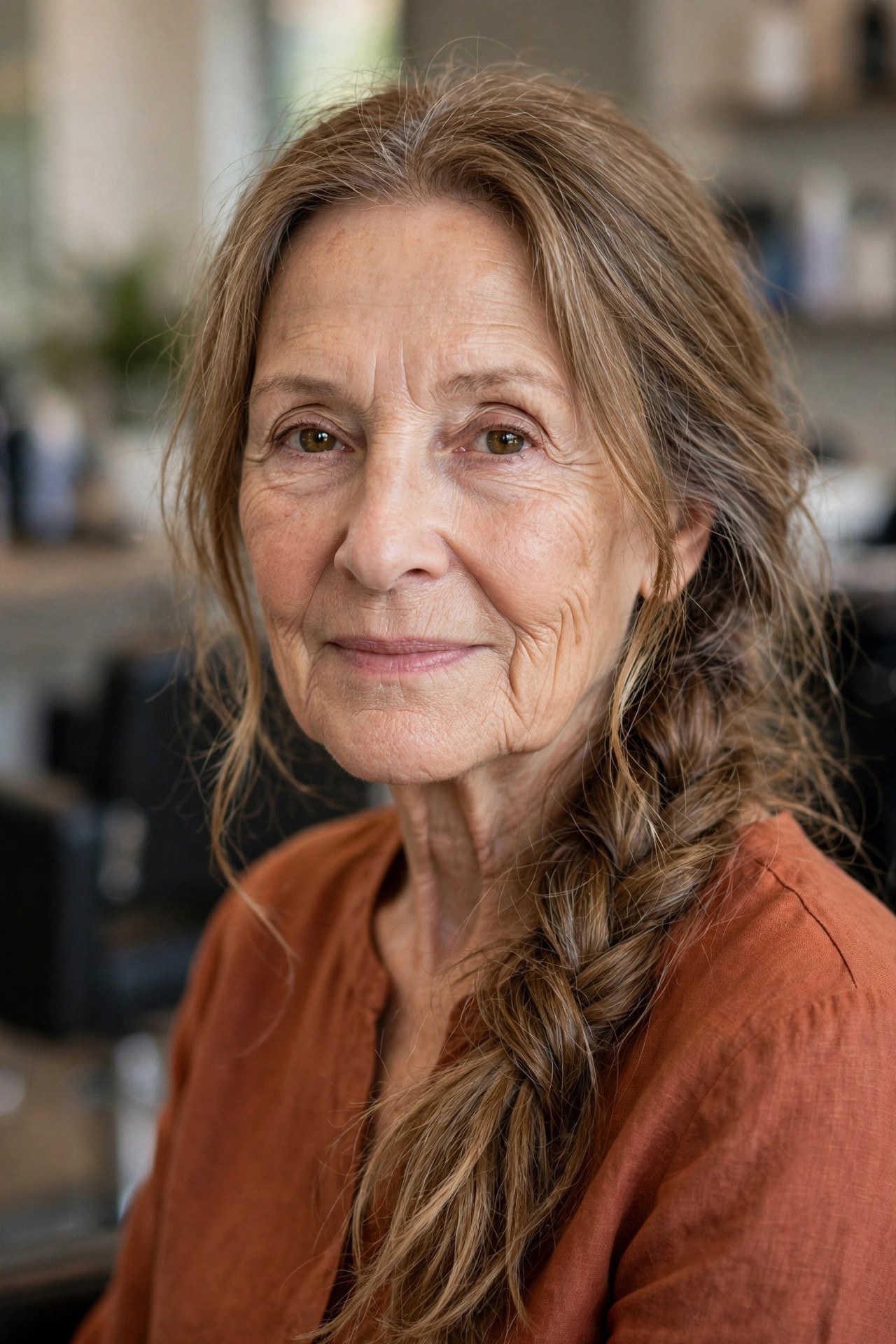
A loose side braid is the kindest protective style long hair has. It keeps the lengths contained and tangle-free on windy days, travel days, and gardening days, while the softness around the face stops it looking severe. Pulled slightly apart after braiding — pancaking, stylists call it — it also looks fuller, which flatters hair that has fined down over the years.
Braid over one shoulder with the face-framing strands left out, and secure with a soft tie that will not crease or snap the ends. A braid is also the overnight secret of the wave styles in this guide: sleep in a loose one and you wake to soft, heat-free waves. A satin pillowcase reduces the friction that frays the braid’s surface by morning.


10. Long Shag with Wispy Bangs
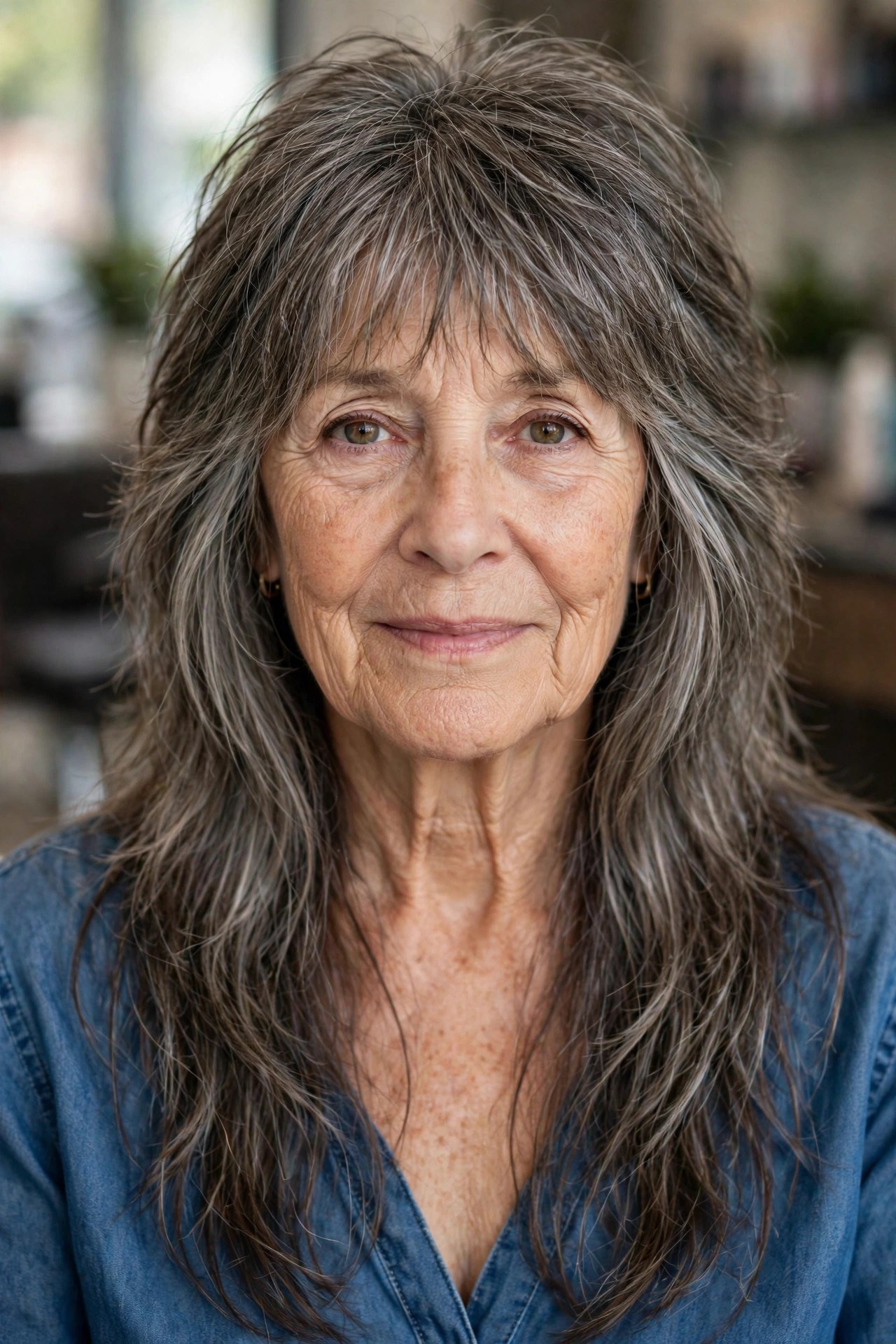
The long shag keeps every inch of length but changes its personality entirely: choppy layers through the crown and mid-lengths, texture at the ends, and a wispy fringe that softens the forehead. It suits women who find sleek long hair too prim and want movement and a little edge. On salt-and-pepper hair the chopped layers show off the natural color variation beautifully.
Insist on point-cutting rather than heavy razor work, which can leave mature ends frayed, and agree where the shortest layer starts — cheekbone level keeps it modern without sacrificing fullness below. At home this cut is a scrunch-and-go: texture spray on damp hair, air-dry, and a pinch of putty only if the crown falls flat.

11. U-Shaped Long Cut with Blended Layers
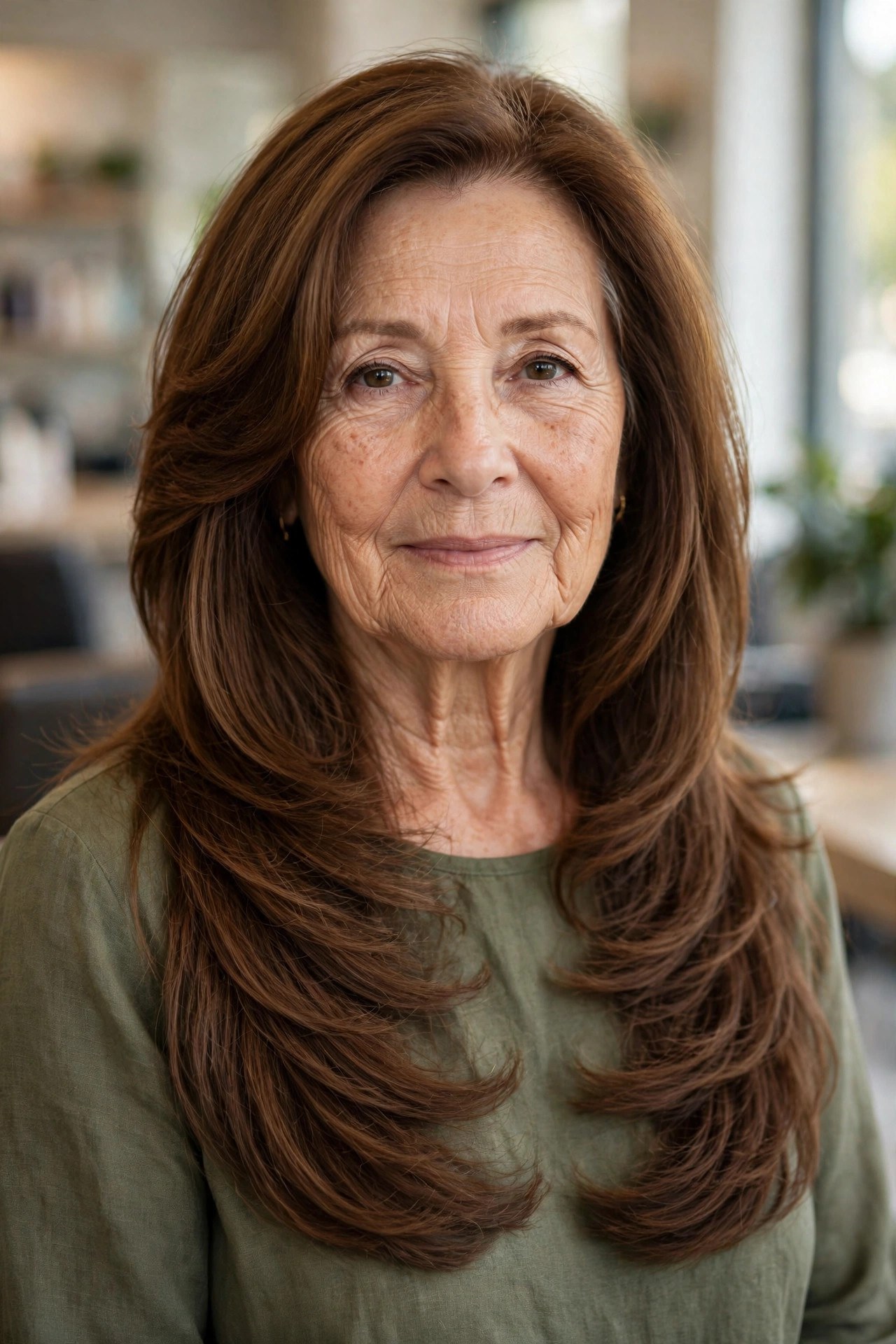
The U-shape is the connoisseur’s long cut: the back falls in a soft rounded curve, slightly longer in the middle, with long blended layers that remove bulk without carving visible steps. It moves like one piece of fabric when you walk, keeps maximum fullness at the ends — the rarest thing in long hair over 60 — and looks healthy from every angle, front and back.
This shape is the best choice if your ends tend to look thin, because nothing here sacrifices the perimeter. Keep it that way by trimming the curve every eight to ten weeks and resisting extra layering at the bottom. A round brush blow-dry through the last few inches turns the curve under and shows the shape at its best. More movement-focused layering ideas live in our long layered haircuts roundup.

12. Golden Balayage on Long Hair
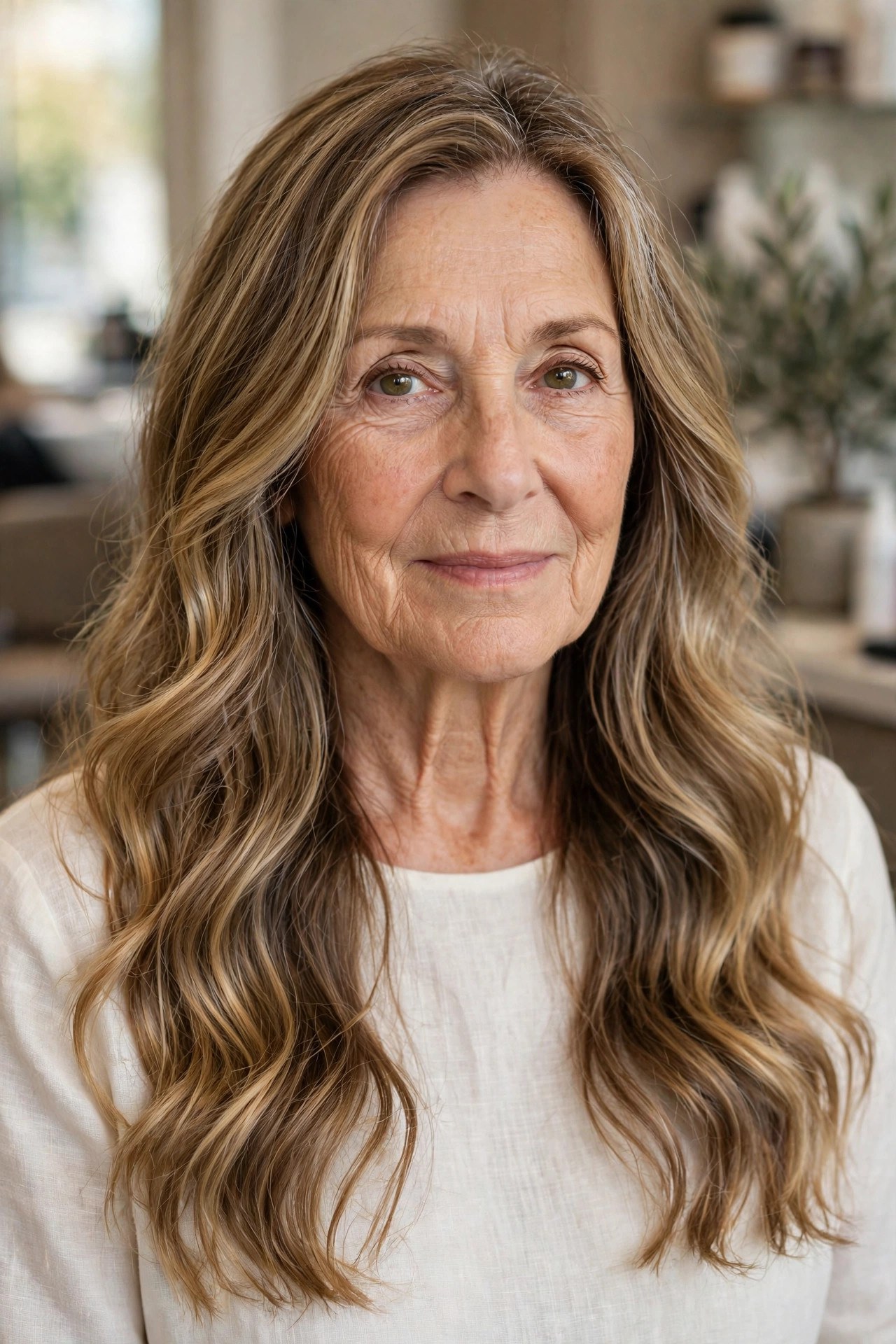
Balayage was practically invented for women keeping their length. The color is painted brightest through the mid-lengths and ends and melts softly at the roots, so there is no harsh regrowth line — appointments stretch to three or four months, which matters when long hair already asks for trims and treatments. The golden dimension also warms the complexion and makes long hair look thicker by breaking up one flat expanse of color.
Ask for the brightness to start higher around the face and stay softer at the back, and keep the base close to your natural shade so the grow-out stays invisible. Color-treated length drinks moisture, so a bonding shampoo is a smart weekly swap, and shine serum through the ends keeps the painted pieces luminous between visits.

13. Sleek Long Hair with a Glossy Finish
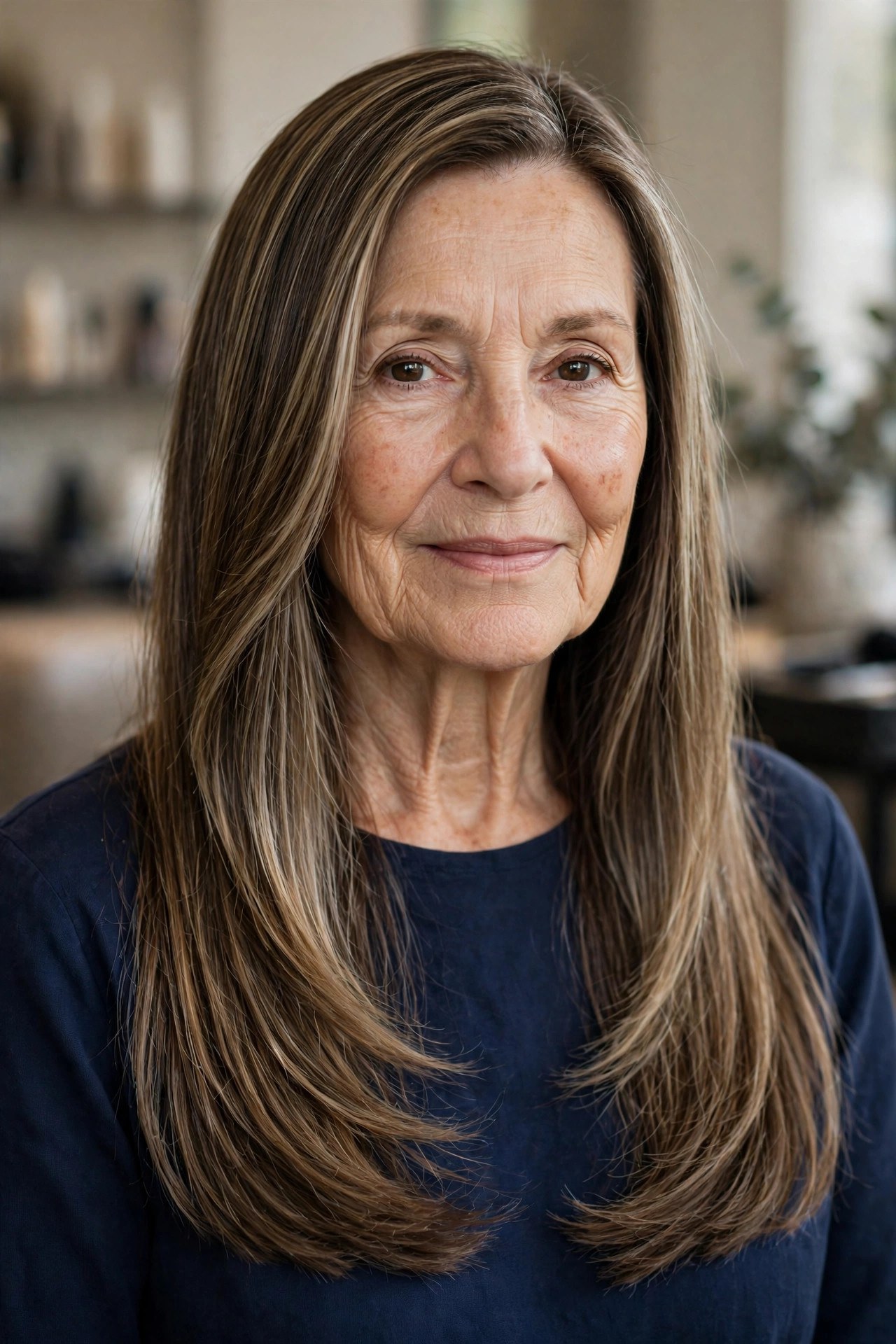
Between the curls and the waves sits this: long hair dried smooth and straight with a genuinely glossy finish — not flat-ironed into stringiness, but polished, with body at the roots and ends that curve very slightly. It is the most businesslike version of long hair after 60 and the one that shows expensive color and good condition to full advantage.
The finish is built in the blow-dry, not the iron: dry downward with the nozzle following the brush so the surface lies sealed and shiny, then use a flat iron only where needed, always over heat protection. Pale and silver tones scorch-yellow faster than darker hair, so moderate heat is a rule, not a preference, on long lengths you have spent years growing.


14. Deep Side-Part Waves in Silver White
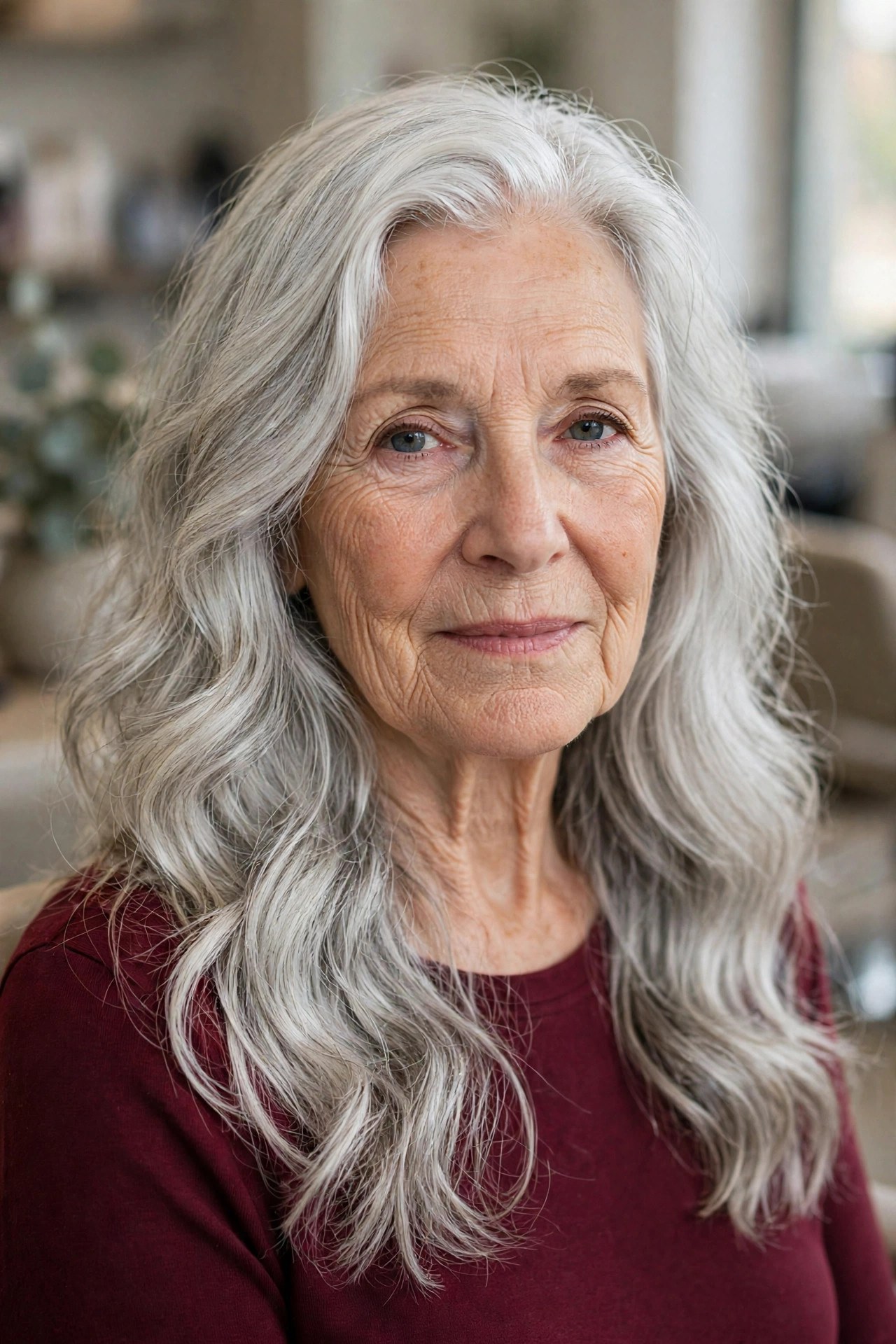
Take the silver cascade and sweep it all to one side, and something glamorous happens: the deep part builds a wave over the forehead worthy of old Hollywood, the lengths pool over one shoulder, and the asymmetry lifts the whole face. It is the evening version of long silver — and proof that gray hair at full length can be the most striking hair in the room.
Train the part while the hair is damp and set it with a clip as it dries; silver hair holds the shape it dries in. A purple shampoo keeps the big front sweep bright white rather than yellow, and sleeping on satin preserves the waves so the style lasts two or three days from one styling session.
15. Braided Crown Half-Up on Long Hair
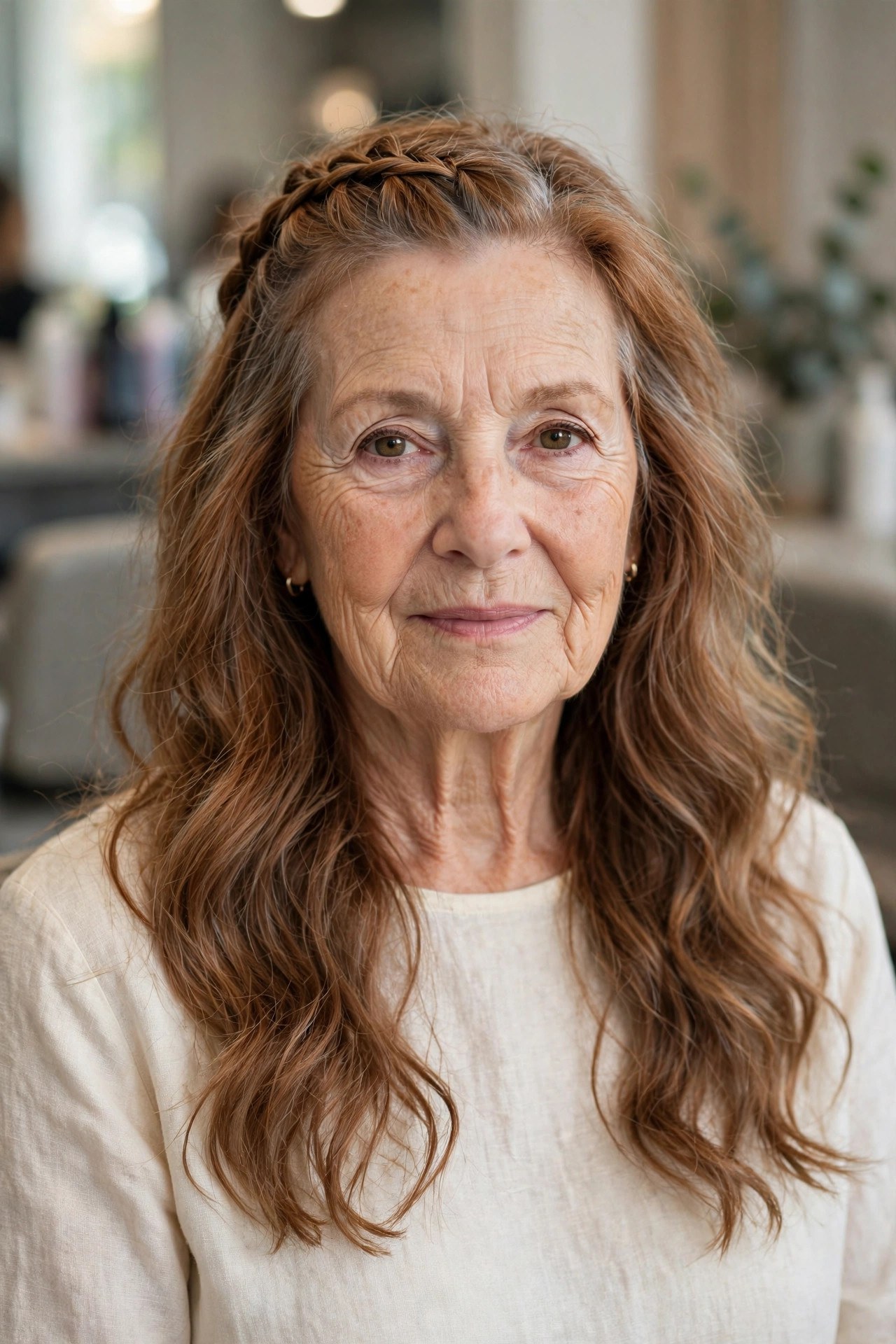
A small braid worked along the hairline or across the crown gives long hair a focal point that pure length lacks — it reads as effort and occasion while taking ten unhurried minutes. The rest of the hair stays down and long beneath it, so nothing is sacrificed. This is a beautiful choice for weddings, photographs, and any day a plain hang feels unfinished.
Practice the braid on day-two hair, which grips better than slippery just-washed lengths, and pin it with U-pins that disappear into the hair rather than standard grips that show. Leave two soft strands out at the front; a braid pulled too clean reads hard against mature features, while the loose pieces keep it romantic.
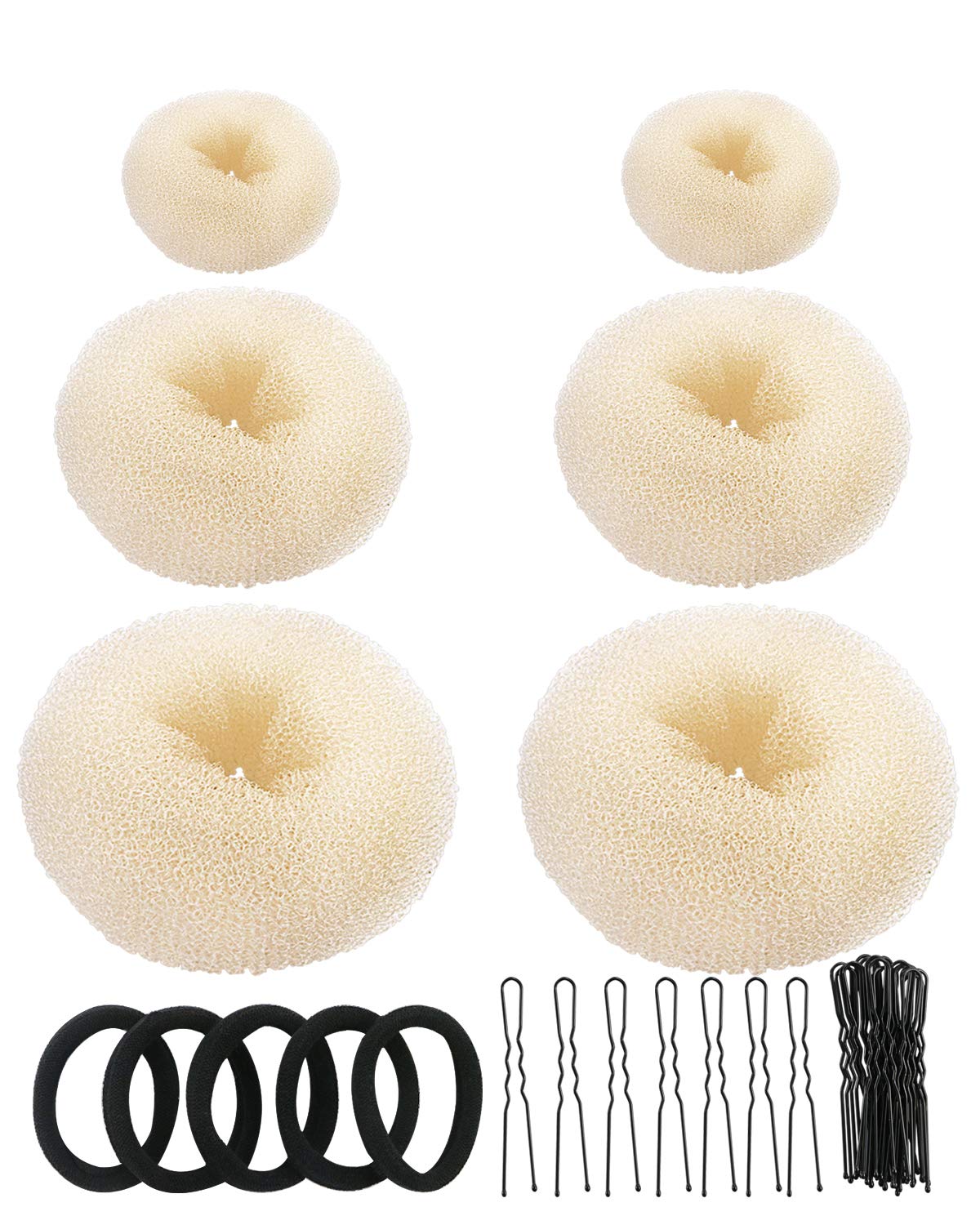
16. Elegant Low Bun — the Long-Hair Occasion Style
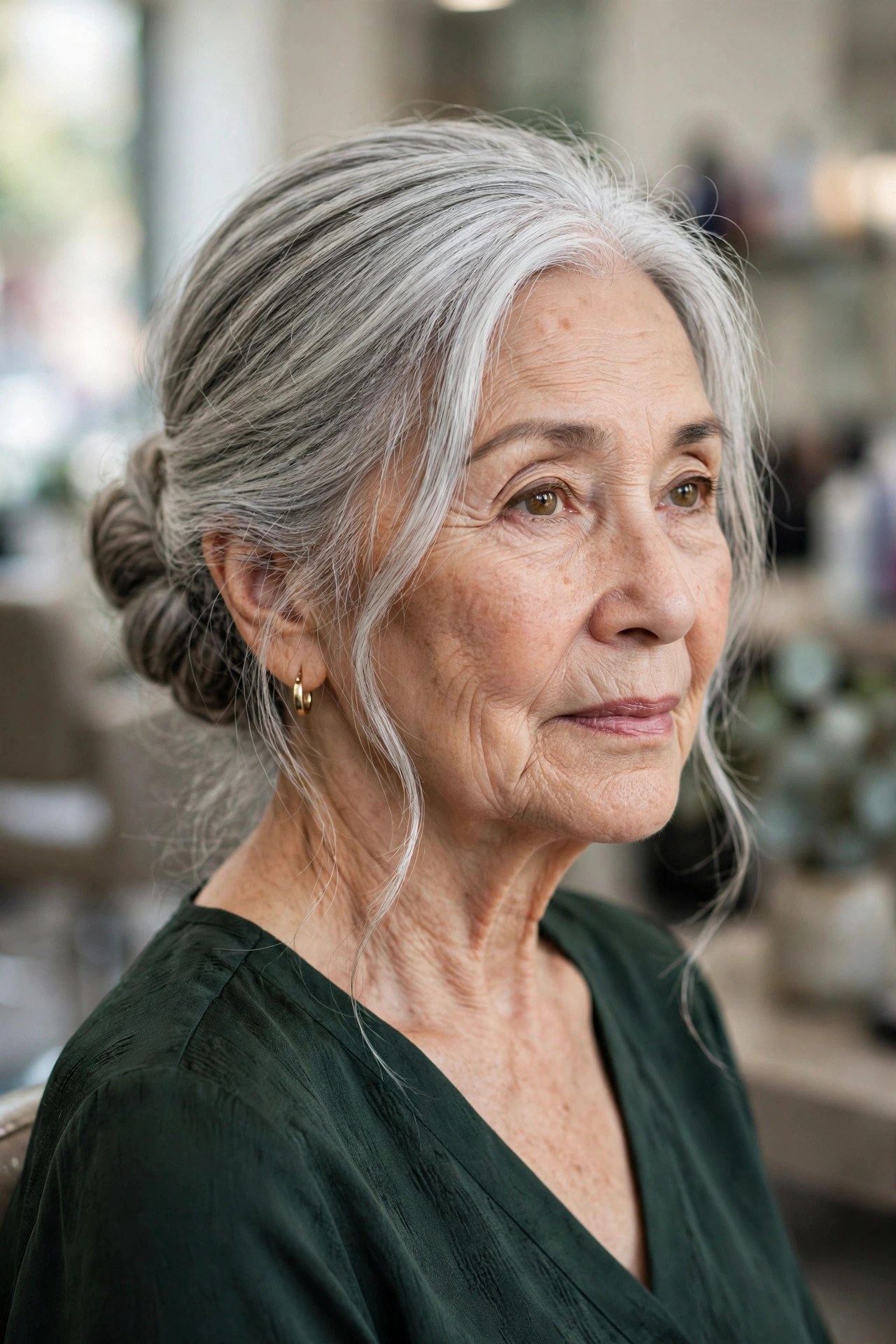
Every woman keeping her length needs one reliable updo, and the low bun is it: gathered at the nape, twisted or folded into a smooth knot, with two soft tendrils left framing the face. It shows off earrings and necklines, photographs beautifully, and — the part nobody mentions — it is only possible because you kept the length. Short hair cannot do this.
A bun-maker insert gives fine or thinning long hair a fuller knot without backcombing, and U-pins hold it more comfortably than a handful of grips. Keep the tendrils genuinely soft and the bun slightly loose; a scraped-back, tight bun is the aging version, while this relaxed one is timeless. A light mist of flexible hairspray is all the fixing it needs.
17. Tousled Beach Waves, Grown-Up Edition
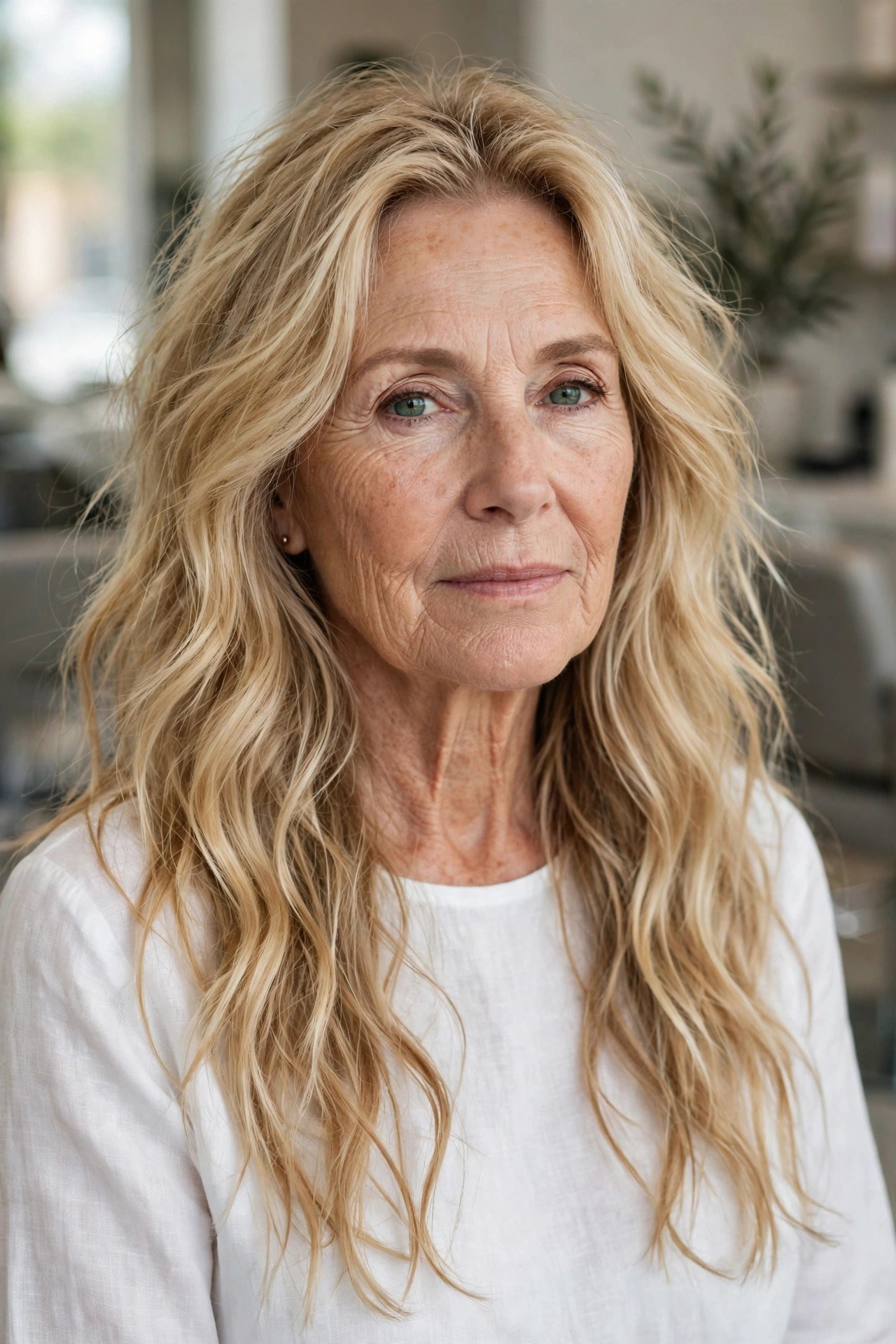
Beach waves are not reserved for twenty-somethings — on long hair over 60 they read as ease and health, provided they are done softly. The grown-up version uses bigger, looser bends, real shine, and no crunchy product stiffness. It is the most forgiving style in this guide for hair with a natural wave of its own, because it works with that texture instead of disciplining it.
Sea-salt spray scrunched into damp hair and air-dried gets you most of the way; a few bends added with a styler only where the hair dries straight completes it. If salt spray dries your lengths out — it can, on mature hair — switch to scrunching with a light mousse and finish with a drop of serum once dry.

18. Long Layers with a Bright Money-Piece Frame
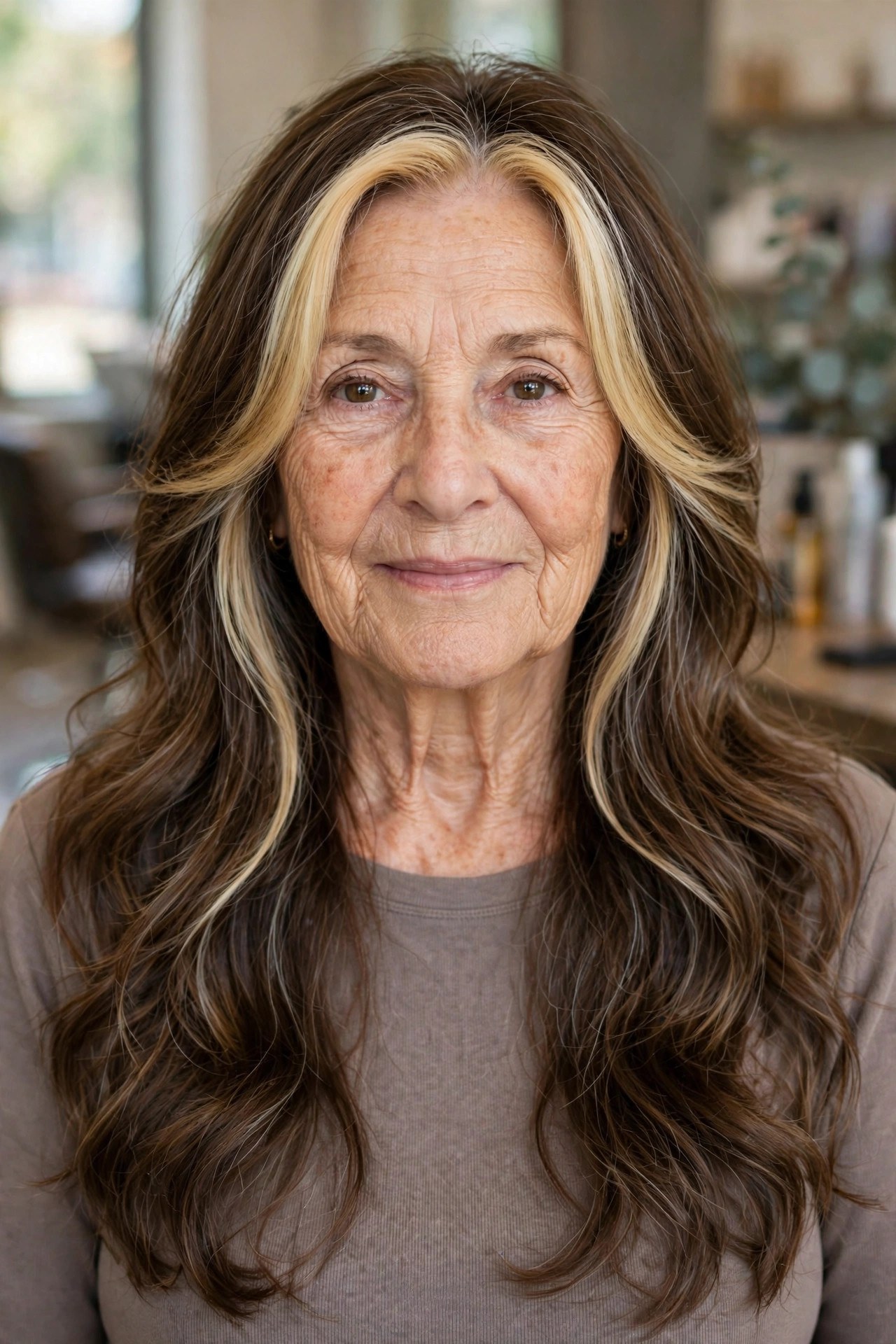
The money piece — two brighter panels painted right at the front hairline — is the lowest-commitment color refresh long hair can have. It brightens the entire face the way good lighting does, draws the eye up to your eyes, and grows out softly because the rest of the color stays close to your natural shade. On long layers it turns a familiar cut into a noticeably fresher one for the price of a partial appointment.
Keep the panels a shade or two lighter than the rest, never a stark stripe, and ask for them to melt gradually rather than stop abruptly. Because the front pieces take the most heat and brushing, they fade and dry first — a gloss or a drop of bonding care keeps the frame bright between the trim visits long hair already needs.

19. Long Straight Hair with Soft Wispy Bangs
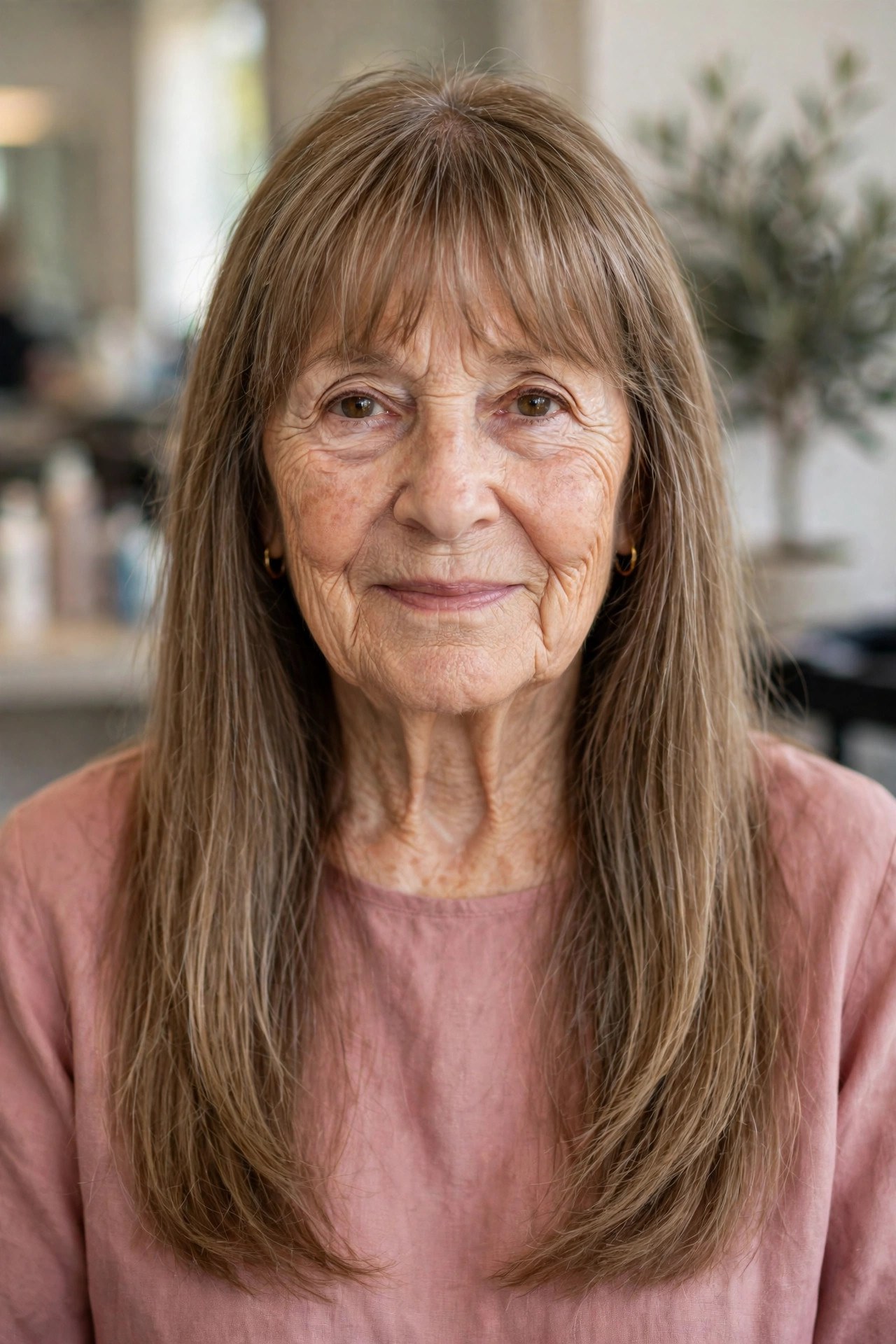
If you love straight long hair but feel it exposes your forehead or drags your features down, a soft wispy fringe is the smallest change with the biggest effect. The see-through bangs soften the brow line, shorten the visual length of the face, and give straight lengths an intentional shape at the front. They are also the newest, healthiest hair on your head, so they frame the face with shine.
Have the fringe point-cut sheer, never blunt and heavy, and dry it first with a small brush before styling the lengths — bangs set in seconds and misbehave if left to chance. They need a two-minute trim every three weeks or so, which most salons do free between cuts, and a light heat protectant keeps the daily quick pass from drying them out.


20. The Silver Cascade — Long, Glossy and Unapologetic
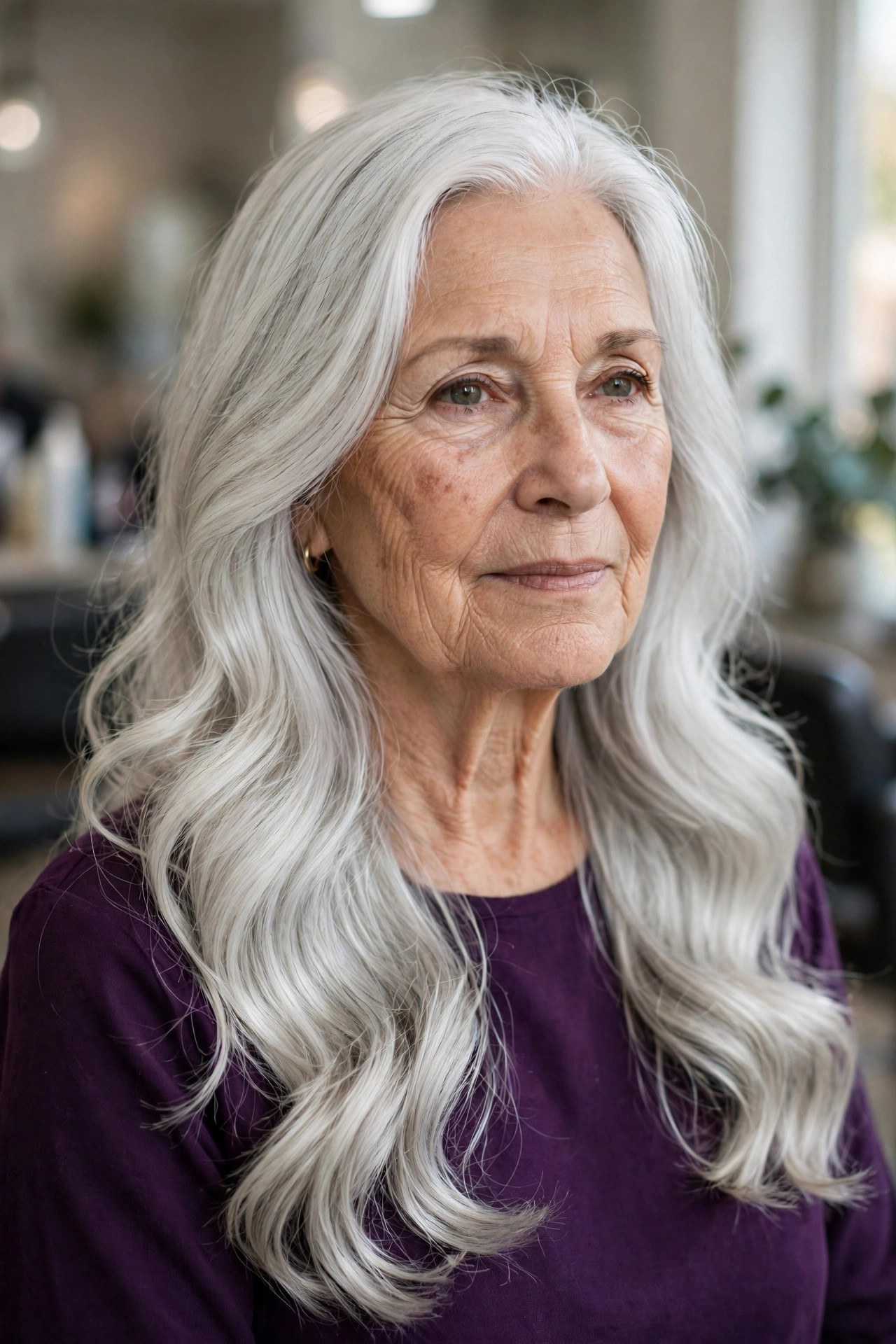
We end where this guide began: with permission, in its most visible form. Long silver worn loose in soft waves, glossy and past the shoulders, is a statement that needs no defending — it looks luxurious precisely because healthy silver at this length is rare and hard-won. If you keep one style from this list as your signature, the cascade rewards the care routines below more than any other.
Gloss is the whole game: purple shampoo weekly against yellowing, a bonding wash in rotation, satin at night, and ends dusted every eight weeks so the bottom line stays thick rather than see-through. If your silver is still coming in, our guide to stylish gray hairstyles shows how the color flatters at every stage of the transition.
Recommended Products
Long hair over 60 lives or dies on condition, so this shortlist is care-first: bond repair for aging ends, anti-brass care for silver, heat protection for styling, satin for the night, and one styler that dries and smooths in a single step.
- ☐ Book a dusting trim every 8 weeks — removing a quarter inch of split ends protects all the length above it.
- ☐ Wash the lengths less often and condition every time; aging hair produces less oil and dries out faster.
- ☐ Use a bonding or repairing shampoo in rotation — the oldest hair at your ends may be three or more years old.
- ☐ Silver or blonde? A purple shampoo once a week keeps brass and yellowing away.
- ☐ Heat protection before every dryer, styler or iron session, on moderate heat settings.
- ☐ Sleep on a satin pillowcase or in a loose braid to cut overnight friction, tangles and breakage.
- ☐ Brush gently from the ends upward, and never rip through wet hair — wet long hair stretches and snaps.
- ☐ Be honest at each trim: if the last few inches have gone see-through despite good care, take the length back to where it stays full — healthy mid-length hair always looks younger than wispy very-long hair.
Frequently Asked Questions
Can women over 60 really wear long hair?
Yes — age alone is not the deciding factor; condition and shape are. Long hair flatters at 60 and beyond when the ends stay full, the front has face-framing shape, and the color looks deliberate. The styles in this guide are built on exactly those three rules.
How long is too long after 60?
The honest answer is: as long as the ends stay reasonably full. For most women that is somewhere between the shoulders and mid-back. If the last several inches have become see-through and stay that way despite trims and care, taking the length back to where it thickens up will look healthier and, paradoxically, younger.
How often does long hair over 60 need trimming?
Every 8 weeks for a dusting trim — removing just the split-prone tips — and every 10 to 12 weeks is the outer limit. Regular small trims are what allow long hair to stay long, because splits left alone travel up the strand and eventually force a bigger cut.
What is the best long hairstyle for thinning hair over 60?
A U-shaped or lightly layered cut that protects fullness at the ends, worn with a side part for crown lift. Avoid heavy layering and razor-cut ends, which make fine long hair look thinner. Styles that add the appearance of thickness — soft waves and blowouts — also help a great deal.
How do I stop long hair looking stringy?
Stringiness comes from split, uneven ends and product build-up on the lengths. A blunt-leaning trim, a clarifying wash now and then, conditioner only from mid-lengths down, and not over-layering the bottom third fixes it in almost every case.
Does long hair make you look older after 60?
Neglected long hair can; well-kept long hair does the opposite, softening features and giving you styling options short hair cannot. The difference is the maintenance in this guide: shaped layers at the front, healthy ends, and color or silver that looks intentional.
Keeping your hair long after 60 is not about refusing to change — every style above involves real shaping, real trims and real care. It is about changing the right things and keeping the one thing you love. Choose the shape that solves your main frustration, commit to the eight-week dusting trim, and let the length make its own argument. It usually wins.