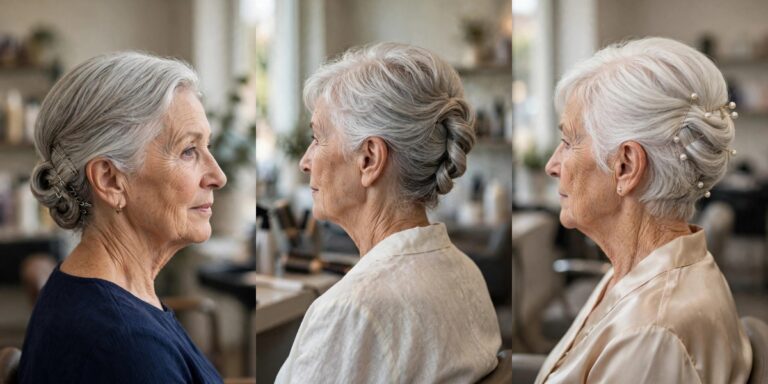
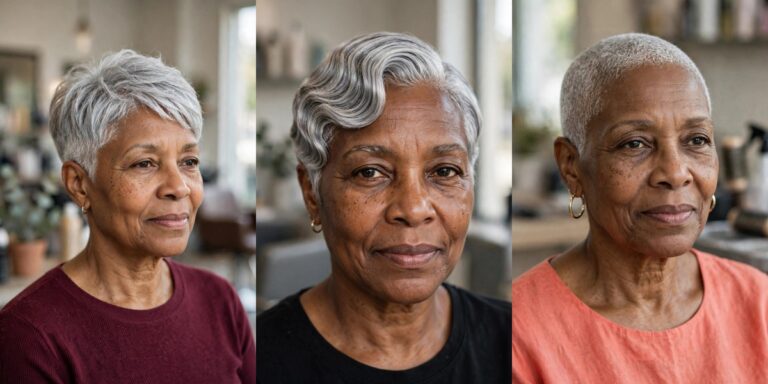
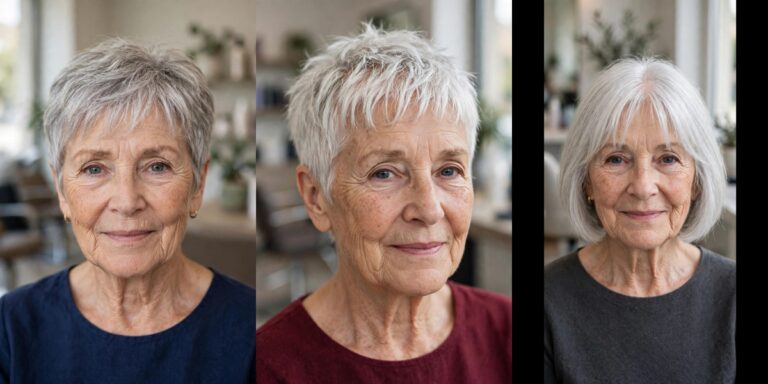
Medium Shag Haircuts for Women Over 60 With Soft Texture
This post contains affiliate links. As an Amazon associate, I earn from qualifying purchases. I only recommend products that are of high quality and that I would use myself.
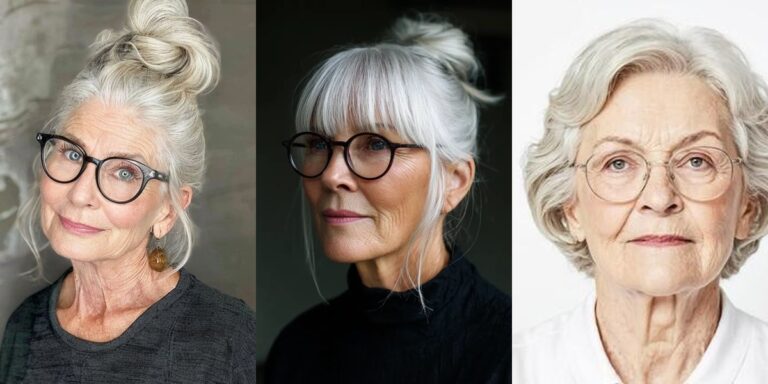
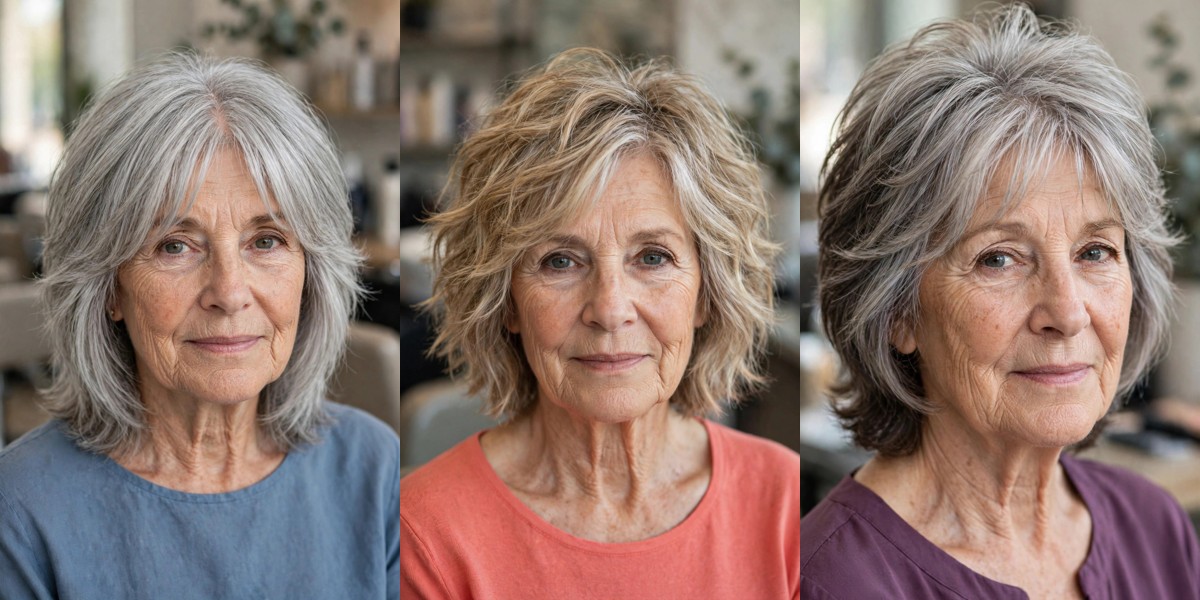
Forget everything you remember about the shag from the 1970s. The modern soft shag is a different cut entirely: feathered, airy layers that float rather than spike, texture that moves when you do, and not a hint of harshness anywhere. For women over 60, it solves several problems at once — it adds movement to hair that has gone flat, softens features instead of framing them severely, and keeps the easy, flattering length of medium hair.
Medium length is the sweet spot here. Shoulder and collarbone lengths give the layers room to show their texture, while staying light enough that finer, mature hair is not dragged down. Whether your hair is fine or thick, straight, wavy or curly, silver or still pigmented, there is a soft shag in this list shaped for it — and if you are still deciding whether to keep some length at all, our roundup of short hairstyles for women over 50 is worth a look before your appointment.
Below you will find 20 medium shag ideas, each explained by the problem it solves and the hair it suits best, plus the products that genuinely help the soft texture last between salon visits.
Table of Contents
- 1. Classic Soft Feathered Shag
- 2. Silver Shag with Airy Curtain Bangs
- 3. Wavy Medium Shag with Wispy Layers
- 4. Shag with Long Side-Swept Bangs
- 5. Curly Soft Shag with Defined Layers
- 6. Shag with Face-Framing Layers
- 7. Layered Shag for Fine Hair That Feels Fuller
- 8. Shag with a Wispy, See-Through Fringe
- 9. Tousled Beachy Shag
- 10. Shag with Long Feathered Bangs
- 11. Salt-and-Pepper Shag with Crown Volume
- 12. Shaggy Lob — the Shag Meets the Long Bob
- 13. Shag with Soft Balayage Highlights
- 14. Airy Shag for Thick Hair
- 15. Shag with a Deep Side Part
- 16. Shag Tucked Behind the Ears
- 17. Shag with Soft Curls and Layered Bounce
- 18. Wash-and-Go Shag for Low-Maintenance Mornings
- 19. Shag with Feathered, Flipped-Out Ends
- 20. Polished Evening Shag with a Glossy Finish
- Recommended Products
- FAQs
1. Classic Soft Feathered Shag
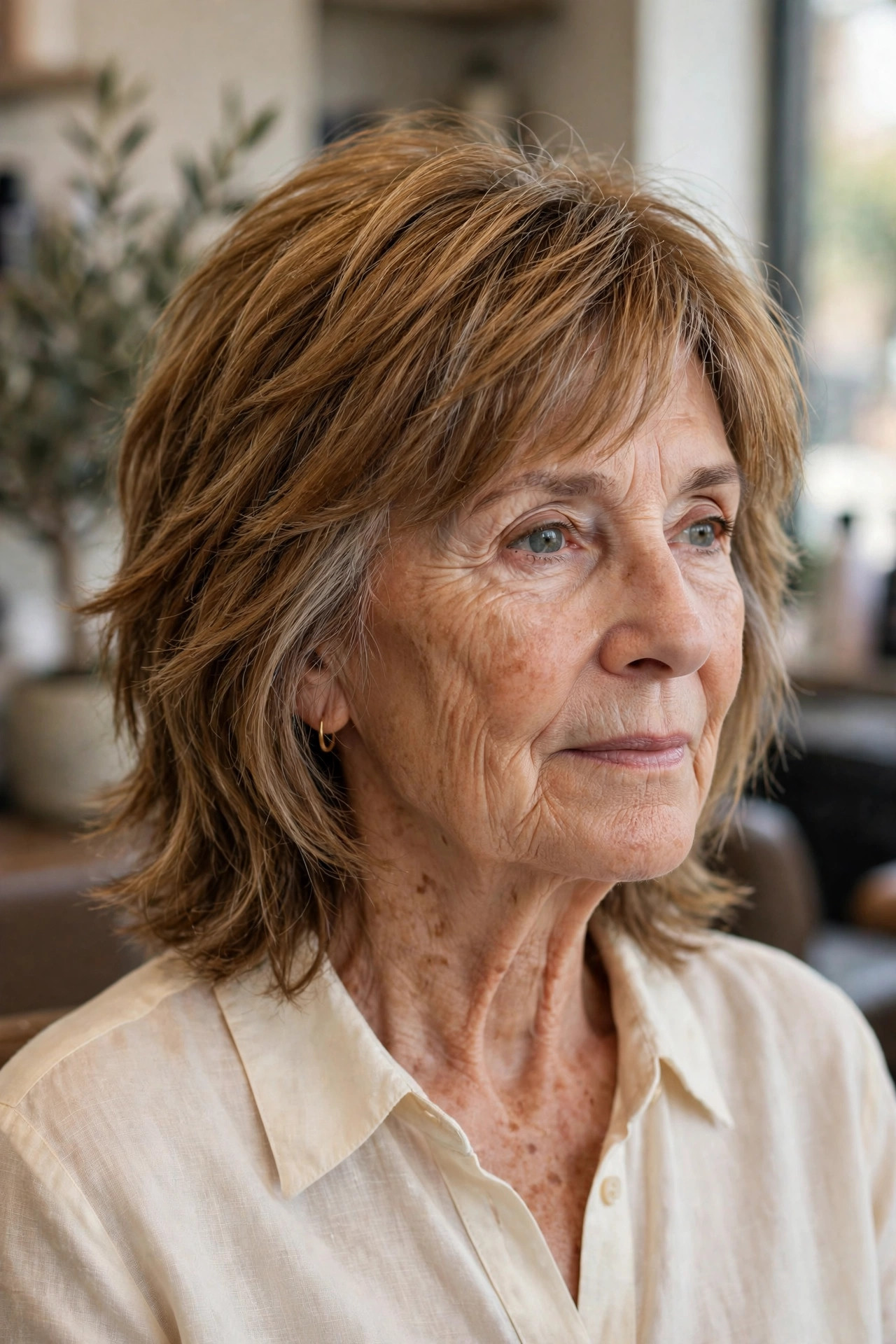
This is the modern shag at its most wearable: shoulder-length layers that are feathered rather than chopped, so the whole shape moves like fabric instead of sitting like a helmet. Feathering brushes the hair gently back and away from the face, which opens up the features and softens a strong jaw or a high forehead far better than the harsh, spiky shags of the seventies ever did.
Ask your stylist for long, blended layers with point-cut ends — no razor-shredded tips, which can make mature ends look frayed. At home, a pea-sized amount of volumizing mousse through damp hair and a loose blow-dry with your fingers keeps the feathers airy. It suits straight to slightly wavy hair and grows out gracefully for six to eight weeks.


2. Silver Shag with Airy Curtain Bangs
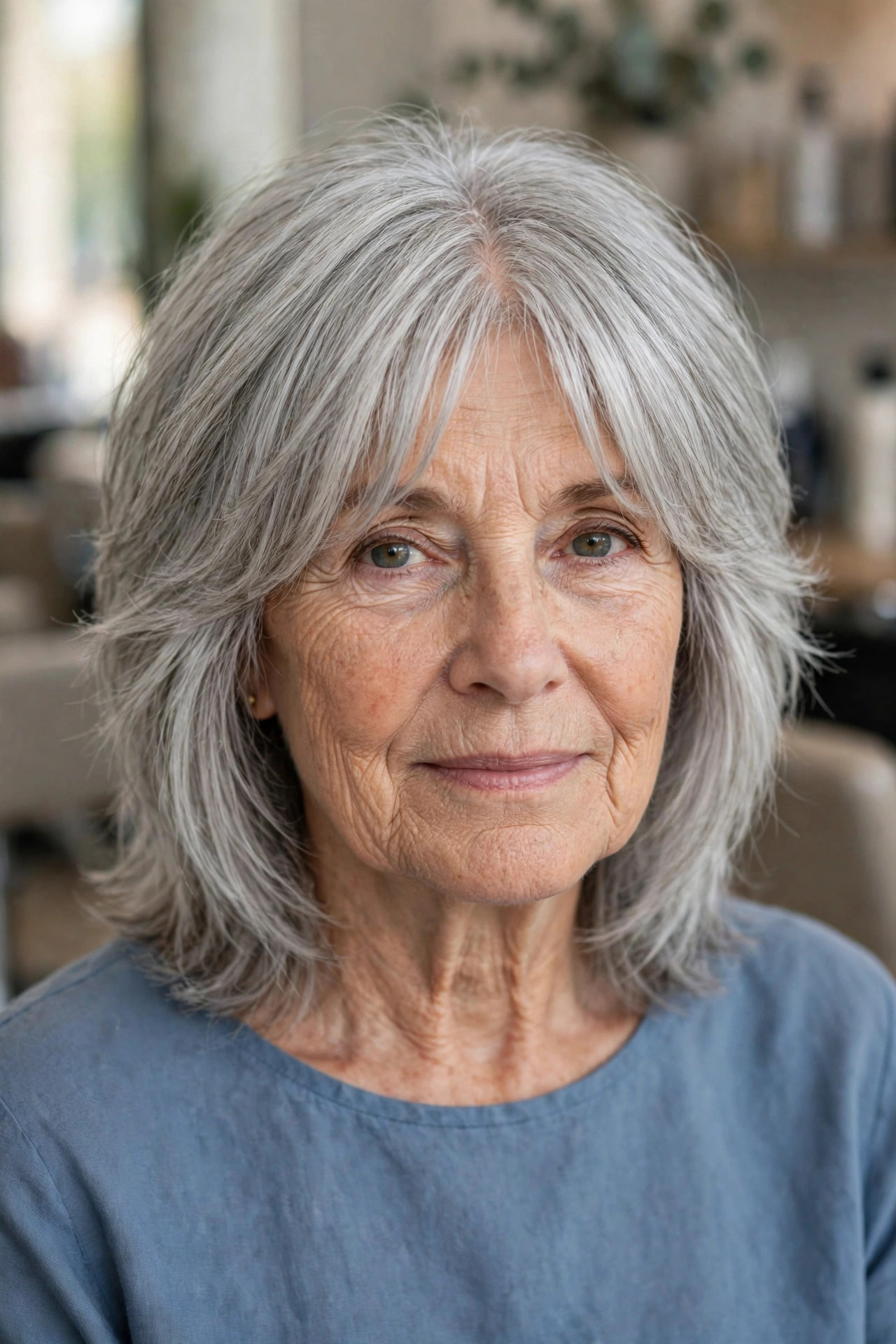
Curtain bangs are the kindest fringe after 60: parted in the middle and swept to both sides, they skim the forehead lines without the hard horizontal edge of a blunt fringe, and they blend straight into the shag’s layers. On bright silver hair the effect is luminous — the open center lets light hit the face while the feathered sides frame it.
Have the bangs cut long, to cheekbone level, so they can be swept back on days you want your forehead clear. Silver hair shows oil at the fringe fastest, so a light mist of dry shampoo at the roots on day two keeps the curtain separated and fresh. A weekly purple shampoo stops the silver from drifting yellow between salon visits.

3. Wavy Medium Shag with Wispy Layers
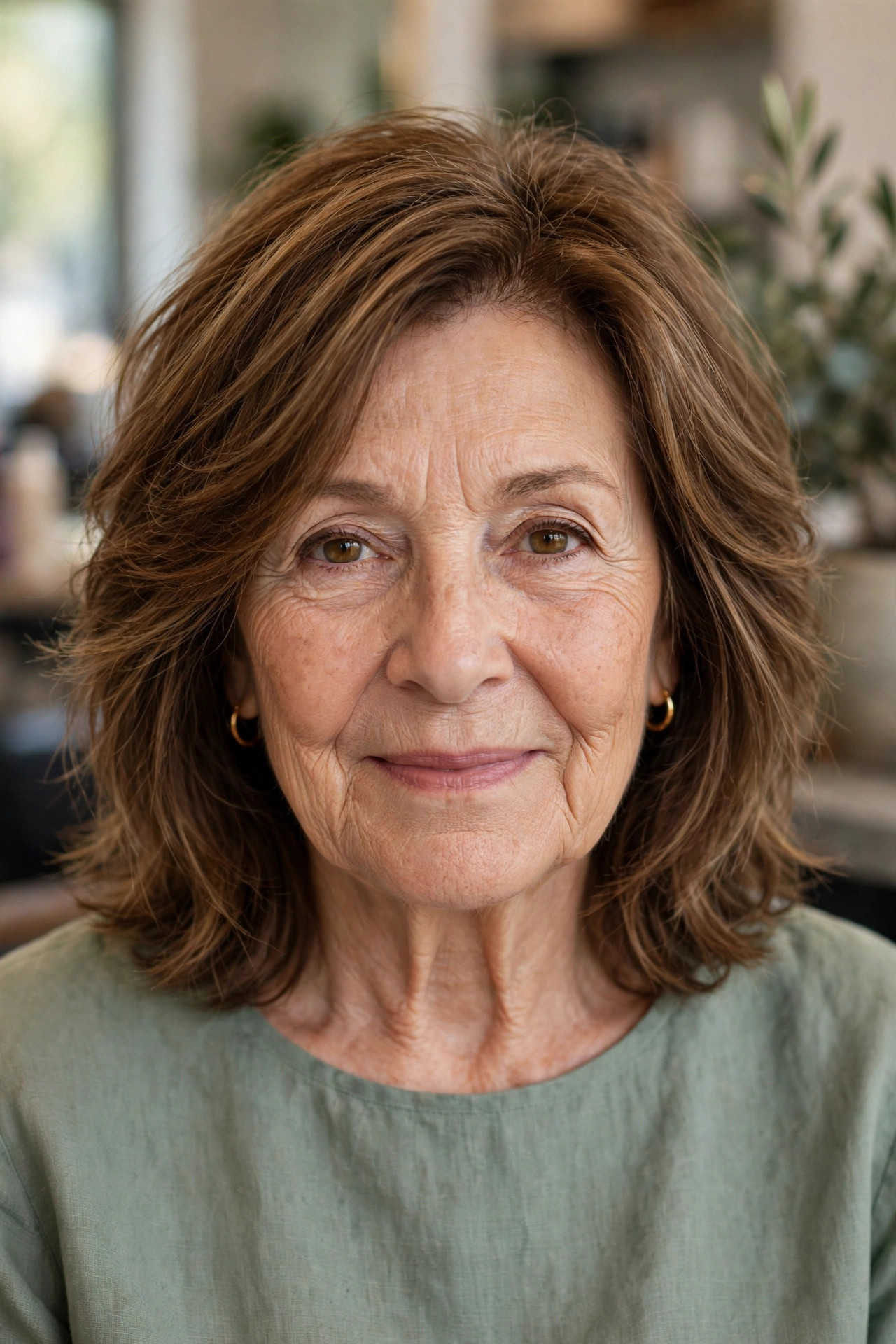
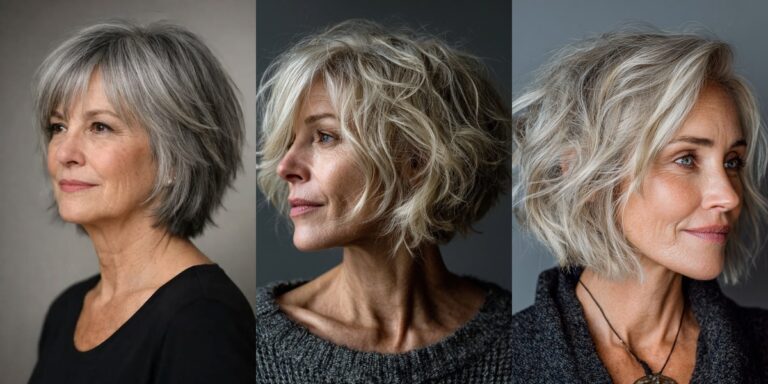
If your hair has a natural wave, this is the cut that finally works with it instead of against it. Wispy, graduated layers follow the wave’s own S-shape, removing the heavy bottom shelf that makes medium hair look triangular, and replacing it with movement that starts at the crown and ripples down to soft, see-through ends.
The secret is in the finish: scrunch a salt spray into damp hair and let it air-dry, or diffuse on low heat for five minutes. Never brush a wavy shag dry — separate the waves with your fingers instead, or the soft texture turns to frizz. This is a genuinely low-effort cut for wavy hair of any density.

4. Shag with Long Side-Swept Bangs
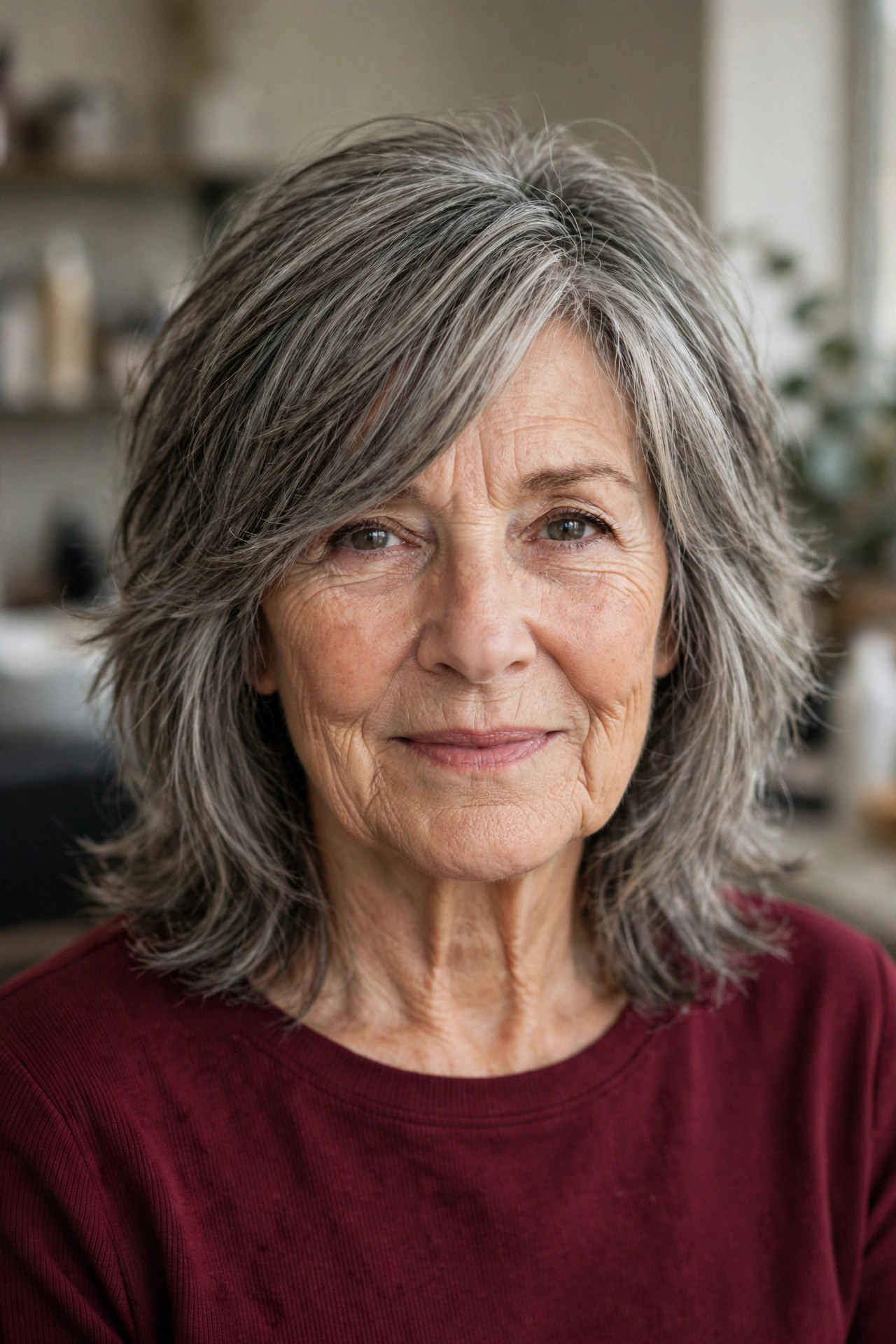
A long side-swept bang is the shag’s most elegant partner. The diagonal sweep draws the eye across the face rather than down it, which visually lifts the features, and on salt-and-pepper hair it creates one beautiful silver-streaked panel that brightens everything next to the skin.
Train the sweep while your hair is damp — mature hair sets where it dries and resists being re-directed later. Blow-dry the bang away from its natural fall first, then sweep it into place for lasting lift at the root. This version flatters round and heart-shaped faces especially well, because the asymmetry slims the widest point of the cheeks.


5. Curly Soft Shag with Defined Layers
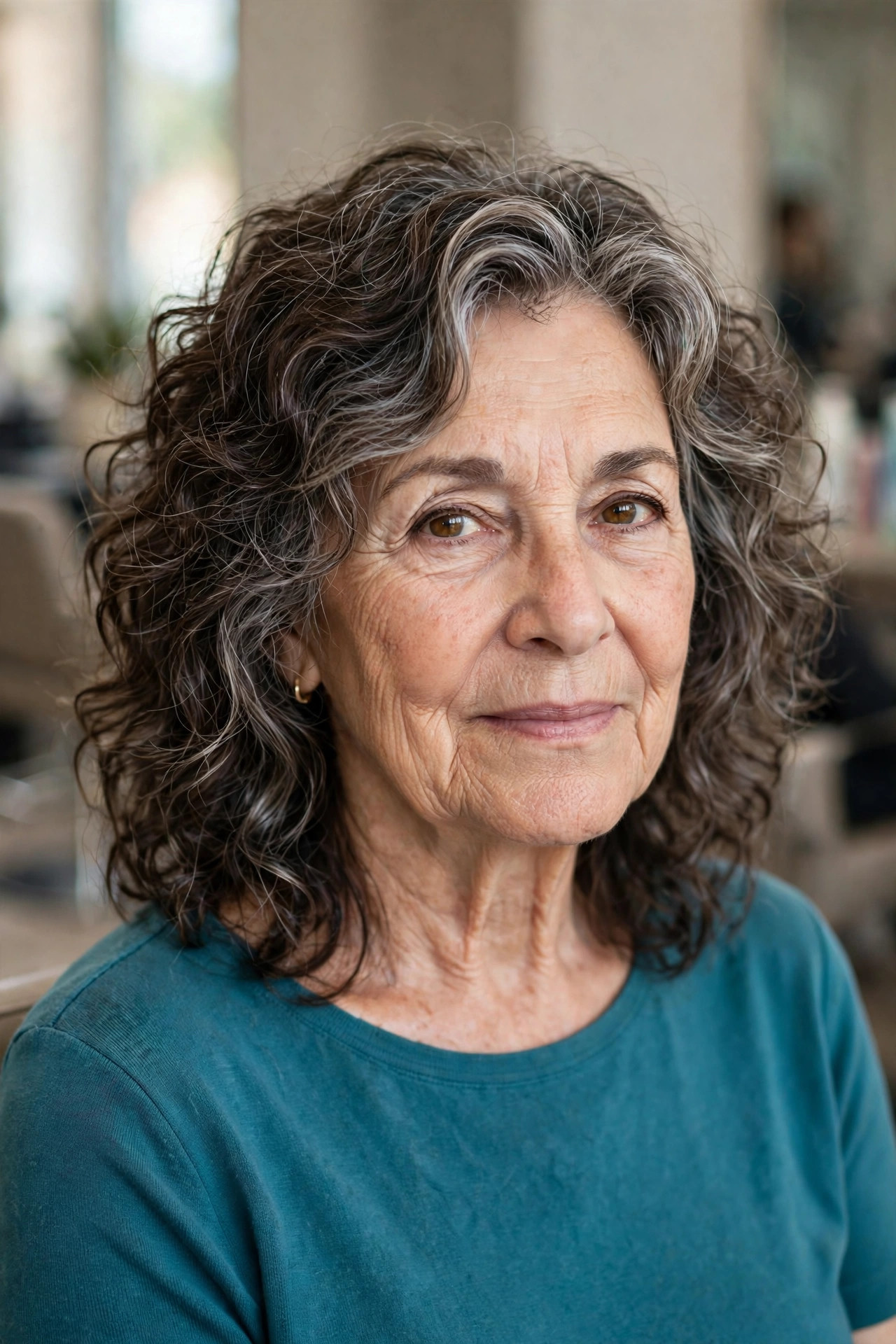
Natural curls and a shag are natural allies, as long as the layers are cut to the curl. Rounded, feathered layering keeps curls stacked in soft tiers instead of puffing out at the sides, and the medium length gives curls room to spring without the weight that pulls them flat at the root.
Insist on a dry cut, or at least a dry finish check, so shrinkage is accounted for — a wet-cut curly shag can jump two inches shorter than planned. Style on soaking-wet hair with a light cream or putty worked through in sections, then do not touch it while it dries. The result is defined, touchable curl with real shape.


6. Shag with Face-Framing Layers
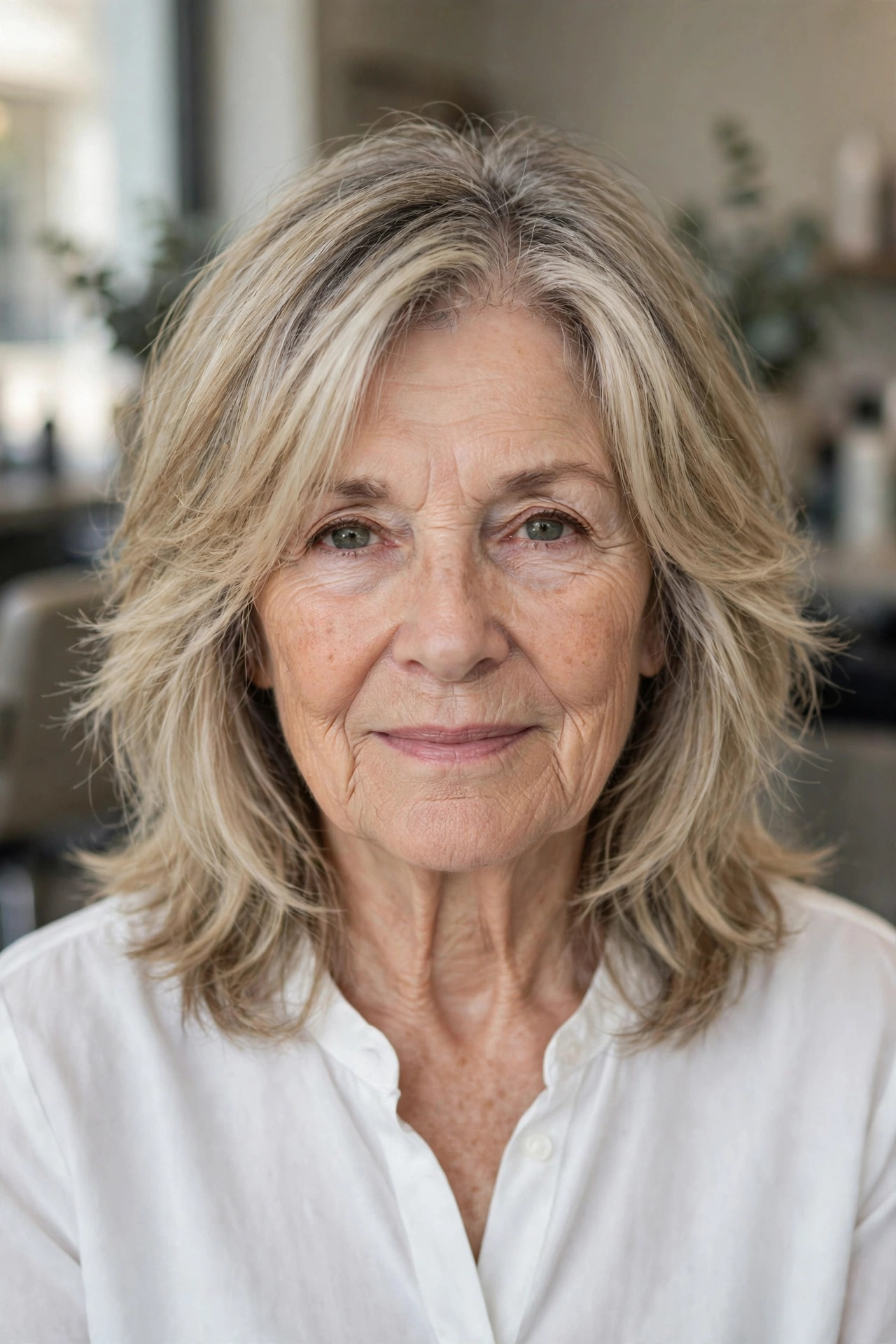
Face-framing is where the soft shag earns its keep after 60. Two longer, feathered pieces that start at the cheekbone and taper toward the jaw act like gentle lighting: they draw attention to the eyes and cheekbones, soften the jawline, and give the whole face a lifted outline even on a no-makeup day.
Ask for the framing pieces to begin exactly at your cheekbone — start them too high and they puff, too low and they drag. This cut is the easiest in the guide to personalize, because the frame can be adjusted for glasses, a longer neck, or a softer chin. If you love framed layers but want them shorter, the layered looks in our bob haircuts guide make a good comparison.


7. Layered Shag for Fine Hair That Feels Fuller
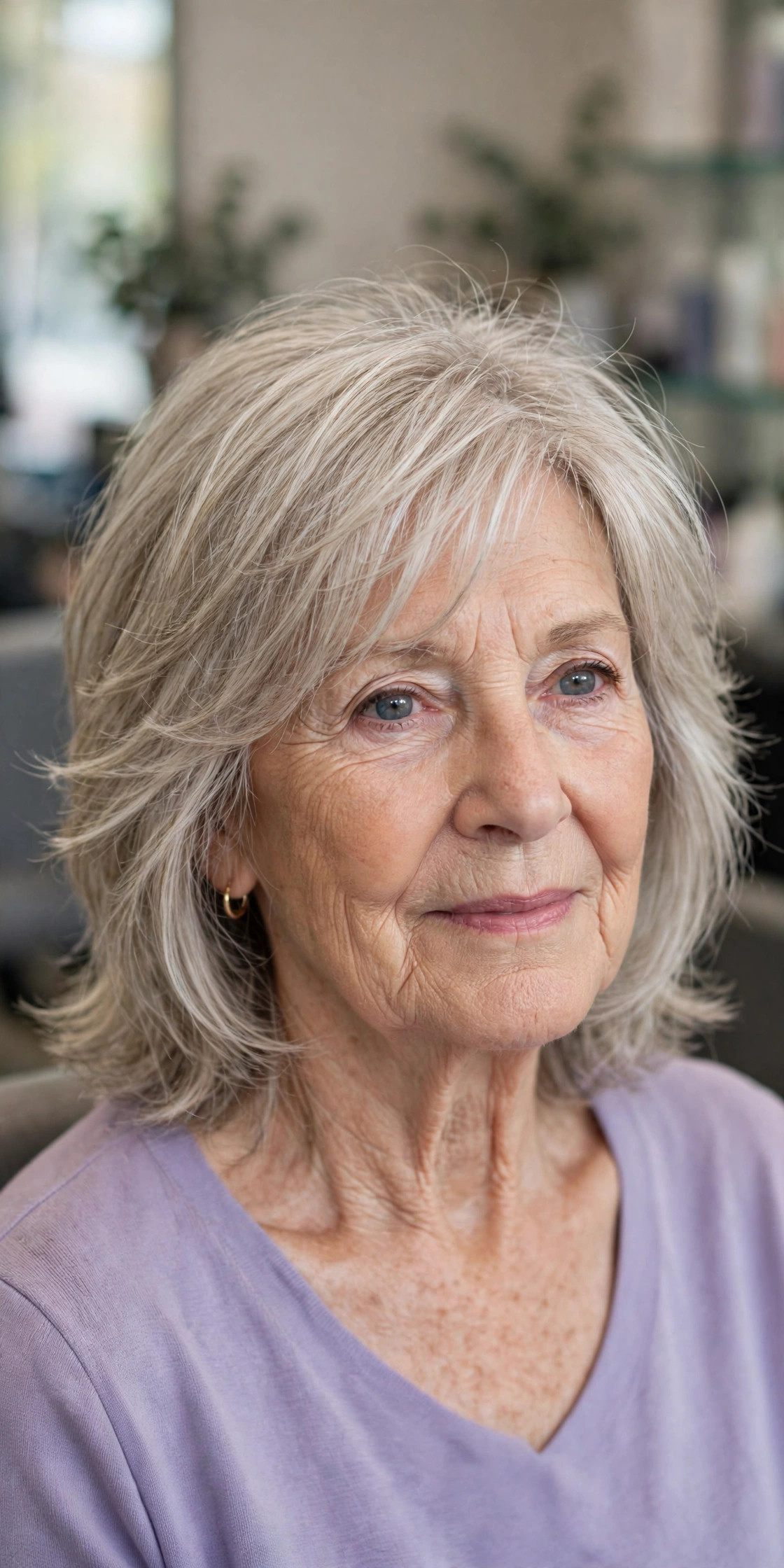
Fine hair after 60 needs layers with restraint, and this is the disciplined version: shorter, lighter layers only through the crown and top, with the perimeter kept a touch denser so the ends never look stringy. The soft texture tricks the eye — separated, airy pieces read as more hair than one flat sheet of it.
Less is everything here: a small blob of mousse at the roots only, blow-dried upside down or against the growth direction, then a whisper of texture spray on the ends. Heavy oils and silicone serums will collapse a fine shag in an hour. For more fine-hair strategies, our guide to hairstyles for fine hair pairs beautifully with this cut.

8. Shag with a Wispy, See-Through Fringe
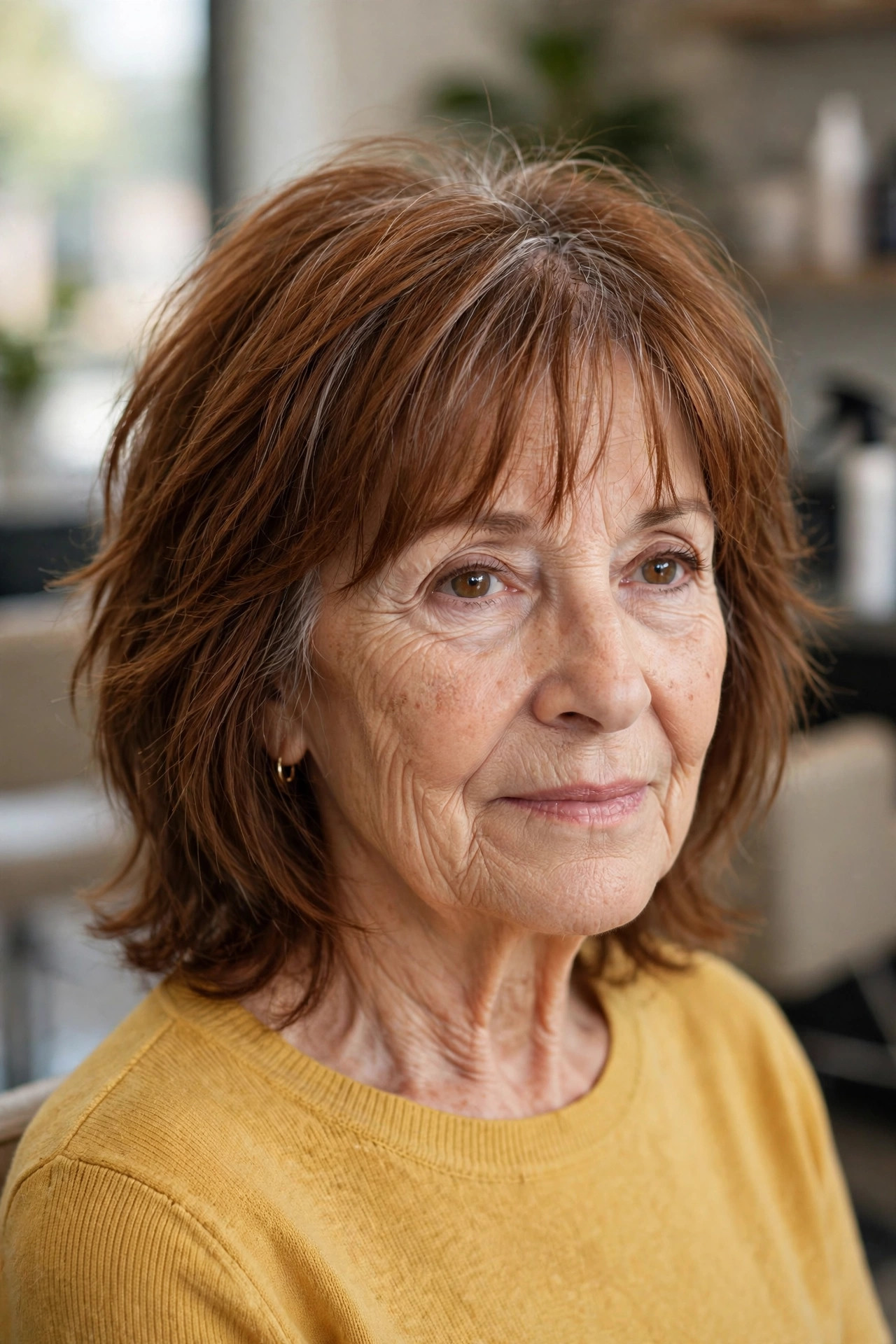
A wispy fringe is the softest way to wear bangs: point-cut sheer so a little forehead shows through, it takes years off the look without committing you to a heavy fringe that needs constant trimming. Paired with feathered medium layers, it gives the shag a light, French softness that suits warm auburn and copper tones beautifully.
Keep the fringe dry-styled first each morning — bangs pick up skin oil before the rest of the hair does, so dry them before moisturizing your face. A mini flat iron on the lowest heat setting smooths the fringe in seconds without cooking fine ends. Trim every three to four weeks to hold the wispiness; it is a small appointment with a big payoff.

9. Tousled Beachy Shag
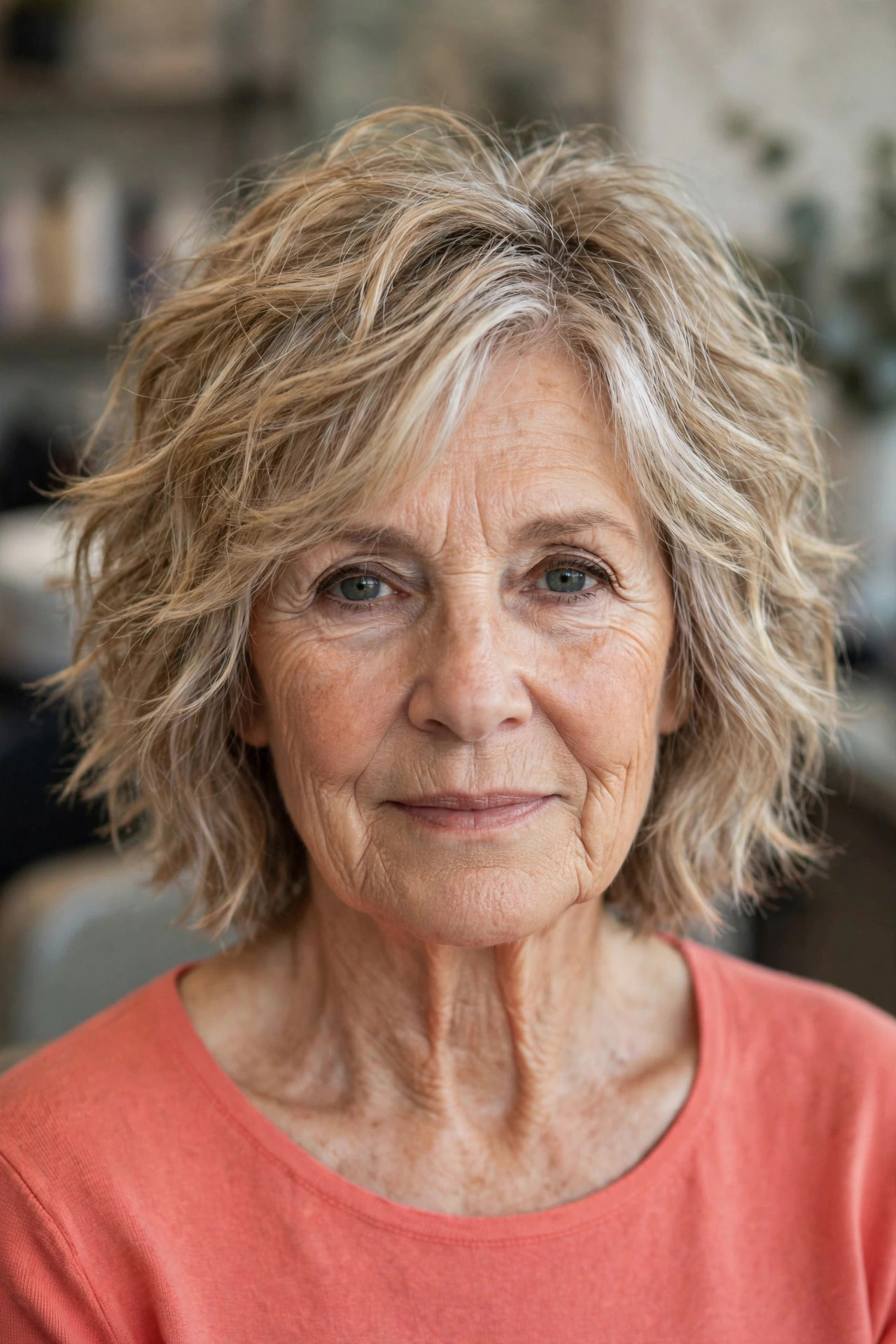
The tousled shag is the weekend version of the cut: piecey, undone texture with soft bends instead of curls, and ends that look sun-touched rather than salon-polished. It is wonderfully forgiving — a style that is supposed to look a little lived-in never has a bad hair day, it just has a more tousled one.
Build it on day-one hair with a sea-salt spray scrunched through the mid-lengths, or revive day-two hair with dry shampoo at the roots and a quick twist of a few front pieces. Sandy blonde and silver-blended shades wear this texture best, because the piecey separation shows off every tone in the hair.
10. Shag with Long Feathered Bangs
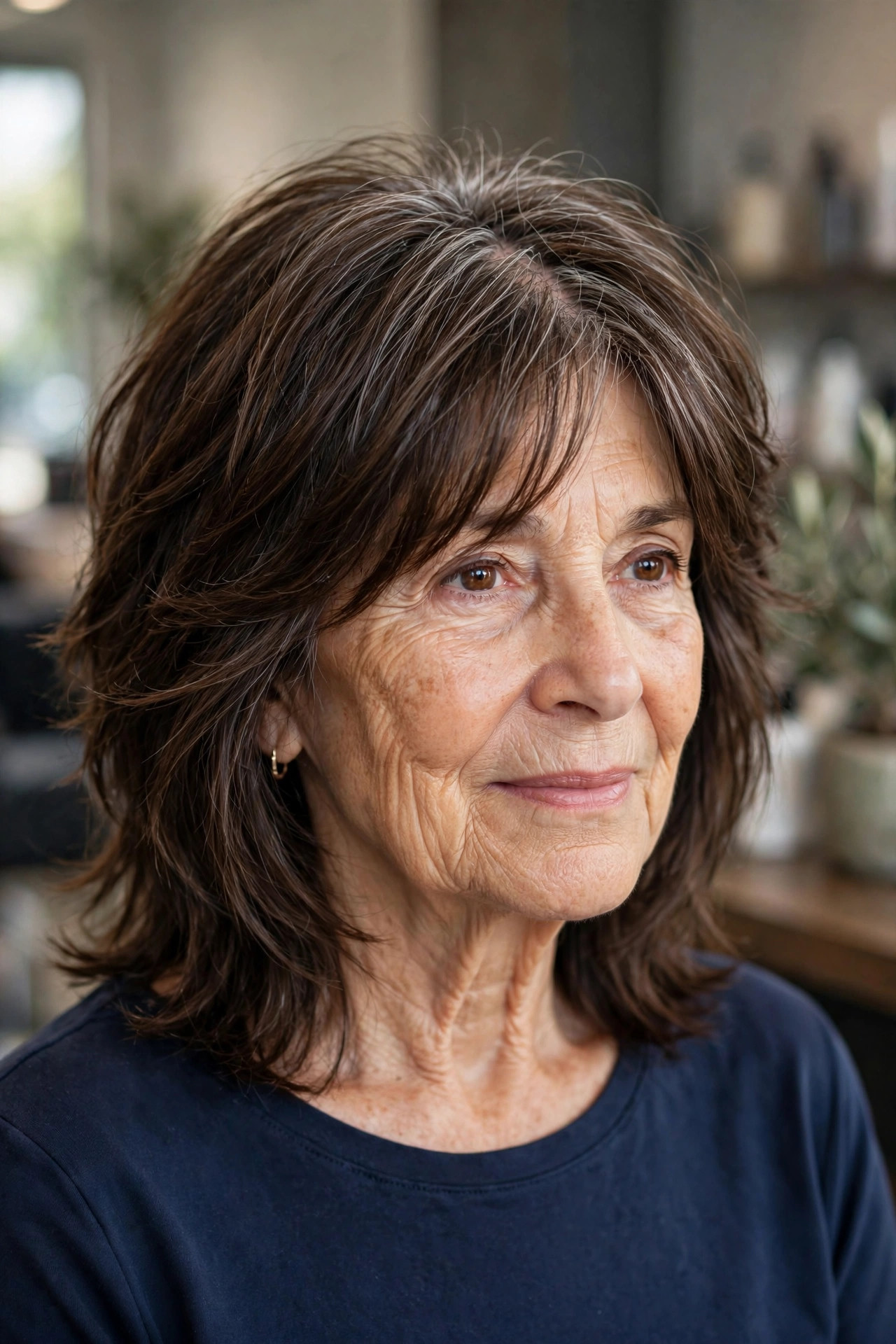
Long feathered bangs melt into the shag instead of sitting on top of it: cut on a curve, longest at the sides, they sweep down and blend into the face-framing layers so there is no visible line where the fringe ends. It is the most seamless, grown-up way to soften a forehead and draw focus to the eyes.
This fringe is also the most versatile — long enough to tuck, pin, or sweep fully to one side when you want a change. Dry it with a round brush rolling away from the face so it falls in that soft feathered arc, and protect it with a heat spray first, because the front pieces take the most styling heat of the whole cut.

11. Salt-and-Pepper Shag with Crown Volume
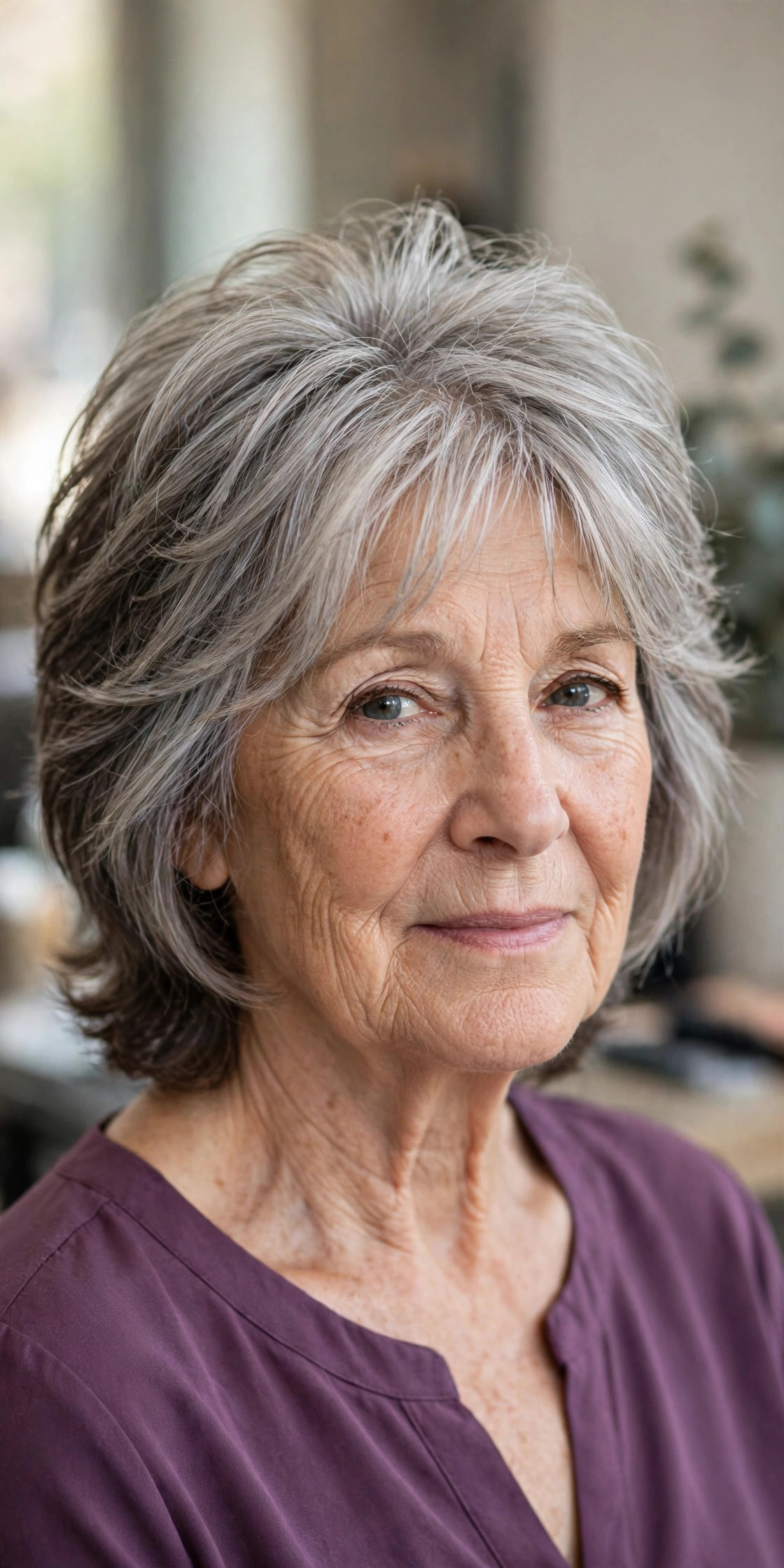
Salt-and-pepper hair has built-in dimension that most women pay a colorist to imitate, and a shag with deliberate crown volume shows it off perfectly. Shorter layers stacked at the crown lift the darker underlayers up through the silver, so the contrast reads intentional and striking rather than like regrowth you are hiding.
Lift is a drying technique as much as a cut: dry the crown forward and up, against the direction it will lie, and finish with a light mist of flexible hairspray rather than a stiff one. Gray hair is wirier at the crown, so keep heat moderate and let a satin pillowcase protect the lift overnight.

12. Shaggy Lob — the Shag Meets the Long Bob
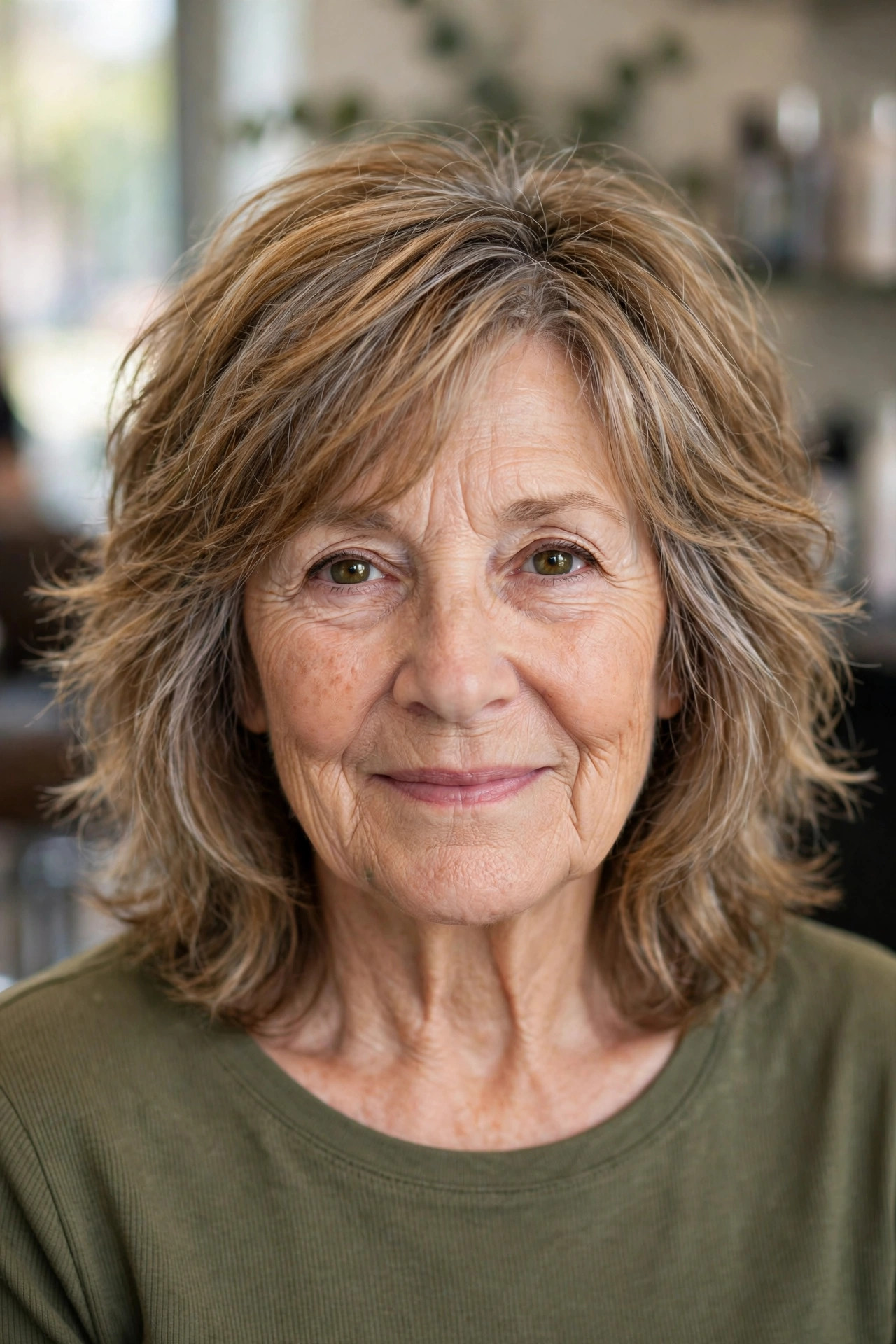
Can not decide between a bob and a shag? The shaggy lob is the peace treaty: a collarbone-length long bob whose clean outline is softened with feathered shag layers and textured ends. You keep the polish and versatility of a lob — including pulling it back — but lose the heaviness that makes a plain lob drag the face down.
This is the friendliest shag for first-timers, because if you ever want to return to a classic lob, you are one perimeter trim away. Style it with a hot-air styler for a smooth finish with flicked ends, or scrunch in texture spray for the full shag effect. It suits medium to thick hair best.

13. Shag with Soft Balayage Highlights
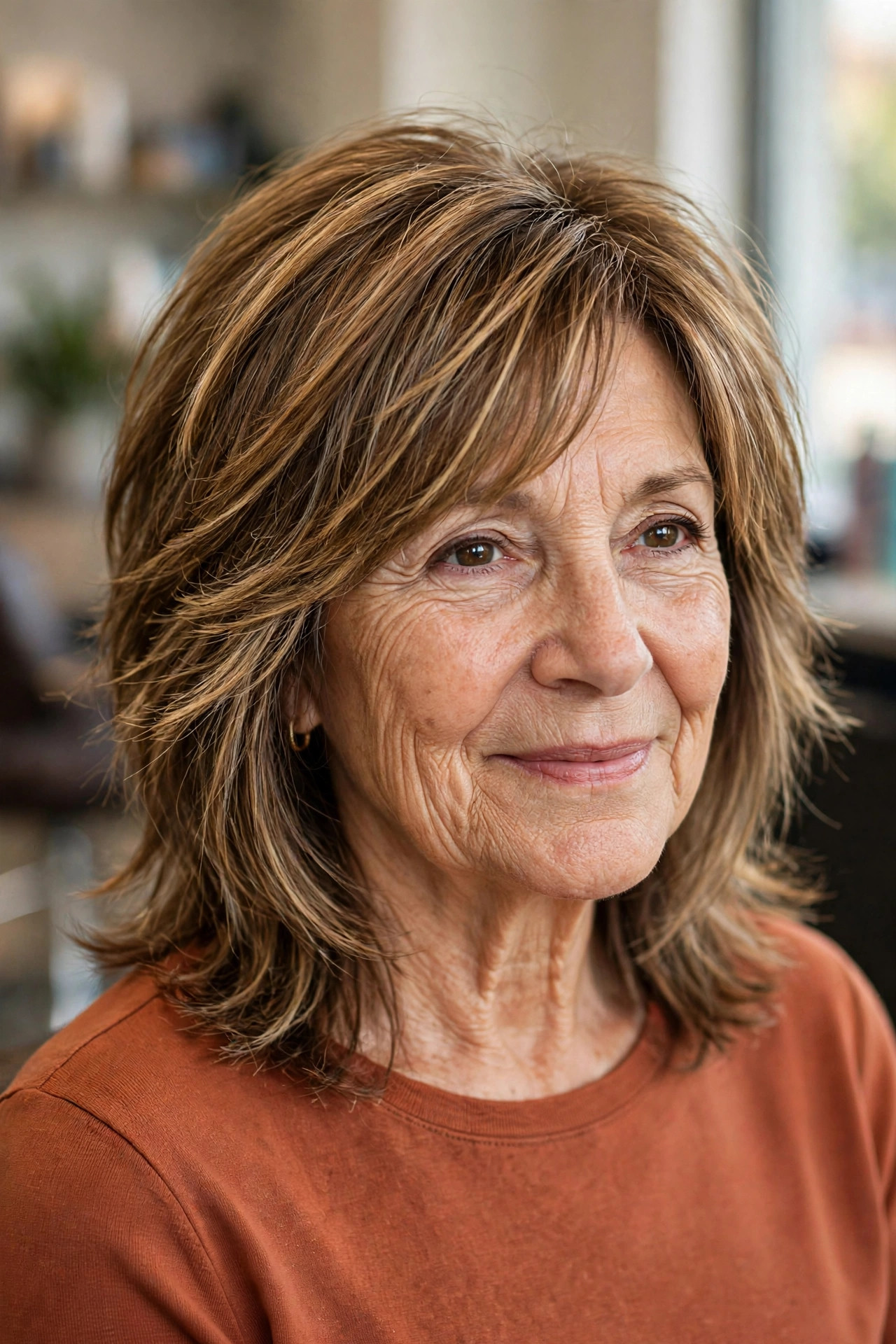
Balayage and the soft shag were made for each other. Hand-painted highlights placed along the layers — never in stripes — catch the light exactly where the hair moves, so the cut looks sunlit from every angle. Because balayage grows out without a hard root line, it is also the lowest-maintenance color a woman over 60 can choose.
Ask for low-contrast painting, just one to two shades lighter than your base, concentrated around the face and through the top layers. Warm honey and caramel tones flatter most mature skin. Protect the painted pieces with a heat spray before any hot tool, since lightened ends are the most fragile part of the hair.
14. Airy Shag for Thick Hair
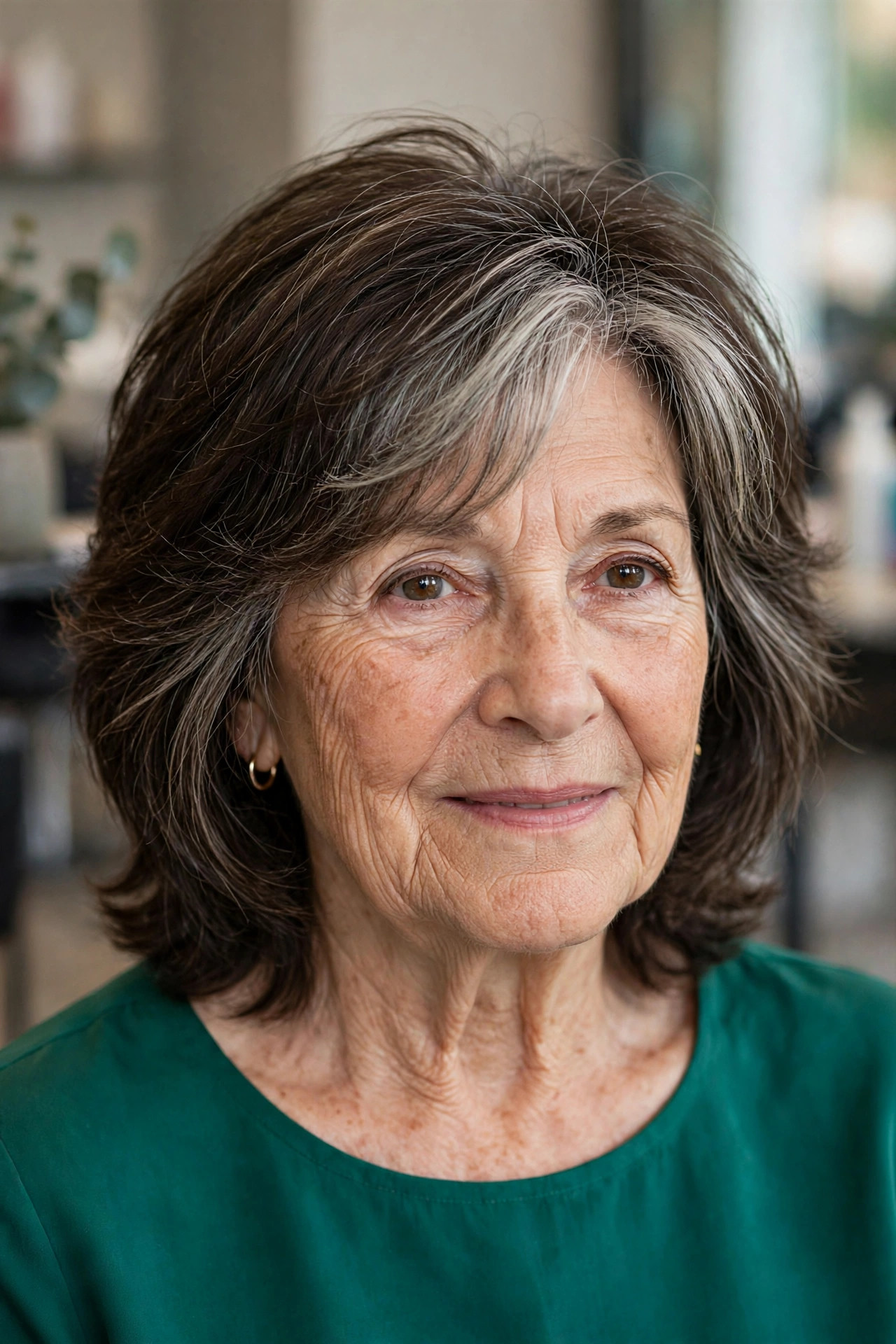
Thick hair after 60 is a gift that can feel like a burden — heavy, hot, and quick to look shapeless. The airy shag answers with interior layering: weight is removed from inside the cut while the soft surface layers stay intact, so the hair keeps its fullness but gains swing, lightness, and a shape that lasts all day.
Be specific with your stylist: you want bulk removed through the mid-lengths and ends, not thinning at the roots, which can create frizz and flyaways. At home, this cut needs almost nothing — a round-brush blowout once, then finger-styling for days. It is the most dramatic before-and-after in this guide.

15. Shag with a Deep Side Part
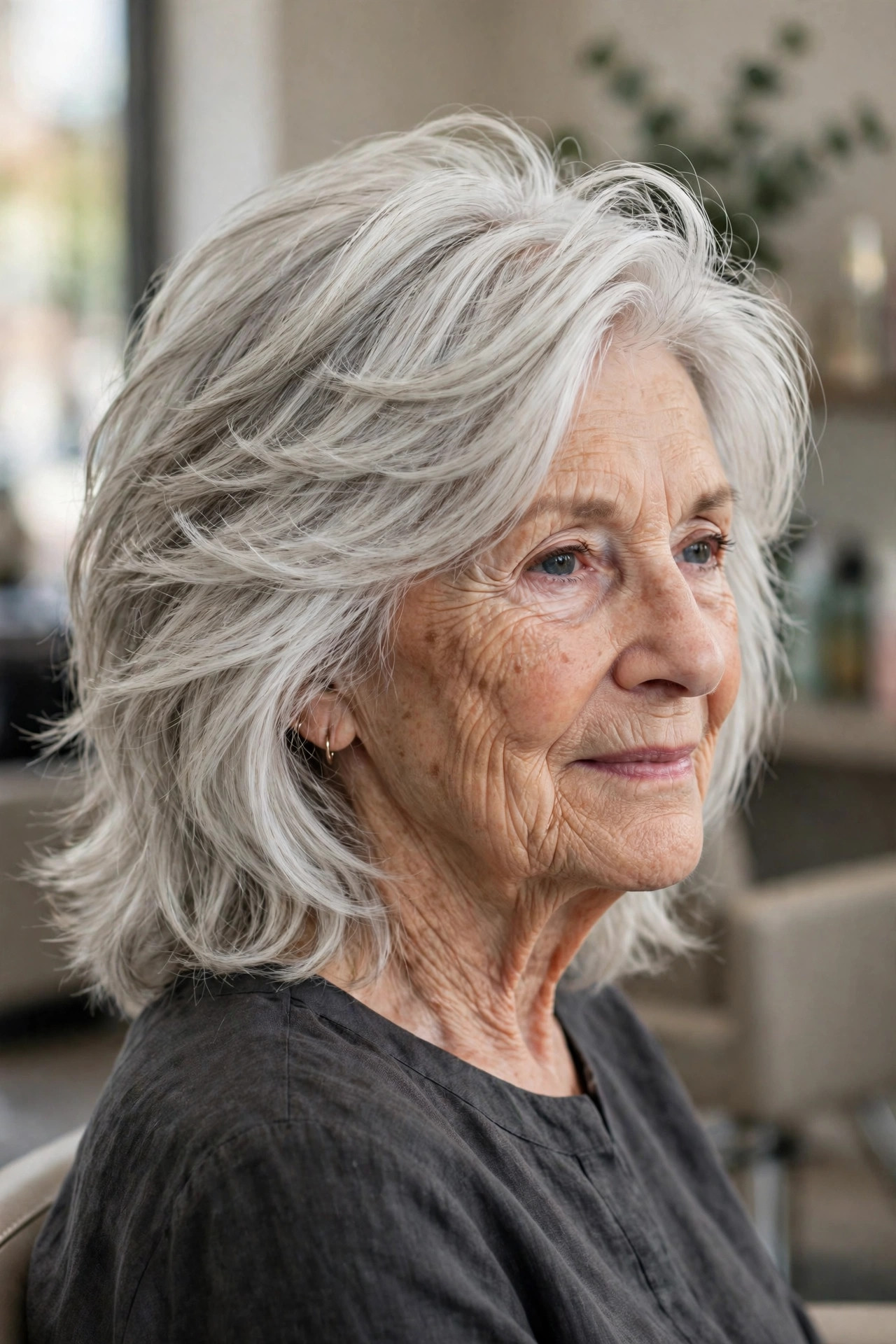
Changing your part is the fastest makeover in this entire article. A deep side part sweeps the shag’s layers into one long diagonal that lifts the crown, slims the face, and gives silvery-white hair a glamorous, old-Hollywood softness — all without cutting a single extra layer.
Mature hair needs retraining to hold a new part: part it deep while damp, pin it flat for ten minutes as it dries, and repeat for a week. After that it falls naturally. This version is a smart choice if your crown is thinning on one side, because the sweep borrows coverage from the fuller side.
16. Shag Tucked Behind the Ears
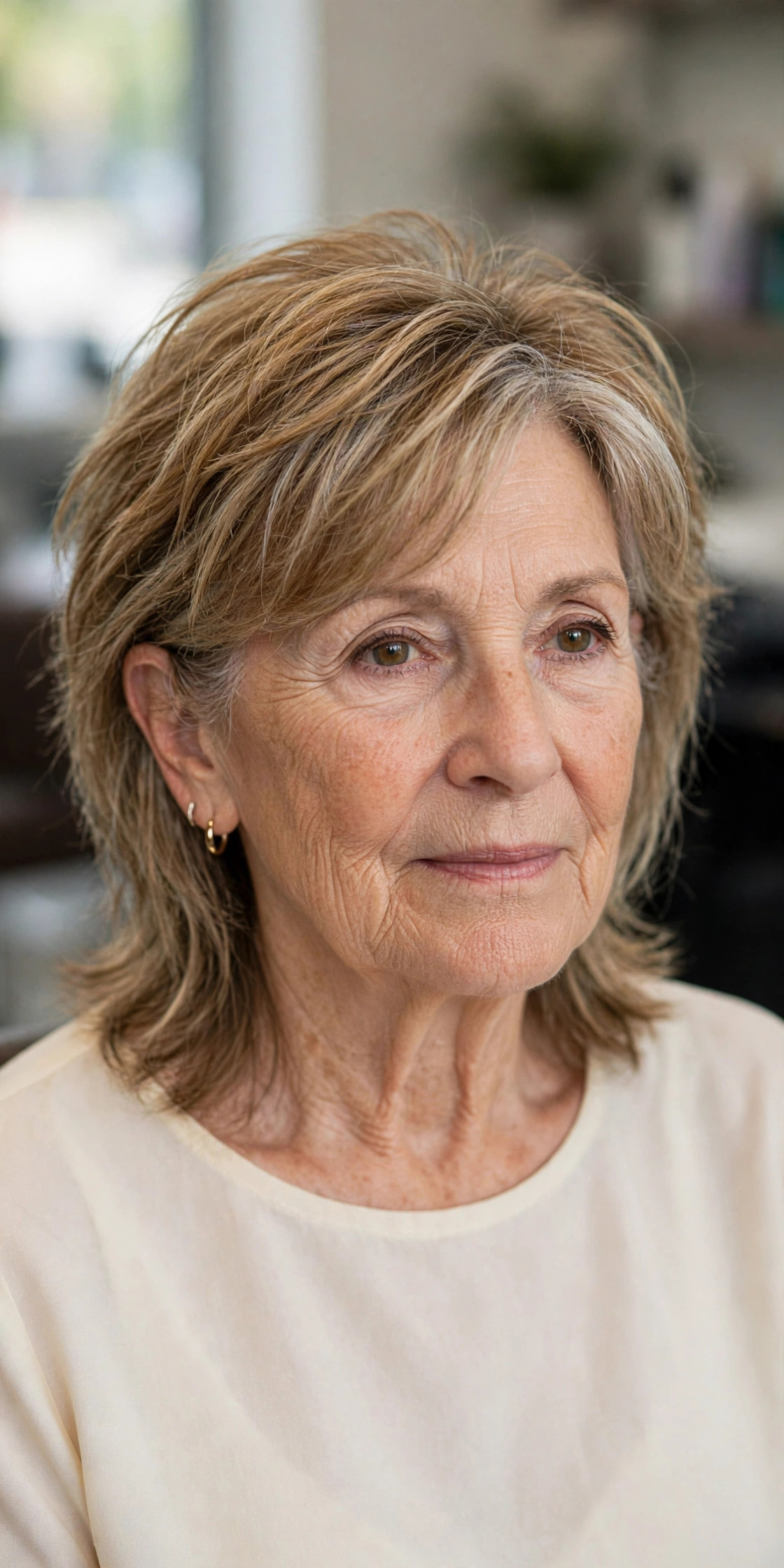
Tucking the front layers behind your ears changes the whole mood of a shag: suddenly the cheekbones and jaw are on show, earrings get their moment, and the feathered layers at the back do all the softening work. It is the same cut, styled two ways — worn loose for softness, tucked for structure.
For the tuck to stay, the front sections need to be cut slightly longer and feathered so they bend behind the ear without springing out. A flat claw clip on each side, worn for a few minutes while you do your makeup, trains the bend on stubborn hair. This is also the most glasses-friendly styling in the guide, since nothing competes with your frames.

17. Shag with Soft Curls and Layered Bounce
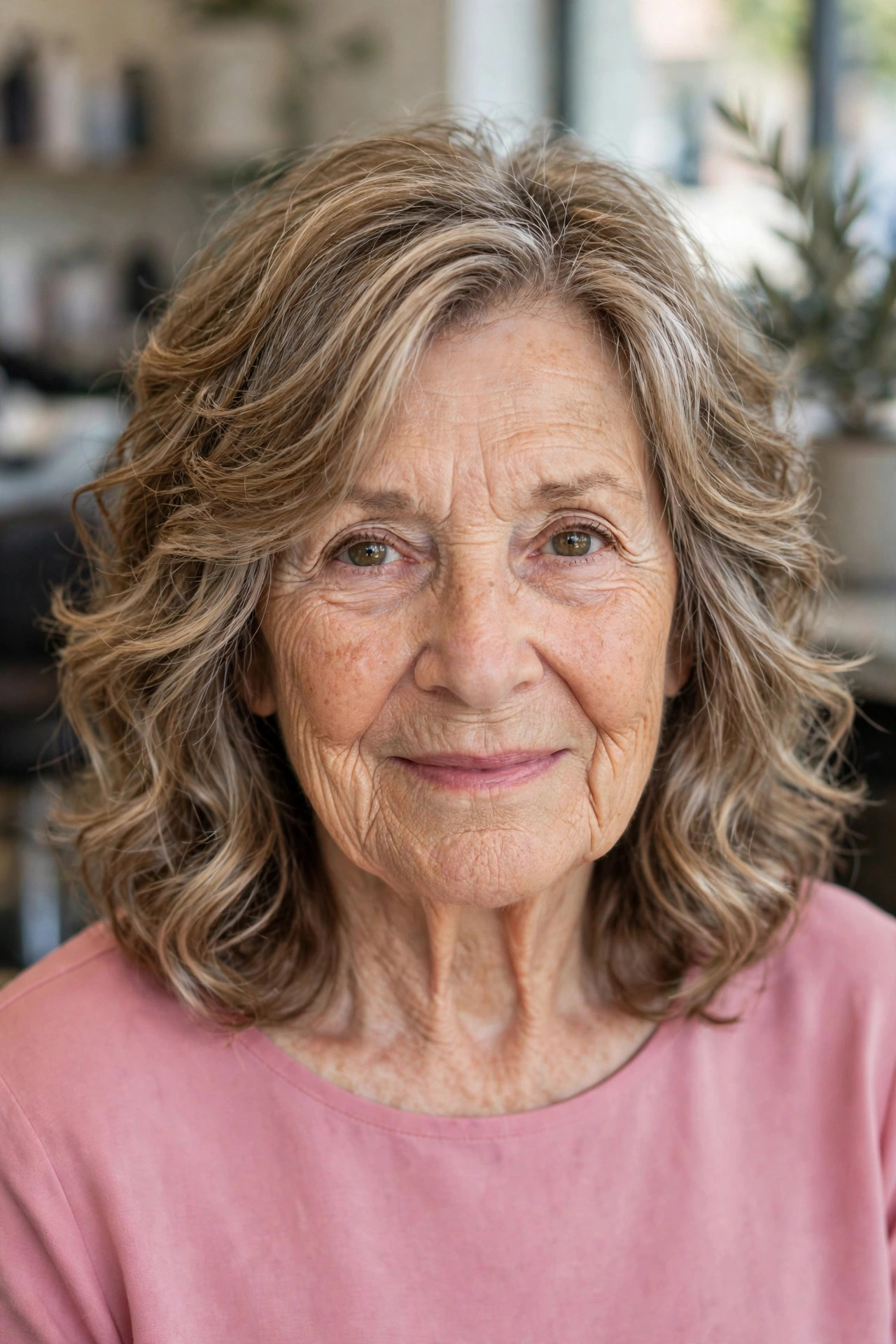
Where the curly shag works with tight natural curl, this version is for loose curls and styled waves: soft, open curls layered so each one sits in its own space instead of stacking into a pyramid. The layering is what creates the bounce — curls cut at staggered lengths spring at different heights, so the whole head looks light and springy.
A hot-air styler or large-barrel brush gives the most consistent soft curl on straighter hair; natural wavy types can simply twist sections while they air-dry. Finish by breaking the curls up with your fingers and the tiniest trace of shine serum on the ends only — never brush them out.
18. Wash-and-Go Shag for Low-Maintenance Mornings
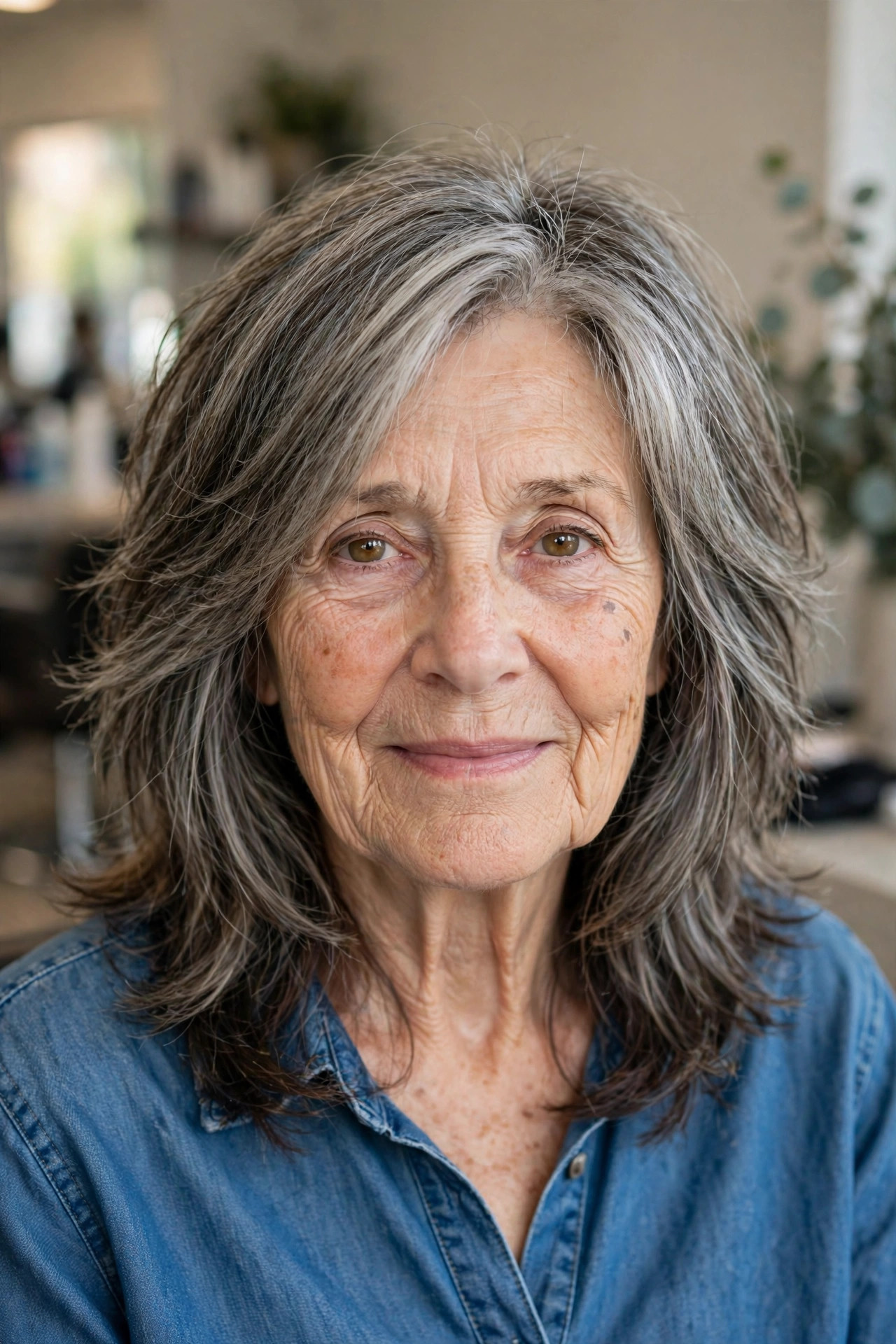
This is the shag for women who are done with styling: cut precisely so the layers fall into place as they air-dry, with no round brush, no hot tools, and no product beyond a leave-in spritz. The soft texture does the work — feathered ends dry in slightly different directions, which reads as effortless movement rather than neglect.
The honesty clause: a true wash-and-go shag depends on an excellent cut, so this is the version worth paying an experienced stylist for, and it needs reshaping every six weeks to keep the fall right. In return you get the fastest mornings on this list. A dry shampoo refresh on day two or three stretches it further.
19. Shag with Feathered, Flipped-Out Ends
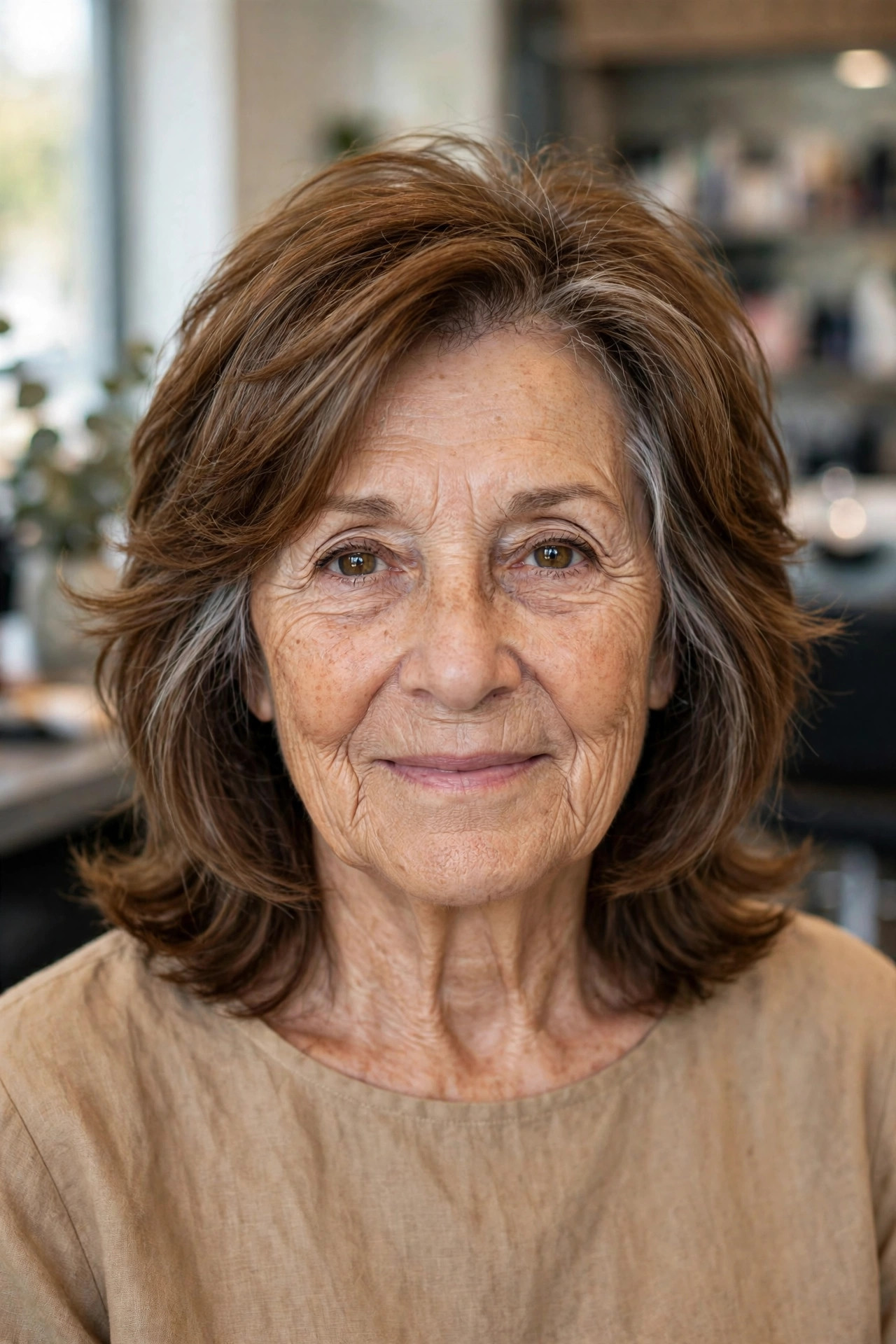
A gentle flip at the ends gives the medium shag its most joyful finish. Feathered layers that kick outward at the shoulder add width where the face has narrowed with age, bounce with every step, and bring a polished retro influence that never tips into costume because the layers stay soft and modern.
Create the flip with a round brush rolling the ends outward as you dry, or a quick pass of a flat iron bending only the last two inches. Keep the bend loose — a stiff, uniform flip is what dates the look. Chestnut and warm brown shades show the flicked silhouette especially well.

20. Polished Evening Shag with a Glossy Finish
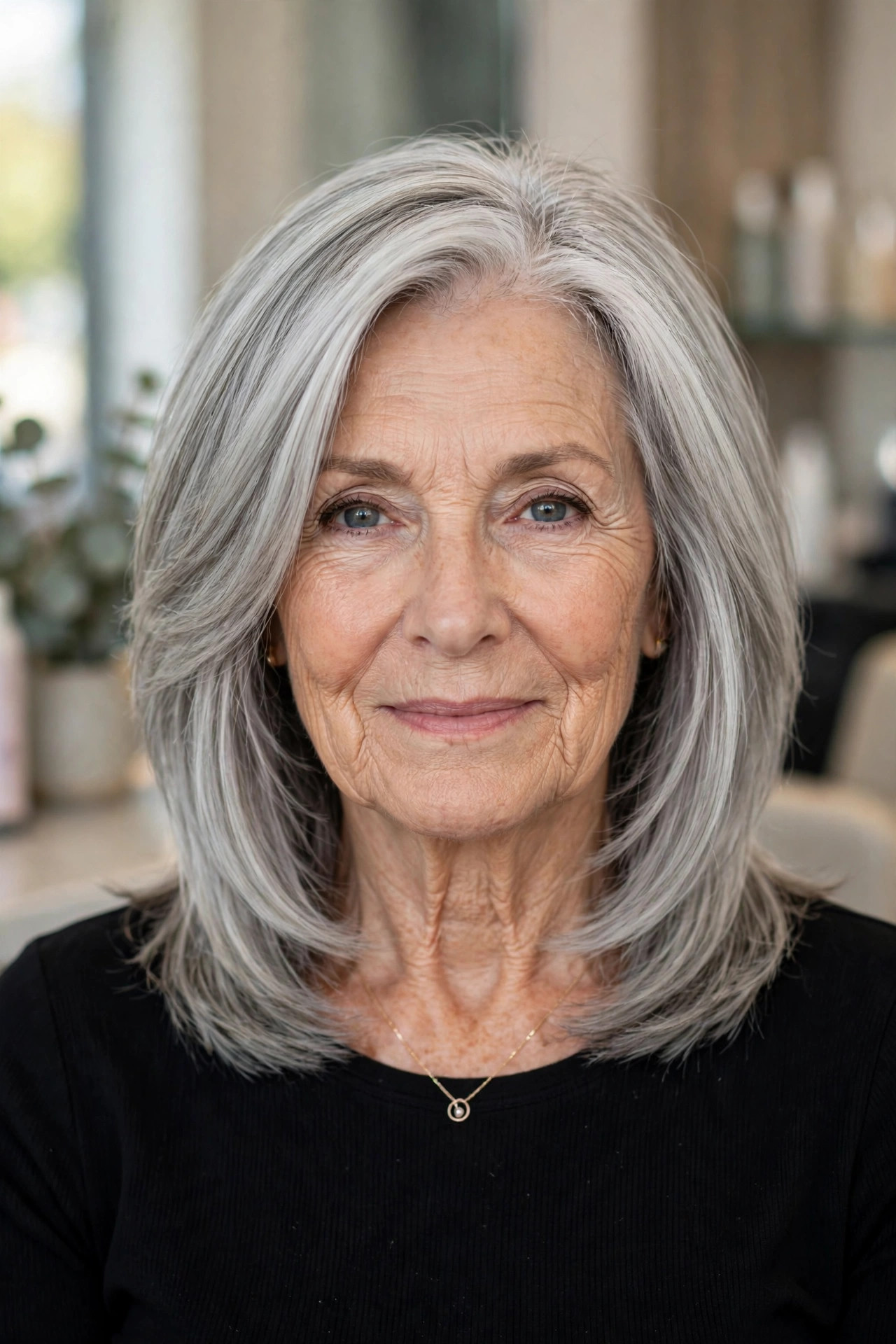
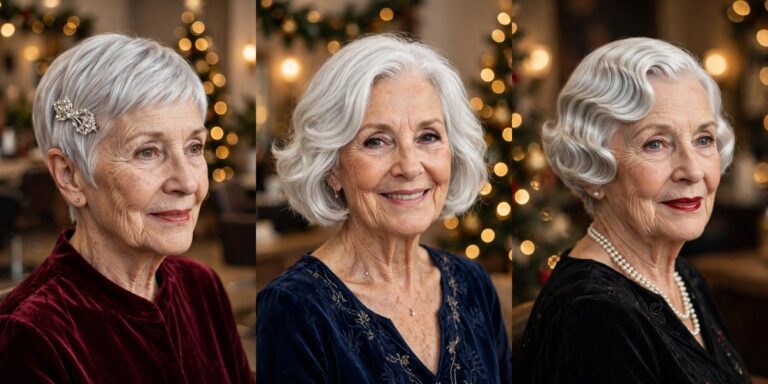
The same soft shag, dressed up: for evenings, the layers are smoothed and pressed into a glossy, deliberate finish that reads elegant rather than undone. Silver and gray hair looks spectacular polished this way, because one smooth surface reflects light like satin and shows off the color’s natural brightness.
Work a heat protectant through first, then dry smooth with a paddle brush and finish the ends with a flat iron on moderate heat — mature and gray hair scorches faster than pigmented hair, so never max the temperature. A final mist of flexible shine-friendly hairspray holds the polish without freezing the movement the shag is loved for.

Recommended Products
These are the products our readers reach for most with a soft-textured shag: gentle volume at the roots, light texture through the layers, and refreshers that keep the feathered finish alive between washes.
How to Care for a Soft-Texture Shag
- Trim every 6–8 weeks — soft texture is the first thing to go as layers grow out and merge.
- Apply products light and low — mousse at the roots, texture spray on the ends, almost nothing in the middle.
- Dry in the direction of movement — lift the crown up and back; let the sides rest soft.
- Protect before heat — mature and gray hair scorches faster; always use a heat protectant and moderate temperatures.
- Refresh, do not rewash — dry shampoo on day two keeps volume without stripping fragile ends.
- Sleep on satin — a satin pillowcase keeps feathered layers from frizzing apart overnight.
- Tone silver monthly — a purple shampoo once a week keeps gray and silver shags bright, not yellow.
One more habit worth building: photograph your shag on a good hair day, front and side. At your next appointment that photo tells your stylist more about layer length and texture than any description — the same trick stylists recommend in our guide on what to tell your stylist, and it works just as well for shags.
Frequently Asked Questions
Is a shag haircut flattering after 60?
Yes — the modern soft shag is one of the most flattering cuts after 60, because its feathered layers add movement and lift where hair tends to flatten, and the soft texture softens facial features instead of framing them harshly. The key word is soft: ask for blended, point-cut layers rather than the choppy, spiky shag of the 1970s.
What is the difference between a shag and a layered haircut?
All shags are layered, but a shag concentrates shorter layers through the crown and top with feathered, textured ends, while a classic layered cut keeps the layers longer and more uniform. The shag’s crown layering is what creates its signature lift and movement, especially at medium lengths.
Does a medium shag work on fine or thinning hair?
It works very well when the layering is disciplined: lighter layers through the crown only, with the perimeter kept slightly denser so ends do not look stringy. A volumizing mousse at the roots and a light texture spray on the ends make fine hair look noticeably fuller in a soft shag.
How often does a medium shag need trimming?
Every six to eight weeks is the sweet spot. The soft, feathered finish is a precise balance of layer lengths; as it grows past eight weeks the layers merge, the crown lift drops, and the shape starts to look like ordinary medium hair again.
Can a shag work with glasses?
Absolutely. Choose softer side layers and consider the tucked-behind-the-ears styling, which keeps hair from competing with your frames. Curtain bangs also pair beautifully with glasses, because they sweep away from the eyes instead of resting on the frames.
Should I get bangs with my shag at 60?
If you would like to soften forehead lines, yes — but choose soft versions: curtain bangs, a wispy see-through fringe, or long feathered bangs that blend into the layers. Avoid heavy blunt fringes, which can look severe and need the most upkeep.
The soft medium shag earns its popularity honestly: it is forgiving to style, kind to mature features, and adaptable to nearly every hair type and color — including the silver you have earned. Pick the two or three ideas above that match your hair type, save the photos, and let your stylist tailor the layers to your face. Movement, softness and a little lift can change how you feel about your hair at any age — and after 60 is exactly when it matters most.