Long Hair With Face-Framing Layers for Women Over 50
This post contains affiliate links. As an Amazon associate, I earn from qualifying purchases. I only recommend products that are of high quality and that I would use myself.
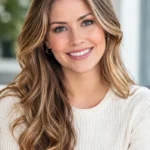
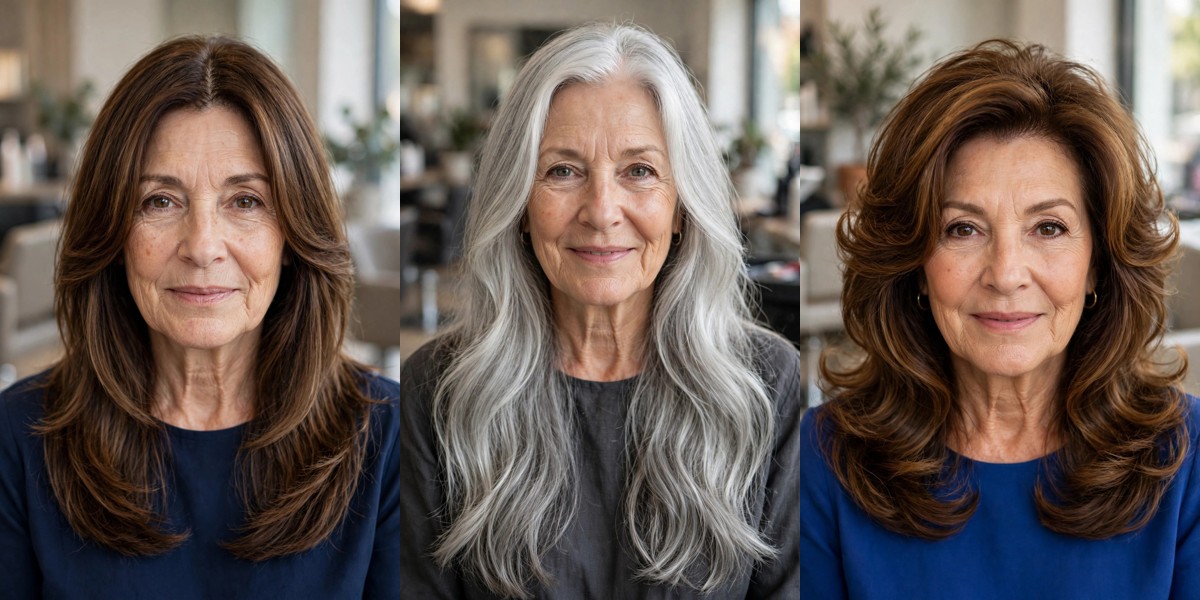
Love your long hair but feel like it is quietly working against you — hanging flat, pulling focus downward, and hiding the face you actually want people to see? You do not need to cut it off. You need framing. Face-framing layers are the single most flattering change you can make to long hair after 50, because they put movement, light, and lift exactly around your features while every inch of length you love stays right where it is.
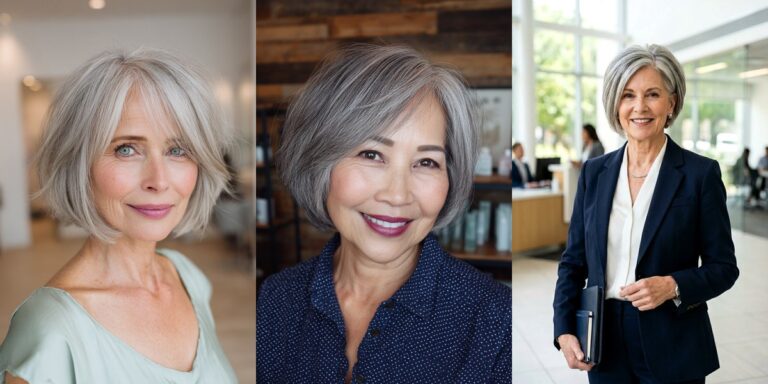
Stylists reach for framing for a reason: a curved layer at the cheekbone can restore the impression of fullness there, a jaw-length piece can sharpen a softening jawline, and a soft curtain opening at the front makes eyes look brighter. It is the same principle behind many of our favorite short hairstyles for women over 50 — the shape around the face matters more than the length behind it.
Below are 20 ways to wear long hair with face-framing layers, from classic curtains and money-piece color to silver framing, shags, curls, and sleek blunt versions. Each one explains who it flatters, what to ask for, and how to style it at home — so you can walk into the salon with a photo and a plan.
Table of Contents
- 1. Classic Curtain Face-Framing Layers
- 2. Cheekbone-Length Framing Layers
- 3. Jaw-Length Framing Pieces
- 4. Chin-Length Framing with Long Layers
- 5. Curtain Bangs with Long Face-Framing Layers
- 6. Wispy Bangs and Face-Framing Layers
- 7. Side-Swept Bangs with Framing Layers
- 8. Money Piece Highlights with Face-Framing Layers
- 9. Silver Face-Framing Layers on Long Gray Hair
- 10. Soft Feathered Face-Framing Layers
- 11. Long Shag with Face-Framing Layers
- 12. Wavy Long Hair with Face-Framing Layers
- 13. Curly Long Hair with Face-Framing Layers
- 14. Sleek Straight Long Hair with Blunt Framing
- 15. Deep Side Part with Face-Framing Layers
- 16. Center Part Curtain Layers for Long Hair
- 17. Layered Blowout with Face-Framing Curtain
- 18. Face-Framing Layers with Balayage Brightening
- 19. Graduated Short-to-Long Framing Layers
- 20. Half-Up Style Showing Off Face-Framing Layers
- Recommended Products
- FAQs
Quick pick: Want lift at the cheeks → Cheekbone-Length Framing (#2). Softer jawline → Jaw-Length Pieces (#3). Forehead coverage → Curtain Bangs (#5) or Wispy Bangs (#6). Going gray → Silver Framing (#9) or Money Piece (#8). Wear hair up a lot → Half-Up Framing (#20). Not sure of your starting point → read them all, then check your face shape before you book.
1. Classic Curtain Face-Framing Layers
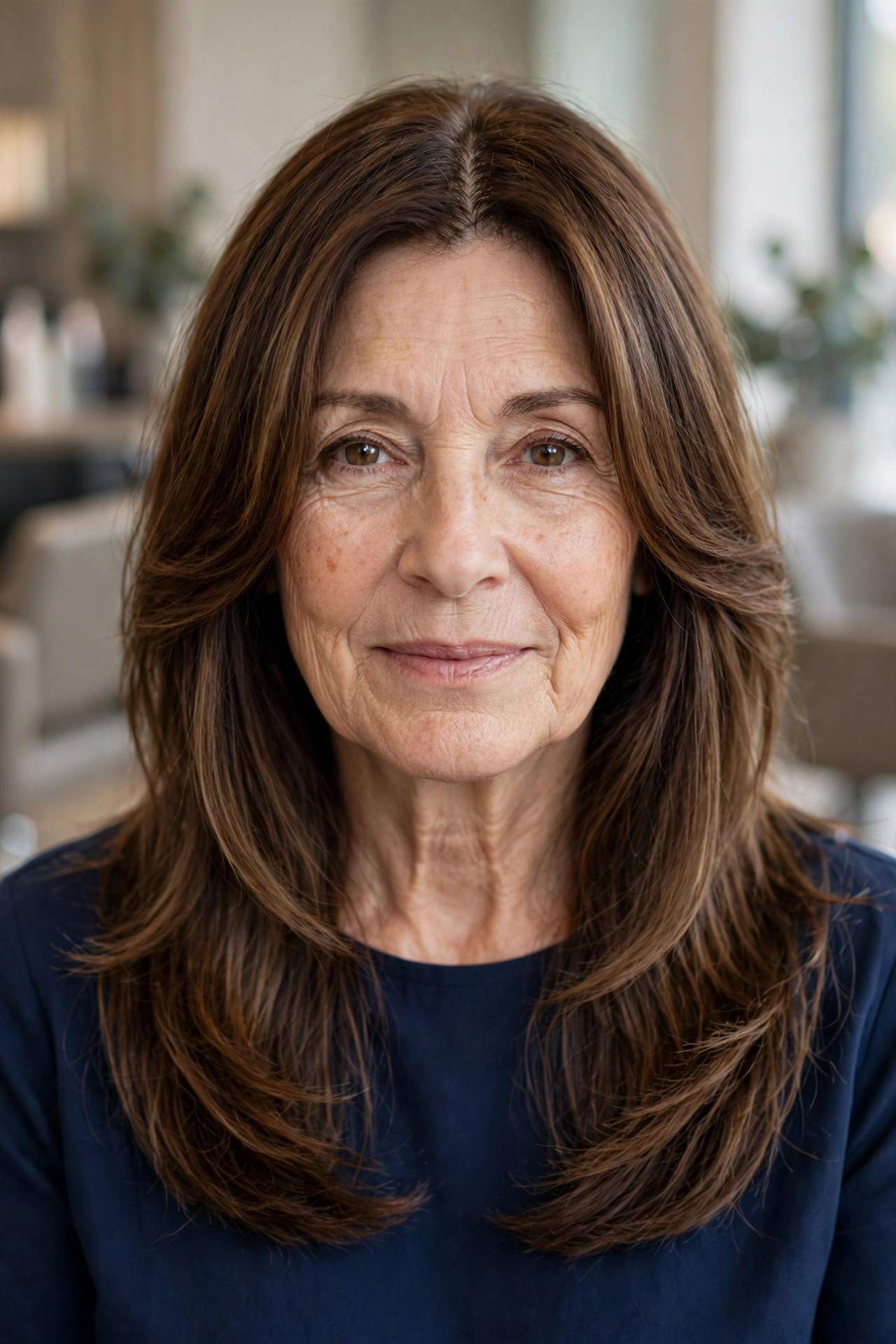
This is the reference point for the whole list: long hair kept long, with two front sections that open from a center part like curtains and curve away from the cheekbones. The framing does what makeup contouring does — it creates light and shadow around the face, lifts the focus to your eyes, and stops long hair from hanging in two flat curtains that drag everything down.
It suits almost every face shape because your stylist chooses where the shortest piece starts. Ask for the first layer at the cheekbone if you want lift, or at the jaw if you prefer a softer, longer sweep. Blow-dry the front pieces away from your face with a round brush and the curtain shape sets in minutes.


2. Cheekbone-Length Framing Layers
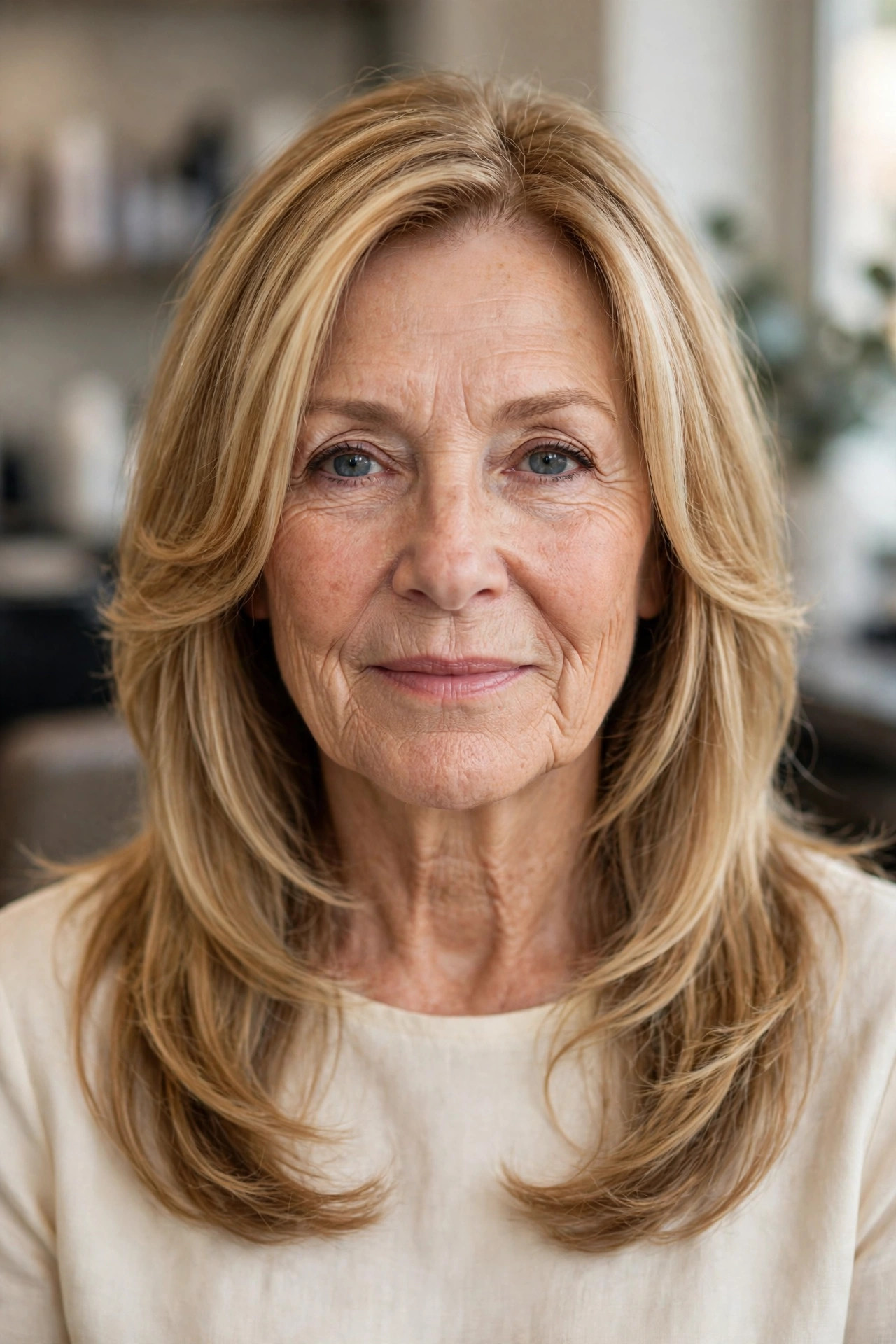
Here the shortest framing pieces land exactly at the cheekbones — the highest-impact spot on the list. That short, curved layer flicks outward right beside your eyes, creating width and lift where faces often start to look tired or narrow after 50. The rest of the hair stays long and flowing behind it, so you lose none of your length.
This is a brilliant choice if your cheeks have lost a little fullness, because the flick of hair visually restores it. Keep the pieces soft and blended rather than choppy. A pea-sized amount of mousse at the front before blow-drying helps those short layers hold their outward curve all day.
3. Jaw-Length Framing Pieces
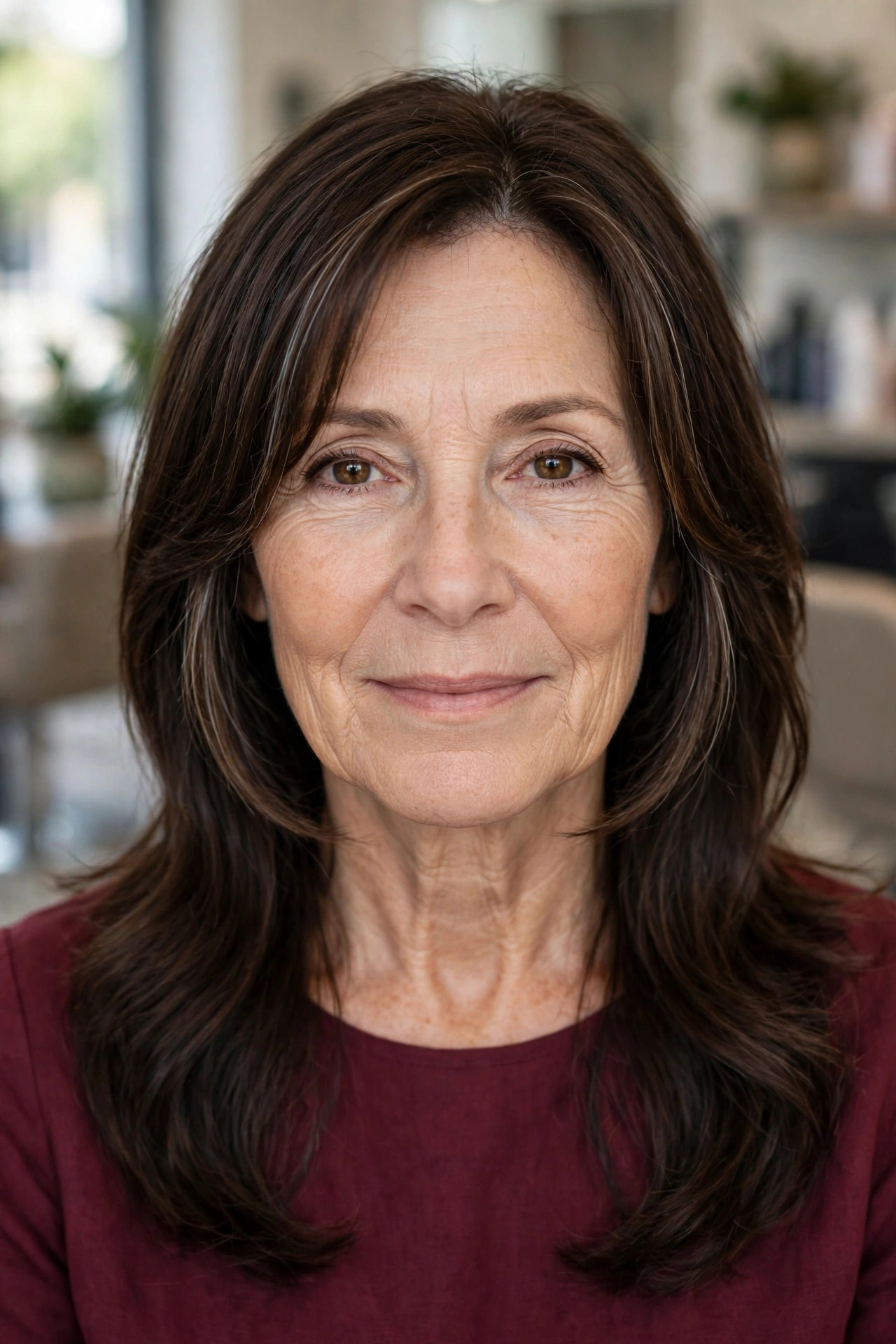
Framing that ends at the jaw puts movement and definition exactly along the jawline — helpful when that line is softer than it used to be. The front pieces swing as you move, catch the light, and give long hair a clear, intentional shape at the front instead of a vague, grown-out feel.
Jaw-length framing flatters oval, heart, and longer faces particularly well. If your face is very round, ask for the pieces a fraction longer, just past the jaw, so they lengthen rather than widen. A single pass with a flat iron, bending the ends slightly under, keeps the line clean and deliberate.


4. Chin-Length Framing with Long Layers
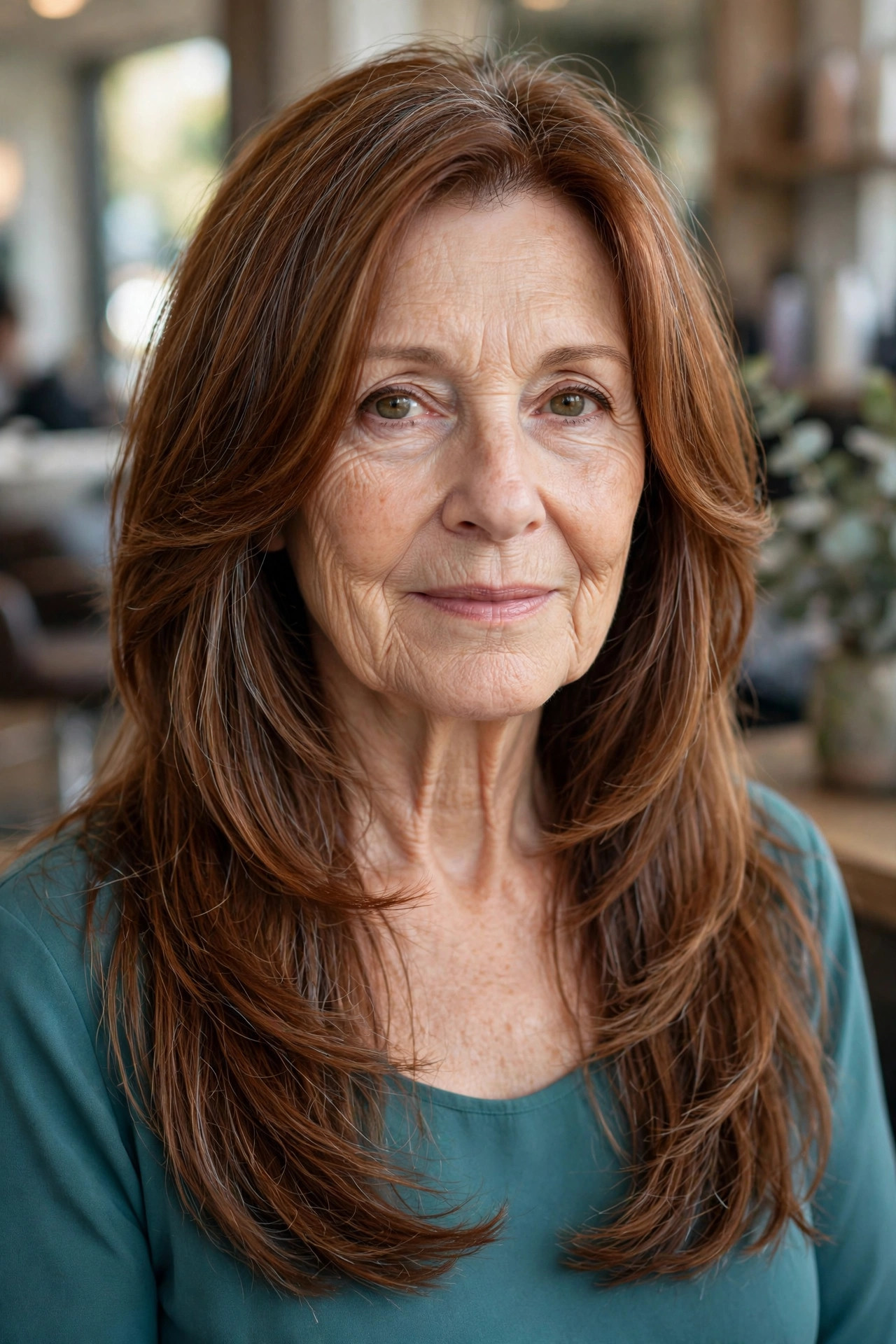
A step longer than jaw framing, chin-length front layers combined with long layers through the back give you the best of both worlds: noticeable face-framing up front and weightless movement everywhere else. The step between the chin piece and the long hair behind it is gradual, so the effect is soft rather than shelf-like.
This version is kind to fine hair, because the long layers remove just enough weight to let the front pieces bounce. It is also one of the easiest on this list to grow out or adjust — your stylist can shorten or lengthen that first step at every trim until you find your perfect starting point.


5. Curtain Bangs with Long Face-Framing Layers
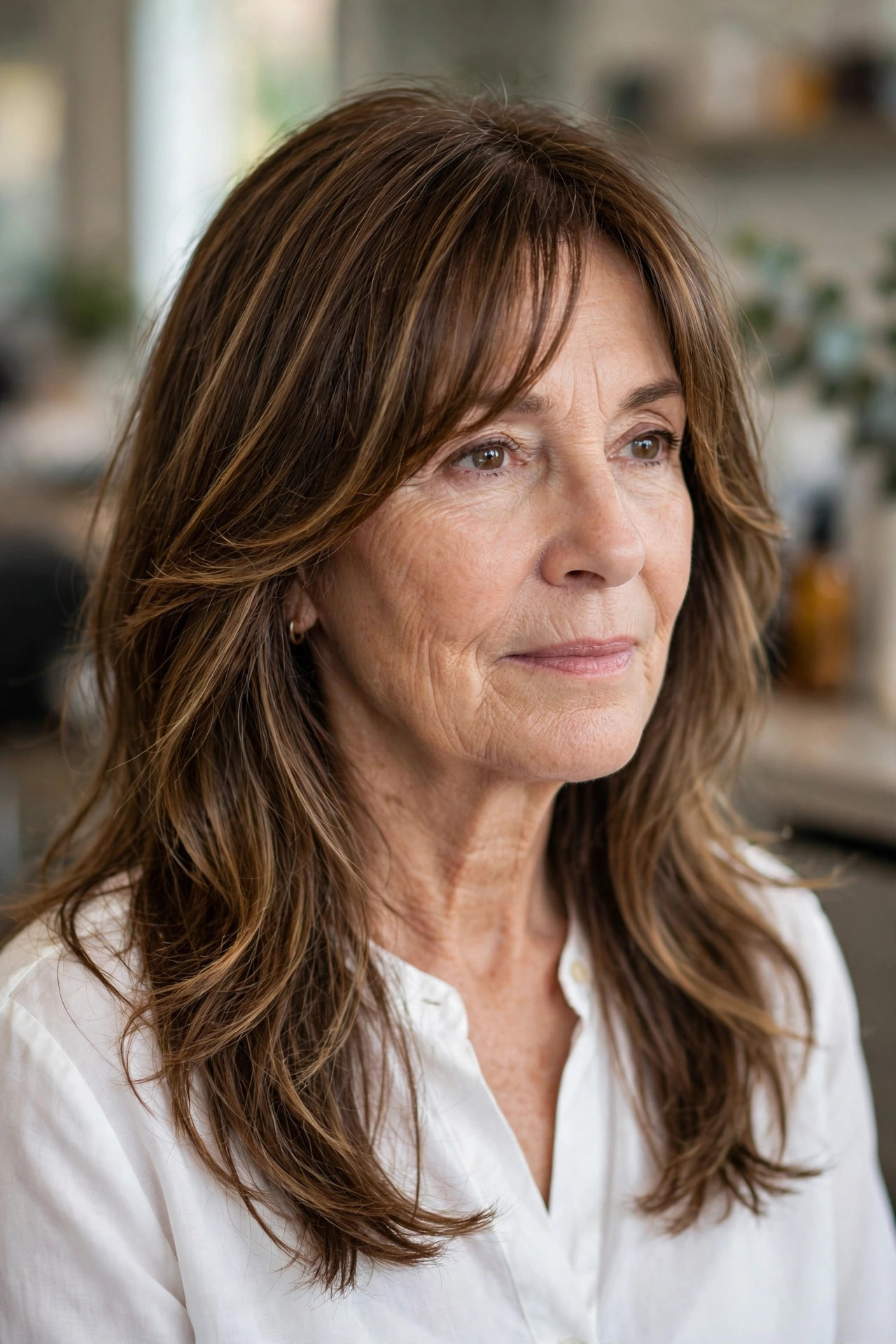
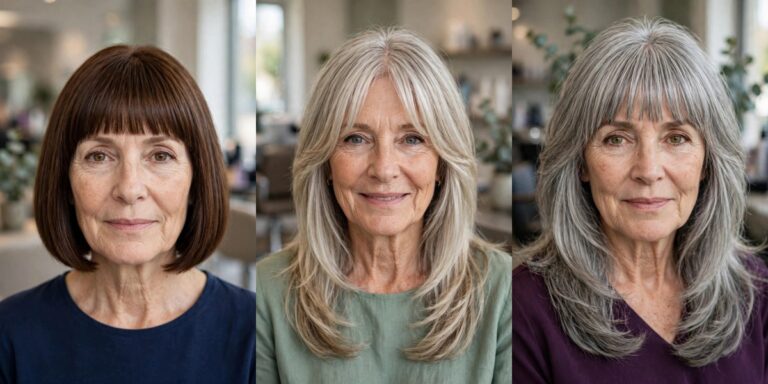
Curtain bangs plus framing layers is the most requested combination in salons right now, and it earns the hype. The bangs part in the middle and sweep open, then continue seamlessly down into the longer framing layers — one unbroken curve from brow to collarbone that softens the forehead and spotlights the cheekbones at the same time.
Unlike a full fringe, curtain bangs are forgiving: they hide a high forehead, skim over brow lines, and grow into plain framing layers within weeks if you change your mind. Dry them forward first, then sweep them apart with a round brush. If you are exploring shorter options too, our bob haircuts for women over 50 show how beautifully this same fringe works at bob length.

Not sure where your framing should start? The perfect starting point — cheekbone, jaw, or chin — depends on your face shape. Try our free Face Shape Finder tool to discover your face shape in under a minute, then show your stylist the ideas below that match it.
6. Wispy Bangs and Face-Framing Layers
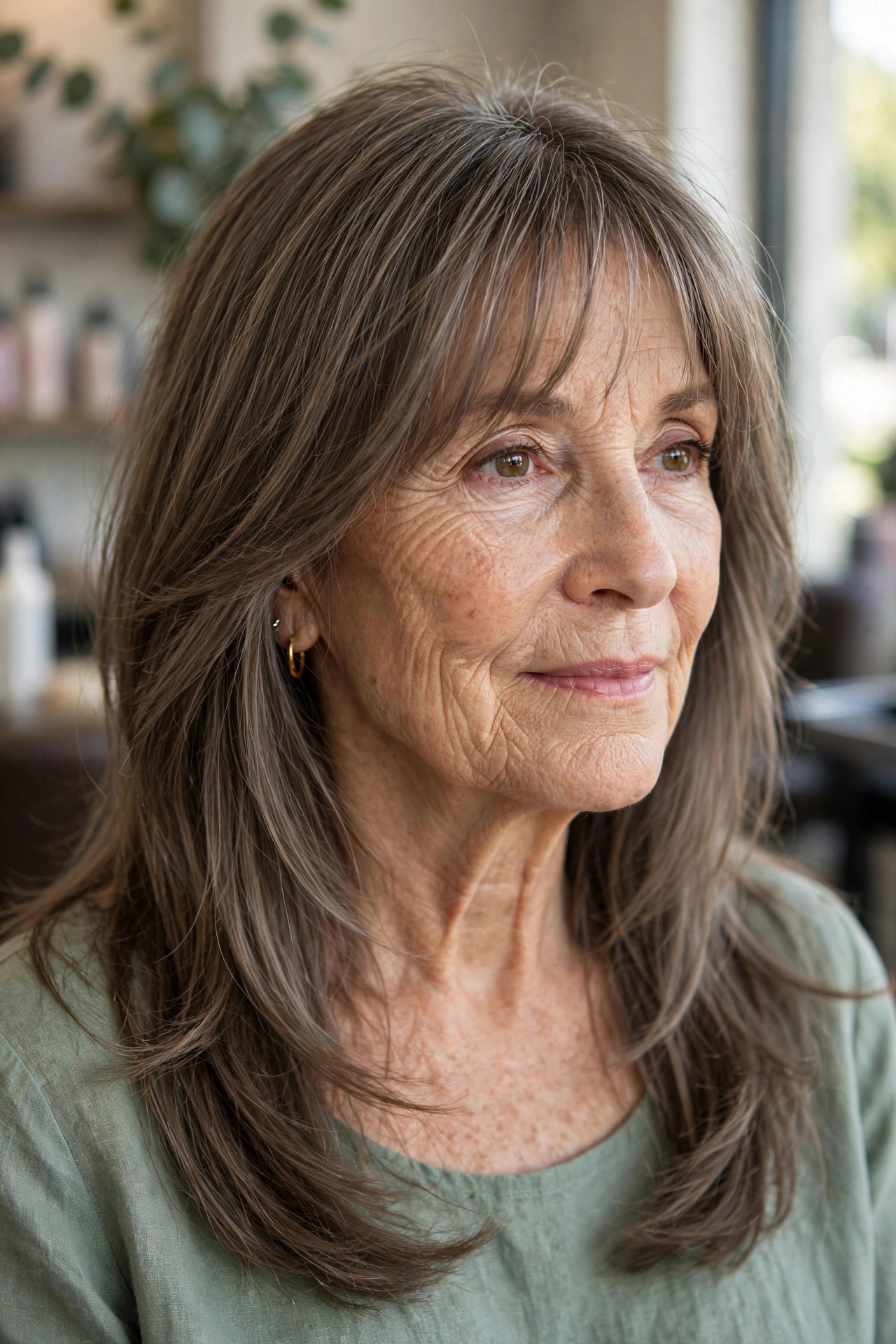
If a full bang feels heavy, wispy bangs are the lighter answer. A soft, see-through fringe rests on the forehead while feathered framing layers fall at the sides, giving you forehead coverage without a solid wall of hair. On long hair the combination feels romantic and airy rather than severe.
Wispy bangs suit fine hair especially well because they do not demand thickness to look right — a few soft strands are the whole point. They do need a quick morning routine: a ten-second blast with the dryer and a brush keeps them from separating. The side framing hides the bang’s edges, so the grow-out is gentle.


7. Side-Swept Bangs with Framing Layers
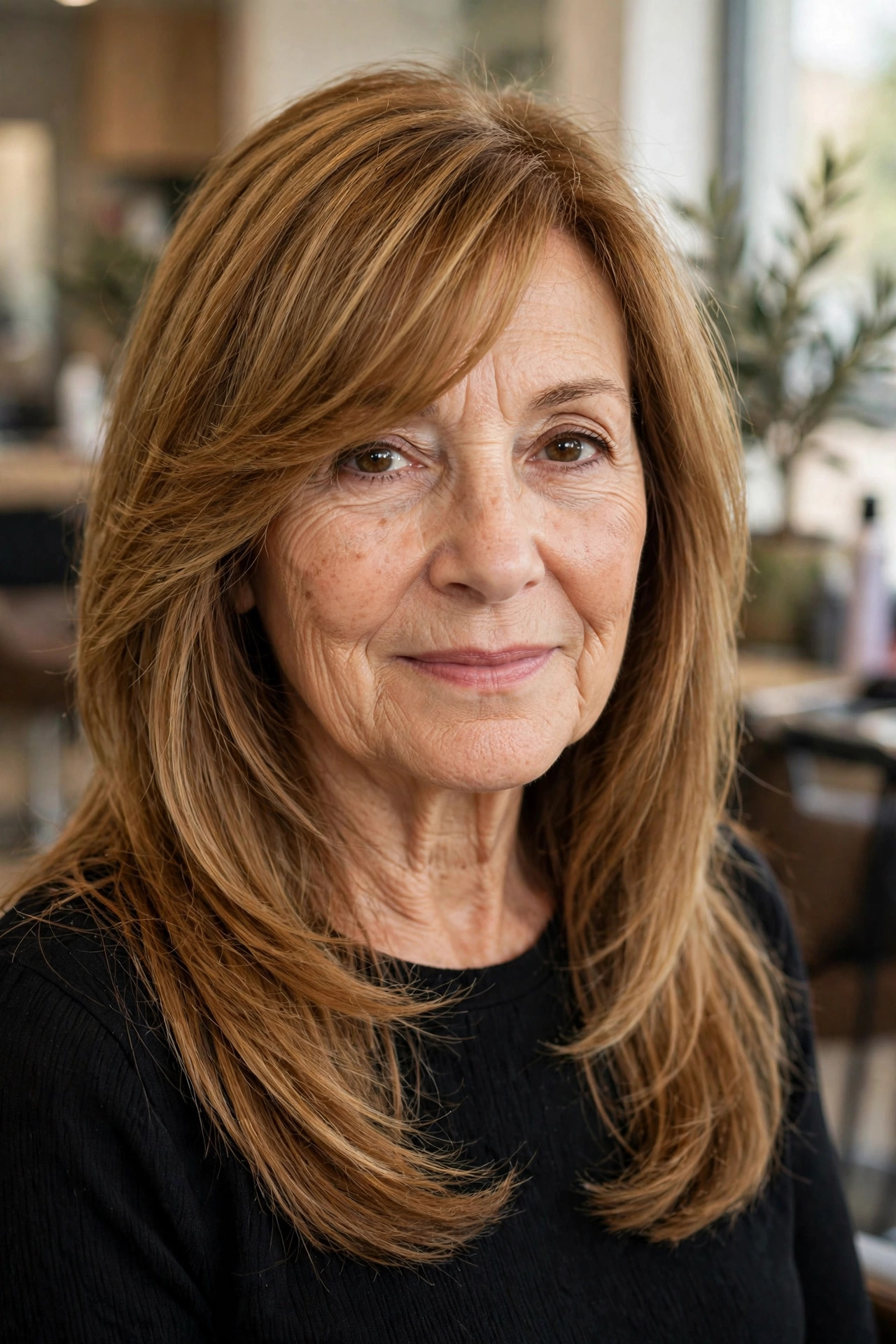
A long side-swept bang creates a diagonal across the forehead, and diagonals are flattering — they break up horizontal lines, draw the eye across and down to the cheekbones, and add instant polish to long hair. Paired with framing layers on the longer side, the whole front of the haircut works as one elegant sweep.
This is a smart pick if one side of your face is your ‘good side’ in photos, or if you like tucking hair behind one ear. Keep the sweep long — ending around the cheekbone — so it blends into the framing rather than stopping abruptly. A light, flexible hairspray holds the sweep without making it stiff.
8. Money Piece Highlights with Face-Framing Layers
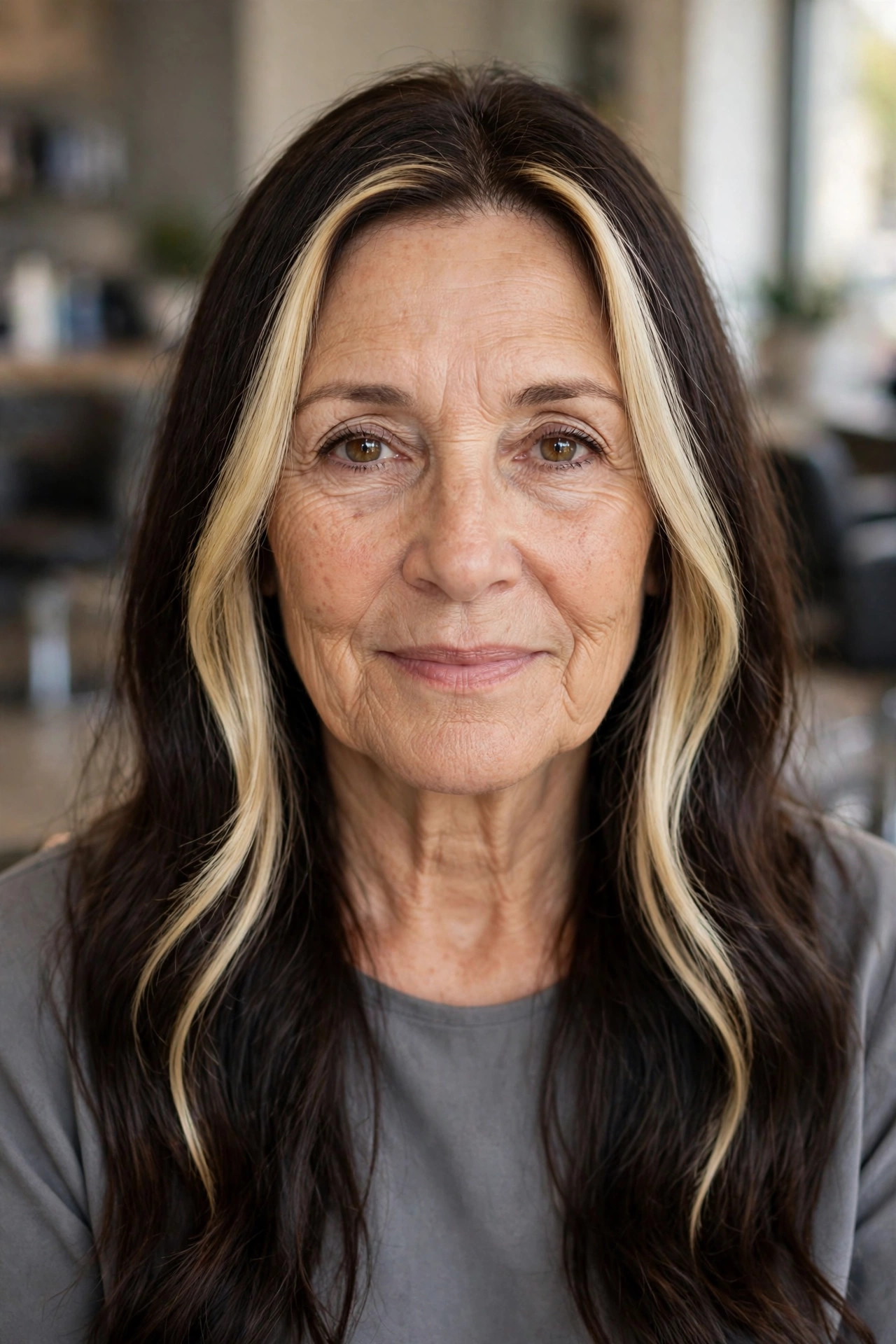
The money piece takes face-framing from a cut into color: the two front sections are lightened a few shades brighter than the rest, so your framing layers literally glow. On long brown hair the contrast is striking but surprisingly wearable, and it brightens the skin the way good lighting does.
There is a practical bonus for women over 50: bright front pieces blend beautifully with silvery strands coming in at the hairline, making regrowth far less obvious between appointments. Keep the lightened pieces conditioned and glossy with an anti-frizz serum, and use purple shampoo occasionally if they start to look brassy.


9. Silver Face-Framing Layers on Long Gray Hair
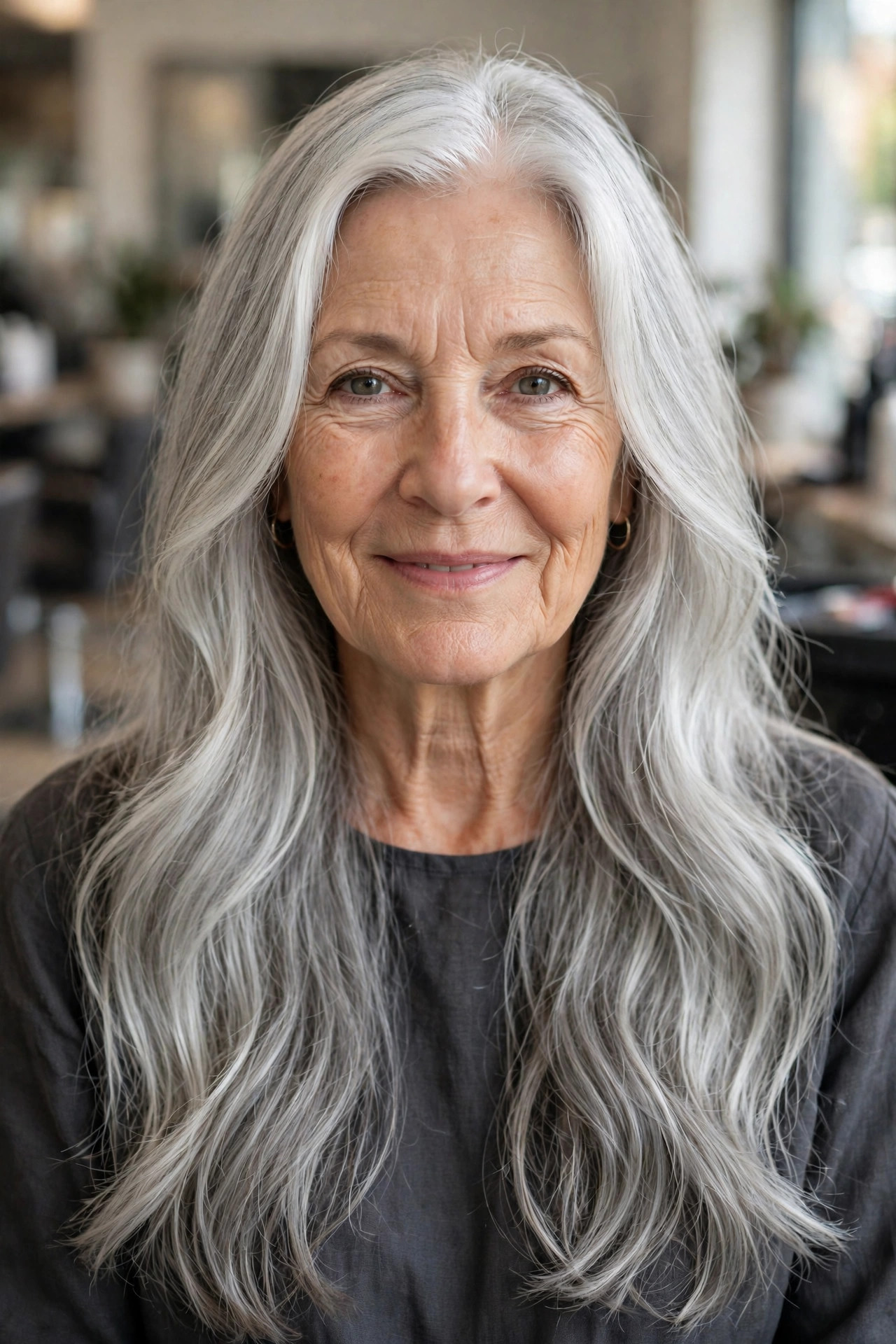
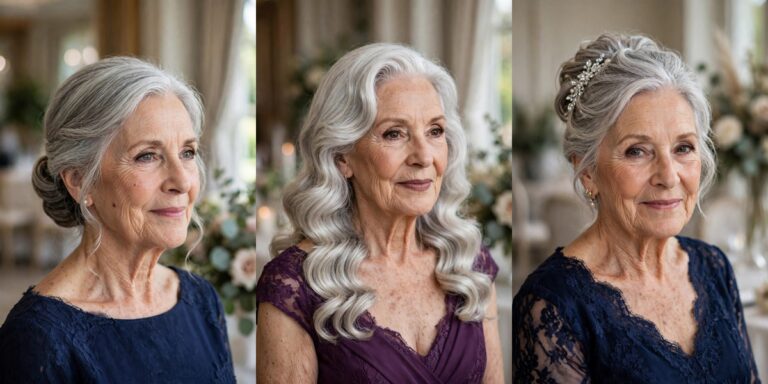
Long silver hair is a statement on its own, but it becomes truly elegant when the front is layered to frame the face. The shorter silver pieces around the cheeks catch light differently from the lengths behind, giving gray hair dimension it can otherwise lack, and stopping it from reading as one flat sheet of color.
Gray strands are naturally coarser and drier, so long silver hair rewards gentle handling: a weekly brightening wash to prevent yellowing, rich conditioning through the ends, and a satin pillowcase at night to reduce frizz. The framing layers also make silver hair easier to wear up, because soft pieces stay out around the face instead of a scraped-back look.
10. Soft Feathered Face-Framing Layers
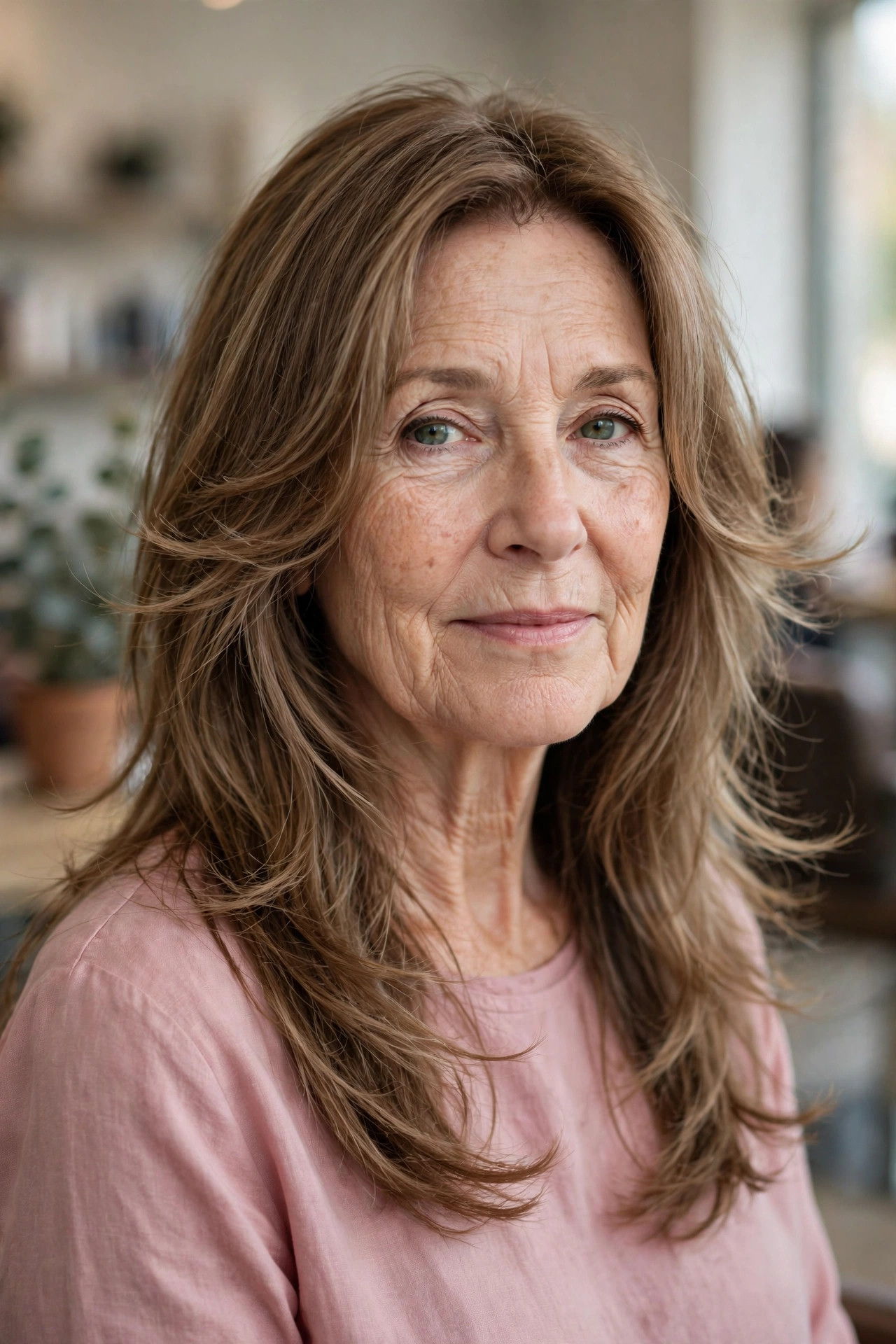
Feathering is the softest framing technique on this list: the front layers are cut to flick and taper outward in fine, wispy ends that brush the cheeks and jaw. On long hair it creates that breezy, seventies-inspired movement that never really leaves fashion — updated here with cleaner lengths and a modern finish.
Feathered framing is exceptionally forgiving on fine or thinning hair, because wispy ends never expose sparseness the way a blunt edge can. Style it by blow-drying the front pieces back and away from the face so the feathers open up. A touch of texture spray through the ends keeps the flicks separated and airy rather than limp.


11. Long Shag with Face-Framing Layers
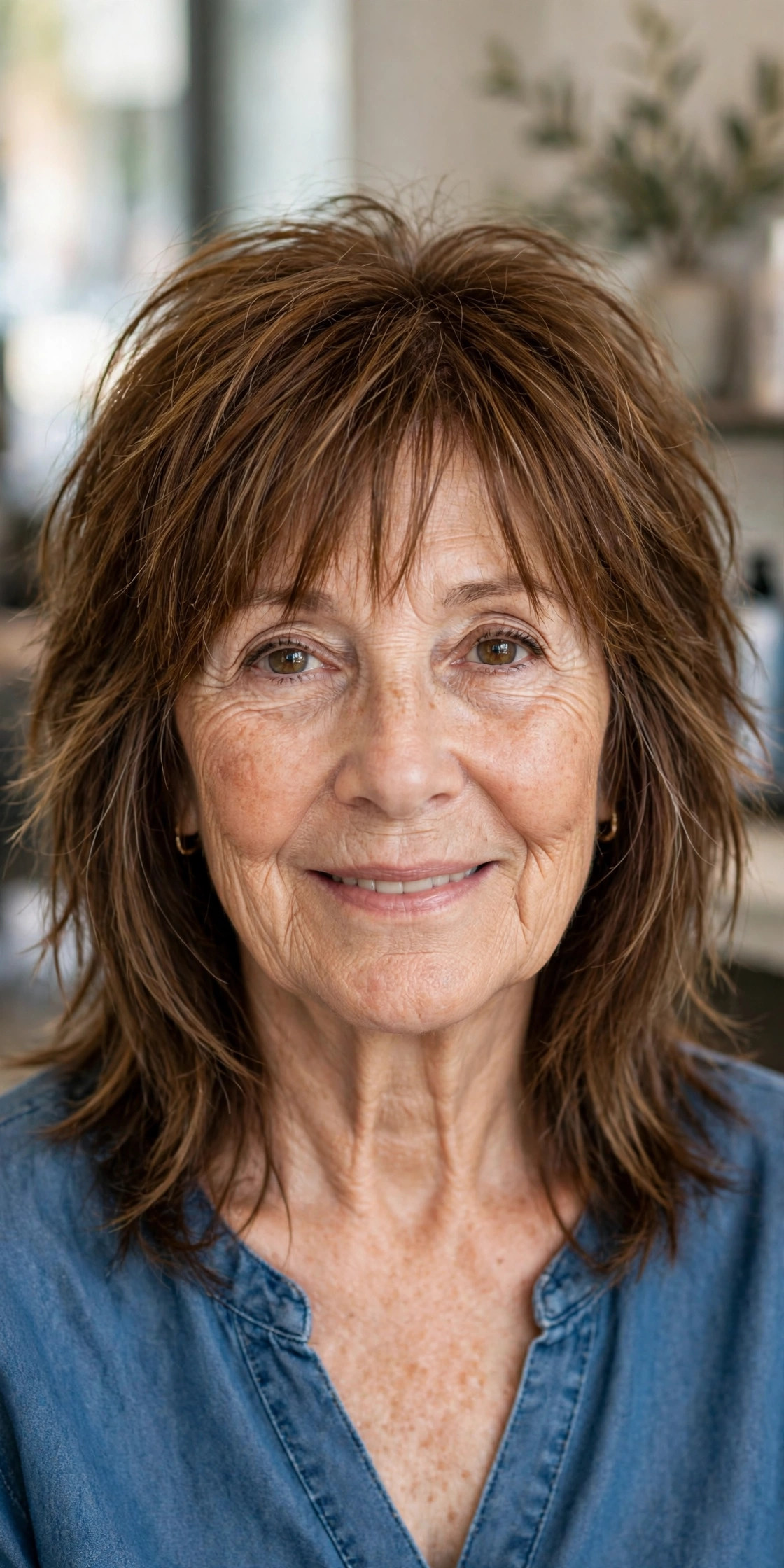
The modern shag brings choppy layers, texture, and attitude to long hair — and its face-framing is built in, with shorter pieces crowding around the cheeks and jaw while the back stays long and piecey. It is the option for women who love long hair but find polished, sleek layers a little too ‘done’ for their personality.
A shag is also genuinely practical: the choppy crown layers create volume on top, the texture disguises thinning, and the style is meant to look a bit undone, so perfect styling is unnecessary. Scrunch in a texturizing product, tousle, and go. Second-day hair usually looks even better than wash day with this cut.

12. Wavy Long Hair with Face-Framing Layers
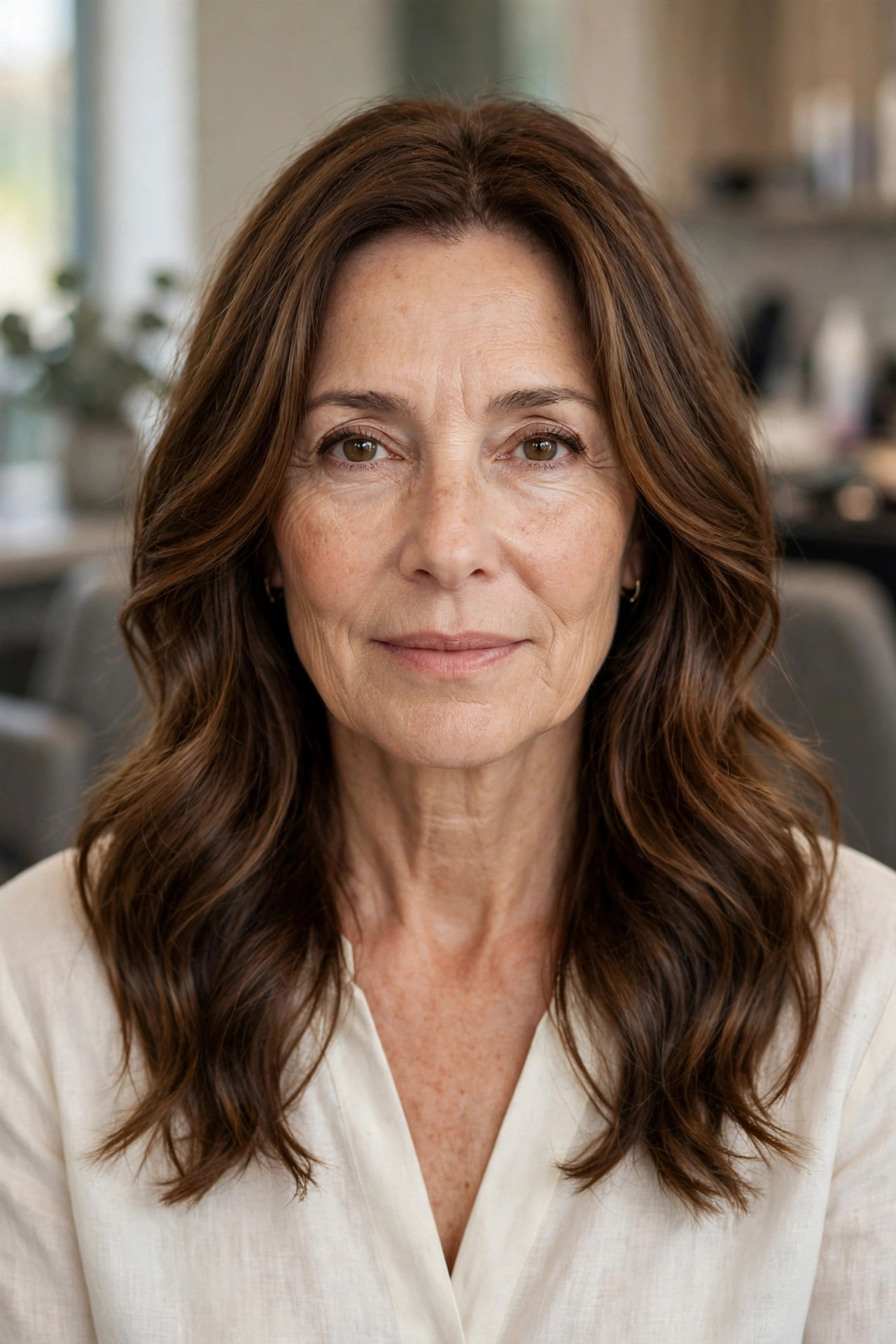
Loose waves and face-framing layers are natural partners. The waves give the framing pieces something to do — each curve around the cheek softens the face, adds width where you want it, and makes long hair look full of life instead of hanging straight and heavy. It is the most romantic look on this list.
If your hair has a natural wave, ask your stylist to cut the framing dry so the pieces land correctly once they spring into their wave pattern. Enhance with a sea-salt spray scrunched into damp hair and air-dry, or touch up the front waves with a large-barrel tool for a more polished finish on dressier days.

13. Curly Long Hair with Face-Framing Layers
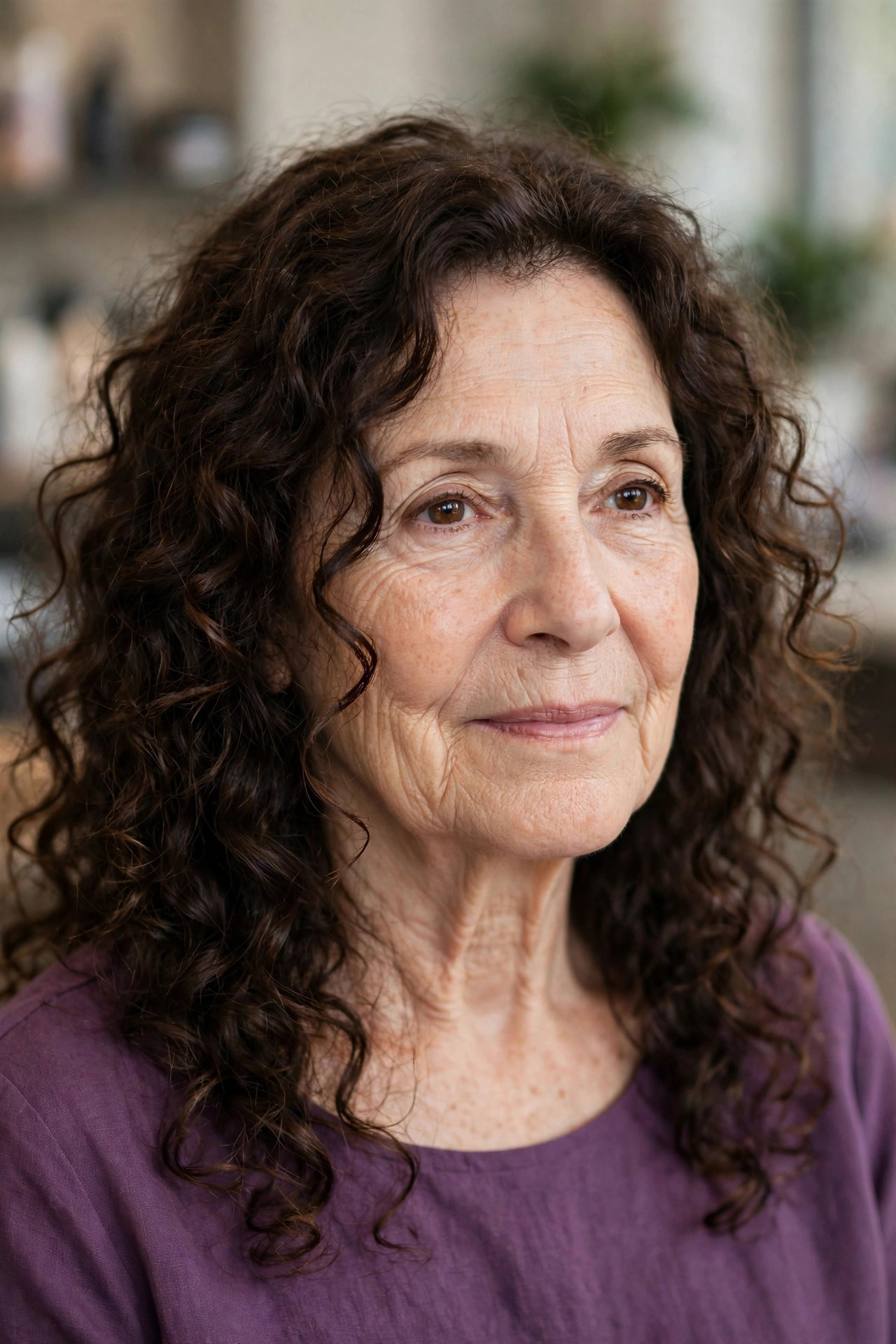
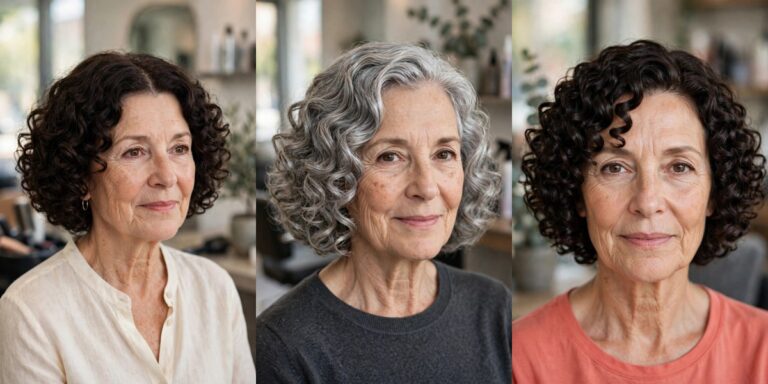
Long curls need framing more than any other texture, because without it, curls can form a heavy triangle that hides the face entirely. Curly face-framing layers — cut dry, curl by curl — open up the front, let tendrils soften the cheeks, and give the whole shape height and balance instead of width at the bottom.
The key request at the salon is simple: frame my face, do not thin it. Shaping individual curls at the front keeps the definition that makes curls look healthy. Keep hydration high, refresh the front tendrils with water and a little serum on non-wash days, and those framing curls will reward you by making your face the focus again.
14. Sleek Straight Long Hair with Blunt Framing
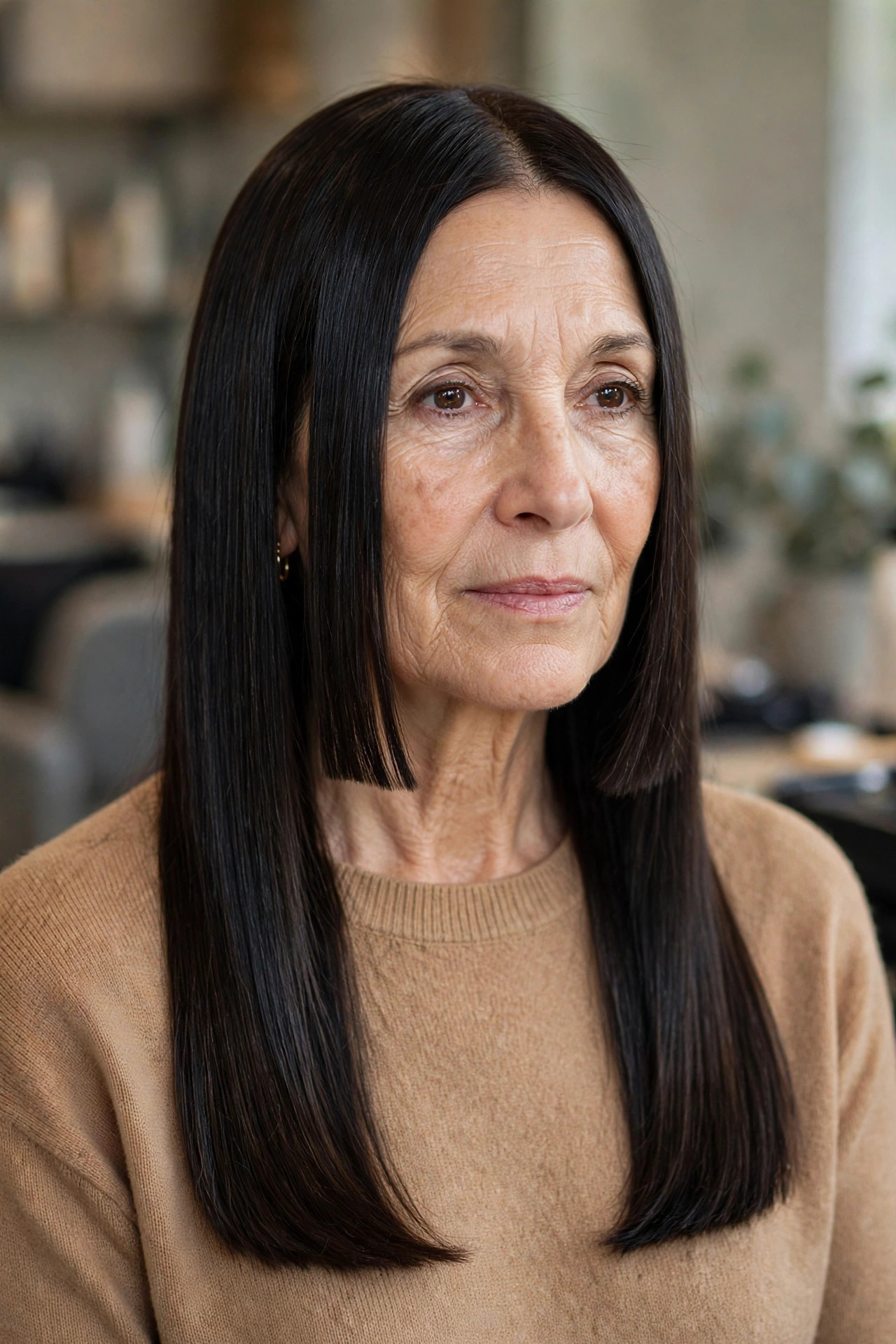
Not all framing is soft. This version keeps long hair glassy, straight, and precise, with blunt front sections that fall in clean lines beside the face. The effect is modern and architectural — the straight frame acts like a pair of parentheses around your features, making everything inside look sharper and more defined.
Blunt framing is also a quiet gift for fine hair, because a solid edge always reads thicker than a feathered one. The commitment is heat styling: protect every pass with a thermal spray and keep the ends trimmed every six to eight weeks, because precision shows split ends faster than any other style here.

15. Deep Side Part with Face-Framing Layers
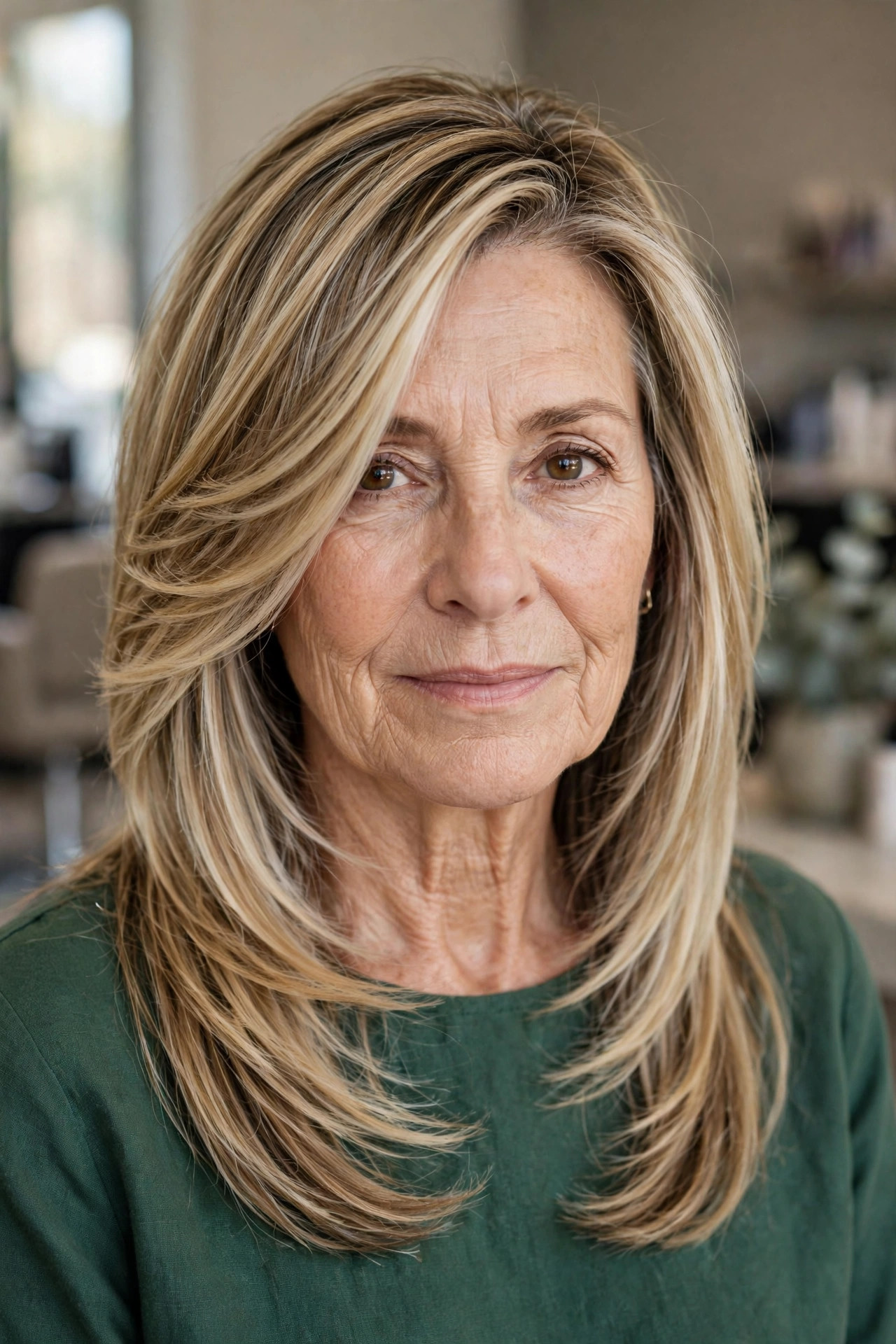
Changing your part can change your whole haircut. A deep side part throws long framing layers into a dramatic sweep across the face, lifting the hair at the root on the heavy side and creating that glamorous, one-eye-veiled moment that photographs beautifully at any age.
Stylists use this trick whenever long hair looks flat, because hair that is forced to lie in a new direction stands up at the root instead of collapsing. Flip your part to the opposite side for maximum lift. Work a root-boosting product in before drying, and let the framing layers on the short side tuck neatly behind your ear.

16. Center Part Curtain Layers for Long Hair
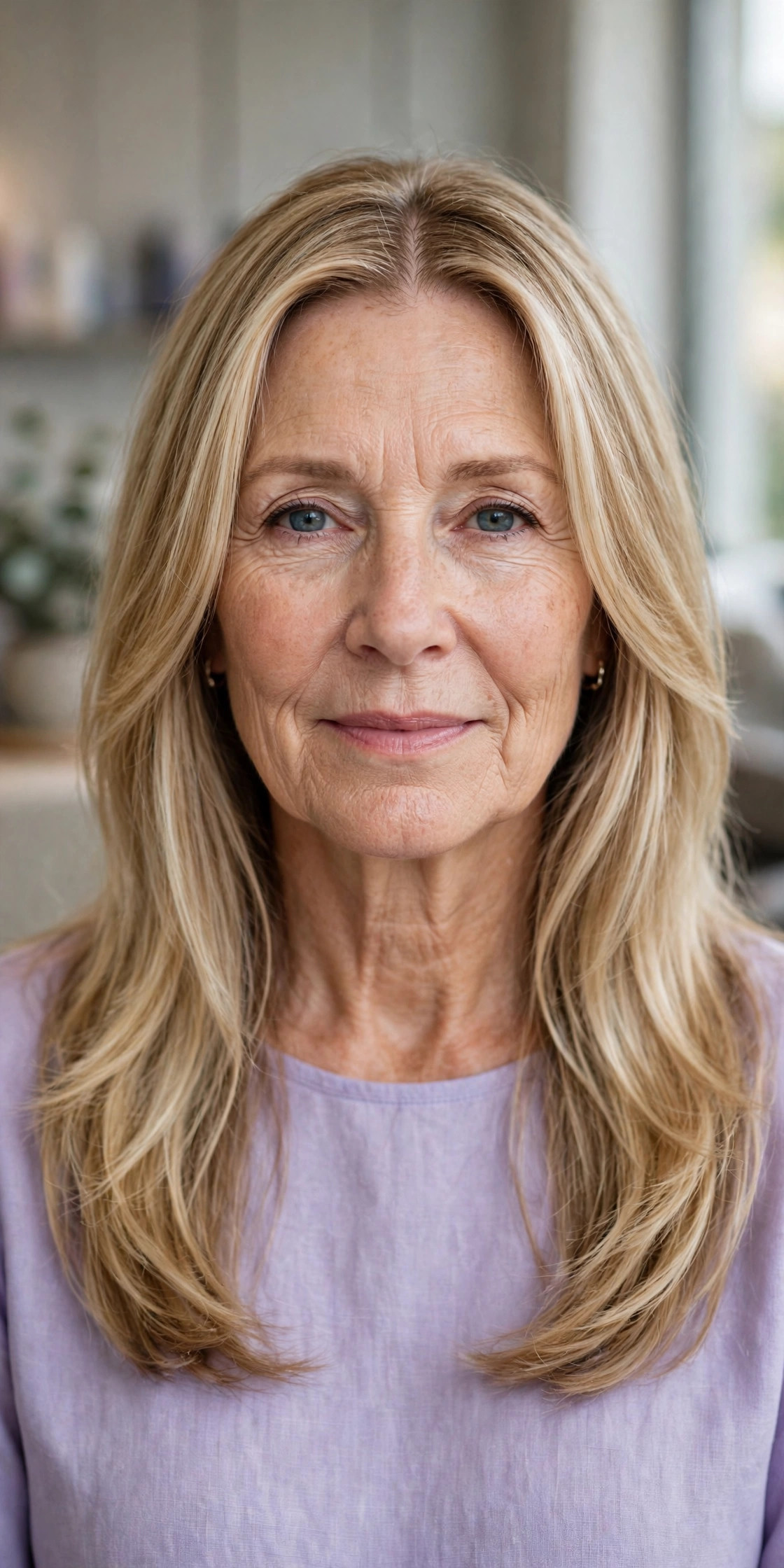
The symmetrical sister of the classic curtain: a precise center part with matching framing layers opening evenly on both sides. Symmetry reads polished and intentional, balances the face, and gives long hair a clean, editorial finish that works from school runs to weddings without changing a thing.
Center parts suit oval and heart-shaped faces best, and the even framing is kind to anyone who dislikes fussing — both sides behave the same way every morning. If a center part feels too stark at first, shift it just half an inch off-center; you keep the symmetry but soften the effect while you get used to it.
17. Layered Blowout with Face-Framing Curtain
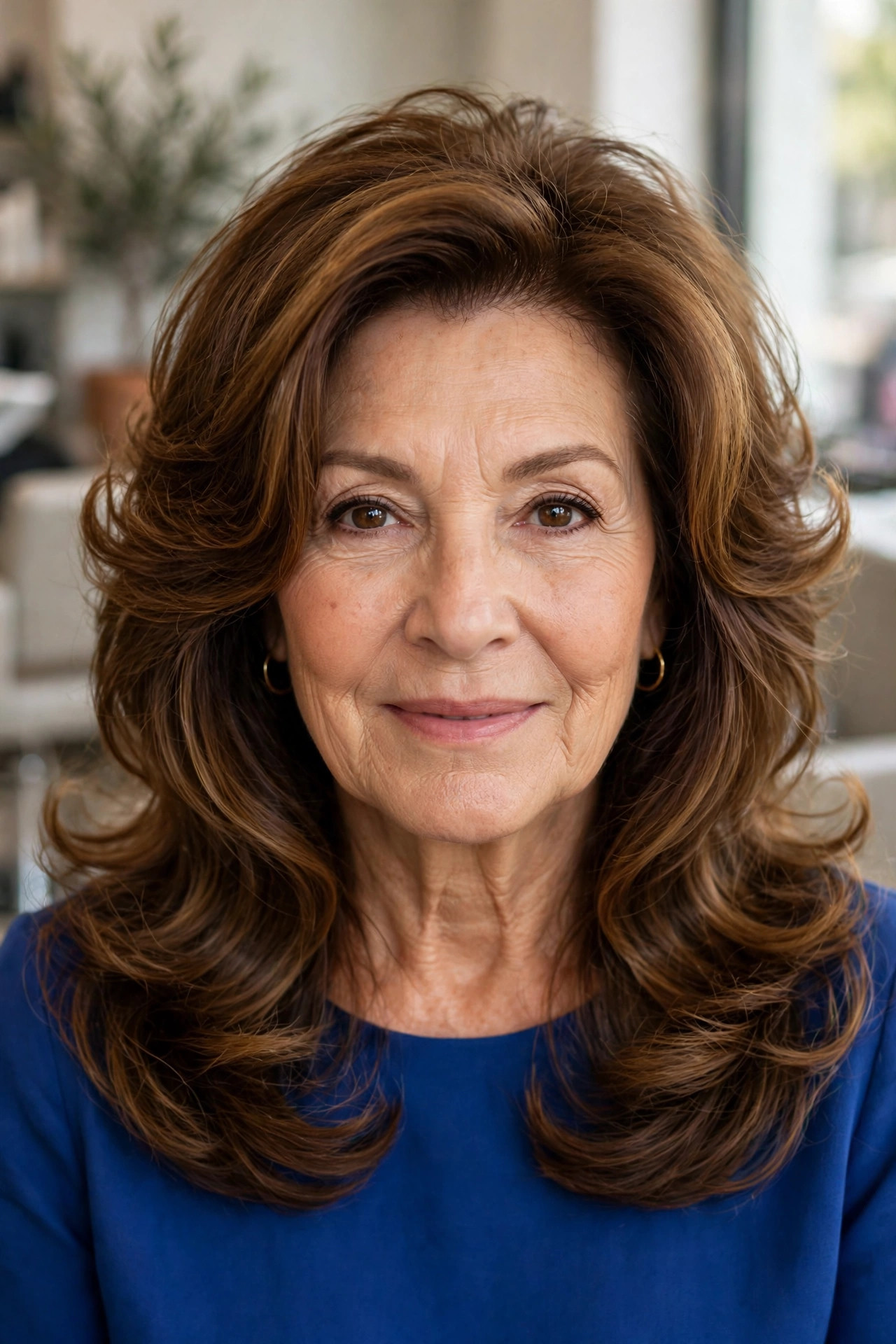
This is long hair at its most glamorous: a bouncy, salon-style blowout where the face-framing curtain layers are curled away from the face in big, sweeping bends. The volume sits around the cheeks and jaw — exactly where it lifts your features — while the lengths behind stay full and glossy.
A dryer brush makes this achievable at home in about fifteen minutes: dry in sections, rolling the front pieces away from your face and letting them cool in the curl before you touch them. That cooling step is the secret to a blowout that lasts days instead of hours. Finish with the lightest mist of flexible spray, never a heavy one.
18. Face-Framing Layers with Balayage Brightening
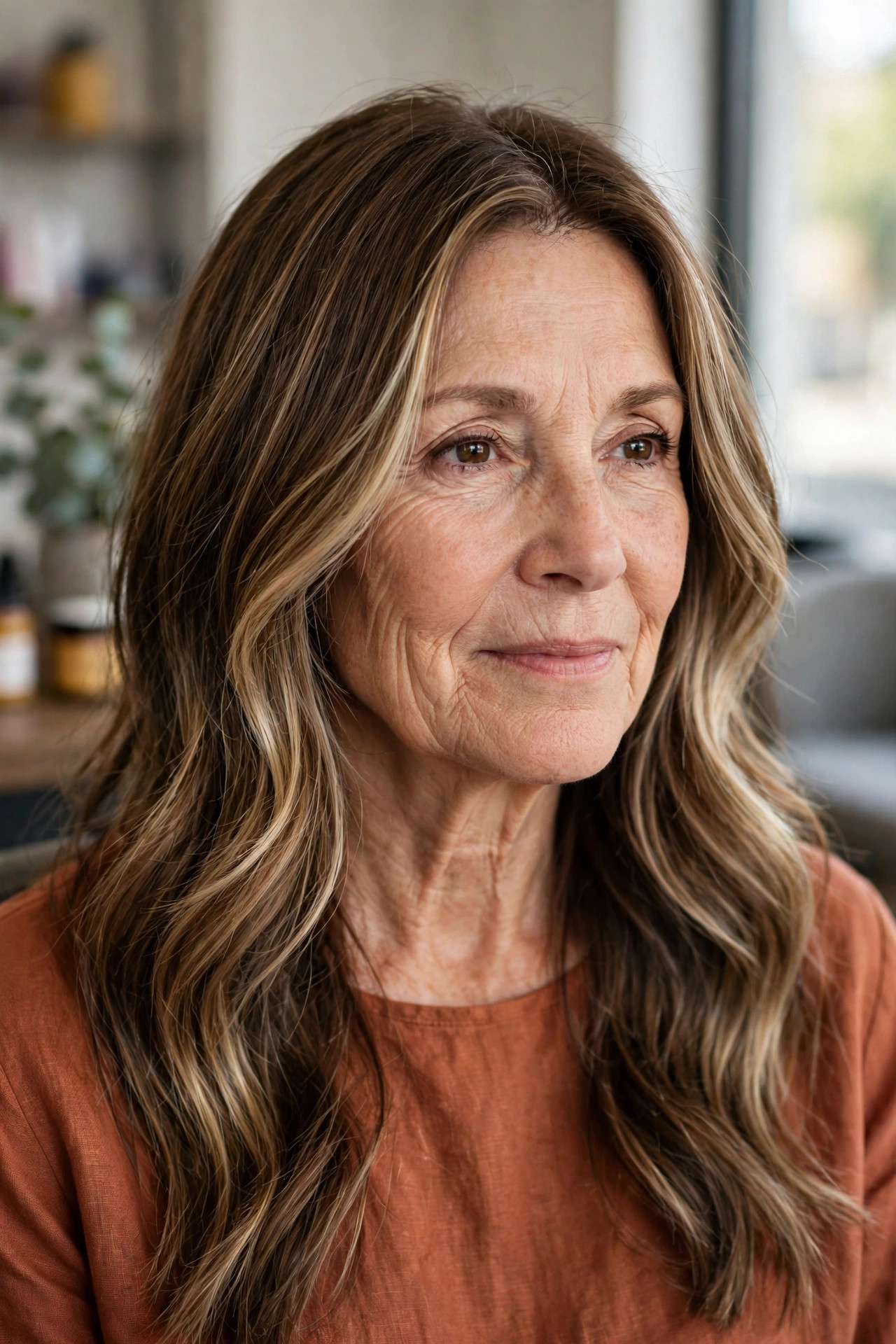
Where the money piece concentrates brightness in two bold panels, balayage spreads it softly: hand-painted lighter pieces are woven through the framing layers and ends, so your face is surrounded by a gradual, sunlit glow. On long hair the effect is dimensional and expensive-looking, with no harsh regrowth line.
Balayage is one of the lowest-maintenance color choices for women over 50 because it grows out softly for months — ideal if you are stretching salon visits. It also helps long, one-color hair look thicker, since the ribbons of light create the illusion of depth and movement through the framing.
19. Graduated Short-to-Long Framing Layers
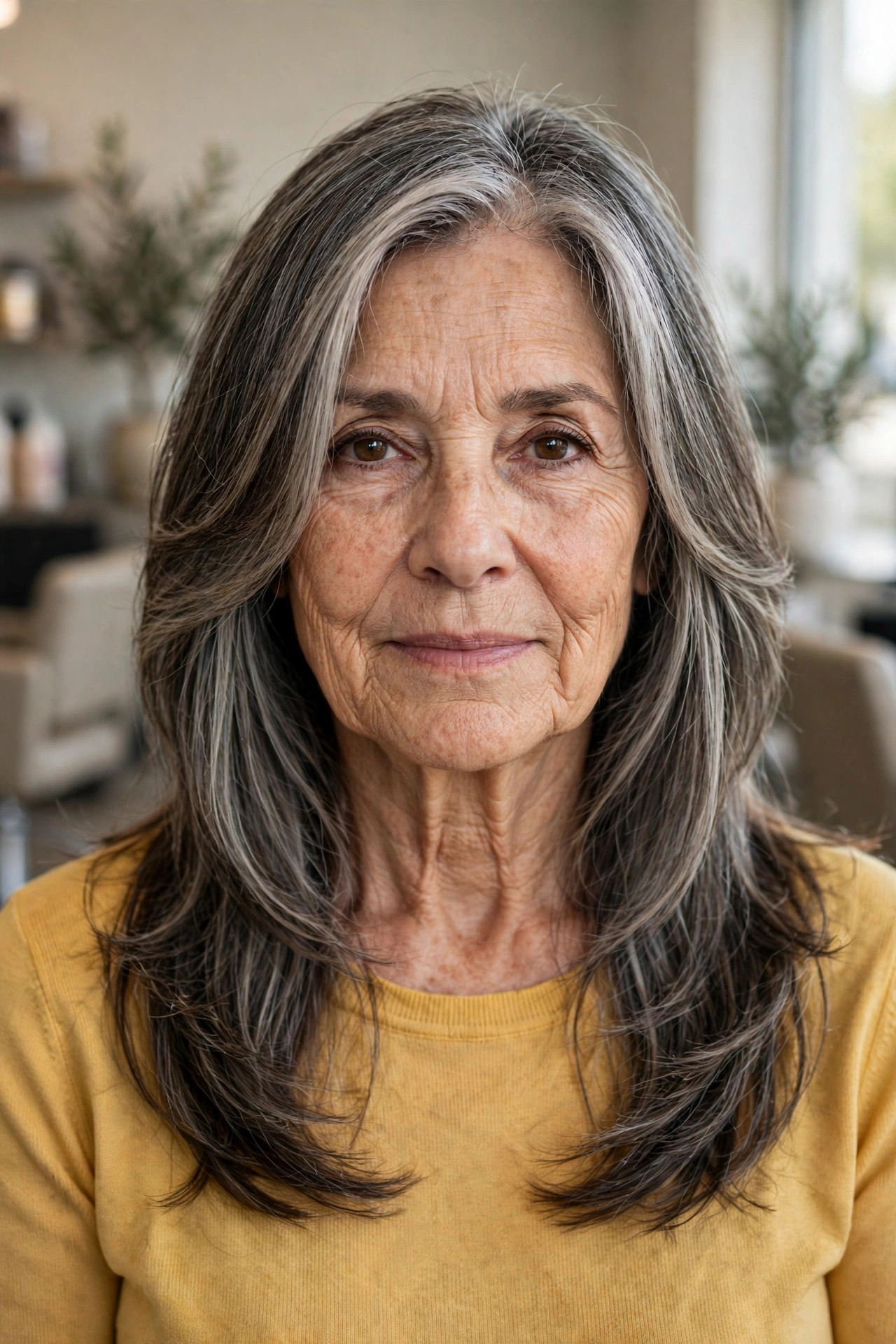
Instead of one framing length, this cut steps down in stages: the first piece at the cheekbone, the next at the jaw, then the chin, then the collarbone — a staircase of layers cascading around the face. On salt-and-pepper or gray-blended hair the steps are especially pretty, because each level catches light at a different point.
Graduated framing is the most customizable option here. Your stylist can start the staircase at your best feature and space the steps to suit your face length. It suits women who found single-length framing either too subtle or too dramatic — this is the measured middle path, and it grows out in soft stages rather than all at once.
20. Half-Up Style Showing Off Face-Framing Layers
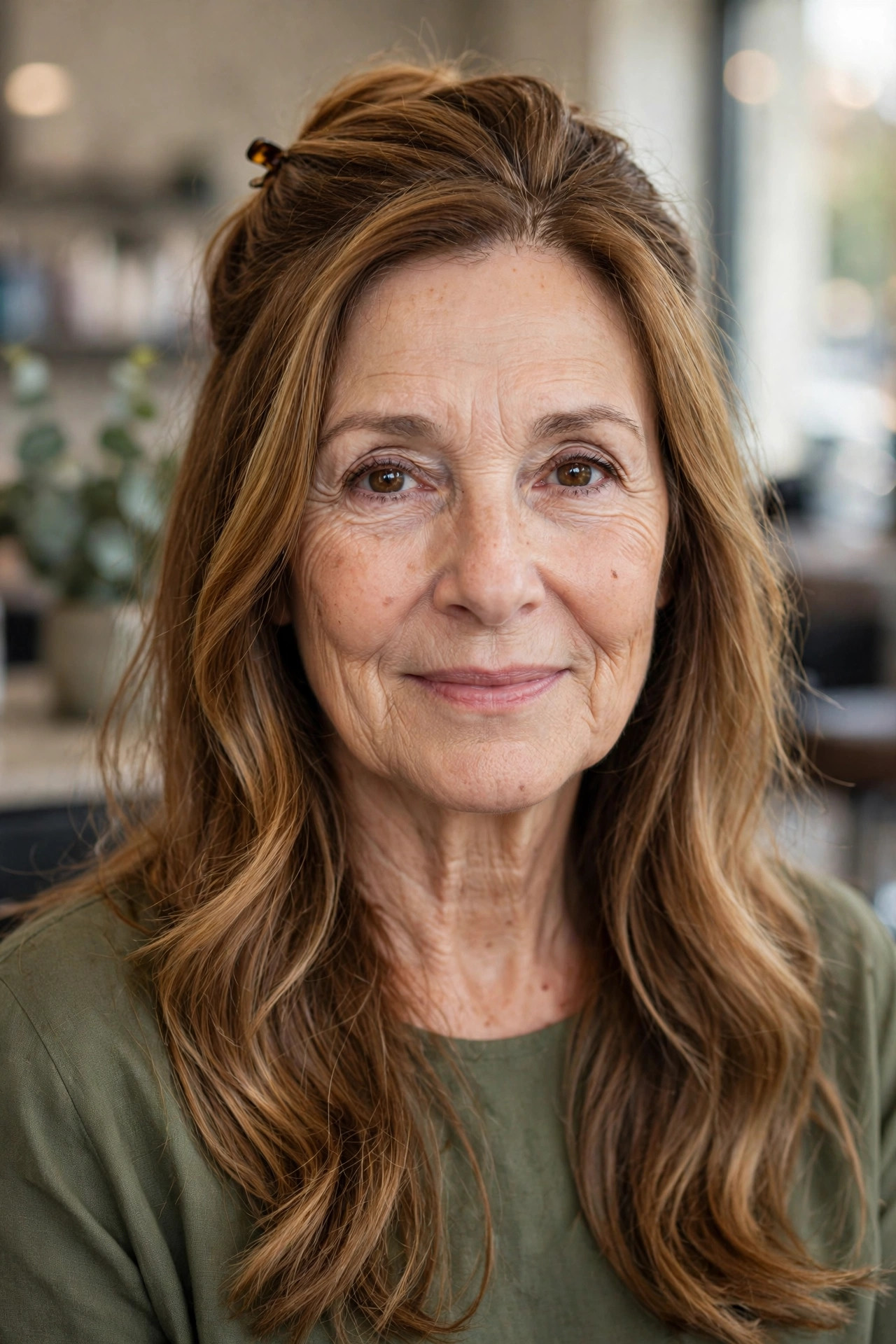
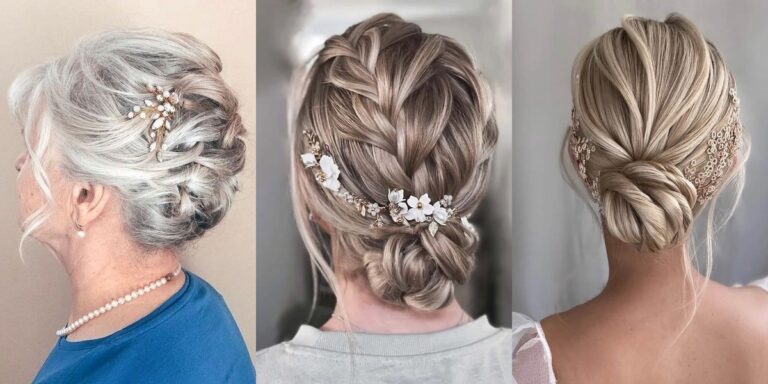
Finally, proof of why framing layers earn their keep on busy days: pull the top and back of your long hair up and leave the framing layers loose. Instantly you have a styled look — soft pieces around your cheeks and jaw, a tidy silhouette behind — that takes under two minutes and works for lunches, photos, and warm days alike.
This is the style to request your framing for if you wear your hair up often: tell your stylist you want pieces that stay out and flatter your face when the rest is pulled back. A flat claw clip holds long hair comfortably without pulling, and sleeping on satin keeps those front pieces smooth enough to wear loose again the next morning.

Recommended Products
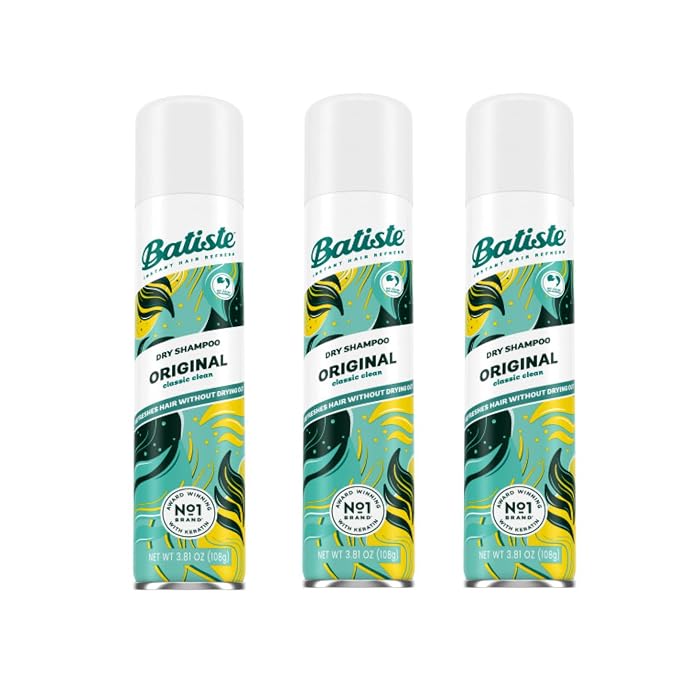
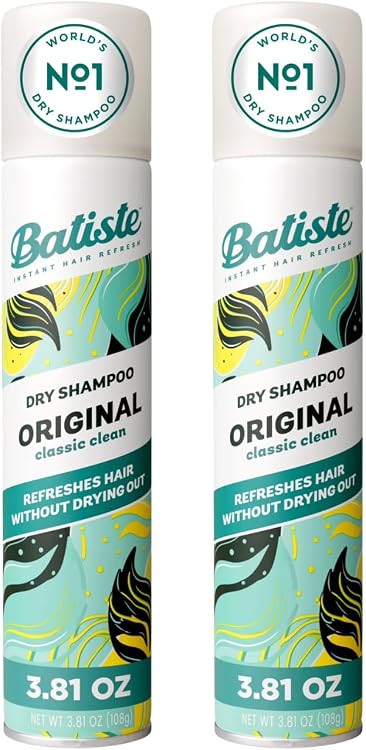
These are the essentials that keep long, face-framed hair looking its best: a round brush and a dryer brush for that signature outward curve, a volumizing mousse for the short front pieces, a heat protectant for sleek days, and a satin pillowcase to keep framing smooth overnight.
Care & Styling Tips for Face-Framing Layers
- Trim the front more often: framing grows past its perfect point fastest — a quick front tidy every 6–8 weeks keeps the curve at your cheekbone or jaw where you chose it.
- Dry the framing first: style the front pieces while they are fully damp; once long hair dries flat against the face, the curve is much harder to set.
- Always curl away: roll round-brush and dryer-brush sections away from your face — framing that curls inward can close the face down and add shadows.
- Protect before heat: the front pieces get the most heat and the most touching, so a thermal spray there is non-negotiable.
- Condition the lengths, not the frame: keep rich conditioners on the back and ends so the shorter front layers stay light and bouncy.
- Sleep on satin: a satin pillowcase stops framing layers from creasing or frizzing overnight, so morning styling takes minutes.
If your long hair is also fine or thinning at the front, pair these ideas with the shaping advice in our guide to hairstyles for fine hair over 50 — the right framing plus the right density tricks together can make long hair look twice as full.
Frequently Asked Questions
Do face-framing layers work on long hair over 50?
Yes — they are one of the most flattering updates for long hair at any age, and especially after 50. Framing puts movement and lightness around the face, lifts the focus to your eyes and cheekbones, and stops long hair from dragging your features down, all without sacrificing length.
Where should face-framing layers start?
It depends on your face shape and the feature you want to highlight. Cheekbone starts add lift and width at the cheeks, jaw starts define the jawline, and chin or collarbone starts are softer and more lengthening. Your stylist can test the starting point by pinning sections before cutting.
Will face-framing layers make thin hair look thinner?
Not when they are cut correctly. Soft, blended framing actually creates the impression of fullness around the face. Ask for gentle layering rather than heavy razoring at the front, and keep the ends of the framing pieces relatively blunt if your hair is very fine.
How often do face-framing layers need trimming?
Plan a tidy every 6–8 weeks. The front pieces grow past their ideal point — cheekbone, jaw, or chin — faster than the rest of the cut becomes noticeable, and a small front-only trim between full appointments is usually quick and inexpensive.
Can face-framing layers work with gray hair?
Beautifully. Layering the front gives gray and silver hair dimension and movement, and brighter silver pieces around the face are naturally flattering to the skin. Ideas #8 and #9 in this list show how framing and silver-friendly color work together.
What is the difference between curtain bangs and face-framing layers?
Curtain bangs are the shortest version of framing: they start around the brow-to-cheekbone area, part in the center, and sweep open. Face-framing layers are the longer continuation of that same curve, starting at the cheekbone, jaw, or chin. Many cuts, including #5 here, combine both in one unbroken shape.
Final Thoughts
Long hair after 50 does not need to be a compromise between the length you love and a face that feels hidden. Twenty ideas, one principle: shape the front, and the whole style comes alive. Pick the two or three versions that made you pause, note where their framing starts, and bring the photos to your stylist. The best haircut of this decade might be the one you are already wearing — just framed.