Hairstyles to Hide a Thinning Crown Over 60
This post contains affiliate links. As an Amazon associate, I earn from qualifying purchases. I only recommend products that are of high quality and that I would use myself.
If you have started checking the back of your head with a hand mirror — or avoiding certain lights, certain chairs, certain camera angles — you are far from alone, and you do not need a drastic change to feel better about it. A thinning crown is mostly a problem of direction: hair that parts in the middle and falls away leaves the crown exposed, while hair that is layered, textured and directed across or forward over the crown covers it, beautifully and honestly.
Below are 20 hairstyles to hide a thinning crown over 60, every one built on that principle — textured crops, forward-swept tops, zigzag and deep side parts, crown layers and a few clever styling finishes for medium hair. If you are still deciding on length, these haircuts for women with thin hair and our guide to short hairstyles for fine, thin hair are helpful companions before you book.
A gentle word on expectations: these are cosmetic, confidence-giving solutions — cuts and styling that make the most of the hair you have. They make no promises about regrowth, and they are not a substitute for medical advice if shedding is sudden or patchy. What they do promise is real: a crown you stop thinking about, and a style you are happy to be seen in.
Table of Contents
- 1. Textured Forward-Swept Crop
- 2. Deep Side Part Pixie-Bob
- 3. Zigzag Part Layered Bob
- 4. Crown-Layered Pixie With a Long Top
- 5. Feathered Bob With a Lifted Crown
- 6. Choppy Crown Pixie
- 7. Side-Swept Fringe Crop
- 8. Stacked Bob Seen From the Back
- 9. Soft Short Shag With Crown Layers
- 10. Asymmetrical Crop With a Long Top Sweep
- 11. Tousled Rounded Bubble Bob
- 12. Layered Lob With Soft Curtain Fringe
- 13. Wavy Bob Brushed Back Over the Crown
- 14. Tapered Crop Brushed Forward
- 15. Silver Bob With Shadow Depth at the Roots
- 16. Piecey Fringe Pixie Brushed Forward
- 17. Blowout Bob With an Off-Center Part
- 18. Curly Bob With Nesting Crown Curls
- 19. Loose Half-Up Crown Twist
- 20. Rounded Crown Bob Seen From Behind
- Recommended Products
- FAQs
Quick pick: Best all-round coverage? The Textured Forward-Swept Crop (#1) or the Tapered Crop Brushed Forward (#14). Thinning along the part? Try the Deep Side Part Pixie-Bob (#2) or Zigzag Part Bob (#3) — no new cut needed for the zigzag. Want to keep your length? The Layered Lob (#12) or the Half-Up Crown Twist (#19). And the golden rule: hair directed across or forward over the crown always covers more than hair falling away from it.
Curious how your hair is growing? Our free Hair Growth Calculator estimates how long it takes to grow out a shorter crown-covering cut into a longer style — handy if you are planning a change in stages.
1. Textured Forward-Swept Crop
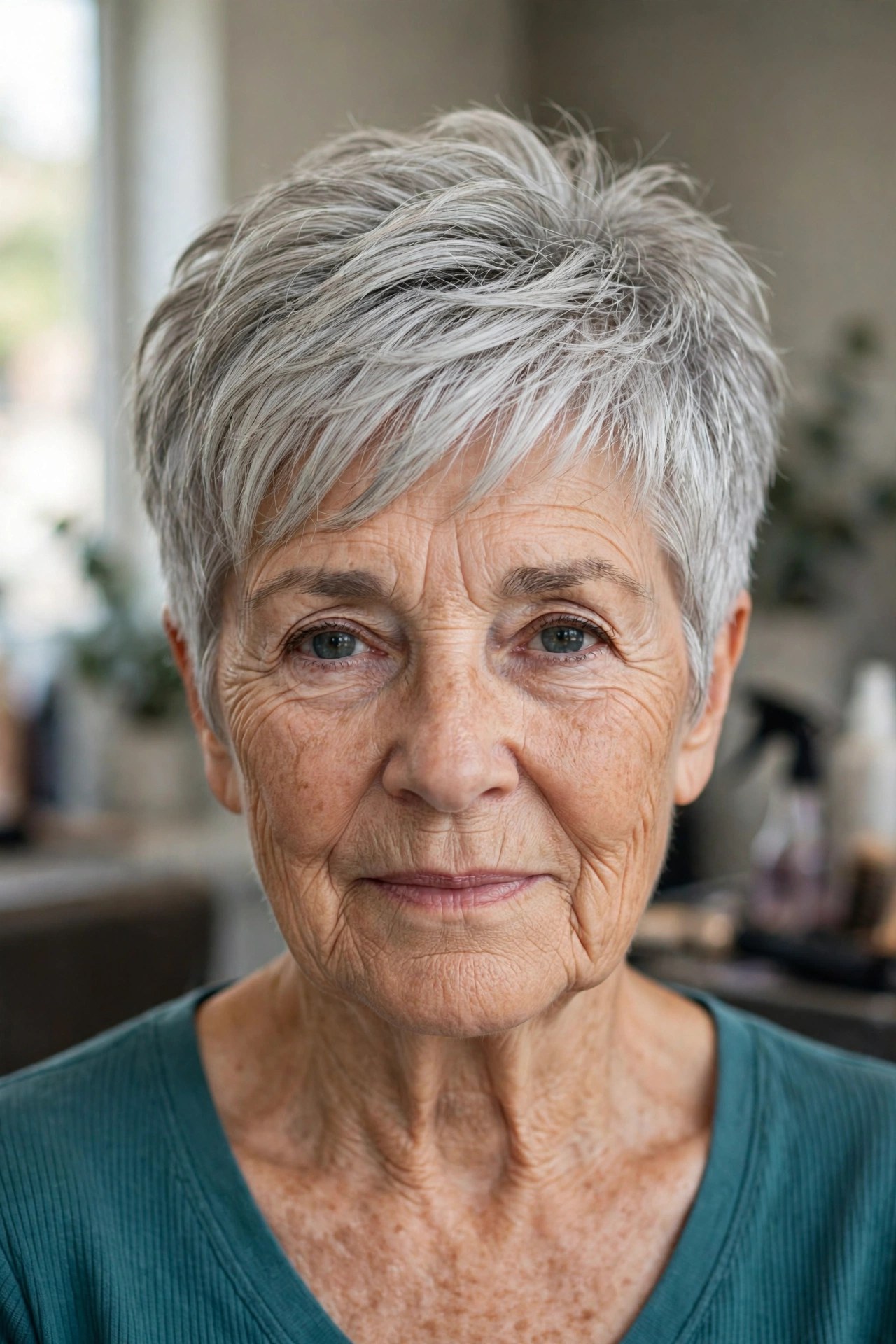
This is the workhorse cut for a thinning crown, and the logic is simple: instead of parting the hair and letting it fall away from the crown in two directions, the top is cut in textured layers and swept forward, so strands overlap the crown like shingles on a roof. Every layer covers the one beneath it, and the eye lands on texture and movement at the front — not on the top of the head.
Ask for point-cut texture through the top and a forward fall, with the sides kept neat so the forward sweep stays the focus. At home, work volumizing mousse into damp roots, rough-dry while pushing the hair forward with your fingers, then pinch a little texturizing putty through the front pieces. It suits straight to slightly wavy hair and almost every face shape.


2. Deep Side Part Pixie-Bob
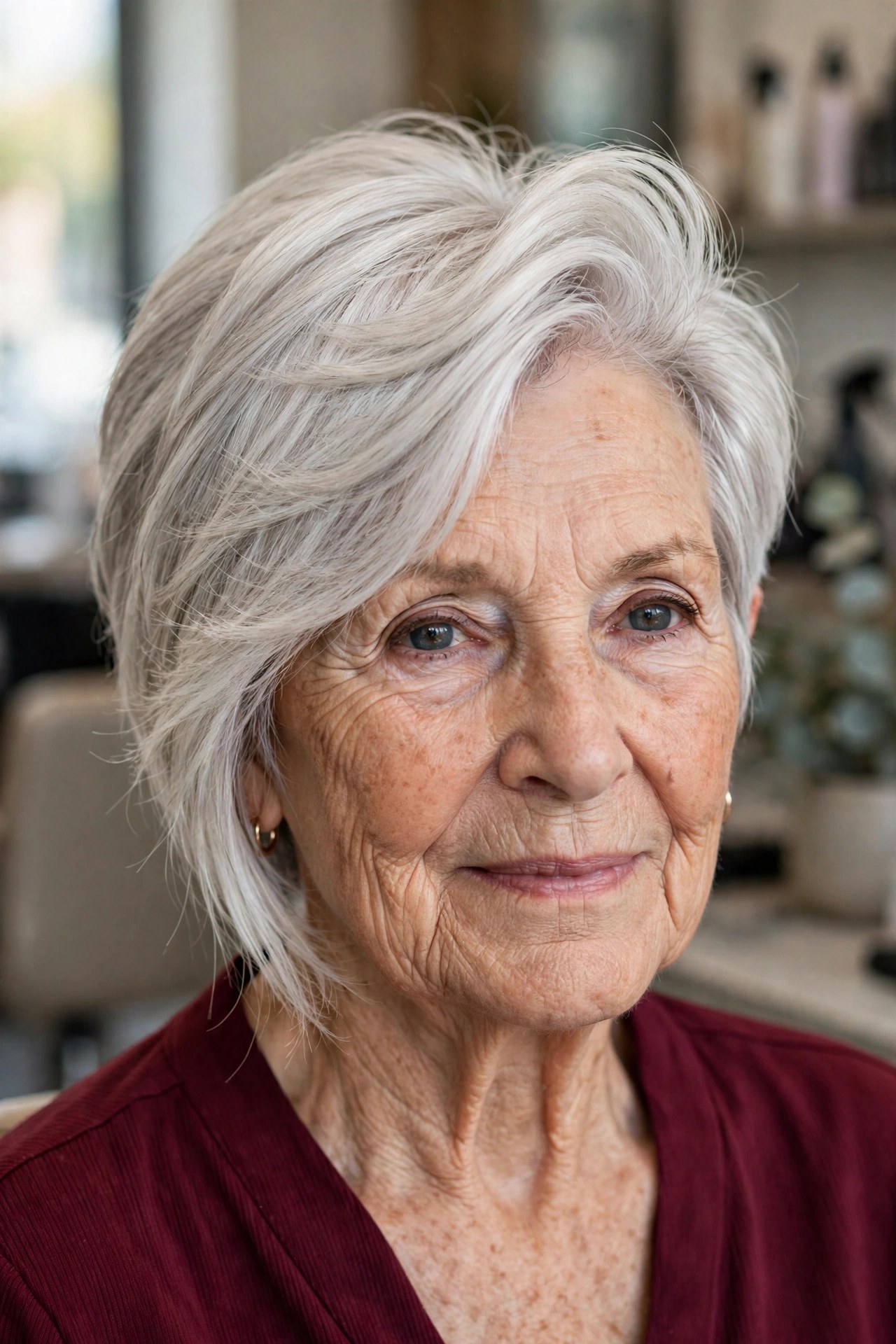
A deep side part moves the whole story. When hair is parted far to one side, a generous sweep of longer top hair travels across the crown instead of splitting open along it, and that crossing layer is exactly the coverage a thinning crown needs. The pixie-bob keeps the back and sides short and tidy while the top stays long enough to do that sweeping work.
Tell your stylist the part should sit above the outer corner of the eye — a shallow part will not give you the same coverage. Dry the top section across first with a root-booster brush, lifting at the roots as you go. On day two, flip the sweep to the other side: the roots stand up again and the crown looks freshly styled in ten seconds.


3. Zigzag Part Layered Bob

A straight part is a spotlight: it draws a clean line and invites the eye straight to the scalp along it. A zigzag part does the opposite. By breaking the part into short, offset segments, hair crosses over itself in both directions, no single line opens up, and the layered bob around it gains a soft, lifted crown as a bonus.
You can wear this with any layered bob you already have — it is a styling change, not a new cut. Use the tail of a comb or your fingertip to nudge the part into a loose zigzag after drying, then set the roots with a little dry shampoo for grip. It is especially kind if your thinning is concentrated along the part line itself.

4. Crown-Layered Pixie With a Long Top
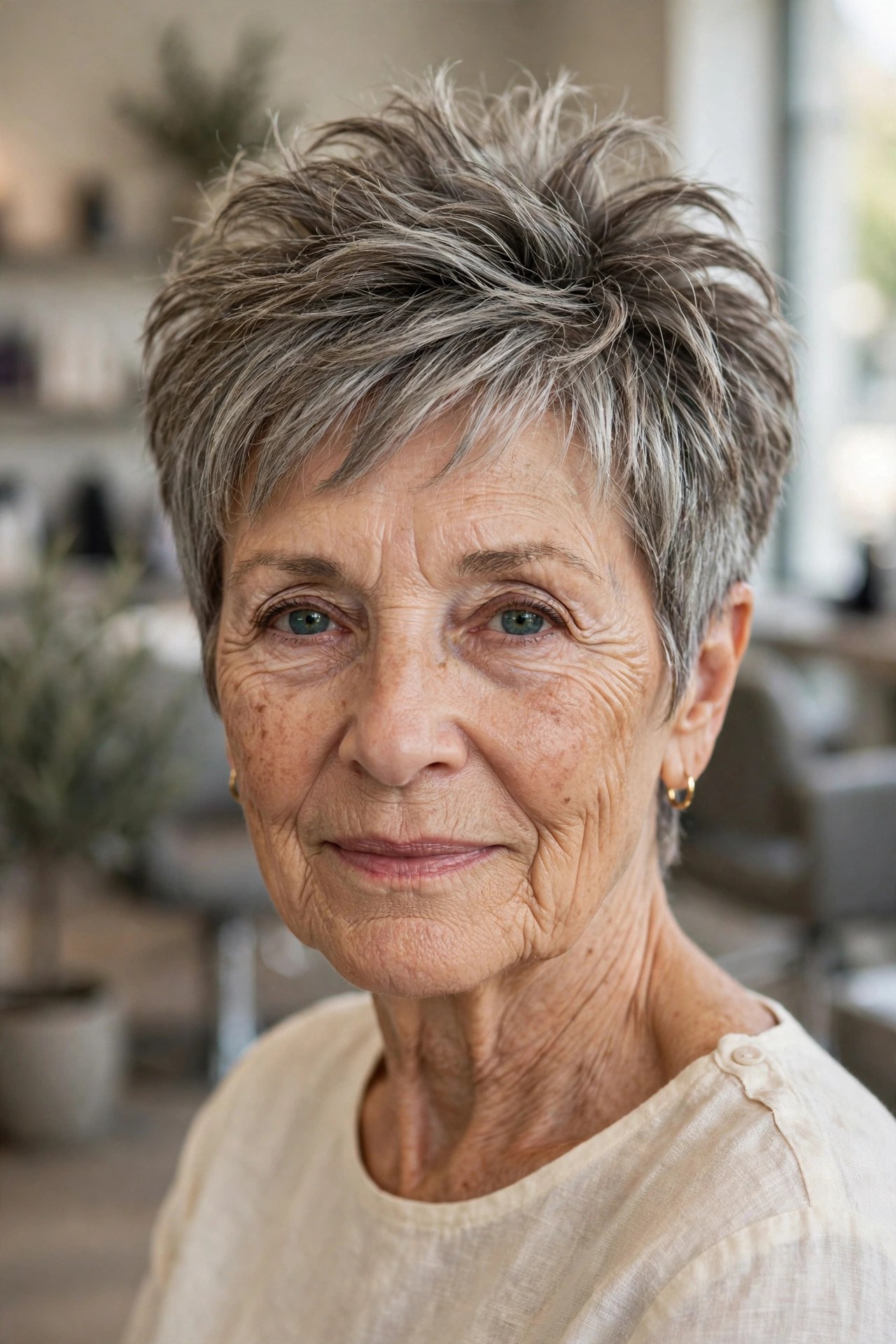
Here the layering is concentrated exactly where you need it. Short, supportive layers at the crown act like a springboard, holding a longer, piecey top up and over the thinnest area. Because the underneath is shorter, the top cannot collapse flat — it rests on structure instead of on air, which is why this pixie keeps its coverage from morning to evening.
Ask your stylist to keep the crown layers short and textured but the top length generous enough to sweep in more than one direction. That versatility matters on days when one angle looks sparser than another. Blow-dry the crown upward with a small round brush, let it cool, then lay the top over it. Best for straight and wavy hair; suits oval and heart faces beautifully.

5. Feathered Bob With a Lifted Crown
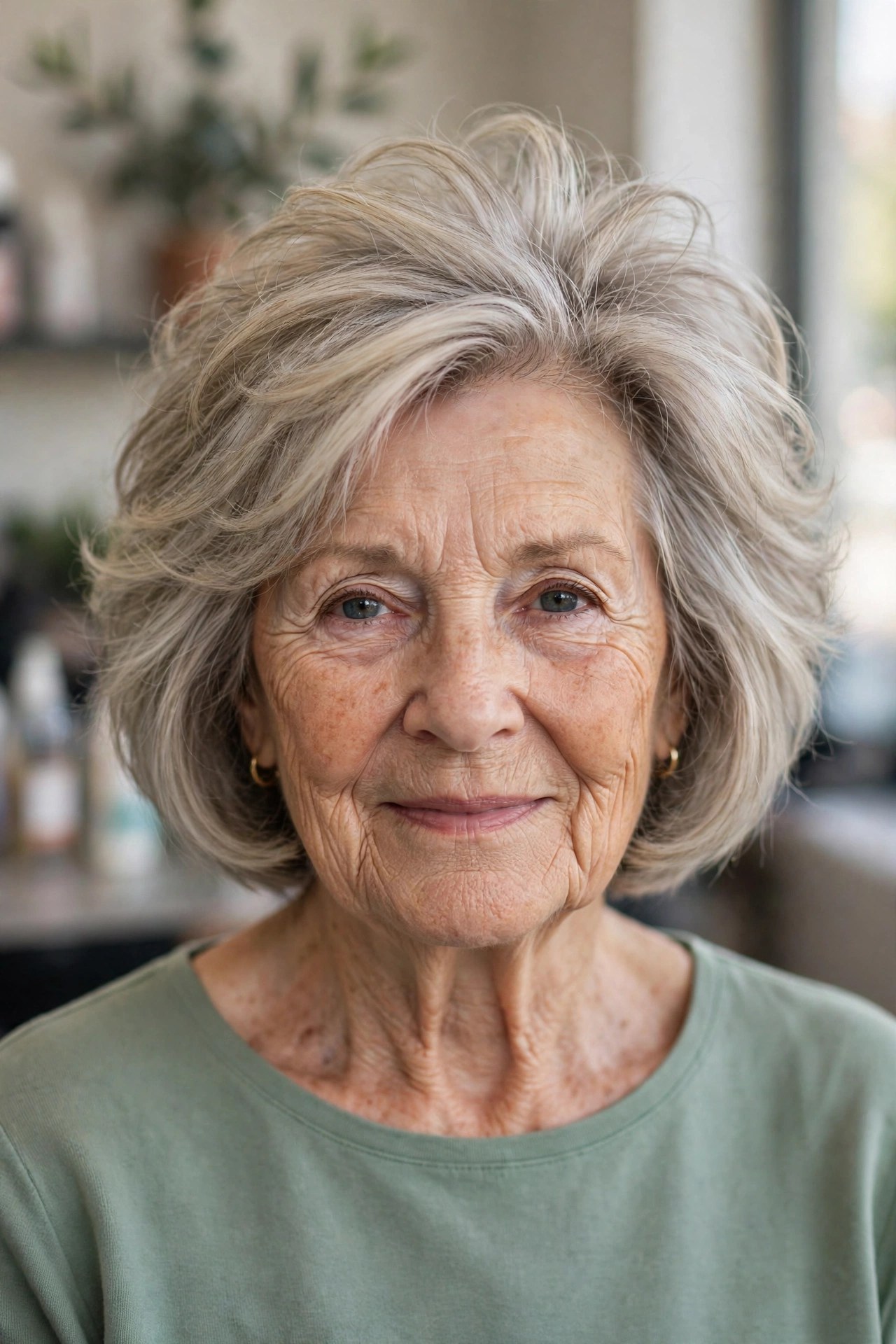
Feathering places soft, overlapping layers like petals across the crown, and on fine hair that overlap is coverage. Each feathered layer is light enough to lift away from the scalp rather than lying on it, so the crown reads airy and full instead of flat and separated. The chin-length front keeps the whole shape classic and feminine.
This is a gentle option if heavy, blunt cuts have made your hair look thinner at the ends. Keep styling weightless: an air-whipped foam on damp hair, fingers lifting the crown as you dry, and no oils near the roots. A sculpting foam worked only into the crown on refresh days revives the feathers without a full restyle.

6. Choppy Crown Pixie
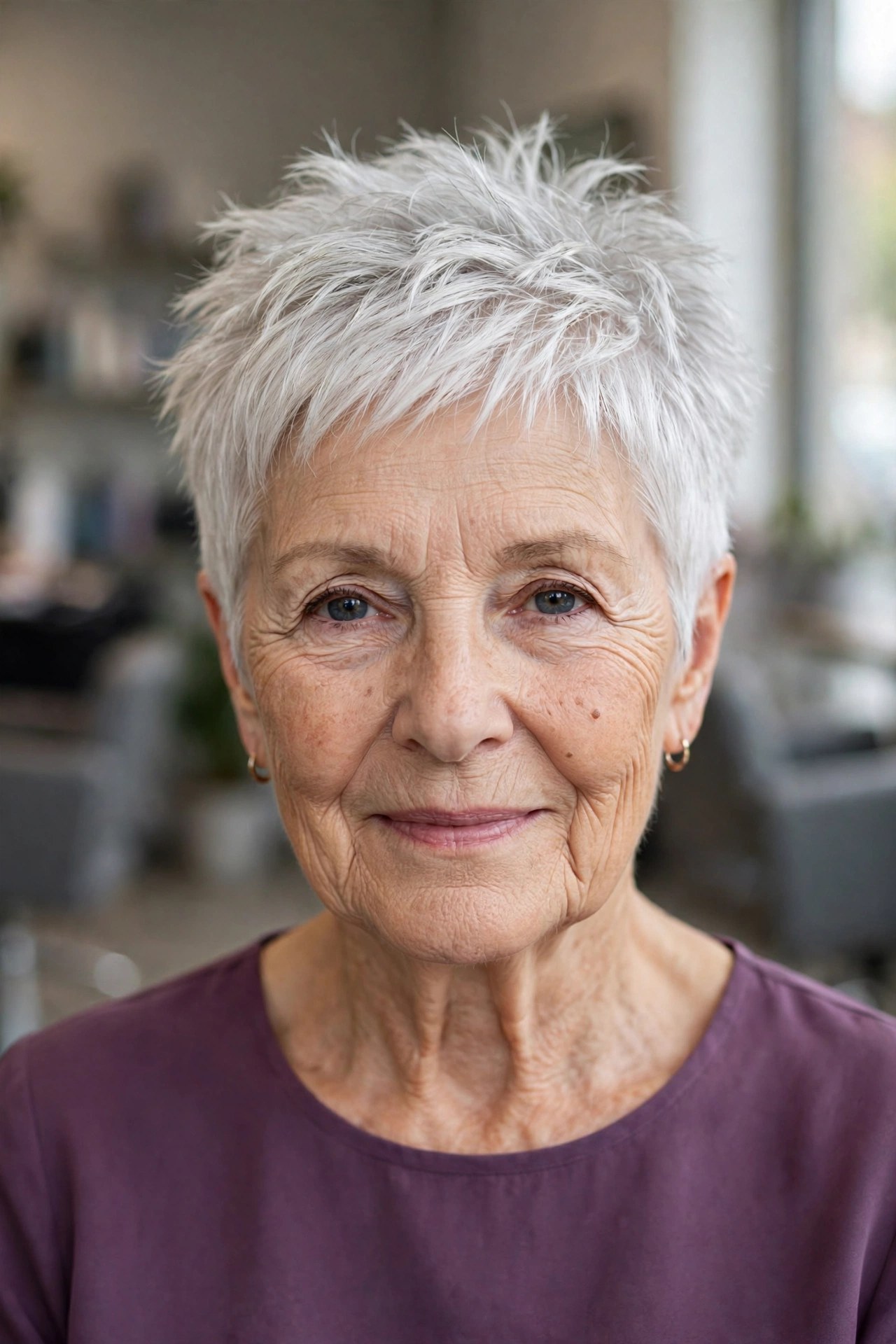
Choppiness is camouflage you can see working. When the crown is point-cut into dozens of short pieces that point in slightly different directions, there is no smooth surface for light to bounce off the scalp — the eye reads sparkle and texture instead. Underneath, the short pixie shape keeps everything close, neat and wonderfully low-effort.
Ask for point cutting rather than razor work if your strands are fragile, since razors can fray delicate ends. Style on dry hair: warm texturizing putty between your palms and pinch it upward through the crown pieces. Trims every four to five weeks keep the chop crisp; happily, this shape also grows out softly, with no hard line to lose.
7. Side-Swept Fringe Crop
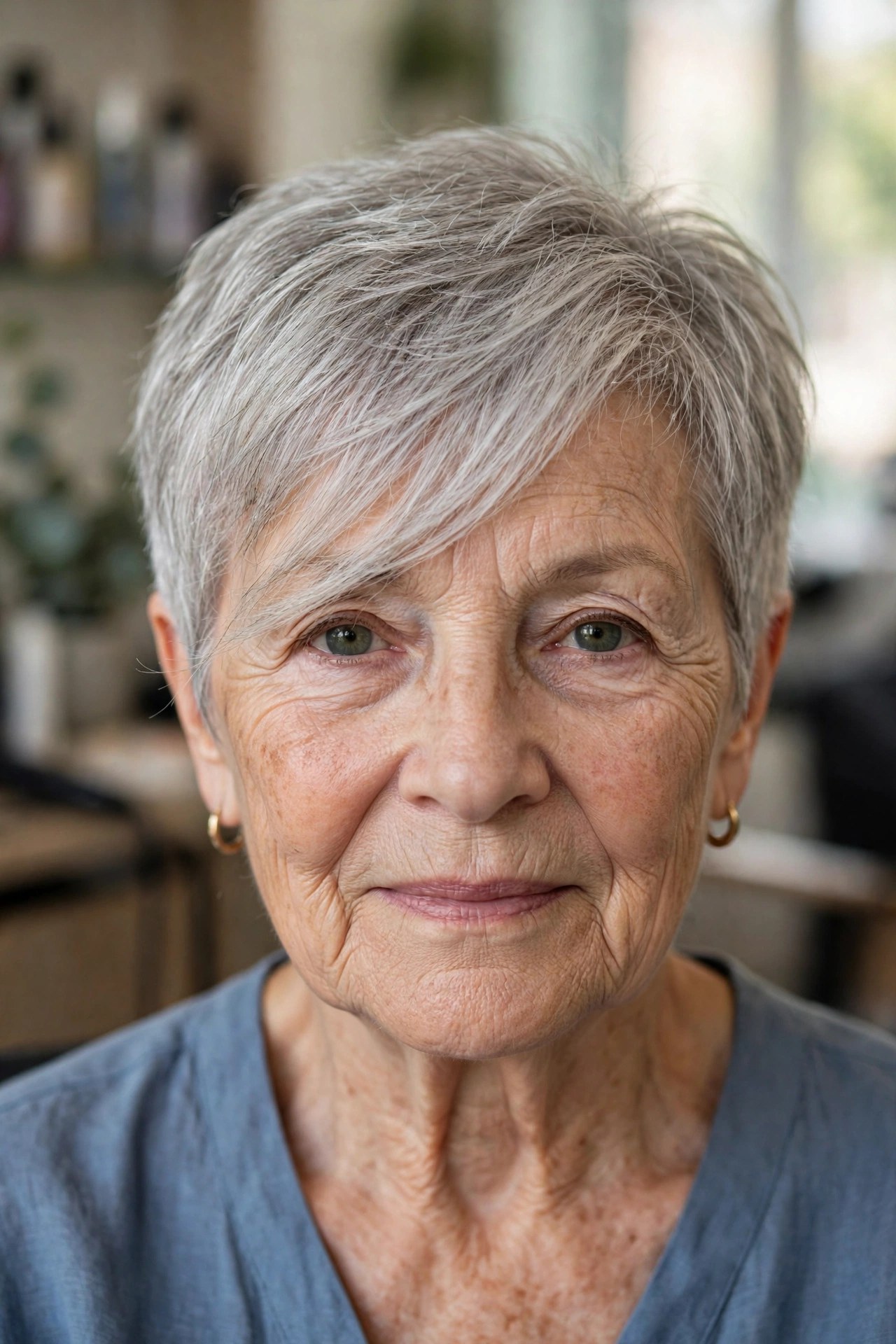
Sometimes the smartest coverage is redirection. A long fringe swept diagonally across the forehead pulls every gaze forward and down to your eyes, while the textured top behind it quietly covers the crown. The diagonal also softens forehead lines and adds a flattering slant across the face that a straight-across fringe cannot match.
The sweep needs to start deep on one side, or it will separate and fall into your eyes within a fortnight. A light, flexible hairspray holds the direction without stiffness, and a pea-size of mousse at the roots on wash day gives the sweep its lift. This crop flatters round and square faces particularly well, thanks to that slimming diagonal.

8. Stacked Bob Seen From the Back
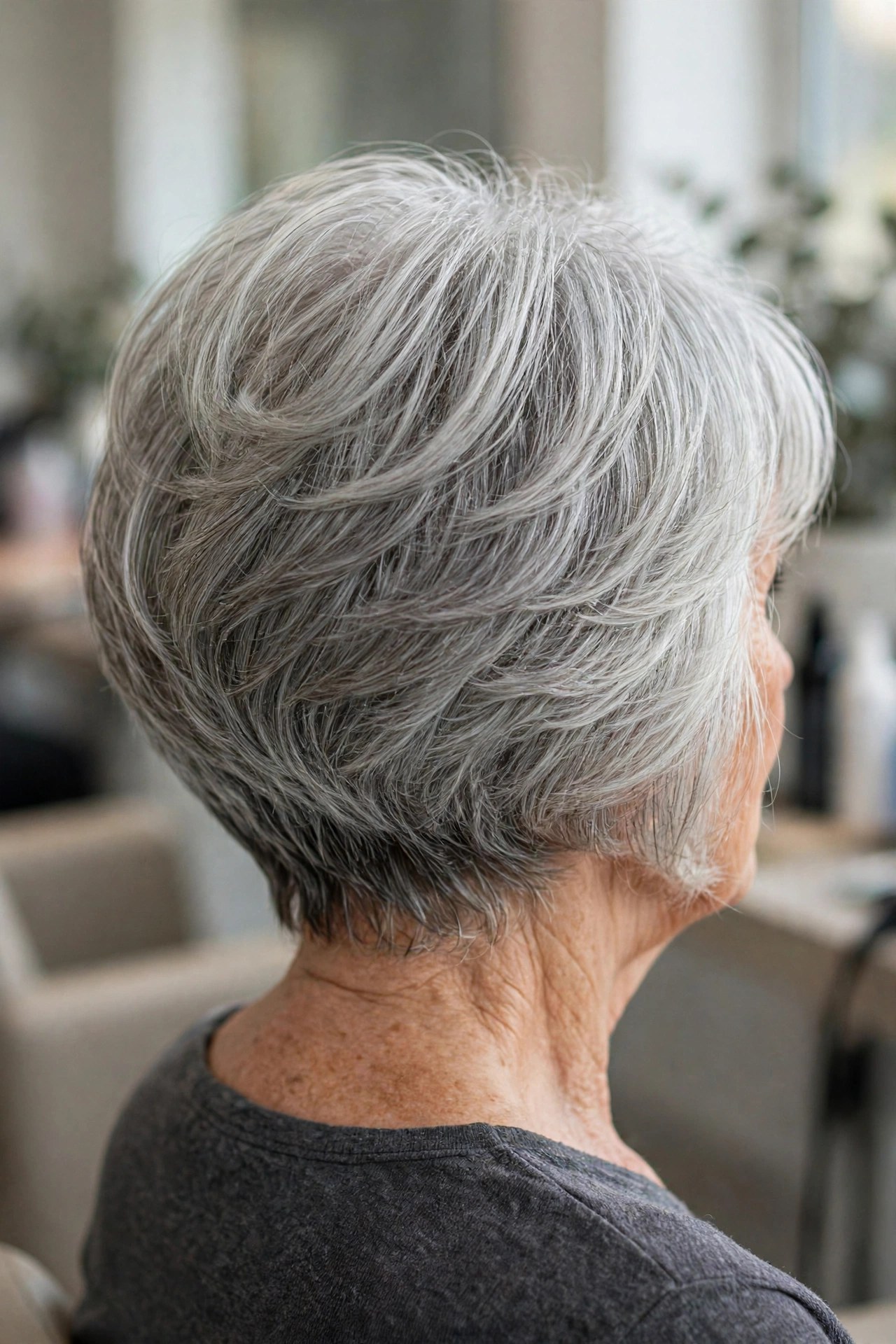
Look at this one from behind, because that is where a thinning crown is most visible — and where a stacked bob does its best work. Graduated layers are built up one over another at the back, forming a high, rounded shape that sits over the crown with complete, layered coverage. There is simply no flat panel of hair left to separate and show scalp through.
If you like this architecture, our guide to graduated bob haircuts for women over 60 shows the same idea styled many ways. At home, dry the back in upward sections with a volumizer brush and let each section cool before releasing it — cooling is what locks the stack in place for the day.

9. Soft Short Shag With Crown Layers

The modern shag is a friend to a thinning crown because it is layered everywhere, including — crucially — right at the top. Short crown layers flip and mingle with longer pieces around the face, so the surface of the hair is broken, busy and interesting. Nothing lies flat, nothing opens in a straight line, and the whole head looks more abundant than it is.
A shag forgives wavy and slightly unruly textures that fight sleeker cuts, so lean into your natural movement. Mist sea-salt spray into damp hair, scrunch upward and air-dry, or diffuse briefly on low heat. Keep the fringe and face pieces a touch longer for softness, and book light reshapes rather than big chops — a shag improves with a little lived-in looseness.


10. Asymmetrical Crop With a Long Top Sweep
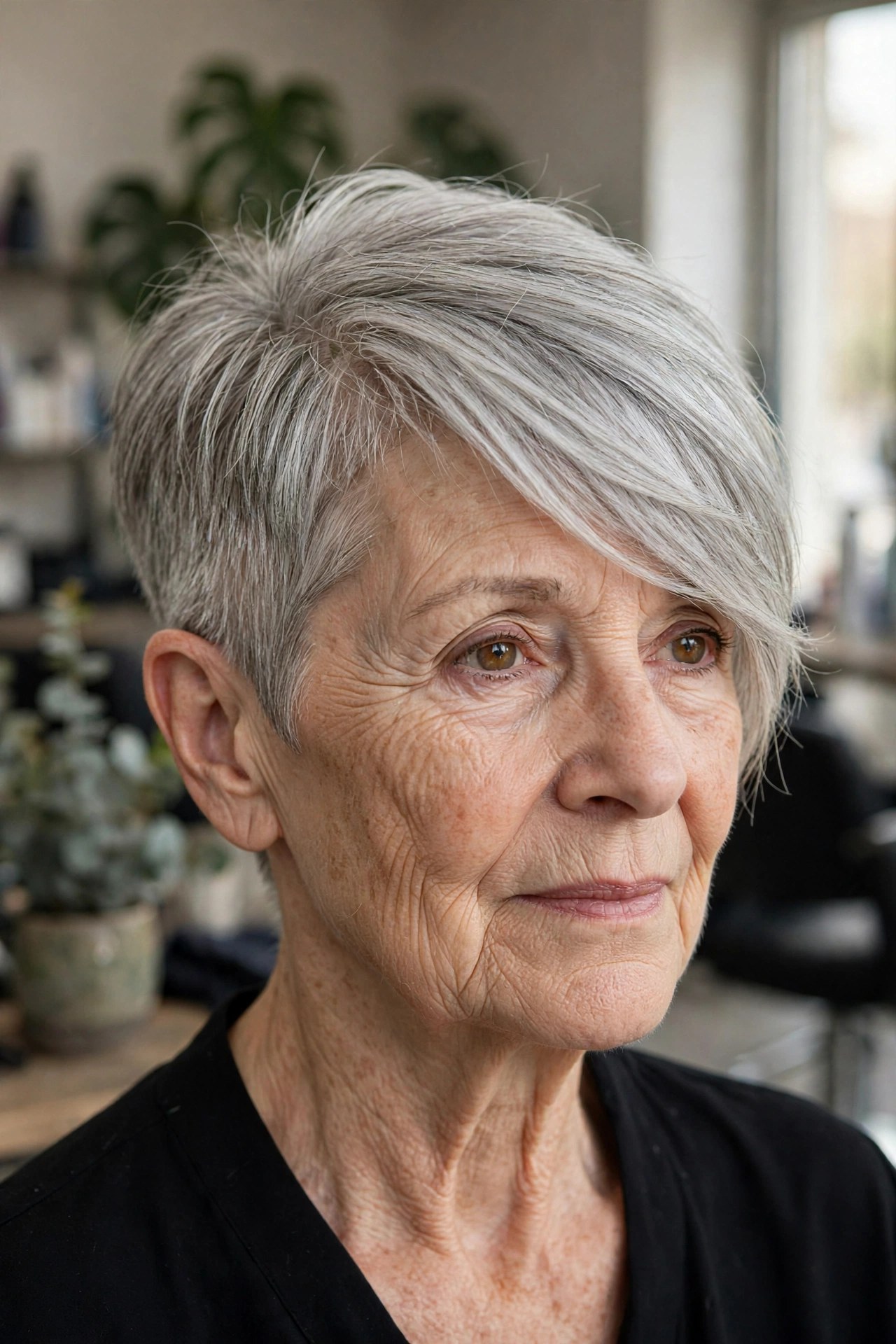
Asymmetry puts a long sweep of hair in charge of the crown. One side is kept short and neat, while the top grows long enough to travel right across the head — and a layer of hair travelling across the crown is coverage in its most direct form. The strong diagonal also lengthens the face and gives the cut a modern, intentional edge.
Because the sweep is longer, protect it when you smooth it: a heat protectant first, then a flat iron passed once, following the diagonal. Precision matters with asymmetry, so expect trims around every five weeks. This is a confident choice for straight hair, and it shows off a favourite earring on the short side beautifully.


11. Tousled Rounded Bubble Bob
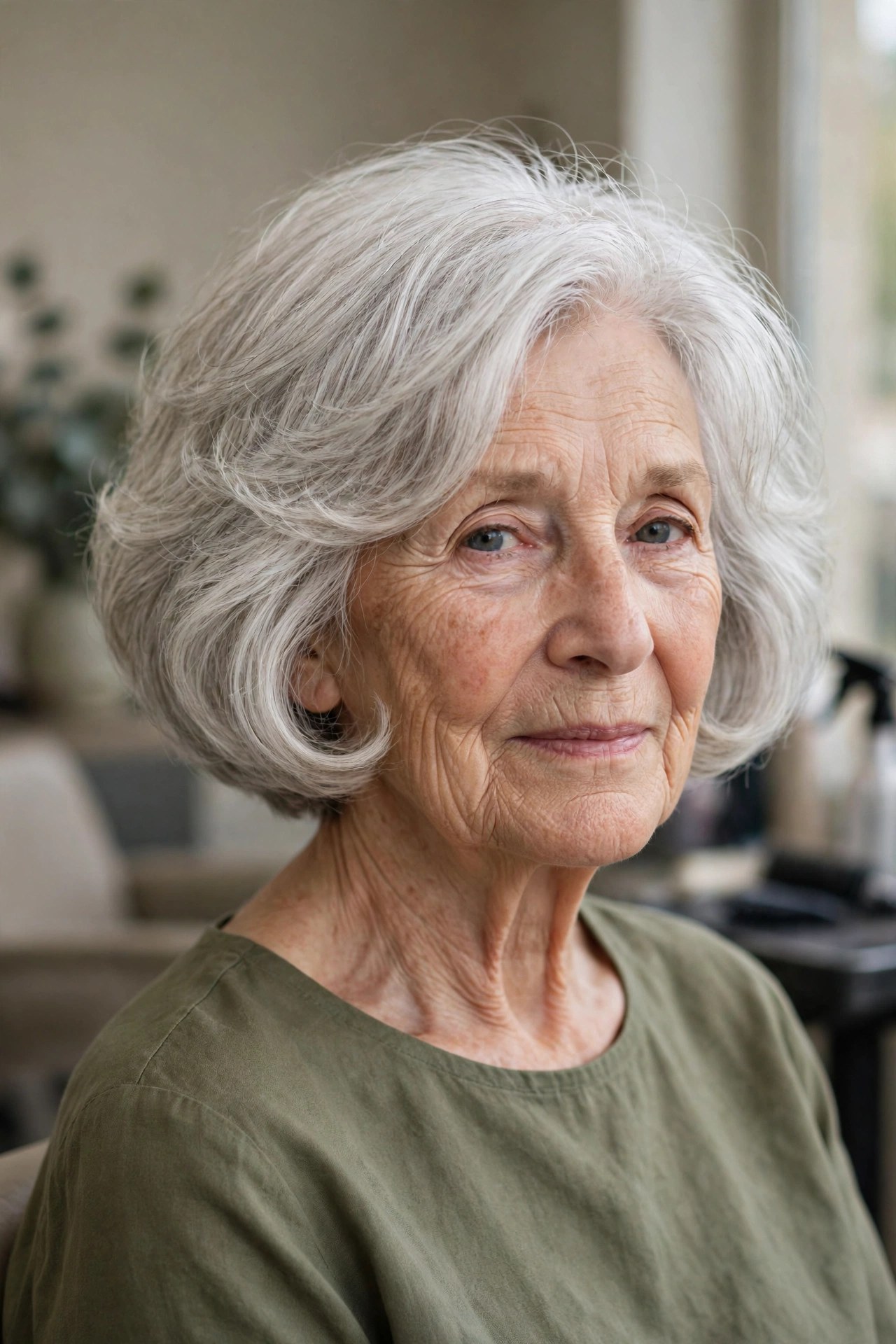
The bubble bob rounds everything. Curved layers form a soft C-shape through the back and crown, mimicking the silhouette of naturally full hair, and the tousled finish stops that roundness from looking set or helmet-like. On fine hair, a rounded shape is generous: it distributes the hair you have over a curved surface instead of a flat one, so it spreads further.
Build the curve with a round brush, drying the crown sections up and over, then tousle the surface gently with your fingers once it has cooled. A texturizing sea spray on day two restores the piecey finish. This shape flatters oval and heart faces and is a kind choice if sleek, flat styles have been emphasising a sparse crown.
12. Layered Lob With Soft Curtain Fringe
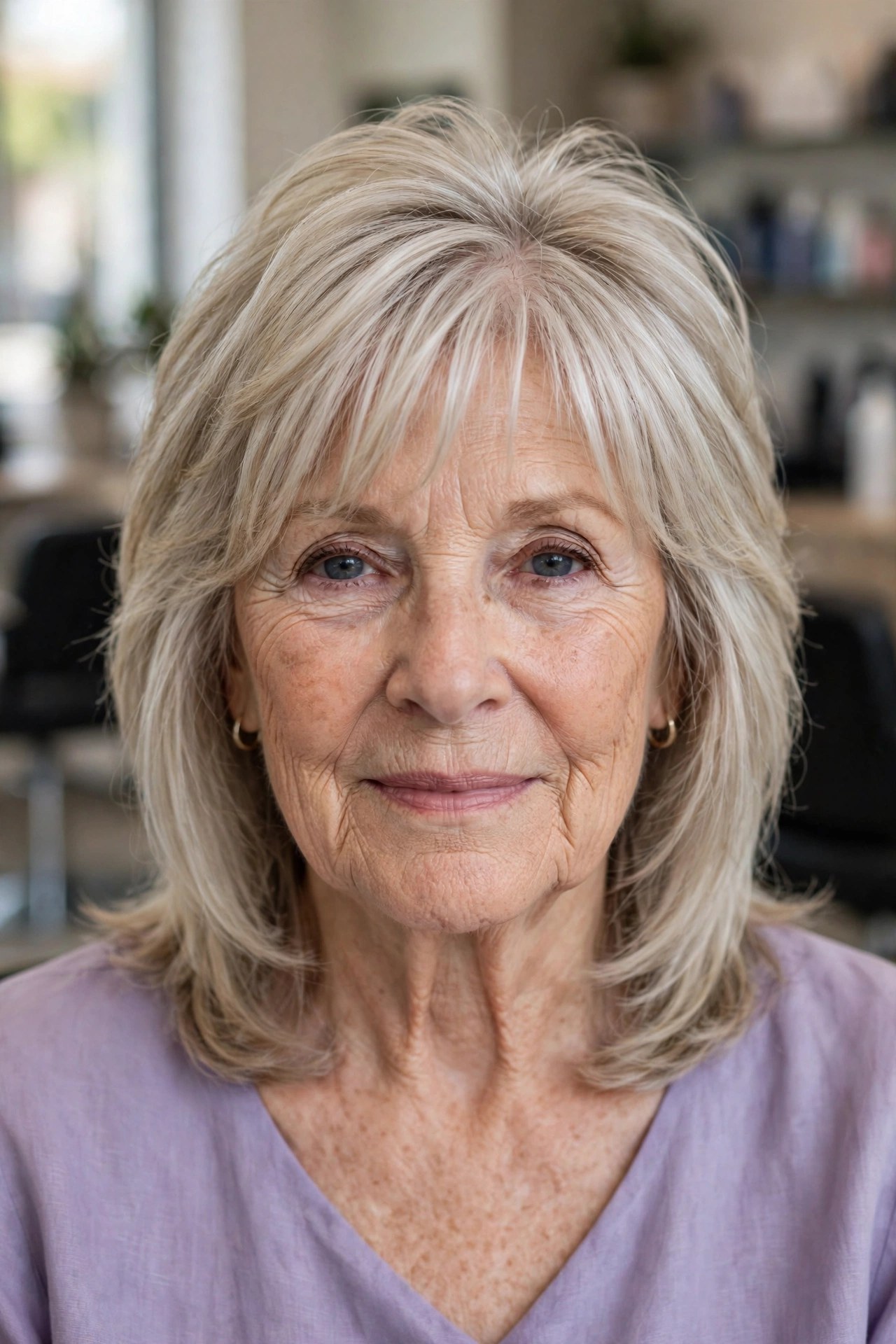
If short hair feels like too big a change, this collarbone-length lob keeps your length and still covers the crown properly. The secret is in the top: crown layers are cut shorter than the lengths below, so they lift and overlap, while the soft curtain fringe opens around the face and draws attention to your eyes and cheekbones instead of the top of your head.
Length weighs on a crown, so root product is non-negotiable here — mousse at the roots, dried lifting upward, every wash. Ask for the curtain fringe to start at cheekbone length when dry; it springs up more than you expect. A sculpting foam refreshed at the crown keeps this lob bouncy between washes without touching the lengths.
13. Wavy Bob Brushed Back Over the Crown

See this one in profile: the waves are brushed up and back, so each wave crests over the crown and lands behind it. Brushing back does two things at once — it stacks wave over wave for layered coverage, and it removes the part altogether. No part, no part line, nothing for thinning to announce itself along.
This direction works best on hair with some natural wave to hold the sweep. Dry with a root-booster brush, directing everything up and back, and finish with texture spray scrunched lightly into the crests. If your crown cowlick resists, dry it in the back direction while the hair is still quite damp — that is when direction is set.
14. Tapered Crop Brushed Forward
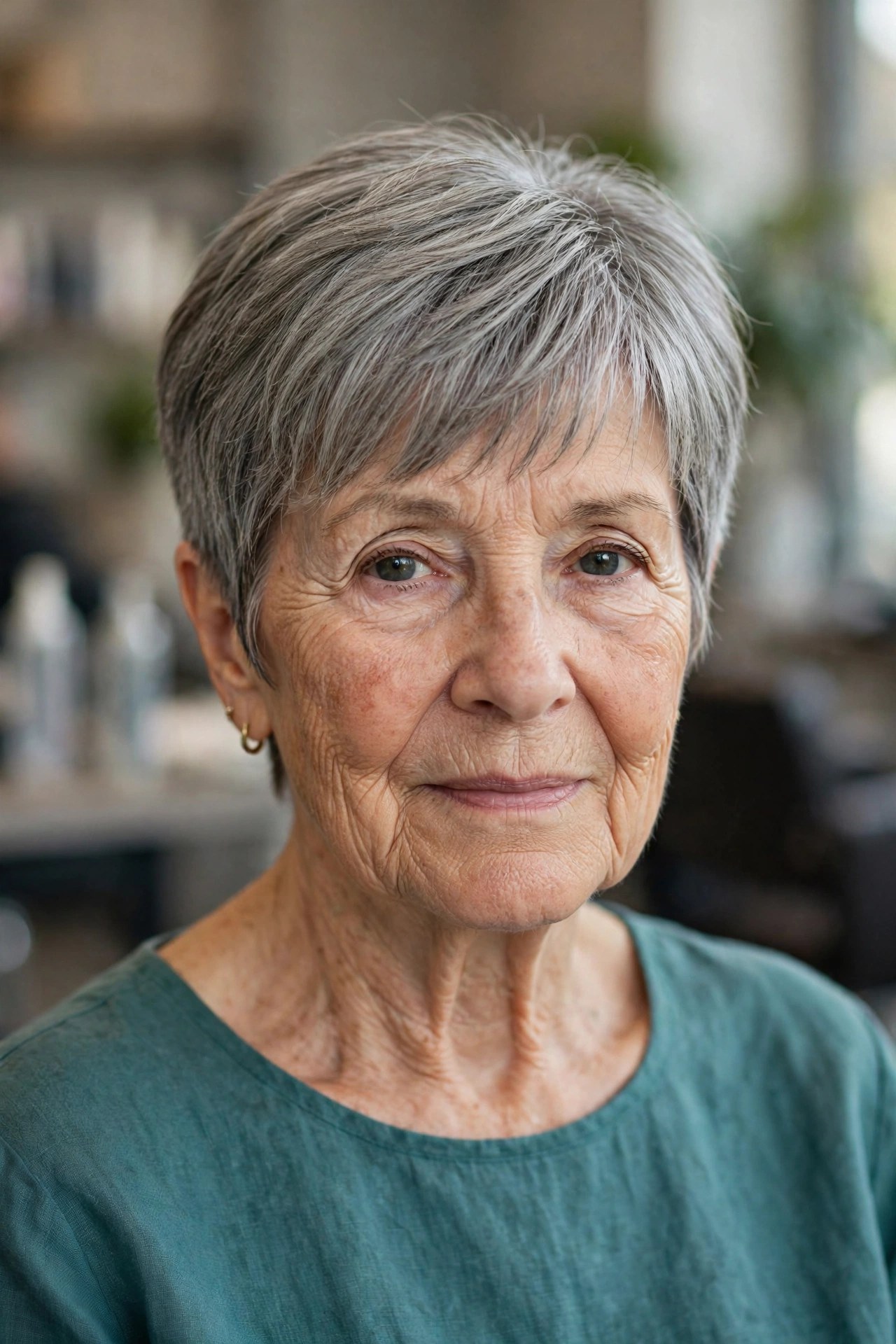
This is perhaps the most honest photo in the list: genuinely fine hair, kept short and neat at the nape, with the longer top brushed forward so it lies over the crown in one soft, overlapping sheet. Forward brushing covers more crown per strand than any other direction, which is why barbers and stylists reach for it first when coverage is the brief.
It is also the easiest routine here. Dry shampoo at the roots on non-wash days keeps the forward sheet from separating, and a little mousse on damp hair is the whole styling regime. Because the shape is close and tapered, it grows out tidily and suits women who want to spend their mornings on everything except their hair.
15. Silver Bob With Shadow Depth at the Roots

Colour can cover what cutting cannot reach. On bright silver hair, a whisper of deeper tone kept near the roots — often called a shadow root — reduces the contrast between hair and scalp, so the crown looks denser even before you style it. The layered bob above that shadow does the lifting, and the silver lengths stay bright and clean.
This is a conversation to have with a colourist rather than a box at home: the shadow should be subtle, cool-toned and blended, never a hard line. Maintain the silver with a purple shampoo once a week so it does not yellow against the deeper root, and keep serum on the lengths only, so the crown layers keep their lift.


16. Piecey Fringe Pixie Brushed Forward
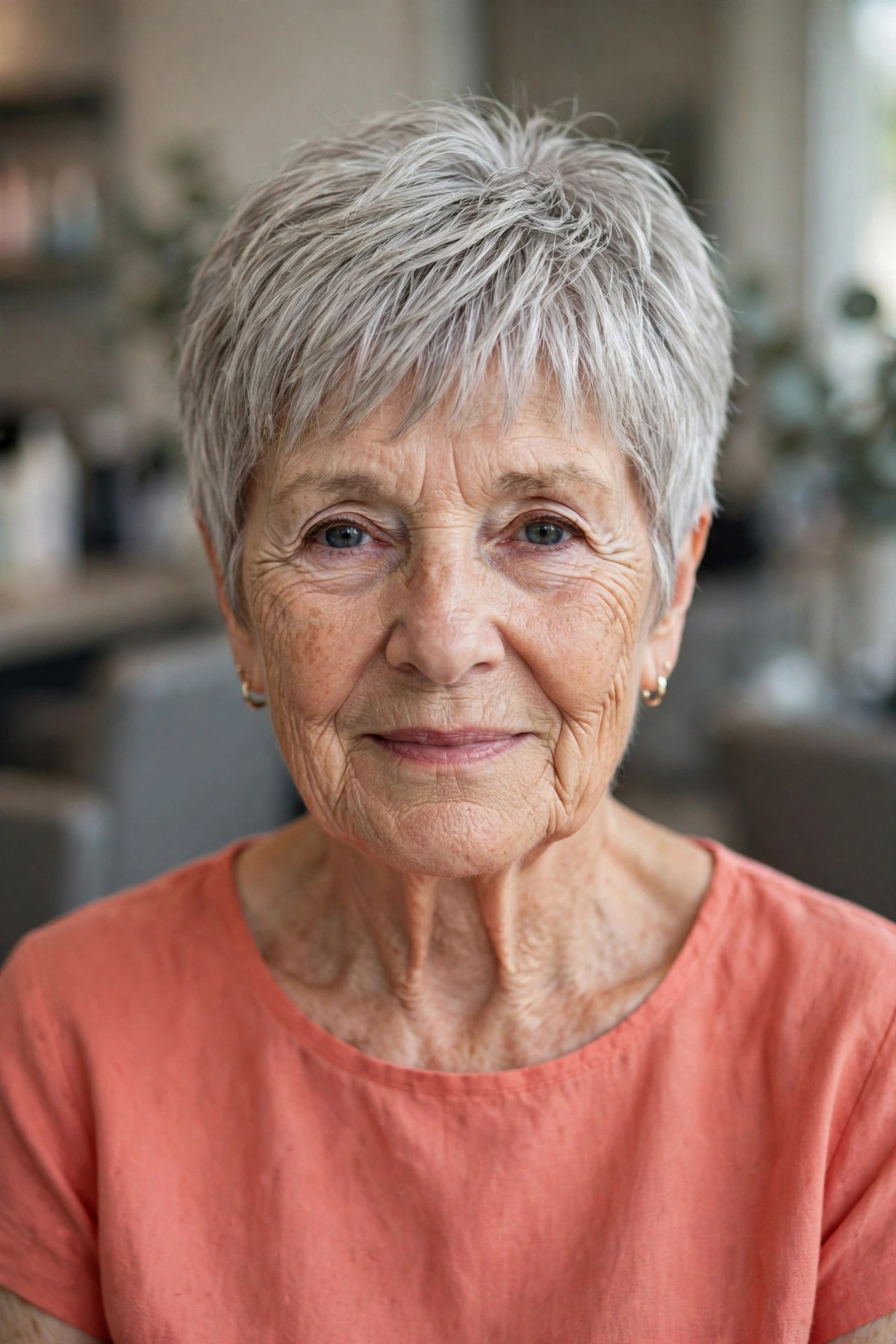
A close cousin of the first crop, this pixie leans harder into its fringe. The crown layers and the fringe are brushed forward as one continuous, piecey surface, so coverage runs unbroken from the back of the crown to the forehead. Piecey separation keeps that surface light and modern rather than heavy or flat.
Pinch texturizing putty through the dry fringe and crown to define the pieces, and refresh flat spots with an air-whipped foam scrunched into the roots. If your fringe grows fast, many salons offer quick fringe trims between appointments — worth asking, because this style looks its best while the fringe sits just where it was cut.
17. Blowout Bob With an Off-Center Part
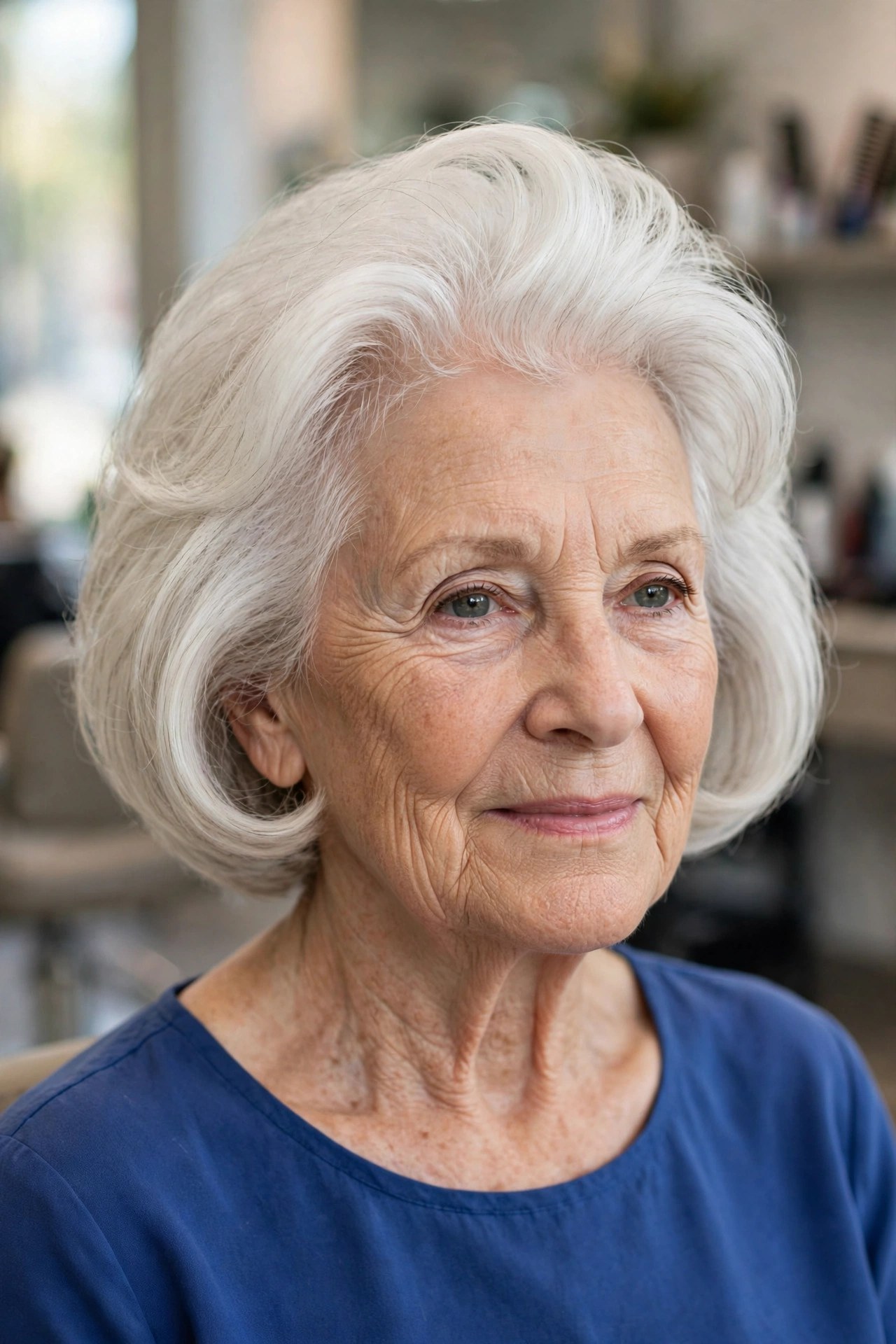
An off-center part is the quiet achiever of crown coverage. It avoids the widest, most visible point of a centre part, and when the hair on both sides is blow-dried up and over, the crown gets height as well as a crossing layer. Styled as a smooth blowout, this bob is the polished, occasion-ready face of the same idea.
The blowout is the styling, so dry in sections with a volumizer or round thermal brush, lifting the crown sections straight up and holding them until they cool. Done well, it lasts two to three days. Keep a satin pillowcase in the rotation to protect the shape overnight, and revive the crown with a warm brush pass rather than starting again.
18. Curly Bob With Nesting Crown Curls

Curls cover a crown by nesting. When the crown curls are cut a little shorter than the curls below, they sit inside and on top of one another, building a rounded, springy layer with no gaps for the eye to fall through. The longer curls around the face keep the shape soft and pretty, and the triangular heaviness curly bobs can develop is cut away.
Ask for the crown layers to be finished dry, because curls shrink as they dry and a wet-cut crown can end up shorter than planned. Scrunch in a light texture spray rather than brushing, and sleep on a satin pillowcase so the crown curls keep their spring instead of flattening against cotton overnight.

19. Loose Half-Up Crown Twist
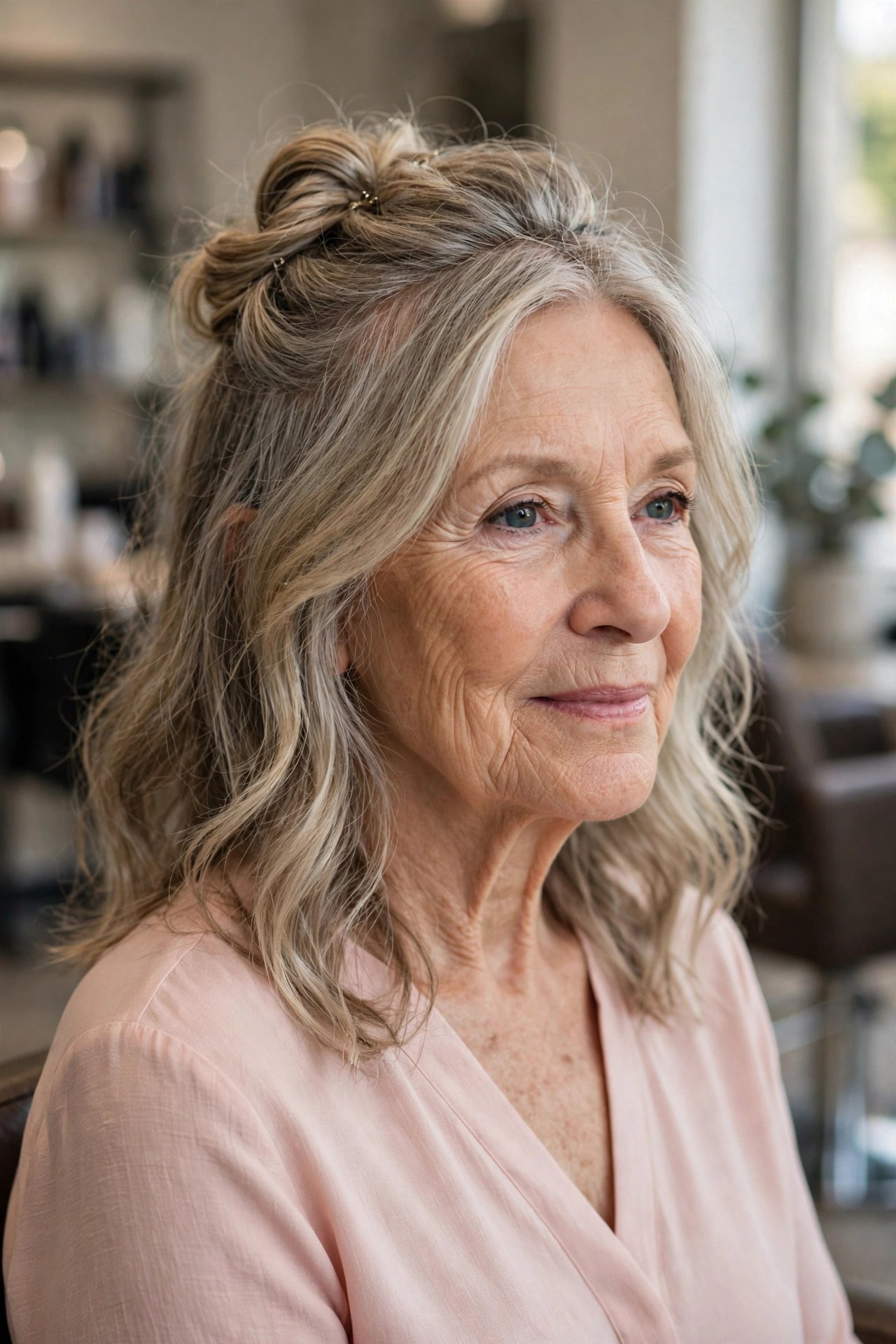
Not every solution is a haircut. If your lengths are medium, gather the top section, twist it loosely and pin it above the crown: the twist itself sits directly over the thinnest area, while the gentle height it creates lifts the whole silhouette. The soft waves left loose below keep it relaxed and pretty rather than pulled tight.
Loose is the operative word — a tight twist pulls hair apart and shows more scalp, while a loose one, gently puffed with your fingertips after pinning, covers more and looks softer. Secure it with a flat claw clip or pins that match your hair colour, and finish with a light hairspray. It is a two-minute fix for photos, lunches and days when the crown will not cooperate.

20. Rounded Crown Bob Seen From Behind

We finish where the problem starts: looking at the crown itself. In this back view, smooth rounded layers curve into a complete dome, each layer overlapping the next so the surface is unbroken from every angle. Fine strands are visible at the very top — this is real hair, honestly shown — yet the layered dome keeps the overall look full, neat and elegant.
To keep a dome a dome, the back layers need reshaping roughly every five to six weeks; even growth blurs the curve eventually. Dry the crown in upward sections with a root-booster brush, and keep silver bright with a weekly purple shampoo. If you take one photo to your stylist, make it a back view like this — it shows exactly the coverage you are asking for.
Recommended Products
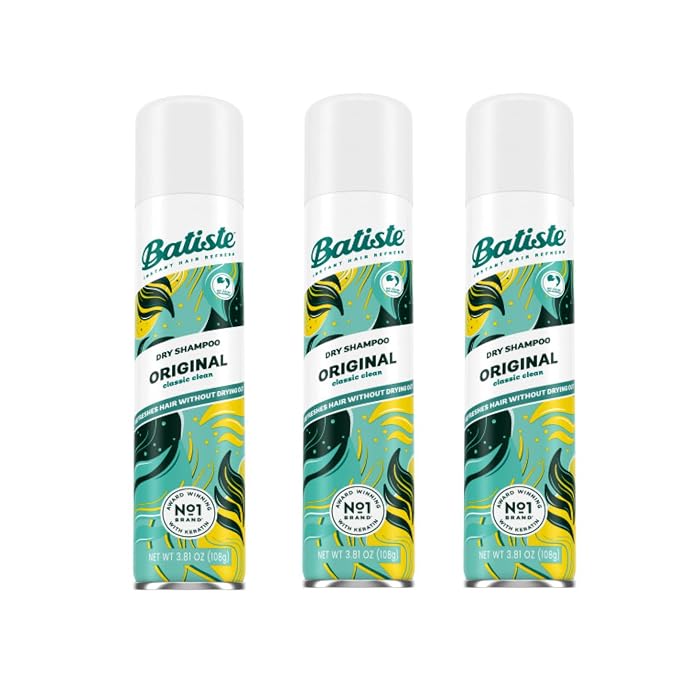
Five staples do most of the crown-covering work in this list: a serious volumizing mousse for the roots, a dry shampoo that stops crown strands separating on day two, a texturizing putty for piecey crops, a one-step volumizer brush for blowout and stacked styles, and a purple shampoo to keep silver crowns bright.
Crown coverage checklist:
- ☐ Direct the top forward or across — never straight back and down
- ☐ Move the part: deep side, off-center or zigzag beats a straight centre line
- ☐ Put product at the roots (mousse, dry shampoo), oils and serums on lengths only
- ☐ Dry the crown lifting up, and let it cool before you touch it
- ☐ Pinch texture through crown pieces so the surface looks broken, not smooth
- ☐ Flip your part to the other side for an instant day-two refresh
- ☐ Keep crown layers trimmed every 5–6 weeks — grown-out layers stop covering
- ☐ Sleep on a satin pillowcase to protect the crown shape overnight
Frequently Asked Questions
What kind of haircut hides a thinning crown best?
Cuts that overlap hair over the crown work best: textured crops brushed forward, pixies with short crown layers under a longer top, stacked or graduated bobs, and any style worn with a deep side, off-center or zigzag part instead of a straight centre part. The common thread is direction and layering — hair that crosses or stacks over the crown covers far more than hair that falls away from it in two directions.
Should I avoid a centre part if my crown is thinning?
For most women, yes — a straight centre part tends to open along the line where thinning is most noticeable and draws the eye straight to it. A deep side part, an off-center part or a loose zigzag part lets hair cross over that line instead. If you love a centre part, keep it very short and soft, with curtain fringe and crown layers doing the covering work around it.
Will cutting my hair shorter make a thinning crown less noticeable?
Usually, yes. Shorter hair weighs less, so crown layers can lift and overlap instead of dragging flat, and short textured styles break up the surface so sparse areas are harder to spot. That said, length alone is not the answer — a layered lob with proper crown layers can cover better than a blunt short cut with none. Direction, layering and part placement matter as much as inches.
How can I style my hair at home to cover the crown on a bad day?
Start with dry shampoo or a volumizing mousse at the roots to stop strands clumping and separating. Dry or brush the crown hair forward or across rather than back and down, flip your usual part to the opposite side for instant lift, and add a little texturizing putty pinched through the crown pieces. A loose half-up twist pinned above the crown is a reliable two-minute rescue for medium lengths.
What should I ask my stylist for at my appointment?
Bring photos — including a back view — and say plainly that crown coverage is your priority. Ask for crown layers, a forward or across fall for the top, point-cut texture rather than heavy thinning shears on fine hair, and a part placement that crosses the thinnest area. A good stylist will also tell you honestly which lengths your density can support at the ends.
Do these hairstyles work on gray and silver hair?
They do, and silver hair has one built-in advantage: its strands are often a little coarser, so crown layers hold lift well. The challenge is contrast — bright silver against skin can look sparser than it is. Texture, overlapping layers and, if you colour, a subtle shadow of depth at the roots all reduce that contrast. A weekly purple shampoo keeps the silver clear so the shape, not yellowing, is what people notice.
However you wear your hair now, the most important shift is a hopeful one: a thinning crown is a styling problem with many good answers, not a flaw to hide away from. Pick the two or three photos here that feel most like you — the pixie cuts in this collection are a good next browse if the shorter ideas tempted you — and take them to a stylist who listens. The right layers, the right direction, and ten unhurried minutes in the morning really can give you your crown back.