Face-Lifting Haircuts for Women Over 60 That Add Lift
This post contains affiliate links. As an Amazon associate, I earn from qualifying purchases. I only recommend products that are of high quality and that I would use myself.
Nothing about a face actually moves when you change your haircut — and yet the right cut can make the same face look visibly more lifted in the mirror. The mechanism is simple visual geometry. Hair that is flat at the crown, heavy at the sides, or finished in a straight horizontal line at the jaw pulls the eye downward, and the features get read as drooping along with it. Hair with height at the crown, lines that travel up or diagonally, and weight kept off the jaw does the opposite: the eye climbs, and the face climbs with it.
Below are 20 face-lifting haircuts for women over 60, every one built on a specific lifting device — a stacked or graduated back, crown layers styled up and back, a deep side part, a diagonal line, or face-framing that sweeps upward instead of hanging down. For each one you will find exactly why it lifts, who it suits, and how to ask for and keep the shape. If you are not sure which direction suits your face, that is a face-shape question first — and there is a quick way to answer it below.
Table of Contents
- 1. Crown-Height Pixie with Tapered Sides
- 2. Stacked Bob with a Graduated Back
- 3. Feathered Layers Swept Up and Back
- 4. Deep Side-Part Bob with Lifted Roots
- 5. Graduated Crop with a Built-Up Crown
- 6. A-Line Bob with a High Stacked Nape
- 7. Textured Pixie with Upward Crown Texture
- 8. Layered Lob with Upswept Face-Framing
- 9. Asymmetric Bob with Diagonal Lines
- 10. Curly Crown-Volume Cut
- 11. French Bob with a Lifted Crown
- 12. Wedge Cut with a Stacked Back
- 13. Choppy Pixie with Up-and-Back Texture
- 14. Blowout Bob with Root Lift
- 15. Short Shag with Lifted Top Layers
- 16. Tapered Natural Curls with a High Top
- 17. Pixie-Bob with Side-Swept Fringe and Crown Height
- 18. Graduated Bob with Flipped-Up Ends
- 19. Voluminous Layered Crop with a Swept-Up Top
- 20. Diagonal Forward Bob with a Lifted Back
- Recommended Products
- FAQs
- Flat crown that collapses by noon? A stacked or graduated back (ideas 2, 5, 6, 12) — the lift is built into the cut.
- Fine or thinning hair? Crown-height pixie (idea 1) or graduated crop (idea 5) — short crown layers have less weight to fall flat.
- Round or full face? Diagonals — the A-line (idea 6), asymmetric bob (idea 9) or diagonal forward bob (idea 20).
- Want to keep length? Layered lob with upswept framing (idea 8) — length at the back, lift at the front.
- Natural curls or coils? Crown-volume curls (idea 10) or the tapered high top (idea 16).
- No daily styling, ever? Choppy pixie (idea 13) or short shag (idea 15) — two minutes with your fingers.
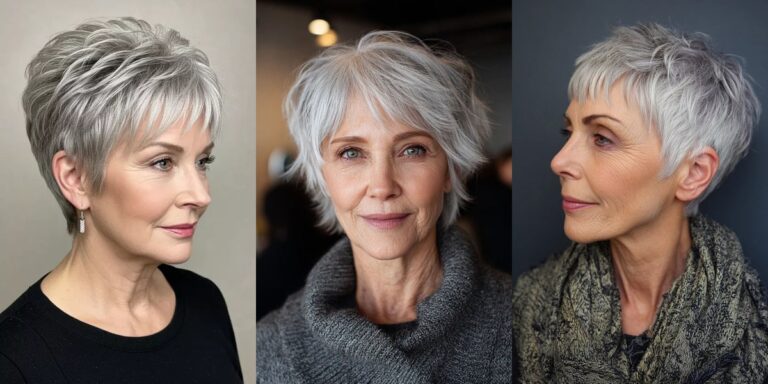
1. Crown-Height Pixie with Tapered Sides
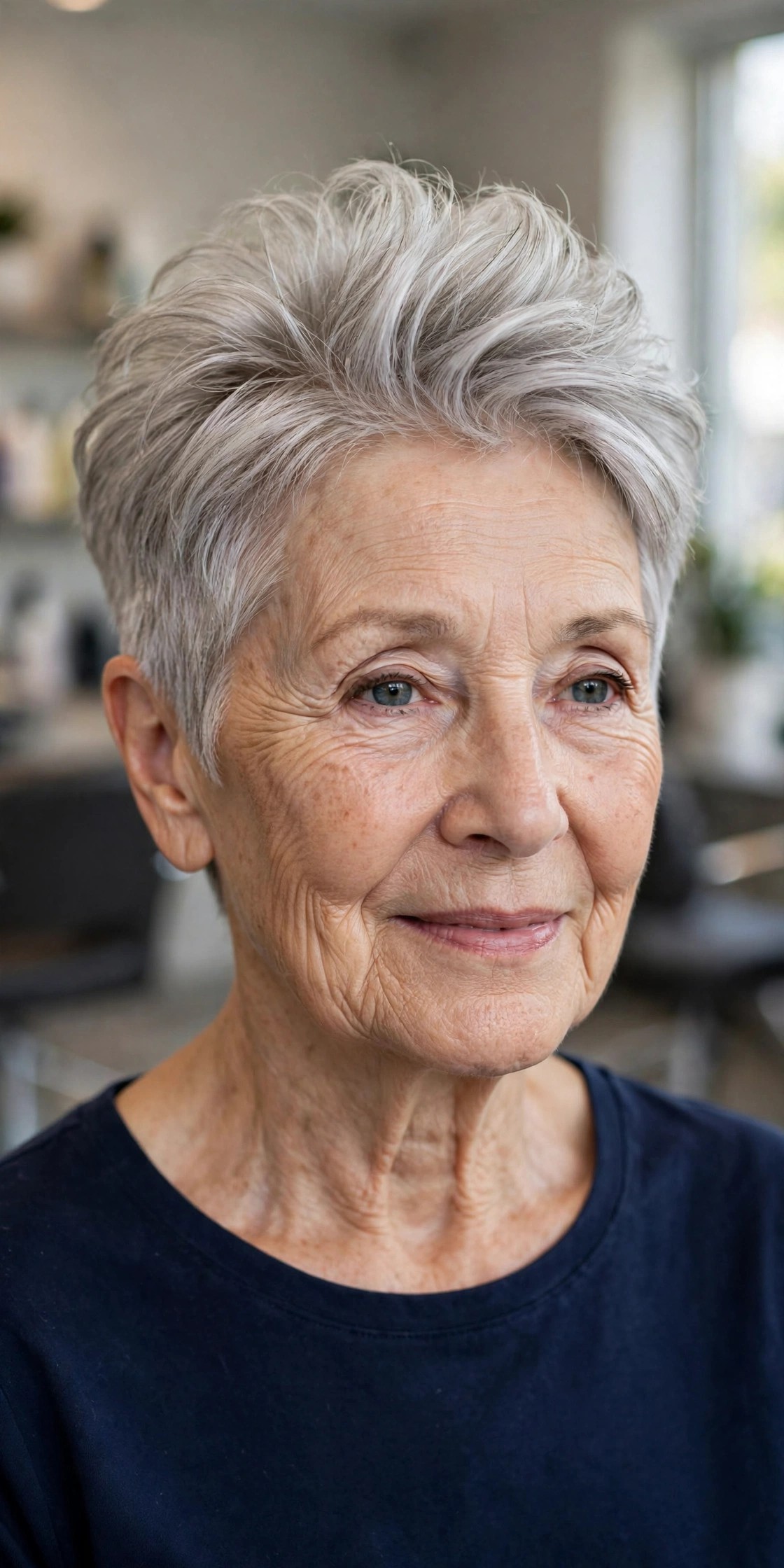
This is the purest form of the lifting cut: the length lives on top, not around the face. The crown is left long enough to stand up and sweep back, while the sides and nape are tapered close so nothing widens or weighs the silhouette down at jaw level. Because the fullest point of the hair sits above the cheekbones, the eye reads the whole face from that high point downward — and everything below it appears lighter and more raised by comparison.
It is also one of the kindest cuts for fine hair, because short crown layers have less weight pulling them flat. Ask your stylist to keep the top at roughly three to four inches and to point-cut the ends so they separate softly rather than clumping. At home, a pea-sized amount of volumizing mousse worked into damp roots, then a two-minute blast of warm air directed up and back, is genuinely all it needs most days.


2. Stacked Bob with a Graduated Back
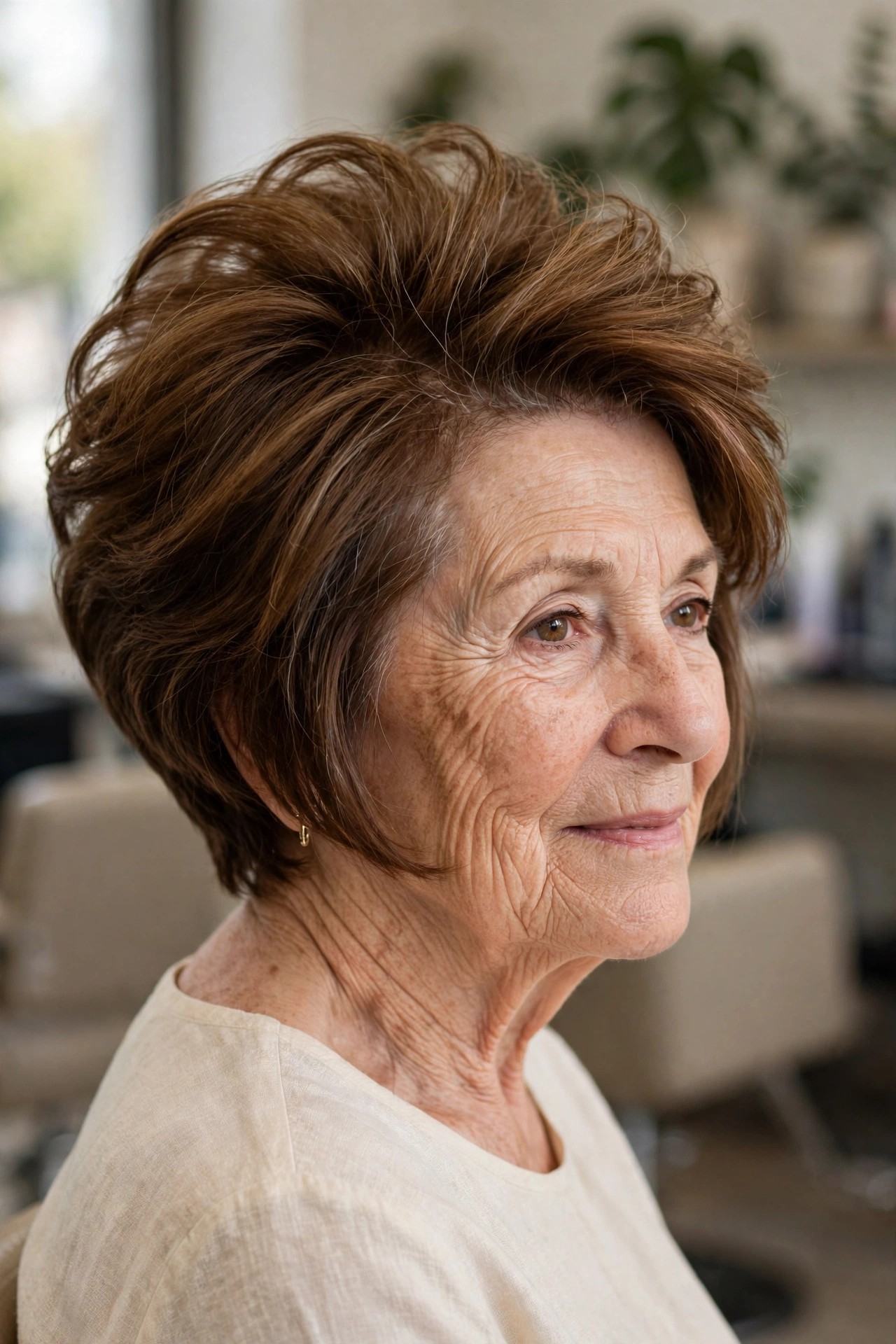
The stacked bob builds its lift from behind. Short graduated layers are piled at the back of the head so each one supports the layer above it, creating a shelf of volume right at the crown. The shape then angles forward into longer, smoother pieces at the front. Nothing about it is accidental: the weight sits high and behind, which is exactly where a face reads as lifted rather than dragged.
This is the cut to show your stylist if your crown flattens by midday no matter what you spray on it — the architecture does the holding, not the product. Our stacked bob guide shows the same graduation at work a decade earlier. Dry it with a round brush lifting at the back first; the front pieces can simply be smoothed forward at the end.


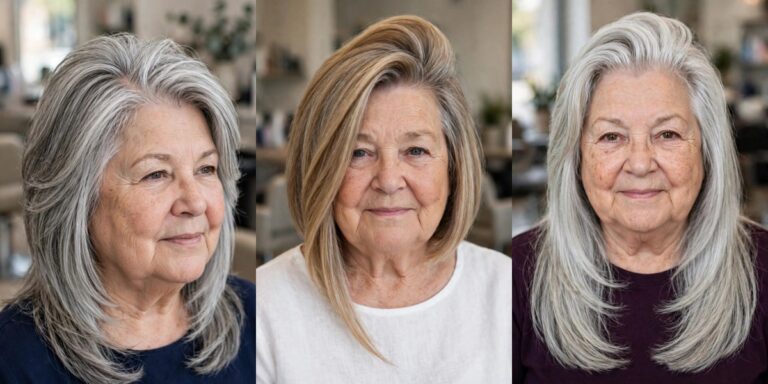
3. Feathered Layers Swept Up and Back
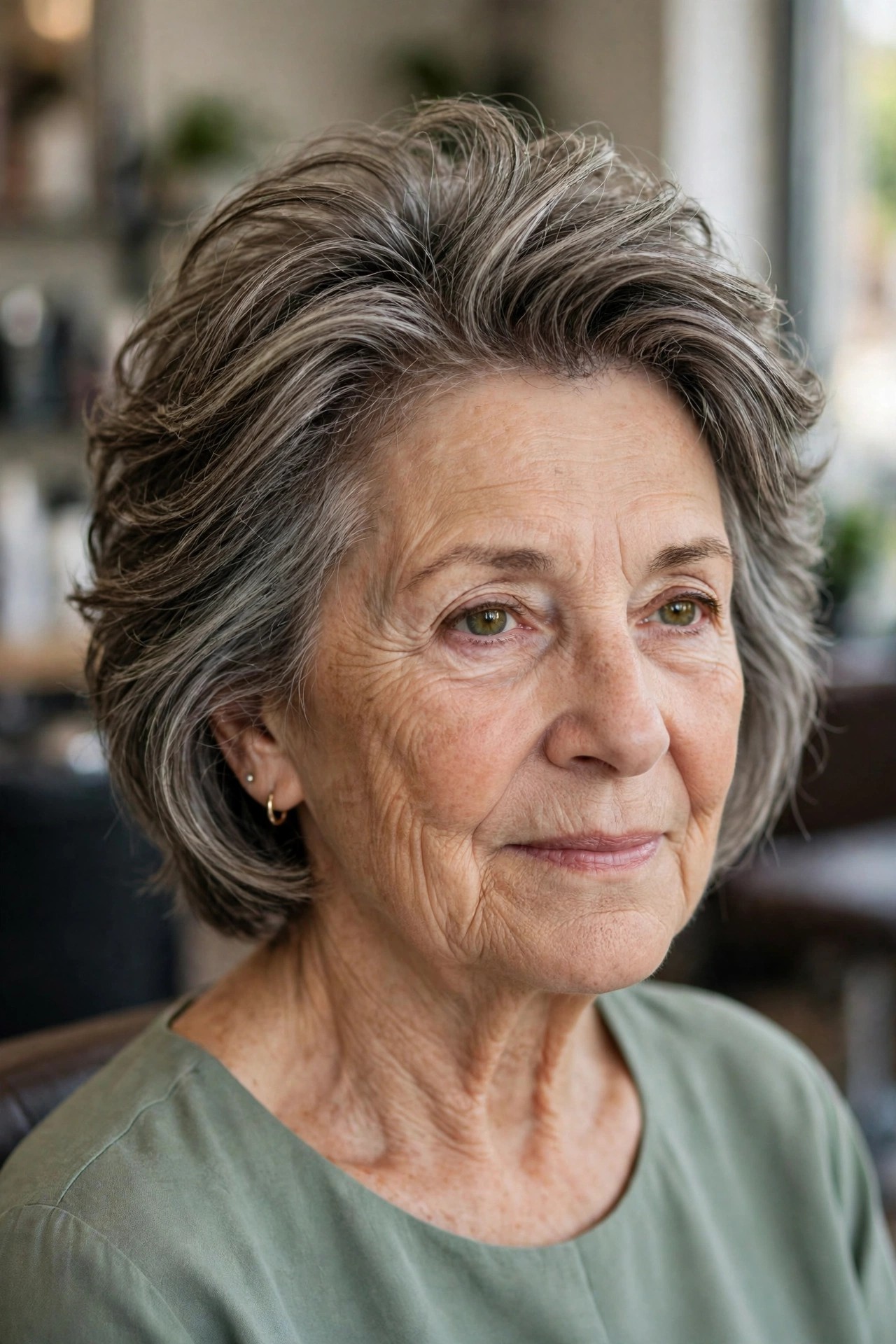
Feathering cuts many fine layers through the top and sides and brushes every one of them away from the face. Each layer overlaps the next, so the hair streams upward and backward in one continuous direction — and a face framed by lines all travelling up and back looks lifted in the same way a ponytail does, just softer. There is no heavy curtain at the sides and nothing pulling the eye toward the jaw.
Feathered layers suit straight to slightly wavy hair that tends to separate and fall forward. The styling direction matters more than the tools: always dry up and away from the face, never down and forward, or the whole effect reverses. A light sculpting foam at the roots and a mist of flexible hairspray to finish will hold the sweep without freezing it stiff.


4. Deep Side-Part Bob with Lifted Roots
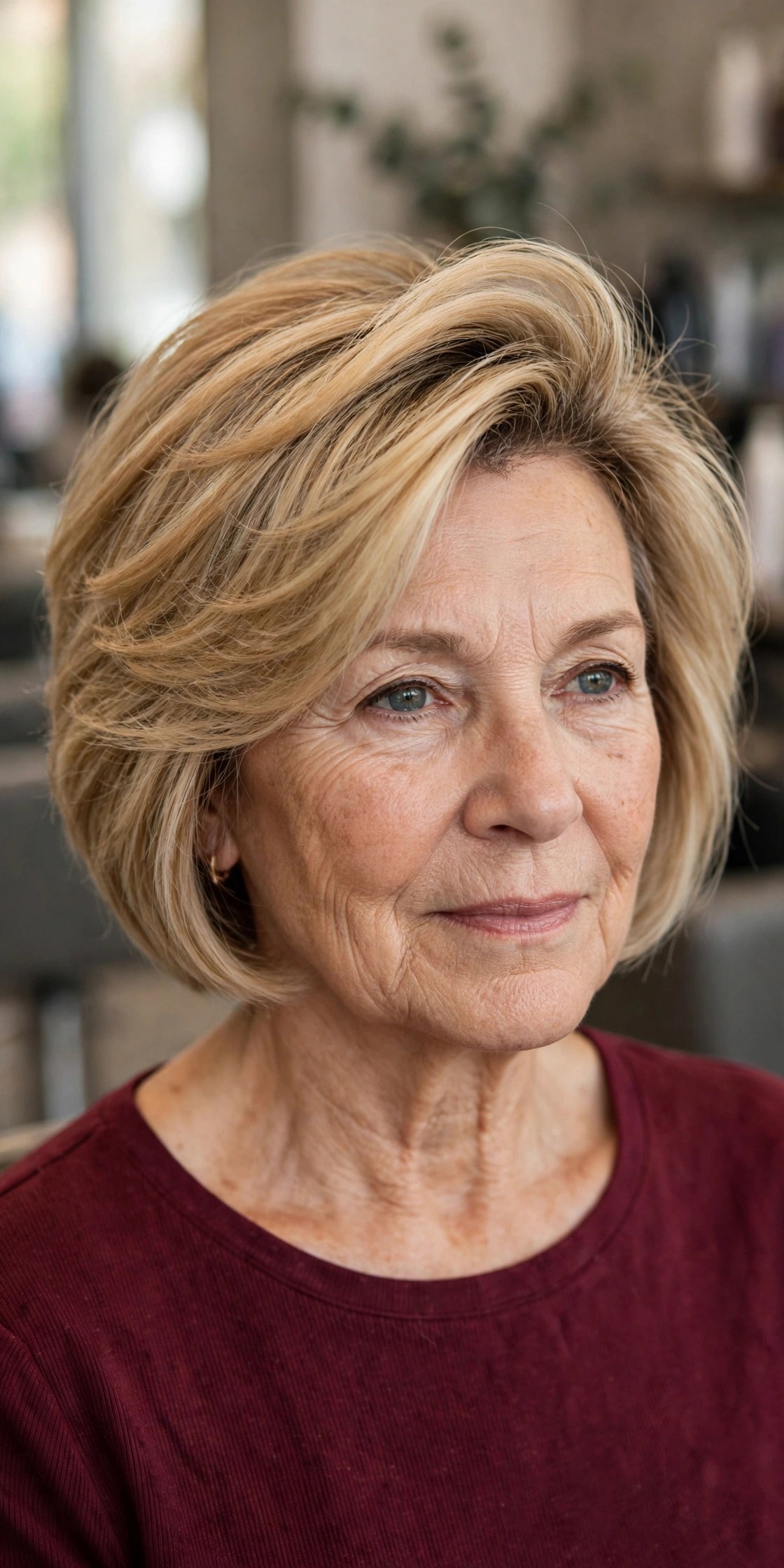
Sometimes the lift is not in the cut’s length but in one deliberate diagonal. A deep side part throws most of the hair to one side, and where it crosses the forehead it creates a long diagonal line — the single most lifting line a hairstyle can draw, because the eye follows it up toward the higher, fuller side. The part also forces the roots on the heavy side to stand away from the scalp, so you get genuine root lift as a by-product.
Try this before committing to a shorter cut: many women find that moving the part an inch further over changes the whole read of a bob they already own. If your hair has trained itself into a center part, flip it while damp and dry it in the new direction for a week. A root-lift styler at the part line makes the new habit stick.


5. Graduated Crop with a Built-Up Crown
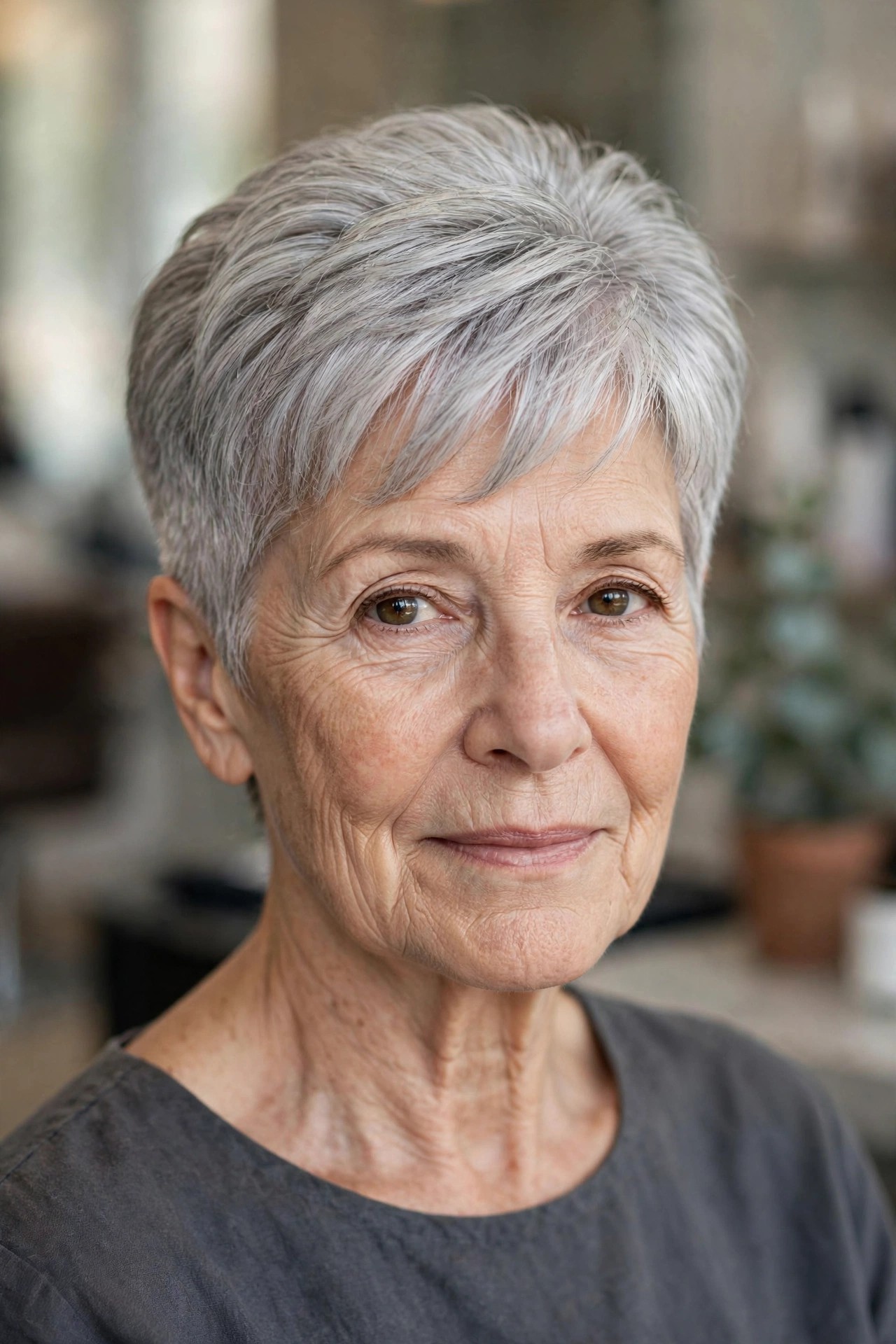
The graduated crop is the stacked bob’s shorter, neater cousin. Layers graduate steeply from a close nape up into a rounded, built-up crown, so the head’s silhouette is tallest exactly where flatness usually starts. The top is kept soft and slightly longer, worn swept forward or to the side, which covers a thinning hairline far more kindly than a fringe cut straight across.
Because the shape is cut into the hair rather than styled into it, this is a genuinely low-effort option — shake it out, push the top where you want it, and go. It does ask for regular trims every four to five weeks to keep the graduation crisp; let it grow out and the crown shelf softens away. A fingertip of texturizing putty through the top is the only product it really wants.

Diagonals flatter round faces, crown height loves a long face, and side-swept fringe softens a square jaw — it all starts with knowing your shape. Try our free Face Shape Finder to discover your face shape in under a minute, then match it to the ideas above.
6. A-Line Bob with a High Stacked Nape
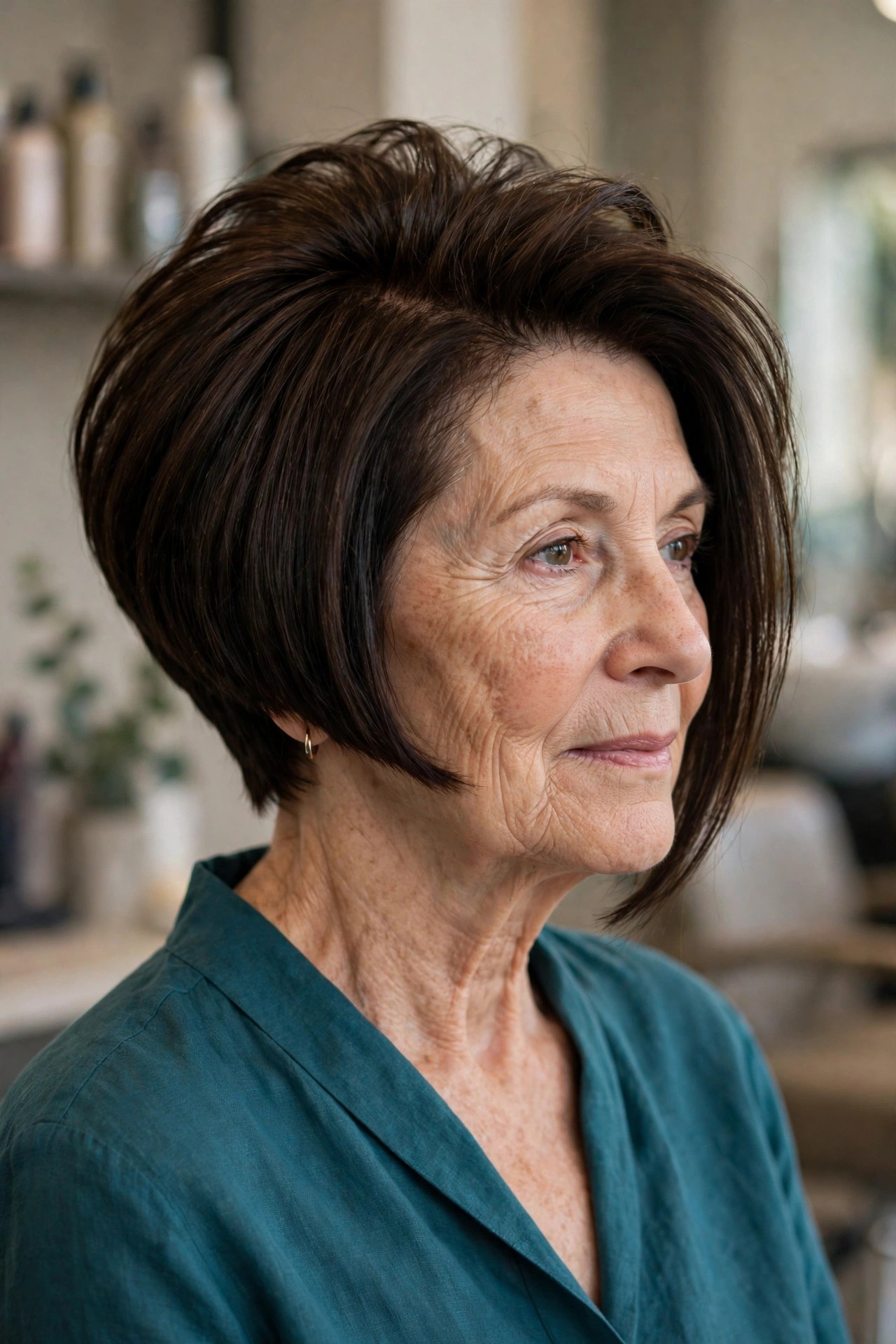
An A-line bob draws one strong diagonal from a high, stacked nape down to longer points at the front — and diagonals are lifting because they refuse to let the eye settle at the bottom of the face. Cutting the back high does double duty: it stacks volume at the crown and it completely removes the heavy horizontal ledge that a one-length bob leaves sitting at the jaw.
Ask for the front points to finish just below the chin, not at it; that extra half inch keeps the line elongated instead of boxy. The shape is at its best worn smooth, so protect it from heat properly and run a flat iron only through the front panels. On fine hair, request softer graduation so the back reads full rather than severe.


7. Textured Pixie with Upward Crown Texture
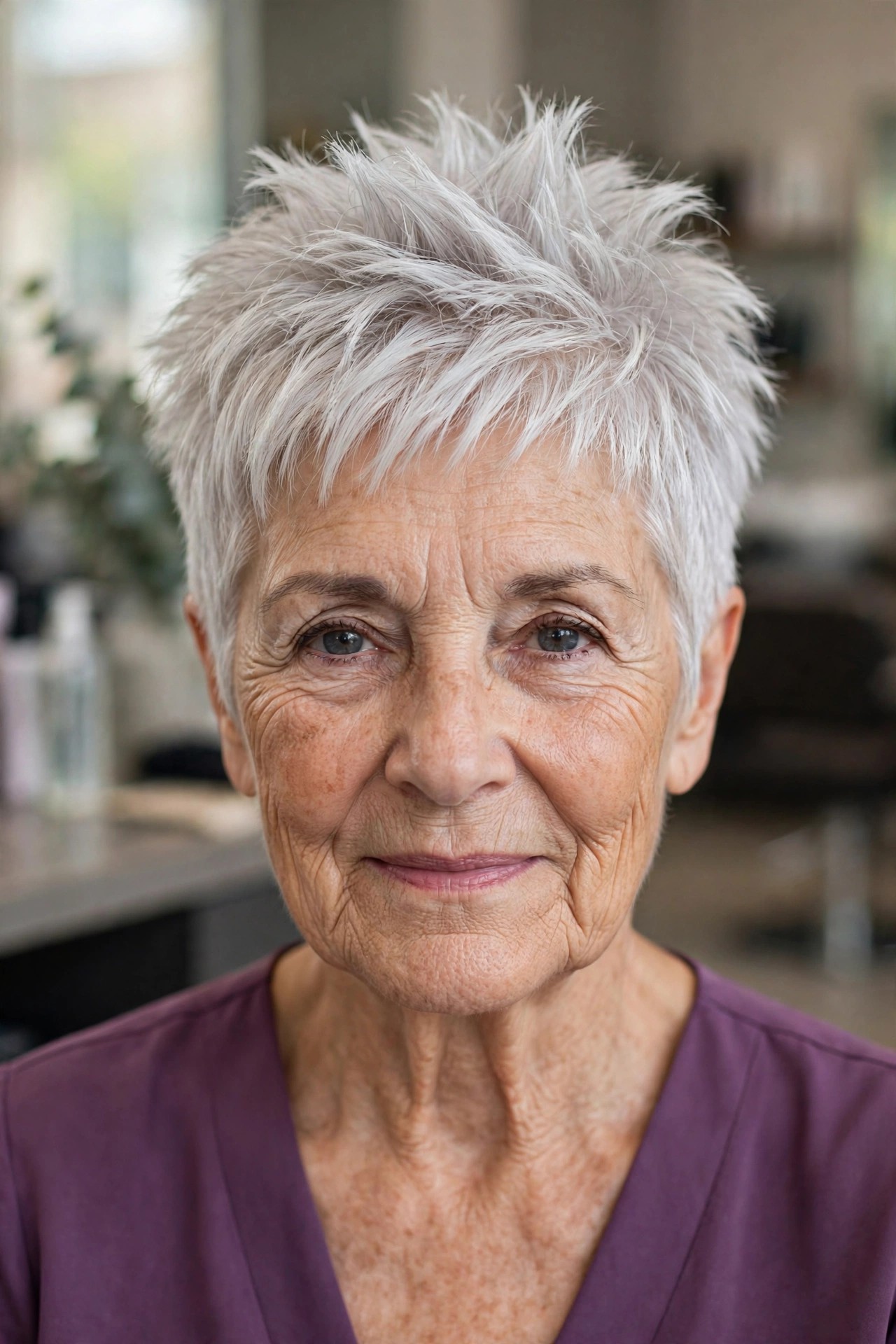
Here the lift is carved into the very top of the head. The crown is point-cut into short, separated pieces and styled straight up, so the hair’s highest texture sits well above the hairline and the silhouette peaks early. Everything the eye uses to judge where a face ‘starts’ gets moved upward, and the features below read as though they have been raised with it.
This is the most energetic cut in the list, and it rewards thirty seconds of daily attention: work a small amount of putty between your palms and pinch the crown pieces upward, never smooth them down. It suits confident, low-fuss routines and grows out gracefully for about five weeks. Silver and platinum hair wear it especially well, because the separated texture catches light on every piece.

8. Layered Lob with Upswept Face-Framing
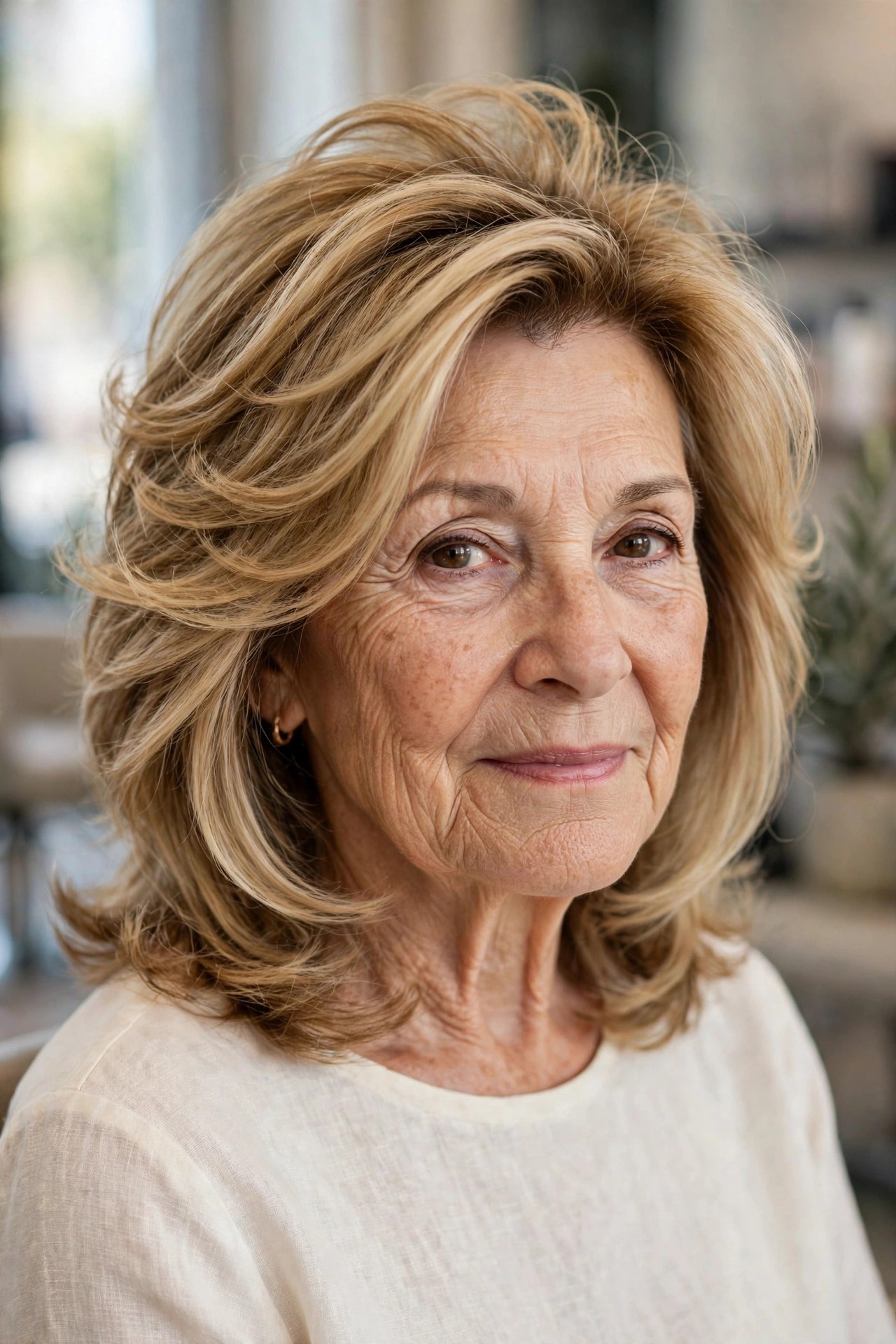
If you want to keep some length, this is how to stop it dragging. The lob itself rests at the collarbone, but the layers that matter are at the front: long face-framing pieces cut to start at the cheekbone and styled sweeping up and away, so the frame around the face travels upward even though the length travels down. Crown layers are kept long and lifted at the root for the same reason. For more layering ideas at this length family, our layered bob ideas for round faces over 60 are worth a look.
The common mistake with lobs after 60 is letting the front pieces hang straight beside the cheeks, where they spotlight the jaw. Curl them away from the face with a round brush or a hot brush, even loosely, and the whole cut changes direction. A volumizing foam through the crown layers keeps the top from going flat against the longer lengths.
9. Asymmetric Bob with Diagonal Lines
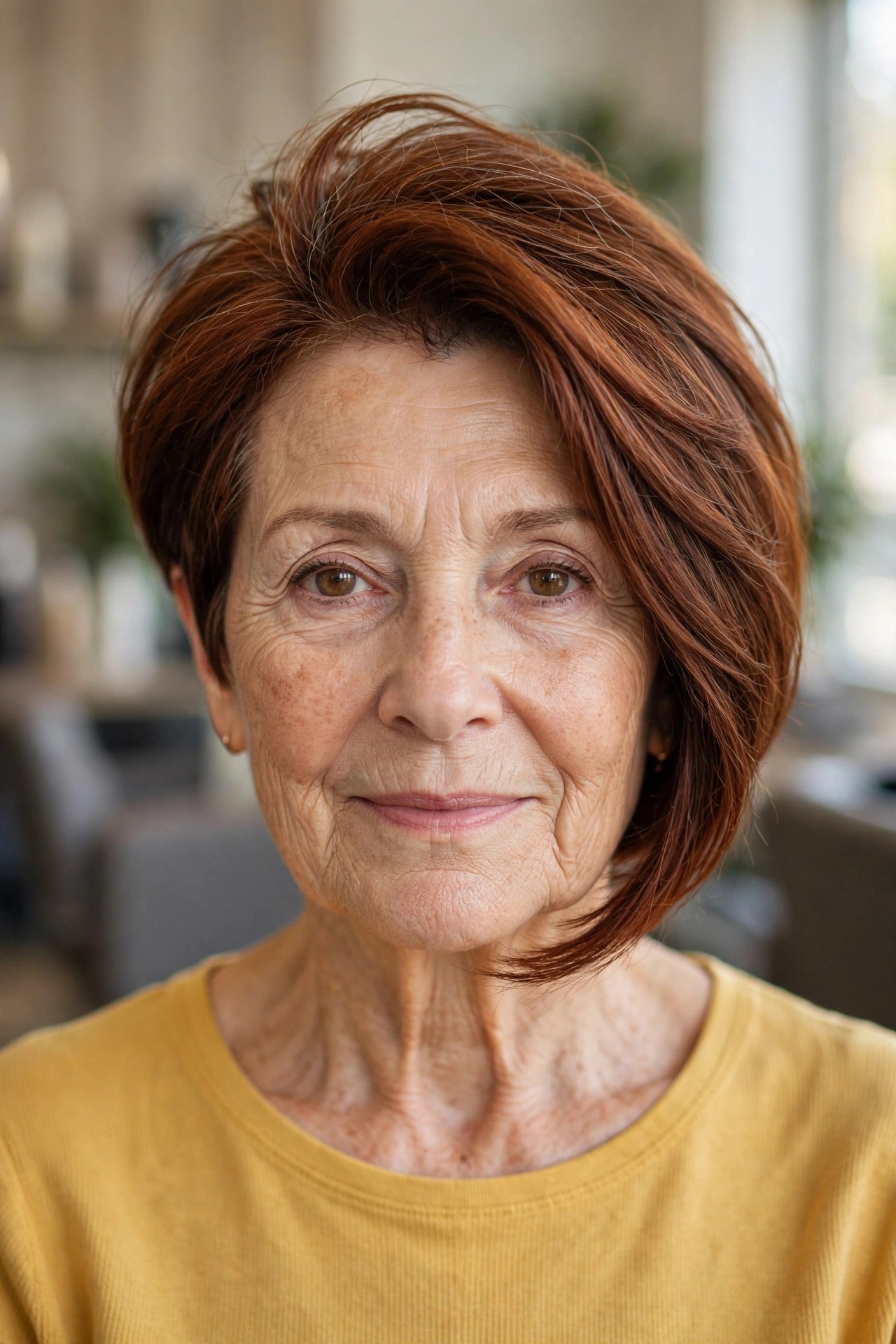
Asymmetry lifts by distraction and by line. One side is worn shorter, tucked close behind the ear; the other sweeps in a long diagonal across to a point at the jaw. The eye follows that diagonal up toward the lifted crown instead of travelling straight down, and the imbalance keeps the face looking alert and angled rather than soft and level.
Choose the long side to fall on the side of your face you like best — the diagonal draws attention there. This cut needs a stylist who is precise about the angle, so bring photos and agree the exact length difference before scissors come out. It styles in minutes: smooth the long side with a brush while drying, and let the short side sit close.

10. Curly Crown-Volume Cut
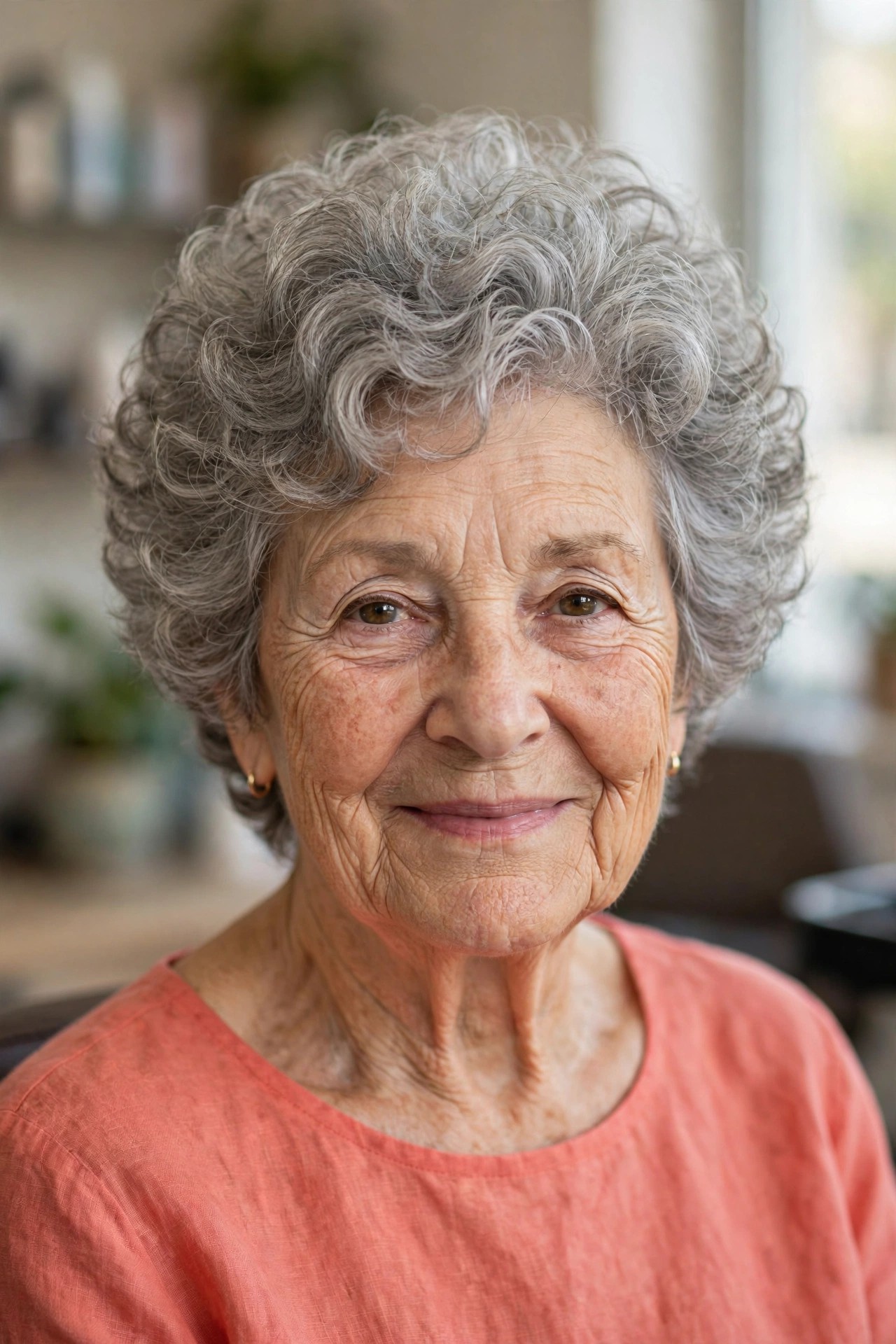
Curls lift naturally when they are allowed to pile upward instead of outward. This cut keeps the sides shorter and the top longer in rounded layers, so the curls stack into height at the crown and the widest point of the shape sits high, near the temples, instead of at the cheeks. Cut dry and curl by curl, the pattern stays springy rather than being pulled down by its own weight.
The golden rule for curly lift is product placement: a curl cream worked through the top while damp, then hands off while it dries — touching deflates the crown you just built. Diffuse upside down for the first few minutes if you want maximum height. Gray curls in particular love this shape, because the lifted stack shows off every shade of silver in the pattern.


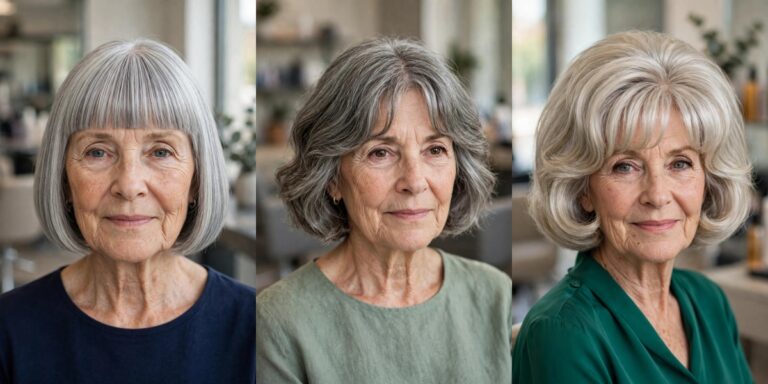
11. French Bob with a Lifted Crown
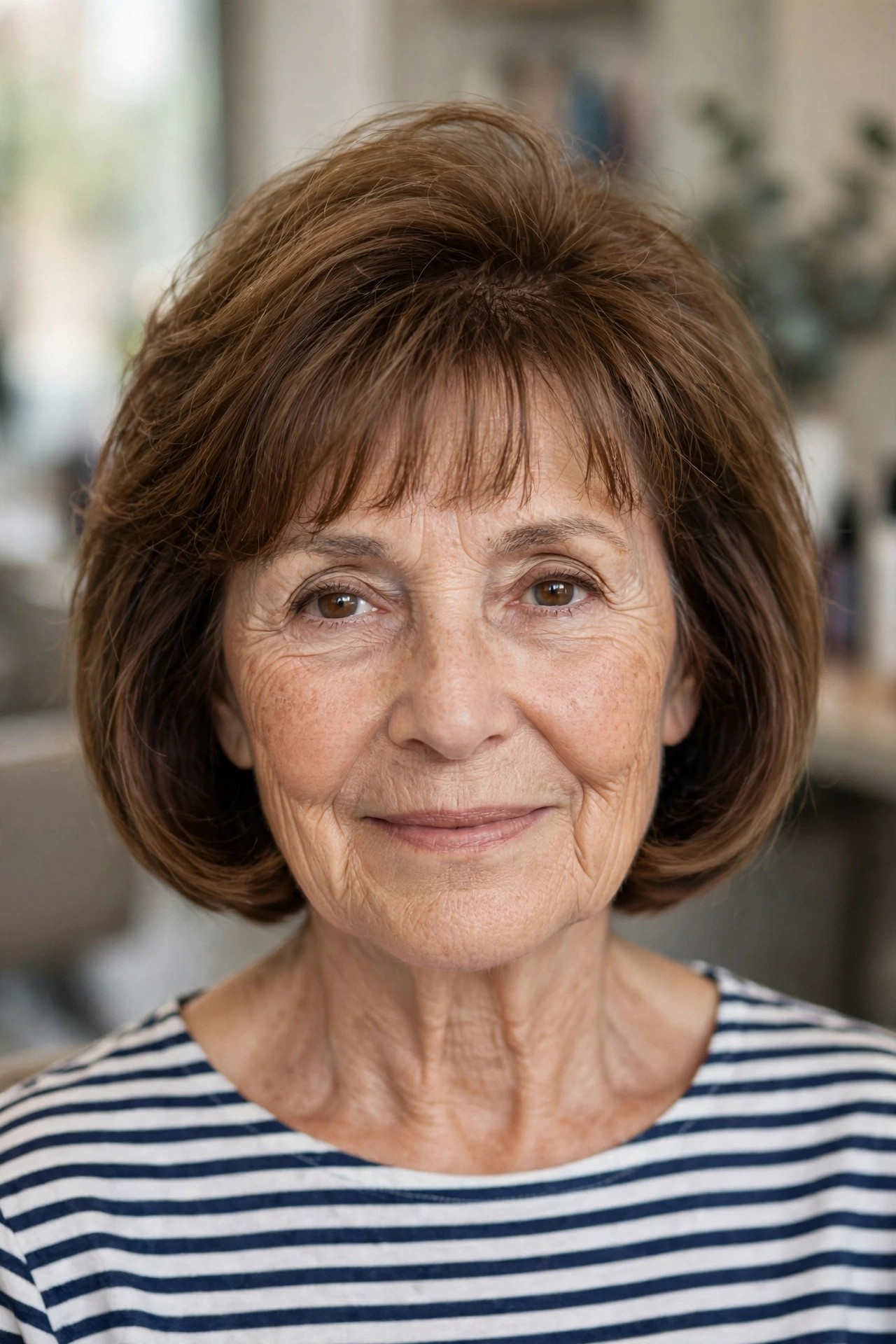
The French bob sits at jaw length with a soft fringe, but its lifting secret is the crown: a gentle rounded height is built into the top, so the silhouette curves up and over rather than falling in a flat cap. The fringe joins in by drawing a soft horizontal high on the forehead, which shortens the visual distance between hairline and eyes and leaves the lower face looking lighter and less heavy.
Keep the fringe wispy rather than blunt if your hair is fine — a heavy fringe steals the volume the crown needs. This cut flatters oval and longer faces beautifully; if your face is round, ask for the sides to sit slightly slimmer so the fullness stays on top. A round brush under the crown while drying sets the rounded shape in under five minutes.
12. Wedge Cut with a Stacked Back
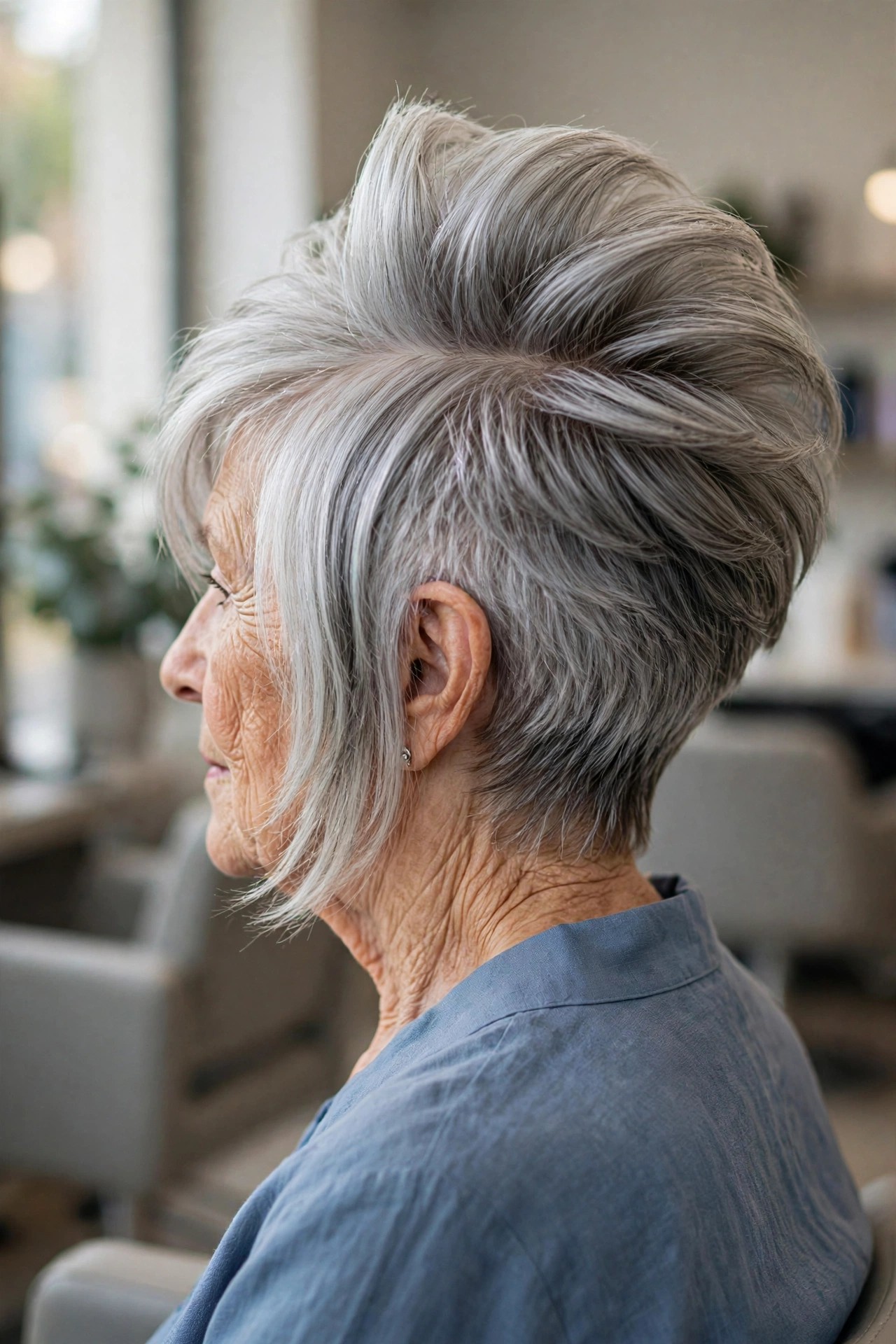
The wedge is the boldest lifting architecture in this list: the back is cut into a steep, stacked wedge that builds dramatic height at the crown, then the shape releases into softer, longer pieces toward the front. From every angle except straight-on, the silhouette climbs — and a climbing silhouette is precisely what makes the face beneath it read as lifted.
It is a commitment cut, best on medium to thick hair that can hold the stack, and it needs a trim every four weeks to keep the wedge angle sharp. In exchange, daily styling is almost nothing: the shape is built into the cut. Silver hair shows the wedge’s sculpted layers beautifully; a purple shampoo once a week keeps the silver bright rather than yellowed.

13. Choppy Pixie with Up-and-Back Texture
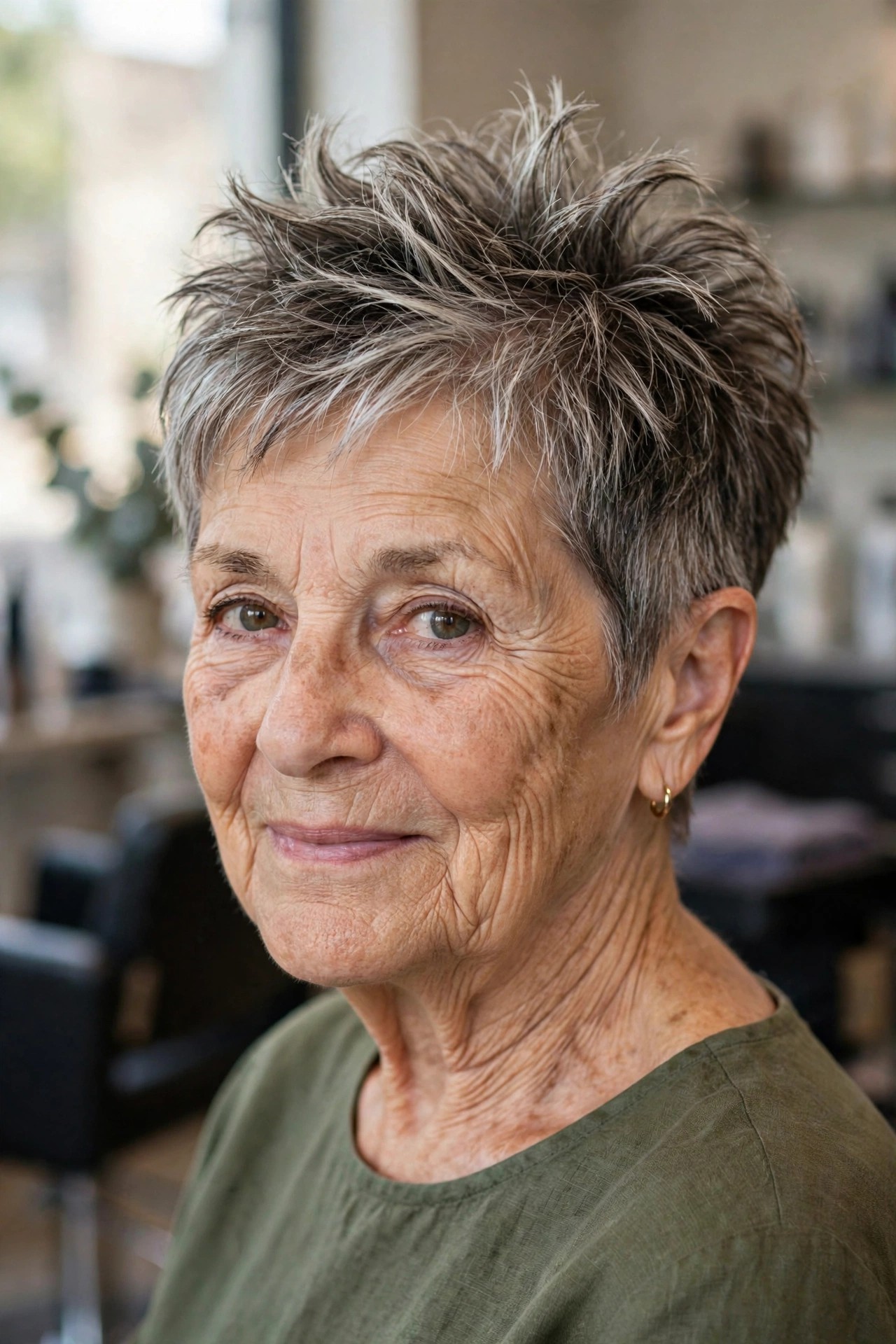
Choppy layers only lift if they point the right way — up and back. This pixie is cut with short, uneven layers through the top that are styled away from the face, so every piece leans backward like grass in a breeze. The tapered nape keeps the neckline clean and the whole profile tilts upward, taking the visual weight off the jaw entirely.
It is a brilliant option for hair that has gone wiry or uneven in texture after 60, because the choppiness disguises irregular growth patterns instead of fighting them. Our pixie cuts guide covers the softer end of this family. Style with putty on dry hair, pushing everything back and slightly up; two minutes, no brush required.

14. Blowout Bob with Root Lift
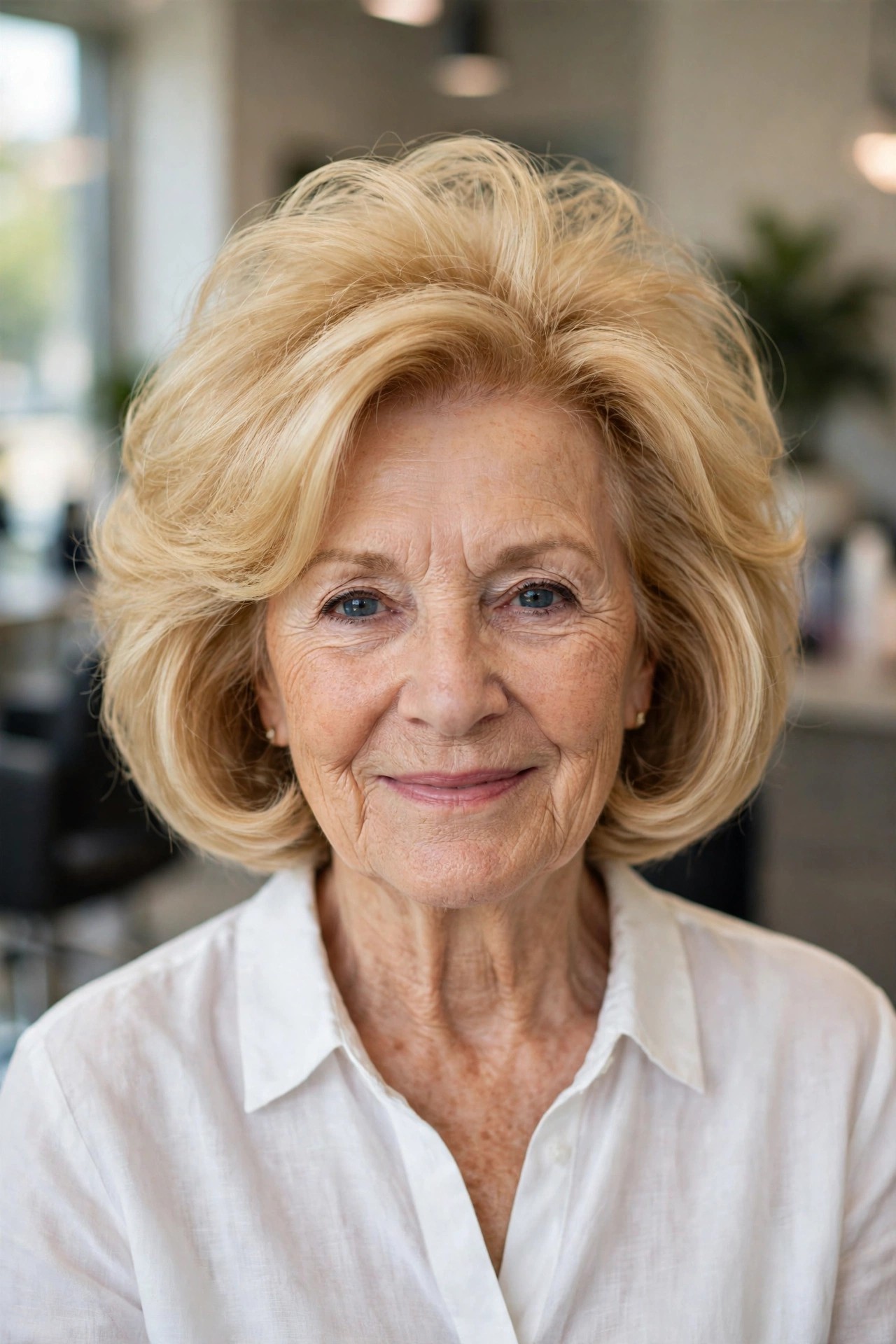
Some cuts lift by shape; this one lifts by air. The bob itself is simple and chin-length, but it is cut with just enough internal layering that a proper blowout can inflate it — roots lifted off the scalp all the way around, the crown rounded high, the ends curving under last. The result is a halo of height that makes the face inside it look smaller and more raised.
The technique is the product here: dry the roots first, lifting with a round brush or a root-boosting hot brush, and let each section cool before you drop it — warm hair set down too early collapses. Done right, a good blowout on this cut holds two to three days, especially if you sleep with the crown loosely clipped up. Heat protectant is non-negotiable at this frequency of styling.
15. Short Shag with Lifted Top Layers
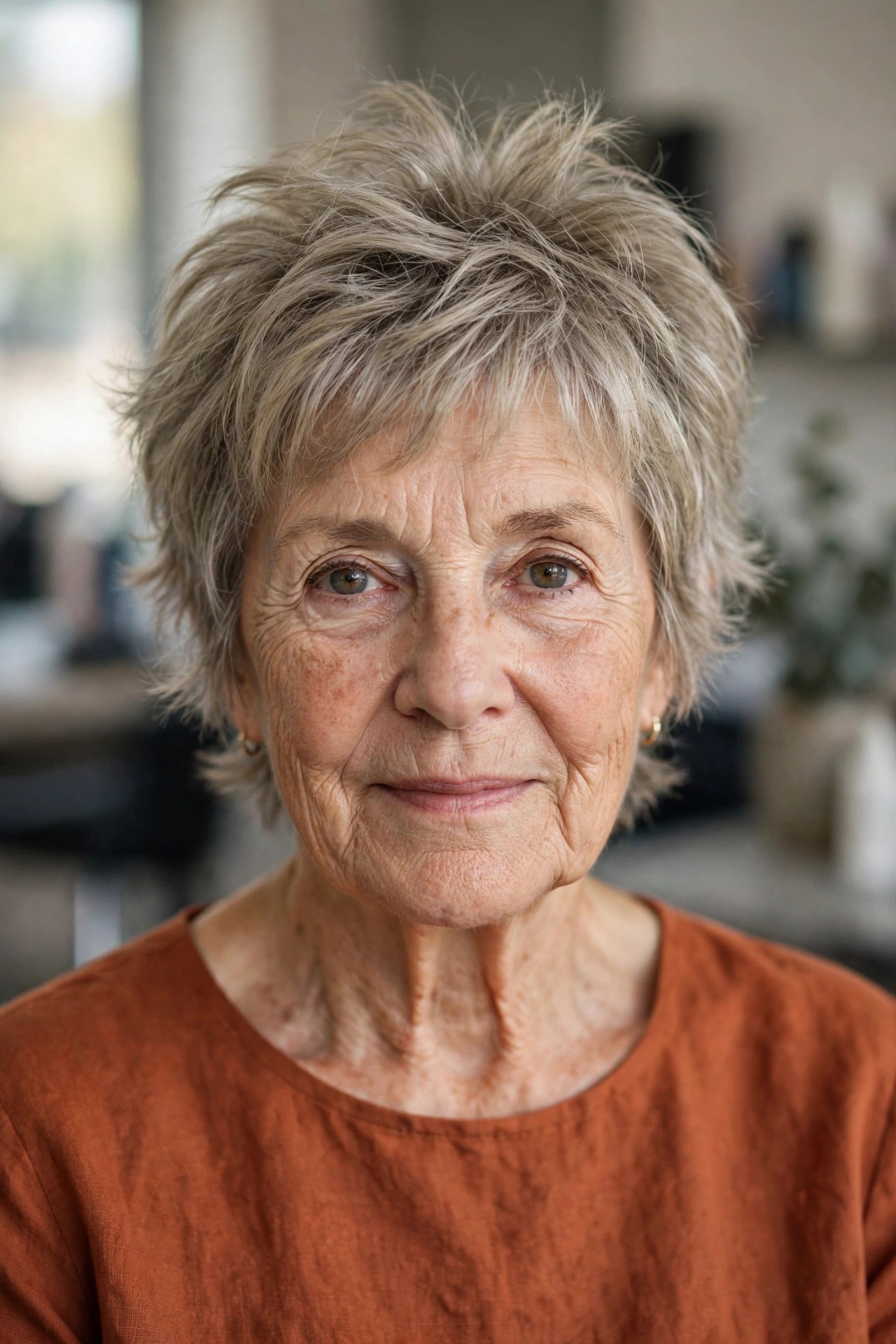
The modern short shag concentrates its layers where they earn their keep: stacked through the top so the crown stands up in choppy, separated pieces, while the edges around the ears and nape are left wispy and light. Heavy, solid sides are what make a cut drag; this removes them and replaces them with air, so the silhouette’s energy is all at the top.
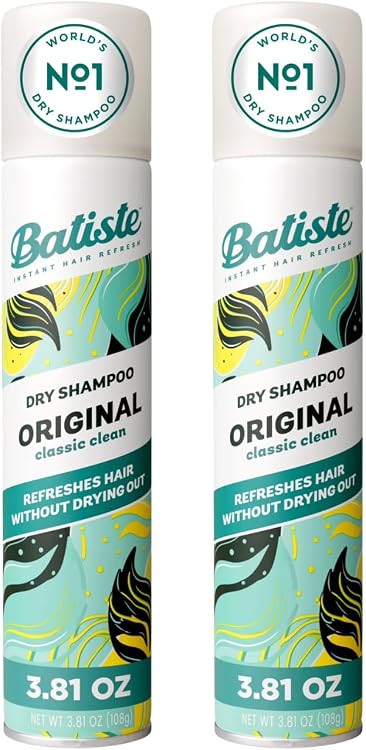
The shag is forgiving to grow out and kind to mixed textures — the days your hair waves more or less, the cut reads intentional either way. A sea-salt or texture spray scrunched through the top layers on damp hair, air-dried, gives the lifted, piecey finish without a single hot tool. Refresh day two with a spritz of dry shampoo at the crown.
16. Tapered Natural Curls with a High Top
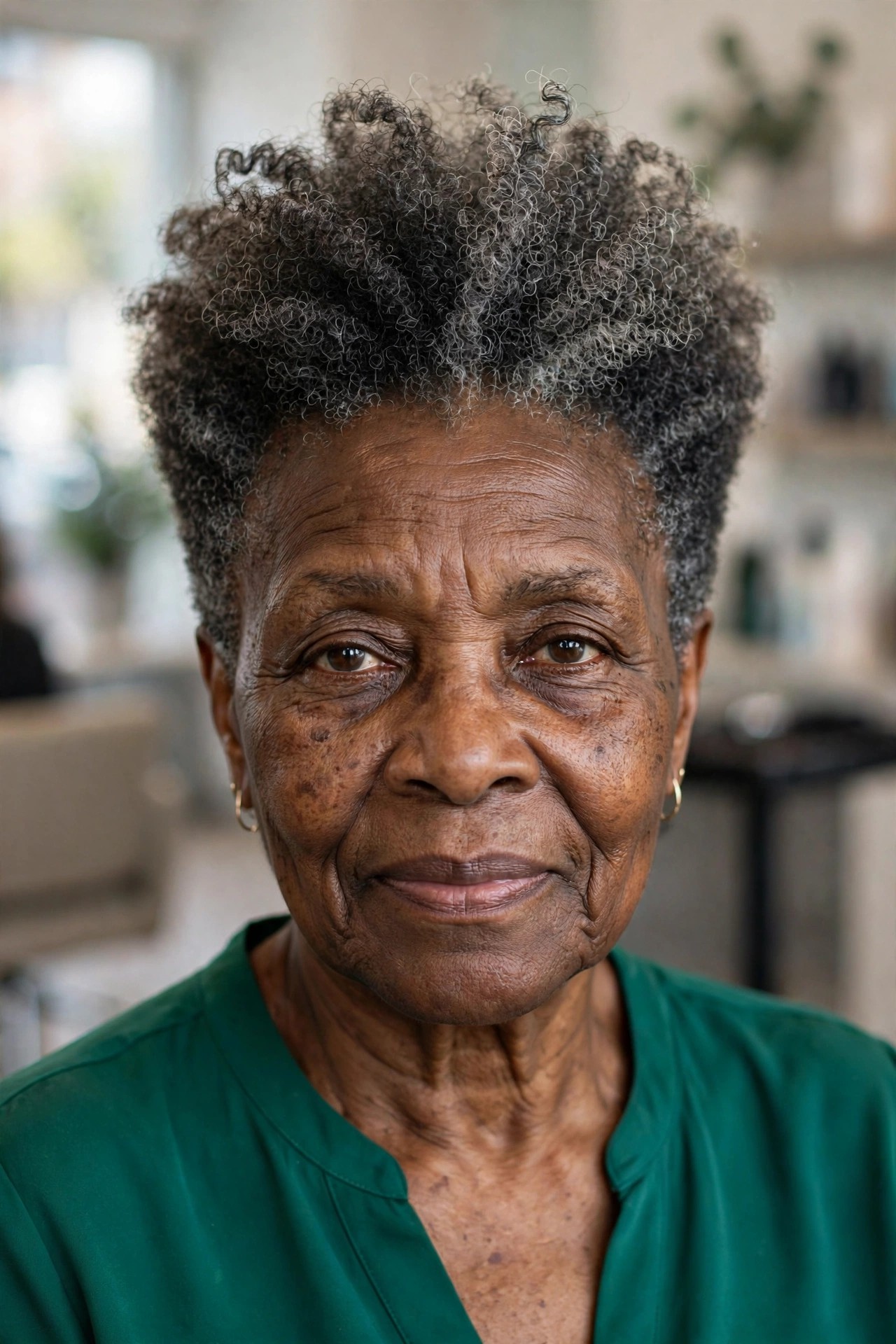
For natural coils, lift is a silhouette decision: keep the sides and back tapered close, and let the top grow into a taller, fuller shape. The height sits directly above the face, the profile is elongated, and nothing widens at cheek or jaw level to pull the features down. Gray-flecked coils show the shape especially clearly, because the taller top catches light across every coil.
Moisture is what lets coils keep their height — dry coils shrink unevenly and collapse into the scalp. A rich leave-in worked through the top after washing, and a satin bonnet at night to protect the shape, make the difference between a high top that lasts a week and one that flattens by Wednesday. Ask for the taper to be shaped by hand rather than clipped to a uniform guard length.


17. Pixie-Bob with Side-Swept Fringe and Crown Height
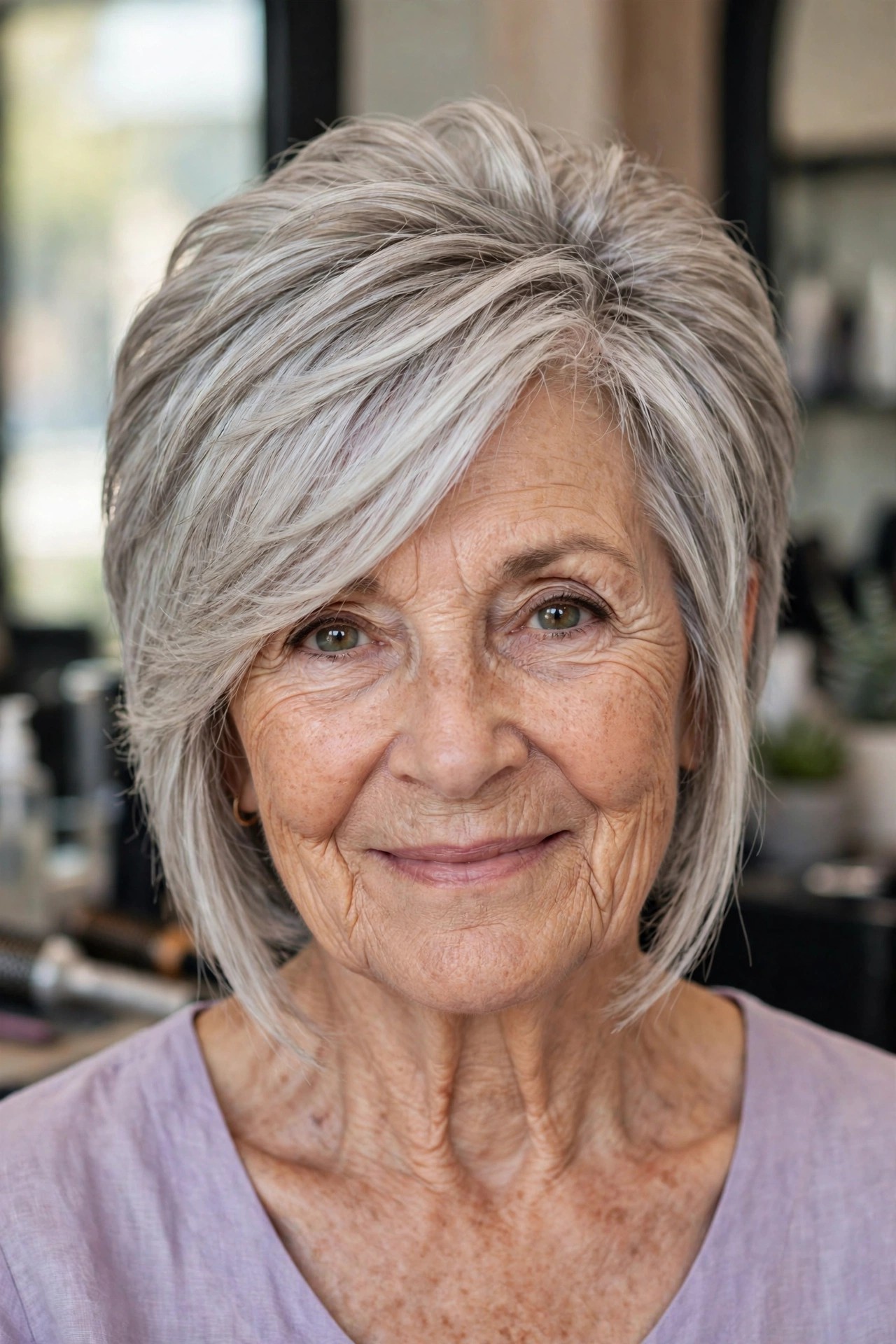
This hybrid takes the stacked, height-building back of a pixie and keeps the longer front of a bob, then finishes it with a long fringe swept diagonally across the forehead. You get lift from three directions at once: crown height behind, a diagonal line across the brow, and front pieces that skim the jaw instead of sitting on it. It is the most face-framing cut in the list, and one of the most forgiving for a softening jawline.
It suits women who want short hair’s lift without giving up a feminine frame around the face. Style the fringe with a round brush, sweeping it across and slightly up at the root so it arcs instead of lying flat. If gray is coming through at the temples, the swept fringe blends it into the silver rather than exposing a hard line.
18. Graduated Bob with Flipped-Up Ends
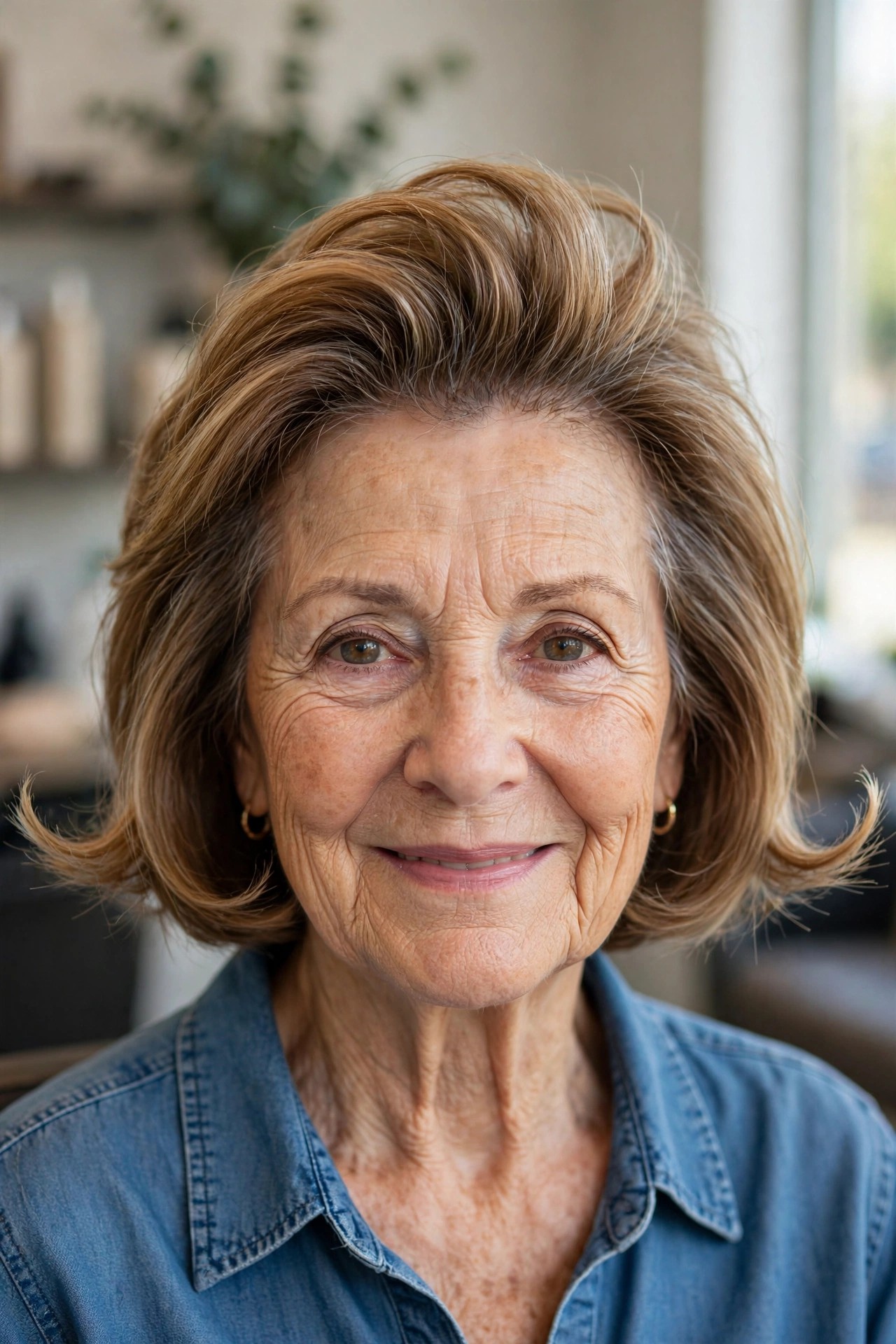
Every other bob in this list curves its ends under; this one flips them up and out — and that small change of direction is a lifting device. Flipped ends send the eye outward and upward at the exact point where an under-curved bob sends it down. Underneath, the graduation still stacks the back and lifts the crown, so the whole shape works in one direction: up.
The flip is easiest on hair with a little natural bend; very straight hair will need a flat iron flicked outward at the ends or a round brush rolled up instead of down. Keep the flip soft and piecey rather than a stiff retro shelf — separate the ends with your fingers and a touch of shine serum once they are cool. It is a cheerful, face-awake finish that takes five minutes.
19. Voluminous Layered Crop with a Swept-Up Top
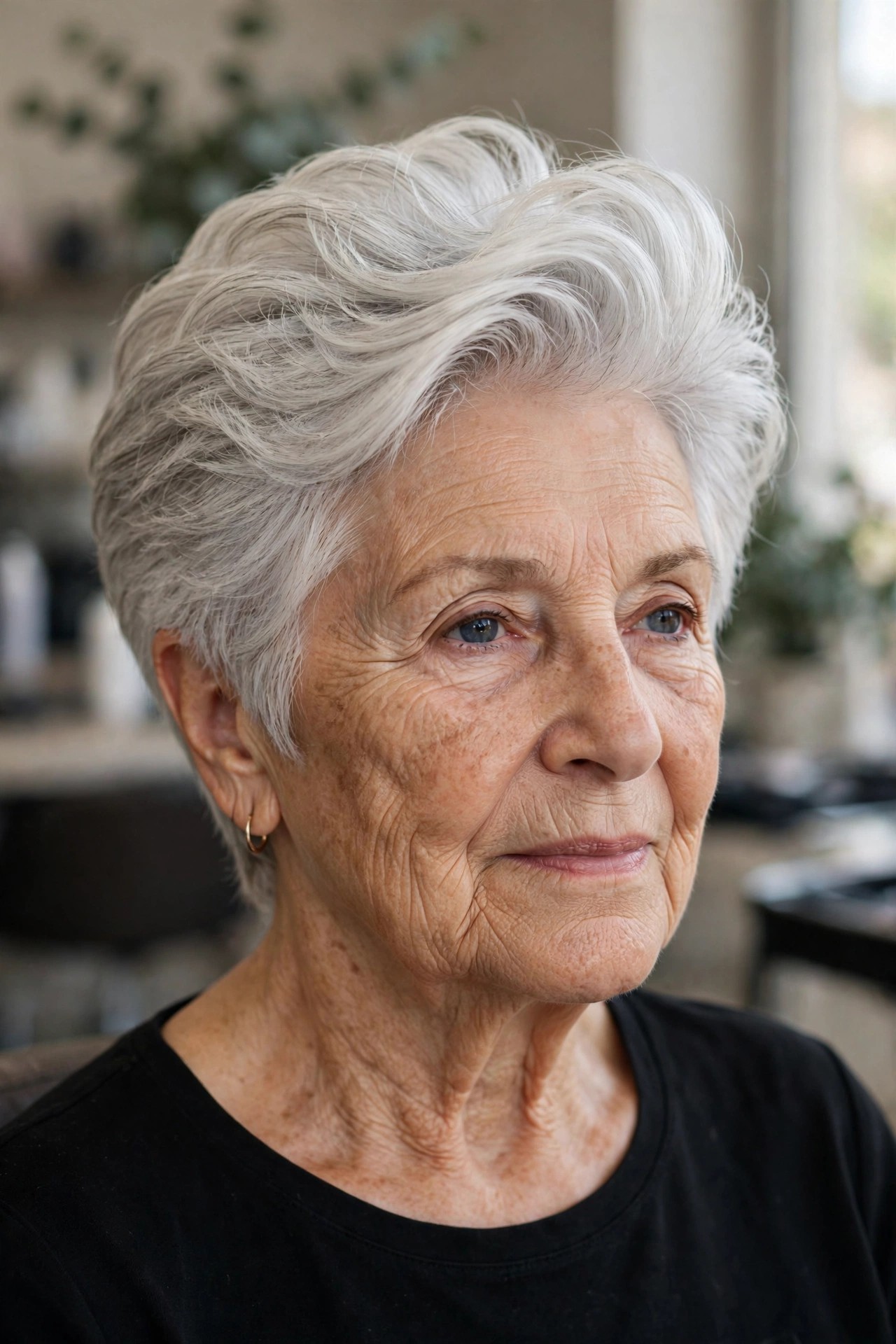
This crop keeps its length exactly where lift is manufactured: a longer, layered top that is swept up and slightly back in a soft quiff, over short, neat, tapered sides. The contrast between the clean sides and the tall top elongates the whole head shape, and an elongated head shape is what the eye translates into a lifted face.
White and silver hair wear this beautifully, because the swept-up top shows off the brightness at the front hairline. Ask your stylist to keep the quiff soft — height, yes; a stiff ridge, no. Blow-dry the top forward first, then sweep it back; drying it in the opposite direction first is the old trick for roots that refuse to stand. Finish with mousse scrunched through while damp rather than anything heavy on top.
20. Diagonal Forward Bob with a Lifted Back
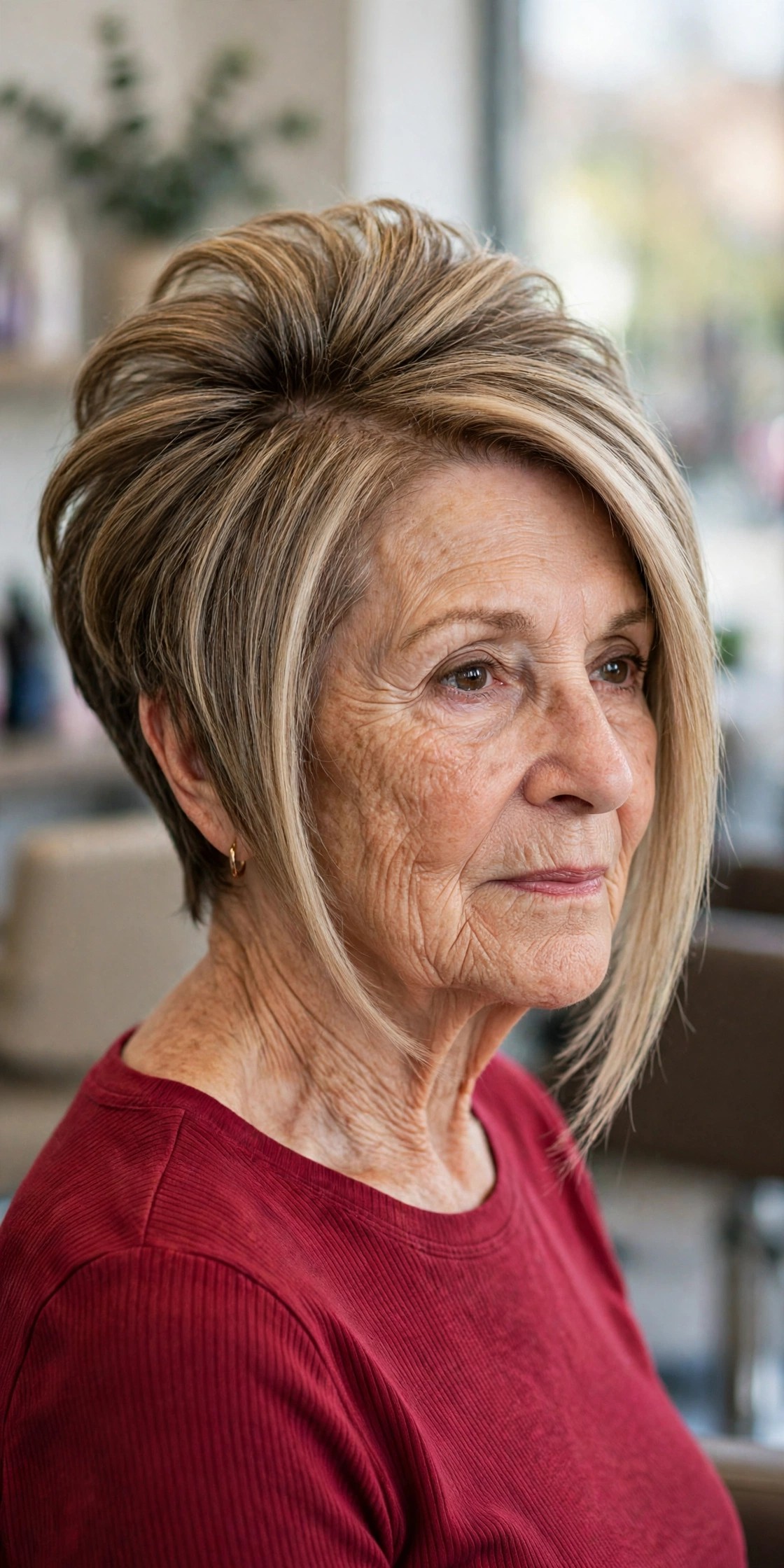
We end where the lifting logic is clearest. The back of this bob is cut high and stacked, pushing the crown up; from there the line runs in one unbroken diagonal down to long points below the jaw. There is no horizontal line anywhere for the eye to rest on — every angle climbs or descends — and faces inside diagonal frames simply read as more lifted than faces inside level ones. If your face is on the rounder side, you will find the same lengthening logic explored in our round-face hairstyles for women over 60.
Wear it sleek and smooth so the diagonal stays legible; frizz blurs the line and with it the lift. A flat iron through the front points and a drop of anti-frizz serum are the whole routine — see also our bob haircuts guide for softer variations. Book trims every five to six weeks: once the back grows level with the front points, the diagonal, and the lift, are gone.

Recommended Products
These five are the lifting toolkit behind most of the cuts above: a strong volumizing mousse for fine crowns, a root-boosting hot brush that builds height while you dry, the round brush every graduated blowout relies on, a texturizing putty for pixie crowns, and a dry shampoo that revives flat roots on day two.
Face-Lifting Hair Care Tips for Women Over 60
- Dry the crown first, and dry it up. Roots set in the direction they dry in — aim the airflow up and back at the crown before you touch the ends.
- Let sections cool before dropping them. Warm hair released too soon falls flat; ten seconds of cooling locks in the lift.
- Keep product at the roots light. Heavy creams and oils belong on the ends only — weight at the crown undoes everything the cut built.
- Trim on schedule. Graduated and stacked shapes lose their lift as they grow out; four to six weeks keeps the architecture working.
- Refresh, do not rewash. A dry shampoo at the crown on day two restores height faster than a full restyle.
- Sleep with the crown free. A satin pillowcase, or the top loosely clipped up, stops overnight flattening.
- Part against the grain. If your crown lies flat, flip your part to the opposite side while drying — the roots resist, and that resistance is lift.
Frequently Asked Questions
Can a haircut really make your face look lifted?
Not by moving anything — a haircut changes no skin and no muscle. What it changes is where the eye travels. Height at the crown, lines that run upward or diagonally, and weight kept away from the jaw make the eye read the face from a higher starting point, and the features appear more raised by comparison. It is the same principle as a high ponytail, built permanently into a cut.
What exactly makes a haircut a lifting one?
Three things, in any combination: volume placed at or above the cheekbones rather than beside the jaw; lines that travel up, back, or diagonally instead of sitting level; and clean, lighter edges at the bottom of the shape so nothing heavy anchors the eye at the chin. Every cut in this list uses at least two of the three.
Which face-lifting cut is best for fine or thinning hair over 60?
Short, structured ones — the crown-height pixie (idea 1), the graduated crop (idea 5), and the stacked bob (idea 2). Short crown layers carry less weight, so they hold height far longer than long layers on fine hair, and graduation builds the appearance of thickness at the back where fine hair usually looks sparsest.
How often do lifting cuts need trimming?
More often than relaxed cuts, because the lift lives in precise angles. Plan on four to five weeks for pixies, crops, and wedges, and five to six weeks for stacked and graduated bobs. When the back grows level or the crown layers pass the length where they can stand, the lifting geometry is gone even if the hair still looks tidy.
Can longer hair still create a lifted look after 60?
Yes, if the lift is engineered at the front and crown rather than expected from the length. The layered lob (idea 8) keeps collarbone length but cuts its face-framing to sweep up and away from the cheekbones and keeps crown layers lifted at the root. What longer hair cannot survive is hanging straight and heavy beside the cheeks — that is the arrangement that drags.
Will a face-lifting cut work with glasses?
Very well, as long as the fringe and front pieces are cut with the frames in place. Side-swept and diagonal fringes (ideas 4 and 17) sit above or arc over frames without colliding, and crown height balances the visual weight glasses add to the middle of the face. Take your glasses to the appointment and wear them in the chair.
A face-lifting haircut is not a trick and it is not a promise — it is geometry. Put the height at the crown, keep the weight off the jaw, let every line climb or run diagonally, and the face inside the frame reads lighter, higher, and more awake. Pick the cut above that matches your hair texture and your patience for styling, show your stylist the photo, and name the lifting device you want — stacked back, graduated crown, upswept framing. That one sentence is the difference between a shorter version of the cut you already have and a cut that genuinely lifts.