Youthful Hair Colors for Women Over 60 Beyond Gray
This post contains affiliate links. As an Amazon associate, I earn from qualifying purchases. I only recommend products that are of high quality and that I would use myself.
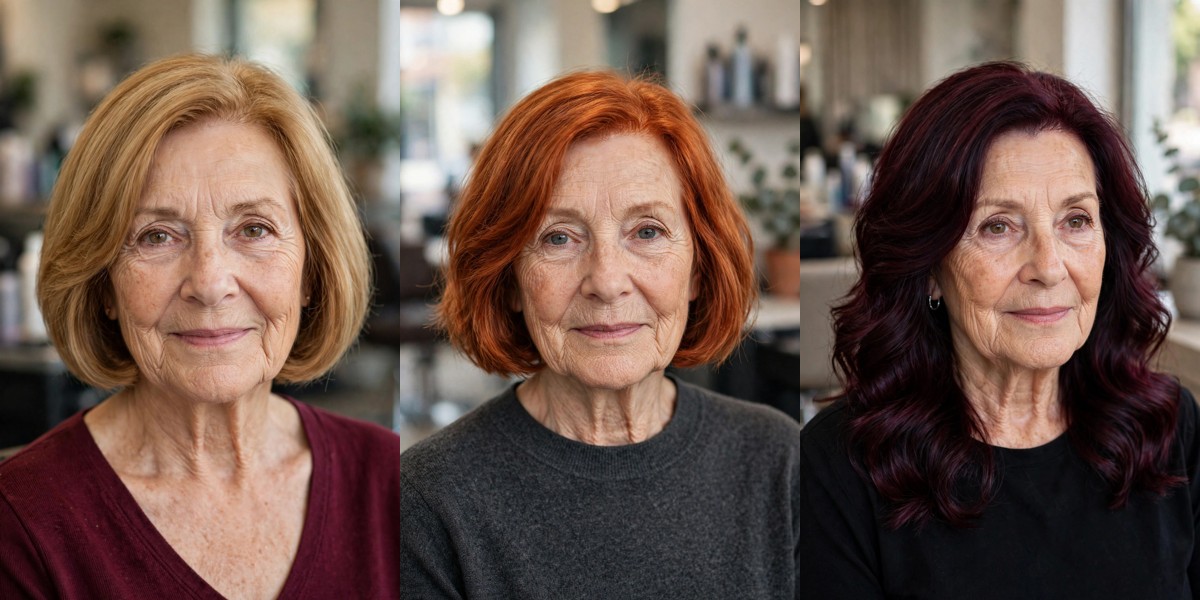
Gray is beautiful — and it is not the only option. Somewhere along the way, “beyond gray” started to sound like vanity, when really it is just preference: the same preference that makes one woman reach for a red lipstick and another for a nude. If you love your silver, wear it proudly. But if you look in the mirror and miss color — the warmth, the shine, the dimension you used to have — there is a whole spectrum waiting that has nothing to do with trying to look 30.
Below are 20 youthful hair colors for women over 60, every one photographed on a woman in her sixties: honey and vanilla blondes, chestnut and chocolate-cherry brunettes, coppers, balayages, and one gentle gray-blending option for when you want softness rather than coverage. Each idea comes with the honest part most round-ups skip — how fast it fades, how roots behave on graying hair, and which skin tones it truly flatters — because the right color at the wrong upkeep level is the wrong color. For a wider starting point, our guide to the best hair colors that brighten the face is a good companion read, and the right cut matters too — these shades sit beautifully on the shapes in our timeless bob hairstyles for women over 60.
Table of Contents
- 1. Warm Honey Blonde Bob
- 2. Soft Golden Blonde Face-Framing Highlights
- 3. Strawberry Blonde Soft Layers
- 4. Rich Chestnut Brunette Lob
- 5. Caramel Balayage on a Brunette Base
- 6. Warm Copper Chin-Length Bob
- 7. Rich Auburn Soft Waves
- 8. Buttery Blonde Pixie
- 9. Champagne Beige Blonde Bob
- 10. Mocha Brunette with Golden Ribbon Highlights
- 11. Cinnamon Spice Balayage
- 12. Creamy Vanilla Blonde Layers
- 13. Chestnut Brown with a Copper Face Frame
- 14. Warm Toffee Brunette Shine
- 15. Rose-Gold Kissed Blonde
- 16. Deep Burgundy Wine Waves
- 17. Golden Caramel Highlights on a Dark Base
- 18. Soft Apricot Blonde Crop
- 19. Chocolate Cherry Brunette
- 20. Soft Ash-Brown Lowlights for Gentle Gray Blending
- Recommended Products
- FAQs
- Lowest upkeep: caramel balayage (5), cinnamon balayage (11), and gray-blending lowlights (20) — no hard root line, 3+ months between color appointments.
- Best gray camouflage: golden highlights on a dark base (17) and mocha ribbons (10) blur regrowth instead of fighting it.
- Warm skin? Honey (1), copper (6), toffee (14) and apricot (18) were made for you.
- Cool skin? Champagne beige (9), chocolate cherry (19), burgundy (16) and ash-brown blending (20).
- Boldest glow: copper (6) and burgundy (16) — highest compliments, highest fade. Budget a gloss every 3–4 weeks.
- Gentlest first step into color: face-framing highlights (2) or a copper face frame on brunette (13).
1. Warm Honey Blonde Bob
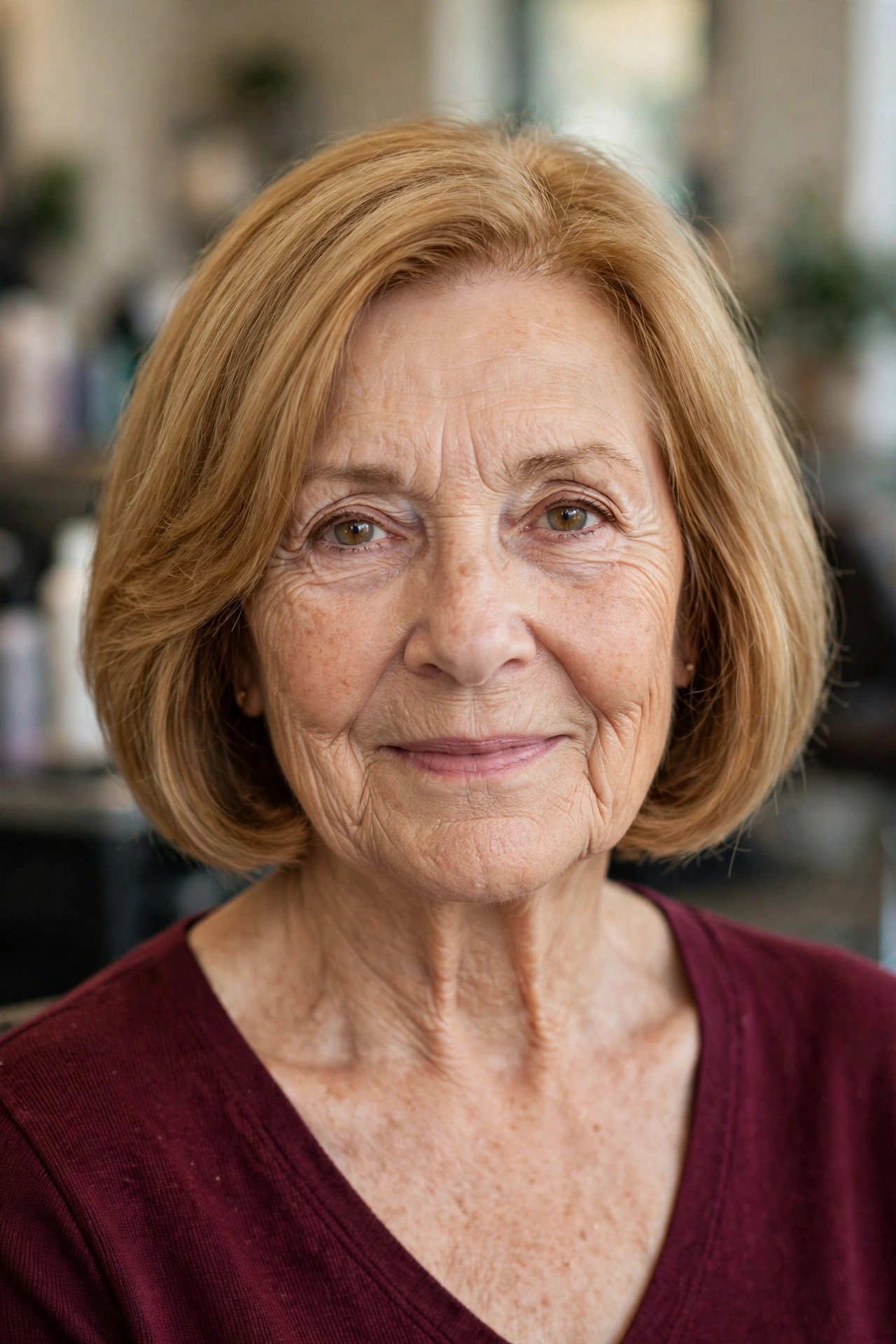
Honey blonde is the classic youth-giving shade for a reason: it is warm without being brassy, bright without being stark, and it reflects light onto the skin instead of absorbing it. On a chin-length bob like this one, the single warm tone reads polished and intentional — very different from flat, one-note blonde. It suits warm and neutral skin tones best, and it is especially kind if your complexion has lost a little color with age.
Be honest about upkeep: an all-over blonde on graying hair means roots. Gray regrowth against blonde is softer than against dark dye — the contrast is low — so four to six weeks between root touch-ups is realistic for most women. A gloss refresh at the halfway point keeps the honey tone from drifting dull, and a weekly purple shampoo, used briefly, stops any yellowing without turning the warmth ashy.


2. Soft Golden Blonde Face-Framing Highlights
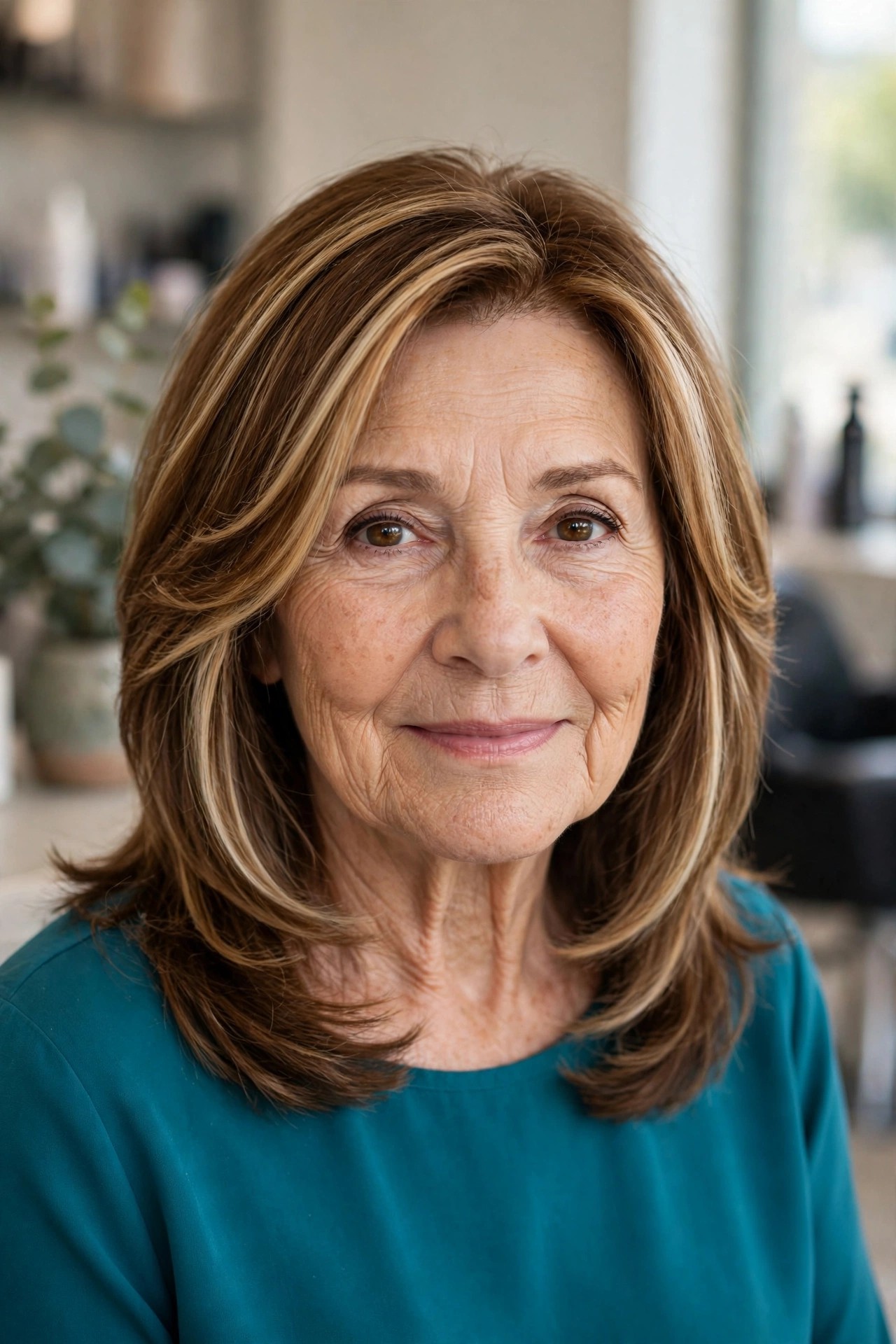
If a full head of color feels like too much commitment, put the lightness only where it does the most work: around the face. Golden ribbons through a warm brown base brighten the eyes and soften the whole expression, which is why colorists call face-framing highlights the closest thing color can do to good lighting. The base stays close to your own depth, so the effect is glow, not transformation.
This is one of the gentlest grow-outs in the guide. Because the highlights sit away from the parting and the base is near-natural, there is no hard root line — many women refresh the face frame every ten to twelve weeks and just gloss in between. It flatters almost every skin tone; ask for the gold kept soft rather than pale if your skin is warm, and slightly cleaner if you are cool-toned. For more placement ideas, see our guide to highlights and lowlights for graying hair.

3. Strawberry Blonde Soft Layers
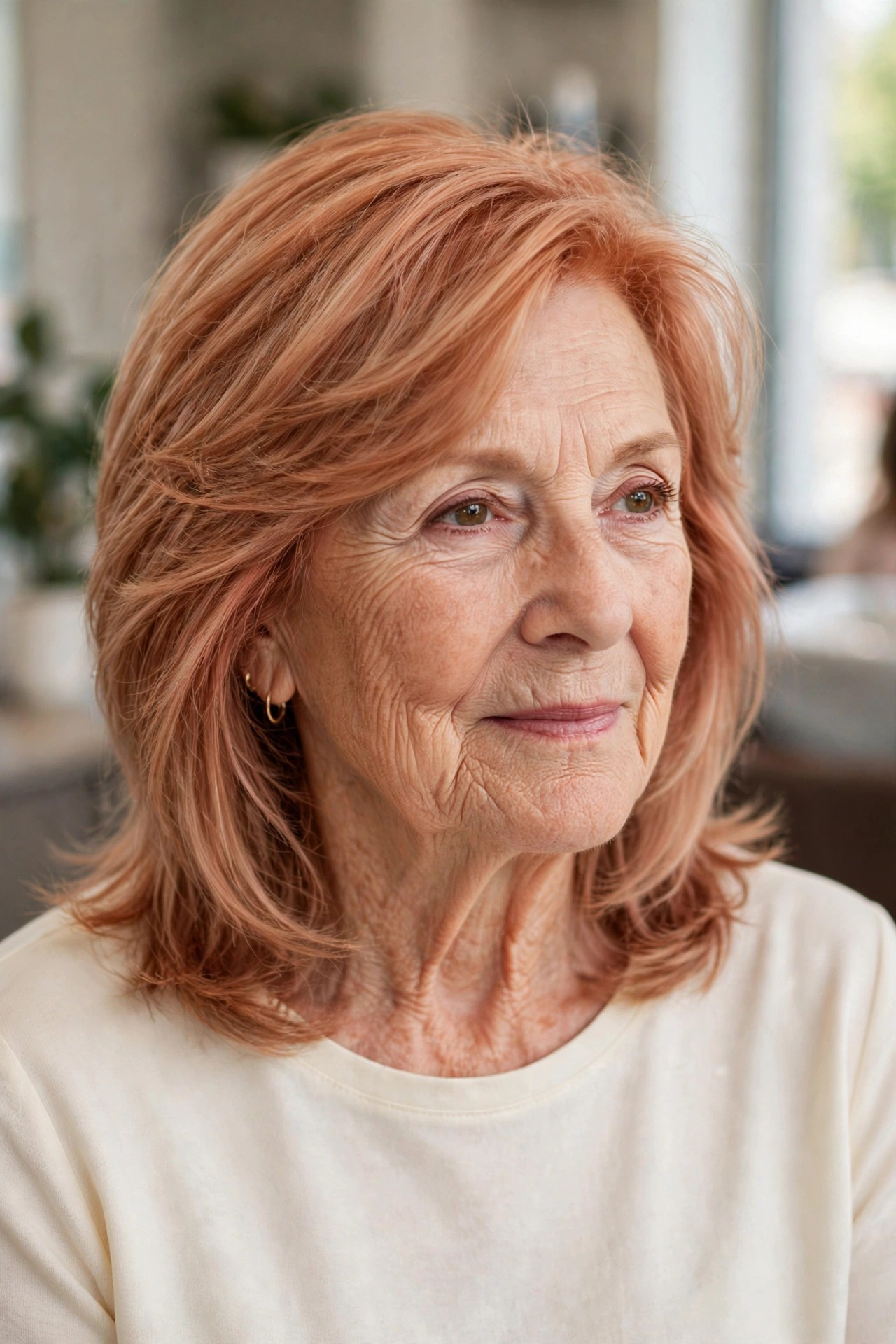
Strawberry blonde — that warm in-between of blonde and red — brings a flush of color back to the face that makeup alone cannot match. It is a gift for fair, freckled, and peachy skin tones, and on soft layers it moves between gold and rose as the light changes. Women who were natural redheads or warm blondes earlier in life often find this shade feels like coming home.
Red-family pigments are the fastest to fade, and strawberry is no exception: expect the rosy warmth to soften over four to six weeks. A color-depositing gloss or conditioner in a copper-blonde shade revives it between salon visits, and washing in cooler water genuinely helps. Root growth on graying hair shows as a pale line rather than a dark one, which makes the grow-out kinder than most fashion shades.


4. Rich Chestnut Brunette Lob
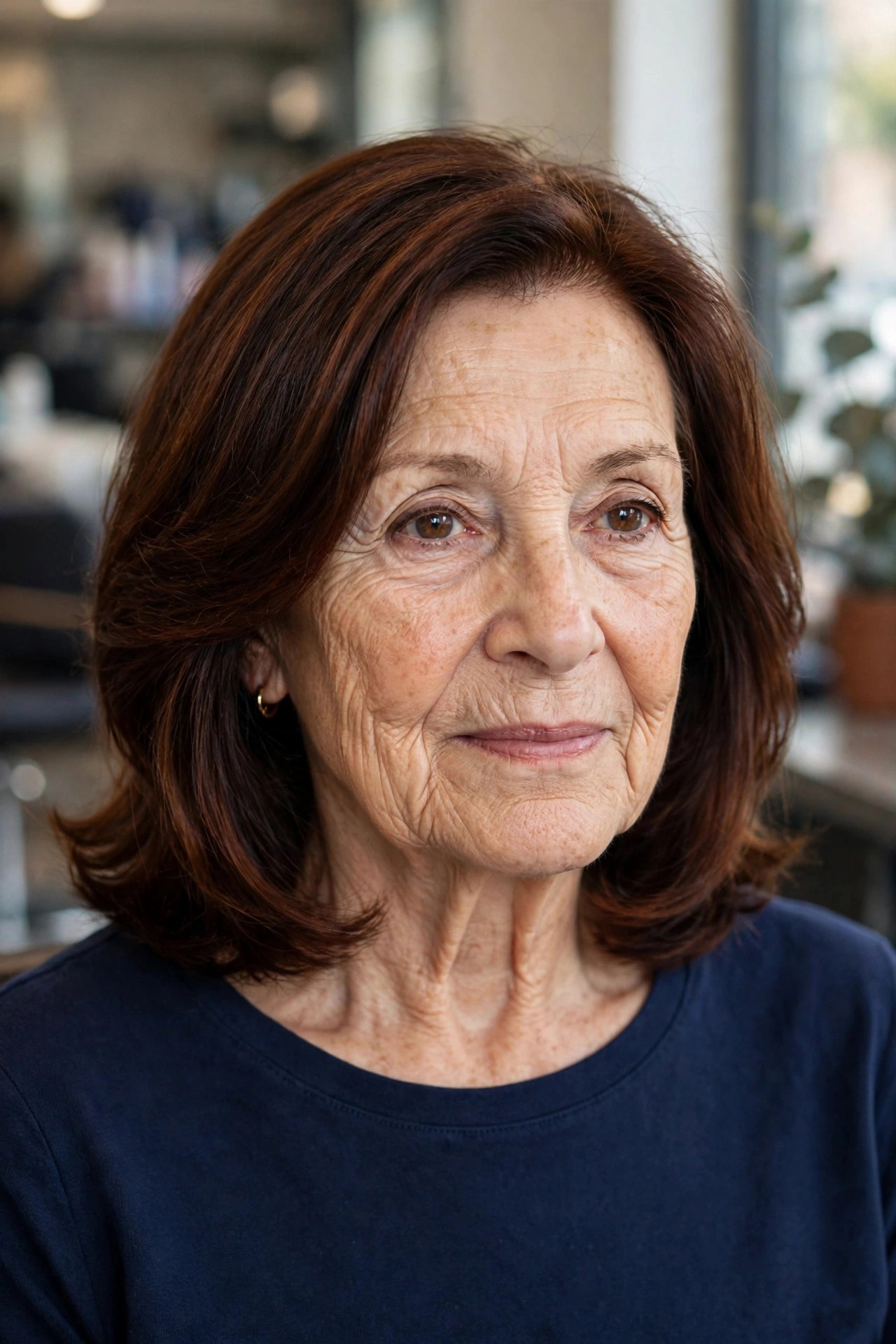
Chestnut is brunette with the warmth left in — a rich medium brown with a red-gold undertone that stops dark hair from looking harsh against mature skin. On a collarbone-length lob it looks expensive and healthy, and it is the shade to choose if blonde washes you out but black-brown feels too severe. It flatters warm, olive, and neutral skin beautifully.
Brunette upkeep is about fade, not just roots: chestnut can turn flat and slightly orange as it oxidizes, so a brown gloss every four to six weeks restores the depth — the Kristin Ess gloss below is made for exactly this shade family. Gray roots against brunette are the highest contrast in this guide, so plan on a root touch-up around week four to five if your gray percentage is high, and use a satin pillowcase to keep the lengths glossy rather than frizzy.
5. Caramel Balayage on a Brunette Base
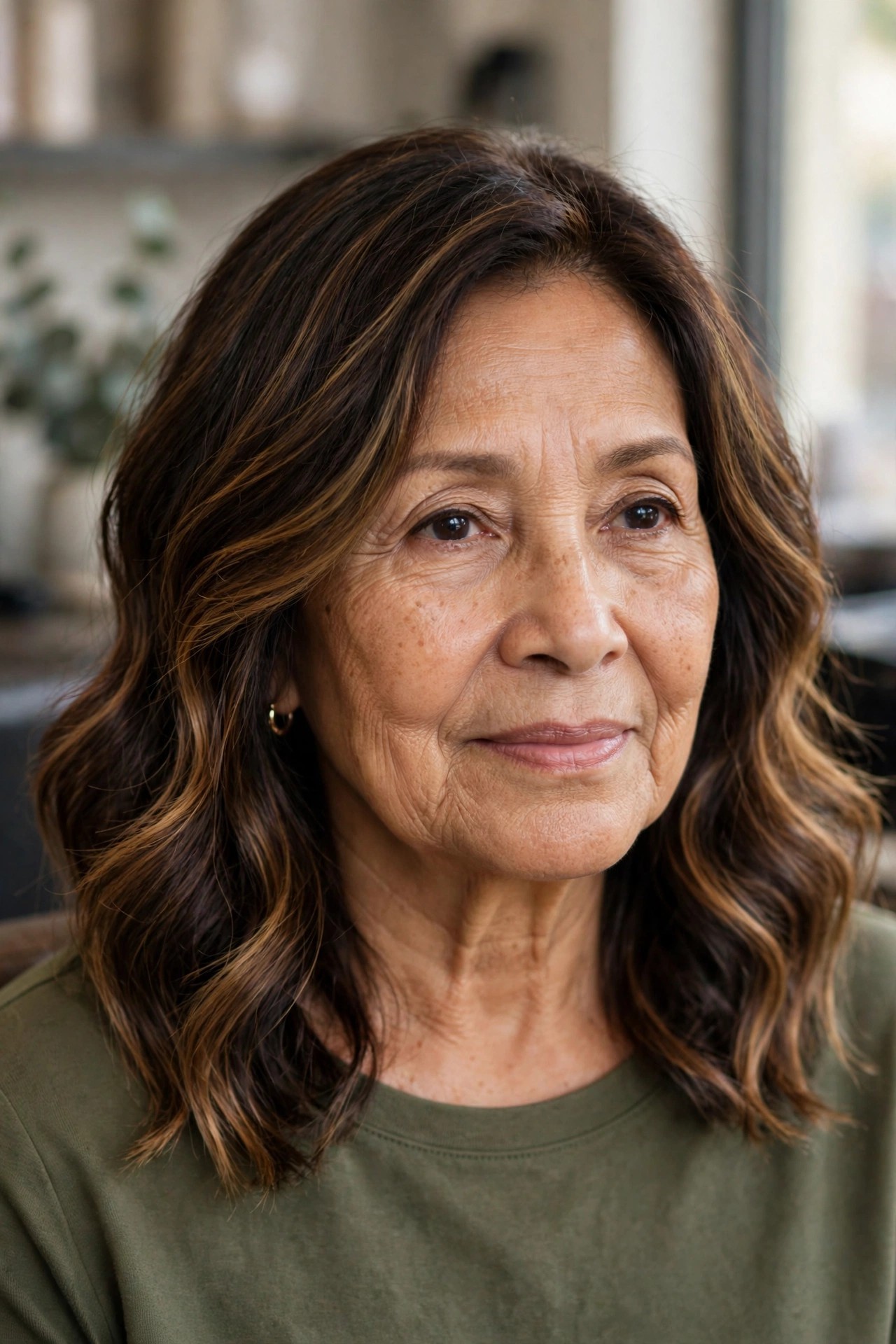
Balayage paints lightness through the mid-lengths and ends while the roots stay deep — and that structure is why it is the most forgiving grown-up color technique there is. The caramel pieces catch light when your hair moves, the face looks brighter, and there is deliberately no line where the color starts. On waves, as here, the dimension is at its best.
Upkeep is the lowest of any full color look in this article: because nothing is foiled to the root, regrowth simply becomes part of the blend, and many women go three to four months between appointments with only a gloss or toner refresh at six to eight weeks. It suits medium and deeper skin tones particularly well. If you love this low-commitment direction, our balayage guide for women over 50 goes deeper on placement.
Warm shades flatter some face shapes and skin tones, cool shades others — and your face shape decides where lightness should sit. Try our free Face Shape Finder to discover yours in under a minute, then come back to the colors above with fresh eyes.
6. Warm Copper Chin-Length Bob
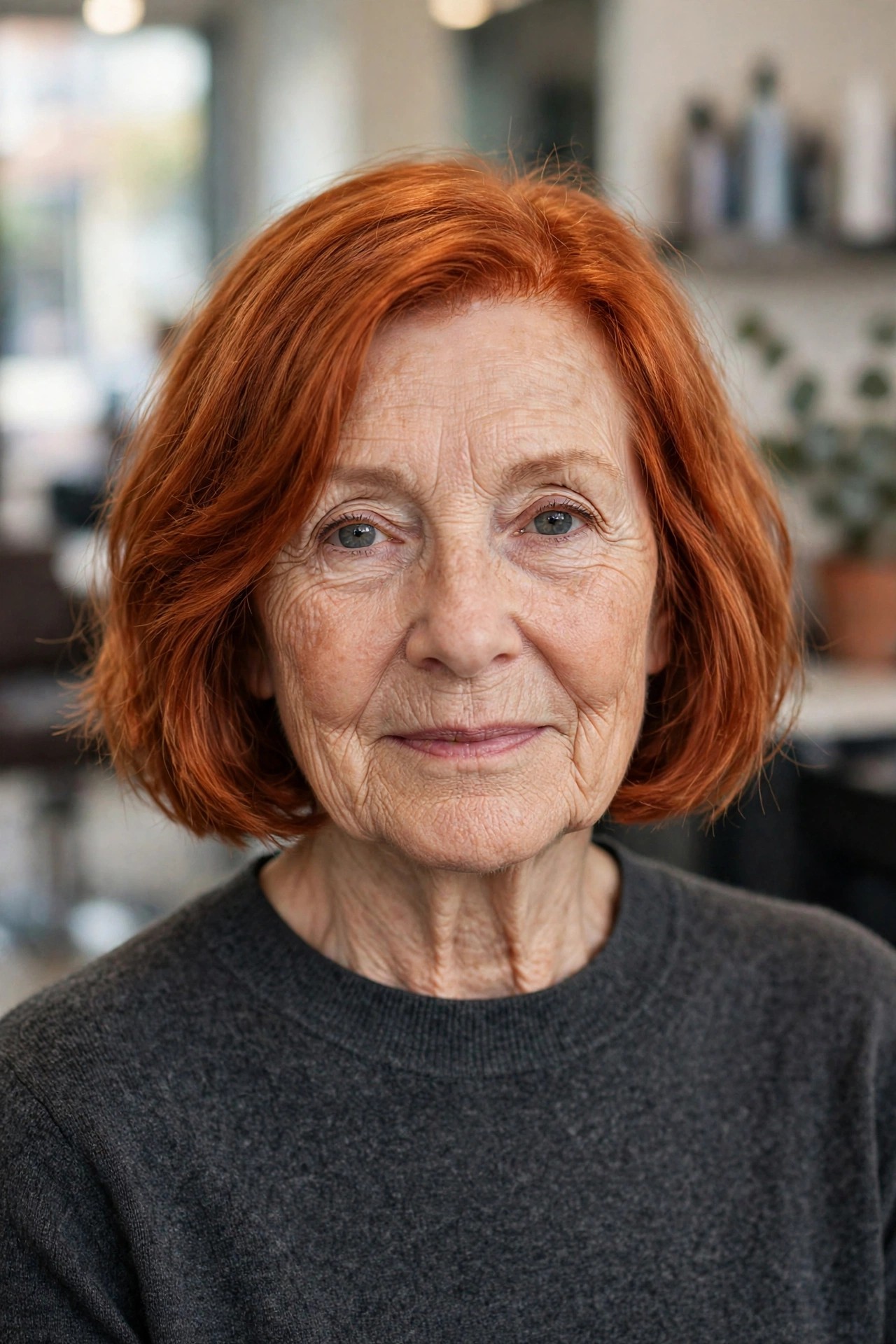
Copper is the boldest warmth on this list — a vivid, light-reflecting red-orange that makes blue and green eyes look electric and puts color back into pale skin. On a short bob it reads chic rather than loud, because the clean shape balances the confident shade. If your skin has warm or golden undertones, copper will look like it was always yours.
Go in with clear eyes: copper fades faster than any other family here. The salon color will settle within the first two weeks, then a copper gloss every three to four weeks keeps it vivid rather than washed-out peach. Wash less often, in cool water, with a color-safe shampoo. Gray roots show quickly against copper, so this is a four-week root rhythm — the trade you make for the most compliments per week of any shade in the guide.

7. Rich Auburn Soft Waves
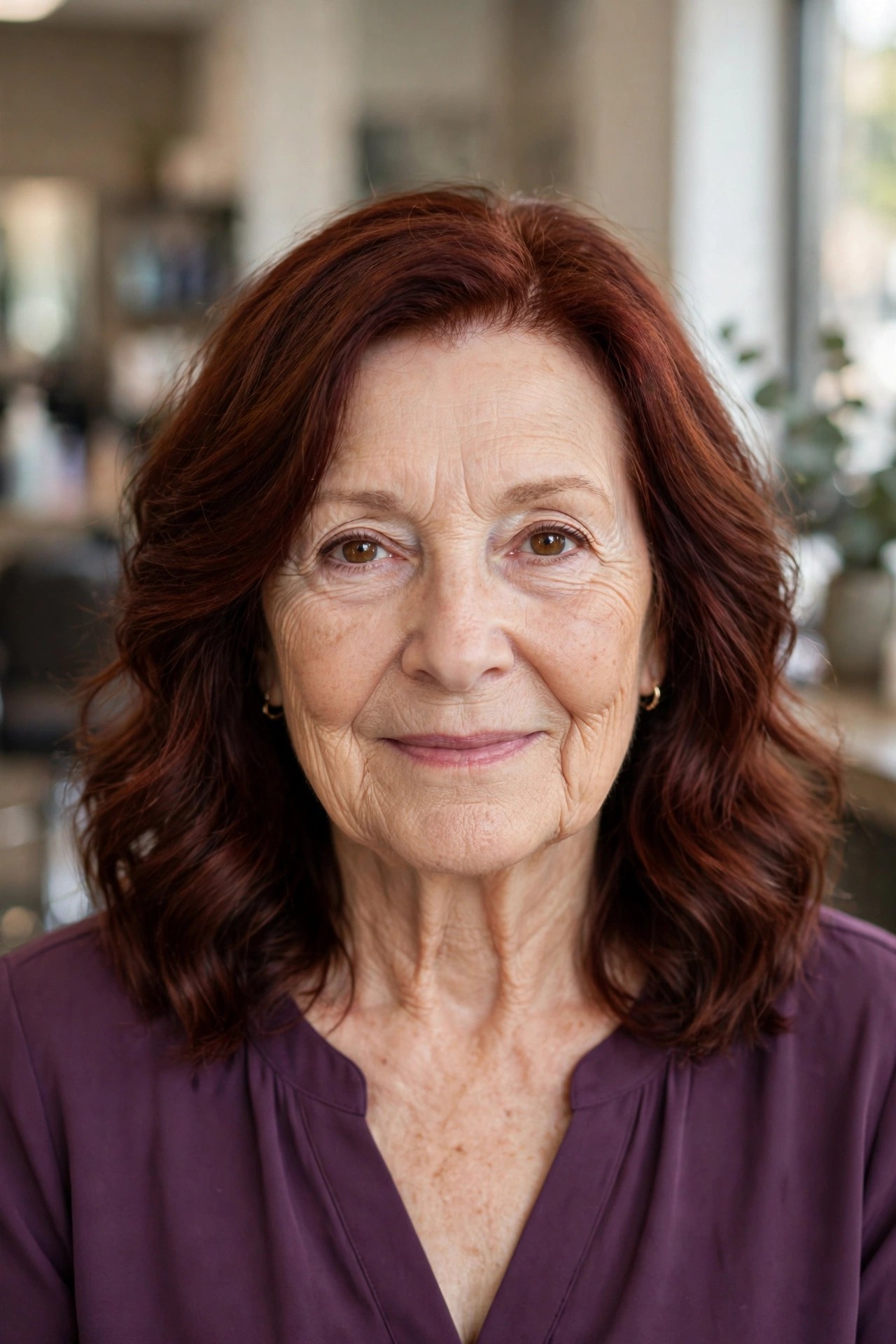
Auburn is copper’s deeper, more wearable sister: a red-brown with real depth that reads brunette in shade and red in sunlight. It is the answer if copper tempts you but feels too bright for your coloring or your comfort. On soft waves the red dimension shows in every curve, and it is quietly one of the most flattering shades for hazel and brown eyes.
Auburn holds better than bright copper because there is more brown pigment anchoring it — expect a gloss refresh every five to six weeks to keep the red end of the balance alive. Like all reds it dislikes sun and hot water, so a hat on bright days and lukewarm washing are real, unglamorous advice. Gray regrowth contrasts moderately; a demi-permanent root refresh between full colors keeps things seamless.
8. Buttery Blonde Pixie
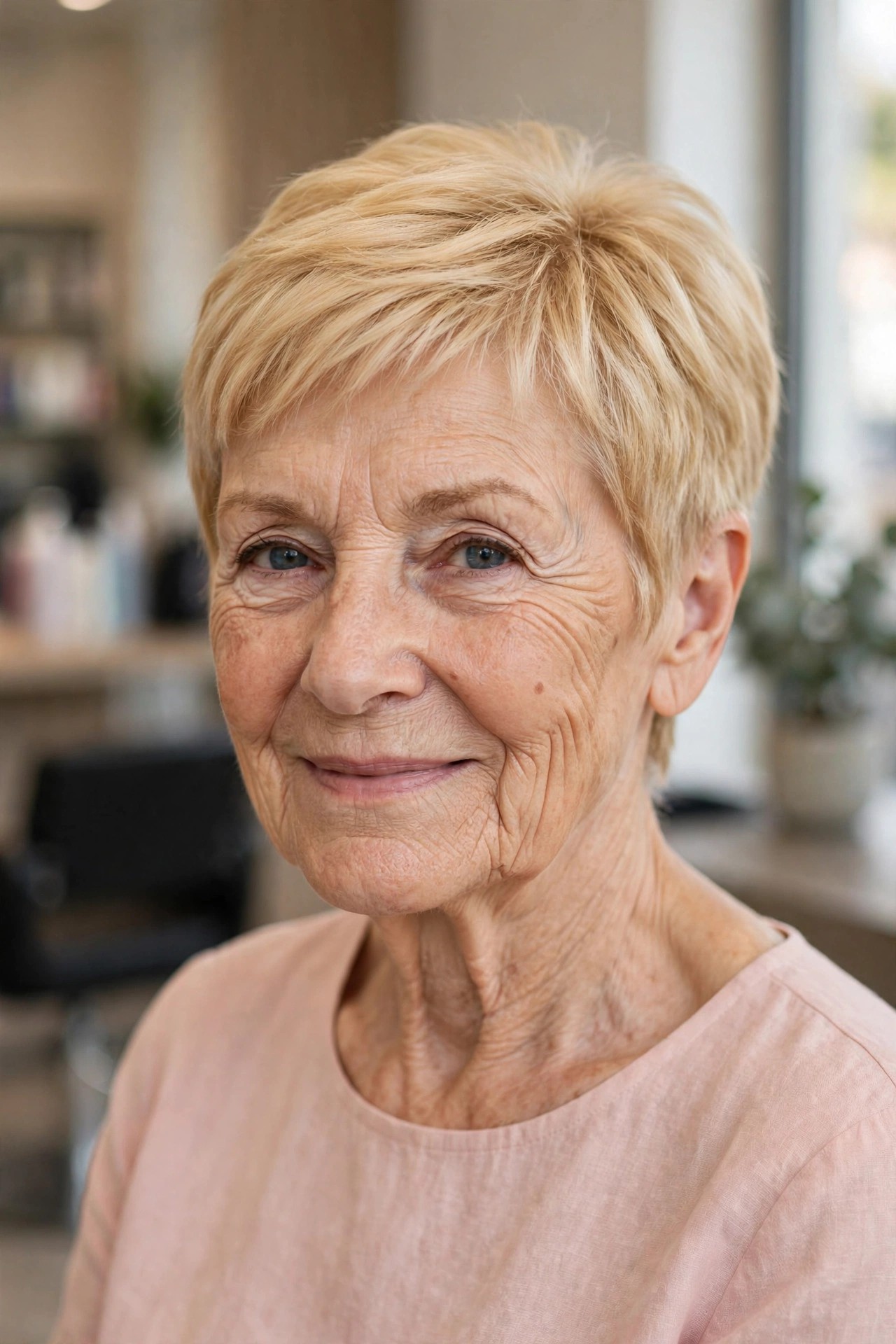
A pixie is the perfect canvas for an all-over blonde: there is simply less hair to maintain, less length to damage, and the color gets refreshed almost completely at every trim. Buttery blonde — warm, creamy, golden — softens the pixie’s edges and keeps a short cut feminine and bright rather than severe. It loves fair to medium skin and blue or green eyes.
The rhythm is tidy: pixies are trimmed every four to six weeks anyway, and the root color is done at the same appointment, so the upkeep folds into a visit you were already making. Between visits, a mousse gives the top its piece-y finish. One caution: repeated lightening on short hair is fine, but keep bleach off already-lightened ends — your colorist should lift roots only, and a bond-care shampoo keeps the short lengths strong.

9. Champagne Beige Blonde Bob
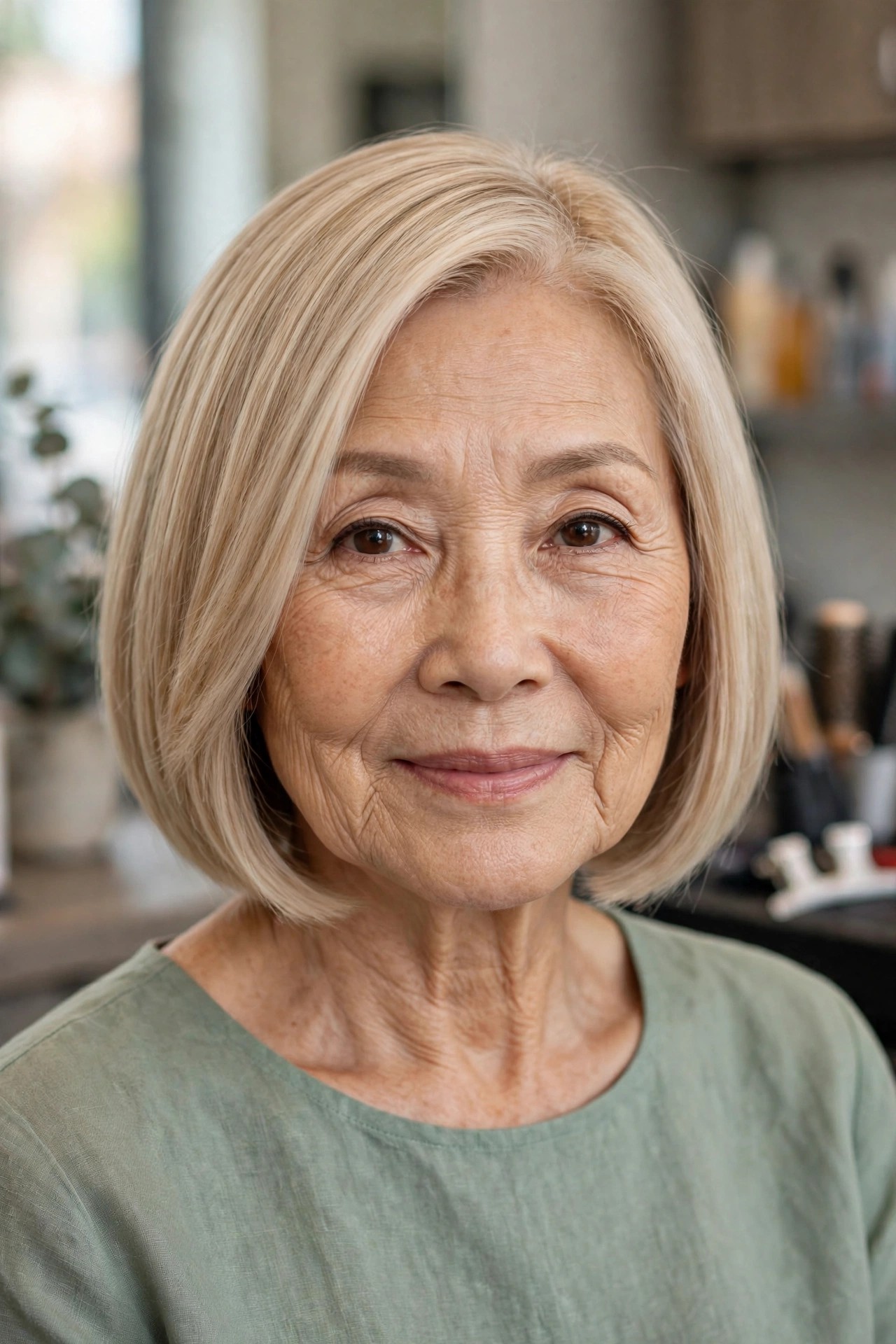
Champagne beige is the neutral blonde — neither golden nor icy — and that neutrality is exactly why it suits so many women after 60. Skin tones shift cooler and paler with age, and a beige blonde harmonizes instead of fighting: it brightens without the brassiness risk of gold or the starkness of ash. On a sleek bob it looks quietly luxurious.
Beige lives or dies by toning. The color will try to drift warm between appointments, so a gloss or toner refresh every four to five weeks keeps it in the champagne zone, and an occasional short purple-shampoo wash corrects early brass. Gray root contrast against beige is low to moderate — softer than against brunette — making five to six weeks between root appointments workable for most.

10. Mocha Brunette with Golden Ribbon Highlights
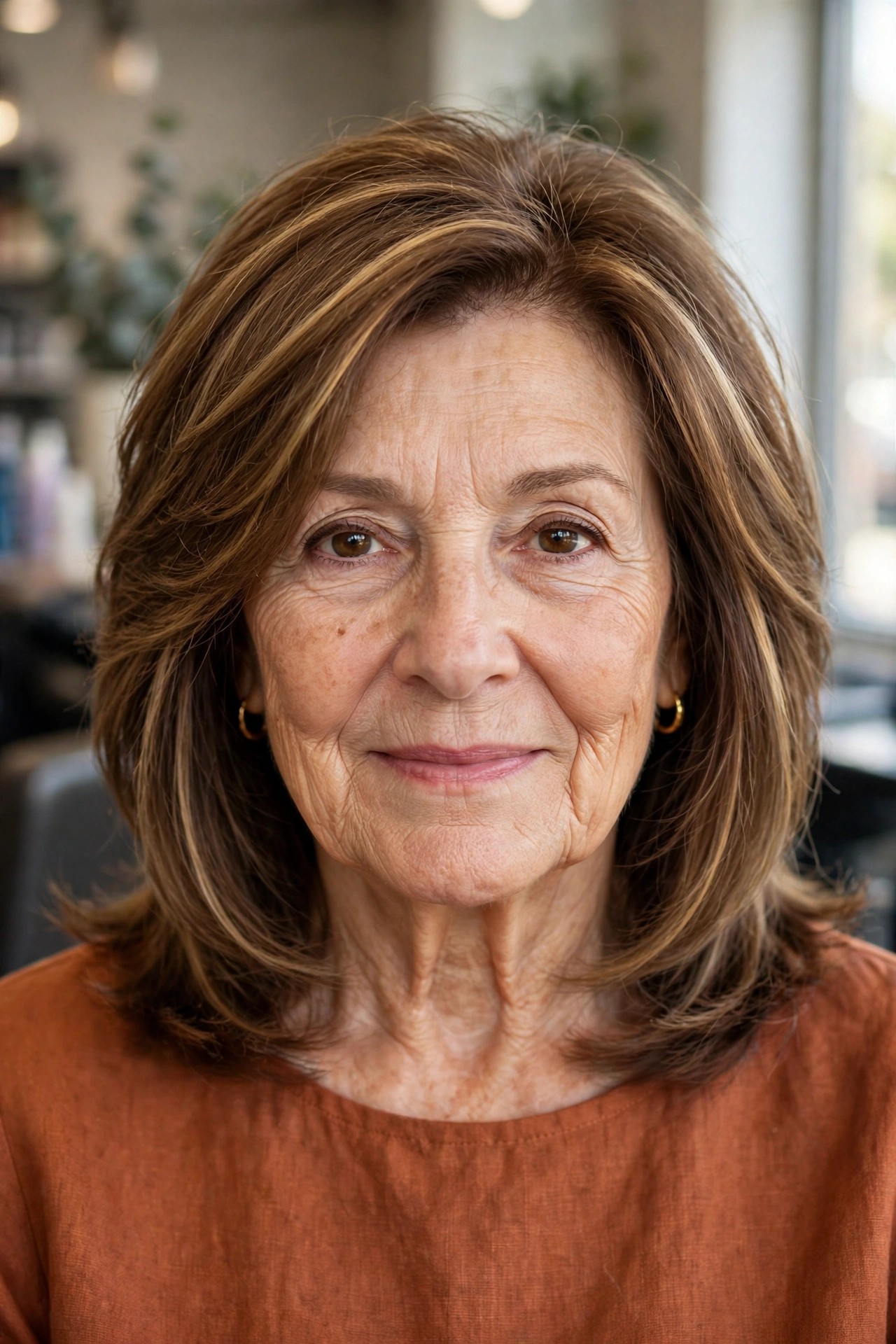
Mocha gives you brunette depth with none of the flatness: a cool-neutral medium brown threaded with fine golden ribbons that break up the surface and mimic the natural multi-tonal hair most of us had at 25. The dimension is what makes it youthful — flat, solid dark color is the thing that ages; light moving through brown is the fix.
The ribbons are placed off the root, so grow-out is soft for eight to ten weeks, while the mocha base itself can be a demi-permanent that fades gradually rather than leaving a line. A clear or brown gloss monthly keeps both tones shiny and distinct. This is a strong choice for medium and olive skin, and for women whose gray is still under about fifty percent, because the highlights camouflage early regrowth beautifully.

11. Cinnamon Spice Balayage
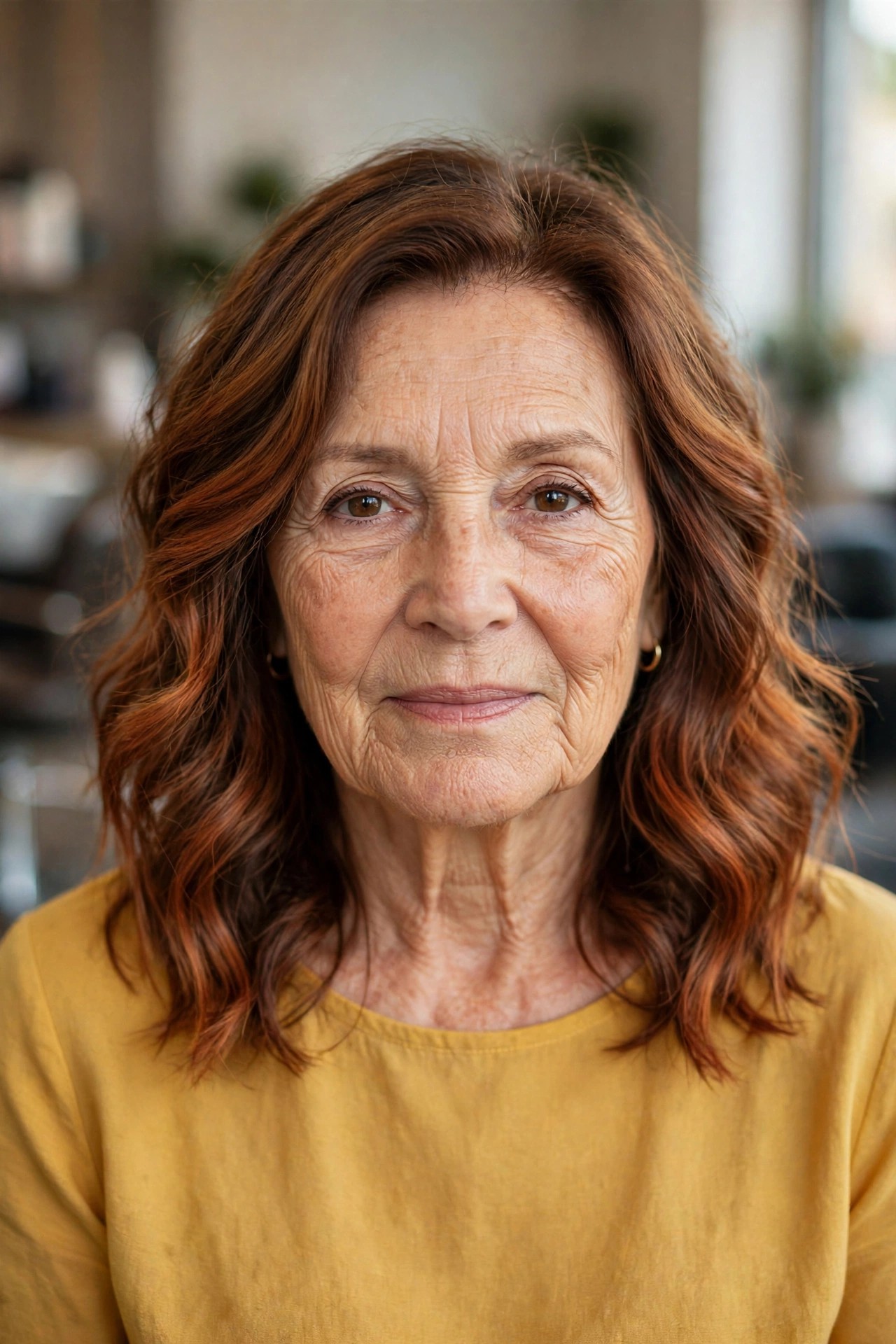
Cinnamon takes balayage into warm territory: a brown base melting into reddish-copper ends, like spice dusted over chocolate. The warmth concentrates away from the face, which makes it a gentle first step into red — you get the glow at the lengths while the shade nearest your skin stays familiar. Autumn-toned wardrobes and warm skin wear it best.
Like idea 5, the root-free structure means a three-month appointment rhythm is realistic; the maintenance lives in the ends, where the cinnamon will fade toward a softer copper-blonde. A warm gloss at six weeks brings the spice back. Protect the ends with heat protection before any hot styling — faded, frazzled ends undo the whole effect faster than root growth ever will.
12. Creamy Vanilla Blonde Layers
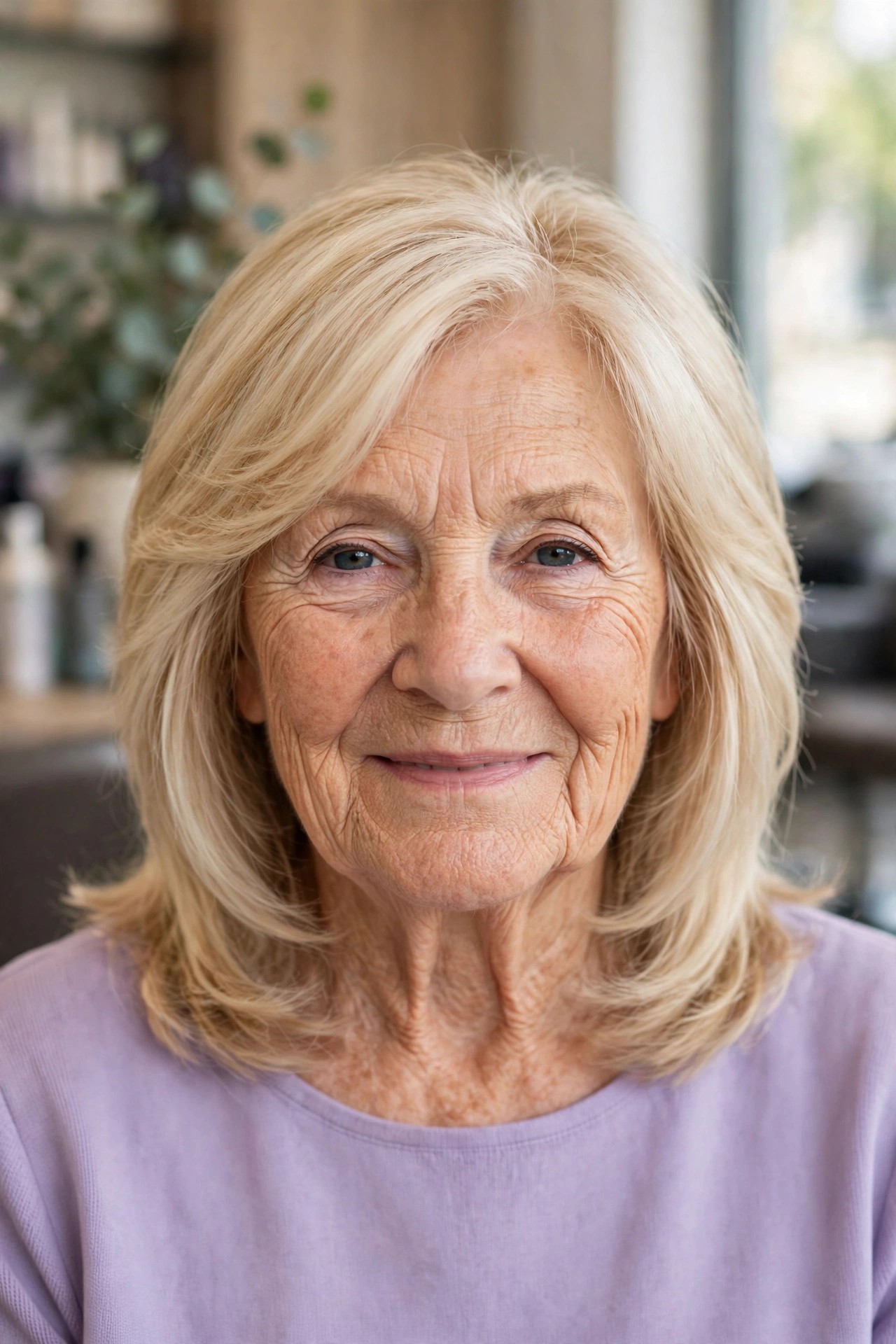
Vanilla blonde is the lightest warm blonde in the guide — pale, creamy, and luminous on layered hair that lets the light travel. It is undeniably youthful in effect, opening up the face the way a light top does. It suits fair, cool-to-neutral skin best; on deeper skin tones it is a high-contrast statement, which some women love — just choose it knowingly.
This is the highest-maintenance blonde here, and the article will not pretend otherwise. Achieving pale vanilla on graying hair usually needs lightening plus toning, roots show within three to four weeks because the contrast with any natural pigment is high, and the lengths need bond care and gentle handling to stay silky. If you love it, budget for the rhythm — done properly, it is stunning; stretched too long, it is the first shade to look tired.
13. Chestnut Brown with a Copper Face Frame
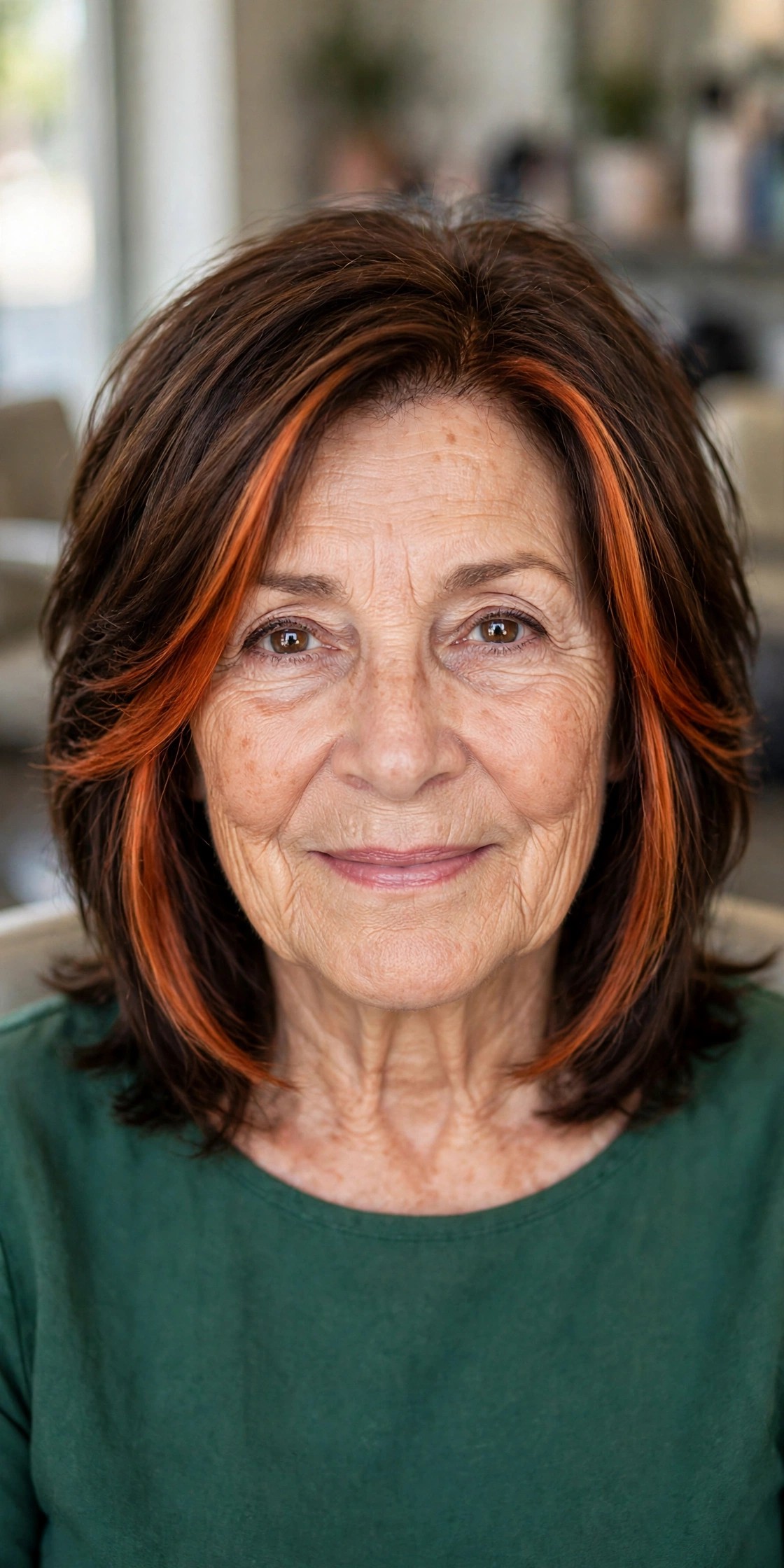
Here is a clever compromise: keep a low-maintenance chestnut base, then spend the drama budget on two bright copper pieces framing the face. The copper sits exactly where people look — at your eyes and smile — so the whole color reads vibrant, while ninety percent of your hair stays an easy, slow-fading brunette.
The face pieces fade fastest, as all copper does, but refreshing two small sections is quick and inexpensive — many salons will do a face-frame-only appointment, or a copper gloss at home restores them. The chestnut base follows the normal four-to-six-week rhythm from idea 4. Together it is one of the best impact-per-appointment ratios in this list.
14. Warm Toffee Brunette Shine
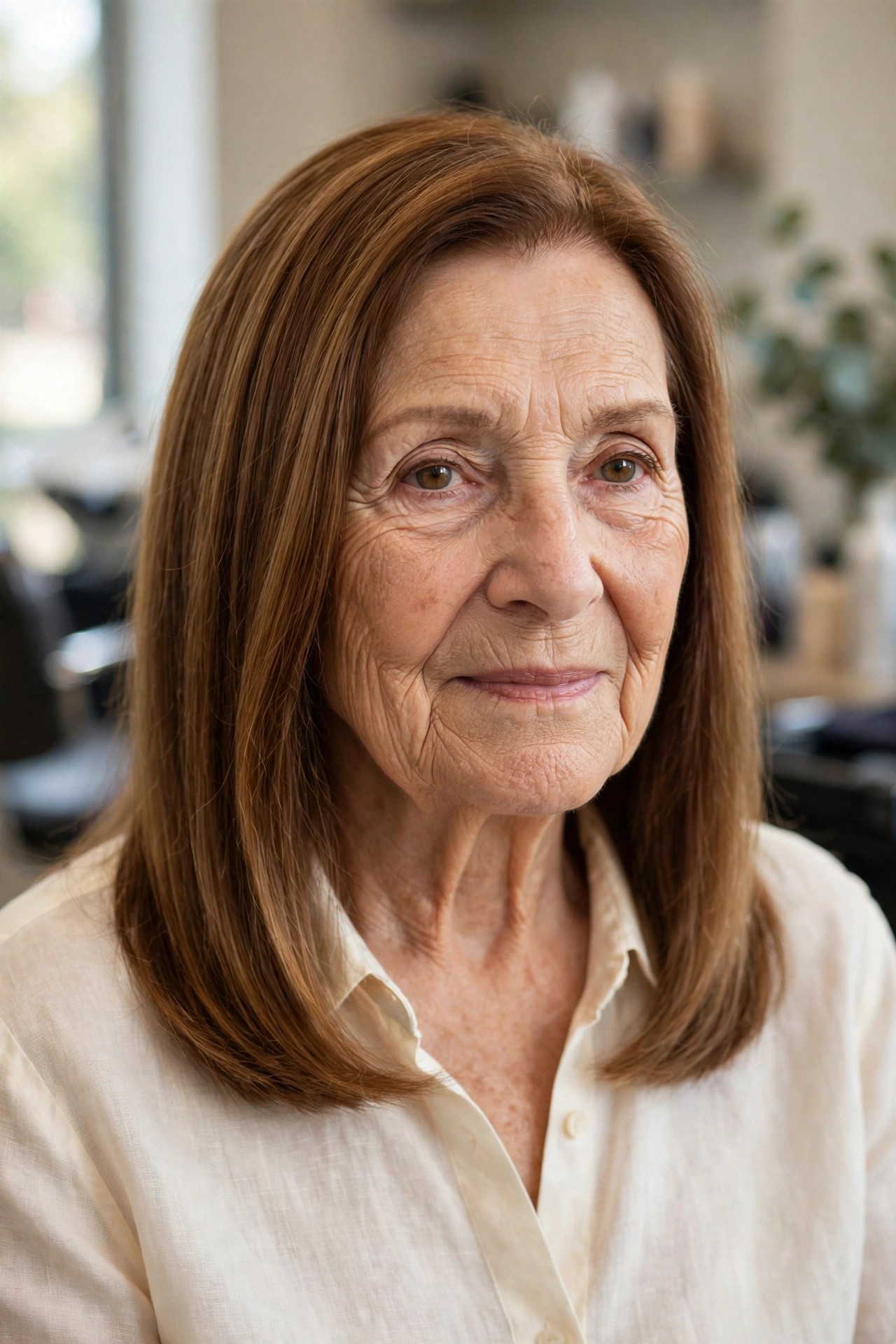
Toffee is brunette sweetened — a warm light-to-medium brown with a melted-caramel gloss that flatters the widest range of skin tones in this guide. It is softer than chestnut, deeper than honey blonde, and it has a particular talent: on straight, smooth hair like this, the single warm tone creates a sheet of shine that makes hair look thicker and healthier than it is.
Toffee sits in the comfortable middle for upkeep. Gray roots contrast moderately — plan four to six weeks — and the tone fades warm-to-flat rather than brassy, so a gloss refresh restores it easily. Because the look is all about surface shine, condition the lengths faithfully and keep flat-iron heat moderate with protection; dull toffee is just brown, glossy toffee is a compliment magnet.
15. Rose-Gold Kissed Blonde
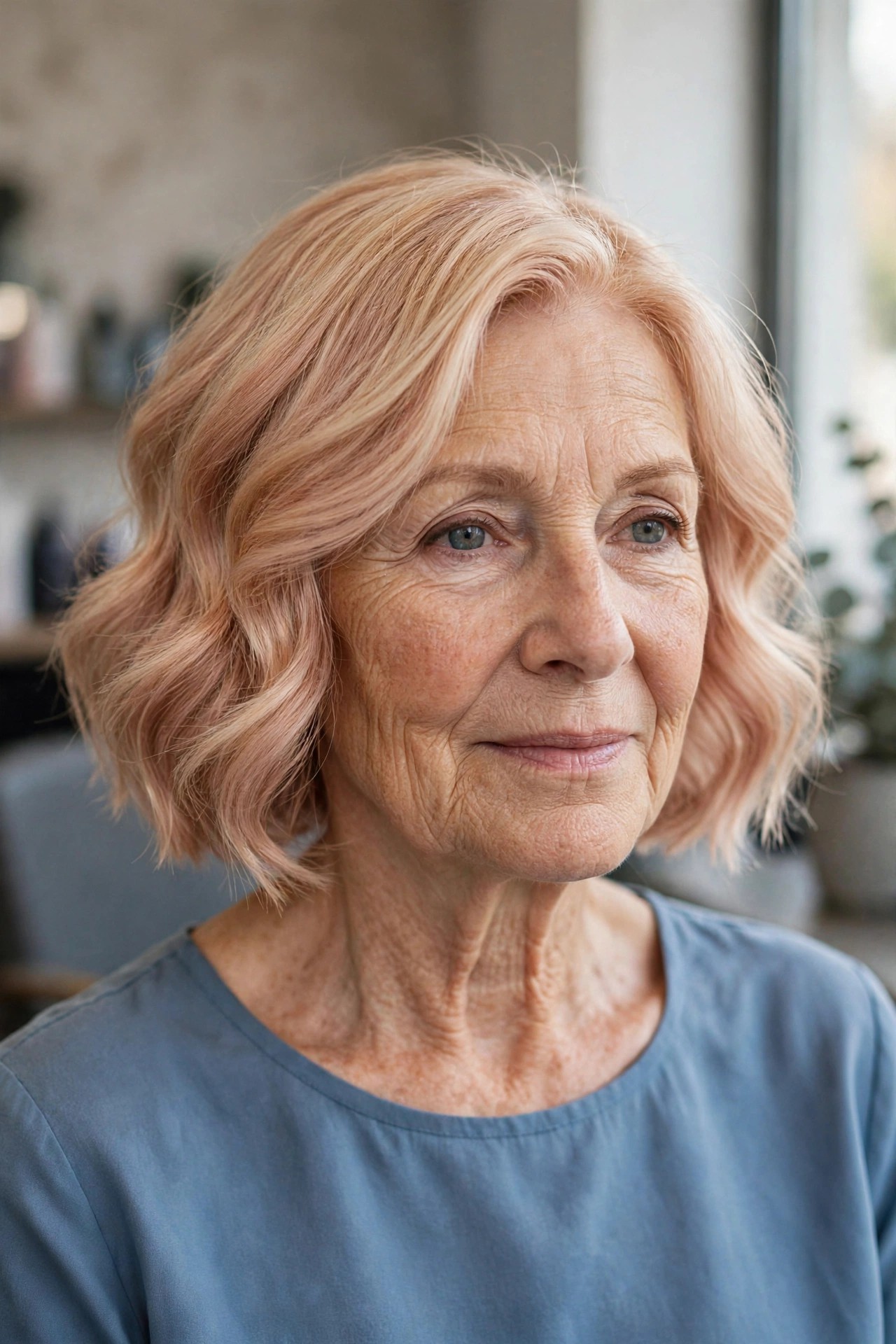
Rose gold is blonde with a blush — a whisper of pink over a golden base that gives fair skin a lit-from-within quality no powder can match. Kept soft, as here, it reads romantic rather than trendy, and it is surprisingly flattering on cool and neutral skin tones because the pink echoes the skin’s own undertones.
Honesty first: the pink is a gloss, not a permanent change, and it will wash out in two to four weeks depending on how often you shampoo. That impermanence is also the fun — many women refresh the rose tone at home with a tinted conditioner between salon visits, and if you tire of it, it simply fades back to your blonde. The blonde base underneath keeps its normal five-to-six-week rhythm.
16. Deep Burgundy Wine Waves
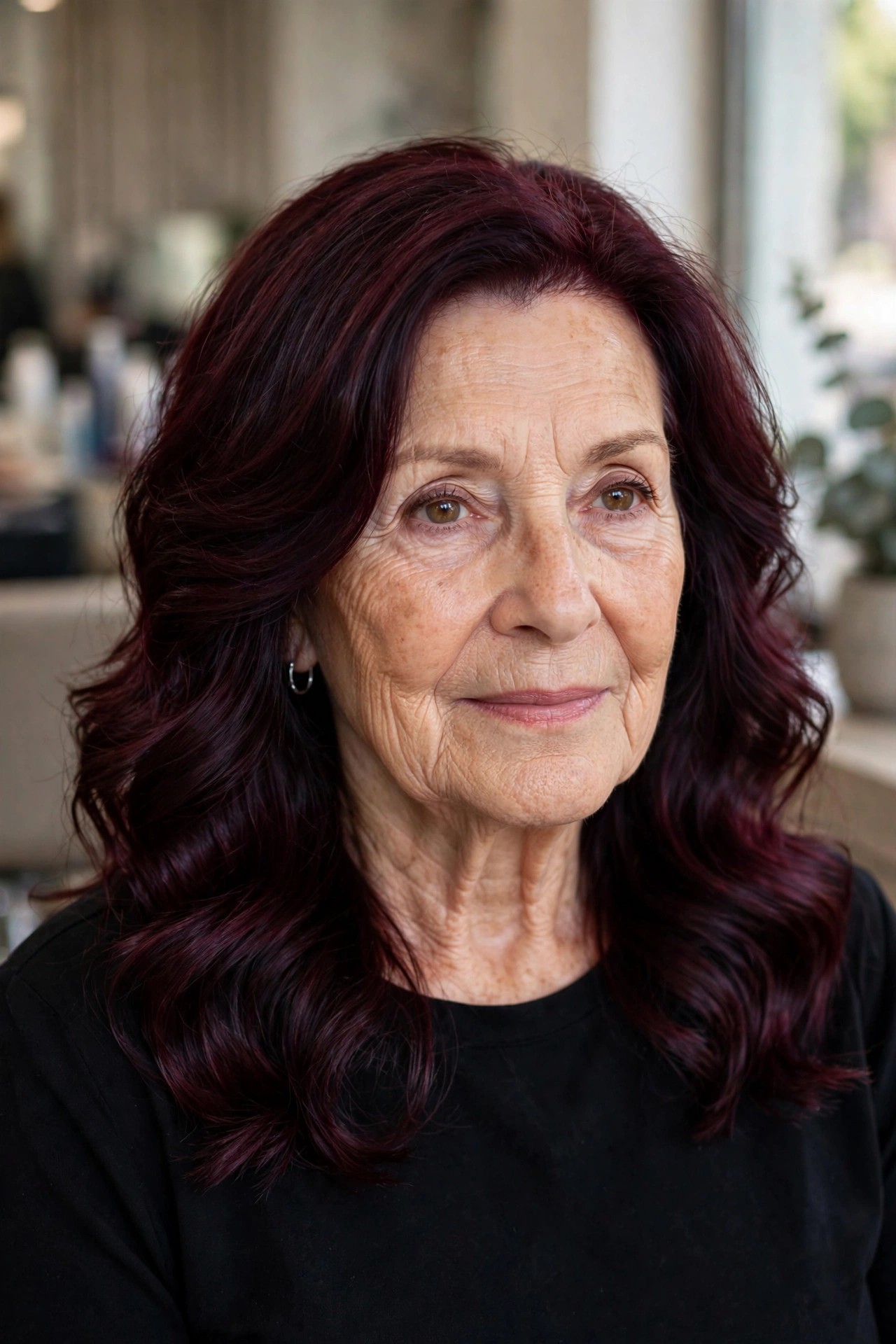
Burgundy is the dramatic end of the spectrum: a deep wine-red with violet depth that looks almost brunette indoors and glows red in daylight. On longer waves it is genuinely striking, and it flatters cool and deep skin tones that can carry a rich shade. Choose it if you want color that gets noticed — this is not a blend-in look.
Burgundy asks for commitment in two directions. Reds and violets fade with every wash, so a red-toned gloss every four weeks is close to non-negotiable, and it can stain porous gray hair unevenly — an experienced colorist and a strand test matter more here than for any other idea. Gray roots contrast strongly against the depth, so keep root appointments at four weeks. In return, no shade in this guide photographs better.
17. Golden Caramel Highlights on a Dark Base
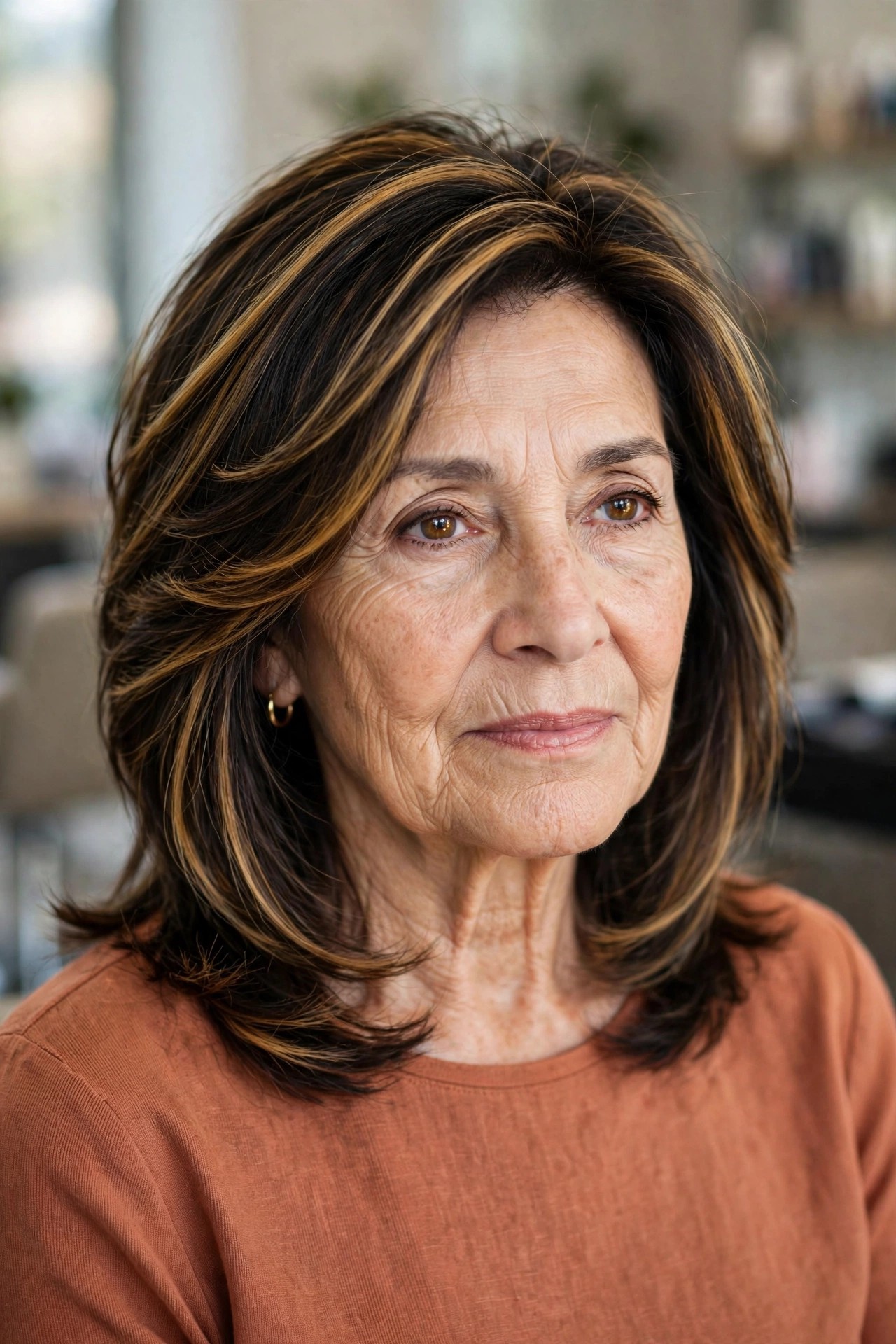
The strongest camouflage trick for graying dark hair is not covering everything — it is breaking up the regrowth line with light. Abundant golden caramel highlights through a dark base blur the border where gray comes in, so week five looks almost as good as week one. The high contrast between dark and gold also reads modern and intentional.
Because the highlights are the camouflage, they need refreshing every eight to ten weeks as they grow down, but the base color appointments can stretch — many women only deepen the base two or three times a year. Keep the gold from going brassy with an occasional toning gloss. If your natural base is very dark and your gray is over sixty percent, talk honestly with your colorist: at some point blending (idea 20) becomes easier than camouflage.
18. Soft Apricot Blonde Crop
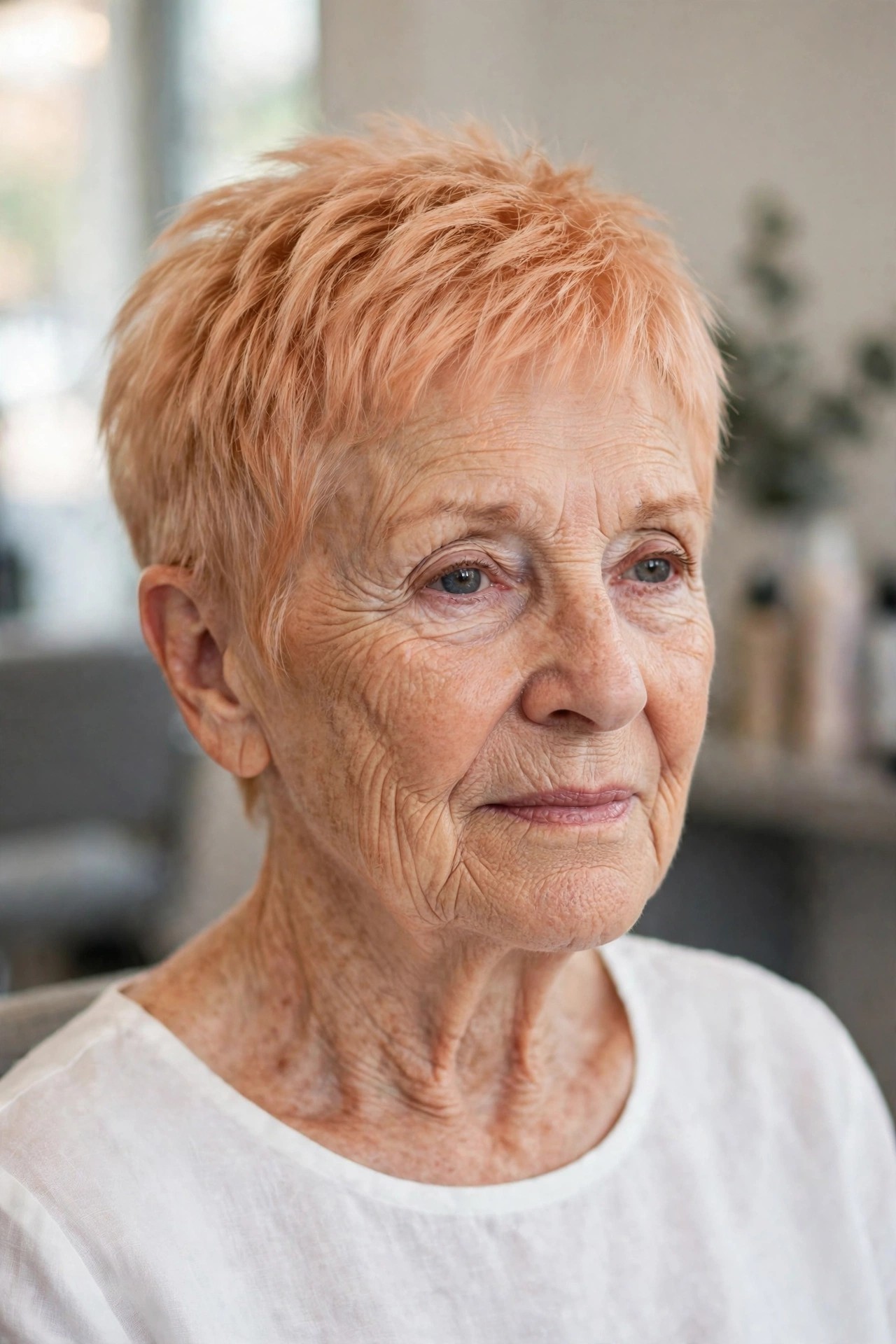
Apricot is the playful one — a peachy, sun-warmed blonde on a short textured crop that feels fresh, modern, and a little bit joyful. The peach tint flatters warm and neutral skin and softens the crop’s shortness, while the cut itself keeps the whole thing low-fuss. It is a wonderful choice after years of the same safe shade.
Like rose gold, apricot is mostly a gloss finish over a blonde base, so expect the peach to soften over three to five washes-to-weeks and need a tinted refresh — quick, and it can be done at the salon with your regular pixie trim every four to six weeks. The short length is your friend: less hair holds less faded tone, and every trim removes the oldest color.
19. Chocolate Cherry Brunette
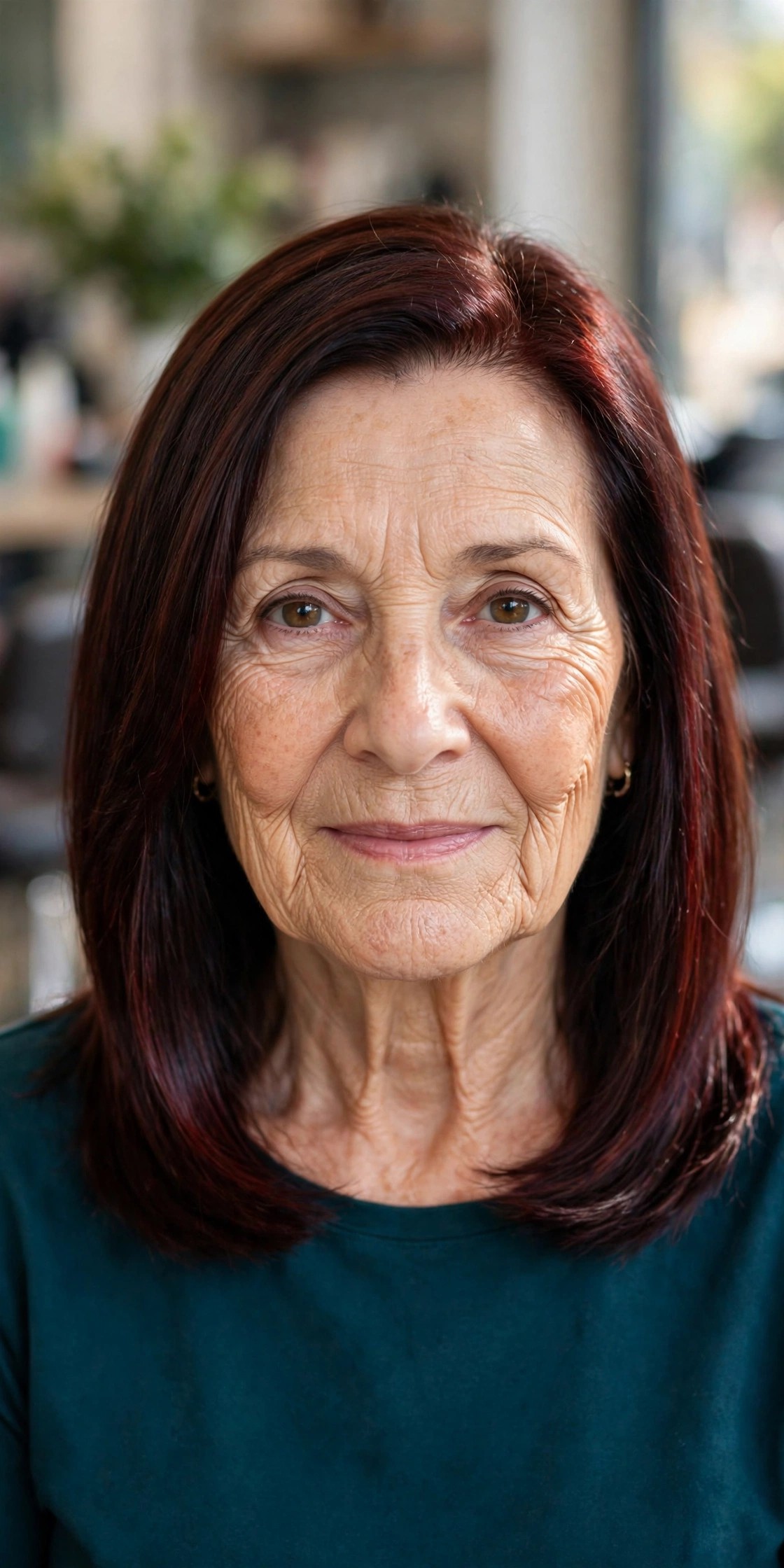
Chocolate cherry is the connoisseur’s brunette: a dark chocolate base with a deep cherry sheen that only announces itself when light hits it. It gives brunette lovers the red dimension of auburn or burgundy without leaving the brown family — elegant at a glance, interesting up close. Cool and neutral skin tones wear the cherry note best.
The cherry sheen is a gloss layer, so it follows the red-family rule: refresh every four to five weeks or watch it fade to plain (still pretty) chocolate. Gray roots contrast strongly against the dark base, putting this on a four-to-five-week root rhythm. A brown-red gloss like the one below keeps both the chocolate and the cherry in balance in a single step.

20. Soft Ash-Brown Lowlights for Gentle Gray Blending
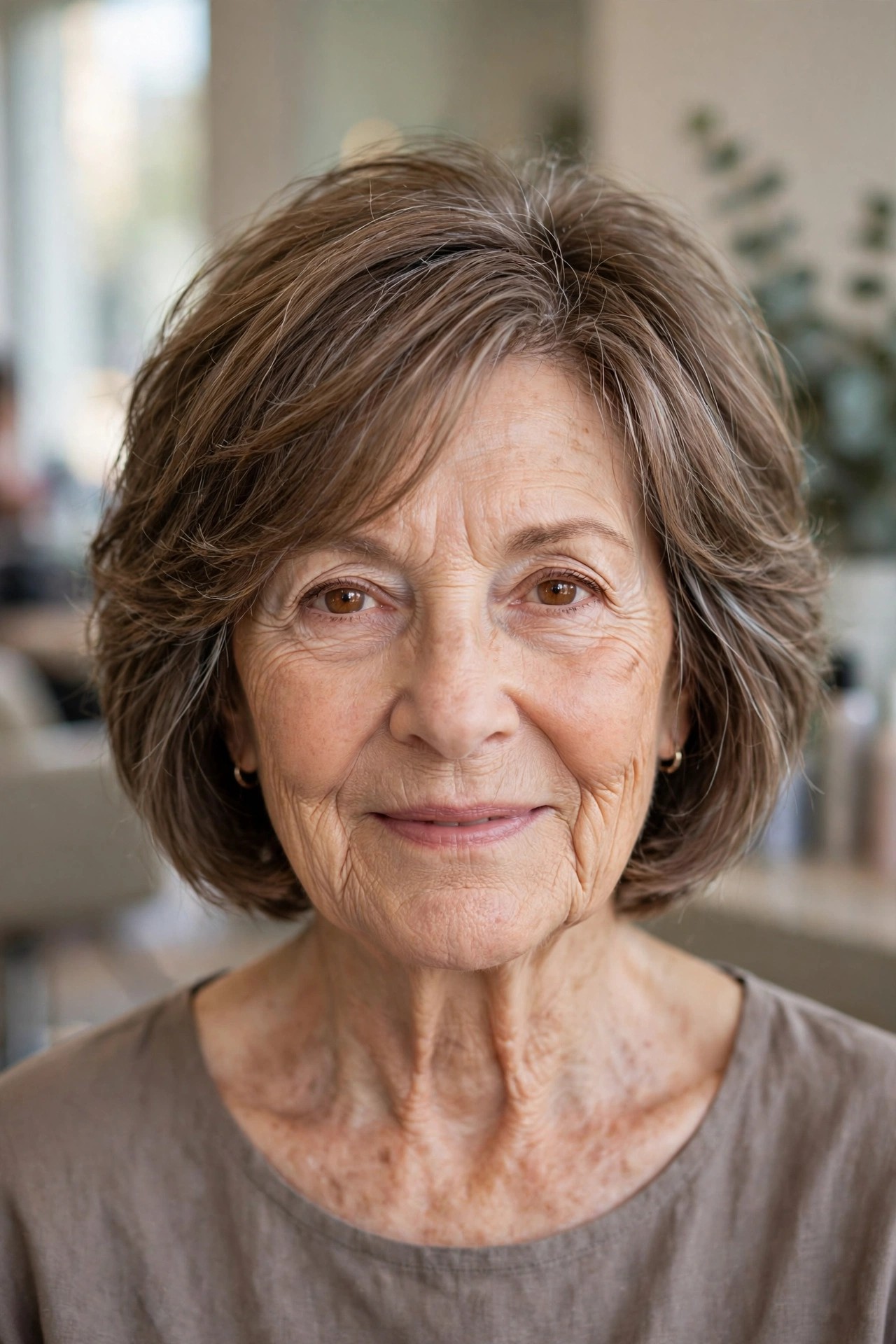
Finish with the one idea that works with a little gray instead of against it. Ash-brown lowlights are painted through hair that is part silver, part pigmented, deepening the overall read to a soft mushroom brown while your own silver becomes the highlight. Nothing is fully covered, so nothing ever grows out in a line — the most honest low-maintenance color there is.
Upkeep is the lightest in the guide: lowlights every three to four months, with a silver gloss in between if you want the bright strands kept icy rather than creamy. It suits cool skin tones best, and it works when your gray is roughly thirty to seventy percent — below that, highlights camouflage better; above it, most women find they prefer their silver polished and celebrated, as in our sophisticated gray hairstyles for women over 60.

Recommended Products
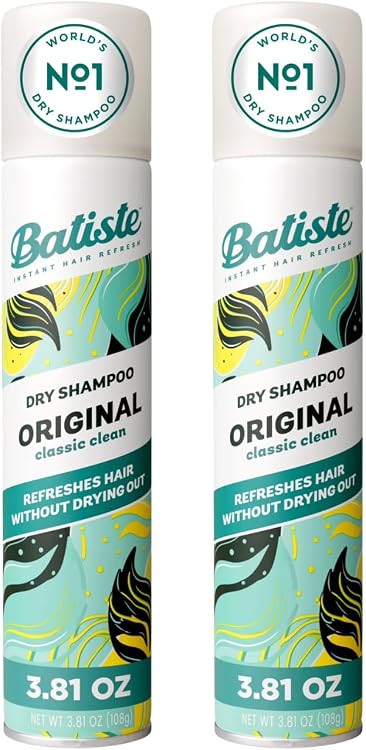
Color after 60 stays youthful when it stays glossy — faded, matte color reads older than gray ever does. These five cover the whole maintenance rhythm behind this guide: a brown color-depositing gloss to revive brunettes and reds between appointments, a bond-care color-safe shampoo for washing without stripping, a purple shampoo to keep blondes clean-toned, a light shine serum for that sheet-of-glass finish, and a satin pillowcase so color and smoothness survive the night.
Color-Care Tips That Keep Color Youthful After 60
- ✅ Match warmth to skin, honestly. Hold gold and silver jewelry to your face: the metal that makes your skin look clearer is your undertone — gold means warm shades (1, 6, 14), silver means cool shades (9, 16, 20).
- ✅ Gloss is the refresh rhythm. Most shades here do not need re-coloring at every visit — a gloss or toner every 4–6 weeks restores tone and shine while roots or balayage grow out softly.
- ✅ Plan roots around contrast. Light shades on gray regrow softly (5–6 weeks); dark and red shades show a line fast (4 weeks). Choose your shade with your calendar, not just your heart.
- ✅ Wash less, cooler, color-safe. Two to three washes a week, lukewarm water, and a sulfate-free color-safe shampoo can add weeks to reds and coppers especially.
- ✅ Reds fade first — feed them. Copper, auburn, burgundy and cherry tones need a color-depositing gloss at home between salon visits; it is maintenance, not failure.
- ✅ Protect color from heat and sun. Always use heat protection before hot tools, and a hat or UV spray on bright days — sun lifts dye the way it lifts everything.
- ✅ Strand-test bold shades on gray. Porous gray hair grabs pigment unevenly, especially violets and reds. A strand test before burgundy or cherry is cheap insurance.
- ✅ No shade is permanent magic. Every color here needs its rhythm kept. The youthful part is not the dye — it is healthy, glossy, well-kept hair, kept on schedule.
Frequently Asked Questions
What is the most youthful hair color for women over 60?
Warm, dimensional color is generally the most youthful-looking: honey blonde, caramel balayage, chestnut, and toffee all reflect light onto the skin and avoid the flatness of a single dark tone. The single best choice, though, is the warm-or-cool family that matches your skin undertone, kept glossy — a well-maintained shade always looks younger than a fashionable but faded one.
Which hair color needs the least maintenance on graying hair?
Balayage and gray-blending lowlights need the least, because neither creates a hard root line: caramel balayage (idea 5) and ash-brown lowlights (idea 20) can go three to four months between color appointments, with only an optional gloss in between. All-over dark or red shades need the most, with root touch-ups roughly every four weeks.
How often do roots need doing when hair is mostly gray?
It depends on contrast. Against blonde and beige shades, gray regrowth is low-contrast and most women are comfortable at five to six weeks. Against brunette, copper, or burgundy, the line shows sooner — plan on about four weeks, or choose highlight-based camouflage (ideas 10 and 17) to stretch appointments to eight weeks or more.
Do warm colors suit everyone over 60?
No — and pretending otherwise is how color goes wrong. Warm shades (honey, copper, toffee) flatter warm and golden skin tones; cooler shades (champagne beige, burgundy, chocolate cherry, ash-brown) flatter pink, rosy, or neutral-cool skin. The jewelry test in our tips section is a quick, reliable way to find your family before you commit.
Can I color hair that is already thin or fragile?
Usually yes, with the right approach: demi-permanent color, glosses, and highlight techniques are gentler than repeated all-over permanent dye and bleach. Keep lightening to the roots only, use bond-care products, and be cautious with the lightest blondes (like idea 12), which ask the most of fragile hair. A good colorist will assess your hair’s strength honestly before a big lift.
Is it better to cover gray completely or blend it?
Neither is better — they are different lifestyles. Full coverage gives a uniform, polished color but commits you to regular root appointments. Blending (lowlights, highlights, balayage) keeps some silver in play, grows out invisibly, and suits women who want color without a schedule. Many women cover in their 60s and blend later; both are in this guide because both are valid.
Going beyond gray is not about hiding your age — it is about choosing how your hair frames the face you have earned. Pick the shade whose upkeep fits your real life, keep it glossy, match its warmth to your skin, and color becomes what it should always have been: not a cover-up, but a highlight. Bring two or three favorites from this list to your colorist, talk honestly about the rhythm you can keep, and enjoy the compliments.