Haircuts for Women Over 60 With Thick Hair That Feel Lighter
This post contains affiliate links. As an Amazon associate, I earn from qualifying purchases. I only recommend products that are of high quality and that I would use myself.
Thick hair is a blessing with a billing problem. The fullness everyone envies comes with a heavy nape that stays damp for hours, sides that puff out into a triangle the moment a cut grows an inch, and styling sessions that feel like upper-body workouts. If your hair feels heavier at 60 than it did at 40, you are not imagining it — and the fix is almost never another product. It is a cut that removes weight where weight actually lives.
That is what these 20 haircuts do. Each one takes bulk out in a specific place — the nape, the interior, the last inch of the ends — using interior layers, discreet undercuts, tapered backs and sliding cuts, so your hair keeps its enviable density at the surface but feels dramatically lighter on your head. Along the way we will be honest about the trade-offs: razor versus scissors on coarse hair, what these cuts really do to drying time, and how often each shape honestly needs a trim.
Table of Contents
- 1. Layered Lob With Interior Weight Removal
- 2. Shaggy Midi With Feathered Ends
- 3. Textured Pixie With a Tapered Nape
- 4. Long Pixie With Sliding-Cut Layers
- 5. Stacked Bob With a Debulked Back
- 6. Inverted Bob With Thinned Ends
- 7. Shoulder-Length U-Cut With Face-Framing Layers
- 8. Curly Lob With Dry-Cut Interior Layers
- 9. Wavy Shag With Curtain Bangs
- 10. Chin-Length Bob With Point-Cut Ends
- 11. Layered Crop With a Clean Nape Undercut
- 12. Feathered Medium Cut With a Deep Side Part
- 13. Long Layers With a Soft V at the Back
- 14. Asymmetric Bob With an Undercut Side
- 15. Soft Wolf Cut With Thinned, Wispy Lengths
- 16. Tapered Blunt Bob With Hidden Interior Layers
- 17. Pixie Bob With Textured, Point-Cut Ends
- 18. Shoulder-Skimming Layers With a Wispy Fringe
- 19. Rounded Layered Cut for Thick Natural Curls and Coils
- 20. Long Bob With a Hidden Nape Undercut
- Recommended Products
- FAQs
- At the nape: an undercut does the most good — ideas 11, 14 and 20, or a tapered pixie (idea 3).
- At the sides (the triangle): interior layers — ideas 1, 10 and 16, or a shag — ideas 2 and 9.
- All through the ends: feathering and point-cutting — ideas 2, 12 and 17.
- In the curls: dry-cut layers shaped for your pattern — ideas 8 and 19.
- You want to keep the length: ideas 7, 13 and 20 remove interior weight without taking inches off.
- You want it gone by Friday: the pixies and crop — ideas 3, 4, 11 and 17 — give the biggest instant weight drop.
1. Layered Lob With Interior Weight Removal
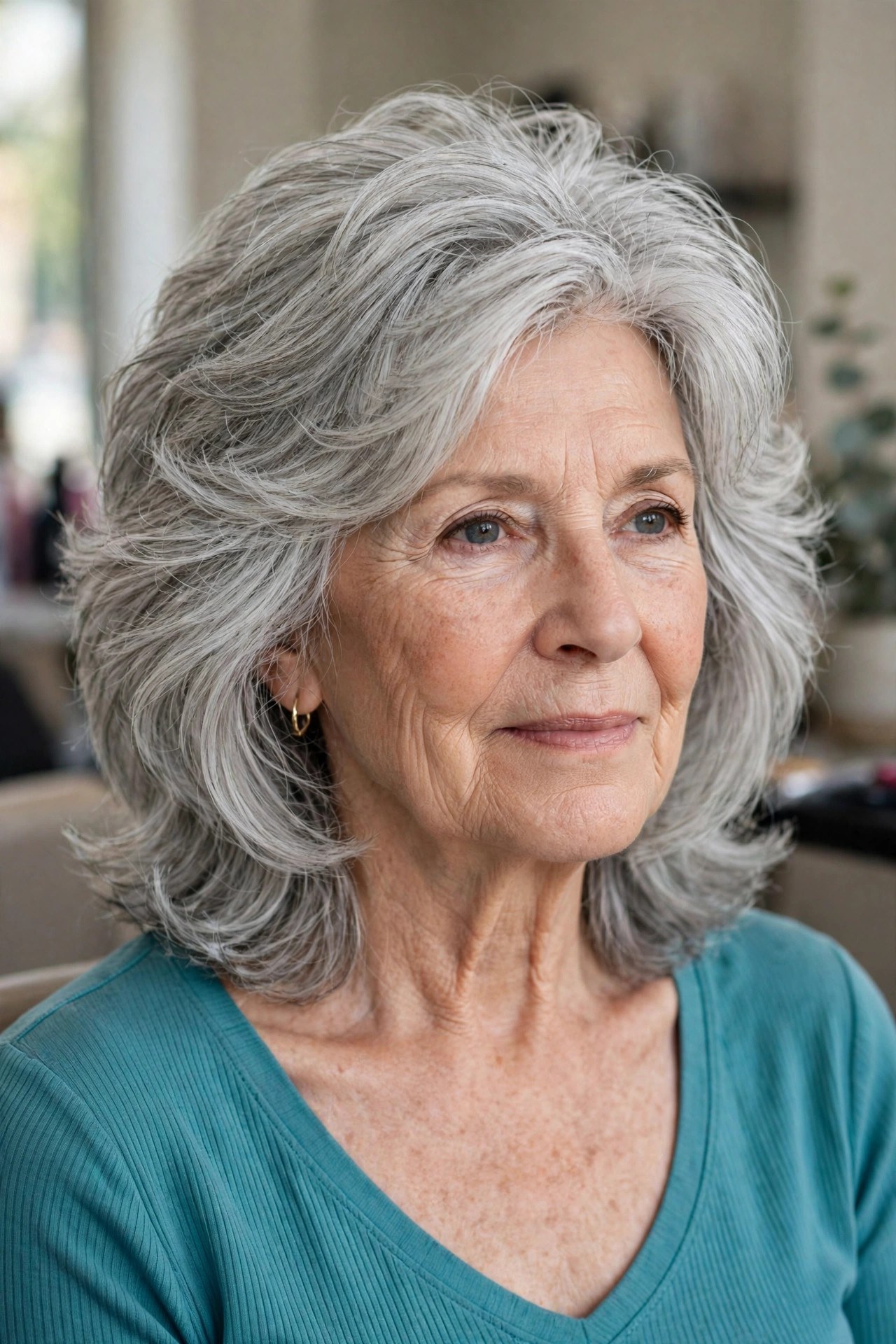
The lob is the friendliest length for thick hair, but only when the weight comes out of the inside. Ask for interior layers: shorter pieces cut beneath the surface that nobody sees, which let the visible top layer fall closer to the head instead of standing out in a shelf. On silver hair like this, the surface stays smooth and full-looking while the hidden layers quietly remove the bulk that used to make a lob feel like wearing a warm hat.
Where does the weight actually go? Mostly from the lower third and the dense zone behind the ears — exactly where thick hair stacks up. Be honest about drying time, too: even debulked, a thick lob holds water, so plan on a good squeeze with a microfibre towel and air-dry time, or a rough-dry with a dryer brush on wash mornings. Trims every seven to eight weeks keep the interior from growing back into bulk.


2. Shaggy Midi With Feathered Ends
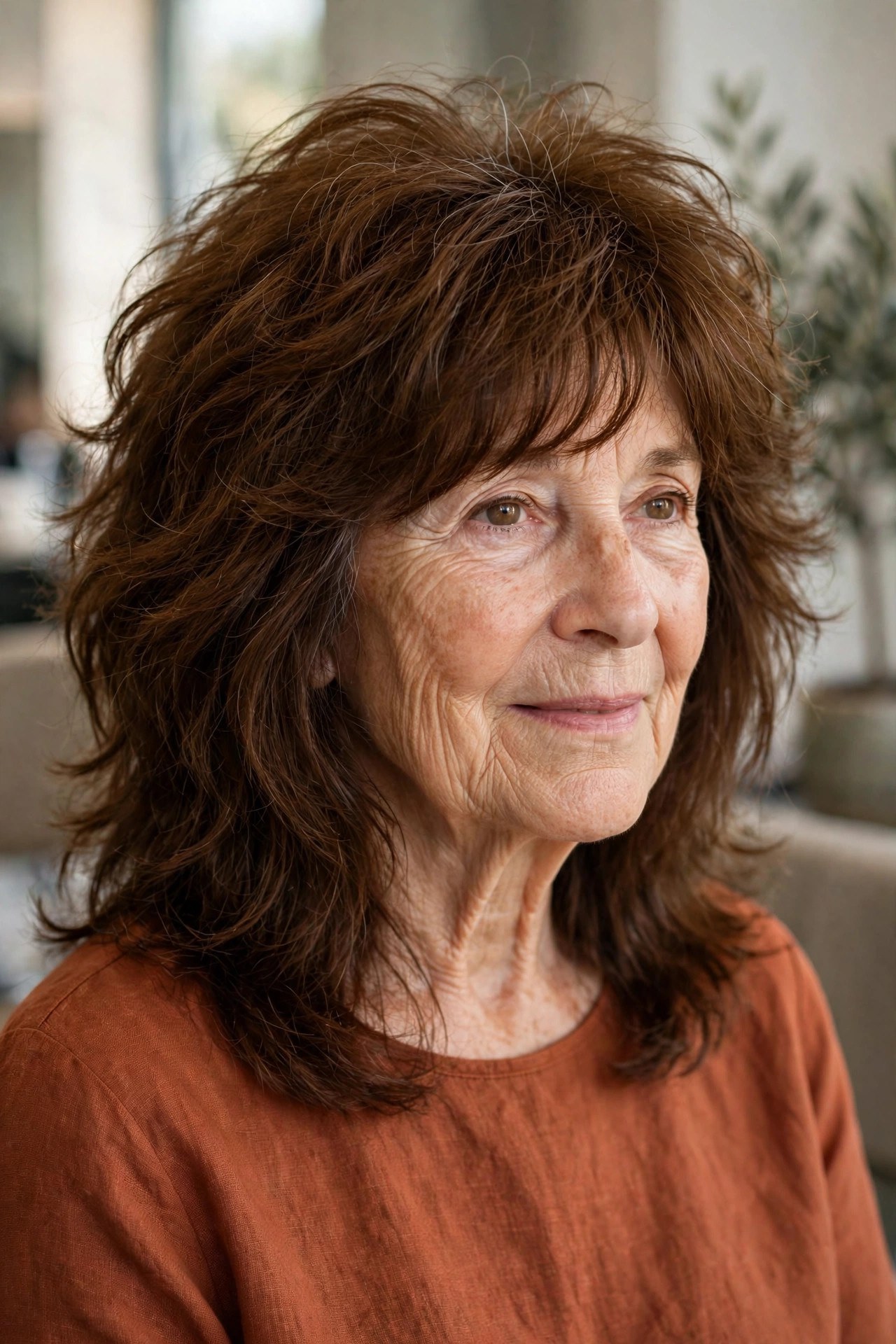
A midi shag solves the triangle problem by refusing to let all the length sit at one level. Layers are stacked from the crown down, and the ends are feathered — slide-cut so they taper to soft points — which means thick chestnut hair like this moves in pieces instead of swinging as one heavy curtain. The fringe is kept wispy on purpose: a solid thick fringe would add back the very weight the shag removes.
This is a genuinely low-maintenance shape for wavy, thick hair, because the shagginess is the style — it does not need to be smoothed into submission. Scrunch a little texture spray into damp hair and let it be. One caution for coarse hair: ask your stylist to feather with scissors or a slide-cut rather than heavy razor work if your ends are fragile, since razors can leave coarse strands looking fuzzy by week three.


3. Textured Pixie With a Tapered Nape
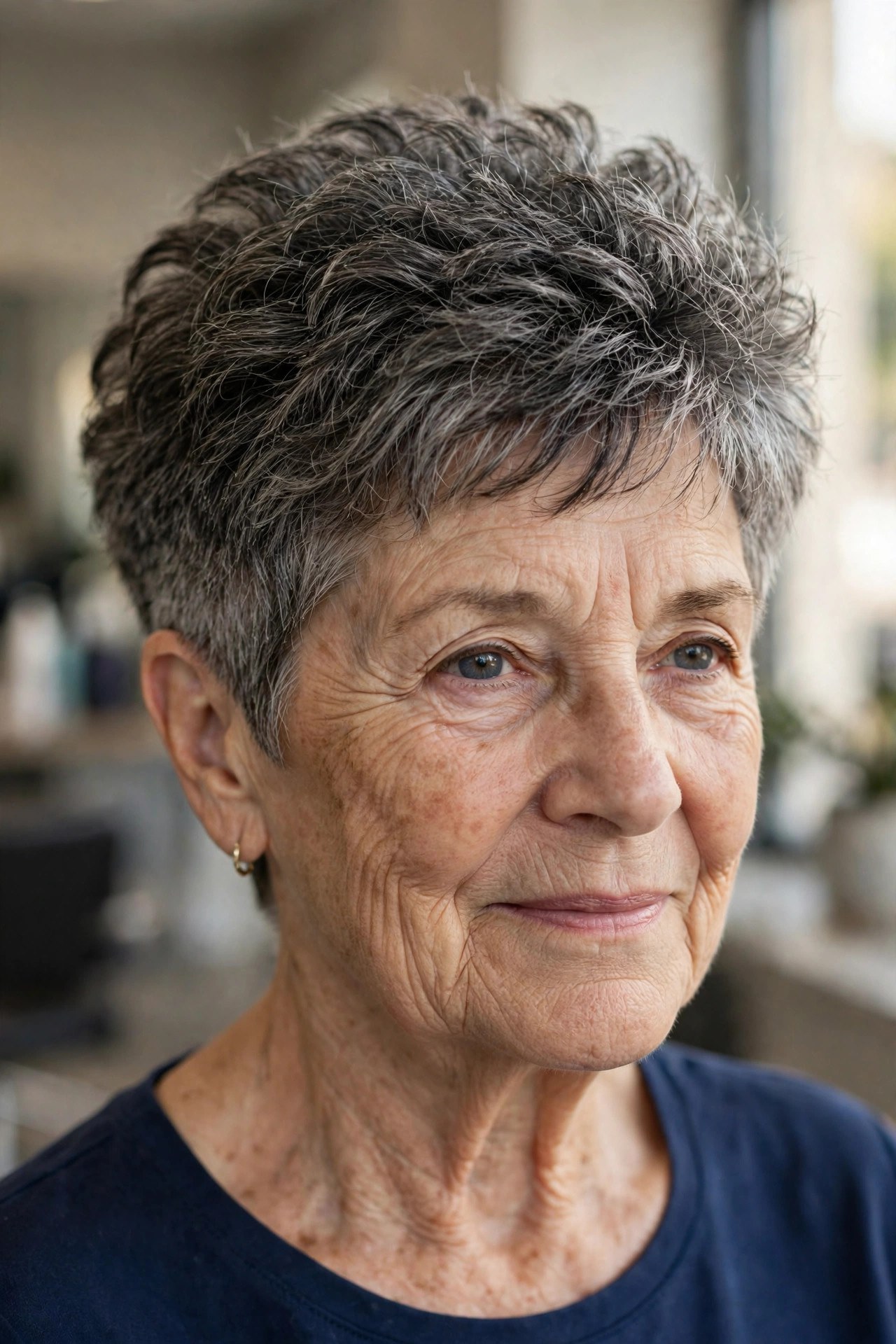
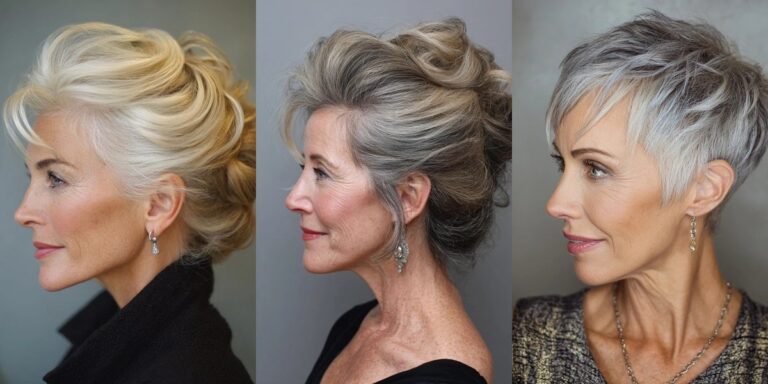
Going short is the most direct way to make thick hair feel lighter, and the tapered nape is where most of the relief happens. The back is cut in close and graduated, removing that dense pad of hair at the neckline that traps heat and takes the longest to dry, while the top keeps enough thick, piecey length to look soft and feminine rather than clipped.
Salt-and-pepper hair is a gift in this cut — the natural mix of dark and silver gives the texture built-in dimension that dyed hair has to fake. Styling is a fingertip of putty pinched through the top, nothing more. The honest trade-off is upkeep: tapers grow out visibly, so expect a tidy every four to five weeks. If you are weighing up short options first, our guide to pixie cuts for women over 50 shows the same tapering logic at work.

4. Long Pixie With Sliding-Cut Layers
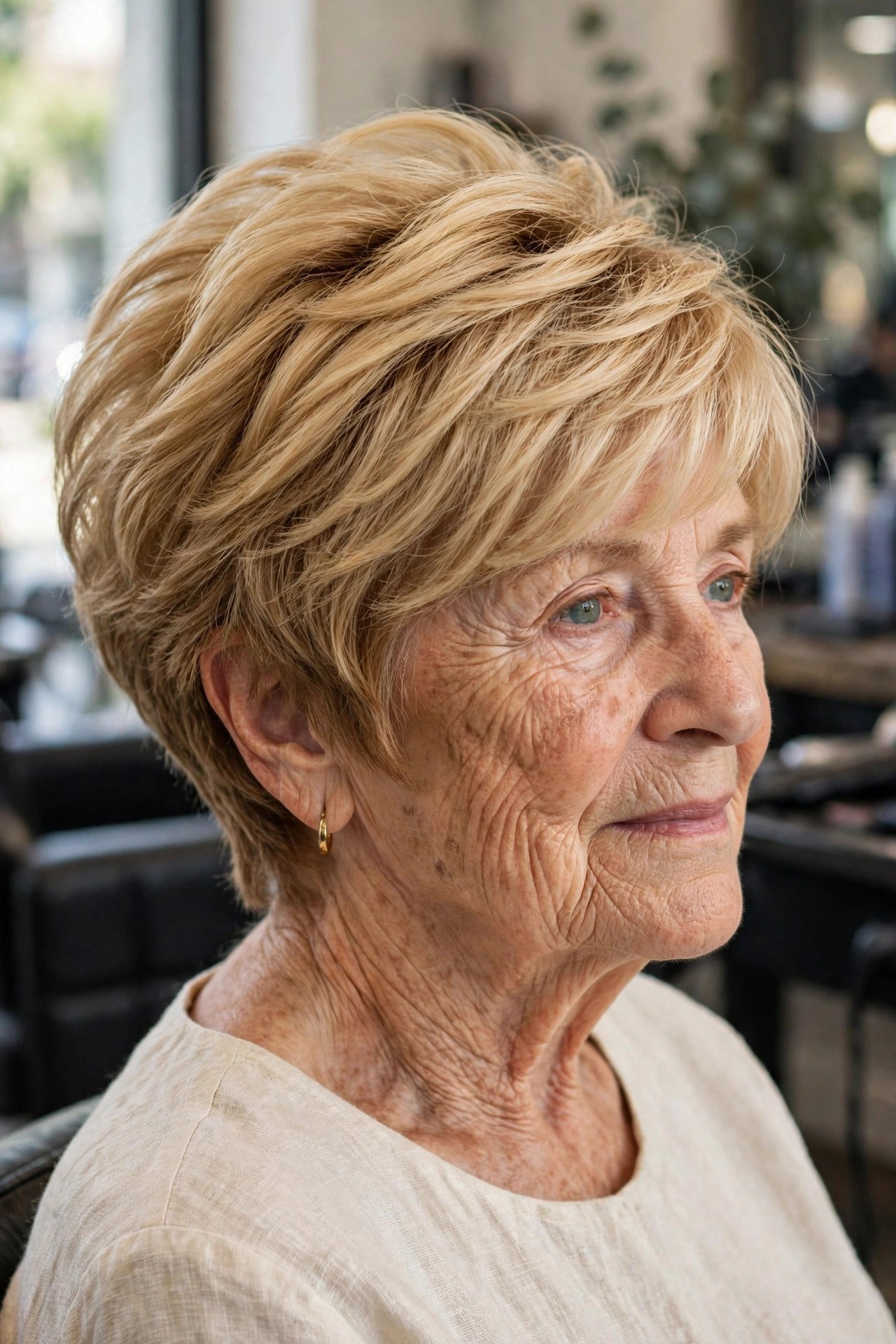
The long pixie keeps a sweeping, longer top — the part that frames your face and feels like ‘real hair’ — while the sides and back are taken in close. The lightness trick here is the sliding cut: the scissor blades glide down the top sections, shaving weight off the ends without shortening them, so that thick honey-blonde top lies flat and swishy instead of puffing up into a helmet.
Because the top is longer, this version forgives a missed appointment better than a classic pixie; six weeks between trims is realistic. Direct the sweep while the hair is damp — thick hair sets where it dries and argues later. A round brush on wash day gives the polished finish in the photo, but on ordinary mornings finger-drying genuinely does the job.


5. Stacked Bob With a Debulked Back
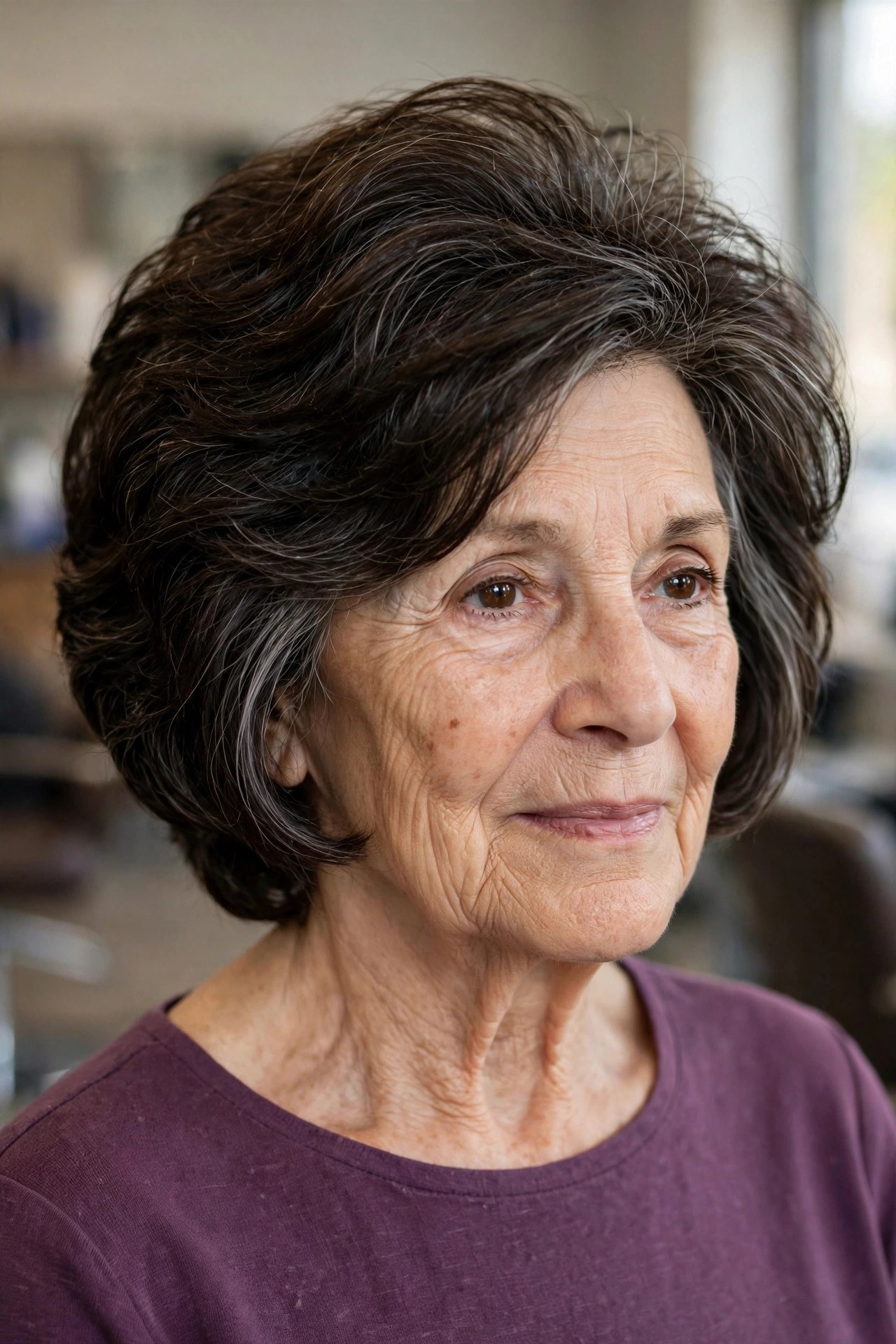
Stacking is architecture for thick hair. The back is built in graduated layers that pile on top of each other, which sounds like more hair, not less — but each layer is shorter than a one-length back would be, so total weight drops while the shape gains that lovely rounded lift at the crown. Underneath, your stylist can debulk the lowest layers so the stack sits close to the neck rather than kicking out.
This is one of the few bobs that does not triangle on thick hair, because the width is designed at the top of the back, not at the jaw. It suits straight to slightly wavy hair best, and it grows out as a softer bob rather than collapsing. Book six-week trims: once the lowest layer passes the neckline, the stack — and the lightness — starts to go.

6. Inverted Bob With Thinned Ends
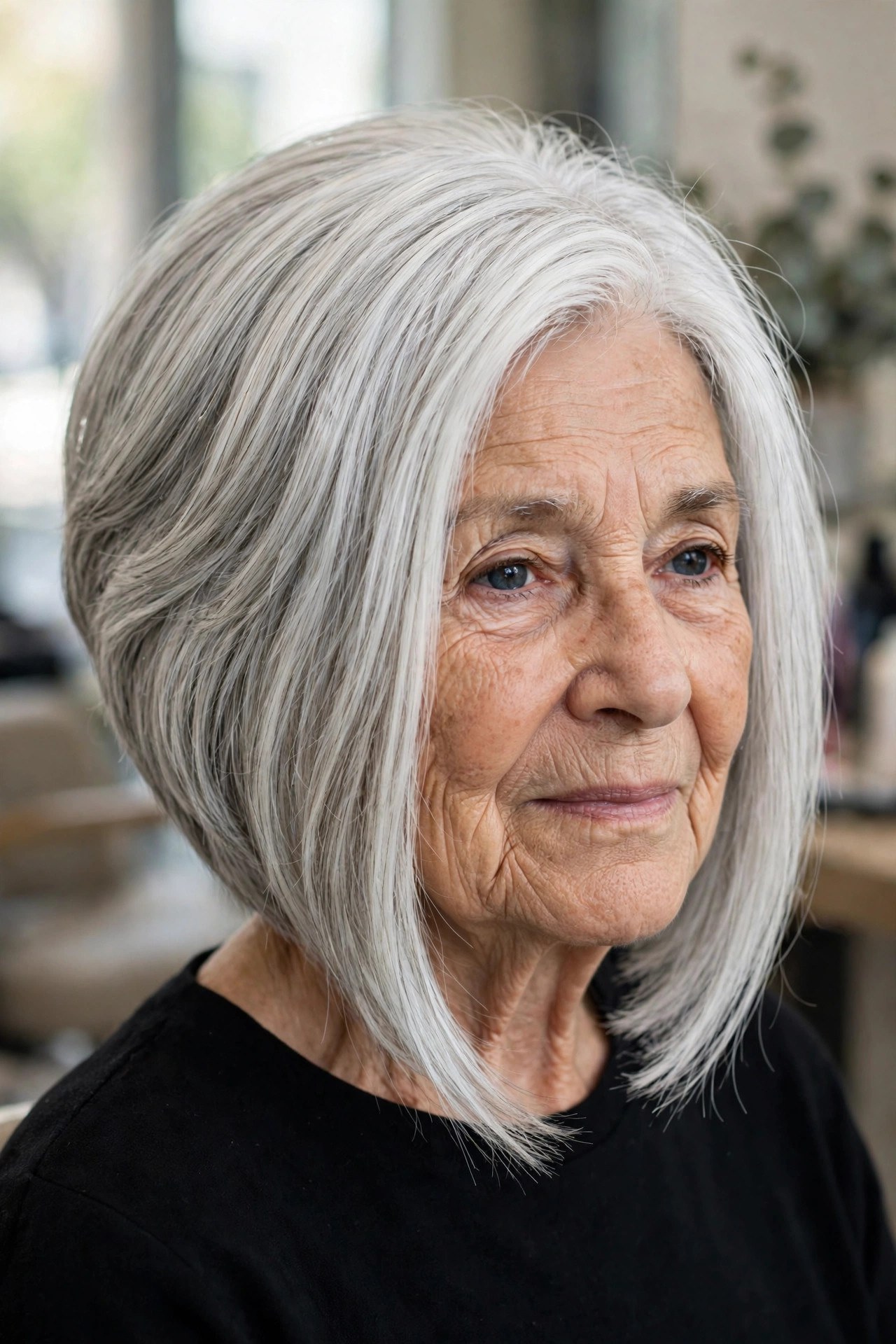
The inverted bob runs longer at the front and shorter at the back, and on thick white-silver hair that angle does double duty: the short back removes the hot, heavy nape hair entirely, while the long front keeps the elegant, face-framing length women love about a bob. The ends are thinned and point-cut, so the front pieces taper to soft points rather than landing as two blunt chunks beside the chin.
Silver this bright needs its own care note — a purple shampoo once a week keeps white hair from yellowing, and it matters more once the cut is sleek, because sleek shapes show every tone shift. Heat-wise, this bob dries faster than any other medium cut in this list simply because so much of the back is gone. Keep the angle sharp with trims every six weeks.


7. Shoulder-Length U-Cut With Face-Framing Layers
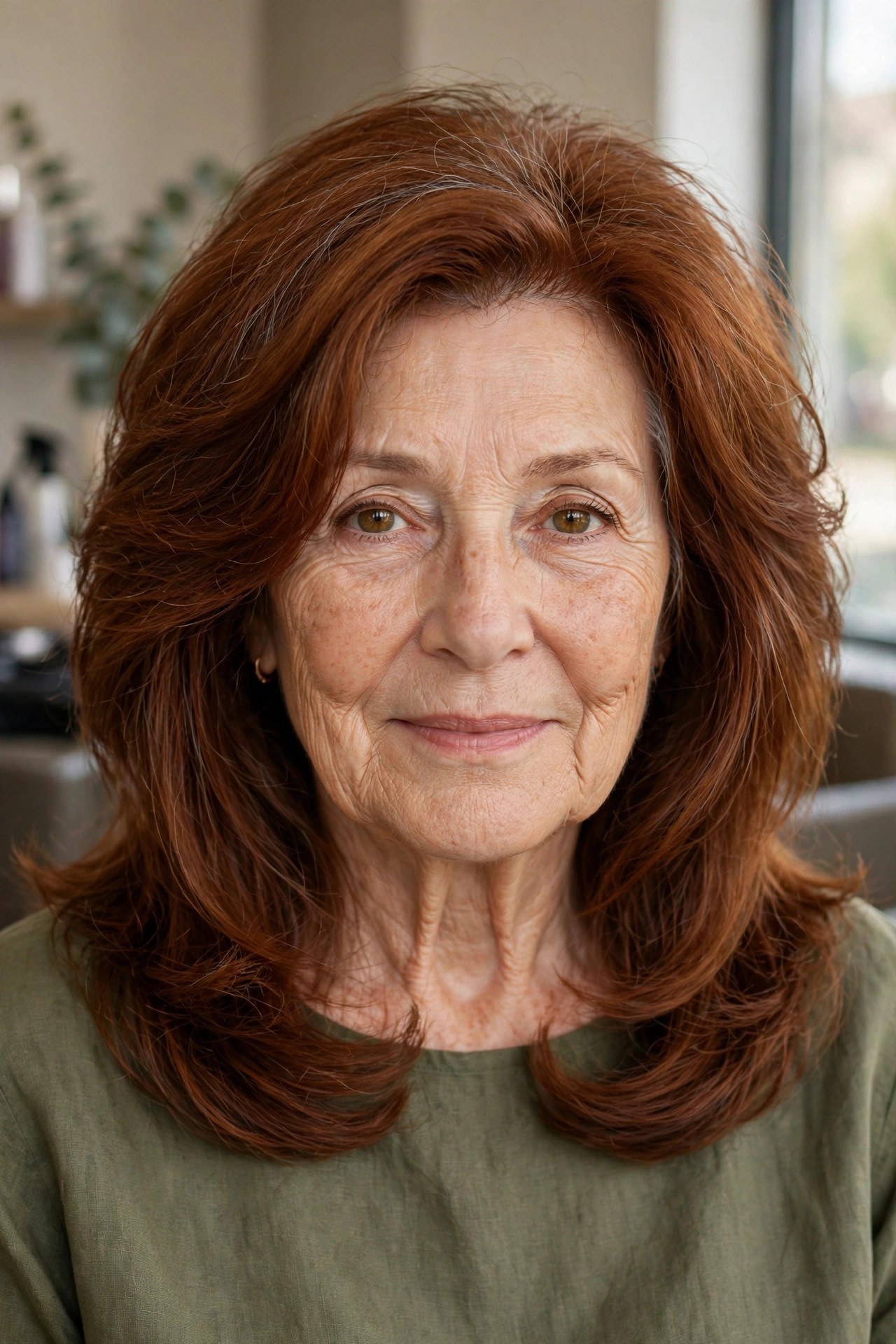
If you love shoulder length but hate the width, the U-cut is your geometry lesson. Instead of a straight-across back — which parks the full thickness of your hair at one level, at its widest — the back curves in a shallow U, longest in the centre. Combined with face-framing layers at the front, the auburn mass in this photo moves like water instead of hanging like a curtain.
The layers around the face are not decoration; they are weight removal exactly where thick hair crowds the cheeks and jaw. Keep the layers long — starting below the chin — so you lose bulk without losing the grown-up polish of the length. This shape air-dries well on straighter hair; wavier hair may want the ends encouraged with a brush on wash day only.

8. Curly Lob With Dry-Cut Interior Layers
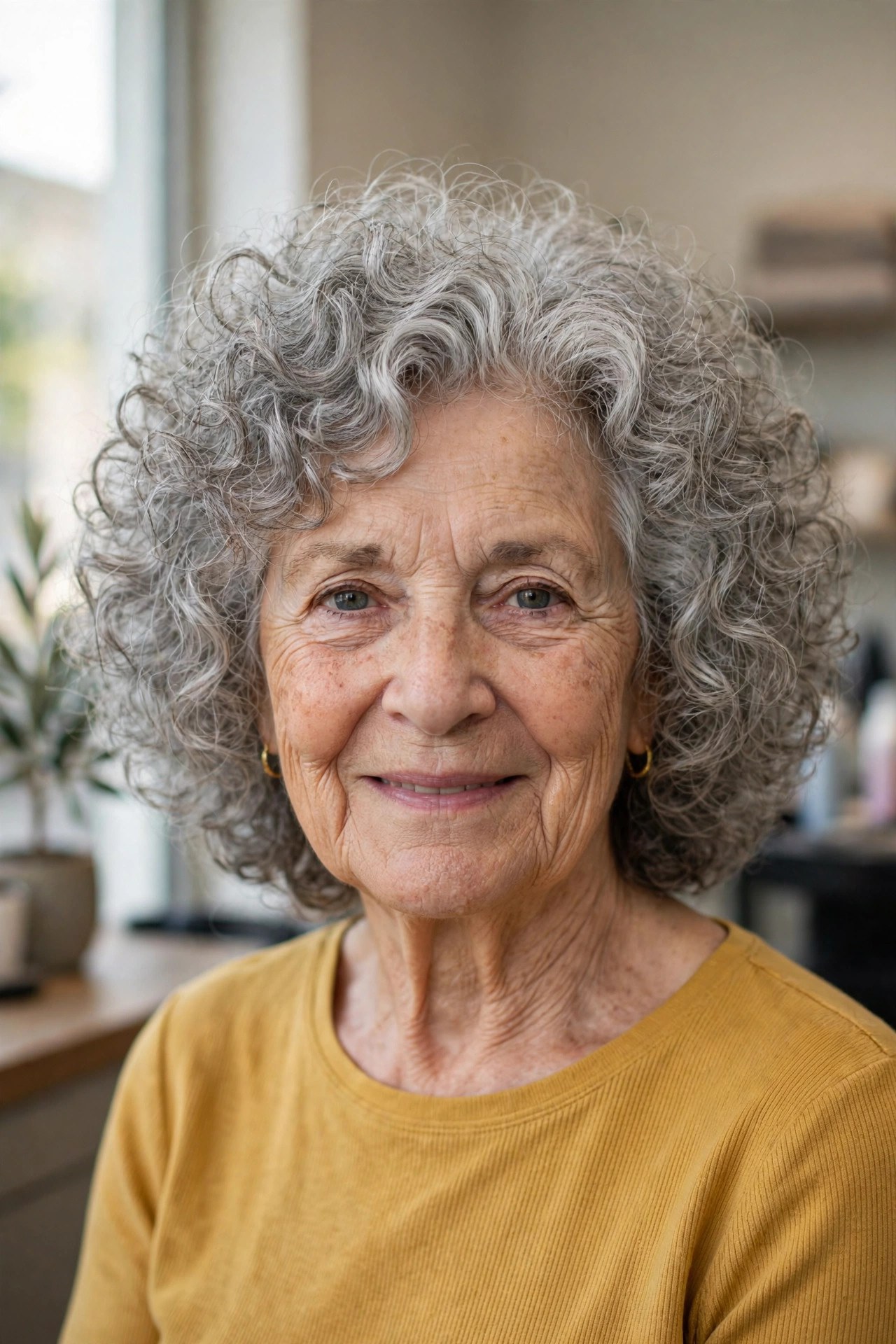
Thick curly hair triangles for a simple reason: one-length ends all finish at the same point, so the volume stacks at the bottom while the crown lies flat. A curly lob fixes the maths with dry-cut interior layers — your stylist cuts curl by curl, hair dry and in its natural pattern, lifting some interior curls shorter so the shape rounds out and the crown gets its share of the volume.
Insist on the dry cut. Curls cut wet stretch out and spring up unpredictably, which is how thick curly hair ends up shorter and wider than planned. At home, moisture is the whole routine: a generous curl smoothie scrunched into wet hair, then hands off until fully dry. Expect this length to take a while to dry — that is physics, not a flaw in the cut — and refresh day-two curls with a water mist rather than a full rewash.


9. Wavy Shag With Curtain Bangs
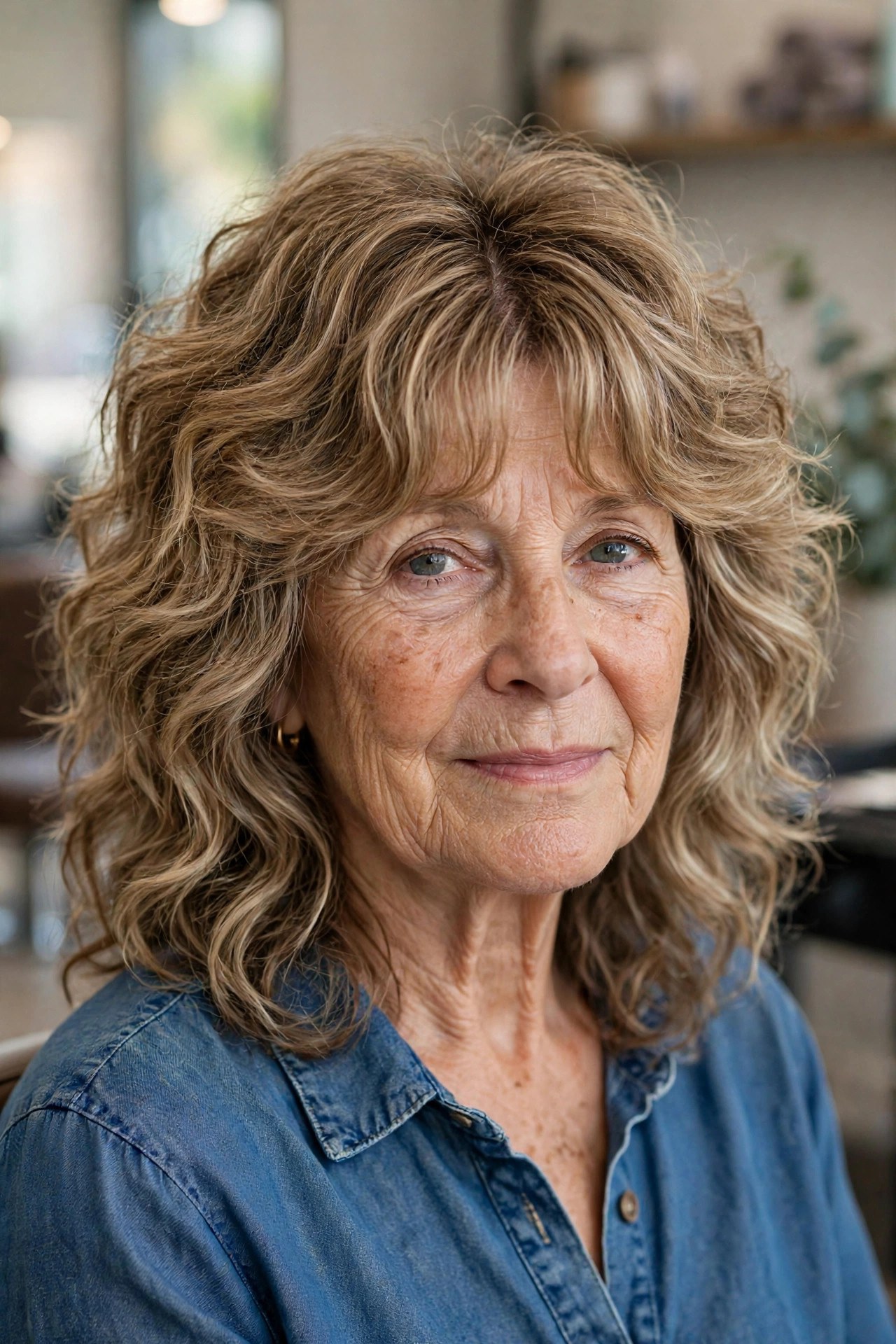
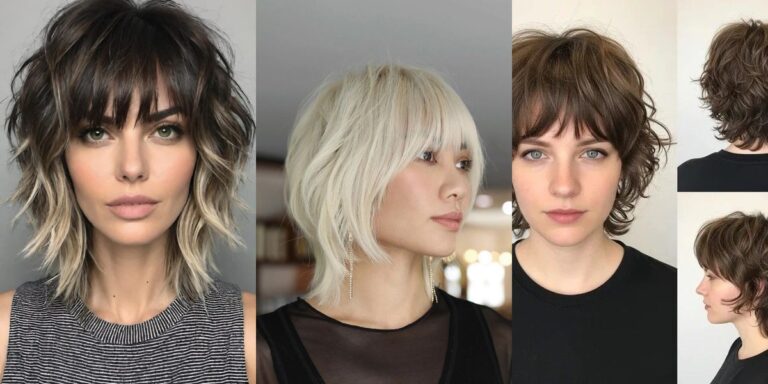
The curtain-banged shag is the wavy answer to the same triangle problem. High, blended shag layers take weight off the sides of thick wavy hair, and the curtain fringe — parted in the middle and sweeping out to the cheekbones — breaks up the forehead so the whole shape feels open and light instead of like a solid wall of hair with a face in it.
Curtain bangs on thick hair must be thinned at the ends, or they sit like two heavy commas; ask for them point-cut and slightly longer than you think, because waves spring up. Day to day, this cut wants texture spray and scrunching, not smoothing — fighting the wave is what made it feel heavy in the first place. Grow-out is famously kind: eight to ten weeks is fine.

10. Chin-Length Bob With Point-Cut Ends
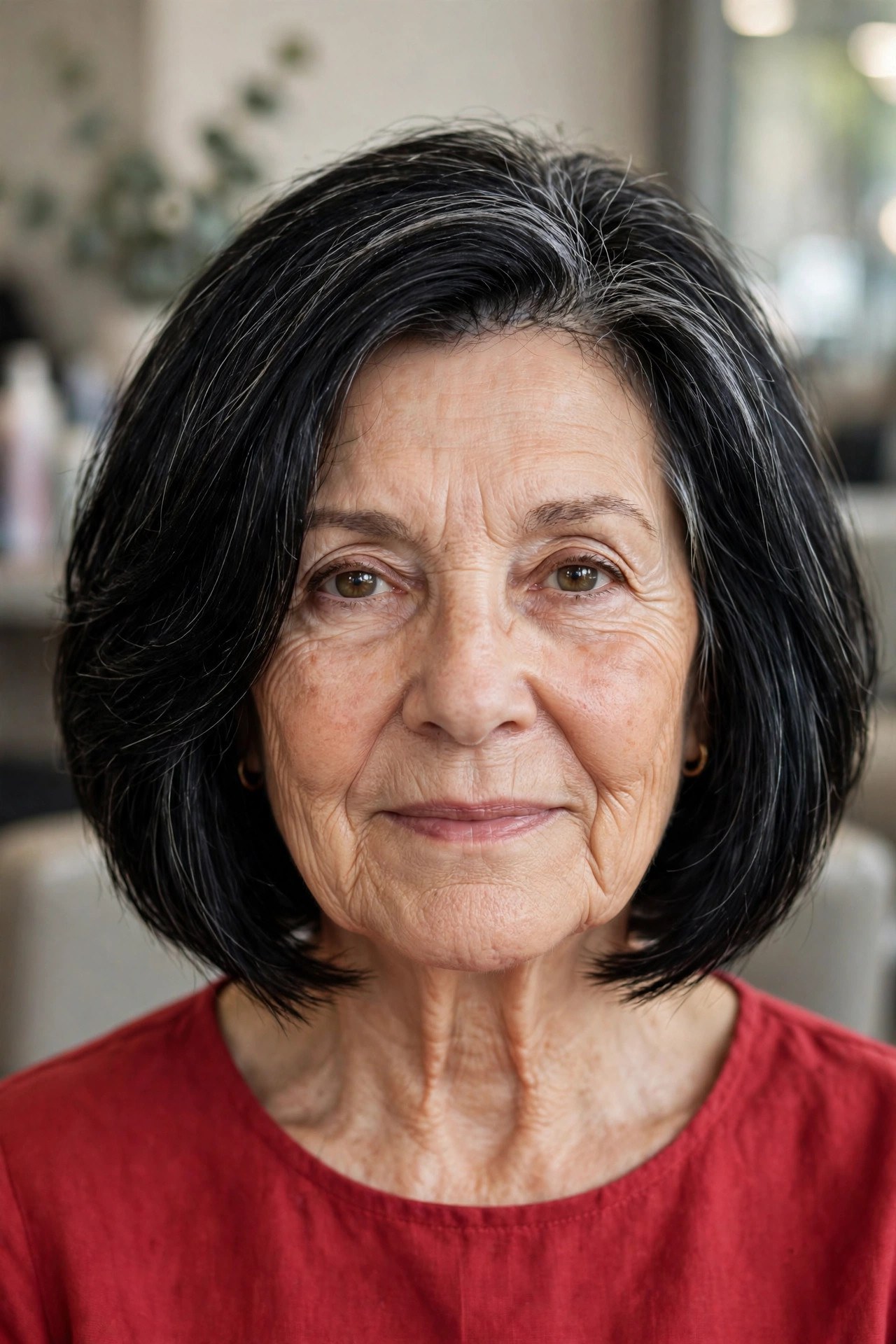
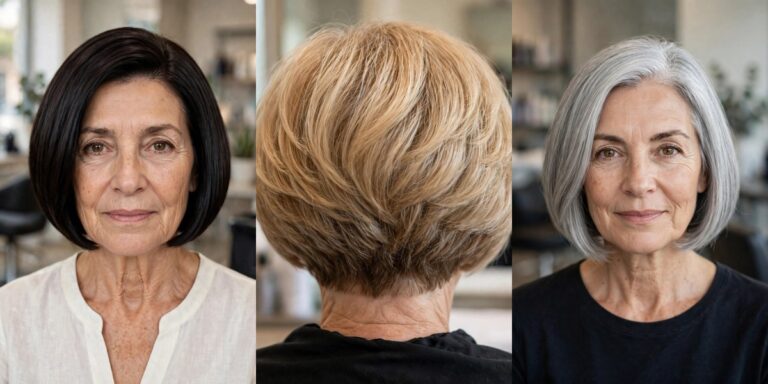
A chin bob on thick hair lives or dies at its ends. Blunt, untextured ends flare out and make the jaw look boxed in; point-cut ends — the scissors snipping small notches up into the last centimetre — let each section interlock and turn under, so this black bob sits in that neat, close curve instead of bell-ing out by lunchtime.
Interior layers do quiet support work here too, removing just enough under-layer that the perimeter can hug the jaw. This is a precision cut: it looks simple because it is exact, so choose a stylist who enjoys bobs and keep a six-week rhythm. A flat iron pass on the front pieces is an option for polished days, never a daily requirement.
11. Layered Crop With a Clean Nape Undercut
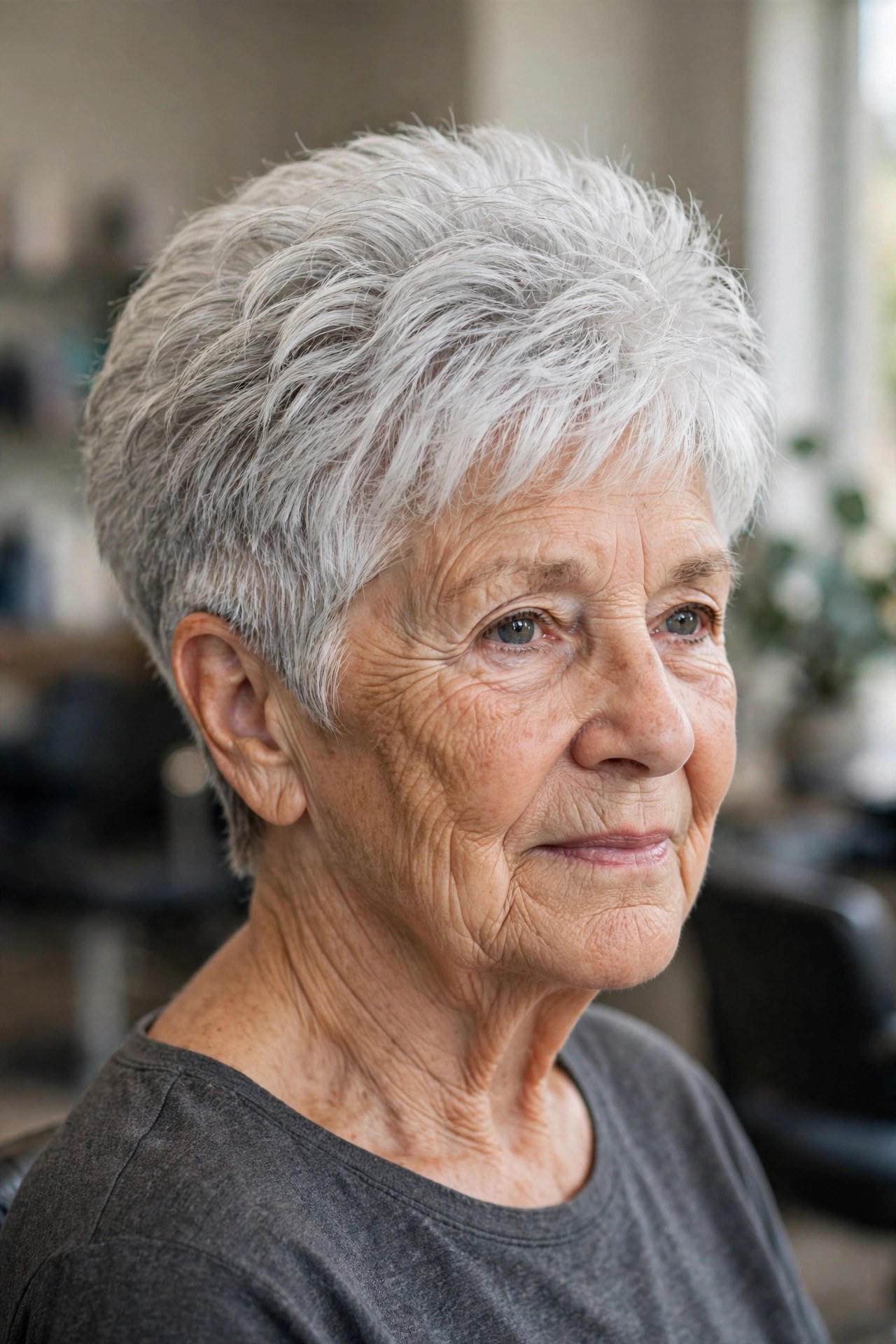
This crop makes no secret of its method: the nape is undercut clean and short, and the top is layered so thick silver hair sits in soft, separated pieces. The undercut removes the single densest, slowest-drying patch of hair on your head, which is why women who switch to a crop like this say their hair finally dries while they make coffee instead of dominating the morning.
An undercut is a commitment you can see, so be clear-eyed: it needs a quick clipper tidy every three to four weeks, though many salons do that as a short between-cuts visit. The payoff is a neck that feels cool all summer and a silhouette that never goes mushroom-shaped, the usual fate of thick hair cut short without a plan. Putty through the top pieces is the entire styling routine.
12. Feathered Medium Cut With a Deep Side Part
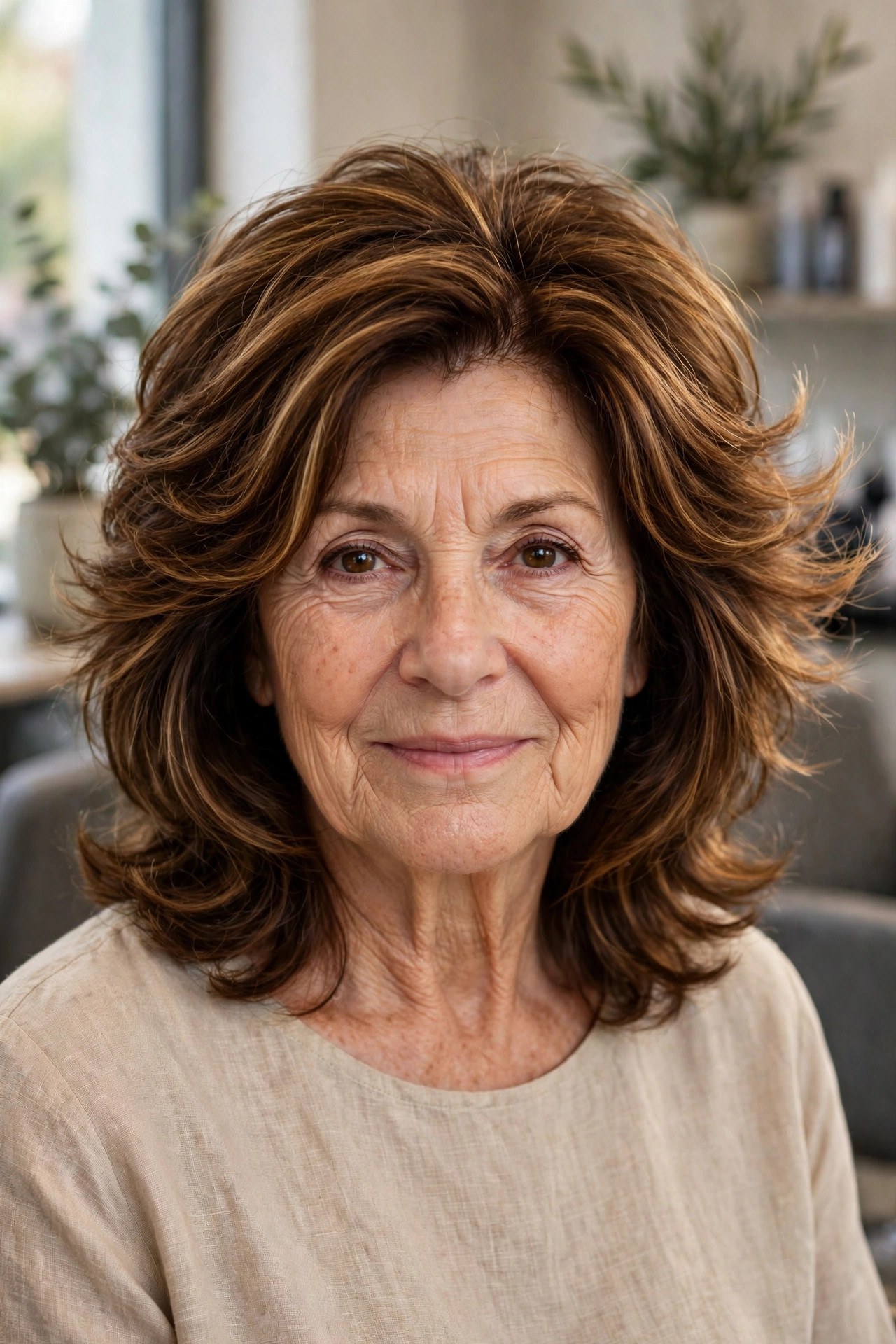
Feathering is the seventies technique that never stopped working on thick hair. Layers are cut to flick away from the face in overlapping sweeps, and each flick is thinned at its tip, so hair like this warm caramel-highlighted mane reads as soft plumes rather than bulk. The deep side part adds height on the heavy side and throws that flattering diagonal across the face.
The blow-dry in the photo is a five-minute version, not a salon production: dry with a dryer brush, pushing everything back and away, and let the feathered ends fall where the cut puts them. If your hair is coarse, ask for the feathering to be done with scissors — a razor through coarse, thick hair can shred the ends and turn this soft finish frizzy within weeks.
13. Long Layers With a Soft V at the Back
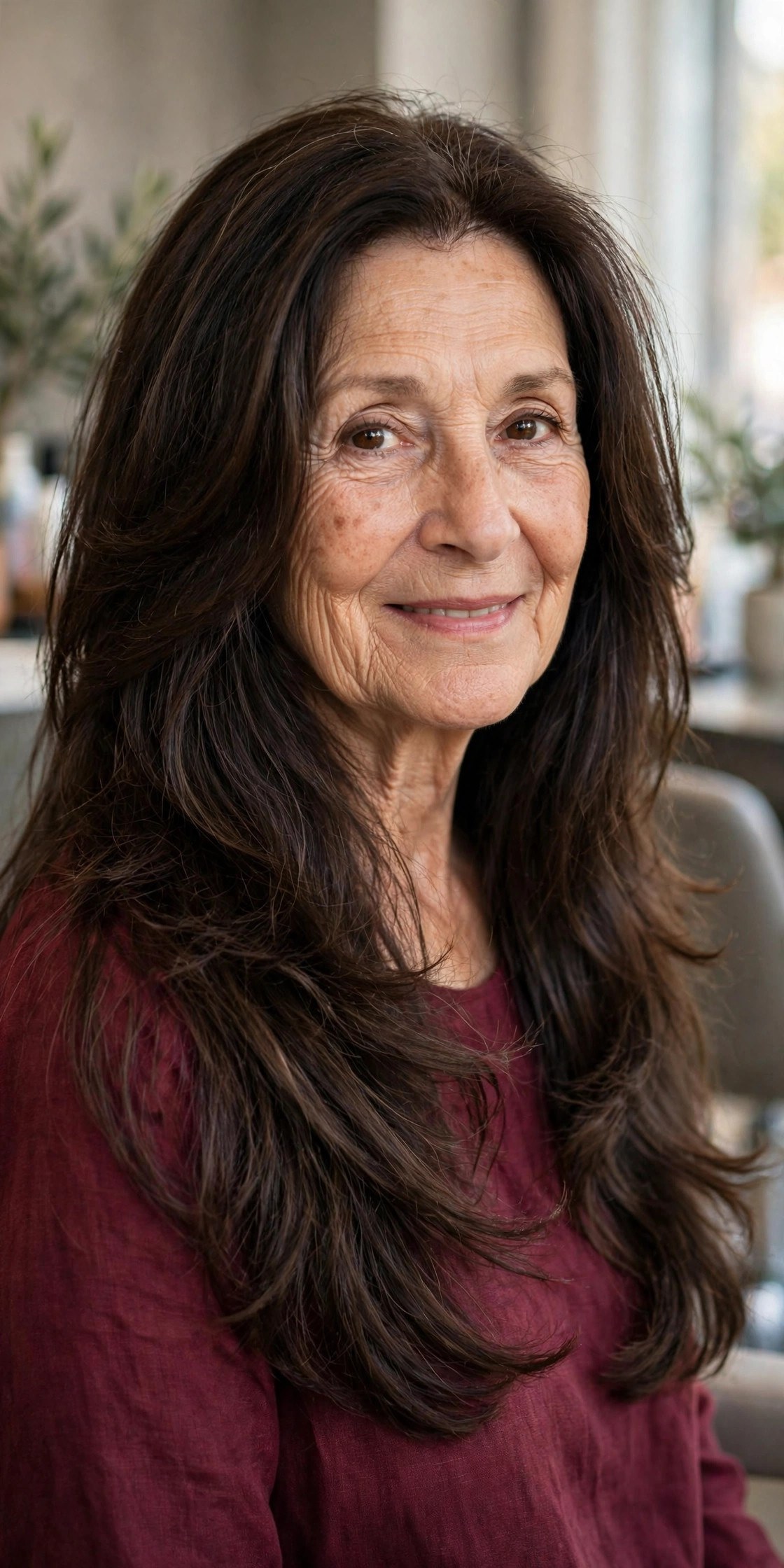
Yes, thick hair past the shoulders can feel light — if the layering is long and the back is finished in a soft V. Long layers starting around the jaw remove interior weight through the mid-lengths, which is where long thick hair turns into a heavy blanket, and the gentle V concentrates the longest hair at the centre back so the sides do not form those two dragging points.
Be realistic about what ‘lighter’ means at this length: lighter to wear, cooler at the sides, far less tangling — but still the longest drying time in this guide, because there is simply more hair. Squeeze out water section by section and consider washing in the morning. The reward is movement: properly layered long hair swings when you turn your head, and unlayered thick hair simply cannot do that.

14. Asymmetric Bob With an Undercut Side
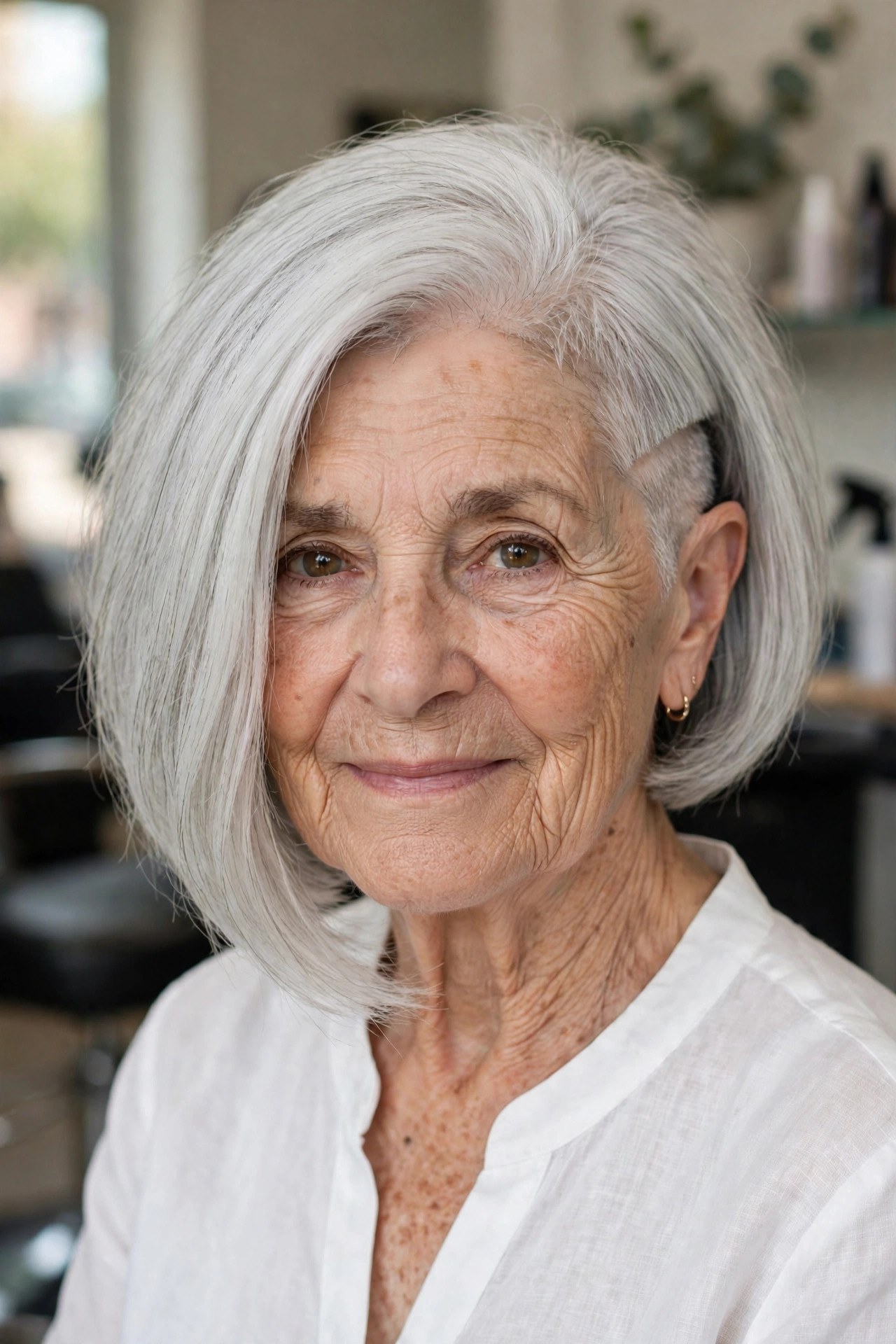
Asymmetry is a weight-removal strategy disguised as a fashion statement. One side is undercut short — quietly deleting a large slice of your thickest hair — while the other sweeps long past the chin in that sleek platinum fall. You keep length, drama and face-framing on the long side, and lose heat, drying time and bulk on the short side.
Look closely at the tucked side in the photo: the undercut is what lets the long side lie so flat and close. Without it, hair this thick would push the bob out into a rounded bell. Know the upkeep before you commit — the short side wants refreshing every three to four weeks — but the long side is patient, and the grow-out reads as an ordinary side-parted bob if you ever decide to retire the look.
15. Soft Wolf Cut With Thinned, Wispy Lengths
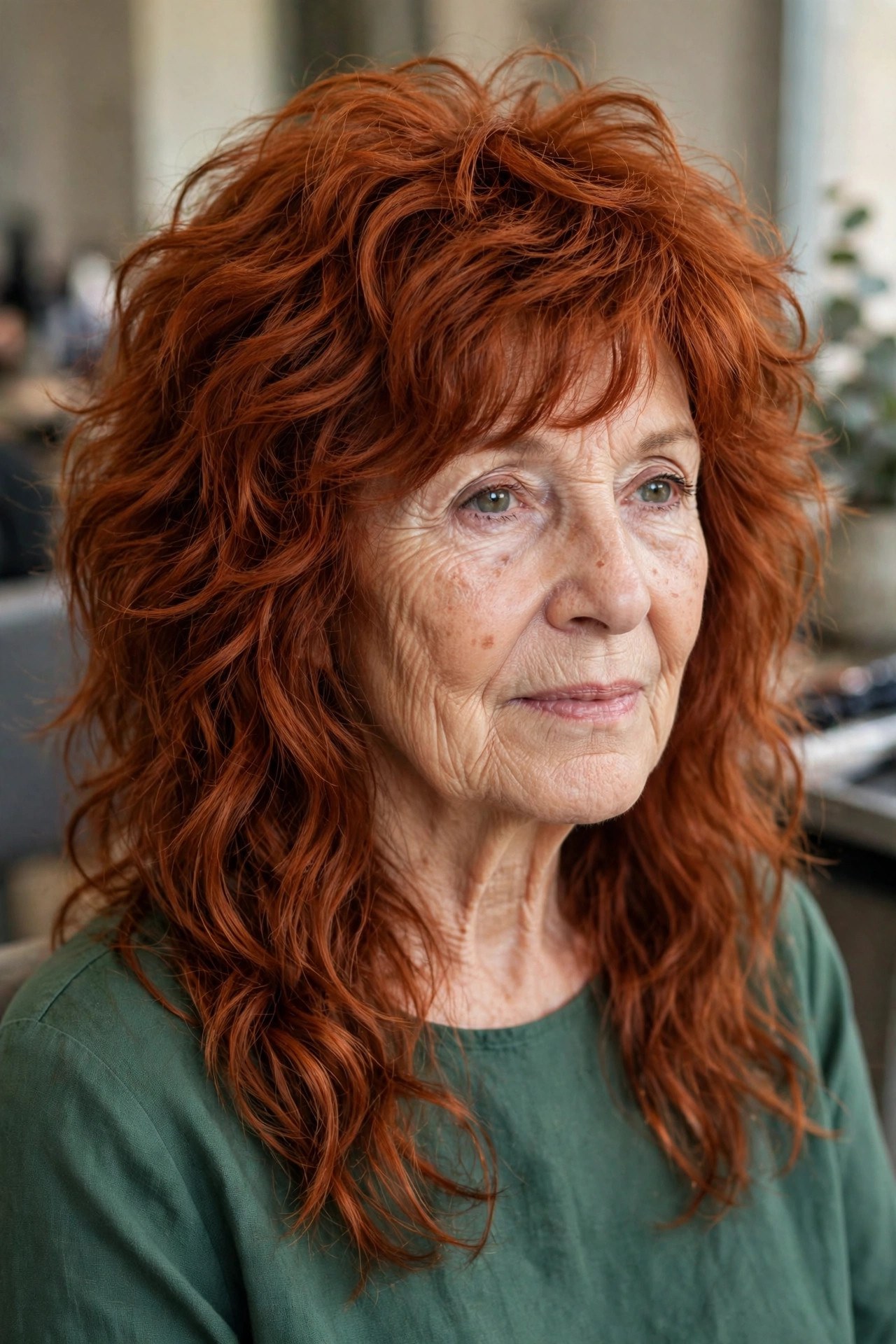
The wolf cut is a shag’s bolder cousin — lots of layering on top, longer wispy lengths below — and this softened, grown-up version is a superb home for thick wavy hair. All that layering is functional: it strips weight out of the crown and sides so copper waves like these can form and lift instead of being dragged flat and wide by their own mass.
Ask for the ‘soft’ version by name: blended layers rather than a disconnected mullet shelf, and ends thinned to wisps so the lengths look airy, not straggly. This cut is at its best air-dried with a leave-in and a scrunch — it is supposed to look lived-in. If your hair is coarse, scissors over razor again: wolf cuts are often razor-cut, and on coarse thick hair that can mean rough, fuzzy ends within a month.

16. Tapered Blunt Bob With Hidden Interior Layers
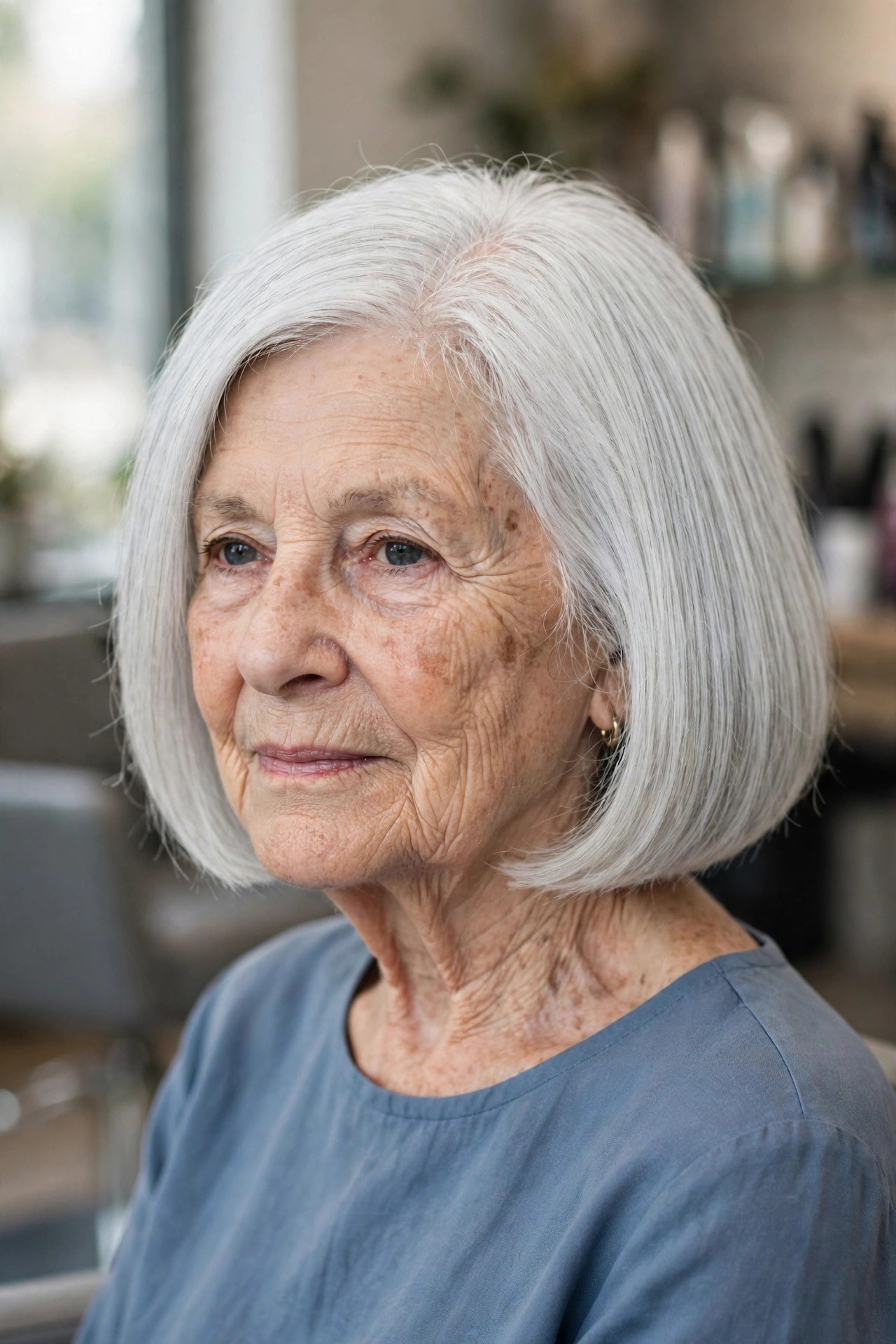
This is the bob for women who love a clean, blunt line but have been told their hair is ‘too thick for blunt.’ The secret is that the bluntness is only skin-deep: the perimeter is cut crisp and even, while hidden interior layers underneath remove the bulk that would normally force a thick blunt bob out into a triangle. The result is that smooth, close, swishy curtain of silver.
Because the surface is unbroken, this cut shows off healthy shine better than any other here — and shows dryness just as honestly, so keep the ends conditioned and get the perimeter dusted every six to seven weeks. It suits straight and lightly wavy hair; strong curl will fight the blunt line and win. Blow-drying is optional smoothing, not structural — the shape is in the cut.

17. Pixie Bob With Textured, Point-Cut Ends
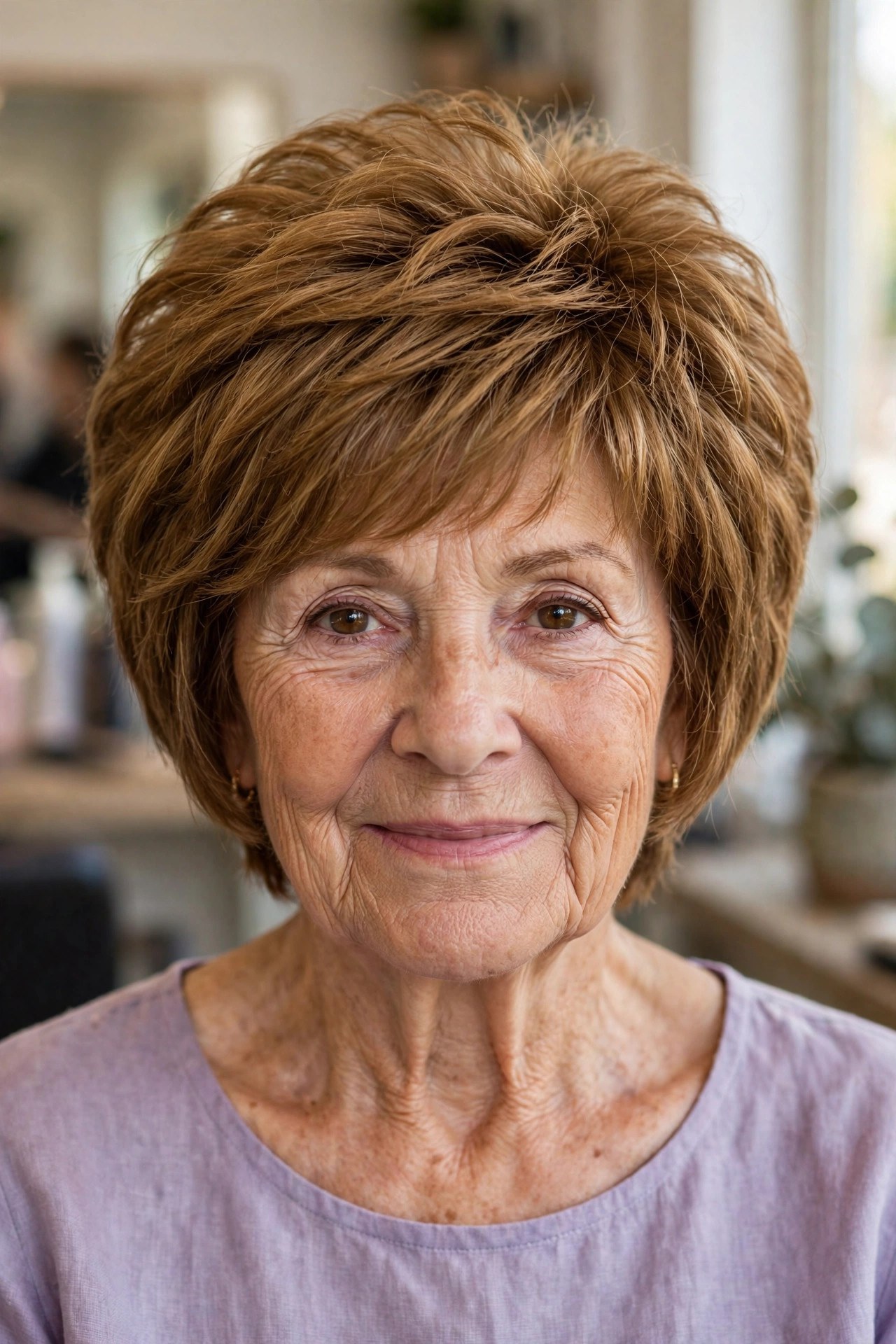
The pixie bob — bixie — sits between the two cuts thick-haired women bounce between, and it borrows the best of both: the pixie’s close, weightless back and sides, and the bob’s longer, jaw-grazing front. Every end is point-cut and textured, so a full head of golden-brown hair like this finishes in soft, separated pieces instead of one dense sweep.
It is a smart first step if you are going shorter in stages: you lose most of the weight and drying time now, keep some length around the face, and can always take the front up later. Our round-up of short hairstyles for women over 50 is worth a look if you are deciding between this and a true pixie. Trims every five to six weeks keep the front at jaw level rather than collar level.
18. Shoulder-Skimming Layers With a Wispy Fringe
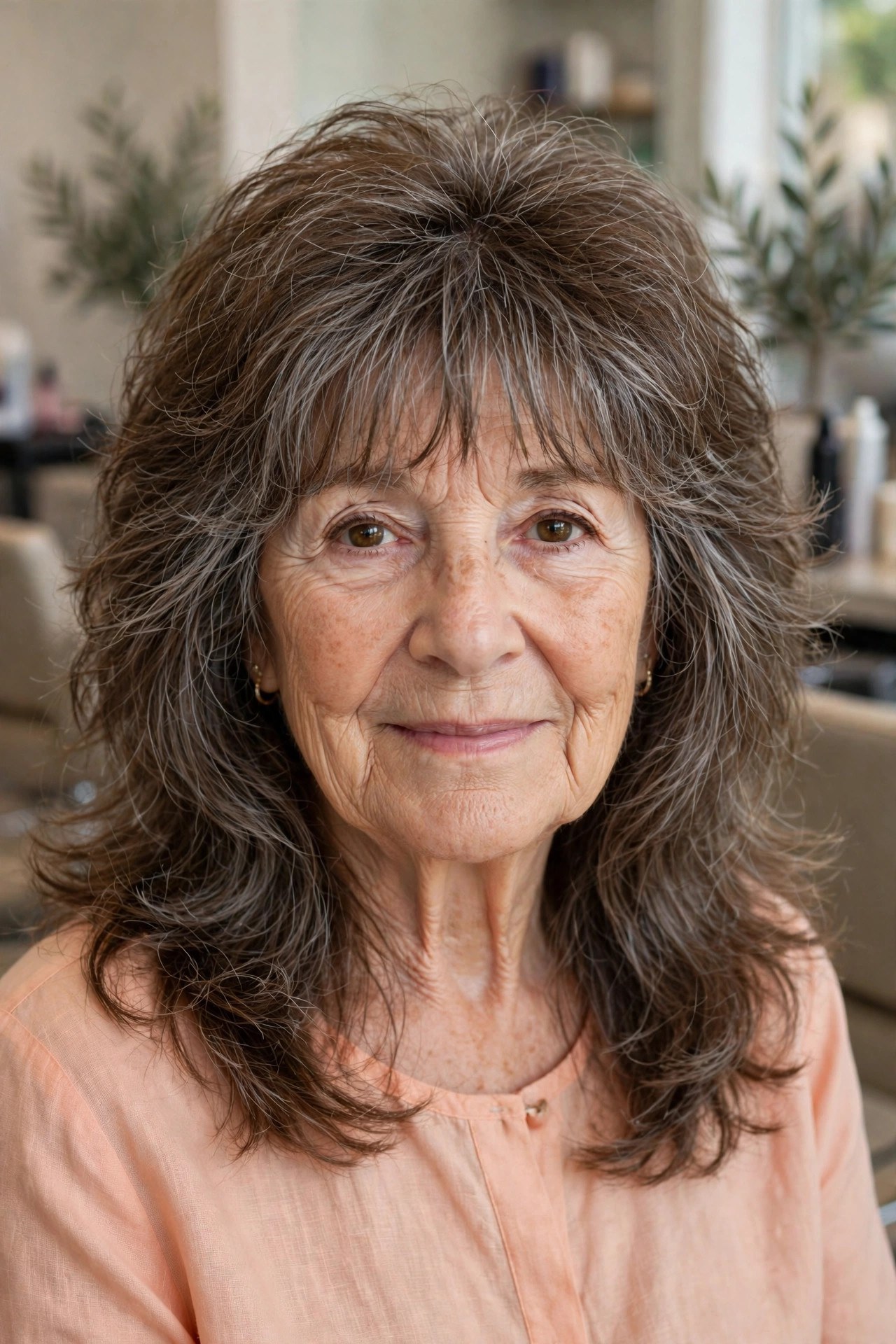
Here the lightness is all at the edges: the length just kisses the shoulders, layers run through the final third, and the fringe is cut deliberately wispy — thin, see-through pieces rather than a solid thick bang. On gray-blended brown hair the effect is softness everywhere the eye lands, with none of the heaviness a full fringe and blunt ends would pile around the face.
A wispy fringe is also the forgiving kind: it grows out into face-framing layers instead of a hard line across your eyes, stretching the time between trims. Keep product light near the front — heavy creams separate a wispy fringe into strings. A root-lift brush dryer on the crown gives the gentle lift in the photo; everywhere else, this cut is content to air-dry.


19. Rounded Layered Cut for Thick Natural Curls and Coils
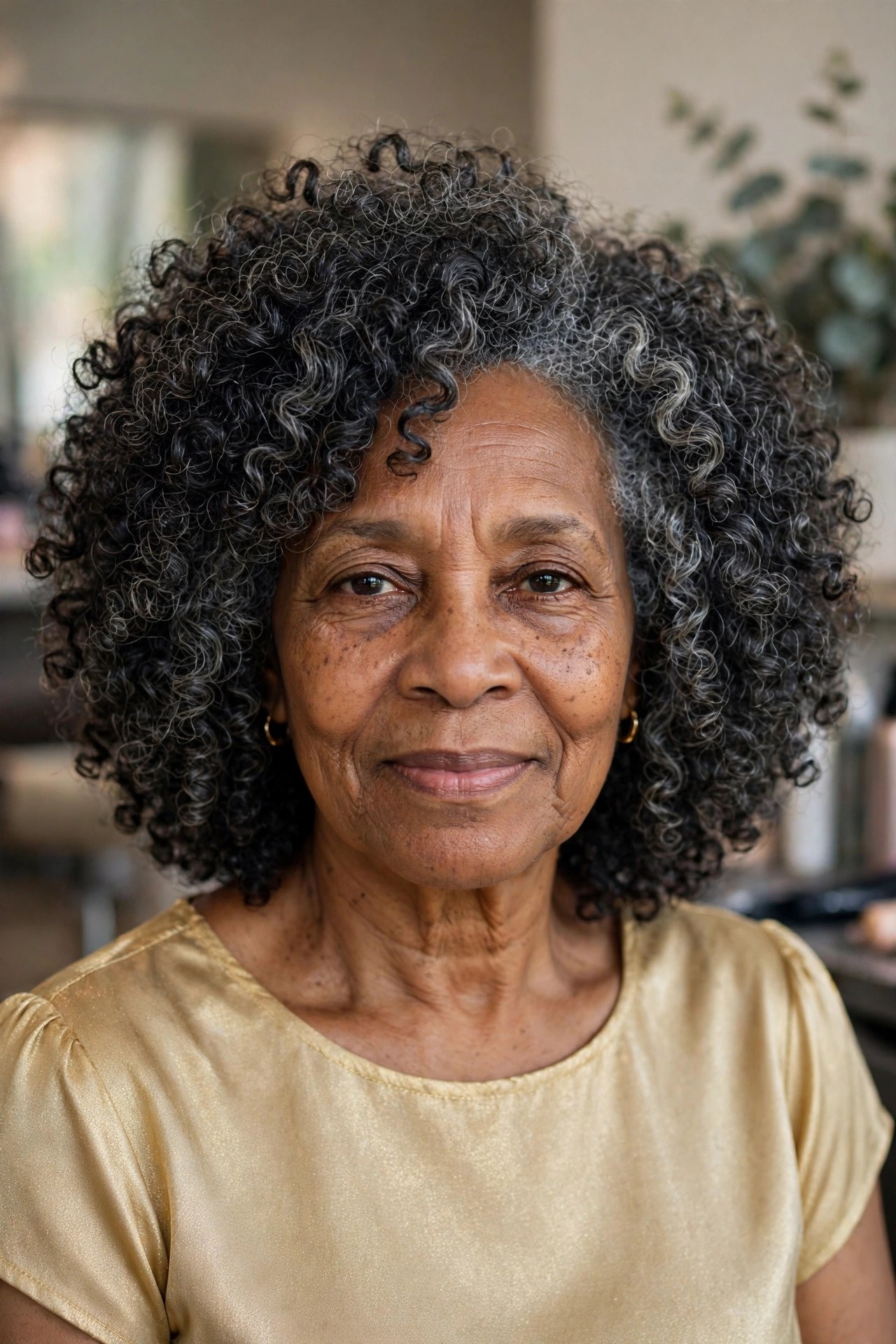
For thick natural hair, lightness is about silhouette. This rounded, layered shape takes bulk off the sides — where coils stack widest and can read as a triangle — and keeps the volume balanced around the head in a soft halo. Cut dry, curl by curl or coil by coil, so the stylist shapes the hair in the state you actually wear it.
Gray streaking through dark coils, as here, catches the light on every ringlet, and the layered shape shows it off instead of hiding it in a dense mass. Moisture is the maintenance: a rich leave-in worked through section by section, and a co-wash between shampoos so the length stays soft rather than stripped. Shape-ups every eight weeks hold the roundness. For more low-effort shapes built for thick hair, see our wash-and-go haircuts for women over 60 with thick hair.

20. Long Bob With a Hidden Nape Undercut
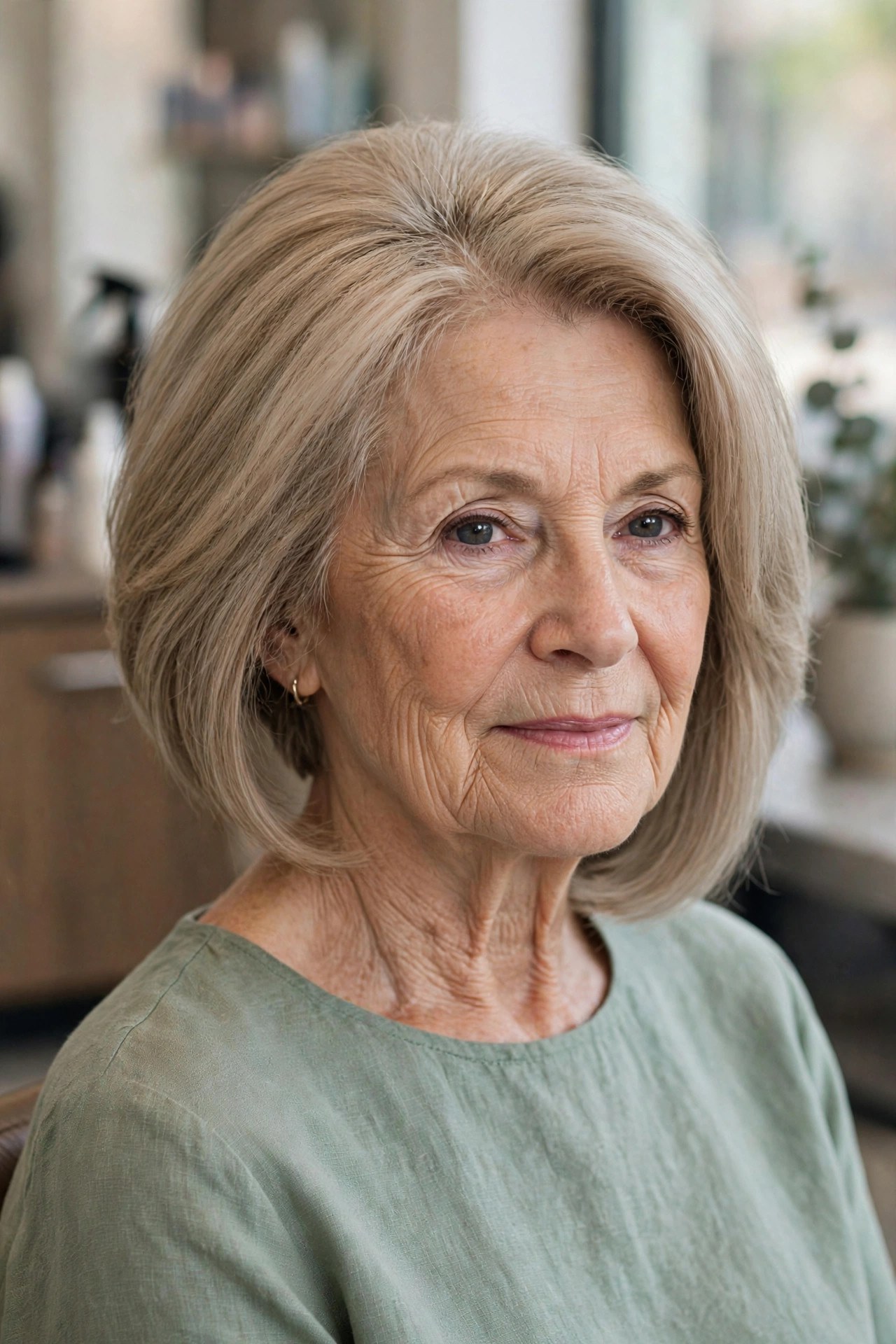
The hidden undercut is the stylist’s cheat code for a long bob on very thick hair. From the front and sides this ash-blonde lob looks completely classic — but clip up the back and the lowest section at the nape is cut short, removing the densest hair on your head where nobody can see it was ever there. The bob above it then lies flat against the neck instead of standing off it.
The practical wins are the biggest in this guide relative to how invisible the change is: noticeably faster drying, a cooler neck in summer, and no more puffed-out back view. The undercut section needs a tidy every four weeks or so, which is a quick job. If the idea appeals but you want to compare bob shapes first, browse our bob haircuts for women over 50 before you book.
Recommended Products
Thick hair does not need more product — it needs lighter product, applied to the right zones. These are the support players for the cuts above: smoothing without weight, heat protection for wash-day polish, moisture for curls, and sleep care that stops thick hair turning into a tangled mass overnight.
- Ask where the weight is coming out — nape, interior or ends — before the scissors start; a lighter cut is planned, not hoped for.
- On coarse hair, request scissor slide-cutting and point-cutting instead of heavy razor work, which can leave coarse ends fuzzy.
- Squeeze water out with a microfibre towel or cotton T-shirt; rubbing thick hair with a bath towel is a frizz machine.
- Apply styling product to the mid-lengths and ends only — roots on thick hair need lift, not loading.
- Dry the nape first if you blow-dry; it is the densest zone and the last to dry on its own.
- Book the trim rhythm your shape needs (four weeks for undercuts, six to eight for layers) before you leave the salon.
- Sleep on a satin pillowcase so layered ends glide instead of knotting overnight.
- Use purple shampoo weekly on silver and white hair to keep sleek, lightened shapes looking bright, not brassy.
Frequently Asked Questions
Where exactly does a stylist remove weight from thick hair?
In three places, depending on the cut: the nape (undercuts and tapers remove the densest, slowest-drying hair), the interior (hidden layers under the surface let the top layer fall closer), and the ends (point-cutting, slide-cutting and feathering taper the last inch so sections move instead of swinging as one mass). A good stylist will tell you which zones they are working on before they start.
Why does my thick hair always puff out into a triangle?
Because one-length thick hair stacks all its volume at the bottom while the roots lie flat — wide at the base, narrow at the crown. The fix is redistribution: layers or stacking move some of that visual weight upward, and interior layers remove the under-bulk that pushes the sides out. Humidity makes it worse, which is why the triangle always looks bigger in summer.
Is a razor cut a good idea for thick, coarse hair?
Be cautious. Razors create lovely soft ends on fine-to-medium hair, but on coarse thick hair they can shred the cuticle at the tips, and the result is ends that look fuzzy and frizzy within a few weeks. Scissor slide-cutting and point-cutting achieve the same lightness with a cleaner finish on coarse textures. If your stylist reaches for the razor, it is completely reasonable to ask for scissors instead.
Will an undercut be visible or look too edgy at my age?
A nape undercut under a bob or lob is hidden by the hair that falls over it — from every normal angle the cut just looks like unusually well-behaved thick hair. Undercuts are a practical tool, not a fashion statement, unless you choose an exposed one like the asymmetric bob in idea 14. The real question is upkeep: hidden or not, the clipped section needs a tidy roughly every four weeks.
How much faster will my hair actually dry with one of these cuts?
Honestly? It depends where the weight came out. Nape undercuts and tapers give the biggest win — the slowest-drying zone is simply gone, and short cuts can air-dry in minutes. Interior layers at longer lengths help less dramatically: a thick layered lob still holds water, but it dries evenly instead of staying damp underneath for hours. Plan wash time realistically and you will not be disappointed.
How often do lighter, layered cuts need trimming?
Layers and feathered cuts are forgiving — six to eight weeks, ten at a stretch for shags. Precision shapes are stricter: blunt and point-cut bobs want six weeks to keep their line, and anything with an undercut or taper wants a tidy every three to five weeks. None of these cuts punishes a late appointment by looking terrible; they just gradually hand the weight back.
Thick hair after 60 does not have to feel like a burden you carry around on your head. Pick the cut that removes weight from the place your hair feels heaviest — the nape, the sides, or the ends — tell your stylist exactly that, and let the shape do the work your styling routine has been doing for years. Lighter is not about having less hair. It is about your hair finally being cut where it counts.