Low Maintenance Haircuts for Women Over 60 That Look Neat All Day
This post contains affiliate links. As an Amazon associate, I earn from qualifying purchases. I only recommend products that are of high quality and that I would use myself.
A haircut can look wonderful in the salon chair and unruly by Wednesday. The difference is rarely your styling skill — it is the cut itself. Shapes built on precision edges, clean perimeters, and growth-friendly lines fall back into place after washing, while cuts that depend on daily heat, heavy product, and perfect blow-drying only ever look finished on salon day.
Below are 20 genuinely low-maintenance haircuts for women over 60 that look neat all day: classic bobs, tapered pixies, neat crops, and simple lobs, each photographed on a woman in her sixties, with the honest upkeep notes that matter — what the morning routine actually is, and how long you can really go between trims. The pattern underneath all twenty is the same: a precise cut, a six-to-eight-week trim rhythm for most shapes, and a wash-and-go routine. If you are still deciding how short to go, our low-maintenance haircuts guide is a useful companion read.
Table of Contents
- 1. Classic Blunt Bob with a Clean Chin-Length Edge
- 2. Tapered Pixie with Neat Sides and Nape
- 3. Simple Lob with Blunt, Easy Ends
- 4. Short Stacked Bob with Built-In Crown Shape
- 5. Neat Short Crop with a Soft Wispy Fringe
- 6. Feathered Short Cut That Falls Into Place
- 7. Sleek Side-Part Bob with a Tidy Perimeter
- 8. Short Curly Crop That Air-Dries in Shape
- 9. Air-Dried Wavy Bob with Clean Ends
- 10. Long Pixie That Brushes Into Place
- 11. Graduated Bob with Longer Front Pieces
- 12. Soft Layered Short Cut That Grows Out Gracefully
- 13. One-Length Bob with Smooth, Solid Ends
- 14. Neat French Bob with a Short Tidy Fringe
- 15. Pixie with a Side-Swept Fringe
- 16. Low Tapered Cut for Thick Hair
- 17. Rounded Bob with One Smooth Curved Line
- 18. Short Textured Crop with a Finger-Finish
- 19. Easy Ear-to-Jaw Bob with a Soft Side Part
- 20. Polished Pixie-Bob with a Clean Side Part
- Recommended Products
- FAQs
- Precision edges: blunt perimeters and clean tapers hold their line as they grow (ideas 1, 2, 14, 16).
- Built-in shape: stacking and graduation put volume in the cut, not in your morning routine (ideas 4 and 11).
- Growth-friendly shapes: soft blended layers relax instead of collapsing between appointments (idea 12).
- Shortest routine: the neat crop (idea 5) and tapered pixie (idea 2) — wash, a little foam if you like, go.
- Longest trim interval: the simple blunt lob (idea 3) — a full eight weeks is realistic.
- Natural curls or waves? Cut the shape into the texture and air-dry (ideas 8 and 9).
- Fine hair? One-length and blunt cuts keep every strand in the ends (ideas 1 and 13).
1. Classic Blunt Bob with a Clean Chin-Length Edge

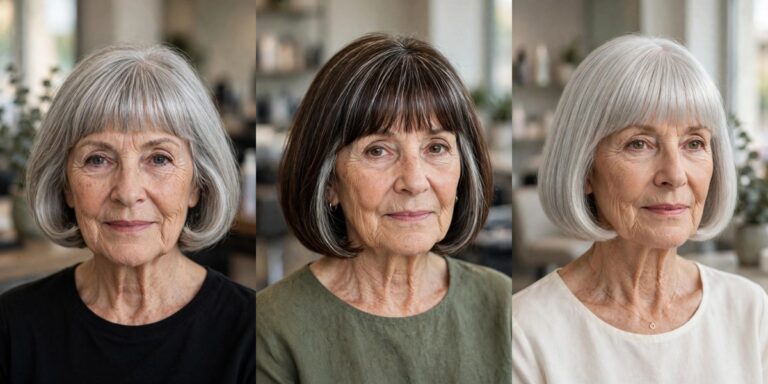
A blunt bob is neatness built into the cut itself. Every strand ends on the same clean line at chin length, so there are no wispy layers to separate, no ends flipping in different directions, and nothing that needs persuading each morning. On silver and gray hair the solid perimeter also does visual work: it makes the hair look thicker and more deliberate than a layered cut at the same length.
The routine is a wash, a smooth dry — or even an air-dry if your hair falls straight — and a quick pass of the fingers to settle the ends under. Because the shape is one strong line, it holds that line as it grows, which is why blunt bobs comfortably stretch to a six-to-eight-week trim rhythm. When the ends start brushing your shoulders unevenly, that is the signal, not a day before. For more bob shapes built on the same principle, see our timeless bob hairstyles for women over 60.


2. Tapered Pixie with Neat Sides and Nape
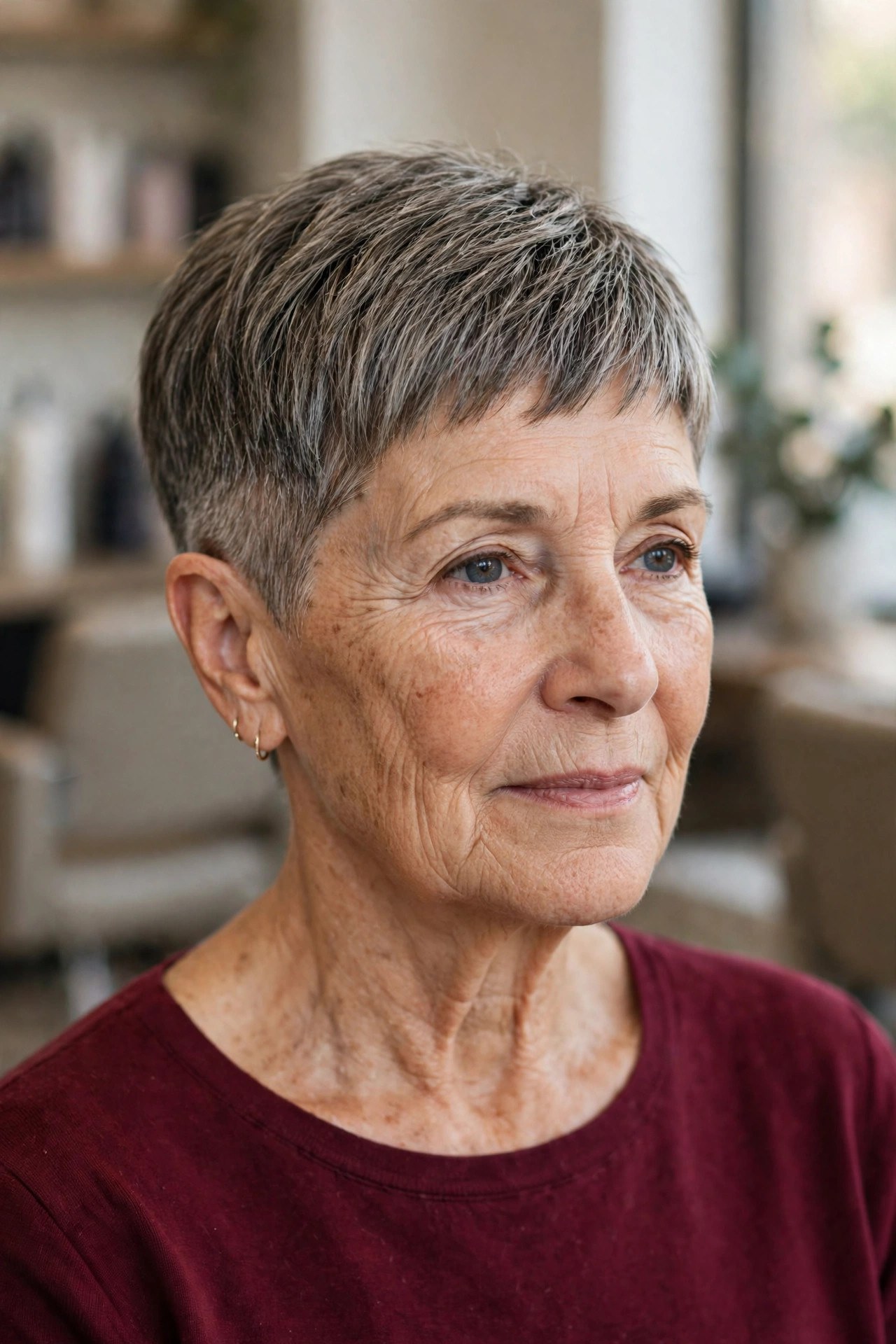
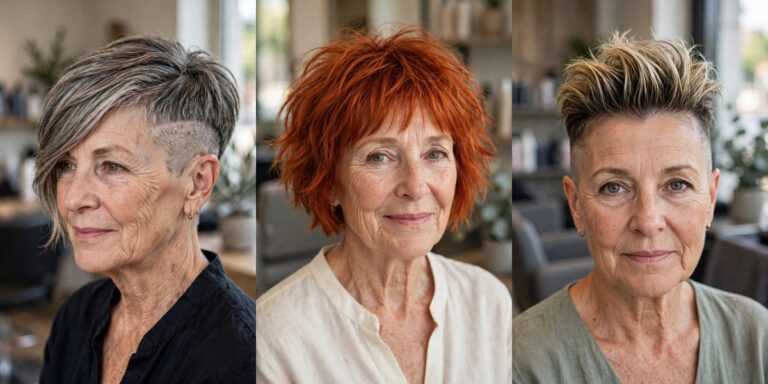
Tapering is the pixie version of a precision edge: the sides and nape are cut close and clean, graduating smoothly into a short top you brush forward. Nothing sticks out, nothing needs tucking, and the outline looks finished from every angle — including the back, which is the view everyone else gets. It is one of the truest wash-and-go cuts in this guide.
Be honest with your stylist about the trade: pixies trade daily styling time for salon frequency. The top could go two months, but the tapered edges look their sharpest with a trim every four to six weeks — many women book a quick nape-and-sides tidy in between full cuts. At home, a pea-sized amount of mousse through damp hair, dried forward, is the entire routine. A dry shampoo on day two keeps the top from separating.


3. Simple Lob with Blunt, Easy Ends

The lob — a long bob resting at the collarbone — is the low-maintenance answer if you do not want to go short. Cut blunt with minimal layering, it falls in one smooth sheet, brushes your shoulders neatly, and is still long enough to pull back with a clip on busy days. Gray blending through brown hair, as shown here, is especially forgiving because there is no hard root line to chase.
This is the longest trim interval in the guide: a blunt lob grows down, not out, so eight weeks between appointments is realistic, and some women stretch further. Keep the ends healthy rather than styled — a light anti-frizz serum through the last few inches stops the perimeter looking fuzzy, which is the only thing that ever makes a lob look untidy. If you like this wash-and-wear direction, our wash-and-wear haircuts guide has more air-dry-friendly shapes.


4. Short Stacked Bob with Built-In Crown Shape

Stacking graduates the back of the bob into short stacked layers, so crown volume is part of the architecture of the cut rather than something you build with a brush and spray every morning. From the front it reads as a clean chin-length bob; from behind, the stacked shape holds its curve all day because the hair underneath is literally supporting the hair on top.
That built-in support is what makes this bob stay neat longer than a one-length bob on fine or flat hair. Dry the crown sections briefly up and forward — two minutes with a round brush or hot-air styler — and the shape does the rest. The stack is also your trim clock: when the back stops holding its curve and starts lying flat, usually around six weeks, book in. Keep silver bright with a weekly purple shampoo so the polished shape is not let down by brassiness.

5. Neat Short Crop with a Soft Wispy Fringe

This crop keeps everything short, close, and tidy, then softens the effect with a wispy fringe that ends above the eyebrows. The fringe is the only ‘styled’ element, and it is cut sheer so it falls into place on its own — no straightening, no separating it strand by strand. For women who want the absolute minimum morning routine, this is close to the floor: wash, towel, go.
Two small habits keep a crop looking neat rather than grown-out. First, keep product off it almost entirely — short white and gray hair shows buildup as dullness, and a crop needs nothing heavier than an occasional fingertip of light foam. Second, respect the fringe: it reaches brow length quickly, so a five-minute fringe trim between full appointments (many salons do this free) keeps the whole cut looking freshly done for the full six-to-eight weeks.

A blunt bob flatters a long face, crown volume helps a round one, and a soft sweep suits almost everyone — but the match starts with your face shape. Try our free Face Shape Finder to discover yours in under a minute, then come back to the ideas above.
6. Feathered Short Cut That Falls Into Place

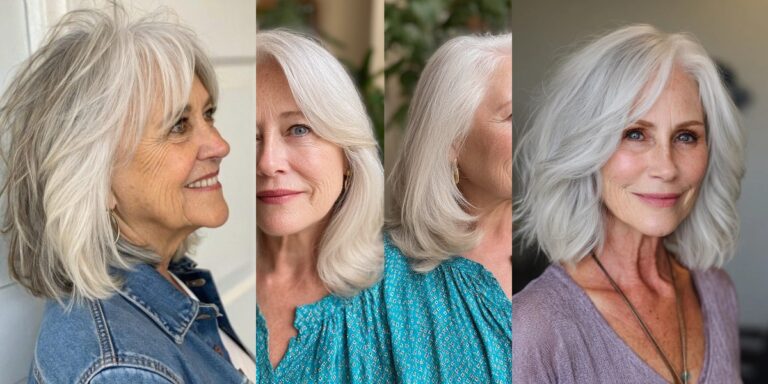
Feathering layers the hair in soft overlapping strokes that are directed — usually forward or away from the face — while it is cut. That direction is the low-maintenance secret: hair that is cut to fall in one direction tends to return to that direction after washing, like a parting that has been trained. The result looks soft and finished with almost no intervention.
Feathered cuts suit fine-to-medium hair best, because the layers need to lie over each other rather than stand up. Style by drying in the direction of the feathering with a vent brush or just your fingers and the dryer nozzle following them; two minutes is plenty. Heavy waxes and oils collapse feathering, so keep anything you use light and foam-based. Trims every six weeks or so keep the strokes distinct instead of merging into one flat layer.

7. Sleek Side-Part Bob with a Tidy Perimeter

A deep-ish side part plus a blunt perimeter is a small formula with a big payoff: the part gives the top a smooth diagonal sweep, the solid ends give the outline its neatness, and the combination reads polished even on a day when you have done almost nothing. Side parts are also kind to thinning hairlines, because the sweep covers more than a center part exposes.
Train the part while the hair is damp — mature hair tends to set where it dries, and a part dried in place will stay all day without spray. If your hair is fine, put any volumizing product only at the roots on the heavy side of the part; length products weigh the sweep down until it separates. This bob sits in the comfortable six-to-eight-week trim bracket, and a satin pillowcase keeps the smooth finish smooth overnight instead of creasing it.
8. Short Curly Crop That Air-Dries in Shape

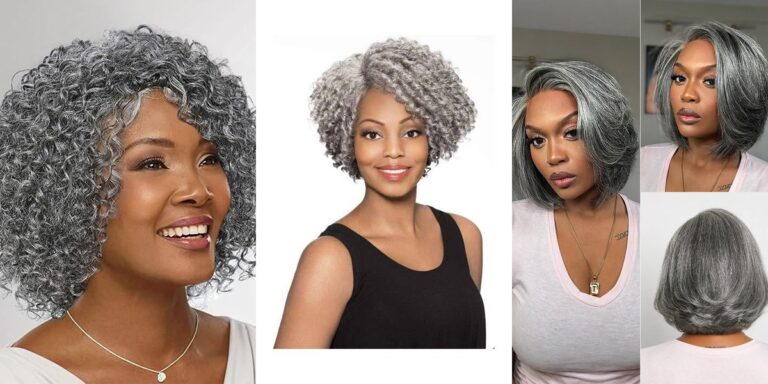
Curly hair is low maintenance when the cut works with the curl pattern instead of against it — and a short crop is the clearest example. The curls are cut into a neat rounded shape, the sides are tapered so nothing bulks out, and then the hair is simply left to dry into the shape it was cut in. No diffuser routine, no heat, no fighting shrinkage every morning.
The whole routine is moisture plus restraint: a curl cream worked through wet hair, then hands completely off until it is dry, because touching setting curls is what creates frizz. Gray curls run drier than pigmented ones, so a leave-in underneath matters more than any styling product. Ask for the cut to be done or at least finished dry, so the length is judged at its true, sprung-up size — that is what keeps the shape neat for a full six weeks.

9. Air-Dried Wavy Bob with Clean Ends

If your hair has a natural wave, a chin-to-jaw bob cut with clean, mostly blunt ends lets that wave become the style. The wave provides the movement, the blunt ends provide the neatness, and air-drying provides the free labor. This is the cut for women whose hair has always waved and who are tired of blow-drying the wave out only to have it return by lunch.
The technique is three steps: scrunch a light texture or sea-salt spray into damp hair, arrange the part and the front pieces with your fingers, then leave it alone while it dries. Once dry, break up any stiffness by scrunching with dry hands — never a brush, which turns defined waves into frizz. Because the shape is forgiving, this bob grows out gracefully and easily reaches the six-to-eight-week mark between trims.


10. Long Pixie That Brushes Into Place

The long pixie — sometimes called a pixie-bob — keeps enough length on top to brush smoothly into place while the sides and back stay short and tidy. It is the choice for women who want a pixie’s low upkeep but not a pixie’s exposure: the longer top can sweep forward, to the side, or back off the face, and every one of those arrangements takes under a minute with a brush.
What keeps it neat is the contrast: short underneath, smooth on top. If the sides are allowed to grow to match the top, the whole thing becomes an unshaped bob and the easy routine disappears — so this cut wants its trim at around six weeks, sooner for the sides if they start puffing over your ears. A light mousse at the roots stops the longer top lying flat by midday. More long-top inspiration is in our elegant pixie haircuts for women over 60.

11. Graduated Bob with Longer Front Pieces

Graduation shortens the back and angles the front pieces longer, so the bob has a built-in forward fall. That angle is self-styling: the longer front wants to swing forward and lie smooth, and the shorter back has nothing to misbehave with. It is a particularly tidy solution if the back of your hair has always flipped, kinked, or grown faster than the front.
Because the silhouette is carried by the angle rather than by daily shaping, upkeep is mostly protection: the longer front pieces are the oldest hair and show dryness first, so a drop of serum on the ends and moderate heat — with protection — if you smooth them. Expect the angle to soften gradually as it grows; at six to eight weeks it becomes a gentle A-line, which still looks intentional, and that is your cue to re-cut.

12. Soft Layered Short Cut That Grows Out Gracefully

Not every neat cut is blunt. This short cut uses soft, blended layers — no shelves, no sharp steps — so that as the hair grows, the layers simply get longer together and the shape relaxes instead of collapsing. It is the most forgiving grow-out in the guide, which makes it ideal if salon visits are hard to schedule or you are growing through a length change.
The styling is correspondingly gentle: dry it in the direction you want it to lie, with a little foam at the roots if your crown flattens overnight. Avoid heavy layering if your hair is fine — ask for ‘long layers, kept close’ so the ends keep their density. Done well, this is the cut that still looks presentable at week eight, which is exactly what low maintenance should mean. If you are comparing approaches, our Over-50 sister guide to low-maintenance haircuts covers the same philosophy.

13. One-Length Bob with Smooth, Solid Ends

One length means exactly that: no layers at all, just a smooth solid fall of hair ending in a clean line somewhere between jaw and shoulder. It is the neatest possible version of longer hair, because layers are what separate, stick out, and demand restyling — remove them and the hair behaves like a curtain, falling the same way every day.
One-length cuts flatter fine hair in particular, since every strand contributes to the thickness of the ends. The single upkeep rule is end health: without layers to hide behind, dry split ends show, so trim on the six-to-eight-week rhythm even if the length still looks fine, and condition the ends rather than the roots. A center or side part both work; choose the one your hair falls into naturally and the cut will need almost nothing from you.

14. Neat French Bob with a Short Tidy Fringe

The French bob is a precision cut — chin length, blunt, curving slightly under, with a short fringe — and precision is precisely why it stays neat: there is no excess length anywhere to fall out of line. It looks like a deliberate style from the moment you wake up, which is the whole promise of this guide in one haircut.
Be clear-eyed about its one demand: precision shows growth. The fringe reaches the eyebrows and the curve loses its tuck at around five to six weeks, so this bob sits at the shorter end of the trim rhythm — though a fringe-only tidy between cuts stretches it. Keep the silver icy with a weekly purple wash, because a French bob’s clean lines draw the eye and any yellowing shows. Smooth just the ends under with a brush as it dries; the rest needs nothing.

15. Pixie with a Side-Swept Fringe
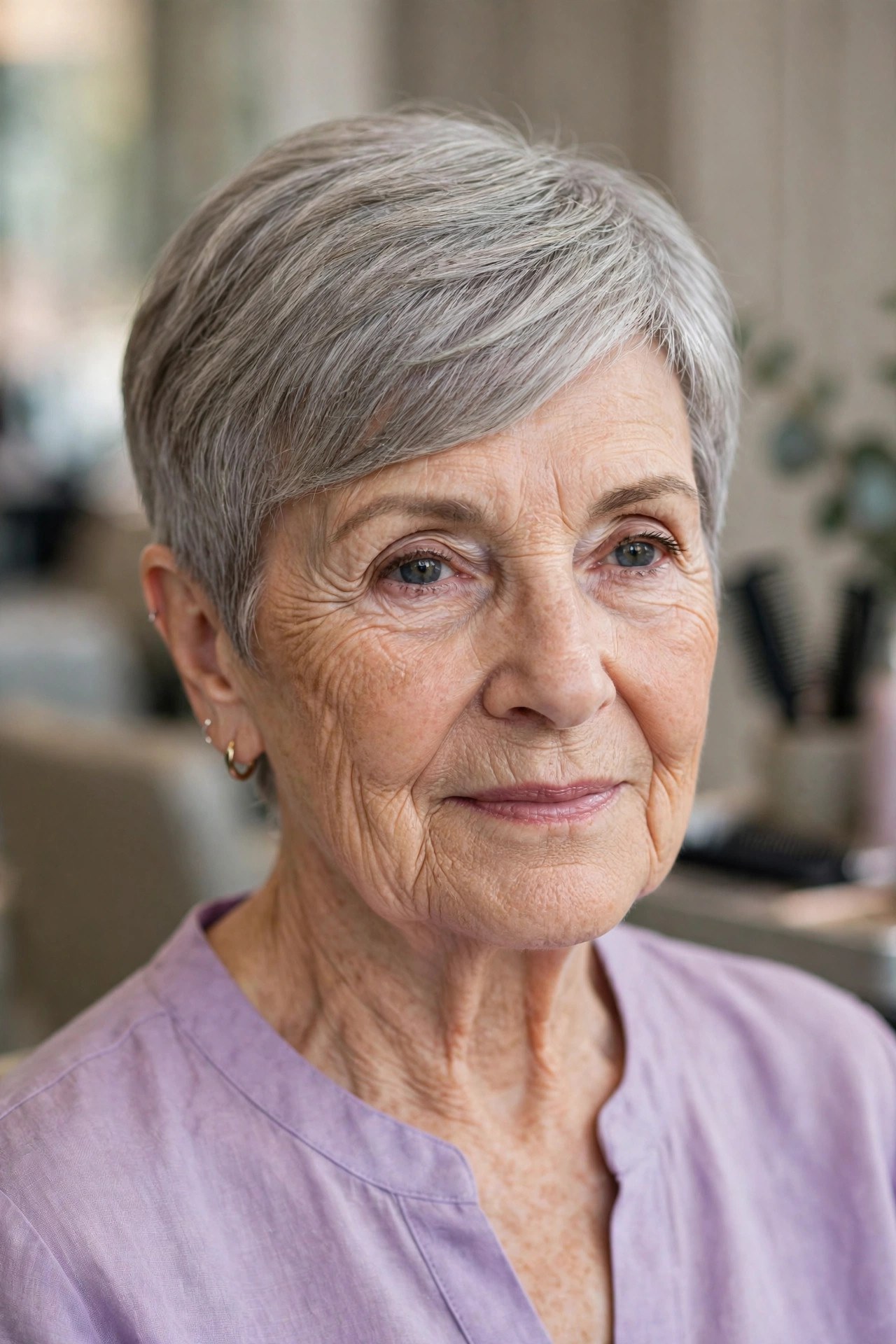
A side-swept fringe gives a short pixie a soft, finished front without asking the fringe to do anything difficult. Instead of a straight line that must sit perfectly, the hair moves diagonally across the forehead and melts into the longer side — a direction it can be trained into while damp and will then repeat on its own, day after day.
Train it in the first week: dry the fringe across, nozzle pointing the way it travels, and it will learn the path. This cut is kind to high foreheads and to anyone who dislikes a bare hairline, and it grows out into ordinary face-framing layers rather than an awkward stage — one reason it comfortably reaches six weeks and beyond between cuts. A fingertip of texturizing putty, pinched through the sweep only, is for evenings out, not for every day.

16. Low Tapered Cut for Thick Hair

Thick hair is a gift that misbehaves in bulk: it grows outward, holds heat, and turns a neat cut untidy fastest at the sides and nape. The low taper answers by removing that bulk exactly where it accumulates — close at the nape and around the ears, soft rather than faded — while keeping a tidy, full top that brushes forward. The density stays; the disorder goes.
Ask your stylist to taper softly and to thin only the interior if needed, never the ends, which need their weight to lie flat. At home this may be the lowest-effort cut here for thick hair: wash, a little foam if you like, brush forward, done — there is simply not enough side hair left to cause trouble. The taper wants refreshing at five to six weeks; the top could go far longer, so a short taper-only appointment is a sensible rhythm.
17. Rounded Bob with One Smooth Curved Line

The rounded bob curves under in a single smooth arc at jaw level — no layers breaking the surface, no corners, nothing out of place almost by definition. For faces that have become more angular with age, that unbroken curve is flattering as well as neat, softening the jawline while the blunt arc keeps the ends looking thick and healthy.
Maintaining the arc is one gesture: as the hair dries, roll the ends under with a round brush in a few sections — or use a hot-air styler if you prefer one tool. Scorched ends will not curve, they kink, so keep heat moderate and protected. Because the perimeter is solid, this bob holds its line well into the six-to-eight-week window; when the ends start sitting straight instead of curving, the shape is telling you it is time.
18. Short Textured Crop with a Finger-Finish

Texture sounds like styling effort, but cut-in texture is the opposite: the ends are point-cut while the hair is in the chair, so the separation and lightness are permanent features of the cut, not a look you recreate with product each morning. The finish is your fingers — rake them through dry hair and the pieces fall into their cut pattern.
This crop works best on fine-to-medium hair that lies flat when it is blunt; the point-cutting stops it looking like a helmet without adding a routine. If you use anything, use a pea-sized amount of putty on completely dry hair, pinched into the top only — product on damp hair drags fine texture down as it dries. Trims at around six weeks restore the separation when the pieces start merging together.
19. Easy Ear-to-Jaw Bob with a Soft Side Part

Shorter than a classic bob but softer than a pixie, this in-between length ends between ear and jaw, parts softly to the side, and behaves beautifully on hair that is neither poker-straight nor curly. There is enough hair to look like a bob — a real frame around the face — and little enough that it dries in minutes and rarely needs more than a brush-through.
It is also a kind cut while you decide: from here you can grow into a full bob or crop into a pixie without an awkward stage. Keep the part soft rather than severe — a finger-placed part, dried in, looks natural and needs no spray to hold. Six-to-eight weeks is a realistic rhythm, and a dry shampoo at the part on day two or three is the only between-wash product most women use with this cut.
20. Polished Pixie-Bob with a Clean Side Part
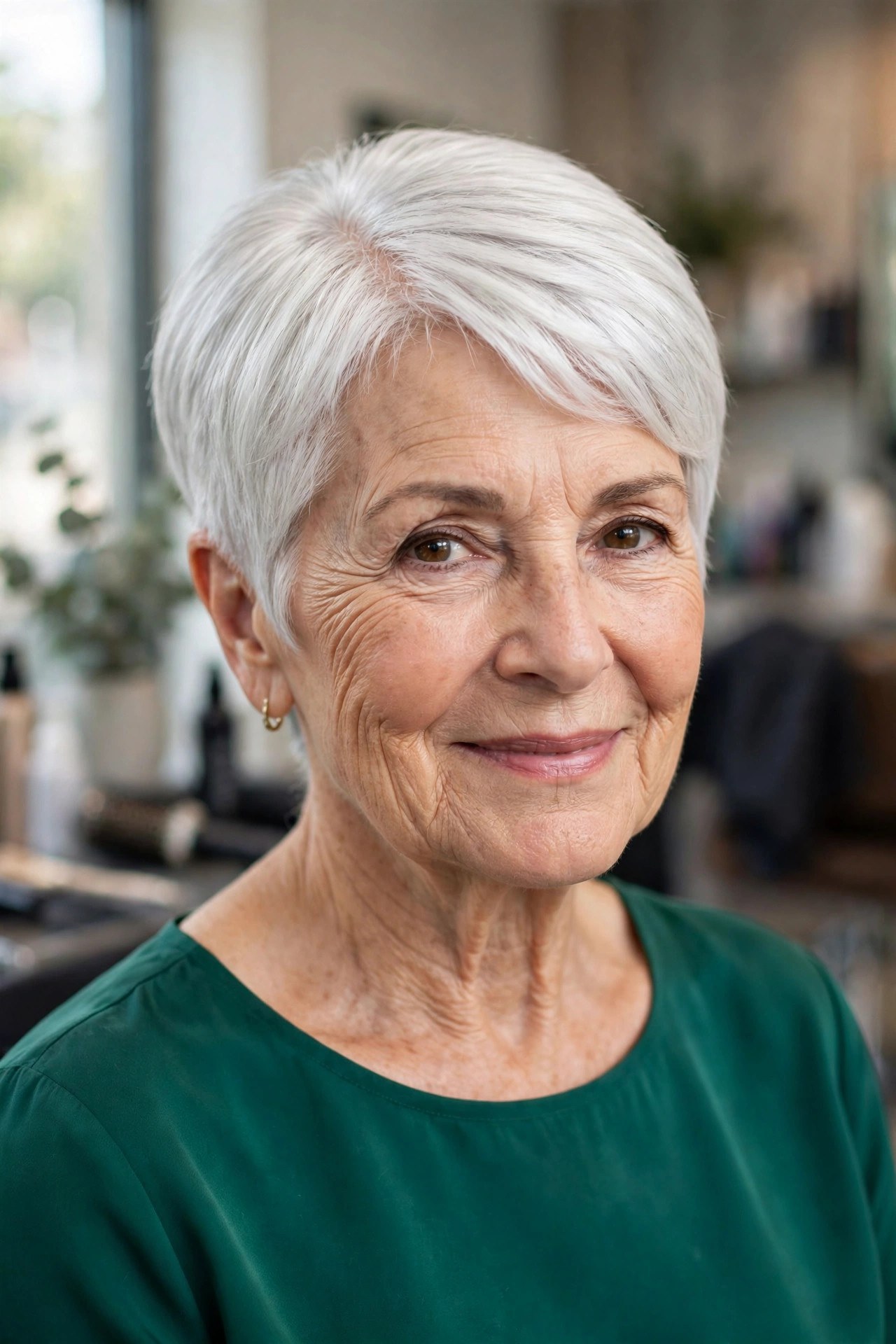
Finish with the most polished short cut in the guide: a pixie-bob in bright white-silver, the longer top lying in one smooth diagonal from a clean side part, the back and sides kept short and tidy underneath. It reads elegant rather than edgy, and because the top is one smooth sweep, it needs one smooth gesture — a brush in the direction of the part — to be done.
Set the part and the sweep while damp, drying the top up and over for a little lift at the part line; once white hair dries in a direction it tends to keep it all day. Keep that white luminous with a weekly purple shampoo and an occasional toning gloss, and protect it from high heat, which yellows white hair faster than any other shade. A six-week trim keeps the diagonal crisp — and keeps the whole cut looking like a decision, not a default.
Recommended Products
Low maintenance does not mean no products — it means few, and each doing one clear job. These five cover the whole routine behind this guide: a dry shampoo to stretch a neat style to day two and three, a light brushable hairspray for the days you want extra hold, a purple shampoo to keep silver and gray bright, the round brush that sets a bob’s clean curve, and a satin pillowcase so the shape you went to bed with is the shape you wake up with.
Care Tips That Keep a Low-Maintenance Cut Looking Neat
- ✅ Book the rhythm, not the rescue. Most cuts here hold for six to eight weeks; short tapers and precision fringes want five to six. A regular rhythm prevents the scruffy fortnight entirely.
- ✅ Dry it in the direction it should live. Mature hair sets where it dries. Two minutes guiding the part, fringe, or sweep while damp replaces ten minutes of restyling later.
- ✅ Wash less, refresh smart. Every-other-day or third-day washing suits most women over 60. Dry shampoo at the roots the night before absorbs oil while you sleep.
- ✅ Keep product light and few. One foam or mousse for volume, or one light serum for ends — not both, and never heavy oils on precision cuts, which show buildup as dullness and separation.
- ✅ Protect the ends. Blunt and one-length cuts are judged by their ends. Condition the last few inches, trim on schedule, and keep heat moderate with protection.
- ✅ Keep gray bright once a week. A weekly purple shampoo stops silver and white hair yellowing from sun, heat, and hard water — the fastest way a neat cut starts looking tired.
- ✅ Sleep on satin. A satin pillowcase stops overnight creasing and friction frizz, so a bob or sweep wakes up close to how it went to bed.
- ✅ Ask for the grow-out plan. Before you leave the chair, ask what the cut will look like at week six and what to book next. A good low-maintenance cut comes with that answer built in.
Frequently Asked Questions
What haircut is truly the lowest maintenance for a woman over 60?
For most women it is a precision short cut — a tapered pixie (idea 2) or a neat crop (idea 5) — because there is simply very little hair to arrange, and what there is has been cut to fall one way. The honest trade is salon frequency: these cuts ask for a trim every four to six weeks to keep their edges sharp. If salon visits are the thing you want to minimize instead, choose the blunt lob (idea 3) or a soft layered short cut (idea 12), which look presentable for a full eight weeks.
How often should a low-maintenance haircut be trimmed?
Most of the cuts in this guide sit on a six-to-eight-week rhythm: blunt bobs, lobs, one-length cuts, and softly layered shapes all grow out tidily for that long. Shorter precision work runs faster — tapers, stacked backs, and short fringes look their best at five to six weeks, and a fringe-only tidy between full appointments stretches any of them. The right moment is when the shape stops falling into place after washing, not when a fixed number of weeks passes.
Why does my haircut look good for a week and then go scruffy?
Usually because the neatness was in the styling, not the cut. A salon blow-dry can make almost any shape look polished for a few days; once it is washed out, a cut with uneven layers, fuzzy ends, or a shape that fights your natural growth pattern has nothing to fall back on. The fix is structural: precision edges, a perimeter cut to one clean line, and a shape chosen for your actual texture — straight, wavy, or curly — so the washed version and the styled version are nearly the same haircut.
Can a low-maintenance cut work on fine or thinning hair?
Yes — fine hair often does best with the simplest cuts. Blunt and one-length shapes (ideas 1 and 13) keep every strand contributing to the ends, so the hair reads thicker than layered cuts that remove density. Keep any layers long and close, use volumizing product only at the roots, and avoid heavy serums and oils on the lengths, which separate fine hair by midday. A stacked bob (idea 4) is the other strong option, because its crown volume is built into the cut.
What is a realistic wash-and-go morning routine for these cuts?
For the short cuts: wash (or simply dampen and reset), work a pea-sized amount of light foam through the roots if you use product at all, dry in the direction the cut is meant to fall — forward for crops and pixies, under for bobs — and leave it alone. For bobs and lobs, add a minute with a round brush on the ends. On non-wash days, dry shampoo at the part and a brush-through is the whole routine. None of the twenty cuts here requires daily heat styling, curling, or backcombing.
Does gray hair need different care in a low-maintenance cut?
A little. Gray and white hair is more prone to yellowing from sun, heat, and mineral deposits, so a purple shampoo once a week and moderate, protected heat keep a neat cut looking clean rather than dingy. Gray hair also tends to be drier and wirier, which is why the blunt, smooth shapes in this guide suit it well — they contain the wiriness in a clean outline. Finally, gray shows product buildup as dullness, so the light-product rule matters more, not less.
Neat all day is not a styling talent — it is a cutting decision. Choose a shape whose neatness is built into its edges and its grow-out, keep the trim rhythm that shape asks for, and let the morning routine shrink to washing, guiding the hair while it dries, and getting on with your day. That is the real luxury of a low-maintenance cut after 60: hair that looks deliberate, without demanding to be dealt with.