Protective Hairstyles for Black Women Over 50: Braids and Twists
This post contains affiliate links. As an Amazon associate, I earn from qualifying purchases. I only recommend products that are of high quality and that I would use myself.
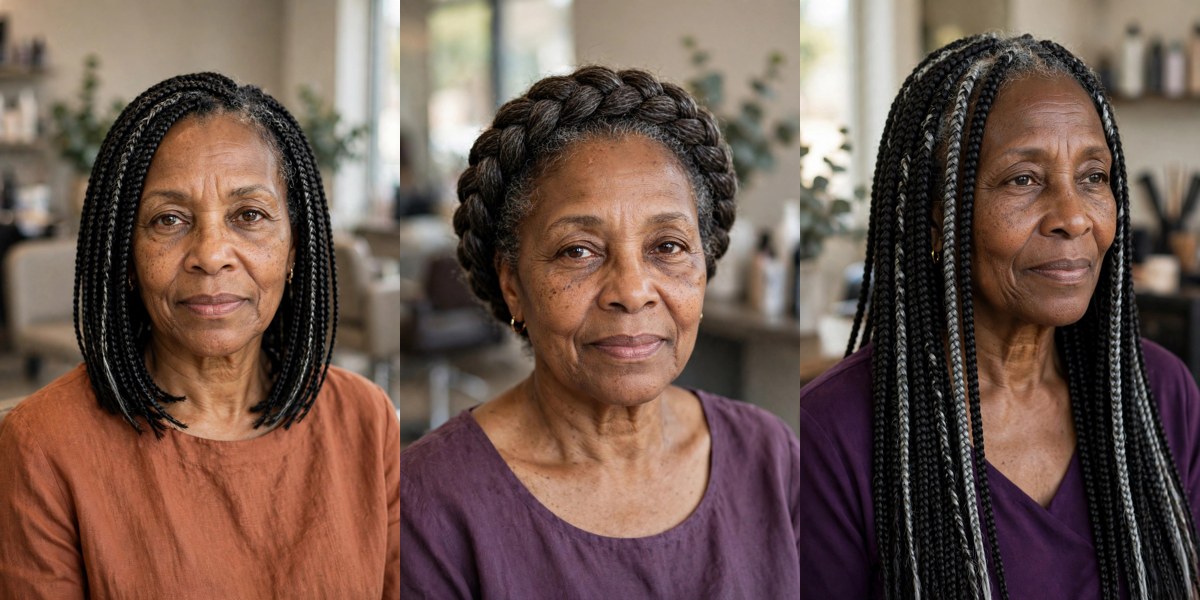
Protective styles should do exactly what the name promises — protect. Yet many women over 50 quietly give up on braids and twists because an install pulled too hard, left their edges sore, or simply felt too heavy by the second week. The style was not the problem. The tension was.
This guide takes a different approach: every one of the 20 braids and twists below is chosen and explained through a gentle-on-edges, low-tension lens. You will find knotless starts, feed-in techniques, your-own-hair twists that need no extensions at all, and honest guidance on length, weight, and how long to keep each style in. If you are also considering a break from extensions altogether, our round-up of short hairstyles for women over 50 is a lovely place to browse between installs.
Whether your hair is silvering, finer than it used to be, or simply in need of a rest from daily styling, there is a comfortable, beautiful option here for you.
Table of Contents
- 1. Knotless Box Braids at Shoulder Length
- 2. Classic Box Braids with Silver Blending
- 3. Medium Senegalese Twists
- 4. Passion Twists at Shoulder Length
- 5. Flat Twists into a Low Bun
- 6. Goddess Braids with Soft Curly Ends
- 7. Feed-In Cornrows, Straight Back
- 8. Two-Strand Twist Bob
- 9. Halo Braid Crown
- 10. Cornrows into a Braided Ponytail
- 11. Jumbo Knotless Braids
- 12. Chunky Two-Strand Twists
- 13. Fulani Braids with Subtle Gold Cuffs
- 14. Braided Bob with Curly Ends
- 15. Side-Parted Cornrows
- 16. Mini Twists on Natural Hair
- 17. Goddess Twists with Loose Waves
- 18. Box Braids in a Loose High Bun
- 19. Crochet Twists
- 20. Long Knotless Braids with Silver Streaks
- Recommended Products
- FAQs
1. Knotless Box Braids at Shoulder Length
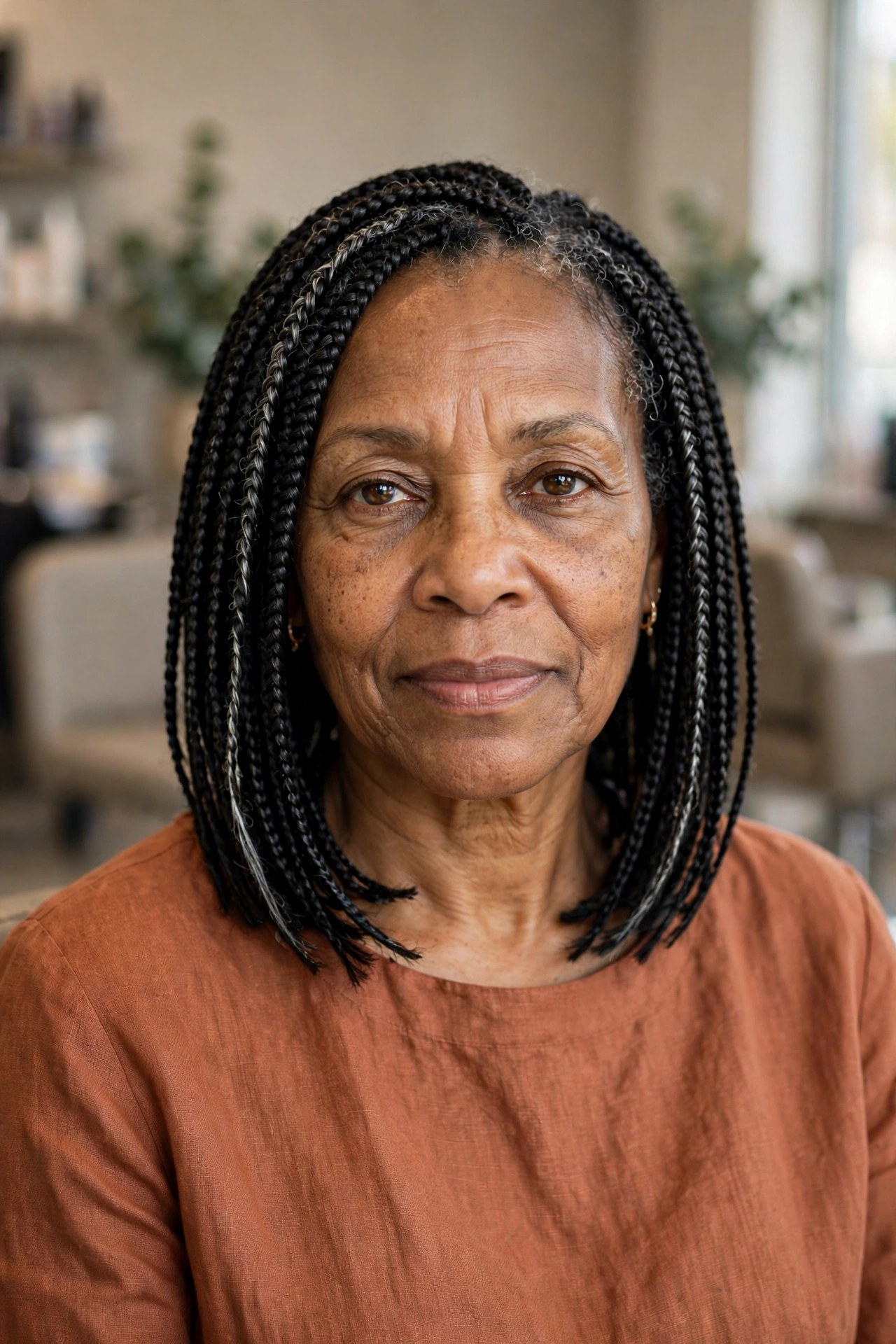
Knotless braids are the gentlest place to start if your edges are thinner than they used to be. Because your braider feeds the extension hair in gradually instead of starting with a tight knot, there is far less pulling on day one — and that comfort difference matters more after 50 than any trend does.
Shoulder length is the sweet spot: long enough to pull back or pin up, light enough that it will not drag on your neck or scalp by week three. Ask for medium parts around the hairline, keep the style to six weeks at most, and say clearly at the appointment that you want no tension at the front — a good braider will respect that instantly.


2. Classic Box Braids with Silver Blending
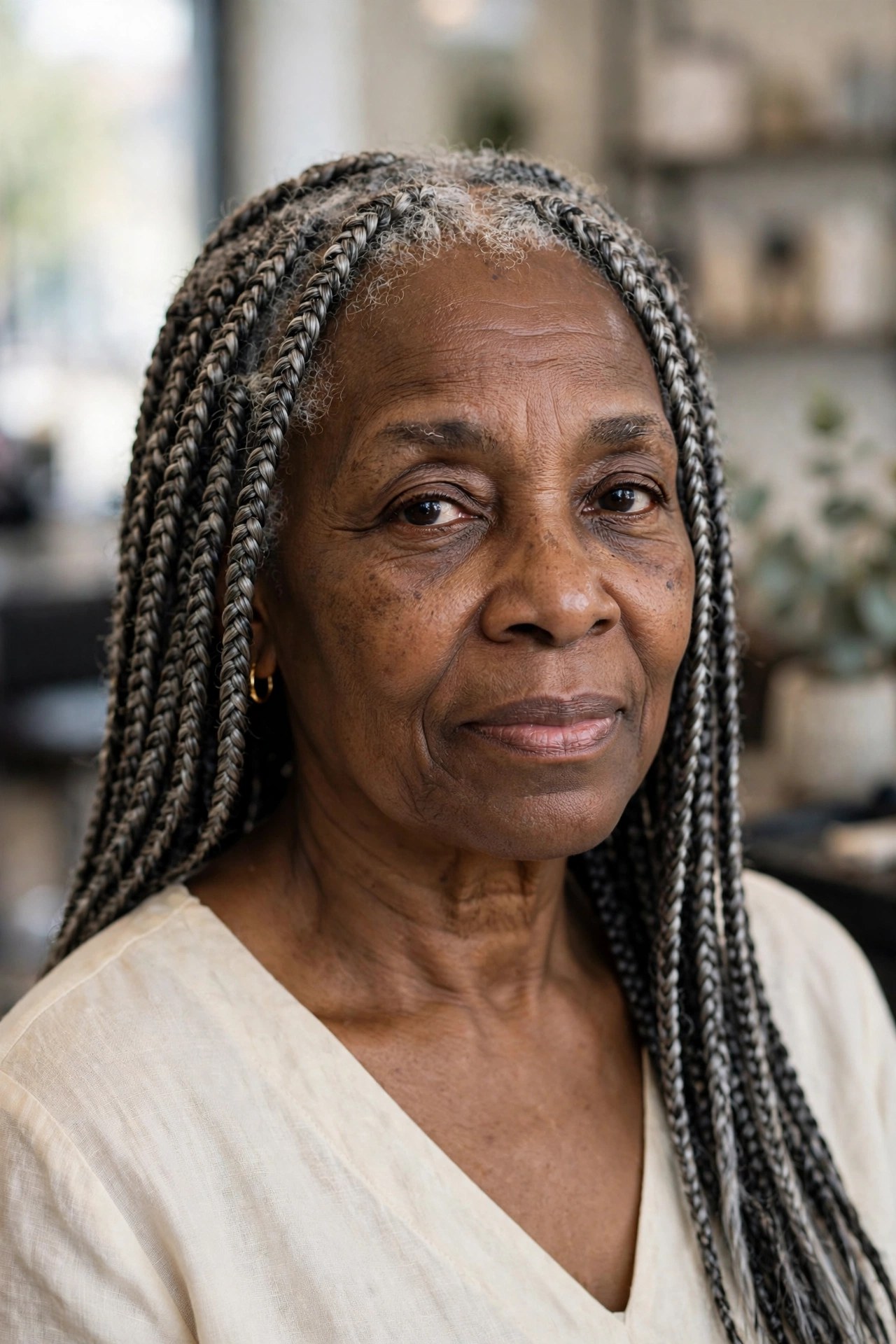
If your gray is coming through, work with it instead of fighting it. Blending silver and soft gray extension hair through classic box braids turns regrowth into part of the design, so week four looks intentional rather than overdue — and you skip the dye appointments entirely.
Medium box braids suit almost every face shape and are easy to wear half-up, in a low ponytail, or loose. Keep the braids no smaller than pencil-width around delicate edges, moisturise your scalp lightly between the parts, and let the salt-and-pepper mix do the flattering work.

3. Medium Senegalese Twists
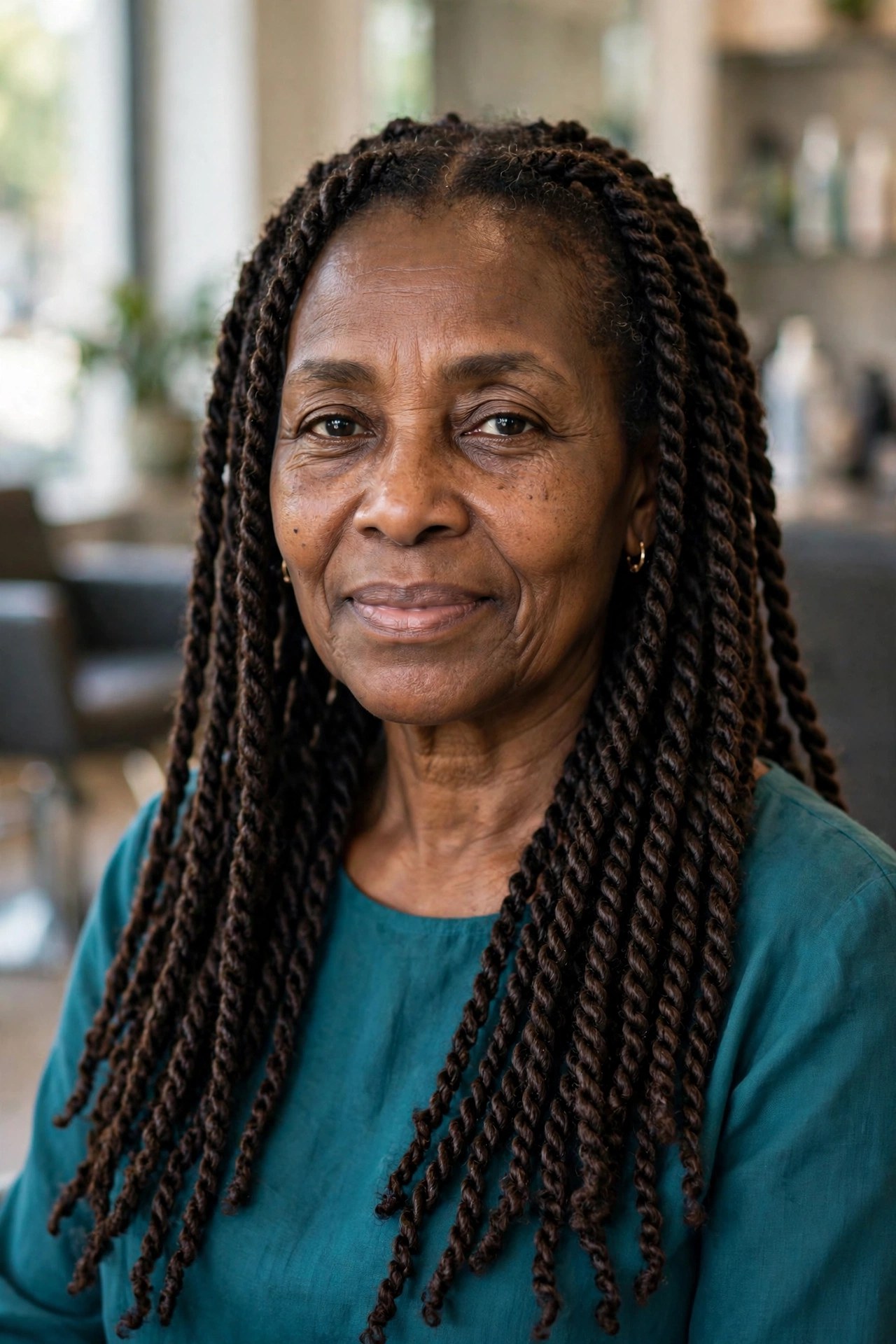
Senegalese twists have a smooth, rope-like finish that reads polished at any age, and because they are twisted rather than braided, many women find them lighter and quicker to install. Medium sections keep the weight sensible while still giving you that full, swishy movement.
They are a kind choice for a sensitive scalp: the twist starts without the tight grip of a traditional braid base. Wear them just past the shoulders so they do not overwhelm your frame, refresh the front twists at three weeks if you like a neater finish, and remove them by week six to protect your own hair underneath.

4. Passion Twists at Shoulder Length
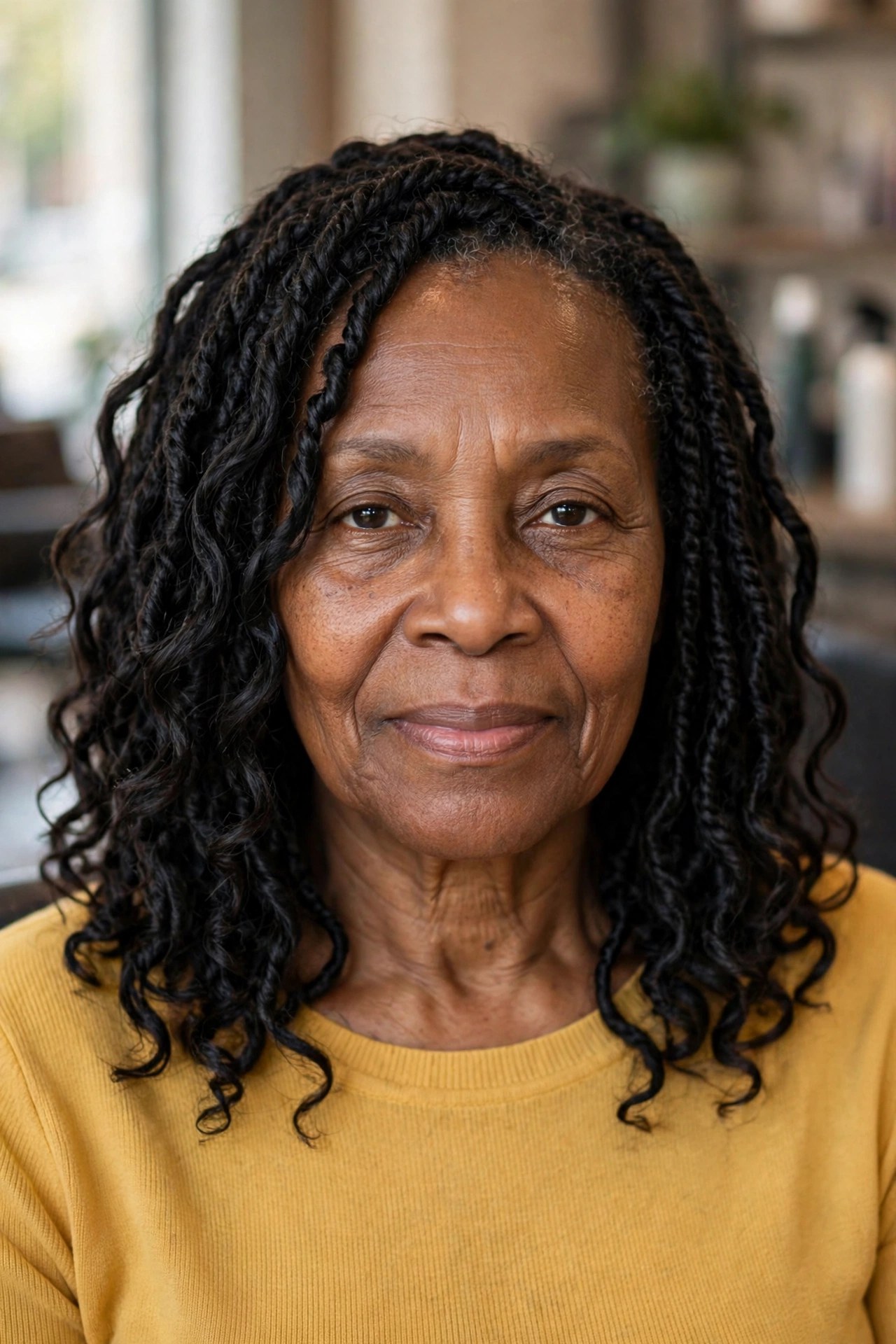
Passion twists bring softness that braids cannot: the wavy, slightly undone texture frames the face gently and looks romantic without trying hard. At shoulder length they stay lightweight, which is exactly what you want when your natural hair is finer than it once was.
Because the hair used is light and springy, passion twists put very little strain on your roots. Keep them moisturised rather than heavy — a light touch of serum on the lengths is enough — avoid piling them into tight high ponytails, and enjoy how forgiving this texture is as it grows out.

5. Flat Twists into a Low Bun
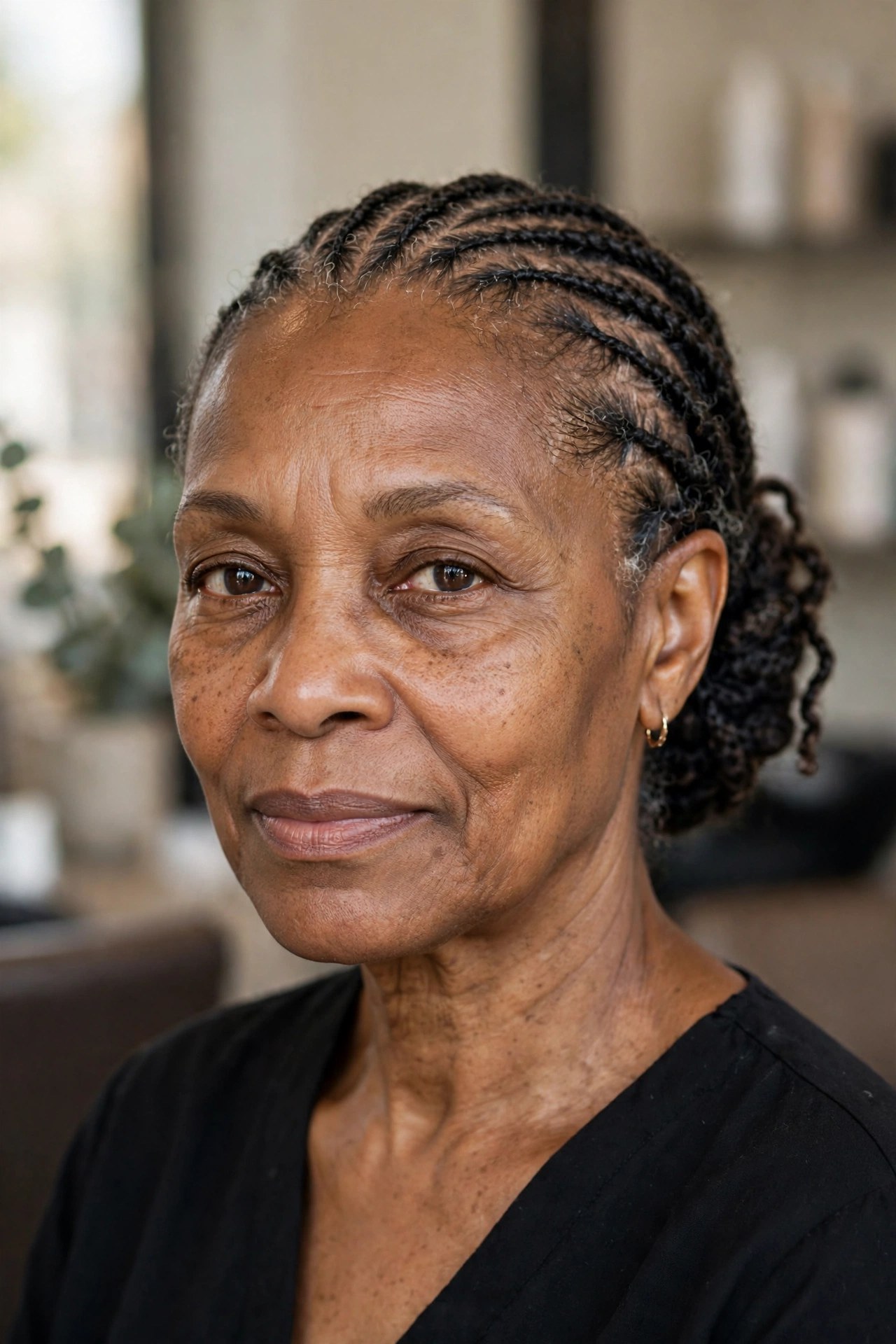
Flat twists are one of the kindest protective styles there is, because they can be done entirely on your own hair with no extensions and almost no tension. Swept back into a low bun, the look is neat, professional, and completely heat-free.
This is an ideal style between extension installs, or if you simply prefer your own hair. It lasts one to two weeks, takes minutes to redo, and gives fragile edges a genuine rest. Smooth the twists with a little gel on your fingertips as you work, and sleep with the bun loose or released under a bonnet.


6. Goddess Braids with Soft Curly Ends
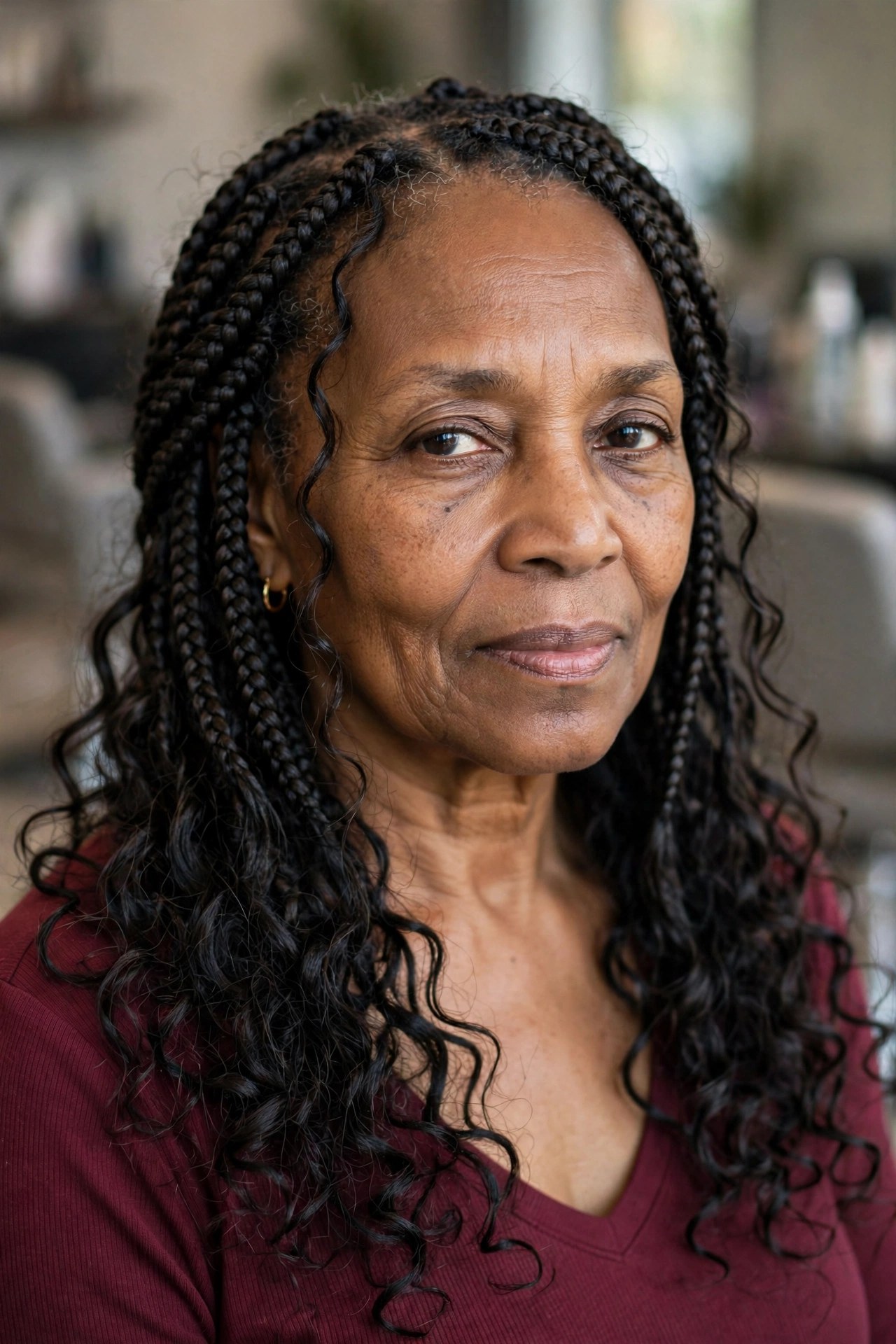
Goddess braids mix structured braids with loose, curly pieces flowing between and below them — the result is elegant, feminine, and far softer around the face than an all-braid finish. It is a beautiful option for a celebration, a holiday, or simply because you want to feel lovely.
Choose medium braids so the style stays comfortable, and keep the curly sections tangle-free with a light detangling spritz and gentle finger separation each morning. The loose pieces need a little more care than plain braids, but in return you get movement and glamour with your natural hair safely tucked away.
7. Feed-In Cornrows, Straight Back
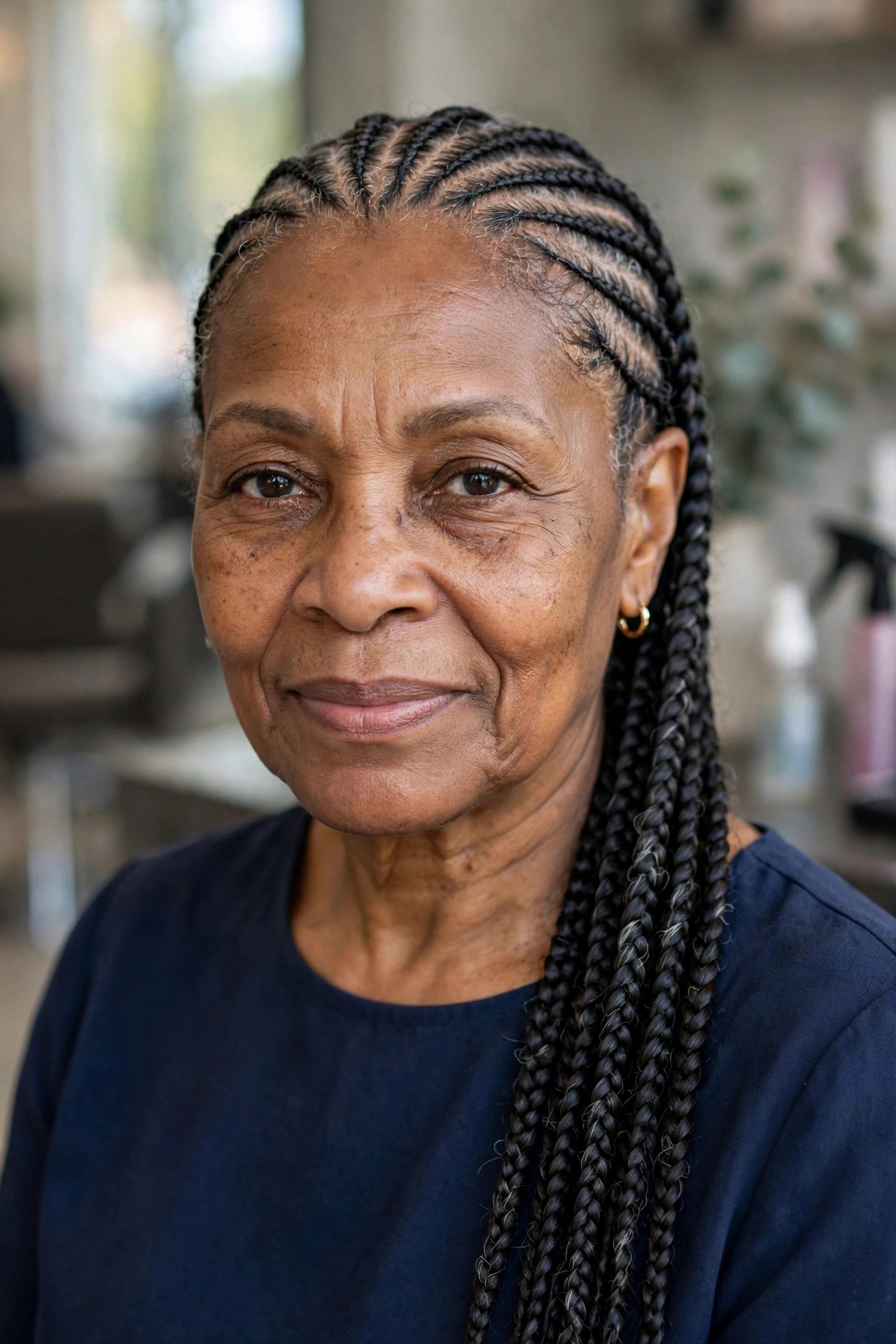
Feed-in cornrows give you that sleek, sculpted cornrow look without the visible knot and bulk at the front. The extension hair is added gradually, so the hairline stays smooth and the tension stays low — two things that matter enormously for edges over 50.
Straight-back rows are timeless and work under hats, scarves, and wigs if you like to switch things up. Keep the rows medium-width rather than very fine, which reduces both install time and scalp stress, and cleanse along the parts with a gentle co-wash or diluted shampoo every week or so.
8. Two-Strand Twist Bob
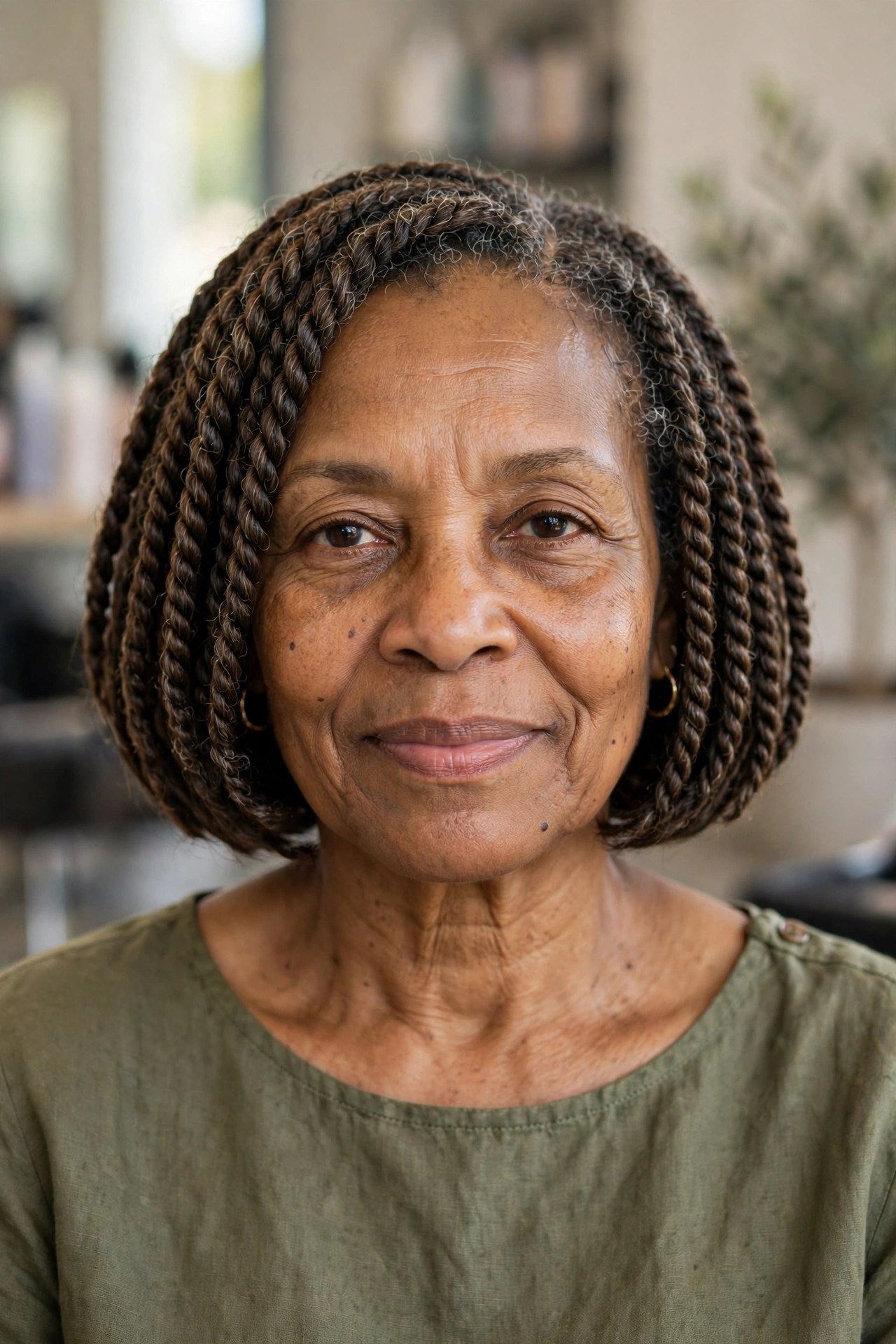
A twist bob takes everything flattering about a classic bob — the neat outline, the face-framing shape — and builds it from two-strand twists instead of a haircut. It is a smart way to try a shorter silhouette without committing your own hair to the scissors.
Chin to jaw length keeps the weight off your shoulders and the style bouncy. Because the twists are larger and the length is short, installation and takedown are both quicker than long styles. If you are weighing up a real bob later, our guide to bob haircuts for women over 50 shows the cut versions to show your stylist.

9. Halo Braid Crown
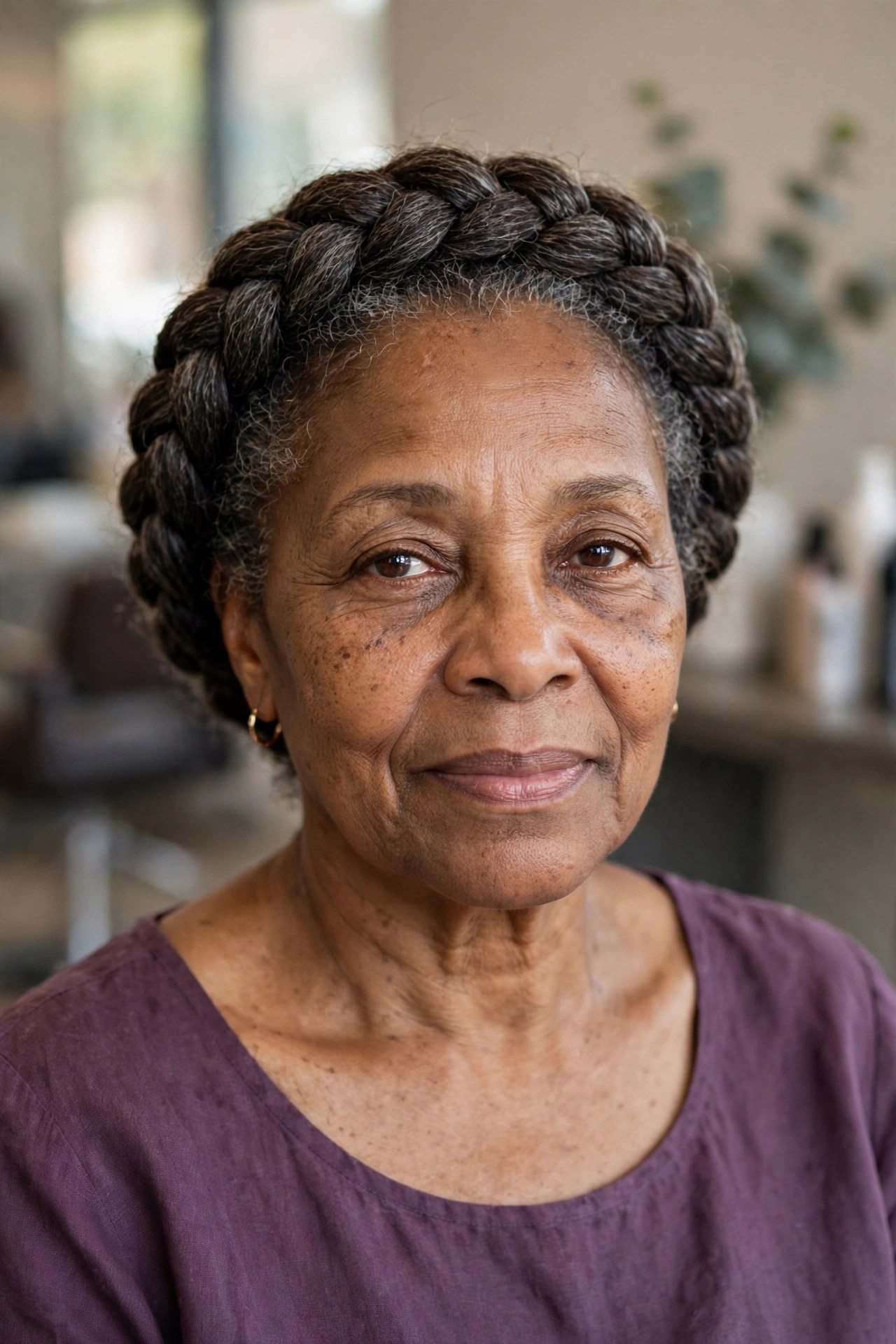
The halo braid is pure elegance: one generous braid circling the head like a crown. It lifts the face, shows off your features and earrings, and keeps every strand off your neck — wonderful in warm weather and for occasions when you want to look quietly regal.
It can be braided from your own hair if it is long enough, or with a small amount of extension hair added for fullness. Crucially, the braid should sit comfortably, never pulled tight at the temples. It lasts a week or two, making it a low-commitment way to feel dressed up while your hair rests completely.
10. Cornrows into a Braided Ponytail
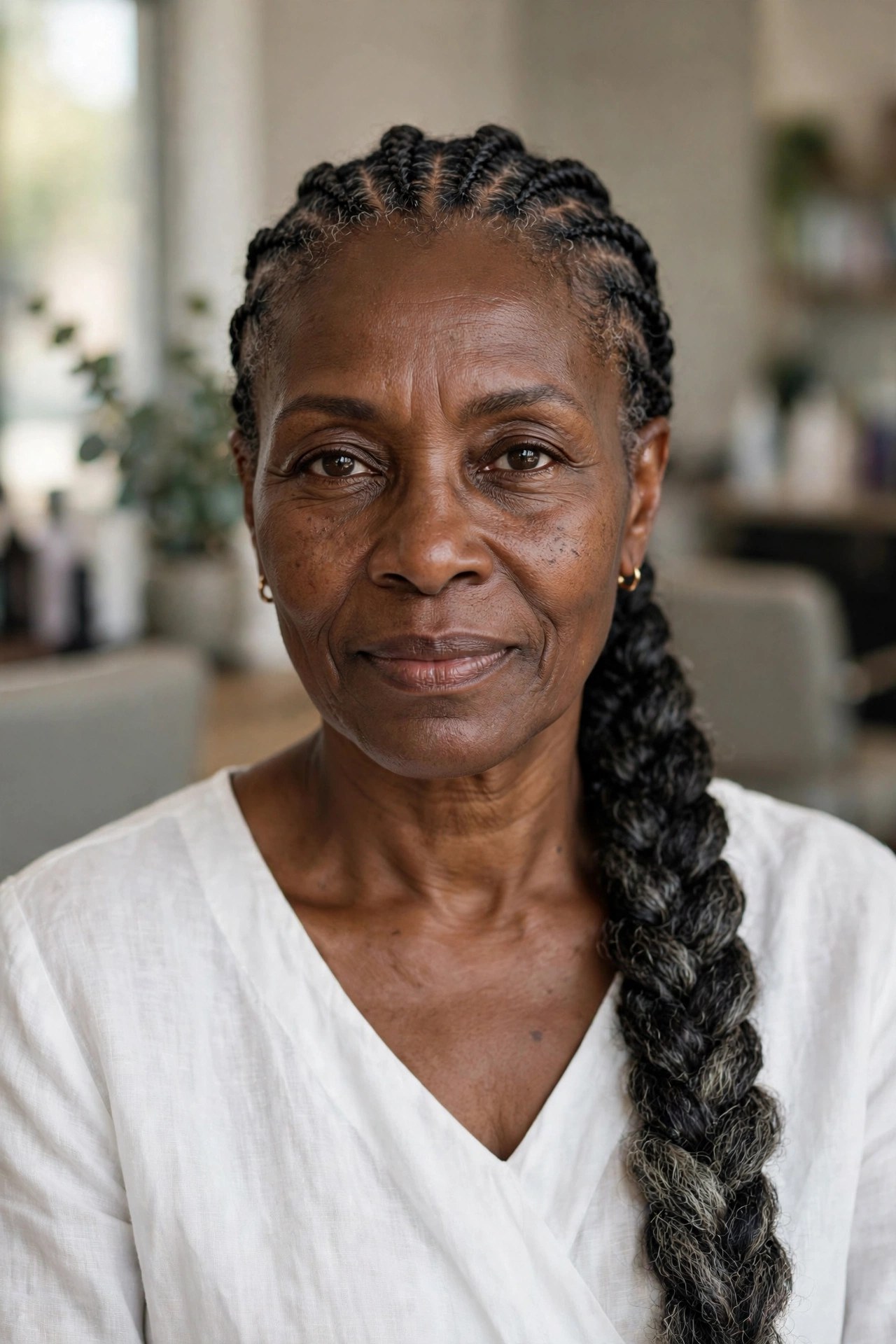
Cornrows gathered into a single long braided ponytail are striking, practical, and completely off the face. The cornrow base distributes the weight across rows instead of concentrating it in one tight elastic, which is a far kinder way to wear a ponytail after 50.
Ask your braider to keep the rows at the hairline soft and to leave your very front edges out of the tightest part of the pattern if they are fragile. Wear the ponytail at a comfortable height — a very high, heavy ponytail worn daily can still pull — and let it down or loosen it in the evening.
11. Jumbo Knotless Braids
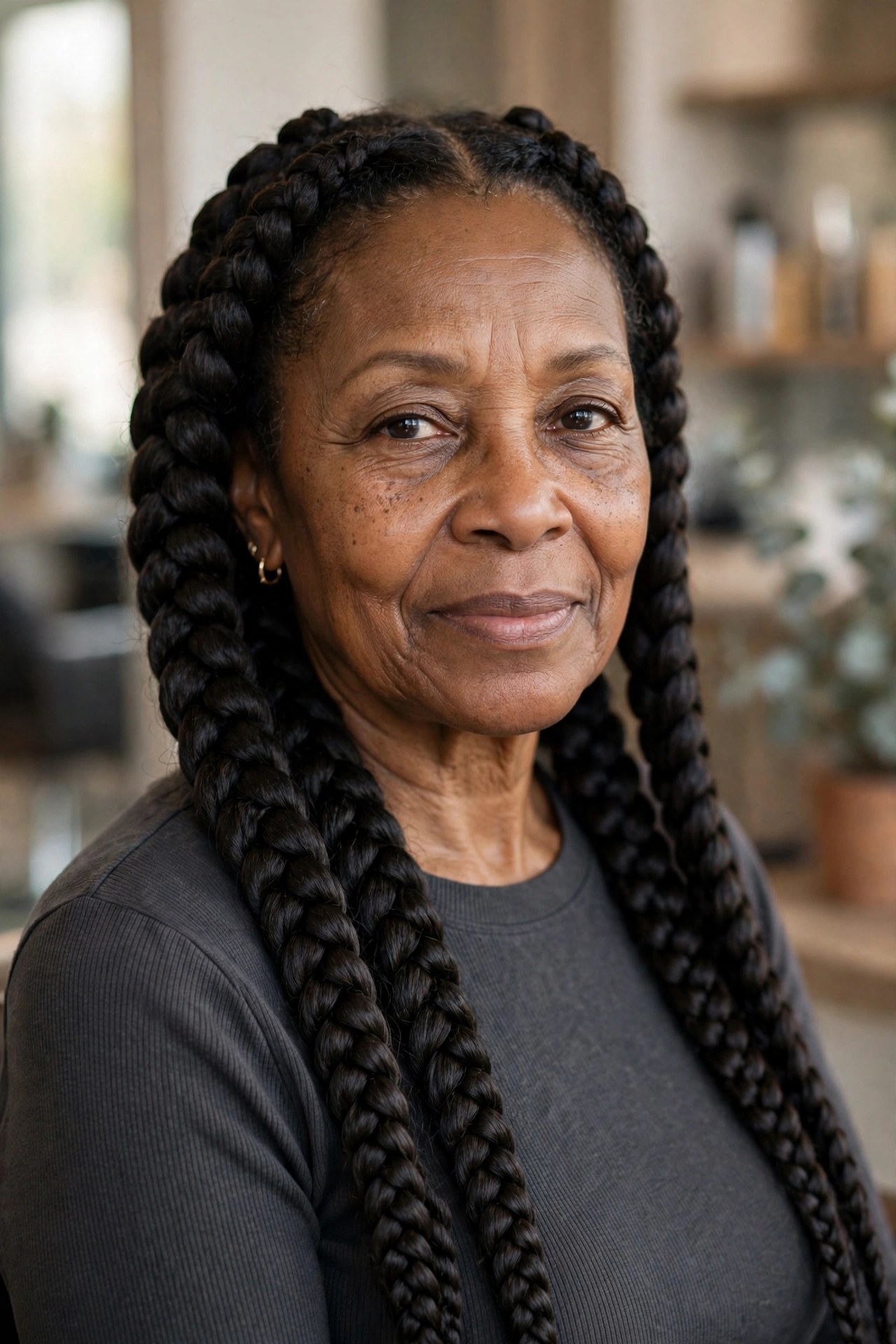
Jumbo knotless braids make a confident statement with far fewer braids — which means a much shorter appointment and a much quicker takedown. Done knotless, even these large braids start gently at the root instead of with a tight knot.
Fewer, bigger braids do mean each one carries more weight, so keep the length moderate and do not be tempted by extra-long jumbo braids if your hair is fine. This style suits women who want bold, graphic impact and a routine that takes about two minutes each morning.
12. Chunky Two-Strand Twists
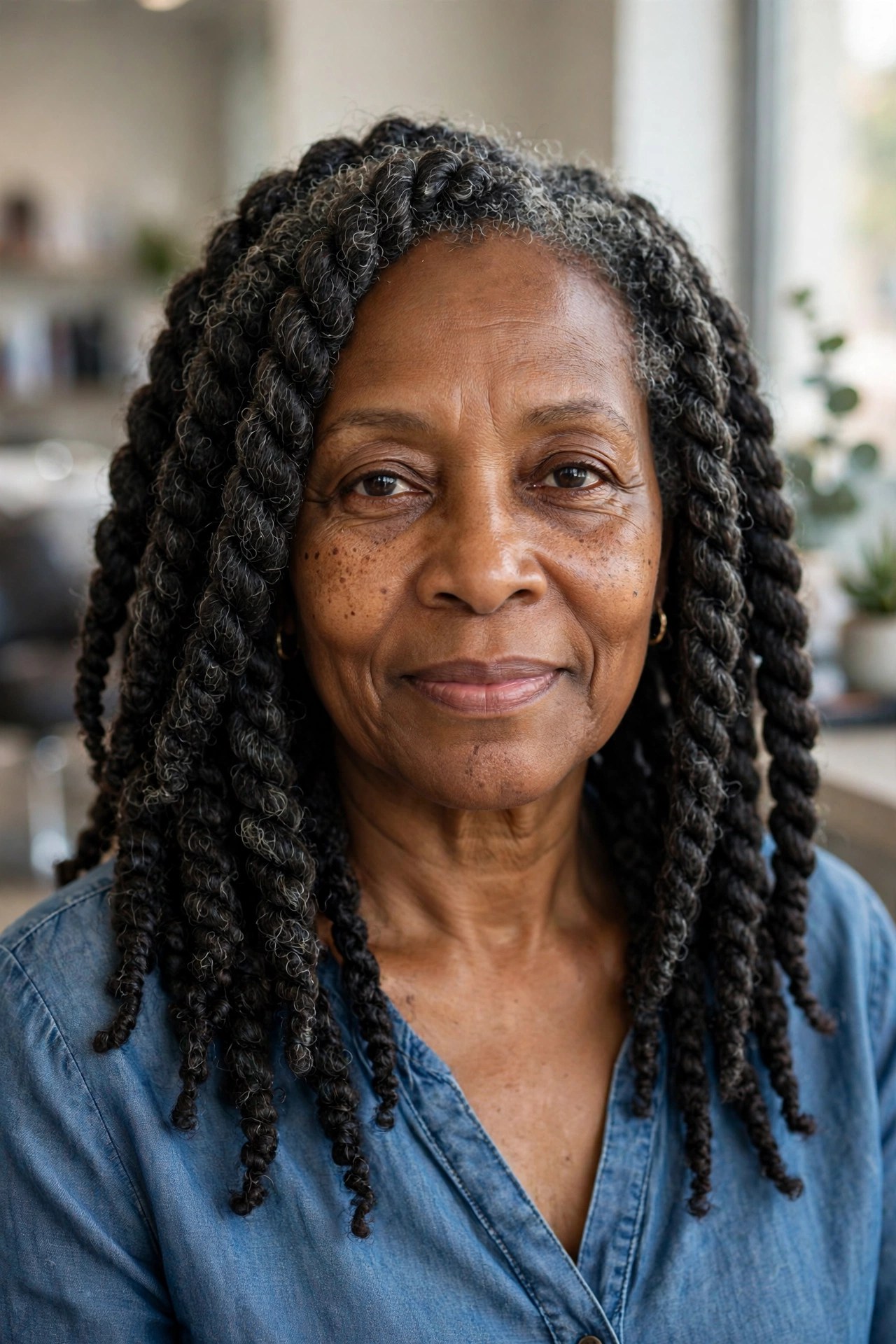
Chunky twists are the relaxed cousin of the Senegalese twist: bigger sections, a softer finish, and one of the fastest installs on this list. The plump twists have a natural, organic look that pairs beautifully with silver threading through at the roots.
Because there are fewer twists, your scalp is easy to reach for moisturising and cleansing — a real advantage if dryness is your main concern. Refresh individual twists as they loosen rather than redoing the whole head, and plan on three to five comfortable weeks of wear.

13. Fulani Braids with Subtle Gold Cuffs
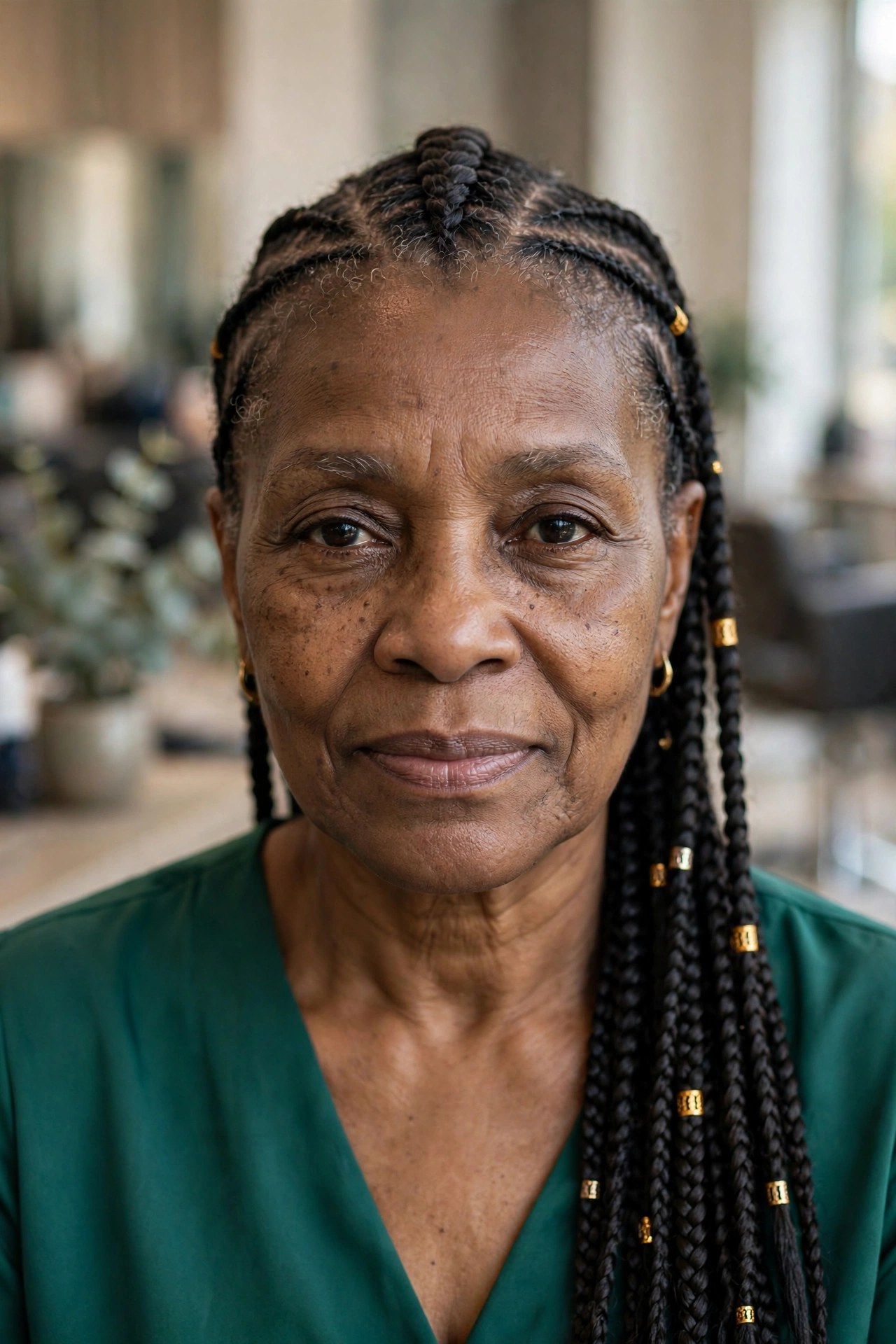
Fulani braids — a centre braid with finer cornrows at the sides and long braids falling behind — carry real cultural heritage and unmistakable elegance. A few small gold cuffs, rather than lots of beads, keep the finish grown-up and refined.
The side cornrows should be braided with a light hand, since they sit close to the temples where hair is often finest. Keep accessories minimal and lightweight; heavy beads on mature hair are a quiet cause of breakage. Worn loose or swept to one side, this is a style with genuine presence.
14. Braided Bob with Curly Ends
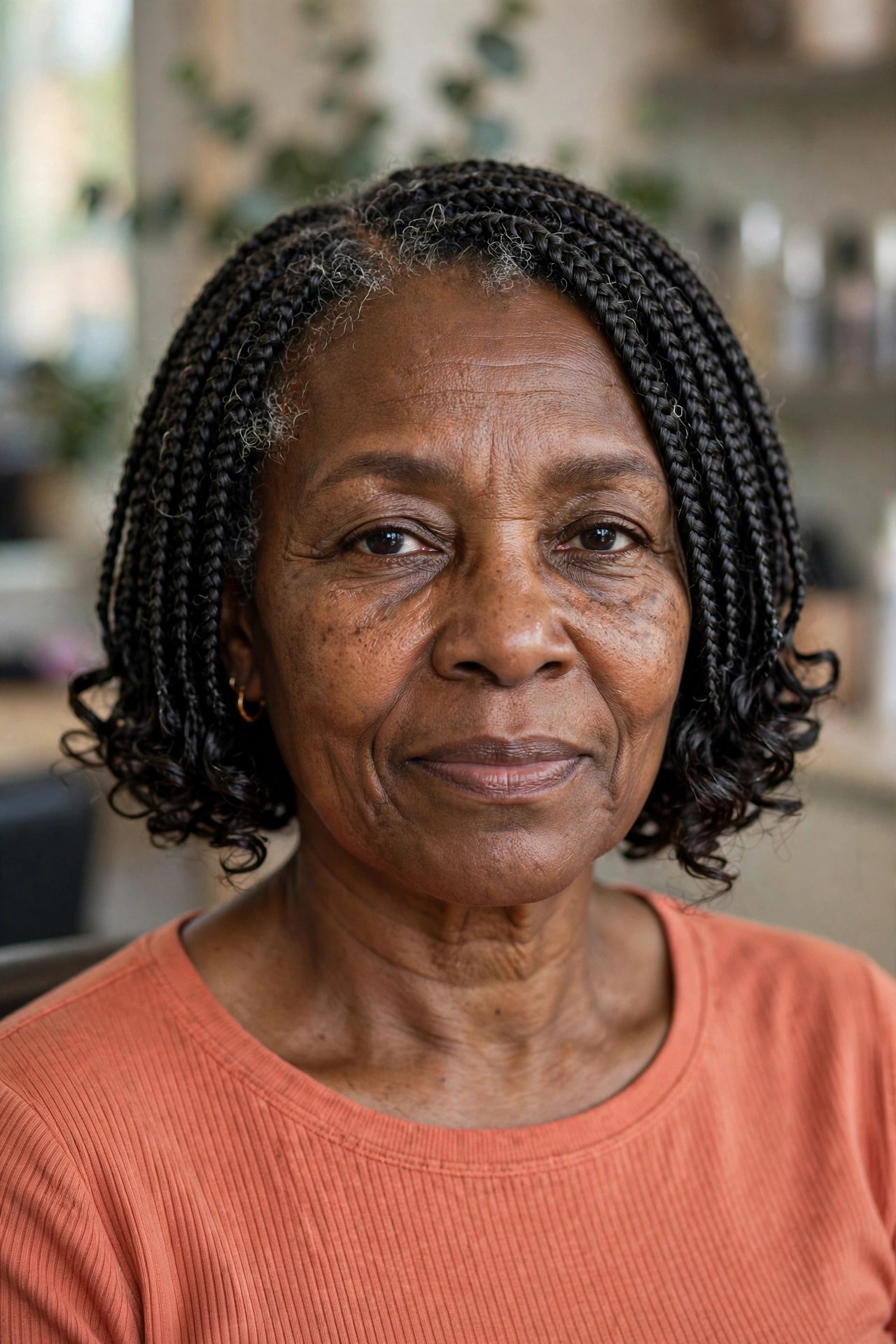
A braided bob gives you the polish of a bob with none of the daily heat styling. Short box braids are cut or installed to bob length, and soft curly ends keep the outline light and feminine rather than blunt and heavy.
Bob length is wonderfully kind to your neck and scalp — there is simply less hair pulling at the root. It is also one of the easiest protective styles to dress up or down. If your own hair is delicate, ask for knotless starts at the front so the shorter braids around your face sit comfortably from day one.
15. Side-Parted Cornrows
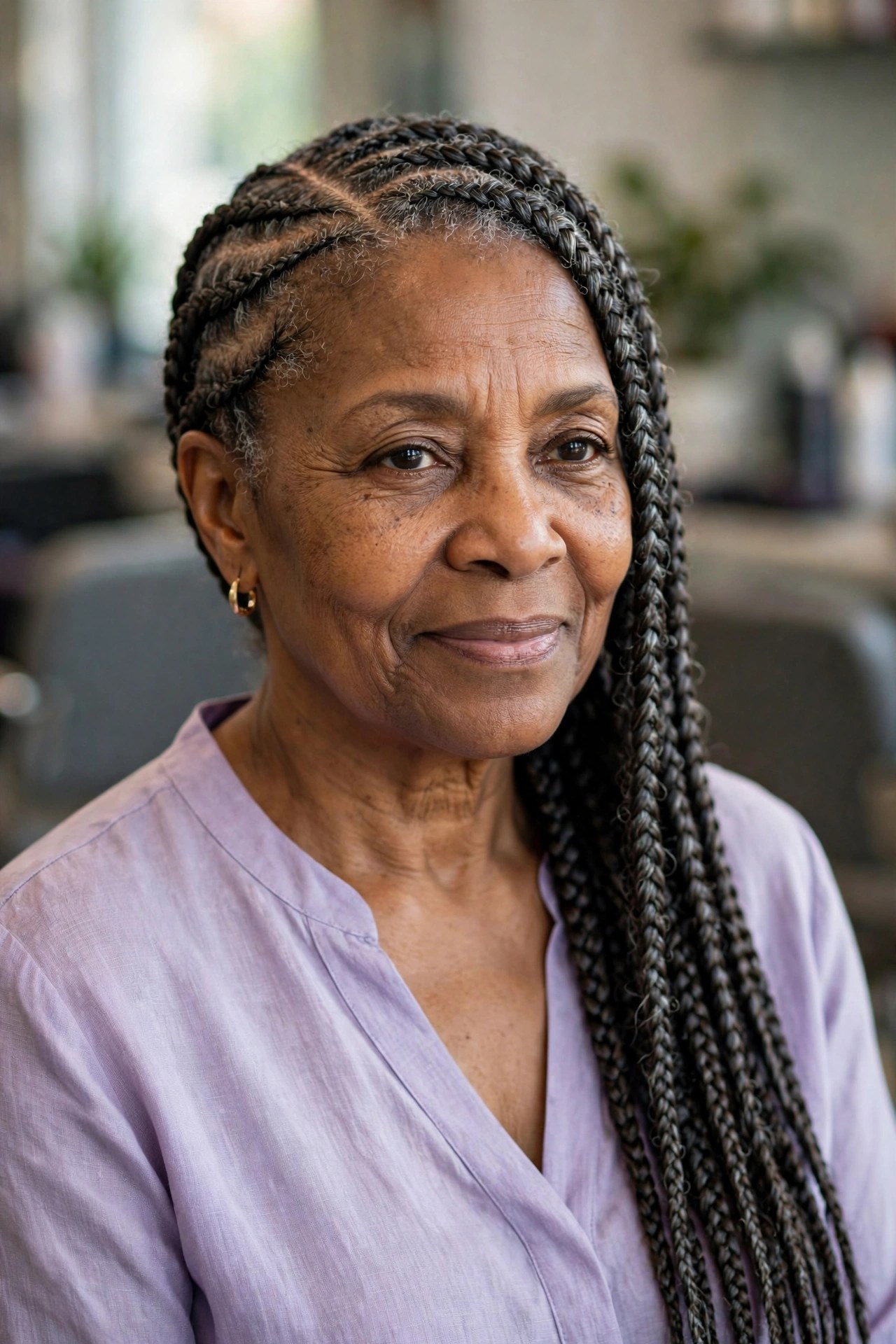
A deep side part changes everything about cornrows: the rows sweep diagonally, the long braids fall over one shoulder, and the whole style gains the asymmetry that makes a look feel modern and flattering to the face.
Side parts are especially kind if one side of your hairline is stronger than the other — your braider can design the pattern around it. As with all cornrows, medium rows, no tight temples, and a firm end date of four to six weeks will keep this style protective in practice, not just in name.
16. Mini Twists on Natural Hair
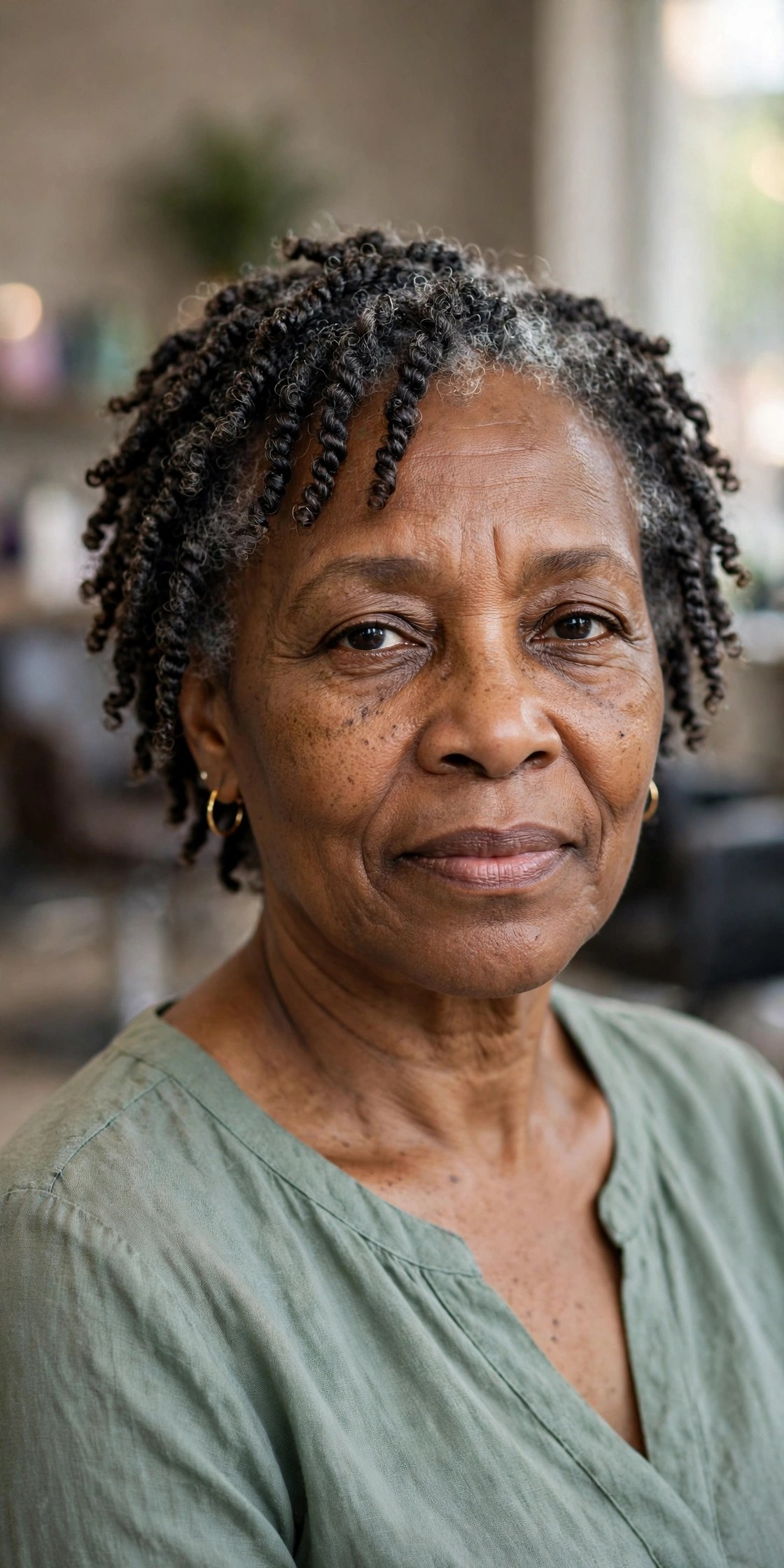
Mini twists are the purist’s protective style: your own hair, twisted in small sections, with no extensions, no added weight, and no tension at all beyond the twist itself. They show off your natural texture and any silver at the roots beautifully.
They take patience to install but repay it with two to four weeks of wash-and-go ease, and they can be worn pinned, half-up, or under a scarf. Keep them moisturised with a leave-in worked in with your palms, retwist the front row when it softens, and enjoy a style that is entirely, proudly yours.
17. Goddess Twists with Loose Waves
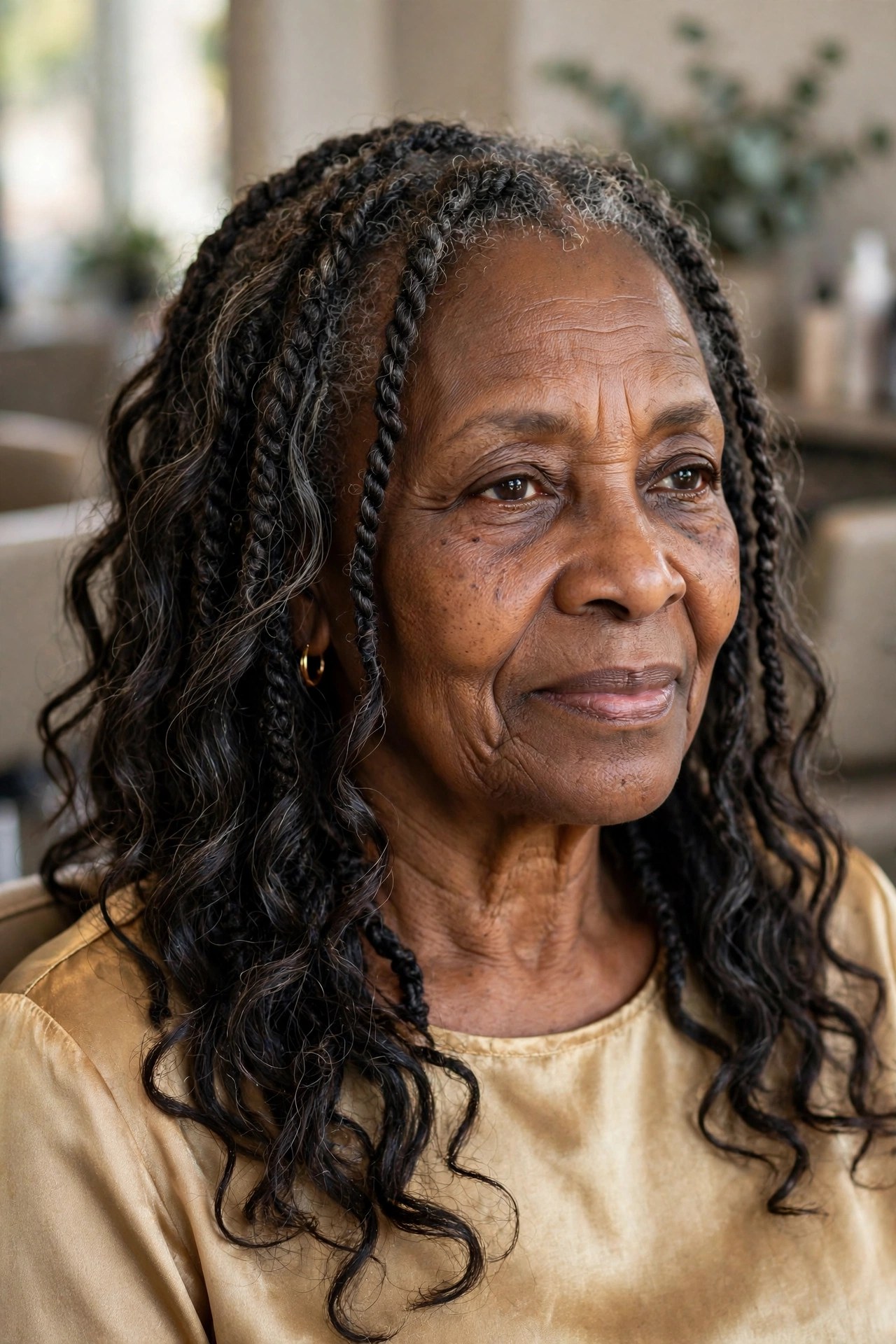
Goddess twists blend neat Senegalese-style twists with loose wavy strands woven between them, giving you structure and softness in the same style. The waves break up the uniformity, which many women find more forgiving and natural-looking as the style ages.
Treat the loose pieces gently — separate them with your fingers each morning and use a light serum rather than heavy oils that weigh them down. Medium twists keep the overall weight sensible, and shoulder to mid-back length gives you styling options without strain.
18. Box Braids in a Loose High Bun
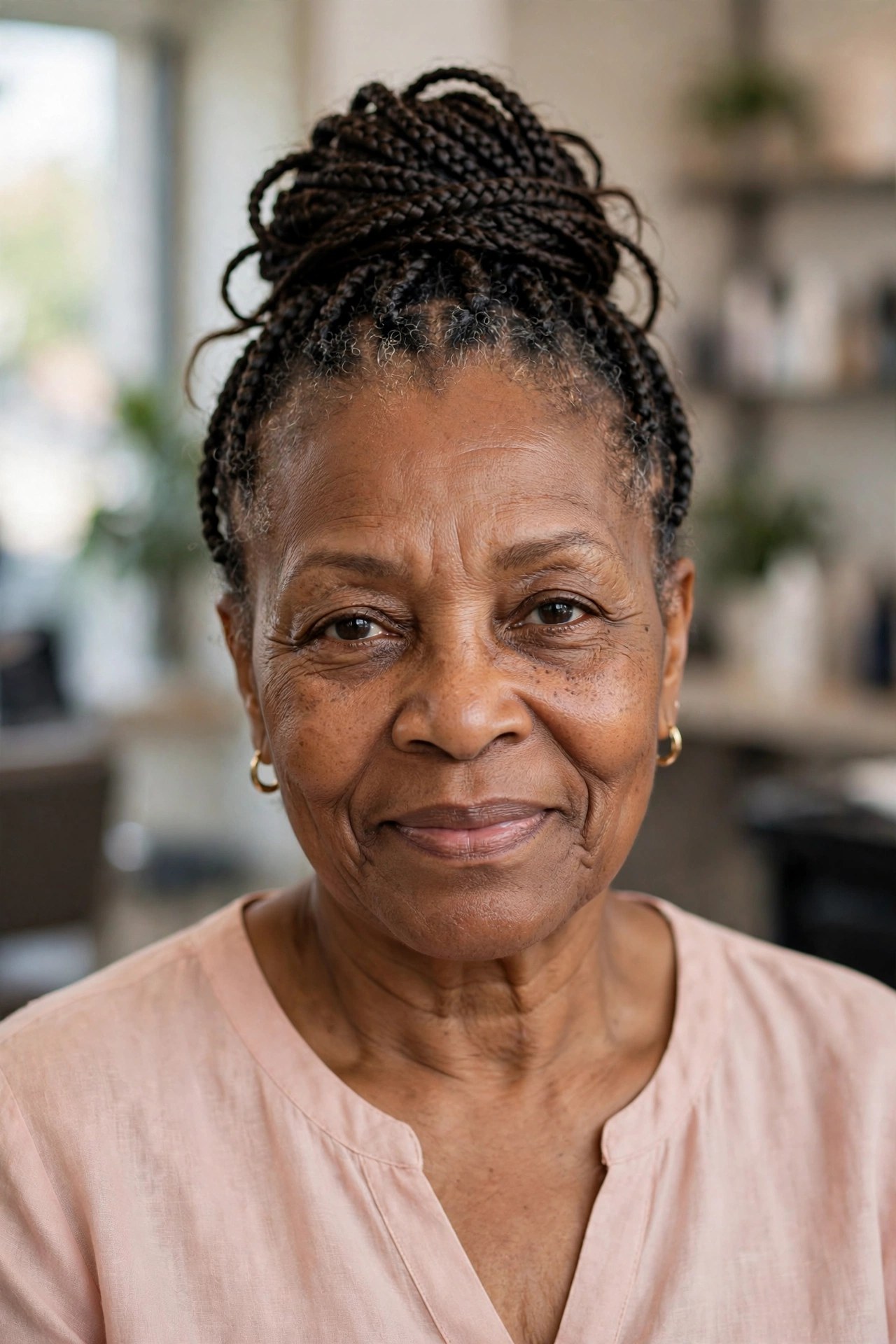
Sometimes the style is in the styling: medium box braids gathered into a loose, high bun give you instant height, a lifted look around the face, and a completely different mood from the same install you wore loose yesterday.
The word that matters is loose. Gather the braids with a soft, wide band, never a thin elastic pulled tight, and do not sleep in a high bun — that sustained pull is exactly what edges over 50 cannot afford. Alternate bun days with loose or low-ponytail days and the style stays kind.
19. Crochet Twists
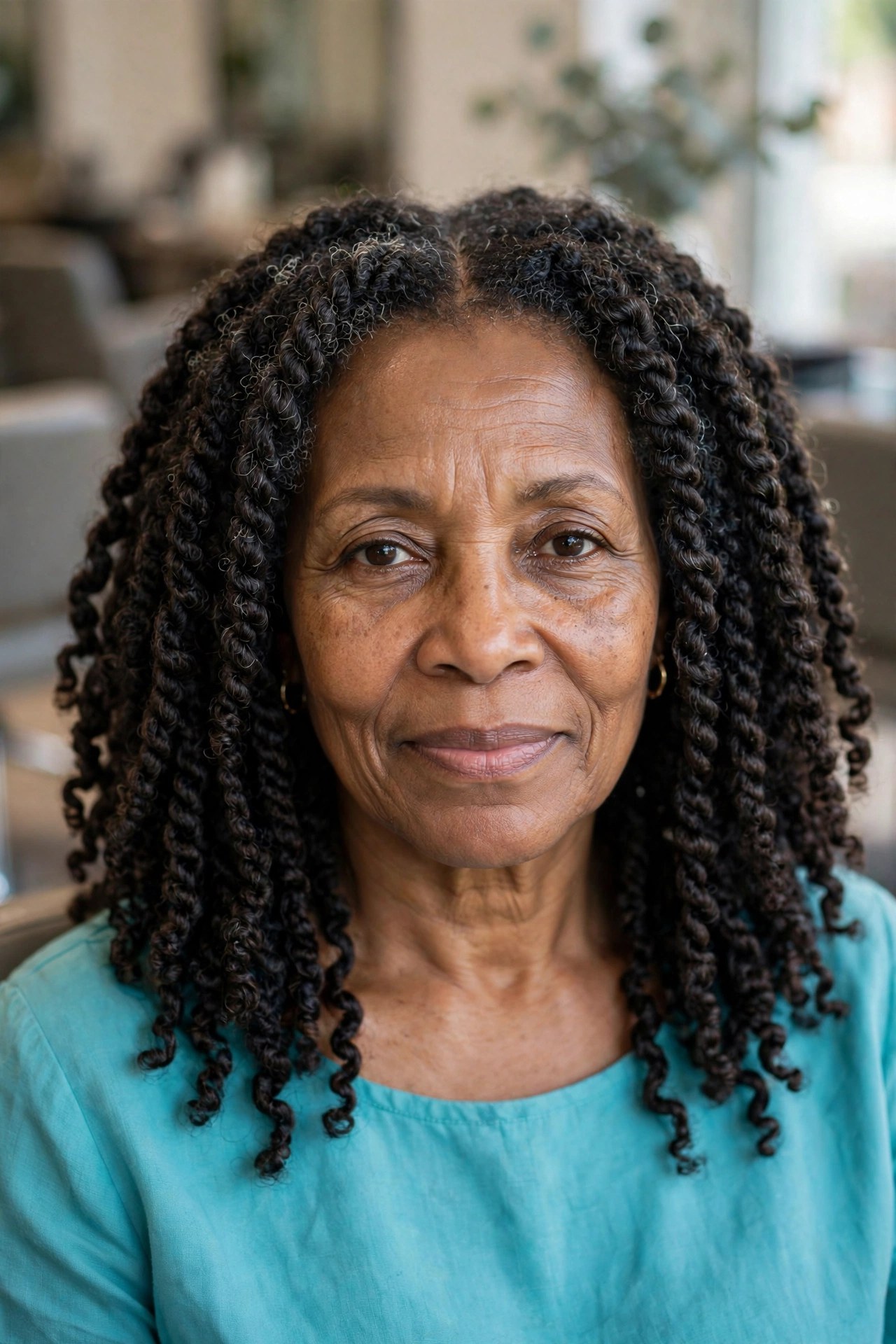
Crochet twists are installed by looping pre-twisted hair through a cornrow base with a latch hook, so your own hair is fully tucked away and the appointment is far shorter than individual twists. The finished look is full, bouncy, and surprisingly natural.
Because your hair sits in cornrows underneath, the base must be braided comfortably — snug is fine, tight is not. Crochet styles are light for their volume, which your scalp will appreciate. Cleanse the base gently, keep the twists moisturised on the surface, and plan on four to six weeks.
20. Long Knotless Braids with Silver Streaks
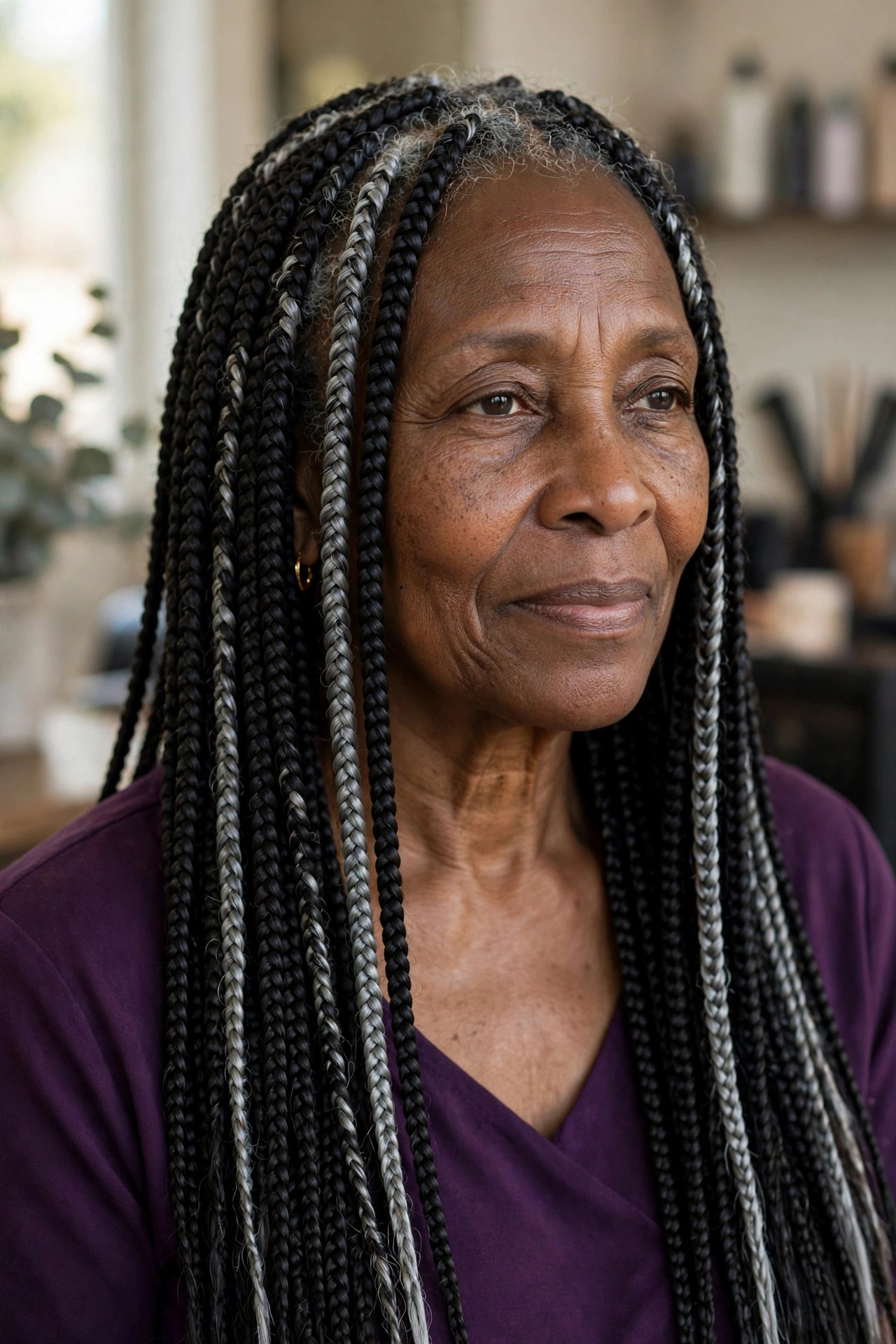
For women who love length, long knotless braids with a few deliberate silver streaks woven through are the finale look: dramatic, graceful, and completely at ease with graying hair. The streaks catch the light and make the whole style feel designed rather than grown out.
Length means weight, so protect yourself: choose lightweight braiding hair, keep the braids medium rather than fine, and be honest with your braider if your neck or scalp tires easily — bra-strap length may serve you better than waist length. Wear them down, half-up, and in a low loose ponytail in rotation.
Recommended Products
These are the care staples that keep a protective style comfortable and your own hair healthy underneath it: gentle cleansing, real moisture, kind edges, and satin protection every single night.
Gentle Protective-Style Care Checklist
- Say it in the chair: no tension on your edges — pain is information, not a stage to sit through.
- Keep any install to six weeks at most, and rest your hair one to two weeks between styles.
- Cleanse along the parts every one to two weeks; a clean scalp is a comfortable scalp.
- Moisturise lightly and often rather than heavily and rarely — your roots drink it in better.
- Sleep in a satin bonnet or on a satin pillowcase every night to cut friction and frizz.
- Never sleep in a tight high bun or ponytail; loosen or release the style overnight.
- At takedown, detangle patiently with conditioner and fingers before you reach for a comb.
Frequently Asked Questions
What is the gentlest protective style for thinning edges over 50?
Knotless braids, feed-in cornrows, and flat twists on your own hair are usually the gentlest options, because none of them start with a tight knot or concentrated pull at the hairline. Whichever style you choose, ask for medium parts at the front, no tension on your edges, and a wear time of six weeks or less.
How long should I keep braids or twists in after 50?
Four to six weeks is a sensible maximum for most women over 50. Keeping a style in longer lets shed hair and product build up at the roots, which can cause matting and breakage at takedown. Give your hair at least a week or two of rest, deep conditioning, and a trim if needed between installs.
Can protective styles actually damage my hair?
Yes — a protective style only protects when it is installed and worn gently. Braids that hurt, feel tight, or leave bumps at the hairline are too tight and should be loosened or removed. Weight that is too heavy for fine hair, styles kept in too long, and skipping scalp cleansing altogether can all turn a protective style into a damaging one.
How do I care for my scalp while wearing braids or twists?
Cleanse along the parts every one to two weeks with a gentle co-wash or diluted shampoo, rinse well, and dry thoroughly. Between washes, moisturise your scalp lightly — a little goes a long way — and sleep in a satin bonnet or on a satin pillowcase to reduce friction and keep the style smooth.
Should I choose braids or twists if my hair is fine?
Twists are often the kinder choice for fine hair because they are generally lighter and quicker to install and remove. If you prefer braids, knotless braids in medium sections at a moderate length keep the weight manageable. Avoid very small, very long braids, which combine maximum tension with maximum weight.
How can I make gray hair look intentional in braids?
Blend silver or gray extension hair through your braids or twists so your regrowth becomes part of the design, or place a few deliberate silver streaks where they frame your face. This removes the stark line between dyed lengths and gray roots and means far less colour maintenance between styles.
The most beautiful protective style is the one you can wear comfortably for weeks and remove to find your own hair in better condition than before. Choose the gentler technique, keep the weight honest, blend your silver in with pride, and let your hair rest properly between installs. When you are ready for a change of pace, a soft pixie cut for women over 50 can be a refreshing chapter between braiding seasons.