Highlights and Lowlights for Women Over 50 With Graying Hair
This post contains affiliate links. As an Amazon associate, I earn from qualifying purchases. I only recommend products that are of high quality and that I would use myself.
Somewhere around fifty, the relationship with your hair color changes. The solid, single-process dye that worked for decades starts demanding touch-ups every three weeks, the grow-out line gets sharper as more gray comes in, and the flat, one-tone result can suddenly look harsher against your skin than the gray ever did. Here is the good news: you do not have to choose between chasing your roots forever and going fully gray before you are ready.
Highlights and lowlights are the middle path — and honestly, the most flattering one. Instead of covering your gray, these techniques weave light and depth around it, so your natural silver becomes part of the design. The result is dimensional, softer on the face, and dramatically lower maintenance. Whether your hair is ten percent gray or ninety, worn in a bob, a lob or long layers, there is a combination below that was made for exactly where you are in the transition.
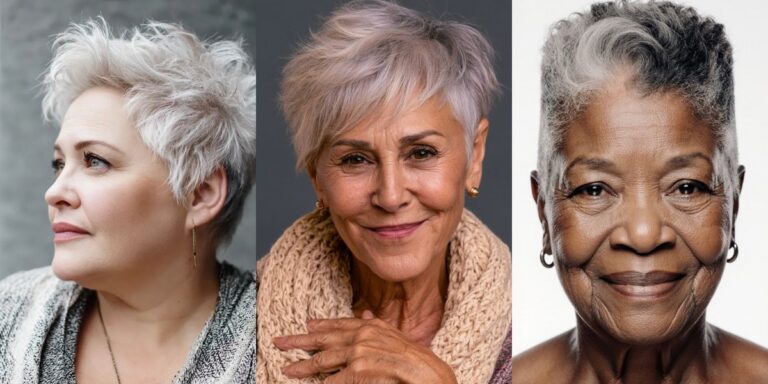
Before you book, it helps to know which shapes show dimension best. If you are still deciding on a cut to pair with your new color, browse our favorite pixie cuts for women over 50 for shorter options that make highlights and lowlights sing.
Table of Contents
- 1. Ash-Blonde Highlights to Blend Gray Roots
- 2. Herringbone Highlights on a Layered Lob
- 3. Warm Golden Lowlights for Depth on Silver Hair
- 4. Champagne Highlights on Salt-and-Pepper Hair
- 5. Charcoal Lowlights for Graphic Silver Dimension
- 6. Face-Framing Money Piece Highlights on a Graying Bob
- 7. Babylights Scattered Through Graying Layers
- 8. Balayage Highlights Melting Into Natural Gray
- 9. Pewter and Steel Lowlights on a Silver Pixie-Bob
- 10. Dimensional Ribbons on a Wavy Lob
- 11. Mushroom Blonde Highlights Over a Graying Base
- 12. Root Shadow With Lowlights for a Softer Grow-Out
- 13. Caramel Lowlights to Warm Up Cool Gray
- 14. Icy Platinum Highlights on Salt-and-Pepper Curls
- 15. Smoky Gray Highlights for a Seamless Silver Transition
- 16. Two-Tone Highlights and Lowlights on a Textured Bob
- 17. Honey Highlights Brightening Graying Face-Framing Layers
- 18. Deep Espresso Lowlights on Shoulder-Length Graying Hair
- 19. Subtle Lived-In Highlights on a Graying Shag
- 20. Gloss-Boosted Highlights and Lowlights on a Sleek Bob
- Recommended Products
- FAQs
How to choose your technique: Still mostly your natural color with gray at the temples? Start with babylights or a money piece. Halfway through a grow-out? Herringbone highlights or smoky blending will carry you. Mostly silver but feeling flat? That is a lowlight problem — warm golden, caramel or espresso lowlights restore the depth that makes silver glow. And whatever you choose, keep the tones within two or three shades of your natural gray pattern; that is the secret to a grow-out nobody can spot.
1. Ash-Blonde Highlights to Blend Gray Roots
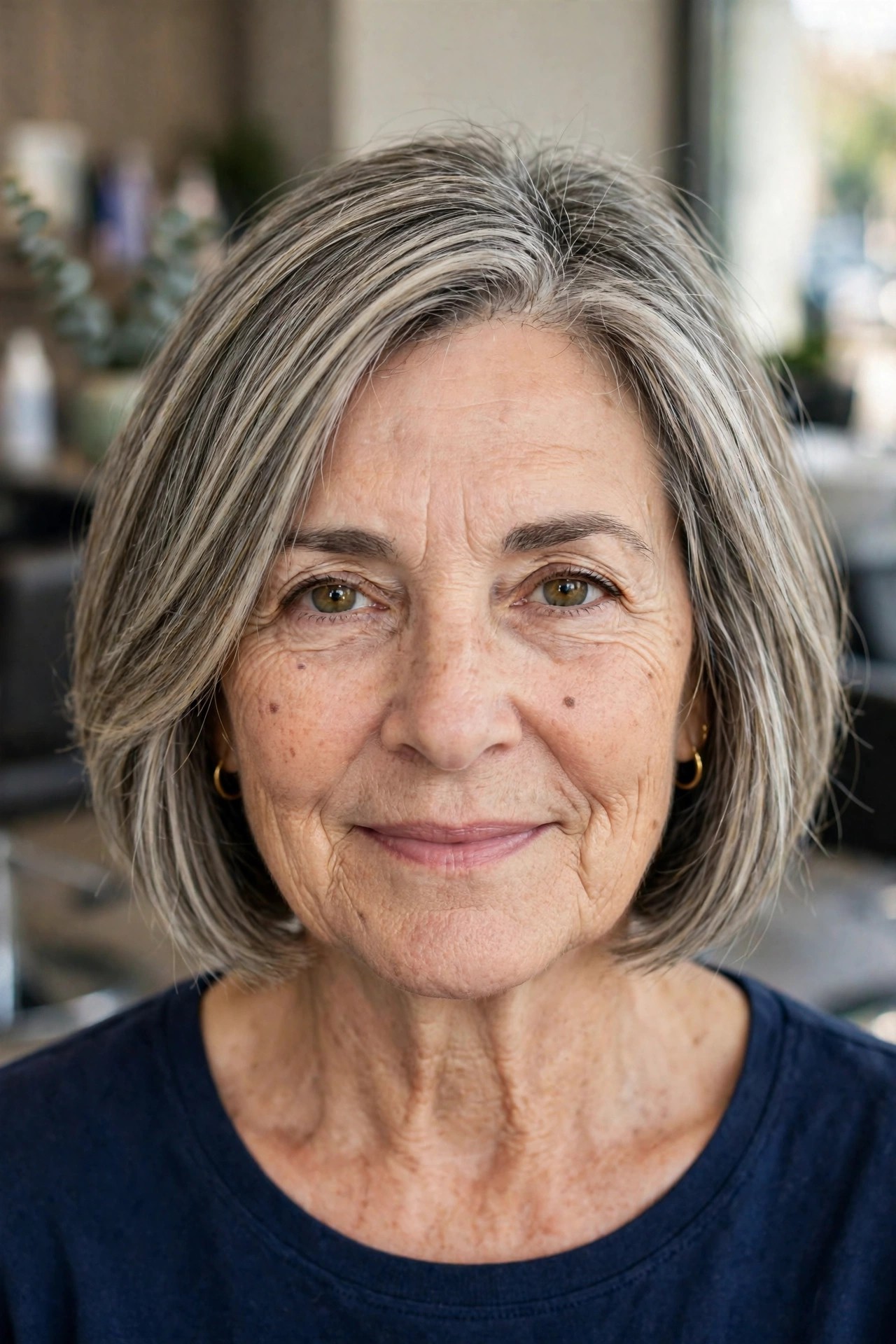
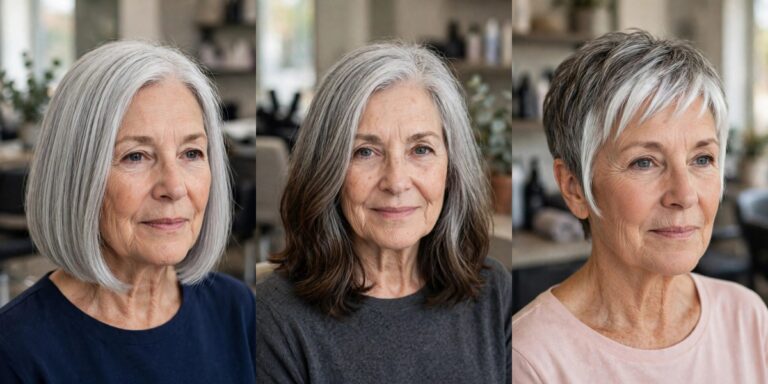
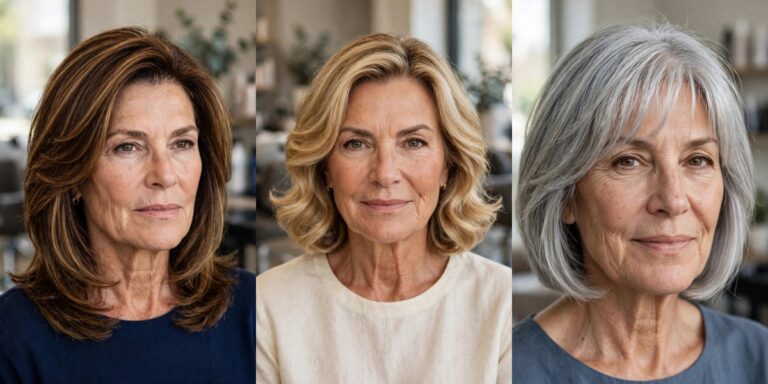
If your grays are coming in cool and silvery, ash-blonde highlights are the easiest peace treaty you can sign with them. Fine, pale ash pieces are woven right where the gray is densest, so the new growth reads as just another highlight instead of a hard line of regrowth. On a classic bob — like the ones in our guide to bob haircuts for women over 50 — the effect is bright, clean and quietly expensive-looking.
Ask your colorist to keep the ash pieces baby-fine and to gloss everything with a cool toner at the end. Because the tones sit so close to natural gray, you can comfortably stretch appointments to every ten or twelve weeks. At home, a purple shampoo once a week stops the ash from drifting yellow, and a light shine serum keeps the whole blend looking intentional rather than accidental.


2. Herringbone Highlights on a Layered Lob
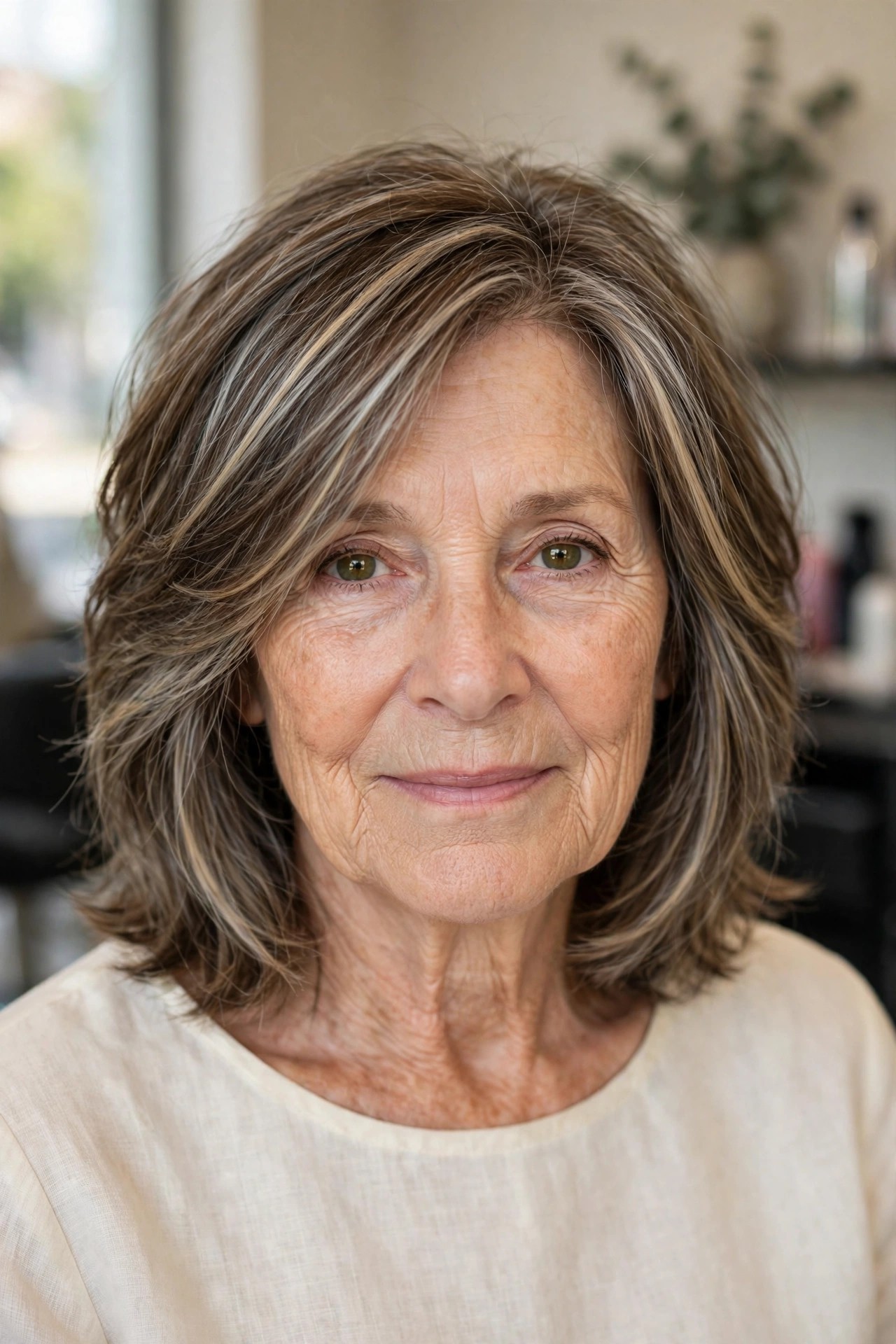
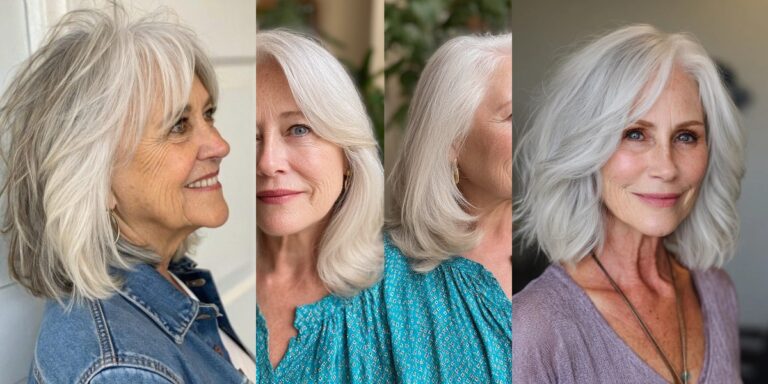
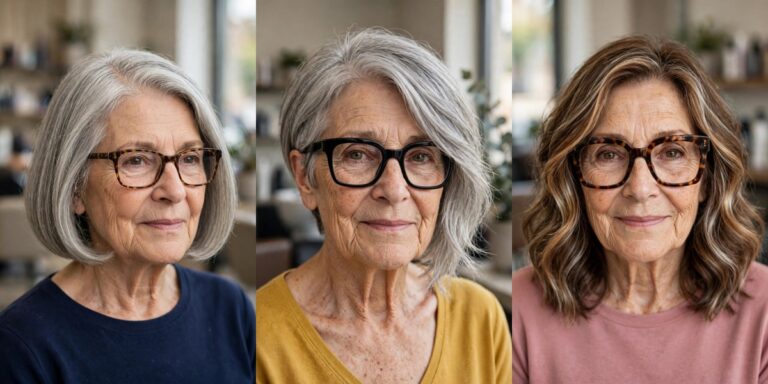
Herringbone highlights have become the signature gray-blending technique for women over 50, and one look explains why. Instead of uniform stripes, your colorist places fine foils at alternating diagonal angles, weaving two or three tones — silver, ash, a whisper of gold — around your natural grays the way threads cross in herringbone fabric. Because your own gray pattern is irregular, the color grows out irregularly too, which means no visible line, ever.
This is the technique to request if you are transitioning away from full-coverage dye and want the journey to look designed rather than neglected. It works beautifully on a layered lob, where the movement of the layers shows off every tone. Maintenance is a partial refresh two or three times a year, plus gloss appointments to keep the silver pieces bright.

3. Warm Golden Lowlights for Depth on Silver Hair
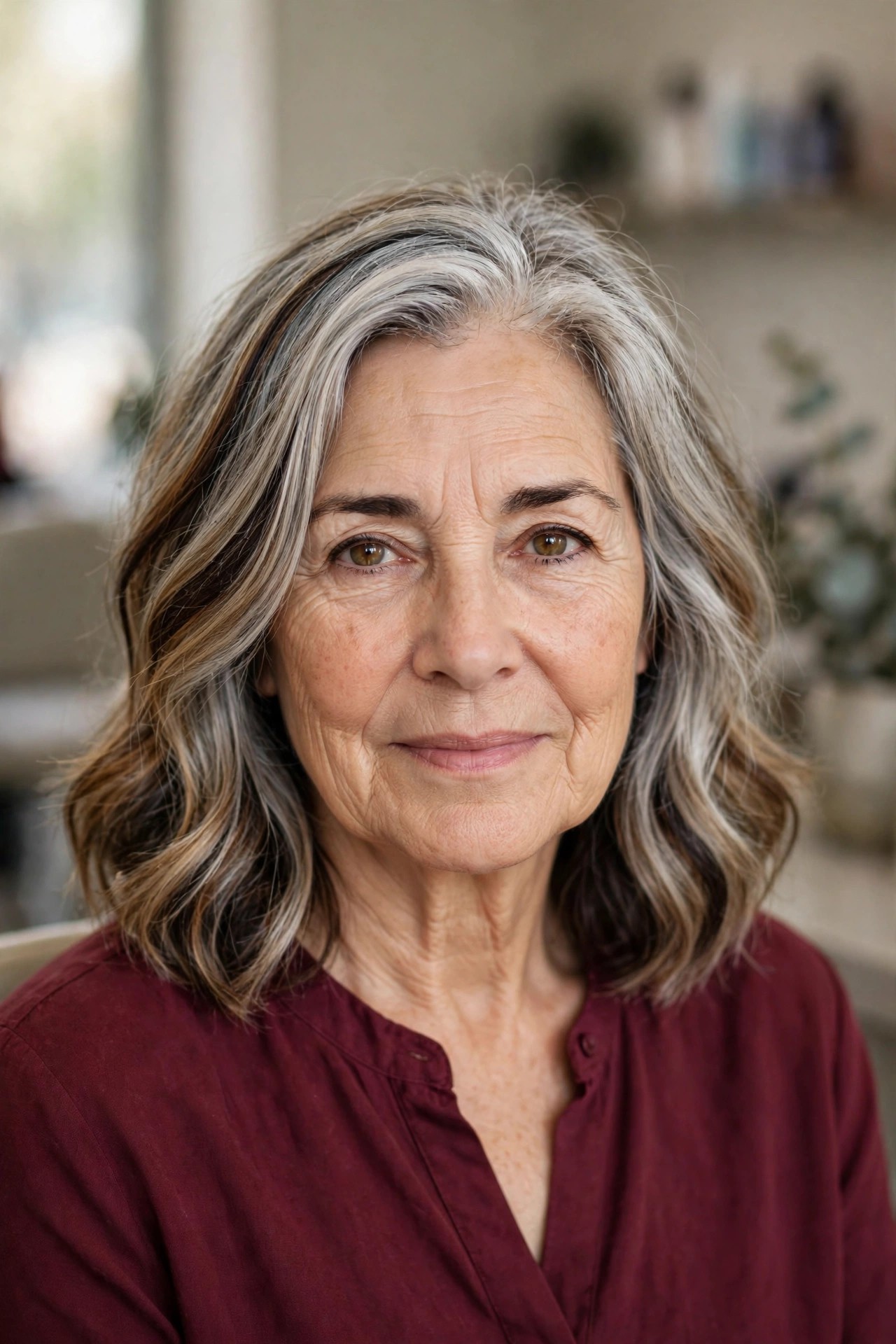
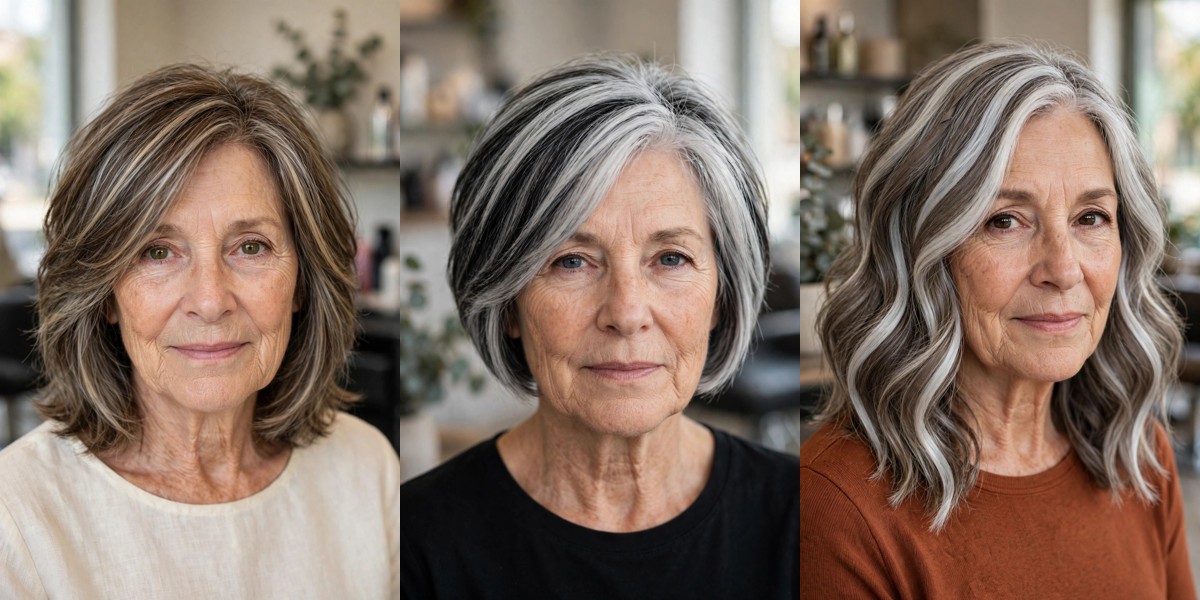
Fully silver hair can sometimes look flat or wiry, especially under harsh bathroom lighting. Warm golden-brown lowlights woven underneath the silver solve that in one appointment: the darker warmth sits in the interior of the hair, so the silver on top suddenly looks brighter, thicker and more dimensional by contrast. It is the same trick makeup artists use — depth underneath makes the light on top glow.
Keep the lowlights two shades deeper than your silver, never darker, so the result stays soft. This pairing flatters warm and neutral skin tones particularly well, and it is a kind option if your silver feels too cool against your complexion. A weekly moisturizing mask matters here, because lowlighted sections can grab product unevenly; even, hydrated hair keeps the contrast smooth.

4. Champagne Highlights on Salt-and-Pepper Hair
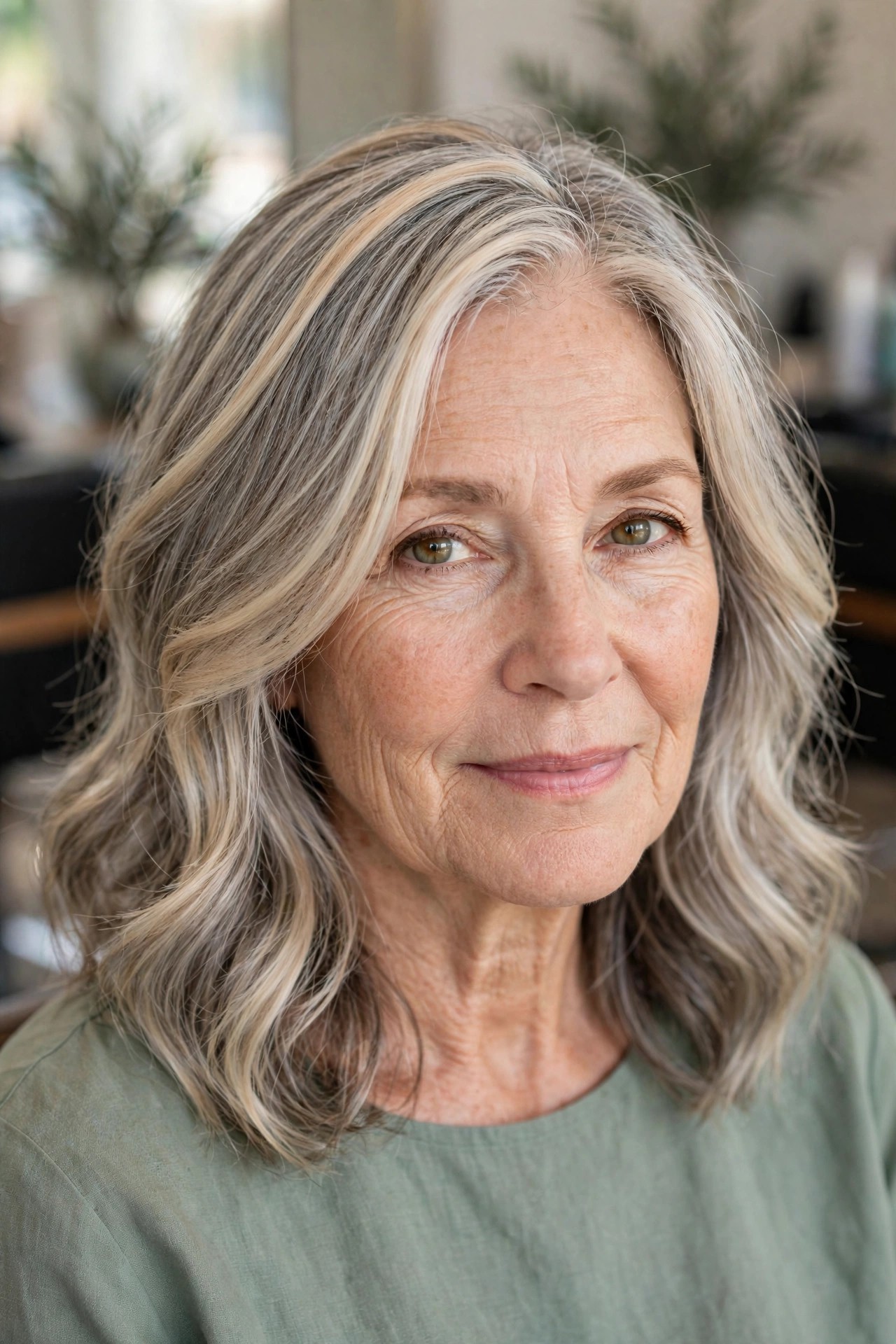
Champagne is the diplomat of hair color: not too cool, not too warm, and endlessly forgiving on salt-and-pepper hair. Pale champagne ribbons lifted through the front and crown melt into gray strands instead of fighting them, and the soft beige-gold tone brings a warmth to the face that pure silver sometimes washes away. On gentle waves, the ribbons catch light every time you move.
Champagne suits neutral and slightly warm undertones best, and it is a lovely first step if you have been dyeing your hair blonde for years and want to soften toward your natural gray. Ask for the brightest pieces around the face, fading softer through the back. A blowout brush at home recreates that salon wave in about ten minutes and shows the dimension off at its best.

5. Charcoal Lowlights for Graphic Silver Dimension
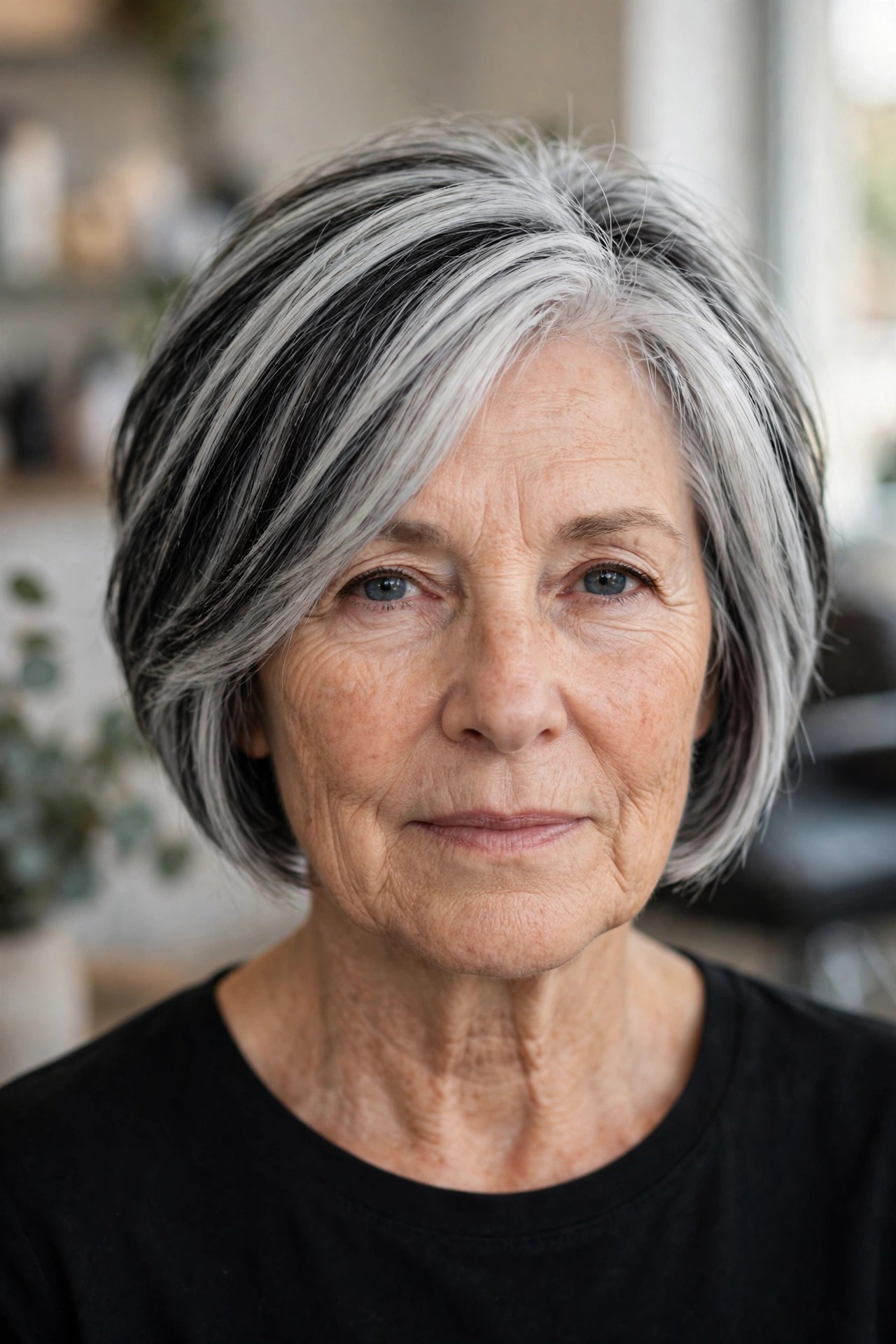
For the woman who finds soft blending a little too quiet, charcoal lowlights are the bold answer. Deep charcoal panels woven through bright silver create a striking, graphic contrast that looks deliberate and fashion-forward — think silver with shadow built in. On a smooth bob the effect is almost architectural, and it makes fine hair look noticeably denser because the eye reads the dark panels as depth.
This is a commitment look, so go in with reference photos and ask for the charcoal to be placed in panels rather than fine weaves. The grow-out is surprisingly kind, since charcoal fades toward your natural gray rather than away from it. Keep the finish glassy with a flat iron on low heat and a thermal protectant every single time — sleek surfaces are what sell the contrast.

Not sure which cut will show off your new dimension? Highlights and lowlights look best when the cut frames your face properly. Try our free Face Shape Finder to discover your face shape in under a minute, then take the result to your colorist along with your favorite idea from this list.
6. Face-Framing Money Piece Highlights on a Graying Bob
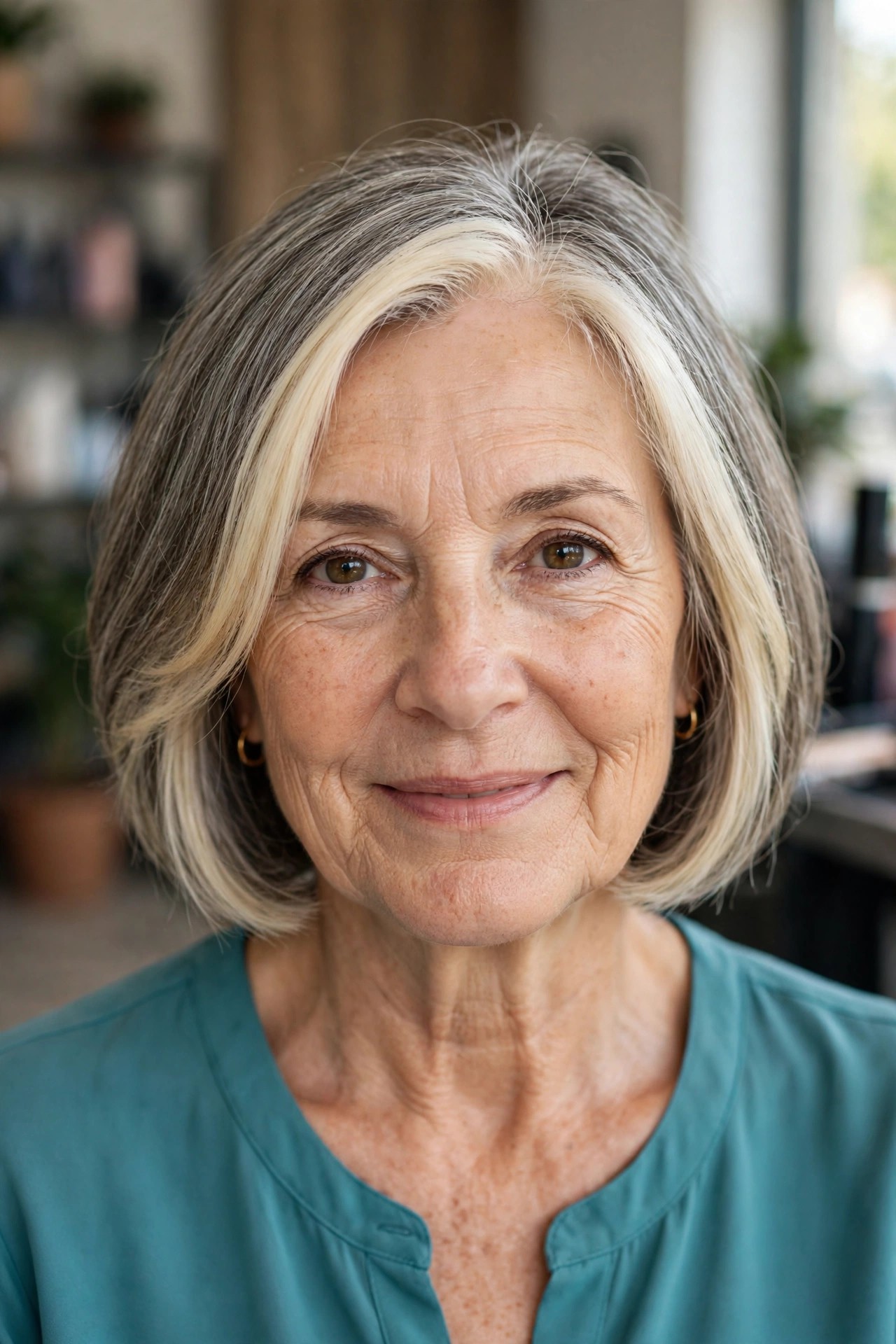
If you love your salt-and-pepper base but feel your face needs light, a money piece is the smallest change with the biggest payoff. Two bright sections are lightened right at the front hairline, echoing the place where many women naturally go gray first — so instead of hiding your lightest strands, you amplify them into a deliberate frame. The brightness lifts your whole complexion the way good lighting does.
Because only a small area is lightened, this is one of the gentlest and most affordable highlight services, and touch-ups take minutes. It pairs perfectly with the cuts in our roundup of stacked bob haircuts for women over 50. Keep the front pieces conditioned — they take the most heat styling — and a light hairspray will hold the frame in place all day.

7. Babylights Scattered Through Graying Layers
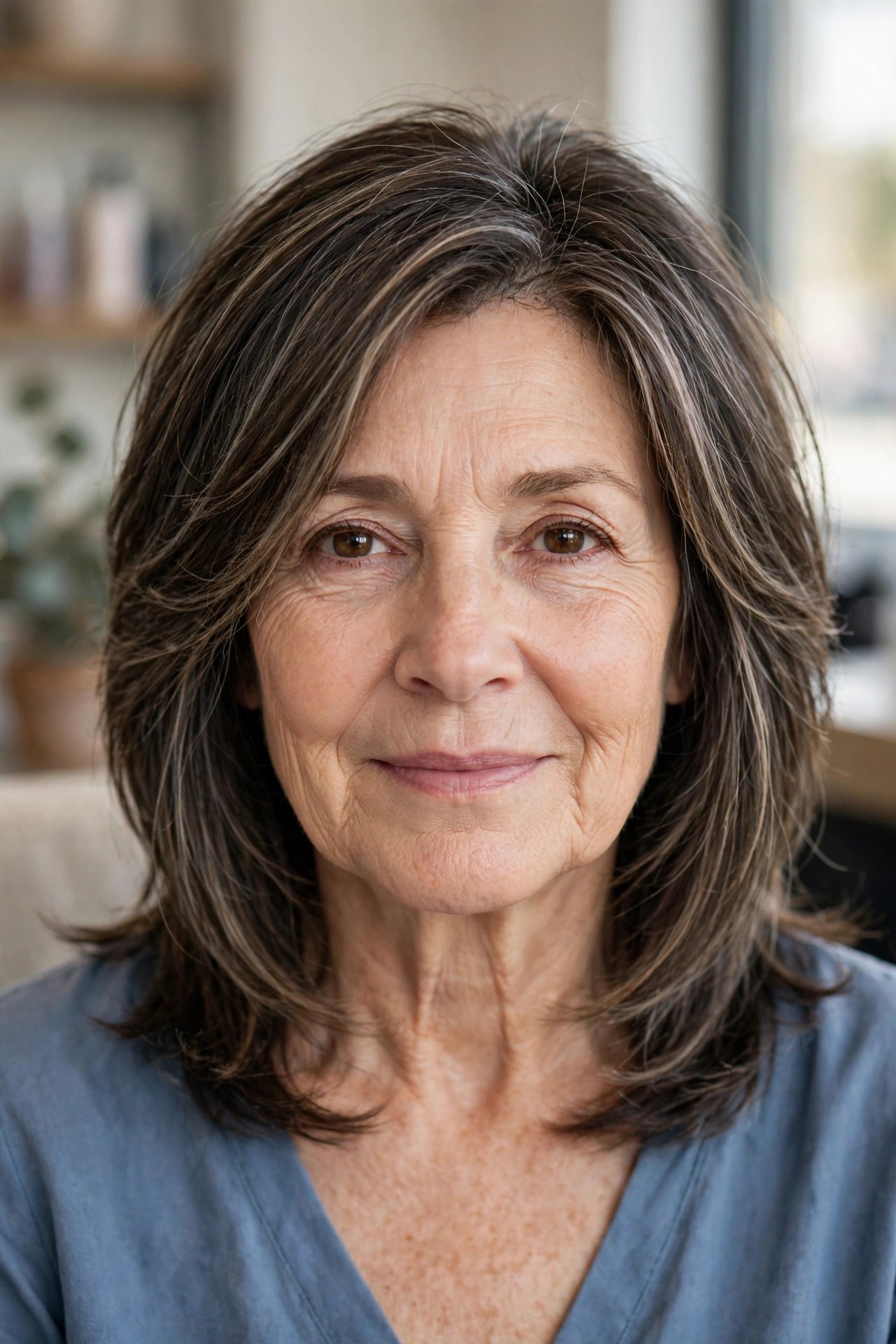
Babylights are highlights taken down to their finest possible weave — sections so thin they mimic the way a child’s hair lightens in the sun. Scattered through graying layers, they do not look like highlights at all; they simply make the grays look like they were always part of a sun-kissed plan. The result is the softest, most natural grow-out of any technique on this list.
This is the ideal choice if your gray is still under about forty percent and concentrated at the temples and parting. The appointment takes longer because the weaves are so fine, but you repay that time with months of invisible regrowth. Fine hair benefits doubly, since the micro-dimension creates an illusion of thickness. A lightweight foam adds body without disturbing the delicate color work.


8. Balayage Highlights Melting Into Natural Gray
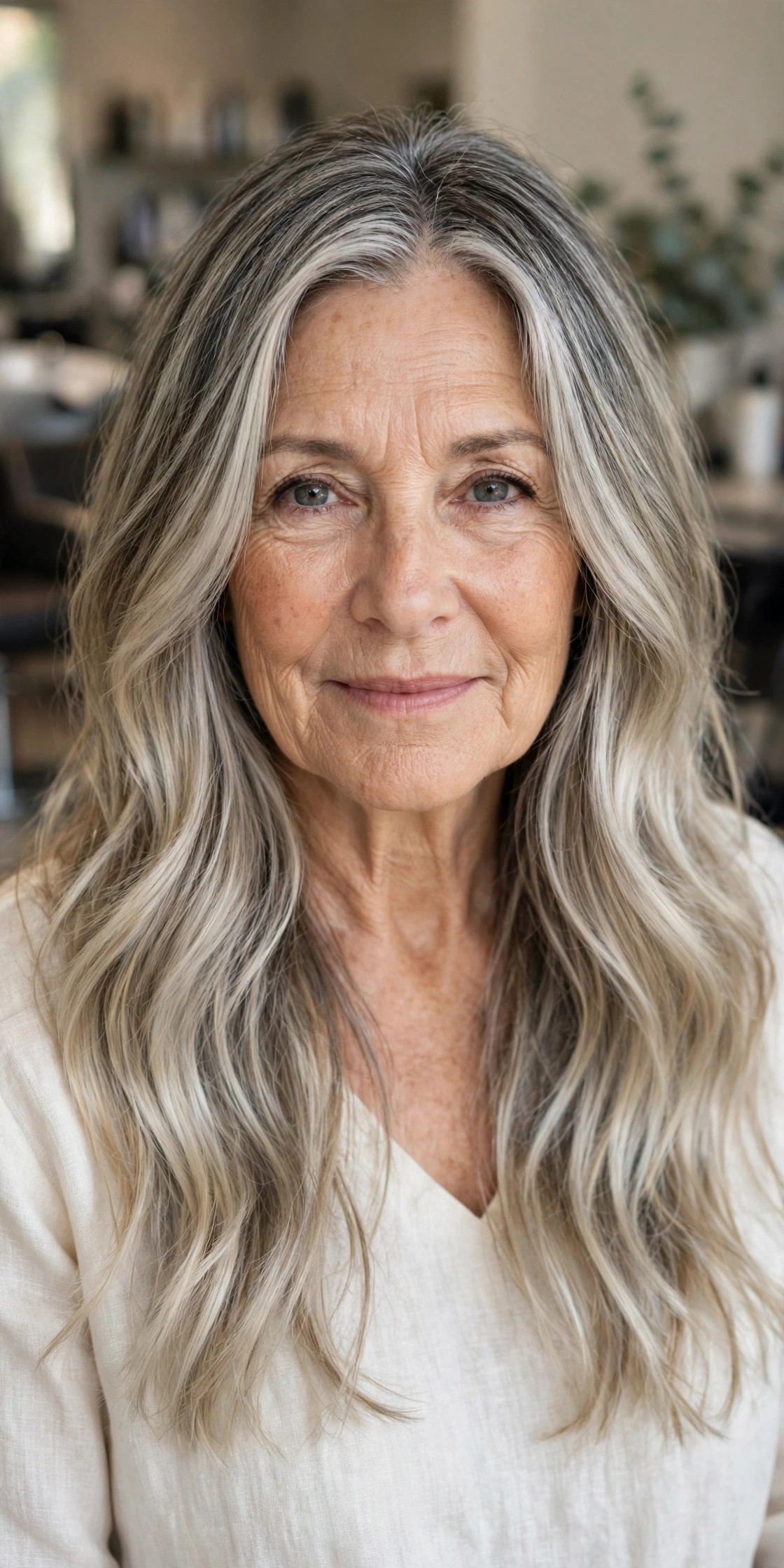
Balayage and gray hair were made for each other. Because balayage is painted on freehand and concentrated through the mid-lengths and ends, your natural gray at the roots is left completely alone — it simply melts into hand-painted ribbons of silvery ash blonde. There is no foil line, no demarcation, and on longer hair the gradient looks like light itself moving down the strand.
Ask your colorist to paint the ribbons where the sun would naturally hit and to keep the ends brightest. Longer lengths show the melt best, but a long bob works too. Because the roots are untouched, this is one of the lowest-maintenance services in the salon. Treat the lightened ends kindly: a satin pillowcase reduces the friction that dulls balayage between washes.


9. Pewter and Steel Lowlights on a Silver Pixie-Bob
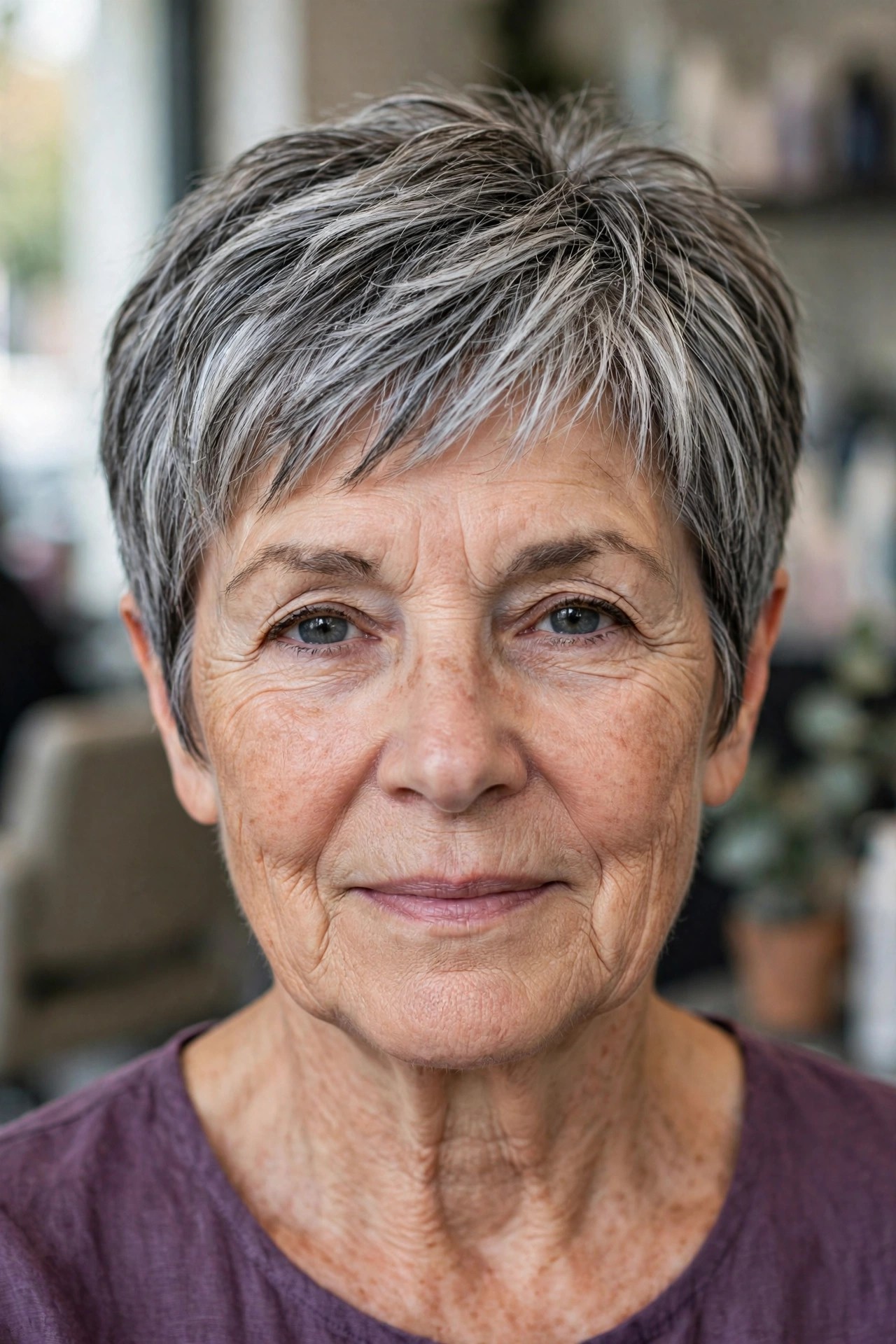
Short hair and silver are a glamorous pairing, but a pixie-bob cut close to the head can make one-note silver look thin. Pewter and steel lowlights — cool, blue-gray depths — carved through the longer top sections give the cut instant architecture. The darker steel tones make the bright silver pop, and the pixie shape shows every tonal shift when you sweep the fringe.
Cool lowlights like these suit pink and neutral undertones and blue or gray eyes beautifully. Because short hair is trimmed every four to six weeks, ask your colorist to refresh the lowlights every second or third cut rather than every visit. A fingertip of texturizing putty, pinched through the ends, separates the tones and makes the dimension read even on a rushed morning.

10. Dimensional Ribbons on a Wavy Lob
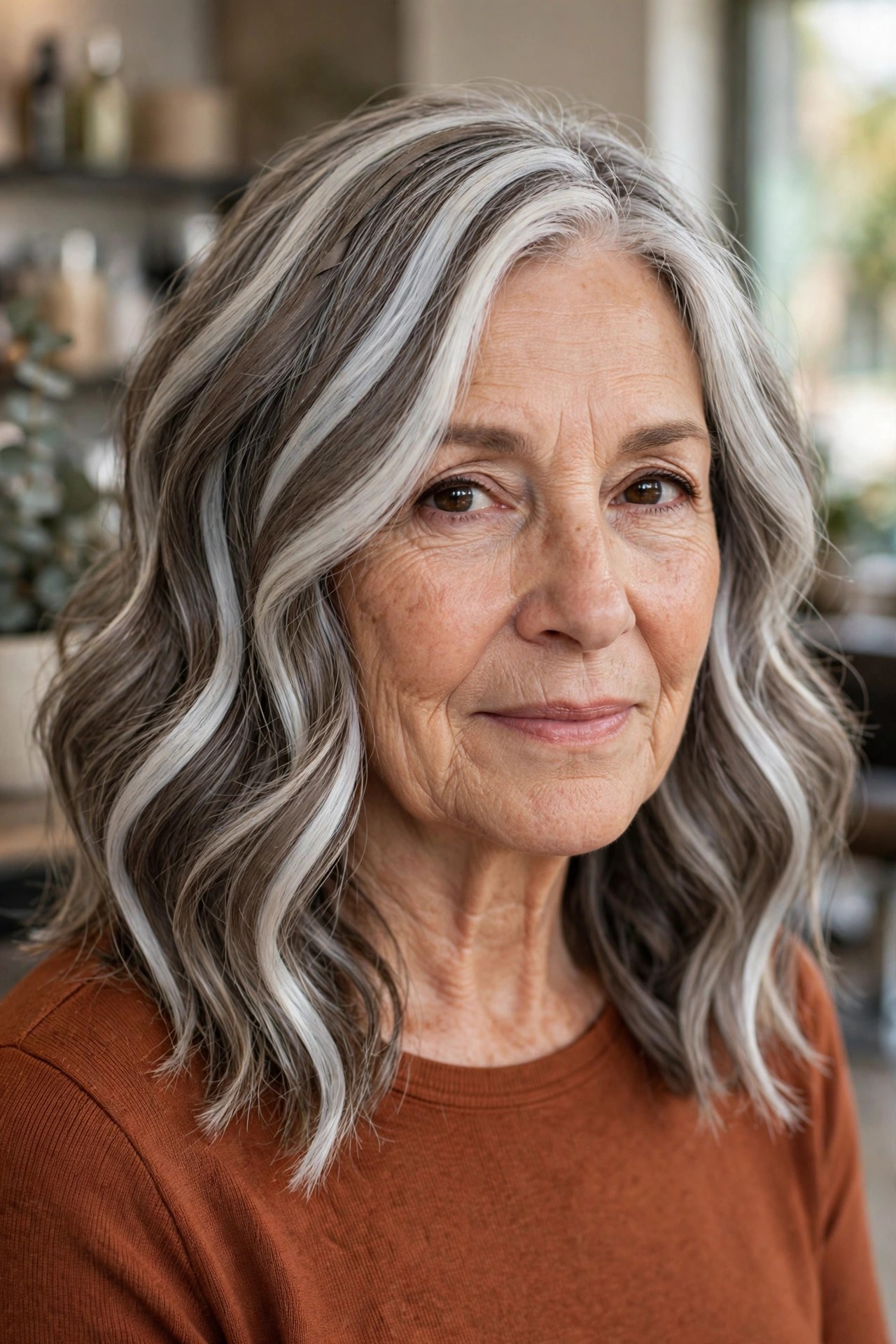
Where babylights whisper, ribbons speak up. Wider, deliberate ribbons of pale silver are alternated with deeper taupe lowlights through a wavy lob, so each wave carries a stripe of light and a stripe of shadow. The contrast is what creates that expensive, swishy movement — hair that looks like it is moving even in a photograph.
Ribbons need width to read, so this technique loves medium to thick hair and lengths at or below the chin. If your hair is fine, ask for slightly narrower ribbons so they do not overwhelm. Style with loose waves rather than straight: curling the ribbons makes the light-dark alternation spiral through the hair. A volumizing mousse at the roots keeps the lob from collapsing under its own drama.
11. Mushroom Blonde Highlights Over a Graying Base
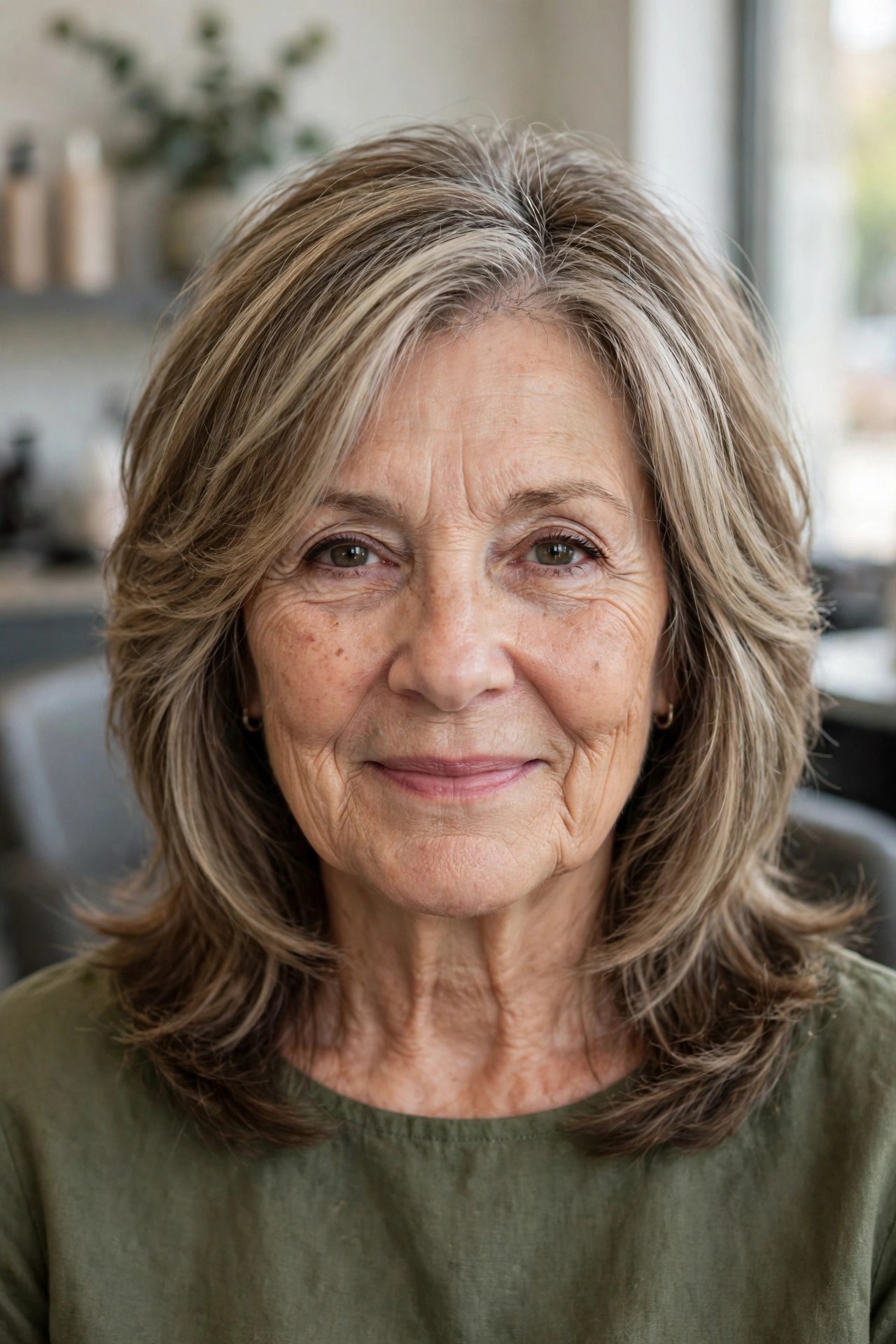
Mushroom blonde — that smoky blend of beige, taupe and ash — is the shade colorists reach for when gray roots and old warm dye are fighting each other. The mushroom tones sit exactly between the two, neutralizing brassy ends while harmonizing with cool gray growth, so the whole head finally speaks the same language. It is sophisticated, understated and very modern.
This is a corrective color, so book a consultation first and expect a toner to be part of the service. The payoff is a base you can maintain with glosses instead of constant root dye. Mushroom shades flatter cool and neutral skin and look especially refined with layered, collarbone-length cuts. Keep heat styling gentle, because smoky tones fade fastest under high heat.

12. Root Shadow With Lowlights for a Softer Grow-Out
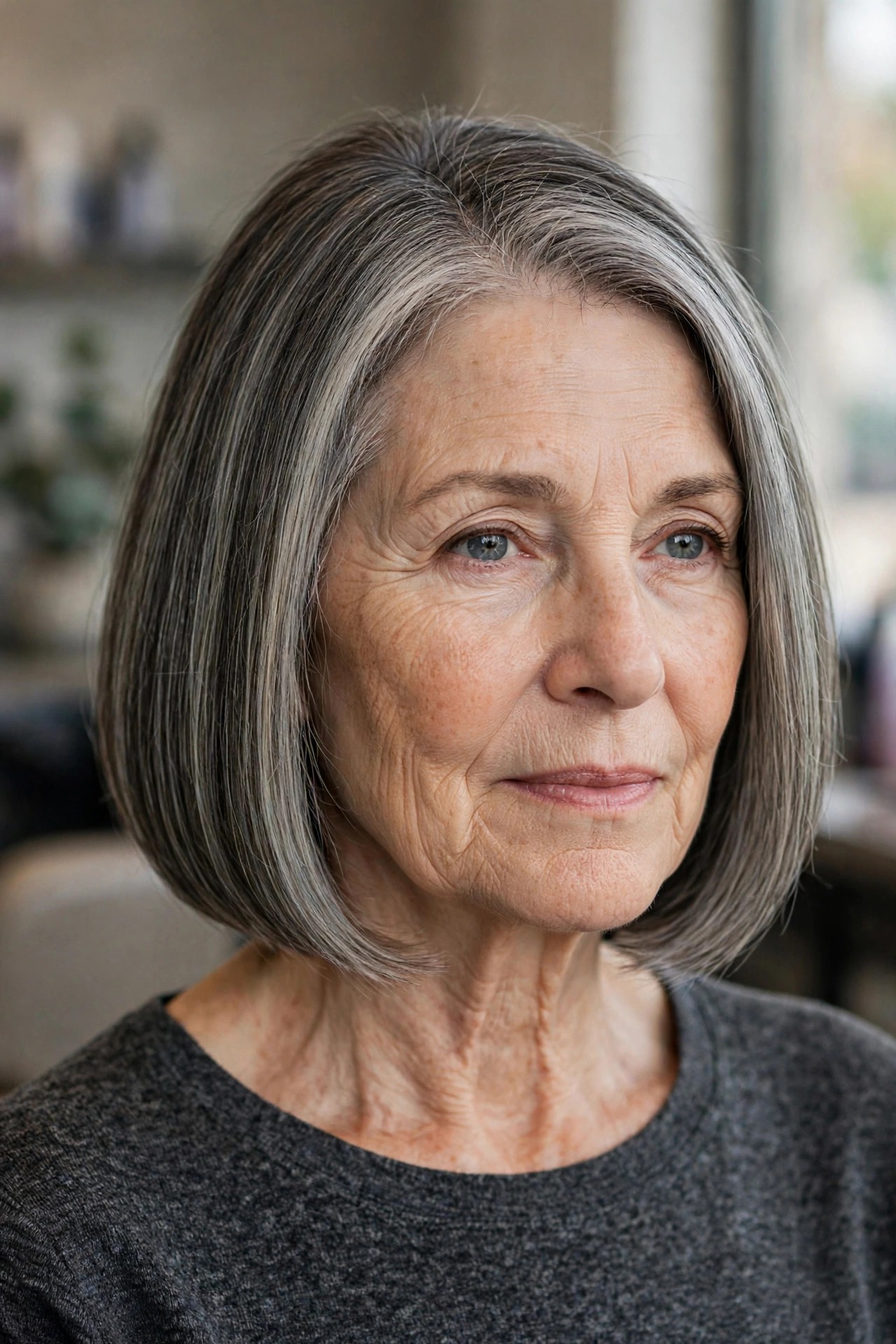
A root shadow is the quiet genius of gray blending. After highlights, your colorist paints a smoky, slightly deeper tone over the first inch or two of hair, blurring the border where highlight meets root. Add a scattering of lowlights just below that shadow and the eye can no longer find where your color ends and your natural gray begins — the grow-out simply looks like a gradient.
If the two-week root line is what drives you back to the salon, this technique can double your time between visits. It works on any base and any highlight shade, which makes it a perfect add-on to ask about at your next appointment. At home, dry shampoo stretched between washes protects the shadow, since every wash lifts a little of that smoky tone away.
13. Caramel Lowlights to Warm Up Cool Gray
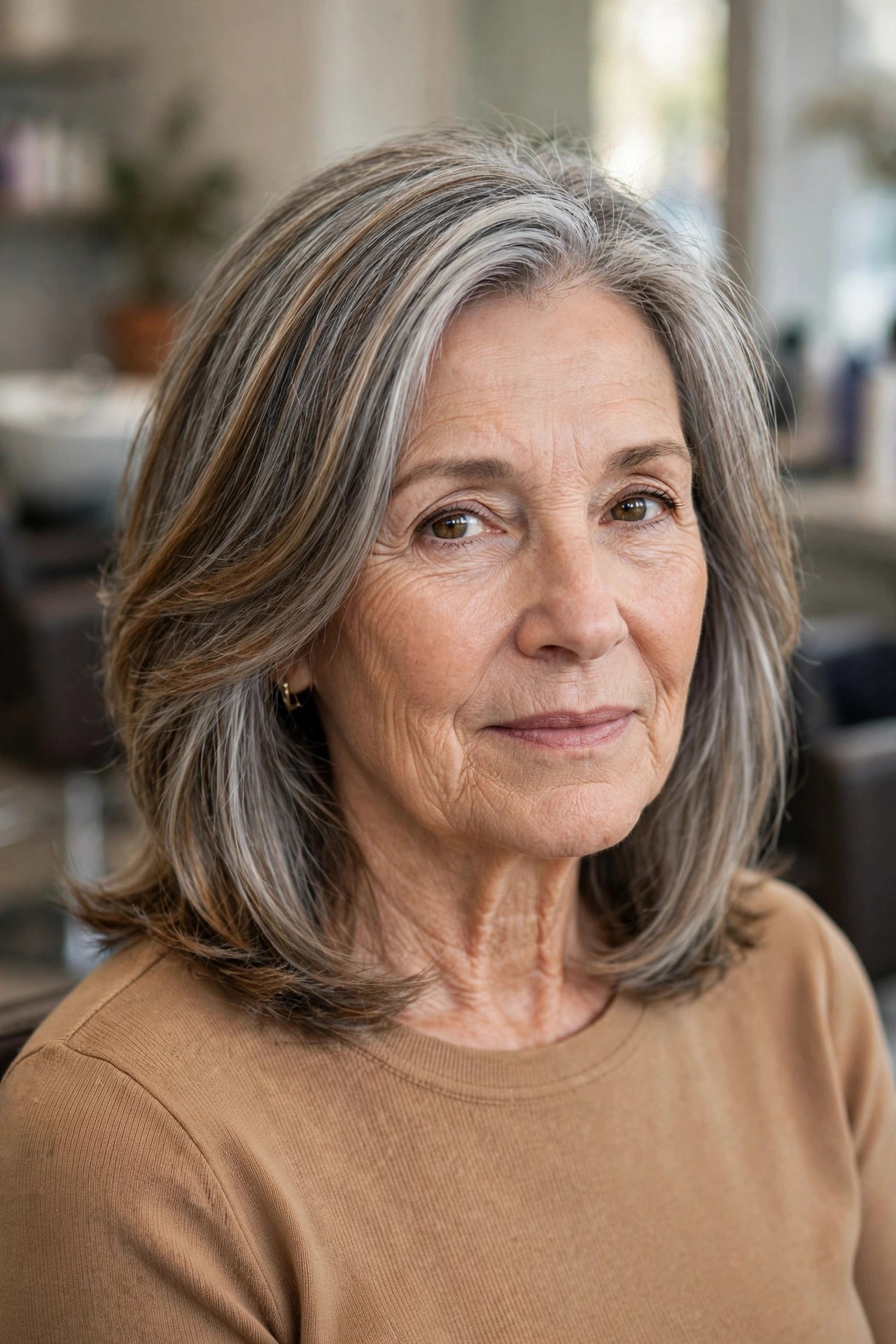
Some women find their natural gray reads a little steely against their skin, especially in winter. Caramel lowlights are the antidote: ribbons of warm, honeyed brown woven through the mid-lengths borrow the glow of your former brunette or dark blonde days and reflect it back onto your face. The gray stays — it just gets warmer company.
Place the caramel where the sun used to lighten your hair, mostly around the face and through the top layers, and keep it off the very ends so the look stays grounded. Warm lowlights fade gently toward a soft gold, so even the fade is flattering. A dryer brush blowout once a week keeps the layers smooth enough for the warm and cool tones to read as a deliberate mix.
14. Icy Platinum Highlights on Salt-and-Pepper Curls
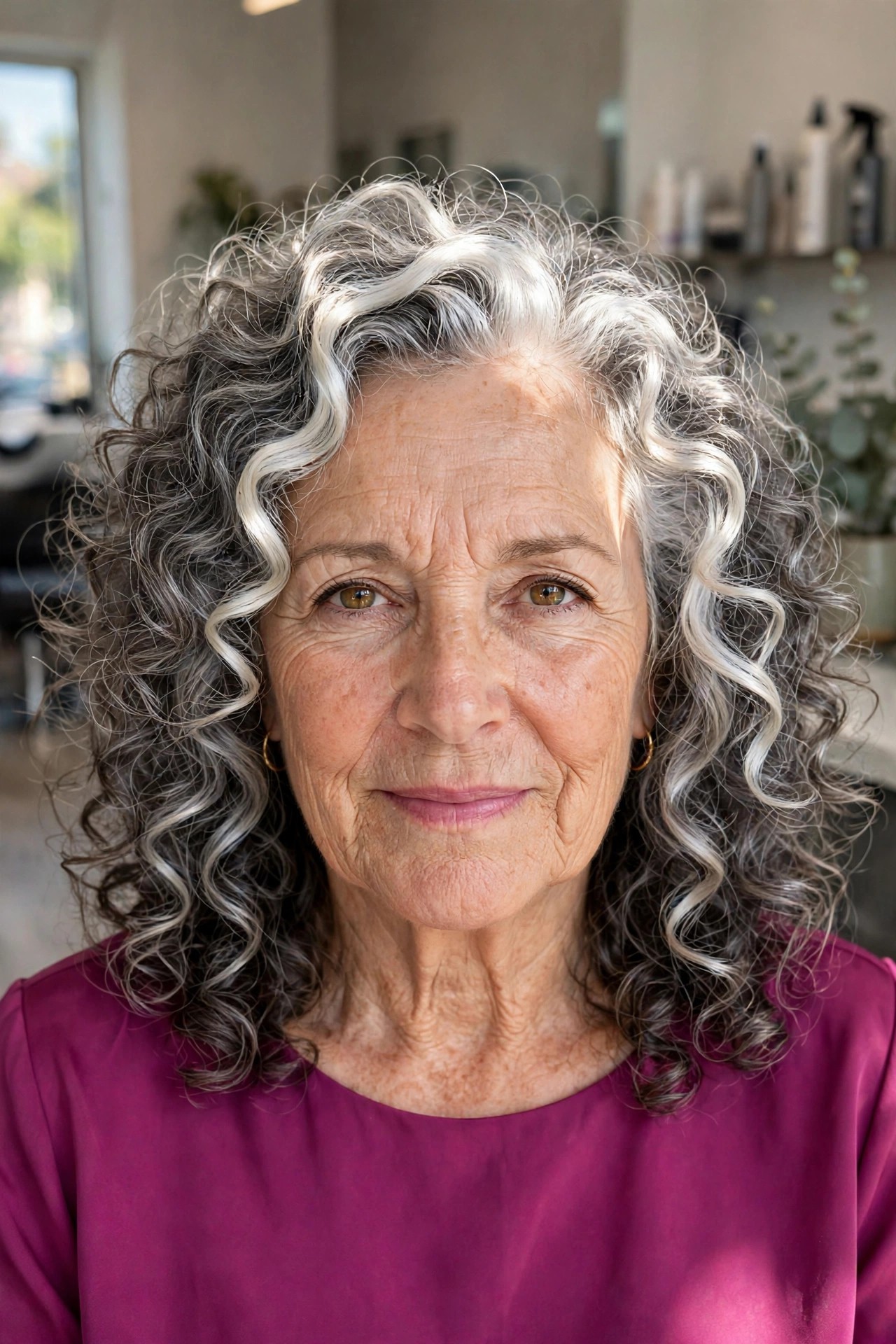
Curly hair shows dimension better than any other texture, because every curl is a spiral of light and shadow. Icy platinum highlights painted onto the top ridge of each curl — a technique colorists call curl-by-curl painting — make salt-and-pepper curls look lit from within. The bright icy pieces sit against the darker gray curls beneath, and the whole head gains sparkle and definition.
Insist on a colorist who paints curls dry and in their natural pattern; foiling curly hair flat can leave stripes when the curl springs back. Platinum is the highest-lift shade here, so deep conditioning is non-negotiable, and a purple shampoo keeps the ice from yellowing. Define with a sea-salt or curl spray on damp hair and let the dimension do the rest.

15. Smoky Gray Highlights for a Seamless Silver Transition
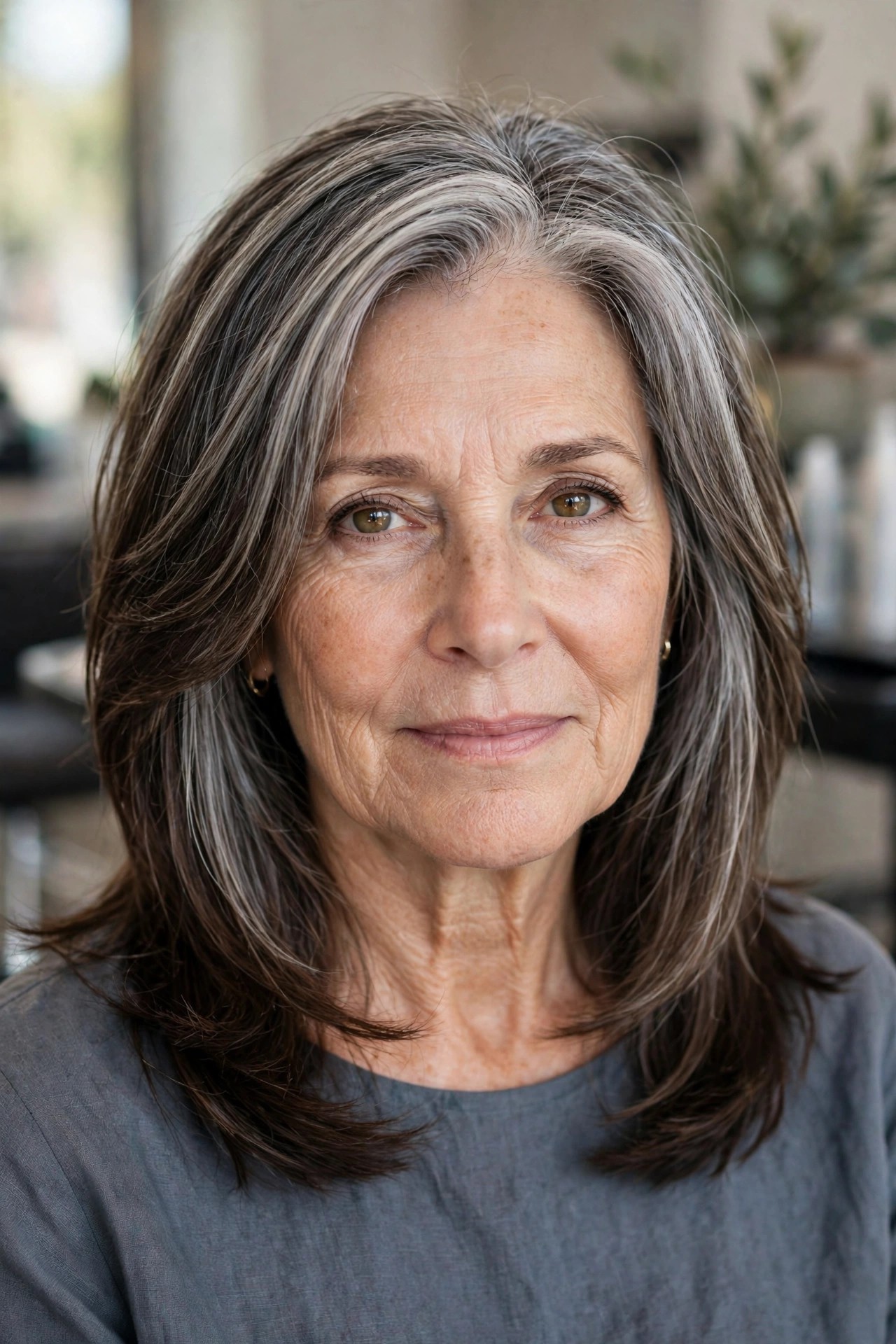
If you are growing out years of dark dye, the harsh line between colored lengths and silver roots — the dreaded skunk stripe — is the hardest part. Smoky gray highlights are the bridge: a colorist weaves silver-gray pieces through the dyed section and darker pieces through the new growth until the two territories blend into one smoky landscape. Many women find this turns an awkward year into a genuinely beautiful one.
Expect this to be a journey of two or three appointments rather than one transformation, with the blend improving each time. It pairs well with gradually shorter cuts — each trim removes more of the old dye. Our guide to short hairstyles for women over 50 has lengths that speed the transition along. Between visits, regular trims and a brightening purple shampoo keep the smoky tones clean.
16. Two-Tone Highlights and Lowlights on a Textured Bob
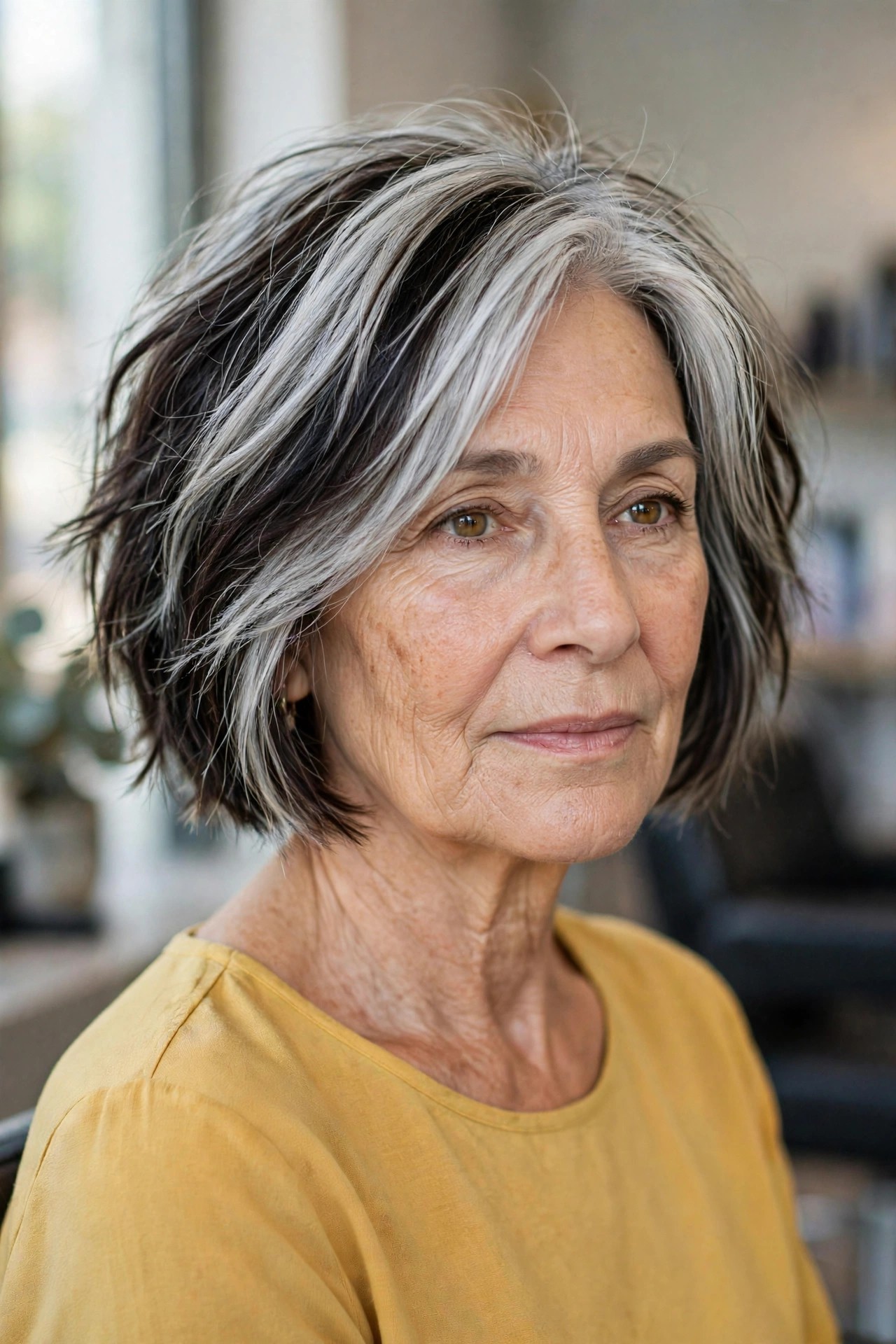
Why choose between highlights and lowlights when the magic is in both? On a textured bob, bright silver highlights and deep espresso lowlights are placed in alternating panels, so every choppy layer reveals a different combination as the hair moves. It is the most dimensional look on this list, and the texture of the cut — see our favorite short textured haircuts for women over 50 — does half the styling work for you.
The key is balance: roughly equal light and dark, with the lightest panels kept near the face. This is a strong look that grows out softly because both tones exist in natural graying hair. Work a pea-size amount of texturizing putty through dry ends to separate the panels, and use heat protectant before any hot tool touches those lightened pieces.
17. Honey Highlights Brightening Graying Face-Framing Layers
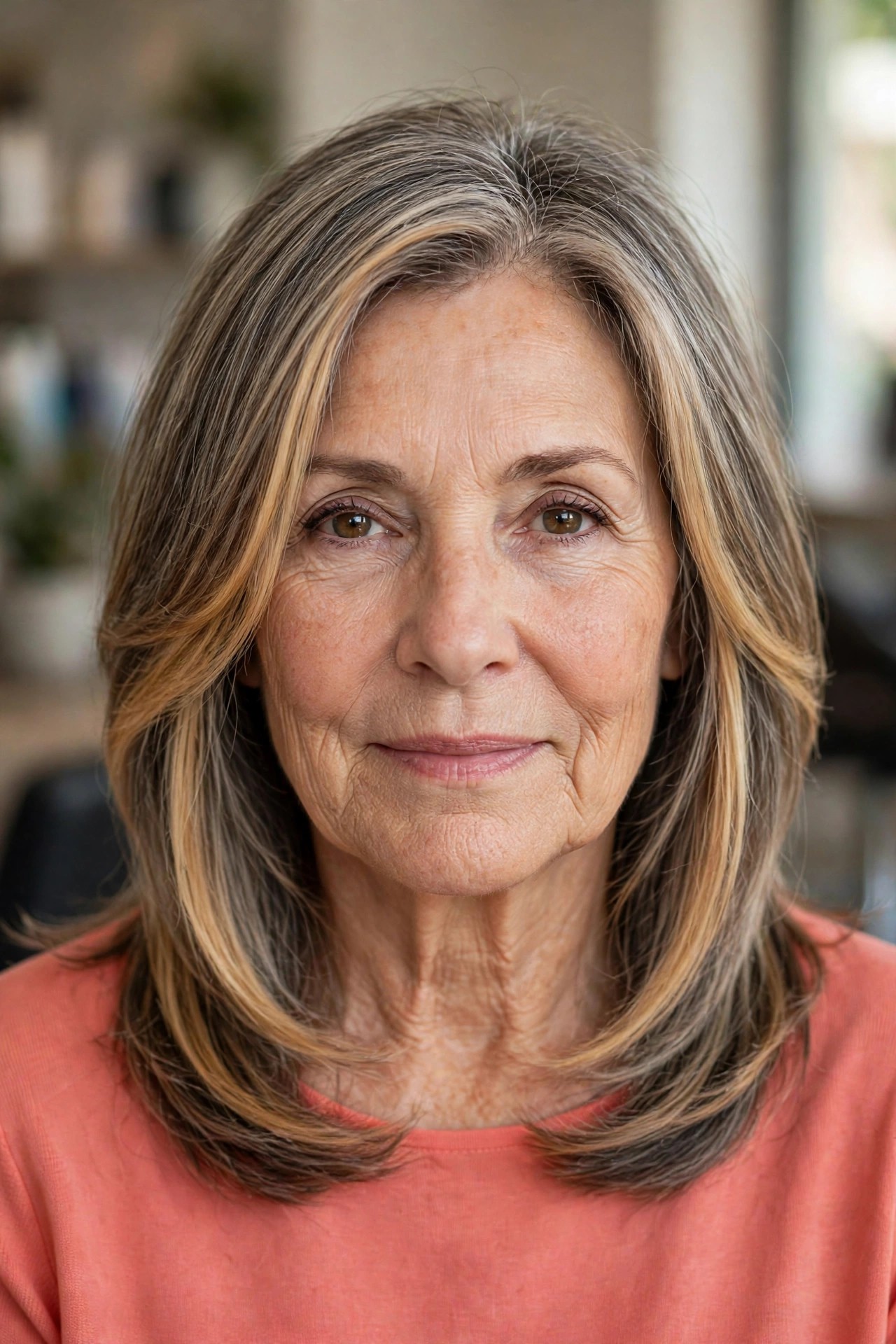
Honey highlights concentrate warmth exactly where it flatters most: in the long layers that fall around your face. Against a graying base, the golden honey ribbons act like a soft-focus lamp for your skin, warming your complexion and drawing attention to your eyes and smile. It is a favorite for women who feel gray at the front has made them look tired when they are anything but.
Ask for the honey to start a little away from the root so the grow-out stays soft, and to be two to three shades lighter than your base for real impact. This placement suits medium and longer lengths with face-framing layers. A sculpting foam blow-dried into the front sections lifts the layers off the face and shows every golden ribbon.

18. Deep Espresso Lowlights on Shoulder-Length Graying Hair
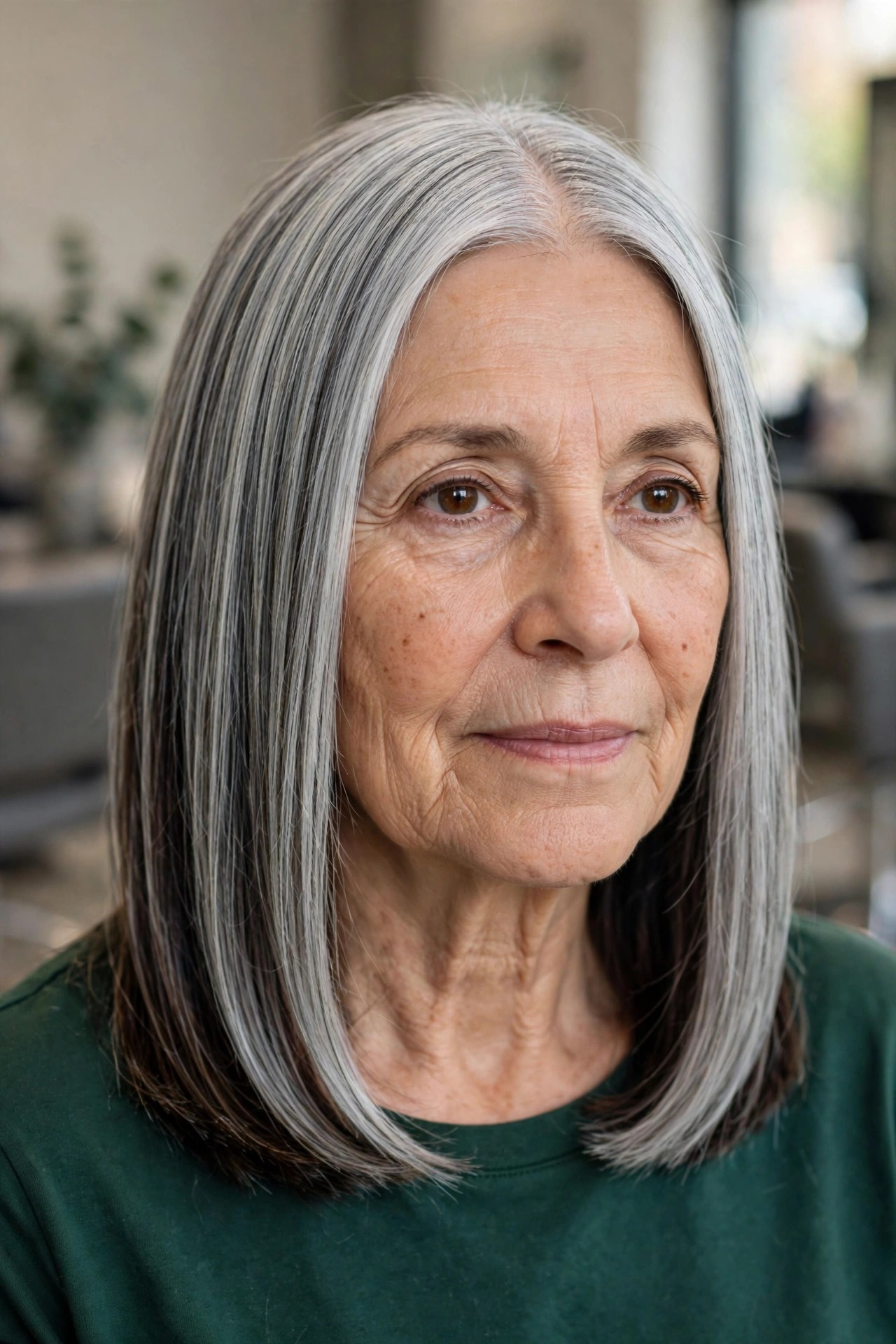
Former brunettes often miss their depth most. Deep espresso lowlights restore it: rich, near-black brown woven underneath and at the nape of silver hair, so dark depth peeks through whenever the hair moves or is tucked behind an ear. The effect is youthful without pretending — nobody will mistake it for your twenty-year-old color, and that is exactly the point.
Placement is everything here: espresso belongs in the interior and underneath, never as stripes on top, where it would read harsh. Shoulder-length hair shows the peekaboo depth beautifully when straightened. Smooth the top layer with a flat iron on moderate heat so the silver surface stays glossy and the dark undertow flashes as you turn your head.
19. Subtle Lived-In Highlights on a Graying Shag
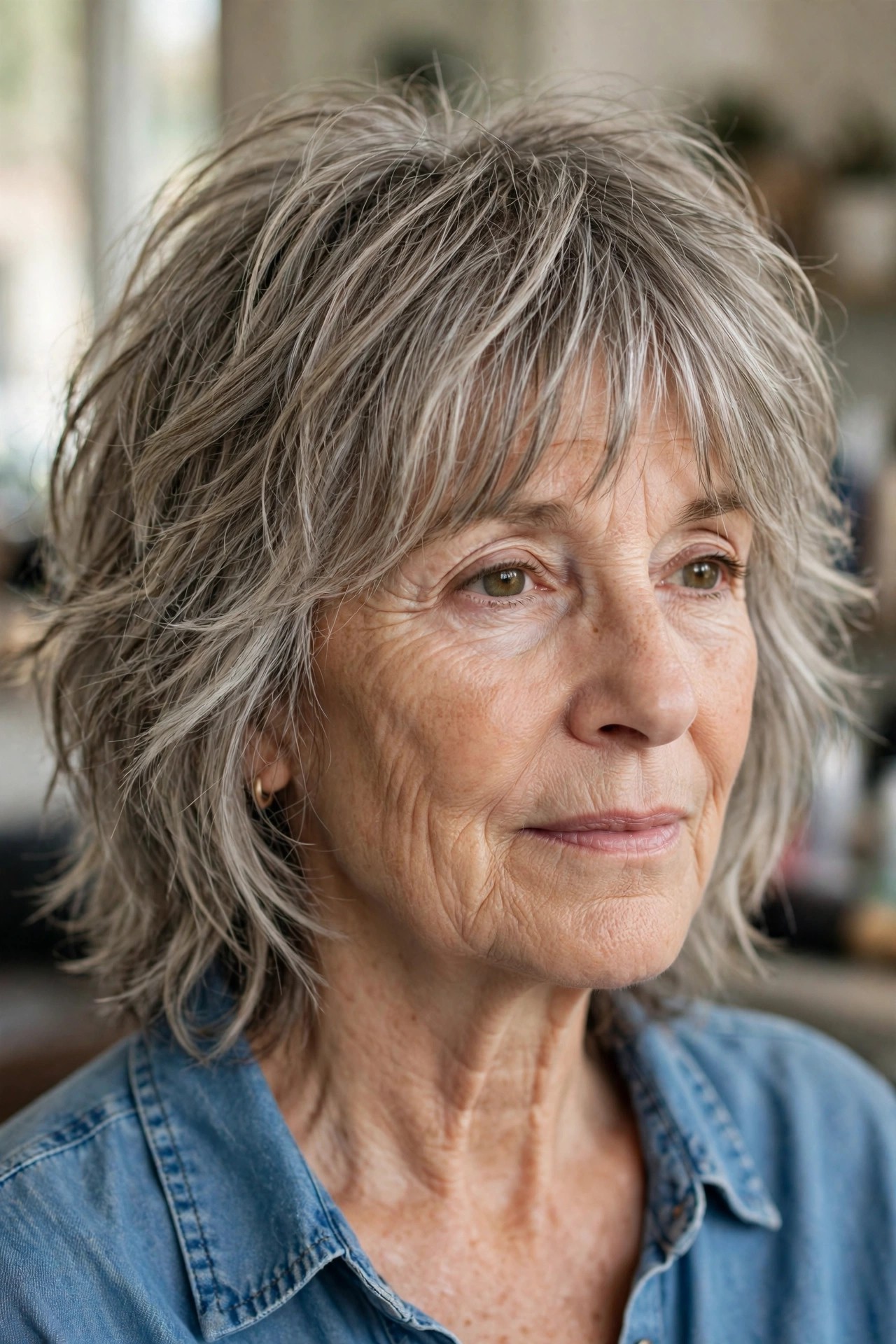
The shag is the most forgiving cut for graying hair, and lived-in highlights are its perfect color partner. Soft silver-beige pieces are placed randomly — a few at the crown, some through the fringe, a couple at the ends — with no pattern to grow out and nothing to maintain on a schedule. Combined with the shag’s wispy layers, the color looks like you simply have great hair, full stop.
If your styling routine is wash, scrunch and go, this is your technique. It also transitions gracefully as your gray percentage increases: you just add a few more pieces each visit. The cuts in our messy pixie cuts for women over 50 guide use the same effortless logic. A dry shampoo at the roots restores the shag’s piece-y texture on day two.
20. Gloss-Boosted Highlights and Lowlights on a Sleek Bob
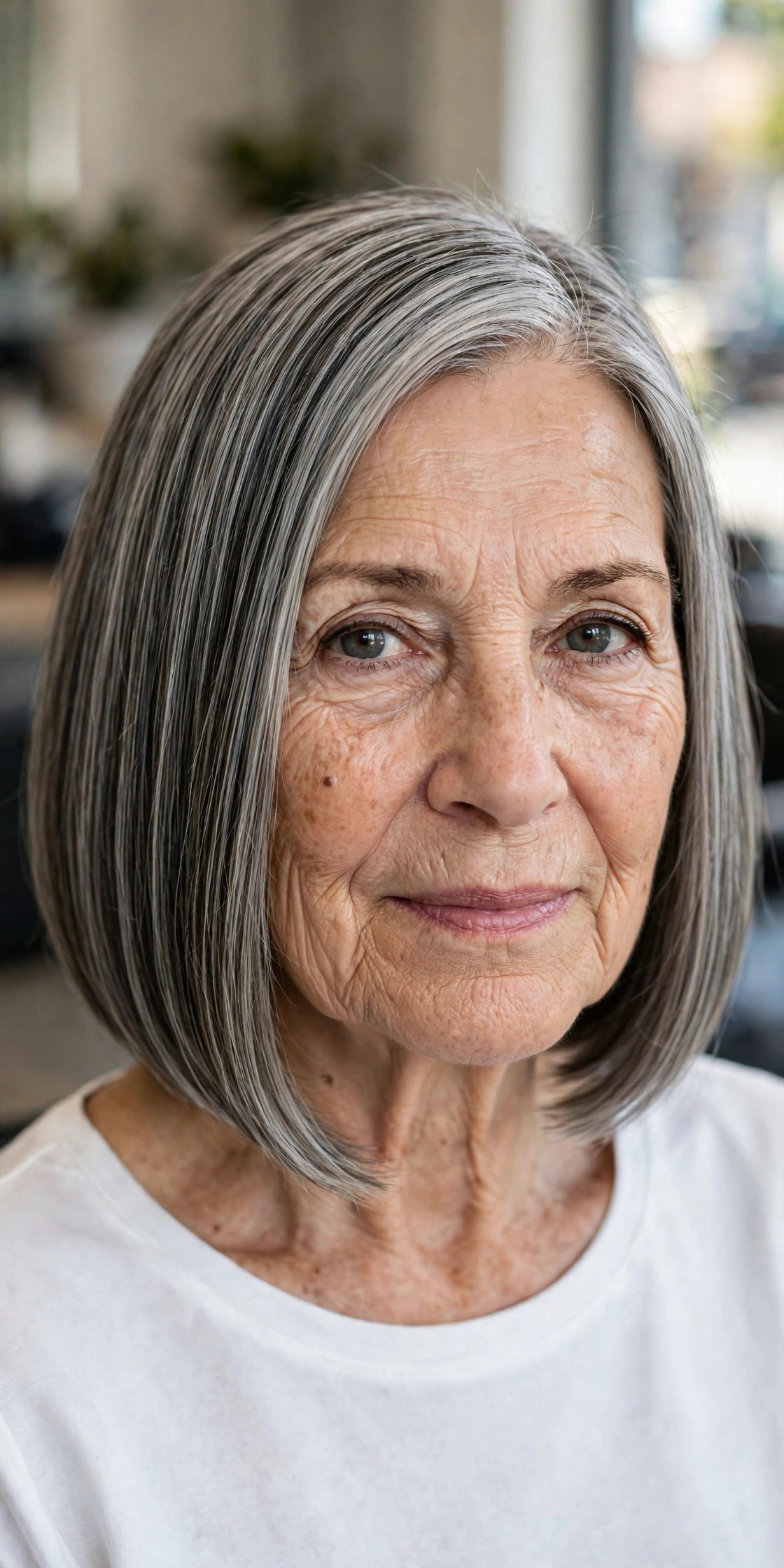
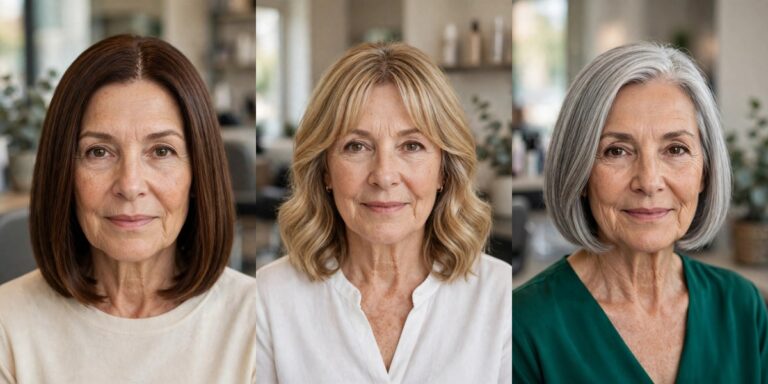
Gray hair has a different texture — the strand is often coarser and reflects light unevenly, which is why dimension can look dull even when the color work is excellent. The fix is a clear or tinted gloss layered over highlights and lowlights: it seals the cuticle, deepens the lowlights, brightens the highlights and gives the whole bob that liquid, glassy shine. Think of gloss as topcoat for your color.
A gloss takes twenty minutes at the shampoo bowl and refreshes every six to eight weeks, often instead of a full color appointment. It is the finishing step colorists recommend most for gray blends, because shine is what makes tonal differences visible. At home, a mini flat iron polishes the surface in minutes, and a serum on the ends keeps the glass effect between glosses.

Recommended Products
These are the products that keep gray-blend color work looking fresh between salon visits — toning brassiness, protecting lightened strands from heat, and adding the shine that makes dimension visible.
Care Tips for Highlighted and Lowlighted Gray Hair
- Tone weekly, not daily: a purple shampoo once a week keeps silver and ash pieces bright without drying your hair out.
- Wash less, condition more: gray hair is naturally drier; spacing washes protects both your highlights and your lowlights from fading.
- Heat protectant every time: lightened gray strands are fragile — never let a hot tool touch unprotected hair.
- Book glosses, not just color: a clear gloss every six to eight weeks refreshes shine and revives fading lowlights in twenty minutes.
- Sleep on satin: a satin pillowcase cuts the friction that roughs up the gray cuticle and dulls dimension overnight.
- Clarify once a month: minerals and product build-up make gray look yellow; a monthly clarifying wash resets the brightness.
Frequently Asked Questions
What is the difference between highlights and lowlights on gray hair?
Highlights lighten selected strands to blend with your lightest grays and brighten the overall look, while lowlights add deeper strands that restore contrast and depth. Most flattering gray blends use both: highlights to marry the light pieces, lowlights to stop the result looking flat or washed out.
How often will I need salon visits with gray-blending highlights?
That is the main appeal — far less often than with full-coverage dye. Fine techniques like herringbone highlights, babylights and balayage typically need refreshing every ten to sixteen weeks, with a quick gloss in between if you want extra shine. There is no hard root line, so you can stretch appointments to suit your schedule and budget.
Will highlights damage my gray hair?
Gray hair is naturally coarser and a little more fragile, so your colorist should use fine weaves, moderate developer and a bond-protecting treatment. Techniques that only lighten small sections — a money piece, babylights, face-framing pieces — are the gentlest. Deep conditioning weekly and heat protection before styling keep blended hair healthy.
I am growing out dark dye. Where do I start?
Start with a blending service rather than a big chop: smoky gray highlights woven through the dyed lengths, paired with a root shadow, will break up the demarcation line. Plan on two or three sessions for the full transition, and consider trimming a little length at each visit so the old color leaves faster.
Should I choose warm or cool lowlights?
Let your skin decide. If gold jewelry flatters you and your skin has warm or olive undertones, caramel, honey and golden lowlights will warm your gray beautifully. If silver jewelry suits you better and your undertones are cool or pink, pewter, steel, charcoal and espresso lowlights keep everything in the same cool family.
Can I get highlights if my hair is already fully silver?
Yes — but at that point lowlights usually do more for you than highlights. Adding depth underneath silver hair with warm golden, caramel or espresso lowlights makes the silver on top look brighter and your hair look thicker. A gloss on top finishes it with the shine that makes the dimension read.
Your gray is not a problem to be covered — it is a palette to be designed with. Whether you choose the quiet diplomacy of babylights, the drama of charcoal lowlights, or the glow of caramel woven through silver, highlights and lowlights let you keep the dimension, softness and low-maintenance freedom that single-process color never could. Pick the idea that made you pause, save the photo, and show it to a colorist who specializes in gray blending. Your most flattering color chapter may just be this one.