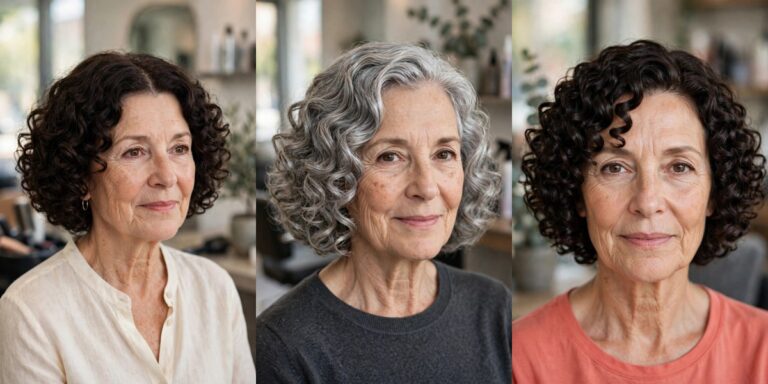
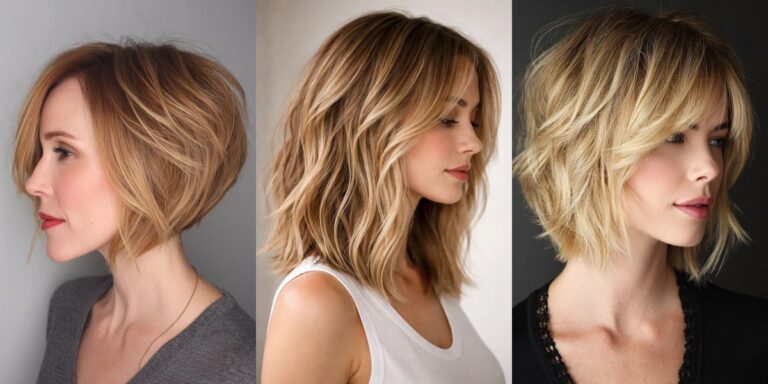
Bob With Bangs for Women Over 60 That Looks Youthful
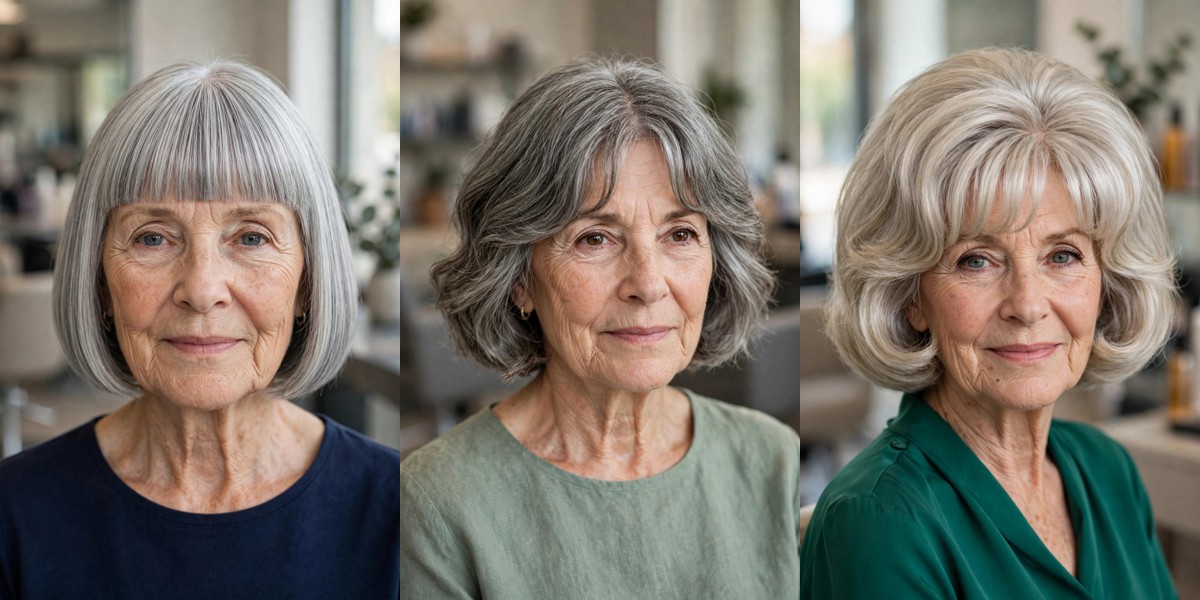
This post contains affiliate links. As an Amazon associate, I earn from qualifying purchases. I only recommend products that are of high quality and that I would use myself.
A bob on its own is polished. A bob with the right bangs is something else entirely — it is the haircut that makes friends ask what has changed, in a good way. The fringe does the youthful work: it softens the forehead, shadows fine lines instead of spotlighting them, and pulls all the attention to your eyes and cheekbones. The bob underneath does the practical work, keeping the shape neat, the neckline clear, and the styling time short.
Below are 20 ways to pair them after 60 — blunt, wispy, curtain, side-swept, arched, choppy, curly, and more — each photographed on a woman in her sixties, each kept strictly at bob length, from chin to just above the shoulder. Every idea notes who it suits and what it takes to maintain, because the best fringe is the one that fits your hair and your mornings. If you want the wider bob picture first, start with our bob haircuts guide and come back here for the fringe.
Table of Contents
- 1. Classic Chin-Length Bob with Full Blunt Bangs
- 2. Wispy Bangs with a Sleek Jaw-Length Bob
- 3. Curtain Bangs with a Soft Wavy Bob
- 4. Side-Swept Bangs with an A-Line Bob
- 5. Arched Bangs with a Stacked Bob
- 6. Feathered Bangs with a Layered Bob
- 7. Piecey Bangs with a Textured Bob
- 8. Long Side Bangs with a Graduated Bob
- 9. Choppy Bangs with a Messy Wavy Bob
- 10. Eyebrow-Grazing Bangs with a Straight Polished Bob
- 11. Curtain Bangs with a Just-Above-Shoulder Long Bob
- 12. Wispy See-Through Bangs with an Airy Bob for Fine Hair
- 13. Rounded Bangs with a Curved-Under Bob
- 14. Asymmetrical Bangs with an Angled Bob
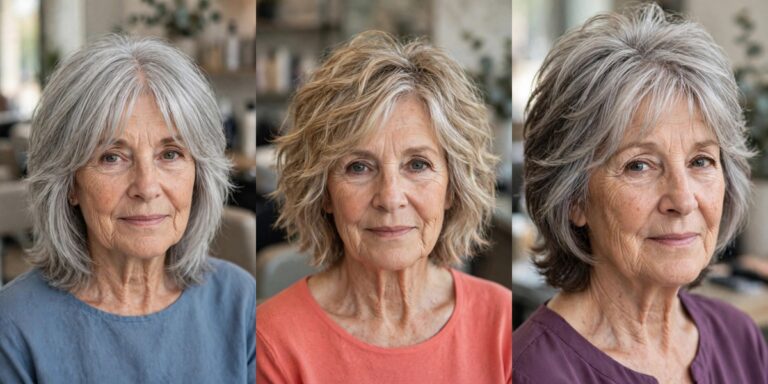
- 15. Soft Blunt Bangs with a Gray-Blending Bob
- 16. Tapered Bangs with a Short Stacked Bob
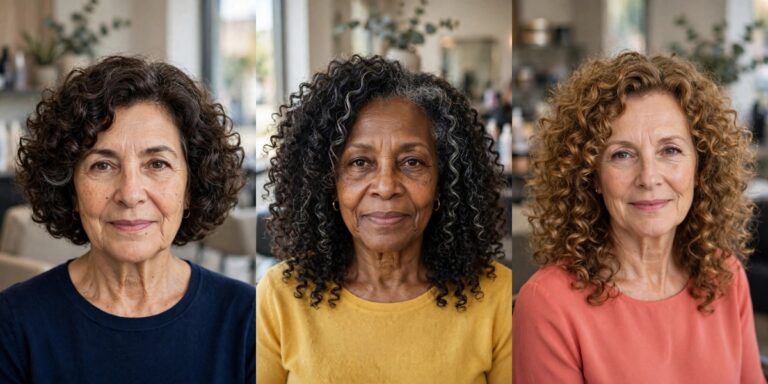
- 17. Curly Bangs with a Curly Bob
- 18. Split Fringe with a Smooth Highlighted Bob
- 19. Long Wispy Bangs with a Feathered Bob
- 20. Bardot-Style Curtain Bangs with a Voluminous Blowout Bob
- Recommended Products
- FAQs
- Want maximum forehead softening? Full blunt bangs (idea 1) or eyebrow-grazing bangs (idea 10).
- Nervous about bangs? Long side bangs (idea 8) or a split fringe (idea 18) — both grow out with no awkward stage.
- Fine or thinning hair? Wispy bangs (idea 2) or see-through bangs (idea 12) — they need almost no density.
- Wear glasses? Curtain bangs (ideas 3 and 20) or long wispy bangs (idea 19) sit happily above frames.
- Flat crown? A stacked or graduated back (ideas 5, 8, and 16) builds the lift into the cut.
- Natural curls? Idea 17 — cut dry, worn in your own curl pattern.
- Proudly gray? Ideas 1 and 15 let silver and salt-and-pepper do the shining.
1. Classic Chin-Length Bob with Full Blunt Bangs
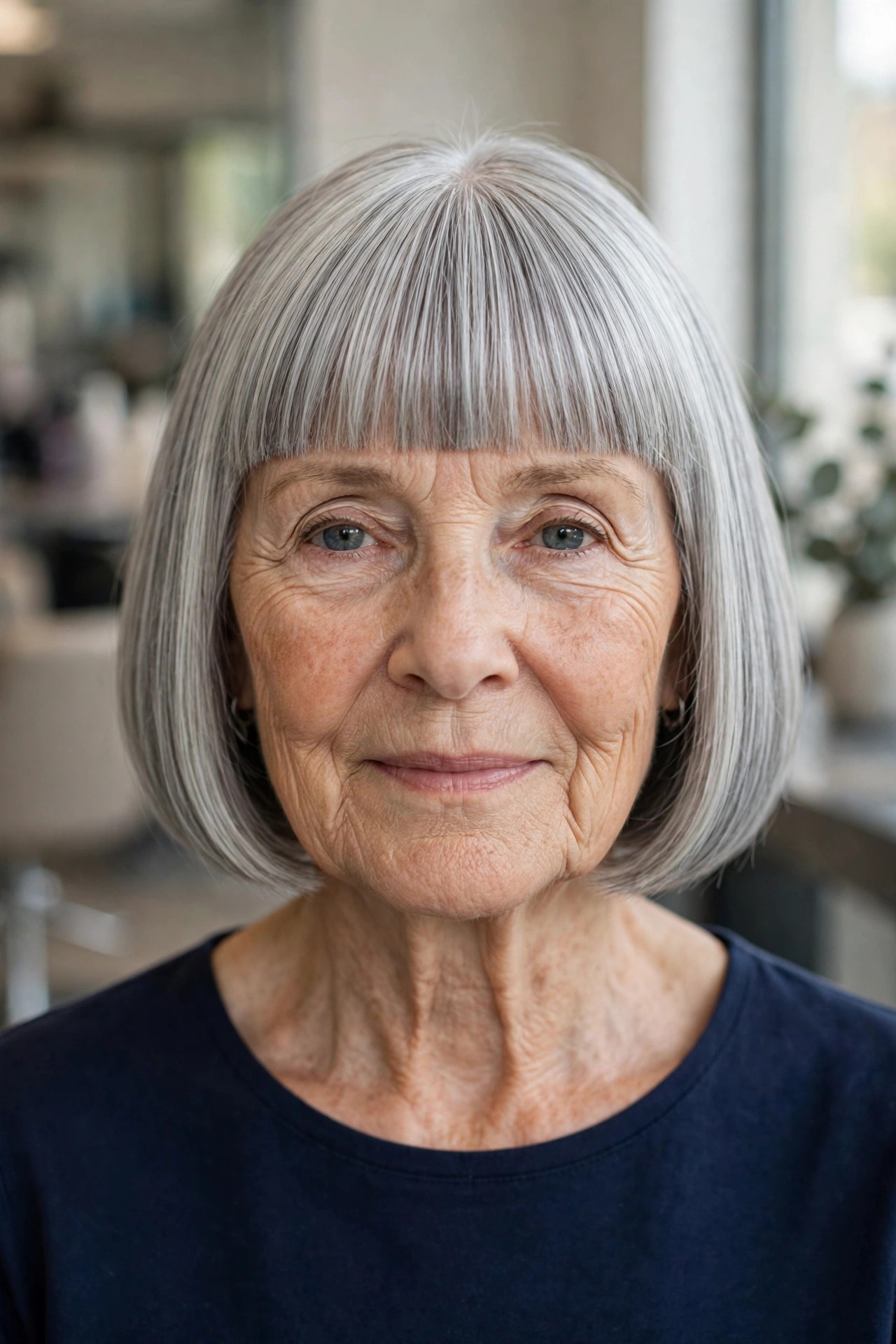
This is the bob people picture first, and there is a reason it never leaves the salon request list. A clean perimeter sits right at the chin, the ends are cut in one strong line, and a full fringe falls straight across the forehead to the eyebrows. On silver hair the effect is almost graphic — bright, polished, and unmistakably deliberate, which is exactly what makes it read youthful rather than severe.
Blunt bangs do quiet visual work, too: they cover forehead lines completely and put all the attention on your eyes. The trade-off is upkeep. This fringe needs a tidy every three to four weeks and a quick pass with a brush and dryer each morning, sweeping side to side so it lies flat instead of parting in the middle.


2. Wispy Bangs with a Sleek Jaw-Length Bob
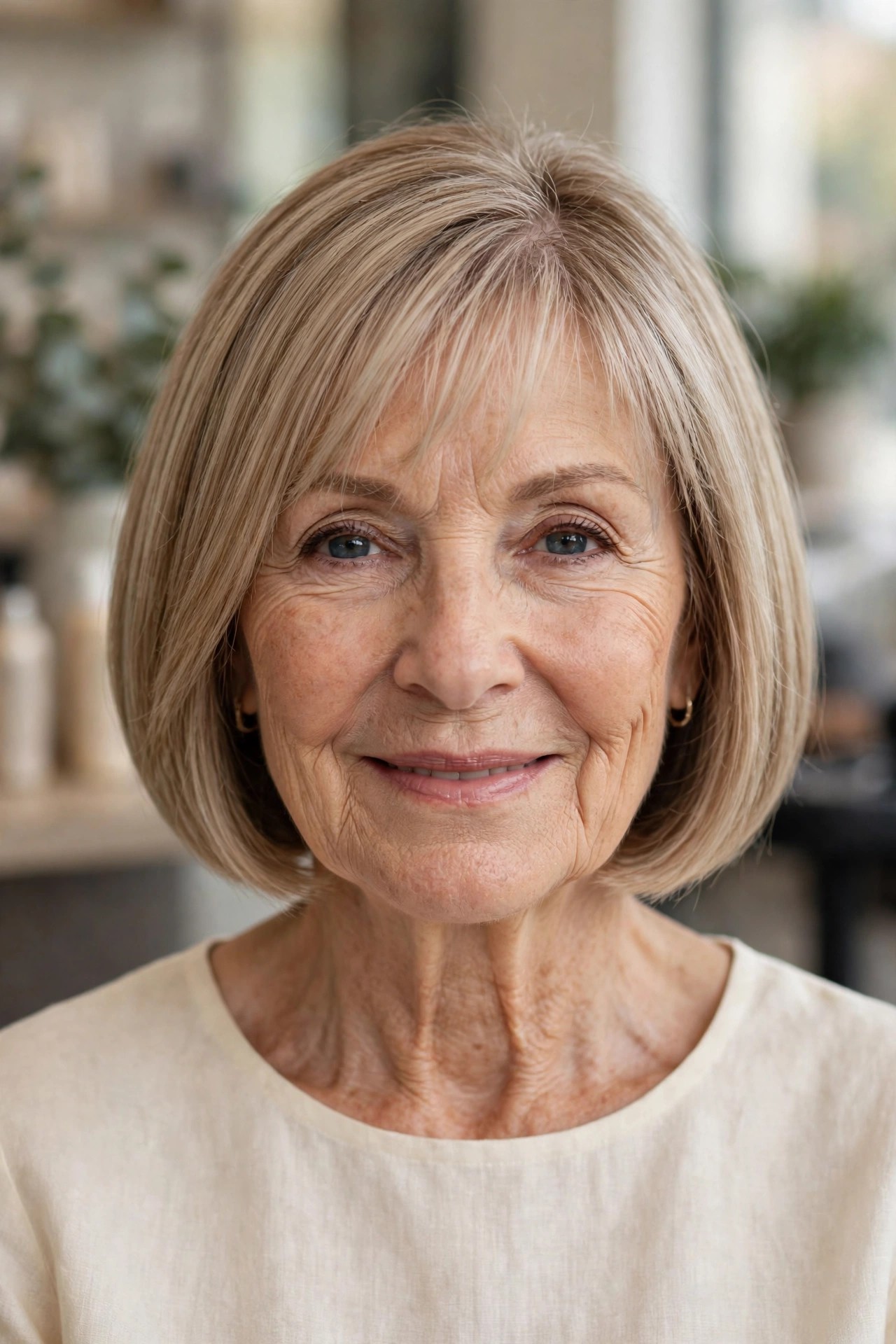
If a full blunt fringe feels like too much commitment, this is its softer sister. The bob is just as polished — smooth, jaw-length, and tucked neatly under — but the bangs are point-cut sheer, so a little forehead shows through. That lightness is the point: the fringe softens the brow line without ever looking heavy or solid.
Wispy bangs are also the most forgiving fringe for fine hair, because they ask for very little density to look right. Dry them first, before the rest of the bob, with the dryer nozzle pointing down. A pea-sized amount of anti-frizz serum through the ends keeps the sleek outline glossy rather than fluffy.


3. Curtain Bangs with a Soft Wavy Bob

Curtain bangs part in the middle and sweep out to the cheekbones on both sides, and paired with a wavy bob they give you movement at every point of the cut. The waves stop the bob from sitting in one solid shape, while the parted fringe opens up the center of the face — a combination that flatters round and square faces especially well.
Styling is mostly about not fighting your texture. Scrunch a texture spray into damp hair, let the waves form, and dry the curtain pieces forward first, then flick them outward to each side. If your waves fall flat by afternoon, the fringe is your refresh point: re-wet just the front, re-shape, and the whole cut looks newly done.


4. Side-Swept Bangs with an A-Line Bob
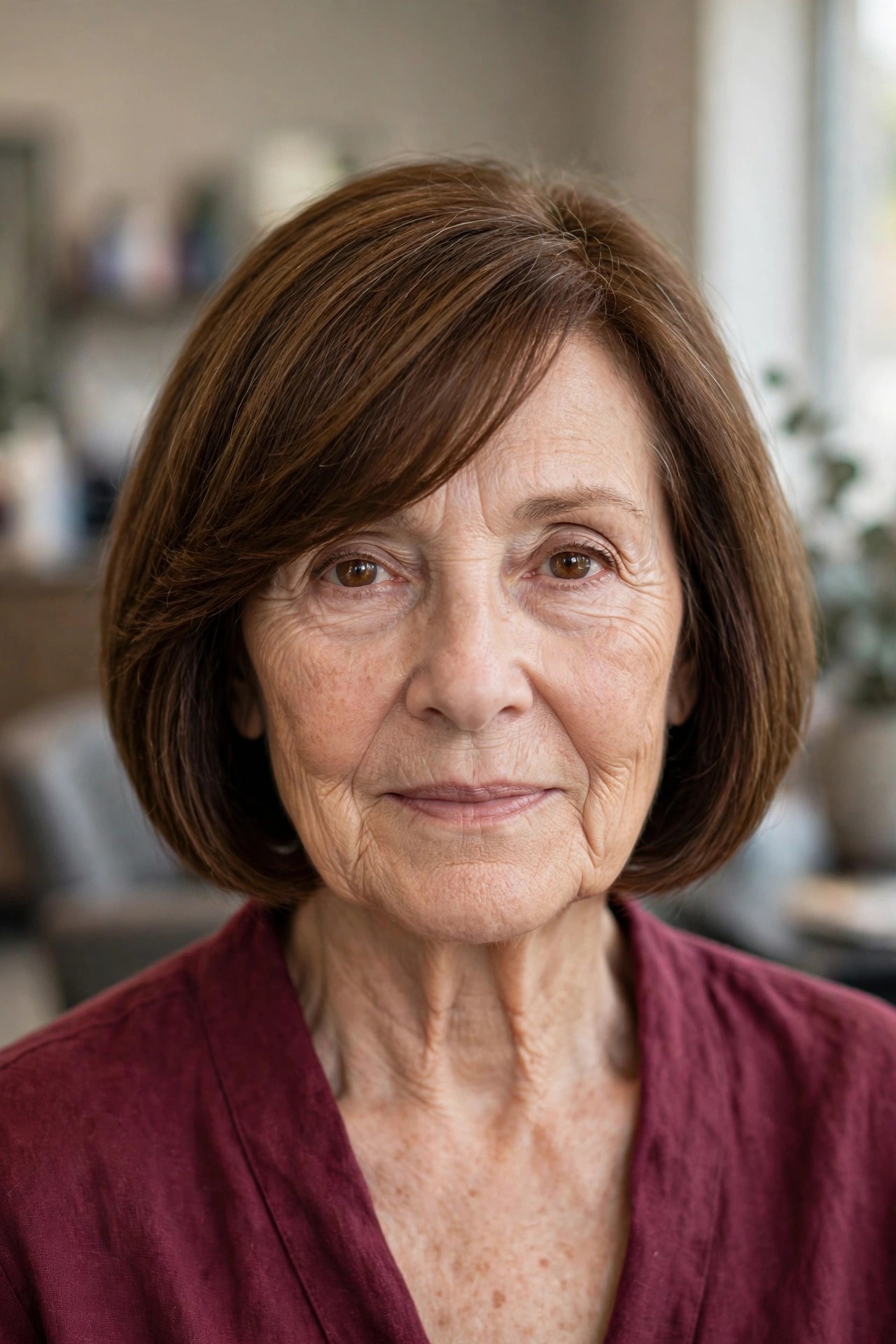
The A-line bob is shorter at the nape and gradually longer toward the front, so the longest pieces rest at the chin and draw a clean diagonal along the jaw. Add a long side-swept bang and that diagonal continues right across the forehead — one unbroken sweeping line that slims the face and softens a strong jaw.
This is a kind cut if your hairline is uneven or you simply prefer not to expose your whole forehead. Train the sweep while the hair is damp, because mature hair tends to set where it dries. A mini iron on the front pieces only, always over heat protection, sharpens the angle for occasions in under a minute.


5. Arched Bangs with a Stacked Bob
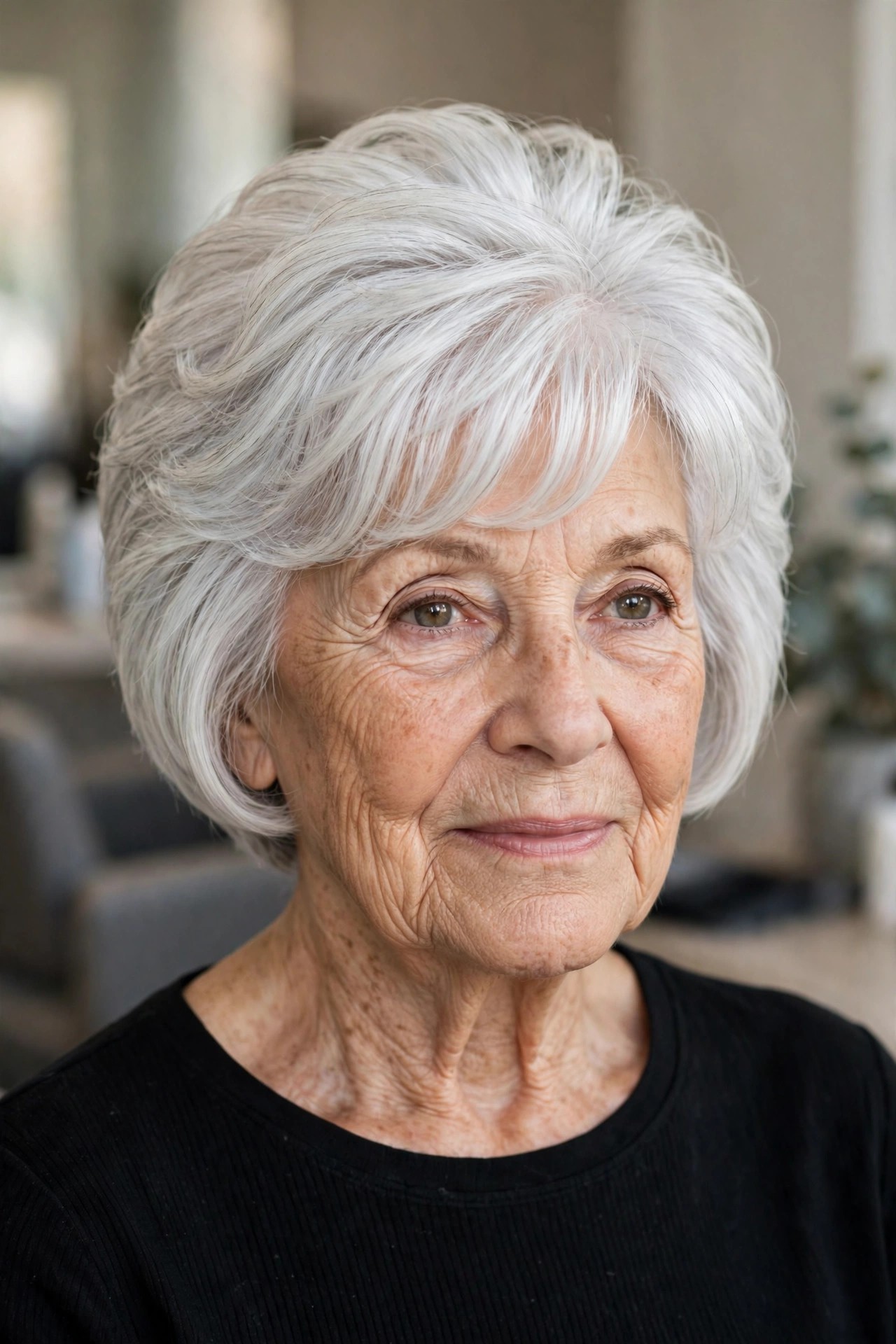
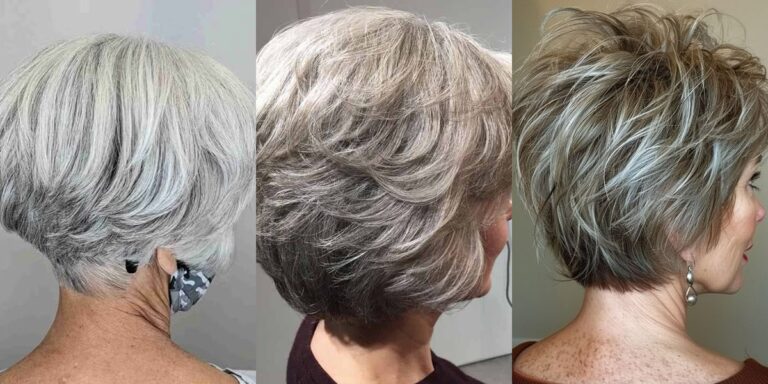
Stacked layers at the back build a rounded, lifted shape into the cut itself, so the crown keeps its height without daily teasing. The fringe is cut in a gentle arch — slightly longer at the sides, following the curve of the forehead — which links the fullness at the back to the softness at the front and keeps the whole silhouette balanced.
Arched bangs suit oval and longer faces best, because the curve shortens the forehead visually. Ask your stylist to show you the stack from behind before you leave: the graduation should look smooth, not stepped. At home, dry the back sections up and forward to wake the stacking up, then let the front fall naturally.


6. Feathered Bangs with a Layered Bob
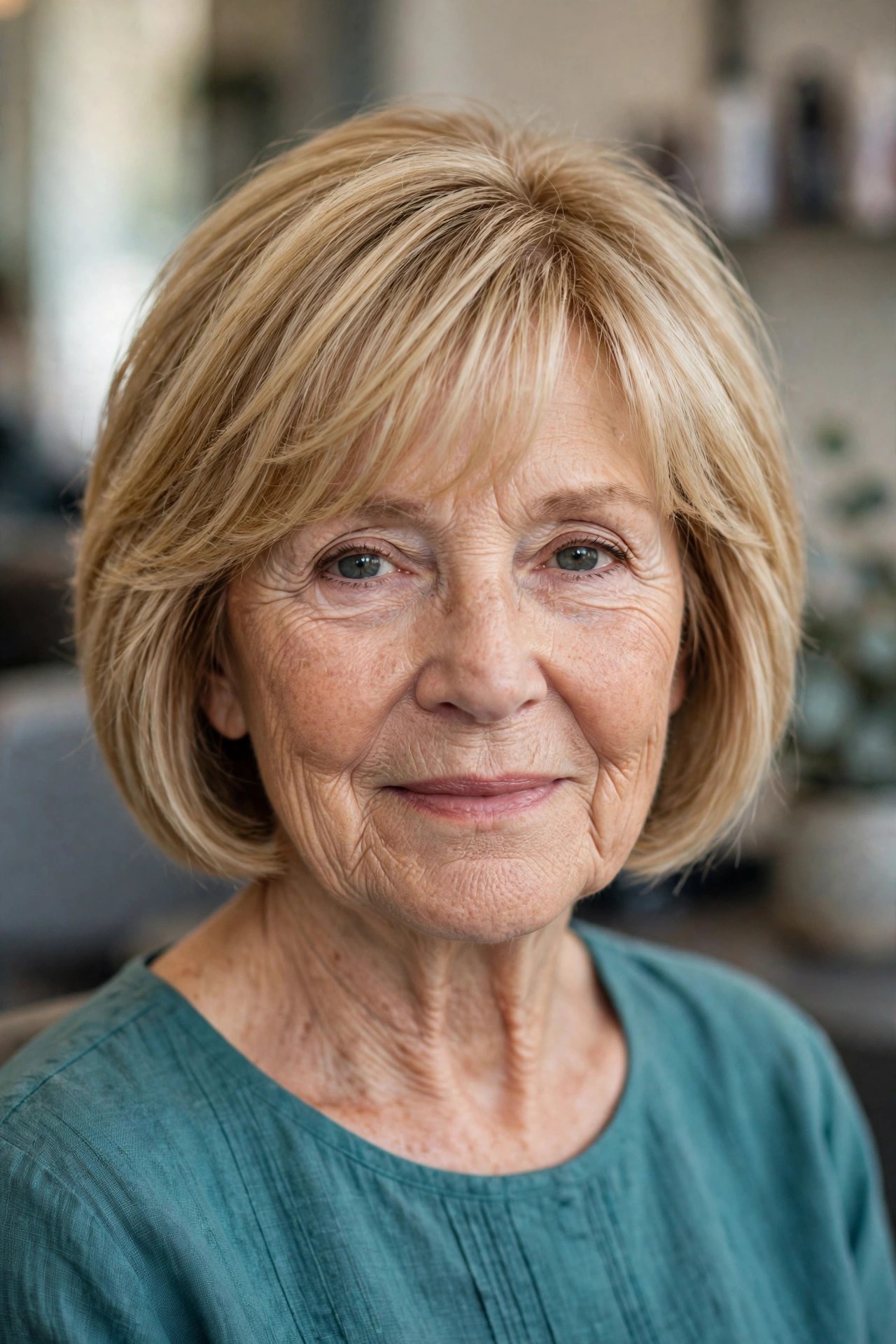
Feathering brushes fine layers back and away from the face, and here it runs through both the bob and the fringe, so the bangs melt into the layers at the temples with no visible join. The result is light, airy, and gently windswept — a style that moves when you move, which is one of the simplest ways a haircut adds energy.
Feathered layers are friendly to straight and slightly wavy hair that tends to sit flat, because every layer is cut to lift the one beneath it. Work sculpting foam through damp hair and blow-dry everything up and back with a round brush. This cut appears in our wider roundup of timeless bob hairstyles for women over 60 as well, because it suits so many textures.


7. Piecey Bangs with a Textured Bob
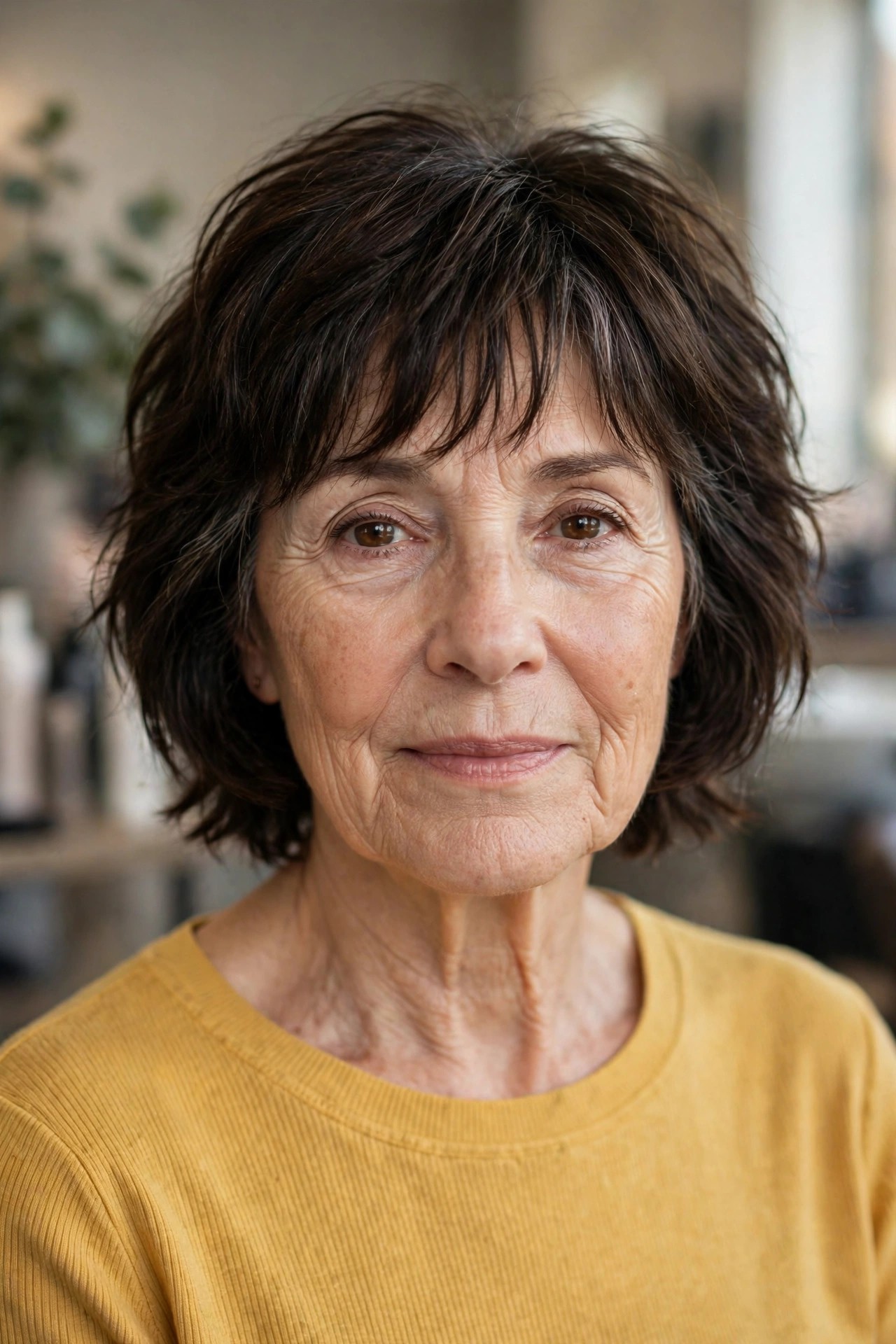
Texture changes the whole mood of a bob. The ends are point-cut into separated pieces instead of one blunt line, and the fringe is cut the same way — in small, defined sections with tiny gaps between them. Those gaps are deliberate: they keep the bangs light on the forehead and stop a textured cut from looking like it is wearing a solid helmet of fringe.
Piecey styles are defined on dry hair, not wet. Rub texturizing putty between your fingertips and pinch it through the ends and fringe pieces only; product through the roots will collapse the separation you are trying to create. On day two, dry shampoo at the crown revives the pieces faster than restyling does.

8. Long Side Bangs with a Graduated Bob
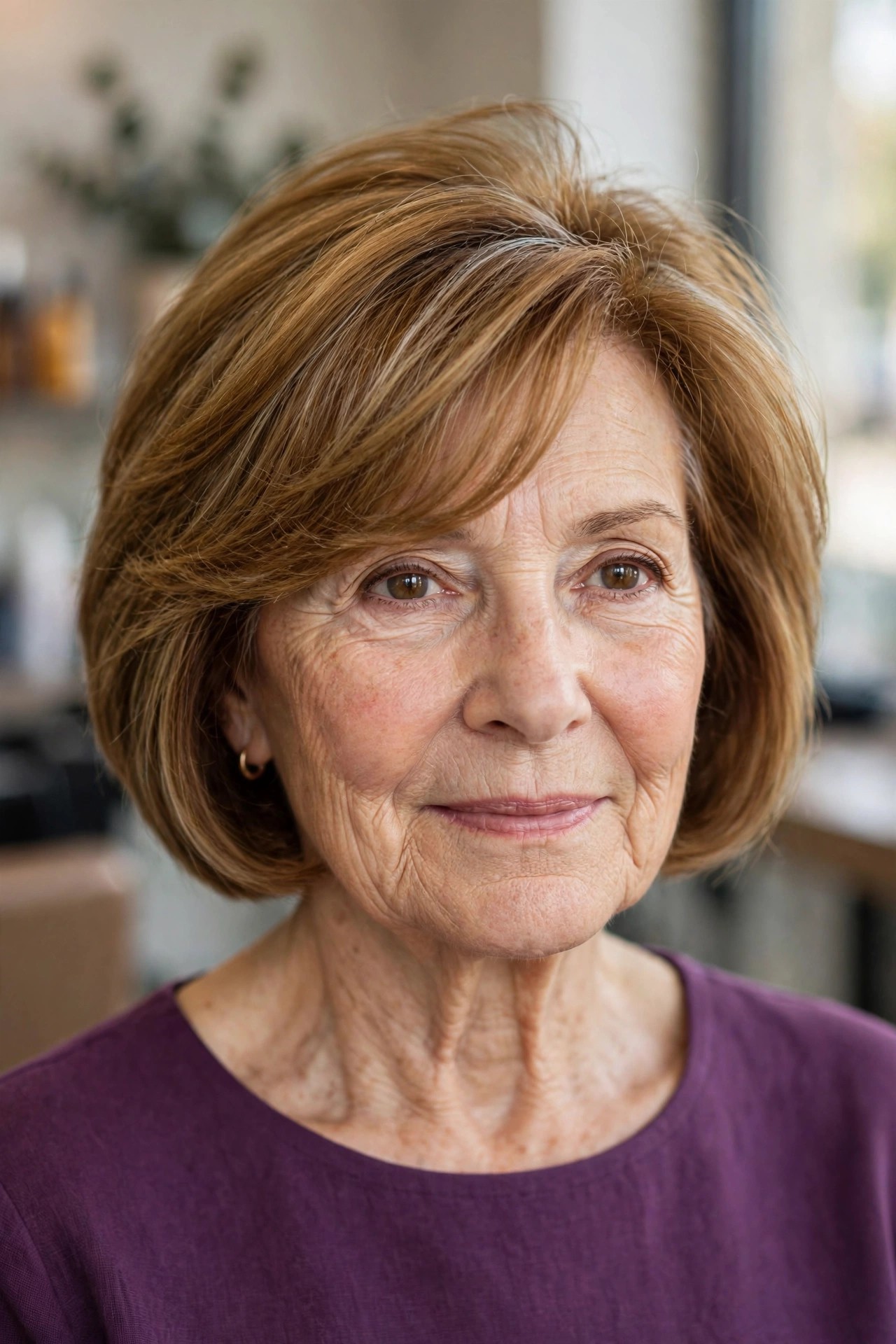
Graduation stacks shorter layers low at the back and lets the front stay long, and the fringe follows the same logic: one long side bang that starts at a deep part and sweeps all the way across to blend into the opposite side of the bob. It is the most grown-out-friendly fringe in this list — there is no awkward stage, because it simply becomes a face-framing layer.
That makes this the smart first fringe if you have not worn bangs in decades and are nervous about committing. It also works beautifully with glasses, since the sweep sits above the frames rather than resting on them. Style it by drying the fringe in the opposite direction first, then sweeping it over — that is how it gets its lift at the root.
9. Choppy Bangs with a Messy Wavy Bob
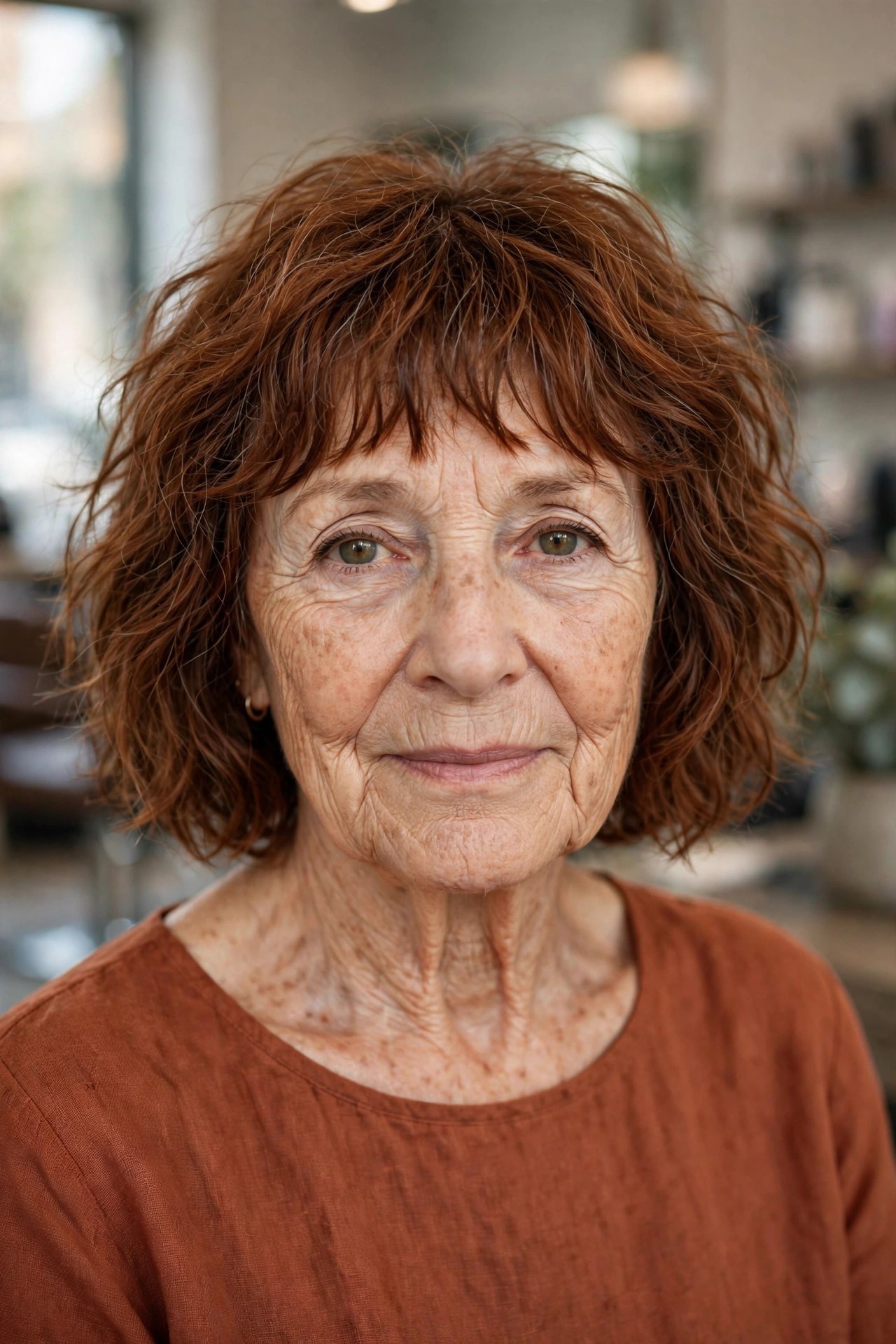
Nothing about this cut is meant to be neat, and that is its charm. The bob is chopped into uneven, tousled waves, and the bangs are cut choppy to match — a little irregular, a little undone. On warm auburn and copper tones the broken-up surface catches light in dozens of places, which is why this style reads playful at any age.
Choppy cuts hide regrowth, wiry grays, and imperfect styling days better than any precise shape can. Sea-salt or texture spray scrunched into damp hair is genuinely the whole routine. The one rule is trims: choppy needs to be re-chopped every six weeks or so, or intentional texture starts to read as simply overgrown.

10. Eyebrow-Grazing Bangs with a Straight Polished Bob
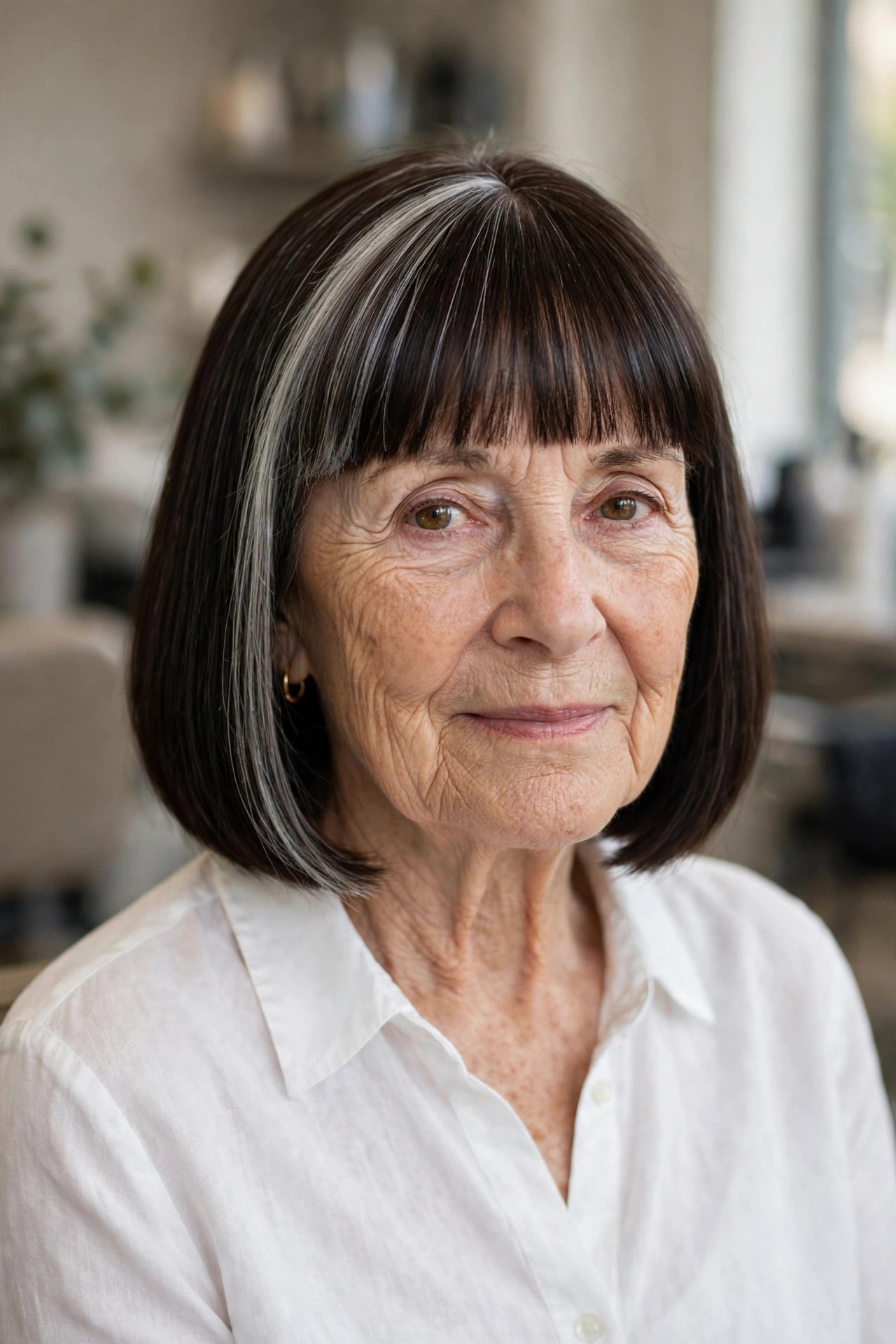
Cut the fringe to just touch the eyebrows, keep the bob dead straight and glassy, and you have the sharpest look in this collection. A single silver streak at the front, as pictured, turns the fringe into a feature — the eye goes straight to it. This is a confident, fashion-aware bob that works best on naturally straight or relaxed hair.
Precision is the maintenance here: eyebrow-grazing means the fringe reaches your eyes about a week sooner than a shorter bang would, so book fringe trims between full appointments — many salons do them free. Keep the polish with one slow, heat-protected flat-iron pass rather than several fast hot ones.
11. Curtain Bangs with a Just-Above-Shoulder Long Bob
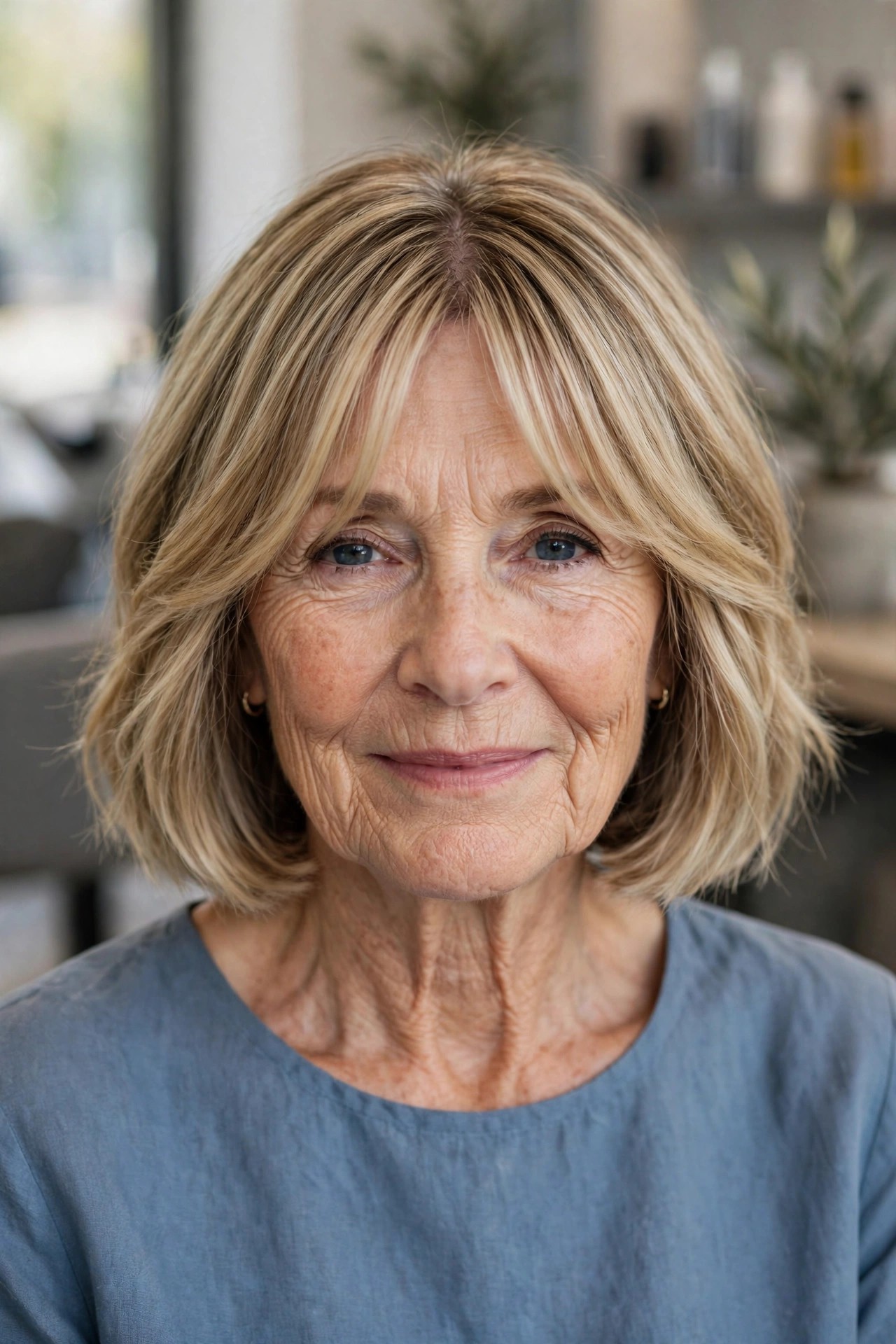
The long bob — resting just above the shoulders — is the choice when you want a bob’s shape with a little more length to play with. Curtain bangs keep it current: parted in the center, sweeping to the cheekbones, and long enough to tuck behind your ears on days you want your face completely clear.
Because this is the longest cut here, the ends are the oldest hair on your head, so condition them like it. Our chin-length bob guide shows the shorter version of this same shape if you are deciding between the two lengths. Dry curtain bangs forward, then split and sweep them back; that two-step is what creates the signature drape.

12. Wispy See-Through Bangs with an Airy Bob for Fine Hair
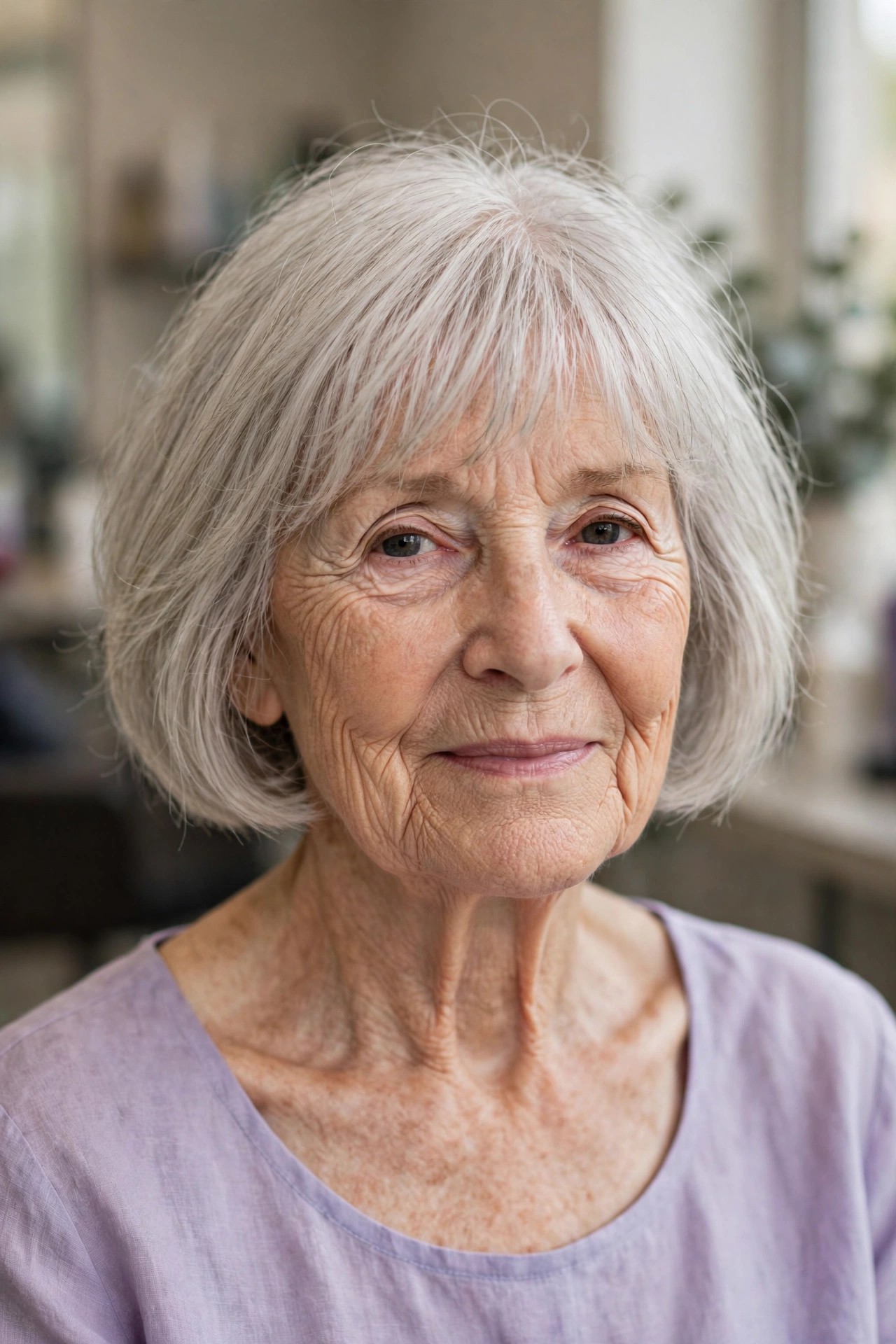
Fine hair after 60 needs a fringe that asks almost nothing of it. See-through bangs are cut from a very small section at the front, so only a sheer veil of hair crosses the forehead — enough to soften the hairline and shadow forehead lines, never enough to expose how fine the rest of the hair is. The bob around it is kept airy and light at the ends.
The golden rule with this cut is product placement: volumizing mousse at the roots only, and nothing heavy anywhere near the fringe, because even a little oil makes sheer bangs separate into strings. A gentle blast of the dryer side to side each morning resets them. This is also the easiest fringe to grow out if you change your mind.
13. Rounded Bangs with a Curved-Under Bob
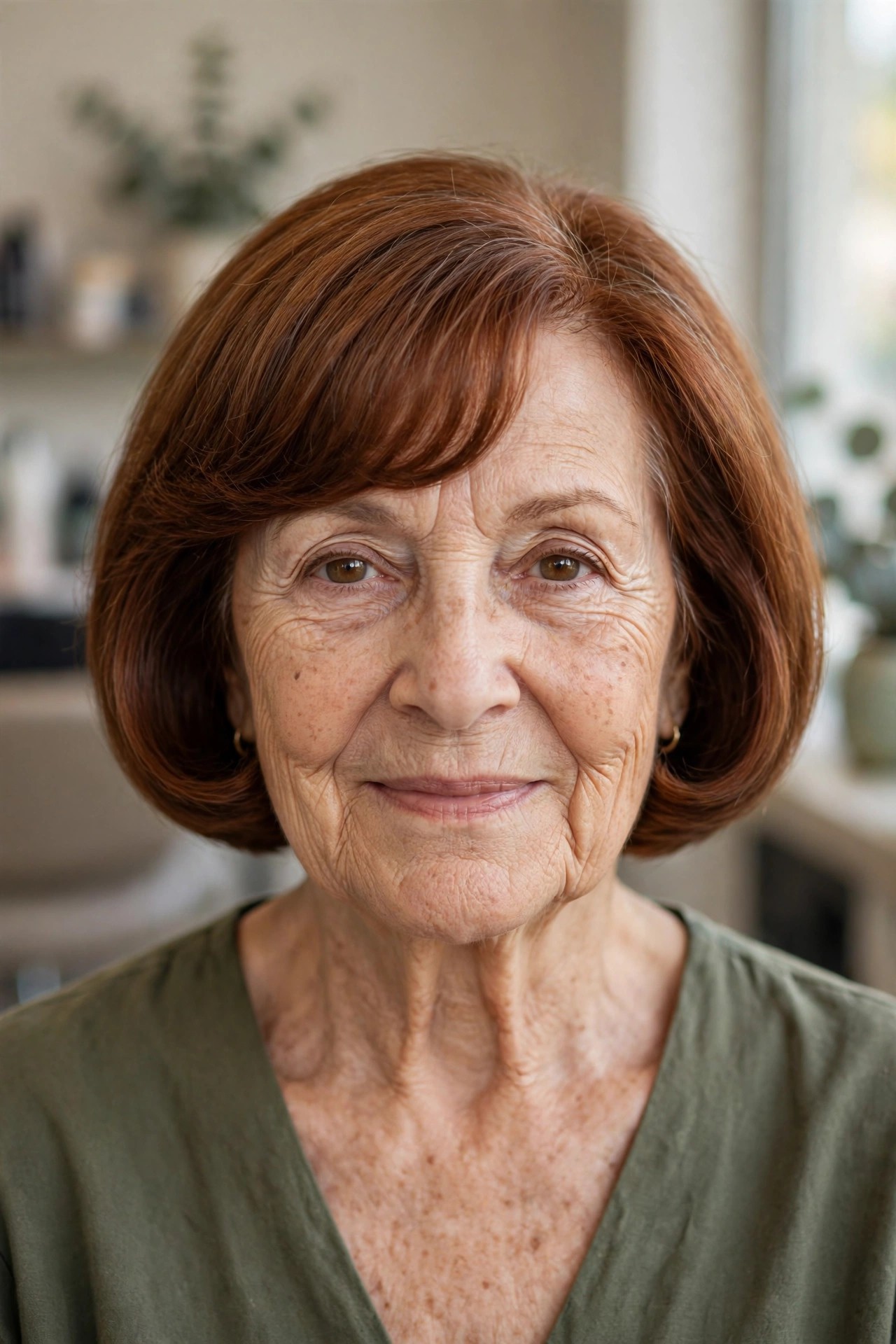
Some bobs turn under; this one is built around that curve. The perimeter is cut to roll inward at the chin, and the bangs are rounded to echo it — following the forehead in a soft arc that is longer toward the temples. The whole outline becomes one continuous curve, which is quietly slimming and very forgiving around the jaw.
A round brush is not optional equipment for this style; it is how the curve is made each morning. Dry the ends under in sections, then roll the fringe under just once — over-curling the bangs is the only way to spoil this cut. It suits straight to slightly wavy hair best, and it flatters heart-shaped faces particularly well.
14. Asymmetrical Bangs with an Angled Bob
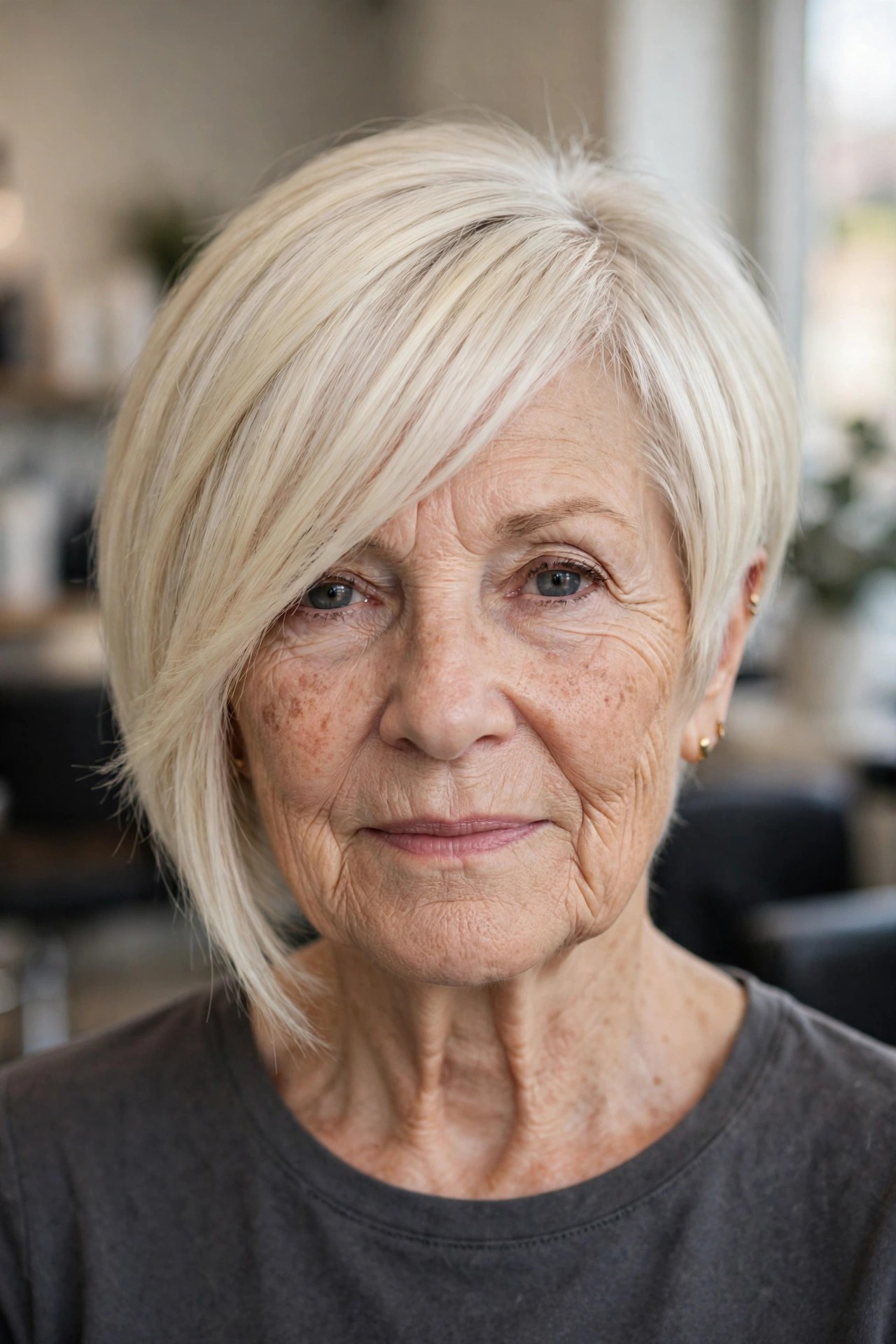
One side longer, one side shorter, and a fringe cut on a true diagonal — asymmetry is the fastest way to make a classic bob look modern. The diagonal bang draws a strong line across the forehead that directs attention to your eyes, while the uneven lengths keep the silhouette interesting from every angle, not just the front.
Wear the longer side on whichever side of your face you prefer to highlight; there is no rule. This cut does ask for a stylist who is confident with freehand work, and for trims that keep the angle honest — once both sides grow level, the design is gone. A mini iron on the longer front piece keeps the asymmetry crisp.
15. Soft Blunt Bangs with a Gray-Blending Bob
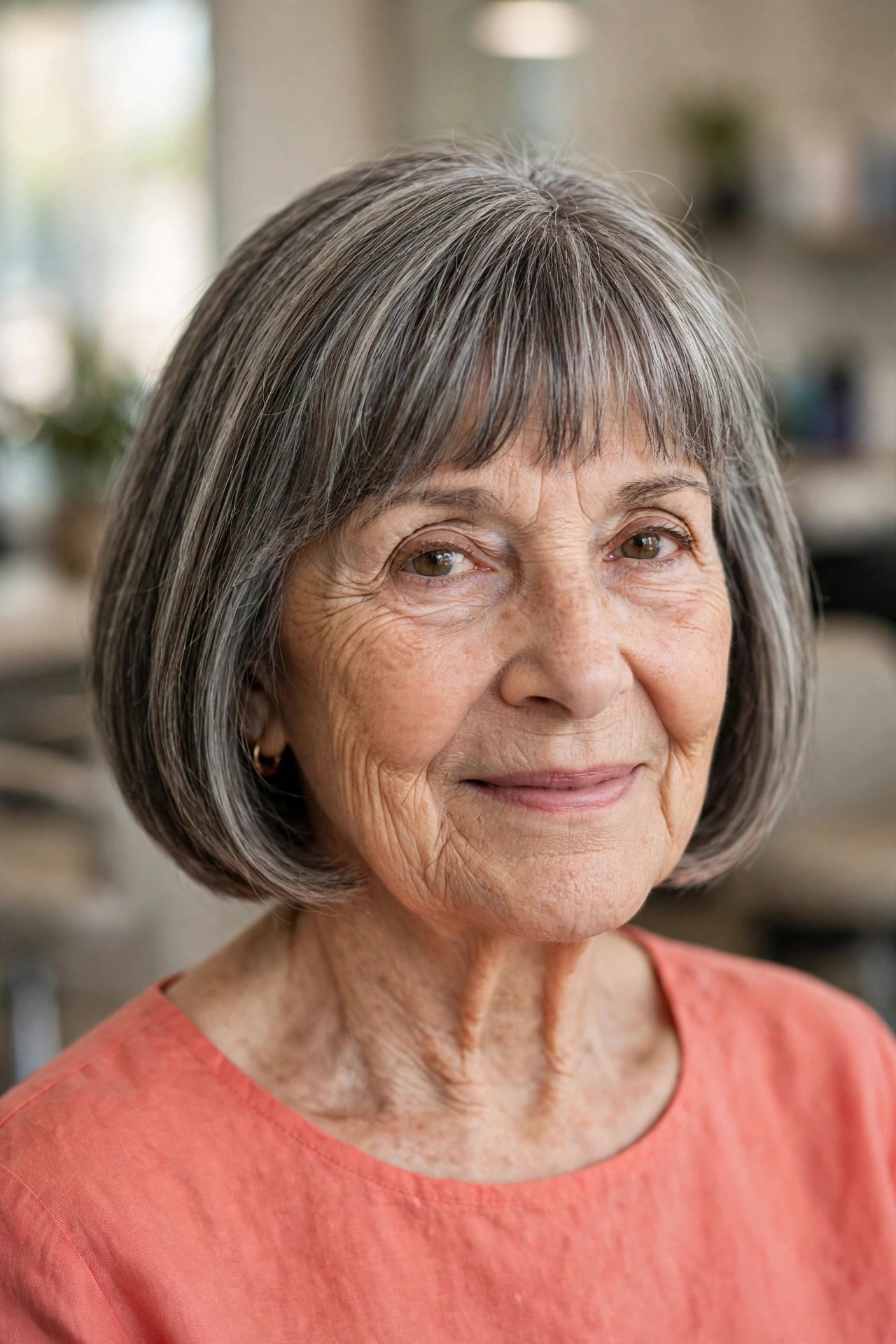
Here the fringe is blunt in shape but soft in execution — the ends are lightly point-cut so the line is clean without being hard. Paired with a bob worn in your natural salt-and-pepper blend, it makes gray look like a deliberate style decision, which of course it is. Dimension in the color does the work that highlights used to do.
Gray hair is more light-sensitive than pigmented hair and can pick up a yellow cast, so a purple shampoo once a week is part of this cut’s care, not an optional extra. Sleeping on a satin pillowcase also helps, because coarser gray strands catch and frizz on cotton. More silver-first inspiration sits in our graduated bob guide for crown volume, which uses the same natural-blend approach.


16. Tapered Bangs with a Short Stacked Bob
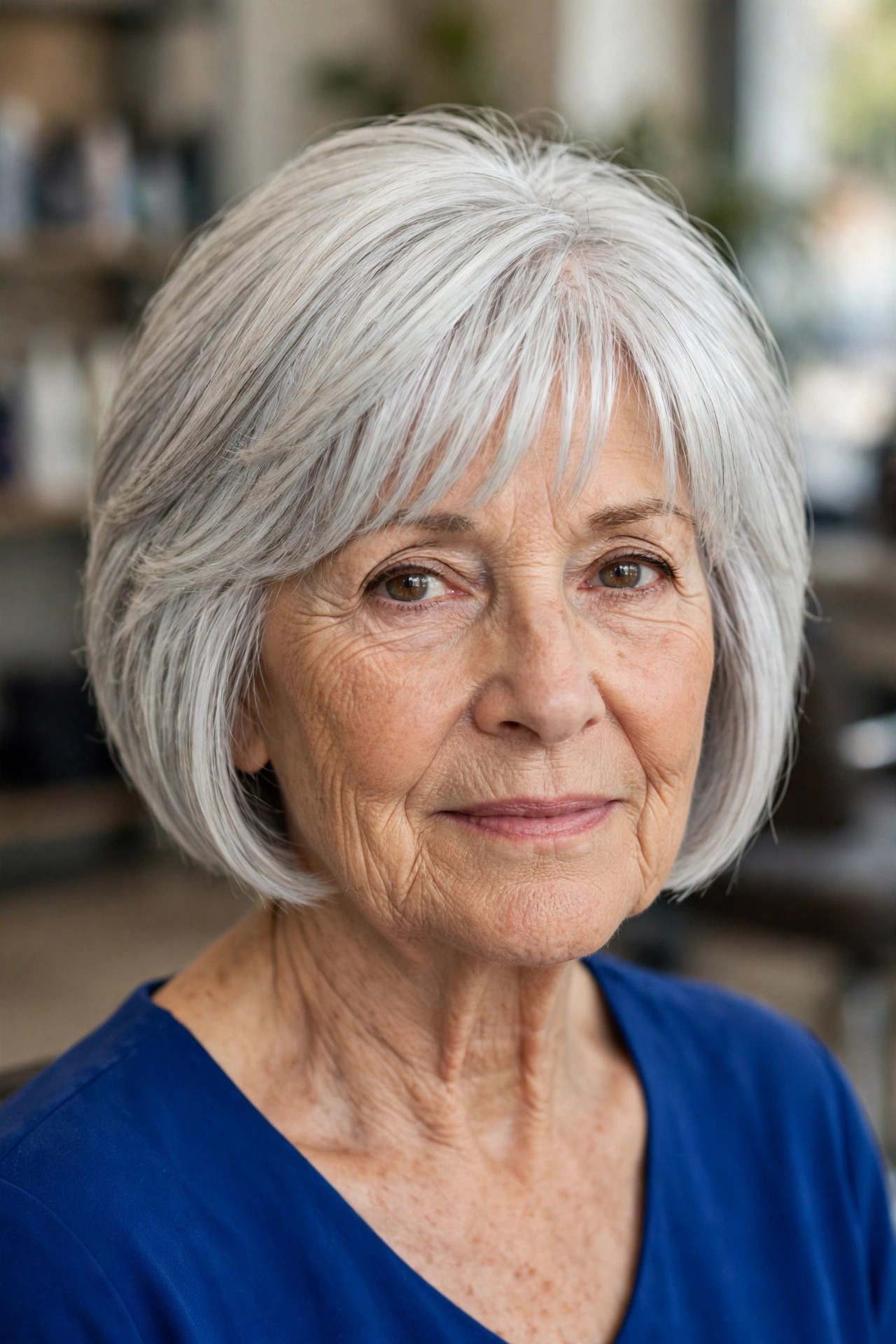
Tapered bangs narrow gradually toward the sides, so the center of the fringe is the fullest point and the edges feather away into the bob. Combined with a stacked back, the whole cut has a gentle forward flow — volume behind, softness in front. It is a particularly good trick for a high forehead, because the fullest part of the fringe sits exactly where coverage matters most.
Ask for the taper to be cut dry at the final check, when your stylist can see exactly how the fringe falls on your forehead. At home this is a brush-and-go fringe: dry it straight down, then nudge the tapered edges outward with your fingers. The stack at the back will tell you when a trim is due — it loses its spring first.
17. Curly Bangs with a Curly Bob
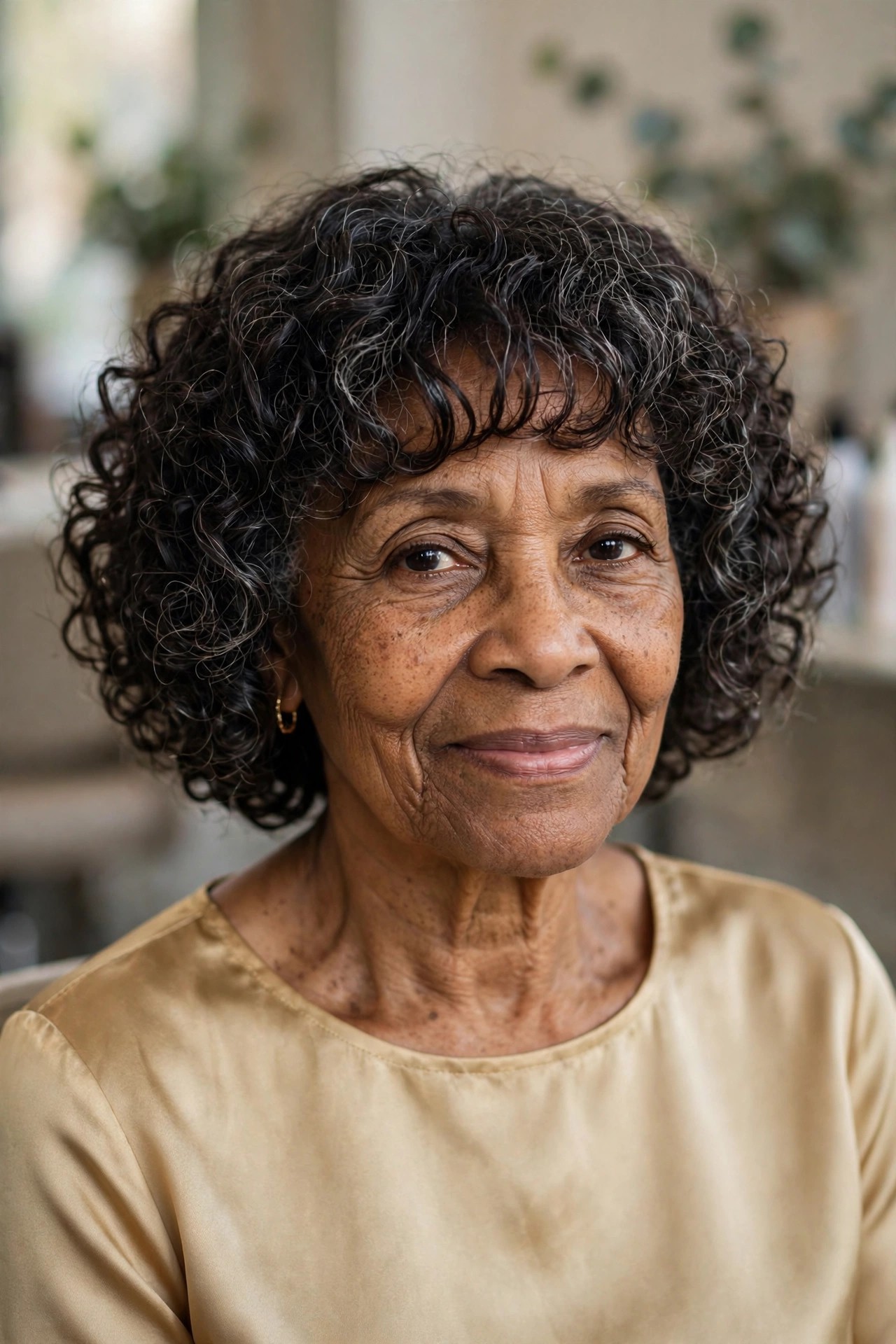
Curly bangs were considered impossible for years, and they are now one of the freshest ways to wear a bob. The curls are cut to fall onto the forehead in their natural pattern — as pictured, with a few gray strands running through the dark curls — and the bob is shaped round so the whole silhouette is balanced rather than triangular.
Two things make curly bangs work: they must be cut dry, in their natural curl pattern, and they must be left longer than you think, because curls spring up. Define them with the same curl cream you use on the rest of your hair, applied to wet hair, and then hands off until dry. Never brush a curly fringe — separate it with fingers only.

18. Split Fringe with a Smooth Highlighted Bob
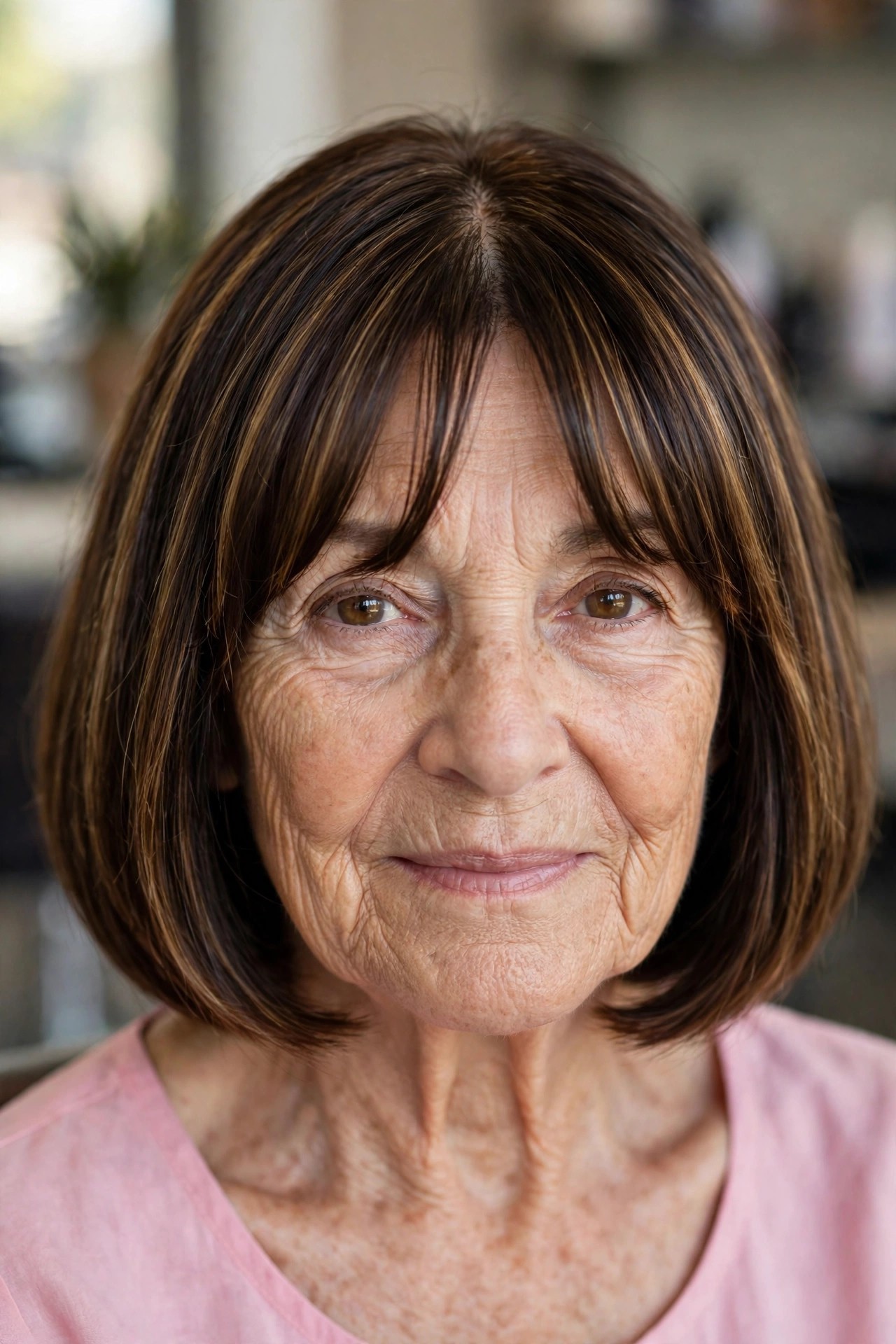
A split fringe is a curtain bang with a softer opening: the center part is small, the two sides stay close together, and the effect is a gentle frame rather than a dramatic drape. On a smooth bob with caramel highlights woven through a brunette base, the split fringe shows off the lightest face-framing pieces right where they do the most brightening.
This style grows out more gracefully than almost any other fringe, because the split simply widens into ordinary face-framing layers. If you are also exploring the same pairing a decade earlier, our Over-50 bangs guide covers how the fringe choices shift with finer hair. Keep the front smooth with a heat protectant and a dryer, not daily ironing.

19. Long Wispy Bangs with a Feathered Bob
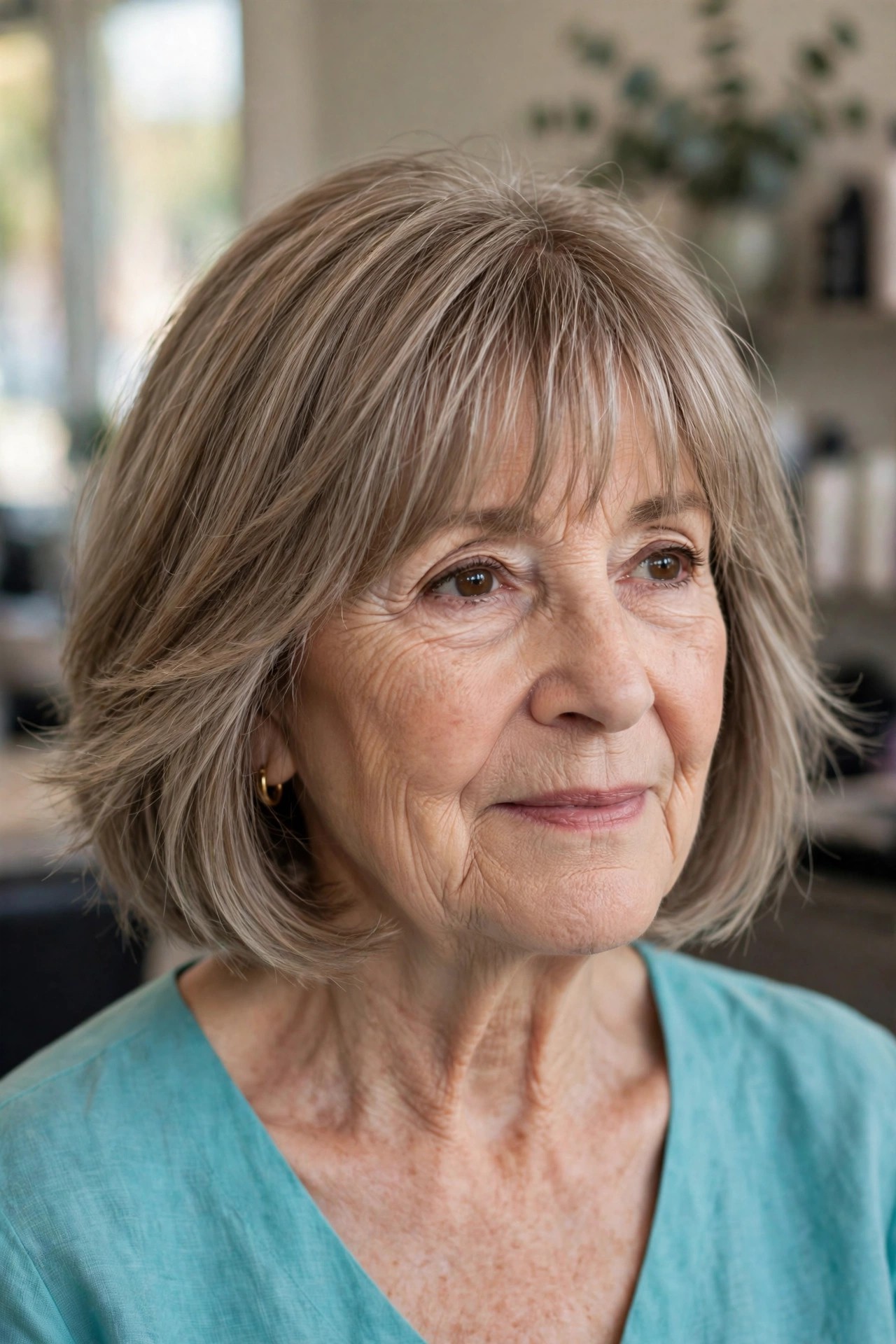
Take the wispy fringe of idea 2 and let it grow to eyebrow length, then feather the whole bob outward, and the mood changes completely — softer, more romantic, and very forgiving. The long bangs can be worn down, swept to one side, or pushed back entirely, which makes this the most flexible fringe-and-bob pairing in the list.
That flexibility is also its practical secret for glasses wearers: on days the bangs annoy you under frames, they are long enough to sweep aside and stay there. Feathering needs a light hand with product — work a little volume mousse through the roots and dry the layers away from the face. Heavy serums will glue feathers together.
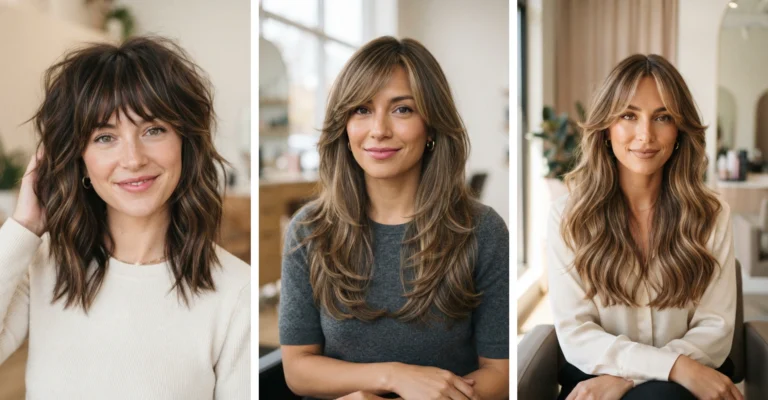
20. Bardot-Style Curtain Bangs with a Voluminous Blowout Bob
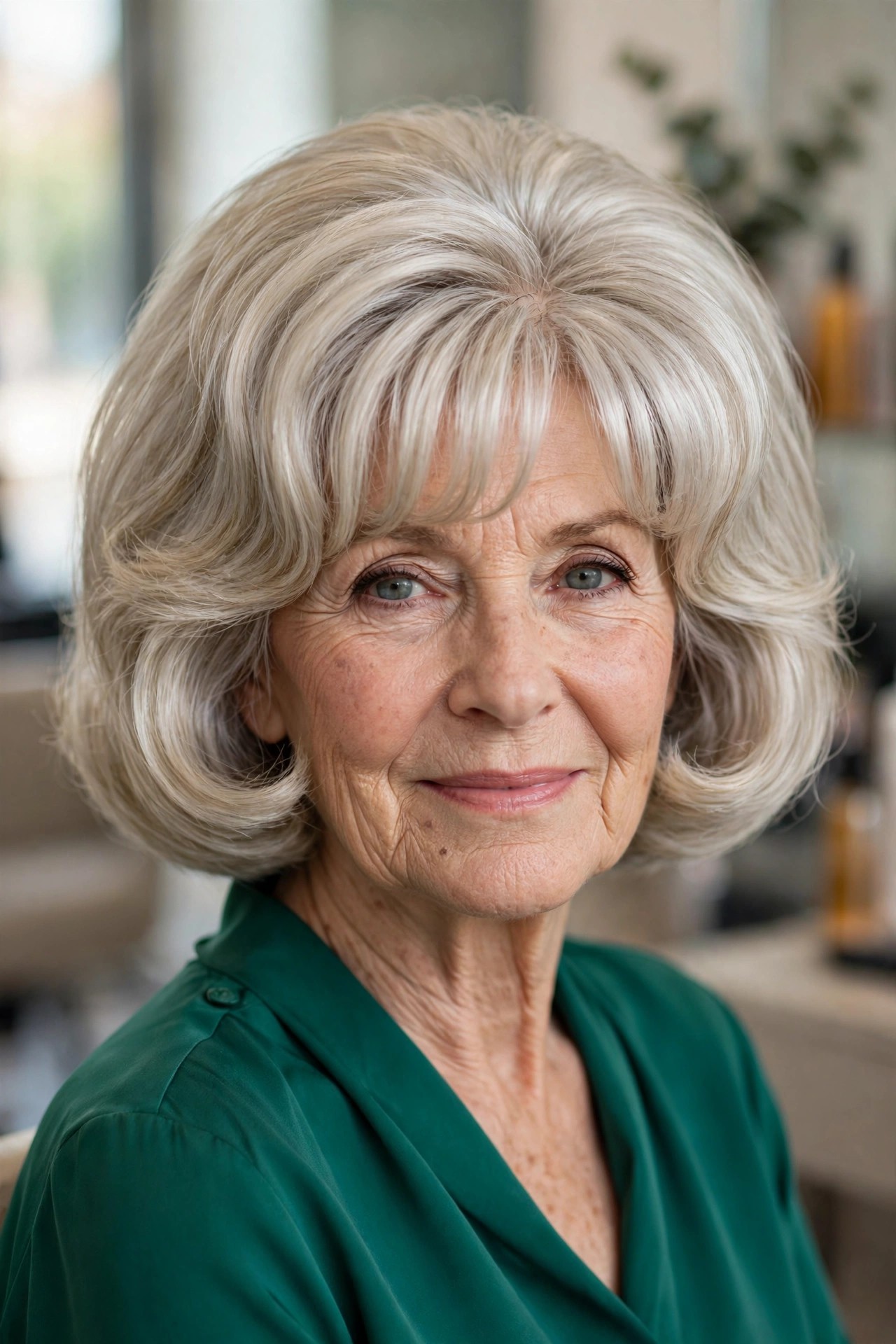
We finish with the glamorous one. The bob is blow-dried full and bouncy, with the ends rolling under in a soft curve, and the fringe is a fuller curtain bang — thicker through the center than a wispy curtain, parted and swept to both sides in the style Brigitte Bardot made famous. It frames the eyes, lifts the cheekbones, and turns an everyday bob into an occasion look.
The blowout is the styling, so give it the right tools: a hot-air styler or a round brush in sections, drying the fringe forward and then sweeping it apart last. Set each section with a cool shot before moving on and the volume will hold for days, refreshed at the roots with dry shampoo. For special occasions, this is the bob to book.
Recommended Products
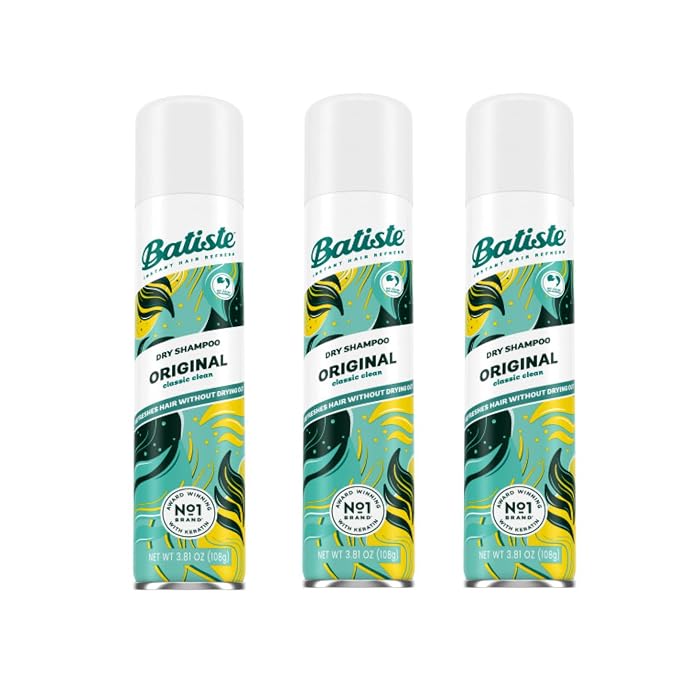
These are the five products that came up again and again across the twenty styles above — a good volumizing mousse for fine bobs, a proper round brush for curved and blowout shapes, a purple shampoo for silver fringes, a hot-air styler for fast mornings, and a brushable hairspray that holds a sweep without freezing it.
- ✅ Dry your bangs first, every time — they set fastest and are hardest to fix once the rest of the hair is done.
- ✅ Book fringe trims every 3–4 weeks between full cuts; most salons tidy bangs free or cheaply.
- ✅ Keep conditioner off the fringe — it weighs fine bangs down and makes them separate.
- ✅ Use dry shampoo at the fringe roots on day two; bangs pick up skin oil faster than the rest of the cut.
- ✅ Always use heat protection before a flat iron or hot brush, and keep temperatures moderate for mature hair.
- ✅ For gray and silver bobs, use a purple shampoo weekly to keep the fringe bright, not yellow.
- ✅ Sleep on a satin pillowcase to stop bangs waking up bent, frizzy, or stuck to your forehead.
- ✅ Trim the whole bob every 6–8 weeks — a bob’s shape is its outline, and the outline is the first thing to go.
Frequently Asked Questions
Do bangs really make a woman over 60 look younger?
The right bangs can, yes — not by hiding your age, but by changing the proportions of the haircut. A fringe softens the forehead, reduces the visual length of the face, and draws attention to the eyes and cheekbones. Wispy, curtain, and side-swept bangs tend to be the most flattering after 60 because they soften without the hard line of a heavy blunt fringe.
Which bangs are best for fine or thinning hair over 60?
Wispy and see-through bangs are made for fine hair: they are cut from a small front section, so they look intentional even with very little density, and they do not steal thickness from the rest of the bob. Avoid a thick blunt fringe if your hair is fine at the front — it can expose the scalp at the parting and leave the sides looking thinner.
How often do bangs need trimming?
Most bangs need a tidy every three to four weeks to keep their length where it was designed to sit — eyebrow-grazing styles sooner, long side bangs and curtain bangs less often. Many salons offer quick fringe trims between appointments at little or no cost, so ask when you book your main cut, which a bob needs every six to eight weeks.
Can I wear bangs with glasses?
Absolutely — the trick is length and shape. Curtain bangs, side-swept bangs, and long wispy bangs all sit above or beside the frames instead of resting on them. Take your glasses to the salon and have the fringe cut while you are wearing them, so your stylist can see exactly where the bangs and frames meet.
Will bangs work with gray or silver hair?
Gray hair often makes bangs look even better, because a fringe is the newest, shiniest hair on your head and silver catches light beautifully across it. Gray strands are coarser, so bangs may spring up more than expected — have them cut slightly longer, keep them bright with a weekly purple shampoo, and smooth them with the dryer rather than heavy products.
I have a cowlick at my hairline. Can I still have bangs?
Usually, yes — a good stylist works with the cowlick instead of against it. A side-swept or curtain fringe that falls in the direction of the cowlick will behave far better than a blunt fringe cut straight across it. Drying the bangs side to side with the nozzle pointing down, while they are still damp, also trains most cowlicks to sit flat.
A bob with bangs is not one haircut — it is twenty, and the difference between them is a fringe decision you only have to get right once. Pick the bang that matches your hair density, your glasses, and your patience for trims, keep the bob between chin and shoulder, and the combination will do what it has done in every photograph above: put the focus back on your face, and make the whole look feel freshly, unmistakably yours.