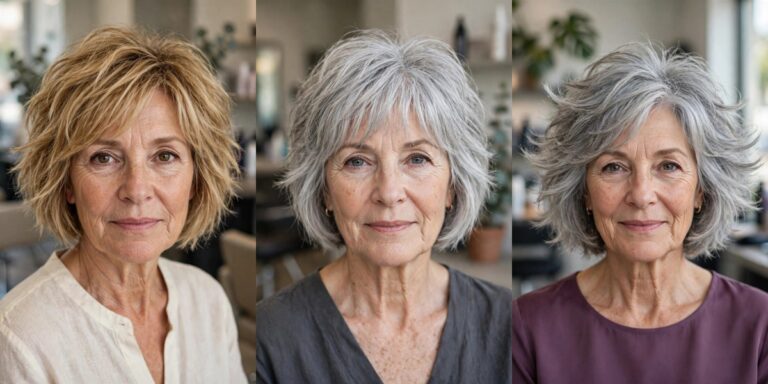
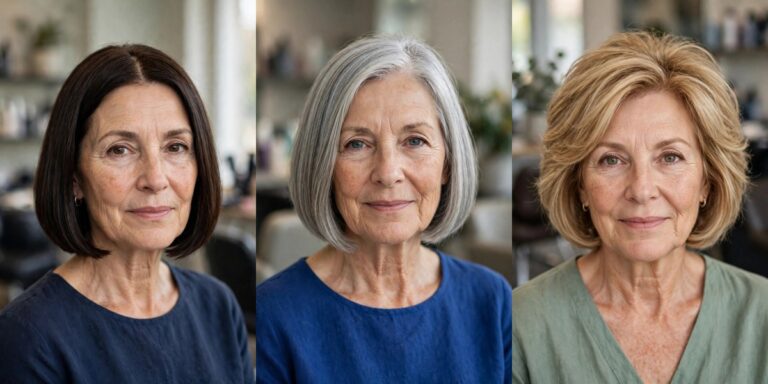
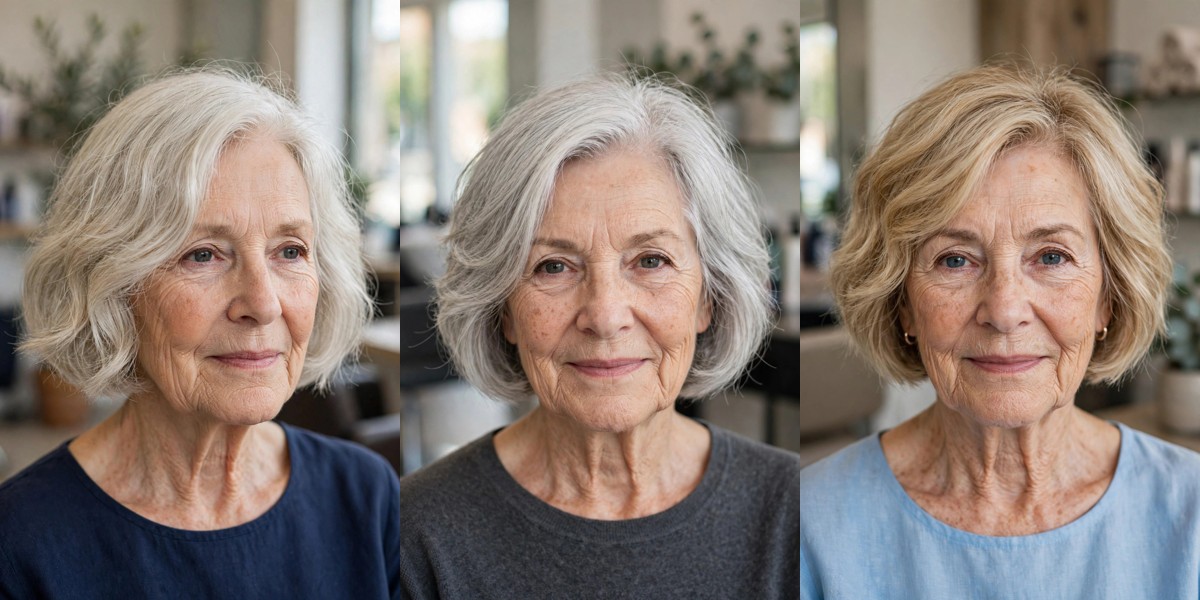
Short Wavy Haircuts for Women Over 60 With Fine Hair
This post contains affiliate links. As an Amazon associate, I earn from qualifying purchases. I only recommend products that are of high quality and that I would use myself.
Fine hair after 60 has one unfair habit: it can look wonderful in the salon mirror and flat by lunchtime. The fix is rarely another heavy product — heavy creams and oils weigh fine strands down and separate them, making hair look thinner. The real fix is geometry. A short cut keeps fragile ends from straggling, an S-wave bend makes every strand take up more visual space, and blunt-ish ends read thicker than wispy, over-layered ones.
Every cut below is genuinely short — pixies and bobs above the shoulders — with loose, soft S-waves rather than tight spirals, chosen specifically for fine, lighter-density hair. The fullness here is honest cosmetic fullness: cut, bend and lightweight styling, never medical or regrowth promises. If flat hair is your main frustration, the crown-lift ideas further down will be your favourites.
Use the table of contents to jump to the shapes that suit your face and routine, from a two-minute wash-and-wear pixie to an elegant French bob. Each idea explains why it works for fine hair, who it suits, and exactly how to style it without weighing it down.
Table of Contents
- 1. Classic Blunt-Ended Wavy Bob
- 2. Wavy Pixie With Crown Layers
- 3. Chin-Length Wavy Bob With a Side Part
- 4. Tousled Pixie-Bob With Soft S-Waves
- 5. Layered Wavy Crop With a Wispy Fringe
- 6. Silver S-Wave Bob With Face-Framing Layers
- 7. Stacked Wavy Bob for Crown Fullness
- 8. Feathered Wavy Pixie With a Tapered Nape
- 9. Soft Wavy Shag for Fine Hair
- 10. Jaw-Length Wavy Bob With Curtain Bangs
- 11. Asymmetrical Wavy Bob
- 12. Wavy Crop With a Longer Top and Short Sides
- 13. Beachy S-Wave Bob With a Blunt Perimeter
- 14. Voluminous Wavy Pixie With Side-Swept Bangs
- 15. Short Wavy Bob With Hidden Crown Layers
- 16. Salt-and-Pepper Wavy Bob With Soft Layers
- 17. Rounded Wavy Bob for a Fuller Face Shape
- 18. Angled Wavy Bob With a Longer Front
- 19. Wash-and-Wear Wavy Pixie
- 20. Elegant French Wavy Bob
- Recommended Products
- FAQs
1. Classic Blunt-Ended Wavy Bob
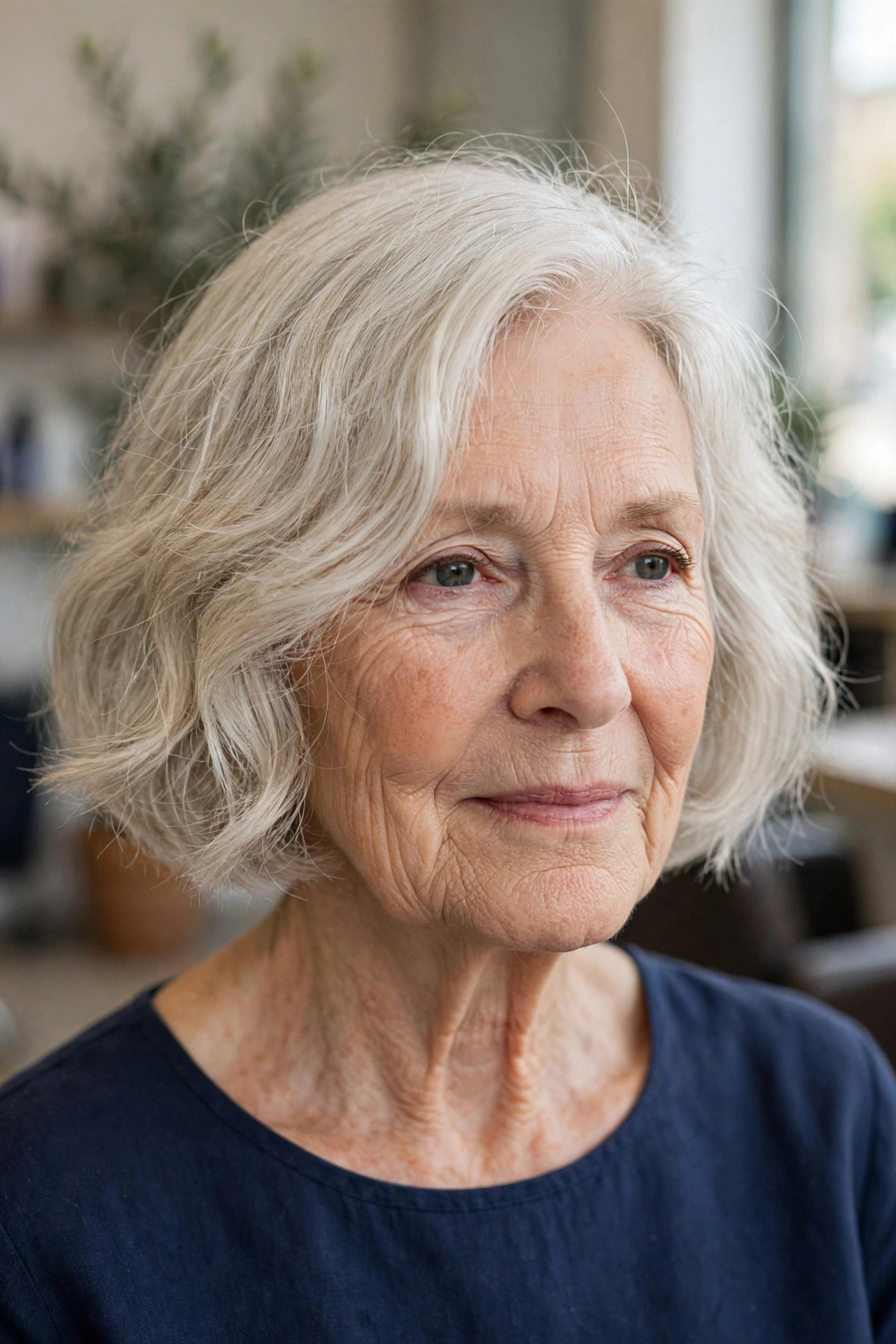
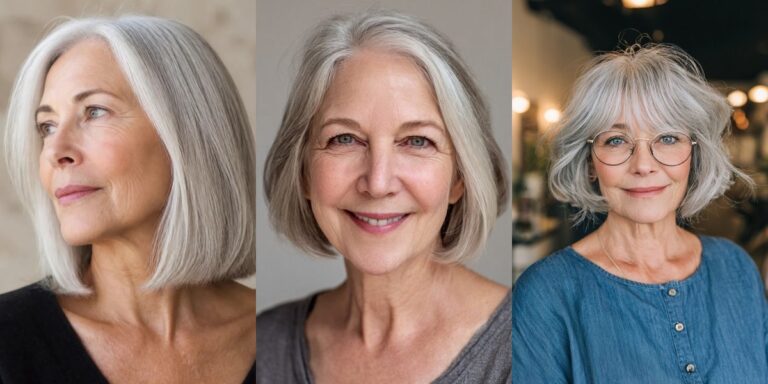
This is the fine-hair foundation cut, and it works because of one honest trick: a blunt perimeter. When every strand ends at almost the same chin-to-jaw length, the bottom edge reads as one solid line instead of a wispy fade, so fine hair looks thicker than it is — no product can fake that as convincingly as the cut itself.
Style it by scrunching a pea-size amount of lightweight mousse into damp hair and diffusing on low heat, lifting at the roots with your fingers. Keep the S-waves loose and open rather than tight; a wide, soft bend catches light and makes each section look wider. A side or slightly off-center part keeps the crown from splitting flat.


2. Wavy Pixie With Crown Layers
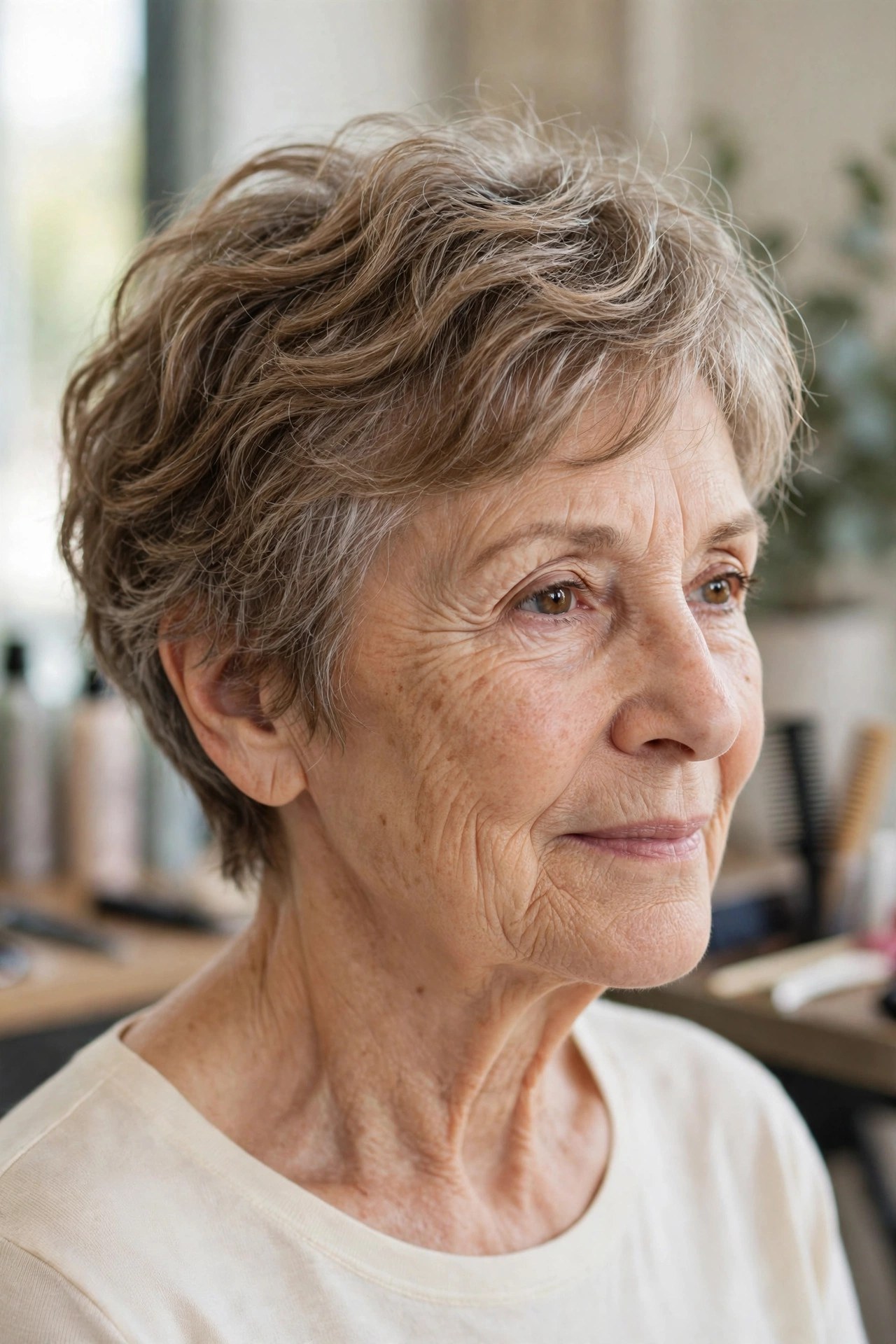
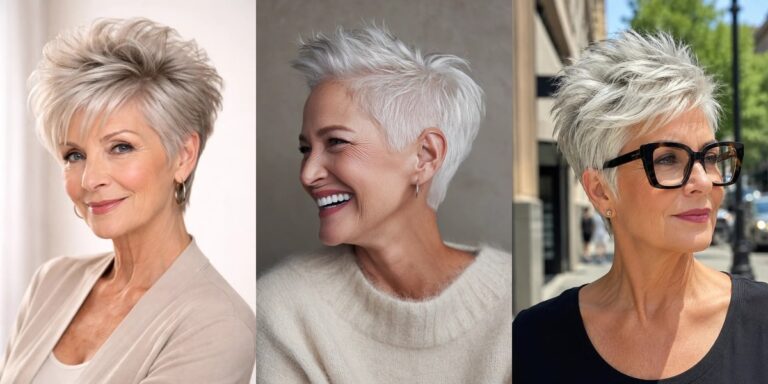
If you love short and easy, the wavy pixie with crown layers is made for fine hair. Short crown layers stack on top of each other, so the wave bend in each layer props up the one below it. That built-in scaffolding is what gives you height at the top without teasing or heavy spray.
Keep the sides and nape neatly tapered so all the visual fullness stays where you want it — on top. In the morning, mist with water, pinch the crown waves back into shape, and let it air-dry. It is one of the lowest-effort cuts in this list, which is why it pairs so well with the wash-and-wear ideas in our guide to tapered pixie cuts for women over 60 with fine hair.


3. Chin-Length Wavy Bob With a Side Part

A deep-ish side part is free volume. Sweeping fine hair over to one side stacks more strands over the crown, hides a flatter patch, and lets the S-waves fall in soft, face-framing curtains. At chin length the ends stay blunt enough to read full, while the wave keeps the shape from looking severe.
Ask your stylist to keep layering minimal through the ends and save any layering for the crown. Flip your part to the opposite side every few weeks — fine hair trains flat in one direction, and a fresh part instantly restores lift. Diffuse on low with your head tilted toward the part side for the first minute to set the root direction.


4. Tousled Pixie-Bob With Soft S-Waves
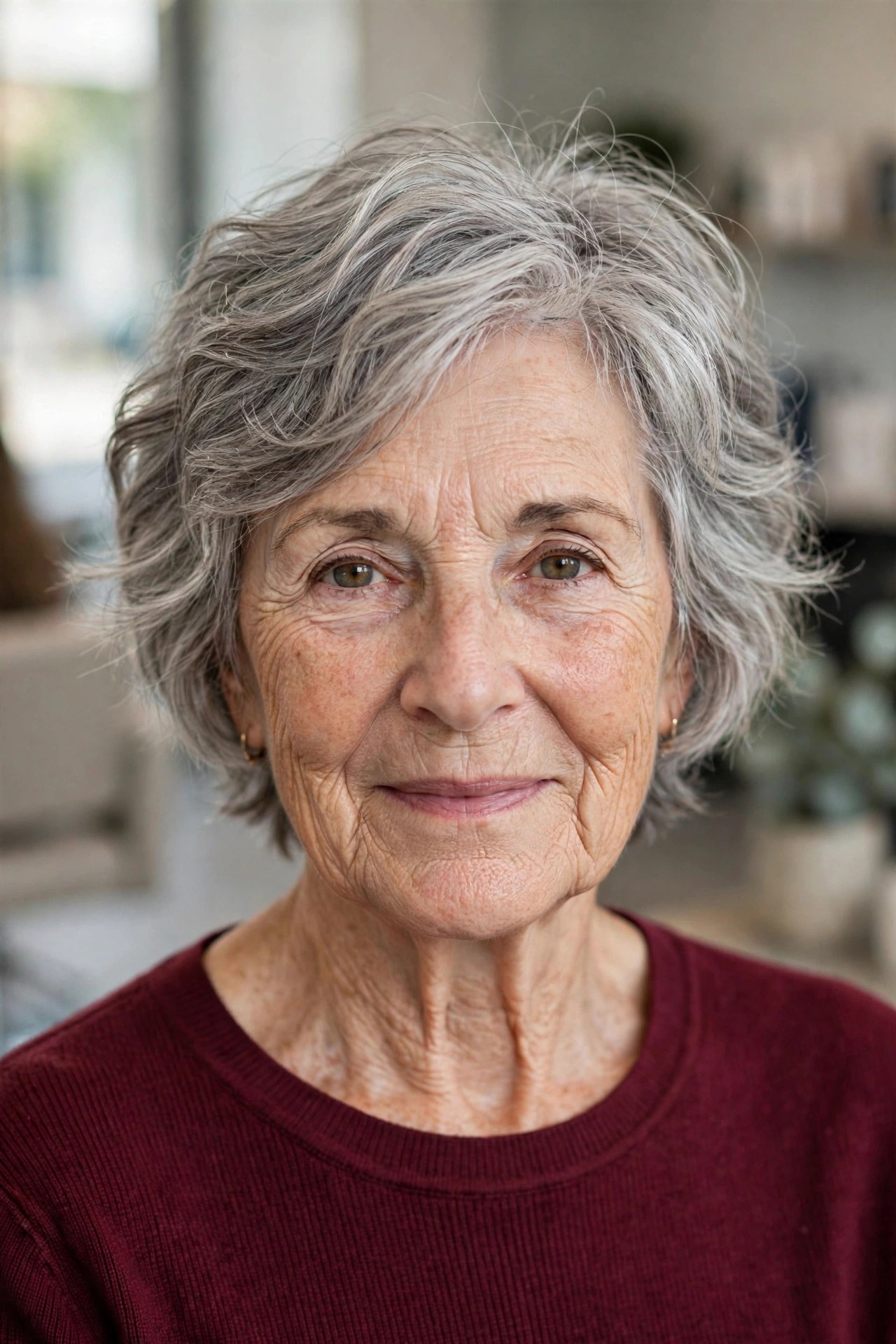
The pixie-bob sits between a pixie and a bob: cropped at the back, longer and wavy through the top and front. For fine hair that extra top length is useful — the S-waves have room to bend, and a bend always looks fuller than a straight strand lying flat against the head.
Tousle, do not smooth. Work a tiny amount of sea-salt spray through dry hair and twist a few front pieces with your fingers to open the waves. Avoid brushing it out with a paddle brush, which separates fine strands and makes them look stringy; a wide-tooth comb or just fingertips preserve the soft clumps that read as thickness.

5. Layered Wavy Crop With a Wispy Fringe
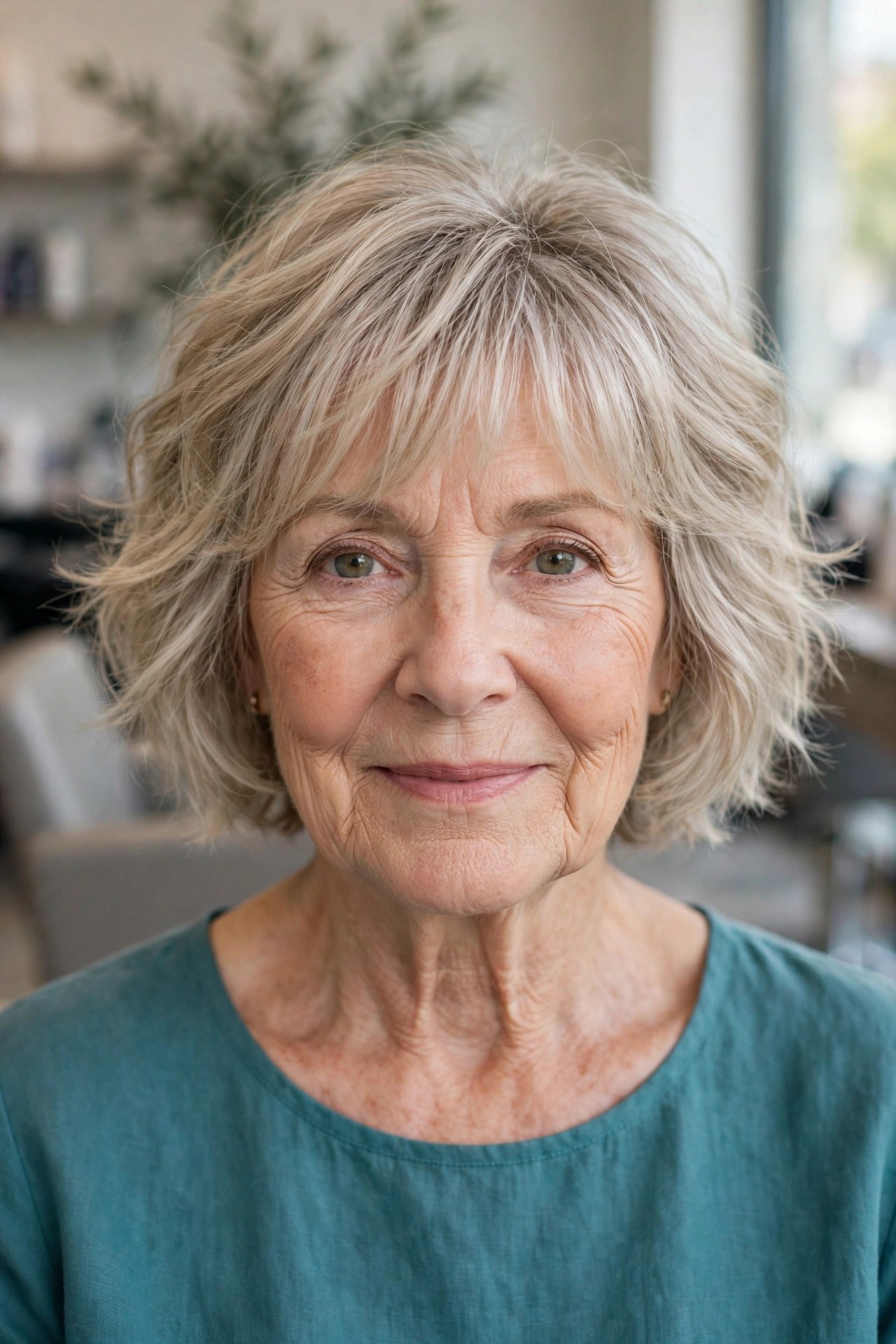
A short layered crop with a wispy fringe softens the forehead and draws attention to the eyes, which is exactly where you want it. The layers are kept long and blended — never choppy or heavily thinned — because over-layering is the fastest way to make fine hair look even finer at the ends.
The fringe should be feather-light and side-swept rather than a heavy straight-across bang, which would steal density from the rest of the cut. Style with mousse only at the roots, then diffuse on low while pushing the fringe gently to one side. Trim the fringe every three to four weeks to keep it wispy, not overgrown.
6. Silver S-Wave Bob With Face-Framing Layers
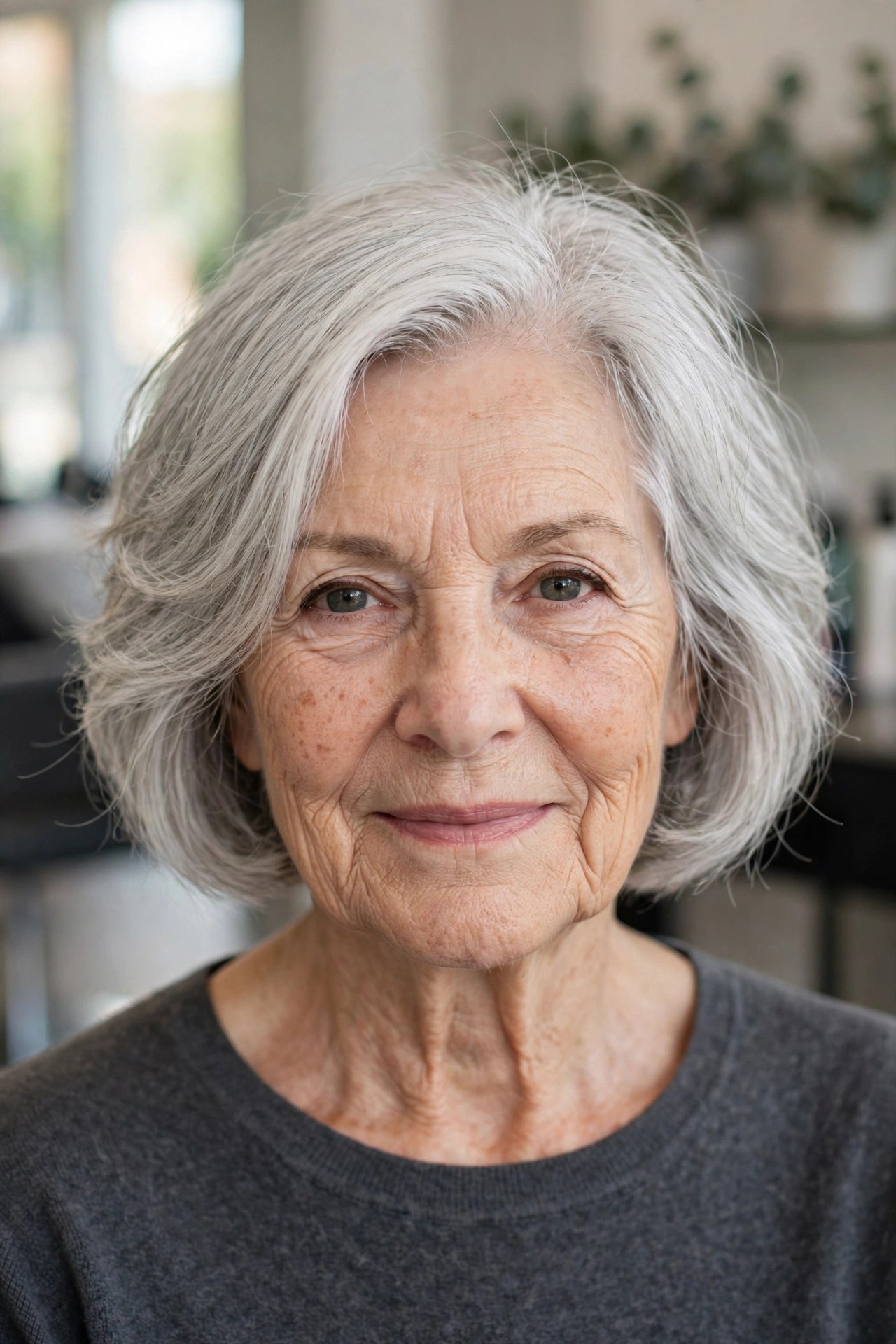
Natural silver is a gift for fine wavy hair: gray strands are often slightly coarser in texture, so they hold an S-wave beautifully, and the multi-tonal mix of white, silver and charcoal creates natural dimension that makes hair look more plentiful. Face-framing layers open up the front so the waves frame the cheekbones instead of closing the face in.
Keep silver bright with a purple shampoo once a week — no more, or it can dull and dry fine strands. If brassiness is your main battle, the same cosmetic principles apply here as in our hairstyles for fine hair over 50 guide: lightweight care, no heavy oils on the lengths, and gloss over grease.


7. Stacked Wavy Bob for Crown Fullness
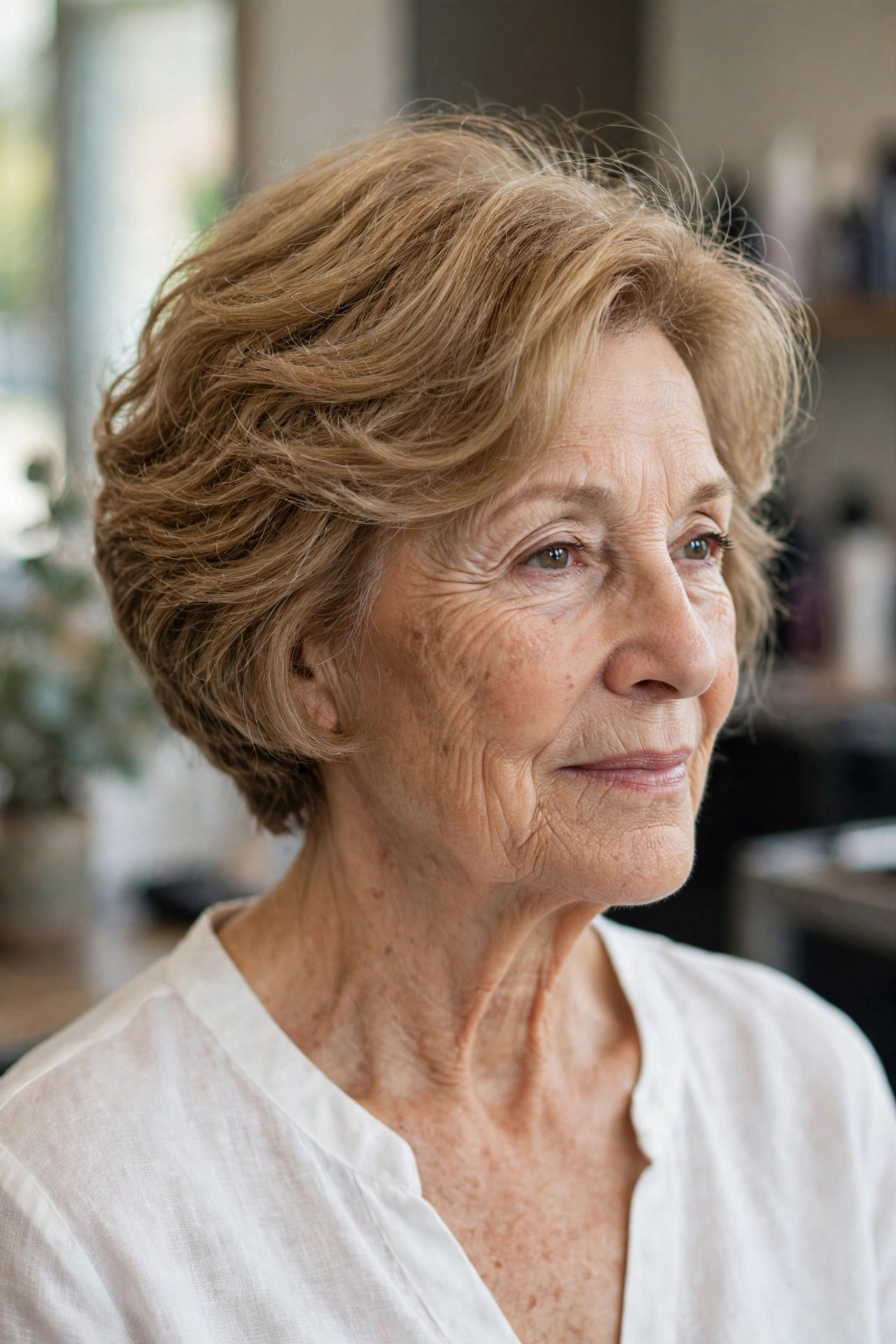
The stacked bob is cut shorter and graduated at the back, building a gentle shelf of layers at the crown. For fine hair that goes flat at the back — the spot you cannot see but everyone else can — that graduation is the most reliable cosmetic fullness there is, and the S-waves soften the stacked shape so it never looks severe.
Ask for soft stacking rather than a dramatic wedge; you want lift, not a hard angle. At home, diffuse the back first with your head upside down for thirty seconds, then finish upright. A round brush used only at the crown on low heat polishes the top layer without flattening the wave through the sides.

8. Feathered Wavy Pixie With a Tapered Nape
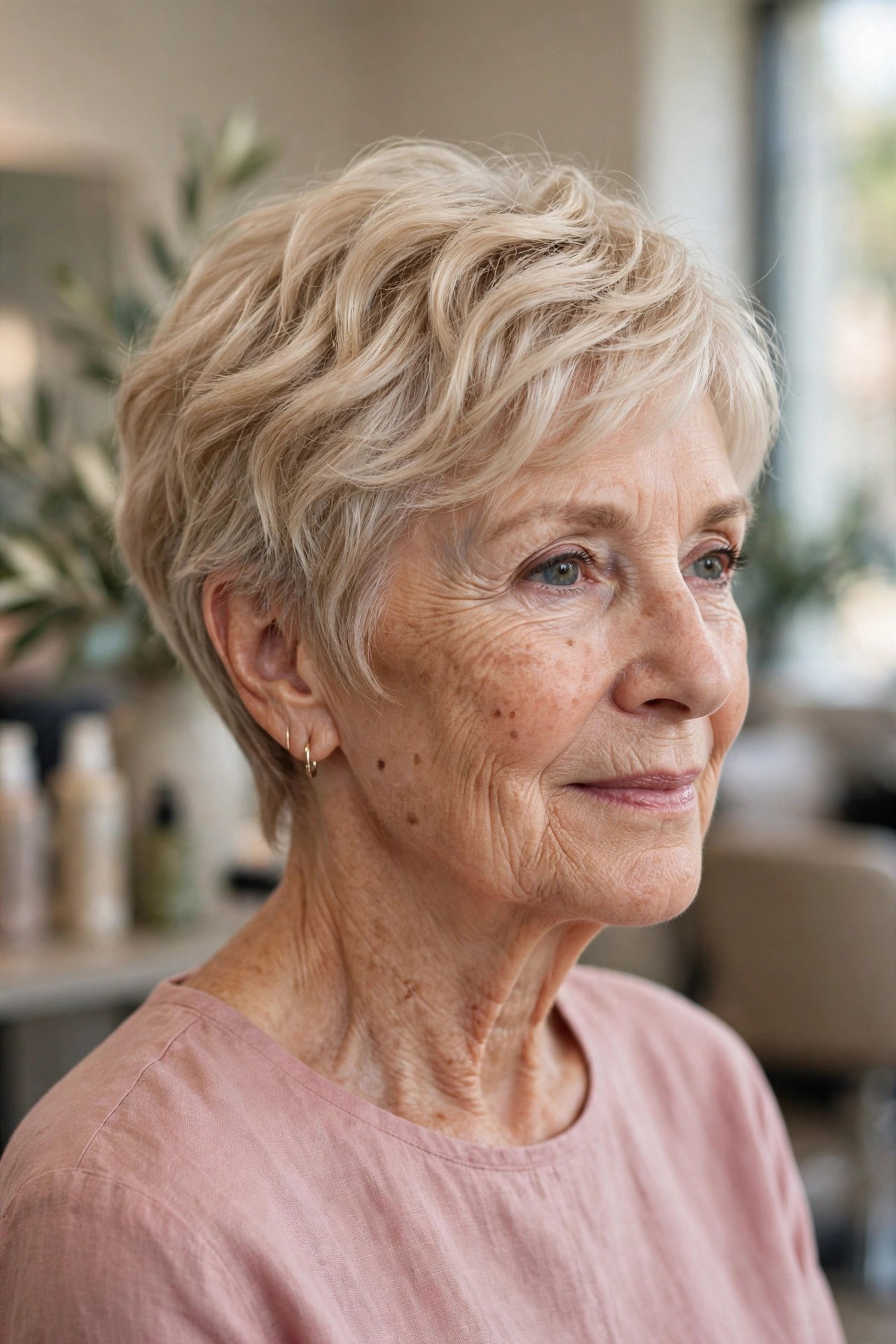
Feathering done gently — long, sweeping layers flicked away from the face — gives a fine wavy pixie movement without removing bulk. The tapered nape keeps the back clean and close, which makes the wavy top look fuller by contrast. It is a polished, feminine short cut that grows out gracefully between appointments.
Because the nape is tapered, this one needs a tidy-up every five to six weeks to stay sharp, but daily styling is minimal: mousse, a short low-heat diffuse, and a fingertip flick through the feathered front. Skip pomades and waxes beyond a rice-grain amount — they separate fine feathers into spikes.

9. Soft Wavy Shag for Fine Hair

Yes, fine hair can wear a shag — as long as it is the soft, modern version. That means a blunt-ish base to protect the ends, with light layering only through the crown and around the face. Done this way, the shaggy S-waves create airy movement and the illusion of body, without the stringy, over-razored finish that gave shags a bad name for fine hair.
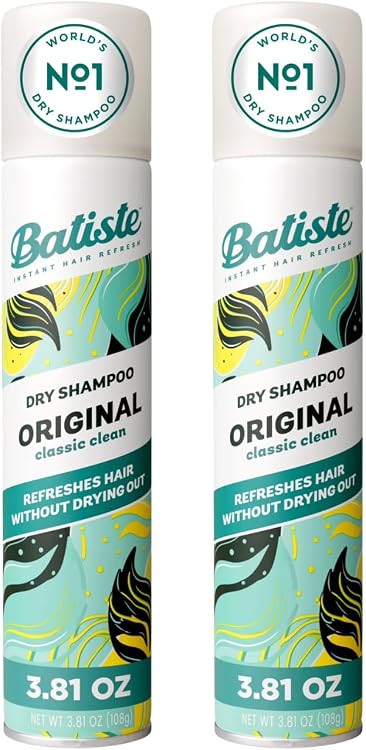
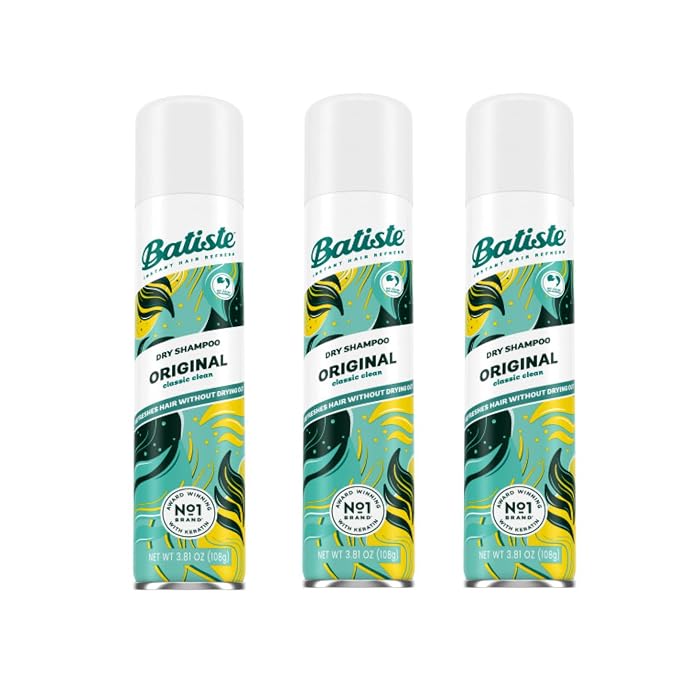
Tell your stylist clearly: no razor, no thinning shears on the ends. Style by scrunching mousse upward from the ends and diffusing on low until just dry. The shag loves a slightly undone finish, so second-day hair — revived with a water mist and a pinch of dry shampoo at the roots — often looks even better than day one.
10. Jaw-Length Wavy Bob With Curtain Bangs
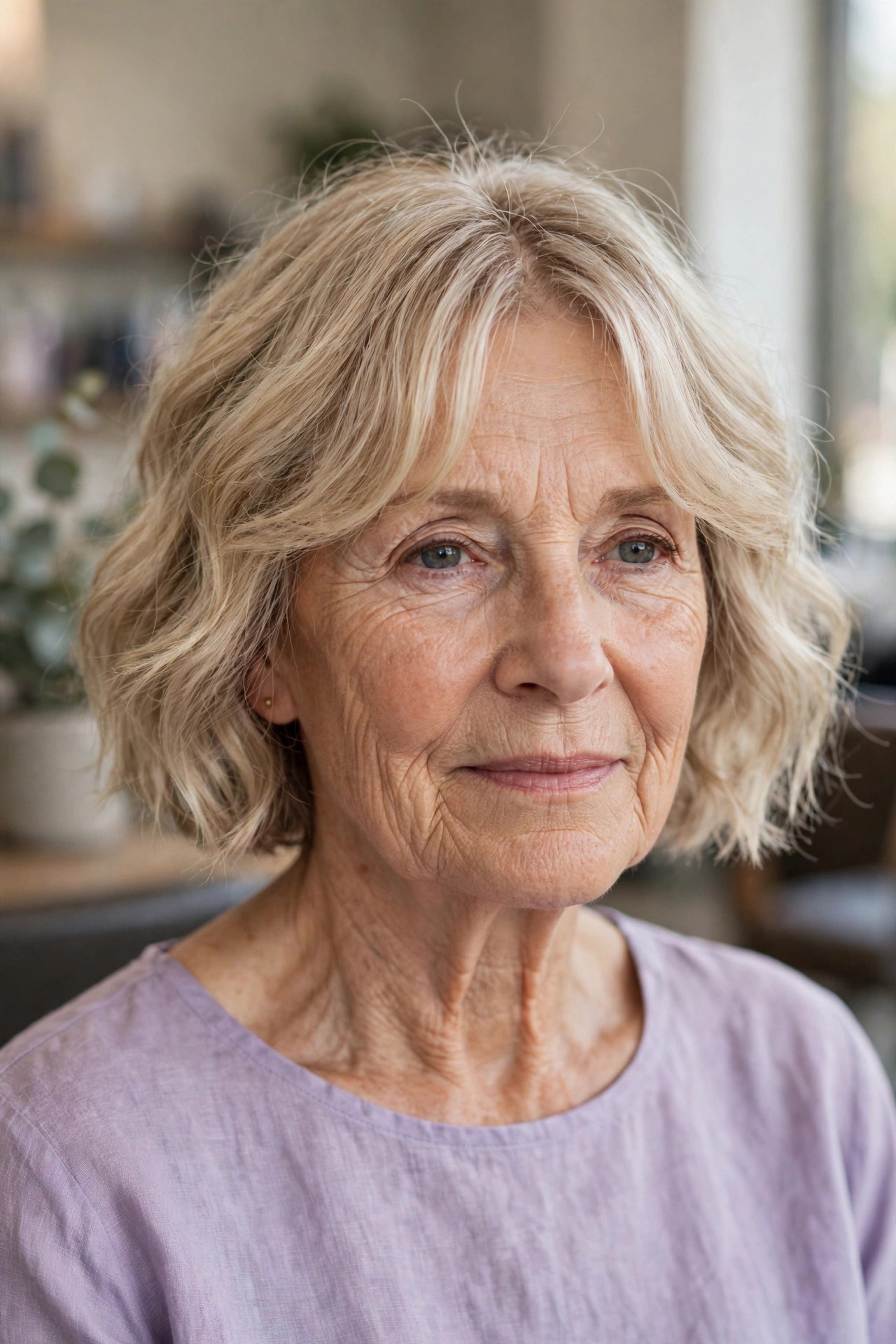
Curtain bangs part in the middle and sweep to both sides, blending straight into the jaw-length waves. For fine hair they are kinder than a full fringe because they use fewer strands, and the sweeping shape adds width at cheekbone level — a flattering place for fullness if your face is narrowing with age.
Keep the bob itself mostly one length at the jaw so the perimeter stays strong, and let the curtain pieces do the softening. Blow-dry just the curtain section forward then sweep it back with a round brush on low heat; the rest can diffuse and air-dry. Try both a center sweep and a side sweep in the mirror before your appointment — curtain bangs are forgiving either way.

11. Asymmetrical Wavy Bob
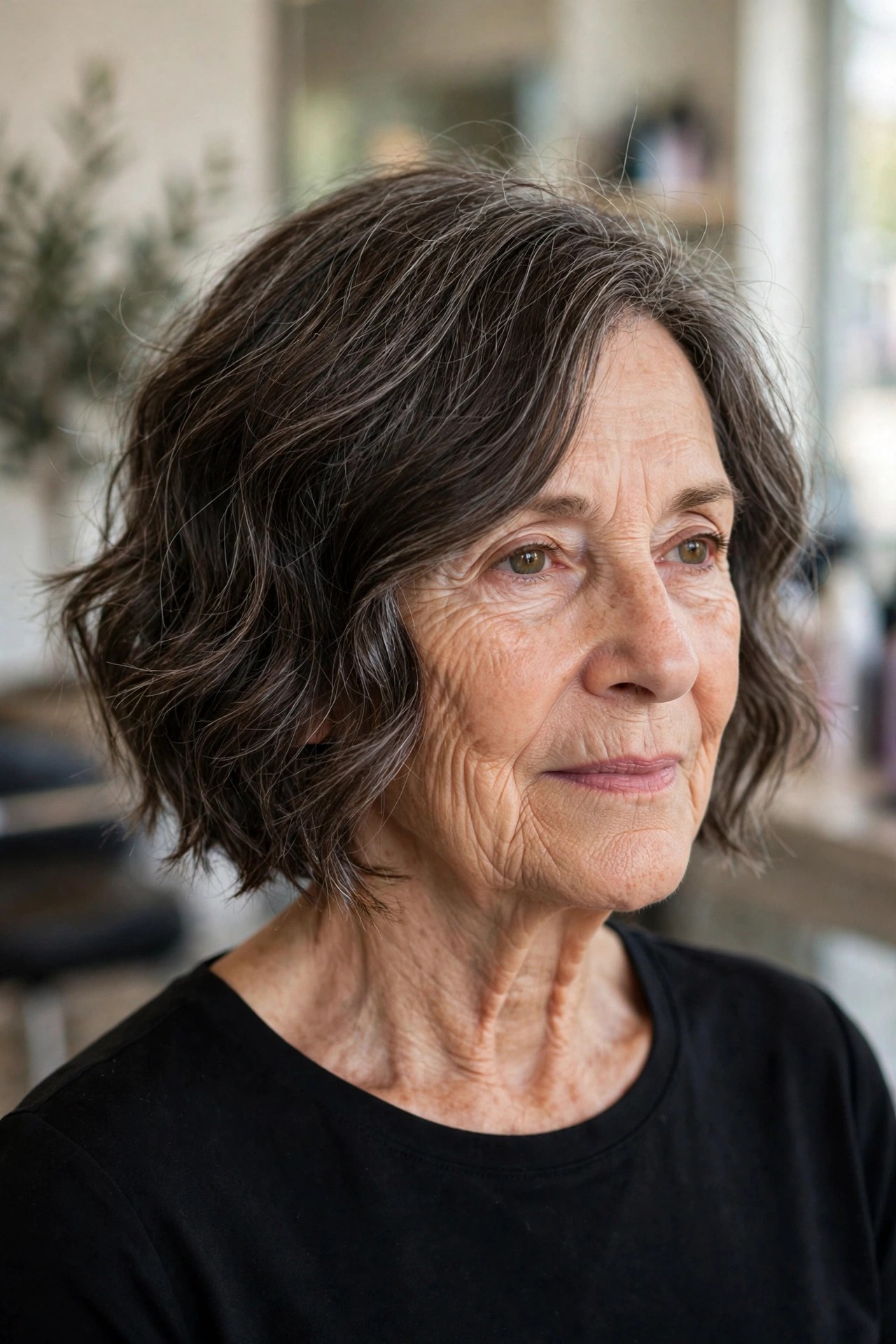
A subtle asymmetry — one side a touch longer, both sides still chin-length and above the shoulders — gives fine wavy hair a modern edge and a clever fullness trick: the longer side carries more visible wave, so the eye reads movement and body rather than density. Keep the difference small, around an inch, so it looks intentional and elegant, not uneven.
This cut works best with a side part worn on the shorter side, letting the longer side sweep across. It needs precise ends, so book trims every six weeks. Style with sea-salt spray scrunched through the longer side to emphasise its S-bend, and smooth — never flatten — the shorter side behind the ear.
12. Wavy Crop With a Longer Top and Short Sides
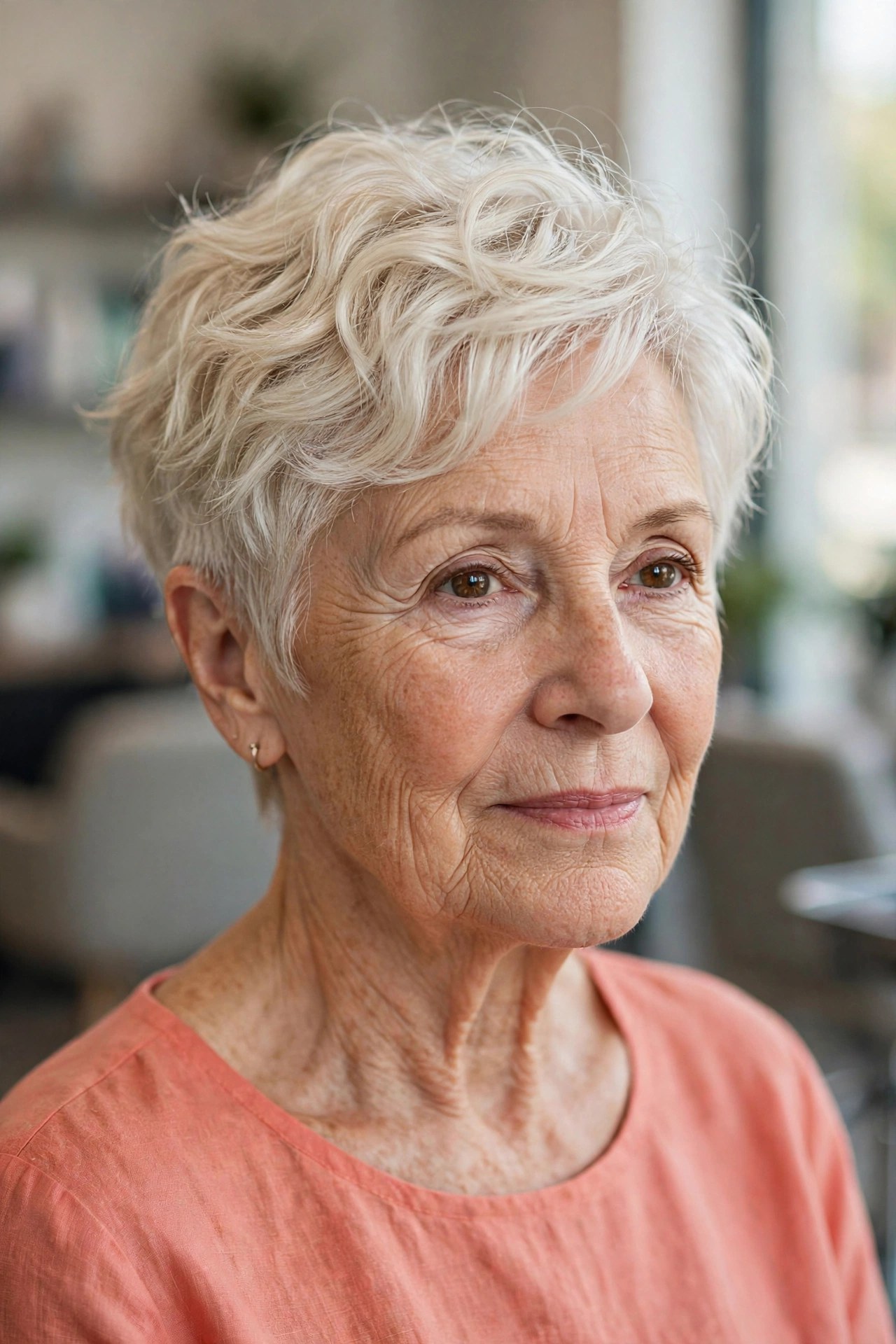
Keeping the sides short and the top longer concentrates every fine strand where the waves can show. The top S-waves bend, lift and overlap, creating shadow and movement that read as thickness, while the tidy sides keep the silhouette clean and lift the whole face.
This is a brilliant option if your sides tend to go wispy and transparent — you simply remove the weakest-looking part and let the stronger top do the talking. A small claw clip can pin one side back on dressier days. For more short, fine-hair strategies, see our haircuts for women over 60 with fine thin hair that add fullness.
13. Beachy S-Wave Bob With a Blunt Perimeter
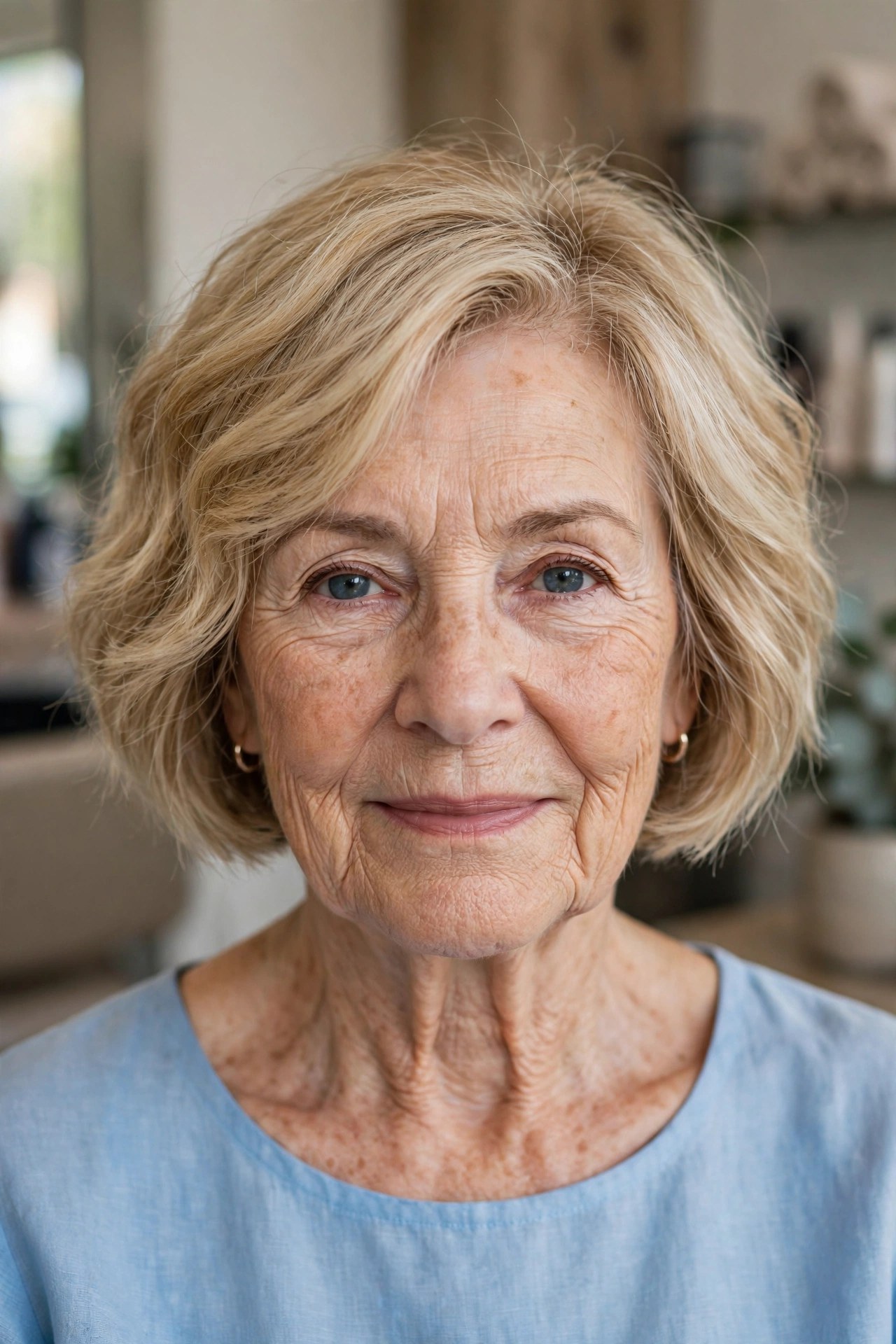
Beachy waves are simply loose S-waves with a matte, touchable finish — and they are a fine-hair friend because the texture spray that creates them also adds grip and the impression of more strands. The blunt perimeter underneath keeps the look grounded and full at the ends, so the tousled top never tips into messy.
Use sea-salt spray sparingly on fine hair: two or three mists over the whole head is enough, then scrunch and diffuse on low. Too much salt spray turns fine waves crunchy and dry-looking. On non-wash days, skip re-spraying and just re-scrunch with damp hands — the product from yesterday reactivates.

14. Voluminous Wavy Pixie With Side-Swept Bangs
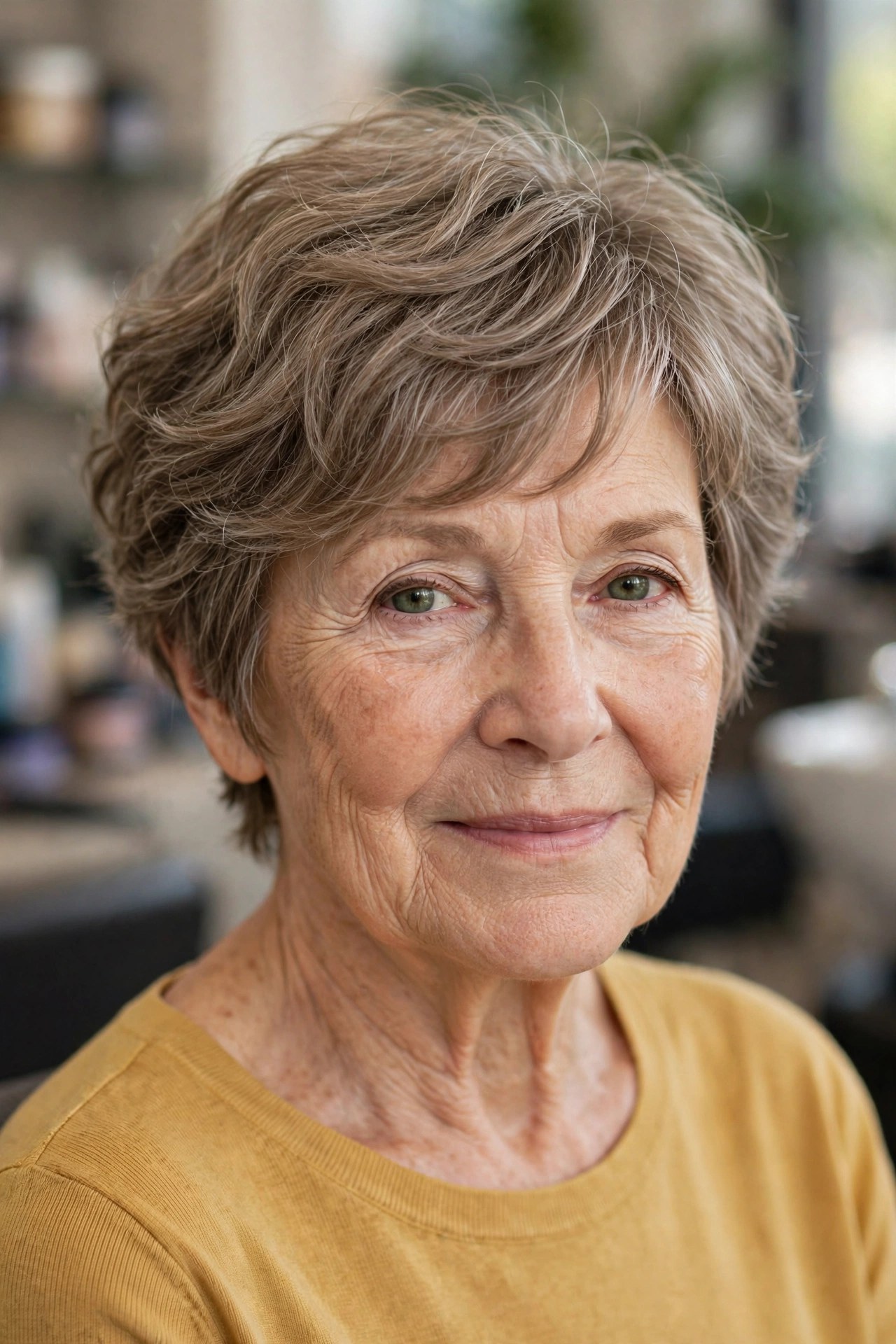
A side-swept bang across the forehead covers a sparse hairline corner, adds diagonal movement, and makes a short wavy pixie feel soft rather than severe. The volume here is cosmetic and comes from crown layers plus the wave bend — the bang sweeps over the top layer, doubling the impression of coverage at the front.
Direct the bang with your dryer on low for just a few seconds while it is damp; once fine hair dries in the wrong direction it is stubborn. A mini flat iron on the lowest setting can re-sweep the front piece only — keep heat off the crown waves, which look best air-shaped. Finish with the lightest mist of flexible hairspray held well away from the head.

15. Short Wavy Bob With Hidden Crown Layers
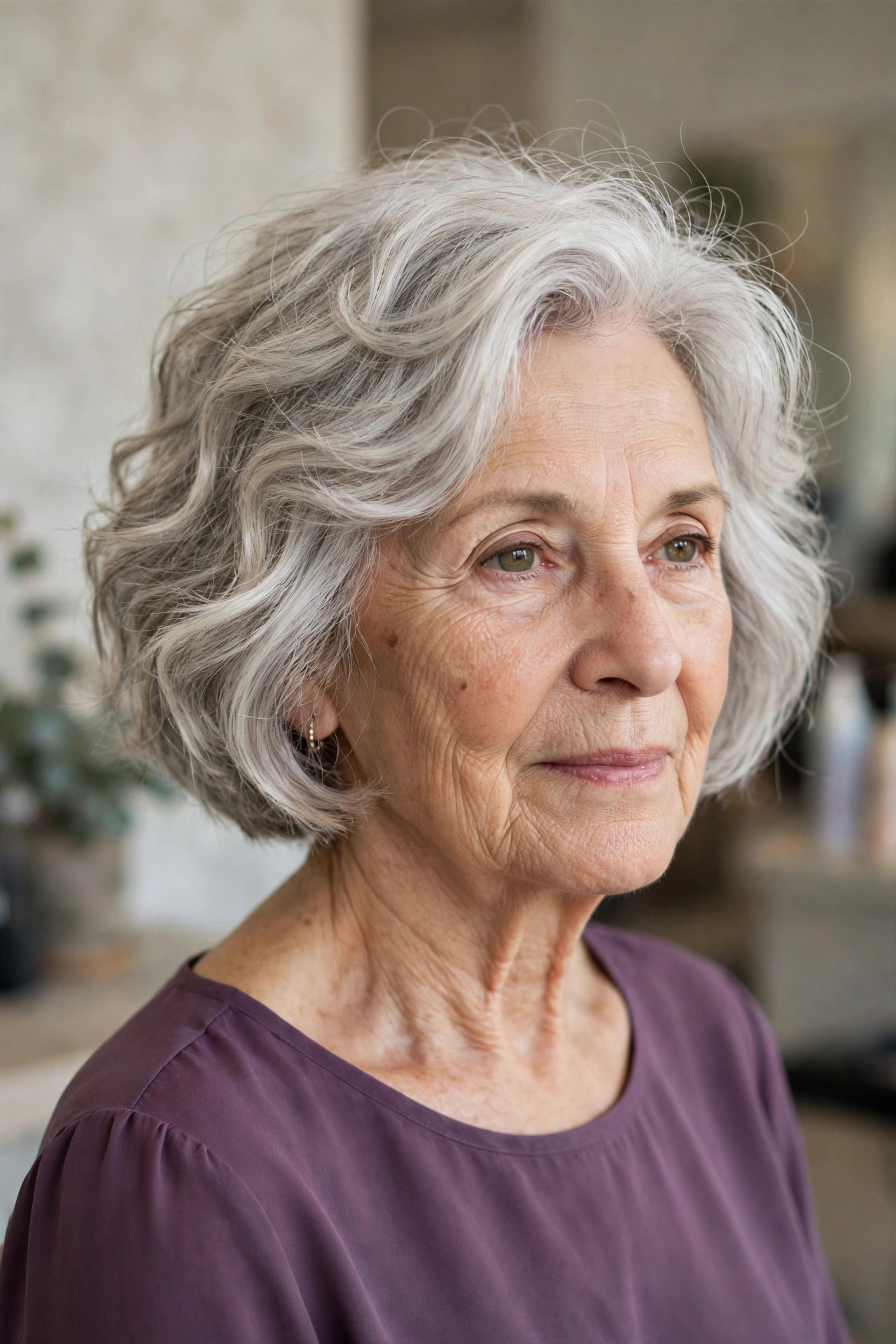
Hidden — or interior — crown layers are cut underneath the top surface, so they lift the visible top layer without creating short, flyaway pieces on show. For fine hair this is the best of both worlds: the surface stays smooth and blunt-looking, while underneath, shorter layers push the S-waves up and out.
Ask your stylist for interior layers at the crown only, and to leave the perimeter and front completely solid. Diffuse upside down for the first minute to activate that hidden lift, then flip up and arrange the surface waves with your fingers. This pairs beautifully with the crown strategies in our volumizing short haircuts for women over 60 with flat hair.
16. Salt-and-Pepper Wavy Bob With Soft Layers

Salt-and-pepper hair has natural highlighting built in — dark strands beside silver ones — and soft layers let the S-waves show off that contrast with every turn of the head. The dimension is doing cosmetic fullness work for you: the eye sees pattern and movement instead of a flat, single tone.
Keep layers long and few; salt-and-pepper fine hair can look patchy if it is over-cut. A clear gloss treatment at the salon every couple of months adds shine without changing the colour you have earned. At home, a satin pillowcase reduces overnight friction, which fine waves are especially prone to frizzing from.
17. Rounded Wavy Bob for a Fuller Face Shape

A rounded bob follows the curve of the head and ends around the jaw, with the S-waves adding width at the sides. For longer or narrower faces, that side width balances proportions beautifully; for rounder faces, keep the length a fraction longer at the front and the part slightly off-center so you get softness without extra width at the cheeks.
The rounded shape depends on a clean, blunt curve at the bottom — ask for minimal layering through the last two inches. A round brush and low heat through the top only, letting the sides diffuse into waves, keeps the roundness smooth rather than puffy. Puff is the enemy of fine hair; controlled wave is the goal.

18. Angled Wavy Bob With a Longer Front

The angled bob is shorter at the back and gradually longer toward the front, ending above the shoulders at the jaw or just below the chin. That forward sweep draws the eye down and forward, elongating the neck, while the shorter back keeps fine ends from straggling — the back is where fine hair usually looks thinnest, so removing length there is a genuine fullness win.
Keep the angle gentle for the most flattering, age-appropriate result. The front pieces frame the face in S-waves; tuck one side behind the ear to show the angle. Because the front is longest, protect those ends — they are the oldest hair you have — with a heat protectant before any hot-tool touch-ups.

19. Wash-and-Wear Wavy Pixie
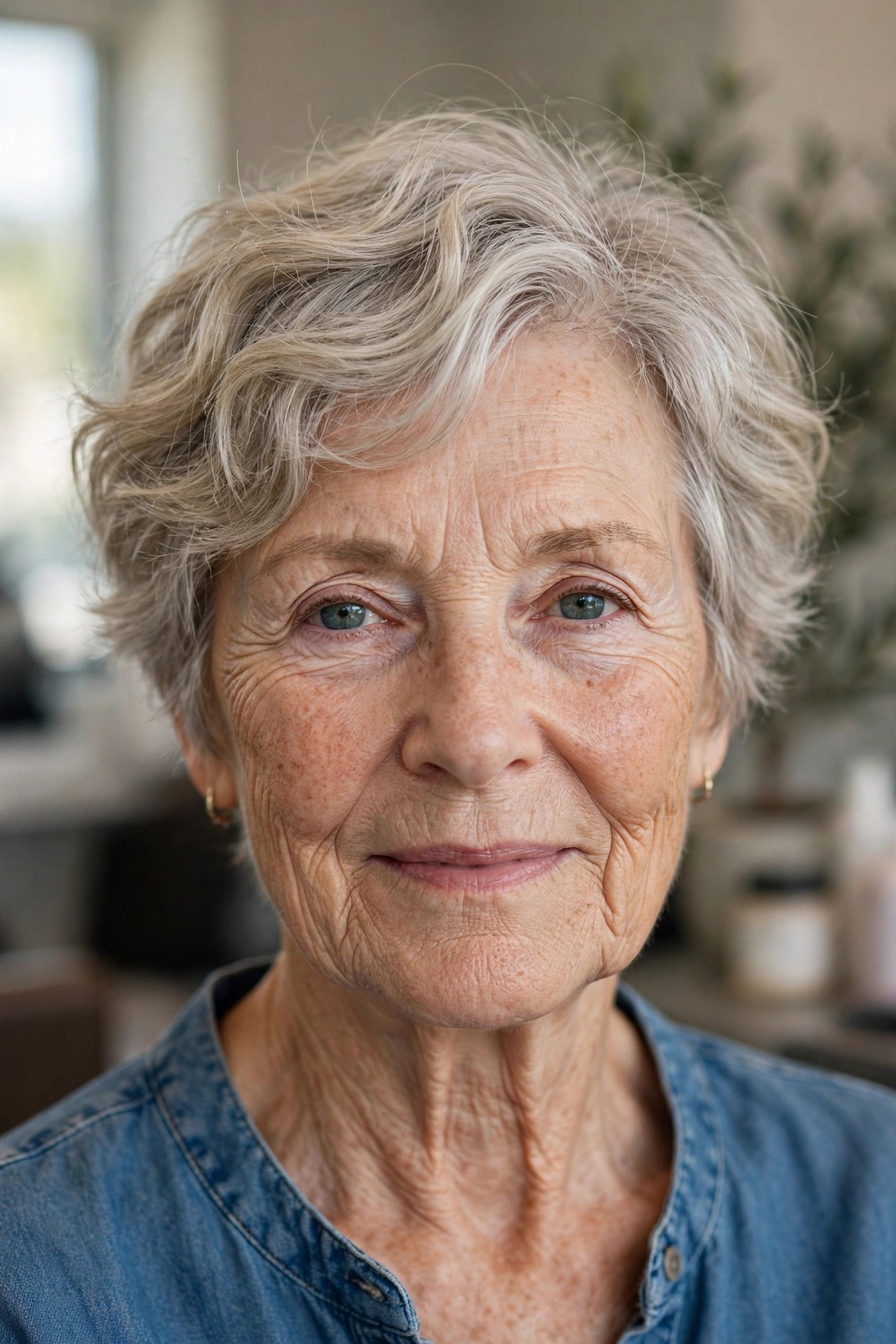
This is the holiday, busy-morning, low-fuss champion: a short wavy pixie cut to follow your natural wave pattern so closely that it falls into place as it air-dries. The secret is honesty at the consultation — your stylist should cut it dry, or at least finish it dry, so the S-waves sit exactly where they live, not where a blow-dry puts them.
Your routine is: wash, scrunch in a little mousse, diffuse on low for two minutes or simply air-dry, and go. No round brush, no flat iron. It also grows out softly, stretching salon visits to seven or eight weeks. If low effort is your priority, compare it with the cuts in our wavy hairstyles for women over 50 feature for more air-dry-friendly shapes.
20. Elegant French Wavy Bob

The French bob sits at jaw length with a soft, slightly curved-under wave and often a light fringe — chic, simple, and surprisingly kind to fine hair. Its power is in the strong, blunt baseline at the jaw: a clean edge always reads thicker, and the gentle S-wave through the mid-lengths stops it from looking like a helmet.
Wear it with a center or soft side part and let the ends curve naturally rather than forcing them under with heat every day. A silk or satin pillowcase, a weekly gentle clarifying wash to remove spray build-up, and trims every six weeks keep that baseline crisp — and a crisp baseline is the whole illusion.
Recommended Products
These are the lightweight staples referenced throughout this guide. With fine wavy hair, amount matters as much as the product itself: start with less than you think you need, keep creams and oils off the roots, and diffuse on low heat so the S-wave — your built-in fullness — survives the styling.
Care Tips for Short Wavy Fine Hair Over 60
- ✅ Use lightweight mousse or sea-salt spray only — heavy creams, butters and oils weigh fine waves flat.
- ✅ Diffuse on low heat and low airflow; high heat blows fine strands apart and creates frizz.
- ✅ Keep ends blunt-ish and say no to thinning shears and razors on fine hair.
- ✅ Apply product to damp, not soaking-wet, hair so it is not diluted and heavy.
- ✅ Refresh day-two waves with a water mist and re-scrunch — do not add a second full dose of product.
- ✅ Sleep on a satin pillowcase to protect the wave pattern and reduce breakage.
- ✅ Trim every 5–7 weeks; fine ends split faster and split ends look wispy fastest.
- ✅ Clarify gently once a week if you use spray often — build-up makes fine hair limp.
Frequently Asked Questions
What is the best short wavy haircut for fine hair over 60?
A chin- or jaw-length wavy bob with a blunt perimeter and light crown layers is the most reliable choice. The blunt ends read thicker, the S-wave bend adds visual width, and crown layers give lift without thinning the ends. A wavy pixie with crown layers is the best shorter alternative.
How do I make fine wavy hair look thicker without heavy products?
Rely on the cut first: blunt-ish ends, crown layers and a side part. Then use a small amount of lightweight volumizing mousse on damp hair and diffuse on low heat. Heavy creams and oils do the opposite — they coat and separate fine strands so hair looks stringy and thinner.
Should fine hair over 60 be layered?
Yes, but lightly and in the right places. Long, blended layers at the crown add lift, while heavy layering through the ends removes the bulk fine hair cannot afford to lose. Ask for interior or crown layers and a solid perimeter, and avoid thinning shears.
How often should I trim a short wavy cut on fine hair?
Every five to seven weeks for bobs and pixies. Fine hair splits and frays faster than coarse hair, and frayed ends are what make a short cut look wispy. A small, regular trim protects the blunt edge that creates the illusion of thickness.
Can I air-dry short wavy fine hair, or do I need a diffuser?
You can do both. Air-drying works well for wash-and-wear pixies and softer bobs — just scrunch mousse in and leave the hair alone while it dries. A diffuser on low heat and low airflow gives more crown lift and a more defined S-wave when you want a polished finish.
Will a fringe or bangs work with fine wavy hair?
Yes, if it is kept wispy or curtain-style. A light, side-swept or curtain fringe uses fewer strands than a heavy straight fringe and blends into wavy sides. Avoid a thick, blunt fringe, which borrows density from the rest of the cut.
Short, wavy and fine is not a limitation — it is a brief for smart cutting. Choose the blunt edges, crown lift and soft S-wave bend that suit your face and your mornings, keep your products feather-light and your diffuser on low, and fine hair will do the rest. Take two or three favourite photos from this list to your stylist and ask them to adapt the length and part to you.