Salt and Pepper Hairstyles for Women Over 60
This post contains affiliate links. As an Amazon associate, I earn from qualifying purchases. I only recommend products that are of high quality and that I would use myself.
Salt and pepper hair is not a stage you pass through on the way to gray — for many women over 60, it is the most striking pattern their hair will ever have. Dark strands and bright white strands woven together create natural dimension that salons charge a fortune to imitate, and the right cut turns that contrast into the whole point of the style instead of something to hide.
The secret is choosing shapes that show the pattern off: layers that let dark and white pieces move against each other, smooth bobs where the marbling reads like polished stone, and fringes placed where your white concentrates so it frames your face like a built-in highlight. If you are still growing out old dye, these cuts also disguise the demarcation line — that hard stripe where color used to stop — so the in-between months look intentional rather than unfinished.
Below you will find 20 cuts for every length and texture, each with honest notes on who it suits and how much upkeep it asks for. New to wearing your natural mix? Our guide to gray hairstyles that look stylish and modern is a good companion read, and the short styles here pair beautifully with the ideas in short hairstyles for women over 50.
Table of Contents
- 1. Polished Chin-Length Bob
- 2. Textured Pixie with Piecey Layers
- 3. Layered Lob with Soft Movement
- 4. Side-Swept Pixie Bob
- 5. Feathered Shoulder-Length Cut
- 6. Wavy Nape-Length Cut
- 7. Curly Salt-and-Pepper Crop
- 8. Soft Shag with Wispy Bangs
- 9. Sleek Blunt Bob
- 10. Asymmetric Lob
- 11. Curtain Bangs on a Medium Cut
- 12. Stacked Bob with a Full Back
- 13. Long Layers That Keep the Pattern Flowing
- 14. Tapered Short Crop
- 15. Deep Side Part with Soft Waves
- 16. French Bob with a Short Fringe
- 17. Crown-Volume Pixie
- 18. Medium Cut with Wispy Bangs
- 19. Elegant Low Bun
- 20. Rounded Natural Curls
- Recommended Products
- FAQs
Quick picks — match the cut to your pattern
- White concentrated at the front? Choose a side-swept fringe or curtain bangs (ideas 4 and 11) so your brightest strands frame your face.
- Evenly mixed all over? Sleek, smooth cuts (ideas 1 and 9) show the marbling off best.
- Still growing out dye? Pick choppy layers or a shag (ideas 2 and 8) — broken edges blur the demarcation line.
- Fine or thinning hair? Short, lifted shapes (ideas 14 and 17) keep the pattern looking dense.
- Five-minute mornings? The tapered crop (idea 14) and wavy nape cut (idea 6) are true wash-and-go options.
1. Polished Chin-Length Bob

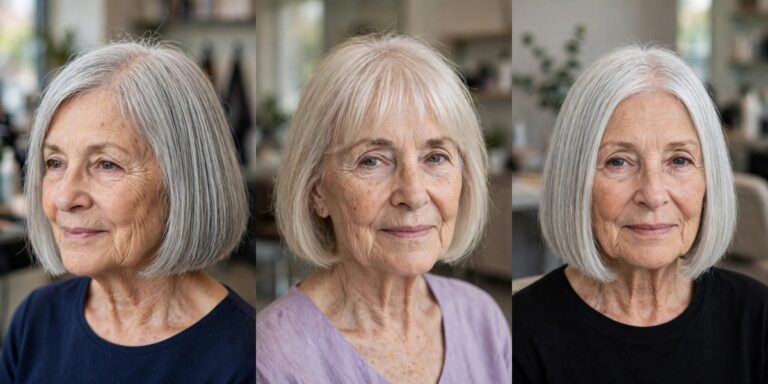
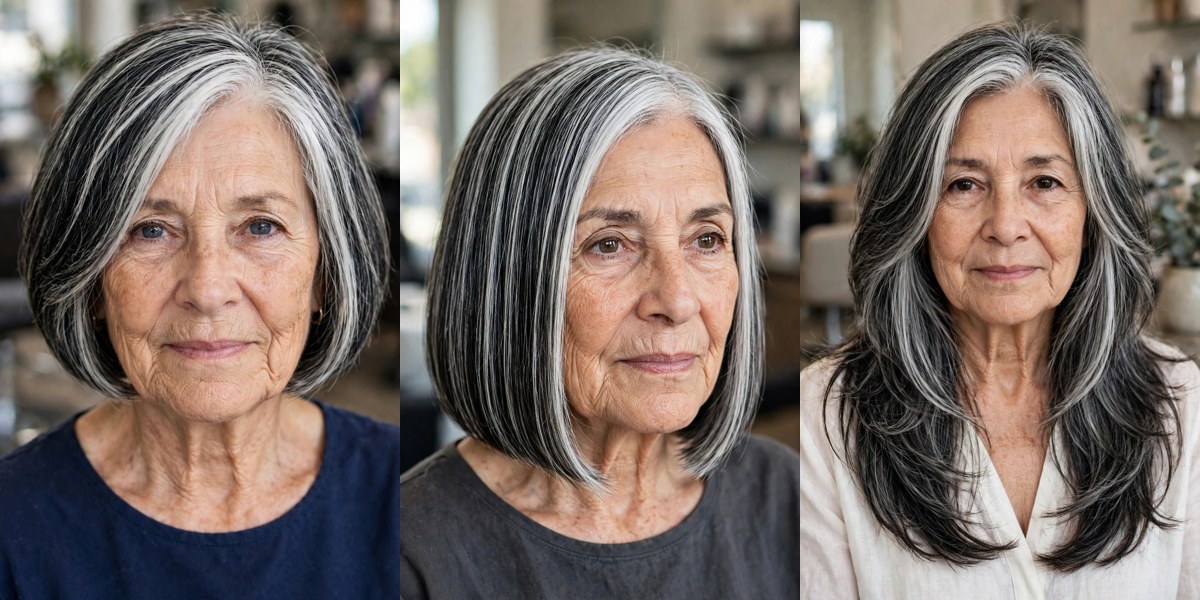
A chin-length bob is the classic showcase for salt and pepper hair. The smooth, even surface lets the dark and white strands read as one marbled pattern, and the clean line at the jaw gives the whole look a deliberate, polished feel — nothing about it looks like a grow-out.
It suits straight to slightly wavy hair and almost every face shape; a centre part feels modern, while a side part softens a strong jaw. Ask for blunt ends with the tiniest bevel so the edges do not flip. Styling is minimal: a quick pass with a round brush, and a weekly purple shampoo keeps the white pieces bright instead of yellow.


2. Textured Pixie with Piecey Layers
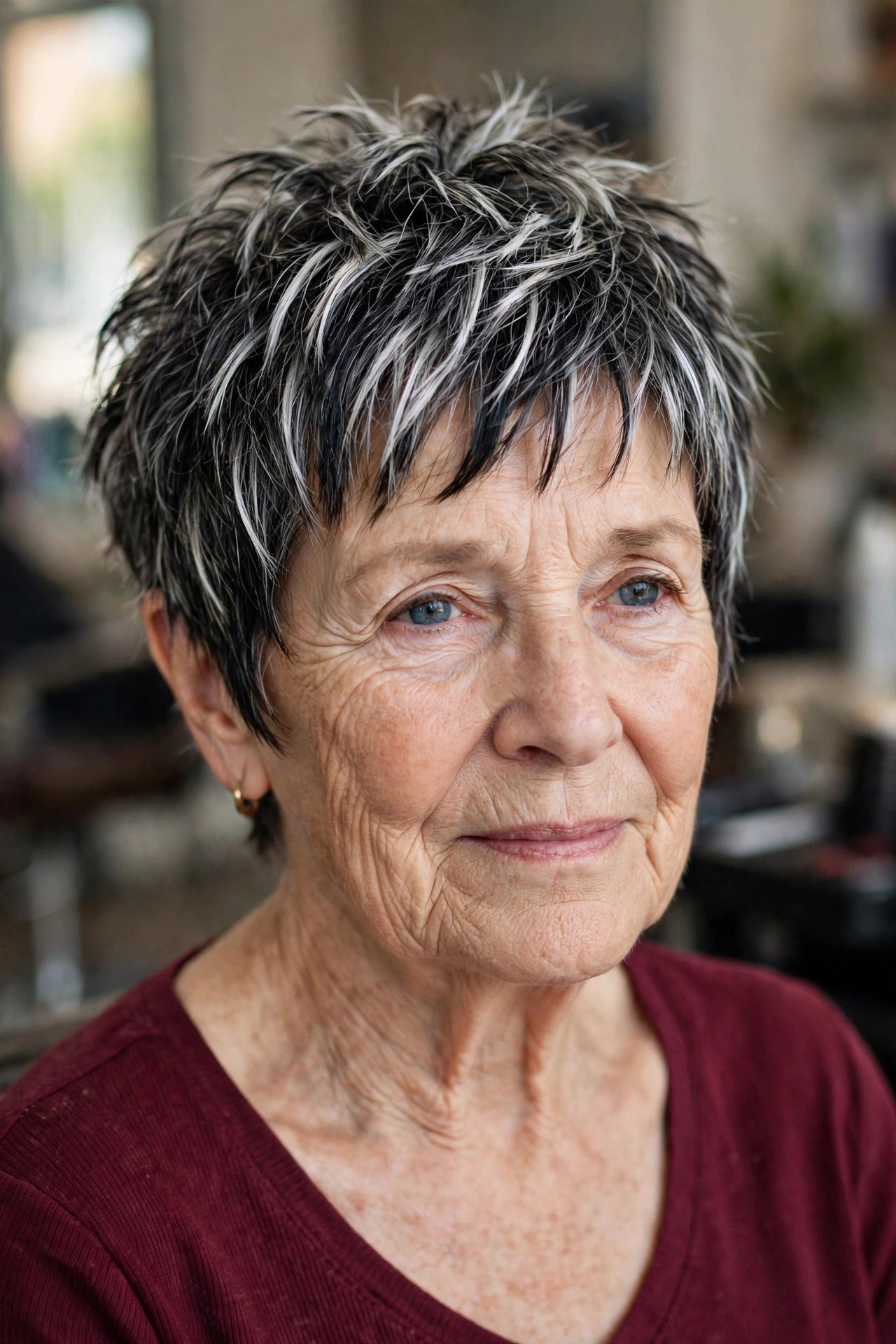
If your mix is growing in unevenly, a textured pixie turns that to your advantage. Choppy, piecey layers break the hair into small sections, so patches that are whiter and patches that are darker simply look like deliberate dimension — and any demarcation line from old dye disappears into the texture.
This is one of the lowest-maintenance cuts on the list and a kind one to fine hair, because the short layers stack up into natural volume. Work a pea-sized amount of texturising putty through dry hair and pinch the ends to define the pieces. Book trims every five to six weeks to keep the shape crisp.


3. Layered Lob with Soft Movement

The lob — a long bob grazing the shoulders — is the forgiving middle ground of salt and pepper styles. Long layers keep the weight off the ends so the hair swings, and that movement makes dark and white strands shift against each other with every turn of your head.
Choose this if you are not ready to go short or if your hair is thick and needs the bulk managed. It flatters round and heart-shaped faces particularly well. Blow-dry with a volumising mousse at the roots, and let the lengths fall naturally; the layers do the styling work for you.


4. Side-Swept Pixie Bob

Part pixie, part bob, this cut keeps length on top that sweeps across the forehead in a long fringe. For salt and pepper hair it is a clever trick: most women go whitest at the front hairline, so the sweep places your brightest strands exactly where they light up your face.
The back and sides stay neat and tapered, which keeps the silhouette youthful and the upkeep low. It works beautifully with glasses, since the fringe can be cut to sit just above the frames. Style by blow-drying the top forward then sweeping it across, and finish with a light mist of hairspray.

5. Feathered Shoulder-Length Cut

Feathering fell out of fashion and came back softer — and it is wonderful on a salt and pepper pattern. Airy layers flick away from the face at the cheekbones and jaw, so the white strands threaded through them catch the light like highlights you never had to pay for.
This cut is a friend to mature faces because the flicked layers lift the eye upward and soften the jawline. It needs medium to thick hair to hold the shape. A round brush and five minutes with the dryer, rolling the ends outward, is all the styling it asks for.


Not sure which cut suits your face? The right length and fringe placement depend on your face shape. Try our free Face Shape Finder first — it takes a minute, and you can take the result straight to your stylist along with your favourite idea below.
6. Wavy Nape-Length Cut

Sitting right at the nape, this short wavy cut is made for women whose natural wave has come back stronger with age — a very common change after 60. The waves scramble the salt and pepper pattern in the prettiest way, so no single strand colour dominates.
It is a genuine wash-and-go style: scrunch in a little sea salt spray on damp hair and let it air-dry. The nape length keeps the neck cool and the shape tidy, and it grows out gracefully between six-week trims. If your waves lean frizzy, swap the spray for a light serum on the ends only.


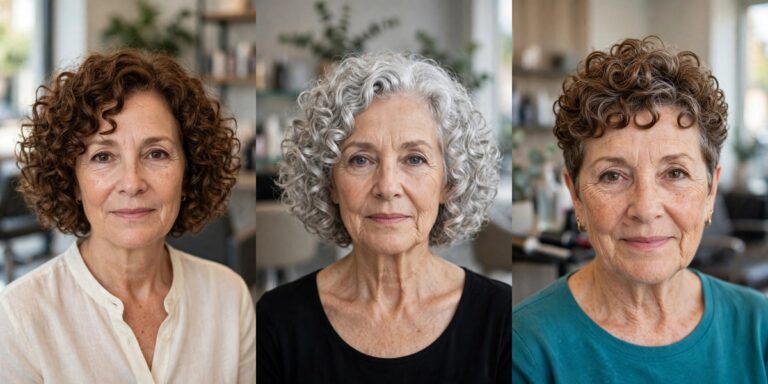
7. Curly Salt-and-Pepper Crop
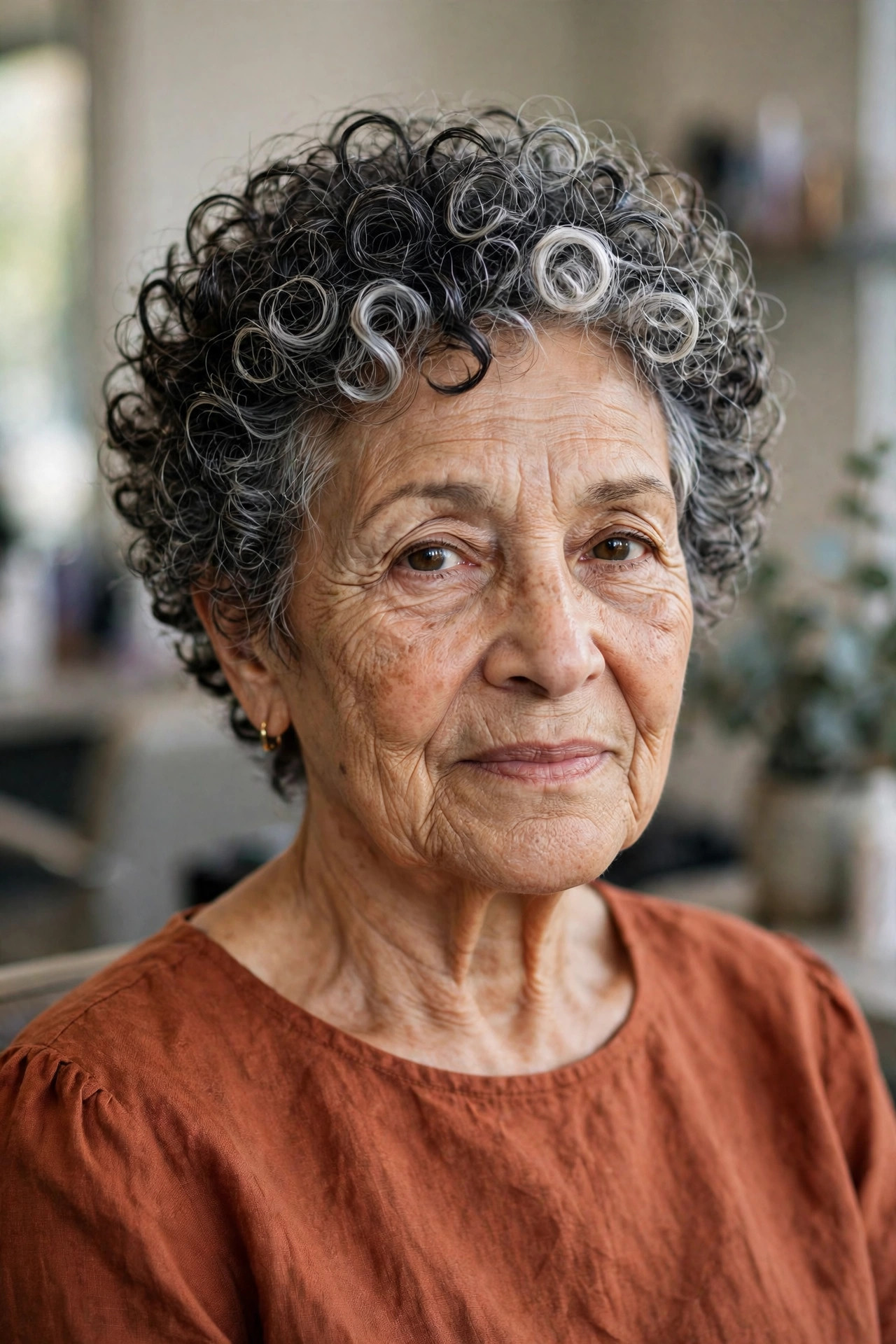
Curls show off a salt and pepper mix like nothing else — every ringlet is its own little swirl of black, white and silver. A rounded crop keeps the curls stacked close to the head in a neat halo that frames the face and lifts the features.
Keep the sides slightly shorter than the top so the shape reads intentional, not triangular. Curly gray-blend hair drinks up moisture, so a curl-defining cream on soaking-wet hair, then hands off while it dries, gives the softest definition. A purple shampoo every second week stops the white curls from yellowing.

8. Soft Shag with Wispy Bangs

The modern shag is the demarcation line’s worst enemy. Its choppy layers and wispy bangs break the hair into dozens of small, uneven pieces, so a stripe of regrowth simply has nowhere to show. On salt and pepper hair the effect is rock-and-roll in the best way — all movement and texture.
Ask your stylist for layers that start at the cheekbones and a fringe you can see through, not a solid curtain. The shag suits fine hair especially well because the layers fake fullness. Scrunch with texture spray and go; this cut is supposed to look a little undone.
9. Sleek Blunt Bob
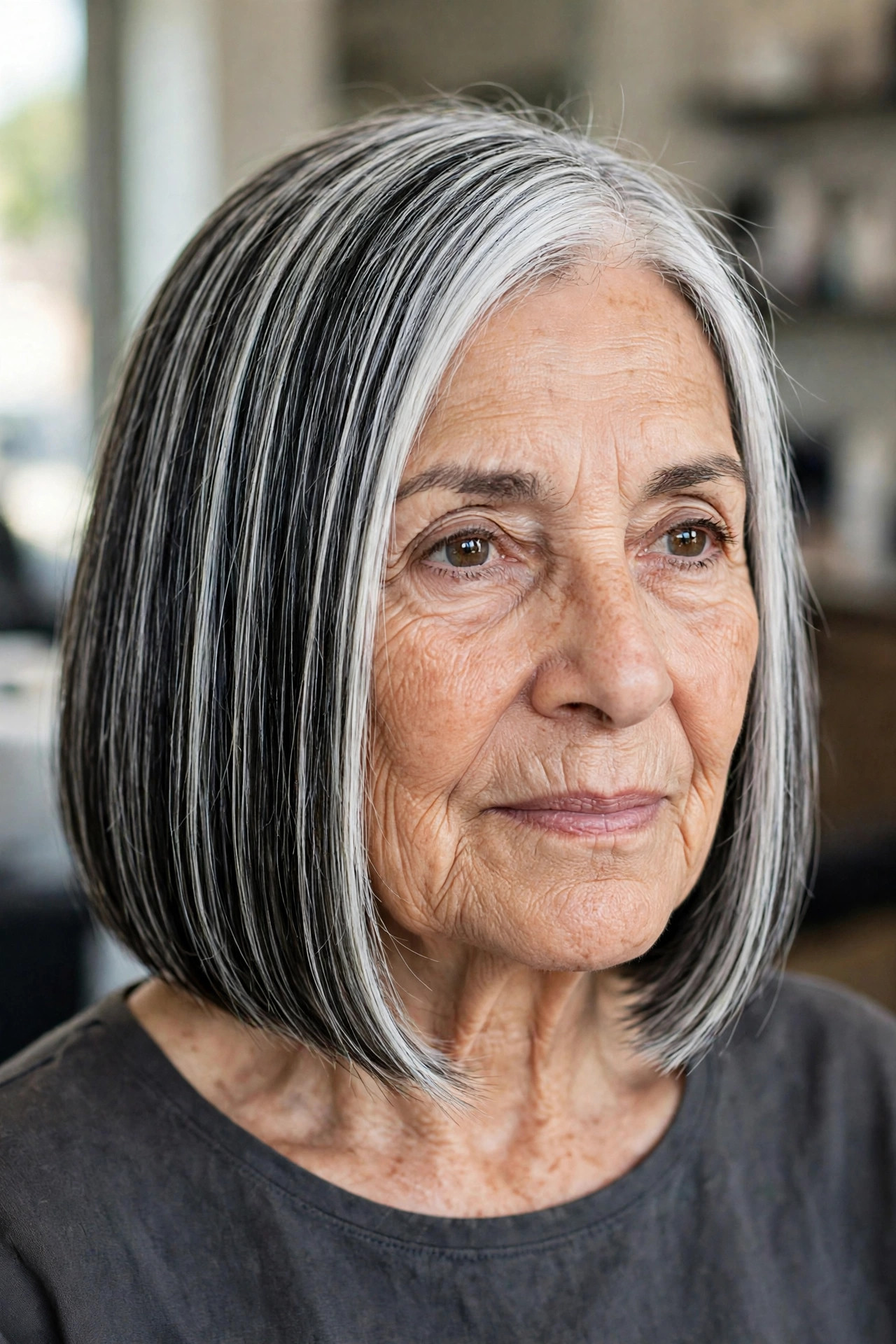
Where the chin-length bob is soft, the blunt bob is architectural: one strong, straight line, glass-smooth finish. On salt and pepper hair it looks expensive — the pattern reads like veining in marble, and the sharp edge makes the whole style feel deliberate and modern.
It is best on straight or relaxed hair with medium thickness; very thick hair can look heavy without a little internal layering. A flat iron pass and a drop of anti-frizz serum give the glass finish, and always use heat protection first — white strands scorch and yellow faster than pigmented ones.

10. Asymmetric Lob

One side longer than the other sounds daring, but on salt and pepper hair it is surprisingly wearable — the asymmetry draws the eye to the cut itself, and the pattern becomes part of the design. Wear the longer side on the side where your white concentrates for maximum face-brightening effect.
This lob works on straight and wavy hair and is a smart choice if one side of your hair grows in whiter than the other, a very common pattern after 60. Style it smooth with a side part to emphasise the line, and expect trims every six weeks to keep the imbalance intentional.

11. Curtain Bangs on a Medium Cut

Curtain bangs part in the middle and sweep to both sides, and on salt and pepper hair they do double duty: the white strands that almost always arrive first at the hairline become a bright, face-framing feature instead of the thing you apologise for.
Paired with a medium-length cut, this is one of the softest, most forgiving styles in the list — kind to foreheads, compatible with glasses, and easy to grow out if you change your mind. Blow-dry the bangs forward then sweep them apart with a round brush. A toning gloss every couple of months keeps the whole blend luminous.

12. Stacked Bob with a Full Back

The stacked bob builds its drama at the back: short graduated layers pile up into a rounded, full shape that angles down toward the chin. On a salt and pepper pattern the graduation is gorgeous — each stacked layer shows a fresh slice of the black-and-white mix.
It is the go-to cut for fine or flattening hair, because the stacking manufactures volume that styling alone cannot. If you love this silhouette, our stacked bob haircuts guide has more variations. Keep the nape trimmed every four to five weeks so the stack stays perky.

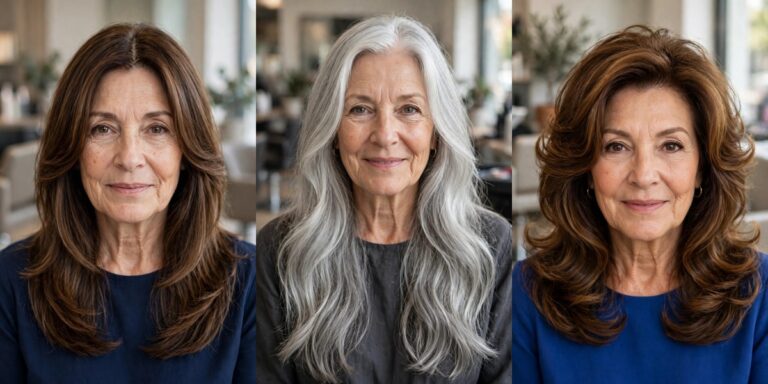
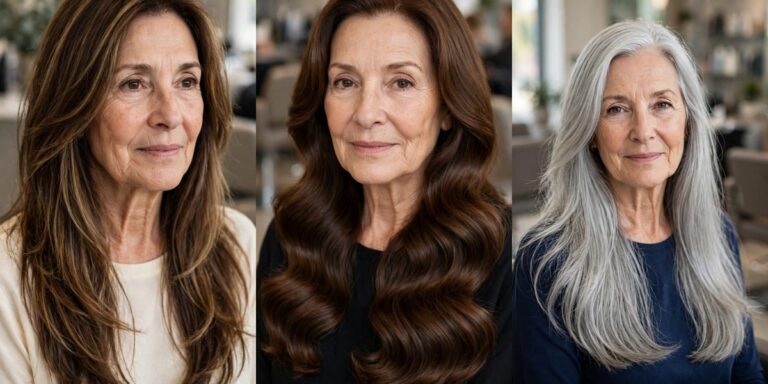
13. Long Layers That Keep the Pattern Flowing
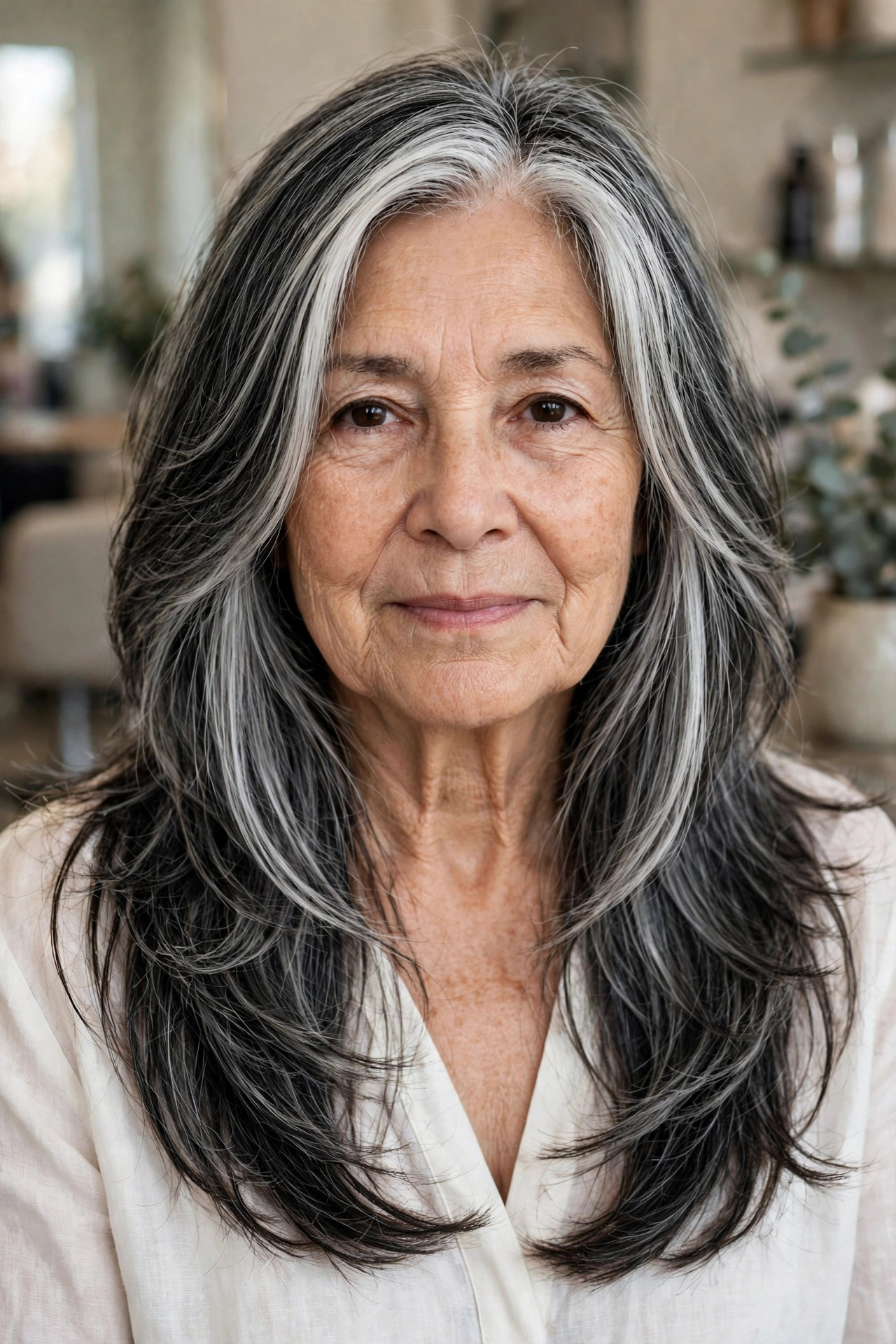
Who says 60 means short? Long salt and pepper hair, cut with flowing layers, looks like poured silk — dark lengths threaded with bright ribbons of white that move as one sheet. The key is restraint: long layers only, starting below the chin, so the hair keeps its weight and shine.
This style needs healthy ends, so trims every eight weeks and a weekly deep-conditioning routine are the price of admission. A satin pillowcase cuts the friction that frays mature ends overnight. Wear it with a centre part to show off a white money-piece at the front, if your pattern gives you one.


14. Tapered Short Crop
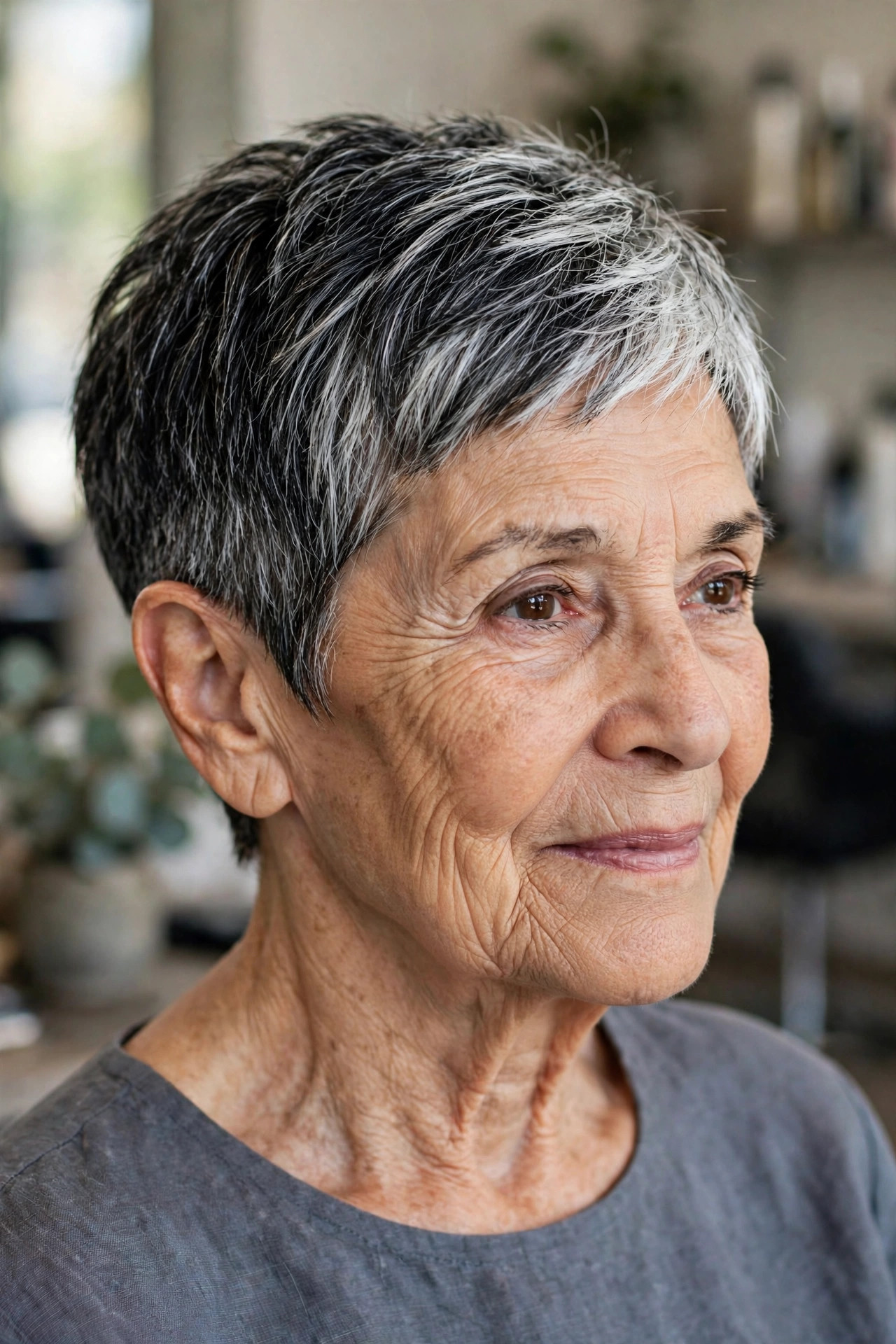
The tapered crop is the shortest, sharpest option here: close at the nape and sides, with just enough length on top to show the pattern. For women whose hair has thinned, it is liberating — short hair reads denser, and the salt and pepper mix adds the visual texture that flat, single-colour hair lacks.
There is almost no styling: towel dry, a fingertip of putty if you want separation, done. It flatters petite features and strong bone structure, and it puts the focus on your eyes and earrings. Budget for a tidy-up every four weeks; short cuts earn their polish in the trim schedule.
15. Deep Side Part with Soft Waves

Sometimes the style is not the cut but the parting. A deep side part on a chin-to-shoulder cut creates instant lift at the root and a sweeping wave across the forehead — and on salt and pepper hair, flipping your part reveals a whole new distribution of dark and white to play with.
Try this if your usual part has gone noticeably whiter than the rest; moving it two centimetres changes the entire read of your pattern. Set the waves with a dryer brush for a smooth, bouncy finish, and alternate your part side weekly so no single stripe of regrowth gets established.

16. French Bob with a Short Fringe

The French bob — chin-grazing, a little undone, with a short blunt fringe — has an attitude that salt and pepper hair wears beautifully. The fringe shows the mix at its most graphic, black and white strands side by side right above the eyes.
It suits oval and heart-shaped faces and straight to wavy textures. Ask for the ends to be point-cut rather than razor-straight so the bob keeps its Parisian softness. A mini flat iron is the perfect tool for the fringe: one quick pass each morning keeps it sitting right.
17. Crown-Volume Pixie

Flat crown, be gone. This pixie keeps the top long enough to lift and direct back, building height exactly where hair tends to collapse after 60. Height at the crown also stretches the salt and pepper pattern vertically, so the mix looks richer and the face looks longer and more awake.
If flatness is your daily battle, you will find kindred strategies in our roundup of pixie cuts for women over 50. Blow-dry the top with mousse, lifting at the root with your fingers, and lock it with a flexible hairspray — stiff helmets need not apply.
18. Medium Cut with Wispy Bangs

If a full fringe feels like too much commitment, wispy bangs are the gentle version: a see-through veil of strands that softens the forehead and — this is the clever part — blends the hairline, where white usually arrives first and darkest dye lines used to show.
On a simple medium-length cut this is the most low-key grow-out style on the list; there is no hard line anywhere for regrowth to announce itself. Keep the bangs trimmed just below the brows and the lengths one-length with soft ends. It air-dries respectably with a little leave-in smoothing serum.
19. Elegant Low Bun

For evenings, weddings and photographs, gather your length into a low bun and let the salt and pepper pattern do the decorating. Twisting the hair swirls dark and white together like soft-serve, and a few loose face-framing strands keep it romantic rather than severe.
This works on any hair long enough to gather — shoulder length and beyond — and claw clips make it a two-minute job with no pins to hunt for. Smooth flyaways (white strands are famously wiry) with a touch of serum on your palms before you twist. It is also the kindest style here for fragile ends, since nothing rubs or heats them.

20. Rounded Natural Curls
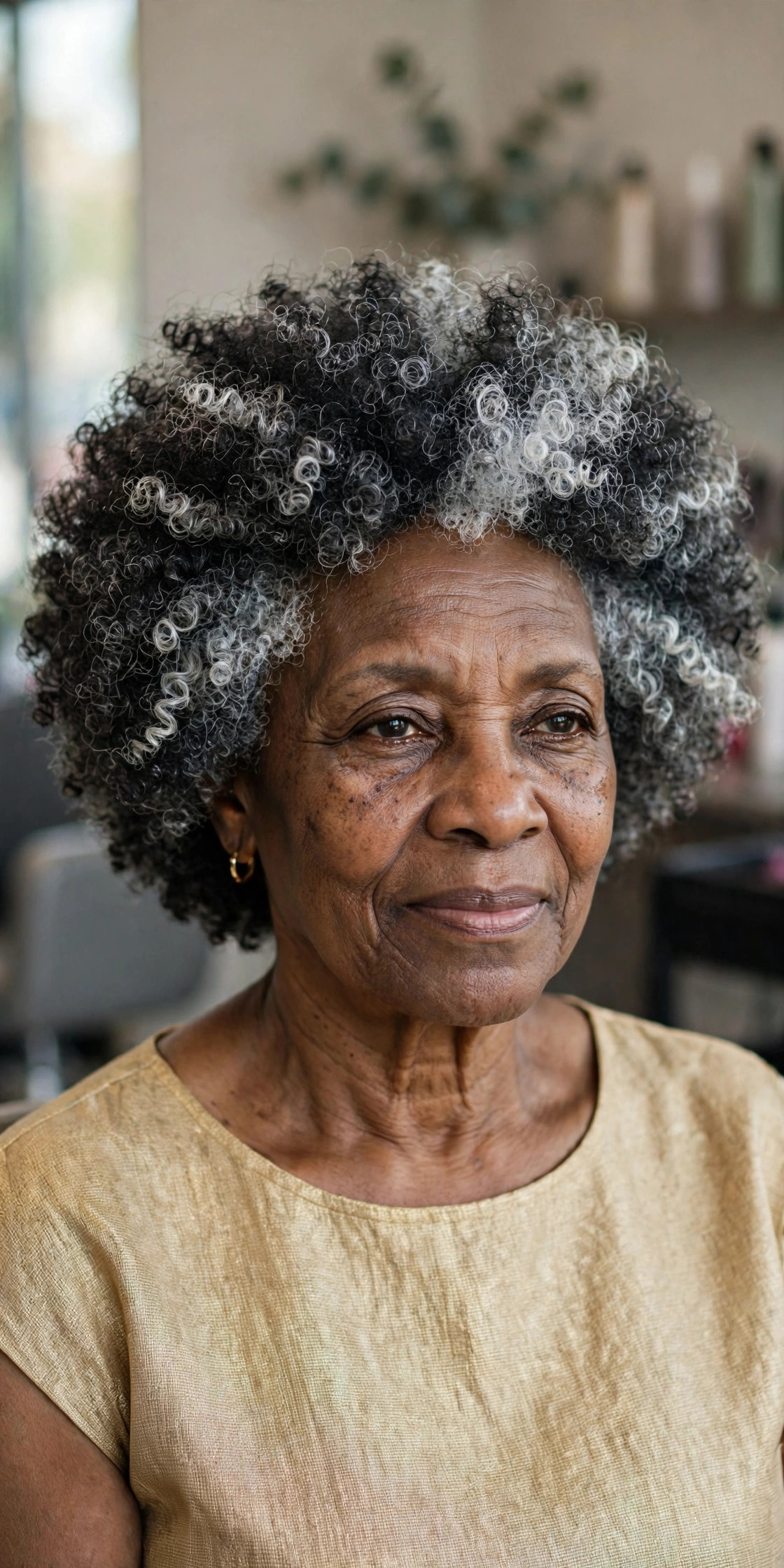
For Black women over 60, a rounded natural shape lets salt and pepper coils shine in every sense — black and white curls springing side by side give a dimension no dye can copy. The rounded silhouette keeps the volume balanced around the head and the face beautifully framed.
Shape is everything: ask for cuts done on dry, styled curls so the silhouette is true, and keep up the moisture — gray coils are drier by nature. A shea-rich curl cream and a satin bonnet at night protect both the pattern and the curl. See more ideas in our guide to short hairstyles for fine, thin hair if you prefer a shorter shape.


Recommended Products
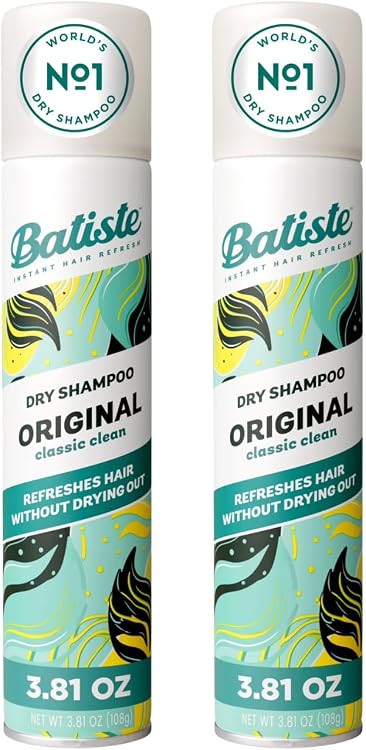
These are the products that came up again and again while putting this list together — the ones that keep a salt and pepper pattern bright, glossy and easy to manage at home.
How to Keep Salt and Pepper Hair Bright and Glossy
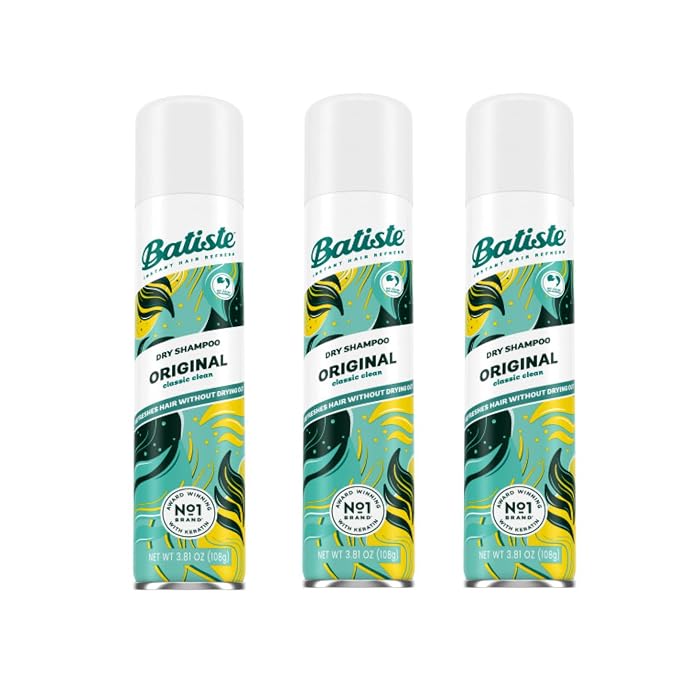
- Use a purple (violet) shampoo once a week — it neutralises the yellow and brassy tones that pollution, hard water and heat leave on white strands, keeping the contrast crisp.
- But do not overdo it: purple shampoo more than twice a week can leave white hair looking dull and lilac-grey. Alternate with a gentle, sulphate-free wash.
- Condition generously. Hair that has lost its pigment is coarser and drier by nature, so a weekly deep-conditioning mask keeps the mix glossy instead of wiry.
- Always use heat protection before irons or dryer brushes — white strands scorch and yellow at lower temperatures than pigmented hair.
- Ask your stylist for a clear or silver toning gloss every 6–8 weeks if the white starts to look tired; it brightens the pattern without any dye commitment or regrowth line.
- Sleep on a satin pillowcase to stop white strands — the most fragile ones — from frizzing and snapping overnight.
- Trim every 5–8 weeks depending on length. The salt and pepper pattern looks most intentional when the cut’s shape is sharp.
Frequently Asked Questions
Is salt and pepper hair the same as gray hair?
Not quite. Gray or silver hair has lost almost all of its pigment, while salt and pepper hair still keeps a noticeable share of its original dark colour blended with white strands. That natural mix is exactly what gives it such striking dimension — and why cuts that show off the contrast work so well.
How do I get rid of the harsh line while growing out my dye?
The demarcation line softens fastest with broken-up cuts — choppy layers, shags and textured pixies blur the boundary so there is no single stripe to see. Ask your stylist about a few strategically placed lowlights or a toning gloss to melt the line further while you grow. Most women find the line stops being noticeable after two or three trims.
Why do my white strands look yellow, and how do I brighten them?
White hair has no pigment to hide discolouration, so minerals, smoke, sunlight and heat styling all show up as yellow. A purple shampoo once a week neutralises it, a clarifying wash once a month lifts build-up, and heat protection before any hot tool prevents new scorch-yellowing.
Does salt and pepper hair need different care from dyed hair?
Yes — it is usually coarser, drier and more wiry than it was with pigment, so it wants more moisture and gentler handling: richer conditioner, a weekly mask, less heat, and satin at night. The good news is you can retire the root touch-ups, colour-safe shampoos and salon colour bills entirely.
Which cut makes salt and pepper hair look thickest?
Short, structured shapes — a stacked bob, tapered crop or crown-volume pixie — make the pattern read densest, because short layers stack and the dark-white contrast adds visual texture. Long, one-length cuts pull fine hair flat and make the mix look stringy by comparison.
Will salt and pepper hair suit my skin tone?
Almost always, because it is the pattern your own colouring produced — the dark strands echo your brows and the white brightens the face. If you feel washed out, the fix is usually contrast elsewhere: defined brows, a warmer blush or lipstick, and keeping the white strands bright rather than yellow.
Final Thoughts
Salt and pepper hair is not a compromise — it is a pattern with more natural dimension than most women ever get from a salon colour menu. Pick the cut that shows your particular mix off best, keep the white strands bright with a weekly purple shampoo, and let the contrast be the style. Your hair has been working on this blend for years; the right haircut simply lets everyone else see how good it looks.